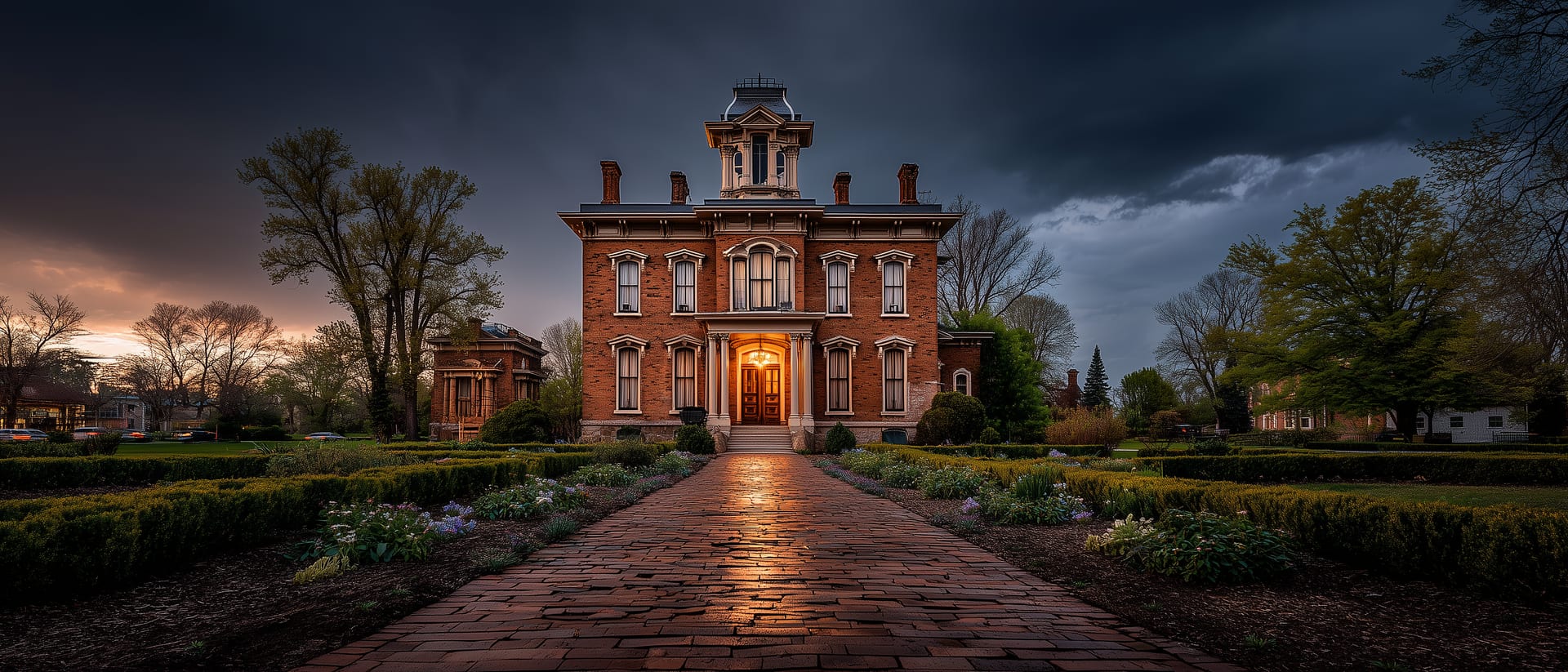
Explore Locations

Browse haunted destinations, historic sites, and dark tourism experiences across the Midwest and beyond.

2463 locations found

Exterior view of Albertville Middle School, an active educational facility in Marshall County, Alabama
Photo coming soon
Museum / Historical Site

Albertville Middle School

Albertville, AL

Albertville Middle School operates as the sole middle school in Albertville City School District at its East Alabama Avenue location. The facility serves students in grades 6-8 and maintains academic and athletic programs. The school's construction date and historical development remain part of the district's documented heritage.

FreeSchool Hours OnlyFamily: High
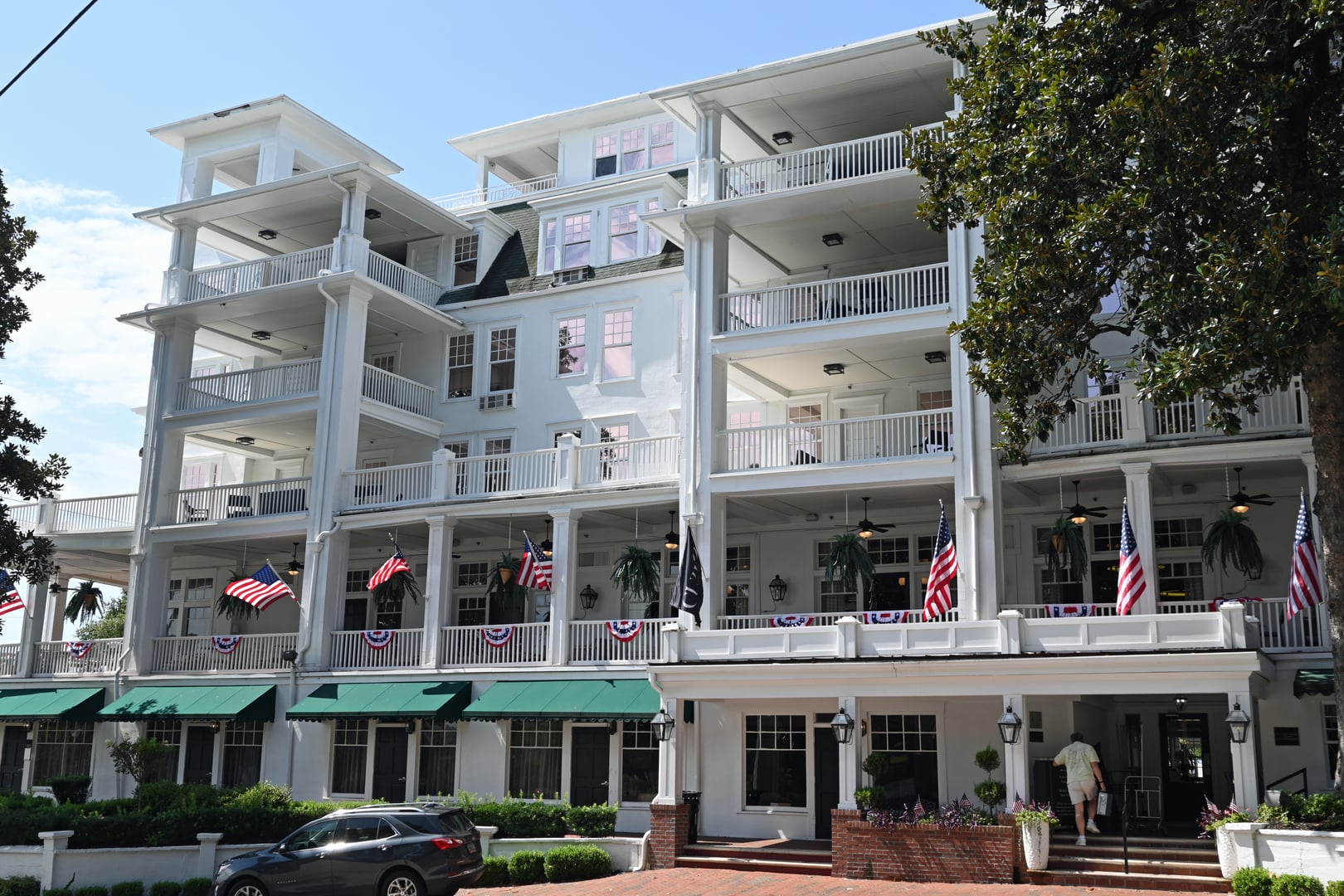
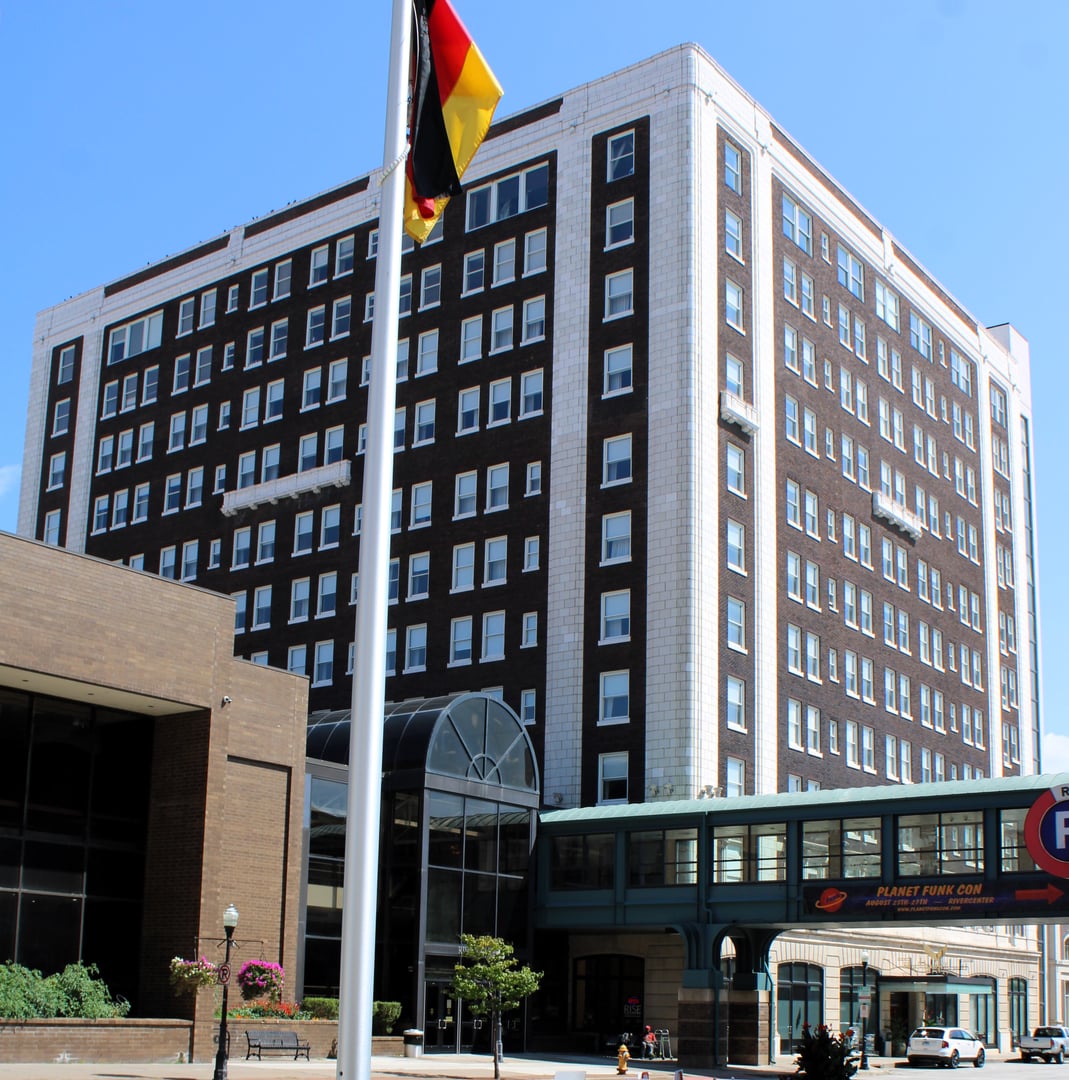
East view from Royal Street of the 1908 Battle House Hotel in Mobile, Alabama, a steel-frame replacement of an 1852 hotel built on Andrew Jackson's 1814 headquarters site.
Haunted Hotel / Inn

Battle House Renaissance Mobile Hotel

Mobile, AL

The Battle House traces to 1852, when James Battle and his nephews opened a 200-room hotel on the site of Andrew Jackson's 1814 military headquarters. The original burned on February 12, 1905; the current steel-frame structure was built 1906-1908 to designs by New York architect Frank Mills Andrews. After decades of decline, the Marriott Renaissance brand reopened the restored hotel on May 11, 2007.

$$$All AgesFamily: Moderate
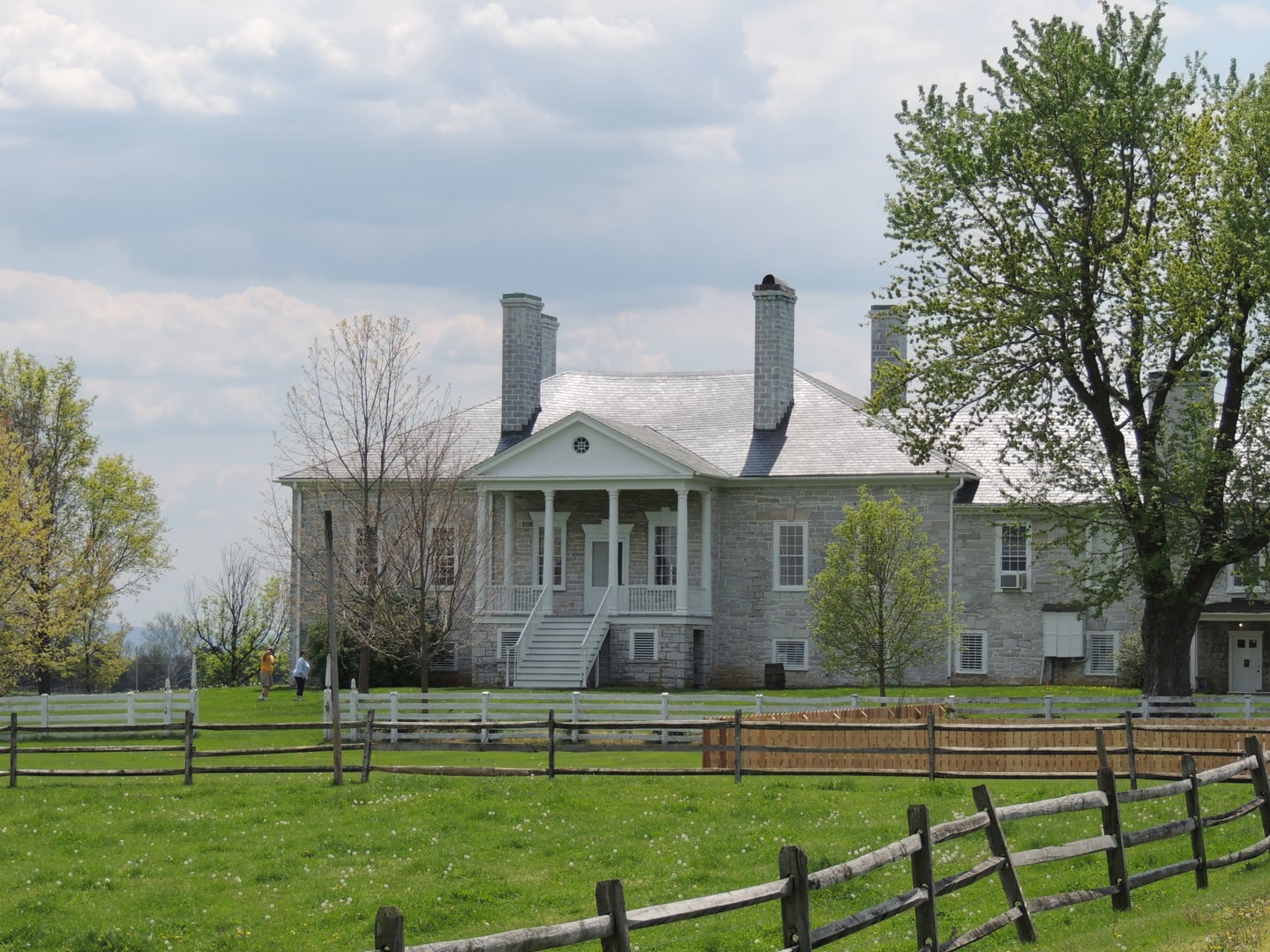
The Palladian central block and flanking wings of Belle Mont Mansion on its Tuscumbia hilltop
Photo coming soon
Museum / Historical Site

Belle Mont Mansion

Tuscumbia, AL

Belle Mont Mansion was built circa 1828-1832 by Alexander Williams Mitchell and is one of the few Palladian-style houses in the Deep South, with neoclassical features influenced by Thomas Jefferson's architectural work. It was the centerpiece of a 1,680-acre plantation that included 152 enslaved people in 1860. The Winston family donated the property to the State of Alabama in 1983; it is now owned by the Alabama Historical Commission.

$All AgesFamily: Moderate
This is a photo of the Guntersville Railroad Depot Museum, a newly renovated depot with miniature train display, plus memorabilia from years past. www.guntersvillehistoricalsociety.org
Photo coming soon
Cemetery / Burial Ground

Bishop's Graveyard

Guntersville, AL

Bishop's Graveyard is a historic cemetery located in Guntersville, Marshall County, Alabama. Like many rural cemeteries in the region, it serves as both a burial ground and a documented site of local genealogical significance.

FreeAll AgesFamily: High
Bottenfield Middle School exterior in Adamsville, Alabama
Photo coming soon
Museum / Historical Site

Bottenfield Middle School

Adamsville, AL

Bottenfield Middle School, now known as Minor Middle School, operates as a comprehensive middle school in Adamsville's Jefferson County school system. The facility serves grades 6-8 and is located on Hillcrest Road. The school's construction and operation reflect standard educational infrastructure of mid-to-late twentieth century development.

FreeSchool Hours OnlyFamily: High

Bethlehem United Methodist Church cemetery along McElderry Road in Munford, Alabama
Photo coming soon
Other Dark Tourism Site

Bethlehem United Methodist Church

Munford, AL

Bethlehem United Methodist Church in Munford, Talladega County, Alabama, is a rural religious institution with a cemetery containing over 400 graves. The site holds documented burials of Civil War veterans and early Alabama settlers, making it a site of local historical significance.

FreeAll AgesFamily: High
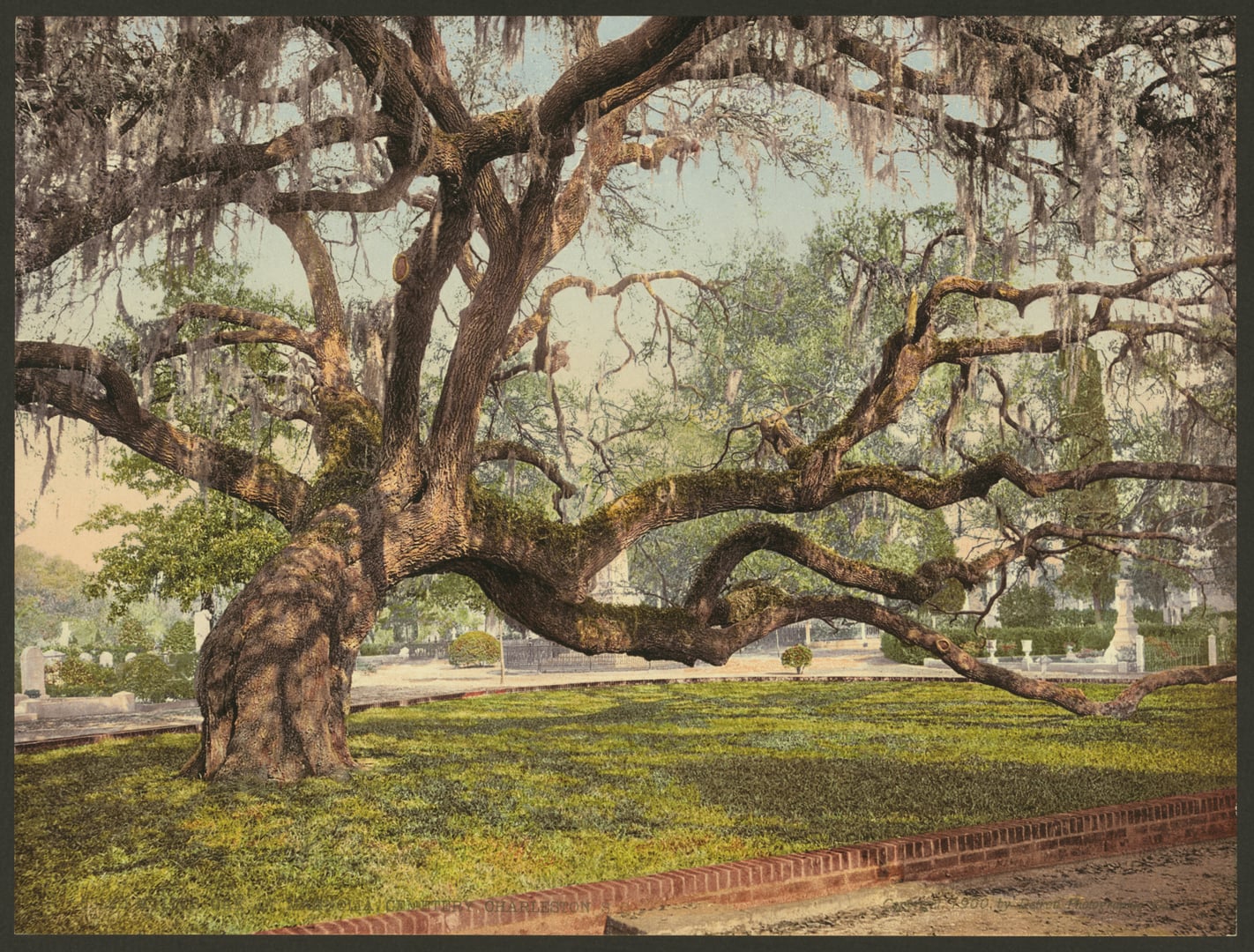
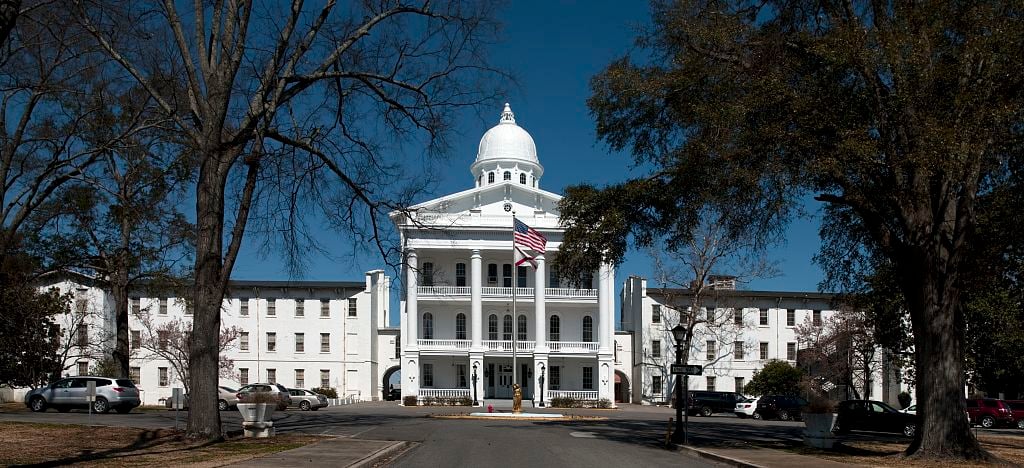
The historic Boyington Oak, a Southern live oak said to have sprung from the grave of Charles R.S. Boyington beside Church Street Cemetery in Mobile, Alabama.
Outdoor / Natural Site

Boyington Oak

Mobile, AL

The Boyington Oak is a historic Southern live oak that grew from the grave of Charles R.S. Boyington, a 21-year-old Connecticut printer hanged on February 20, 1835 for the stabbing murder of his roommate Nathaniel Frost — a crime Boyington denied to the gallows, vowing that an oak would rise from his heart as proof of his innocence. Two people are said to have later confessed to the killing on their deathbeds.

FreeAll AgesFamily: High
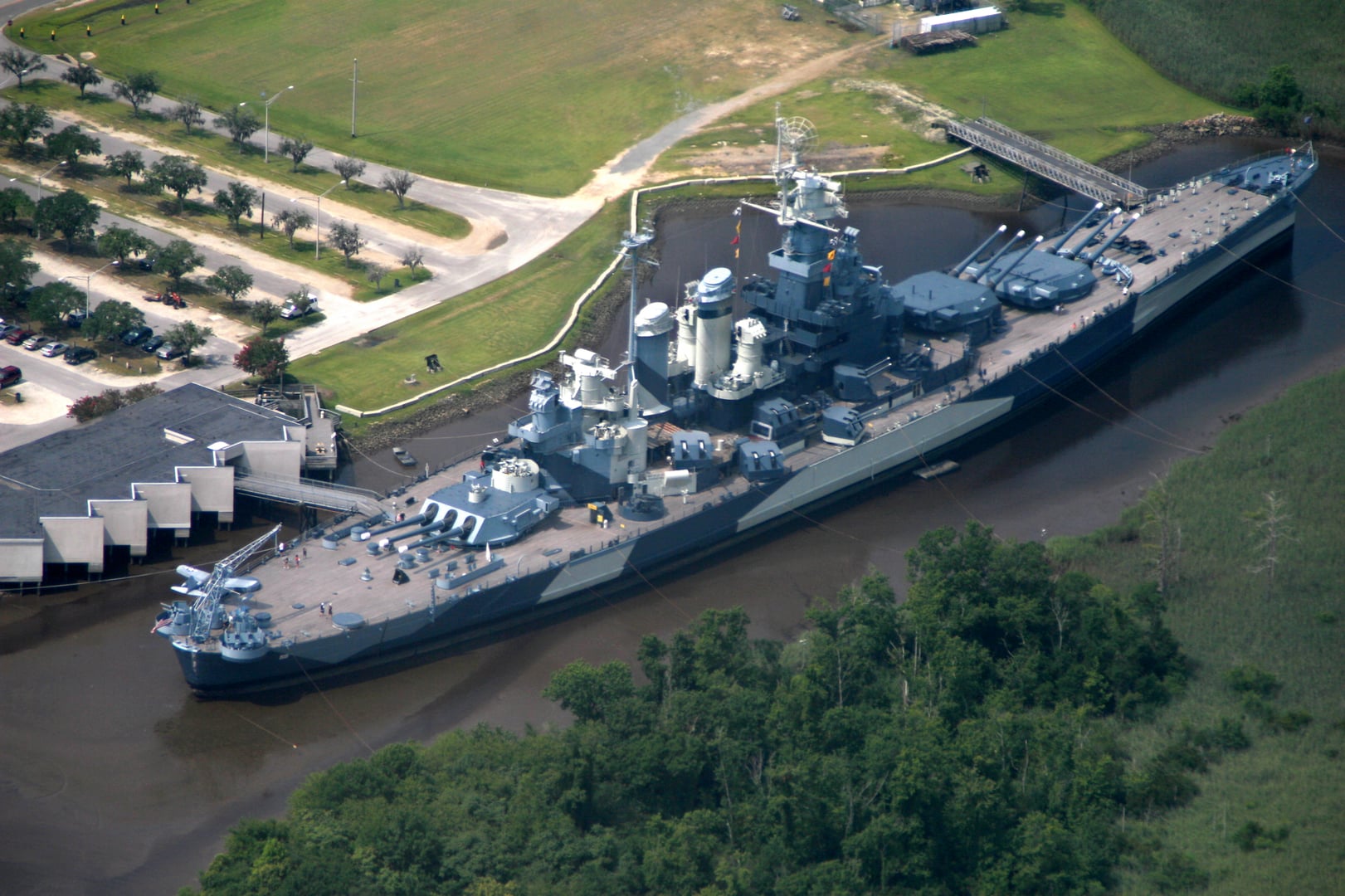
Bow view of the WWII battleship USS Alabama (BB-60) at her permanent berth in Battleship Memorial Park, Mobile, Alabama
Museum / Historical Site

Battleship USS Alabama

Mobile, AL

USS Alabama (BB-60) is a South Dakota-class battleship commissioned in 1942 that served 37 months in combat across both the Atlantic and Pacific theaters of World War II. Saved from scrapping in the early 1960s through an Alabama citizens' fundraising campaign, the ship has been moored at Battleship Memorial Park on Mobile Bay since January 1965.

$$All AgesFamily: Moderate
Greek Revival facade of the Bragg-Mitchell Mansion on Springhill Avenue
Photo coming soon
Haunted House / Historic Home

Bragg-Mitchell Mansion

Mobile, AL

The Bragg-Mitchell Mansion is a 13,000-square-foot Greek Revival house completed in 1855 for Judge John Bragg, designed by his brother, architect Alexander J. Bragg. The mansion survived the Civil War in part because Mrs. Bragg removed the family's furnishings to the family's Lowndes County plantation — which was later burned by Wilson's Raiders. The property now operates as a historic house museum and event venue.

$All AgesFamily: High
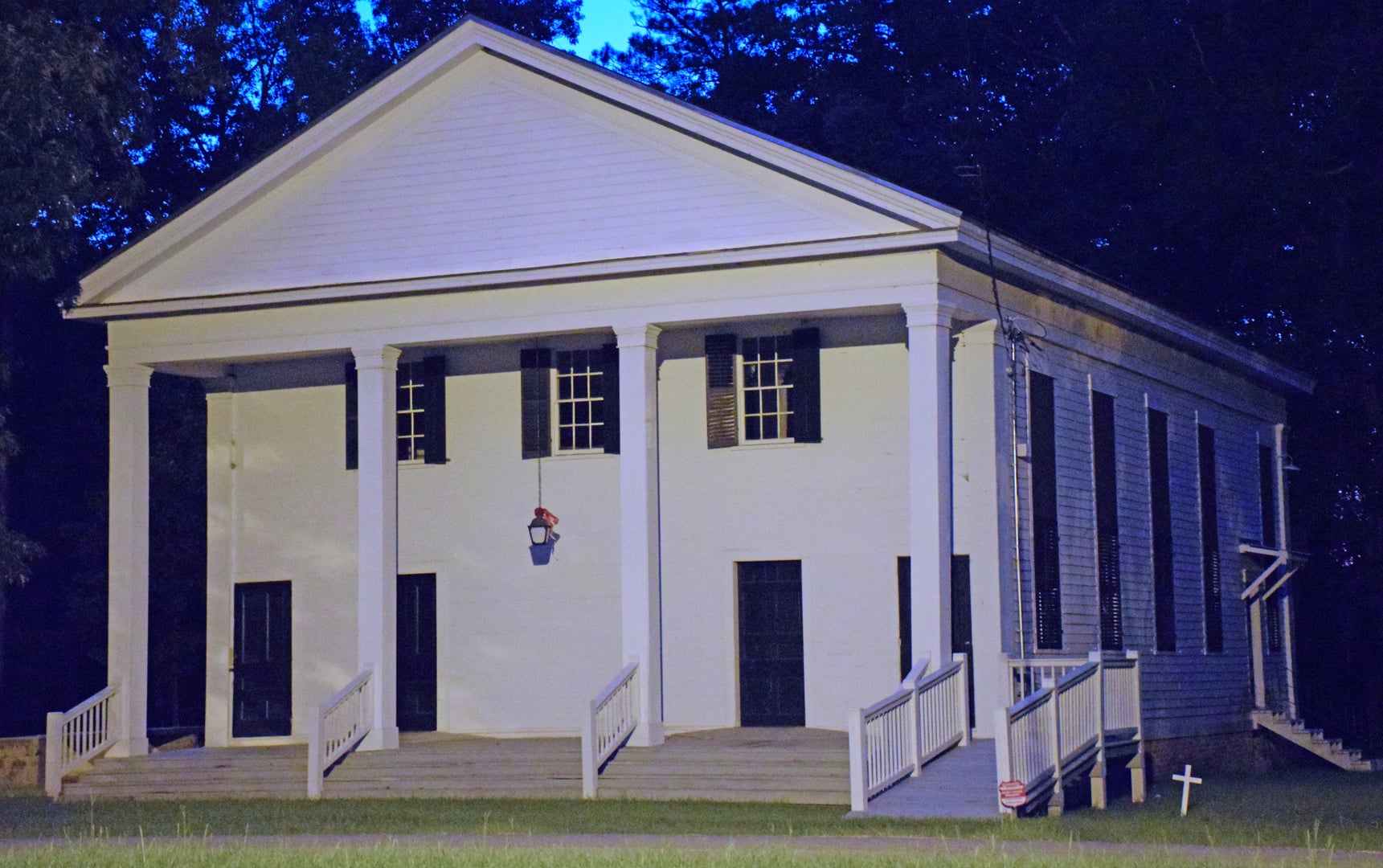
Abandoned church building at Brownville, Alabama ghost town
Photo coming soon
Other Dark Tourism Site

Brownville

Northport, AL

Brownville, formerly known as Brownsville, Hog Eye, Red Valley, and Sulpher Springs, was a rural community in Tuscaloosa County that flourished during the early twentieth century. The town operated a post office from 1926 to 1966, marking its period of active settlement. Today, only the church building remains standing amid the overgrown landscape.

FreeAll AgesFamily: High
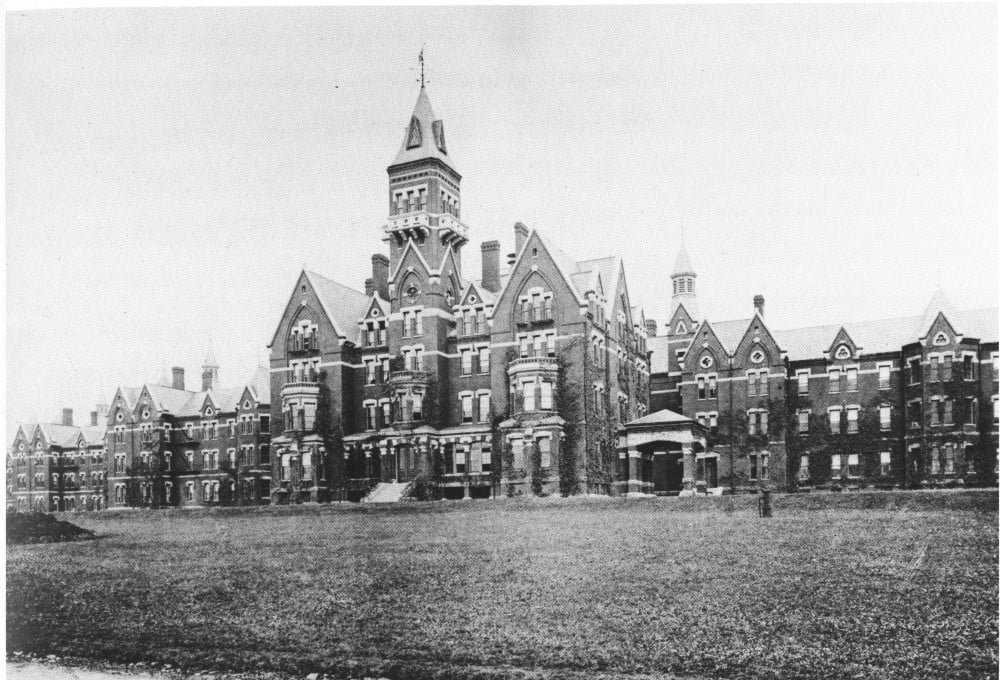
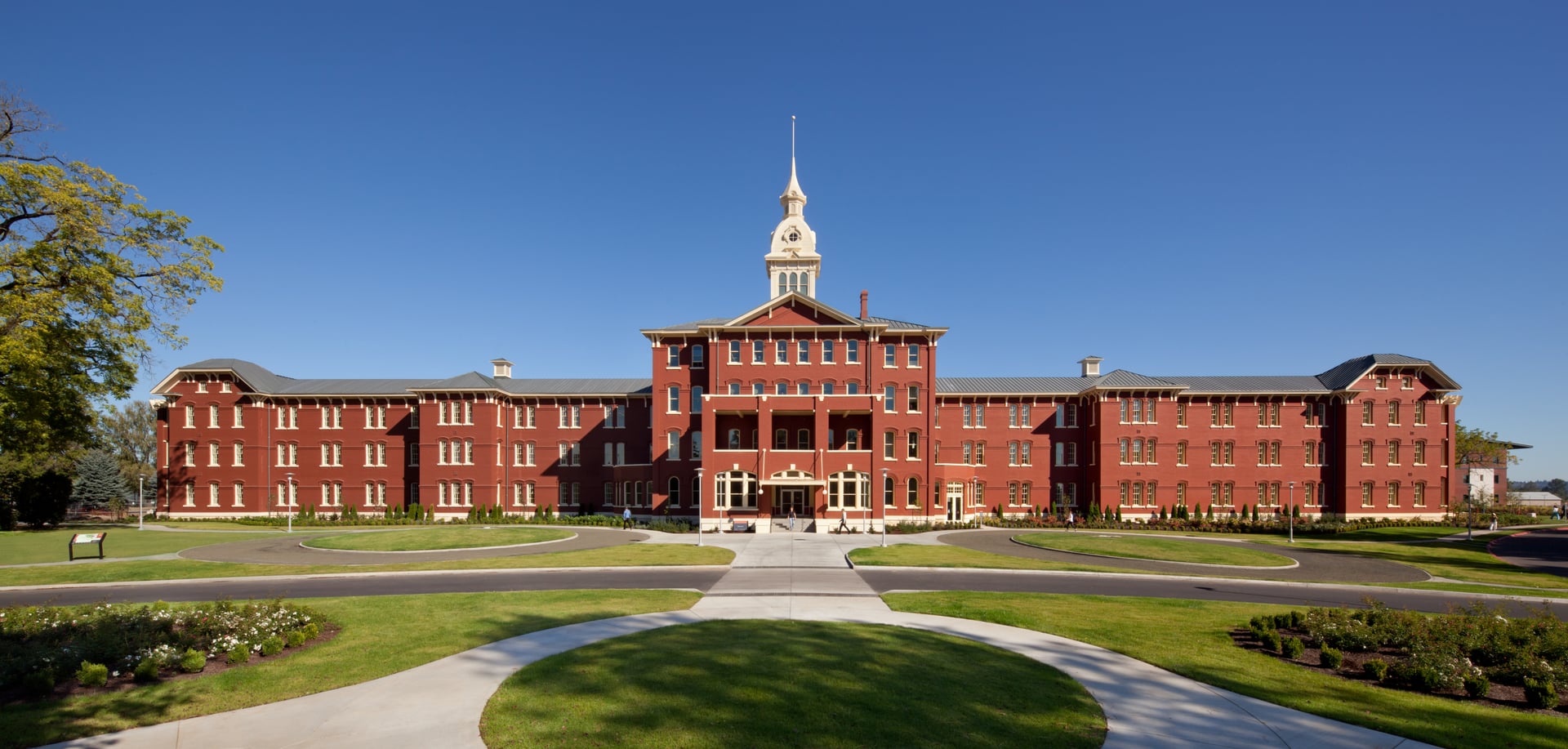
Kirkbride-plan facade of historic Bryce Hospital, opened in 1861 in Tuscaloosa, Alabama
Museum / Historical Site

Bryce Hospital

Tuscaloosa, AL

Bryce Hospital opened in 1861 in Tuscaloosa, Alabama, as the Alabama State Hospital for the Insane. Designed by Dr. Thomas Story Kirkbride in collaboration with architect Samuel Sloan, it served as the prototype for the Alabama Plan that shaped more than 100 psychiatric facilities across North America. The University of Alabama purchased the property in 2010 and opened the Bryce Hospital Museum in 2024.

FreeAll AgesFamily: Moderate
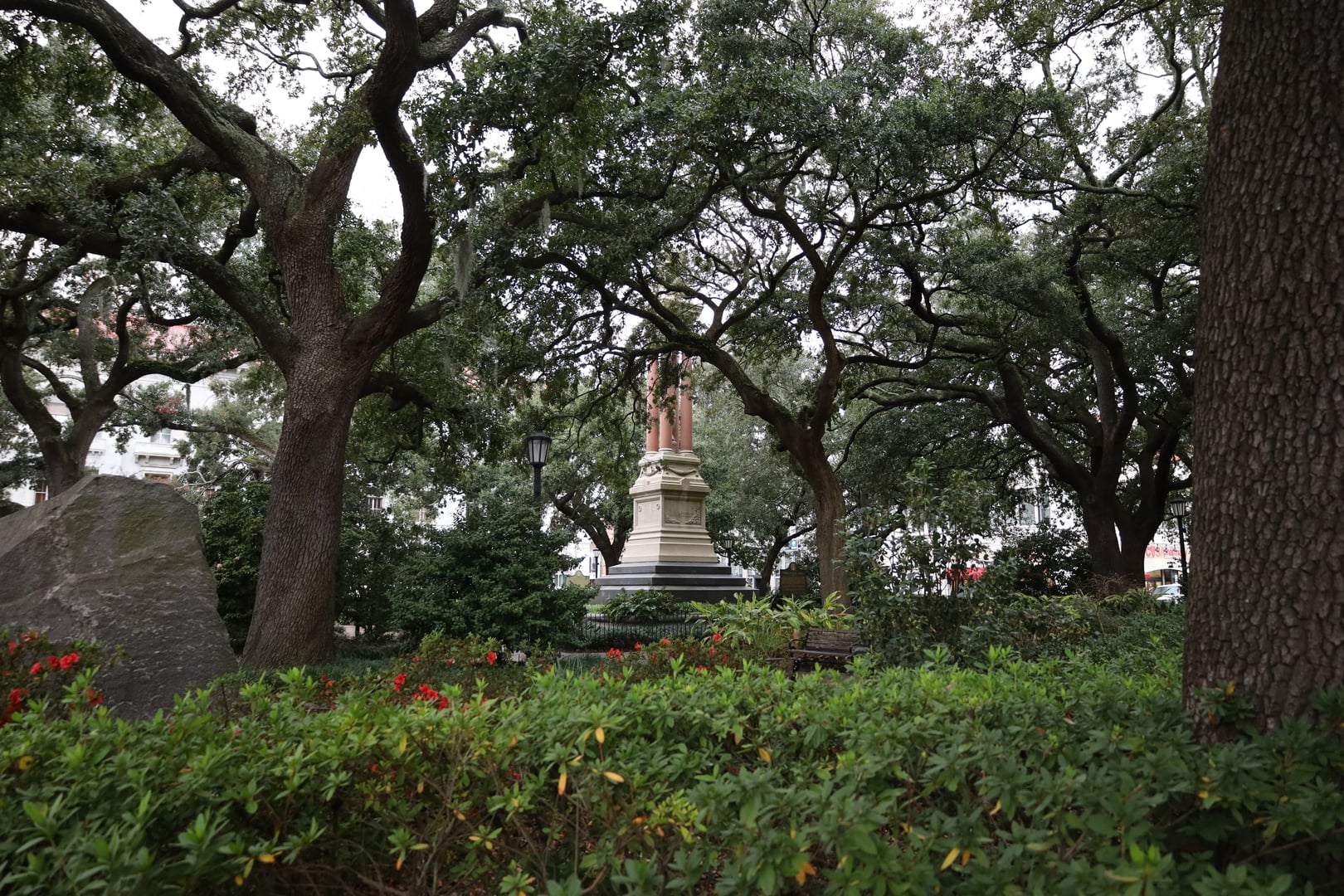
Cathedral Basilica of the Immaculate Conception facing Cathedral Square (the former Campo Santo burial site) in downtown Mobile, Alabama.
Cemetery / Burial Ground

Cathedral Square (Campo Santo site)

Mobile, AL

Cathedral Square occupies part of Mobile's 18th-century Catholic Campo Santo cemetery, a roughly 400-by-300-foot burial ground spanning portions of city blocks between Joachim, Dauphin, Franklin, and Conti Streets. Most burials were moved to the new Church Street Graveyard in 1819 when Mobile's city limits expanded, but additional remains continued to surface along Conti Street as late as the 1890s. The blocks were filled with buildings through most of the nineteenth and twentieth centuries before being demolished in 1979 to create the public park facing the Cathedral Basilica.

FreeAll AgesFamily: High
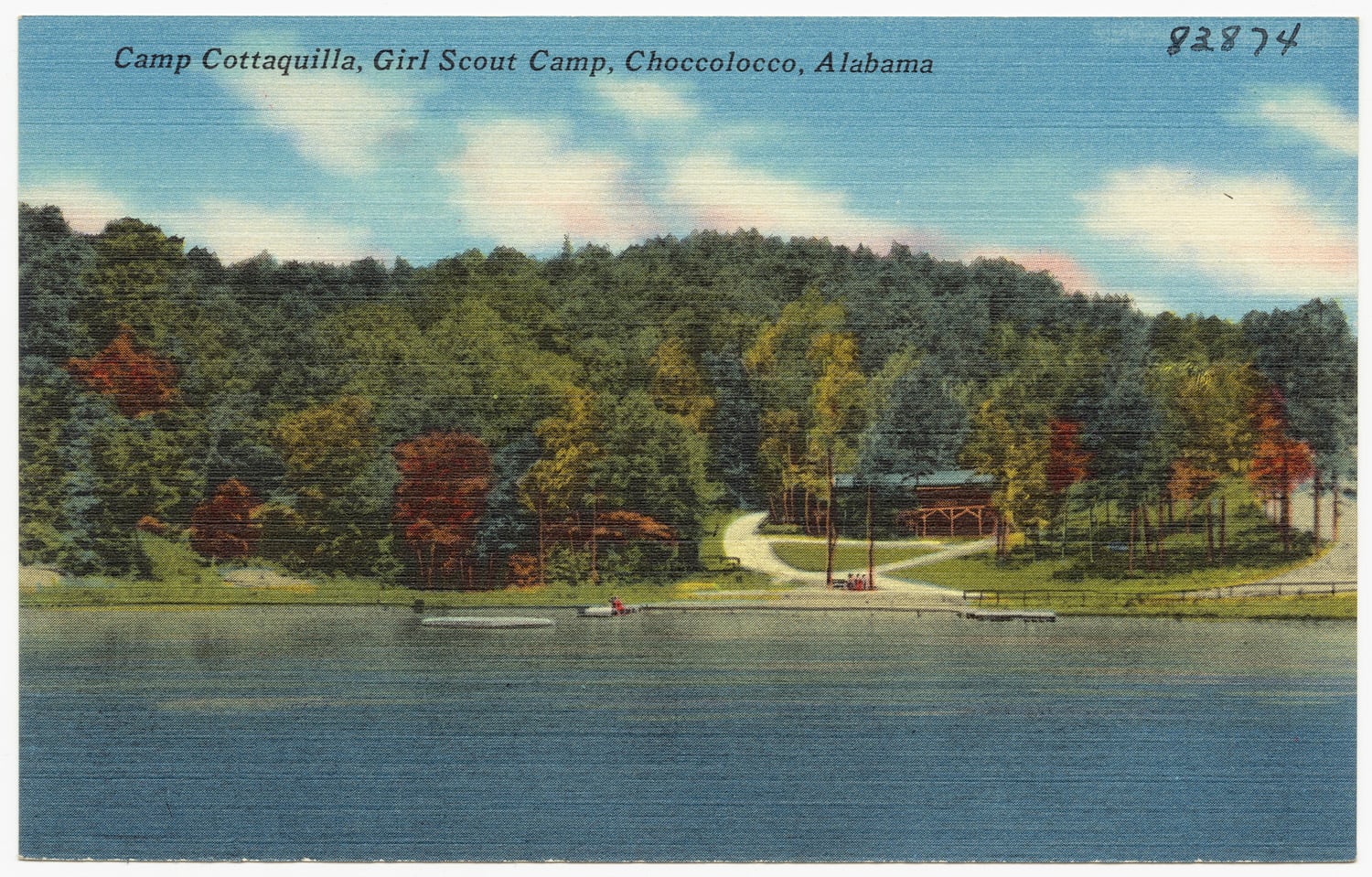
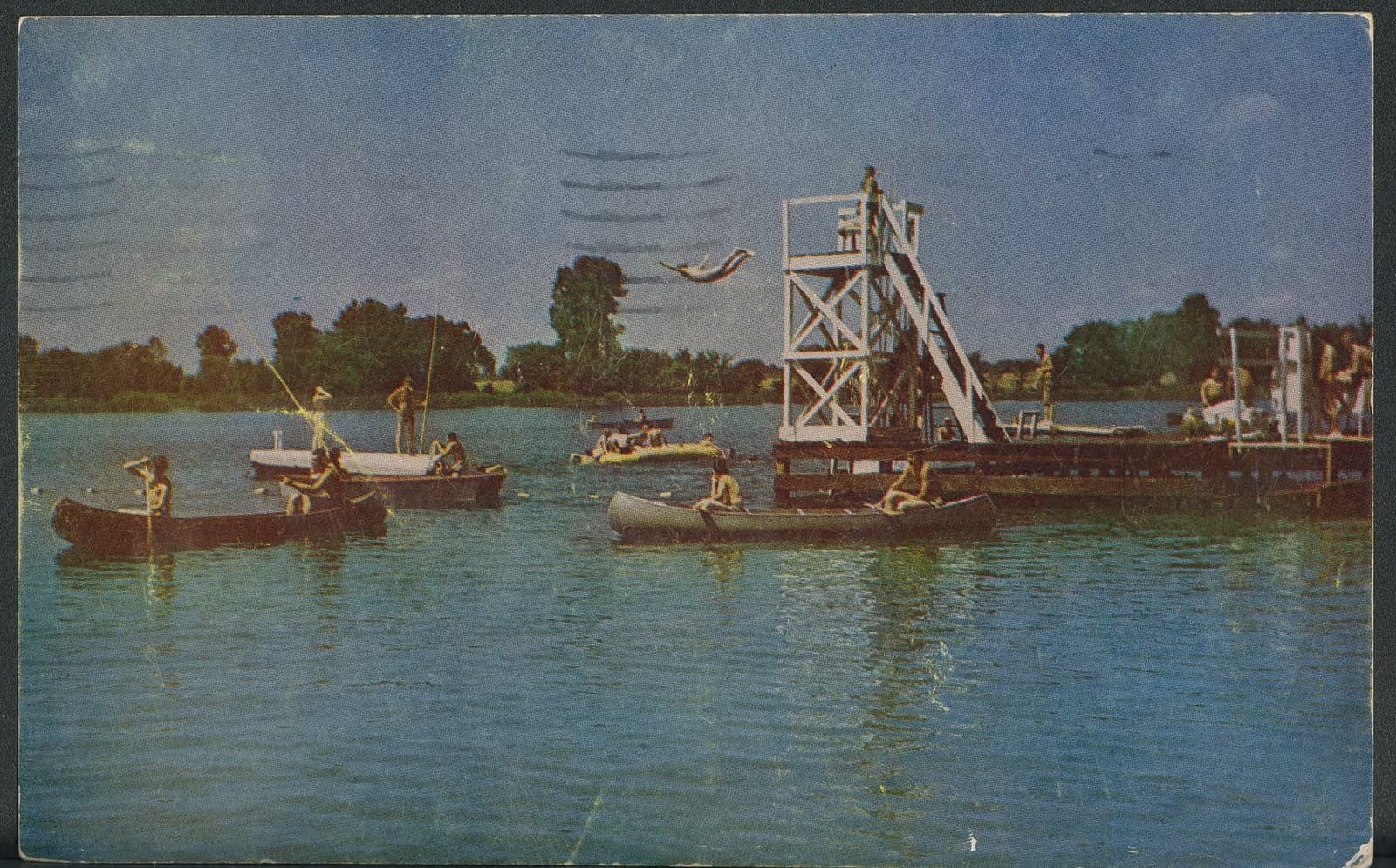
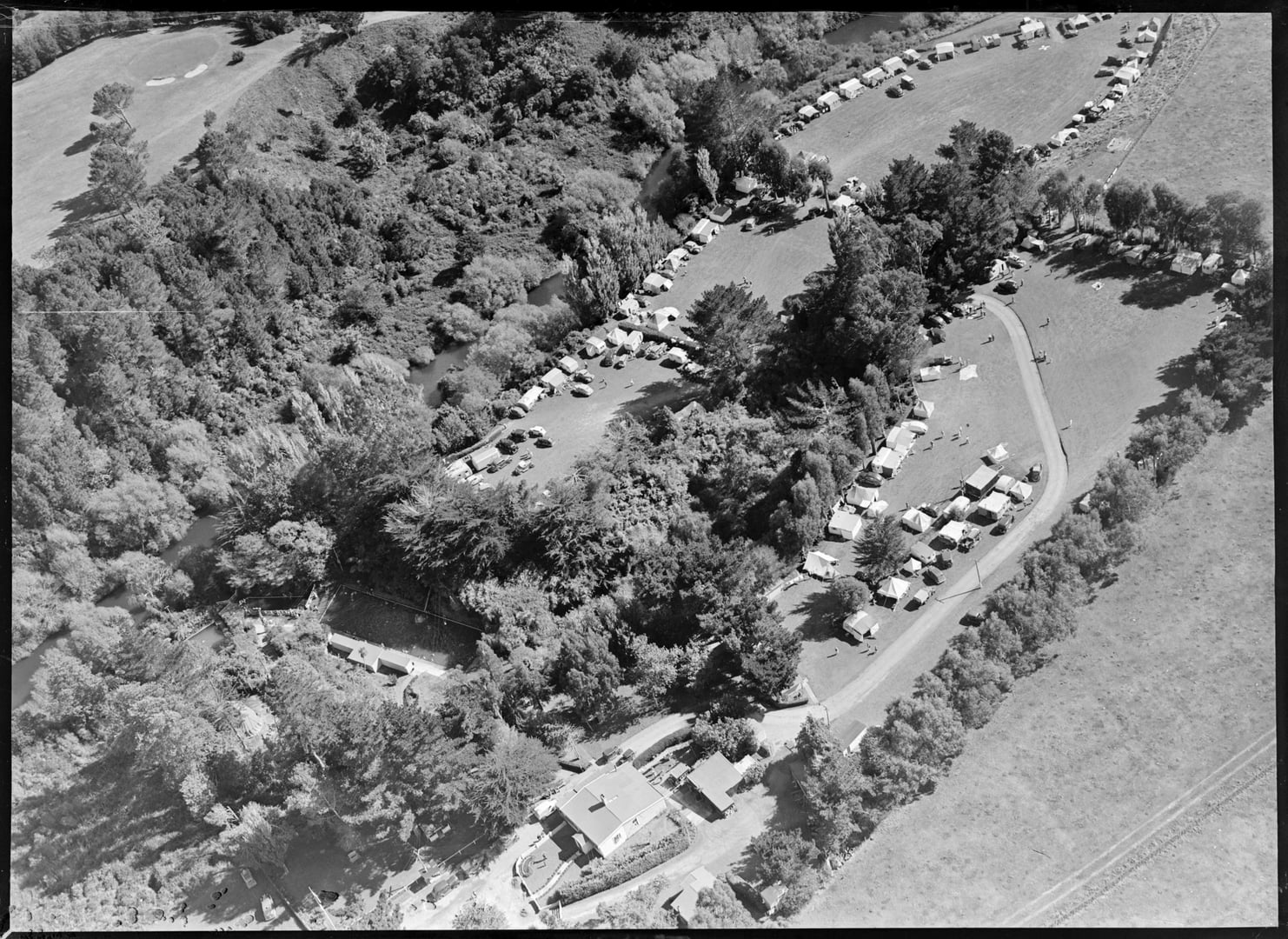
File name: 06_10_012860
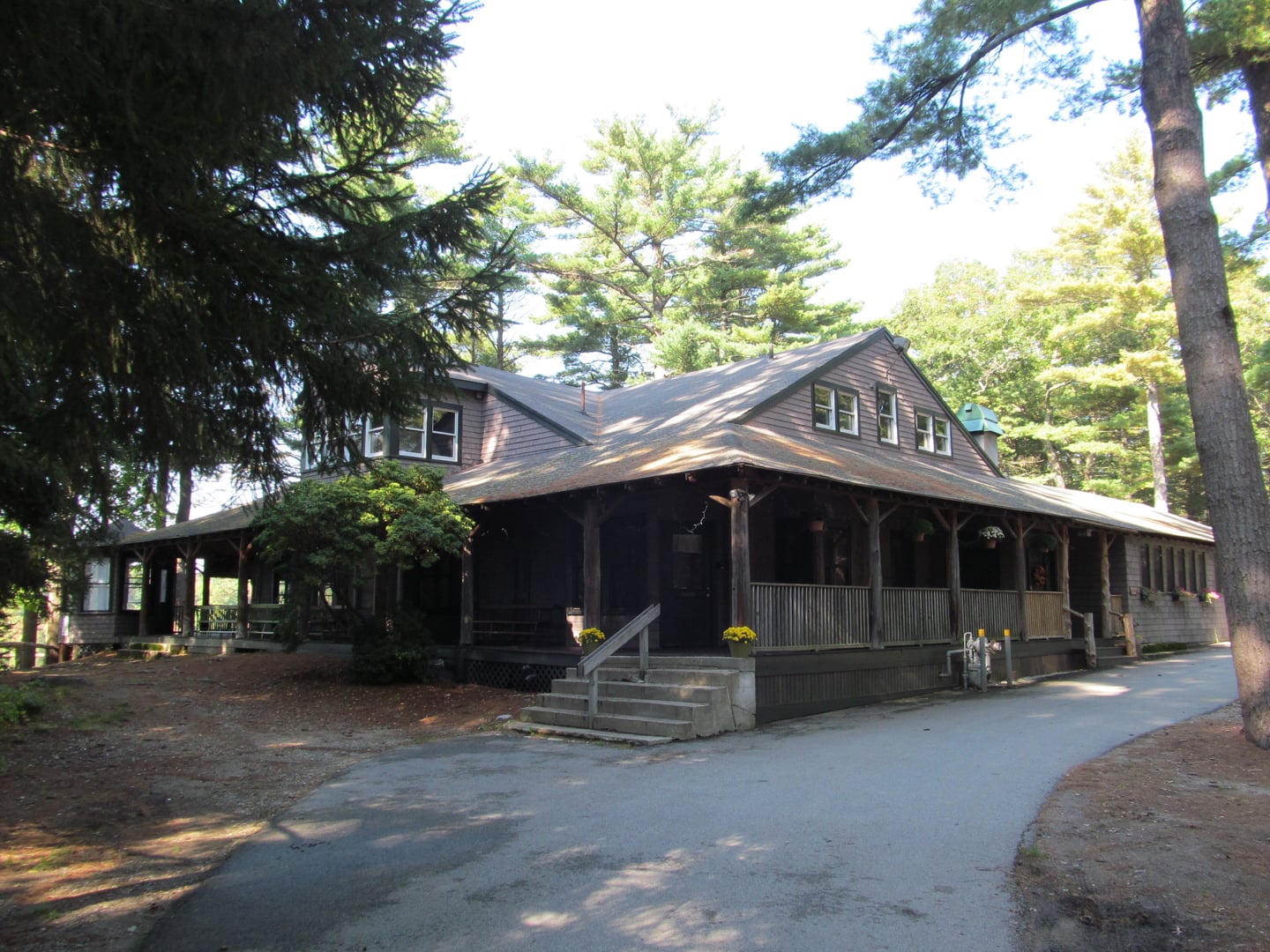
Title: Camp Cottaquilla, Girl Scout Camp, Choccolocco, Alabama
Created/Published:
Date issued: 1930 - 1945 (approximate)
Physical description: 1 print (postcard) : linen texture, color ; 3 1/2 x 5 1/2 in.
Genre: Postcards 
Subject: Cabins; Lakes & ponds
Notes: Title from
Other Dark Tourism Site

Camp Cottaquilla

Anniston, AL

Camp Cottaquilla was established in 1947 as a permanent residential facility for Girl Scouts of North-Central Alabama. The 1600-acre facility occupies 300 acres in the Whites Gap section of Calhoun County, chosen for its scenic beauty, natural streams, and hardwood forests. The camp continues active operation as a premier Girl Scout camping destination.

$$Girl Scouts Only (Residential Camp)Family: High
A wooded Alabama hillside near Munford with scattered small pioneer cemeteries.
Photo coming soon
Cemetery / Burial Ground

Cemetery Mountain

Munford, AL

Cemetery Mountain is the colloquial name for a wooded hillside near Munford, Alabama, in Talladega County. The name reflects the presence of multiple small pioneer-era family cemeteries on the slope, with some markers dating to the 1890s and early 1900s.

FreeAll AgesFamily: Moderate
Brick walls and gravestones within Church Street Graveyard in Mobile, Alabama
Cemetery / Burial Ground

Church Street Graveyard

Mobile, AL

Church Street Graveyard opened in 1819 as Mobile's first municipal burial ground, replacing the smaller churchyard at the Catholic cathedral. The four-acre walled cemetery operated until 1898 and was Mobile's principal burial ground through the antebellum period.

FreeAll AgesFamily: High
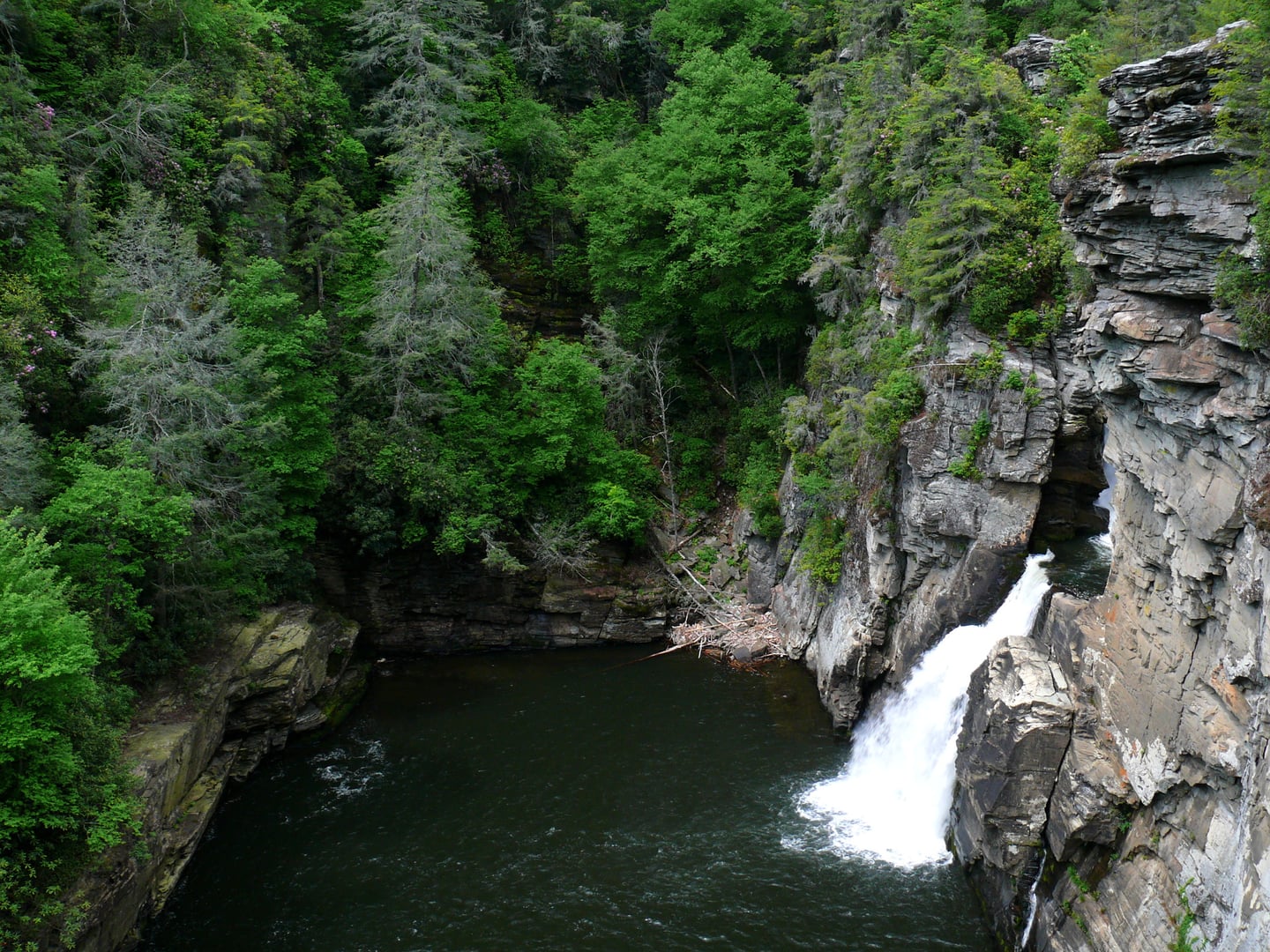
DeSoto Falls dropping over a Lookout Mountain cliff into the West Fork of the Little River, DeSoto State Park, Mentone, Alabama
Museum / Historical Site

DeSoto Falls

Mentone, AL

DeSoto Falls is a 104-foot waterfall on the West Fork of the Little River within DeSoto State Park, atop Lookout Mountain in northeast Alabama. The falls were named for Hernando de Soto, whose 1540 Spanish expedition passed nearby. An early hydroelectric dam built upstream first brought electricity to the Mentone area.

$All AgesFamily: Moderate
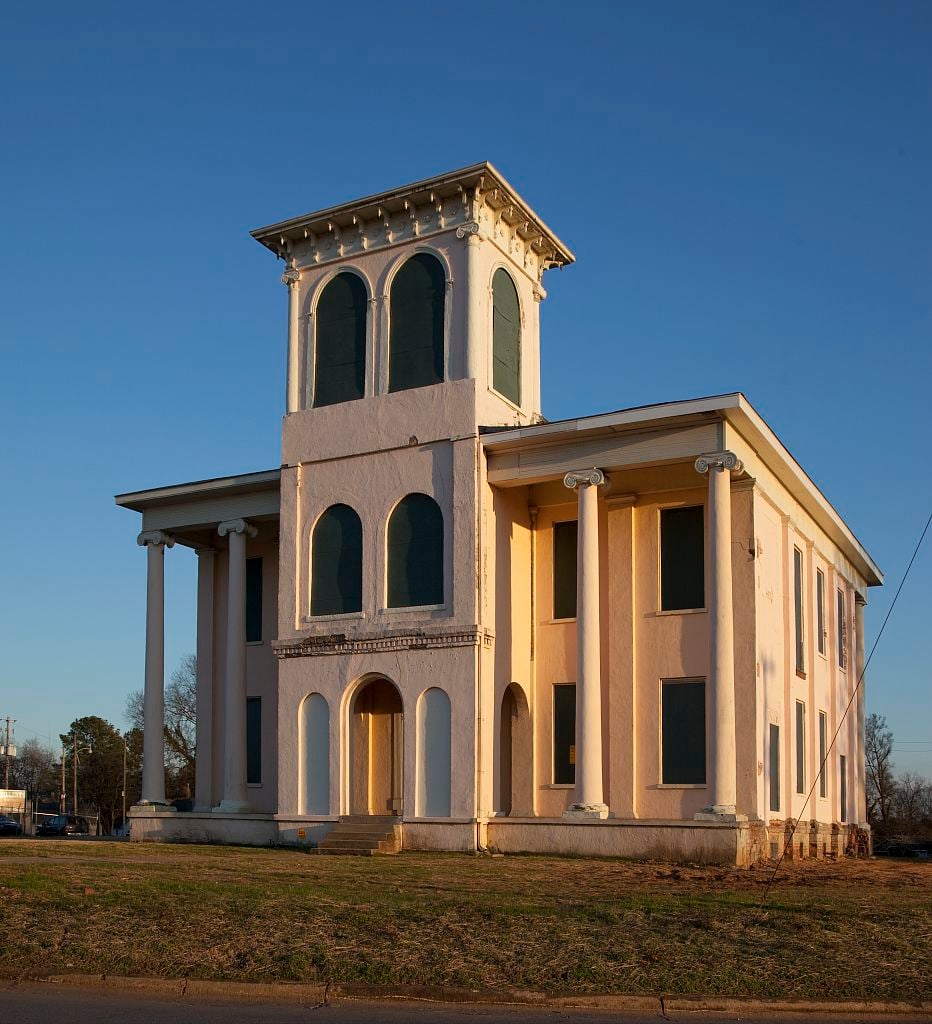
Greek Revival Drish House mansion with Italianate tower in Tuscaloosa, Alabama
Haunted House / Historic Home

The Historic Drish House

Tuscaloosa, AL

The Drish House is an 1837 Greek Revival mansion with a later Italianate tower in Tuscaloosa, Alabama. It was built by Dr. John R. Drish, a physician, and his wife Sarah, on what was then a 450-acre cotton plantation worked by enslaved laborers. The house has served as a school, a church, and an automotive shop; it was restored in the 2010s and is listed on the National Register of Historic Places.

$$All AgesFamily: Moderate
1836 main house of Fort Condé Inn at 165 S. Saint Emanuel Street
Photo coming soon
Haunted Hotel / Inn

Fort Condé Inn

Mobile, AL

Fort Condé Inn occupies the 1836 main house — Mobile's second-oldest house — and a cluster of restored cottages in Fort Condé Village, adjacent to the reconstructed eighteenth-century French Fort Condé. The site lineage runs from 1711 (French colonial fort) through nineteenth-century residential use to its current four-diamond boutique-inn operation.

$$All AgesFamily: Moderate
The wooded foothills above Brownwood Estates in Jacksonville, Alabama, near the Chief Ladiga Trail corridor.
Photo coming soon
Other Dark Tourism Site

Dump Road (Old Chief Ladiga Trail)

Jacksonville, AL

Dump Road is a colloquial name for an unfinished subdivision road extension in Jacksonville, Alabama, located above the Brownwood Estates neighborhood and along a section of the Old Chief Ladiga Trail corridor. The road was paved in the 1980s as part of a planned development that was never completed; the formal Chief Ladiga Trail today provides 39.2 miles of paved rail-trail through eastern Alabama.

FreeAll AgesFamily: Moderate
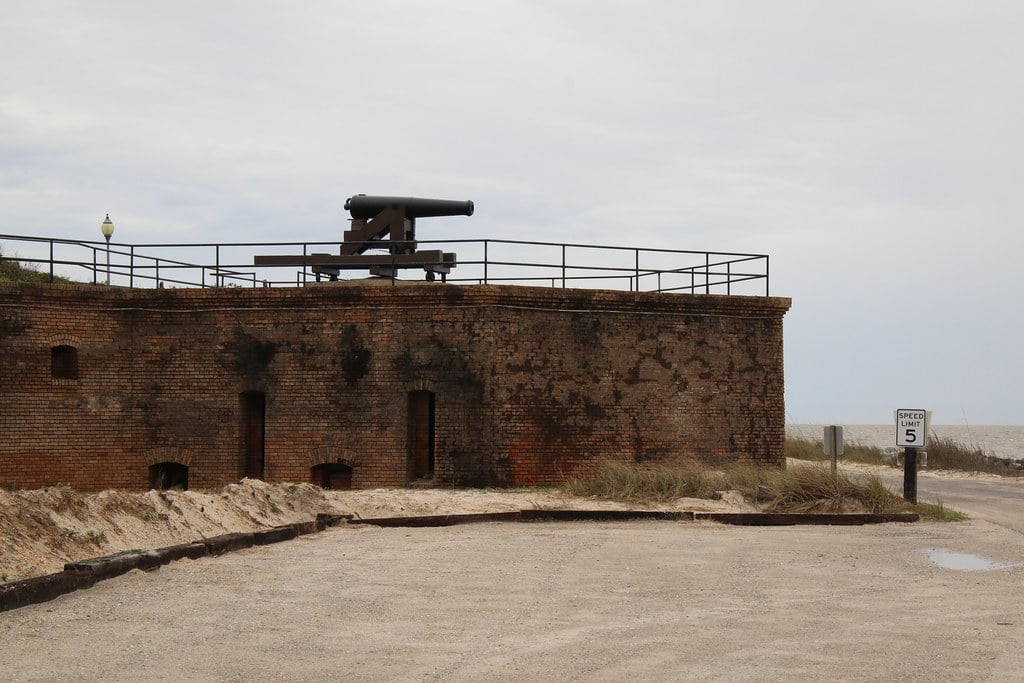
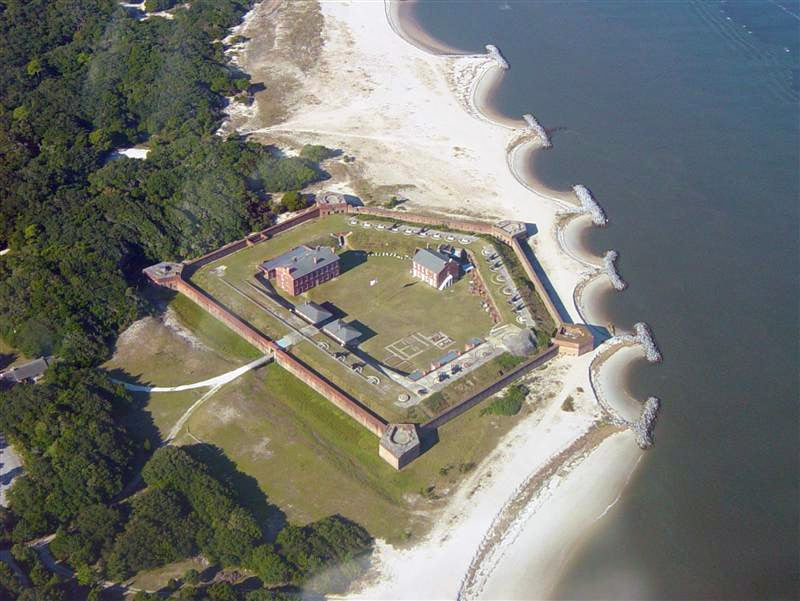
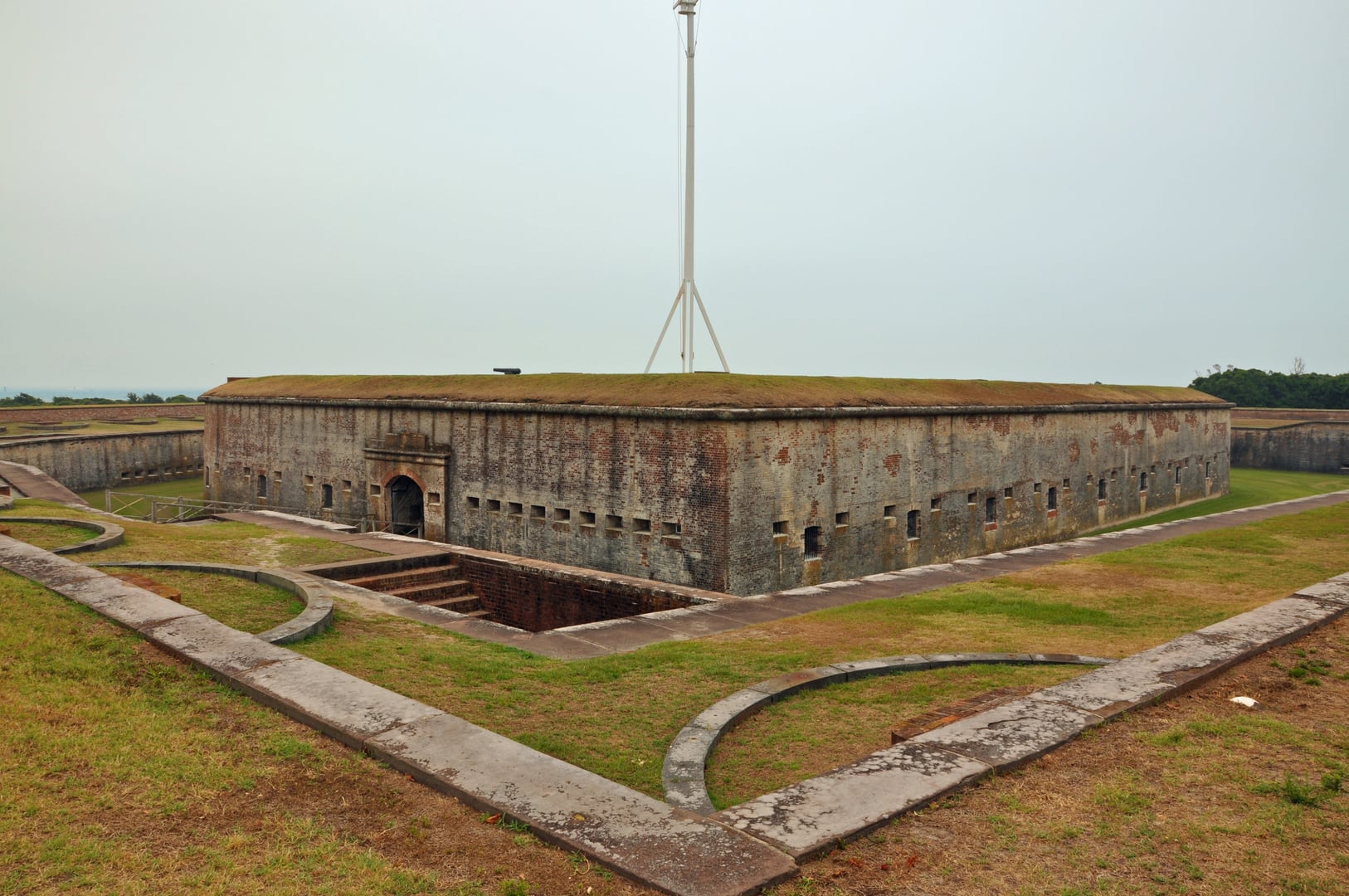
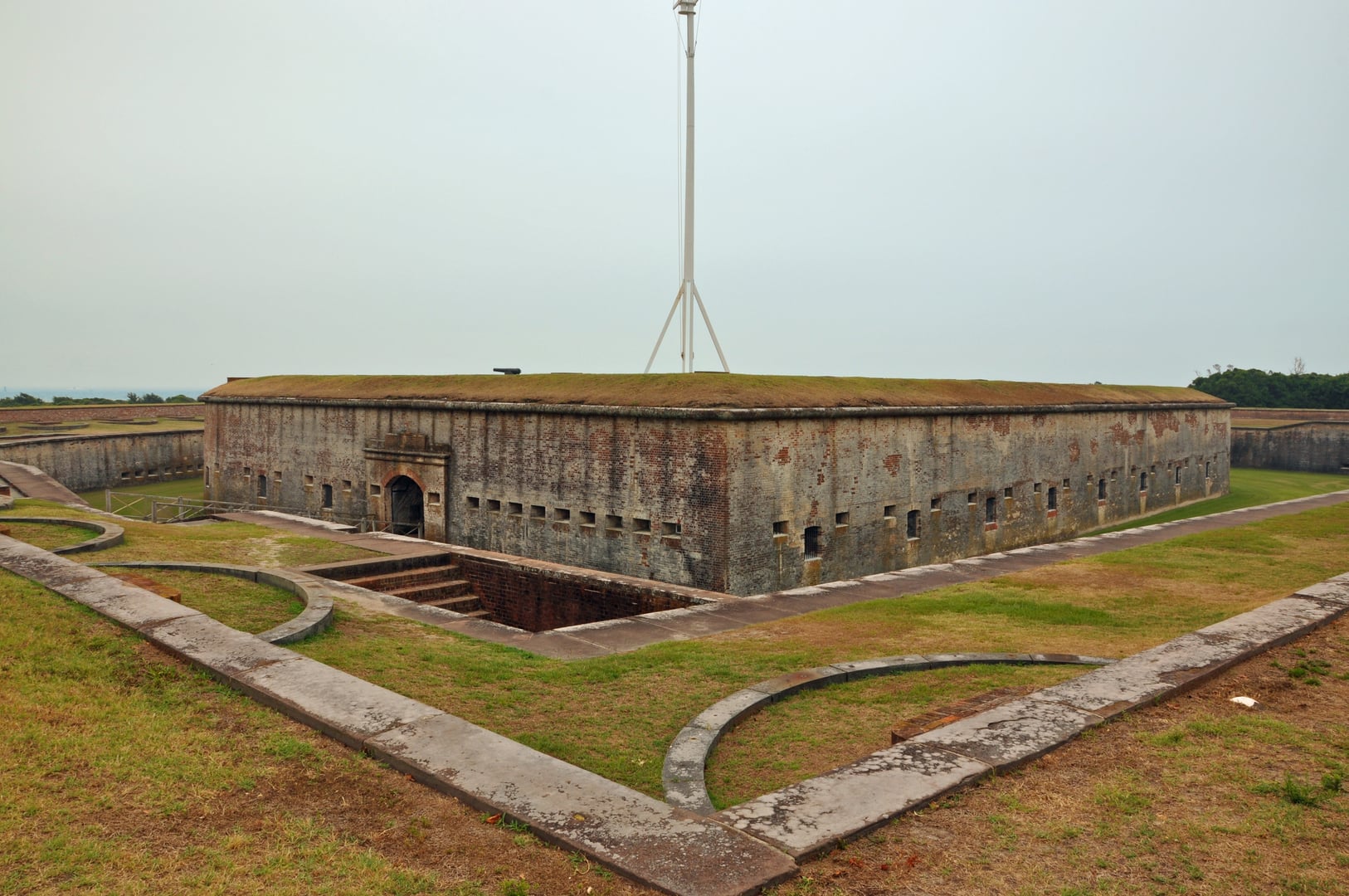
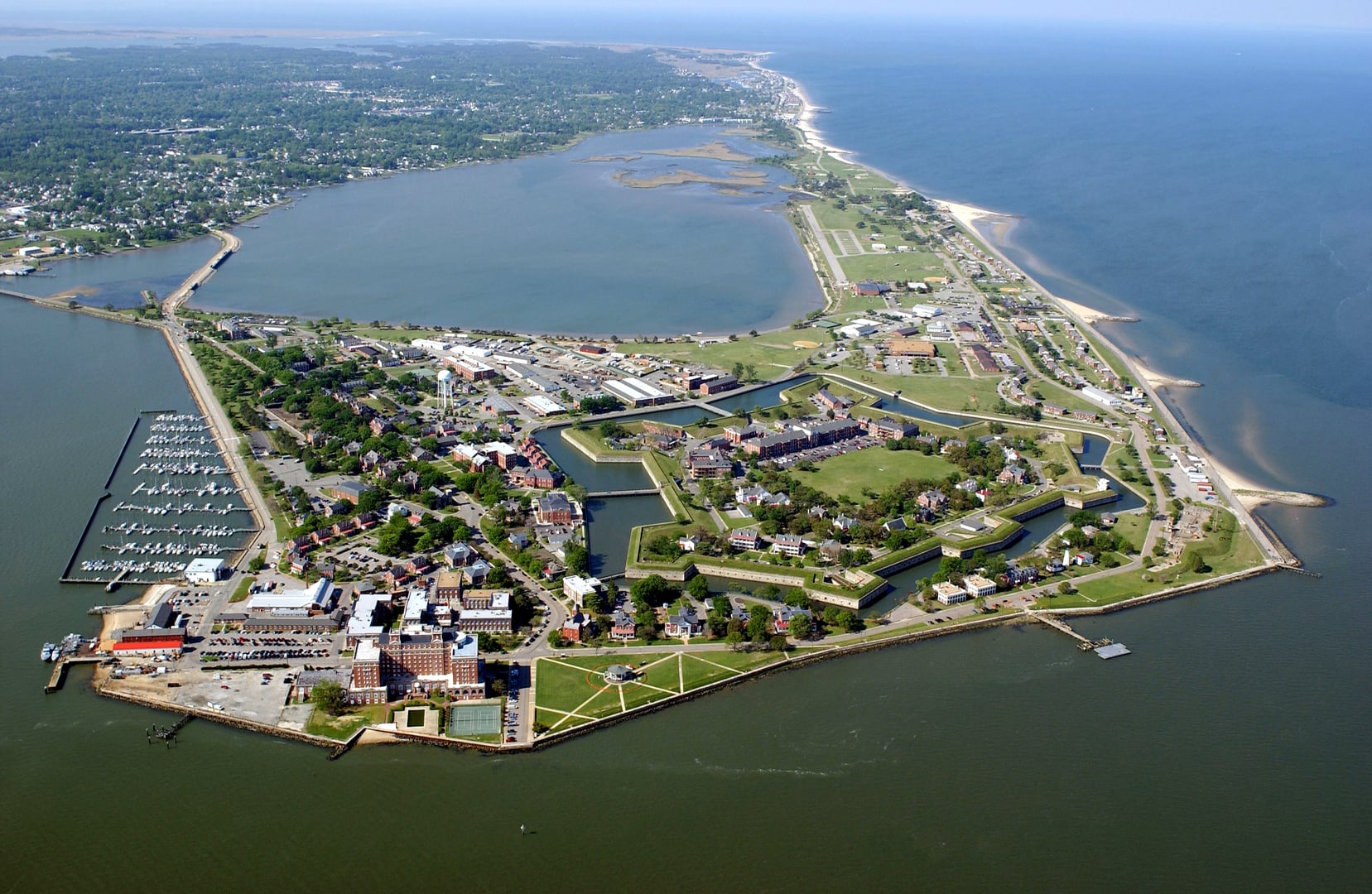
The brick masonry walls and bastions of Fort Gaines at the eastern tip of Dauphin Island, Alabama.
Battlefield / Military Site

Fort Gaines

Dauphin Island, AL

Fort Gaines is a brick masonry coastal fortification on the eastern tip of Dauphin Island, Alabama, completed in 1861 to defend the western entrance to Mobile Bay. It is best known for its role in the August 1864 Battle of Mobile Bay, when Union Admiral David Farragut ran the fort's torpedo line. The fort was used through both World Wars and is now operated by the Dauphin Island Park and Beach Board.

$$All AgesFamily: Moderate
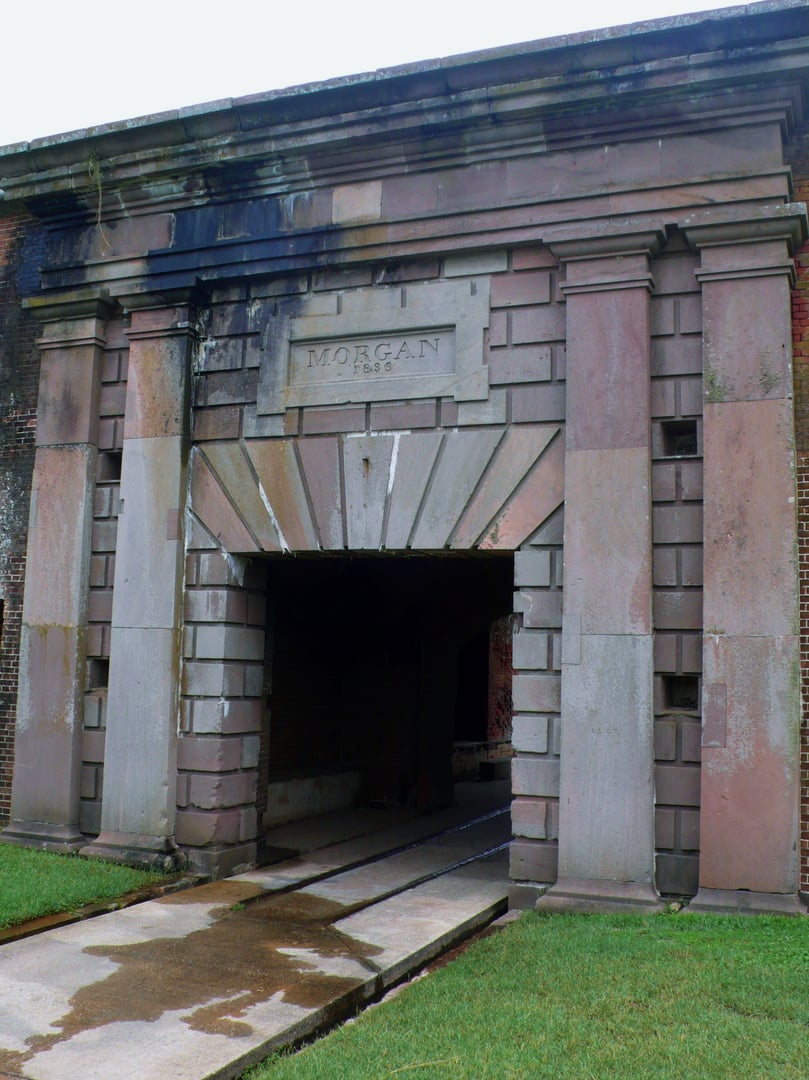
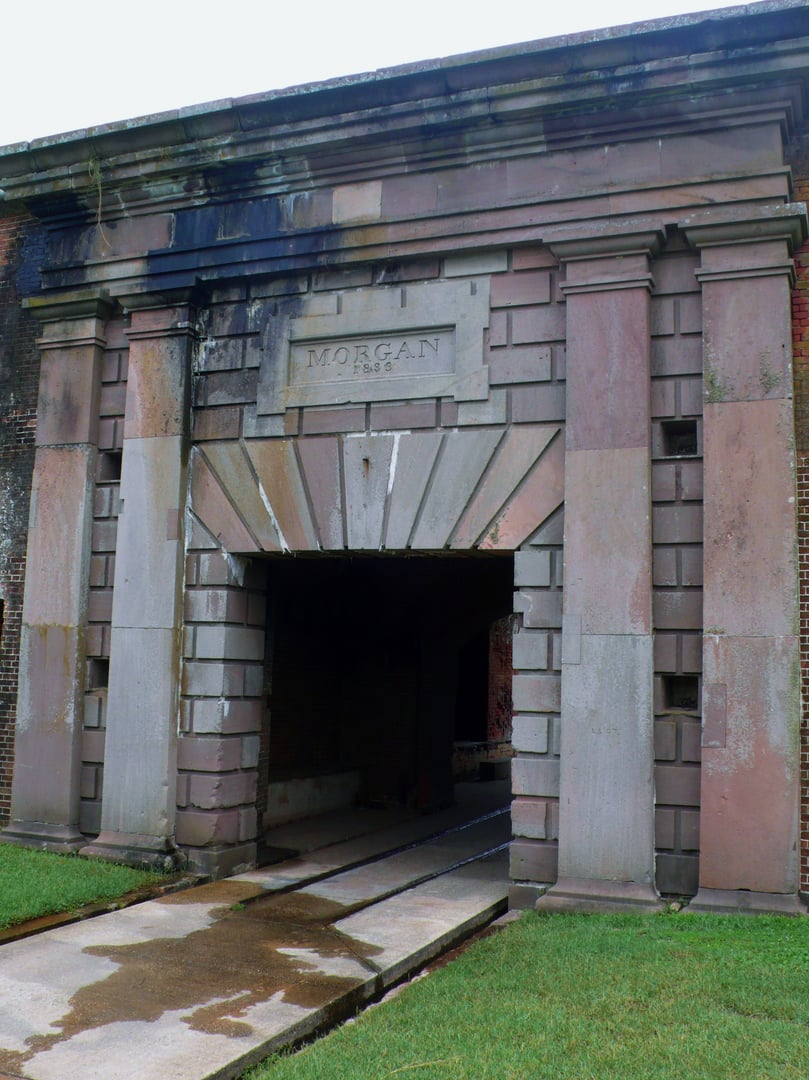
Brick entrance archway at Fort Morgan on Mobile Point in Baldwin County, Alabama
Battlefield / Military Site

Fort Morgan State Historic Site

Gulf Shores, AL

Fort Morgan is a brick pentagonal masonry fort completed in 1834 on Mobile Point at the entrance to Mobile Bay, Alabama. Named for Revolutionary War hero Daniel Morgan, the fort was the principal Confederate defense in the August 5, 1864 Battle of Mobile Bay, where Admiral David Farragut's Union fleet charged through mined waters. General Richard Page surrendered the fort on August 23, 1864. Control transferred to the Alabama Historical Commission in 1977.

$All AgesFamily: High
Brick entrance archway of Fort Morgan at the mouth of Mobile Bay, Alabama
Battlefield / Military Site

Fort Morgan

Gulf Shores, AL

Fort Morgan is a star-shaped masonry fort built between 1819 and 1833 at the western entrance to Mobile Bay, Alabama. It saw active service in the Civil War, the Spanish-American War, and both World Wars and is now operated as a state historic site by the Alabama Historical Commission.

$$All AgesFamily: Moderate
Rural road dip on County Road 25 in Mount Hope, Alabama, site of the Henry's Hill gravity phenomenon
Photo coming soon
Outdoor / Natural Site

Henry Hill (Gravity Hill)

Mount Hope, AL

Henry Hill on County Road 25 in Mount Hope, Alabama has accumulated multiple origin stories over generations. The most common modern version describes a man named Henry who died pushing his family's stalled car out of the path of an oncoming vehicle. Older community accounts predate this narrative, with elder residents recalling stories of a young enslaved person killed by a horse-drawn vehicle at the same spot long before the Civil War.

FreeAll AgesFamily: High
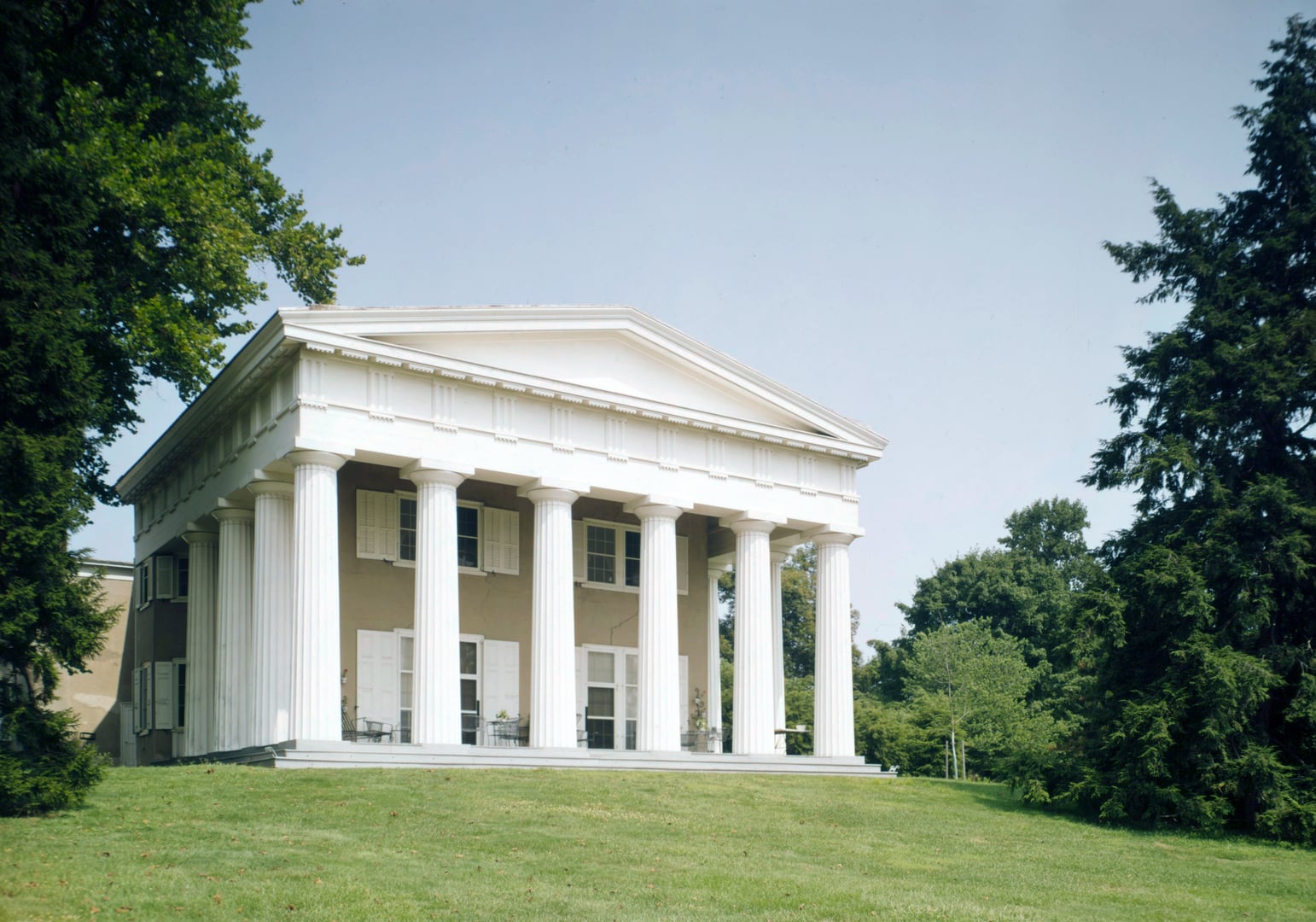
The columned Greek Revival facade of Gaineswood under afternoon Alabama sun
Photo coming soon
Museum / Historical Site

Gaineswood

Demopolis, AL

Gaineswood was built in stages between 1843 and 1861 by General Nathan Bryan Whitfield, who designed the house himself. It is regarded as one of the finest Greek Revival residences in the United States and is a National Historic Landmark, owned and operated by the Alabama Historical Commission as a historic-house museum.

$All AgesFamily: High
Grave of Edward Hodges Baily in Highgate Cemetery
Photo coming soon
Cemetery / Burial Ground

Hodges Cemetery

Gardendale, AL

Hodges Cemetery is a small private family burial ground on Hodges Cemetery Road in Jefferson County, Alabama, about 4.4 miles outside Gardendale, with an estimated 135 graves but only around 35 surviving markers. Documented in Bhamwiki and regional cemetery surveys, the site is actively threatened by ATV incursion and overgrowth.

FreeAll AgesFamily: Moderate
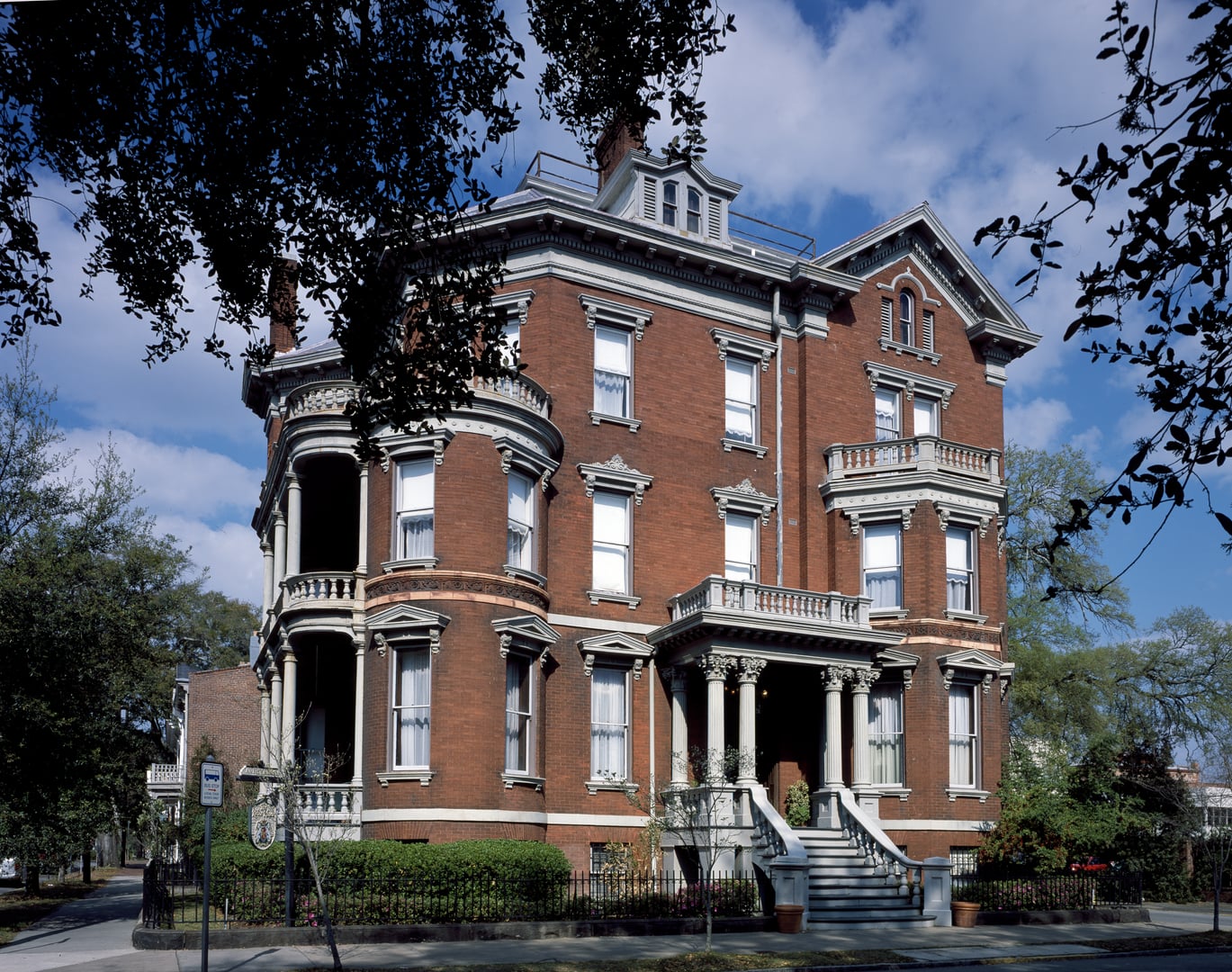
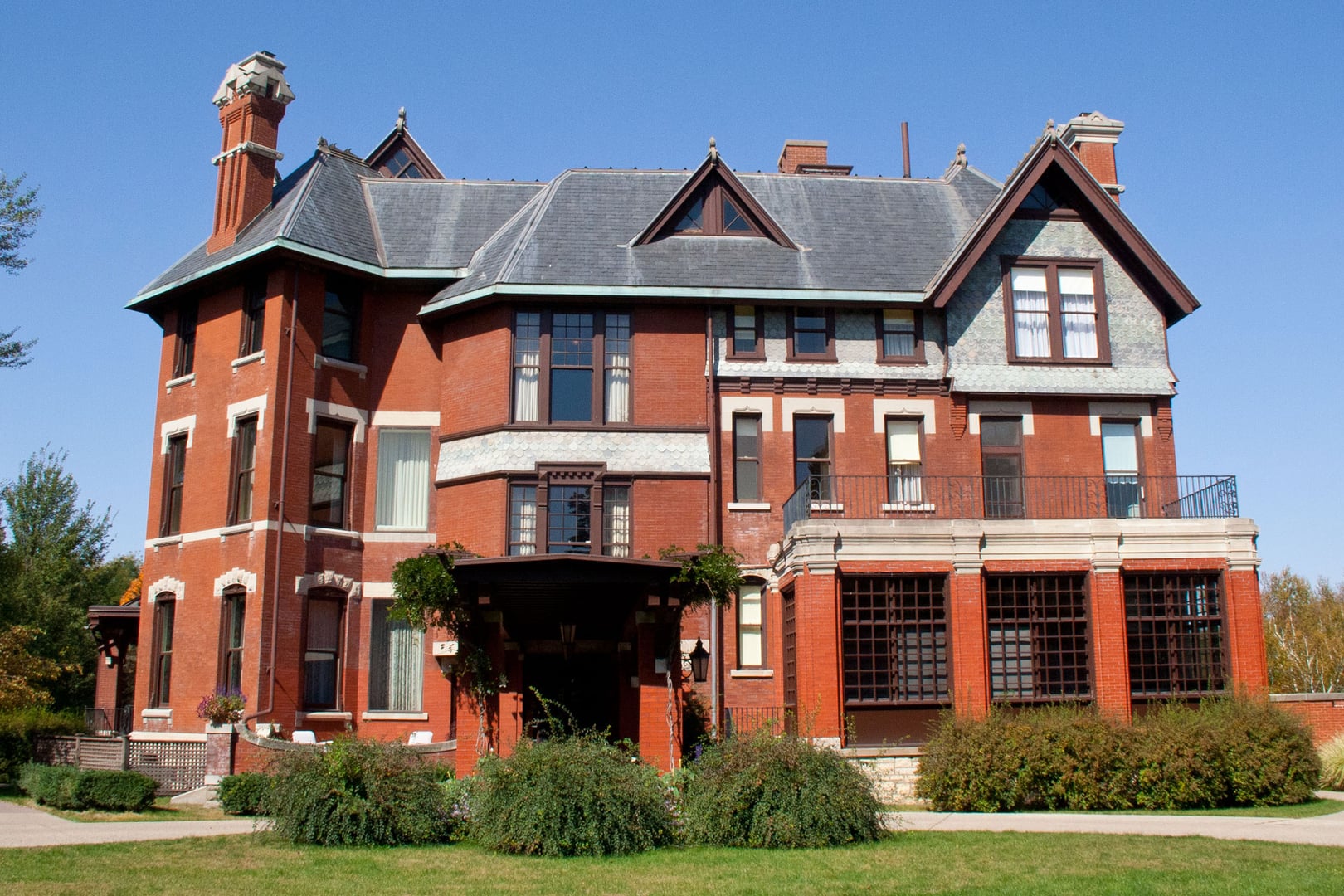
Queen Anne Victorian Kate Shepard House (Monterey Place), built 1897 from a George Franklin Barber catalog design, in midtown Mobile, Alabama.
Haunted Hotel / Inn

Kate Shepard House Bed and Breakfast

Mobile, AL

The Kate Shepard House is a 1897 Queen Anne Victorian designed by Tennessee architect George Franklin Barber. The home was ordered from Barber's catalog and required thirteen railroad cars to deliver its components from Knoxville to Mobile. Built for Charles Martin Shepard, the general passenger agent of the Mobile and Ohio Railroad, it served from 1910 as a girls' boarding/day school run by his daughters Kate and Isabel, and reopened as a bed and breakfast around 2002.

$$All AgesFamily: High
Kenworthy Hall, the 1860 Richard Upjohn Italian villa near Marion, Alabama, a National Historic Landmark
Haunted House / Historic Home

Kenworthy Hall

Marion, AL

Kenworthy Hall in Marion, Alabama is the only surviving residential example of architect Richard Upjohn's Italian villa style adapted for Southern plantation life. Built 1858-1860 for cotton factor Edward Kenworthy Carlisle, the house was designated a National Historic Landmark in 2004. It remains a private residence.

FreeAll Ages (drive-by only)Family: High
Residential street in Hueytown Alabama at dusk, lined with mid-century homes
Photo coming soon
Other Dark Tourism Site

Lilly Lane

Hueytown, AL

Lilly Lane is a residential street in Hueytown, Alabama, a city in western Jefferson County incorporated in 1955 and part of the greater Birmingham metropolitan area. The surrounding community developed largely in the mid-twentieth century alongside Birmingham's industrial growth.

FreeAll AgesFamily: High
Twin antebellum townhouses of the Malaga Inn at 359 Church Street, Mobile
Photo coming soon
Haunted Hotel / Inn

Malaga Inn

Mobile, AL

The Malaga Inn occupies twin 1862 townhouses built on Church Street in Mobile's downtown historic district. The two halves were constructed for the Goldsmith and Frohlichstein families shortly after Alabama's secession ordinance, and have been combined into a 39-room boutique hotel since the 1960s.

$$All AgesFamily: Moderate
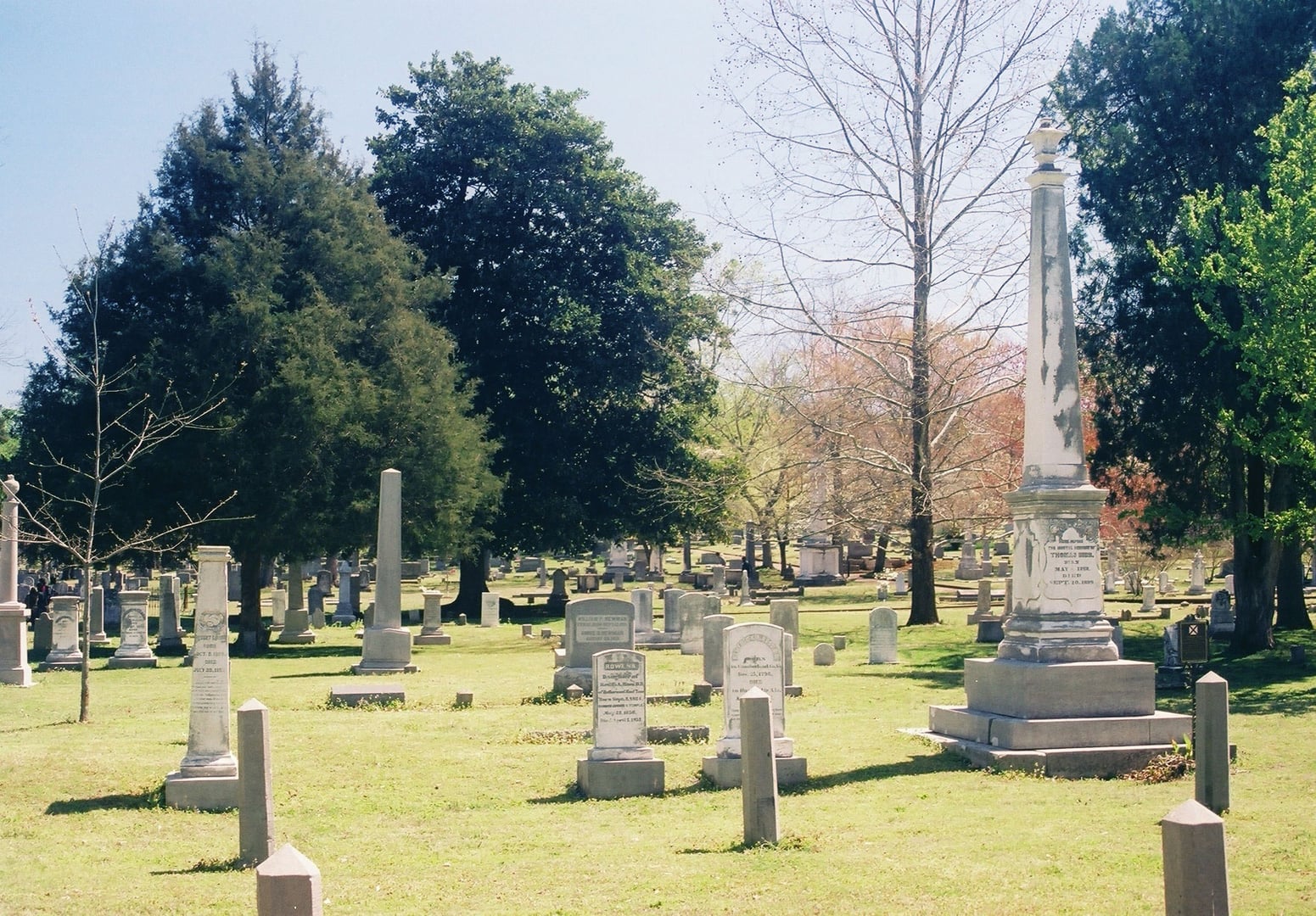
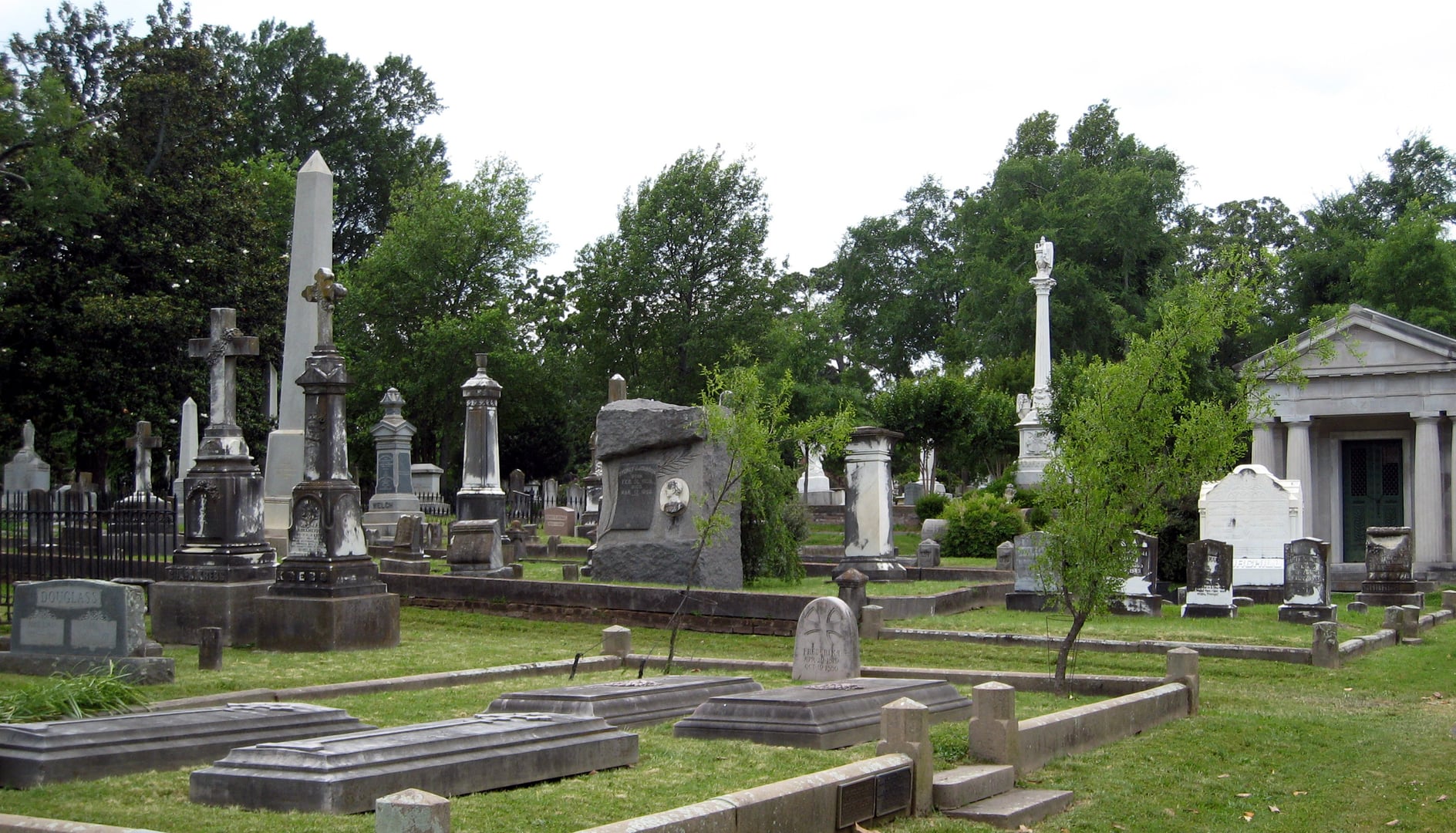
Older section of Maple Hill Cemetery in Huntsville, Alabama, featuring the Bibb obelisk and historic markers
Cemetery / Burial Ground

Maple Hill Cemetery

Huntsville, AL

Maple Hill Cemetery in Huntsville, Alabama was founded in 1822 when planter LeRoy Pope sold two acres to the city for use as a burial ground. It is the oldest and largest cemetery in Alabama, now covering nearly 100 acres with more than 80,000 burials, including five Alabama governors and five United States senators.

FreeAll AgesFamily: Moderate
Marbury High School athletic field in Deatsville Alabama viewed from road
Photo coming soon
Other Dark Tourism Site

Marbury High School

Deatsville, AL

Marbury High School in Deatsville, Autauga County, Alabama is an active public high school serving grades 9-12. In 1966, a cheerleading accident during a pyramid maneuver at the school's football field resulted in the death of a student, Sandy Vinson. A 2005 Andalusia Star-News investigation concluded that the accompanying ghost legend was an urban legend, though the accident itself was verified as real.

FreeAll AgesFamily: Moderate
Aerial view of Memory Hill Cemetery's 45-acre grounds in Albertville, Alabama, with rows of headstones and a central mausoleum
Photo coming soon
Cemetery / Burial Ground

Memory Hill Cemetery

Albertville, AL

Memory Hill Cemetery in Albertville, Alabama is the city's largest burial ground, covering 45 acres along Highway 431 with graves dating to the late nineteenth century. The cemetery is managed by the City of Albertville. In September 2012, vandals destroyed 44 headstones, including markers for four victims of Albertville's 1908 Great Cyclone — three of them children.

FreeAll AgesFamily: High
Rural Baptist church and adjacent cemetery in Conecuh County Alabama surrounded by pine trees
Photo coming soon
Cemetery / Burial Ground

Midway Baptist Church

Midway, AL

Midway Baptist Church sits in Conecuh County, Alabama, accompanied by a historic cemetery with burials documented from the nineteenth century. The church serves an active congregation. The cemetery, transcribed and documented by genealogical researchers, contains markers for local farming families from the region's early settlement period.

FreeAll AgesFamily: High
Restored 1872 Bernstein-Bush House at 355 Government Street housing the Mobile Carnival Museum, chronicling more than 300 years of Mardi Gras in Mobile, Alabama.
Museum / Historical Site

Mobile Carnival Museum

Mobile, AL

The Mobile Carnival Museum opened in 2005 in the restored 1872 Bernstein-Bush House at 355 Government Street, chronicling more than 300 years of Mardi Gras in Mobile. The Bernstein-Bush House served as a private residence and, in the 1920s, the Roche Funeral Home before standing vacant in the 1960s and ultimately being restored as the museum.

$All AgesFamily: High
Village Falls Cemetery in Mulga, Alabama, with mature trees and nineteenth-century headstones
Photo coming soon
Cemetery / Burial Ground

Village Falls Cemetery

Mulga, AL

Village Falls Cemetery in Mulga, Jefferson County, was established in 1866 and contains approximately 1,173 documented graves. It originated as the burial ground of the Village Falls Methodist Church, which no longer exists. The oldest recorded burial is Dannie Carmichael, dated May 11, 1866, and the cemetery holds markers for local families throughout the late nineteenth and early twentieth centuries.

FreeAll AgesFamily: Moderate
Wooded ridge trail at Haines Island Park on the Alabama River, the setting of the Nancy Mountain apparition legend
Photo coming soon
Outdoor / Natural Site

Nancy Mountain

Franklin, AL

Nancy Mountain sits within Haines Island Park, a 480-acre U.S. Army Corps of Engineers recreation area on the Alabama River west of Franklin, Monroe County. The mountain is described in regional accounts as a double-humped ridge overlooking the river where a steamboat landing once operated during the Civil War period.

FreeAll AgesFamily: Moderate
Aerial view of Moundville Archaeological Park's earthen mounds and central plaza on the Black Warrior River in Alabama
Photo coming soon
Museum / Historical Site

Moundville Archaeological Park

Moundville, AL

Moundville Archaeological Park preserves 326 acres of a Mississippian culture settlement occupied from approximately 1000 to 1450 AD on the Black Warrior River, 13 miles south of Tuscaloosa. At its peak around 1200 AD, the walled community housed an estimated 1,000 to 3,000 residents, making it one of the largest cities in pre-Columbian North America. The site was designated a National Historic Landmark in 1964 and is administered by the University of Alabama Museums.

$All AgesFamily: High
T-shaped Greek Revival raised villa of the Oakleigh House Museum, built 1833, in the Oakleigh Garden Historic District of Mobile, Alabama.
Haunted House / Historic Home

Historic Oakleigh House Museum

Mobile, AL

Oakleigh is a T-shaped Greek Revival raised villa built in 1833 by James W. Roper, a brick mason from James City County, Virginia, who selected the site for its clay pit. The Irwin family occupied the home from 1852 until 1916. The Historic Mobile Preservation Society now operates the property as the city's oldest house museum, with adjacent structures including the Union Barracks (formerly the Cook's House), the Cox-Deasy Cottage, and the Minnie Mitchell Archives.

$All AgesFamily: High
Linn-Henley Research Library 1927 Beaux Arts facade at Linn Park in Birmingham, Alabama
Museum / Historical Site

Birmingham Public Library Linn-Henley Research Library

Birmingham, AL

The Birmingham Public Library traces its origins to 1886, when superintendent of education John Herbert Phillips set aside books for teachers and students. The library moved several times before opening its 1927 Beaux Arts building - the city's first free-standing central library - at Linn Park. The 1927 building serves today as the Linn-Henley Research Library.

FreeAll AgesFamily: High
The 1903-1904 Buck Creek water tower in Alabaster, Alabama
Photo coming soon
Outdoor / Natural Site

Buck Creek Cotton Mill Historic Site

Alabaster, AL

The Buck Creek Cotton Mill in Alabaster, Alabama was founded in 1896 by Thomas C. Thompson and grew into a substantial mill village with cottages, a school, a hotel, and a jail. The mill closed in 1979; most buildings were demolished between 2007 and 2009 by the city of Alabaster, leaving only the 1903-1904 water tower and the former mill jail.

FreeAll AgesFamily: High
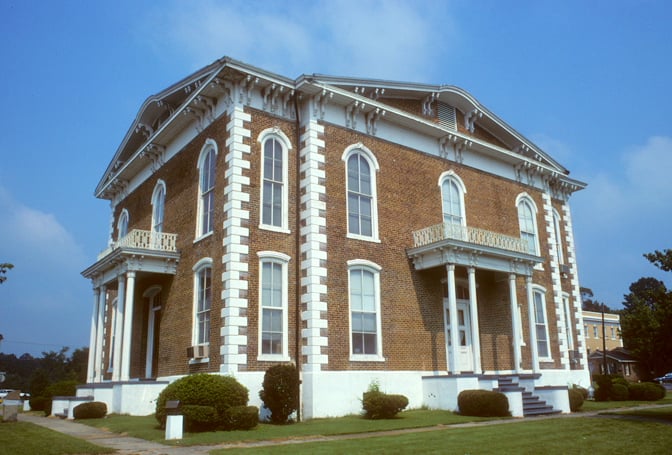
Pickens County Courthouse historic exterior, Carrollton Alabama
Museum / Historical Site

Pickens County Courthouse

Carrollton, AL

The Pickens County Courthouse in Carrollton, Alabama was built in 1877-1878 as the third courthouse in the city, after the previous courthouse burned in 1876. The current building remains the active seat of Pickens County government and is best known for an image in a garret window pane that is locally attributed to freedman Henry Wells.

FreeAll AgesFamily: Moderate
Ornate Italianate brick Richards-DAR House Museum at 256 Joachim Street in Mobile, Alabama's De Tonti Square Historic District, completed in 1860.
Haunted House / Historic Home

Richards-DAR House Museum

Mobile, AL

The Richards-DAR House is an ornate Italianate brick mansion completed in 1860 for steamboat captain Charles G. Richards and his wife Caroline Elizabeth Steele. It is a contributing property to the De Tonti Square Historic District, listed on the National Register of Historic Places in 1972, and is operated as a house museum by Mobile DAR chapters.

$All AgesFamily: High
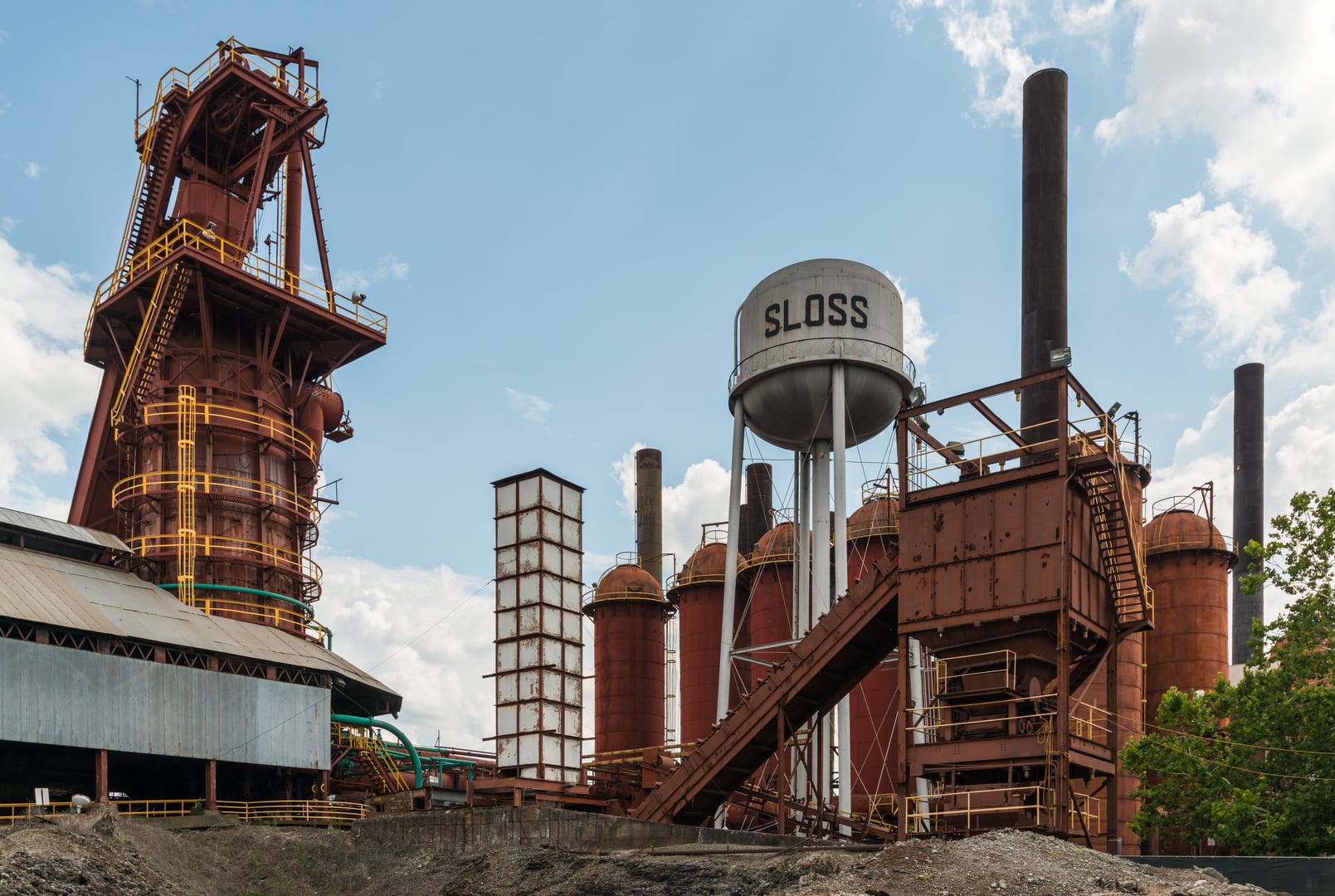
Sloss Furnaces National Historic Landmark in Birmingham, Alabama, blast-furnace works that produced pig iron 1882 to 1971
Museum / Historical Site

Sloss Furnaces National Historic Landmark

Birmingham, AL

Sloss Furnaces produced pig iron continuously from 1882 to 1971 in central Birmingham. Founded by Colonel James W. Sloss, the works powered the city's growth into the South's leading industrial center. The complex was designated a National Historic Landmark in 1981 and is the only 20th-century blast-furnace site in the United States preserved for public interpretation.

FreeAll AgesFamily: Moderate
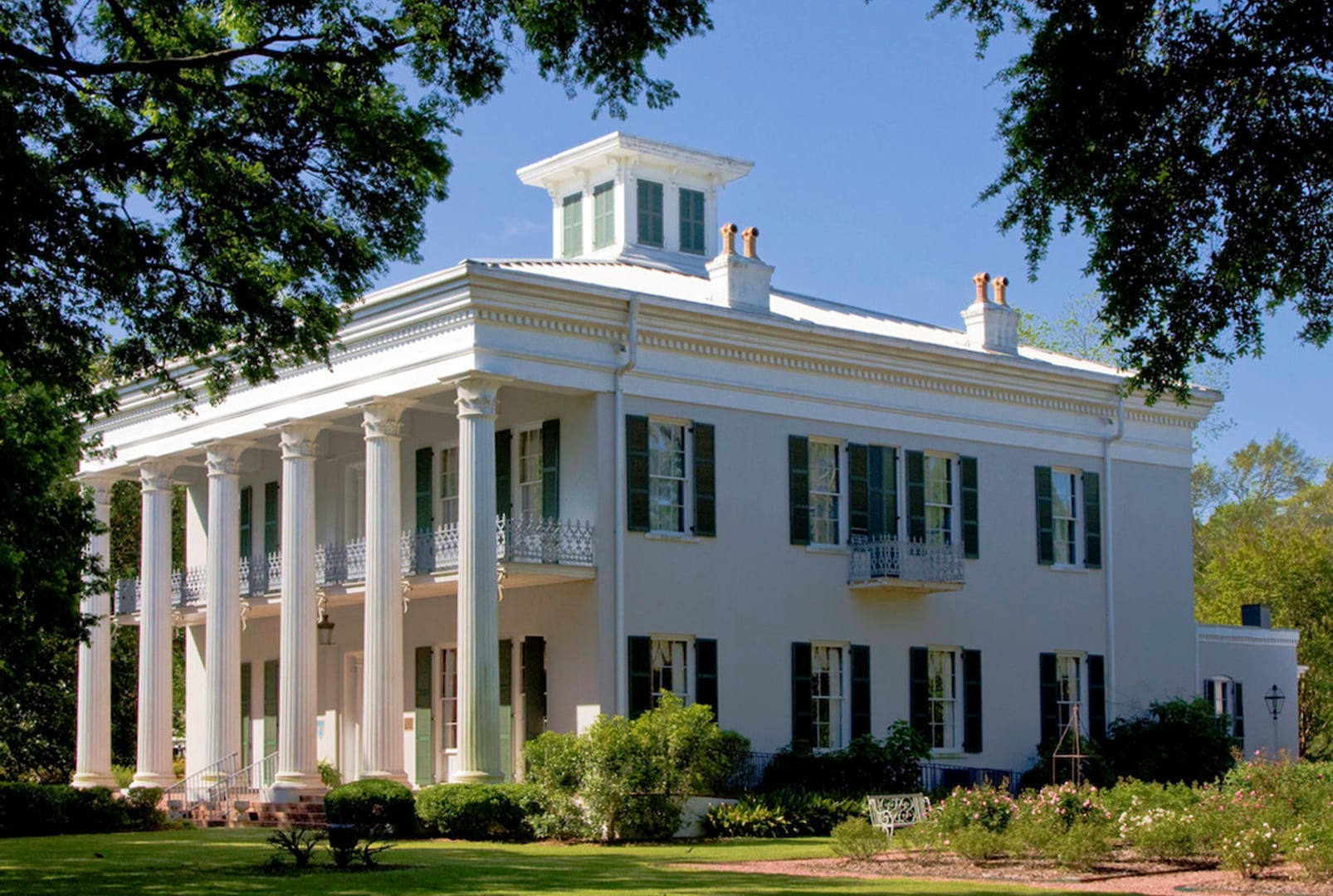
The Greek Revival columned facade of Sturdivant Hall, a 1856 mansion in Selma, Alabama
Haunted House / Historic Home

Sturdivant Hall

Selma, AL

Sturdivant Hall, also known as the Watts-Parkman-Gillman House, is a Greek Revival mansion in Selma's Old Town Historic District. Construction began in 1853 and was completed in 1856 for Colonel Edward T. Watts. The property is owned by the city of Selma and operated by the Sturdivant Museum Association.

$$All AgesFamily: High
Romanesque-revival facade of The Steeple on St. Francis (former St. Francis Street Methodist Church)
Photo coming soon
Other Dark Tourism Site

The Steeple on St. Francis

Mobile, AL

The St. Francis Street Methodist Church congregation opened its mahogany doors at this site in 1842, having split from Mobile's first Methodist church. The current Romanesque-revival structure was built in 1896 by architectural firm Watkins and Johnson after an 1894 ammunition-depot fire damaged the downtown area and led to demolition of the original building in 1895. The church closed in 1993 and was renovated in 2015 as The Steeple, a concert and event venue and the home of Downtown Church Sunday services.

$$All AgesFamily: Moderate
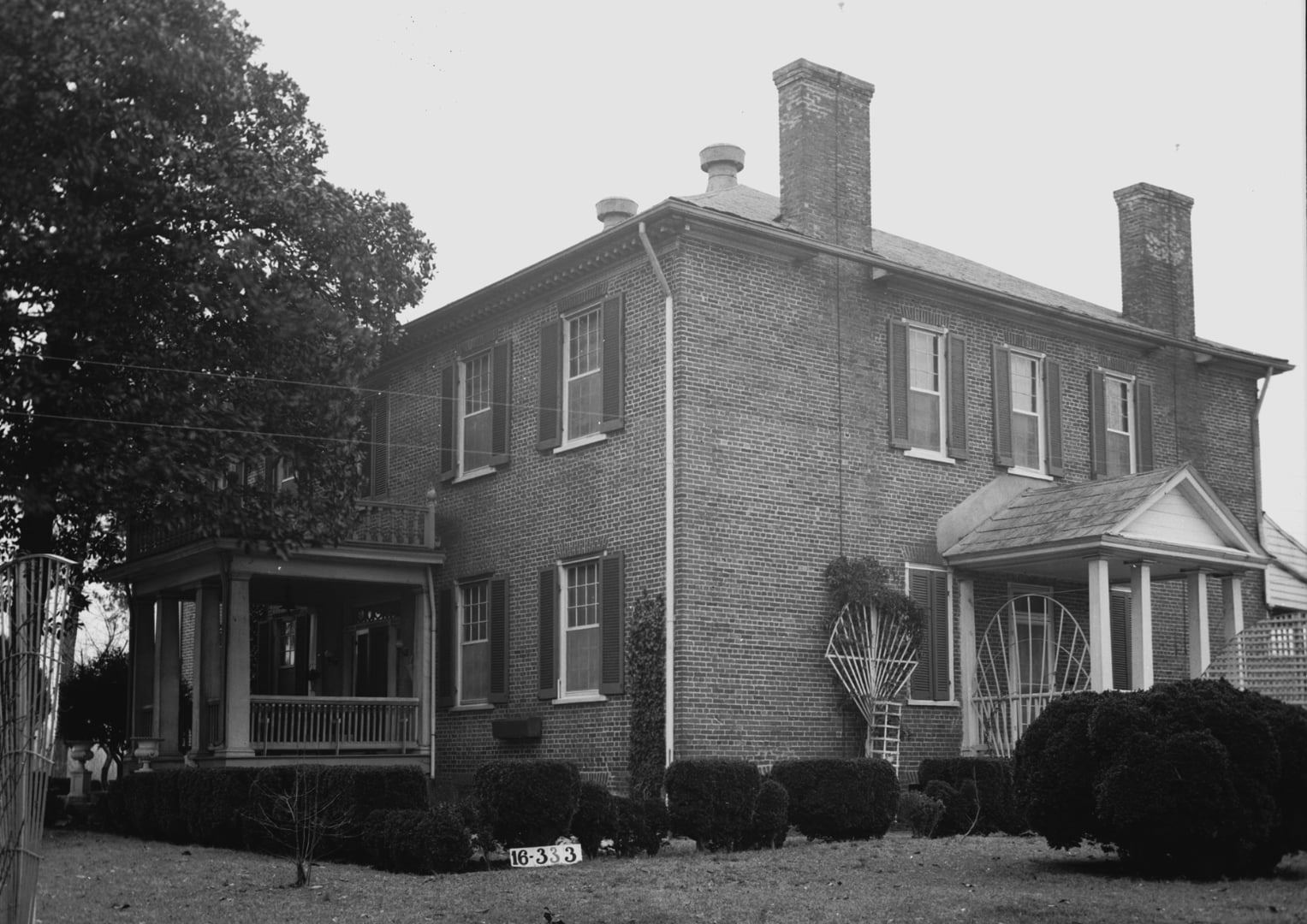
Historic 1934 photograph of Sweetwater Mansion, a Federal-style plantation house in Florence, Alabama
Haunted House / Historic Home

Sweetwater Mansion

Florence, AL

Sweetwater Mansion in Florence, Alabama is a Federal-style plantation house completed in 1835. The property was designed by General John Brahan and completed by his son-in-law, post-Civil War governor Robert M. Patton. The mansion was listed on the National Register of Historic Places in 1976 and is now undergoing restoration under new ownership.

FreeAll AgesFamily: Moderate
The Bartram Trail through Tuskegee National Forest in Macon County, Alabama
Outdoor / Natural Site

Tuskegee National Forest

Tuskegee, AL

Established 1959 as the Tuskegee Purchase Unit; the smallest national forest in the United States at 11,252 acres. The land was historically Creek Nation territory; following the Indian Removal Act of 1830, approximately 5,000 Creek people were forcibly relocated from Macon County, after which the land was farmed and later eroded into the soil-restoration project that became the national forest.

FreeAll AgesFamily: High
USS Alabama battleship at permanent berth in Battleship Memorial Park, Mobile, Alabama, viewed from shore
Museum / Historical Site

USS Alabama Battleship

Mobile, AL

The USS Alabama (BB-60) is a South Dakota-class battleship launched in 1942 and commissioned in 1942 for service in World War II. The ship was moved to Mobile in 1964 and opened as Battleship Memorial Park in January 1965. The vessel was designated a National Historic Landmark in 1986.

$$All AgesFamily: Moderate
Chena Hot Springs Road at Mile 17 through interior Alaska boreal forest near Fairbanks
Outdoor / Natural Site

Chena Hot Springs Road

Fairbanks, AK

Chena Hot Springs Road is a 56.5-mile state-maintained paved road that runs east from the Steese Highway near Fairbanks, paralleling the Chena River through interior Alaska boreal forest and terminating at Chena Hot Springs Resort. The corridor is one of the most accessible aurora-viewing routes in Alaska. Birch Hill, an elevated area in the early miles of the road, is a well-known local viewing spot for both aurora displays and Fairbanks-area light phenomena.

FreeAll AgesFamily: High
The Golden North Hotel's restored gold-rush-era frame exterior with corner cupola in Skagway, Alaska.
Photo coming soon
Other Dark Tourism Site

Golden North Hotel

Skagway, AK

The Golden North Hotel opened in 1898 in Skagway, Alaska, during the height of the Klondike Gold Rush. Its distinctive corner cupola became one of the most photographed buildings in town. The hotel closed in 2002, and the building has since been restored to its gold-rush-era exterior and converted to retail and office use. It sits within the Skagway Historic District, a National Historic Landmark.

FreeAll AgesFamily: High
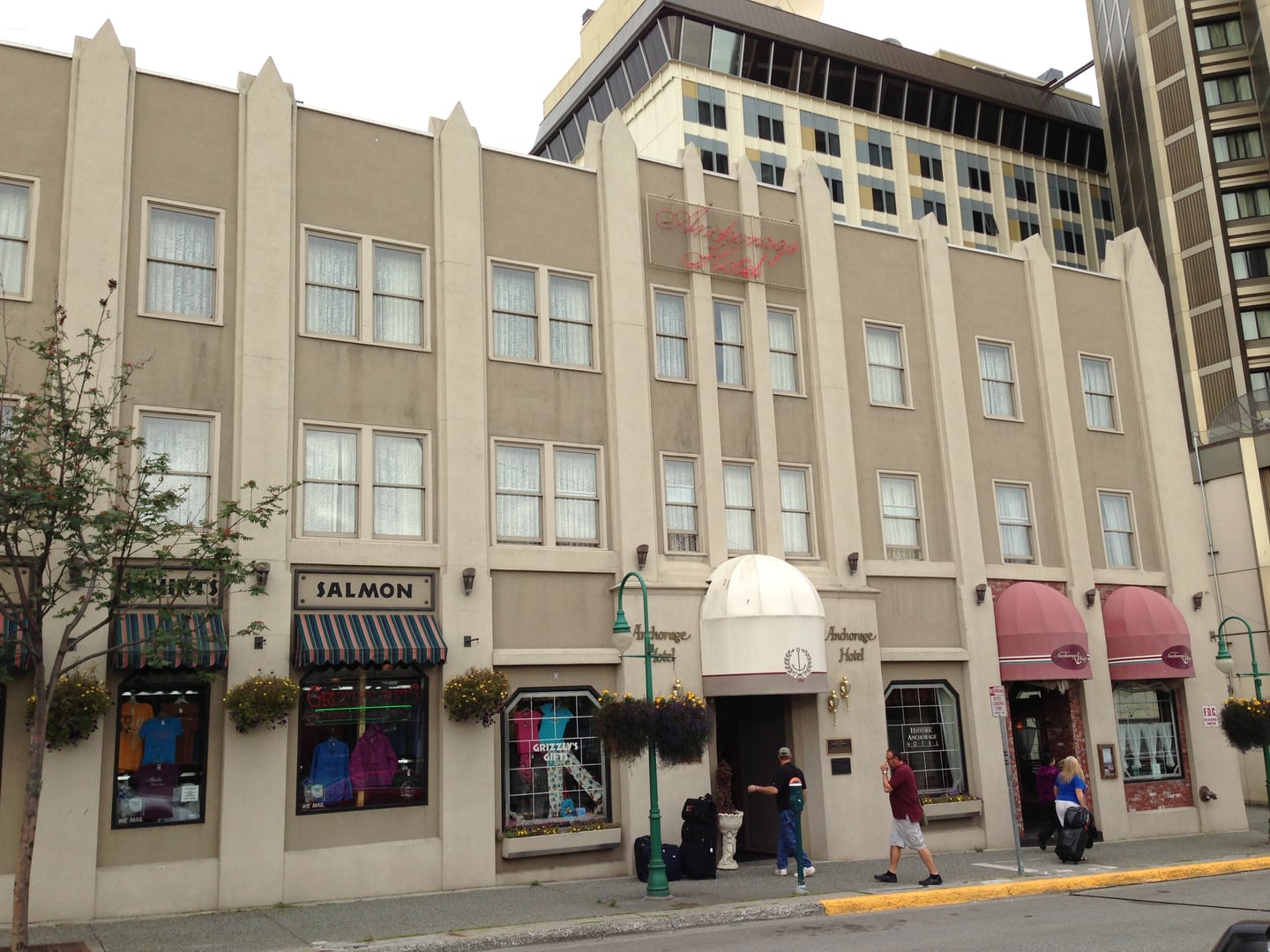
Exterior of the 1936 Historic Anchorage Hotel Annex at 330 E Street in downtown Anchorage, Alaska
Haunted Hotel / Inn

Historic Anchorage Hotel

Anchorage, AK

The Historic Anchorage Hotel opened in 1916 when Anchorage was still a tent camp on the banks of Ship Creek. The original 1916 building was demolished, but the 1936 Annex survives at 330 E Street and remains in continuous operation as the city's oldest hotel. It is listed on the National Register of Historic Places.

$$$All AgesFamily: Moderate
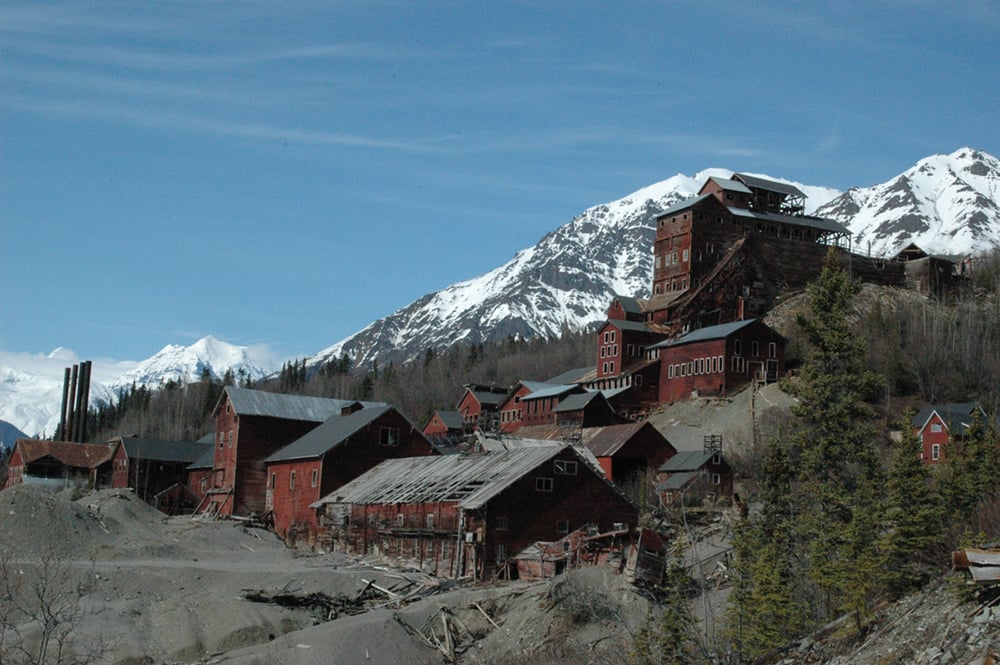
The 14-story Kennicott concentration mill at the Kennecott copper mine ghost town in Wrangell-St. Elias National Park, Alaska
Other Dark Tourism Site

Kennecott

McCarthy, AK

Kennecott is a preserved copper-mining ghost town in Wrangell-St. Elias National Park and Preserve, Alaska. The mines operated from 1911 to 1938, producing 4.6 million tons of ore and 1.183 billion pounds of copper. The site is a National Historic Landmark and is administered by the National Park Service.

FreeAll AgesFamily: Moderate
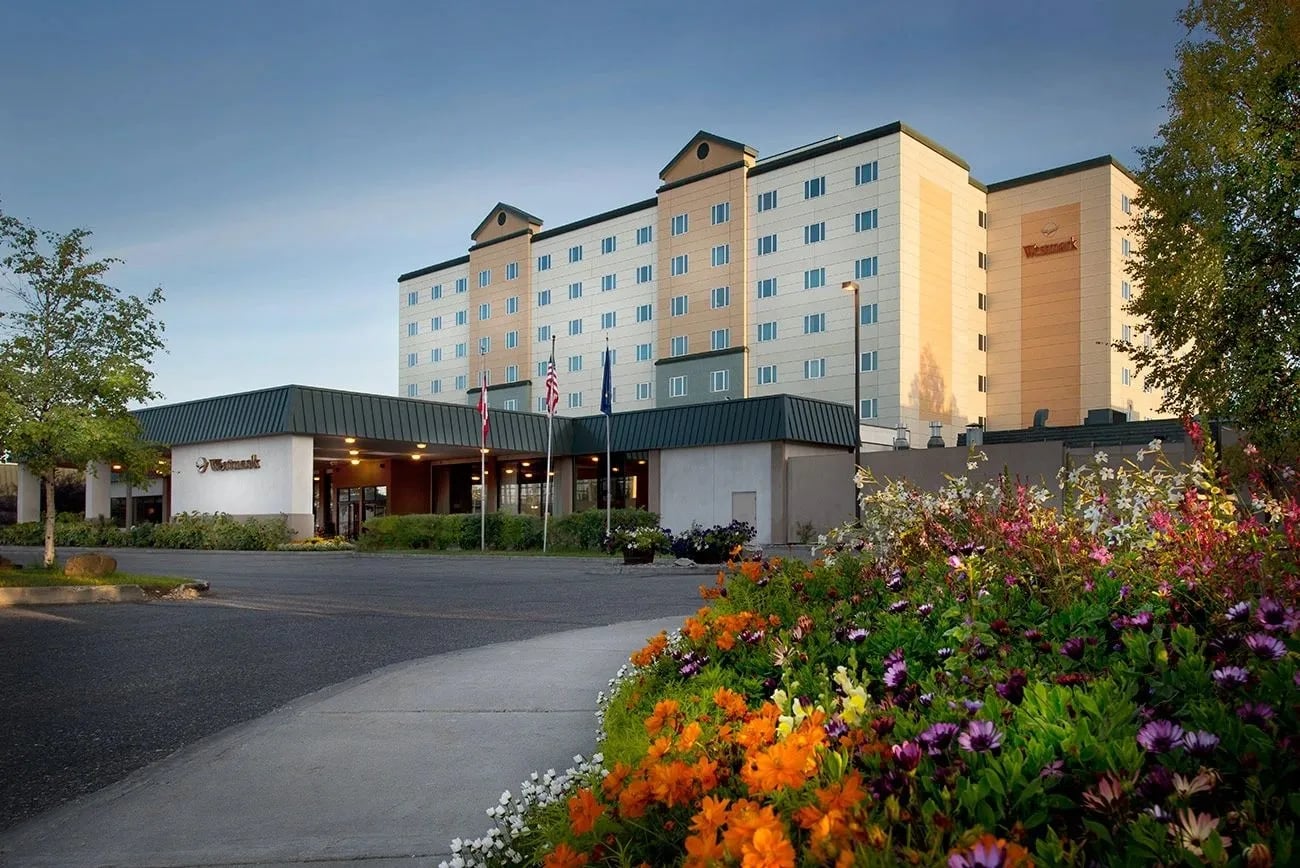
Multi-story modern hotel exterior in downtown Fairbanks, Alaska
Haunted Hotel / Inn

Westmark Fairbanks Hotel

Fairbanks, AK

The Westmark Fairbanks Hotel and Conference Center is a 400+ room downtown property operated by Holland America Line through its Westmark Hotels subsidiary. Originally built in the mid-20th century, the hotel functions as a primary lodging hub for cruise-and-land tourists arriving in interior Alaska.

$$$All AgesFamily: High
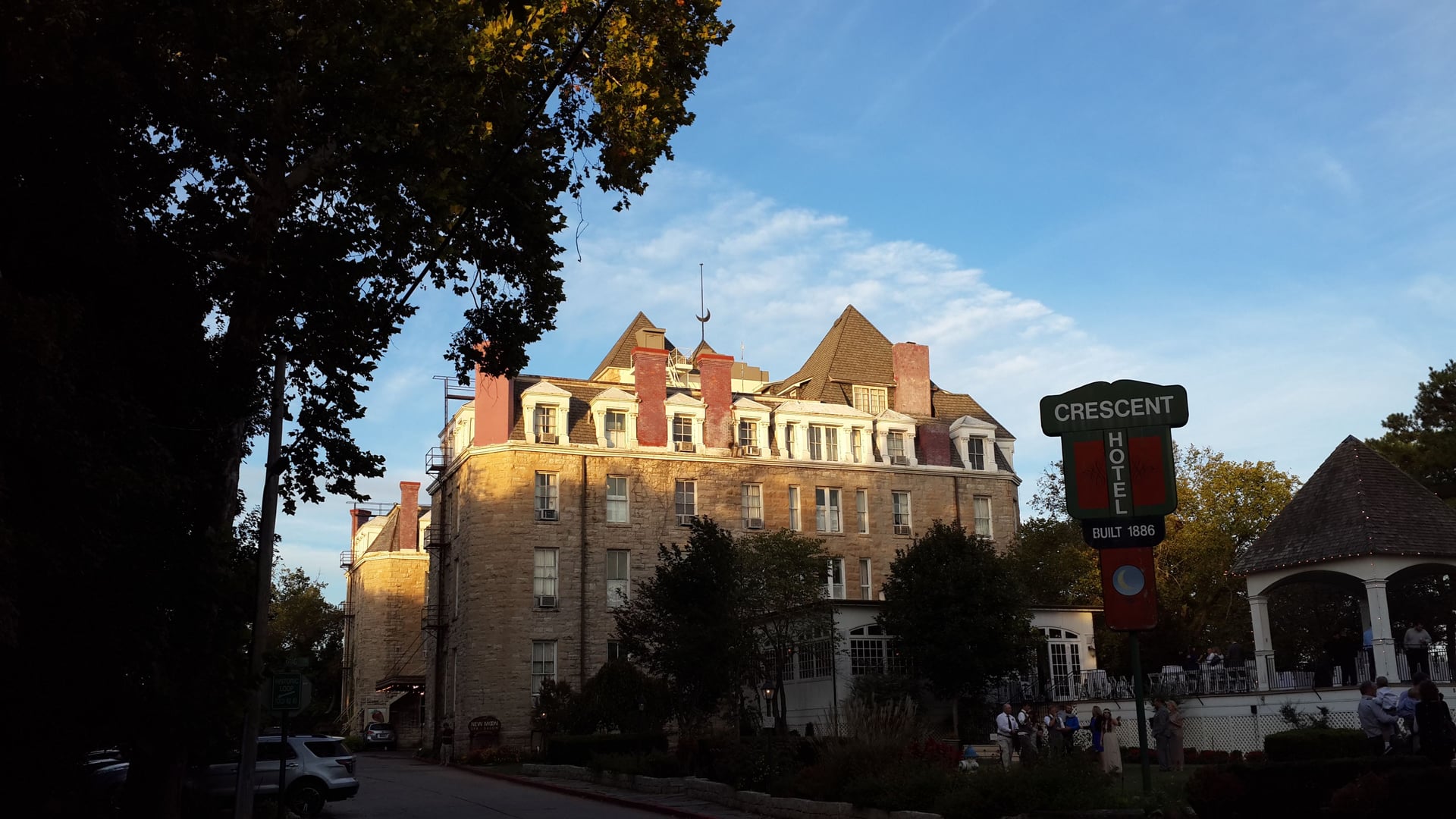
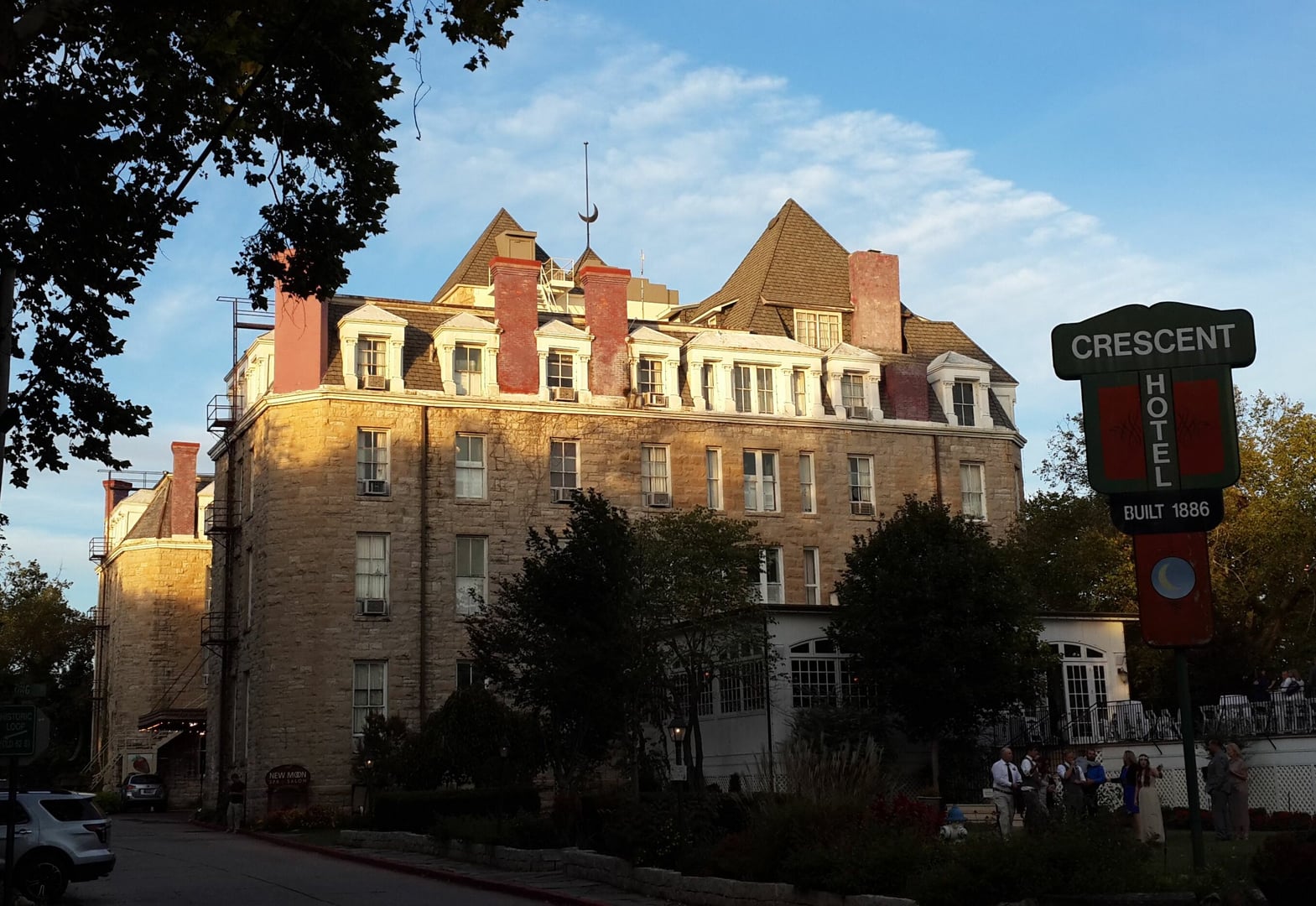
1886 Crescent Hotel exterior in Eureka Springs, Arkansas — historic stone Romanesque Revival hotel viewed from below
Haunted Hotel / Inn

1886 Crescent Hotel & Spa

Eureka Springs, AR

The 1886 Crescent Hotel was built as a luxury Victorian resort atop the Ozark mountains of Eureka Springs, Arkansas, then briefly operated as a women's college before its most notorious chapter: Norman Baker's fraudulent cancer clinic from 1937 to 1940. Baker charged dying patients for treatments that offered no medical benefit, and the hotel retains his intact basement morgue.

$$$All Ages (Kids Ghost Tour for ages 5-12)Family: Moderate
Brick exterior of Witherspoon Hall on the Arkansas Tech University campus in Russellville, Arkansas
Photo coming soon
Museum / Historical Site

Witherspoon Hall — Arkansas Tech University

Russellville, AR

Witherspoon Hall houses the Department of Music at Arkansas Tech University in Russellville, Arkansas. The hall is named for Gene Chief Witherspoon, who served as director of bands at the university from 1950 to 1979, and contains practice rooms, classrooms, and an auditorium recently renovated by the university.

FreeAll Ages with restrictionsFamily: High
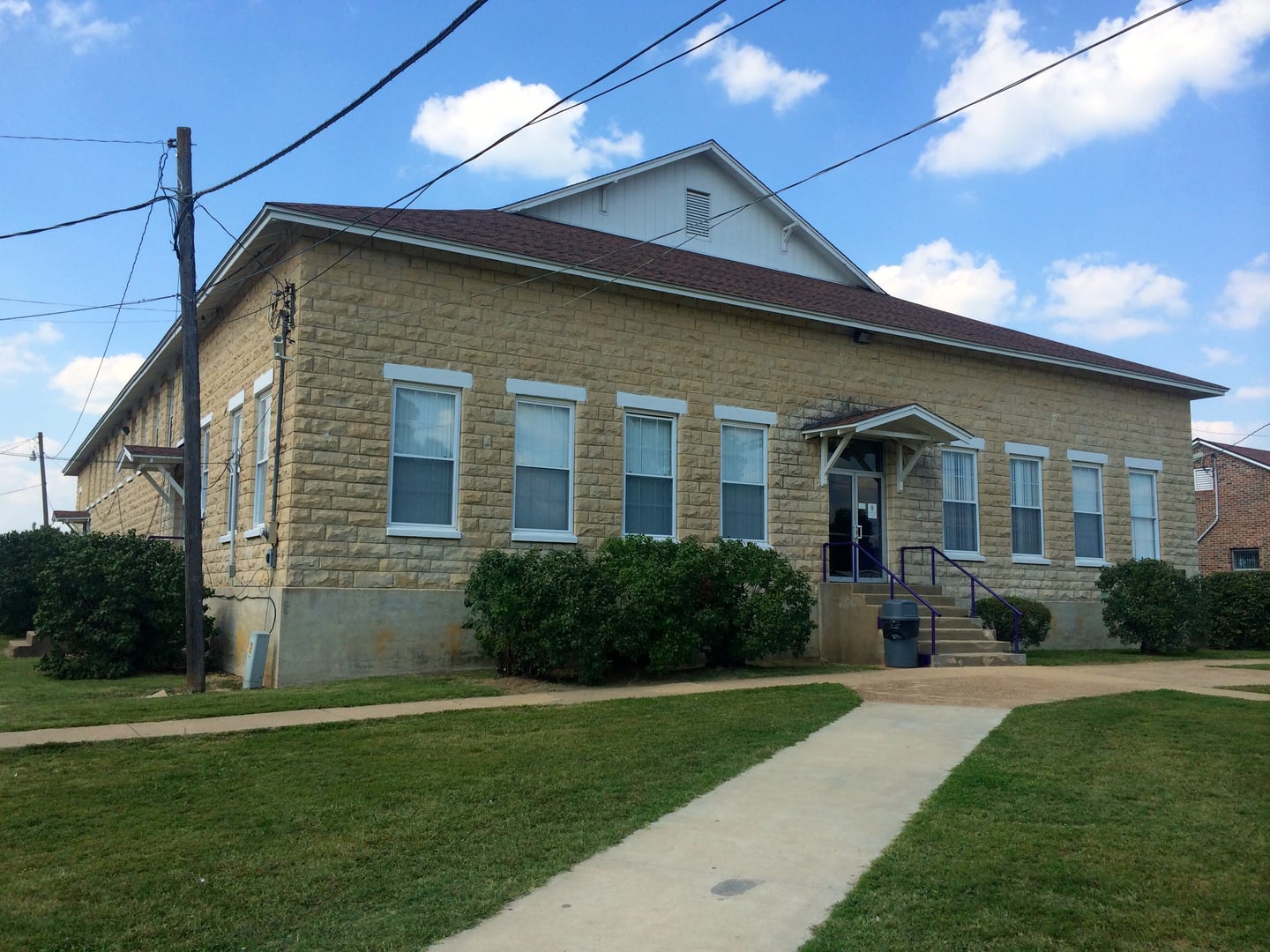
File:Ritter Log Cabin, 118 West Johnson Avenue, Springdale, Washington County, AR HABS ARK,72-SPRIGD,1- (sheet 1 of 6).png
Photo coming soon
Other Dark Tourism Site

American Legion Hall

Clarksville, AR

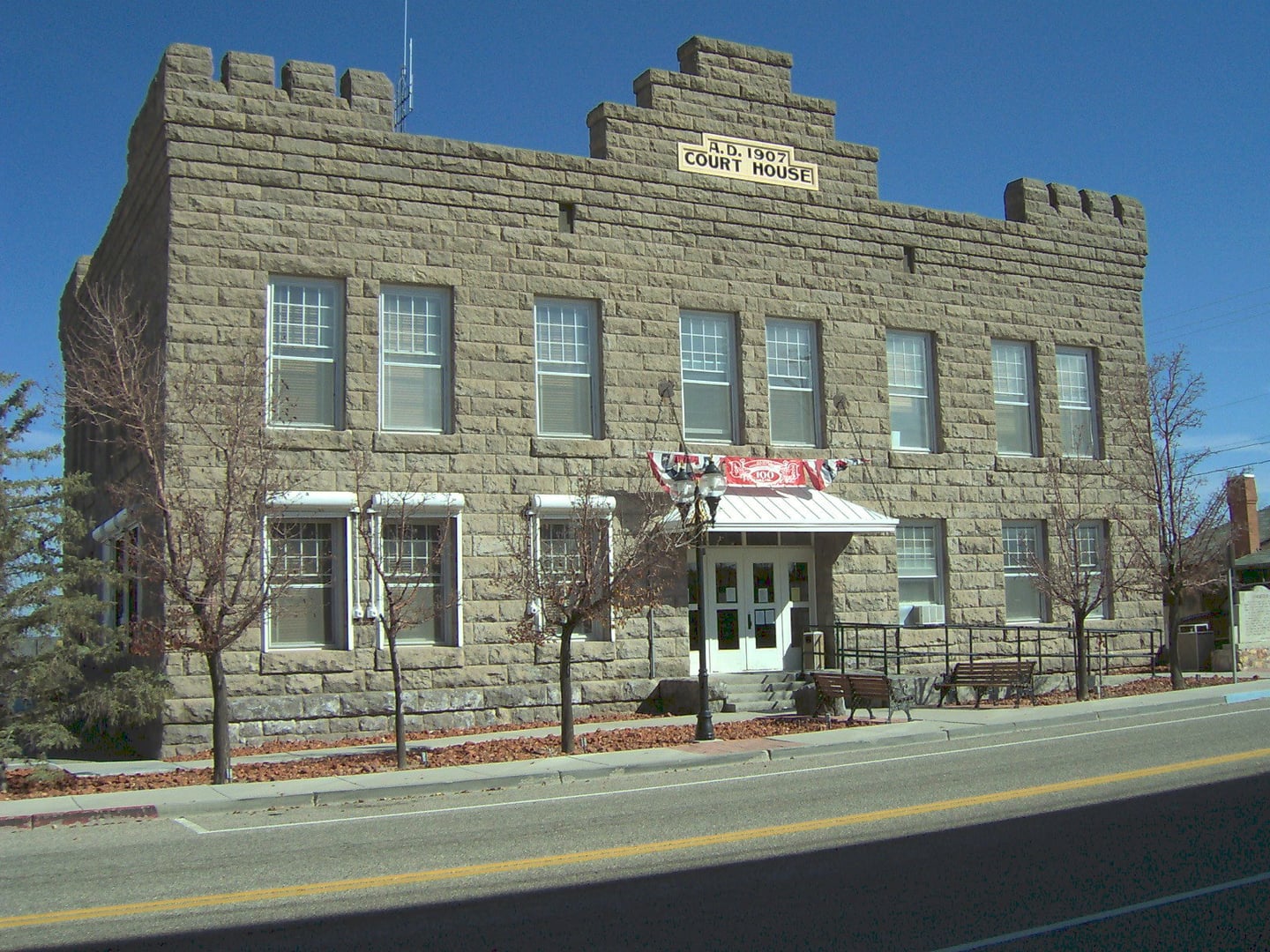
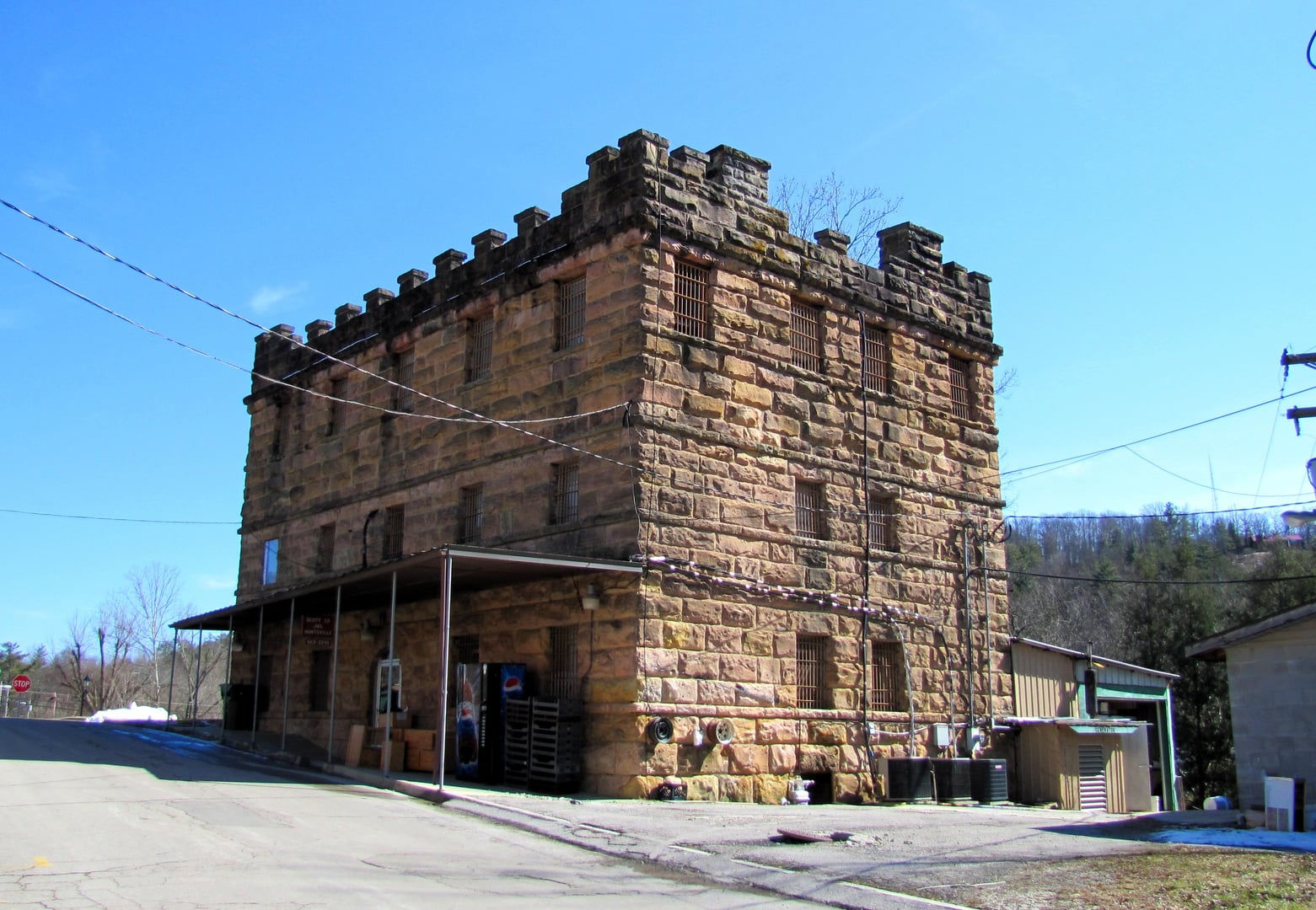
The Bunch-Walton Post No. 22 American Legion Hut is a historic two-story structure constructed from native stone in Clarksville, Arkansas. Built on a raised foundation on what was formerly an island in Spadra Creek, the building displays distinctive Normanesque castellated architecture inspired by European military structures from World War I. The structure serves as a veterans hall and historical landmark.

FreeAll AgesFamily: High
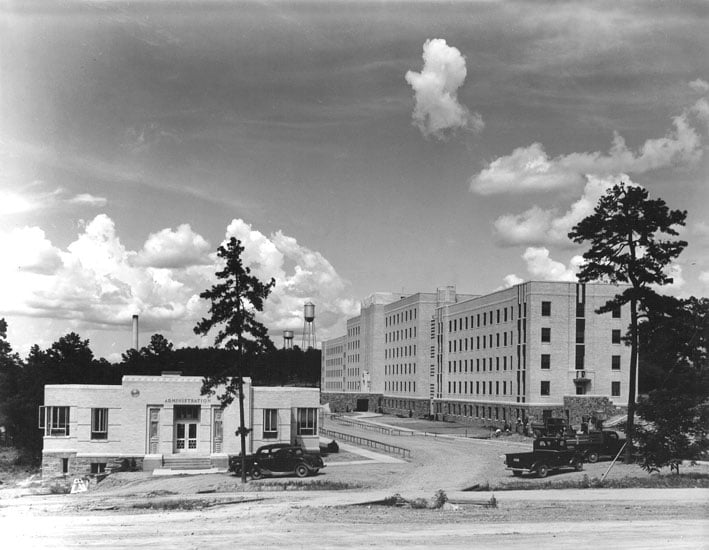
Art Deco administration building and Nyberg Building of the Arkansas State Tuberculosis Sanatorium near Booneville, Logan County, Arkansas
Asylum / Hospital

Arkansas Tuberculosis Sanatorium

Booneville, AR

The Arkansas Tuberculosis Sanatorium opened in 1910 three miles south of Booneville and grew to become the largest tuberculosis treatment facility in the United States by 1940, housing up to 5,000 patients at peak capacity. The facility treated more than 70,000 patients across 63 years of operation before closing on June 30, 1973.

FreeAll AgesFamily: Moderate
Seven-story limestone hotel in downtown Eureka Springs, Arkansas, built into a hillside so every floor opens at ground level
Photo coming soon
Haunted Hotel / Inn

1905 Basin Park Hotel

Eureka Springs, AR

The 1905 Basin Park Hotel is a seven-story limestone hotel in downtown Eureka Springs, Arkansas, built on the site of the Perry House, an 1881 hotel that burned in 1890. The Basin Park's distinctive limestone-cut design, with every floor opening at ground level on its hillside, was featured by Ripley's Believe It or Not.

$$$All AgesFamily: Moderate
Berryville Agriculture Building, South of Freeman Ave., east of Linda St., north of W. College Ave., and west of Ferguson St. Berryville
Museum / Historical Site

Berryville High School

Berryville, AR

Berryville High School operates as a comprehensive secondary institution in the Berryville School District in Carroll County, Arkansas. The school serves students in grades 9-12 and includes athletic facilities including a gymnasium. The gym's history and any documented trauma remain undocumented in accessible public sources.

FreeSchool Hours OnlyFamily: High
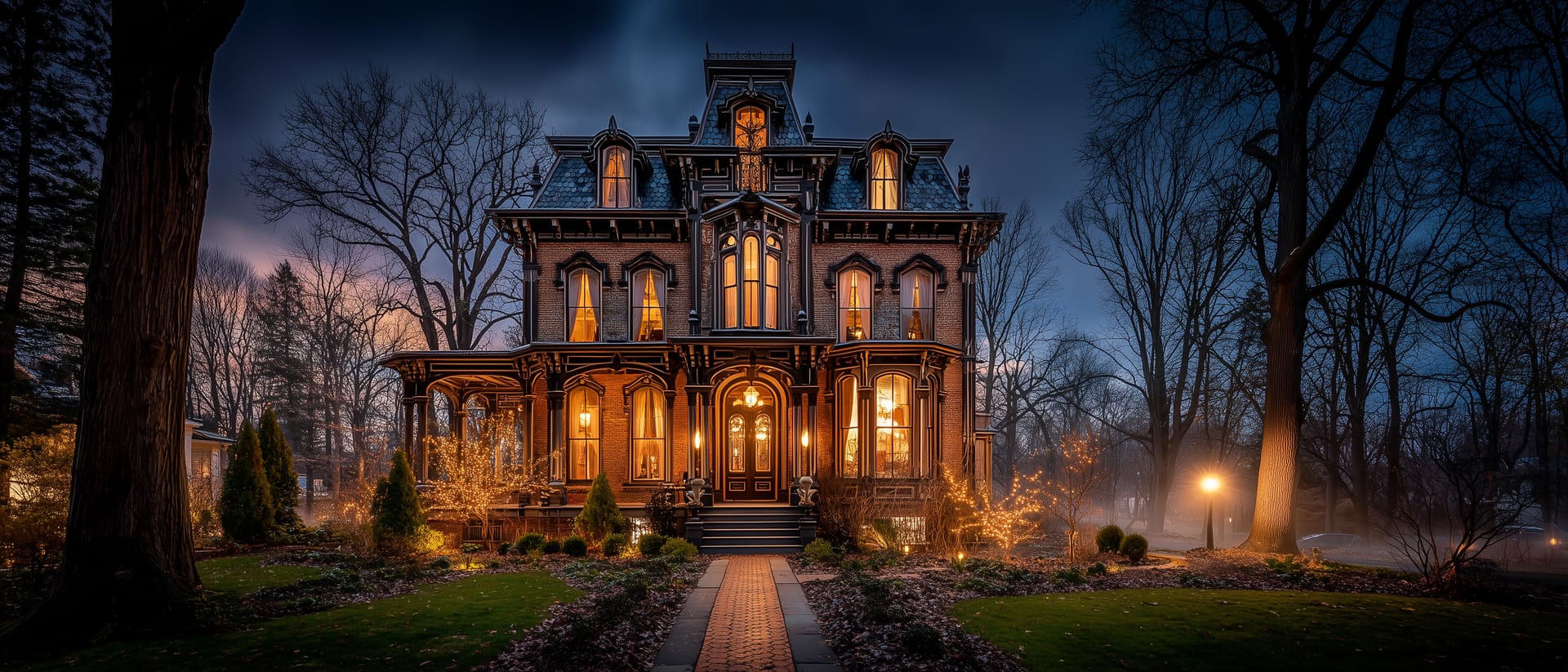
Historic Cameo Theatre building in downtown Magnolia, Arkansas
Photo coming soon
Theater / Performance Venue

Cameo Theatre

Magnolia, AR

The Cameo Theatre was constructed in 1949 in Magnolia, Arkansas, and served as the city's primary movie palace until its closure in 2012. Designed by architecture firm Ginocchio & Cromwell, the theater featured 850 seats and ornamental murals. W.P. Florence, Jr. owned and operated the theater until his retirement in 2000. Stars Cinema subsequently operated the facility until 2012.

$All AgesFamily: High
St. Mary's Catholic Church in Paragould, Arkansas.
Photo coming soon
Theater / Performance Venue

Collins Theater

Paragould, AR

The Capitol Theatre opened on West Emerson Street in Paragould on October 25, 1925, built by Bertig Realty Co. with John A. Collins as initial manager. The Collins family operated the venue across six decades until 1986, when they deeded it to the Greene County Fine Arts Council. Renamed the Collins Theatre and restored beginning in 1991, it now operates as northeast Arkansas's principal community performing arts venue.

$$All AgesFamily: High
Grant County Courthouse on the public square in Sheridan, Arkansas, a 1964 Greek Revival building
Photo coming soon
Museum / Historical Site

Grant County Courthouse Square (Sheridan)

Sheridan, AR

Grant County's courthouse square in Sheridan, Arkansas has been the seat of county government since the county's creation in 1869. Three earlier courthouses occupied or stood near the square; the current 1964 Greek Revival building preserves corner markers from the 1910 structure and houses Grant County's first public clock. The Reconstruction era brought significant violence to the area.

FreeAll AgesFamily: High
The 1966 Clay County Courthouse in Piggott, Arkansas, viewed from Courthouse Square
Photo coming soon
Museum / Historical Site

Clay County Courthouse, Eastern District (Piggott)

Piggott, AR

The Clay County Courthouse, Eastern District is located on Courthouse Square in the center of Piggott, Arkansas. The current courthouse was built in 1966-1967 to a design by Donnellan & Porterfield, replacing an 1890s Romanesque courthouse designed by Charles L. Thompson. Piggott became the Eastern District seat of Clay County in 1891, when an election shifted the seat from Boydsville.

FreeAll AgesFamily: High
The 1886 Crescent Hotel atop Crescent Mountain in Eureka Springs, Arkansas
Haunted Hotel / Inn

1886 Crescent Hotel & Spa

Eureka Springs, AR

The Crescent Hotel opened in 1886 atop Crescent Mountain in Eureka Springs, Arkansas, as a luxury Ozark resort. In 1937 the property was acquired by Norman Baker, a radio personality and fraudulent cancer healer whose two-year operation produced at least 42 confirmed patient deaths. The hotel reopened as a resort after Baker's 1940 mail-fraud conviction and is now marketed as America's Most Haunted Hotel.

$$$All AgesFamily: Moderate
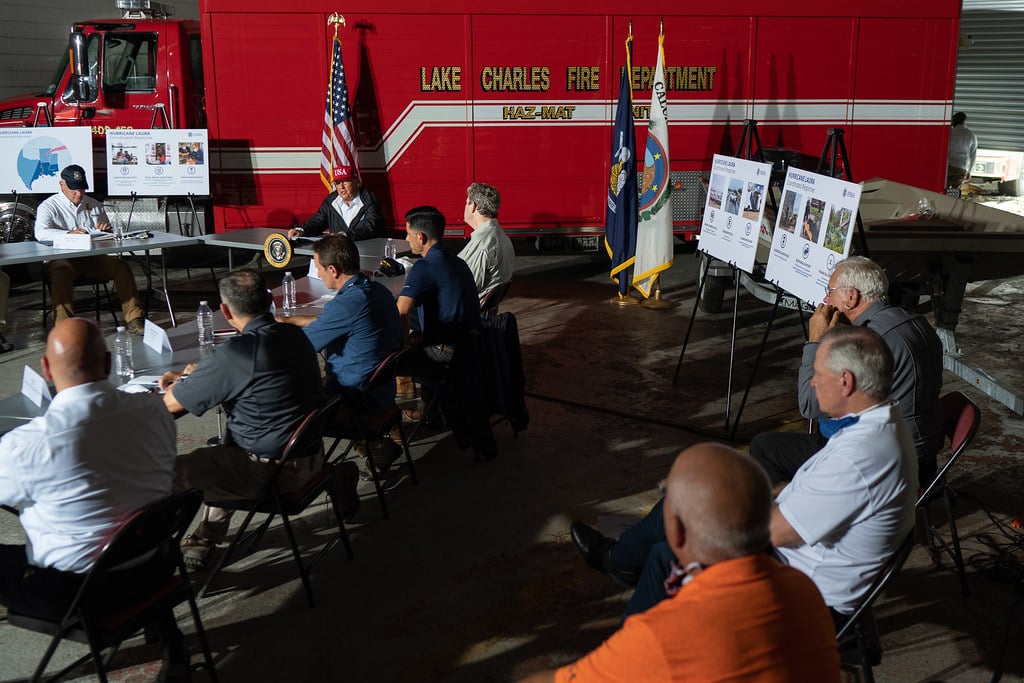
President Donald J. Trump participates in an emergency operational briefing at at Fire Company One in Lake Charles, La. during his visit Saturday, Aug, 29, 2020, to the areas of Louisiana and Texas impacted by Hurricane Laura. (Official White House Photo by Shealah Craighead)
Theater / Performance Venue

Craighead Company

Jonesboro, AR

The theater at 115 E. Monroe Avenue in Jonesboro opened in 1926 as the Strand Theatre. The City of Jonesboro acquired it in the late 1970s, renovating it into a modern performance venue and renaming it the Forum Theatre. Since 1986 it has served as the home of the Foundation of Arts, the premiere arts organization in northeast Arkansas.

$$All AgesFamily: High
The site of the Rhone American Cemetery and Memorial in France was selected because of its historic location along the route of the U.S. Seventh Army's drive up the Rhone Valley. It was established on August 19, 1944 after the Seventh Army's surprise landing in southern France.

On 12.5 acres at the
Photo coming soon
Cemetery / Burial Ground

Cypress Valley Cemetery

Vilonia, AR

Cypress Valley Cemetery is located just south of Vilonia in Faulkner County, Arkansas, at 114-124 Stanley Road. The burial ground serves multiple generations of families from the surrounding rural community, with documented graves dating from the 19th century. Both Arkansas Gravestones and BillionGraves catalog the cemetery as part of Faulkner County's preservation record.

FreeAll AgesFamily: High
Campus of Henderson State University in Arkadelphia, Arkansas
Museum / Historical Site

Henderson State University

Arkadelphia, AR

Henderson State University in Arkadelphia, Arkansas was founded in 1890 as Arkadelphia Methodist College and became a state institution in the early 20th century. Arkansas Hall serves the university's performing arts programs and contains a full-equipped theater complex including a studio theater, auditorium, and dance studio.

$All AgesFamily: High
Open Graph image from www.arkansasstateparks.com
Battlefield / Military Site

Jenkin's Ferry

Leola, AR

The Battle of Jenkins' Ferry was fought on April 30, 1864, on the banks of the Saline River in what is now Grant County, Arkansas. Confederate forces caught the retreating Union Army of General Frederick Steele at the river crossing during the Red River Campaign. By percentage of casualties relative to forces engaged, Jenkins' Ferry ranks among the Civil War's most costly single-day engagements. The 67-acre state park preserves the site of the pontoon bridge crossing.

FreeAll AgesFamily: High
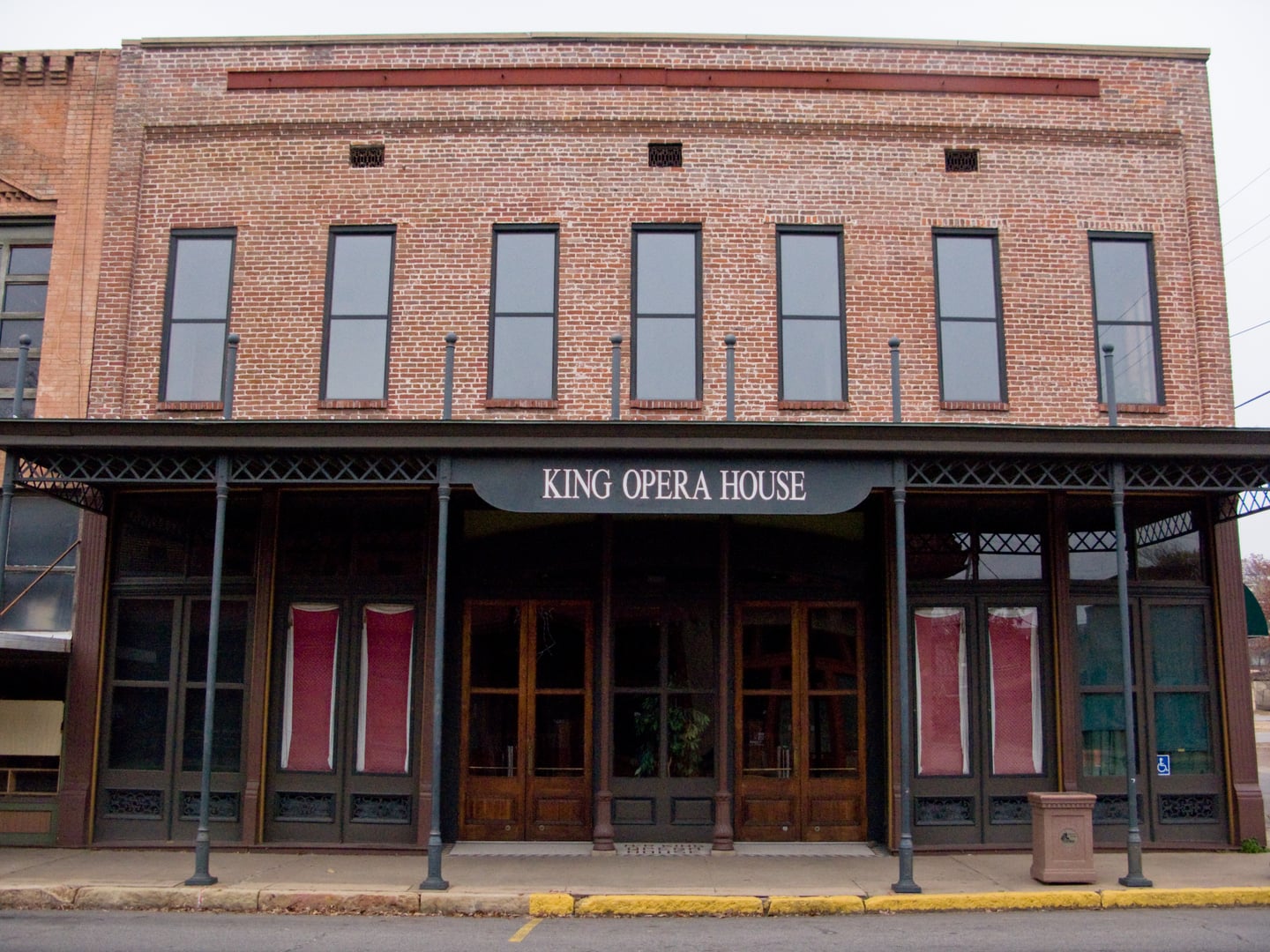
King Opera House Theatre Victorian-era exterior on Main Street Van Buren Arkansas
Theater / Performance Venue

King Opera House Theatre

Van Buren, AR

The King Opera House in Van Buren, Arkansas first opened in 1891 and was acquired by Colonel Henry P. King in 1898, who transformed it into an opera house with storefronts at the street level. The building is a contributing property to the Van Buren Historic District and is listed on the National Register of Historic Places. Arts on Main has managed the venue since 2022.

$$All AgesFamily: Moderate
Brown Chapel at Lyon College in Batesville Arkansas, limestone structure with illuminated steeple at dusk
Photo coming soon
Museum / Historical Site

Lyon College — Brown Chapel

Batesville, AR

Lyon College was founded as Arkansas College in 1872 by Arkansas Presbyterians and is the state's oldest independent college still operating under its original charter. The current campus occupies a 136-acre site that served as the Masonic Home for Orphans before the college's 1954 relocation. Brown Chapel, the campus's defining structure, was constructed in 1958 as the first academic building on the new grounds.

FreeAll AgesFamily: High
Wooded battlefield interpretive area at Marks' Mills Battleground State Park in Cleveland County, Arkansas
Photo coming soon
Battlefield / Military Site

Marks' Mills Battleground State Park

New Edinburg, AR

Marks' Mills Battleground State Park preserves part of the site of the April 25, 1864 Action at Marks' Mills in present-day Cleveland County, Arkansas. The Confederate ambush of a Union supply train under Lieutenant Colonel Francis M. Drake produced approximately 1,500 Union casualties to 293 Confederate, contributed to General Frederick Steele's withdrawal from Camden, and is part of the Camden Expedition Sites National Historic Landmark.

FreeAll AgesFamily: High
Rural cemetery in Monette, Arkansas featuring an unusual sealed mausoleum
Photo coming soon
Cemetery / Burial Ground

Monette Cemetery

Monette, AR

Monette Cemetery in Craighead County, Arkansas contains a notable architectural anomaly: a mausoleum that was originally constructed with glass panels, allowing visibility of the remains inside. When the remains began to decay visibly, the community sealed the structure in concrete and painted it over. The mausoleum bears no identifying name or date.

FreeAll AgesFamily: Moderate
Historic gravestones and monuments fill Mount Holly Cemetery, known as the Westminster Abbey of Arkansas, in Little Rock
Cemetery / Burial Ground

Mount Holly Cemetery

Little Rock, AR

Mount Holly Cemetery in Little Rock, Arkansas was established on February 23, 1843 when prominent citizens Chester Ashley and Roswell Beebe deeded a four-block site to the city. Known as the Westminster Abbey of Arkansas, it holds the burials of eleven Arkansas governors, four U.S. senators, four Confederate generals, and many of the state's leading 19th-century figures.

FreeAll AgesFamily: High
Art-Deco facade of Ole Main, North Little Rock High School West Campus
Photo coming soon
Museum / Historical Site

North Little Rock High School — Ole Main

North Little Rock, AR

North Little Rock High School's West Campus, originally known as Ole Main, was completed in 1930 and designed by Little Rock architect George R. Mann in an Art-Deco style. Listed on the National Register of Historic Places since 1993, the building hosted high school students until 2015 and now sits largely vacant while the district plans its renovation as a Center of Excellence charter school.

FreeAll AgesFamily: High
Rural Ozark landscape near Oxford in Izard County, Arkansas
Photo coming soon
Cemetery / Burial Ground

Old Church House and Cemetery near Oxford

Oxford, AR

Oxford is an Izard County, Arkansas community settled in the mid-nineteenth century around Wiley Croom's cotton mill and grist mill. It was incorporated in 1945. The Encyclopedia of Arkansas entry for Oxford documents Cumberland Presbyterian (1870), Methodist, and Baptist (1937) churches but no vigilante witch-hanging history of the type described in the Shadowlands narrative.

FreeAll AgesFamily: Moderate
Harton Theatre exterior on the campus of Southern Arkansas University in Magnolia
Photo coming soon
Theater / Performance Venue

Harton Theatre, Southern Arkansas University

Magnolia, AR

Southern Arkansas University in Magnolia traces its origins to the Third District Agricultural School established in 1909. The institution became Southern Arkansas University in 1976. The Harton Theatre is the home of the SAU Department of Theatre and hosts the university's main stage season.

FreeAll AgesFamily: High
Craig Counsell of the Milwaukee Brwers on deck against the Chicago White Sox.
Photo coming soon
Other Dark Tourism Site

51st Avenue and Indian School Road

Phoenix, AZ

51st Avenue and Indian School Road form a significant intersection in west Phoenix, Arizona. The location is a documented active urban intersection serving residential and commercial areas.

FreeAll AgesFamily: Moderate
Central Avenue across from Bathhouse Row in Hot Springs, Arkansas
Photo coming soon
Other Dark Tourism Site

The Poet's Loft (Former)

Hot Springs, AR

The Poet's Loft operated at 514B Central Avenue in Hot Springs, Arkansas, across from Bathhouse Row, where for more than a decade Dr. Paul Tucker and Suzanne Tucker hosted the long-running Wednesday Night Poetry event documented in the Encyclopedia of Arkansas. The venue is no longer at that address; the building sits within the Hot Springs Central Avenue Historic District.

FreeAll AgesFamily: High
Northern Avenue Valley Metro Rail station.
Photo coming soon
Other Dark Tourism Site

19th Avenue and Northern Avenue

Phoenix, AZ

The Good Shepherd Home for Girls, built in 1942, operated at 19th Avenue and Northern from 1947 to 1981 as a residential institution for girls aged 12-18 adjudicated by juvenile courts and state agencies. The facility was operated by the Sisters of the Good Shepherd, a Catholic religious order. The historic building was preserved and incorporated into a modern strip mall complex developed in 1959, with subsequent renovations in 2004.

FreeAll AgesFamily: Moderate
59th Avenue Residential Historic District, Western side of 59th Ave. between Orangewood Ave. and Frier Dr. Glendale
Photo coming soon
Cemetery / Burial Ground

55th Ave and Northern

Phoenix, AZ

A cemetery is located in the area of 55th Avenue and Northern Avenue in Phoenix, Arizona. The burial ground represents a historical community cemetery serving the greater Phoenix area.

FreeAll AgesFamily: Moderate
Romero in 2021
Photo coming soon
Other Dark Tourism Site

8th Avenue and Extension

Mesa, AZ

The intersection of 8th Avenue and Extension Road in Mesa, Arizona, is the site of a documented traffic fatality involving a child struck by an intoxicated driver. The specific date and identity of the victim remain unclear in available sources, though the incident is embedded in local oral history.

FreeAll AgesFamily: Low
Arizona Capital Executive Tower, 2012
Photo coming soon
Prison / Reformatory

Arizona State Prison Complex Death House

Florence, AZ

Arizona State Prison Complex - Florence is Arizona's oldest operational state prison, established in 1910. The death house, located in Housing Unit 9, contains the execution chamber. Arizona has carried out approximately 100 death sentences since 1910, using hanging (until 1934), gas chamber, and lethal injection methods. The original execution method was hanging with a trap-door system; gas chamber replaced hanging in 1934 following a botched execution in 1930.

$Restricted AccessFamily: Not Recommended
Arizona State Prison Complex - Phoenix facility exterior
Photo coming soon
Prison / Reformatory

Arizona State Prison Complex - Phoenix

Phoenix, AZ

Arizona State Prison Complex - Phoenix, specifically the Flamenco Unit, opened in 1985 as a 105-bed psychiatric hospital for adult males. The facility's primary function is housing inmates with mental health issues and those in protective or maximum security custody. The Flamenco Unit represents a contemporary correctional mental health facility rather than a historical institutional site.

$Restricted AccessFamily: Low
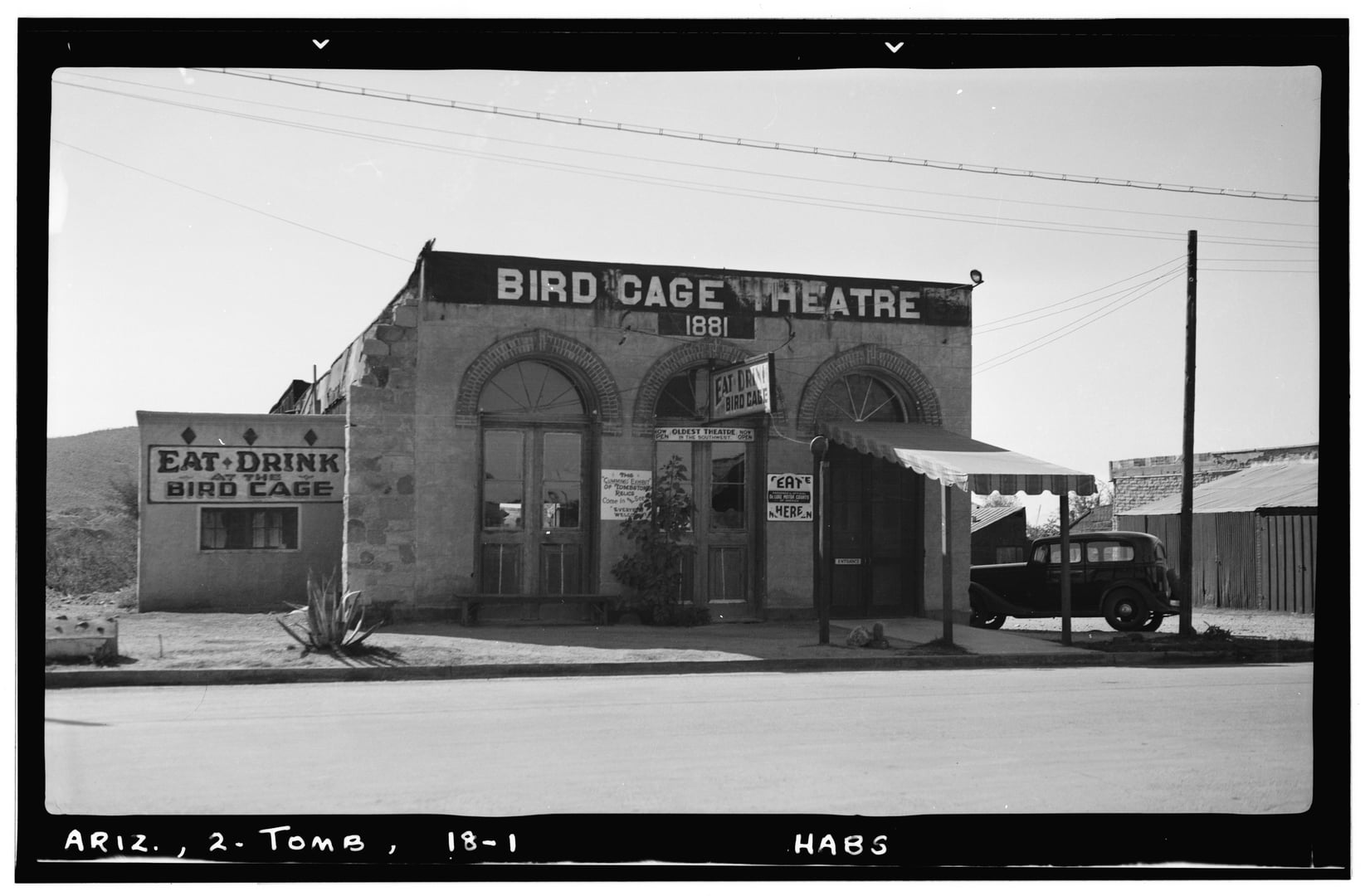
1937 Historic American Buildings Survey general view of the Bird Cage Theatre on Allen Street in Tombstone, Arizona
Theater / Performance Venue

Bird Cage Theatre

Tombstone, AZ

The Bird Cage Theatre opened on December 26, 1881, in Tombstone, Arizona, operating simultaneously as a variety theater, saloon, gambling hall, and brothel. Over its eight-year run, 26 documented deaths occurred on the premises, and 140 bullet holes remain preserved in its walls and ceiling.

$$All AgesFamily: Moderate
Open Graph image from oliverhousebisbee.com
Haunted Hotel / Inn

Oliver House Bed and Breakfast

Bisbee, AZ

The Oliver House was constructed in 1908 in Bisbee, Arizona, by Edith Ann Oliver and her husband Henry Oliver, a mining tycoon with the Calumet & Arizona Mining Company. The brick structure was designed as executive housing. The building evolved through functions: executive residence, boarding house, and contemporary bed and breakfast. Documented records indicate 27 deaths occurred at the property, though historical records may be incomplete.

$$All AgesFamily: Moderate
Bloom Elementary School in Tucson, Arizona
Photo coming soon
Museum / Historical Site

Bloom Elementary School

Tucson, AZ

Bloom Elementary School operates as an active educational facility in Tucson, Arizona's Pima County school system. Located at 8310 East Pima Street, the school serves kindergarten through fifth-grade students. A female principal's death at the school is the reported source of the paranormal activity.

FreeSchool Hours OnlyFamily: High
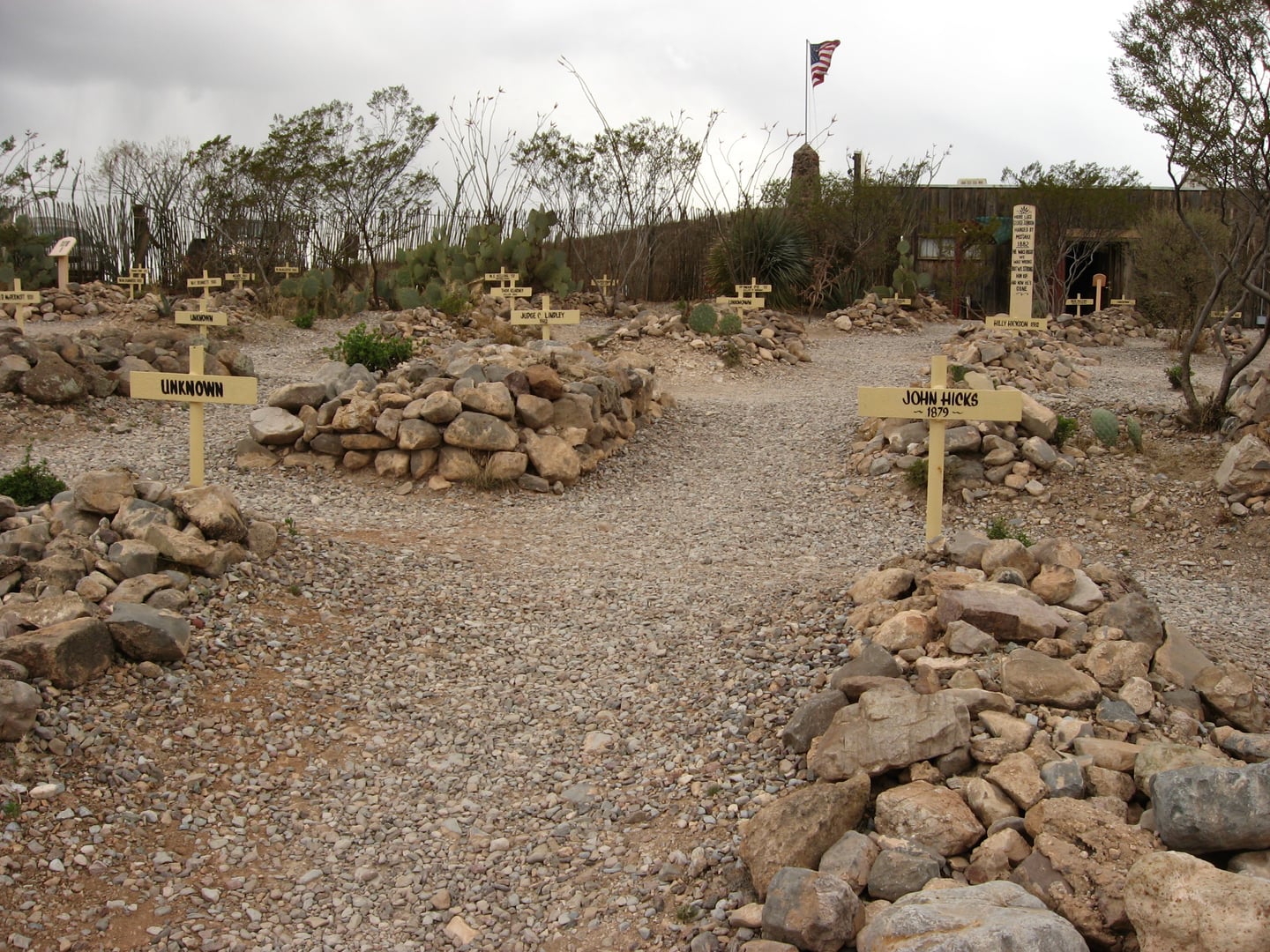
Overall view of Boothill Graveyard with rock-piled graves and wooden markers above Tombstone, Arizona
Cemetery / Burial Ground

Boothill Graveyard

Tombstone, AZ

Boothill Graveyard, founded in 1878 in Tombstone, Arizona, holds approximately 250 burials from the silver-mining boomtown's most violent years. The cemetery includes the graves of three men killed at the 1881 Gunfight at the O.K. Corral and is among the best-known Western frontier cemeteries.

$All AgesFamily: High
Buford House — Haunted Hotel / Inn
Haunted Hotel / Inn

Buford House

Tombstone, AZ

The Buford House was constructed in 1880 by George Washington Buford, one of Tombstone's original settlers who made his fortune in Texas mining. The house is one of Tombstone's oldest and most historically significant structures. The property witnessed multiple tragic deaths including three children during a diphtheria outbreak and a violent incident in 1888 involving a rejected suitor.

$$All AgesFamily: Moderate
Cafe de Manuel's Mexican restaurant exterior in Casa Grande, Arizona
Photo coming soon
Haunted Dining / Bar

Cafe de Manuel's

Casa Grande, AZ

Cafe de Manuel's operates as an authentic Mexican restaurant in Casa Grande, Arizona, established in 1995. The building formerly functioned as a furniture store and private residential property prior to restaurant use. The structure harbors historical trauma from its commercial and residential operations.

$All AgesFamily: High
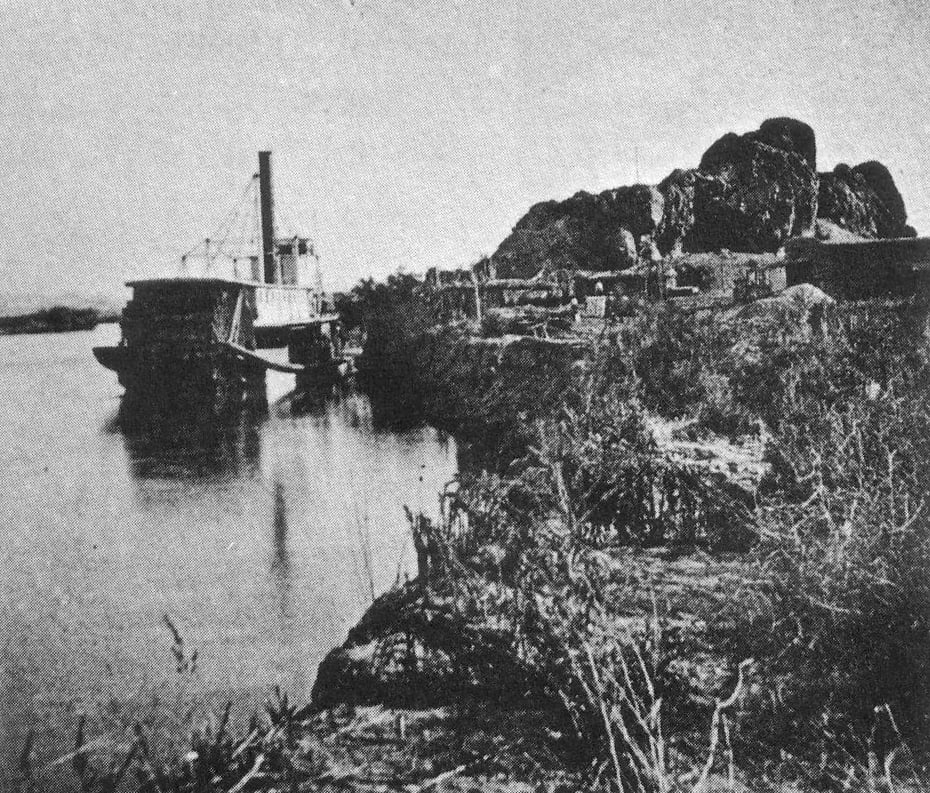
Historic 1877 photograph of Castle Dome Landing mining settlement in Yuma County, Arizona
Museum / Historical Site

Castle Dome City

Yuma, AZ

Castle Dome City was founded in 1863 in what is now Yuma County, Arizona, after prospector Julian Dennis discovered silver in the Castle Dome Mountains. At its peak the town reportedly held more than 3,000 residents and supported the surrounding 300-mine Castle Dome Mining District. The mines operated intermittently until 1979 and have been restored as an open-air museum.

$$All AgesFamily: High
The 1931 Art Deco Cochise County Courthouse on Quality Hill in Bisbee, Arizona, designed by Roy Place
Museum / Historical Site

Cochise County Courthouse

Bisbee, AZ

The Cochise County Courthouse opened August 2, 1931, designed by Tucson architect Roy Place in the Southwest regional variation of Art Deco. The Phelps Dodge Corporation donated the Quality Hill land after the county seat moved from Tombstone to Bisbee in 1929. The building is a contributing property to the Bisbee Historic District, which was listed on the National Register of Historic Places in 1980.

FreeAll AgesFamily: High
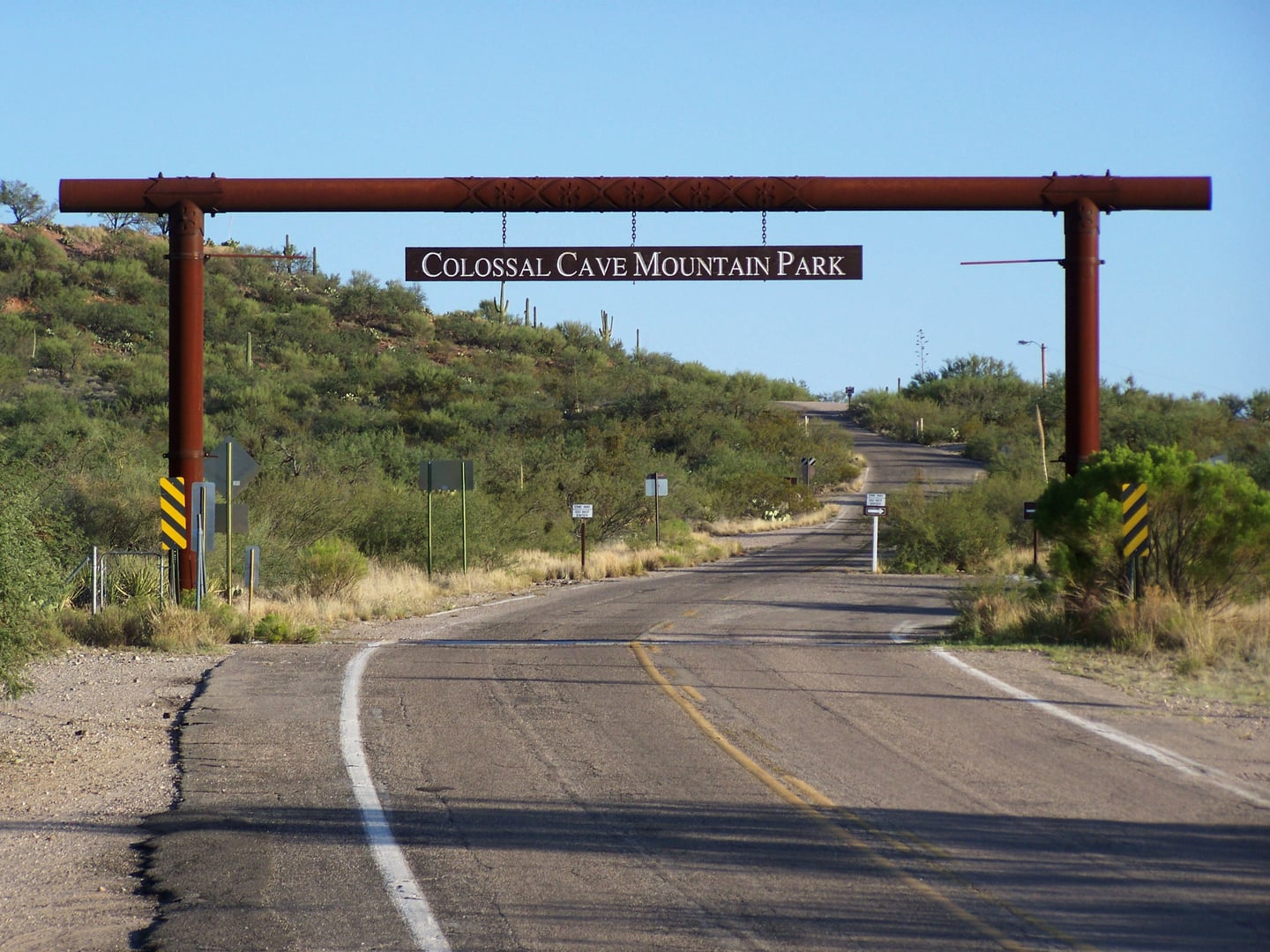
Entrance to Colossal Cave Mountain Park near Tucson Arizona
Museum / Historical Site

Colossal Cave Mountain Park

Vail, AZ

Colossal Cave Mountain Park preserves a dry limestone cave 15 miles southeast of Tucson that became notorious in the 1880s as a hideout for train robbers. The loot they stashed inside was never found. Frank Schmidt, one of the cave's early developers, spent much of his life documenting and preserving the caverns before his death.

$$Classic Cave Tour not recommended for children under 5; Ladder Tour ages 12+; Wild Cave Tour ages 16+Family: Moderate
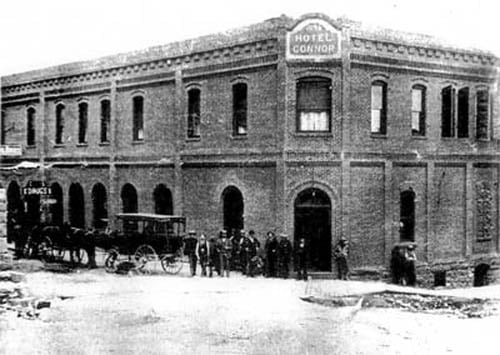
Historic 1899 photograph of Connor Hotel in Jerome Arizona copper mining town
Haunted Hotel / Inn

Connor Hotel

Jerome, AZ

David Connor built the Connor Hotel in 1898 in Jerome, Arizona, then a booming copper-mining town on the side of Cleopatra Hill. The hotel burned to the ground twice in its early decades — Connor was one of only two Jerome business owners carrying insurance — and closed in 1931 before being restored and reopened as a boutique hotel.

$$All AgesFamily: Moderate
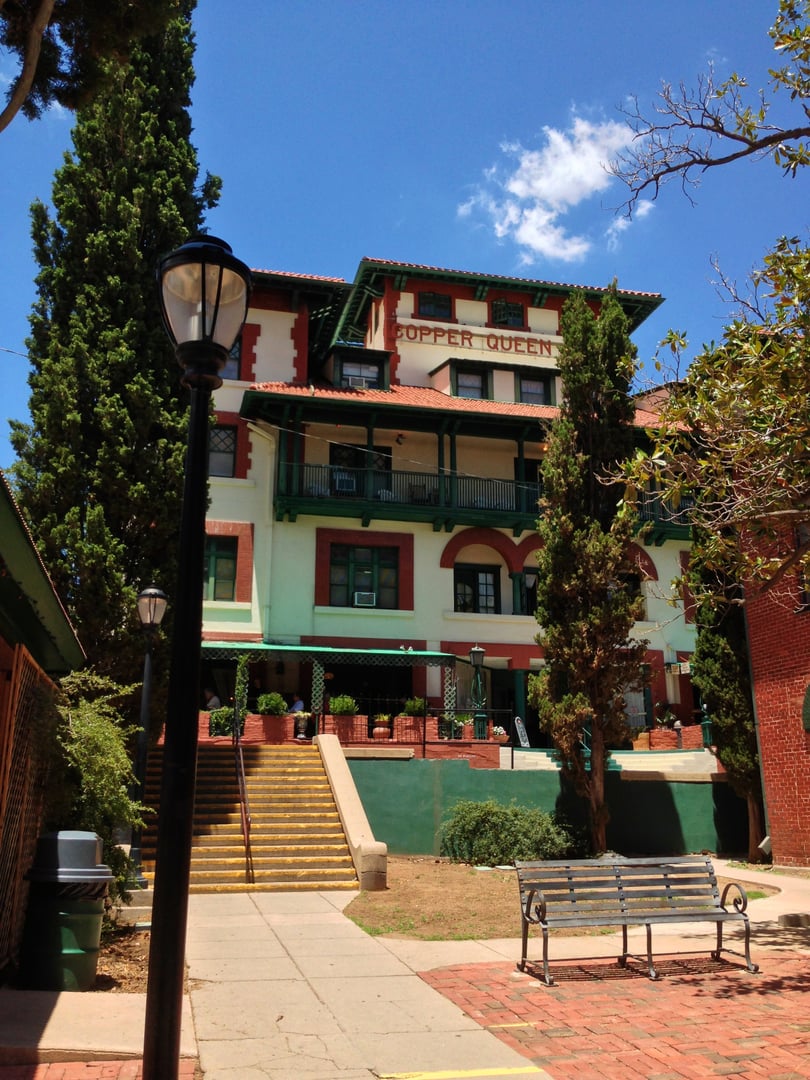
Front facade of the historic Copper Queen Hotel in Bisbee, Arizona
Haunted Hotel / Inn

Copper Queen Hotel

Bisbee, AZ

The Copper Queen Hotel was constructed between 1898 and 1902 by the Phelps Dodge Corporation to accommodate investors and dignitaries visiting its Bisbee copper mining operations. Completed in 1902 and predating Arizona's 1912 statehood, the hotel is the oldest continuously operating hotel in the state.

$$$All AgesFamily: Moderate
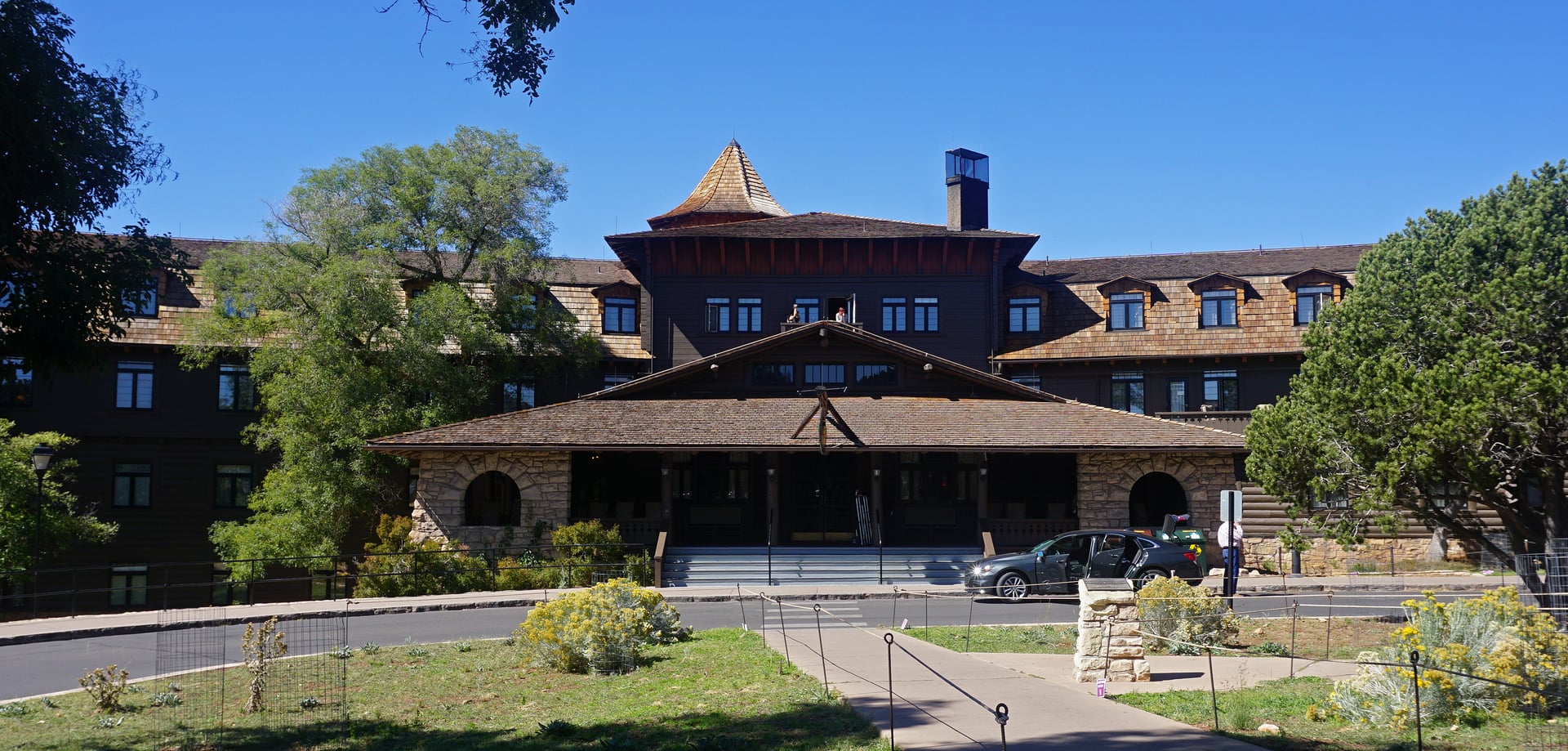
Exterior of the historic El Tovar Hotel on the South Rim of the Grand Canyon, Arizona
Haunted Hotel / Inn

El Tovar Hotel

Grand Canyon National Park, AZ

El Tovar Hotel opened in 1905 on the South Rim of the Grand Canyon, built from local limestone and Oregon pine at a cost of nearly $250,000 for the Fred Harvey Company in conjunction with the Atchison, Topeka and Santa Fe Railway. Designed by Charles Whittlesey, it opened four years after Fred Harvey's death and predated the Grand Canyon's designation as a National Park by four years. Early guests included Theodore Roosevelt, William Howard Taft, George Bernard Shaw, and Zane Grey.

$$$All AgesFamily: High
Adirondack-style shelter and forested campsite at Diamond Rock Campground on the East Fork of the Black River, Arizona
Photo coming soon
Outdoor / Natural Site

Diamond Rock Campground

Alpine, AZ

Diamond Rock Campground sits at 7,890 feet on the East Fork of the Black River in the Apache-Sitgreaves National Forests of eastern Arizona. The 12-site campground includes three Adirondack-style three-sided shelters built by the Civilian Conservation Corps during the 1930s, predating large RV-camping conventions.

$All AgesFamily: High
Historic Garcia House at 541 Main Street in Jerome, Arizona, now operating as the Ghost City Inn
Haunted Hotel / Inn

Ghost City Inn

Jerome, AZ

Ghost City Inn occupies a building constructed around 1890 as a boarding house for workers at the nearby copper mines of Jerome, Arizona. Over the next century it served as a private home (the Garcia House), restaurant, spiritual retreat, funeral home, and art gallery before being converted into a bed-and-breakfast in 1994.

$$$All AgesFamily: Moderate
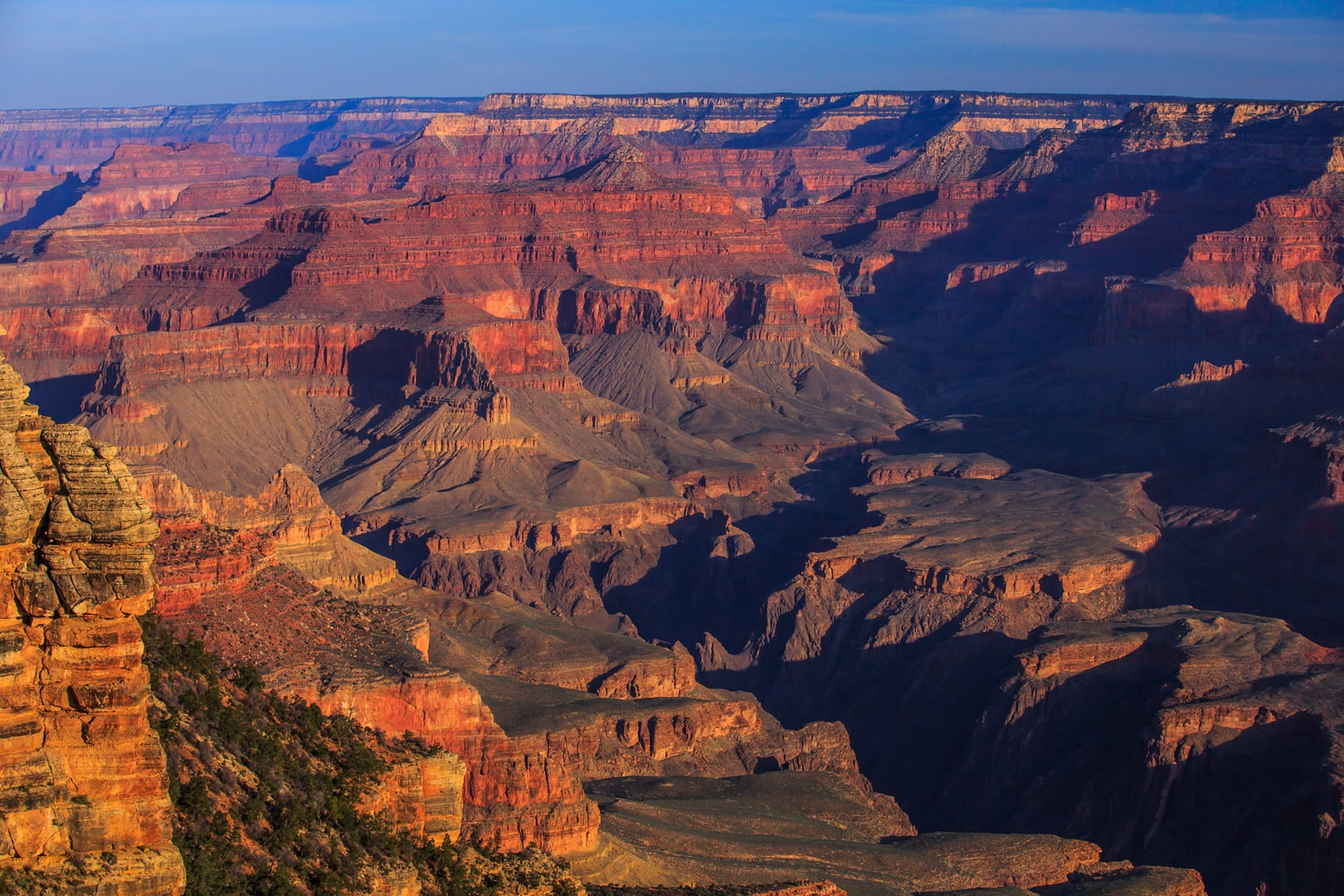
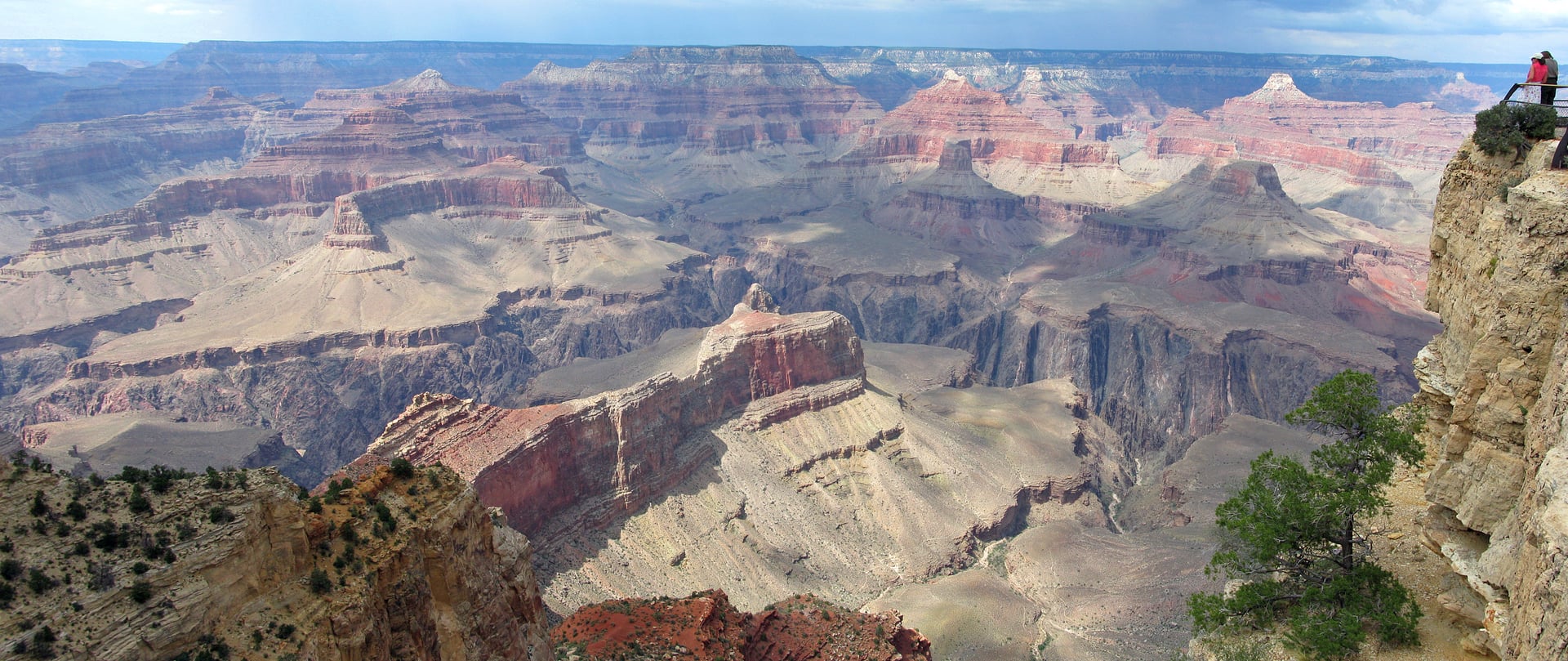
Dawn light on the South Rim of the Grand Canyon, Coconino County, Arizona
Outdoor / Natural Site

Grand Canyon National Park

Grand Canyon Village, AZ

Grand Canyon National Park encompasses 1,217,262 acres of canyon, plateau, and Colorado River corridor in northern Arizona. President Theodore Roosevelt proclaimed the Grand Canyon a national monument in 1908; Congress established the national park on February 26, 1919. The park's South Rim Grand Canyon Village Historic District and North Rim Grand Canyon Lodge are landmarks of early National Park Service architecture.

$$All AgesFamily: Moderate
Fox Tucson Theatre Art Deco facade and marquee on Congress Street, Tucson, Arizona
Theater / Performance Venue

Fox Tucson Theatre

Tucson, AZ

The Fox Tucson Theatre opened on April 11, 1930, as a combined vaudeville and movie house. After closing in 1974 and standing vacant for 25 years, the building was purchased in 1999 by the non-profit Fox Tucson Theatre Foundation for $250,000 and reopened in 2006 following a multi-year, multi-million-dollar restoration.

$$All AgesFamily: High
Hassayampa Hotel
Haunted Hotel / Inn

Hassyampa Inn

Prescott, AZ

The Hassayampa Inn opened on November 20, 1927, designed by the El Paso firm of Trost and Trost in a blend of Spanish Colonial Revival and Italian Renaissance Revival styles. Financing came from the Prescott Kiwanis Club's public subscription campaign, with local residents becoming shareholders. The inn has been a member of Historic Hotels of America since 1996.

$$$All AgesFamily: Moderate
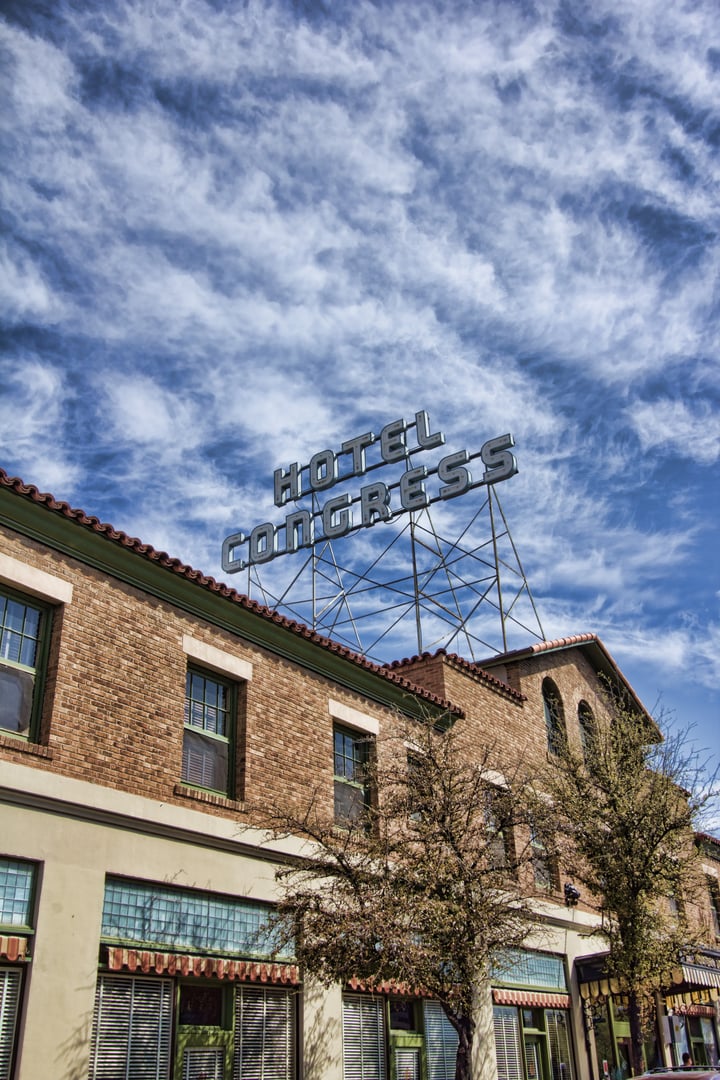
Hotel Congress historic exterior facade in downtown Tucson Arizona
Haunted Hotel / Inn

Hotel Congress

Tucson, AZ

The Hotel Congress opened in 1918 as a railroad hotel adjacent to Tucson's Southern Pacific Depot, designed by the Los Angeles architectural firm William and Alexander Curlett. On January 22, 1934, a basement fire inadvertently exposed John Dillinger and his gang, who had been hiding on the third floor using aliases — setting off a chain of events that ended in Dillinger's transfer to Indiana and eventual death in Chicago.

$$$All Ages; Haunted Hotel Tours 18+ (check venue)Family: Moderate
Wells House
Haunted Hotel / Inn

Hotel Vendome

Prescott, AZ

The Hotel Vendome in Prescott, Arizona was built in 1917 and sits two blocks from Courthouse Plaza. Abby Byr and her husband purchased the hotel in 1921 but lost it to tax debt; the new owners retained them as managers and gave them Room 16 to live in. When her husband left to obtain medicine for her tuberculosis and never returned, Abby refused to eat or drink. She and her cat Noble both died in Room 16.

$$All AgesFamily: Moderate
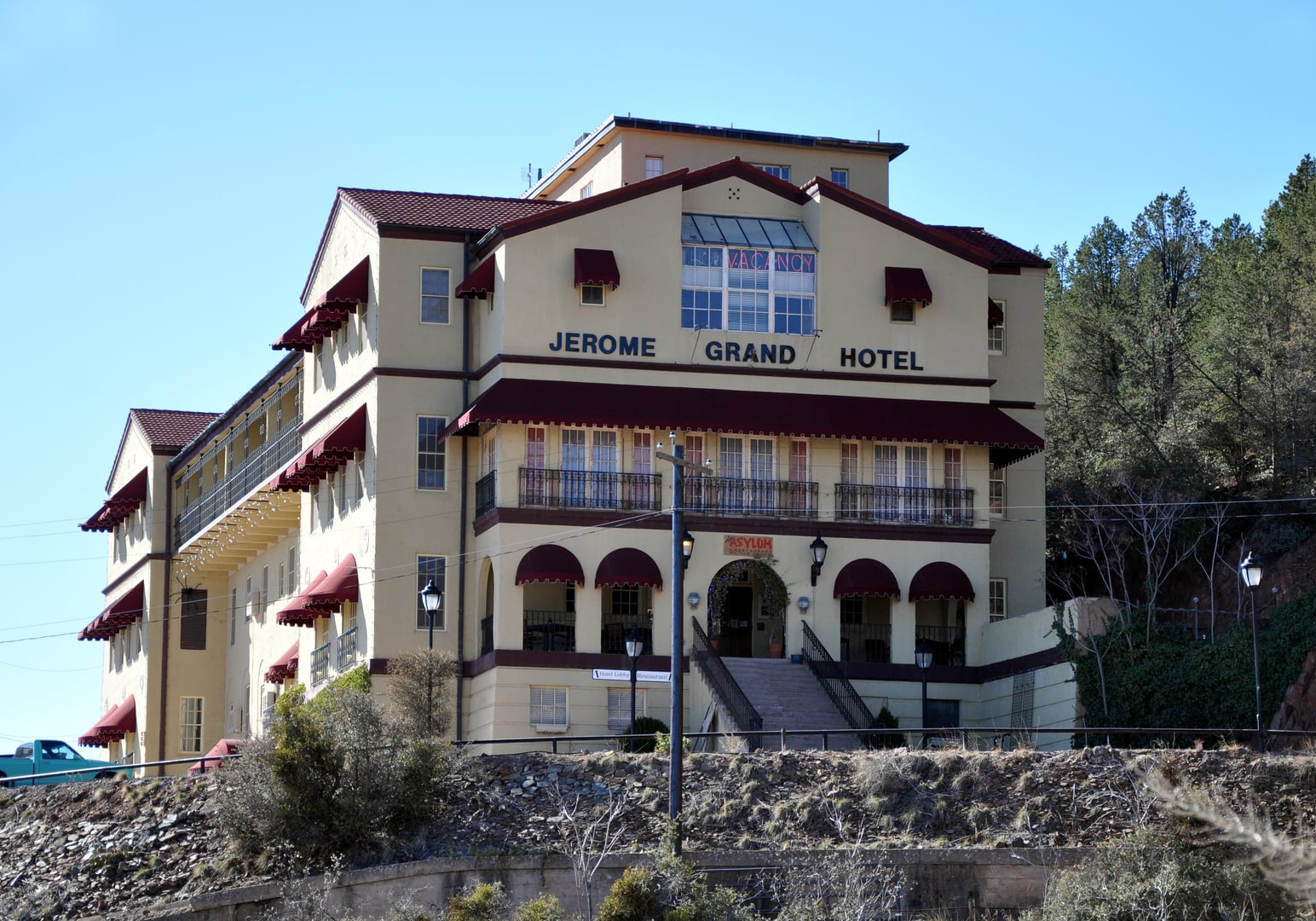
Jerome Grand Hotel, the 1927 United Verde Hospital building on Cleopatra Hill in Jerome, Arizona
Haunted Hotel / Inn

Jerome Grand Hotel

Jerome, AZ

The Jerome Grand Hotel occupies the 1927 United Verde Hospital building on Cleopatra Hill in Jerome, Arizona. The hospital served the United Verde copper mine workforce until its 1950 closure. The Altherr family purchased the building in 1994 and opened it as a hotel in 1996.

$$$All AgesFamily: Moderate
Casey Moore's Oyster House in Tempe, Arizona, the 1910 W.A. Moeur House operating as a restaurant and bar
Photo coming soon
Haunted Dining / Bar

KC Moore's Bar and Grill

Tempe, AZ

The building operating as Casey Moore's Oyster House was constructed in 1910 as the W.A. Moeur House. William Moeur was a founding member of Tempe's first school board and a key figure in early Maricopa County education. His brother Benjamin B. Moeur became Governor of Arizona from 1933-1937. William died in the home in 1929 from a cerebral hemorrhage near the fireplace; Mary Moeur died in an upstairs bedroom in the 1940s. The house became a restaurant in 1973.

$$All AgesFamily: Moderate
Two rock formations as seen from Rim Drive just west of Grand Canyon Village: Brahma Temple (left) and Zoroaster Temple (right).

Many Grand Canyon rock formations are named after concepts in non-Western religions.
Outdoor / Natural Site

Maricopa Point

Grand Canyon National Park, AZ

Maricopa Point is a South Rim viewpoint on the West Rim Drive of Grand Canyon National Park, accessible by the free Hermit Road shuttle. The Civilian Conservation Corps worked extensively on the canyon's South Rim from 1933 onward, building trails, walls, and safety railings. The stone safety railings that line the rim in this section were constructed by CCC crews during the New Deal era.

$$All AgesFamily: High
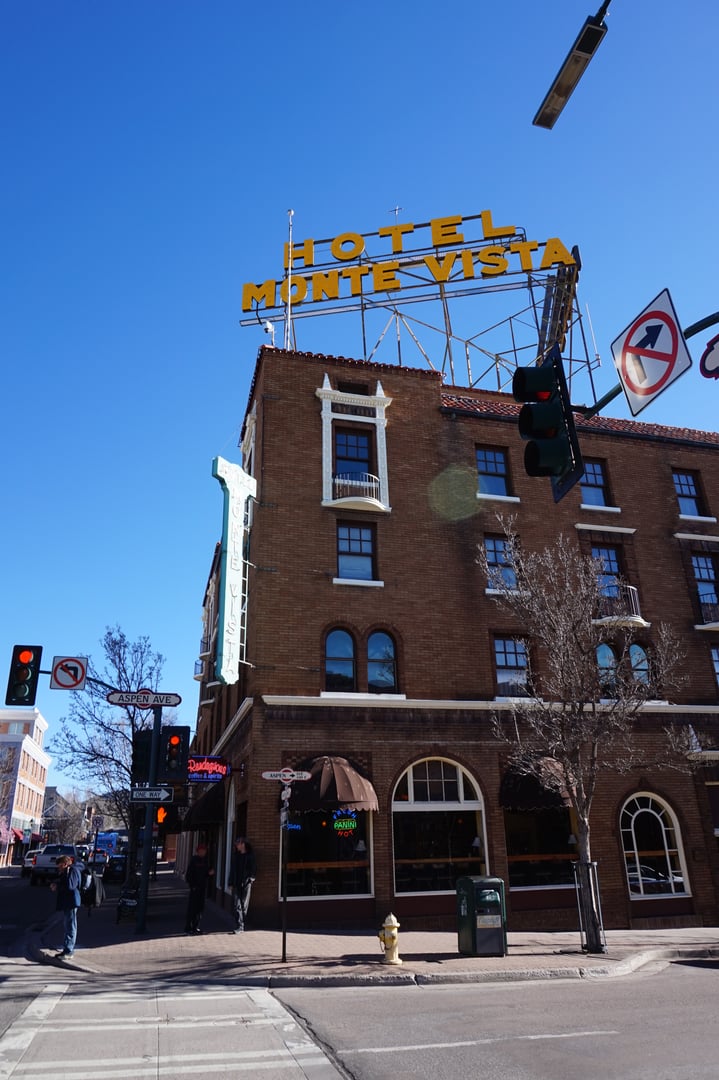
Hotel Monte Vista brick facade with vintage neon sign in downtown Flagstaff, Arizona
Haunted Hotel / Inn

Hotel Monte Vista

Flagstaff, AZ

The Hotel Monte Vista opened January 1, 1927, funded by Flagstaff taxpayers after a 1924 public fundraising campaign organized by astronomer V.M. Slipher. It was one of the only American hotels built entirely from public funds at the time. During the 1940s and 1950s, it hosted John Wayne, Bing Crosby, Jane Russell, Gary Cooper, and Spencer Tracy, who filmed Westerns in the surrounding terrain.

$$$All AgesFamily: Moderate
Historic two-story schoolhouse building converted to Noftsger Hill Inn in Globe, Arizona
Photo coming soon
Haunted Hotel / Inn

Noftsger Hill Inn

Globe, AZ

The Noftsger Hill Inn was originally the North Globe Schoolhouse, built in 1907 and operating as Globe's primary elementary school until it closed in 1981. After renovation, the building reopened as a bed and breakfast. The conversion preserved the original classroom structure, with each former classroom becoming an oversized guest suite.

$$All AgesFamily: Moderate
Historic two-story wooden facade of the Oatman Hotel on Route 66 Main Street in Oatman, Arizona
Photo coming soon
Museum / Historical Site

Oatman Hotel

Oatman, AZ

The Oatman Hotel was originally built in 1902 and rebuilt after a fire in 1924, operating during the height of Oatman's gold rush years. The hotel was listed on the National Register of Historic Places as the Durlin Hotel. The name changed to the Oatman Hotel in the late 1960s. The building no longer offers overnight accommodations, operating today as a museum, restaurant, and bar.

FreeAll AgesFamily: High
The Oliver House bed and breakfast, a 1909 building in Bisbee, Arizona
Photo coming soon
Haunted Hotel / Inn

The Oliver House

Bisbee, AZ

The Oliver House was built in 1909 by Edith Ann Oliver and her husband Henry Oliver to house executives of the Calumet & Arizona Mining Company. The building was converted to a bed and breakfast in 1986 and operates today as a historic inn in Bisbee, Arizona.

$$$18+ for overnight ghost-hunt programs; daytime visits all agesFamily: Moderate
Granite walls and saguaro cactus in Sabino Canyon Recreation Area north of Tucson, Arizona
Photo coming soon
Outdoor / Natural Site

Sabino Canyon Recreation Area

Tucson, AZ

Sabino Canyon in the Santa Catalina Mountains north of Tucson has been a human-use corridor for at least 12,500 years — from Clovis culture hunters through Cochise culture and Hohokam agriculturalists who farmed the canyon between roughly 1000-1300 CE. Incorporated into the Catalina Forest Reserve in 1902 and the new Coronado National Forest in 1908, the canyon was developed as a recreation area in the 1930s when Civilian Conservation Corps and WPA crews built the nine stone bridges, Sabino Dam, and the lake that still define the lower canyon.

$All AgesFamily: Moderate
The east-side Tucson hotel at 6555 East Speedway Boulevard, formerly Radisson Suites Tucson, now Embassy Suites by Hilton Tucson East
Photo coming soon
Haunted Hotel / Inn

Radisson Suites Tucson (now Embassy Suites by Hilton Tucson East)

Tucson, AZ

The hotel at 6555 East Speedway Boulevard in Tucson operated for decades as the Radisson Suites Tucson. It rebranded as Embassy Suites by Hilton Tucson East following a full renovation in 2019. The property is on the city's east side near major medical and shopping corridors.

$$$All AgesFamily: High
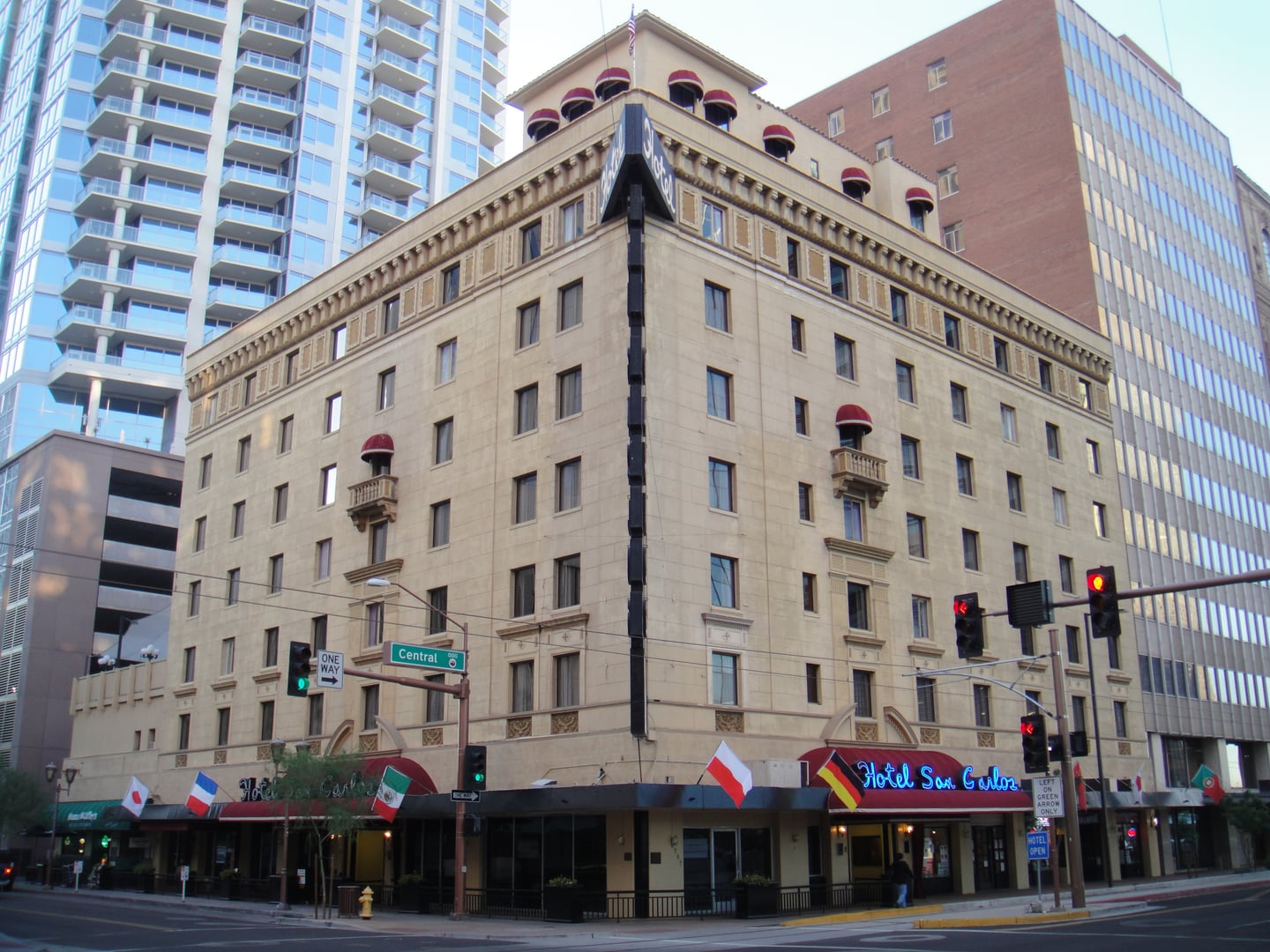
Hotel San Carlos in downtown Phoenix Arizona, 1928 seven-story boutique hotel exterior
Haunted Hotel / Inn

Hotel San Carlos

Phoenix, AZ

Hotel San Carlos opened on March 20, 1928, as a seven-story, 175-room downtown Phoenix hotel and quickly became a stop for Hollywood's Golden Age — Clark Gable, Carole Lombard, Mae West, Gene Autry, and Marilyn Monroe among them. The building stands on the site of Phoenix's first school, the 1874 Little Adobe, and remains in continuous operation as a boutique hotel.

$$$All AgesFamily: Moderate
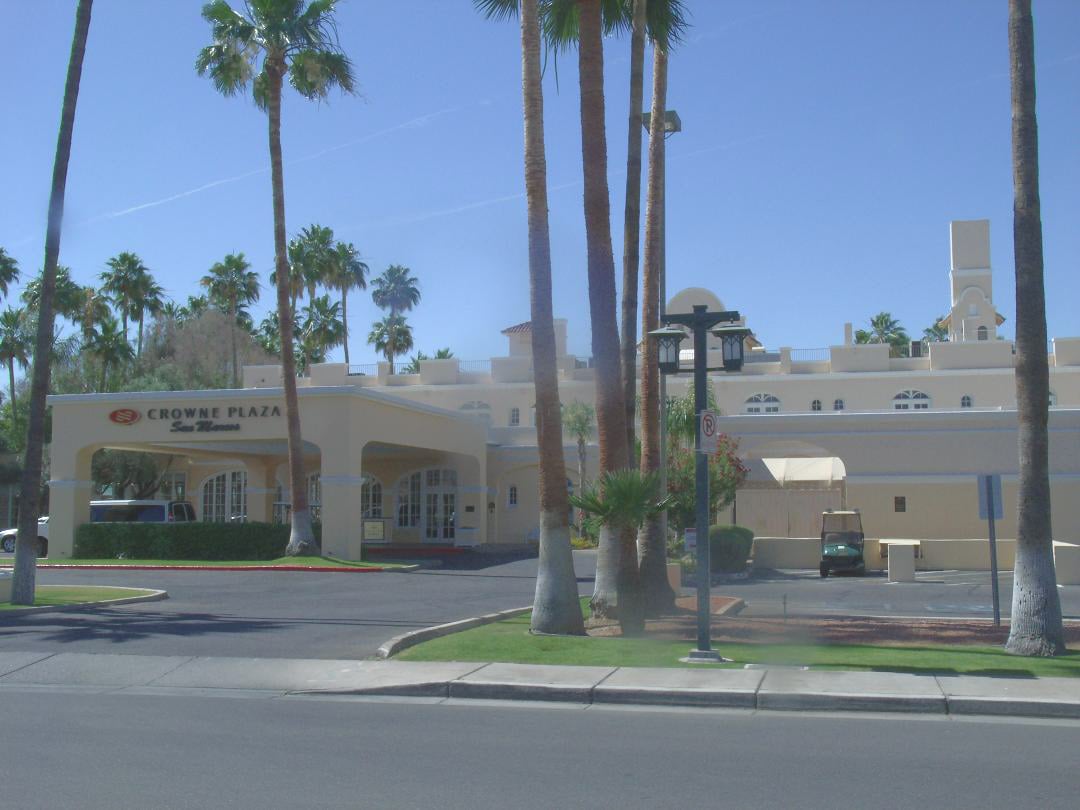
San Marcos Hotel exterior in Chandler Arizona, 1913 historic golf resort
Haunted Hotel / Inn

Crowne Plaza Phoenix-Chandler Golf Resort (Historic San Marcos Hotel)

Chandler, AZ

The San Marcos Hotel opened November 22, 1913 in Chandler, Arizona as the state's first golf resort. Built by Dr. Alexander Chandler, the property hosted Fred Astaire, Joan Crawford, Bing Crosby, Clark Gable, Jimmy Stewart, and President Herbert Hoover during the Hollywood era and operates today as the Crowne Plaza Phoenix-Chandler Golf Resort.

$$$All AgesFamily: High
St. Mary's Hospital exterior on W. St. Mary's Road, Tucson, Arizona
Photo coming soon
Asylum / Hospital

St. Mary's Hospital

Tucson, AZ

St. Mary's Hospital in Tucson was dedicated in 1880 and is recognized as Arizona's first hospital. It was established by the Sisters of St. Joseph of Carondelet, who had traveled west from St. Louis a decade earlier as part of the order's frontier mission. The hospital remains an active acute-care facility within the Carondelet Health Network.

FreeAll AgesFamily: Moderate
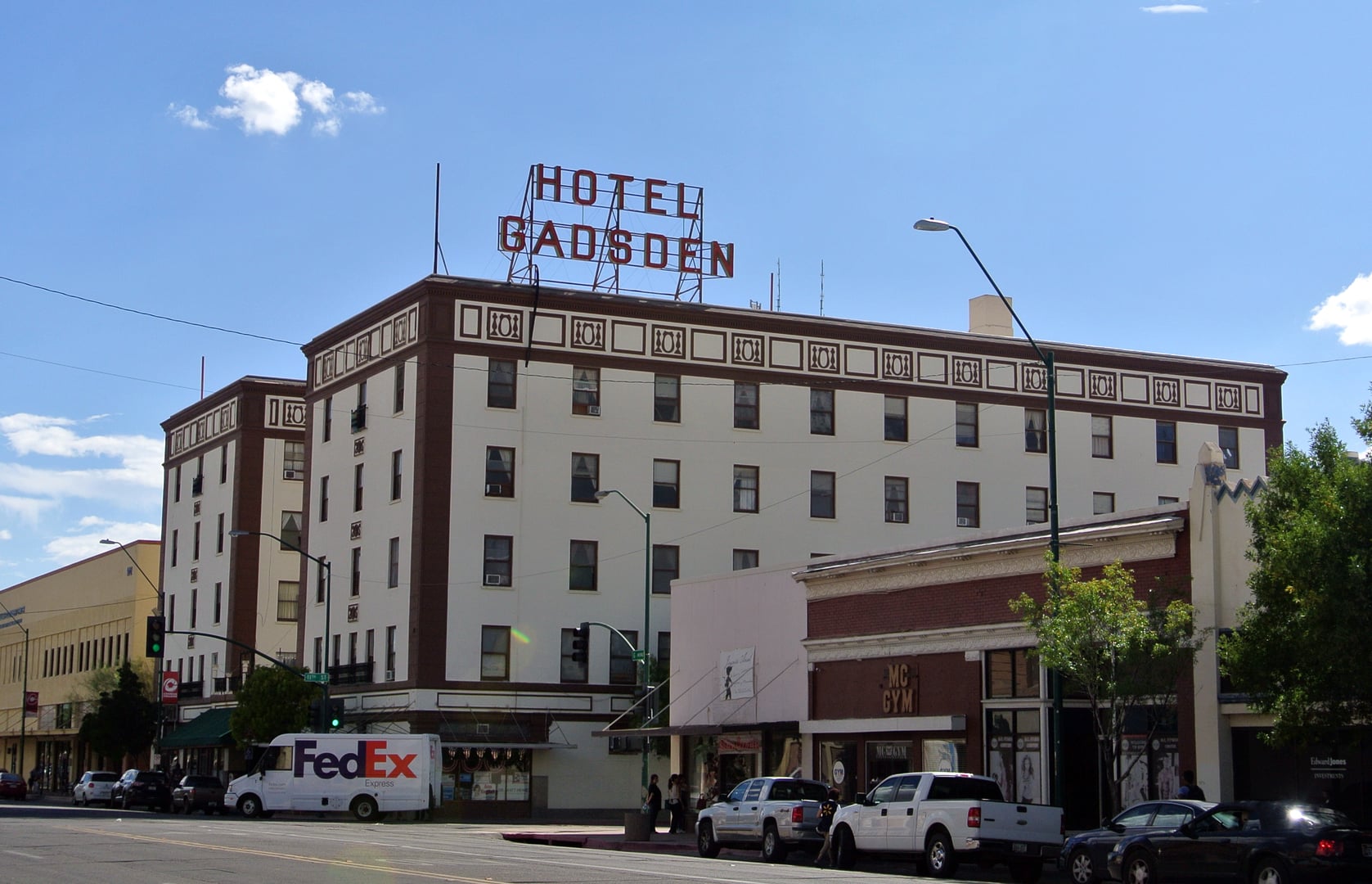
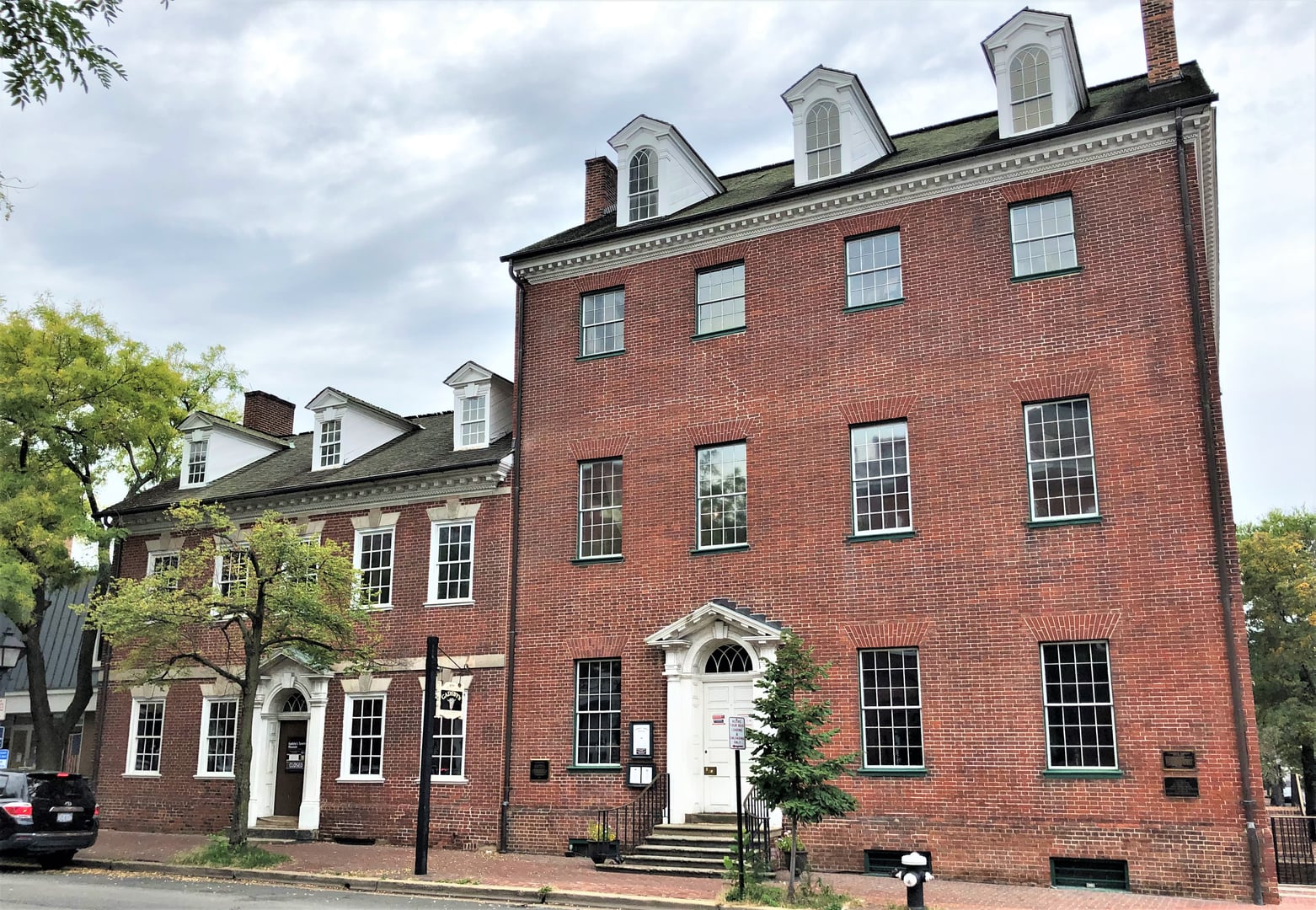
The Gadsden Hotel in Douglas, Arizona, a five-story 1929 Henry Trost building on G Avenue
Haunted Hotel / Inn

The Gadsden Hotel

Douglas, AZ

The Gadsden Hotel opened in 1907 in Douglas, Arizona, named for the Gadsden Purchase that defined the region. Cattlemen, ranchers, miners, and businessmen used the five-story, 160-room hotel as a base for the border economy. The original building burned in 1928; the current structure was designed by El Paso architect Henry Trost and opened in 1929.

$$All AgesFamily: High
Wooden grave markers at Boothill Graveyard in Tombstone, Arizona, the Old West cemetery from the 1880s
Cemetery / Burial Ground

Boothill Graveyard

Tombstone, AZ

Boothill Graveyard is Tombstone's first city cemetery, founded in 1878 to receive the dead of the booming silver-mining town. Between 1879 and 1884, about 300 people were buried here, including roughly forty percent who died violently or suddenly. Notable interments include three men killed in the 1881 O.K. Corral gunfight. The cemetery fell into disuse, was nearly lost as a dump, and was restored by the city beginning in the 1940s.

$All AgesFamily: High
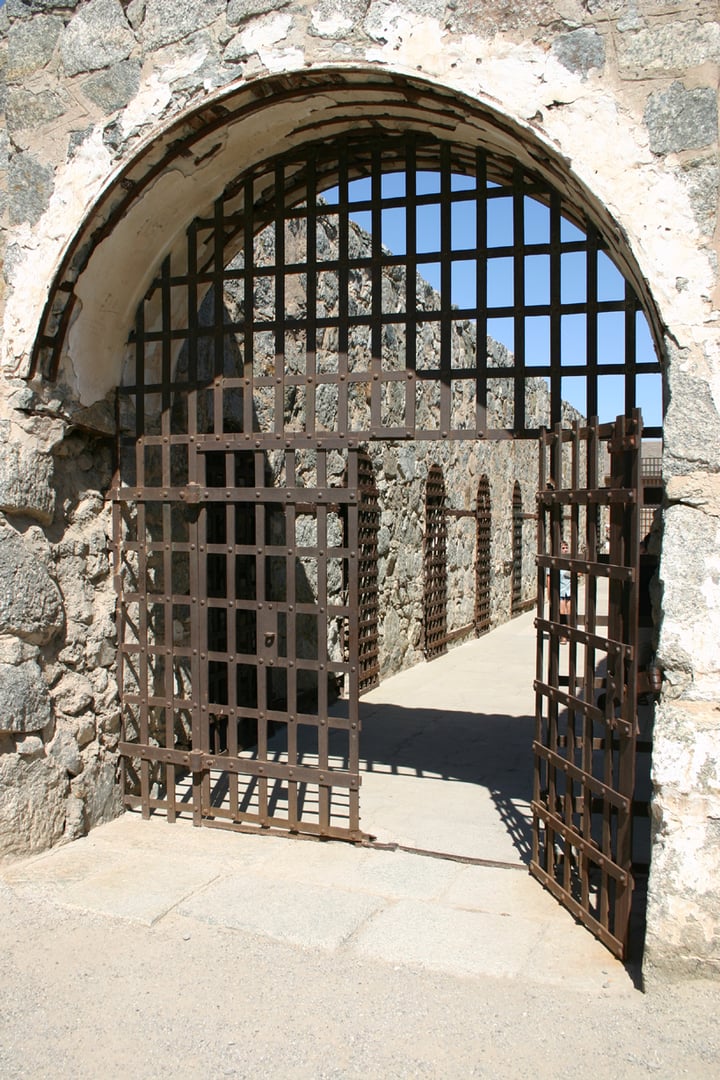
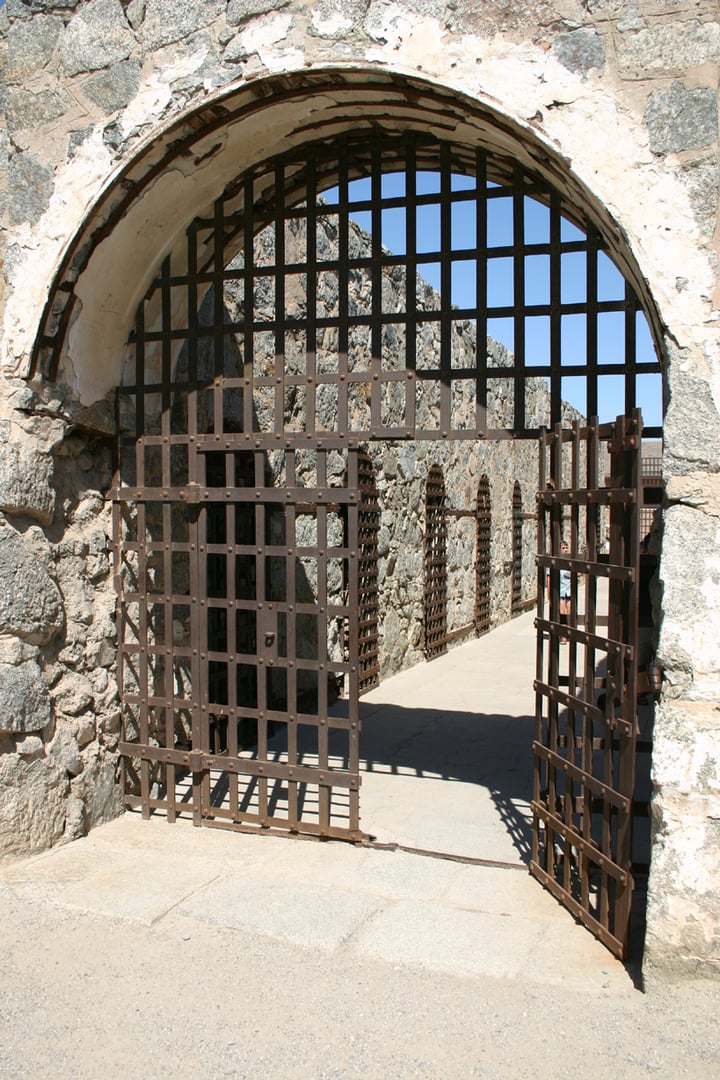
Yuma Territorial Prison historic adobe sallyport main gate entrance, Yuma, Arizona
Museum / Historical Site

Yuma Territorial Prison State Historic Park

Yuma, AZ

Yuma Territorial Prison operated from 1876 to 1909 on a bluff overlooking the Colorado River in Yuma, Arizona. It held 3,069 prisoners during its 33-year operation, including 29 women. The facility became a state historic park and has been voted by USA Today readers as the Best Haunted Destination in the nation.

$All Ages; after-dark tours may have age recommendationsFamily: Moderate
Main gate of historic Yuma Territorial Prison State Historic Park in Yuma Arizona
Prison / Reformatory

Yuma Territorial Prison State Historic Park

Yuma, AZ

Yuma Territorial Prison opened on July 1, 1876, on a granite bluff overlooking the confluence of the Gila and Colorado Rivers. It operated for 33 years until September 15, 1909, confining 3,069 prisoners including 29 women. The site is now Arizona's third state park, established in 1961, and is listed on the National Register of Historic Places.

$All AgesFamily: Moderate
The historic Baldpate Inn lodge outside Estes Park, Colorado, home of the 20,000-key collection
Haunted Hotel / Inn

Baldpate Inn (Seven Keys Lodge)

Estes Park, CO

The Baldpate Inn opened in 1917 in Estes Park, Colorado, built by newlywed homesteaders Gordon and Ethel Mace on a property they began developing in 1911. The Maces named the inn after the fictional setting of Earl Derr Biggers' 1913 mystery novel 'Seven Keys to Baldpate.' The inn became famous for its key-giving tradition and the resulting Key Room, which now holds more than 20,000 keys. The Smith family has owned the property since 1986; in recent years it has also operated under the name Seven Keys Lodge.

$$$All AgesFamily: High
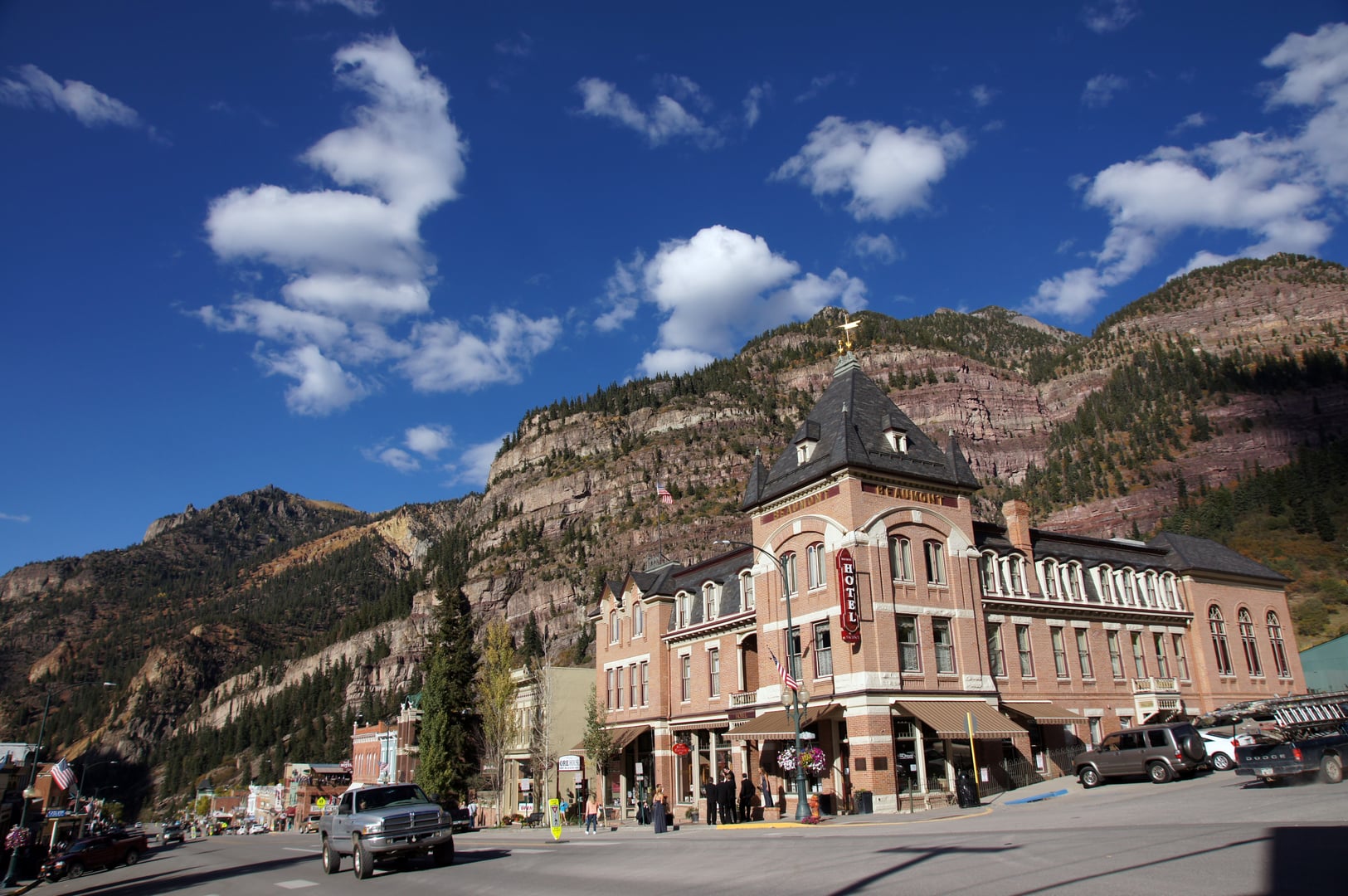
Beaumont Hotel — historic 1886 hotel in Ouray, Colorado
Haunted Hotel / Inn

Beaumont Hotel

Ouray, CO

The Beaumont Hotel opened in Ouray, Colorado on July 25, 1887, built during the silver boom that transformed the San Juan Mountains. The Beaumont hosted Theodore Roosevelt, Herbert Hoover, and a roster of mining-era guests, then sat largely closed from the 1960s until a multi-year restoration returned it to operation in 2003.

$$$All AgesFamily: Moderate
British Home Shop building exterior, Colorado Springs
Photo coming soon
Other Dark Tourism Site

British Home Shop

Colorado Springs, CO

The British Home Shop operated as a specialty retail store in Colorado Springs, offering imported British goods, home items, and merchandise reflecting British culture. Located at 4721 North Academy Boulevard, the shop operated from its opening until its closure by 2026. The storefront was known within the Colorado Springs paranormal community for consistent documented paranormal activity.

$All AgesFamily: High
Brittany Hill tower structure overlooking Denver metropolitan area
Photo coming soon
Haunted Hotel / Inn

Brittany Hill

Thornton, CO

Brittany Hill was constructed in the early 1980s on an elevated lot in Thornton, Colorado. Originally opening as a restaurant with spectacular views of the Denver skyline and Rocky Mountains, it operated in this capacity for decades before being converted into a premier event and wedding venue. The venue features Tuscan-inspired architecture with elegant interior appointments including crystal chandeliers, exposed wood beams, and a distinctive tower structure.

$$$$All AgesFamily: Moderate
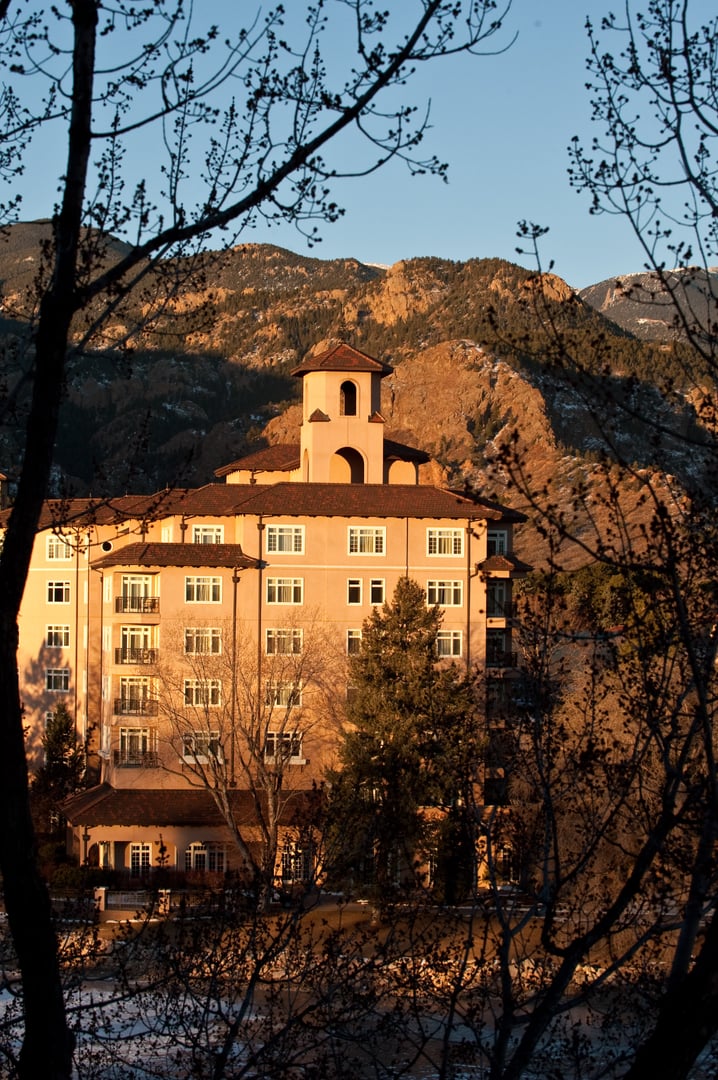
The Mediterranean Revival style Broadmoor Hotel, Colorado Springs, Colorado.
Haunted Hotel / Inn

The Broadmoor

Colorado Springs, CO

The Broadmoor was established in 1918 by Colorado Springs philanthropists Spencer and Julie Penrose. Built on land adjacent to Cheyenne Lake at the base of Cheyenne Mountain, the resort development built upon the legacy of Count James Pourtales, a wealthy Prussian who had developed the original casino on the property in the 1890s. The Broadmoor has expanded significantly with additional buildings constructed between 1961 and 2001, becoming one of Colorado's premier luxury resorts.

$$$All AgesFamily: High
The Brook Forest Inn, located at 8136 South Brook Forest Road in Evergreen, Colorado. The property is listed on the National Register of Historic Places. 
Object location39° 34′ 46″ N, 105° 22′ 56″ W View this and other nearby images on: OpenStreetMap 39.579444; -105.382222
Haunted Hotel / Inn

Brook Forest Inn

Evergreen, CO

A small cabin was built on this 350-acre property in 1909 as a Westerfield family homestead. After the family abandoned the land during a harsh winter, Edwin and Riggi Welz took possession and established the Brook Forest Inn in 1919, offering running water, electricity, and baths. The inn has operated continuously since 1919 and was listed on the National Register of Historic Places in 2009. The three-story timber-and-stone structure maintains its historic character while serving as a bed-and-breakfast with 16 uniquely appointed rooms.

$$All AgesFamily: Moderate
Mountain ridge and pine-edged fairway at the entrance to Castle Pines Golf Club
Photo coming soon
Other Dark Tourism Site

Castle Pines Golf Club

Castle Rock, CO

Castle Pines Golf Club is a private members-only club in Castle Rock, Colorado, founded by oil and gas executive Jack A. Vickers and designed by Jack Nicklaus. The course opened in October 1981 and hosted the PGA Tour's International tournament from 1986 through 2006.

FreePrivate club — access limited to members and guestsFamily: High
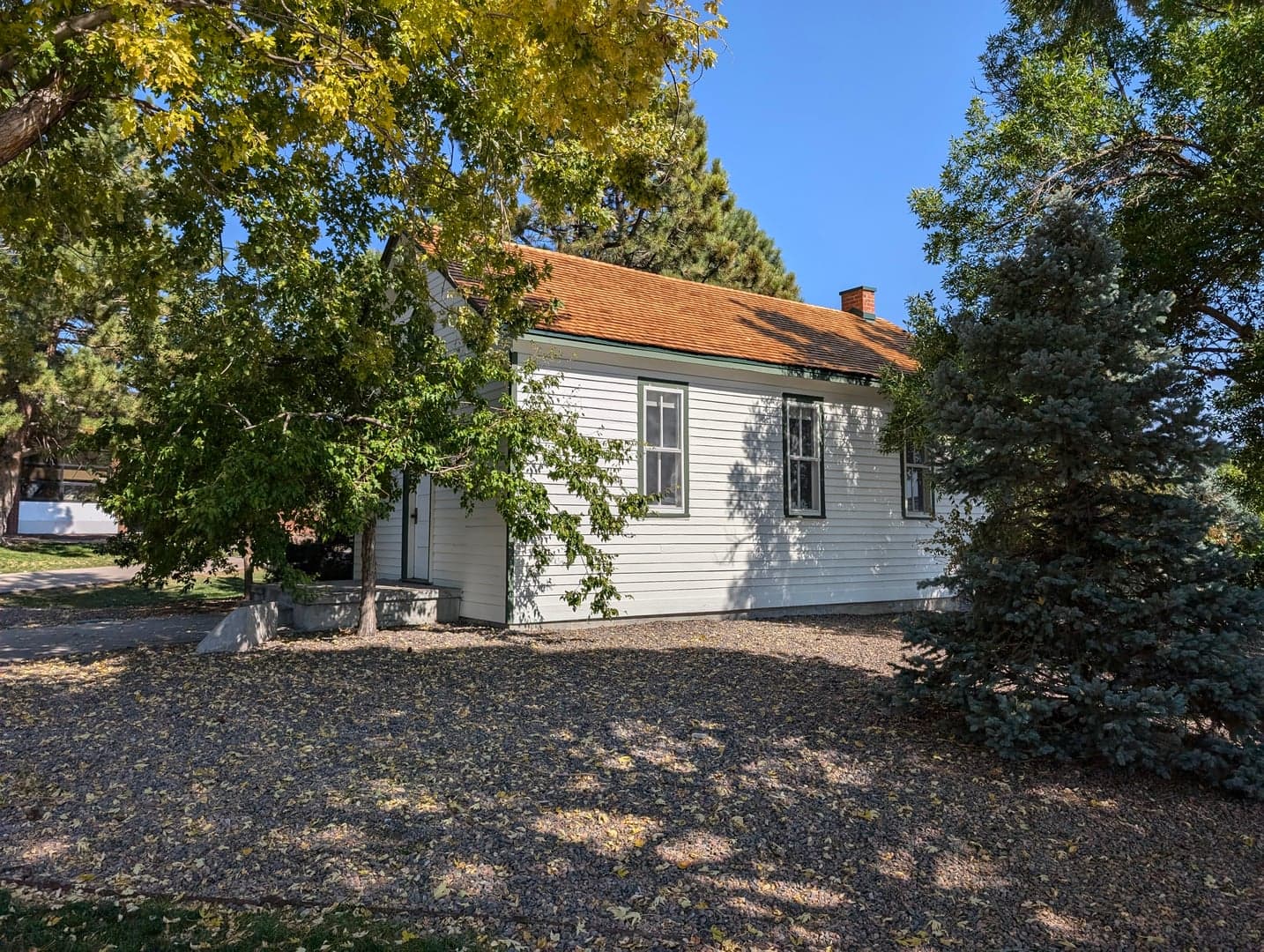
Arapahoe County, Cherry Creek Schoolhouse.
Other Dark Tourism Site

Cherry Creek High School

Englewood, CO

The one-room Cherry Creek Schoolhouse was built in 1874 and served the Cherry Creek School District No. 19 until consolidation forced its closure in 1951. The building sat on Parker Road before being relocated to the Cherry Creek High School campus in 1969, where it was restored as a museum classroom. It is one of Colorado's surviving examples of late 19th-century frontier school architecture.

FreeAll AgesFamily: Moderate
Helen Hunt Falls cascading over granite in North Cheyenne Cañon Park, Colorado Springs, Colorado
Museum / Historical Site

North Cheyenne Cañon Park

Colorado Springs, CO

North Cheyenne Cañon Park was established in 1885 when Colorado Springs voters approved a bond issue to purchase 640 acres of canyon land. The lower falls were called Helen Hunt Falls from the early 1900s in honor of Helen Maria Hunt Jackson, a Colorado Springs poet and Native American rights advocate who died in 1885 and walked the canyon regularly. The name was made official in 1966. The park grew with a 1907 donation of 480 acres by Colorado Springs founder General William Jackson Palmer.

FreeAll AgesFamily: High
Open Graph image from costellocoffeehouse.com
Haunted Dining / Bar

Costello Coffee House

Florissant, CO

The building at 2679 US Hwy 24 in Florissant was constructed in 1886 and served as the private residence of James Castello and his wife Catherine Hughes Castello. James died in the home. Catherine died from burns after her dress caught fire. At least two of their children — Frank's son and daughter — also died in Florissant as young children. The building has operated as the Costello Coffee House for many years.

$All AgesFamily: High
Park Place Tower, Denver, CO
Photo coming soon
Other Dark Tourism Site

Dora Moore K-8 School

Denver, CO

Dora Moore ECE-8 School opened in 1890 as Corona School, making it Denver's oldest continually operating school building. The school was renamed in 1929 (or 1939 by some accounts) to honor Dora Moore, who served as principal for 35 years and significantly shaped Denver's public education system. Notable alumni include actor Douglas Fairbanks Sr. and former First Lady Mamie Eisenhower. The building is listed on the National Historic Registry.

FreeAll AgesFamily: High
The two-story wood-paneled Hand Hotel at the edge of Fairplay's Front Street, overlooking the South Platte River
Haunted Hotel / Inn

The Hand Hotel

Fairplay, CO

The Hand Hotel was built in 1931 by Jake and Jessie Hand at 531 Front Street in Fairplay, Colorado, during the tail of the South Platte gold-mining boom. The two-story log-and-wood-paneled lodge has been operating as a bed-and-breakfast continuously since opening in 1932 and is documented in the Library of Congress as a historic Halloween destination.

$$$All AgesFamily: Moderate
Two-story red brick Renaissance Revival Florence Hotel, Florence, Colorado
Photo coming soon
Museum / Historical Site

Florence Hotel

Florence, CO

The Florence Hotel was built in two phases in 1890 and 1891, with the south section facing Pikes Peak Avenue and the north section facing Main Street. The two-story red brick building is downtown Florence's only example of Renaissance Revival architecture and is documented by History Colorado and the State Historical Marker program.

FreeAll AgesFamily: High
Adobe walls of the Francisco Fort plaza with the Spanish Peaks rising behind
Photo coming soon
Museum / Historical Site

Francisco Fort Museum

La Veta, CO

John M. Francisco established this adobe trading post at the foot of the Spanish Peaks in 1862, and the small town of La Veta grew up around it. The fort is the last surviving original adobe fort in Colorado and now operates as the Francisco Fort Museum, run by the Huerfano County Historical Society.

$All AgesFamily: High
Looking east across Grand Lake to Mount Craig, Colorado's largest natural lake at the southwest entrance to Rocky Mountain National Park
Outdoor / Natural Site

Grand Lake

Grand Lake, CO

Grand Lake is the largest and deepest natural lake in Colorado, at approximately 400 feet deep and 600 acres in surface area. It sits at 8,369 feet of elevation at the southwest entrance to Rocky Mountain National Park. The lake was a seasonal site for Ute hunting and fishing for centuries before American settlement; the town of Grand Lake was platted in 1881 as a silver-mining and resort community.

FreeAll AgesFamily: High
The Ameristar Casino Resort Spa Black Hawk, located in Black Hawk, Colorado.
Haunted Dining / Bar

The Gilpin Casino

Black Hawk, CO

The building at 111 Main Street in Black Hawk dates to 1896, built by Julius Kline on the site of Black Hawk's first schoolhouse. The structure served various functions — school, hotel, rooming house — across the 19th and 20th centuries before reopening as a casino in 1992 following Colorado's legalization of limited-stakes gaming. Its Mine Shaft Bar in the basement was a local landmark across multiple ownership eras.

$$21+ for gambling; dining and hotel may varyFamily: Low
The Helmshire Inn building on South College Avenue in Fort Collins, Colorado
Photo coming soon
Haunted Hotel / Inn

Helmshire Inn

Fort Collins, CO

The Helmshire Inn is a small lodging property at 1204 South College Avenue in Fort Collins, Colorado. The inn appears in regional travel directories and review aggregators, but its documented history beyond basic listing information is sparse. Local paranormal coverage from The Group real-estate community blog and Fort Collins haunted-places aggregators preserves the inn's ghost tradition, which rests on a single Shadowlands-era account.

FreeAll AgesFamily: High
Historic photograph of the Highlands Ranch Mansion, an 1891 estate house near Sedalia in Highlands Ranch, Colorado
Haunted House / Historic Home

Highlands Ranch Mansion

Highlands Ranch, CO

The Highlands Ranch Mansion is a 22,000-square-foot estate house in Highlands Ranch, Colorado, originally built in 1891 by homesteader Samuel Allen Long and expanded by successive owners John W. Springer and Lawrence Phipps Jr. The mansion sits on the historic ranch that became the suburban community of Highlands Ranch and is now operated as a public historic site by the local metro district.

FreeAll AgesFamily: High
Located near Drumheller, Alberta this canyon is part of the Horseshoe Canyon network in the Alberta Badlands.
Outdoor / Natural Site

Horse Thief Canyon

Grand Junction, CO

Horsethief Canyon, west of Grand Junction near the Colorado National Monument, served as a transit corridor for horse thieves operating in the Grand Valley in the 19th century. Stolen horses were driven through the canyon's hidden reaches before being sold. Law enforcement eventually confronted a group of thieves in the canyon in a shootout that left several dead, including reportedly some of the horses.

$All AgesFamily: Low
Imperial Hotel (Christmas Casino & Inn at Bronco Billy's) in Cripple Creek
Photo coming soon
Haunted Hotel / Inn

Imperial Hotel (now Christmas Casino & Inn at Bronco Billy's)

Cripple Creek, CO

The Imperial Hotel was built after the disastrous 1896 Cripple Creek fire, opened as the Collins Hotel, and was renamed the Imperial in 1905 when English emigrant George Long took ownership. The building now operates as the Christmas Casino & Inn at Bronco Billy's.

$$All Ages (hotel); 21+ for casino floorFamily: Moderate
Tamayo Restaurant Tamarind Margarita
Photo coming soon
Haunted Dining / Bar

Josephina's Restaurant (now Corridor 44)

Denver, CO

Larimer Street in Denver is the city's oldest commercial block. The building at 1433 Larimer, in what is now Larimer Square, served as a speakeasy during the Prohibition era (1920-1933). Josephina's Restaurant operated at this address from 1974 until its closure roughly thirty years later. The space was subsequently divided between Rioja and Corridor 44, a champagne bar that opened in 2005.

$$21+Family: Low
Alfred Packer's grave with bench and wolfstone in Littleton Cemetery, near S Prince St, Littleton, Colorado
Photo coming soon
Cemetery / Burial Ground

Littleton Cemetery

Littleton, CO

Littleton Cemetery at 6155 S Prince Street is the burial site of Alfred Packer (1842-1907), a Civil War veteran and mountain guide convicted of killing and eating five fellow prospectors during a brutal Rocky Mountain winter in 1874. He was tried twice and spent time in prison before a conditional parole in 1901. He died on April 23, 1907, and was buried with a military funeral.

FreeAll AgesFamily: Moderate
Macky Auditorium historic stone building at University of Colorado Boulder campus
Theater / Performance Venue

Macky Auditorium

Boulder, CO

Macky Auditorium at the University of Colorado Boulder opened in 1922 as part of the Norlin Quadrangle Historic District. In July 1966, janitor Joseph Dyre Morse murdered 20-year-old CU student Elaura Jeanne Jaquette in the building's west tower — one of the most documented violent incidents in the university's history.

$$All AgesFamily: Moderate
The mountainside Miramont Castle in Manitou Springs, Colorado, with its mix of Queen Anne and Moorish architectural elements
Museum / Historical Site

Miramont Castle

Manitou Springs, CO

Miramont Castle was built in 1895 as a private home for French-born Catholic priest Jean Baptist Francolon. It combines nine architectural styles across forty rooms and 14,000 square feet. The Sisters of Mercy purchased it in 1904 for use as a tuberculosis sanatorium. The Manitou Springs Historical Society acquired the property in 1975 and opened it as a museum in 1977.

$$All AgesFamily: Moderate
Rural cemetery in Mead, Colorado with 19th-century headstones
Photo coming soon
Cemetery / Burial Ground

Mead Cemetery

Mead, CO

Mead Cemetery in Weld County, Colorado contains headstones dating to the 1800s, placing its origins in the post-Civil War settlement era of the American West. Mead itself was incorporated as an agricultural community in Weld County during the late 19th century.

FreeAll AgesFamily: Moderate
The Queen Anne and Richardsonian Romanesque facade of the Molly Brown House Museum in Denver, Colorado, blanketed in fresh snow
Museum / Historical Site

Molly Brown House

Denver, CO

The Molly Brown House in Denver was the home of philanthropist and Titanic survivor Margaret Brown from 1894 until her death in 1932. Designed by architect William A. Lang in 1889 in a mixed Queen Anne and Richardsonian Romanesque style, the house has operated as a museum under Historic Denver Inc. since 1971 after a public campaign saved it from demolition.

$$All AgesFamily: High
Highline Cafe and Saloon (former Mountain Muffin) in Hartsel, Colorado
Photo coming soon
Haunted Dining / Bar

Highline Cafe and Saloon (Former Mountain Muffin)

Hartsel, CO

The Highline Cafe and Saloon (formerly Mountain Muffin Restaurant) occupies an early-1900s commercial building in Hartsel, Colorado, the small Park County community known as "The Heart of Colorado" for its position at the geographic center of the state. The building was an ice cream parlor in the early 1900s before housing a succession of cafes through the 20th and 21st centuries.

$$All AgesFamily: High
Victorian Queen Anne mansion exterior at 2555 West 37th Avenue in Denver's Potter-Highlands neighborhood
Haunted Hotel / Inn

Lumber Baron Inn & Gardens

Denver, CO

The Lumber Baron Inn is a Scottish immigrant-built 1890 Victorian mansion in Denver's Potter-Highlands neighborhood. Originally home to John Mouat, a lumber mill owner, the property later fell to disrepair and was divided into apartments. On October 13, 1970, two young women — Cara Lee Knoche, 17, and Marianne Weaver, 18 — were found murdered in what is now the Valentine Suite. Both cases remain open cold cases.

$$$All AgesFamily: Low
Deputy Warden's House at the Museum of Colorado Prisons, Cañon City Colorado
Museum / Historical Site

Museum of Colorado Prisons

Cañon City, CO

The Museum of Colorado Prisons in Cañon City occupies a former state women's prison built in 1935, sharing a stone wall and armed towers with the Colorado Territorial Correctional Facility, which has operated continuously since 1871. The museum opened June 18, 1988, following a legislative approval in 1986 to convert the women's cell house into a heritage institution covering 140 years of Colorado prison history.

$All Ages (18+ for paranormal investigation nights)Family: Moderate
Tree-lined trail along the South Platte River at Riverside Park in Fort Morgan, Colorado
Photo coming soon
Outdoor / Natural Site

Nature Trails at Riverside Park

Fort Morgan, CO

Riverside Park in Fort Morgan, Colorado lies along the South Platte River in Morgan County, approximately 80 miles northeast of Denver. The trail corridor through dense cottonwood and wetland habitat has been a recreational feature of the city for generations. Fort Morgan was established in 1884 and grew as an agricultural center along the South Platte valley.

FreeAll AgesFamily: Moderate
View of Mount Ouray from the north side of Poncha Pass along US Highway 285 in south-central Colorado
Outdoor / Natural Site

Poncha Pass

Poncha Springs, CO

Poncha Pass is a Rocky Mountain pass at 9,019 feet in central Colorado, carrying US Highway 285 between the Arkansas River drainage and the San Luis Valley. Unusual among Colorado passes for running north-south rather than east-west, Poncha was the site of an April 1855 military engagement with Ute peoples in which approximately 40 Utes and one U.S. soldier were killed.

FreeAll AgesFamily: High
A curving two-lane rural road through agricultural land along Colorado's South Platte River
Photo coming soon
Other Dark Tourism Site

Riverdale Road

Thornton, CO

Riverdale Road is a roughly eleven-mile rural roadway between Thornton and Brighton in Adams County, Colorado, paralleling the South Platte River. The corridor crosses historic agricultural land worked from the 1880s through the mid-twentieth century, much of it by migrant labor from Smelter operations in the broader Denver area.

FreeAll AgesFamily: Moderate
Statues and headstones at the historic Riverside Cemetery in Denver Colorado
Cemetery / Burial Ground

Riverside Cemetery

Denver, CO

Riverside Cemetery was established in 1876, the year Colorado was admitted to the union, as a replacement for Denver's overcrowded City Cemetery. It is the oldest continuously operating cemetery in Denver, with more than 67,000 burials including hundreds of Colorado veterans, and was listed on the National Register of Historic Places in 1994.

FreeAll AgesFamily: High
Glacier Gorge viewed from Bear Lake in Rocky Mountain National Park Colorado
Outdoor / Natural Site

Rocky Mountain National Park

Estes Park, CO

Rocky Mountain National Park, established by President Woodrow Wilson on January 26, 1915, preserves 415 square miles of Front Range Colorado including Trail Ridge Road, Longs Peak, and the headwaters of the Colorado River. The park's Ute and Arapaho heritage is documented in oral tradition and in early settler accounts including the Legend of Grand Lake.

$$All AgesFamily: High
Silver Cliff Cemetery in Custer County, Colorado, famous for unexplained blue ghost lights documented for over a century
Cemetery / Burial Ground

Silver Cliff Cemetery

Silver Cliff, CO

Silver Cliff Cemetery serves the small mining town of Silver Cliff in Colorado's Wet Mountain Valley. The cemetery has been documented for over a century as the site of unexplained blue-white 'ghost lights' that appear among the headstones at night, most famously profiled in the August 1969 issue of National Geographic.

FreeAll AgesFamily: High
Preserved wooden buildings along Main Street in St. Elmo ghost town, Chaffee County, Colorado
Other Dark Tourism Site

St. Elmo Ghost Town

Nathrop, CO

Duplicate of the 'st-elmo' record. Both entries describe the same preserved 1880 Sawatch Range mining town in Chaffee County, Colorado. Flagged for human review and merge.

FreeAll AgesFamily: High
Historic wood buildings along Main Street in St. Elmo, an 1880 silver and gold mining ghost town in the Sawatch Range of central Colorado
Other Dark Tourism Site

St. Elmo

Nathrop, CO

St. Elmo, founded in 1880 in the Sawatch Range of central Colorado, reached a peak population approaching 2,000 during the silver and gold boom of the 1890s. The town has been continuously occupied since but never resettled at scale; surviving structures make it one of Colorado's best-preserved ghost towns.

FreeAll AgesFamily: High
Brown Palace Hotel in Denver Colorado, 1892 triangular red granite hotel with eight-story atrium
Haunted Hotel / Inn

The Brown Palace Hotel and Spa, Autograph Collection

Denver, CO

The Brown Palace Hotel opened in 1892, built by Denver real estate developer Henry Cordes Brown on a triangular plot at 17th and Broadway. Constructed of Colorado red granite and Arizona sandstone with a distinctive eight-story atrium topped by stained glass skylights, it has operated continuously for over 130 years. Every U.S. president since Theodore Roosevelt — except one — has stayed at the hotel.

$$$All agesFamily: High
Three-story log lodge in a high-altitude San Juan Mountain valley
Haunted Hotel / Inn

Sky Line Lodge

Platoro, CO

Sky Line Lodge was built in 1945 in the gold and silver mining town of Platoro, Colorado, founded in the early 1880s in the San Juan Mountains at an elevation near 10,000 feet. The lodge is a three-story log structure containing a general store, restaurant, and guest rooms, and operates seasonally from Memorial Day weekend through the end of September.

$$$All AgesFamily: Moderate
The Stanley Hotel in Estes Park Colorado, iconic white neo-Georgian hotel near Rocky Mountain National Park
Haunted Hotel / Inn

The Stanley Hotel

Estes Park, CO

The Stanley Hotel opened on July 4, 1909, built by Freelan Oscar Stanley, co-inventor of the Stanley Steamer automobile, as a summer resort for wealthy Eastern visitors. Stanley himself had relocated to Estes Park in 1903 seeking relief from tuberculosis, found it, and decided the Rocky Mountain air warranted a proper destination resort. The main building was among the first fully electrified hotels in the American West.

$$$All AgesFamily: Moderate
The brick exterior of Grant Hall, Building 20, on Fort McNair in southwest Washington, DC
Photo coming soon
Battlefield / Military Site

Fort McNair (Grant Hall)

Washington, DC

Fort Lesley J. McNair occupies Buzzard Point at the confluence of the Potomac and Anacostia rivers in Washington, DC, and has been an Army installation since 1791. The fort's Grant Hall, also known as Building 20, served as the courtroom for the May-June 1865 military tribunal of the Lincoln assassination conspirators. Four convicted conspirators, including Mary Surratt, were hanged in the courtyard on July 7, 1865. Grant Hall was restored and rededicated in 2012.

FreeAll AgesFamily: Moderate
The arched stone entrance gate of Glenwood Cemetery on Lincoln Road NE in Washington, DC
Cemetery / Burial Ground

Glenwood Cemetery

Washington, DC

Glenwood Cemetery is a ninety-acre rural-style cemetery in northeast Washington, DC, chartered by Congress in 1852 and dedicated on August 2, 1854. Established on the former Clover Hill estate, it was the first for-profit cemetery in the District. Notable burials include Emanuel Leutze, Clark Mills, Constantino Brumidi, and (by long-standing cemetery tradition) Lincoln-conspirator George Atzerodt.

FreeAll AgesFamily: High
Exterior of The Octagon House, the 1801 William Thornton-designed home that served as temporary executive mansion in Washington, D.C.
Museum / Historical Site

The Octagon House

Washington, DC

The Octagon House at 1799 New York Avenue NW in Washington, D.C., was completed in 1801 for Virginia planter John Tayloe III to a design by William Thornton, the first architect of the United States Capitol. The house served as the temporary Executive Mansion for President James Madison following the August 1814 British burning of the White House. Madison signed the Treaty of Ghent there in February 1815.

FreeAll AgesFamily: High
Center Building at St. Elizabeths Hospital in Washington DC, 1855 Kirkbride Plan psychiatric hospital
Asylum / Hospital

St. Elizabeths Hospital

Washington, DC

St. Elizabeths Hospital opened in 1855 as the Government Hospital for the Insane, the first federally operated psychiatric facility in the United States. Designed on the Kirkbride Plan, the 948-foot Center Building was constructed between 1852 and 1895, and the campus was designated a National Historic Landmark in 1990.

FreeAll AgesFamily: Low
The North Portico of the White House at 1600 Pennsylvania Avenue, Washington, D.C.
Photo coming soon
Museum / Historical Site

The White House

Washington, DC

The official residence and workplace of the President of the United States since 1800, designed by James Hoban and rebuilt after British forces burned the building in 1814. The White House Historical Association maintains a long-standing public collection of presidential ghost stories alongside its architectural and political history.

FreeAll AgesFamily: High
The Octagon House, an 1801 Federal-era mansion at 1799 New York Avenue NW in Washington, D.C.
Museum / Historical Site

The Octagon (Octagon Museum)

Washington, DC

The Octagon is the 1801 Federal-era mansion at 1799 New York Avenue NW, designed by William Thornton for Colonel John Tayloe III. The house served as the temporary executive residence for President James Madison after British forces burned the White House in August 1814. The American Institute of Architects acquired the property in 1902, and the Architects Foundation operates it today as a public museum.

FreeAll AgesFamily: High
The Neo-Classical pediment facade of Bellevue Hall, William du Pont Jr.'s 1930s remodel of an 1855 Gothic Revival mansion in Wilmington, Delaware
Museum / Historical Site

Bellevue Hall

Wilmington, DE

Bellevue Hall is a Neo-Classical mansion in Wilmington, Delaware, originally built in 1855 as a Gothic Revival residence for wool merchant Hanson Robinson. William du Pont acquired the estate in 1893, and his son William du Pont Jr. remodeled the house in the 1930s into a near-replica of his Virginia home, Montpelier. The State of Delaware purchased the property in 1976 and now operates it as Bellevue State Park.

$All AgesFamily: High
Atlantic White Cypress Chamaecyparis thyoides subsp. thyoides, Great Dismal Swamp NWR, Suffolk County, Virginia, USA.
Photo coming soon
Outdoor / Natural Site

Great Cypress Swamp

Frankford, DE

The Great Cypress Swamp once covered nearly 50,000 acres in southern Sussex County, Delaware, representing one of the northernmost bald cypress ecosystems in North America. A catastrophic 1930 peat fire — ignited by a moonshiner's still explosion — burned for eight months through the soil itself, destroying much of the old-growth canopy. A smaller but devastating fire had occurred in 1782 as well.

FreeAll AgesFamily: Moderate
New Castle County Court House
Photo coming soon
Haunted Hotel / Inn

David Finney Inn

New Castle, DE

The David Finney Inn building at 216 Delaware Street in New Castle, Delaware dates to 1685, making it one of the oldest surviving commercial structures in the state. David Finney, a successful attorney who built the structure, later served as a prominent figure in early Delaware legal and civic history. The building operated as the Hotel Louise beginning in 1895 before returning to inn and tavern use.

FreeAll AgesFamily: High
The 1851 Deer Park Tavern at 108 West Main Street in Newark, Delaware, listed on the National Register of Historic Places
Haunted Dining / Bar

Deer Park Tavern

Newark, DE

The Deer Park Tavern was built in 1851 on the site of the earlier St. Patrick's Inn, an 18th-century inn that burned in 1847 after operating from 1747. Charles Mason and Jeremiah Dixon used the St. Patrick's Inn as their headquarters in 1764 while surveying the Mason-Dixon Line. Edgar Allan Poe stayed and lectured at the Newark Academy on December 23, 1843, and according to local tradition cursed the building after falling in the mud on arrival. The Deer Park Tavern was added to the National Register of Historic Places in 1982.

$$21+ in bar area; all ages in diningFamily: Moderate
Dead Presidents Pub & Restaurant at 618 North Union Street, Wilmington, Delaware
Photo coming soon
Haunted Dining / Bar

Dead Presidents Pub & Restaurant

Wilmington, DE

The buildings that house Dead Presidents Pub & Restaurant at 618 North Union Street in Wilmington are roughly 200 years old, dating to around 1806. The structures were originally private residences and were later connected to form one building. The basement once functioned as a family chapel and yielded a large carved Jesus figure during renovations. The Dead Presidents Pub was opened in 1998 by Mike and Steve Lucey and was acquired by Brian and Sarah Raughley in December 2009.

$$21+ in bar area; all ages in diningFamily: Moderate
The 1740 brick mansion at the John Dickinson Plantation in Dover, Delaware, with reconstructed log outbuildings
Photo coming soon
Museum / Historical Site

John Dickinson Plantation

Dover, DE

The John Dickinson Plantation in Dover, Delaware preserves the 1740 brick mansion built by Judge Samuel Dickinson, father of founding father John Dickinson. The 18th-century plantation, where enslaved and tenant labor worked tobacco and grain fields, is operated by the Delaware Division of Historical and Cultural Affairs as a free public museum.

FreeAll AgesFamily: High
Stone walls of Fort Delaware viewed from the northwest on Pea Patch Island in the Delaware River
Battlefield / Military Site

Fort Delaware State Park

Delaware City, DE

Fort Delaware is a stone fortification on Pea Patch Island in the Delaware River, completed in 1859 to designs by U.S. Army chief engineer Joseph Gilbert Totten. During the Civil War, it held nearly 33,000 Confederate prisoners, political prisoners, and federal convicts; approximately 2,500 died on the island, half during a smallpox epidemic in 1863. The site is now operated as Fort Delaware State Park.

$$All AgesFamily: Moderate
Aerial view of star-shaped Fort Delaware on Pea Patch Island in the Delaware River
Prison / Reformatory

Fort Delaware

Delaware City, DE

Fort Delaware occupies Pea Patch Island in the Delaware River and was completed in 1859 to defend the ports of Wilmington and Philadelphia. During the Civil War the fort served as a prison camp where roughly 33,000 Confederate soldiers were confined and approximately 2,500 died from disease and exposure.

$$All AgesFamily: Moderate
Olongapo City National Highway (East & West Bajac-bajac, Kalaklan and Barretto)  Philippine highway network (Note: Judge Florentino Floro, the owner, to repeat, Donor Florentino Floro of all these photos hereby donate gratuitously, freely and unconditionally Judge Floro all these photos to and f
Photo coming soon
Outdoor / Natural Site

Highway 12 West

Frederica, DE

Delaware Route 12 runs through Kent County in central Delaware, passing near the small community of Frederica. The stretch west of Frederica passes through flat agricultural landscape typical of the Delaware interior. The legend associated with this road involves a historical murder, the disposal of a body, and the dog that reportedly consumed the remains.

FreeAll AgesFamily: Moderate
Forested shoreline of Lums Pond, Delaware's largest freshwater pond, with swamp forest reflecting in still water
Photo coming soon
Outdoor / Natural Site

Lums Pond State Park

Bear, DE

Lums Pond was created in the early 1700s when St. Georges Creek was dammed to support local milling operations. During the construction of the Chesapeake and Delaware Canal in the 1800s, the canal company purchased the pond as a water source for the locks. Delaware acquired the 1,790-acre property in 1963 for public recreation; the pond remains the largest freshwater pond in the state.

$All AgesFamily: Moderate
Rockwood Mansion in Wilmington Delaware, Rural Gothic Revival stone house exterior, daylight
Museum / Historical Site

Rockwood Mansion

Wilmington, DE

Rockwood Mansion in Wilmington, Delaware, was completed in 1854 as the retirement home of Wilmington-born banker Joseph Shipley. Modeled after Shipley's country estate near Liverpool, England, the Rural Gothic Revival mansion sits on 72 acres and now operates as Rockwood Park & Museum, run by New Castle County.

$$All Ages for daytime visits; 14+ for paranormal toursFamily: Moderate
Residential street in the Bay Oaks subdivision of Lewes, Delaware, near the Delaware Bay
Photo coming soon
Other Dark Tourism Site

Bay Oaks Neighborhood

Lewes, DE

Bay Oaks is a residential subdivision near Lewes, Delaware, located off Camp Arrowhead Road on Waterview Road. Lewes itself stands on the site of Zwaanendael, the 1631 Dutch colonial settlement destroyed in conflict with the Siconese in 1632, and the broader area has yielded colonial-era and Indigenous artifacts.

FreeAll AgesFamily: High
Somersville Historic District, Somers, Connecticut.
Haunted Dining / Bar

Joanna's Cafe & Banquet Hall

Somers, CT

Joanna's Cafe & Banquet Hall occupies a 19th-century building on Main Street in Somers, a historic Connecticut town. The structure is located in the Somers Historic District, an area characterized by Federal and Greek Revival architecture from the early 1800s.

$$All AgesFamily: High
United Bank Building, New Milford, Connecticut.
Photo coming soon
Haunted Dining / Bar

Bank Street Coffee House

New Milford, CT

Bank Street Coffee House occupied a historic three-story masonry building in downtown New Milford, Connecticut, part of the town's commercial district dating to the turn of the 20th century. The venue operated as a coffee shop for over 20 years before closing in October 2017.

$All AgesFamily: High
Bethel Volunteer Fire Department building on South Street, Bethel, Connecticut
Photo coming soon
Other Dark Tourism Site

Bethel Volunteer Fire Department

Bethel, CT

Bethel Volunteer Fire Department was established in 1831 as the original Bethel Fire Company, making it one of Connecticut's oldest continuously operating volunteer fire services. The department consolidated several historic volunteer companies and has provided 24/7 emergency coverage to Bethel for nearly two centuries.

FreeAll AgesFamily: High
Front Facade of The Blackberry River Inn in Norfolk, CT
Haunted Hotel / Inn

Blackberry River Inn

Norfolk, CT

Blackberry River Inn, historically known as the Moseley House-Farm, was constructed in 1763 as a colonial mansion in Norfolk, Connecticut. The property operated as a working farm until 1939, was converted into an inn in the 1960s, and was listed on the National Register of Historic Places in 1984.

$$All AgesFamily: High
Woodland hiking trail at Branford Supply Pond Park in Connecticut
Photo coming soon
Outdoor / Natural Site

Branford Supply Pond Park

Branford, CT

Branford Supply Pond Park encompasses woodlands and trails in Branford, Connecticut, built on territory historically inhabited by the Totoket people of the Quinnipiac Nation. The area was established as English settlement in 1644, making it one of Connecticut's oldest communities.

FreeAll AgesFamily: Moderate
Breakneck Hill Road bend in Voluntown, Connecticut
Photo coming soon
Battlefield / Military Site

Breakneck Hill Road

Voluntown, CT

Breakneck Hill Road crosses land in Voluntown, Connecticut, which was established in 1700 as a settlement grant for veterans of the Narragansett War. The town was officially incorporated in 1721 and remains a testament to Connecticut's colonial military history.

FreeAll AgesFamily: Moderate
Photo of Butler-McCook House and Garden
Photo coming soon
Haunted House / Historic Home

Butler-McCook House and Garden

Hartford, CT

Built in 1782 for Dr. Daniel Butler, the house at 396 Main Street is one of Hartford's only surviving 18th-century buildings and the sole 18th-century home remaining on Main Street. It was occupied by four generations of the Butler and McCook families from 1782 until 1971, when descendant Frances McCook bequeathed the property — fully furnished — to the Antiquarian & Landmarks Society (now Connecticut Landmarks). The house operates as a museum today.

$All AgesFamily: High
Camp Columbia State Park's observation tower bequeathed by the Class Of 1906,
Outdoor / Natural Site

Camp Columbia

Morris, CT

Camp Columbia was established in 1903 when Columbia University purchased rural Litchfield County property for use as an engineering and surveying field campus. A fieldstone dining hall was constructed in 1934, followed by the iconic 60-foot cylindrical stone water tower completed in 1942. The campus operated as a field school for engineering students through much of the 20th century before eventual abandonment.

$All AgesFamily: High
Colonial exterior of Captain Grant's 1754 bed and breakfast at 109 CT-2A in Preston, Connecticut
Haunted Hotel / Inn

Captain Grant's 1754

Preston, CT

Captain Grant's 1754 at 109 CT-2A in Preston, Connecticut, was built by Captain William Grant for his wife Mercy in the village of Poquetanuck. The home sheltered Continental Army soldiers during the Revolutionary War and served as a documented station on the Underground Railroad. It is listed on the National Register of Historic Places and has operated as a bed and breakfast since the 1980s.

$$$All AgesFamily: Moderate
Stone entrance gate at Cedar Hill Cemetery on Fairfield Avenue in Hartford, Connecticut
Cemetery / Burial Ground

Cedar Hill Cemetery

Hartford, CT

Cedar Hill Cemetery in Hartford, Connecticut, was established in 1864 and designed by Swiss-American landscape architect Jacob Weidenmann, who also designed Hartford's Bushnell Park. The 270-acre rural-movement cemetery holds more than 35,000 burials including actress Katharine Hepburn, financier J.P. Morgan, and women's rights activist Katharine Houghton Hepburn.

FreeAll AgesFamily: High
Open Graph image from ctparks.com
Outdoor / Natural Site

Charles Island

Milford, CT

Charles Island sits in the Housatonic estuary off Silver Sands State Beach in Milford, connected to the mainland by a tidal sandbar that submerges twice daily. European settlers traded for the island from the Paugusset chief in 1639 amid significant conflict. In 1699, Scottish pirate Captain William Kidd allegedly buried treasure on the island — the last voyage of his career before his trial and execution. A Dominican monastery built in the 1930s was later abandoned. A 1950s restaurant project ended in a lethal fire of undetermined cause.

FreeAll AgesFamily: Moderate
Photo of Connecticut State Capitol
Photo coming soon
Museum / Historical Site

Connecticut State Capitol

Hartford, CT

The Connecticut State Capitol at 210 Capitol Avenue opened in 1878 as the seat of the Connecticut General Assembly. Designed by Richard Mitchell Upjohn in the Eastlake Victorian Gothic style with prominent High Victorian Gothic detailing, the white marble and granite building was added to the National Register of Historic Places in 1970 and designated a National Historic Landmark in 1971. It replaced the Old State House as Connecticut's seat of government.

FreeAll AgesFamily: High
The 1932 Cyrenius H. Booth Library on Main Street in Newtown, Connecticut
Photo coming soon
Museum / Historical Site

Cyrenius H. Booth Library

Newtown, CT

The Cyrenius H. Booth Library opened on December 17, 1932 as the public library of Newtown, Connecticut. It was a posthumous gift of Mary Elizabeth Hawley and was named for her maternal grandfather, Dr. Cyrenius Hard Booth, who practiced medicine in Newtown from 1820 until his death in 1871. The building was designed by Philip Sutherland in a residential Main Street style and was completely fireproof. Hawley also left a quarter-million-dollar trust fund to generate operating income for the library.

FreeAll AgesFamily: High
Front view of the 1720 Daniel Benton Homestead, a colonial Cape-style museum house in Tolland, Connecticut
Haunted House / Historic Home

Daniel Benton Homestead

Tolland, CT

The Daniel Benton Homestead is the oldest house in Tolland, Connecticut, built in 1720 by Daniel Benton on a 40-acre farm. The Cape Cod with rear ell remained in the Benton family for six generations and has operated as a historic house museum under the Tolland Historical Society since 1970.

FreeAll AgesFamily: High
Exterior of the Harcourt Wood Memorial Library at 313 Elizabeth Street, Derby, Connecticut, completed in 1902
Museum / Historical Site

Harcourt Wood Memorial Library

Derby, CT

The Harcourt Wood Memorial Library opened on December 27, 1902 as a memorial to Harcourt Wood, the son of Colonel H. Holton Wood and Alice Wood, who died in February 1897 at age eleven after contracting meningitis. The library was added to the National Register of Historic Places in 1982.

FreeAll AgesFamily: High
Stone and brick carriage house on the Fairfield University campus in Fairfield, Connecticut
Photo coming soon
Theater / Performance Venue

Fairfield University (Former PepsiCo Theatre)

Fairfield, CT

Fairfield University, a Jesuit institution founded in 1942, occupies a campus on what was originally the Walter Lashar estate. The PepsiCo Theatre was a renovated 1922 carriage house that served as the home of Theatre Fairfield, with a 70-seat black-box space and studio facilities. The building has since been converted to the School of Engineering Innovation Annex.

FreeActive college campusFamily: High
1761 First Church of Christ, Wethersfield
Cemetery / Burial Ground

First Church Cemetery (Ancient Burying Ground)

Wethersfield, CT

The Ancient Burying Ground in Wethersfield, Connecticut, is the second oldest burial ground in the state, established in 1638 just four years after the town's founding in 1634. Located on Marsh Street in Old Wethersfield, it has been under the jurisdiction of various governing bodies over the centuries — including the First Society (formed 1722) and the First School Society. It is one of Wethersfield's defining historic landmarks.

FreeAll AgesFamily: High
The reconstructed earthwork ramparts and drawbridge of Fort Nathan Hale Park overlooking New Haven Harbor.
Photo coming soon
Battlefield / Military Site

Fort Nathan Hale Park

New Haven, CT

Fort Nathan Hale Park, also called Fort Hale Park, is a 20-acre city park on the east shore of New Haven Harbor. The site contains the reconstructed remains of three successive fortifications: a 1659 colonial fort, the 1776 Black Rock Fort that was captured by British General William Tryon in 1779, and the 1807-1812 Fort Nathan Hale that defended the harbor during the War of 1812. A second Civil War-era Fort Nathan Hale was added in 1863. All three forts have been reconstructed, including a drawbridge, moat, ramparts, powder magazines, and a bombproof bunker.

FreeAll AgesFamily: High
Open Graph image from portal.ct.gov
Outdoor / Natural Site

Gardner Lake

Salem, CT

In February 1895, grocer Thomas LeCount attempted to move his fully furnished house across frozen Gardner Lake in Salem, Connecticut. After moving it approximately 300 feet from shore, the ice failed overnight when mill operators drew down the lake's water level. The house broke through the ice and sank in 15 feet of water — with a stove, a sofa, and an upright piano still inside. The house structure remained visible above water for some years before eventually settling to the bottom.

$All AgesFamily: High
B1046 Meadow Road/Ladys Hill, Great Gransden
Photo coming soon
Outdoor / Natural Site

Great Hill Road

Seymour, CT

Great Hill Road in Seymour, Connecticut, traverses the wooded ridge country of the Naugatuck Valley's eastern margin. A motorcyclist was killed on the road's sharp downhill curve in an accident documented in local community accounts. The road runs near Great Hill Cemetery, known locally as Hookman's Cemetery, one of the more storied burial grounds in New Haven County.

FreeAll AgesFamily: Moderate
Gothic Revival Harriet Beecher Stowe House at 77 Forest Street in Hartford, Connecticut, built 1871 and now the Harriet Beecher Stowe Center for Literary Activism.
Museum / Historical Site

Harriet Beecher Stowe Center

Hartford, CT

Built in 1871, the Gothic Revival cottage at 77 Forest Street became the home of abolitionist author Harriet Beecher Stowe and her husband Calvin in 1873 and remained her residence until her death in 1896. Stowe — author of 'Uncle Tom's Cabin' (1852) — lived in the Nook Farm neighborhood alongside Mark Twain and other Hartford writers. The home opened to the public as a museum in 1968 and operates today as the Harriet Beecher Stowe Center for Literary Activism.

$$All AgesFamily: High
Silvio O. Conte National Fish & Wildlife Refuge Manager Andy French and Ed Bartolotta Cabela's outfitters in East Hartford.


Credit: USFWS
Photo coming soon
Museum / Historical Site

Hartford City Hall

Hartford, CT

Hartford City Hall — formally the Municipal Building at 550 Main Street — was completed in 1915 on land donated by financier J. Pierpont Morgan, who sought a use for the parcel adjacent to a wing he had donated to the Wadsworth Atheneum. Davis & Brooks won the design competition with a Beaux-Arts composition: brick faced with Bethel white granite, a copper-and-tile roof, bronze doors, and a 25-by-150-foot three-story central atrium lit by a skylight. The structure was added to the National Register of Historic Places in 1981 and remains Connecticut's most ornate Beaux-Arts building built for local government.

FreeAll AgesFamily: High
Castle Craig stone tower atop East Peak in Hubbard Park, Meriden, Connecticut
Outdoor / Natural Site

Hubbard Park

Meriden, CT

Hubbard Park was donated to Meriden by Walter Hubbard, president of Bradley & Hubbard Manufacturing Company, who spent $400,000-$500,000 of his own money clearing land and building Mirror Lake with help from Frederick Law Olmsted. Castle Craig was dedicated in 1900.

FreeAll AgesFamily: High
Makens Bemont House, East Hartford, Connecticut.
Haunted House / Historic Home

Huguenot House (Makens Bemont House)

East Hartford, CT

The Makens Bemont House, known as the Huguenot House, was constructed in 1761 by Edmund Bemont in East Hartford, Connecticut. Makens Bemont, Edmund's son, built considerable wealth as a saddlemaker in the decades following the Revolution. In 1968, Adolph Rosenthal donated the property to the Historical Society of East Hartford, which relocated the structure in 1971.

$All AgesFamily: High
Open Graph image from ctparks.com
Outdoor / Natural Site

Indian Well State Park

Shelton, CT

Indian Well State Park occupies 153 acres along the Housatonic River in Shelton, Connecticut. The park was established in 1928 and takes its name from a Native American legend associated with the waterfall and splash pool at the site. A Housatonic Railroad line historically ran through the park corridor.

$All AgesFamily: Moderate
Italianate Victorian Isham-Terry House at 211 High Street in Hartford, Connecticut, built around 1854 and now operated as a museum by Connecticut Landmarks.
Haunted House / Historic Home

Isham-Terry House

Hartford, CT

The Isham-Terry House is a 15-room Italianate Victorian mansion built around 1854 at 211 High Street in Hartford. Dr. Oliver Isham purchased the home in 1896 and used part of it as his medical practice; his sisters Julia and Charlotte lived in the house until their deaths in the 1970s. The sisters preserved the home largely unchanged from the late 19th century, and at Julia's death in 1979 the property passed to the Antiquarian & Landmarks Society (now Connecticut Landmarks), which operates it as a museum.

$All AgesFamily: Moderate
Lake Compounce amusement park main entrance gate in Bristol Connecticut
Other Dark Tourism Site

Lake Compounce Amusement Park

Bristol, CT

Lake Compounce opened in 1846 on land that had been the domain of the Mattatuck-Tunxis people, signed over to English settlers in December 1684. The park's 180-year continuous operation makes it the oldest running amusement park in the United States. Owned by Herschend Family Entertainment, the 332-acre property in Bristol, Connecticut includes a lake, beach, and the 1927 Wildcat wooden roller coaster.

$$$All AgesFamily: High
Mattabesett Blue-Blazed Trail.  

Lamentation Mountain looking north from Lamentation ridge line.
Outdoor / Natural Site

Lamentation Mountain

Berlin, CT

Lamentation Mountain is a 720-foot basalt traprock ridge in Berlin, Connecticut, part of the Metacomet Ridge system that extends from Long Island Sound to the Vermont border. The mountain's name traces to 1653, when a colonial settler was lost on the peak for three days before rescue — giving the place a name rooted in distress. The 47-acre Lamentation Mountain State Park is managed by Connecticut DEEP.

FreeAll AgesFamily: Moderate
Lamson Corner Cemetery, Burlington Connecticut
Cemetery / Burial Ground

Lampson Corner Cemetery

Burlington, CT

Lampson Corner Cemetery is a historic burial ground in Burlington, Connecticut, containing graves spanning from the colonial period through the 20th century. The cemetery holds the graves of several local families and, per the Shadowlands report, at least one World War II veteran. Burlington's cemetery complex is most widely known for its connection to the 'Green Lady' legend centered at the nearby Seventh Day Baptist Cemetery.

FreeAll AgesFamily: High
Leatherman's Cave — Mattatuck Trail rock shelter in Watertown, Connecticut
Photo coming soon
Museum / Historical Site

Leatherman's Cave

Watertown, CT

Leatherman's Cave is a rock shelter on the Mattatuck Trail near Black Rock State Park in Watertown, Connecticut. It is one of dozens of rock overhangs used between approximately 1858 and 1889 by the man known to nineteenth-century Connecticut and lower Hudson Valley residents as the Leather Man, who walked a roughly 365-mile circular route every 34 days for nearly three decades.

FreeAll AgesFamily: High
Five Mile Point Light at Lighthouse Point Park, a white lighthouse tower at the tip of New Haven Harbor, Connecticut
Photo coming soon
Outdoor / Natural Site

Lighthouse Point Park

New Haven, CT

Lighthouse Point Park in New Haven, Connecticut, occupies 82 acres at the eastern tip of New Haven Harbor. The Five Mile Point Light at the park's edge was built in 1847 after Congress appropriated $10,000 for its construction; it replaced an earlier 1804 light on land acquired from farmer Amos Morris. The lighthouse served as an active aid to navigation until 1877, when the offshore Southwest Ledge Light took over harbor guidance duties.

$All AgesFamily: High
Colonial-era brownstone grave markers at the Old Watertown Cemetery at the corner of French and Main Streets, Watertown, Connecticut
Photo coming soon
Cemetery / Burial Ground

Old Watertown Cemetery

Watertown, CT

The Old Watertown Cemetery at the corner of French and Main Streets in Watertown, Connecticut is the town's oldest burial ground, with its first recorded interment in 1741. It contains 963 gravestones spanning nearly 200 years of Watertown's history. Among those buried here is Reverend John Trumbull (1715–1787), a poet of the American Revolution and a significant figure in Connecticut literary and religious history.

FreeAll AgesFamily: High
South view of the 1874 Gothic Revival Mark Twain House at 351 Farmington Avenue in Hartford, Connecticut, designed by Edward Tuckerman Potter.
Museum / Historical Site

The Mark Twain House & Museum

Hartford, CT

Built in 1874 for Samuel Langhorne Clemens (Mark Twain), his wife Olivia, and their three daughters, the 25-room Gothic Revival mansion designed by Edward Tuckerman Potter served as the family home until 1891. Clemens wrote seven major works here including 'The Adventures of Tom Sawyer' and 'Adventures of Huckleberry Finn.' Financial reverses and the 1896 death of daughter Susy made the family unable to return, and the house was sold in 1903. It opened as a museum in 1974 and is a National Historic Landmark.

$$All AgesFamily: High
Federal-style Center Church on the Green, built 1812-1814, on the New Haven Green in New Haven, Connecticut, with the crypt of 137 stones beneath the sanctuary.
Other Dark Tourism Site

Center Church on the Green (The Crypt)

New Haven, CT

Center Church on the Green is a Federal-style Congregational meetinghouse built 1812-1814, the third building on the site of a congregation organized August 23, 1639 by New Haven Colony founders John Davenport and Theophilus Eaton. It stands directly over a portion of New Haven's original 1638 burying ground; the crypt beneath the sanctuary preserves 137 marked headstones in their original positions.

FreeAll AgesFamily: Moderate
Pink granite gravestone of Mary E. Hart in Evergreen Cemetery, New Haven
Photo coming soon
Cemetery / Burial Ground

Evergreen Cemetery (Midnight Mary's Grave)

New Haven, CT

Evergreen Cemetery is a historic New Haven cemetery established in the 1840s on the west side of the city; the section housing Midnight Mary's grave dates from the early 1870s. Mary E. Hart was born December 16, 1824 and died October 15, 1872 at age 47 after a sudden collapse. Her pink-granite gravestone carries an unusually narrative epitaph plus a biblical citation from Job 34:20.

FreeAll AgesFamily: Moderate
Cass Gilbert neo-Georgian Ives Memorial Library on the New Haven Green
Photo coming soon
Museum / Historical Site

New Haven Free Public Library (Ives Memorial Library)

New Haven, CT

The Ives Memorial Library was commissioned in 1907 from architect Cass Gilbert and dedicated to the City of New Haven on May 27, 1911. It was funded by Mary E. Ives in memory of her husband and built on the historic site of the early-19th-century Judge William Bristol house, facing the New Haven Green. Interior features include 1934 Rip Van Winkle-themed Depression-era murals and stained-glass windows by David Wilson; the building was renovated and expanded in 1990.

FreeAll AgesFamily: High
Egyptian Revival 1845 brownstone gateway of Grove Street Cemetery in New Haven, Connecticut, inscribed 'The Dead Shall Be Raised,' designed by Henry Austin.
Cemetery / Burial Ground

Grove Street Cemetery

New Haven, CT

Grove Street Cemetery was organized in 1796 as the New Haven Burying Ground and incorporated in October 1797, the first chartered private nonprofit cemetery in the United States. Its 1845 Egyptian Revival brownstone gateway, designed by New Haven architect Henry Austin and carved by Hezekiah Augur, is a leading example of the style in America. The cemetery was designated a National Historic Landmark in 2000.

FreeAll AgesFamily: High
Shubert Theatre marquee on College Street, New Haven
Photo coming soon
Theater / Performance Venue

Shubert Theatre

New Haven, CT

The Shubert opened December 11, 1914 with 'The Belle of Bond Street,' designed by New York architect Albert Swazey and built by H.E. Murdock Construction for the Shubert Brothers, who named it for their late brother Sam S. Shubert. It became the country's most active Broadway tryout house — over 600 out-of-town tryouts, more than 300 world premieres and 50 American premieres — before closing in 1976 and reopening in 1983 under city ownership.

$$All AgesFamily: High
Vintage Tichnor Brothers linen postcard of Judges' Cave at West Rock Park in New Haven, Connecticut, where the regicides Whalley and Goffe hid in 1661.
Outdoor / Natural Site

Judges Cave (West Rock Ridge State Park)

New Haven, CT

Edward Whalley and William Goffe, two of 59 English judges who signed Charles I's death warrant in 1649, fled to New England after the 1660 restoration of Charles II. Beginning May 15, 1661 they hid in a boulder shelter atop West Rock for several weeks, fed in secret by Puritan Richard Sperry, before relocating to Hadley, Massachusetts. The site is preserved within West Rock Ridge State Park and marked on the Regicides Trail.

FreeAll AgesFamily: High
Union and New Haven Trust Building cupola at Church and Elm Streets
Photo coming soon
Other Dark Tourism Site

Union and New Haven Trust Building

New Haven, CT

The 13-story Union and New Haven Trust Building was designed by New York architects Cross and Cross and completed in 1928 at the northeast corner of the New Haven Green. Its Colonial Revival massing and the cupola were specifically designed to echo the three churches on the Green; the cupola mirrors the design of the United Church on the Green. Union Trust departed for Stamford in 1981 and the building now contains a Wells Fargo branch on the ground floor.

FreeAll AgesFamily: High
Vanderbilt Hall Tudor-Gothic facade on Yale's Old Campus
Photo coming soon
Other Dark Tourism Site

Vanderbilt Hall (Yale University)

New Haven, CT

Vanderbilt Hall is a U-shaped Tudor-Gothic dormitory at the southeast corner of Yale's Old Campus, designed by Charles C. Haight and completed in 1894. It was the gift of Cornelius Vanderbilt II to memorialize his son William H. Vanderbilt II (1870-1892), who contracted typhoid fever during a tour of the western United States and died during his junior year at Yale.

FreeAll AgesFamily: High
The red-roofed Second Empire dwelling and short cylindrical lantern tower of the New London Ledge Lighthouse on the Thames River in Connecticut
Museum / Historical Site

New London Ledge Lighthouse

New London, CT

Built in 1909 at the mouth of the Thames River, New London Ledge Lighthouse is a three-story brick structure designed in a French Second Empire style to complement the elegant coastal homes of New London. It served Long Island Sound shipping until automation in 1987 and now operates as a museum under the New London Maritime Society.

$$All AgesFamily: Moderate
Nineveh Falls on the Hammonasset River at the Killingworth-Madison border in Connecticut
Photo coming soon
Outdoor / Natural Site

Nineveh Falls

Killingworth, CT

Nineveh Falls is a waterfall on the Hammonasset River at the border of Killingworth and Madison, Connecticut, accessible off Old Toll Road (CT-80). The site has been associated with Tunxis tribal history, including accounts of the tribe meeting in the crevasses of the falls area to discuss matters of trade and war. The high cliffs above the falls acquired the local name Lover's Leap from the pre-colonial legend attached to the site.

FreeAll AgesFamily: Moderate
Old New-Gate Prison stone ruins, East Granby Connecticut
Prison / Reformatory

Old New-Gate Prison & Copper Mine

East Granby, CT

Old New-Gate Prison occupies a copper mine on the western slope of Talcott Mountain in East Granby, Connecticut. The mine opened in 1707, was converted into Connecticut's first state prison in 1773, held British loyalists during the Revolutionary War, and operated as a state penitentiary until 1827. Designated a National Historic Landmark in 1972, it is now a Connecticut state museum.

$All Ages; mine tour requires the ability to navigate stairs and confined spacesFamily: Moderate
Connecticut's Old State House front facade designed by Charles Bulfinch on Main Street in Hartford
Museum / Historical Site

Connecticut's Old State House

Hartford, CT

Connecticut's Old State House, designed by Charles Bulfinch and opened in 1796, served as the state's seat of government for 82 years before becoming a museum. The site previously held the colonial meetinghouse, on or near which Alice Young was hanged in 1647 in what is generally considered the first witchcraft execution in the American colonies.

$All AgesFamily: High
1783 colonial inn building in the Windham Center Historic District, Connecticut
Photo coming soon
Haunted House / Historic Home

Old Windham Inn

Windham, CT

The Old Windham Inn, originally known as the Windham House, was constructed in 1783 in the Windham Center Historic District of Windham, Connecticut. It anchored the colonial village's commercial center alongside the Congregational Church and the intersection of two turnpikes. The building has been converted to apartments and is a contributing structure in the historic district.

FreeAll AgesFamily: High
Boardwalk through the Rhododendron Sanctuary on the Nehantic Trail in Pachaug State Forest, Voluntown, Connecticut
Outdoor / Natural Site

Pachaug State Forest

Voluntown, CT

Pachaug State Forest is Connecticut's largest state forest, covering more than 27,000 acres in eastern Connecticut. Hell Hollow Road, a dirt road on the Sterling-Voluntown border, runs through the forest and is the focal point of the regional Maud's Grave legend.

FreeAll AgesFamily: Moderate
A small stone-and-cement jailhouse with barred windows beside a rural road in Burlington, Connecticut
Photo coming soon
Other Dark Tourism Site

Tory's Prison (Stone Road)

Burlington, CT

The small stone-and-cement structure on Stone Road in Burlington, Connecticut is locally known as Tory's Prison. Its popular name connects it to the Revolutionary War, but the building's actual origin is the Depression-era Camp Nepaug, which housed transients and included a stone jailhouse for disciplinary use.

FreeAll AgesFamily: High
Photo of Sigourney Square Park
Photo coming soon
Outdoor / Natural Site

Sigourney Square Park

Hartford, CT

Sigourney Square Park is a square-block 1895 municipal park in Hartford's Asylum Hill neighborhood, bordered by Sargeant, Sigourney, Ashley, and May Streets. The land was previously part of Hartford's town farm — a 19th-century facility providing housing and work for the city's indigent population — and includes the unmarked graves of 49 smallpox victims interred during an 1872 outbreak. The town farm closed in 1896 and the park was created on a portion of the property. The Sigourney Square Historic District was added to the National Register of Historic Places in 1979.

FreeAll AgesFamily: High
White duplex on Meriden Avenue in Southington, Connecticut — the Snedeker House
Photo coming soon
Haunted House / Historic Home

Snedeker House

Southington, CT

In 1986 the Snedeker family rented the duplex at 208 Meriden Avenue in Southington, Connecticut, a property that had previously operated as a funeral home. Family members alleged two years of paranormal activity that was investigated by Ed and Lorraine Warren, popularized by author Ray Garton's 1992 book, and adapted as the 2009 film The Haunting in Connecticut.

FreePrivate residence — exterior view only from public streetFamily: Moderate
The white-clapboard Litchfield Inn on Bantam Road in the Litchfield Hills
Haunted Hotel / Inn

The Litchfield Inn

Litchfield, CT

The Litchfield Inn is a family-owned boutique hotel on Bantam Road in the Litchfield Hills of northwestern Connecticut. The property has operated as an inn for more than four decades and offers 32 guestrooms in a multi-building footprint, including 12 individually themed suites.

$$$All AgesFamily: High
The stone entrance to Stepney Cemetery in Monroe, Connecticut, burial site of paranormal investigators Ed and Lorraine Warren
Cemetery / Burial Ground

Stepney Cemetery

Monroe, CT

Stepney Cemetery in Monroe, Connecticut was established in 1794 when Noah and James Burr Jr. donated land adjacent to Stepney Green. The cemetery is best known as the burial site of paranormal investigators Ed and Lorraine Warren, founders of the New England Society for Psychic Research, alongside many of Monroe's earliest settlers.

FreeAll AgesFamily: High
The closed Killingworth Inn building on Route 81 in Killingworth, Connecticut
Photo coming soon
Haunted House / Historic Home

The Killingworth Inn (The Old Inn)

Killingworth, CT

The building at 249 Route 81 in Killingworth, Connecticut has hosted a continuous succession of taverns, restaurants, and inns since approximately 1790. The most recent operation, the Killingworth Inn & Cafe, is currently closed per regional restaurant directories.

FreeAll AgesFamily: High
Thomaston Opera House Romanesque brick facade with central clock tower, Thomaston, Connecticut
Theater / Performance Venue

Thomaston Opera House

Thomaston, CT

The Thomaston Opera House, built 1883 to 1885 in central Thomaston, Connecticut, occupies the upper floors of the town hall and serves as a live performance venue. The Romanesque-style structure was added to the National Register of Historic Places in 1972. The building reportedly stands above a former local burial ground.

$$All AgesFamily: High
Entrance gate to Union Cemetery in Easton, Connecticut, the colonial burial ground beside the Easton Baptist Church
Cemetery / Burial Ground

Union Cemetery

Easton, CT

Union Cemetery sits at the intersection of Sport Hill and Stepney roads in Easton, Connecticut, adjacent to the Easton Baptist Church. The earliest recorded burial is that of Ebenezer Hubbell in 1761; the cemetery served as a communal graveyard for several local Protestant congregations before formal incorporation as the Union Cemetery Association in 1902.

FreeAll AgesFamily: High
Residential home at 30 Knollwood Street in Monroe, Connecticut — the former home of Ed and Lorraine Warren
Haunted House / Historic Home

Warren House (Ed & Lorraine Warren Home)

Monroe, CT

Ed Warren (1926–2006) and Lorraine Warren (1927–2019) were the most famous paranormal investigators in American history — demonologists whose case files included the Amityville haunting and the Perron family case that inspired The Conjuring films. They lived at 30 Knollwood Street in Monroe, Connecticut, and operated their Occult Museum from the home's basement from 1952 until zoning issues forced its closure in 2019.

$$$$18+ to book; minors must have parent/guardian presentFamily: Not Recommended
Tudor-style exterior of Ashley's of Rockledge on US 1 in Rockledge, Florida
Photo coming soon
Haunted Dining / Bar

Ashley's of Rockledge

Rockledge, FL

Ashley's of Rockledge opened in 1933 as Jack's Tavern and cycled through several names — Cooney's Tavern, the Mad Duchess, Gentleman Jim's — before becoming Ashley's Restaurant in 1985. The Tudor-style building features original stained-glass windows and antique photographs. The structure sits adjacent to the Indian River on US 1 in Rockledge, Brevard County.

$$All AgesFamily: Moderate
165-foot black-and-white striped St. Augustine Lighthouse on Anastasia Island, Florida, completed in 1874
Museum / Historical Site

St. Augustine Lighthouse and Maritime Museum

St. Augustine, FL

The St. Augustine Lighthouse on Anastasia Island, Florida, was lit on October 15, 1874, replacing an older Spanish-era watchtower closer to shore. The 165-foot brick tower is Florida's oldest standing masonry lighthouse and is operated as a museum by the nonprofit St. Augustine Lighthouse and Maritime Museum.

$$All Ages; tower climb requires children to be 44 inches tall and climb under their own powerFamily: Moderate
Facade of the 1922 State Theatre of Eustis on North Bay Street in Eustis, Florida
Photo coming soon
Theater / Performance Venue

State Theatre of Eustis

Eustis, FL

The State Theatre of Eustis opened in 1922 as a vaudeville house, featuring a curved balcony-mezzanine, fly loft, and orchestra pit. After years of vacancy, Bay Street Players revived it in 1974-1975 as a nonprofit community theater. A $200,000 renovation in 1985 updated the facility with new lighting, seats, and stage equipment. The theater has since launched the careers of performers including actress Sabrina Lloyd and concert pianist Tzimon Barto.

$$All AgesFamily: High
Exterior of the Belleview-Biltmore Hotel in Belleair Florida, white wooden Queen Anne facade with green roof
Haunted Hotel / Inn

Belleview Biltmore Resort / Spa

Belleair, FL

The Belleview-Biltmore opened in 1897 as a Henry Plant resort hotel built to draw winter rail traffic to Florida's Gulf coast. The 820,000-square-foot Queen Anne complex was the largest occupied wooden structure in the world before its 2015 demolition, with one preserved central section moved and reopened in 2018 as the Belleview Inn.

$$$All AgesFamily: High
Open Graph image from biltmorehotel.com
Haunted Hotel / Inn

The Biltmore Hotel

Coral Gables, FL

The Biltmore Hotel opened on January 15, 1926, as a palatial resort designed by acclaimed architects Schultze and Weaver and founded by developer George Merrick and hotel magnate John McEntee Bowman. Its tower was modeled after the Giralda in Seville, Spain. The hotel featured the world's largest swimming pool at the time and hosted high-society galas, fashion shows, and golf tournaments. During World War II, the federal government converted the property into a military hospital; it later operated as a veterans hospital and university campus until 1968. A comprehensive $55 million restoration returned the hotel to operation in 1987.

$$$$All AgesFamily: Moderate
Black Creek Cemetery entrance, Freeport, Florida
Photo coming soon
Cemetery / Burial Ground

Black Creek Cemetery

Freeport, FL

Black Creek Cemetery occupies land that has served as a burial ground since the 1800s in Walton County, Florida. Adjacent to the cemetery stood a church constructed in the 19th century, serving the local community until its demolition. The town of Freeport was settled by 1830 and has deep roots in North Florida and early American history. When a new church replaced the original structure, the historic bell tower was disassembled and relocated out of state.

FreeAll AgesFamily: Moderate
Open Graph image from www.floridastateparks.org
Outdoor / Natural Site

Blue Springs

Orange City, FL

Blue Spring State Park encompasses 2,600 acres of preserved natural habitat around Volusia Blue Spring, the largest natural spring system on the St. Johns River. Louis P. Thursby settled the area in 1856, establishing one of the first steamboat landings and orange groves on the upper river. The Thursby House, constructed in 1872 from Georgia pine and expanded in 1900, now operates as a museum within the park. The spring's consistent 72-73 degree temperature makes it a critical winter refuge for Florida manatees.

$$All AgesFamily: High
Boca Raton, FL, USA
Photo coming soon
Outdoor / Natural Site

South Inlet Park / Boca Raton Inlet

Boca Raton, FL

South Inlet Park sits on Boca Raton's eastern coastline, two miles southeast of downtown. The park preserves the Eshleman Pavilion, a 1930s Porte Cochere moved to the site in 1981 from the historic Cabana Club. Listed on Palm Beach County's Historic Registry, it offers fishing, swimming, and picnic facilities.

FreeAll AgesFamily: High
Spanish-moss-draped oaks shading the historic Spanish-colonial-era Bosque Bello Cemetery on Amelia Island, Fernandina Beach Florida
Photo coming soon
Cemetery / Burial Ground

Bosque Bello Cemetery

Fernandina Beach, FL

Bosque Bello — Spanish for beautiful woods — was established in 1798 on Amelia Island when Fernandina was still under Spanish colonial rule. The cemetery sits on land originally part of a Spanish land grant to Domingo Fernandez and holds burials spanning more than two centuries of north Florida history.

FreeAll AgesFamily: High
AcrossLot
Photo coming soon
Other Dark Tourism Site

Broward College Central Campus

Davie, FL

Broward College's Central Campus in Davie operates as a comprehensive community college serving South Florida. On January 21, 2002, a domestic violence murder-suicide occurred on campus between Building 5 and an adjacent structure, resulting in two deaths and creating the historical trauma that spawned persistent paranormal reports.

FreeAll Ages (Campus Access Restricted)Family: Low
Weathered facade of Captain Tony's Saloon at 428 Greene Street in Key West, Florida — the original Sloppy Joe's Bar where Hemingway drank
Photo coming soon
Haunted Dining / Bar

Captain Tony's Saloon

Key West, FL

Captain Tony's Saloon at 428 Greene Street in Key West, Florida, occupies an 1851 building that has served as an ice house, the city morgue, a wireless telegraph station, and the original Sloppy Joe's Bar — where Ernest Hemingway drank between 1933 and 1937. The original hanging tree, where reportedly 75 executions took place in the colonial-era yard, still grows through the center of the barroom.

$$21+Family: Not Recommended
Three-story stucco Mediterranean Revival bed-and-breakfast at 20 Cordova Street in St. Augustine, Florida
Photo coming soon
Haunted Hotel / Inn

Casa de Sueños Bed & Breakfast

St. Augustine, FL

Casa de Sueños — 'House of Dreams' — was built as a single-family home in 1904 by the Carcaba cigar-making family at 20 Cordova Street in St. Augustine. After remodeling into Mediterranean Revival style, the home spent more than two decades as a working funeral home before reopening as a bed-and-breakfast in the late 1990s.

$$$All AgesFamily: Moderate
Casa Monica Hotel Moorish Revival facade and tower in St Augustine Florida
Haunted Hotel / Inn

Casa Monica Resort & Spa, Autograph Collection

St. Augustine, FL

Casa Monica opened on New Year's Day 1888, designed by Franklin W. Smith in an ornate Spanish and Moorish Revival style. Henry Flagler, co-founder of Standard Oil, purchased the hotel four months after opening. The Depression forced its closure in 1932; the building served as a courthouse until 1968 before being restored and reopened as a hotel in 1999.

$$$All AgesFamily: High
Two-story Mediterranean Revival inn with arched portico facing Matanzas Bay along Avenida Menendez in St. Augustine, Florida
Photo coming soon
Haunted Hotel / Inn

Casablanca Inn on the Bay

St. Augustine, FL

Casablanca Inn on the Bay opened in 1914 as the Matanzas Hotel on St. Augustine's bayfront. Built in the Mediterranean Revival style by an architect named Butler, the property has operated as a hotel or inn for over a century and is closely associated with Prohibition-era smuggling in the St. Augustine waterfront.

$$$All AgesFamily: Moderate
Cassadaga Hotel at Southern Cassadaga Spiritualist Camp in Florida
Haunted Hotel / Inn

Cassadaga Hotel

Cassadaga, FL

The Cassadaga Hotel anchors the Cassadaga Spiritualist Camp, founded in 1894 by New York medium George Colby. Built in 1927 after fire destroyed the original 1901 wooden hotel on Christmas Eve 1926, the property remains the most prominent commercial address in what residents call the Psychic Capital of the World.

$$All AgesFamily: Moderate
Coquina stone walls and bastions of Castillo de San Marcos overlooking Matanzas Bay in St. Augustine, Florida
Battlefield / Military Site

Castillo de San Marcos

St. Augustine, FL

Castillo de San Marcos in St. Augustine, Florida, is the oldest masonry fortress in the continental United States. Designed by Spanish military engineer Ignacio Daza, construction began in 1672 and the core fort was complete by 1695. The Castillo has never been taken in battle and changed sovereignty six times across Spanish, British, and American rule.

$All AgesFamily: High
Coral-stone facade of St. Paul's Episcopal Church on Duval Street in Key West, Florida
Cemetery / Burial Ground

St. Paul's Episcopal Church Memorial Garden

Key West, FL

St. Paul's Episcopal Church was founded in 1831 by act of the Key West City Council, with John Fleming's widow donating the land in 1832 on the condition that the property remain her late husband's resting place. The current 1919 building is the fourth structure on the site, with earlier churches destroyed by hurricane (1846), fire (1886), and demolition.

FreeAll AgesFamily: High
The 1871 Clara Barkley Dorr House at 311 South Adams Street in Historic Pensacola Village, Florida
Museum / Historical Site

Clara Barkley Dorr House

Pensacola, FL

The Clara Barkley Dorr House at 311 South Adams Street was built in 1871 for Clara Barkley Dorr and her five children following the 1870 death of her husband Eben Walker Dorr, a Bagdad, Florida lumber executive. The house is part of Historic Pensacola Village and was added to the National Register of Historic Places in 1974.

$$All AgesFamily: High
Enzian Theater, a single-screen arthouse cinema in Maitland, Florida
Photo coming soon
Theater / Performance Venue

Enzian Theater

Maitland, FL

The Enzian Theater is a single-screen nonprofit arthouse cinema in Maitland, Florida, founded in 1985 by Tina Tiedtke and her father John Tiedtke. The theater is the home of the Florida Film Festival, which has run since 1992, and programs first-run independent films year-round.

$$Varies by filmFamily: High
The Mediterranean Revival facade of the Mansion at Tuckahoe overlooking the Indian River Lagoon in Jensen Beach, Florida
Photo coming soon
Museum / Historical Site

The Mansion at Tuckahoe (Leach Mansion)

Jensen Beach, FL

The Mansion at Tuckahoe, also known historically as the Leach Mansion, is a 1938 Mediterranean Revival estate built on the Indian River Lagoon in Jensen Beach, Florida for industrialist Willaford Leach and Coca-Cola heiress Anne Bates Leach. The mansion later served as a convent, college, and university campus before Martin County purchased it in 1997 and reopened it as a public event venue and historic site.

FreeAll AgesFamily: High
Spanish Renaissance Revival facade of Ponce de Leon Hall at Flagler College, Henry Flagler's 1888 Hotel Ponce de Leon designed by Carrere and Hastings, St. Augustine, Florida
Other Dark Tourism Site

Flagler College (Former Hotel Ponce de Leon)

St. Augustine, FL

The Hotel Ponce de Leon opened in 1888 as the flagship Gilded Age resort of Standard Oil co-founder Henry Morrison Flagler. Designed by Carrère and Hastings in Spanish Renaissance Revival style, it was one of the first major poured-in-place concrete buildings in the United States. It became Flagler College in 1968.

$All AgesFamily: High
Beaux-Arts facade of Whitehall, the Flagler Museum mansion in Palm Beach, Florida
Museum / Historical Site

Flagler Mansion

Palm Beach, FL

Whitehall, the 75-room Beaux-Arts mansion completed in 1902, was Henry Flagler's wedding gift to his third wife, Mary Lily Kenan. The Standard Oil co-founder used the estate as his Florida residence until his death in 1913 from a fall on the marble staircase. Whitehall has operated as the Flagler Museum since 1960 and is a National Historic Landmark.

$$All AgesFamily: High
Brick wall surrounding Coon Hill Cemetery in rural Santa Rosa County, Florida
Photo coming soon
Cemetery / Burial Ground

Coon Hill Cemetery

Chumuckla, FL

Coon Hill Cemetery near Chumuckla, Florida dates to 1820, making it the oldest cemetery in northern Santa Rosa County. The walled pioneer burial ground sits at the end of a dirt road in a remote, wooded area, and has been the focus of recent restoration efforts by the Jay Historical Society after extensive vandalism.

FreeAll AgesFamily: Moderate
Aerial view of Fort Clinch State Park's pentagonal masonry fort on Amelia Island, Florida
Battlefield / Military Site

Fort Clinch State Park

Fernandina Beach, FL

Fort Clinch on Amelia Island in northeast Florida is a Third System masonry coastal fort begun in 1847 and never fully completed. The fort changed hands twice during the American Civil War, served briefly as a Spanish-American War garrison, and is now operated as Fort Clinch State Park by the Florida Park Service.

$All AgesFamily: Moderate
Brick exterior of the Fort East Martello Tower museum in Key West, Florida, home of Robert the Doll
Museum / Historical Site

Fort East Martello Museum (Robert the Doll)

Key West, FL

Fort East Martello is one of two Martello towers built in Key West starting in 1862 to defend the Union-held island against potential Confederate sea attack. Construction continued into the post-Civil War years but was never fully completed. The Key West Art and Historical Society acquired the fort and converted it to a museum, now best known for housing Robert the Doll.

$$All AgesFamily: Moderate
Pentagonal brick coastal fort with casemated bastions on Santa Rosa Island, Florida
Photo coming soon
Battlefield / Military Site

Fort Pickens

Pensacola Beach, FL

Fort Pickens is a pentagonal brick coastal fort completed in 1834 on the western end of Santa Rosa Island, guarding the entrance to Pensacola Bay. It was one of the few Southern forts to remain in Union hands throughout the Civil War. From October 1886 to May 1887 it served as the prison for Apache leader Geronimo and sixteen of his warriors. The fort is administered today by the National Park Service as part of Gulf Islands National Seashore.

$$All AgesFamily: High
Exterior of the historic Gibson Inn, a three-story Victorian wood-frame inn in the Apalachicola Historic District, Florida
Haunted Hotel / Inn

The Gibson Inn

Apalachicola, FL

The Gibson Inn was built in 1907 in Apalachicola, Florida by James Fulton Buck as the Franklin Hotel. In 1923, sisters Annie and Mary Ella 'Sunshine' Gibson purchased the property and renamed it. The hotel served as U.S. Army officers' quarters beginning in 1942. It was added to the National Register of Historic Places in 1985 and reopened that year after a major rehabilitation.

$$All AgesFamily: Moderate
Haslam's Book Store cat, St. Petersburg, FL
Museum / Historical Site

Haslam's Book Store

St. Petersburg, FL

Haslam's Book Store was founded in 1933 by John and Mary Haslam during the Great Depression. Mary began by selling handcrafts and used magazines before the business grew into what became Florida's largest independent bookstore, covering over 30,000 square feet. The store closed in March 2020 and as of late 2025 remains permanently closed.

FreeAll AgesFamily: High
May-Stringer House, an 1855 Victorian home now serving as the Hernando Heritage Museum in Brooksville, Florida
Museum / Historical Site

May-Stringer House

Brooksville, FL

The May-Stringer House at 601 Museum Court in Brooksville was built in 1855 as the home of John May, one of Hernando County's early settlers. The home briefly served as a hospital during the Civil War. After John May's death, his widow married Marcius Stringer, and the property passed through both families' histories before eventually becoming the Hernando Heritage Museum. It is now operated by the Hernando Historical Museum Association.

$All Ages for regular museum; ghost tours require age judgmentFamily: Moderate
Hollywood Beach Hotel Mediterranean Revival facade on North Ocean Drive in Hollywood, Florida
Haunted Hotel / Inn

Hollywood Beach Resort

Hollywood, FL

The Hollywood Beach Hotel opened in 1925 as a seven-story Mediterranean Revival landmark built by Joseph Young, founder of Hollywood-by-the-Sea. It featured 500 rooms with private baths and was rumored to be a favorite Florida hideout of Al Capone.

FreeAll AgesFamily: High
Persistent URL: floridamemory.com/items/show/53581
Local call number: SP02700
Title: Jacksonville Beach, Florida
Date: September 1936
Physical descrip: 1 photograph - b&w - 8 x 10 in.
Series Title: Print Collections
Repository:  State  Library and Archives of Florida

500 S. Bronough St., Tallah
Photo coming soon
Haunted Dining / Bar

The Homestead Restaurant (Now TacoLu)

Jacksonville Beach, FL

The log cabin at 1712 Beach Boulevard in Jacksonville Beach was built in 1934. Alpha Paynter — born Alpha Pullen in 1887, later divorced and settled at the beach — inherited the structure and opened it as a boarding house before converting it to The Homestead Restaurant. Under Paynter's ownership and after her death in 1962, the Homestead served Southern cooking for nearly eight decades, becoming one of the First Coast's most enduring dining institutions. The building closed as the Homestead at the end of 2010 and reopened as TacoLu Baja Mexicana in 2012.

$$All AgesFamily: High
Huguenot Cemetery gate, St. Augustine, St. Johns County, Florida
Cemetery / Burial Ground

Huguenot Cemetery

St. Augustine, FL

The Huguenot Cemetery was established in 1821, weeks after Florida's transfer from Spain to the United States, during a yellow fever epidemic that killed dozens of people daily. Catholic cemeteries in the Spanish city refused burial to Protestants, necessitating a separate ground outside the city walls. The cemetery operated until 1884 and contains approximately 436 burials.

FreeAll AgesFamily: Moderate
A typical Hungry Howie's Pizza storefront in a Spring Hill Florida strip mall
Photo coming soon
Haunted Dining / Bar

Hungry Howie's Pizza (Former 7-Eleven Site)

Spring Hill, FL

The Shadowlands-era folklore describes a 1980s-era 7-Eleven location in Spring Hill, Florida, that was later converted to a Hungry Howie's pizzeria. The underlying murder described in the submission has not been confirmed through Hernando County news archives or Florida Department of Law Enforcement records in publicly searchable sources, and the specific operating Hungry Howie's location associated with the folklore is not uniquely identified.

$All AgesFamily: Moderate
Mediterranean Revival hotel with stucco walls, red tile roof, and arched windows in downtown St. Cloud, Florida
Haunted Hotel / Inn

Hunter Arms Hotel

Saint Cloud, FL

The Hunter Arms Hotel opened in 1927 in St. Cloud, Florida, designed in Mediterranean Revival style by Ohio architect Harlan Jones for Ohio mausoleum builder Grover C. Hunter. The hotel originally operated as a winter-only resort with seasonal flat rates that included room and meals.

$$All AgesFamily: High
Exterior of the former Jameson Inn, now operating as a Quality Inn, in Crestview, Florida
Photo coming soon
Haunted Hotel / Inn

Jameson Inn (now Quality Inn / Best Western), Crestview

Crestview, FL

Built in 2000 as a Jameson Inn off Interstate 10 in Crestview, Florida, the hotel at 151 Cracker Barrel Drive has cycled through franchise affiliations including Quality Inn under Choice Hotels and a reported Best Western flag, with current operations under the Quality Inn brand.

$$All AgesFamily: High
Roofed above-ground graves at the Key West Cemetery, established 1847, in the Key West Historic District, Florida
Cemetery / Burial Ground

Key West Cemetery

Key West, FL

Key West Cemetery was established in 1847 after an 1846 hurricane disinterred the previous cemetery on Whitehead Point. The new burial ground was sited on the highest point of the island. The cemetery contains an estimated 100,000 burials across nineteen acres, including approximately two dozen sailors killed in the 1898 USS Maine explosion.

FreeAll AgesFamily: High
The red-brick Devil's Chair mourning bench at Lake Helen-Cassadaga Cemetery
Photo coming soon
Cemetery / Burial Ground

Lake Helen-Cassadaga Cemetery

Lake Helen, FL

The Lake Helen-Cassadaga Cemetery in Volusia County, Florida serves the adjacent Cassadaga Spiritualist Camp, founded in 1895 by George Colby. The cemetery contains the original spiritualists' graves and the Devil's Chair, a 1920s red-brick mourning bench that has become the centerpiece of local folklore.

FreeAll AgesFamily: High
New River Inn at History Fort Lauderdale, 1905 historic two-story building in Fort Lauderdale, Florida
Museum / Historical Site

New River Inn (History Fort Lauderdale)

Fort Lauderdale, FL

The New River Inn was built in 1905 by contractor Edwin T. King for Nathan Philemon Bryan, a Jacksonville native and U.S. senator. Its hollow concrete-block construction — using sand dredged from the nearby beach — established building standards for the region. The 24-room hotel operated until 1955, was added to the National Register of Historic Places in 1972, and now serves as the centerpiece of the History Fort Lauderdale museum complex at 231 SW 2nd Avenue.

$$All AgesFamily: High
Open Graph image from www.lankfordfuneralhome.com
Other Dark Tourism Site

Lankford Funeral Home

Orange City, FL

The Lankford Funeral Home at 190 S Holly Avenue in Orange City, Florida occupies a house constructed in 1918. The building served as a private residence before being converted for funeral services. The Lankford company opened its Orange City location in 1962 after expanding from its original DeLand chapel, established in 1950.

FreeAll AgesFamily: High
The Leu House Museum surrounded by gardens at Harry P. Leu Gardens in Orlando, Florida
Photo coming soon
Museum / Historical Site

Harry P. Leu Gardens

Orlando, FL

Harry P. Leu purchased the property in 1936 along with 40 acres of land adjacent to Orlando's Lake Rowena. He and his wife Mary Jane traveled extensively, collecting exotic plants and camellia varieties from around the world to establish the gardens. In 1961 the couple deeded the house and gardens to the City of Orlando. The gardens have since expanded to approximately 50 acres and are operated as a public botanical garden and museum.

$$All AgesFamily: High
Pensacola Lighthouse tall historic black-and-white striped tower in Pensacola, Florida
Museum / Historical Site

Pensacola Lighthouse and Maritime Museum

Pensacola, FL

The Pensacola Lighthouse at Naval Air Station Pensacola has marked the entrance to Pensacola Bay since 1859. The current tower replaced an earlier lighthouse dating to 1824. The lighthouse's Keeper's Quarters now operates as a maritime museum. Located entirely within an active military installation, civilian visitors must take a shuttle from outside the base perimeter.

$$All Ages (ghost hunts 13+)Family: Moderate
Bridge over the Little Econ River on Old Econ Road near Orlando Florida, surrounded by Florida scrub and river vegetation
Photo coming soon
Outdoor / Natural Site

Little Econ River (Old Econ Road Bridge)

Orlando, FL

The Little Econ River — a tributary of the Econlockhatchee — flows through eastern Orange County, Florida, near Orlando. The Old Econ Road crossing has accumulated local folklore since at least the 1980s. The broader Econlockhatchee corridor near Oviedo has a parallel legend tradition known as the 'Oviedo Lights,' glowing orb phenomena documented since the 1940s.

FreeAll AgesFamily: High
Magnolia Creek Lane near Lake Apopka in Lake County, Florida — a narrow single-lane road running on an old railroad bed
Photo coming soon
Outdoor / Natural Site

Magnolia Creek Lane

Montverde, FL

Magnolia Creek Lane is a single-lane road on the west side of Lake Apopka in Lake County, Florida. The road appears to follow the route of a former railroad bed. Researchers investigating the local legend found no historical evidence of a train wreck occurring at or near this road, and noted that any railroad through the area would likely have been a freight rather than passenger line.

FreeAll AgesFamily: High
Fort Zachary Taylor historic masonry fortification at Key West, Florida, with cannon batteries facing the sea
Photo coming soon
Museum / Historical Site

Fort Zachary Taylor Historic State Park

Key West, FL

Fort Zachary Taylor in Key West, Florida began construction in 1845 as part of a post-War of 1812 coastal defense network. Yellow fever epidemics repeatedly slowed construction through the 1850s, killing significant numbers of the garrison. Designated a National Historic Landmark in 1973, the fort now holds the largest documented cache of Civil War armaments in the United States.

$All AgesFamily: High
Glenn H. Curtiss Mansion 1925 Pueblo Revival residence in Miami Springs, Florida
Museum / Historical Site

Glenn H. Curtiss Mansion

Miami Springs, FL

The Glenn H. Curtiss Mansion is a 1925 Pueblo Revival residence at 500 Deer Run in Miami Springs, Florida, built for aviation pioneer Glenn Hammond Curtiss, who co-founded the cities of Hialeah, Opa-locka, and Miami Springs. After Curtiss's 1930 death the house passed through several owners, suffered three arson fires, and was reduced to a roofless shell before a public/private restoration reopened it to the public in 2012.

$All AgesFamily: High
Live oak hammock at Oak Hammock Park along the C-24 Canal in Port St. Lucie, Florida
Photo coming soon
True Crime Site

Oak Hammock Park (The Devil's Tree)

Port St. Lucie, FL

Oak Hammock Park is a Port St. Lucie city park along the C-24 Canal containing a southern live oak associated with the 1972 murders of Collette Goodenough and Barbara Ann Wilcox by Gerard John Schaefer, a former Martin County deputy sheriff. The girls' remains were discovered at the site in January 1977. Schaefer was convicted of two earlier murders in 1973 and killed in prison in 1995.

FreeAll Ages for park; underlying history is matureFamily: Low
Two-story Spanish colonial restaurant building with green shutters on Avenida Menendez in St. Augustine, Florida
Photo coming soon
Haunted Dining / Bar

O.C. White's Seafood & Spirits

St. Augustine, FL

The building that houses O.C. White's Seafood & Spirits at 118 Avenida Menendez dates to 1790, originally built by Don Miguel Ysnardy as a private residence. After service as one of St. Augustine's first hotels and a series of private owners, the structure was relocated in 1961 to its current bayfront site. The O.C. White family acquired the building in 1992 and opened the restaurant.

$$All AgesFamily: High
Farles Prairie wetland landscape inside Ocala National Forest in north-central Florida
Outdoor / Natural Site

Ocala National Forest

Silver Springs, FL

The Ocala National Forest is the second-largest protected forest in Florida and the southernmost national forest in the continental United States, established in 1908. Covering more than 600 square miles between Daytona Beach and Ocala, it includes the largest contiguous sand-pine scrub ecosystem in the world. The name derives from Ocali, the historic Seminole leader of the region.

$All AgesFamily: High
Neoclassical 1909 Old Polk County Courthouse, now the Polk County History Center, in Bartow, Florida
Museum / Historical Site

Old Polk County Courthouse (Polk County History Center)

Bartow, FL

The Old Polk County Courthouse was completed in 1909 as the county's third courthouse, on a site that had also held the 1883 courthouse. Designed in neoclassical style, it served as the operating courthouse through 1987. Since 1998 the building has housed the Polk County History Center, including the Historical Museum and the Historical and Genealogical Library. It was added to the National Register of Historic Places in 1989.

FreeAll AgesFamily: High
Exterior of the Old St. Johns County Jail at 167 San Marco Avenue in St. Augustine, Florida, built 1891
Museum / Historical Site

Old Jail Museum

St. Augustine, FL

The Old St. Johns County Jail at 167 San Marco Avenue in St. Augustine, Florida was commissioned by railroad magnate Henry Flagler and constructed in 1891. Designed by the same architectural firm later used for Alcatraz, the facility housed prisoners under conditions so severe — one bucket per cell as a toilet, minimal diet, and labor in Flagler's fields — that it was closed in 1953. Eight documented executions occurred on site before the county converted the building to a tourist attraction in 1954.

$$All Ages (daytime); 18+ recommended for After Dark toursFamily: Moderate
Pink Romanesque exterior of the 1891 Old St. Johns County Jail at 167 San Marco Avenue, St. Augustine, Florida
Prison / Reformatory

Old St. Augustine Jail

St. Augustine, FL

The Old St. Johns County Jail at 167 San Marco Avenue in St. Augustine was built by Henry Flagler in 1891 to remove the previous downtown jail from view of his Ponce de Leon Hotel guests. Constructed in the Romanesque style by the P.J. Pauley Jail Company (the builder of Alcatraz), the jail operated from 1891 to 1953. Eight documented hangings were carried out in the east yard.

$$All Ages for daytime; minimum age may apply for evening toursFamily: Moderate
Tampa Theatre exterior marquee, Tampa Florida
Theater / Performance Venue

Tampa Theatre

Tampa, FL

Tampa Theatre opened on October 15, 1926, designed by atmospheric theater architect John Eberson. The interior simulates an outdoor Mediterranean courtyard under a night sky — a technique Eberson called 'atmospheric' design. The theater operated as a first-run cinema for decades, fell into decline in the 1970s, and was saved from demolition by a community preservation campaign. It is now operated by the City of Tampa as a film, event, and performance venue and is listed on the National Register of Historic Places.

$$All Ages (ghost tours and paranormal investigations may vary)Family: High
Victorian-era exterior of the Olde Marco Island Inn at 100 Palm Street, Marco Island, Florida
Haunted Hotel / Inn

Olde Marco Island Inn & Suites

Marco Island, FL

The Olde Marco Island Inn was built in 1883 by Captain William 'Bill' Collier on Marco Island, Florida, and is one of the oldest surviving structures on the island. The inn portion ceased regular lodging operations in 1954, but in 1999 two new suite towers were added to the property. The original building today functions as the lobby and dining room.

$$$All AgesFamily: High
The Old Sacred Heart Hospital, a 1915 late Gothic Revival former hospital in Pensacola, Florida.
Photo coming soon
Asylum / Hospital

Old Sacred Heart Hospital (Tower East)

Pensacola, FL

The Old Sacred Heart Hospital opened in 1915 at 1010 North 12th Avenue in Pensacola as the first Catholic hospital in Florida, founded by the Daughters of Charity. The late Gothic Revival building was designed by A.O. Von Herbulis. The hospital relocated in 1965; the building is now Tower East, a mixed-use property that includes O'Zone Pizza Pub.

$$All AgesFamily: High
Pelican Alley Restaurant waterfront building on Little Sarasota Bay in Nokomis, Florida
Photo coming soon
Haunted Dining / Bar

Pelican Alley Restaurant

Nokomis, FL

The building at 1009 Albee Road West was constructed in 1903 as a commercial fish house serving the waterfront trade on Little Sarasota Bay. It has operated under various owners across more than a century, becoming Pelican Alley Restaurant under Robert Arbuckle's ownership in the latter twentieth century. The original structure remains intact and forms the core of the current dining operation.

$$All AgesFamily: High
The Peabody Orlando (now Hyatt Regency Orlando) hotel exterior, Orlando Florida
Haunted Hotel / Inn

Hyatt Regency Orlando (formerly Peabody Orlando)

Orlando, FL

The Peabody Orlando opened in 1986 as a 1,641-room convention hotel on International Drive, becoming the second-tallest building in Orlando at the time of its construction. It operated as a sister property to The Peabody Memphis until October 2013, when Hyatt Hotels Corporation purchased the property and rebranded it as the Hyatt Regency Orlando.

$$$All AgesFamily: High
Victorian-era two-story home with wraparound porch at the corner of Hypolita and Cordova Streets in St. Augustine, Florida
Photo coming soon
Haunted Dining / Bar

Scarlett O'Hara's (The Scarlett House)

St. Augustine, FL

The Scarlett O'Hara's building at 70 Hypolita Street is an 1879 Victorian-era home, originally erected by George Colee for his fiancée before the marriage fell through. The property was joined to an adjacent structure and converted into a bar and restaurant in 1979; it has more recently been rebranded as 'The Scarlett House.'

$$All AgesFamily: Moderate
South Seas Resort aerial view of Captiva Island Florida beachfront property
Haunted Hotel / Inn

South Seas

Captiva, FL

South Seas occupies 330 acres at the northern tip of Captiva Island in Lee County, Florida. The site was originally a Calusa village, then a Key Lime plantation owned by the Carver family from 1900 to about 1923. The property was developed into a resort under Mr. Chadwick beginning in 1923 and has operated under several names. Hurricane Ian devastated the resort in 2022; it reopened in May 2025.

$$$$All AgesFamily: High
Reconstructed two-story coquina-and-stucco Spanish Military Hospital Museum on Aviles Street in historic St. Augustine, Florida
Asylum / Hospital

Spanish Military Hospital Museum

St. Augustine, FL

The Spanish Military Hospital Museum at 3 Aviles Street is a 1960s-era reconstruction of a Second Spanish Period (1784-1821) Spanish royal military hospital. Rebuilt on its original foundations, the museum interprets 18th-century military medicine, surgery, and apothecary practice in St. Augustine.

$All AgesFamily: Moderate
St. Augustine Lighthouse, the 165-foot black-and-white spiral-striped brick tower completed in 1874 on Anastasia Island, Florida
Museum / Historical Site

St. Augustine Lighthouse

St. Augustine, FL

St. Augustine Lighthouse, completed in 1874, replaced an earlier Spanish coquina watchtower at the entrance to Matanzas Bay. The 165-foot brick tower with black-and-white spiral daymark and red lantern room is the oldest surviving brick structure in St. Augustine and houses the Lighthouse Archaeological Maritime Program museum.

$$Tower climb requires minimum height 44 inchesFamily: Moderate
Three-story Spanish colonial coquina inn with second-story balcony at 279 St. George Street in St. Augustine, Florida
Photo coming soon
Haunted Hotel / Inn

St. Francis Inn

St. Augustine, FL

The St. Francis Inn at 279 St. George Street was built in 1791 by Sergeant Gaspar Garcia of the Spanish 3rd Infantry Battalion as a private residence on a Spanish royal land grant. Over more than two centuries the building has served as a private home, boarding house, and bed-and-breakfast, and is among the oldest continuously occupied buildings in St. Augustine.

$$$All AgesFamily: Moderate
Panoramic view of historic above-ground tombs at St. Michael's Cemetery in Pensacola, Florida
Cemetery / Burial Ground

St. Michael's Cemetery

Pensacola, FL

St. Michael's Cemetery is one of the two oldest extant cemeteries in Florida, formally designated by King Charles IV of Spain in 1807 in colonial Pensacola. The eight-acre cemetery contains over 3,000 marked graves and was designated a Florida state park in 1949. It is now operated by the St. Michael's Cemetery Foundation of Pensacola.

FreeAll AgesFamily: High
Bellevue Plantation house, c. 1840 frame plantation home of Princess Catherine Willis Murat, preserved at the Tallahassee Museum
Photo coming soon
Museum / Historical Site

Bellevue Plantation at Tallahassee Museum

Tallahassee, FL

Bellevue is a c. 1840 frame plantation house that was the U.S. home of Catherine Willis Gray Murat from 1854 until her death in 1867. Catherine, a great-grandniece of George Washington, gained her royal title through her marriage to Prince Achille Murat, nephew of Napoleon. The 520-acre Jackson Bluff Road cotton plantation she owned was worked by enslaved people. The house was relocated in the 20th century to the Tallahassee Museum, where it is a permanent exhibit.

$$All AgesFamily: High
The Calvin Phillips Mausoleum, a 20-foot onion-domed tomb in Oakland Cemetery, Tallahassee, Florida, designed and built by its eventual occupant in 1919
Photo coming soon
Cemetery / Burial Ground

Calvin Phillips Mausoleum, Oakland Cemetery

Tallahassee, FL

Calvin C. Phillips (1832-1919) was a New York-trained architect who came to Tallahassee in the early 20th century. In 1919, at age 87, he constructed his own mausoleum in Oakland Cemetery, finishing it in November 1919 just days before his death. He was buried in a cherry-wood coffin he had built himself. His skull was stolen from the mausoleum in 2000 and the metal door is now bolted closed.

FreeAll AgesFamily: High
The 1927 Exchange Bank Building at 201 South Monroe Street, Tallahassee, Florida — five-story office building by architect William Augustus Edwards, the city's tallest at its 1928 opening
Other Dark Tourism Site

Exchange Bank Building (Federal Exchange Building)
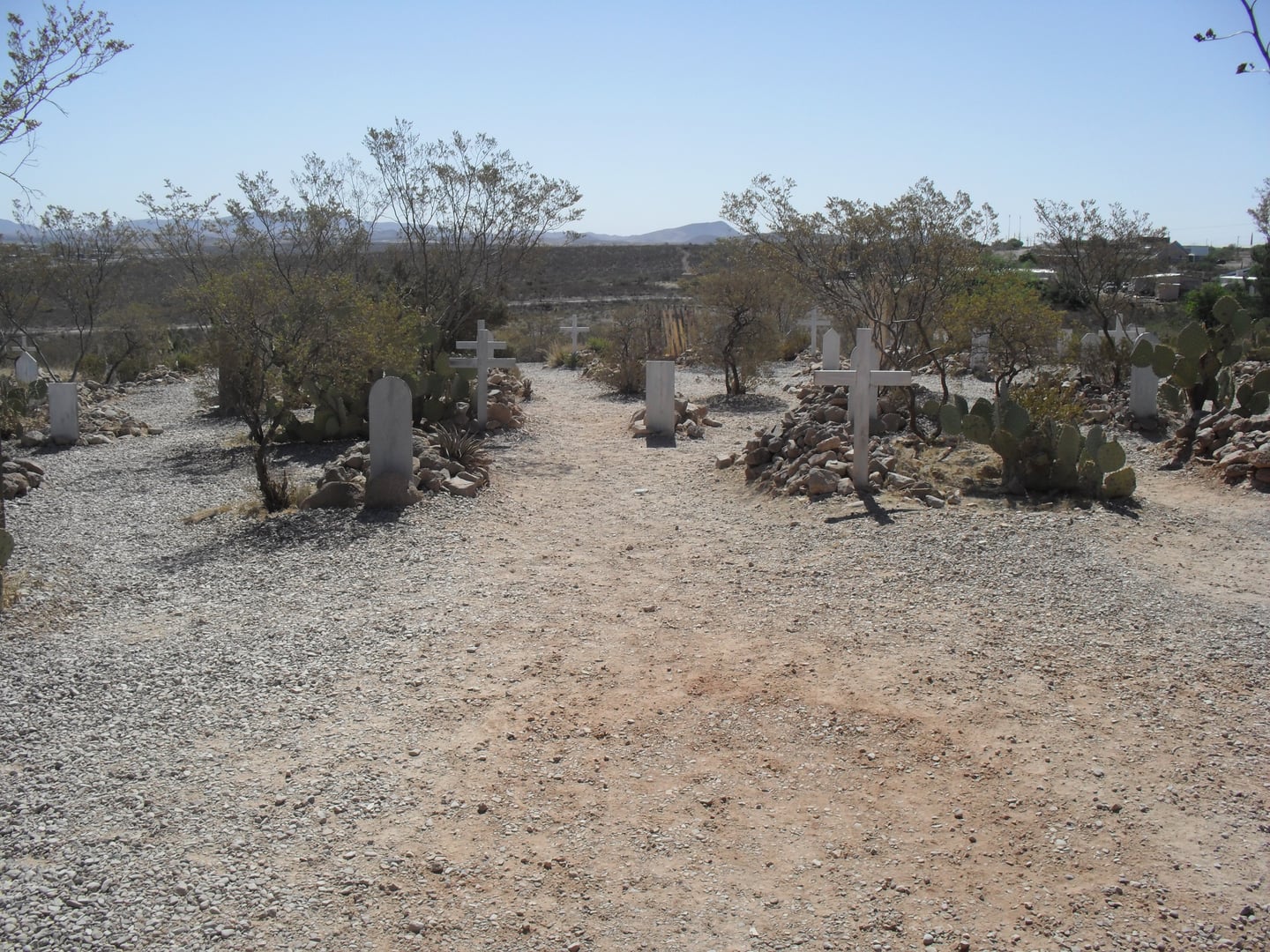
Tallahassee, FL

The Exchange Bank Building, also known as the Federal Exchange Building, is a five-story 1927 William Augustus Edwards-designed office building at 201 South Monroe Street at College Avenue. It was the tallest building in Tallahassee at its opening on March 3, 1928. The building is on the National Register of Historic Places and remains an active commercial address.

FreeAll AgesFamily: Moderate
The 1910 Collegiate Gothic Westcott Building and fountain at Florida State University, Tallahassee, atop historic Gallows Hill
Other Dark Tourism Site

FSU Westcott Building & Ruby Diamond Concert Hall (Gallows Hill)
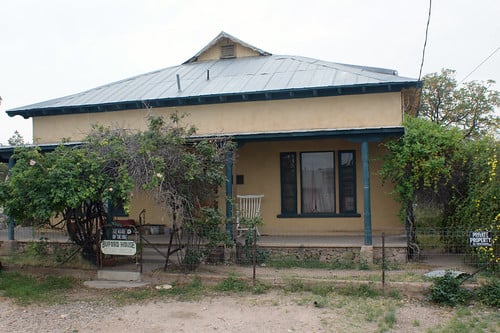
Tallahassee, FL

The James D. Westcott Memorial Building was constructed in 1910 as the administrative center of the Florida State College for Women and is FSU's oldest standing building. Designed by William Augustus Edwards in Collegiate Gothic style, it houses the Ruby Diamond Concert Hall and faces the Westcott Fountain. The site is built over what was historically known as Gallows Hill, Tallahassee's pre-statehood execution ground established in 1829.

FreeAll AgesFamily: Moderate
The c. 1840 main house at Goodwood Museum & Gardens, a former cotton plantation estate in Tallahassee, Florida
Museum / Historical Site

Goodwood Museum & Gardens

Tallahassee, FL

Goodwood's main house was built c. 1840 on land that was part of a 1,600-acre cotton plantation purchased in 1834 by the Croom family of North Carolina, who brought 60 enslaved people to work the property. After the Croom family's 1837 maritime disaster and a Florida Supreme Court estate case, the property passed through the Hopkins, Arrowsmith, Tiers, and Hodges families. Margaret Wilson Hodges left the 20-acre core to a charitable foundation, and Goodwood has operated as a house museum since 1996.

$$All AgesFamily: High
Weathered headstones beneath spreading oaks at the 1829 Old City Cemetery, Tallahassee's first public burial ground, Florida
Cemetery / Burial Ground

Old City Cemetery

Tallahassee, FL

The Old City Cemetery was established in 1829 as Tallahassee's first public burial ground and expanded during the 1840s yellow-fever epidemics. It contains the graves of 19th-century politicians, enslaved people, business owners, Civil War soldiers from both sides, and yellow-fever victims. Its most-visited monument is the 1889 obelisk of Elizabeth 'Bessie' Budd-Graham.

FreeAll AgesFamily: High
Velda Mound Park in Tallahassee, Florida — a Fort Walton-era platform mound (archaeological site 8LE44) preserved within a small city park
Photo coming soon
Outdoor / Natural Site

Velda Mound Park

Tallahassee, FL

Velda Mound (archaeological site 8LE44) is a Fort Walton-culture platform mound and surrounding village site in north Tallahassee's Killearn Estates neighborhood. The mound was built around 1450 CE and occupied by Apalachee descendants until c. 1625, when the Spanish Mission period reshaped Apalachee settlement. The site is owned by the State of Florida and protected as a Tallahassee city park.

FreeAll AgesFamily: High
1903 Queen Anne Victorian Highland Manor in Apopka, Florida
Photo coming soon
Haunted House / Historic Home

Highland Manor (formerly Townsend's Plantation and The Captain & The Cowboy)

Apopka, FL

The 1903 Queen Anne Victorian known today as Highland Manor was built in Apopka, Florida by the Eldredge family. In the 1920s, Dr. Thomas McBride bought the home and lived with his wife Helen on the second floor while seeing patients on the first. The house was moved to its current location at 604 East Main Street in 1985. It operated as Townsend's Plantation restaurant from the 1990s until 1997, then briefly as The Captain & The Cowboy from 1997 to 2005. Since 2008 it has functioned as the Highland Manor wedding venue.

FreeAll AgesFamily: High
The Don CeSar pink beach resort hotel exterior in St. Pete Beach Florida
Haunted Hotel / Inn

The Don CeSar

St. Pete Beach, FL

The Don CeSar opened January 16, 1928 on St. Pete Beach, Florida, built by real estate developer Thomas Rowe as a tribute to a Spanish woman named Lucinda he had loved and lost decades earlier. Named for Don Cesar de Bazan from the opera Maritana, the 277-room pink resort was added to the National Register of Historic Places in 1974. The U.S. Army purchased it in 1942 for use as a hospital; it was restored and reopened as a full resort in 1973 and underwent major renovations from 2018–2020, reopening after hurricane repairs in March 2025.

$$$$All agesFamily: High
Three-story 1885 frame hotel with wraparound porch in the Longwood Historic District, Florida
Photo coming soon
Haunted House / Historic Home

The Old Longwood Hotel

Longwood, FL

Longwood founder Edward Warren Henck built the three-story Longwood Hotel in 1885 to attract attention to his new railroad town. The building changed names through the early 20th century, served as the Orange and Black during the 1920s, and now operates as private office space. It is listed on the National Register of Historic Places.

FreeAll AgesFamily: High
The Herlong Mansion's white Greek Revival facade with four full-height Corinthian columns in Micanopy, Florida
Haunted Hotel / Inn

The Herlong Mansion

Micanopy, FL

The Herlong Mansion in Micanopy, Florida originated as a Simonton family farmhouse around 1845 and was remodeled into a Greek Revival residence by 1910 after Natalie Simonton married Zetty Herlong. It is listed on the National Register of Historic Places and operates today as a bed-and-breakfast.

$$$All AgesFamily: High
Exterior of the Safety Harbor Resort & Spa on Tampa Bay, a historic Florida mineral-springs resort
Haunted Hotel / Inn

Safety Harbor Resort & Spa

Safety Harbor, FL

The Safety Harbor Resort & Spa sits on the western shore of Tampa Bay above the natural Espiritu Santo Springs. Captain James F. Tucker built a sanatorium on the site in 1920, which Dr. Salem Baranoff expanded in the mid-twentieth century into a renowned mineral-springs spa. The property is a member of Historic Hotels of America.

$$$$All AgesFamily: High
A flat 19th century cemetery bordered by orange groves in Lake County, Florida, with weathered headstones and live oaks
Photo coming soon
Cemetery / Burial Ground

Umatilla Cemetery

Umatilla, FL

Umatilla Cemetery sits on Golden Gem Road in Lake County, Florida, with sections on both sides of the road. The older section dates to the 19th century and sits adjacent to orange groves; the newer section slopes toward a lake. The cemetery is owned by the City of Umatilla, which also owns four additional smaller cemeteries in the area.

FreeAll AgesFamily: High
The Vinoy Resort historic pink Mediterranean Revival hotel exterior, St. Petersburg, Florida
Haunted Hotel / Inn

The Vinoy Resort & Golf Club

St. Petersburg, FL

The Vinoy Resort opened on December 31, 1925, as a Mediterranean Revival luxury hotel on the bayfront of downtown St. Petersburg, Florida. It was financed by Aymer Vinoy Laughner and designed by architect Henry L. Taylor. The hotel served as a US Army Air Forces training school during World War II, closed in 1974, and reopened in 1992 after a $93 million restoration. The Vinoy is listed on the National Register of Historic Places.

$$$$All AgesFamily: High
Photo of Waffle House #929
Photo coming soon
True Crime Site

Waffle House #929

Davie, FL

On March 11, 2002, Gerhard Hojan and accomplice Jimmy Mickel robbed the Waffle House at 2580 Davie Road in Davie, Florida, and fatally shot employees Christina Delarosa and Willy Absolu. A third employee, Barbara Nunn, survived the attack. Hojan was convicted of murder and sentenced to death; the Florida Supreme Court denied his appeal. The restaurant has continued operating at the same address since the murders.

$All AgesFamily: Low
Entryway to Tolomato Cemetery, the historic Spanish colonial Catholic burial ground in St. Augustine, Florida
Cemetery / Burial Ground

Tolomato Cemetery

St. Augustine, FL

Tolomato Cemetery on Cordova Street in St. Augustine, Florida is the oldest planned cemetery in the state of Florida. The site occupies the former location of a Guale Indian mission village ministered by Franciscan friars in the seventeenth and eighteenth centuries. The cemetery served the Catholic population of St. Augustine from the 1770s until 1884.

FreeAll AgesFamily: High
Three-story brick corner building of 17Hundred90 Inn at 130-132 Lincoln Street, Savannah, Georgia, photographed in 2021
Haunted Hotel / Inn

17Hundred90 Inn and Restaurant

Savannah, GA

The 17Hundred90 Inn and Restaurant occupies three adjoining historic buildings in downtown Savannah, Georgia. The oldest section is traditionally dated to 1790, with the larger surviving structure built between 1821 and 1823 and a third addition added in 1888. The complex operates today as a fourteen-room inn and dinner restaurant.

$$$All Ages in restaurant; 21+ in tavern after 9pmFamily: Moderate
Amicalola Falls State Park Lodge in Dawsonville, Georgia, with the 729-foot cascading falls visible in the background
Haunted Hotel / Inn

Amicalola Falls State Park & Lodge

Dawsonville, GA

Amicalola Falls State Park & Lodge sits in the North Georgia Mountains in Dawson County. The name comes from the Cherokee for 'tumbling waters,' referencing the 729-foot cascading waterfall — among the tallest cascading falls east of the Mississippi. The lodge was built in 1990 by the State of Georgia with 57 guestrooms and 14 cabins. The park serves as the official start of the Appalachian Trail's approach route.

$$$All AgesFamily: High
Reconstructed timber stockade wall at Andersonville National Historic Site, the Confederate Civil War prison camp in Andersonville, Georgia
Battlefield / Military Site

Andersonville National Historic Site

Andersonville, GA

Andersonville National Historic Site preserves Camp Sumter, the largest Confederate military prison of the Civil War, where nearly 13,000 of approximately 45,000 Union prisoners died in 14 months from disease, starvation, and exposure. The site also encompasses Andersonville National Cemetery and the National Prisoner of War Museum, the only National Park unit dedicated to all American POWs.

FreeAll AgesFamily: Low
Andersonville National Cemetery in Georgia, showing rows of small white grave markers for Civil War prisoners who died at Camp Sumter
Photo coming soon
Cemetery / Burial Ground

Andersonville National Cemetery

Andersonville, GA

Andersonville National Cemetery was established adjacent to the Camp Sumter prison stockade in 1864 to inter the Union soldiers dying there in large numbers. The cemetery holds 13,714 Civil War-era graves, the majority prisoners who died at the adjacent prison. It remains an active national cemetery where veterans continue to be buried.

FreeAll AgesFamily: Moderate
Open grounds of the former Camp Sumter stockade at Andersonville National Historic Site in Georgia, showing interpretive markers and the National Cemetery beyond
Photo coming soon
Battlefield / Military Site

Andersonville National Historic Site

Andersonville, GA

Camp Sumter, commonly called Andersonville Prison, was a Confederate prisoner of war facility that operated in southwestern Georgia from February 1864 to April or May 1865. It held approximately 45,000 Union soldiers across its existence; nearly 13,000 died there from disease, malnutrition, and exposure. Camp commandant Henry Wirz was convicted of war crimes and executed in 1865. The site is now the Andersonville National Historic Site, maintained by the National Park Service.

FreeAll AgesFamily: Moderate
The Greek Revival and Italianate façade of Birdsville Plantation in rural Jenkins County, Georgia
Photo coming soon
Haunted House / Historic Home

Birdsville Plantation

Millen, GA

Birdsville Plantation in Jenkins County, Georgia is a 50-acre property dating to circa 1789, established on land granted by King George III to the Welsh-born settler Francis Jones. The Greek Revival and Italianate front façade was added around 1847 under Henry Philip Jones. The plantation was added to the National Register of Historic Places in 1971 and remains owned by the Jones family.

FreeAll AgesFamily: Moderate
Spanish moss-draped live oaks at historic Bonaventure Cemetery in Savannah Georgia
Cemetery / Burial Ground

Bonaventure Cemetery

Savannah, GA

Bonaventure Cemetery is a Victorian-era burial ground in Savannah, Georgia, established as part of the city's 19th-century cemetery expansion. Its most famous burial is that of Gracie Watson, a young girl who died of pneumonia on April 7, 1889, two days before Easter. Her father, W.J. Watson, manager of the Pulaski Hotel in Savannah, commissioned sculptor John Walz to create a life-sized marble statue as a memorial—a monument that has become one of the most visited graves in Georgia.

FreeAll AgesFamily: High
Greek Revival Andrew Low House at 329 Abercorn Street in Savannah, Georgia, built 1849 and later residence of Juliette Gordon Low
Museum / Historical Site

Andrew Low House

Savannah, GA

The Andrew Low House was completed in 1849 for Scottish-born cotton merchant Andrew Low, then one of the wealthiest men in Savannah. The Greek Revival town house hosted William Makepeace Thackeray and Robert E. Lee, and became the residence of Juliette Gordon Low — Andrew Low's daughter-in-law — who founded the Girl Scouts of the United States in the house on March 12, 1912.

$$All AgesFamily: High
Two-story Neoclassical Revival 1913 William Henry Braselton home now serving as Braselton Town Hall in Jackson County, Georgia
Photo coming soon
Haunted House / Historic Home

Braselton Town Hall

Braselton, GA

Braselton Town Hall occupies the early-1900s Greek Revival home built by William Henry Braselton, the town's first mayor and one of four Braselton brothers whose family founded and built the surrounding community in Jackson County, Georgia.

FreeAll AgesFamily: High
1901 Candler Hall on the University of Georgia's North Campus at 202 Herty Drive.
Photo coming soon
Other Dark Tourism Site

Candler Hall

Athens, GA

Candler Hall was built in 1901 as a UGA men's residence hall and was named for Allen D. Candler, then governor of Georgia. The building, which could house up to 84 students at opening, has been adapted for academic and administrative use.

FreeAll AgesFamily: Moderate
Row of Civil War cannon at Bloom's Louisiana Battery, Chickamauga and Chattanooga National Military Park, Georgia
Battlefield / Military Site

Chickamauga and Chattanooga National Military Park

Fort Oglethorpe, GA

Chickamauga and Chattanooga National Military Park was established by Congress in 1890 as America's first and largest national military park. It preserves the September 1863 Battle of Chickamauga, which produced approximately 34,000 casualties across two days, and the November 1863 Battles for Chattanooga that broke the Confederate siege of the city.

FreeAll AgesFamily: High
Colonial Park Cemetery in Savannah Georgia, looking west toward Abercorn Street with weathered colonial gravestones
Cemetery / Burial Ground

Colonial Park Cemetery

Savannah, GA

Colonial Park Cemetery was established in 1750 as Savannah's principal burial ground and remained active through 1853. The six-acre site at Abercorn and Oglethorpe Avenue holds Button Gwinnett, signer of the Declaration of Independence, and a mass grave for nearly seven hundred victims of the 1820 yellow fever epidemic.

FreeAll AgesFamily: High
Preserved 1912 Fire Hall No. 1 incorporated into the Classic Center at 300 North Thomas Street in Athens, Georgia.
Photo coming soon
Museum / Historical Site

The Classic Center (former Fire Hall No. 1)

Athens, GA

The Classic Center is an Athens performing arts and convention center that incorporates the preserved 1912 Fire Hall No. 1. The historic firehouse, originally slated for demolition during the Classic Center's late-1980s construction, was saved by community advocacy and now houses the box office, meeting space, and a fire-history display.

FreeAll AgesFamily: High
Looking across Chickamauga Battlefield in northwest Georgia toward the Kelly House, one of the park's most paranormally active structures
Photo coming soon
Battlefield / Military Site

Chickamauga & Chattanooga National Military Park

Fort Oglethorpe, GA

The Battle of Chickamauga, September 18–20, 1863, was the Civil War's second-bloodiest engagement with 34,624 casualties. A Confederate tactical victory that was soon rendered strategically meaningless when Union forces broke the siege of Chattanooga. The national military park established here in 1890 was the first of its kind in the United States.

FreeAll AgesFamily: High
Two-story stucco-fronted Demosthenian Hall, built 1824, on the University of Georgia's North Campus in Athens, Georgia.
Other Dark Tourism Site

Demosthenian Hall

Athens, GA

Demosthenian Hall, built in 1824, is the fourth-oldest building at the University of Georgia and is home to the Demosthenian Literary Society, founded in 1803 — the longest continuously running student organization in the country. The two-story tan stucco building served as headquarters for occupying Union troops during the Civil War.

FreeAll AgesFamily: High
Two-and-a-half-story gabled frame plantation house with grounds in Greene County, Georgia
Photo coming soon
Haunted House / Historic Home

Early Hill Plantation

Greensboro, GA

Early Hill is a circa-1825 plantation house in Greene County, Georgia, two miles northwest of Greensboro. The two-and-a-half-story home was built for Joel Early Jr., son of one of Greene County's earliest Revolutionary-era settlers. By 1850 the plantation reached approximately 2,200 acres worked by sixty enslaved people. The property later operated as a bed and breakfast and is now closed to overnight guests.

FreeAll AgesFamily: High
Interior earthworks and emplacements at Fort McAllister Historic State Park near Richmond Hill, Georgia
Battlefield / Military Site

Fort McAllister State Park

Richmond Hill, GA

Fort McAllister was an earthwork Confederate fort constructed in 1861 by the Dekalb Rifles on the Ogeechee River south of Savannah. Along with Fort Pulaski and Fort James Jackson, it formed Savannah's outer defenses. Resisting seven Union naval attacks, the fort fell on December 13, 1864, in a 15-minute infantry assault that ended Sherman's March to the Sea.

$All AgesFamily: High
Interior of Fort Pulaski National Monument showing brick casemates on Cockspur Island, Savannah, Georgia
Battlefield / Military Site

Fort Pulaski National Monument

Savannah, GA

Fort Pulaski is a brick coastal fort on Cockspur Island at the mouth of the Savannah River, constructed between 1829 and 1847. The April 1862 Union bombardment with new rifled cannon breached the fort's masonry walls in 30 hours, demonstrating that masonry forts had become obsolete. In late 1864 the fort held the Immortal Six Hundred, Confederate officers held in retaliation; thirteen died on the island.

$All AgesFamily: High
Brick fort with five-sided pentagonal walls surrounded by water and salt marsh
Photo coming soon
Battlefield / Military Site

Fort Pulaski National Monument

Savannah, GA

Fort Pulaski occupies Cockspur Island at the mouth of the Savannah River, fifteen miles east of Savannah. Constructed between 1829 and 1847 as part of the United States's Third System of coastal fortifications, the fort is the site where rifled artillery first breached a masonry fort in combat, on April 11, 1862, signaling the obsolescence of brick coastal defenses.

$All AgesFamily: High
Old Governor's Mansion on the Georgia College & State University campus in Milledgeville, Georgia
Museum / Historical Site

Georgia College & State University

Milledgeville, GA

Georgia College & State University occupies a campus in Milledgeville, Georgia's antebellum state capital. The Old Governor's Mansion on campus housed ten Georgia governors from 1839 to 1868 before becoming part of the college. Sanford Hall, a campus residence hall, became the site of a 1952 tragedy when student Betty Jean Cook died there.

$All AgesFamily: Moderate
A rural backroad in Douglas County Georgia bordered by woods and the remnants of an old barn
Photo coming soon
Other Dark Tourism Site

Gray Road

Douglasville, GA

Gray Road is a roughly mile-and-a-half rural road in Douglas County, Georgia, west of Atlanta. Local legend names it for a Civil War officer surnamed Gray; no specific officer has been documented through Civil War records. The road sits in a region with substantial enslaved-people history that local folklore has folded into ghost-story form.

FreeAll Ages (drive-by)Family: Moderate
Gothic-influenced brick facade of the former R.J. Taylor Memorial Hospital in Hawkinsville, Georgia
Photo coming soon
Asylum / Hospital

Old Taylor Memorial Hospital (Shadowlands: 'Hawkinsville State Hospital')

Hawkinsville, GA

The R.J. Taylor Memorial Hospital was chartered in 1936 with a $100,000 gift from Robert Jenks Taylor Sr. and served Hawkinsville, Georgia until 1977, when operations moved to the new Taylor Regional Hospital on the north side of town. The Gothic-style building stood vacant for roughly 40 years before TBG Residential acquired it in 2016 and reopened it in October 2019 as Taylor Village, a 34-unit workforce-housing apartment complex.

FreeAll Ages (exterior only)Family: Moderate
DMB - ATL - 5/28/16
Theater / Performance Venue

Lakewood Amphitheatre

Atlanta, GA

Lakewood Amphitheatre opened in July 1989 on the historic Lakewood Fairgrounds in Atlanta, an 18,920-capacity Live Nation venue that has carried at least six sponsor names including HiFi Buys Amphitheatre (2001–2007) and currently Cellairis. The surrounding fairgrounds hosted the Southeastern Fair from 1915 to 1975 and the Lakewood Speedway from 1917 to 1979, the latter the site of multiple documented racing fatalities.

$$All AgesFamily: Moderate
Holly Theatre Art Moderne marquee and facade on West Main Street in Dahlonega, Georgia
Theater / Performance Venue

Holly Theater

Dahlonega, GA

The Holly Theater opened on July 12, 1948 as a movie theater built by Randall Holly Brannon in the Art Moderne style designed by G.R. Vinson. After 50 years of dormancy it was restored and now operates as a nonprofit theatrical venue.

$$All AgesFamily: High
Hotel Abacus Athens, formerly Graduate Athens, in the historic Athens Foundry complex on East Dougherty Street.
Photo coming soon
Haunted Hotel / Inn

Hotel Abacus Athens (Formerly Graduate Athens)

Athens, GA

The hotel occupies the historic Athens Foundry complex, the iron mill that cast the UGA Arch. The property reopened as Graduate Athens in 2014, has since rebranded as Hotel Abacus Athens, and continues to operate as a boutique hotel and event venue.

$$$18+Family: Moderate
Georgia Historical Society marker commemorating Igbo Landing and the 1803 act of resistance, St. Simons Island, Georgia
Other Dark Tourism Site

Igbo Landing

St. Simons Island, GA

In May 1803, captive Igbo people who had taken control of a small vessel near Dunbar Creek on St. Simons Island, Georgia chose to walk into the marsh rather than submit to enslavement. The event is commemorated by a Georgia Historical Society marker and recognized by the National Park Service as one of the earliest documented acts of large-scale resistance by enslaved Africans in North America.

FreeAll AgesFamily: Moderate
1932 Joe Brown Hall on the University of Georgia's main quad at 595 South Lumpkin Street.
Photo coming soon
Other Dark Tourism Site

Joe Brown Hall

Athens, GA

Joe Brown Hall, built in 1932, was originally a men's dormitory and is now an academic and administrative building at the University of Georgia. The hall is named for Joseph E. Brown, the 42nd governor of Georgia and a proponent of secession during the Civil War.

FreeAll AgesFamily: Moderate
Jekyll Island Club Victorian clubhouse historic resort on Jekyll Island Georgia
Haunted Hotel / Inn

Jekyll Island Club Resort

Jekyll Island, GA

The Jekyll Island Club was founded in 1886 when a group of wealthy New Yorkers and Georgians created a private hunting club on Jekyll Island, a barrier island off the Georgia coast. The clubhouse opened in 1887 and became a winter retreat for families including the Rockefellers, Vanderbilts, and J.P. Morgan's family. The club operated until World War II before being purchased by the state of Georgia in 1947.

$$$All AgesFamily: High
Kennesaw Mountain National Battlefield Park in Georgia, showing the mountain ridgeline where Confederate forces held the line during Sherman's Atlanta Campaign
Photo coming soon
Battlefield / Military Site

Kennesaw Mountain National Battlefield Park

Kennesaw, GA

The Battle of Kennesaw Mountain, fought June 19 through July 2, 1864, was a major engagement in Sherman's Atlanta Campaign. Confederate forces under General Johnston held the mountain and surrounding terrain, inflicting roughly 3,000 Union casualties when Sherman ordered a frontal assault on June 27. Total campaign casualties near Kennesaw reached approximately 5,000. The NPS park preserves the mountain and surrounding battlefield including Kolb's Farm.

$All AgesFamily: High
Kehoe House 1892 Victorian mansion bed and breakfast in Savannah Georgia
Haunted Hotel / Inn

Kehoe House

Savannah, GA

William Kehoe, an Irish immigrant who built a fortune running a Savannah iron foundry, commissioned architect DeWitt Bruyn to design this Queen Anne Revival mansion on Columbia Square in 1892. Kehoe spent $25,000 on the construction — an enormous sum — and much of the exterior ornament was cast in iron from his own foundry. The house served as a funeral parlor and was briefly owned by NFL quarterback Joe Namath before opening as a bed and breakfast in 1990.

$$$Adults only (21+)Family: Low
Kennesaw House historic 1845 building Marietta History Center in Marietta Georgia
Museum / Historical Site

Kennesaw House / Marietta History Center

Marietta, GA

The Kennesaw House was built in 1845 as a cotton warehouse on what is now Marietta Square, adjacent to the railroad tracks that would define its Civil War history. Purchased by Dix Fletcher in 1855 and converted into the Fletcher House hotel, it served as both a staging point for the famous Great Locomotive Chase of April 1862 and as a hospital and morgue for Confederate and Union forces during Sherman's Atlanta campaign. Today it houses the Marietta History Center.

$All AgesFamily: Moderate
Recreated Civil War artillery position at Kennesaw Mountain National Battlefield Park in Cobb County, Georgia
Battlefield / Military Site

Kennesaw Mountain National Battlefield Park

Kennesaw, GA

Kennesaw Mountain National Battlefield Park preserves 2,965 acres of the June 1864 Atlanta Campaign battleground in Cobb County, Georgia. Union General William T. Sherman's frontal assault on Confederate General Joseph E. Johnston's defensive line failed on June 27, 1864. The park was authorized in 1917 and transferred to the National Park Service in 1933.

FreeAll AgesFamily: High
Little Gardens — historic Lawrenceville home and wedding venue in Gwinnett County, Georgia
Photo coming soon
Haunted Dining / Bar

Little Gardens

Lawrenceville, GA

Little Gardens is a restored historic Lawrenceville home operating as a wedding and special-event venue in Gwinnett County, Georgia. The property has been adapted across multiple twentieth- and twenty-first-century uses, including a previous tenure as a fine-dining restaurant before its conversion to an events-primary model.

$$$All AgesFamily: High
Suburban road through Lovejoy, Georgia, in Clayton County, site of the 1864 Battle of Lovejoy's Station
Photo coming soon
Battlefield / Military Site

Lovejoy Road

Lovejoy, GA

Lovejoy Road in Clayton County, Georgia passes through terrain that was the scene of active military engagement on August 20, 1864. The Battle of Lovejoy's Station was part of Major General William T. Sherman's campaign against Confederate supply lines during the Atlanta Campaign. Both sides reported approximately 237-240 casualties. The historic battlefield has largely been subsumed by suburban development.

FreeAll AgesFamily: High
Two-story antebellum 1847 Lustrat House on UGA's North Campus.
Photo coming soon
Other Dark Tourism Site

Lustrat House

Athens, GA

The Lustrat House was built in 1847 as a UGA professor's residence and is one of two surviving antebellum faculty residences on the campus. The building was moved on campus in 1903 to make way for the present-day Administration building and was renamed for Joseph Lustrat, who chaired the Department of Romance Languages. It now houses the UGA Office of Legal Affairs.

FreeAll AgesFamily: High
Wright Square historic public square with monument and oak trees in Savannah, Georgia
Outdoor / Natural Site

Wright Square

Savannah, GA

Wright Square in Savannah, Georgia is one of the city's original colonial squares, laid out under General James Oglethorpe's 1733 city plan. On January 19, 1735, Irish indentured servant Alice Riley was hanged there — the first woman executed in the Georgia colony. Chief Tomochichi of the Yamacraw tribe, Oglethorpe's key Native American ally, was later buried in the square; his burial site was subsequently displaced by a monument to a local businessman.

FreeAll AgesFamily: High
Rural road in Miller County, Georgia near White's Bridge, with Spring Creek visible in the distance
Photo coming soon
Outdoor / Natural Site

Mason Road and White's Bridge Area

Colquitt, GA

Mason Road in Miller County, Georgia runs parallel to White's Bridge Road near Colquitt. Spring Creek flows beneath White's Bridge at the southeast end of the road, where a small church and cemetery have stood for generations. Repeated flooding cycles have deposited and withdrawn creek water against the cemetery boundaries, with grave markers visible in the creek bed and on the eroded banks over time.

FreeAll AgesFamily: High
Stone foundation and mill race ruins along Wehadkee Creek at the former McCosh Mill in Troup County, Georgia
Photo coming soon
Outdoor / Natural Site

McCosh Mill Ruins

LaGrange, GA

McCosh Mill was a grist mill built in the early 1870s on the banks of Wehadkee Creek in Troup County, Georgia, by James Eichelburger McCosh, grandson of Rock Mills industrialist Jacob Eichelburger. The mill ground corn into meal and wheat into flour until 1958. The U.S. Army Corps of Engineers acquired the land in 1970 as part of the West Point Lake project, and the wood-frame structure later burned, leaving only the stone foundation and mill race.

FreeAll AgesFamily: Moderate
Boone Hall dormitory on the Mercer University campus in Macon, Georgia
Photo coming soon
Other Dark Tourism Site

Mercer University — Boone Hall

Macon, GA

Mercer University was founded in 1833 as Mercer Institute in Penfield, Georgia, by Jesse Mercer, a Baptist leader who provided the founding endowment along with Josiah Penfield. The university relocated to Macon in 1871. Boone Hall was completed in 1950 and is named for Sallie Goelz Boone, who served the university from 1904 as librarian, literature professor, and counselor.

FreeAll AgesFamily: Moderate
Exterior facade of the 1910 Morton Theatre, a Beaux-Arts building at 195 West Washington Street in downtown Athens, Georgia.
Theater / Performance Venue

Morton Theatre

Athens, GA

Built in 1910 by Monroe Bowers 'Pink' Morton, the Morton Theatre is one of the first vaudeville theatres in the United States built, owned, and operated by an African-American and is the oldest such surviving theatre. It hosted Cab Calloway, Duke Ellington, Bessie Smith, Louis Armstrong, and Ma Rainey in its heyday.

$$All AgesFamily: High
Mt. Hope Cemetery hillside in downtown Dahlonega, Georgia
Photo coming soon
Cemetery / Burial Ground

Mt. Hope Cemetery

Dahlonega, GA

Mt. Hope Cemetery is the oldest public cemetery within the city of Dahlonega, Georgia, established alongside the town in 1833. The first recorded burial was Samuel Darter, the same year. The cemetery is the burial place of veterans from every American war back to the Revolution and features the regionally distinctive slot-and-tab grave markers.

FreeAll AgesFamily: High
The 1876 Martin House in Nacoochee Village, Helen, Georgia, now operating as the Nacoochee Village Antique Mall
Photo coming soon
Haunted Dining / Bar

Nacoochee Village Antique Mall

Helen, GA

The Martin House in historic Nacoochee Village was built in 1876 by John Martin, the original owner of the nearby Nora Mill. The property later passed to the Hardman and Ivie families. At various points the building served as a boarding house and small hotel before being repurposed as an antique mall. The 1876 structure retains its three-story form and sits across from Nora Mill in White County.

FreeAll AgesFamily: High
Cemetery beside Nacoochee United Methodist Church in Sautee Nacoochee, Georgia, with weathered grave markers among mature trees
Photo coming soon
Cemetery / Burial Ground

Nacoochee United Methodist Church Cemetery

Sautee Nacoochee, GA

A Methodist congregation has used this site in the Nacoochee Valley since the early 1820s, when the first church was built by the valley's initial white settlers. Six acres were formally deeded for the church and cemetery in 1836 by Major Edward Williams. The cemetery maintains an inventory of over 700 identified graves from the 19th century onward. A 1992 monument was installed near the slave graves to honor those buried without individual markers.

FreeAll AgesFamily: High
The 1925 Old Newnan Hospital building, now the University of West Georgia Newnan campus on Jackson Street
Photo coming soon
Museum / Historical Site

Old Newnan Hospital (UWG Newnan Campus)

Newnan, GA

The Old Newnan Hospital opened in 1925 as a community hospital in Newnan, Georgia, funded by a citywide subscription drive that raised the equivalent of approximately $20 million in present-day dollars. After serving Coweta County for 86 years, the hospital relocated in 2012 to a new Piedmont facility on Poplar Road. The original building was rehabilitated and reopened in 2015 as the University of West Georgia's Newnan campus.

FreeAll AgesFamily: High
Groundskeeper's house at historic Oconee Hill Cemetery in Athens, Georgia, founded 1855 across from the University of Georgia campus.
Cemetery / Burial Ground

Oconee Hill Cemetery

Athens, GA

Oconee Hill Cemetery was purchased by the city of Athens in 1855 when burials at the older Jackson Street Cemetery were closed. A self-perpetuating Board of Trustees was created in 1856 to manage the original 17 acres on the west side of the North Oconee River. The cemetery was added to the National Register of Historic Places in 2013.

FreeAll AgesFamily: High
Northeast view of the historic Jackson Street Cemetery (Old Athens Cemetery) on the University of Georgia's North Campus in Athens, Georgia.
Cemetery / Burial Ground

Old Athens Cemetery (Jackson Street Cemetery)

Athens, GA

Established around 1810, the Old Athens Cemetery — also called the Jackson Street Cemetery — was Athens's official burial ground from about 1810 to 1856, when Oconee Hill Cemetery opened. Approximately 800 graves remain, including two UGA presidents. The cemetery was added to the National Register of Historic Places.

FreeAll AgesFamily: High
Greek Revival 1844 sanctuary of Historic Richland Baptist Church in Twiggs County, Georgia
Cemetery / Burial Ground

Historic Richland Baptist Church

Jeffersonville, GA

Historic Richland Baptist Church in Twiggs County, Georgia, was organized in October 1811 on the banks of Richland Creek. The current Greek Revival building, the third on the site, was constructed in the mid-1840s. The church is on the National Register of Historic Places and is owned and stewarded by the nonprofit Richland Restoration League.

FreeAll Ages (visitors must arrange access through the Restoration League)Family: High
The Willett Hotel exterior in the historic core of Toomsboro, Georgia
Photo coming soon
Haunted Hotel / Inn

Old Toomsboro Hotel (Willett Hotel)

Toomsboro, GA

Toomsboro, Georgia, was chartered in 1904 along the Central of Georgia Railroad line connecting Savannah and Macon. The town was named for Robert Augustus Toombs, a U.S. congressman and Confederate Secretary of State. The Willett Hotel, the historic property referenced in haunted-place listings, served traveling salesmen and teachers during the railroad-era boom and is now part of a 40-acre property cluster repeatedly listed for sale.

FreeAll AgesFamily: Moderate
The Partridge Inn historic hotel exterior, Augusta Georgia
Haunted Hotel / Inn

The Partridge Inn

Augusta, GA

The Partridge Inn was originally built in 1836 as a private residence in Augusta, Georgia. Morris Partridge purchased the property in 1892 and converted it into a hotel; the current building configuration dates substantially to its formal opening as a hotel in 1910. The Partridge Inn now operates as part of Hilton's Curio Collection.

$$$All AgesFamily: High
Wooded trail through preserved Civil War earthworks at Pickett's Mill Battlefield, Georgia
Photo coming soon
Battlefield / Military Site

Pickett's Mill Battlefield State Historic Site

Dallas, GA

Pickett's Mill Battlefield in Paulding County, Georgia preserves the site of a May 27, 1864 Civil War engagement during the Atlanta Campaign. The 765-acre state historic site is considered one of the best-preserved Civil War battlefields in the nation. The state acquired the land between 1973 and 1981, opening the site to the public in 1990.

$All AgesFamily: Moderate
The Pirates' House restaurant exterior in Savannah, Georgia, a centuries-old tavern from 1734
Haunted Dining / Bar

The Pirates' House

Savannah, GA

The Pirates' House occupies a structure that began in 1734 as the Herb House on James Oglethorpe's Trustees' Garden tract. In 1753 the site opened as an inn for seafarers and quickly became a meeting place for sailors and crew working the Savannah River port. The Savannah Gas Company acquired the property in 1948, and the modern restaurant opened in 1953.

$$All AgesFamily: High
The Nacoochee Mound platform earthwork topped by a gazebo, on the Hardman Farm site in White County, Georgia
Cemetery / Burial Ground

Nacoochee Mound

Sautee Nacoochee, GA

The Nacoochee Mound is a South Appalachian Mississippian-period platform mound at the intersection of Georgia Highways 17 and 75, on the grounds of the Hardman Farm State Historic Site in White County. The site was first occupied between 100 and 500 CE by Woodland-period peoples and more intensively from 1350 to 1600 CE. A 1915 joint Smithsonian, Museum of the American Indian, and Bureau of American Ethnology excavation recovered 75 burials and Mississippian artifacts.

FreeAll AgesFamily: High
A small rural church beside a wooded graveyard in Dawson County, Georgia
Photo coming soon
Cemetery / Burial Ground

Salem Church and Graveyard

Dawsonville, GA

Salem Church and Graveyard is a rural church property in Dawson County, Georgia, off Salem Church Road north of Dawsonville. The church property is private and is reported in local folklore writing as being police-patrolled at night following recurring trespass incidents.

FreeAll AgesFamily: Not Recommended
Rural Georgia cemetery with small prayer chapel along a dirt road
Photo coming soon
Cemetery / Burial Ground

Shady Grove Cemetery

Sale City, GA

Shady Grove Cemetery is a small historic burial ground in Mitchell County, Georgia, located along a dirt road outside Sale City. Find a Grave records document approximately 131 memorials at the site.

FreeAll AgesFamily: High
The Sorrel-Weed House, an 1840 Greek Revival mansion at 6 West Harris Street in Savannah, Georgia
Haunted House / Historic Home

Sorrel-Weed House

Savannah, GA

The Sorrel-Weed House was built around 1840 for shipping merchant Francis Sorrel to a design by architect Charles Cluskey, who moved to Savannah from New York in 1829. The mansion was one of the first two Georgia State Landmarks designated in 1954 and is among the finest Greek Revival and Regency residences in Savannah.

$$All Ages for daytime tours; evening ghost tours recommended for 12+Family: Moderate
The Springer Opera House at 103 E 10th Street in Columbus, Georgia, Georgia's official State Theater since 1971
Theater / Performance Venue

Springer Opera House

Columbus, GA

The Springer Opera House opened in 1871 in Columbus, Georgia, and was designated the official State Theater of Georgia in 1971. Named for Francis Joseph Springer, the German-born merchant who funded its construction, it hosted prominent touring performers throughout the late 19th and early 20th centuries including Edwin Booth, Oscar Wilde, and John Philip Sousa. The building was restored in the late 20th century and remains an active performing arts venue.

$$Ghost tour recommended ages 12+Family: High
The 1872 St. Simons Lighthouse and adjacent keeper's house museum on St. Simons Island, Georgia
Museum / Historical Site

St. Simons Lighthouse

St. Simons Island, GA

The St. Simons Lighthouse is Georgia's oldest continuously operating lighthouse. Built in 1872 to replace a Civil War-era predecessor destroyed by retreating Confederate troops, it has guided ships into the Brunswick channel for more than 150 years. In 1880, head keeper Frederick Osborne was shot by his assistant John Stevens after a personal dispute.

$$All AgesFamily: Moderate
Historic Square at Stone Mountain Park, Georgia, showing antebellum structures relocated from across the state
Photo coming soon
Museum / Historical Site

Stone Mountain Park — Historic Square

Stone Mountain, GA

Stone Mountain Park encompasses the quartz monzonite dome of Stone Mountain, one of the largest exposed granite formations in the world, along with a 3,200-acre park with various attractions. Historic Square is a curated collection of original antebellum structures built between 1793 and 1875, each relocated from its original site elsewhere in Georgia and restored on park grounds.

$$All AgesFamily: High
Greek Revival mid-1840s Taylor-Grady House at 634 Prince Avenue in Athens, Georgia, a National Historic Landmark.
Haunted House / Historic Home

Taylor-Grady House

Athens, GA

The Taylor-Grady House is a Greek Revival residence built in the mid-1840s for General Robert Taylor, an Irish immigrant cotton merchant and Georgia militia leader. In 1863 it was purchased by Major William S. Grady, father of the journalist Henry W. Grady, who spent his childhood there. The house was declared a National Historic Landmark in 1976 and is owned by the City of Athens.

$All AgesFamily: Moderate
Exterior of the 1836 Old Lumpkin County Courthouse housing the Dahlonega Gold Museum in north Georgia
Museum / Historical Site

The Dahlonega Gold Museum (Old Lumpkin County Courthouse)

Dahlonega, GA

The Dahlonega Gold Museum occupies the 1836 Lumpkin County Courthouse, the oldest existing courthouse in Georgia. The building served as the seat of Lumpkin County government from 1836 to 1965 and is now a Georgia State Parks State Historic Site, with bricks containing trace amounts of gold.

$All AgesFamily: High
The Marshall House in Savannah Georgia, historic 1851 hotel with iron balconies
Haunted Hotel / Inn

The Marshall House

Savannah, GA

The Marshall House opened in 1851, developed by Mary Marshall, who became one of Savannah's most respected businesswomen. During the Civil War, Union forces occupied the building and used it as a hospital. The hotel also served as a hospital during the 1854 and 1876 yellow fever epidemics. During a late 1990s restoration, workers discovered human remains beneath the first-floor boards — amputated limbs from the Civil War surgery room that had been deposited there.

$$$All agesFamily: Moderate
The Public House at 605 South Atlanta Street on Roswell Historic Square in Georgia
Photo coming soon
Haunted Dining / Bar

The Public House

Roswell, GA

The Public House at 605 South Atlanta Street in Roswell was constructed in 1854 as the commissary for the Roswell Mill. During the Civil War it served as a Union hospital after the July 1864 occupation of Roswell. It later housed the Dunwoody Shoe Shop and a funeral parlor before becoming a restaurant (first as the Peasant in the 1970s and now as The Public House).

$$All AgesFamily: High
Globe-inspired facade of the Shakespeare Tavern Playhouse on Peachtree Street in downtown Atlanta
Theater / Performance Venue

Shakespeare Tavern Playhouse

Atlanta, GA

The Shakespeare Tavern Playhouse is an Elizabethan-style theater in downtown Atlanta and the home of the Atlanta Shakespeare Company. The company began producing at Manuel's Tavern in 1984 and moved to its current Peachtree Street home in 1990. A 1999 $1.6 million renovation added a Globe-inspired balcony, and a 2006 $500,000 renovation added a Globe-inspired facade.

$$All AgesFamily: High
The 1859 Warren House at 102 W Mimosa Drive in Jonesboro, Georgia
Photo coming soon
Haunted House / Historic Home

The Warren House

Jonesboro, GA

The Warren House at 102 W Mimosa Drive in Jonesboro was built in 1859 for Guy Lewis Warren, a Connecticut native who married Mary Ruberry Vardell of Charleston. The house became Confederate headquarters during the August 31-September 1, 1864 Battle of Jonesborough and was then taken over by the 52nd Illinois Infantry as a hospital for both Union and Confederate wounded. Signatures of convalescing Union soldiers still appear on upstairs walls.

$$All AgesFamily: Moderate
Historic American Buildings Survey photograph of the Greek Revival T.R.R. Cobb House in Athens, Georgia, showing the octagon wing additions documented in 1940.
Museum / Historical Site

T.R.R. Cobb House

Athens, GA

The T.R.R. Cobb House began as a Greek Revival 'Plantation Plain' house built about 1834 and given in 1844 to Thomas Reade Rootes Cobb and his bride Marion Lumpkin by Marion's father, Chief Justice Joseph Henry Lumpkin. Cobb expanded the residence into its distinctive octagon-wing form by 1852. The home now operates as an Athens house museum interpreting the Cobb family and the people they enslaved.

$All AgesFamily: Moderate
Tybee Island Light Station, a black-and-white striped lighthouse on Tybee Island, Georgia
Museum / Historical Site

Tybee Island Lighthouse

Tybee Island, GA

Tybee Island Lighthouse is Georgia's oldest and tallest active lighthouse, standing at the mouth of the Savannah River. The first day-mark was constructed in 1736 under Noble Jones of Wormsloe Plantation; the current 154-foot tower combines the lower sixty feet of an 1773 structure with an 1867 upper section. The original first-order Fresnel lens has been in service since 1867.

$$All AgesFamily: Moderate
1821 Waddel Hall on the University of Georgia library quad.
Photo coming soon
Other Dark Tourism Site

Waddel Hall

Athens, GA

Waddel Hall is the second-oldest building on the UGA campus, completed in 1821. Originally a dormitory, it has served as a boarding house, gymnasium, snack bar, and scientific-equipment storage, and is currently the UGA Office of Special Events.

FreeAll AgesFamily: Moderate
Front view of the mid-19th-century Ware-Lyndon House in Athens, Georgia, now operating as part of the Lyndon House Arts Center.
Museum / Historical Site

Ware-Lyndon House (Lyndon House Arts Center)

Athens, GA

The Ware-Lyndon House is a mid-19th-century historic home built circa 1850 in a blend of Greek Revival and Italianate styles. Originally owned by Edward R. Ware, the property was sold to Dr. Edward S. Lyndon in 1880, purchased by the City of Athens in 1939, restored in 1960, and listed on the National Register of Historic Places in 1976.

FreeAll AgesFamily: High
A Victorian-era residence on a Valdosta, Georgia corner lot with wraparound porch and gabled roof
Photo coming soon
Other Dark Tourism Site

Warren's Blue Bayou (Bell House)

Valdosta, GA

The Bell House at 500 N Ashley Street in Valdosta, Georgia, was the residence of Dr. David S. Bell, a traveling salesman of patent medicines known for a tonic called Re-Nue-U. The Victorian-era home has subsequently operated as a bed and breakfast, a Cajun restaurant, and most recently as Vito's Pizzeria and Lounge. As of current public records, Vito's is closed.

FreeAll AgesFamily: High
The Windsor Hotel five-story Queen Anne facade, historic 1892 hotel in Americus, Georgia
Haunted Hotel / Inn

The Windsor Hotel

Americus, GA

The Windsor Hotel opened in 1892 in downtown Americus, Georgia, built to draw winter tourists from the northeastern United States. The five-story Queen Anne building features a three-story open atrium lobby and now operates as a 53-room independent hotel in the Ascend Hotel Collection. Franklin D. Roosevelt delivered a 1928 speech at the property.

$$$All AgesFamily: Moderate
The Courtyard by Marriott King Kamehameha's Kona Beach Hotel and the reconstructed Ahu'ena Heiau on Kamakahonu Bay, Kailua-Kona, Hawai'i
Haunted Hotel / Inn

Courtyard by Marriott King Kamehameha's Kona Beach Hotel

Kailua-Kona, HI

The Courtyard by Marriott King Kamehameha's Kona Beach Hotel sits on Kamakahonu Bay in downtown Kailua-Kona, the site where King Kamehameha I, the unifier of the Hawaiian Islands, lived out his final years from 1812 until his death in 1819. The reconstructed Ahu'ena Heiau, his personal temple and seat of government, occupies the makai edge of the property and is a National Historic Landmark.

$$$All AgesFamily: High
The ornamental entry gate of Manoa Chinese Cemetery on the slopes of Manoa Valley in Honolulu, Hawaii
Cemetery / Burial Ground

Manoa Chinese Cemetery

Honolulu, HI

The Manoa Chinese Cemetery, officially the Lin Yee Chung Cemetery, was founded in 1852 by the Lin Yee Chung Association to provide proper burial for Chinese immigrants to Hawaii. The 28-acre cemetery occupies a south-facing hillside in the Manoa Valley selected according to feng-shui principles. It is the oldest and largest Chinese cemetery in the Hawaiian Islands.

FreeAll AgesFamily: Moderate
The Halepuna Waikiki by Halekulani exterior on Helumoa Road, Honolulu, Hawaii
Photo coming soon
Haunted Hotel / Inn

Waikiki Parc Hotel (now Halepuna Waikiki by Halekulani)

Honolulu, HI

The Waikiki Parc Hotel opened in 1987 as a 297-room sister property to the Halekulani in Honolulu's Waikiki district. The hotel closed in October 2018 for a multi-million-dollar renovation and reopened in October 2019 as Halepuna Waikiki by Halekulani. The building continues to operate as a boutique luxury hotel under its new brand.

$$$$All AgesFamily: High
A small cemetery in Ammon, Idaho, with mature trees along a chain-link boundary fence and the Bonneville County foothills in the distance
Photo coming soon
Cemetery / Burial Ground

Ammon Cemetery

Ammon, ID

Ammon Cemetery serves the small community of Ammon, Idaho, on the eastern edge of the Idaho Falls metro in Bonneville County. The cemetery is a typical small-community burial ground; no archival record accessed during research substantiates a specific drowning death tied to the cemetery legend.

FreeAll AgesFamily: High
Weathered Empire Saloon building, a surviving general store at the Custer ghost town in central Idaho
Other Dark Tourism Site

Custer Ghost Town

Custer, ID

Custer was founded in 1879 by gold prospectors at the Yankee Fork of the Salmon River in central Idaho. The mining town reached a peak population of 600 in 1896 and was abandoned by 1910. Custer, the adjacent town of Bonanza, and the Yankee Fork Dredge are preserved today by the Salmon-Challis National Forest and the Idaho Department of Parks and Recreation.

FreeAll AgesFamily: High
Early Commercial brick facade of the Enders Hotel on Main Street in Soda Springs, Idaho
Photo coming soon
Haunted Hotel / Inn

Enders Hotel

Soda Springs, ID

The Enders Hotel and adjoining building opened in 1917 as a $75,000 commercial development by the Enders brothers in Soda Springs, Idaho. Built in Early Commercial style, the 30-room hotel was added to the National Register of Historic Places in 1993 and operated as a hotel, museum, and restaurant until late October 2024.

FreeAll AgesFamily: High
Headstones in the Marsing-Homedale Cemetery in Owyhee County, Idaho
Photo coming soon
Cemetery / Burial Ground

Marsing-Homedale Cemetery

Marsing, ID

Marsing-Homedale Cemetery is a 1960s-era joint burying ground for the farming communities of Marsing and Homedale in Owyhee County, Idaho, situated on Cemetery Road midway between the two towns. The site holds 2,332 documented memorials and serves descendants of the early-20th-century Snake River bench agricultural settlements.

FreeAll AgesFamily: Moderate
Open Graph image from www.sodaspringsid.com
Outdoor / Natural Site

Hooper Springs Park

Soda Springs, ID

Hooper Springs, located one mile north of Soda Springs in Caribou County, Idaho, is a naturally carbonated cold-water spring that Oregon Trail emigrants documented as one of the most remarkable natural curiosities along the western route. Sarah White Smith wrote that the water was 'excellent for baking bread' and that it 'tastes like soda water.' W.H. Hooper, a Salt Lake City banker and Utah's congressional delegate, made his summer home near the spring and promoted the Soda Springs region nationally after rail service arrived in 1882. Today the City of Soda Springs manages the site as a community park.

FreeAll AgesFamily: High
Open Graph image from lctheatre.org
Theater / Performance Venue

Lewiston Civic Theatre (Bollinger Building)
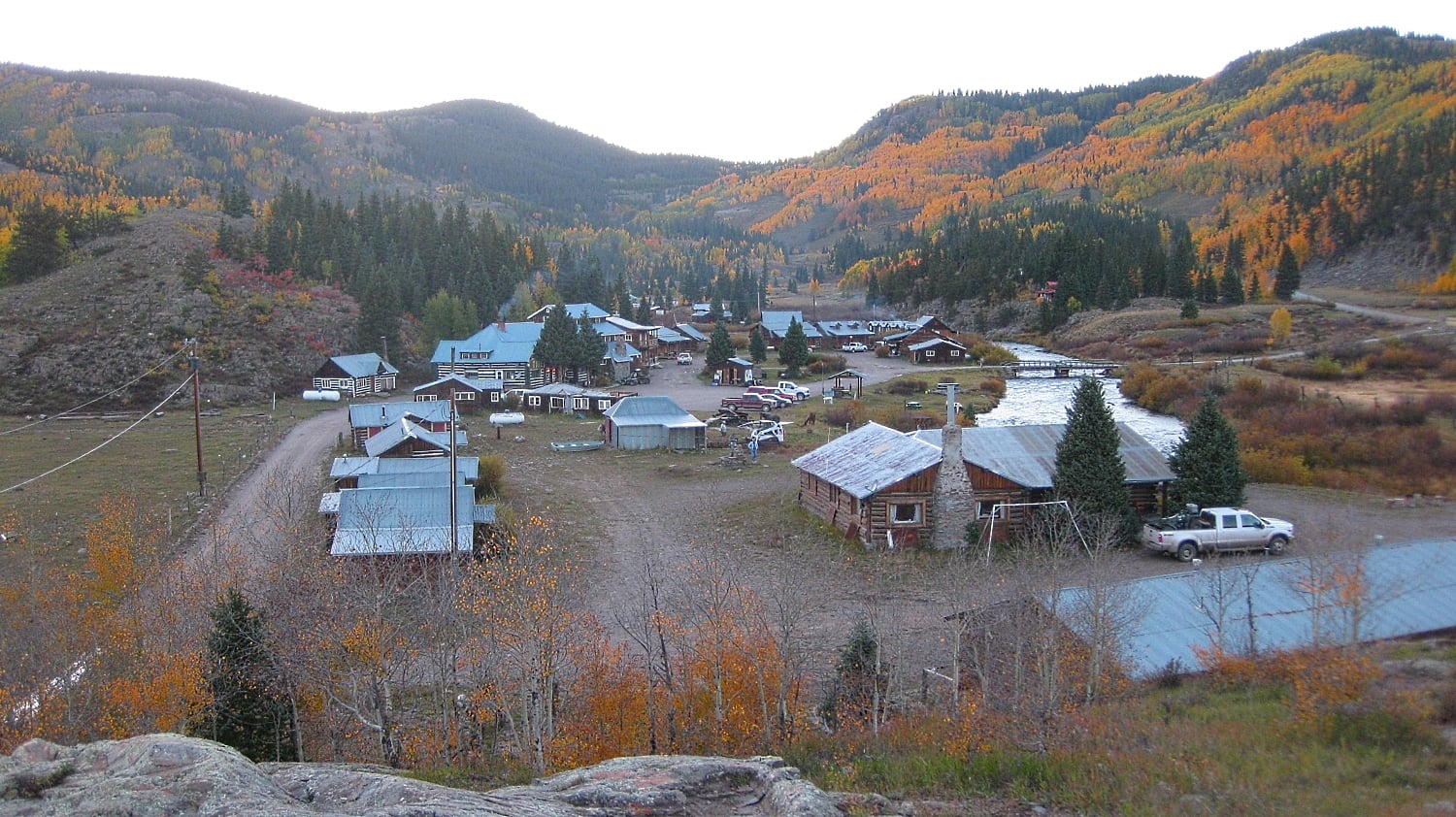
Lewiston, ID

The Anne Bollinger Performing Arts Center in Lewiston, Idaho was built in 1907 for the First Methodist Episcopal Church. The Lewiston Civic Theatre occupied the sandstone building from 1972 until it was condemned in 2016 following a roof truss failure. A private buyer acquired it in 2024 with plans to restore it as a community event space.

$All AgesFamily: Moderate
Sandstone facade of the Old Idaho State Penitentiary, the historic territorial prison in Boise, Idaho
Prison / Reformatory

Old Idaho State Penitentiary

Boise, ID

The Old Idaho State Penitentiary, also known as the Old Pen, opened in 1872 as the Idaho Territorial Prison on a site outside Boise. The facility operated for 101 years, holding more than 13,000 inmates including over 200 women and children as young as ten and eleven. The prison closed in 1973 following inmate riots and is now operated as a museum by the Idaho State Historical Society.

$$All Ages for daytime; minimum age applies for evening paranormal eventsFamily: Moderate
Sandstone cell block exterior of the Old Idaho Penitentiary at 2445 Old Penitentiary Road in Boise, Idaho
Prison / Reformatory

Old Idaho Penitentiary

Boise, ID

The Old Idaho Penitentiary at 2445 Old Penitentiary Road in Boise operated from 1872 to 1973, receiving its first inmates in the territorial period and closing after a 1973 inmate fire that destroyed three cell houses. During its 101 years of operation, the prison executed ten prisoners; only one execution, Raymond Snowden's in 1957, took place in the Gallows Room that survives today.

$All Ages (some evening events 18+)Family: Moderate
Headstones in a tree-lined section of Rose Hill Cemetery in Idaho Falls, Idaho
Photo coming soon
Cemetery / Burial Ground

Rose Hill Cemetery

Idaho Falls, ID

Rose Hill Cemetery is a municipal cemetery owned and maintained by the City of Idaho Falls. Two side-by-side burials at the cemetery's southwest end, one for an individual surnamed Wulff and another for an individual surnamed Wear, generated the long-running local Were-Wulff werewolf legend through the simple alphabetical coincidence of their names.

FreeAll AgesFamily: High
Exterior of the Iron Rail Bar and Grill, a historic 1908 building on Archer Street in Murtaugh, Idaho
Photo coming soon
Haunted Dining / Bar

Iron Rail Bar & Grill (formerly Sidewinders)
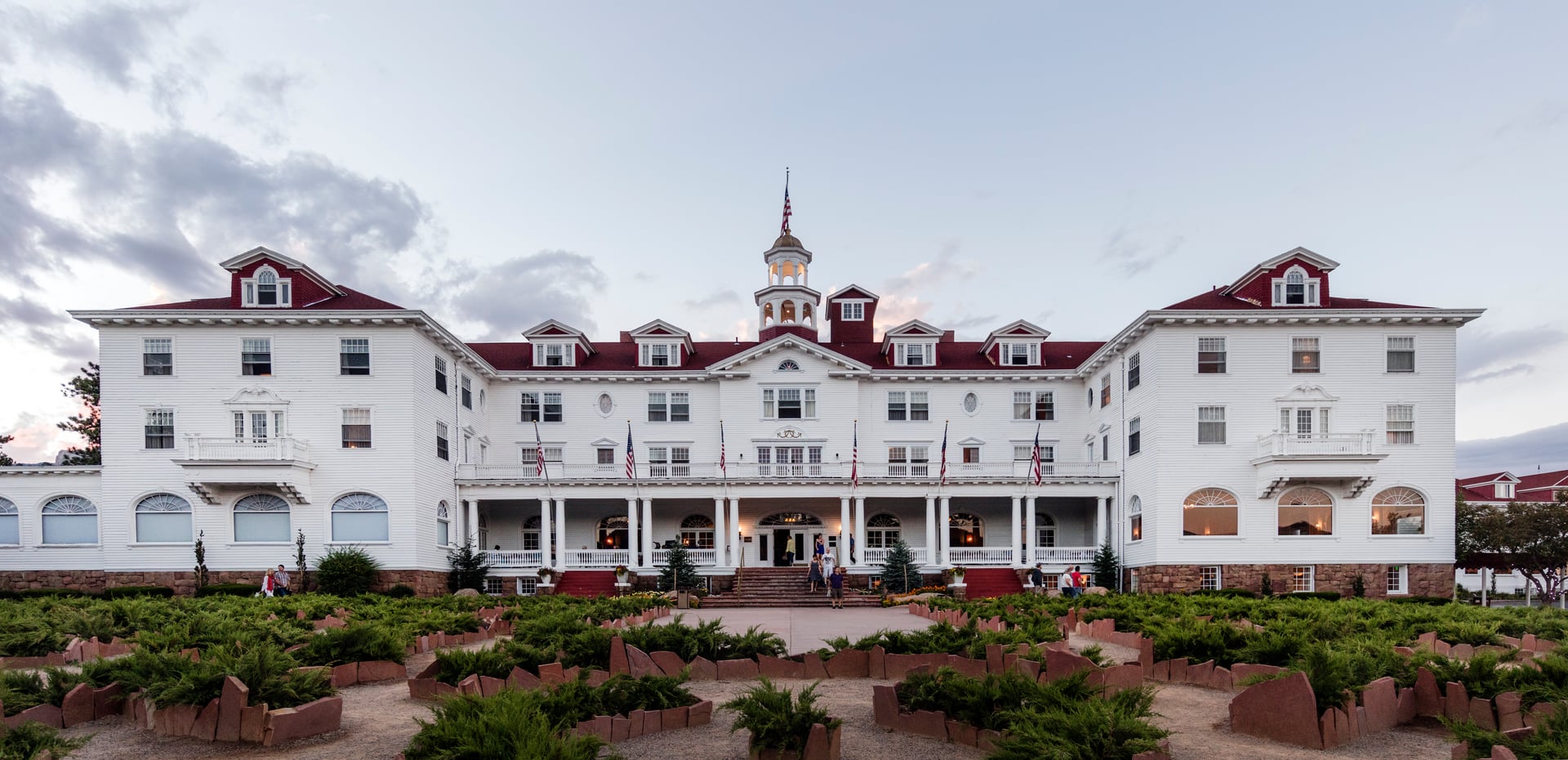
Murtaugh, ID

The Iron Rail Bar & Grill in Murtaugh, Idaho operates out of a building constructed around 1908, when the town served workers from the nearby Milner Dam irrigation project and the Union Pacific Railroad. For over a century the structure functioned as the community's central gathering point — saloon, message center, and occasional gambling hall during the region's agricultural development era.

$All AgesFamily: Moderate
Exterior of the WWII Brig building at Farragut State Park, Idaho
Photo coming soon
Museum / Historical Site

The Museum at the Brig, Farragut State Park

Athol, ID

The Brig at Farragut State Park is the only surviving building of the 776 structures that once made up the Farragut Naval Training Station, where nearly 300,000 sailors completed boot camp during World War II. Built in 1942 as the base detention center, it is listed on the National Register of Historic Places and operates seasonally as a museum.

$All AgesFamily: High
Concrete grain silos and brick warehouse buildings of the Twin Falls Milling and Elevator complex along Shoshone Street in downtown Twin Falls, Idaho
Photo coming soon
Other Dark Tourism Site

Twin Falls Brewing Company (Historic Milling District)

Twin Falls, ID

The Twin Falls Milling and Elevator Company built a three-story milling building on Shoshone Street in 1909 and added six concrete grain silos in 1915. The complex was at one point the largest flour mill in the Western United States between Denver and Portland. Operations closed in 1992, and the buildings are now part of a downtown redevelopment district.

FreeAll AgesFamily: High
Oh, snap!
Photo coming soon
Other Dark Tourism Site

Fourth Street Elementary School

Los Angeles, CA

Fourth Street Elementary School was established in 1926 in the East Los Angeles community. The school serves grades 2-5 and is operated by the Los Angeles Unified School District, currently enrolling approximately 287 students with a 17:1 student-teacher ratio.

FreeAll AgesFamily: Not Recommended
AMA Speedway Nationals Round-2 Victorville, CA  9-22-2013

MIKE FARIA!!!!!!!!!!!!!!!!!!!!!!
Photo coming soon
Outdoor / Natural Site

7th Street

Victorville, CA

7th Street is the heart of historic Route 66 in Victorville, California. Established as the primary thoroughfare through town when Route 66 was authorized in 1926, the street preserves mid-20th-century automobile culture with period buildings, museums, and iconic Route 66 landmarks including the California Route 66 Museum and the New Corral motel.

FreeAll AgesFamily: High
Bell Creek in channelized eastern section, looking upstream (west) from Topanga Canyon Boulevard in Canoga Park within the western San Fernando Valley, Los Angeles. Location is a long block west of the official start of the Los Angeles River, at Bell's confluence with Calabasas Creek.
Photo coming soon
Haunted Dining / Bar

Jack in the Box - Topanga Canyon

Canoga Park, CA

Jack in the Box operates as a fast food franchise location at 7264 Topanga Canyon Boulevard in Canoga Park, California. It functions as a standard quick-service restaurant with no documented historical significance beyond normal commercial operations.

$All AgesFamily: Not Recommended
Historic cemetery grounds with mature trees and manicured lawn
Photo coming soon
Cemetery / Burial Ground

Acacia Memorial Park

Modesto, CA

Acacia Memorial Park was established in 1872 as the Masonic Cemetery by Stanislaus Lodge #206 Free and Accepted Masons. The cemetery expanded in the 1920s through land acquisition from the Odd Fellows Cemetery, and was officially incorporated in 1917. It remains an endowment-funded burial property.

FreeAll AgesFamily: Moderate
Weathered nineteenth-century headstones on a grassy hillside in the Santa Lucia foothills west of Paso Robles, California
Photo coming soon
Cemetery / Burial Ground

Adelaida Cemetery

Paso Robles, CA

Adelaida Cemetery sits in the Santa Lucia foothills west of Paso Robles, California. The Adelaida district was settled in 1859 by sheep rancher James Lynch and grew into a community of mercury miners, farmers, and ranchers; the cemetery was established by Wesley Burnett in the late nineteenth century.

FreeAll AgesFamily: Moderate
Live Oak, CA, USA
Photo coming soon
Haunted Dining / Bar

Adolph's Restaurant

Santa Cruz, CA

Adolph's Restaurant operated as a Santa Cruz institution from 1939 onward, serving as a gathering place for judges, lawyers, and the local community. Located proximate to the Santa Cruz County Courthouse, the restaurant became a judicial landmark. The building itself dates to the 1800s and is steeped in the city's legal and commercial history.

$$All AgesFamily: Moderate
Agnews Insane Asylum administration building, Santa Clara, California — Mediterranean Revival campus from California Historic Sites
Asylum / Hospital

Agnews Historic Cemetery & Museum

Santa Clara, CA

Established in 1888 as the Great Asylum for the Insane, Agnews State Hospital became the site of California's largest single-event loss of life in the 1906 San Francisco earthquake, when the collapse of the main Kirkbride building killed 117 patients and staff. The institution operated in various forms until 2009; today a small museum and historic cemetery occupy a corner of what is now Oracle Corporation's Santa Clara campus.

FreeAll AgesFamily: Moderate
Alcatraz Federal Penitentiary main cellhouse exterior on Alcatraz Island, San Francisco Bay
Prison / Reformatory

Alcatraz Island

San Francisco, CA

Alcatraz Island served as a U.S. Army military fortification and prison from 1850 through 1933, then as a federal penitentiary housing the country's most dangerous and incorrigible inmates from 1934 until its closure in 1963. During its 29 years as a federal prison, 1,576 men served time on the island, including Al Capone and Robert Stroud, the so-called Birdman of Alcatraz.

$$All AgesFamily: Moderate
FedEx step van made by Xos, Inc. with a body made by Morgan Olson
Photo coming soon
Other Dark Tourism Site

Alhambra High School

Alhambra, CA

Alhambra High School is a public secondary institution in Alhambra, California, serving the local community. The school includes a 400-meter cinder track used for athletics programming and competitive events.

FreeAll AgesFamily: Not Recommended
Two-story Victorian bed and breakfast with white siding and wraparound veranda in Georgetown, California
Haunted Hotel / Inn

The Historic American River Inn

Georgetown, CA

The Historic American River Inn opened in 1853 in Georgetown, California, originally built as a private residence on the site of the Round Tent gambling establishment and directly above the Woodside Mine. The structure has served as a private home, a hotel, a miners' boarding house, and a tuberculosis sanitarium before becoming a bed and breakfast in 1984.

$$$All AgesFamily: High
Public concrete skate park with ramps and obstacles
Photo coming soon
Outdoor / Natural Site

Applegate Skate Park

Merced, CA

Applegate Skate Park is a public recreational skateboarding facility located in Merced, California. The concrete park serves the local skating community and casual park visitors with various ramps, obstacles, and skating surfaces.

FreeAll AgesFamily: Moderate
Amargosa Opera House and Hotel — 1925 Spanish Colonial Revival complex at Death Valley Junction, California
Haunted Hotel / Inn

Amargosa Opera House and Hotel

Amargosa, CA

Built 1923-25 by the Pacific Coast Borax Company as a company town hub featuring a 23-room hotel and theater. The U-shaped Spanish Colonial Revival complex served miners and company officials during the borax mining era. Since 1967, it has operated as a cultural venue and hotel.

$$All AgesFamily: Moderate
Historic Victorian-era commercial building on Main Street in Riverside
Photo coming soon
Other Dark Tourism Site

At the Villa

Riverside, CA

At the Villa occupied a historic building dating to circa 1890 at 3563 Main Street in Riverside, one block north of the Mission Inn. The building originally served as a bath house before being converted to an antiques store. The antiques business has since closed, though the building remains.

$All AgesFamily: Moderate
High school building with gymnasium and theater facilities
Photo coming soon
Other Dark Tourism Site

Baldwin Park High School

Baldwin Park, CA

Baldwin Park High School is a public secondary educational institution operated by the Baldwin Park Unified School District. The school includes basketball facilities and a stage used for theatrical performances and school events.

FreeAll AgesFamily: Not Recommended
Single-story rural saloon building with 19th-century signage and front porch
Photo coming soon
Haunted Dining / Bar

Banta Inn

Tracy, CA

Banta Inn opened in 1879 as a two-story saloon serving the small farming community of Banta, just east of Tracy, California. A 1937 fire destroyed the upper floor, after which the building was rebuilt as a single-story bar and restaurant that has operated continuously since.

$$All Ages in dining area; 21+ in barFamily: High
Three-story bell tower of the 1901 Mission Revival Elizabeth Bard Memorial Building in downtown Ventura
Photo coming soon
Other Dark Tourism Site

Elizabeth Bard Memorial Building

Ventura, CA

The Elizabeth Bard Memorial Building, originally Elizabeth Bard Memorial Hospital, was built in 1901 in downtown Ventura, California. Cephas L. Bard and his brother Thomas R. Bard funded its construction in memory of their mother, Elizabeth. The Mission Revival hospital opened in January 1902; Cephas Bard died there in April 1902 at age 56. It was added to the National Register of Historic Places in 1977.

FreeAll AgesFamily: High
Bard Mansion (Berylwood) — Thomas R. Bard's estate house in Port Hueneme, California
Haunted House / Historic Home

Bard Mansion

Port Hueneme, CA

Bard Mansion, also known as Berylwood, was constructed in 1912 by California Senator Thomas Bard as a family residence in Port Hueneme. The Spanish Colonial Revival structure remains a significant architectural landmark, now located within Naval Construction Battalion Center Port Hueneme. The mansion serves as the historical centerpiece of Port Hueneme's cultural heritage.

$$RestrictedFamily: Moderate
1856 Battery Point Lighthouse on its rocky tidal island off Crescent City, California, with cylindrical tower atop the keeper's house
Museum / Historical Site

Battery Point Lighthouse

Crescent City, CA

Battery Point Lighthouse is one of the oldest lighthouses on the California coast, first illuminated on December 10, 1856. The light station occupies a small tidal island accessible only at low tide via a rocky causeway from Crescent City. The lighthouse survived the catastrophic 1964 Alaska earthquake tsunami that destroyed much of the surrounding coastline.

$All Ages — tide-dependent accessFamily: High
Exterior of Bella Saratoga Victorian building on Big Basin Way in Saratoga Village, California
Photo coming soon
Haunted Dining / Bar

Bella Saratoga

Saratoga, CA

Bella Saratoga occupies a two-story Victorian home built in 1895 in the heart of Saratoga Village. The building previously served as the home of the Saratoga News, and before Bella Saratoga opened in 1993, housed another Italian restaurant. The 1895 structure is one of the older commercial buildings in the village.

$$$All AgesFamily: High
Main street of the silver-mining ghost town of Cerro Gordo, Looking E to mine dumps and Cerro Gordo Peak, Inyo County, CA, USA
Photo coming soon
Haunted House / Historic Home

Belshaw House

Keeler, CA

The Belshaw House was constructed in 1868 by Mortimer Belshaw, one of California's most prominent silver barons. Located within the Cerro Gordo ghost town, the structure represents the apex of 19th-century mining prosperity. Belshaw pioneered silver transportation from the mines, operating the Yellow Road toll road that connected mining operations to Los Angeles.

$All AgesFamily: Low
Historic 1885 mill building converted to theater
Theater / Performance Venue

Benicia Old Town Theater / Portuguese Hall

Benicia, CA

The building at 140 W J Street in downtown Benicia was constructed in 1885 as a working mill. The structure was later converted to cultural and community use, becoming the Portuguese Cultural Center and home to the Benicia Theatre Group, established in 1964. The venue serves as both an active performing arts center and a documented paranormal hotspot.

$$All AgesFamily: High
Gothic-Moorish Berkeley City Club (1930) at 2315 Durant Avenue, designed by California architect Julia Morgan.
Haunted Hotel / Inn

Berkeley City Club

Berkeley, CA

The Berkeley City Club was completed in 1930 to a design by Julia Morgan, commissioned by the Berkeley Women's City Club as a clubhouse, hotel, and social center for the city's professional women. It is listed on the National Register of Historic Places, is a California Historical Landmark, and is the rare Julia Morgan building that retains its original program as both private club and small hotel.

$$$All AgesFamily: High
The California Aqueduct as it emerges Bethany Reservoir in eastern Alameda County, California.

A part of the California State Water Project system infrastructure.
Outdoor / Natural Site

Bethany Reservoir

Tracy, CA

Bethany Reservoir is a public recreation area operated by California State Parks near Tracy in San Joaquin County. The reservoir provides water recreation facilities including fishing, boating, and hiking opportunities for the public.

$All AgesFamily: Low
The Corner Market
Photo coming soon
Haunted Dining / Bar

Big Yellow House Restaurant

Summerland, CA

The Big Yellow House was constructed in the late 1800s by H.L. Williams, founder of Summerland. Originally built as a private residence, the structure was converted to an upscale restaurant by John and June Young in the early 1970s. The building remains a visible landmark from Highway 101, though the restaurant has closed.

$$All AgesFamily: Moderate
Billy Jones Wildcat Railroad
Other Dark Tourism Site

Billy Jones Wildcat Railroad & Bill Mason Carousel

Los Gatos, CA

Billy Jones Wildcat Railroad and Bill Mason Carousel are historic amusement park attractions in Los Gatos, California. The carousel and miniature railroad represent classic American amusement park heritage.

$$All AgesFamily: High
Photo of Birmingham High School
Photo coming soon
Other Dark Tourism Site

Birmingham High School

Los Angeles, CA

Birmingham High School is built on the site of a World War II military hospital that served injured and amputee servicemen. Named after General Birmingham, the facility treated wounded soldiers throughout the war. After WWII, the building was renovated and converted to educational use as a public high school.

FreeAll AgesFamily: Moderate
Goodyear blimp flying low over Torrance and Redondo Beach. Photo taken from Hopkins Wilderness park in Redondo Beach.
Photo coming soon
Other Dark Tourism Site

Bishop Montgomery High

Torrance, CA

Bishop Montgomery High is a private Catholic secondary school in Torrance, California. The school operates as a religious educational institution administered by the Catholic Church.

$All AgesFamily: Not Recommended
Mountain road in Shasta County Cascade foothills
Photo coming soon
Outdoor / Natural Site

Black Ranch Road

Burney, CA

Black Ranch Road is an isolated mountain road in the Burney area of Shasta County, California, located in the forested Cascade foothills approximately 50 miles northeast of Redding. The road passes through rural terrain with historical significance to the region's settlement patterns and transportation routes.

FreeAll AgesFamily: Moderate
The Black Star Canyon Road, Santa Ana Mountains, Orange County, Southern California.
California chaparral and woodlands habitat, with California Sycamore trees in backround (Platanus racemosa).
Photo coming soon
Outdoor / Natural Site

Black Star Canyon

Silverado, CA

Black Star Canyon occupies remote terrain within the Santa Ana Mountains of eastern Orange County. Historical significance derives from archaeological evidence of Tongva-Gabrieliño occupation and the reported 1831 armed conflict between American fur trappers led by William Wolfskill and indigenous residents. The canyon was historically used as a seasonal gathering site for acorn harvesting.

$All AgesFamily: Low
Blue Sky Lodge historic inn in Carmel Valley
Photo coming soon
Haunted Hotel / Inn

Blue Sky Lodge

Carmel Valley, CA

Blue Sky Lodge was established in 1952 as a family-owned inn in Carmel Valley, California. The lodge operated continuously for over seven decades as a small, independently-run hospitality business. The property has closed as of 2026, though it remains historically significant as a mid-century lodging establishment.

$$$All AgesFamily: High
This is a photo of a place or building that is listed on the California Historical Landmark listing in the United States. Its reference number is
Photo coming soon
Battlefield / Military Site

Bluff Road

Montebello, CA

The site of Bluff Road and Washington Boulevard in Montebello marks the location of the Battle of Río San Gabriel (January 8, 1847), a key engagement during the Mexican-American War. Approximately 500 Mexican forces under General José María Flores were positioned on bluffs overlooking the San Gabriel River when American forces under Captain Robert F. Stockton and General Stephen W. Kearney attacked. The battle ended in a Mexican defeat and was strategically significant in the American military campaign for California.

FreeAll AgesFamily: Moderate
Wooden grave markers and headstones of Bodie Cemetery on a sage-covered hillside above the ghost town in Mono County, California
Photo coming soon
Cemetery / Burial Ground

Bodie Cemetery

Bodie, CA

Bodie Cemetery serves the ghost town of Bodie, California, a Gold Rush boomtown that peaked at 10,000 residents in 1879-1880 before collapsing within a decade. The burial ground holds miners, families, and children lost to disease, accident, and frontier violence at 8,375 feet in the Sierra Nevada.

$All AgesFamily: Moderate
Weathered wooden county barn at Bodie State Historic Park, a preserved 1880s Gold Rush ghost town in Mono County, California
Outdoor / Natural Site

Bodie State Historic Park

Bodie, CA

Bodie was a Gold Rush boomtown that grew from a small camp to over 10,000 residents between 1876 and 1880, then collapsed within a decade as the ore played out. California State Parks now preserves approximately 110 surviving buildings in a condition called arrested decay — stabilized but not restored.

$All AgesFamily: Moderate
Open Graph image from www.gilroygardens.org
Theatrical Haunted Attraction

Gilroy Gardens

Gilroy, CA

Gilroy Gardens opened to the public on June 15, 2001, founded by Michael and Claudia Bonfante following their sale of the Nob Hill Foods supermarket chain. The park was built over 25 years on property originally developed as Tree Haven, a commercial nursery. The name changed to Gilroy Gardens in February 2007.

$$$All AgesFamily: High
Tudor Revival 'castle' Bowles Hall (1929), the first state-supported residence hall in California, UC Berkeley.
Other Dark Tourism Site

Bowles Hall

Berkeley, CA

Bowles Hall opened in 1929 as the first state-supported residence hall in California, funded by a bequest from Mary McNear Bowles in memory of her husband Philip E. Bowles. Designed by George W. Kelham in a Tudor Revival 'castle' style, it housed an all-male residence community until 2005 when it was converted to co-educational use. After a major restoration completed in 2016 it reopened as Bowles Hall Residential College.

FreeAll AgesFamily: Moderate
Open Graph image from www.brookdalelodge.com
Haunted Hotel / Inn

Brookdale Lodge

Boulder Creek, CA

Brookdale Lodge opened in the early 1900s as a creek-side resort under James Harvey Logan, creator of the loganberry and Santa Cruz County judge. By the Prohibition era, the property hosted organized crime figures and operated as a speakeasy. The resort achieved peak popularity in the 1950s-60s, hosting Hollywood celebrities and international dignitaries before financial decline.

$$$All AgesFamily: Moderate
The Monterey sky lights up as the sun sets of the CSUMB campus.
Other Dark Tourism Site

Cal State Monterey Bay

Seaside, CA

California State University, Monterey Bay is a public university in Seaside, California with reported paranormal activity on campus.

FreeAll Ages (College campus)Family: High
Calexico High School exterior building in Calexico California
Museum / Historical Site

Calexico High School

Calexico, CA

Calexico High School operates as a secondary educational institution in the border community of Calexico, California. The school lost a student—a cheerleader—in an automobile accident while returning from an away football game.

FreeRestricted - Active SchoolFamily: Moderate
Open Graph image from parks.sbcounty.gov
Outdoor / Natural Site

Calico Ghost Town

Yermo, CA

Calico was founded in 1881 as a silver mining boomtown in the Mojave Desert. The Silver King Mine became California's largest silver producer, generating 70% of the state's silver output during the mid-1880s. The town achieved peak prosperity before declining as silver prices collapsed.

$$All AgesFamily: Moderate
California Baptist University W.E. James Building exterior
Photo coming soon
Museum / Historical Site

California Baptist University

Riverside, CA

California Baptist University occupies the site of former institutional buildings. The W.E. James Building was originally The New Homes of Woodcraft—a retirement and care home for elderly members of a fraternal organization, purchased by California Baptist University in 1954. Underground tunnel systems exist beneath the campus, historically used for storage.

FreeAll AgesFamily: Moderate
Samuelson Chapel spire at California Lutheran University in Thousand Oaks
Haunted Hotel / Inn

California Lutheran University

Thousand Oaks, CA

Mount Clef Hall is a dormitory at California Lutheran University in Thousand Oaks, built in 1961. Local legend claims the dorm was constructed on the site of a former hotel where a small child was murdered.

FreeStudents/ResidentsFamily: Low
California Theatre of the Performing Arts Churrigueresque facade in San Bernardino California
Theater / Performance Venue

California Theatre of the Performing Arts

San Bernardino, CA

The California Theatre opened August 15, 1928, as a Fox West Coast vaudeville and movie palace designed by architect John Paxton Perrine in California Churrigueresque style. Home to the Mighty Wurlitzer organ, it screened classics like King Kong and The Wizard of Oz in the 1930s. Most notably, Will Rogers gave his final public performance here on June 28, 1935, just weeks before his fatal plane crash in Alaska.

$$All AgesFamily: High
Yosemite National Park, United States
Photo coming soon
Outdoor / Natural Site

Camp 6

Yosemite National Park, CA

Camp 6, formerly known as Camp Tresidder, operated as employee housing for Yosemite National Park staff and concessionaire workers. Located south of Yosemite Village along the Merced River, it consisted of tent cabin structures housing approximately 80 employees. The camp was destroyed in the catastrophic 1997 Yosemite Valley flood and has since been converted to a day-use parking facility.

$All AgesFamily: High
Camp Far West Lake shoreline and surrounding oak woodland landscape
Outdoor / Natural Site

Camp Far West Lake

Wheatland, CA

The area surrounding Camp Far West Lake holds significant Nisenan (Southern Maidu) historical importance. The Nisenan inhabited the region from the Sacramento Valley into the Sierra Nevada, spanning modern Placer, Nevada, Yuba, Sacramento, and El Dorado counties before European contact. Camp Far West was established as a military post in 1849 to manage conflicts between indigenous populations and gold-rush settlers, though it ultimately could not prevent the decimation of the Nisenan people.

$All AgesFamily: High
Eighteen-room Victorian Carson Mansion (1886), Queen Anne / Eastlake / Stick redwood lumber-baron home in Eureka, California.
Haunted House / Historic Home

Carson Mansion (Ingomar Club)

Eureka, CA

Built 1884-1886 for redwood-lumber baron William Carson, the 18-room Victorian combines Queen Anne, Eastlake, Stick, and Italianate elements with a four-story tower overlooking Humboldt Bay. Since 1950 it has been the private clubhouse of the Ingomar Club. It is widely cited as a visual inspiration for Disney's Haunted Mansion and the silhouette image of the American haunted house.

FreeAll AgesFamily: High
The castle-themed central building at Castle Park amusement park in Riverside, California.
Photo coming soon
Theatrical Haunted Attraction

Castle Park (Riverside)

Riverside, CA

Castle Park opened in 1976 in Riverside, California, as a 25-acre family entertainment center centered on a castle-themed building housing a two-level arcade and an outdoor miniature golf course. The park later added rides and a seasonal Halloween event known as Castle Dark.

$$All AgesFamily: Moderate
A B-29 Superfortress on outdoor display at Castle Air Museum in Atwater, California
Photo coming soon
Museum / Historical Site

Castle Air Museum

Atwater, CA

Castle Air Museum opened in 1981 on the grounds of the former Castle Air Force Base in Atwater, California. Its collection includes more than 80 military aircraft, with the centerpiece being the B-29 Superfortress 'Raz'n Hell,' assembled from three separate airframes and bearing the same model designation as the Enola Gay and Bockscar.

$$All AgesFamily: High
Chateau Marmont French chateau-style hotel facade on Sunset Boulevard in Hollywood
Haunted Hotel / Inn

Chateau Marmont

Los Angeles, CA

The Chateau Marmont was built in 1929 as a Norman castle-styled apartment building on the Sunset Strip in West Hollywood, California. It became a hotel and quickly established its reputation as Hollywood's most discreet celebrity refuge. John Belushi died in Bungalow 3 on March 5, 1982, from a cocaine and heroin overdose administered by Cathy Smith, who later pleaded guilty to manslaughter.

$$$$All Ages (adult atmosphere)Family: Low
Tudor Revival Claremont Hotel (1915) with 160-foot central tower in the Berkeley Hills above Oakland, California.
Haunted Hotel / Inn

Claremont Resort & Club

Berkeley, CA

The Claremont Hotel opened on May 3, 1915 in time for the Panama-Pacific International Exposition. Designed by architect Charles W. Dickey for the Realty Syndicate of 'Borax' Smith and Frank Havens, it was built in Tudor Revival style with a 160-foot central tower that is among the world's tallest wooden buildings. The site previously held a castle-like estate built by Bill Thornburg that burned in 1901.

$$$$All AgesFamily: High
Clarke Historical Museum exterior, a 1911 Classical Revival former bank in Old Town Eureka, California
Photo coming soon
Museum / Historical Site

Clarke Historical Museum

Eureka, CA

Constructed in 1911 as the joint home of the Bank of Eureka and the Savings Bank of Humboldt, the Classical Revival building was designed by prominent San Francisco architect Albert Pissis. Since 1960 it has housed the Clarke Historical Museum, founded by Cecile Clarke. It is listed on the National Register of Historic Places.

FreeAll AgesFamily: High
Coleman Mansion (Big Building) at Peninsula School in Menlo Park, California
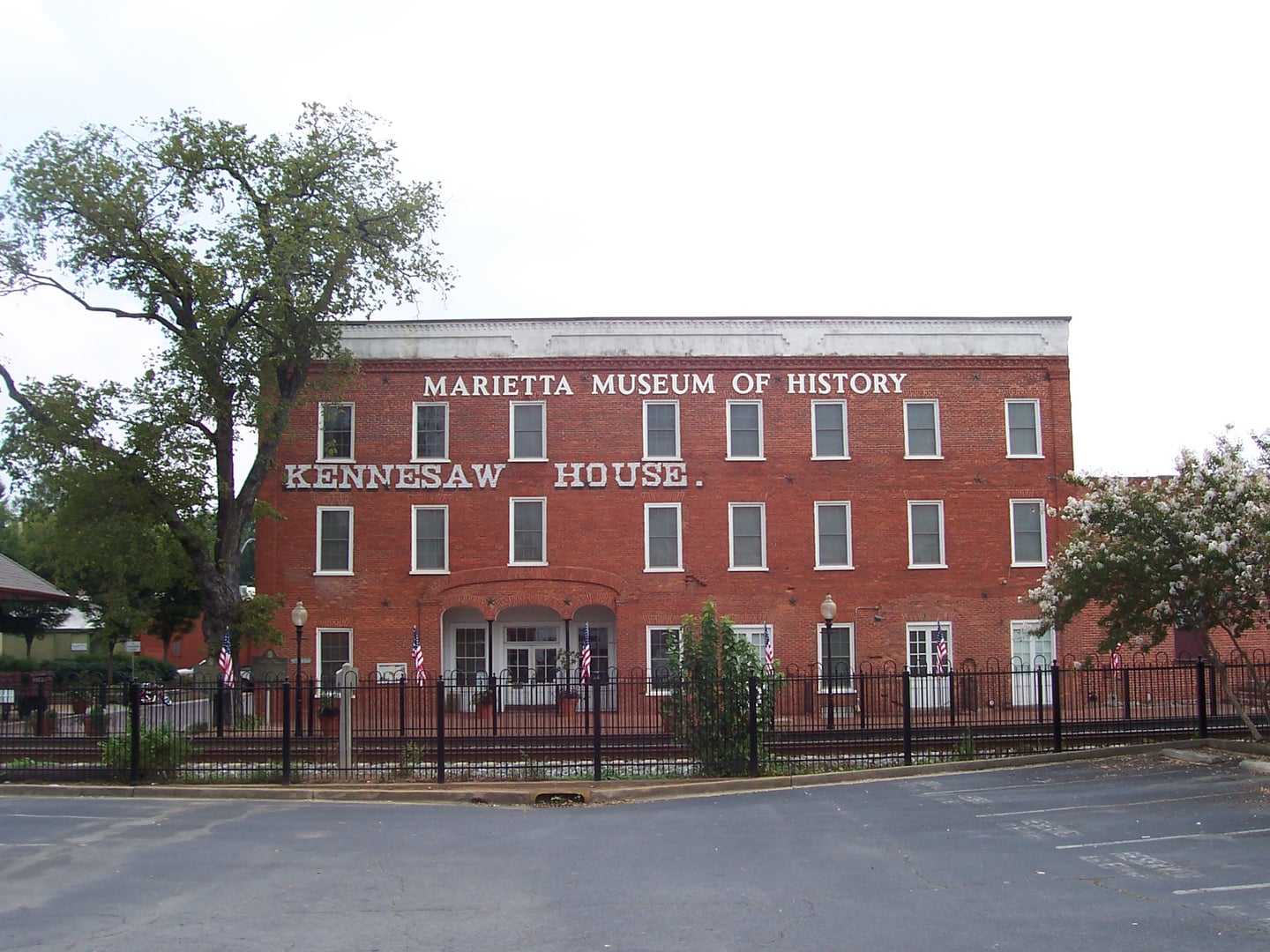
Photo coming soon
Haunted House / Historic Home

Coleman Mansion (Peninsula School)
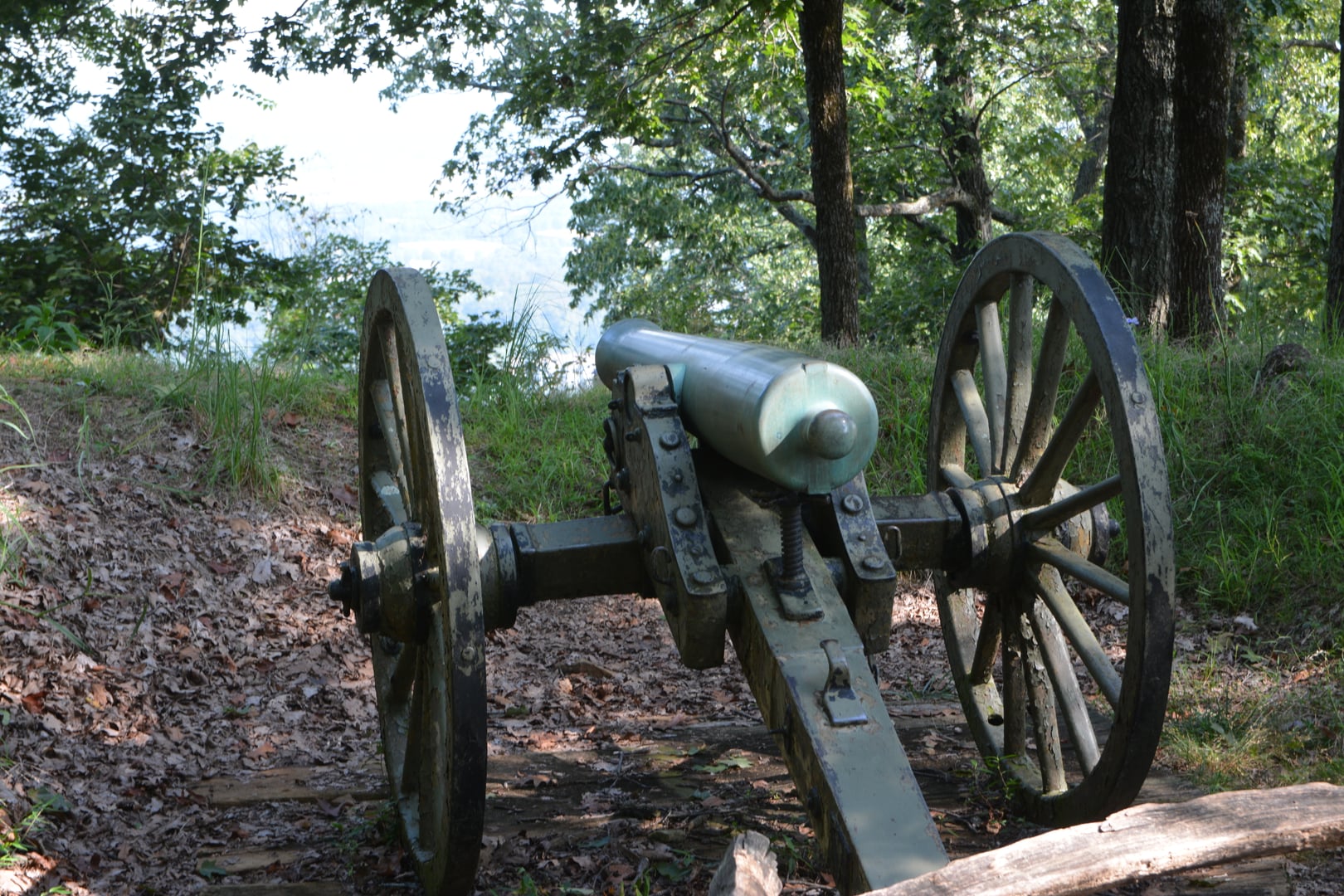
Menlo Park, CA

The Coleman Mansion was completed in 1882 in Menlo Park, California, designed by architect Augustus Laver as a wedding gift commissioned by Maria O'Brien Coleman for her son James and his bride Carmelita. The mansion has housed Peninsula School since 1929.

FreeAll AgesFamily: High
San Joaquin County Courthouse in downtown Stockton, California
Photo coming soon
Other Dark Tourism Site

San Joaquin County Courthouse (Stockton)

Stockton, CA

The San Joaquin County Courthouse in Stockton is the third on its downtown site. The building visitors see today is a 13-story, 301,000-square-foot facility that opened in 2017, replacing a mid-century modernist courthouse from 1964 that itself replaced an 1890 domed courthouse designed by Elijah E. Myers.

FreeAll AgesFamily: Moderate
Crocker Art Museum historic and modern buildings entrance in Sacramento California
Museum / Historical Site

Crocker Art Museum

Sacramento, CA

Judge Edwin B. Crocker purchased the corner property on O and Third Streets in Sacramento in 1868 and completed the gallery building in 1872, constructing a private museum to house his collection of more than 700 European paintings and thousands of drawings. After his death in 1875, his wife Margaret Eleanor Crocker donated the gallery and its entire collection to the City of Sacramento in 1885 — making it the first public art museum west of the Mississippi River.

$$All AgesFamily: High
Marquee and Renaissance Revival facade of the 1922 Curran Theatre at 445 Geary Street in San Francisco's Theater District
Theater / Performance Venue

Curran Theatre

San Francisco, CA

The Curran Theatre opened in 1922 on Geary Street in San Francisco's Theater District. The 1,667-seat venue has served as a touring Broadway house for over a century. In November 1933, treasurer Hewlett G. Tarr was shot and killed during a box-office robbery before a performance of Show Boat.

$$$All AgesFamily: High
Cypress Park Branch Library on Cypress Avenue, a branch of the Los Angeles Public Library system in Los Angeles, California.
Other Dark Tourism Site

Cypress Park Branch Library

Los Angeles, CA

The Cypress Park neighborhood of Los Angeles has been served by a public library branch since 1920. The original branch building — a Georgian Revival structure designed by architect Harry S. Bent — opened in 1927 at the corner of Cypress Avenue and Pepper Street. The current branch at 1150 Cypress Avenue opened in 2003. The 1927 building was added to the National Register of Historic Places in 1987 and now operates as the Cypress Park Clubhouse.

FreeAll AgesFamily: High
The Santa Margarita River bridge at De Luz Road in northern San Diego County, California
Photo coming soon
Outdoor / Natural Site

Santa Margarita River Bridge at De Luz

Fallbrook, CA

The Santa Margarita River at De Luz Road in northern San Diego County sits within territory crossed during the California Gold Rush. The river corridor carries documented local history of multiple unexplained incidents, and the De Luz Road bridge has accumulated folklore spanning from the mid-19th century to the early 20th century.

FreeAll AgesFamily: Moderate
Founders Memorial Park in Whittier, California, with the central monument listing the names of those originally buried in the former cemeteries.
Photo coming soon
Outdoor / Natural Site

Founders Memorial Park (Dead Man's Park)

Whittier, CA

Founders Memorial Park in Whittier, California, occupies the site of two former cemeteries — the Quaker-founded Broadway Cemetery and the Jewish Mount Sinai Cemetery. After both fell into disrepair through the mid-twentieth century, Whittier converted the property into a public park in 1968, removing headstones while leaving most burials in place.

FreeAll AgesFamily: High
Restored wetlands at DeForest Park along the Los Angeles River in Long Beach, California
Photo coming soon
Outdoor / Natural Site

DeForest Park Nature Trail

Long Beach, CA

DeForest Park is a 50-acre Long Beach city park along the Los Angeles River with a 34-acre restored wetlands and riparian forest. The restoration project began in 2001 and the restored wetlands opened to the public on June 30, 2018, connecting to the LA River Bikeway.

FreeAll AgesFamily: High
Del Rey Cemetery in Fresno County, California, a small rural burial ground in the San Joaquin Valley
Photo coming soon
Cemetery / Burial Ground

Del Rey Cemetery

Del Rey, CA

Del Rey Cemetery in Fresno County is part of the Sanger/Del Rey Cemetery District, which administers burial grounds in the southern San Joaquin Valley. The district originated with the Sanger Cemetery established near the town of Centerville in the mid-1850s. The Del Rey Cemetery District was annexed into the Sanger district in 1991.

FreeAll AgesFamily: High
The Indiana-limestone facade and courtyard of Greystone Mansion in Beverly Hills, with formal gardens in the foreground
Haunted House / Historic Home

Greystone Mansion (Doheny Estate)

Beverly Hills, CA

Greystone Mansion, also known as the Doheny Estate, is a 55-room Tudor Revival home completed in 1928 in Beverly Hills, designed by Gordon Kaufmann for oil heir Edward 'Ned' Doheny Jr. Ned Doheny died in the house in a February 1929 murder-suicide alongside his secretary Hugh Plunkett. The City of Beverly Hills purchased the estate in 1965, and it has been a public park since 1971.

FreeAll AgesFamily: High
The 1826 adobe ranch house at Dominguez Rancho Adobe Museum, Rancho Dominguez area, Los Angeles County, California
Museum / Historical Site

Dominguez Rancho Adobe Museum

Rancho Dominguez, CA

The Dominguez Rancho Adobe Museum occupies the 1826 adobe ranch house of Manuel Dominguez, on land first granted to his uncle Juan Jose Dominguez by King Carlos III of Spain in 1784. The 75,000-acre Rancho San Pedro was the earliest Spanish land grant in California. The site was the location of the 1846 Battle of Dominguez Rancho.

$All AgesFamily: High
Exterior of the historic 1852 Dorrington Hotel along Highway 4 in California's Sierra Nevada
Haunted Hotel / Inn

The Dorrington Hotel

Dorrington, CA

The Dorrington Hotel was built in 1852 by John and Rebecca Dorrington Gardner as a stage stop on the Big Trees Carson Valley Road in California's Sierra Nevada. The town surrounding the hotel was named after Rebecca's maiden name when its post office opened in 1902, and the hotel and restaurant continue to operate today.

$$$All AgesFamily: High
Downieville River Inn & Resort along the North Yuba River
Haunted Hotel / Inn

Downieville River Inn & Resort

Downieville, CA

The Downieville River Inn & Resort sits at 121 River Street on the banks of the North Yuba River in the Sierra Nevada town of Downieville, an 1850s Gold Rush settlement now within the Tahoe National Forest. The property previously operated as a boarding house before its conversion to a riverside inn with rooms, cottages, gardens, and a pool.

$$$All AgesFamily: Moderate
Exterior of the Clayton Club Saloon at 6096 Main Street, Clayton, California
Photo coming soon
Haunted Dining / Bar

Clayton Club Saloon

Clayton, CA

The Clayton Club Saloon at 6096 Main Street in Clayton, California occupies a building first put up by Jacob Rhine around 1873 and later expanded by Carl Berendsen in 1905, who renamed it the Clayton Club and incorporated a structure shipped from San Francisco to Martinez and onward to Clayton.

$$21+ in bar areasFamily: Low
Open Graph image from www.elcompadrerestaurant.com
Haunted Dining / Bar

El Compadre Restaurant

Los Angeles, CA

El Compadre Restaurant has operated on Sunset Boulevard in Hollywood since 1975, founded by lifelong friends and designed to evoke an old-world hacienda aesthetic. The interior features traditional Mexican decorative elements including clay tiles, wrought iron, and stained glass. The restaurant has maintained a continuous presence on Sunset Boulevard for five decades.

$$All AgesFamily: High
Montecillo de Leo Politi hilltop view inside Elysian Park, the wooded 600-acre park north of downtown Los Angeles
Outdoor / Natural Site

Elysian Park

Los Angeles, CA

Elysian Park is Los Angeles's oldest public park, established in 1886 on approximately 600 acres of hillside north of downtown. The Chavez Ravine neighborhoods within the park's broader footprint were displaced beginning in the late 1940s and 1950s for public housing that was never built, and ultimately for Dodger Stadium. Cathedral High School occupies a former cemetery site.

FreeAll AgesFamily: Moderate
Four-story Elizabethan Tudor Revival Eureka Inn (1922) covering a full city block of downtown Eureka, California.
Haunted Hotel / Inn

Eureka Inn

Eureka, CA

The Eureka Inn opened in 1922 as a four-story, 104-room Elizabethan Tudor Revival hotel covering a full city block of downtown Eureka. It was listed on the National Register of Historic Places in February 1982 and now operates as Eureka Inn, Trademark Collection by Wyndham.

$$All AgesFamily: High
Victorian exterior of the Historic Eagle House on the corner of 2nd and C Streets in Old Town Eureka, California
Haunted Hotel / Inn

Historic Eagle House (The Inn at 2nd & C)

Eureka, CA

The Eagle House was built in 1888 by Finnish immigrants Henry and Elvira Tornroth as a hotel and restaurant on the corner of 2nd and C Streets in Eureka's Old Town, serving sailors, loggers, and merchants arriving at Humboldt Bay. The building is an intact example of commercial Victorian architecture on the Northern California coast, now operating as a 23-room boutique hotel and restaurant.

$$All AgesFamily: Moderate
The historic Bernard Maybeck-designed Faculty Club building at UC Berkeley
Haunted Hotel / Inn

Faculty Club at UC Berkeley

Berkeley, CA

The Faculty Club at UC Berkeley was established in 1902 as a gathering space for university faculty. Henry Morse Stephens, chair of the History Department, lived in the west wing of the Club for over two decades, using Room 219 as his residence until his death on April 16, 1919. At the time of his death, Stephens had been compiling over 800 personal accounts of the 1906 San Francisco earthquake — a project that remained unfinished.

$$All AgesFamily: High
Open Graph image from www.parks.ca.gov
Haunted Hotel / Inn

Fallon House Theatre & Hotel

Columbia, CA

The Fallon House Hotel was built in 1859 by Irish stone cutter Owen Fallon in Columbia, California, at the heart of the Mother Lode's most prosperous placer mining district. Fallon expanded the property in 1863, and the associated theater became a social hub for miners and merchants. The original structure burned and was rebuilt; the current building is an authentically restored replica within Columbia State Historic Park, administered by California State Parks.

$$All AgesFamily: High
Exterior of the historic Hotel Figueroa in downtown Los Angeles
Haunted Hotel / Inn

Hotel Figueroa

Los Angeles, CA

Hotel Figueroa opened in 1926 in downtown Los Angeles as a YWCA-financed residence and hostelry for women, the largest of its kind operated by women in the United States at the time. After decades as a budget hotel and an early-2000s overhaul, the property was restored in 2018 and now operates as a Hyatt Unbound Collection boutique hotel.

$$$All AgesFamily: Moderate
Forest Lawn Memorial Park Hollywood Hills seen from Griffith Park with Burbank in the background
Cemetery / Burial Ground

Forest Lawn Memorial Park (Hollywood Hills)

Los Angeles, CA

Forest Lawn Memorial Park, Hollywood Hills, opened on March 4, 1952, on land owned by Hubert Eaton, founder of the larger Forest Lawn cemetery group. The cemetery contains burials of many Hollywood entertainment figures and features the largest historical glass-tile mural in the United States, depicting twenty-five scenes from early American history.

FreeAll AgesFamily: High
The surviving 19th-century hospital building at Fort Humboldt State Historic Park, on a bluff above Humboldt Bay
Photo coming soon
Battlefield / Military Site

Fort Humboldt State Historic Park

Eureka, CA

Fort Humboldt was established in 1853 by the U.S. 4th Infantry on a bluff overlooking Humboldt Bay in Eureka, California. The post served as a base for federal troops during the conflicts between settlers and the region's Indigenous tribes, and was briefly the assignment of Captain Ulysses S. Grant. The fort closed in 1870; the surviving hospital building anchors today's California State Historic Park.

FreeAll AgesFamily: High
Hillside trail and chaparral landscape of Galster Wilderness Park in West Covina, California
Photo coming soon
Outdoor / Natural Site

Galster Wilderness Park

West Covina, CA

Emil and Gladys Galster donated 42 acres on the north slope of the San Jose Hills to the City of West Covina in 1971, stipulating that the land remain a wilderness park available for educational use by scouting organizations. The park is operated by the San Gabriel Mountains Regional Conservancy in partnership with the city. The nature center building is largely closed; trails remain open daily.

FreeAll AgesFamily: Moderate
A Dunkin' sign in Bakersfield, California
Photo coming soon
Outdoor / Natural Site

Garces Memorial Circle

Bakersfield, CA

Garces Memorial Circle in Bakersfield commemorates Father Francisco Garces (1738–1781), a Franciscan missionary who crossed the Kern River in 1776 as the first European explorer recorded in the territory. The circle was built by the Division of Highways in 1935, and the 22-foot limestone statue was sculpted by New Deal artist John Palo-Kangas in 1939 under the Federal Art Project. The site is California State Historical Landmark No. 277.

FreeAll AgesFamily: High
Shadows in the late afternoon.
Photo coming soon
Haunted Dining / Bar

Gay Nineties Pizza

Pleasanton, CA

Gay Nineties Pizza occupies an 1864 building on Main Street in Pleasanton, one of the oldest commercial structures in the city. Originally a general store, bar, and Wells Fargo stagecoach stop with 10 rooms for travelers, the upper floor later housed a brothel. Chinese railroad laborers excavated underground tunnels connecting the building to the nearby Pleasanton Hotel. The restaurant has operated at this location for over 65 years.

$$All AgesFamily: High
The two-story wood-frame facade of the Georgetown Hotel & Saloon on Main Street in Gold Country California
Haunted Hotel / Inn

Georgetown Hotel & Saloon

Georgetown, CA

The Georgetown Hotel & Saloon was built in 1852 in the El Dorado County Gold Rush town of Georgetown, California, and has operated as a hotel and bar continuously since. Eleven historic guest rooms remain in service above a working saloon and restaurant on Main Street.

$$$21+ in saloon; rooms welcome all agesFamily: Moderate
scholars lane
Photo coming soon
Outdoor / Natural Site

Scout Island, Lake Yosemite

Merced, CA

Scout Island is a small island in Lake Yosemite, a reservoir operated by Merced County in the San Joaquin Valley. The lake has a documented history of drowning deaths, including a 2023 fatality during a Fourth of July celebration. Scout Island serves as an overnight outdoor education facility for youth and scouting groups.

$All AgesFamily: High
Panoramic view of Griffith Park toward Mount Lee and the Hollywood Sign, Los Angeles, California
Outdoor / Natural Site

Griffith Park

Los Angeles, CA

Griffith Park covers 4,310 acres in the eastern Santa Monica Mountains and is one of the largest municipal parks in North America. The land was originally part of the Spanish-era Rancho Los Feliz, granted in 1795, and was donated to the City of Los Angeles in 1896 by Griffith J. Griffith.

FreeAll AgesFamily: High
Historic Beer Tower
Haunted Dining / Bar

Hangman's Tree Ice Cream Saloon

Placerville, CA

Placerville, California, earned the name Hangtown during the California Gold Rush after a large white oak in the town center served as a vigilante execution site from 1849 to 1853. The tree was cut down in 1853, but the stump remained beneath a two-story building constructed in 1895 over the same lot. The site is California Historical Landmark No. 141. The Hangman's Tree Ice Cream Saloon opened at this address in 2017.

$All AgesFamily: High
Open Graph image from happyhollow.org
Outdoor / Natural Site

Happy Hollow Park & Zoo

San Jose, CA

Happy Hollow Park & Zoo opened in 1961 in San Jose's Kelley Park, operated by the City of San Jose. The 16-acre facility includes a small amusement park and a zoo with an emphasis on endangered species native to North and South America. A creek running behind the baby animal zoo section is associated with the figure of a woman in a short red dress, believed in local lore to have been murdered there in the 1970s.

$$All AgesFamily: High
The duck pond and wetland of Ken Malloy Harbor Regional Park near the Los Angeles Harbor
Photo coming soon
Outdoor / Natural Site

Ken Malloy Harbor Regional Park

Harbor City, CA

Ken Malloy Harbor Regional Park — known locally as Harbor Park — sits at the junction of Wilmington, San Pedro, and Harbor City, half a mile from the Los Angeles Harbor. The park is the third-largest in the City of Los Angeles and preserves one of the only remaining coastal-Los Angeles wetland environments. The land was historically a meeting point of Dominguez, Sepulveda, and Machado holdings and included Gabrielino-Tongva village sites.

FreeAll AgesFamily: High
Beaux-Arts Hearst Memorial Mining Building (1907) by John Galen Howard at UC Berkeley, funded by Phoebe Hearst.
Other Dark Tourism Site

Hearst Memorial Mining Building

Berkeley, CA

The Hearst Memorial Mining Building was completed in 1907 to a design by university architect John Galen Howard. It was funded by Phoebe Apperson Hearst as a memorial to her husband, Senator George Hearst, who made his fortune in mining. The Beaux-Arts building remains the central facility for UC Berkeley's Department of Materials Science and Engineering.

FreeAll AgesFamily: High
Entrance gates to Hollywood Forever Cemetery on Santa Monica Boulevard in Los Angeles, California
Cemetery / Burial Ground

Hollywood Forever Cemetery

Los Angeles, CA

Hollywood Forever Cemetery is a 62-acre cemetery at 6000 Santa Monica Boulevard in Hollywood, California, founded in 1899 as Hollywood Cemetery on a 100-acre tract of former farmland. Paramount Pictures' studios occupy 40 acres of the original cemetery property. The cemetery was renamed Hollywood Memorial Park in 1939 and Hollywood Forever in 1998 after a 1990s bankruptcy and revival. The property is listed on the National Register of Historic Places.

FreeAll AgesFamily: High
Forecourt entrance of Grauman's (TCL) Chinese Theatre on Hollywood Boulevard in Hollywood, California
Theater / Performance Venue

Hollywood Mann's Chinese Theatre

Hollywood, CA

Sid Grauman opened the Chinese Theatre on Hollywood Boulevard on May 18, 1927, with the premiere of Cecil B. DeMille's The King of Kings. Built at a cost of approximately $2 million, the theatre features Chinese pagoda architecture, imported temple bells, and the famous forecourt where over 300 celebrities have pressed their hands and feet into wet concrete. Now operating as TCL Chinese Theatre under current ownership, it remains one of the most visited film venues in the United States.

$$All AgesFamily: High
Open Graph image from griffithobservatory.org
Outdoor / Natural Site

Hollywood Sign and Griffith Observatory

Los Angeles, CA

The Hollywoodland sign was erected in 1923 as a real estate advertisement for a hillside development. The word 'LAND' was removed in 1949 when the city took ownership. On September 16, 1932, actress Peg Entwistle climbed to the top of the 'H' and jumped, dying from multiple pelvic fractures. She was 24 years old. The Griffith Observatory opened in 1935 on the ridge below, offering direct views of the sign from its observation deck.

$All AgesFamily: Moderate
Trail through Horsethief Canyon in the Santa Ana Mountains foothills near Corona, California
Photo coming soon
Outdoor / Natural Site

Horse Thieves Canyon Road

Corona, CA

Horsethief Canyon takes its name from a band of horse thieves who reportedly used the canyon as a hideout in the 1800s. The rugged terrain of the Santa Ana Mountains foothills south of Corona provided natural concealment for outlaws running stolen horses from California ranches. No specific documented events tied to the paranormal claims have been located in historical archives.

FreeAll AgesFamily: Low
Exterior of the Horton Grand Hotel, an 1886 Victorian hotel in the Gaslamp Quarter of San Diego, California
Haunted Hotel / Inn

Horton Grand Hotel

San Diego, CA

The Horton Grand Hotel in San Diego is a reconstructed Victorian property combining two 1886 buildings — the original Horton Grand and the Brooklyn-Kahle Saddlery Hotel — that were dismantled in the 1980s and rebuilt brick by brick at 311 Island Avenue in the Gaslamp Quarter. The site itself once held a brothel operated by madam Ida Bailey.

$$$All AgesFamily: High
Hotel del Coronado Victorian beachfront resort with red turrets in Coronado California
Haunted Hotel / Inn

Hotel Del Coronado

Coronado, CA

Hotel del Coronado opened on February 19, 1888, designed by James and Merritt Reid as a wood-frame Victorian resort on the Coronado Peninsula. Financed by Elisha Babcock Jr. and H.L. Story, the building was constructed in just eleven months. It hosted President Benjamin Harrison in 1891 and has received countless heads of state and Hollywood celebrities since. The hotel is a National Historic Landmark and remains a fully operating luxury resort under Hilton's Curio Collection.

$$$All AgesFamily: High
Hotel Léger 1934 historic photograph in Mokelumne Hill California Gold Country
Haunted Hotel / Inn

Hotel Léger

Mokelumne Hill, CA

George William Léger, born in 1815, established his hotel in Mokelumne Hill around 1851, during the height of the California Gold Rush. The building has burned and been rebuilt twice, with the stone portion of the current structure surviving the 1874 fire. In 1866, Léger purchased the adjacent Calaveras County Courthouse after the county seat relocated to San Andreas and incorporated it into the hotel. Hotel Léger is among the oldest continuously operating hotels in California.

$$All AgesFamily: High
Corner of Mt. Olympus and Zeus Los Angeles California
Photo coming soon
Haunted House / Historic Home

Houdini's Mansion

Los Angeles, CA

The five-acre property at 2400 Laurel Canyon Boulevard in Hollywood Hills West was built in 1915 for Ralph M. Walker, not Harry Houdini. The connection to Houdini is real but indirect: while filming for Lasky Pictures in 1919, Houdini and his wife Bess rented the guest cottage across the street. That cottage burned in the late 1950s. The Walker Estate — which survived — became known as the Houdini Estate through decades of conflation. The main mansion burned in the 1959 Laurel Canyon fire; the surviving gardens, caves, and terraced grounds were later developed into a special events venue.

FreeAll AgesFamily: High
Burrage Mansion (House of 1,000 Stairs) in Redlands, California
Photo coming soon
Haunted House / Historic Home

Burrage Mansion (House of 1,000 Stairs)

Redlands, CA

The Burrage Mansion was built in 1901 by industrialist Albert C. Burrage in Redlands, California. It served as a convent for the Victory Noll Sisters from 1934 to 1974 and is now owned by the Rochford Foundation.

FreeAll Ages (exterior viewing only)Family: High
Exterior of Hunter Steakhouse at 1221 Vista Way in Oceanside, California
Photo coming soon
Haunted Dining / Bar

Hunter Steakhouse

Oceanside, CA

Hunter Steakhouse opened in 1967 at 1221 Vista Way in Oceanside, on land that previously served as the Buena Vista Cemetery. When the cemetery was cleared for development, not all the dead followed — at least according to the restaurant's accumulated reputation over six decades of operation. The chain operated as Hungry Hunter until 2008, when the Oceanside location became independently owned.

$$All AgesFamily: High
Bullocks Wilshire 1929 Art Deco landmark building on Wilshire Boulevard Los Angeles
Museum / Historical Site

Bullocks Wilshire Building

Los Angeles, CA

Bullocks Wilshire opened September 26, 1929, designed by architect Donald Parkinson as one of the first Art Deco department stores in the United States. Business partners John G. Bullock and P.G. Winnett built the structure after visiting the 1925 Paris Exposition of Decorative Arts, using the new aesthetic as their architectural model. The five-story building, topped by a 241-foot tower lit at night with violet beacons, attracted celebrity clientele from Hollywood's golden era for more than sixty years. Southwestern Law School purchased the building in 1994 and completed a $29 million restoration over a decade.

$All AgesFamily: High
Lychakiv Cemetery is a famous and historic cemetery in Lviv, Ukraine.

Since its creation in 1787 as Łyczakowski Cemetery, it has been the main necropolis of the city's inteligentsia, middle and upper classes. Initially the cemetery was located on several hills in the borough of Lychakiv, following
Photo coming soon
Cemetery / Burial Ground

Imperial Historic Cemetery

Imperial, CA

Imperial Historic Cemetery operated from 1903 to 1949, holding 205 recorded burials on land donated by Anthony Heber, who originally deeded 80 acres to the City of Imperial. Located on Clark Road in the Imperial Valley desert, the cemetery's highly alkaline soil destroyed most concrete markers and eliminated all wooden ones. Only 30 markers remain of the original 205. The site is no longer in service and is surrounded by chain-link fencing.

FreeAll AgesFamily: Moderate
Taoist Temple, No. 12 China Alley Hanford
Photo coming soon
Haunted Hotel / Inn

Irwin Street Inn

Hanford, CA

The Irwin Street Inn & Restaurant at 522 N. Irwin Street in Hanford, California was built in 1886 as part of the Victorian-era development of Hanford, the Kings County seat. The property comprises four Victorian houses arranged around a courtyard, with antique furnishings and period stained glass windows. It was converted to its current use as a restaurant and inn around 1980 and has operated under multiple owners since.

$$All AgesFamily: Moderate
It's a Small World iconic white facade at Disneyland in Anaheim California
Theater / Performance Venue

It's a Small World

Anaheim, CA

It's a Small World was created by Walt Disney and designer Mary Blair for the 1964-1965 New York World's Fair, where it operated in support of UNICEF. The attraction was transferred to Disneyland and opened in Fantasyland on May 28, 1966, as part of a $23 million expansion. Blair's bold color palette and stylized international doll figures defined the ride's visual identity. The attraction has operated continuously for nearly sixty years and remains one of Disneyland's most-ridden experiences.

$$$All AgesFamily: High
Anna Nalick performing live at M15 Concert Bar & Grill in Corona California on Friday April 18th, 2014.
Photo coming soon
Haunted Dining / Bar

J.J. Live Oak Steakhouse

Corona, CA

The Live Oak Inn on Temescal Canyon Road in Corona was built in the 1930s around a large live oak tree — later confirmed to be planted as a sapling in the late 1930s. In 1988, a young woman was strangled to death in the parking area behind the back patio; a dishwasher associated with the inn was convicted of the crime. The property subsequently operated as El Cerrito, then J.J. Live Oak Steakhouse, and now functions as Rockefellas Bar, a rock music venue.

$$21+ for bar; check venue for eventsFamily: Low
Exterior of the John F. Kennedy Memorial Library at California State University, Los Angeles
Photo coming soon
Museum / Historical Site

John F. Kennedy Memorial Library — Cal State LA

Los Angeles, CA

The John F. Kennedy Memorial Library at Cal State LA combines the 1958 Palmer Wing (85,000 sq ft) and the 1969 JFK Memorial North Wing (~250,000 sq ft), the latter dedicated after President Kennedy's assassination, serving the university's 27,000+ students as the primary research library.

FreeAll AgesFamily: High
500px provided description: Moose [#trees ,#animals ,#tree ,#trail ,#dog ,#grass ,#animal ,#california ,#dogs ,#happy ,#sony ,#run ,#ca ,#85mm ,#hiking ,#zeiss ,#batman ,#perro ,#oakland ,#west coast ,#moose ,#perros ,#joaquin miller park ,#a7 ,#northern california ,#batis ,#batdog ,#ilce ,#bat dog
Outdoor / Natural Site

Joaquin Miller Park

Oakland, CA

Joaquin Miller Park honors Cincinnatus Hiner Miller (1837–1913), a poet, lawyer, and frontiersman from Indiana who adopted the name Joaquin after California outlaw Joaquin Murieta. In 1886, Miller purchased roughly 70 acres of Oakland hillside and planted 75,000 trees, developing an artists' retreat he called 'The Hights.' The City of Oakland eventually acquired the land as a public park.

FreeAll AgesFamily: High
Buildings of the Cesar Chavez National Monument at the former Stony Brook Sanatorium in Keene, California.
Photo coming soon
Museum / Historical Site

Stony Brook Sanatorium (Cesar Chavez National Monument)

Keene, CA

The 116-acre site in Keene, California - now operated by the National Park Service as the Cesar E. Chavez National Monument - was developed in 1918 as the Stony Brook Retreat tuberculosis sanatorium. It treated TB patients for nearly fifty years before closing after streptomycin made long-term sanatorium care obsolete. The United Farm Workers acquired the property in 1971 and renamed it La Paz; it became a national monument in 2012.

FreeAll AgesFamily: High
Kearney Mansion Queen Anne style historic home in Kearney Park west of Fresno California
Haunted House / Historic Home

Kearney Mansion

Fresno, CA

M. Theo Kearney was one of California's most ambitious agricultural developers of the late 19th century. He assembled a 225-acre raisin-growing estate seven miles west of Fresno, envisioning a grand mansion as the centerpiece. He died in 1906 before completing his plans, leaving behind only the caretaker's quarters — now preserved as the Kearney Mansion Museum — surrounded by the trees and eucalyptus groves he planted.

$All AgesFamily: High
M. Theo Kearney Park and Mansion
Outdoor / Natural Site

Kearney Park

Fresno, CA

Kearney Park occupies 225 acres of the former M. Theo Kearney agricultural estate seven miles west of downtown Fresno. After Kearney's death in 1906, Fresno County acquired the land and developed it as a public recreational area surrounding the preserved Kearney Mansion Museum. The eucalyptus windbreaks Kearney planted for his raisin operation in the 1880s and 1890s still define the park's visual character.

$All AgesFamily: High
Kimberly Crest House and Gardens French chateau-style mansion in Redlands California
Haunted House / Historic Home

Kimberly Crest

Redlands, CA

Kimberly Crest was built in 1897 for Cornelia A. Hill, a wealthy New York widow, in the French chateau style by architects Oliver Perry Dennis and Lyman Farwell. In 1905, John Alfred Kimberly — co-founder of the Kimberly-Clark Corporation — purchased the 7,000-square-foot, three-story residence as a winter home. His youngest daughter, Mary Kimberly Shirk, inherited the estate and lived there until her death in 1979 at age 99, bequeathing it to the people of Redlands.

$All AgesFamily: High
The historic 1902 citrus packinghouse on Whittier Boulevard now operating as King Richard's Antique Center
Photo coming soon
Other Dark Tourism Site

King Richard's Antique Center

Whittier, CA

The Whittier Citrus Association built the packinghouse at Penn Street and Whittier Boulevard in 1902, expanding it in 1904. It was one of California's largest citrus operations at its peak, shipping 650 carloads of oranges and 250 of lemons per year by 1906. King Richard's Antique Center has occupied the four-story main structure as a 57,000-square-foot antique mall since 1979.

FreeAll AgesFamily: High
Kings River bank near Lemoore, California at dusk
Photo coming soon
Outdoor / Natural Site

Kings River on Elgin

Lemoore, CA

The Kings River flows through Kings County in California's Central Valley, passing through agricultural communities including Lemoore. The stretch near Elgin Road has been associated with drowning incidents — the hazards of irrigation canals and seasonal river flows have been a documented concern in the Central Valley for more than a century.

FreeAll AgesFamily: High
Former Kmart on Euclid Street in Anaheim, California, now a multi-tenant retail center
Photo coming soon
True Crime Site

Kmart on Euclid (Anaheim)

Anaheim, CA

The Kmart at Katella Avenue and Euclid Street in Anaheim operated until early 2016, when it closed as part of Kmart's California store contraction. KTLA reported the closure alongside three other California Kmart stores. The property was subsequently acquired for redevelopment and now operates as a multi-tenant retail center.

FreeAll AgesFamily: High
Moresi's Chophouse at 6115 Main Street in historic downtown Clayton, California
Haunted Dining / Bar

Moresi's Chophouse (Former La Croquett Restaurant)

Clayton, CA

The building housing Moresi's Chophouse at 6115 Main Street in Clayton was constructed in 1870 as a residence before serving as a store, post office, and saloon — a sequence typical of structures in California's post-Gold Rush mining towns. Clayton was founded in 1857 and grew as a commercial hub for miners working the Black Diamond coal region in nearby Somersville.

$$$All AgesFamily: High
2013, Cesar Chavez Grave, 2013, Cesar E Chavez National Monument
Museum / Historical Site

César E. Chávez National Monument (La Paz)

Keene, CA

The 116-acre campus in the Tehachapi Mountains of Kern County began as Stony Brook Retreat in 1918, a tuberculosis sanitarium built by the county after a quarry closed on the property. The compound treated TB patients for nearly five decades before closing in 1967. César Chávez and the United Farm Workers established their national headquarters here in 1970, naming it Nuestra Señora Reina de la Paz. President Obama designated it a National Monument in 2012.

FreeAll AgesFamily: High
Elizabeth Lake
Outdoor / Natural Site

Lake Elizabeth

Elizabeth Lake, CA

Elizabeth Lake is a natural perennial sag pond that sits directly on the San Andreas Fault in the Sierra Pelona Mountains of northwestern Los Angeles County at 3,228 feet elevation. The lake was known to Spanish settlers as Laguna del Diablo. Beginning in the 1830s, ranchers established properties on its shores but repeatedly abandoned them, attributing their losses to a creature living in the lake.

FreeAll AgesFamily: High
Image depicts Zodiac Lake Herman Road victims David Arthur Faraday and Betty Lou Jensen. First published in US media December 1968.
True Crime Site

Lake Herman Road

Benicia, CA

On December 20, 1968, high school students Betty Lou Jensen (16) and David Arthur Faraday (17) were shot and killed at a lover's lane turnout on Lake Herman Road, just inside the Benicia city limits. The attack was retroactively attributed to the Zodiac Killer following letters received by Bay Area newspapers in August 1969 in which the writer claimed responsibility.

FreeAll AgesFamily: Low
Lake Morena County Park
Outdoor / Natural Site

Lake Morena County Park

Campo, CA

Lake Morena is a reservoir in the Laguna Mountains of eastern San Diego County, constructed by the Otay Water District and completed in 1912. The lake sits in a remote valley at roughly 3,000 feet elevation and is managed today by San Diego County Parks. The 1916 Hatfield flood — a rainmaking attempt that resulted in catastrophic flooding across San Diego County — affected waterways in the region.

$$All AgesFamily: High
Lake Una along Sierra Highway in Palmdale, California
Photo coming soon
Outdoor / Natural Site

Lake Una

Palmdale, CA

Una Lake is a small sag pond in the San Andreas Rift Zone of the Antelope Valley, immediately east of Lake Palmdale along Sierra Highway in Los Angeles County. The lake was separated from the larger original water body in the 1870s when Southern Pacific constructed a raised causeway across the lake bed. The South Antelope Valley Irrigation Company stabilized the pond as a year-round water source in 1897. The property is fenced and patrolled by private security.

FreeAll AgesFamily: High
Lambert Park gymnasium building in El Monte, California
Photo coming soon
Other Dark Tourism Site

Lambert Park-Gymnasium

El Monte, CA

Lambert Park is a City of El Monte public park that includes a gymnasium building. El Monte, California, developed as an agricultural community in the San Gabriel Valley before becoming a suburban city in Los Angeles County. The park and gymnasium serve the local community; no specific construction date for the gym has been verified through web research.

FreeAll AgesFamily: High
The winding intersection of Laurel Canyon Boulevard and Lookout Mountain Avenue in the Hollywood Hills at dusk
Photo coming soon
Outdoor / Natural Site

Laurel Canyon & Lookout Mountain Drive

Hollywood, CA

Laurel Canyon Boulevard and Lookout Mountain Avenue in the Hollywood Hills have intersected horse-drawn traffic and automobile traffic since the road was cut through the hills in the early 20th century. The winding canyon corridor became a primary route from the Hollywood flatlands to the ridge communities above.

FreeAll AgesFamily: High
Exterior of the 1938 Linda Vista Community Hospital building in Boyle Heights, Los Angeles, now Buena Vista Senior Lofts
Asylum / Hospital

Linda Vista Community Hospital

Los Angeles, CA

Linda Vista Community Hospital in Boyle Heights, Los Angeles operated from 1905 to 1991, originally as the Santa Fe Coast Lines Hospital for railroad workers. The current 1938 Mission Revival building replaced the 1905 Moorish-style structure. The building was added to the National Register in 2006 and renovated as Hollenbeck Terrace senior housing in 2015.

FreeAll Ages (drive-by only)Family: High
Bedrock mortar grinding depressions on exposed boulder at Live Oak County Park, Fallbrook California
Photo coming soon
Outdoor / Natural Site

Live Oak County Park

Fallbrook, CA

Live Oak County Park in Fallbrook, San Diego County, was dedicated in 1920 and has grown to 27 acres. The park contains an unmapped but publicly accessible Luiseno bedrock milling site where generations of Payomkawichum women ground acorns into flour. The site has been accessible to the public since the park's founding and was never formally excavated.

FreeAll AgesFamily: High
East Loma Alta Drive hillside residential street in Altadena California, site of gravity hill phenomenon
Photo coming soon
Outdoor / Natural Site

Altadena Gravity Hill (Loma Alta Drive)

Altadena, CA

East Loma Alta Drive in Altadena is home to a well-documented gravity hill — an optical illusion that causes stopped vehicles to appear to roll uphill when placed in neutral. The phenomenon results from the road's curvature conflicting with the perceived horizontal baseline set by nearby trees and structures.

FreeAll AgesFamily: High
View from my room.
Haunted Hotel / Inn

Los Angeles Airport Marriott

Los Angeles, CA

The Los Angeles Airport Marriott opened in 1972 at 5855 West Century Boulevard, two blocks from LAX. The 18-story, 1,004-room property has operated continuously as a major airport hotel for more than 50 years, hosting business travel and convention audiences.

$$$All AgesFamily: Moderate
Open Graph image from www.laconservancy.org
Museum / Historical Site

Los Angeles City Hall

Los Angeles, CA

Los Angeles City Hall was dedicated on April 26, 1928. Designed by architects John Parkinson, Albert C. Martin Sr., and John C. Austin in a hybrid Art Deco style, the 32-floor, 454-foot tower dominated the LA skyline until 1966. Its tower, modeled on the Mausoleum at Halicarnassus, was mixed from sand drawn from each of California's 58 counties.

FreeAll AgesFamily: High
Open Graph image from lapetcemetery.com
Cemetery / Burial Ground

Los Angeles Pet Memorial Park

Calabasas, CA

The Los Angeles Pet Memorial Park in Calabasas was founded in 1928 by Hollywood veterinarian Dr. Eugene C. Jones. Established because Los Angeles city ordinances prohibited backyard pet burials at residential properties, the 10-acre cemetery became the resting place for the animals of the film industry's most prominent figures. In 1986, the site received the same legal protections as a human cemetery, making development permanently illegal.

FreeAll AgesFamily: High
Open Graph image from www.rancholoscerritos.org
Museum / Historical Site

Rancho Los Cerritos Historic Site

Long Beach, CA

The Rancho Los Cerritos adobe was built in 1844 by Massachusetts-born merchant John Temple on 27,000 acres of land acquired from the heirs of Manuel Nieto's Spanish land grant. The Tongva people had inhabited the site for centuries before Spanish colonization. Temple sold the ranch in 1866 following devastating droughts; subsequent Bixby family sheep operations reduced the property until the City of Long Beach acquired the remaining five acres in 1955.

FreeAll AgesFamily: High
Los Coches Adobe — surviving 1843 California stagecoach inn near Soledad
Photo coming soon
Museum / Historical Site

Los Coches Adobe

Soledad, CA

Los Coches Adobe in Soledad, California began as a two-room adobe completed in 1843 by William and Maria Richardson. By 1854 it served as a stop on the Butterfield Overland Stage and the San Juan Bautista-Soledad line. Donated to the state in 1958, it is a designated California Historical Landmark.

FreeAll AgesFamily: High
Foley Building at Loyola Marymount University housing the Strub Theatre in Los Angeles, California
Photo coming soon
Theater / Performance Venue

Loyola Marymount University — Strub Theatre

Los Angeles, CA

The Strub Theatre occupies the Foley Building at Loyola Marymount University in Los Angeles, a Jesuit institution founded in 1911. The original theater space was decommissioned in December 2022 for a significant renovation; the redesigned flexible theater reopened in 2025 with a capacity of 170 and the ability to configure in proscenium, thrust, or in-the-round formats.

$All AgesFamily: High
Lynwood City Park at 11301 Bullis Road in Lynwood, California — a 23-acre municipal park
Photo coming soon
Outdoor / Natural Site

Lyngwood Park

Lynwood, CA

Lynwood City Park at 11301 Bullis Road in Lynwood, California is a 23-acre municipal park operated by the City of Lynwood's Recreation Department. The Shadowlands account documents a 2003 fatal incident involving a young man riding a bicycle at this location during daylight hours.

FreeAll AgesFamily: High
Malibu Lake's small central island seen from the shoreline, surrounded by the Santa Monica Mountains
Photo coming soon
Outdoor / Natural Site

Malibu Lake Island

Agoura Hills, CA

Malibu Lake — properly spelled Malibou Lake — is a private mountain lake community in the Santa Monica Mountains of Los Angeles County, established as the Malibou Lake Mountain Club in 1922. The 350-acre property encompasses approximately 250 homes, a private lake, and a small island. It has operated as a members-only residential community for over a century.

FreeAll AgesFamily: High
Eileen Wearne training at Manual Arts High School, Los Angeles, 1932. Black and white photoprint, State Library of New South Wales. PXA 998, R 941.
Museum / Historical Site

Manual Arts High School

Los Angeles, CA

Manual Arts High School opened in 1910 as Los Angeles's third high school, built on 10 acres of farmland near Vermont Avenue and 42nd Street. The 1933 Long Beach earthquake prompted a full campus rebuild, and architects John and Donald Parkinson redesigned it in streamline moderne style. It remains the oldest Los Angeles high school still operating on its original site.

FreeAll AgesFamily: High
The modern facade of the Long Beach Marriott near Long Beach Airport
Photo coming soon
Haunted Hotel / Inn

Long Beach Marriott

Long Beach, CA

The Long Beach Marriott is a 309-room hotel located at 4700 Airport Plaza Drive, near Long Beach Airport. It is a modern Marriott property with extensive meeting facilities, two pools, and standard full-service amenities. There is no published deep historical or pre-Marriott provenance for the building.

$$$All AgesFamily: High
Iron gate and mature oak trees at the entrance to Masonic Cemetery in Fallbrook, California
Photo coming soon
Cemetery / Burial Ground

Masonic Cemetery

Fallbrook, CA

The Masonic Cemetery in Fallbrook, California was established in 1917 after the Masonic Lodge authorized Horatio Smelser to locate suitable land the prior year. The first interments occurred that same year, and by 1921 the Masonic Cemetery Association held the deed to ten acres. Today approximately 3,000 individuals are interred across roughly two-thirds of the site.

FreeAll AgesFamily: High
McElroy Octagon House at 2645 Gough Street in Cow Hollow, San Francisco — eight-sided 1861 historic landmark
Museum / Historical Site

McElroy Octagon House

San Francisco, CA

The McElroy Octagon House is an 1861 residence built by wood-miller William C. McElroy and his wife Harriet Shober in San Francisco's Cow Hollow neighborhood. The eight-sided form follows the popular plan of phrenologist Orson Squire Fowler. The house has served since 1953 as a free museum operated by the National Society of the Colonial Dames of America in California.

FreeAll AgesFamily: High
Exterior of the Gaslight Melodrama Theatre and Music Hall on Jomani Drive in Bakersfield, California
Photo coming soon
Theater / Performance Venue

Gaslight Melodrama Theatre & Music Hall

Bakersfield, CA

The building at the heart of Bakersfield's Gaslight Melodrama Theatre was constructed in the early 1970s in Oildale — a community that grew from the oil industry north of Bakersfield — originally as a toy store. The owner went bankrupt around 1975. The current Gaslight Melodrama Theatre opened at a new Jomani Drive location in August 2005 as Bakersfield's first privately built performing arts venue, producing eight different shows per year.

$$All AgesFamily: High
The 13-room Mentry mansion amid California oak trees at Mentryville historic park in Stevenson Ranch
Photo coming soon
Outdoor / Natural Site

Mentryville

Stevenson Ranch, CA

Mentryville was founded in the Santa Susana Mountains by Charles Alexander Mentry, a French-born oil field superintendent, following the first commercially successful oil strike in California on September 26, 1876. The town supported over 100 families at its peak before declining after Mentry's death in 1900 and becoming a ghost town by the early 1930s. The property is now managed as a public historic park by the Mountains Recreation and Conservation Authority.

$All AgesFamily: Moderate
Mill Creek flowing through rocky terrain in the San Bernardino Mountains near Yucaipa, California
Photo coming soon
Outdoor / Natural Site

Mill Creek

Yucaipa, CA

Mill Creek is a 17.8-mile stream originating in the San Bernardino Mountains that historically served as the site of the first commercial three-phase alternating current power station in California. The Mill Creek No. 1 Hydroelectric Plant, a 250-kilowatt facility near Redlands, came online in 1893. Spanish missionaries introduced irrigation from the creek via the Mill Creek Zanja as early as 1819.

FreeAll AgesFamily: Moderate
Tree-lined paths leading to Victorian-era buildings on the Mills College at Northeastern University campus in Oakland, California
Photo coming soon
Haunted House / Historic Home

Mills College at Northeastern University

Oakland, CA

Mills College was founded as a women's institution in Oakland, California, and for over a century occupied a wooded Victorian campus at 5000 MacArthur Boulevard. Facing significant financial difficulties that had persisted since 2017, Mills finalized a merger with Northeastern University in June 2022, becoming Mills College at Northeastern University. The campus remains in use with Northeastern students attending from across the university's network.

FreeAll AgesFamily: Moderate
The Spanish Mission Revival towers and arcades of The Mission Inn Hotel & Spa in downtown Riverside, California
Haunted Hotel / Inn

The Mission Inn Hotel & Spa

Riverside, CA

The Mission Inn in Riverside, California traces its origins to a twelve-room cottage built by C.C. Miller. Frank Miller, who inherited the property in 1900 after his father's death, oversaw the construction of the existing structure beginning around 1902, which was completed in a phased expansion ending approximately 1947. The hotel is a National Historic Landmark, featuring Spanish Mission Revival and Romanesque architecture designed by architect Arthur Benton.

$$$All AgesFamily: Moderate
Adobe buildings of La Purisima Mission State Historic Park in Lompoc, California, showing the reconstructed compound under a Central Coast sky
Photo coming soon
Museum / Historical Site

La Purisima Mission State Historic Park

Lompoc, CA

La Purisima Concepcion de Maria Santisima was founded on December 8, 1787, by Father Fermín de Lasuén as the 11th of California's 21 Franciscan missions. A devastating earthquake in 1812 destroyed the original complex; the rebuilt mission at its current location opened in 1821. In 1824, the mission was the epicenter of the Chumash Revolt — the largest Native American uprising against Spanish colonial authority in California history — which ended in the deaths of indigenous people and soldiers alike.

$All AgesFamily: High
The white facade and bell tower of Mission Basilica San Buenaventura on Main Street in Ventura, California
Photo coming soon
Museum / Historical Site

Mission Basilica San Buenaventura

Ventura, CA

Mission San Buenaventura was founded on Easter Sunday, March 31, 1782, by Junipero Serra — the ninth Spanish mission in Alta California and the last he personally established. The current church was completed between 1793 and 1812 after the original was destroyed by fire. Mission records show 3,875 baptisms and 3,150 burials of Ventureño Chumash people during the mission period. In 2020, Pope Francis elevated the mission to minor basilica status.

$All AgesFamily: High
Hangar One at Moffett Federal Airfield, a massive 1933 naval airship hangar in Mountain View, California
Photo coming soon
Museum / Historical Site

Moffett Federal Airfield

Mountain View, CA

Moffett Federal Airfield in Mountain View, California was commissioned in 1933 as a naval airship station, designed to house the massive USS Macon dirigible. Its landmark Hangar One, built between 1931 and 1933, covers 8 acres and remains one of the largest freestanding structures in the United States. The airfield became NASA Ames Research Center's home in 1994.

FreeAll AgesFamily: High
Entrance to Montecito Memorial Park cemetery spanning Colton and Loma Linda, California
Photo coming soon
Cemetery / Burial Ground

Montecito Memorial Park

Colton, CA

Montecito Memorial Park was founded in 1925 on former orange grove land in the Inland Empire, spanning the city limits of Colton and Loma Linda — a geographic distinction that makes it the only cemetery in the United States crossing two municipal boundaries. The Hinze family established the park and operated it for generations.

FreeAll AgesFamily: High
The 1890 Queen Anne facade of Morey Mansion on Terracina Boulevard in Redlands, California
Photo coming soon
Haunted House / Historic Home

Morey Mansion

Redlands, CA

Morey Mansion is an 1890 Queen Anne house in Redlands, California, built by retired shipbuilder David Morey and his wife Sarah from profits of their citrus nursery. The 4,800-square-foot, twenty-room residence was designed by Jerome Seymour and incorporates carved nautical motifs. Returned to private ownership in 2010, it operates today as a single-family residence.

FreeAll AgesFamily: High
Winding rural road through oak woodland on Mount Diablo's eastern flank at dusk
Photo coming soon
Outdoor / Natural Site

Morgan Territory Road

Livermore, CA

Morgan Territory Road traces a 19th-century logging route connecting Santa Cruz timber operations to Eastern Contra Costa County. The surrounding land takes its name from Jeremiah Morgan, an Alabama-born pioneer who crossed the plains by ox-wagon in 1849 and established a ranch on Mount Diablo's eastern flank in 1857. The East Bay Regional Park District began acquiring the surrounding preserve in 1975; it now encompasses 5,230 acres.

FreeAll AgesFamily: High
Vertical-lift railroad bridge spanning the San Joaquin River at Mossdale Crossing in Lathrop
Photo coming soon
Outdoor / Natural Site

Mossdale Bridge

Lathrop, CA

The Mossdale Bridge over the San Joaquin River near Lathrop completed the first transcontinental railroad on September 6, 1869 — the final link from the Missouri River to the Pacific. The original wooden Howe truss swing bridge was rebuilt in steel in 1895 and replaced entirely in 1942 with the current vertical-lift Warren through-truss design. It is registered as California Historical Landmark 780-7.

FreeAll AgesFamily: Moderate
Granite summit of Mount Rubidoux at dusk with cross visible against sky over Riverside valley
Photo coming soon
Outdoor / Natural Site

Mount Rubidoux

Riverside, CA

Mount Rubidoux in Riverside, California, takes its name from Louis Rubidoux, who purchased the 1,337-foot granite hill in 1852. The Luiseno people knew it as Pachappa. Frank Miller, owner of the Mission Inn, acquired the mountain in 1906 and built a road to the summit, establishing it as a public park. The oldest outdoor non-denominational Easter Sunrise service in the United States has been held here annually since 1909.

FreeAll AgesFamily: High
Weathered 19th-century grave markers in the overgrown outer section of Mountain Cemetery in Sonoma
Photo coming soon
Cemetery / Burial Ground

Mountain Cemetery

Sonoma, CA

Mountain Cemetery in Sonoma was founded in 1841 and is among the oldest continuously operating burial grounds in California. The 80-acre site contains the graves of General Mariano Guadalupe Vallejo and his wife, William Smith — the only confirmed Revolutionary War veteran buried in California — the founder of Sebastiani Vineyards, and two members of the Donner Party. It sits within the Sonoma Plaza Historic District, which is listed on the National Register of Historic Places.

FreeAll AgesFamily: High
Redwood grove and open meadow at Mt. Madonna County Park at dusk, with fog settling in the valley below
Photo coming soon
Outdoor / Natural Site

Mt. Madonna County Park

Watsonville, CA

Mt. Madonna County Park encompasses land that was once part of the holdings of Henry Miller, the German immigrant who became the largest private landowner in California through the cattle business and was known as the Cattle King. Miller owned over 1.25 million acres at his peak. The park, administered by Santa Clara County, preserves the ruins of Miller's mountain estate and occupies the ridgeline on Highway 152 west of Gilroy.

$All AgesFamily: Moderate
Nason Street overpass crossing Interstate 215 in Moreno Valley at night
Photo coming soon
Outdoor / Natural Site

Nason Street Overpass

Moreno Valley, CA

The Nason Street bridge over Interstate 215 in Moreno Valley was constructed in the 1950s and has long been the center of a local gravity hill legend. A 1996 UC Riverside study on gravity hills determined that the perceived uphill roll of a vehicle placed in neutral on the approach is an optical illusion produced by the relative positions of trees and surrounding terrain. No bus accident involving children at this location has been verified in historical records.

FreeAll AgesFamily: High
Interior atrium of the Neptune Society Columbarium with four floors of niches visible beneath the 45-foot domed ceiling
Photo coming soon
Cemetery / Burial Ground

Neptune Society Columbarium

San Francisco, CA

The Neptune Society Columbarium at 1 Loraine Court in San Francisco was designed by architect Bernard J.S. Cahill and built in 1898 as part of the Odd Fellows Cemetery complex. When San Francisco banned new burials within city limits in 1901, the surrounding cemetery was exhumed and relocated to Colma. The Columbarium was abandoned from 1934 to 1979, during which it was looted and vandalized. It is now owned and operated by Dignity Memorial and is the only non-denominational interment facility still accepting new burials within San Francisco's city limits.

FreeAll AgesFamily: High
Niles Canyon Road winding through the East Bay Coast Range
Photo coming soon
Outdoor / Natural Site

Niles Canyon Road

Fremont, CA

Niles Canyon Road is a seven-mile stretch of California State Route 84 running through the Coast Range between Fremont's Niles District and Sunol. The winding two-lane highway has been the subject of a well-documented vanishing-hitchhiker urban legend since at least the 1930s, identified variously as Miss Lowerey or the White Witch of Niles Canyon.

FreeAll AgesFamily: Moderate
Victorian exterior of the Coffee Rice House at 2531 Cienaga Street in Oceano, California, formerly the Halcyon Hotel and Sanatorium
Photo coming soon
Other Dark Tourism Site

Coffee Rice House (Halcyon Hotel & Sanatorium)

Oceano, CA

Coffee Adam Rice built the Queen Anne Victorian house at 2531 Cienaga Street in Oceano in 1885 — the same year the family suffered multiple tragedies, including the death of a son in a riding accident and the deterioration of his wife's health. In 1905, the Temple of the People, a Theosophical intentional community based in the adjacent Halcyon settlement, purchased the property and operated it as the Halcyon Hotel and Sanatorium until 1925.

FreeAll AgesFamily: High
Spanish Colonial resort with red tile roofs and palm trees set against the Topatopa Mountains
Haunted Hotel / Inn

Ojai Valley Inn

Ojai, CA

The Ojai Valley Inn opened in 1923 as a private golf club, designed in Spanish Colonial Revival style on land in the foothills above the small town of Ojai, California. The resort is a member of Historic Hotels of America and has hosted figures from Hollywood's classical era including Clark Gable and Judy Garland.

$$$$All AgesFamily: High
Mission Revival bell tower of the former Camarillo State Hospital, now CSU Channel Islands in Camarillo, California
Asylum / Hospital

Former Camarillo State Hospital (CSU Channel Islands)

Camarillo, CA

Camarillo State Mental Hospital opened in 1936 on 1,500 acres in Ventura County, California, designed in Mission Revival style by architect Edward Schmidt. At its peak it housed roughly 7,000 patients and was among the largest state mental hospitals in the world. The hospital partnered with the UCLA Neuropsychiatric Institute and closed in 1997. The campus became California State University Channel Islands in 2002.

FreeAll Ages for campus visit; active university with securityFamily: Moderate
Reedley Opera House historic complex exterior, Reedley California
Theater / Performance Venue

Reedley Opera House

Reedley, CA

The Reedley Opera House, also known as the Jansen Opera House, was built in 1903 by Danish immigrant Jesse Jansen following a 1902 fire that destroyed most of downtown Reedley. The brick building was added to the National Register of Historic Places in 1984 and is now home to the River City Theatre Company.

$$All AgesFamily: High
Old Stage Road winding through agricultural Monterey County between Salinas and King City, California
Photo coming soon
Outdoor / Natural Site

Old Stage Road

Salinas, CA

Old Stage Road in Monterey County was historically part of the stagecoach route between San Francisco and Los Angeles, passing through Salinas and continuing toward Hollister and San Juan Bautista. The road is documented in regional histories and in the USC Digital Folklore Archives as the setting for several California ghost legends.

FreeAll Ages (use general road safety)Family: Moderate
Paso Robles Inn historic hotel exterior, Paso Robles California
Haunted Hotel / Inn

Paso Robles Inn

Paso Robles, CA

The Paso Robles Inn traces its founding to 1864, when the 14-room Hot Springs Hotel opened to serve visitors drawn by the area's mineral springs. A grander, three-story El Paso de Robles Hotel — designed by architect Jacob Leuzen and marketed as 'absolutely fireproof' — replaced the original in 1891. That building burned to the ground on December 19, 1940, after a cigarette ignited a wastebasket on the second floor; night clerk J.H. Emsley sounded the alarm in time to evacuate every guest, then died of a heart attack. The current Inn, built with bricks salvaged from the ruins, opened in February 1942 and operates today as a 98-room downtown Paso Robles hotel.

$$$All AgesFamily: Moderate
Phoenix Inn Chinese Cuisine on Valley Boulevard in Alhambra, California
Photo coming soon
Haunted Dining / Bar

Phoenix Inn Chinese Cuisine

Alhambra, CA

The original Phoenix Inn opened in 1965 in Los Angeles's Chinatown under founders Kai Tai and May Chang, who had immigrated from Hong Kong. The Alhambra location at 208 East Valley Boulevard opened in 1997 and is operated by the second generation of the founding family. Phoenix Inn is part of the broader Phoenix Food & Dessert family of San Gabriel Valley Chinese restaurants.

$$All AgesFamily: High
Exterior of Pinnacle Peak Steakhouse at 269 W Foothill Blvd in San Dimas, California
Photo coming soon
Haunted Dining / Bar

Pinnacle Peak Steakhouse

San Dimas, CA

Pinnacle Peak Steakhouse opened in San Dimas in 1967, operating continuously at 269 W Foothill Blvd as a Western-themed mesquite steakhouse. The restaurant is most widely known for its 'no ties allowed' policy — enforced since opening — which has resulted in thousands of cut neckties hanging from the ceiling as decoration. The Pinnacle Peak brand is associated with multiple locations in Arizona and California.

$$All AgesFamily: High
Point Sur Lightstation atop its volcanic rock on the Big Sur coast of California
Museum / Historical Site

Point Sur Lightstation

Big Sur, CA

Point Sur Lightstation, first lit on August 1, 1889, sits atop a 361-foot volcanic rock 19 miles south of Monterey, California. It is the only complete turn-of-the-century light station open to the public in California and the heart of Point Sur State Historic Park.

$$All AgesFamily: Moderate
Romanesque Revival Preston Castle building of rough-cut stone rising above the Ione California foothills
Prison / Reformatory

Preston Castle

Ione, CA

The Preston School of Industry in Ione, California was established by the State Legislature as a reform institution for juvenile offenders — emphasizing rehabilitation over imprisonment. The cornerstone was laid in December 1890, and the Romanesque Revival building, designed in the Richardsonian style, opened in June 1894. The school operated until 1960, when new facilities were completed on the same property. Notable alumni include Merle Haggard, Rory Calhoun, and author Eddie Bunker.

$$All ages for public and guided tours; 13+ for flashlight tours; 18+ for paranormal investigationsFamily: Moderate
The former Sears anchor store at Puente Hills Mall in City of Industry, California, site featured in the Back to the Future Twin Pines Mall scenes
Other Dark Tourism Site

AMC Puente Hills 20 (Former Broadway Department Store Site)

City of Industry, CA

The AMC Puente Hills 20 opened April 18, 1997 in the shell of the former Broadway Department Store at Puente Hills Mall in City of Industry, California. The Broadway store had been demolished by 1996 to make way for the multi-screen complex. The mall is also a recognizable filming location from the 1985 film Back to the Future.

$$All AgesFamily: High
The Queen Anne Hotel, a Victorian painted-lady mansion at 1590 Sutter Street in San Francisco's Pacific Heights
Haunted Hotel / Inn

Queen Anne Hotel

San Francisco, CA

The Queen Anne Hotel is a historic 1890 Victorian mansion in San Francisco, built in the Queen Anne architectural style. It originally served as Miss Mary Lake's School for Girls, a finishing school for young women, before later conversion to a boutique hotel.

$$$All AgesFamily: High
The water-slide complex at Raging Waters Los Angeles in San Dimas, California
Photo coming soon
Other Dark Tourism Site

Raging Waters Los Angeles

San Dimas, CA

Raging Waters Los Angeles is a 60-acre water park in San Dimas, California, that opened June 18, 1983. The park is the largest water park in California and operates today under the Palace Entertainment family of properties.

$$$All AgesFamily: High
The Woelke-Stoffel House (Red Cross House), an 1896 Queen Anne mansion in Anaheim's Founders Park
Museum / Historical Site

Woelke-Stoffel House (The Red Cross House)

Anaheim, CA

The Woelke-Stoffel House is an 1894 Queen Anne Victorian in Anaheim, California, named for two of its owners, John Gottlieb Woelke and Peter Stoffel. The building is part of Anaheim's Founders Park preservation complex, located beside the 1857 Mother Colony House. Stoffel was a successful Anaheim citrus farmer in the early 20th century.

FreeAll AgesFamily: High
The 1929 Cravens Estate at 430 Madeline Drive in Pasadena, California, designed by Lewis P. Hobart
Photo coming soon
Haunted House / Historic Home

Cravens Estate (Former Red Cross Mansion)

Pasadena, CA

The Cravens Estate at 430 Madeline Drive in Pasadena was completed in 1929 for industrialist John S. Cravens and his wife, Mildred Myers Cravens. Designed by San Francisco architect Lewis P. Hobart, the 20,000-square-foot mansion was the most expensive home built in Pasadena at the time. It served as the American Red Cross local chapter headquarters from 1962 until its sale in 2017.

$All AgesFamily: High
RMS Queen Mary ocean liner permanently moored at Long Beach California waterfront
Haunted Hotel / Inn

RMS Queen Mary

Long Beach, CA

RMS Queen Mary is a 1,019-foot Cunard ocean liner launched in 1934 and in transatlantic service from 1936 to 1967, with a wartime troopship service from 1939 to 1946 under the name Gray Ghost. Permanently moored at Long Beach, California since December 1967, the Queen Mary operates as a hotel, museum, and event venue.

$$$All Ages for tours; 21+ in bar areasFamily: Moderate
Main street of Calico Ghost Town in the Mojave Desert near Yermo California
Outdoor / Natural Site

Calico Ghost Town

Yermo, CA

Calico is an 1881 silver-mining town in the Calico Mountains of San Bernardino County, California, that produced roughly $86 million in silver and $45 million in borax before its 1896 collapse. Walter Knott restored the town in the 1950s, donated it to San Bernardino County in 1966, and it now operates as Calico Ghost Town Regional Park and California Historical Landmark 782.

$$All AgesFamily: High
The Hollywood Roosevelt Hotel, a 1926 Spanish Colonial Revival landmark on Hollywood Boulevard
Haunted Hotel / Inn

The Hollywood Roosevelt

Los Angeles, CA

The Hollywood Roosevelt opened on Hollywood Boulevard in 1927, financed by a syndicate that reportedly included Douglas Fairbanks, Mary Pickford, and Louis B. Mayer. The Blossom Ballroom hosted the first Academy Awards ceremony on May 16, 1929. The property has operated continuously as a hotel for nearly a century and is among the most recognized historic hotels in Los Angeles.

$$$$All ages welcome as a hotel guest; the property is a working luxury hotel.Family: Moderate
Three-story 1885 Queen Anne Victorian mansion with turret in Arroyo Grande, California
Photo coming soon
Haunted House / Historic Home

The Victorian Estate (Former Rose Victorian Inn / Crystal Rose Inn)

Arroyo Grande, CA

The Pitkin-Conrow House was built in 1885 in Arroyo Grande, California by Reuben Pitkin and remains one of the most prominent Victorian residences on the Central Coast. The property operated as the Rose Victorian Inn and later the Crystal Rose Inn, and now functions as The Victorian Estate, a private wedding and event venue.

$$$$All AgesFamily: High
Mission Revival facade of the San Gabriel Mission Playhouse on Mission Drive in San Gabriel, California
Theater / Performance Venue

San Gabriel Mission Playhouse

San Gabriel, CA

The San Gabriel Mission Playhouse is a 1,387-seat historic theater in San Gabriel, California, constructed between 1923 and 1927 to house John Steven McGroarty's Mission Play. Architect Arthur Burnett Benton designed the building in Mission Revival style with a facade modeled on Mission San Antonio de Padua. The theater was renamed San Gabriel Civic Auditorium in 1945 and reverted to its original name in 2007.

$$All AgesFamily: High
The 1906 Italianate San Remo Hotel on Mason Street in San Francisco's North Beach
Haunted Hotel / Inn

San Remo Hotel

San Francisco, CA

The San Remo Hotel at 2237 Mason Street in San Francisco was built in 1906 by A.P. Giannini, founder of the Bank of Italy (later Bank of America), to house workers rebuilding the city after the Great Earthquake and Fire. Originally the New California Hotel, it was renamed the San Remo in 1922. It remains a small boutique hotel in the city's North Beach neighborhood.

$$$All AgesFamily: High
Exterior of the Historic Santa Maria Inn, an early 20th century hotel with Spanish-influenced architecture
Haunted Hotel / Inn

The Historic Santa Maria Inn

Santa Maria, CA

The Historic Santa Maria Inn opened in 1917 as a 24-room hotel built by Frank J. McCoy to serve travelers along El Camino Real. Today the property has expanded to roughly 164 rooms while retaining its original wing. Its early guest book included Charlie Chaplin, Rudolph Valentino, Bette Davis, Bing Crosby, and President Herbert Hoover.

$$$All AgesFamily: High
307-foot Sather Tower (the Campanile, 1914) by John Galen Howard at the University of California, Berkeley.
Other Dark Tourism Site

Sather Tower (The Campanile)

Berkeley, CA

Sather Tower, commonly called the Campanile, was completed in 1914 to a design by John Galen Howard and modeled loosely on the bell tower of St. Mark's Square in Venice. At 307 feet, it is the third-tallest bell-and-clock tower in the world and houses a 61-bell carillon. It was funded by Jane K. Sather in memory of her husband Peder.

$All AgesFamily: High
Exterior view of the historic Scotia Inn (Scotia Lodge) in the Pacific Lumber Company town of Scotia, California
Haunted Hotel / Inn

Scotia Inn (now Scotia Lodge)

Scotia, CA

The Scotia Inn, now rebranded as Scotia Lodge, operates in the historic company town of Scotia, California, founded in 1863 as Forestville by the Pacific Lumber Company. The first unit of the new Mowatoc Hotel, later renamed Scotia Inn, was constructed in 1923 to house company guests visiting what was then the world's largest redwood sawmill.

$$$All AgesFamily: High
Exterior of The Old Spaghetti Factory at 1431 Buena Vista Street in Duarte, California, housed in the former 1909 schoolhouse
Photo coming soon
Haunted Dining / Bar

The Old Spaghetti Factory

Duarte, CA

The building at 1431 Buena Vista Street was constructed in 1909 as a five-room schoolhouse — Duarte's only school until 1925. The second schoolhouse on the site burned in 1908; the surviving 1909 structure educated local children until the early 1950s, then served as the Duarte Unified School District administration building until the early 1990s. The Old Spaghetti Factory moved into the vacated building in 1997.

$All AgesFamily: High
Mid-century Catholic hospital campus on Waterman Avenue with original chapel building
Photo coming soon
Asylum / Hospital

St. Bernardine Medical Center

San Bernardino, CA

St. Bernardine Medical Center opened on a foundation laid October 10, 1931 in San Bernardino, California, founded by the Sisters of Charity of the Incarnate Word at the request of local surgeon Dr. Philip Savage. Today it is a 342-bed nonprofit hospital operated by Dignity Health at 2101 N Waterman Avenue.

FreeAll AgesFamily: High
Victorian exterior of the Stagecoach Inn Museum on Ventu Park Road in Newbury Park, California, showing the reconstructed Grand Union Hotel building
Photo coming soon
Museum / Historical Site

Stagecoach Inn Museum

Newbury Park, CA

The Stagecoach Inn Museum in Newbury Park began as the Grand Union Hotel, constructed in 1876 as a rest stop on the Los Angeles to Santa Barbara stagecoach route. The building served as a stagecoach stop, post office, church, restaurant, and military school before being moved to its current site in the 1960s when the original location was threatened by highway development. The original Inn burned in 1970; the present building is a meticulous reconstruction.

$All AgesFamily: High
Slope view of Stewart Sunnyslope Cemetery in Beaumont, California
Photo coming soon
Cemetery / Burial Ground

Stewart Sunnyslope Cemetery

Beaumont, CA

Stewart Sunnyslope Cemetery began as the Stewart family's private burying ground on a knoll at Pennsylvania and 1st Street in Beaumont, California. The Stewart family donated the original six acres to the City of Beaumont in 1888, and the site was renamed Stewart Sunnyslope Cemetery in 1962.

FreeAll AgesFamily: High
Trails through native oaks at Sycamore Park, Simi Valley
Photo coming soon
Outdoor / Natural Site

Sycamore Park

Simi Valley, CA

Sycamore Park is a Rancho Simi Recreation and Park District property in Simi Valley, California, featuring trails through native oaks and sycamores and a landmark known as Elephant Rock. Historical photographs document use of the park as early as the 1940s.

FreeAll AgesFamily: High
Castle Green in Pasadena California, 1898 Moorish Colonial building at 99 S Raymond Avenue
Haunted House / Historic Home

The Castle Green

Pasadena, CA

The Castle Green at 99 South Raymond Avenue in Pasadena was completed in November 1898 and opened on January 16, 1899 as the Central Annex to Colonel G.G. Green's Hotel Green. Designed by architect Frederick Roehrig in a blend of Moorish Colonial, Spanish Revival, and Victorian elements, the building was converted in 1924 into 50 individually-owned residential units. It is on the National Register of Historic Places.

$All AgesFamily: High
Exterior of the 1928 Fox Theatre in downtown Redlands, California, now the Fox Event Center
Photo coming soon
Theater / Performance Venue

The Fox Event Center (Fox Theatre Redlands)

Redlands, CA

The Redlands Fox Theatre was built in 1927 and opened December 28, 1928, as a 1,505-seat Mission Revival picture house designed by Lewis A. Smith for the West Coast Theatres chain. After West Coast merged with Fox Theatres in 1929 it became the Fox West Coast Redlands. The building reopened in 2009 as the Fox Event Center.

$$All Ages (event-dependent)Family: High
The Glen Tavern Inn in Santa Paula California, historic Tudor Revival hotel exterior
Haunted Hotel / Inn

Glen Tavern Inn

Santa Paula, CA

The Glen Tavern Inn opened in 1911 in Santa Paula, California, designed in the Tudor-Craftsman style by architects Burns and Hunt during the Ventura County oil boom. The inn hosted Hollywood guests including John Wayne, Harry Houdini, and Clark Gable, and its third floor served as a Prohibition-era speakeasy, gambling parlor, and brothel.

$$$All AgesFamily: Moderate
The three-story redwood Grey Whale Inn building on North Main Street in Fort Bragg, California, formerly the Redwood Hospital
Photo coming soon
Haunted Hotel / Inn

The Grey Whale Inn

Fort Bragg, CA

The Grey Whale Inn occupies the building constructed in 1915 by the Union Lumber Company as the Grey Whale Hospital. After 1923 it operated as the Redwood Hospital, treating coastal Mendocino patients until 1971. Subsequent owners converted it into a bed and breakfast; as of 2025 it was closed and undergoing restoration by a local family.

FreeAll AgesFamily: High
The two-story 1849 Groveland Hotel with wraparound porch on Main Street, Groveland, California
Haunted Hotel / Inn

The Groveland Hotel

Groveland, CA

The Groveland Hotel, opened in 1849 along the Sierra foothills route to Yosemite, is the oldest hotel in the Yosemite area and was added to the National Register of Historic Places in 1994. The eighteen-room inn has operated continuously through the Gold Rush, the highway era, and a 1990s restoration.

$$$$All AgesFamily: High
The Holbrooke Hotel in Grass Valley California, historic 1862 Gold Rush brick hotel exterior
Haunted Hotel / Inn

The Holbrooke Hotel

Grass Valley, CA

The Holbrooke Hotel began as the 1852 Golden Gate Saloon, built in Grass Valley, California by Stephen and Clara Smith during the Gold Rush. A neighboring single-story Exchange Hotel was added in 1853. Fires in 1855 and 1862 led to the current two-story stone-and-brick structure. The hotel was renamed for owner D.P. Holbrooke in 1879 and was designated California Historical Landmark No. 914 in 1974.

$$$$All AgesFamily: Moderate
Two-story Colonial Revival mansion at 22nd and H Street, Sacramento
Photo coming soon
Haunted House / Historic Home

The Hart Mansion (Martinez House)

Sacramento, CA

The mansion at 22nd and H Streets in Sacramento was built in 1907 for Dr. Aden C. Hart, founder of Sutter Hospital. The popular 'Martinez murder' story is unsupported by archival records — no Martinez family ever owned the home, and Sacramento researchers found no evidence of any death, murder, or violent incident at the property.

FreeAll AgesFamily: High
Western Hotel Museum (former Lancaster Hotel) in Lancaster California, historic wood-frame hotel
Museum / Historical Site

Western Hotel Museum (formerly Lancaster Hotel)

Lancaster, CA

The Western Hotel Museum at 557 West Lancaster Boulevard occupies the oldest standing building in Lancaster, California, constructed in 1888. The two-story Victorian served travelers under multiple names, was longest associated with owners George and Myrtie Webber, and was designated California Historical Landmark No. 658 in 1958.

FreeAll AgesFamily: High
Exterior of the Moss Beach Distillery on the coastal cliffs above the beach at 140 Beach Way in Moss Beach, California
Photo coming soon
Haunted Dining / Bar

Moss Beach Distillery

Moss Beach, CA

Frank Torres built the Moss Beach Distillery in 1927 as a speakeasy called Frank's Place, positioned on ocean cliffs above a secluded Half Moon Bay beach to facilitate rum-running operations during Prohibition. The location attracted San Francisco politicians and silent film stars; mystery writer Dashiell Hammett was a regular and used the setting in his fiction. Torres's political connections kept the establishment free from raids. After Prohibition ended in 1933, the operation transitioned to a legitimate restaurant that has operated continuously since.

$$$All AgesFamily: High
The National Exchange Hotel in Nevada City California, historic 1856 Gold Rush hotel
Haunted Hotel / Inn

The National Exchange Hotel

Nevada City, CA

The National Exchange Hotel opened in 1856 in Nevada City when the surrounding town was the largest and richest mining settlement in California. The classical-revival brick hotel hosted miners, businessmen, and President Herbert Hoover, and is widely regarded as the oldest continuously operating hotel in California. A full restoration completed in 2021 returned the building to active service.

$$$All AgesFamily: Moderate
Exterior of the Outback Steakhouse at 6505 Regional Street in Dublin, California
Photo coming soon
Haunted Dining / Bar

Outback Steakhouse — Dublin

Dublin, CA

The Outback Steakhouse at 6505 Regional Street in Dublin, California, is the documented site of a police officer's murder during an armed robbery on December 11, 1998. Three armed robbers carried out the crime; the officer died at the scene. The Dublin area additionally has ties to Camp Parks, a World War II-era military installation that remains active as a Reserve Forces Training Area.

$$All AgesFamily: Moderate
Eight-story Spanish Revival Padre Hotel landmark in downtown Bakersfield, California
Haunted Hotel / Inn

The Padre Hotel

Bakersfield, CA

The Padre Hotel opened April 12, 1928 as an eight-story Spanish Revival landmark designed by Los Angeles architect John M. Cooper. It was Bakersfield's tallest building and social hub for decades. Restored and reopened in 2010, it remains an operating boutique hotel and has appeared on Travel Channel's Portals to Hell.

$$$All AgesFamily: Moderate
Phoenix Theater marquee and storefront at 201 Washington Street in downtown Petaluma, California
Theater / Performance Venue

Phoenix Theater

Petaluma, CA

The Phoenix Theater first opened in 1904 as the Hill Opera House, built by William Hill, and hosted performers including Harry Houdini and Enrico Caruso. After fires in the 1920s and 1957 the building was rebuilt and renamed multiple times, finally becoming the Phoenix in 1983. It now operates as an all-ages music venue and youth community center.

$$All AgesFamily: Moderate
The Queen Mary docked in Long Beach California, historic 1934 ocean liner now hotel
Haunted Hotel / Inn

The Queen Mary

Long Beach, CA

The RMS Queen Mary was constructed at John Brown & Company's Clydebank shipyard beginning in 1930, launched September 26, 1934, and sailed her maiden voyage on May 27, 1936. Requisitioned as a troopship in 1939, she carried 810,000 soldiers under the nickname 'The Grey Ghost.' The ship has been permanently moored in Long Beach, California since December 1967.

$$All Ages (Paranormal Ship Walk 13+; Graveyard Tour 16+)Family: Moderate
1887 Newsom-designed San Dimas Hotel (Walker House) at 121 N San Dimas Avenue in San Dimas, California
Museum / Historical Site

San Dimas Hotel (Walker House)

San Dimas, CA

The San Dimas Hotel (also known as Walker House, the Carruthers Home, and the San Dimas Mansion) was built in 1887 by the San Jose Ranch Company as a railroad hotel, designed by California architects Joseph Cather Newsom and Samuel Newsom. A late-1880s economic downturn meant it never had a paying hotel guest; merchant James W. Walker purchased it as a family home in 1889. The City of San Dimas acquired the property in 2000 and funded a $6.5 million restoration.

FreeAll AgesFamily: High
Hilltop resort hotel adjoining the Industry Hills Golf Club in the City of Industry, California
Photo coming soon
Haunted Hotel / Inn

The Sheraton Hotel (now Pacific Palms Resort)

City of Industry, CA

The hilltop resort in the City of Industry opened as the Industry Hills Sheraton, anchoring the larger Industry Hills development. Its Eisenhower Course was designed by William F. Bell and Casey O'Callaghan and opened in 1979, alongside a sister Zaharias Course. The Sheraton operation transitioned in 2001 to Pacific Palms Resort, which continues to operate the property as a full-service golf and conference resort.

$$$All AgesFamily: High
The Springville Inn, a 1912 historic inn in the Sierra Nevada foothills of California
Haunted Hotel / Inn

The Springville Inn

Springville, CA

The Springville Inn has stood at the entrance to the Giant Sequoia National Monument since 1912, in the Sierra Nevada foothills of Tulare County, California. It serves as both a historic lodging property and a restaurant with banquet space for up to 250 guests, anchoring the small town of Springville at the gateway to the giant sequoia groves.

$$All AgesFamily: High
Old Santa Cruz Highway near the summit of the Santa Cruz Mountains, California
Photo coming soon
Other Dark Tourism Site

Old Santa Cruz Highway Summit (Folklore Stop)

Los Gatos, CA

The Old Santa Cruz Highway crosses the Santa Cruz Mountains from Los Gatos toward Santa Cruz. The summit area appears in Bay Area road-folklore writing as a stop on the broader vanishing-hitchhiker tradition, alongside nearby Hicks Road and other South Bay back roads.

FreeAll AgesFamily: Moderate
Two-story Greek Revival main house of the Sutter Creek Inn on Main Street in Sutter Creek, California
Photo coming soon
Haunted Hotel / Inn

Sutter Creek Inn

Sutter Creek, CA

The Sutter Creek Inn occupies the former residence of Edward Voorheis, a California state senator and mining executive, in Sutter Creek's historic Gold Country main street. In 1966, Burlingame mother of five Jane Way purchased the property and converted it into what is widely cited as the first bed-and-breakfast in the western United States.

$$$All AgesFamily: Moderate
The Sycamore Inn's 1920 facade on Historic Route 66 in Rancho Cucamonga, its sycamore trees visible along Foothill Boulevard
Photo coming soon
Haunted Dining / Bar

The Sycamore Inn

Rancho Cucamonga, CA

The Sycamore Inn occupies a site on what is now Historic Route 66 in Rancho Cucamonga that has housed travelers since the 1850s. The original Mountain View inn, built by William Rubottom in 1856, was the scene of a murder in 1862 and a vigilante conspiracy shortly after. The current building dates to 1920; Danish immigrant Irl Hinrichsen renamed it The Sycamore Inn in 1939.

$$$All AgesFamily: High
The 1931 Merced Theatre on Main Street in Merced, California with its distinctive Art Deco tower
Theater / Performance Venue

Merced Theatre (Tower Theatre)

Merced, CA

The Merced Theatre opened on October 31, 1931 with the world premiere of Local Boy Makes Good starring Joe E. Brown. The 1,645-seat venue was designed by San Francisco's Reid Brothers for the Golden State Theatre Corporation, featured the first air conditioning in Merced County, and is topped by an iconic 100-foot tower. It was added to the National Register of Historic Places in May 2009 and now operates as the Art Kamangar Center.

$All AgesFamily: High
1878 Vineyard House Victorian mansion overlooking Coloma, California
Photo coming soon
Haunted House / Historic Home

The Vineyard House

Coloma, CA

The Vineyard House at 530 Cold Springs Road in Coloma, California was built between 1878 and 1879 by Robert Chalmers, a Gold Rush-era Scotsman, on land that had belonged to his predecessor and now-wife Louisa, widow of Martin Allhoff. The 19-bedroom Victorian served as a jail, inn, restaurant, and winery. The house was featured on That's Incredible! and Ripley's Believe It Or Not, and has been closed to the public for years.

FreeAll AgesFamily: Moderate
The Whaley House Museum exterior in Old Town San Diego, two-story brick Greek Revival home built 1856
Haunted House / Historic Home

The Whaley House

San Diego, CA

The Whaley House was built in 1857 by Thomas Whaley on land where public hangings had taken place — including the 1852 execution of horse thief James 'Yankee Jim' Robinson, which Whaley witnessed. The structure served at various times as a general store, the county's second courthouse, and San Diego's first commercial theater. It opened as a museum in 1960.

$$All ages welcome; all minors under 18 must be accompanied by a parent or adult guardianFamily: Moderate
The central lake at Tri-City Park in Placentia, California, with walking paths visible along the shoreline
Photo coming soon
Outdoor / Natural Site

Tri-City Park

Placentia, CA

Tri-City Park is a public recreational space straddling the boundaries of Placentia, Yorba Linda, and Anaheim in Orange County. It offers lakeside walking paths, sports facilities, and picnic areas. No formal historical events are documented at the site.

FreeAll AgesFamily: High
The Tomás Rivera Library on the University of California, Riverside campus
Museum / Historical Site

Tomás Rivera Library, UC Riverside

Riverside, CA

Completed in 1954 as one of the original five buildings of UC Riverside; designed by Graham Latta and Carl Denny. Renamed in 1985 in honor of Mexican-American author and UCR Chancellor Tomás Rivera. Subsequent renovations in 1963, 1968, and 1998.

FreeAll AgesFamily: High
The U.S. Grant Hotel historic facade with main entrance fountain, downtown San Diego, California
Haunted Hotel / Inn

The U.S. Grant Hotel

San Diego, CA

The U.S. Grant Hotel opened in 1910 in downtown San Diego, financed by Ulysses S. Grant, Jr., son of the eighteenth president. The 270-room hotel anchors the Gaslamp Quarter and now operates as part of Marriott's Luxury Collection. Multiple restorations have preserved its Beaux-Arts character.

$$$$All AgesFamily: High
USS Hornet (CV-12) Essex-class aircraft carrier moored as a museum ship at Alameda, California
Museum / Historical Site

USS Hornet (CV-12)

Alameda, CA

USS Hornet (CV-12) is an Essex-class aircraft carrier commissioned in November 1943 and decommissioned in 1970. The carrier earned seven battle stars and the Presidential Unit Citation during World War II and recovered the Apollo 11 and Apollo 12 crews in 1969. The Hornet has operated as a museum ship at the former Naval Air Station Alameda since 1998.

$$All Ages (overnight programs age-restricted)Family: Moderate
The 1927 Vallejo City Hall at 734 Marin Street, now home to the Vallejo Naval and Historical Museum
Museum / Historical Site

Vallejo Naval and Historical Museum

Vallejo, CA

Operates inside the 1927 Vallejo City Hall building. Documents the history of Vallejo and the adjacent Mare Island Naval Shipyard, established 1854 as the first U.S. naval base on the West Coast and closed in 1996.

$All AgesFamily: High
Panoramic view of the Venice Beach boardwalk and shoreline in Los Angeles, California, longtime film and street-culture landmark
Other Dark Tourism Site

Venice Beach (Westminster Avenue)

Los Angeles, CA

Venice Beach is a coastal neighborhood of Los Angeles developed in 1905 by tobacco millionaire Abbot Kinney as a planned canal community modeled on Venice, Italy. The Venice Boardwalk and adjacent buildings served as a frequent shooting location for silent comedies in the 1910s, including Charlie Chaplin's 1915 Keystone short By the Sea, which was filmed along the Venice Beach piers and boardwalk.

FreeAll AgesFamily: High
Queen Anne facade of Villa Montezuma, the 1887 Sherman Heights residence of Spiritualist Jesse Shepard in San Diego, California
Museum / Historical Site

Villa Montezuma

San Diego, CA

Villa Montezuma is the 1887 Queen Anne residence built in San Diego's Sherman Heights for pianist, author, and Spiritualist Benjamin Henry Jesse Francis Shepard, later known by the pen name Francis Grierson. The home is owned by the City of San Diego, operated as a museum by the Friends of the Villa Montezuma, and was saved from demolition in the 1960s by Save Our Heritage Organisation.

$$All AgesFamily: Moderate
The 1935 Vogue Theatre on Hollywood Boulevard, a Streamline Moderne movie palace in Los Angeles
Theater / Performance Venue

Vogue Theatre

Los Angeles, CA

Built 1935 by movie-palace architect S. Charles Lee on Hollywood Boulevard as an 897-seat Streamline Moderne theater. Closed as a first-run cinema in 1995 under Mann Theatres. Reopened intermittently as a music venue and event space; currently houses a church congregation.

FreeAll AgesFamily: High
Ornate Victorian Painted Lady William Westerfeld House at 1198 Fulton Street San Francisco
Haunted House / Historic Home

Westerfeld House

San Francisco, CA

The Westerfeld House is an 1889 Stick-style Victorian at 1198 Fulton Street, built by German-born confectioner William Westerfeld. The 28-room mansion served as the Russian consulate in the 1920s, was occupied by underground filmmaker Kenneth Anger and Bobby Beausoleil in 1966-67, and is a designated San Francisco Landmark and National Register property.

FreeAll AgesFamily: High
Greek Revival brick Whaley House Museum exterior in Old Town San Diego California
Haunted House / Historic Home

Whaley House

San Diego, CA

Thomas Whaley built the Whaley House at 2476 San Diego Avenue in 1857, the oldest brick building in Southern California. The site previously held the city's public gallows, where horse thief Yankee Jim Robinson was hanged in 1852. The house served as a residence, store, courthouse, and theater before becoming a museum in 1960.

$$All AgesFamily: Moderate
East view of the sprawling Winchester Mystery House Victorian mansion in San Jose California
Haunted House / Historic Home

Winchester Mystery House

San Jose, CA

Sarah Lockwood Pardee Winchester, widow of William Wirt Winchester of the Winchester Repeating Arms Company, purchased an unfinished farmhouse in San Jose in 1886 and oversaw 36 years of continuous expansion until her death in 1922. The 160-room mansion opened to the public in 1923 and has operated as a tour attraction ever since. It is listed on the National Register of Historic Places and is California Historical Landmark No. 868.

$$$All AgesFamily: Moderate
Small alpine lake surrounded by granite and conifer forest in the Yosemite high country
Photo coming soon
Outdoor / Natural Site

Grouse Lake — Yosemite National Park

Yosemite National Park, CA

Grouse Lake sits in the high country of Yosemite National Park, accessible by a long backcountry hike from the Bridalveil Creek Campground area. The earliest written record of a paranormal account at the lake comes from Galen Clark, Yosemite's first official park ranger, who described hearing a child's cries at the lake shore in 1857 and being told by Ahwahnechee people that the sound came from a drowned child.

$$All AgesFamily: Low
Reinforced concrete walls of the Zane Grey Estate in Altadena, California after the 2025 Eaton Fire
Photo coming soon
Haunted House / Historic Home

Zane Grey Estate

Altadena, CA

The Zane Grey Estate is a 1907 Mediterranean Revival residence in Altadena, California, originally constructed as the first reinforced-concrete fireproof home in the area for Arthur Herbert Woodward and his wife Edith Norton Woodward. Western novelist Zane Grey purchased the property in 1920 and lived there until his death in 1939. The home's roof and interior were destroyed in the January 2025 Eaton Fire; the concrete walls survived.

FreeAll AgesFamily: High
Historic East Lawn Cemetery in Sheldon, Iowa with Victorian-era archway
Photo coming soon
Cemetery / Burial Ground

9th Street Graveyard

Sheldon, IA

East Lawn Cemetery in Sheldon, Iowa, was established in June 1881 when Mayor Wykoff purchased ten acres in the Hartenbower Addition for $400. The cemetery became the final resting place for generations of O'Brien County residents. An archway erected in 1893 by the Ladies Cemetery Association remains a distinctive landmark. The site is currently maintained by the City of Sheldon.

FreeAll AgesFamily: High
Open Graph image from www.fridleytheatres.com
Photo coming soon
Theater / Performance Venue

American Theatre

Cherokee, IA

The American Theatre was built in 1920 by Barry Sisk and Walter James as a movie palace on East Main Street in Cherokee, Iowa. After remaining empty due to financial constraints, Dale Goldie purchased it at a Sheriff's sale in 1923. The theatre was upgraded during the WPA era in the 1930s with dramatic murals and is now operated as the American 3 Theatre (a 3-screen multiplex) by Fridley Theatres. The building is listed on the National Register of Historic Places.

$$All Ages (varies by film rating)Family: High
Converted apartment building formerly used as funeral home in Story City, Iowa
Photo coming soon
Haunted House / Historic Home

Apartment Building

Story City, IA

The apartment building in Story City was formerly a funeral home before being converted into a three-unit residential building. The structure's funeral home heritage remains part of its architectural and local cultural history, though specific dates of original construction and conversion are not readily available through public records.

$Residential - PrivateFamily: Moderate
Eleven-story Italian Renaissance Hotel Blackhawk in downtown Davenport Iowa
Haunted Hotel / Inn

Blackhawk Hotel

Davenport, IA

The Hotel Blackhawk opened in 1915 as a luxurious eleven-story fireproof hotel on Main Street in Davenport, Iowa, built at a cost of $1 million by businessman W.F. Miller. Designed by the architectural firm Temple & Burrows with Italian Renaissance and Art Deco elements, it originally featured 225 rooms with private bathrooms. Four additional floors were added in 1920, bringing capacity to 400 rooms. The hotel hosted presidents, celebrities, and big bands throughout the twentieth century.

$$$All AgesFamily: High
Queen Anne style Brucemore mansion exterior in Cedar Rapids Iowa
Museum / Historical Site

Brucemore

Cedar Rapids, IA

Brucemore is a 21-room Queen Anne mansion designed by Indianapolis architect Maximilian Allardt and constructed from 1884 to 1886 by Caroline Sinclair, widow of pioneer industrialist Thomas M. Sinclair. The structure stands on a 26-acre estate in Cedar Rapids, Iowa, and is Iowa's only National Trust for Historic Preservation site. Significant renovations in 1905 by the Douglas family added architectural features and modernized the interior.

$$All AgesFamily: High
U.S. Senator Rand Paul speaking with supporters on his "The Iowa 10,000 College Tour!" at the Dows Conference Center at Buena Vista University in Storm Lake, Iowa.

Please attribute to Gage Skidmore if used elsewhere.
Photo coming soon
Other Dark Tourism Site

Buena Vista University

Storm Lake, IA

Buena Vista University is a private liberal arts institution in Storm Lake, Iowa, established in 1891. The campus occupies a prominent location in the town's center. McAllister Cottage, a student residential building on College Avenue, was demolished and replaced with a parking lot, though its location and the associated folklore remain part of campus history.

FreeAcademic CommunityFamily: High
Open Graph image from www.winnebagocouncil.org
Outdoor / Natural Site

Camp Ingawanas

Waverly, IA

Camp Ingawanas (now Ingawanis Adventure Base) is a Boy Scout camp operated by the Winnebago Council, Boy Scouts of America, serving Cub Scouts, Scouts BSA, and Venturing Crews in the Waverly, Iowa area. The camp provides outdoor education and Scout programming on its facilities near Waverly.

$Scouts and Approved Programs OnlyFamily: Low
Campbell Cemetery
Cemetery / Burial Ground

Campbell Cemetery

Bertram, IA

Campbell Cemetery is a historic burial ground located in Bertram Township, Linn County, Iowa, serving the local community with graves spanning multiple generations. The cemetery features typical grave markers, landscape features including trees, and a gazebo structure providing shelter and gathering space for cemetery visitors.

FreeAll AgesFamily: High
Exterior of Carlos O'Kelly's Mexican Café in Marion, Iowa
Photo coming soon
Haunted Dining / Bar

Carlos O'Kelly's

Marion, IA

Carlos O'Kelly's at 3320 Armar Drive in Marion, Iowa, occupies a site that local accounts describe as the former location of an amusement park. The current restaurant opened as part of the Carlos O'Kelly's chain, now operated by Thrive Restaurant Group, which runs locations across the Midwest.

$$All AgesFamily: High
Historical 1915 postcard view of the Cherokee Mental Health Institute (Kirkbride asylum) in Cherokee, Iowa
Asylum / Hospital

Cherokee Mental Health Institute

Cherokee, IA

Cherokee Mental Health Institute opened on August 15, 1902, as the Cherokee Lunatic Asylum, the fourth state hospital in Iowa. Designed to the Kirkbride Plan, the original building once housed 1,810 windows, 1,030 doors, and 550 rooms across a single connected structure intended for 700 patients.

FreeAll AgesFamily: Moderate
Two-story brick former poor farm building in rural Jones County, Iowa, viewed from the gravel approach road
Asylum / Hospital

Edinburgh Manor

Scotch Grove, IA

Edinburgh Manor in Scotch Grove, Iowa, was constructed in 1910–1911 on land originally granted in 1840 for a Jones County courthouse. The 12,000-square-foot building replaced an 1850 poor farm and operated as a county home for the elderly, disabled, and mentally ill until November 2010, when residents were transferred to a new facility.

$$$18+ for paranormal investigationsFamily: Not Recommended
Second Empire facade of the General Dodge House, Council Bluffs, Iowa, a National Historic Landmark
Haunted House / Historic Home

Historic General Dodge House

Council Bluffs, IA

The General Dodge House was built in 1869 for Grenville M. Dodge, the Union Civil War general who later served as chief engineer of the Union Pacific portion of the Transcontinental Railroad. The 14-room Second Empire mansion was designed by Chicago architect W.W. Boyington and cost $35,000 to construct. It was declared a National Historic Landmark in 1961.

$All AgesFamily: High
Three Stars memorial marker at the Buddy Holly, Ritchie Valens, and Big Bopper crash site near Clear Lake, Iowa
Outdoor / Natural Site

Buddy Holly Crash Site

Clear Lake, IA

Shortly after midnight on February 3, 1959, a chartered Beechcraft Bonanza carrying Buddy Holly, Ritchie Valens, and J.P. 'The Big Bopper' Richardson crashed into a cornfield outside Clear Lake, Iowa, killing all three musicians and pilot Roger Peterson. The event has been known since Don McLean's 1971 song as 'The Day the Music Died.'

FreeAll AgesFamily: High
Open Graph image from www.iowadnr.gov
Outdoor / Natural Site

Gitchie Manitou State Preserve

Larchwood, IA

Gitchie Manitou State Preserve occupies 91 acres in Lyon County, Iowa, at the extreme northwest corner of the state. Human occupation of the site spans at least 8,500 years, evidenced by projectile points, pottery shards, and 17 conical burial mounds along the Big Sioux River. The preserve was formally dedicated in 1969 and takes its name from Gichi-Manidoo, the Great Spirit of Anishinaabe tradition.

FreeAll AgesFamily: High
Exterior of the Granger House Victorian Museum, an 1848 Italianate home at 970 10th Street in Marion, Iowa
Museum / Historical Site

Granger House Victorian Museum

Marion, IA

The Granger House at 970 10th Street in Marion, Iowa, was built in 1848 in the Italianate Victorian style. Charles Myers constructed the original structure; Earl Granger, a cattle rancher, purchased the property in 1876. The house remained in the hands of a single family for nearly a century, preserving most of its original 19th-century furnishings.

$$All Ages (children 3 and under free)Family: Moderate
The Richardsonian Romanesque brick chapel of Greenwood Cemetery in Muscatine, Iowa
Cemetery / Burial Ground

Greenwood Cemetery

Muscatine, IA

Greenwood Cemetery was established in 1843 by the Town of Bloomington — later renamed Muscatine — as a five-acre burial plot. Originally called Muscatine Cemetery, it was renamed Greenwood in 1849. The cemetery has expanded to 80 acres. The Musser-donated chapel was listed on the National Register of Historic Places in 2002.

FreeAll AgesFamily: High
Hardee's fast food restaurant at 117 Hwy 150 North in West Union, Iowa
Photo coming soon
Other Dark Tourism Site

Hardee's

West Union, IA

The Hardee's at 117 Hwy 150 North in West Union, Iowa, is a commercial fast food location that has operated for decades in Fayette County. No independent historical sources document a cemetery beneath the site, though local lore makes this the persistent explanation for reported employee experiences.

$All AgesFamily: High
A strip of green land along the north side of Kensal Green Cemetery (by Hazel Road, obviously). Photo taken February 2013.
Owner: London Borough of Brent.
Photo coming soon
Cemetery / Burial Ground

Hazel Green Cemetery

Ackley, IA

Hazel Green Cemetery is a rural burial ground located approximately five miles south of Ackley in Hardin County, Iowa. The cemetery includes a gazebo structure that has become central to its paranormal reputation. The site reflects the pattern of small 19th-century Iowa country cemeteries established to serve dispersed farming communities.

FreeAll AgesFamily: High
The 1879 Mill Farm House Victorian farmhouse at the Humboldt County Historical Museum in Dakota City Iowa
Photo coming soon
Museum / Historical Site

Humboldt County Historical Museum

Dakota City, IA

The Humboldt County Historical Museum is operated by the Humboldt County Historical Association, founded in 1962. The centerpiece is an 1879 thirteen-room Mill Farm House decorated in Victorian style, located in Dakota City, Iowa on the east branch of the Des Moines River. The campus also includes an 1882 Methodist church, 1883 schoolhouse, log cabin, blacksmith shop, and a larger Clancy-Erickson building of military and Native American exhibits.

$All AgesFamily: High
Historic Iowa State Penitentiary stone walls and guard towers in Fort Madison, Iowa
Prison / Reformatory

Historic Iowa State Penitentiary

Fort Madison, IA

The Iowa State Penitentiary was established by the Iowa Territorial Legislature on January 25, 1839 in Fort Madison and operated continuously for 176 years until its closure in 2015, making it the longest continually operating prison west of the Mississippi River.

FreeAll Ages (exterior viewing); tours when scheduledFamily: Moderate
Kate Shelley High Bridge, currently owned by Union Pacific Railroad. The original steel trestle Boone Viaduct, a.k.a. Kate Shelley High Bridge, is on the left (south); the new officially named Kate Shelley High Bridge with reinforced concrete trestles is on the right (north). Photograph captured 08/
Outdoor / Natural Site

Kate Shelley High Bridge

Boone, IA

The Kate Shelley High Bridge — originally completed as the Boone Viaduct in 1901 — stands 185 feet above the Des Moines River near Boone, Iowa. The bridge bears the name of Kate Shelley, a 15-year-old who on July 6, 1881, crawled across a damaged bridge in a thunderstorm to warn a Chicago and North Western Railway station of a derailed locomotive, preventing a passenger train disaster. A replacement bridge built by Union Pacific opened on August 20, 2009.

FreeAll AgesFamily: High
Exterior of Malvern Manor at 401 E 2nd Street in Malvern, Iowa
Photo coming soon
Haunted House / Historic Home

Malvern Manor

Malvern, IA

Malvern Manor in Malvern, Iowa was built in the 1870s as the private home of Isaac Ringland, elected mayor of Malvern. After his death in 1890 the property was expanded into the Cottage Hotel, then converted into a nursing home and residential care facility. It closed in 2005 after decades of operation and allegations of patient mistreatment.

$$13+ (under 18 with adult)Family: Low
Mars Hill log church on 100th Avenue in Davis County Iowa, one of the oldest log churches west of the Mississippi
Photo coming soon
Cemetery / Burial Ground

Mars Hill Church and Cemetery

Bloomfield, IA

Mars Hill Church, located on 100th Avenue in Davis County near Bloomfield, Iowa, was built between 1850 and 1857 and is one of the oldest log churches still in use west of the Mississippi River. The property was listed on the National Register of Historic Places in 1974. An arsonist nearly destroyed the building in 2006; after two years of community fundraising and reconstruction, it was rededicated on June 8, 2008.

FreeAll AgesFamily: High
Dimmitt Hall residence building on Morningside University campus in Sioux City, Iowa
Photo coming soon
Other Dark Tourism Site

Morningside University — Dimmitt Hall

Sioux City, IA

Morningside University was founded in 1894 by the Methodist Episcopal Church in Sioux City, Iowa. The Lillian E. Dimmitt Residence Hall, named for the Dean of Women who served for 26 years, was constructed in 1927 as the third-oldest building on campus. The building underwent renovation in 2015.

FreeAll AgesFamily: Moderate
1887 High Victorian Gothic receiving vault at Ottumwa Cemetery in Ottumwa, Iowa
Photo coming soon
Cemetery / Burial Ground

Ottumwa Cemetery

Ottumwa, IA

Ottumwa Cemetery was established in 1857 as the city grew beyond its original downtown burial ground. Part of the nineteenth-century rural cemetery movement, it was added to the National Register of Historic Places in 1995. Its 1887 receiving vault — built of deep red brick and terra cotta panels in High Victorian Gothic style — served the practical purpose of storing bodies during Iowa winters when frozen ground prevented burial.

FreeAll AgesFamily: High
The bronze Black Angel monument towering over headstones at Oakland Cemetery in Iowa City, Iowa
Cemetery / Burial Ground

Oakland Cemetery

Iowa City, IA

Oakland Cemetery in Iowa City was incorporated in 1843 as the city's primary burial ground. Its most-photographed feature is the Black Angel, an 8.5-foot bronze monument commissioned in 1912 by Czech immigrant Teresa Feldevert, who hired Chicago sculptor Mario Korbel to memorialize her son and second husband.

FreeAll AgesFamily: High
Union Pacific Railroad Museum — 1905 Carnegie Library building, Council Bluffs, Iowa
Photo coming soon
Museum / Historical Site

Union Pacific Railroad Museum (Former Carnegie Library)

Council Bluffs, IA

The Union Pacific Railroad Museum occupies the 1905 Carnegie Library building at 200 Pearl Street in Council Bluffs, Iowa. Built in the Beaux-Arts style and funded by Andrew Carnegie's bequest, the building served as the city's public library until a new library opened, after which Union Pacific Railroad partnered with Council Bluffs to convert the vacant Carnegie structure into the railroad's permanent museum, which opened on May 10, 2003.

FreeAll AgesFamily: High
The Old Pottawattamie County Squirrel Cage Jail, an 1885 rotary jail on Pearl Street in Council Bluffs, Iowa
Prison / Reformatory

Pottawattamie Squirrel Cage Jail

Council Bluffs, IA

The Pottawattamie Squirrel Cage Jail was built in 1885 in Council Bluffs, Iowa, as a rotary jail with a central hand-cranked carousel of cells. It is the only three-story rotary jail ever built and one of just three surviving examples in the United States. Now a museum, it was designated a National Historic Landmark in 2023.

$All AgesFamily: Moderate
Sioux City Municipal Auditorium (now Long Lines Family Rec Center) in Sioux City, Iowa, designed in 1938 and completed 1950
Other Dark Tourism Site

Long Lines Family Rec Center (Sioux City Municipal Auditorium)

Sioux City, IA

The Sioux City Municipal Auditorium, now operating as the Long Lines Family Rec Center, was designed by Knute E. Westerlind in 1938 and completed in 1950 after a difficult construction history spanning a World War II material shortage and three separate municipal bond referendums. The building was Sioux City's primary indoor concert and sports venue until the 2003 opening of Gateway Arena.

$All AgesFamily: High
Small family cemetery in rural southern Iowa with nineteenth-century gravestones
Photo coming soon
Cemetery / Burial Ground

Stoneking Cemetery

Russell, IA

Stoneking Cemetery is a small family burial ground east of Williamson in Lucas County, Iowa, containing the graves of members of the Stoneking family. The cemetery is best known for the headstone of Joseph Stoneking, which carries a traditional memento mori epitaph common to American grave markers of the late eighteenth and nineteenth centuries.

FreeAll AgesFamily: High
Rural pioneer cemetery in Ringgold County, Iowa
Photo coming soon
Cemetery / Burial Ground

Tedrow Cemetery

Mount Ayr, IA

Tedrow Cemetery is a small pioneer cemetery in Athens Township, Ringgold County, Iowa, holding 96 documented memorials including Civil War veterans and founding members of Kellerton and Mount Ayr. The cemetery sits on private property and was severely vandalized, with 40 headstones damaged in an incident costing nearly $20,000 to repair.

FreeAll AgesFamily: High
Mathias Ham House in Dubuque Iowa, historic 1857 Italianate Victorian mansion
Museum / Historical Site

Mathias Ham House Historic Site

Dubuque, IA

The Mathias Ham House at 2241 Lincoln Avenue in Dubuque, Iowa, was designed by architect John F. Rague — who also designed the original Illinois and Iowa state capitols — and built in 1857 for Mathias Ham, a lead miner and riverboat operator who had arrived in Dubuque in the 1830s. The Dubuque County Historical Society opened the house as a museum in 1964.

$$All AgesFamily: High
A small pioneer cemetery on a wooded ridge above the Boone River in central Iowa, with a tall white obelisk monument visible among scattered headstones
Photo coming soon
Cemetery / Burial Ground

Vegors Cemetery

Stratford, IA

Vegors Cemetery sits on a ridge above the Boone River near Stratford in Webster County, Iowa. Founded in 1849, the cemetery contains the monument to Mrs. Henry Lott, the first known white woman to die in the area, and is situated atop a prehistoric site that includes five earthen mounds attributed to Woodland-period peoples.

FreeAll AgesFamily: High
A small Kansas Flint Hills cemetery with weathered limestone headstones set against rolling prairie
Photo coming soon
Cemetery / Burial Ground

Alma Cemetery

Alma, KS

Alma Cemetery is the public burial ground for the small community of Alma in Wabaunsee County, Kansas, in the Flint Hills west of Topeka. The cemetery is a typical late-nineteenth-century prairie burial ground; no archival documentation accessed during research substantiates the dramatic origin story attached to it in folklore.

FreeAll AgesFamily: High
Brooks Middle School building in Wichita, Kansas
Photo coming soon
Other Dark Tourism Site

Brooks Middle School

Wichita, KS

Brooks Middle School is an active educational institution in Wichita, Kansas, serving the city's public school system. The school building houses classroom, administrative, and activity spaces typical of middle school infrastructure. The specific history of the building's construction and previous uses is not extensively documented in publicly available sources.

$Students and Staff OnlyFamily: Not Recommended
Brown Mansion three-story Gilded Age architecture in Coffeyville, Kansas
Museum / Historical Site

Brown Mansion

Coffeyville, KS

The Brown Mansion is a 16-room, three-story mansion completed in 1904 by William Pitzer (W.P.) Brown, a businessman who accumulated wealth through lumber and natural gas interests in Coffeyville. The structure was designed by the Kansas City architectural firm of Wilder and Wight at a cost of $125,000. The mansion was the family residence until 1970, when Violet Brown, the sole surviving child, sold it to the Coffeyville Historical Society for use as a museum.

$$All AgesFamily: High
The 1930 Art Deco Reno County Courthouse in downtown Hutchinson, Kansas
Museum / Historical Site

Reno County Courthouse

Hutchinson, KS

The Reno County Courthouse in Hutchinson, Kansas was built in 1929-1930 in the Art Deco style with buff brick and Bedford limestone. It was the county's fifth courthouse and cost $386,500. The fifth floor housed prisoners until a new law enforcement facility was completed in 1971. The former jail floor was later altered for public works and, after 2005, for the district attorney's office.

FreeAll AgesFamily: High
The six-story brick facade of the Eldridge Hotel at 7th and Massachusetts Street in downtown Lawrence, Kansas
Haunted Hotel / Inn

The Eldridge Hotel

Lawrence, KS

The Eldridge Hotel anchors downtown Lawrence at 7th and Massachusetts. The original Free State Hotel was built in 1855 by New England abolitionists, burned twice during Bleeding Kansas and Quantrill's 1863 raid, and rebuilt each time. The current building dates to 1925, set on the original cornerstone Colonel Shalor Eldridge salvaged from the ashes.

$$$All AgesFamily: Moderate
Red gypsum hills landscape near Flower Pot Mountain west of Medicine Lodge, Kansas
Photo coming soon
Outdoor / Natural Site

Flower Pot Mountain

Medicine Lodge, KS

Flower Pot Mountain is a Gypsum Hills landmark west of Medicine Lodge, Kansas. The broader area carries deep significance as the site of the 1867 Medicine Lodge Treaty Council, in which the United States negotiated three treaties with the Kiowa, Comanche, Plains Apache, Southern Cheyenne, and Southern Arapaho.

FreeAll AgesFamily: High
Historic limestone barracks at Fort Dodge, Kansas, now part of the Kansas Soldiers' Home
Photo coming soon
Battlefield / Military Site

Fort Dodge / Kansas Soldiers' Home

Fort Dodge, KS

Fort Dodge was established in 1865 along the Arkansas River to protect travelers on the Santa Fe Trail. The post served through the Indian Wars and was decommissioned as a military installation in 1882. Following federal authorization in 1889, the grounds reopened as the Kansas Soldiers' Home in February 1890, a function the site has continuously served for more than 130 years.

FreeAll AgesFamily: High
Hutchinson Fox Theatre 1931 Art Deco marquee lit at night, Hutchinson, Kansas
Theater / Performance Venue

Hutchinson's Historic Fox Theatre

Hutchinson, KS

Hutchinson's Fox Theatre opened on June 8, 1931, designed by the Boller Brothers as a 1,221-seat movie palace and vaudeville house. After closing in 1985 and standing empty for five years, it was purchased by Hutchinson's Historic Theatre, Inc., a non-profit, and reopened in 1999 after a $4.5 million restoration.

$$All AgesFamily: High
Open Graph image from haskell.edu
Museum / Historical Site

Haskell Indian Nations University

Lawrence, KS

Haskell Indian Nations University was established in 1884 in Lawrence, Kansas as the United States Indian Industrial Training School — one of a network of non-reservation boarding schools designed to forcibly assimilate Native American children. At least 103 children died while attending the institution, primarily during its first 30 years, and are interred in the campus cemetery. The institution evolved over the 20th century into a tribal land-grant university.

FreeAll AgesFamily: Moderate
Homestead Library Athletic Club football team, 1899
Photo coming soon
Haunted Dining / Bar

Homestead Country Club

Prairie Village, KS

Homestead Country Club in Prairie Village, Kansas traces to a 1952 land donation from J.C. Nichols; the clubhouse opened the following year in 1953. The club filed for bankruptcy in 2014 and was acquired by Hulsing Enterprises in late 2017, which led a 2018-2022 expansion adding a covered tennis building, expanded fitness facilities, and six pickleball courts. The facility operates as an active private club.

$$All AgesFamily: Moderate
Brick storefront museum on a small Kansas main street with railroad signage
Photo coming soon
Museum / Historical Site

Ellis Railroad Museum Jail Cell

Ellis, KS

The Ellis Railroad Museum in Ellis, Kansas occupies a building roughly a century old and preserves Union Pacific railroad heritage in this western Kansas town. Founded in 1994, it houses artifacts, photographs, and a large operating model railroad layout, along with an on-site historical jail cell now used for storage.

$All AgesFamily: High
New Century AirCenter in Johnson County, Kansas, showing the former Naval Air Station Olathe hangar complex
Photo coming soon
Other Dark Tourism Site

New Century AirCenter

Gardner, KS

Naval Air Station Olathe opened October 1, 1942, as a WWII primary flight training base. John Glenn completed his first military solo flight from the base in its first class of cadets. The base later served as continental headquarters for the Naval Air Transport Service. It was closed June 30, 1970, and transferred to Johnson County government, which developed it into New Century AirCenter — a commercial airport, industrial complex, and business center.

FreeAll AgesFamily: High
Former Moose Lodge 555 building at 1901 N Kansas Ave in North Topeka, Kansas, now operating as The Woodshed Event Center
Photo coming soon
Other Dark Tourism Site

Former Moose Lodge 555 (The Woodshed Event Center)

Topeka, KS

Topeka's Moose Lodge 555 at 1901 N Kansas Ave in North Topeka was the site of a significant historical event on April 11, 1955, when Officer Clarence 'Boots' Shields of the Topeka Police Department was fatally shot after surprising two burglars on the roof of the lodge. The lodge continued operating for over 60 years until the chapter relocated to Kansas City in 2016. The building is now The Woodshed Event Center, with a ballroom and memorial plaque dedicated to Officer Shields.

$All AgesFamily: Moderate
A surviving stone blockhouse at Fort Hays State Historic Site on the Kansas plains
Photo coming soon
Battlefield / Military Site

Old Fort Hays

Hays, KS

Old Fort Hays was a frontier U.S. Army post active from 1865 to 1889, established to protect the Smoky Hill Trail, the Kansas Pacific Railroad, and travel between Fort Riley and Fort Wallace. It was the duty station of George Armstrong Custer's 7th Cavalry, was visited by Wild Bill Hickok and Buffalo Bill Cody, and is now preserved as the Fort Hays State Historic Site.

FreeAll AgesFamily: Moderate
The restored officers' quarters and parade ground of Fort Scott National Historic Site, Kansas
Photo coming soon
Battlefield / Military Site

Fort Scott National Historic Site

Fort Scott, KS

Fort Scott National Historic Site preserves a restored 1840s U.S. Army frontier post that served sequentially as a peacekeeping outpost on the Permanent Indian Frontier, a Bleeding Kansas border garrison, a Civil War supply depot, and a federal court venue. The site was designated a National Historic Site in 1965 and is operated by the National Park Service.

FreeAll AgesFamily: High
The 1879 Old Mill Plaza building with its restored Mansard roof in Newton, Kansas
Photo coming soon
Museum / Historical Site

Old Mill Plaza

Newton, KS

The Old Mill Plaza in Newton, Kansas was built in 1879 as the Monarch Steam Mill. Bernhard Warkentin purchased the mill in 1886 to grind Turkey Red hard winter wheat, the variety that transformed Kansas grain agriculture. The mill ceased flour production in 1964 and was scheduled for demolition in 1973 before Lloyd and Jacqueline Smith bought it the night before to begin a multi-decade restoration.

FreeAll AgesFamily: High
Two-story residential Sallie House on N 2nd Street in Atchison, Kansas
Haunted House / Historic Home

Sallie House

Atchison, KS

The Sallie House at 508 N 2nd Street in Atchison, Kansas is a two-story residence built by the Finney family in the mid-1800s, where physician Dr. Charles Finney maintained a medical practice. Local legend — uncorroborated by any documentary evidence — holds that a young girl named Sallie died on Finney's basement operating table. The house gained national attention in 1993 when renters Tony and Debra Pickman documented unexplained fires, physical scratches on Tony's body, and poltergeist phenomena that were captured on live cameras.

$$All ages for day tours; overnight guests should confirm age policies when bookingFamily: Low
Italianate tower and widow's walk of Sauer Castle viewed from Shawnee Drive in Kansas City, Kansas
Photo coming soon
Haunted House / Historic Home

Sauer Castle

Kansas City, KS

Sauer Castle is an Italianate-style residence at 935 Shawnee Drive in Kansas City, Kansas, designed by architect Asa Beebe Cross and built between 1871 and 1873 for German immigrant Anton Sauer. Listed on the National Register of Historic Places in 1977, the two-and-a-half-story home with its central tower and widow's walk is regarded as Kansas's finest surviving Italianate residence.

FreeAll AgesFamily: High
The two white farmstead buildings at 10240 Pflumm Road in Lenexa, Kansas, home to Grinders Stonewall restaurant
Photo coming soon
Haunted Dining / Bar

Grinders Stonewall (formerly Kieltyka's Stonewall Inn)

Lenexa, KS

The property at 10240 Pflumm Road in Lenexa, Kansas is identified as one of the area's earliest farmsteads. The Kieltyka family began operating a restaurant in the larger of the two white farmstead buildings in 1978, serving traditional Polish dishes alongside American bar food. After years as Kieltyka's Stonewall Inn, the location transitioned to Grinders Stonewall, which operates there currently.

$$All AgesFamily: High
View of headstones at Stull Cemetery in rural Stull, Douglas County, Kansas
Cemetery / Burial Ground

Stull Cemetery

Stull, KS

Stull Cemetery is a small rural burying ground in the unincorporated community of Stull, Douglas County, Kansas, west of Lawrence. The cemetery dates to the mid-nineteenth century and serves families of the original Evangelical settlement. Its modern reputation began with a 1974 University Daily Kansan article that has been the subject of decades of folklore.

FreeAll AgesFamily: High
Broadview Hotel in Wichita Kansas, 1922 high-rise on Douglas Avenue, now Drury Plaza
Haunted Hotel / Inn

Drury Plaza Hotel Broadview

Wichita, KS

The Broadview Hotel opened on May 15, 1922, in Wichita, Kansas, after only eight months of construction under owner George Siedhoff. Built along the banks of the Arkansas River near the Chisholm Trail, it served railway passengers and hosted Charles Lindbergh, Clyde Cessna, Franklin D. Roosevelt, and Al Capone. Drury Hotels renovated the property in 2011 and reopened it as the Drury Plaza Hotel Broadview.

$$$All AgesFamily: Moderate
Allerton House (The Farm) — Robert Allerton's country estate mansion near Monticello, Illinois
Haunted House / Historic Home

Allerton Mansion

Monticello, IL

Allerton Mansion is a 40-room Georgian Revival country house completed in 1900 on the central Illinois prairie. Designed by Philadelphia architect John Borie for Robert Allerton, heir to a Chicago banking and stockyard fortune, the 5,500-acre estate was deeded to the University of Illinois in 1946 and now operates as a public park and retreat center.

FreeAll AgesFamily: High
Motorcoach loading at the American Oddities Museum on Piasa Street in Alton, Illinois, at dusk
Ghost Tour / Walking Tour

Alton Haunted History Bus Tour

Alton, IL

The Alton Haunted History Bus Tour is operated by American Hauntings, the company founded by Illinois historian and author Troy Taylor. The tour departs from the American Oddities Museum at 301 Piasa Street in Alton, Illinois, a Mississippi River town with documented 19th-century history including the Lincoln–Douglas debate site and the Alton Penitentiary.

$$$Children 10+ preferred; younger children at parental discretion. No toddlers, infants, or strollers.Family: Moderate
Mineral Springs Hotel facade on Piasa Street, the meeting point for Alton Haunted History Tours
Ghost Tour / Walking Tour

Alton Haunted History Tours

Alton, IL

Alton, Illinois, founded in 1818 on the Mississippi bluffs near St. Louis, served as a Civil War prison site and Underground Railroad stop. Its layered 19th-century history and dense surviving building stock support one of the country's most active small-town ghost-tour programs, operated by American Hauntings and based at the Mineral Springs Hotel.

$$Most tours all ages; pub crawl 21+Family: Moderate
Brick storefronts along East Broadway in downtown Alton, Illinois at dusk
Ghost Tour / Walking Tour

Alton Hauntings Haunted History Walking Tour

Alton, IL

Alton Hauntings was founded by paranormal author Troy Taylor and runs guided walking, bus, and dinner tours through downtown Alton, Illinois. The walking tour is based on Taylor's book Haunted Alton and surveys the riverfront town's Civil War prison history, smallpox-burial folklore, and architectural archive of nineteenth-century commercial buildings.

$$All ages welcome; pub-crawl variants are 21+Family: Moderate
Downtown Alton Illinois historic riverfront streetscape on the Alton Hauntings tour route
Ghost Tour / Walking Tour

Alton Hauntings Tours

Alton, IL

Alton Hauntings Tours is a paranormal-tourism operator founded by author Troy Taylor in Alton, Illinois. Taylor has published more than 100 books on American hauntings and operates the Alton tours April through November alongside year-round Dinner and Spirits events.

$$All Ages for walking tour; pub crawl 21+Family: Moderate
Amelia's Galena Ghost Tours shuttle bus loading near DeSoto House Hotel in downtown Galena, Illinois
Ghost Tour / Walking Tour

Amelia's Galena Ghost Tours

Galena, IL

Amelia's Galena Ghost Tours has operated a shuttle-bus ghost tour of historic Galena, Illinois since 2012, departing nightly from a loading zone behind the DeSoto House Hotel. The route covers fourteen miles of the lead-mining and steamboat-era town, the wealthiest community in Illinois during Ulysses S. Grant's residency.

$$All Ages (parental discretion advised)Family: Moderate
The Main Street storefront for Amelia's Galena Ghost Tours in downtown Galena, Illinois
Ghost Tour / Walking Tour

Amelia's Galena Ghost Tours

Galena, IL

Amelia's Galena Ghost Tours operates from a storefront on South Main Street in Galena, Illinois, a former lead-mining boomtown whose 19th-century building stock survives largely intact. The company runs shuttle, walking, dinner theater, and pub crawl programming year-round.

$$All ages welcome on bus and walking tours; pub crawl 21+Family: Moderate
Ashmore Estates exterior — former Coles County Poor Farm almshouse, Coles County, Illinois
Asylum / Hospital

Ashmore Estates

Ashmore, IL

The Coles County Poor Farm established its second almshouse on this Ashmore, Illinois property in 1916, replacing a condemned predecessor facility. The building served impoverished residents until 1959, when it was converted to a private psychiatric hospital. Financial difficulties closed the psychiatric facility in 1986, and the building remained abandoned for 20 years before current owners purchased it in 2006.

$$Check venue for current age requirementsFamily: Low
Two Brothers Roundhouse — historic 1856 limestone railroad roundhouse in Aurora, Illinois
Ghost Tour / Walking Tour

Aurora Two Brothers Roundhouse Ghost Tour & Investigation

Aurora, IL

The Two Brothers Roundhouse in Aurora, Illinois was built in 1856 as a service hub for the Chicago and Aurora Railroads. It is the oldest limestone roundhouse in the United States and is listed on the National Register of Historic Places. The building was restored beginning in 1995 and reopened in 1996 as Walter Payton's Roundhouse Complex, and operates today as a Two Brothers Brewing taproom and event venue.

$$13+Family: Moderate
Weathered headstones cluster among trees at Bachelor's Grove Cemetery in Midlothian, Illinois
Outdoor / Natural Site

Bachelor's Grove Forest Preserve

Midlothian, IL

Bachelor's Grove Forest Preserve is the Cook County Forest Preserve District designation covering the wooded land surrounding Bachelor's Grove Cemetery. Public access is via the Rubio Woods parking area on 143rd Street; a quarter-mile forest path connects the lot to the historic 1840s cemetery.

FreeAll Ages — daylight hours onlyFamily: High
Peoria State Hospital (Bartonville Asylum) — historic building on the former state hospital grounds in Bartonville, Illinois
Asylum / Hospital

Peoria State Hospital (Bartonville Asylum)

Bartonville, IL

Peoria State Hospital, originally the Illinois Asylum for the Incurable Insane, operated in Bartonville from 1902 to 1973 under Illinois state oversight. Its first superintendent, Dr. George A. Zeller, persuaded the legislature to drop 'Incurable' from the institution's name. Most of the original 63-building campus has been demolished or repurposed.

$$All Ages for museum; ghost hunts may have age minimumsFamily: Low
Benedictine Hall, the original 1901 Romanesque Revival building at Benedictine University in Lisle, Illinois
Photo coming soon
Museum / Historical Site

Benedictine University

Lisle, IL

Benedictine University was founded in 1887 by Czech and Slovak Benedictine monks in Chicago and relocated to Lisle in 1901. The campus occupies 108 acres that once housed St. Joseph's Bohemian Orphanage (1898-1956), where twenty-three children died and were buried on the grounds.

FreeAll AgesFamily: Moderate
Exterior of the historic Biograph Theater on North Lincoln Avenue in Chicago Illinois
Theater / Performance Venue

Biograph Theater

Chicago, IL

The Biograph Theater opened in 1914 on North Lincoln Avenue in Chicago's Lincoln Park neighborhood, designed by architect Samuel N. Crowen in Classical Revival style. On July 22, 1934, FBI agents shot bank robber John Dillinger outside the building after Anna Sage, known as 'The Lady in Red,' informed on his location. Victory Gardens Theater purchased the building in 2004 and completed an $11 million renovation in 2006.

$$All AgesFamily: High
Blood Point Road rural county route in Boone County, Illinois
Photo coming soon
Outdoor / Natural Site

Blood Point Road

Cherry Valley, IL

Blood Point Road takes its name from Arthur Blood, an 1830s settler in Flora Township, Boone County. The 2.8-mile rural road runs east-west from Pearl Street to Cherry Valley Road in northern Illinois, near Rockford.

FreeAll AgesFamily: Moderate
Blood's Point Cemetery grounds near Belvedere, Illinois
Photo coming soon
Cemetery / Burial Ground

Blood's Point Cemetery

Belvedere, IL

Blood's Point Cemetery is a historic burial ground near Belvedere, Illinois in Boone County. The cemetery serves as a final resting place for generations of local residents and has been a recognized burial site for well over a century.

FreeAll AgesFamily: High
Bloods Point Cemetery entrance and grounds in Flora Township, Illinois
Photo coming soon
Cemetery / Burial Ground

Bloods Point Cemetery

Flora, IL

Bloods Point Cemetery was established in 1836 in Flora Township, Boone County, taking its name from Arthur Blood, an 1830s settler and the first European-American resident of the region. The cemetery serves as a burial ground for over two centuries of local residents.

FreeAll AgesFamily: Moderate
Monk's Mound
Outdoor / Natural Site

Cahokia Mounds

Collinsville, IL

Cahokia Mounds is a 2,200-acre UNESCO World Heritage Site in Collinsville, Illinois containing 80 surviving prehistoric earthen mounds. The site was occupied by the Mississippian civilization from approximately 600-1400 CE, at its peak encompassing 4,000 acres with a population exceeding 10,000 inhabitants.

FreeAll AgesFamily: High
Calvary Cemetery mausoleum structures in Springfield, Illinois
Photo coming soon
Cemetery / Burial Ground

Calvary Cemetery

Springfield, IL

Calvary Cemetery was established in 1857 when Bishop Henry Damian Juncker of Alton purchased land outside Springfield, Illinois to comply with an 1856 city ordinance prohibiting new burial grounds within the city. The 70-acre Catholic cemetery, owned by the Diocese of Springfield, adjoins Oak Ridge Cemetery and contains the burials of three diocesan bishops.

FreeAll AgesFamily: High
The 1867 Cambre House saltbox farmhouse on a limestone bluff in Nauvoo, Illinois
Haunted House / Historic Home

Cambre House and Farm

Nauvoo, IL

Adolphe Cambre, a French immigrant and member of the short-lived Icarian utopian community, built the saltbox farmhouse in 1867 on 20 acres of Hancock County limestone bluff overlooking the Mississippi River near Nauvoo, Illinois. The farm remained in continuous operation for more than 150 years and includes Mormon Springs — a natural mineral spring — and surrounding woodland. The property has operated as a wedding venue since 1993 and an investigation site since the late 1970s when paranormal activity was first reported.

$$Check venue for current age requirementsFamily: Moderate
Campground Cemetery rural burial ground near Mattoon, Illinois
Photo coming soon
Cemetery / Burial Ground

Campground Cemetery

Mattoon, IL

Campground Cemetery is a small historic burial ground located in Coles County, Illinois, adjacent to Lake Road southwest of Mattoon. The cemetery serves as a burial site for early local residents and reflects 19th and early 20th-century burial practices in rural Illinois.

FreeAll AgesFamily: Moderate
The marble statue of Harriet Annie Marshall holding a violin atop her family monument in Elmwood Cemetery, Centralia, Illinois.
Photo coming soon
Cemetery / Burial Ground

Elmwood Cemetery (Violin Annie)

Centralia, IL

Elmwood Cemetery in Centralia, Illinois, was in use by the 1860s and formally established in 1877. Its centerpiece is the marble memorial to Harriet Annie Marshall, who died of diphtheria on June 18, 1890, at age 11. The monument's statue, based on a family painting, depicts her holding a violin.

FreeAll AgesFamily: High
White-clapboard 1827 mansion in Jerseyville, Illinois with original stagecoach-stop core
Museum / Historical Site

Cheney Mansion

Jerseyville, IL

Cheney Mansion in Jerseyville, Illinois began as the 1827 four-room stagecoach stop known as the Little Red House. Over more than a century it served as a tavern, a bank, a doctor's office, and an Underground Railroad station whose false-cistern basement hide is preserved. In 1998 the property was donated to the Jersey County Historical Society and is now operated as the county's history museum.

$$All ages for daytime museum tours; investigations are typically 18+Family: Moderate
Biograph Theater marquee in Chicago where John Dillinger was killed in 1934
Ghost Tour / Walking Tour

Chicago Gangsters & Ghosts Tour (US Ghost Adventures)

Chicago, IL

The US Ghost Adventures Chicago Gangsters & Ghosts Tour is a 1-mile walking tour covering the city's Prohibition-era mob history and associated paranormal accounts. The route includes the Biograph Theater, where John Dillinger was shot by federal agents in 1934.

$$All AgesFamily: Moderate
Biograph Theater marquee in Chicago a featured stop on Prohibition gangster ghost tours
Ghost Tour / Walking Tour

Chicago Gangsters and Ghosts Tour

Chicago, IL

The Chicago Gangsters and Ghosts Tour is a long-running walking tour of the Loop, departing four times daily from the corner of Wacker Drive and Wabash, adjacent to the Royal Sonesta Hotel. The two-hour route covers Prohibition-era crime sites alongside reported hauntings within the central business district.

$$All Ages (parental discretion advised)Family: Moderate
Congress Plaza Hotel Chicago departure point for Chicago Hauntings ghost tours
Ghost Tour / Walking Tour

Chicago Hauntings Ghost Tours

Chicago, IL

Chicago Hauntings Ghost Tours, now operated under the American Ghost Walks brand, runs evening walking and bus tours through Chicago's Loop, Lincoln Park, and southwest suburbs. The company's flagship Original Chicago Hauntings Tour departs Saturday evenings from the Congress Plaza Hotel.

$$10+Family: Moderate
Congress Plaza Hotel facade on South Michigan Avenue Chicago
Haunted Hotel / Inn

The Congress Plaza Hotel

Chicago, IL

The Congress Plaza Hotel opened in 1893 as the Auditorium Annex, built to accommodate visitors to Chicago's World's Columbian Exposition. The hotel sits at 520 South Michigan Avenue facing Grant Park, and has hosted every U.S. president from Benjamin Harrison through Bill Clinton, earning it the nickname 'The Hotel of Presidents.'

$$$All AgesFamily: Moderate
Numbered grave markers at Hilltop Cemetery, the burial ground of the Elgin State Hospital in Elgin, Illinois
Photo coming soon
Cemetery / Burial Ground

Elgin State Hospital Cemetery (Hilltop Cemetery)

Elgin, IL

Hilltop Cemetery, also known as Hillside Cemetery and historically as the Elgin State Hospital Cemetery, was laid out in 1933 on farmland belonging to the Elgin State Hospital. The first burial took place on October 27, 1933. The hospital itself opened in 1872 as the Northern Illinois Hospital and Asylum for the Insane. The cemetery now contains 974 marked grave sites and is owned by the City of Elgin.

FreeAll AgesFamily: Moderate
Hillside cemetery and Richard J. Oglesby mausoleum at Elkhart Cemetery near Elkhart, Illinois
Photo coming soon
Cemetery / Burial Ground

Elkhart Cemetery

Elkhart, IL

Elkhart Cemetery occupies Elkhart Hill near the village of Elkhart in Logan County, Illinois. It holds the mausoleum of Richard J. Oglesby (1824-1899), Illinois's only three-time governor, a Civil War major general, a US senator, and a friend of Abraham Lincoln. The on-site St. John the Baptist Chapel was the setting for Oglesby's funeral on April 28, 1899.

FreeAll AgesFamily: High
1880s white frame Evangelical Church and small cemetery in the Fullersburg Historic District of Oak Brook, Illinois
Photo coming soon
Cemetery / Burial Ground

Evangelical Church Cemetery (Fullersburg Historic District)

Oak Brook, IL

The white frame Evangelical Church and its small cemetery, built by German immigrants from Hanover, sit in the Fullersburg Historic District in Oak Brook, Illinois, near the 1852 Graue Mill. The mill was one of three authenticated Illinois stops on the Underground Railroad. John Coe, an Underground Railroad conductor, and his son Samuel are buried in the cemetery.

FreeAll AgesFamily: High
Mature trees and lawn sections at Evergreen Cemetery in Evergreen Park, Illinois
Photo coming soon
Cemetery / Burial Ground

Evergreen Cemetery

Evergreen Park, IL

Evergreen Cemetery was established in 1910 by the LaSalle Sales Organization (a partnership of Max Guthman and Jacob Rothschild) on 110 acres in what is now Evergreen Park, Illinois. The grounds were designed by Danish landscape architect Svend Lollesgard as a memorial park. The cemetery is sometimes called the Village of Churches for the many religious institutional sections.

FreeAll AgesFamily: High
Queen Anne limestone facade with cylindrical tower of the Frank Shaver Allen House in Joliet, Illinois
Photo coming soon
Haunted House / Historic Home

Frank Shaver Allen House

Joliet, IL

The Frank Shaver Allen House at 608 Morgan Street in Joliet was built in 1887 for architect Frank Shaver Allen (1860-1934). The limestone cottage features a cylindrical tower and ornate Queen Anne woodworking. Allen relocated his family to Los Angeles in 1904. The home remains a private residence.

FreeDrive-by viewing onlyFamily: Moderate
The Royal Sonesta Hotel at the corner of Wacker Drive and Wabash, meeting point for the Chicago Gangsters and Ghosts Walking Tour
Photo coming soon
Ghost Tour / Walking Tour

Chicago Gangsters and Ghosts Tour

Chicago, IL

Chicago Gangsters and Ghosts Tour has operated since 2017, combining Prohibition-era organized-crime history with paranormal reports tied to former crime scenes. The walking tour departs from the Royal Sonesta Hotel; a minibus version runs from the Palmer House Hilton.

$$All ages; under 6 freeFamily: Moderate
George Stickney House, the 1865 spiritualist mansion in Bull Valley, Illinois, now the village police department
Haunted House / Historic Home

George Stickney House

Bull Valley, IL

The George Stickney House is an 1865 stucco-over-frame mansion in Bull Valley, Illinois, built for spiritualists George and Sylvia Stickney. The Stickneys, both practicing mediums, are said to have designed the interior without right angles to ease the movement of spirits during seances. The building has served as the Bull Valley Police Department since 1985 and has been listed on the National Register of Historic Places since 1979.

FreeAll AgesFamily: High
Chicago's downtown skyline along the South Loop — the route covered by Ghost City Tours' family-friendly Chicago ghost walk
Ghost Tour / Walking Tour

Ghosts of Chicago by Ghost City Tours

Chicago, IL

Ghost City Tours is a national ghost-walk operator with year-round programming in Chicago and several other historic U.S. cities. The Chicago tours cover documented haunted sites across the downtown core in three distinct format variants: family-friendly, adults-only, and pub-crawl.

$$All Ages for the family-friendly tour; 21+ for the pub crawlFamily: Moderate
Tour bus along the Great River Road in Illinois at dusk, with limestone bluffs of the Mississippi visible above
Photo coming soon
Ghost Tour / Walking Tour

Ghosts of the River Road Tour (Dinner & Spirits)

Alton, IL

The Ghosts of the River Road Tour is an American Hauntings dinner-and-bus event that pairs a meal at Bluff City Grill in Alton with a narrated drive north along the Great River Road toward Grafton, Illinois. The route follows the Mississippi River bluffs and visits documented haunted locations through the corridor.

$$$$Adult-oriented; check current event listing for restrictionsFamily: Moderate
Gougar Road in New Lenox, Illinois near its intersection with Route 6
Photo coming soon
Outdoor / Natural Site

Gougar Road & Route 6 Intersection

New Lenox, IL

Gougar Road in New Lenox Township, Will County, Illinois, takes its name from the Gougar family — among the area's earliest settlers. John Gougar acquired land in 1830 on behalf of his father William Gougar, who established a post office at the family farm in 1832. The road's intersection with U.S. Route 6 is a practical landmark in a semi-rural agricultural corridor that has weathered the gradual suburbanization of Will County since the late 20th century.

FreeAll AgesFamily: Moderate
Graceland Cemetery in Chicago, Illinois, the historic Uptown burial ground with Victorian monuments
Cemetery / Burial Ground

Graceland Cemetery

Chicago, IL

Graceland Cemetery was established in 1860 on land north of what was then the Chicago city limit. The 121-acre grounds hold graves of architects Louis Sullivan, Daniel Burnham, and Mies van der Rohe, alongside industrialists George Pullman and Marshall Field, and contain sculptural monuments by Lorado Taft and Karl Bitter.

FreeAll AgesFamily: High
Twisting rural Grapevine Trail through the Shawnee National Forest in Alexander County, Illinois
Photo coming soon
Outdoor / Natural Site

Grapevine Trail (Dead Man's Curve)

McClure, IL

Grapevine Trail is a twisting rural road in Alexander County, southern Illinois, near McClure. The road provides access to portions of the Shawnee National Forest and the Horse Creek Hiking Trail. Its local nickname Dead Man's Curve reflects documented accident history on the narrow, sharply-turning route.

FreeAll AgesFamily: Moderate
Galena's preserved 19th-century Main Street commercial buildings climbing the bluff above the Galena River
Ghost Tour / Walking Tour

Haunted Galena Ghost Walk

Galena, IL

Galena, Illinois was one of the wealthiest river towns of the antebellum Upper Mississippi, anchored by lead mining and Civil War-era political prominence — eight Galena residents served as Union generals, including Ulysses S. Grant. The Haunted Galena Tour Company has run guided ghost walks through this preserved 19th-century downtown for more than two decades.

$$13+ recommendedFamily: Moderate
The Dowling House on Diagonal Street in Galena, Illinois — the 1826 limestone residence where the Haunted Galena Tour begins
Ghost Tour / Walking Tour

Haunted Galena Tour Company

Galena, IL

The Haunted Galena Tour Company is a family-operated walking-tour business based in Galena, Illinois — the 19th-century Mississippi River lead-mining town that boomed before the Civil War and produced more than a dozen U.S. generals, including Ulysses S. Grant. The tour begins at the Dowling House and ends at the DeSoto House Hotel.

$$7+ (children under 7 not permitted)Family: Moderate
Peoria Historical Society offices on SW Washington Street in downtown Peoria, Illinois
Ghost Tour / Walking Tour

Haunted Peoria Bus Tour (Peoria Historical Society)

Peoria, IL

The Haunted Peoria Bus Tour is operated by the Peoria Historical Society from offices at 611 SW Washington Street in Peoria, Illinois. The two-hour seasonal tour visits documented sites of regional dark history and reported paranormal accounts across the Peoria metropolitan area.

$$All Ages; mature themesFamily: Moderate
Shoe Factory Road in Hoffman Estates, Illinois
Photo coming soon
Outdoor / Natural Site

Shoe Factory Road

Hoffman Estates, IL

Shoe Factory Road in Hoffman Estates was named for the 1891 Ludlow shoe factory at Shoe Factory and Dundee Roads. The road has hosted the Charles A. Lindbergh School (1929), the Earl and Elizabeth Teets Farm (site of an unsolved 1970s murder), and a Spanish Colonial Revival house — all demolished by 2007-2008.

FreeAll Ages (drive-by only)Family: Moderate
Exterior of the 1928 Hotel Baker, a Spanish-Moroccan hotel on Main Street in St. Charles, Illinois
Haunted Hotel / Inn

Hotel Baker

St. Charles, IL

Colonel Edward J. Baker commissioned the Hotel Baker on the site of a garbage dump at St. Charles's Main Street bridge in 1926. Built at a cost of approximately $1.25 million in Spanish-Moroccan architectural style, the hotel opened on June 2, 1928, with rooms at $2.50 per night. Its Rainbow Room featured the first lighted dance floor of its kind — 2,620 lights in red, green, blue, and amber — and hosted performers including Louis Armstrong, Lawrence Welk, and Tommy Dorsey. The hotel is listed on the National Register of Historic Places.

$$$All AgesFamily: Moderate
German Church Road in Willow Springs, Illinois near the Grimes sisters discovery site
Photo coming soon
True Crime Site

Indian Head Park / German Church Road Site

Willow Springs, IL

On January 22, 1957, construction worker Leonard Prescott discovered the nude, frozen bodies of Barbara Grimes, 15, and Patricia Grimes, 12, beside German Church Road in unincorporated Willow Springs, approximately 200 feet east of County Line Road near Devil's Creek. The girls had disappeared from Chicago on December 28, 1956, after attending a movie. Police questioned 300,000 people and conducted serious interrogations of approximately 2,000 individuals. The case remains unsolved.

FreeAll AgesFamily: Low
Jane Addams Hull-House Museum historic settlement house exterior in Chicago
Museum / Historical Site

Jane Addams Hull-House Museum

Chicago, IL

Jane Addams and Ellen Gates Starr established Hull House on September 18, 1889, in a mansion built by Charles Jerald Hull in 1856 on Chicago's Near West Side. The complex grew to 13 buildings by 1907 and became the model for approximately 500 American settlement houses. In the 1960s, the University of Illinois demolished most of the complex to build its Chicago campus; the original mansion and 1905 dining hall survive as a museum operated by UIC.

FreeAll AgesFamily: High
Open Graph image from www.knox.edu
Museum / Historical Site

Knox College

Galesburg, IL

Knox College was founded in 1837 by anti-slavery advocates in Galesburg, Illinois. The campus served as a station on the Underground Railroad and hosted the fifth of the seven Lincoln-Douglas senatorial debates in October 1858. In March 1998, freshman Andrea Racibozynski was beaten to death with a brick in the glass-enclosed stairwell of Seymour Hall by fellow student Clyde A. Best.

FreeAll AgesFamily: Moderate
Leland Tower historic high-rise in Aurora, Illinois, aerial view over the Fox River
Haunted Hotel / Inn

Leland Tower

Aurora, IL

The Aurora-Leland Hotel was constructed in 1928 at a cost of $3.1 million, designed by architects Anker Sveere Graven and Arthur Guy Mayger. At 22 stories, it was the tallest building in Illinois outside of Chicago when completed. The building served as the city's premier hotel and entertainment venue until the 1960s, when it transitioned to residential apartments. It continues to operate as Leland Tower Apartments under Karademas management.

FreeAll AgesFamily: Moderate
Open Graph image from www.lc.edu
Museum / Historical Site

Lewis and Clark Community College

Godfrey, IL

Captain Benjamin Godfrey founded Monticello Female Seminary in Godfrey, Illinois in 1838 as one of the earliest institutions of higher education for women west of the Appalachians. Harriet Newell Haskell served as principal from 1867 until her death in 1907, rebuilding the school after a devastating 1888 fire and raising its national reputation. In 1971, the institution became Lewis and Clark Community College.

FreeAll AgesFamily: High
Lincoln Park Zoo entrance archway in Chicago, Illinois
Ghost Tour / Walking Tour

Lincoln Park Zoo Haunted History Tours

Chicago, IL

Lincoln Park Zoo occupies part of the former Chicago City Cemetery, which was decommissioned and largely cleared in the 1860s and 1870s. Tens of thousands of nineteenth-century Chicagoans were buried in the area before the cemetery was converted to parkland. The zoo's October Haunted History Tours, hosted by author Adam Selzer, examine the cemetery's incomplete relocation and the area's reportedly active sites.

$$$16 and older onlyFamily: Moderate
Lincoln Park Zoo entrance archway in Chicago, Illinois
Cemetery / Burial Ground

Lincoln Park Zoo (Haunted History)

Chicago, IL

Lincoln Park Zoo occupies the southern portion of Lincoln Park, which served as Chicago's primary municipal cemetery from 1843 until 1866. After cholera outbreaks raised concern about contamination of the city's lakefront water supply, Chicago ordered the disinterment of tens of thousands of graves and conversion of the land to a public park.

FreeAll ages for daytime visits; haunted history tours 16+Family: Moderate
Lincoln Park Zoo entrance archway in Chicago, Illinois
Museum / Historical Site

Lincoln Park Zoo Haunted History Tour

Chicago, IL

Lincoln Park Zoo in Chicago occupies land that served as the city's first official cemetery from 1843 to 1869. Roughly 35,600 bodies were buried in the City Cemetery and adjacent Catholic Cemetery; an estimated 15,000 may remain beneath today's park, zoo, and surrounding Gold Coast.

FreeAll Ages for daytime visit; haunted-history evening tours typically 16+Family: Moderate
Lincoln Theatre historic movie theater marquee in downtown Belleville, Illinois
Theater / Performance Venue

Lincoln Theatre

Belleville, IL

The Lincoln Theatre has operated in downtown Belleville, Illinois since 1921, designed by architect William Henry Gruen. In the 1920s, performers including a young Ginger Rogers and the Marx Brothers appeared on its stage. A $30,000 Wurlitzer organ was installed in 1927, and the theater converted to sound film in 1929. Now over a century old, the Lincoln continues showing first-run films and hosting live events.

$$All AgesFamily: High
Picture of the Elijah P. Lovejoy Monument in Alton, Illinois, U.S.A.
Cemetery / Burial Ground

Lovejoy Monument Cemetery

Alton, IL

Elijah Parish Lovejoy, a Presbyterian minister and newspaper editor, was killed by a proslavery mob in Alton, Illinois on November 7, 1837, while defending his printing press. He was subsequently recognized as the first American journalist killed in the line of duty. The Illinois state memorial dedicated to Lovejoy in Alton City Cemetery was completed in 1897 and consists of a 93-foot central shaft topped by a 17-foot bronze Victory figure, flanked by two smaller shafts with bronze eagles.

FreeAll AgesFamily: High
Brick worker rowhouses in the Pullman Historic District at dusk, Chicago, Illinois
Ghost Tour / Walking Tour

Macabre Pullman Tour

Chicago, IL

The Macabre Pullman Tour is an evening walking tour of the Pullman Historic District, organized by the Historic Pullman Foundation and operating on select autumn evenings. The route covers the darker history of George Pullman's 1880 model industrial town — fatal train accidents, primitive surgeries, mysterious deaths, and crimes drawn from local press archives.

$$Mature audiences (parental discretion advised)Family: Low
Pullman Palace Car Company clock tower and administration building in Chicago Pullman Historic District
Ghost Tour / Walking Tour

Macabre Pullman Tour

Chicago, IL

The Macabre Pullman Tour is an evening dark-history walk operated by the Historic Pullman Foundation through the Pullman National Historical Park on Chicago's far South Side. Founded by George Pullman in 1880, Pullman was the model company town for the Pullman Palace Car Company.

$$Mature audiences; parental discretion advisedFamily: Moderate
Maryville Academy campus buildings in Des Plaines, Illinois
Photo coming soon
Other Dark Tourism Site

Maryville Academy

Des Plaines, IL

Maryville Academy in Des Plaines, Illinois began in 1883 as Saint Mary's Training School, founded by Archbishop Patrick A. Feehan on an 880-acre farm as a home for dependent and neglected boys. Girls joined the facility in 1911, and after a student vote the institution was renamed Maryville Academy in 1950. Today the organization operates 19 programs across five Illinois locations, having evolved from an orphanage model to a trauma-informed care clinical approach.

FreeAll AgesFamily: High
McKendree University historic campus buildings in Lebanon, Illinois
Photo coming soon
Haunted House / Historic Home

McKendree University Alumni House

Lebanon, IL

McKendree University, founded in Lebanon, Illinois in 1828 as the Lebanon Seminary, is the oldest college or university in Illinois. Pioneer Methodists established the institution under Archbishop Edward Raymond Ames, and it was renamed in 1830 to honor Bishop William McKendree, the first American-born Methodist bishop. The Alumni House on campus has a documented history of deaths among its occupants.

FreeAll AgesFamily: Moderate
McPike Mansion historic Italianate Victorian home exterior in Alton, Illinois
Haunted House / Historic Home

McPike Mansion

Alton, IL

Henry Guest McPike, Alton mayor and horticulturist, built this 16-room Italianate Victorian mansion in 1869, completing it in 1871 on a 15-acre site he named Mount Lookout. Architect Lucas Pfeiffenberger designed the home, which McPike occupied until his death in 1910. The property passed to Paul A. Laichinger around 1925, fell into severe disrepair after midcentury, and was purchased at auction in 1994 by Sharyn and George Luedke, who have undertaken restoration through tours and donations.

$$13+ for investigation toursFamily: Low
Veterans burial ground in Shelbyville, Illinois
Photo coming soon
Cemetery / Burial Ground

Military Cemetery

Shelbyville, IL

Shelbyville, Illinois contains several historic cemeteries including burial grounds for Civil War and other military veterans. The specific cemetery identified in the Shadowlands account as the 'Military Cemetery' in Shelbyville could not be uniquely matched to a single named facility during research. Shelby County maintains multiple cemeteries with veterans interments.

FreeAll AgesFamily: High
Schilling Hall at Millikin University in Decatur, Illinois
Photo coming soon
Theater / Performance Venue

Millikin University — Albert Taylor Theater

Decatur, IL

Millikin University was founded in Decatur, Illinois in 1901 through an endowment from industrialist James Millikin. Schilling Hall, one of the oldest campus structures, houses the Albert Taylor Theater — named for a university president who died in 1929 and whose funeral was held in the auditorium that would later bear his name. The theater has been the center of campus performing arts for over a century.

$All AgesFamily: High
Mineral Springs Hotel facade at 301 E Broadway in Alton, Illinois
Haunted Hotel / Inn

Mineral Springs Hotel

Alton, IL

The Mineral Springs Hotel was built in 1914 by the Luer Brothers, originally intended as an ice warehouse. When construction workers discovered a natural spring beneath the site, the project pivoted to a resort hotel capitalizing on the era's popular mineral water health culture. The building at 301 E Broadway later housed Troy Taylor's American Hauntings operation and the American Oddities Museum.

$$All AgesFamily: Moderate
Limestone bell tower of St. James at Sag Bridge church above the Des Plaines Valley near Lemont, Illinois
Photo coming soon
Cemetery / Burial Ground

St. James at Sag Bridge (Monk's Castle)

Lemont, IL

St. James at Sag Bridge is a limestone Catholic sanctuary built in the 1850s on a high bluff overlooking the Des Plaines River Valley near Lemont, Illinois. The parish was established in 1833, making it the oldest Catholic congregation in the Chicago area, and the surrounding cemetery contains the graves of Irish canal workers who built the Illinois and Michigan Canal.

FreeAll AgesFamily: High
Moon Point Cemetery historic headstones in rural Livingston County, Illinois
Photo coming soon
Cemetery / Burial Ground

Moon Point Cemetery

Streator, IL

Moon Point Cemetery takes its name from Jacob Moon, who in 1830 settled along a winding creek in what is now Livingston County, Illinois. The cemetery's earliest documented grave dates to the mid-19th century, and Civil War veterans are interred within. The site became an object of local folklore during the late 1960s and 70s when teenagers began gathering there after dark.

FreeAll AgesFamily: Moderate
Mount Carmel Cemetery entrance with Julia Buccola Petta monument in Hillside, Illinois
Photo coming soon
Cemetery / Burial Ground

Mount Carmel Cemetery

Hillside, IL

Mount Carmel Cemetery in Hillside was consecrated in 1901 and spans 214 acres with over 238,000 interments. Operated by the Catholic Cemeteries of Chicago, it serves Cook County's Catholic community and contains graves ranging from turn-of-the-century Italian immigrants to Chicago political figures. The cemetery's most documented legend centers on Julia Buccola Petta, who died in childbirth in 1921 and was exhumed in 1927 at her mother's insistence.

FreeAll AgesFamily: Moderate
Mount Olivet Cemetery historic entrance in Aurora, Illinois
Photo coming soon
Cemetery / Burial Ground

Mount Olivet Cemetery

Aurora, IL

Mount Olivet Cemetery in Aurora, Illinois was established in the 1850s as a Catholic burial ground in Kane County. Now administered by the Diocese of Rockford, it contains more than 11,000 interments. The cemetery's apparition tradition is unusual in its specificity: witnesses consistently describe figures in 1950s attire, and a 1958 Lincoln Continental that drives to the front gates before dissolving.

FreeAll AgesFamily: High
Mount Thabor Cemetery weathered 19th-century headstones in rural Crystal Lake, Illinois
Photo coming soon
Cemetery / Burial Ground

Mount Thabor Cemetery

Crystal Lake, IL

Mount Thabor Cemetery was established in 1846 when early McHenry County settler Owen Dyer deeded one acre of his land to the Catholic Church for one dollar. The cemetery holds approximately 120 burials, most pre-dating 1900, though only about 35 markers remain standing after a 1965 vandalism event that smashed many of the century-old headstones. The Crystal Lake Historical Society maintains records of the site.

FreeAll AgesFamily: Moderate
Mrs. P and Me restaurant exterior at 100 E Prospect Ave in Mount Prospect, Illinois
Photo coming soon
Haunted Dining / Bar

Mrs. P & Me Restaurant

Mount Prospect, IL

Mrs. P & Me has operated at 100 E Prospect Avenue in Mount Prospect, Illinois since 1902, making it over 120 years old. The restaurant describes itself as a neighborhood gathering place blending rich history with American comfort food. It came under new ownership in 2004. The building's more-than-century lifespan as a hospitality venue underpins the paranormal associations attached to the property.

$$All AgesFamily: High
Mt. Pleasant Cemetery old church exterior in Richland County, Illinois
Photo coming soon
Cemetery / Burial Ground

Mt. Pleasant Cemetery and Church

Olney, IL

Mt. Pleasant Cemetery in Richland County, outside Olney, Illinois, is anchored by an old church at its front that served the rural community through the mid-20th century. Funerals stopped being held at the church in the 1950s, after which the building fell into disuse. The church exterior and cemetery grounds remain accessible to visitors.

FreeAll AgesFamily: High
Mt. Zion Cemetery white gate entrance in rural Mason County, Illinois
Photo coming soon
Cemetery / Burial Ground

Mt. Zion Cemetery

Forest City, IL

Mt. Zion Cemetery in Mason County, Illinois near Forest City is the burial site of a congregation reportedly lost in a church fire that burned on this property while services were in session. Local researchers, including Chad Lewis and Terry Fisk, noted in their 2007 Illinois Road Guide to Haunted Locations that the church was removed from the deed by 1955, suggesting the fire predated that year — though historical documentation of victims has not been confirmed.

FreeAll AgesFamily: Moderate
The 1855 DeSoto House Hotel facade on Galena's Main Street, where the Murder & Mayhem indoor show is staged
Theater / Performance Venue

Murder & Mayhem Show (Haunted Galena)

Galena, IL

Murder & Mayhem is the indoor storytelling counterpart to the Haunted Galena Tour Company's outdoor walking tours. Performances run at the DeSoto House Hotel — a Greek Revival landmark built in 1855 that has hosted Abraham Lincoln, Ulysses S. Grant, and Stephen A. Douglas.

$$$Mature themes — recommended for adultsFamily: Low
The Spirit of the American Navy statue in Burlington Square Park, Naperville, Illinois — the meeting point for the Nightfall Nightmares ghost tour
Ghost Tour / Walking Tour

Naperville Nightfall Nightmares Ghost Tour

Naperville, IL

The Naperville Nightfall Nightmares ghost tour is operated by US Ghost Adventures, a national tour-operator network running ghost walks in dozens of cities. The Naperville route covers downtown locations associated with the 1946 train disaster, the city's KKK-era history, and other documented dark events from the western Chicago suburb's past.

$$All Ages (subject matter discusses adult historical themes)Family: Moderate
Spirit of the American Navy statue at Burlington Square Park in downtown Naperville, Illinois, the meeting point for the ghost tour
Photo coming soon
Ghost Tour / Walking Tour

Naperville Nightfall Nightmares Tour

Naperville, IL

Naperville, Illinois, was settled in 1831 by Joseph Naper and incorporated as DuPage County's first city. The Naperville Nightfall Nightmares Tour, operated by US Ghost Adventures, meets at the Spirit of the American Navy statue in Burlington Square Park at 317 N Ellsworth Street.

$$All Ages; mature themes at parental discretionFamily: Moderate
Holland Apartments 1906 Dutch Revival building at 324 N Vermilion Street in Danville, Illinois
Photo coming soon
Other Dark Tourism Site

Holland Apartments

Danville, IL

The Holland Apartments at 324-326 N. Vermilion Street in Danville were constructed in two sections: the northern half in 1906 and the southern half in 1927, both in the Dutch Revival style. After years as a downtown landmark in severe disrepair, the building was restored to 57 units of low-income and assisted-living housing and became Illinois's first LEED-Gold National Register of Historic Places building.

FreeAll AgesFamily: High
Granite Lincoln Tomb obelisk with bronze statuary at Oak Ridge Cemetery in Springfield, Illinois
Cemetery / Burial Ground

Oak Ridge Cemetery

Springfield, IL

Oak Ridge Cemetery in Springfield, Illinois, was established in 1855 on a wooded ridge north of downtown. Mary Todd Lincoln selected the site for Abraham Lincoln's burial after his April 1865 assassination, and the 117-foot Lincoln Tomb was completed in 1874. The cemetery is one of the most-visited in the United States.

FreeAll AgesFamily: High
Old Joliet Prison main entrance limestone facade, Joliet Illinois
Prison / Reformatory

Old Joliet Prison

Joliet, IL

The Old Joliet Prison opened May 22, 1858, when fifty-three inmates arrived at a small structure to begin building the larger penitentiary around themselves. Designed by Chicago architect William W. Boyington and constructed of limestone quarried on-site, it operated until 2002 and was added to the National Register of Historic Places in 2023.

$$All Ages (children must be supervised)Family: Moderate
Original Springs Hotel and Bathhouse exterior, Okawville Illinois
Haunted Hotel / Inn

Original Springs Hotel

Okawville, IL

The Original Springs Hotel sits on the site where Okawville's mineral water trade began in 1868. After an 1891 fire destroyed the original bathhouse, the current hotel and bathhouse opened on May 1, 1893, and have operated continuously since — making the property the last natural mineral spa hotel in Illinois.

$$All Ages — overnight ghost hunt programs adults onlyFamily: Moderate
Peoria Players Theatre on North University Street
Photo coming soon
Theater / Performance Venue

Peoria Players Theatre

Peoria, IL

Peoria Players Theatre is the oldest continuously running community theatre in Illinois and the fourth oldest in the United States, founded on October 6, 1919. The company has performed at three different Peoria locations and has occupied its current University Street building since 1957.

$$All AgesFamily: High
Peoria State Hospital historic building exterior, Bartonville Illinois
Asylum / Hospital

Peoria State Hospital (Cottage B1)

Bartonville, IL

The Illinois Asylum for the Incurable Insane, opened February 10, 1902 near Bartonville under Superintendent Dr. George Zeller, was designed as a progressive 'cottage system' campus of 33 buildings spread across 215 acres. At peak capacity the facility housed 2,800 patients. It closed in 1973, and subsequent demolitions reduced the original 63 buildings to 12 survivors. The site was listed on the National Register of Historic Places in 1982.

$$13+ for American Hauntings events (under 18 requires adult supervision)Family: Low
The surviving museum building of the Peoria State Hospital on the Bartonville hilltop, with the cemetery grounds visible in the distance
Asylum / Hospital

Peoria State Hospital Museum & Guided History Tour

Bartonville, IL

The Peoria State Hospital opened in 1902 in Bartonville, Illinois, originally chartered in 1895 as the Illinois Asylum for the Incurable Insane. Under superintendent Dr. George A. Zeller, the institution adopted the cottage system across 33 buildings and became a regional model for reform-era psychiatric care. The hospital closed in 1973, and most buildings were demolished or sold at auction in subsequent decades.

$$All Ages (children must be supervised on tours)Family: Moderate
Peoria State Hospital historic building exterior used for paranormal tours, Bartonville Illinois
Asylum / Hospital

Peoria State Hospital Public Paranormal Tours

Bartonville, IL

The Illinois Hospital for the Incurable Insane opened in 1902 in Bartonville on bluffs above the Illinois River, growing into a 63-building Kirkbride Plan complex that operated as Peoria State Hospital from 1909 until its closure in 1973. Today the Pollak Tuberculosis Hospital is the only surviving hospital building, operated as a museum and the site of public historical and paranormal tours.

$$$Historical tour appropriate for older children; paranormal investigation portion 18+Family: Low
Memorial sculpture at Queen of Heaven Catholic Cemetery in Hillside, Illinois, site of reported Marian apparitions
Cemetery / Burial Ground

Queen of Heaven Cemetery

Hillside, IL

Queen of Heaven Cemetery in Hillside, Illinois is a Roman Catholic cemetery that contains the Shrine of the Holy Innocents, the only public memorial to the 92 children and 3 sisters killed in the December 1, 1958 fire at Our Lady of the Angels School in Chicago. Twenty-five of the victims are buried at the shrine.

FreeAll Ages (visitors expected to behave respectfully)Family: Moderate
Main gate of Resurrection Catholic Cemetery on Archer Avenue in Justice Illinois
Cemetery / Burial Ground

Resurrection Cemetery

Justice, IL

Resurrection Catholic Cemetery in Justice, Illinois, was consecrated in 1904 to serve the southwest suburbs of the Archdiocese of Chicago, particularly the growing Polish Catholic community. The cemetery spans 397 acres and contains the Resurrection Mausoleum, whose 1971 stained-glass window is recognized by Guinness World Records as the largest in the world.

FreeAll AgesFamily: High
The Rock Island Depot (River Station), an 1891 train depot along the Illinois River in Peoria, Illinois
Other Dark Tourism Site

River Station (Rock Island Depot)

Peoria, IL

The Rock Island Depot at 212 SW Water Street in Peoria was built in 1891 by the Chicago, Rock Island, and Pacific Railroad. A freight house was added in 1899. The depot served as a major regional rail hub through the mid-20th century, with the 'Peoria Rocket' passenger train operating until 1978. The building was listed on the National Register of Historic Places in 1978 and has operated under the River Station name since 1981.

FreeAll AgesFamily: High
The Rialto Square Theatre's marquee on N. Chicago Street in downtown Joliet
Theater / Performance Venue

Rialto Square Theatre

Joliet, IL

The Rialto Square Theatre opened May 24, 1926, designed by Chicago firm Rapp & Rapp for the six Rubens brothers. Its Neo-Baroque interior — modeled in part on the Hall of Mirrors at Versailles — earned it a place on the American Institute of Architects's '150 Great Places in Illinois' and a listing on the National Register of Historic Places.

$$All AgesFamily: Moderate
Historic 1904 view of Rockford College grounds with Adams Hall and Linden Hall in Rockford Illinois
Museum / Historical Site

Rockford University (formerly Rockford College)

Rockford, IL

Rockford University is a private liberal arts university in Rockford, Illinois, founded in 1847 as Rockford Female Seminary. The institution became Rockford College in 1892 and Rockford University in 2013. Its most famous alumna is Jane Addams, the 1931 Nobel Peace Prize laureate and co-founder of Hull House in Chicago.

FreeAll AgesFamily: High
A two-lane rural roadway through agricultural land in Bureau County, Illinois
Photo coming soon
Other Dark Tourism Site

Route 6 / Help Road

Spring Valley, IL

Route 6 is an east-west Illinois state route through Bureau County in north-central Illinois, passing the small communities of Spring Valley and DePue along the Illinois River. The so-called Help Road, identified in regional retellings as a connector route between Route 6 and DePue, anchors a local variant of the widely circulating bloody-HELP urban legend.

FreeAll AgesFamily: Moderate
Ruebel Hotel exterior in Grafton Illinois, 1913 Commercial style brick building on Main Street
Haunted Hotel / Inn

Ruebel Hotel

Grafton, IL

Michael Ruebel built the Ruebel Hotel in Grafton, Illinois in 1879. The property sits at the confluence of the Mississippi and Illinois Rivers, beneath the limestone bluffs of the Great River Road. After fire destroyed the original structure in 1912, Ruebel rebuilt the hotel the following year with 32 guest rooms renting at $1 per night.

$$All AgesFamily: High
Tudor Revival roofline of Mayflower Place above its mature oak canopy
Photo coming soon
Haunted House / Historic Home

Schweppe Mansion (Mayflower Place)

Lake Forest, IL

Mayflower Place was completed in 1917 by architect Frederick Wainwright Perkins as a wedding gift from John G. Shedd to his daughter Laura Shedd Schweppe and her husband Charles Hodgdon Schweppe. After Laura's death in 1937 and Charles's suicide in 1941, the estate remained largely unoccupied for forty-seven years before a 1987 restoration.

FreeAll AgesFamily: High
Glessner House on Prairie Avenue Chicago, starting point for Shadows on the Street walking tour
Ghost Tour / Walking Tour

Shadows on the Street: Haunted Tours of Historic Prairie Avenue

Chicago, IL

Glessner House Museum operates Shadows on the Street as a sixty-minute walking tour of the Prairie Avenue Historic District. Between 16th and 22nd Streets, late-nineteenth-century Prairie Avenue was Chicago's most exclusive residential boulevard — the so-called Sunny Street that held the sifted few — and was home to Marshall Field, Philip Armour, George Pullman, and more than seventy other millionaires.

$$All ages welcome; content is family-appropriate but historically heavyFamily: Moderate
A Seadog speedboat on the Chicago River at twilight with the Loop skyline visible above
Ghost Tour / Walking Tour

Seadog Haunted River Tour

Chicago, IL

The Seadog Haunted River Tour is operated by City Experiences (formerly Chicago First Lady Cruises) from Navy Pier. The 45-minute speedboat cruise narrates Chicago's gangster era, river-disaster record, and reported paranormal accounts during the Halloween season.

$$$All ages welcome; BYOB policy means alcohol is permitted onboard but only for adults 21+.Family: Moderate
Glessner House on Prairie Avenue Chicago, 1887 H.H. Richardson granite mansion exterior
Ghost Tour / Walking Tour

Shadows on the Street

Chicago, IL

Prairie Avenue between 16th and 22nd Streets served as Chicago's most prestigious residential address in the late 19th century, nicknamed Millionaire's Row. The street housed Marshall Field, Philip Armour, George Pullman, and more than seventy other industrialists. The 1887 Glessner House by Henry Hobson Richardson anchors the surviving section and operates the seasonal Shadows on the Street walking-tour program.

$$All ages; content suited to teens and adultsFamily: Moderate
One of the five mourning-elephant statues marking Showmen's Rest at Woodlawn Cemetery, Forest Park, Illinois
Cemetery / Burial Ground

Showmen's Rest

Forest Park, IL

Showmen's Rest is a 750-plot section of Woodlawn Cemetery in Forest Park, Illinois, owned by the Showmen's League of America since 1913. Its earliest burials, in June 1918, were 56 to 61 employees of the Hagenbeck-Wallace Circus killed in one of the deadliest train wrecks in U.S. history.

FreeAll AgesFamily: High
Active Catholic cemetery at 87th and Hamlin in Evergreen Park, Illinois
Photo coming soon
Cemetery / Burial Ground

St. Mary Catholic Cemetery and Mausoleum

Evergreen Park, IL

St. Mary Catholic Cemetery in Evergreen Park, Illinois, was consecrated in 1888 as the second cemetery established by the German Angel Guardian Orphanage Society. It is the largest cemetery serving the southern area of the Archdiocese of Chicago, anchored at 87th and Hamlin.

FreeAll AgesFamily: High
The Italianate facade of the 1865 George Stickney House on Cherry Valley Road in Bull Valley, Illinois
Photo coming soon
Haunted House / Historic Home

George Stickney House

Bull Valley, IL

George and Sylvia Stickney built this Italianate mansion in 1865 outside Bull Valley, Illinois. The Stickneys practiced Spiritualism and held seances; the house was designed without right angles in its perimeter rooms — a Spiritualist accommodation for moving spirits. It is now occupied by the Village of Bull Valley government and police department.

FreeAll AgesFamily: High
Weathered 1800s headstones at Sugar Tree Grove Cemetery
Photo coming soon
Cemetery / Burial Ground

Sugar Tree Grove Cemetery

Monmouth, IL

Sugar Tree Grove Cemetery sits on a gravel road south of the Quad Cities and ranks among Warren County's oldest burying grounds. Settlers built a church on the site in the early 1800s and began burials nearby; the church is gone, marked now by a plaque. Rev. John Scott, a Scottish immigrant who served the pulpit nineteen years before joining Monmouth College, is among the documented burials.

FreeAll AgesFamily: High
Country House Restaurant at 241 W 55th Street in Clarendon Hills Illinois, roadhouse exterior
Photo coming soon
Haunted Dining / Bar

Country House Restaurant

Clarendon Hills, IL

A roadhouse has stood at this location on 55th Street in Clarendon Hills since 1922, when the original owner built a tavern with a residence above it. The building changed hands several times before David Regnery and partners purchased it in 1974, renovating it into the Country House that operates today. The Geneva, Illinois Country House location has closed permanently; only the Clarendon Hills restaurant remains.

$$All AgesFamily: High
The Dowling House, an 1826 limestone trading post and the oldest building in Galena, Illinois
Museum / Historical Site

The Dowling House

Galena, IL

The Dowling House at 220 Diagonal Street in Galena, Illinois, is the oldest building in Galena, built in 1826 by John Dowling — the same year Galena itself was founded. The limestone single-pen house served as a trading post on the first floor with the Dowling family living quarters above.

$All AgesFamily: High
The crenellated limestone tower of the Givins Beverly Castle on Longwood Drive in Chicago's Beverly neighborhood
Photo coming soon
Museum / Historical Site

Givins Beverly Castle

Chicago, IL

Robert C. Givins, a Chicago real estate developer, built the limestone Beverly Castle between 1886 and 1887 as his personal residence. It is Chicago's last standing castle and is listed on the National Register of Historic Places. The Beverly Unitarian Church purchased the building in 1942 and continues to occupy it today.

FreeAll AgesFamily: High
Tinker Swiss Cottage historic Swiss-style residence, Rockford, Illinois
Museum / Historical Site

Tinker Swiss Cottage (History Tour)

Rockford, IL

Robert Hall Tinker built the 27-room Swiss-style cottage between 1865 and 1870 on a limestone bluff above Kent Creek in Rockford, Illinois, after returning from European travel in 1862. The Tinker family donated the property to the city in the 1940s, and it now operates as a house museum and gardens.

$$All ages for history tours; paranormal investigations recommended for ages 12 and upFamily: Moderate
Tinker Swiss Cottage historic Swiss-style residence, Rockford, Illinois
Museum / Historical Site

Tinker Swiss Cottage Museum & Gardens

Rockford, IL

Robert H. Tinker began building Tinker Swiss Cottage in 1865 on a limestone bluff above Kent Creek in Rockford, Illinois. Inspired by his 1862 European tour, the twenty-room cottage is one of only a handful of Swiss-style residential buildings remaining in the United States. Tinker — a former Rockford mayor and founding member of the Rockford Park District — surrounded the cottage with twenty-seven acres of gardens and a Swiss-inspired three-story barn.

$$All ages for daytime tours; paranormal events are 12 and olderFamily: Moderate
Tinker Swiss Cottage historic Swiss-style residence, Rockford, Illinois
Museum / Historical Site

Tinker Swiss Cottage Museum & Gardens

Rockford, IL

Tinker Swiss Cottage in Rockford, Illinois is a 27-room residence built between 1865 and 1870 by accountant and traveler Robert Hall Tinker on a limestone bluff above Kent Creek. The Tinker family occupied it through 1942; it has operated as a public museum since 1943.

$$All Ages for daytime tours; paranormal events 12+ per museum policyFamily: Moderate
Tinker Swiss Cottage historic Swiss-style residence, Rockford, Illinois
Haunted House / Historic Home

Tinker Swiss Cottage

Rockford, IL

The Tinker Swiss Cottage is a 27-room Swiss-style chalet built by Robert Hall Tinker in Rockford, Illinois, between 1865 and 1870 on a limestone bluff. Tinker, inspired by an 1862 European tour, married Mary Dorr Manny in 1870. The Rockford Park District opened the property as a museum in 1943, and it was added to the National Register of Historic Places in 1972.

$$All Ages for daytime tours; 12+ for paranormal eventsFamily: High
Exterior of the Vennum House on South Belmont Avenue, Watseka, Illinois
Photo coming soon
Haunted House / Historic Home

Vennum House

Watseka, IL

Modest 19th-century home in Watseka, Illinois where Lurancy Vennum, age 14, in 1878 entered the months-long trance state that produced the case known as the Watseka Wonder, an important early document in American spiritualist and psychical-research history.

$$All AgesFamily: Moderate
Moorish Revival facade of Villa Kathrine with minaret tower overlooking the Mississippi River in Quincy, Illinois
Haunted House / Historic Home

Villa Kathrine

Quincy, IL

Villa Kathrine was built in 1900 by George Metz, a wealthy Quincy, Illinois native who spent three years traveling the Mediterranean before returning home with architectural drawings and North African furnishings. Metz hired local architect George Behrensmeyer — in his first professional commission — to translate those sketches into a Moorish Revival villa on the bluffs above the Mississippi River. It is the only example of Moroccan-influenced architecture on the Mississippi.

$$18+, or 16+ with a responsible adult for ghost huntsFamily: Moderate
Kayakers on the Chicago River at dusk during a Wateriders Ghosts & Gangsters evening tour
Ghost Tour / Walking Tour

Wateriders Ghosts & Gangsters Kayak Tour

Chicago, IL

Wateriders has operated guided kayak tours of the Chicago River since the early 2000s, departing from 500 N Kingsbury Street at the East Bank Club River Walk. The Ghosts & Gangsters program is a 2.5-hour evening paddle covering nineteenth-century crime history through the Italian Outfit era of Capone and Torrio.

$$$Kayaking ability required; minor age policy per operatorFamily: Low
Kayakers on the Chicago River near downtown bridges, the route used by the Wateriders Ghosts and Gangsters Tour
Ghost Tour / Walking Tour

Wateriders Ghosts and Gangsters Kayak Tour

Chicago, IL

Wateriders has operated kayak tours on the Chicago River since 1997, with three locations including the downtown East Bank Club at 500 N. Kingsbury Street. The Ghosts and Gangsters Tour is a 2.5-hour evening paddle covering Prohibition-era crime sites and Chicago River disaster history.

$$$Minimum age set by Wateriders; check booking pageFamily: Moderate
Restored Italianate Victorian house with cupola in Watseka, Illinois
Haunted House / Historic Home

Roff House (Watseka Manor)

Watseka, IL

The Roff House in Watseka, Illinois was built in 1868 by Asa B. and Anna Roff, prominent local Spiritualists. In 1878 it became the focus of the Watseka Wonder, an extensively documented case in which 13-year-old Lurancy Vennum is said to have been possessed by the spirit of the Roffs's deceased daughter Mary, lived as Mary in the Roff home for roughly 100 days, and then returned to her own family.

$$All Ages for tours; overnight investigations 18+Family: Moderate
Tin Man statue at Oz Park, Chicago — meeting point for Windy City Ghosts tour
Ghost Tour / Walking Tour

Windy City Ghosts (US Ghost Adventures)

Chicago, IL

Windy City Ghosts is the Chicago program of US Ghost Adventures, a national walking-tour operator. Tours run nightly year-round at 7:00 PM and 8:00 PM, depart from the Tin Man statue at Oz Park (2021 N. Burling Street), and cover a one-mile route through Lincoln Park with stops at sites tied to the neighborhood's Civil War, asylum, and Prohibition-era past. Group size is capped at fifteen.

$$All ages welcomeFamily: Moderate
The Tin Man Statue at Oz Park in Chicago's Lincoln Park neighborhood, the meeting point for Windy City Ghosts walking tours
Photo coming soon
Ghost Tour / Walking Tour

Windy City Ghosts

Chicago, IL

Windy City Ghosts is the Chicago tour brand operated by US Ghost Adventures, a national ghost-tour company that runs walking tours in cities across the United States. The Chicago program centers on Lincoln Park, the Gold Coast, and the city's central historic district, with tours meeting at the Tin Man Statue in Oz Park.

$$All ages on standard tours; some pub-style tours 21+Family: Moderate
Historic Woodstock Opera House on the town square in Woodstock Illinois
Theater / Performance Venue

Woodstock Opera House

Woodstock, IL

The Woodstock Opera House was built in 1889 on the historic square in Woodstock, Illinois, to house the city's library, council chambers, court, fire department, and second-floor auditorium. Designed by Elgin architect Smith Hoag for $25,000, the venue is one of the oldest continuously operating theaters in the United States and contains the stage where Orson Welles trained as a student in the 1920s and 1930s.

$$All AgesFamily: High
Illinois Central College North Campus on the former Zeller Mental Health Center site, Peoria, Illinois
Photo coming soon
Other Dark Tourism Site

Zeller Mental Health Center

Peoria, IL

Zeller Mental Health Center was a 200-bed Illinois Department of Human Services psychiatric facility in central Peoria. The state closed Zeller on June 30, 2002. In 2003 the site was reopened as Illinois Central College's North Campus and continues to operate in that role.

FreeAll AgesFamily: Moderate
31E Bridge near Scottsville, Kentucky
Photo coming soon
Outdoor / Natural Site

31E Bridge

Scottsville, KY

Highway 31E bridge near Scottsville carries traffic across waterways. Local folklore references older bridge structure that failed catastrophically.

FreeAll AgesFamily: Moderate
Buildings on the campus of Alice Lloyd College in Pippa Passes, Kentucky, United States.  Photo is taken at the western end (?) of the campus, from a parking lot along Spruce Pine Road (Kentucky Route 1697).
Other Dark Tourism Site

Alice Lloyd College

Pippa Passes, KY

Alice Lloyd College is mountain college in Appalachia. Multiple buildings on campus reported to have paranormal activity.

$Campus CommunityFamily: High
Alice Lloyd Radio Station on campus
Photo coming soon
Other Dark Tourism Site

Alice Lloyd Radio Station

Pippa Passes, KY

Radio station on Alice Lloyd College campus serves broadcast functions for institutional and community purposes.

$Staff OnlyFamily: High
The front facade of Ashland, the country estate of statesman Henry Clay, rebuilt in 1857 in Lexington, Kentucky
Museum / Historical Site

Ashland, The Henry Clay Estate

Lexington, KY

Ashland was the country estate of Henry Clay, the Kentucky senator, Speaker of the House, Secretary of State, and three-time presidential candidate known as the Great Compromiser. Clay began acquiring the land in 1804 and lived at Ashland from roughly 1806 until his death in 1852. The current mansion is an 1857 reconstruction by his son James Clay after the original house was demolished due to structural failures. The estate is a National Historic Landmark and a working historic-house museum on 17 surviving acres.

$$All AgesFamily: High
A narrow gravel road through heavy woods in rural Crittenden County, Kentucky, with two small family cemeteries set among the trees
Photo coming soon
Cemetery / Burial Ground

Baker Hollow Road Cemetery

Marion, KY

Baker Hollow Road Cemetery is the local name for two small rural cemeteries known collectively as the Baker-Phillips Cemetery, located off Baker Church Road south of Morganfield in Crittenden County, Kentucky. The site is documented in regional genealogical records.

FreeAll AgesFamily: Moderate
The former Our Lady of Bellefonte Hospital campus near Ashland, Kentucky
Photo coming soon
Asylum / Hospital

Bellefonte Hospital

Ashland, KY

Our Lady of Bellefonte Hospital was a Catholic acute-care hospital founded in 1953 by the Franciscan Sisters of the Poor near Ashland, Kentucky. It served eastern Kentucky for nearly seven decades before Bon Secours Mercy Health closed inpatient operations in April 2020. The building has since been repurposed as a behavioral health and addiction recovery center.

FreeAll AgesFamily: Moderate
Ben Hawes State Park wooded area in Owensboro, Kentucky
Photo coming soon
Outdoor / Natural Site

Ben Hawes State Park

Owensboro, KY

Ben Hawes State Park encompasses woodland in Owensboro area. Local folklore references 18th century witch trial execution within park lands.

$All AgesFamily: Moderate
Historic Boone Tavern Hotel exterior on the Berea College campus in Berea Kentucky
Other Dark Tourism Site

Berea College

Berea, KY

Boone Tavern Hotel built 1908 on Berea College campus. Sub-basement dug in 1940s houses offices and laundry. Underground Railroad connection is folkloric rather than historically verified.

$$All AgesFamily: Moderate
Bethlehem Academy building in Elizabethtown, Kentucky
Photo coming soon
Other Dark Tourism Site

Bethlehem Academy

Elizabethtown, KY

Historic building operated as convent then hotel before becoming restaurant. Building carries dark history of alleged murders.

$$All AgesFamily: Low
1928 granite obelisk monument at Blue Licks Battlefield State Resort Park Kentucky
Battlefield / Military Site

Blue Licks Battlefield State Resort Park

Carlisle, KY

Blue Licks served as a natural mineral spring and salt lick along the Licking River before hosting the Battle of Blue Licks on August 19, 1782. This Revolutionary War engagement resulted in the deaths of approximately 70 Kentucky settlers, including militia leader Stephen Trigg and Daniel Boone's son Israel.

$$All AgesFamily: Moderate
Photo of Bluegrass Heritage Museum
Photo coming soon
Museum / Historical Site

Bluegrass Heritage Museum

Winchester, KY

Built in 1887 by Dr. Ishmael as a medical facility, the Romanesque Revival structure became the Guerrant Clinic and Hospital in 1927. It operated as a medical institution until 1971, performing surgeries and serving as a hospital facility for Central Kentucky for nearly a century.

$All AgesFamily: Moderate
The 1814 Bodley-Bullock House, a Federal-style brick residence in the Gratz Park Historic District of Lexington, Kentucky
Haunted House / Historic Home

Bodley-Bullock House

Lexington, KY

Built circa 1814 for Lexington mayor Thomas Pindell and shortly sold to General Thomas Bodley, a War of 1812 veteran, the Bodley-Bullock House is a Federal-style residence in the Gratz Park Historic District. It served as Union Army headquarters during the Civil War and was later owned by Dr. Waller Bullock and his wife Minnie, who left the property in trust to Transylvania University. The Junior League of Lexington has operated it as an event venue since 1985.

$$All AgesFamily: Moderate
A WOOLY MAMMOTH STUCK IN THE SOFT EARTH
Outdoor / Natural Site

Big Bone Lick State Historic Site

Union, KY

Big Bone Lick, designated the birthplace of American vertebrate paleontology, has hosted human activity for millennia. Native Americans first discovered the site; European explorers arrived in 1739. Thomas Jefferson commissioned the first organized fossil excavations in 1807 under William Clark's direction, recovering over 300 paleontological specimens.

FreeAll AgesFamily: Moderate
Historic Old Richardsville Road Bridge spanning the Barren River in Warren County, Kentucky
Photo coming soon
Outdoor / Natural Site

Old Richardsville Road Bridge

Bowling Green, KY

The Old Richardsville Road Bridge is a rare three-span cast and wrought-iron bowstring truss structure built between 1860-1889 by the King Bridge Company of Cleveland, Ohio. It crosses the Barren River in Warren County and was inducted into the National Register of Historic Places in 1980.

FreeAll AgesFamily: Moderate
The Campbell House historic hotel building on South Broadway in Lexington, Kentucky
Haunted Hotel / Inn

The Campbell House

Lexington, KY

The Campbell House was constructed in 1951 as a luxury hotel in Lexington. Originally developed as a historic motor inn in an equestrian town, it has operated continuously as a hospitality facility and developed a reputation as one of Kentucky's most renowned haunted hotels.

$$All AgesFamily: Moderate
Brick Administration Building at Campbellsville University in Kentucky
Museum / Historical Site

Campbellsville University - Fine Arts Building

Campbellsville, KY

The Fine Arts Building at Campbellsville University originated as a Catholic hospital facility, later converted to academic use. The building now houses the university's School of Art and serves as a center for creative instruction on the 80-acre main campus in central Kentucky.

FreeAll AgesFamily: Moderate
Carnegie Center for Literacy and Learning historic limestone library Lexington Kentucky
Photo coming soon
Museum / Historical Site

Carnegie Center for Literacy and Learning

Lexington, KY

The Carnegie Center building was constructed in 1906 of Bedford limestone in the Classical Revival style as Lexington's first public library, funded by a $60,000 grant from the Carnegie Foundation. It served as the city's central library for most of the 20th century. After the library moved to East Main Street, the building reopened in 1992 as the Carnegie Center for Literacy and Learning under literacy advocate First Lady Barbara Bush.

FreeAll AgesFamily: High
A sandstone outcrop in the eastern Kentucky hills near Frenchburg.
Photo coming soon
Outdoor / Natural Site

Carrington Rock

Frenchburg, KY

Frenchburg, Kentucky, sits in Menifee County in the eastern Kentucky knobs. The area saw Civil War activity in 1861 around McCormack's Gap as part of the Big Sandy Expedition, but no documented battlefield engagement has been recorded at Carrington Rock specifically.

FreeAll AgesFamily: Moderate
Coal with fault slickenside (SDSMT 868, South Dakota School of Mines and Technology Museum of Geology, Rapid City, South Dakota, USA)
Faults are quite common in orogenic belts.  Faults are defined as fractures in rocks along which differential displacement has occurred.  Dip-slip faults are those in
Photo coming soon
Outdoor / Natural Site

Coal Spring

Hardburly, KY

Hardburly is a coal camp community in Perry County, Kentucky, located on Jakes Branch (also spelled Jake Fork) approximately six miles northeast of Hazard. The Hardy-Burlingham Mining Company established the camp around 1918, and at its peak the operation employed up to 700 underground miners and handled 4,000 tons of coal daily. The community's name derived from the company name.

FreeAll AgesFamily: Moderate
Richardsonian Romanesque limestone exterior of the Conrad-Caldwell House on St. James Court in Old Louisville
Haunted House / Historic Home

Conrad-Caldwell House Museum

Louisville, KY

The Conrad-Caldwell House was completed in 1895 for tanning industrialist Theophilus Conrad at 1402 St. James Court in Louisville's Old Louisville historic district. The Richardsonian Romanesque mansion of rough-cut limestone is operated today as a museum and is a centerpiece of one of the largest Victorian residential districts in the United States.

$$All AgesFamily: Moderate
Cumberland Falls 68-foot waterfall on the Cumberland River in Kentucky
Outdoor / Natural Site

Cumberland Falls State Resort Park

Corbin, KY

Cumberland Falls, a 68-foot waterfall on the Cumberland River in southern Kentucky, has been protected as a state resort park since 1930. The DuPont Lodge, named for the family that donated funds for its preservation after a controversial sale attempt, has anchored the park's visitor experience for nearly a century. The park is one of only two locations in the Western Hemisphere where a moonbow — a nighttime rainbow generated by moonlight through mist — can be reliably observed.

$All AgesFamily: Moderate
Ditto House Inn at 204 West Elm Street in West Point, Kentucky — Federal-style 1823 brick inn overlooking the Ohio River
Haunted Hotel / Inn

Ditto House Inn

West Point, KY

The Ditto House at 204 West Elm Street in West Point, Kentucky was constructed in 1823 by Abraham Ditto and his brother-in-law Samuel Lansdale as an inn serving Ohio River travelers. During the Civil War, the 9th Michigan Infantry converted the building into a field hospital that operated for approximately three years. The structure was restored in 1985 as a bed and breakfast.

$$All AgesFamily: Moderate
Ruined iron and stone cemetery gate at the end of St. John Road outside Elizabethtown, Kentucky
Photo coming soon
Cemetery / Burial Ground

Grandview Cemetery (Kasey's Cemetery / Gates of Hell)

Elizabethtown, KY

Grandview Cemetery, locally known as Kasey's Cemetery or by the nickname Gates of Hell, is a rural burial ground at the end of St. John Road outside Elizabethtown, Kentucky, in Hardin County. The cemetery contains graves dating to the 1700s and 1800s and the ruins of an iron and stone gate.

FreeAll Ages (daylight only recommended)Family: Moderate
Iron and stone gate ruins at Grandview Cemetery in Hardin County Kentucky
Photo coming soon
Cemetery / Burial Ground

Grandview Cemetery

Elizabethtown, KY

Grandview Cemetery — also called Kasey's Cemetery and known locally as the 'Gates of Hell' — is a small abandoned eighteenth- and nineteenth-century burying ground in a wooded clearing west of Elizabethtown, Kentucky. The cemetery contains stones from the 1700s and 1800s and the partial ruins of an iron-and-stone gate. It is best understood as a regional folklore site with limited verifiable history.

FreeAll AgesFamily: Low
Damaged stone angel grave marker at Grapevine Cemetery in Madisonville, Kentucky
Photo coming soon
Cemetery / Burial Ground

Grapevine Cemetery

Madisonville, KY

Grapevine Cemetery was established around September 21, 1880, in the Madisonville area of western Kentucky. The cemetery is a working historic burial ground in Hopkins County. Its most-photographed monument is a damaged stone angel that local folklore associates with a number of regional legends.

FreeAll Ages (daylight only)Family: Moderate
Gratz Park Inn now The Sire Hotel Lexington former 1920 Lexington Clinic building
Photo coming soon
Haunted Hotel / Inn

Gratz Park Inn (The Sire Hotel Lexington)

Lexington, KY

The building at 120 West Second Street was constructed in 1920 as the Lexington Clinic, central Kentucky's first multi-specialty medical practice. It functioned as the clinic's main facility for decades before being converted to a boutique hotel called the Gratz Park Inn in 1988. The hotel was rebranded as The Sire Hotel Lexington, Tapestry Collection by Hilton, in the mid-2020s.

$$$All AgesFamily: High
Hayswood Hospital exterior in Maysville, Kentucky
Photo coming soon
Asylum / Hospital

Hayswood Hospital

Maysville, KY

Hayswood Hospital opened in Maysville, Kentucky in 1915 as Hayswood Seminary, was renamed Hayswood Hospital in 1923, served Mason County and surrounding communities for six decades, and has stood abandoned since closing in 1983.

FreeAll Ages (exterior viewing only)Family: Moderate
Hunt-Morgan House Federal style brick residence in Lexington Kentucky historic district
Haunted House / Historic Home

Hunt-Morgan House

Lexington, KY

The Hunt-Morgan House, known as Hopemont, was completed in 1814 for John Wesley Hunt, described by contemporaries as Kentucky's first millionaire. The Federal-style mansion in Lexington's Gratz Park Historic District later became the boyhood home of Confederate General John Hunt Morgan and the birthplace of Nobel laureate Thomas Hunt Morgan, making it one of the most historically layered private residences in the antebellum South.

$$All AgesFamily: High
1819 limestone facade of Jailer's Inn Bed and Breakfast at 111 W Stephen Foster Ave, Bardstown, Kentucky
Haunted Hotel / Inn

Jailer's Inn Bed and Breakfast

Bardstown, KY

The Nelson County Jail property housed prisoners from 1797 until the facility's closure in 1987, making it the oldest continuously operating jail complex in Kentucky. The front limestone building was constructed in 1819 with walls 30 inches thick, and the structure is listed on the National Register of Historic Places. The Jailer's Inn Bed and Breakfast has operated in the renovated front jail since the late 1980s.

$$All AgesFamily: Moderate
Jim Beam American Stillhouse distillery exterior in Clermont Kentucky
Other Dark Tourism Site

Jim Beam Distillery

Clermont, KY

The James B. Beam Distilling Company traces its roots to 1795, when Jacob Beam sold his first barrel of whiskey in Kentucky. The Clermont facility was established by James Beam in 1933 following the repeal of Prohibition and now encompasses 32 warehouses holding more than half a million barrels across 500 acres — one of the most productive bourbon campuses in American history.

$$21+ for tastings; all ages for propertyFamily: Moderate
Keene Hall high-rise dormitory at Eastern Kentucky University in Richmond Kentucky
Photo coming soon
Other Dark Tourism Site

Keene Hall 16th Floor

Richmond, KY

Keene Hall is a 16-story, 1969-built residence hall on the campus of Eastern Kentucky University in Richmond, Kentucky. It houses roughly 582 students across 308 rooms and reopened in August 2024 following an extensive renovation. The hall is named for William L. Keene, a longtime English professor who retired in 1965 after 39 years on the EKU faculty.

FreeAll AgesFamily: Moderate
Lexington Cemetery 1849 rural-style burial ground gates Lexington Kentucky
Photo coming soon
Cemetery / Burial Ground

Lexington Cemetery

Lexington, KY

The Lexington Cemetery was chartered in 1848 and dedicated in 1849 as a rural-style burial ground, part of the 19th-century cemetery reform movement that produced landscaped, park-like burial grounds. The 170-acre site is an accredited arboretum and contains the graves of Henry Clay, Confederate cavalry general John Hunt Morgan, hundreds of Civil War soldiers from both sides, and Mary Todd Lincoln's family members.

FreeAll AgesFamily: High
COLUMBIA, Ky. -- U.S. Department of Agriculture Deputy Under Secretary for Rural Development Donald “DJ” LaVoy announced Jan. 29, 2020, USDA has invested over $55.3 million in four high-speed broadband infrastructure projects in rural Kentucky. These projects, part of the first round of USDA’s ReCon
Photo coming soon
Other Dark Tourism Site

Lindsey Wilson College

Columbia, KY

Lindsey Wilson College was founded in January 1903 as Lindsey Wilson Training School by the Louisville Conference of the Methodist Episcopal Church, South. The school was named in memory of Lindsey Wilson, the deceased nephew and stepson of Mrs. Catherine Wilson of Louisville, who contributed $6,000 toward the first building. The institution became Lindsey Wilson University in July 2025.

FreeAll AgesFamily: High
Loudoun House 1852 Gothic Revival villa front facade in Lexington, Kentucky
Haunted House / Historic Home

Loudoun House

Lexington, KY

Loudoun House is an 1852 Gothic Revival villa in Lexington, Kentucky, designed by the celebrated American architect Alexander Jackson Davis for Francis Key Hunt. It is one of the few surviving residential examples of Davis's Gothic Revival work and one of only three Davis-designed castellated villas in the United States. The building has housed LexArts (formerly the Lexington Art League) since 1984.

FreeAll AgesFamily: High
Houses at the western end of First Street, seen from Pirate Way, in Lynch, Kentucky, United States.  These houses are part of the Lynch Historic District, a historic district that is listed on the National Register of Historic Places.
Outdoor / Natural Site

Lynch Mountain Road

Lynch, KY

Lynch Mountain Road is located in Harlan County, Kentucky, in the heart of the eastern Kentucky coalfields. The Lynch area was developed as a coal company town by U.S. Steel's United States Coal and Coke Company beginning in 1917, one of the largest such developments in Appalachian history. The surrounding mountain roads carry the legacy of intense labor conflict during the Harlan County War of the 1930s.

FreeAll AgesFamily: Moderate
The vast Rotunda Room chamber inside Mammoth Cave National Park in Kentucky, photographed by the USGS
Outdoor / Natural Site

Mammoth Cave National Park

Mammoth Cave, KY

Mammoth Cave is the world's longest known cave system with over 426 surveyed miles of passages. The cave was developed as a tourist site beginning in the 1810s and is internationally significant for the work of enslaved African American guide Stephen Bishop, who mapped much of the system in the 1840s and 1850s. The park is a UNESCO World Heritage Site and an International Biosphere Reserve.

$$All Ages; some tours have minimum age and height requirementsFamily: Moderate
Mammoth Cave National Park scenic view in Kentucky
Outdoor / Natural Site

Mammoth Cave National Park

Mammoth Cave, KY

Mammoth Cave National Park in Edmonson County, Kentucky, is the world's longest known cave system at over 420 mapped miles. Human use of the cave spans at least 4,000 years, from Archaic-period Indigenous people to the saltpeter mining operations of the War of 1812 era. The cave's 19th-century tourism industry was built substantially on the labor of enslaved guides, men like Stephen Bishop and the Bransford family, whose expert knowledge of the passages became the foundation for the park that was established in 1941.

$$All Ages; Wild Cave Tour ages 16+Family: Moderate
Maple Grove Cemetery in Bloomfield, Kentucky with historical marker
Photo coming soon
Cemetery / Burial Ground

Maple Grove Cemetery

Bloomfield, KY

Maple Grove Cemetery in Bloomfield, Kentucky holds the shared grave of Anna Cooke Beauchamp and Jereboam O. Beauchamp, central figures of the 1825 Beauchamp-Sharp Tragedy. Jereboam was hanged in July 1826 for the murder of Kentucky legislator Solomon P. Sharp; Anna died of self-inflicted wounds in his cell hours before his execution. A Kentucky Historical Society marker stands at the site.

FreeAll AgesFamily: High
Maria Dudley House 1879 Victorian residence Gratz Park Lexington Kentucky
Photo coming soon
Haunted House / Historic Home

Maria Dudley House

Lexington, KY

The Maria Dudley House was built in 1879 by Maria B. Dudley on what had previously been the side yard of the Hunt-Morgan House, in Lexington's Gratz Park Historic District. Designed by architect Phelix Lundin in a starkly Victorian style, the castle-like townhouse stands out among the predominantly Federal and Greek Revival buildings of the surrounding park. It remains a private residence today.

FreeAll AgesFamily: Moderate
The Mary Todd Lincoln House, a Georgian brick former tavern at 578 West Main Street in Lexington, Kentucky
Museum / Historical Site

Mary Todd Lincoln House

Lexington, KY

The Mary Todd Lincoln House at 578 West Main Street was built circa 1803-1806 as a tavern called The Sign of the Green Tree. Robert Smith Todd purchased the 14-room Georgian brick house in 1832, and his daughter Mary lived there from age 13 until she left for Springfield, Illinois in 1839. The house opened to the public in 1977 as the first historic site in the United States dedicated to a First Lady.

$$All AgesFamily: High
Rural cemetery in the Appalachian hollows of Magoffin County, Kentucky
Photo coming soon
Cemetery / Burial Ground

Mash Fork Cemetery

Salyersville, KY

Mash Fork Cemetery sits in Magoffin County near Salyersville, a rural community in eastern Kentucky's Appalachian foothills. The Mash Fork community and its associated burial ground are documented in Magoffin County Historical Society cemetery records, which catalog graves along Mash Fork, Mine Fork, and nearby hollows. Settlement of the area dates to the early nineteenth century.

FreeAll AgesFamily: High
Sandstone facade of Mayo Memorial United Methodist Church in Paintsville, Kentucky
Photo coming soon
Haunted House / Historic Home

Mayo Memorial United Methodist Church

Paintsville, KY

Mayo Memorial United Methodist Church at 325 Third Street in Paintsville, Kentucky, was constructed beginning in 1908 at the direction of coal millionaire John C.C. Mayo. Built from native sandstone quarried at the Mayo family farm across Paint Creek and transported by aerial tram, the church features Italian-imported stained glass windows and an organ donated by Andrew Carnegie. It was added to the National Register of Historic Places on January 26, 1989.

FreeAll AgesFamily: High
The three-story Mayo Mansion in Paintsville, Kentucky, now home to Our Lady of the Mountains Catholic School
Photo coming soon
Museum / Historical Site

Mayo Mansion

Paintsville, KY

Mayo Mansion at 405 Third Street in Paintsville, Kentucky, was built between 1905 and December 1912 for coal millionaire John Caldwell Calhoun Mayo and his wife Alice Jane Meek. The three-story, 43-room mansion cost $250,000 to construct. After Mayo's death in 1914, Alice donated the property to Sandy Valley Seminary. In 1945, the Sisters of Divine Providence established Our Lady of the Mountains Catholic School in the building, which continues to occupy it today.

FreeAll AgesFamily: High
City park near Greenwood Road in Middlesboro, Kentucky, inside the Middlesboro meteor impact crater
Photo coming soon
Outdoor / Natural Site

Middlesboro Park, near Greenwood Rd.

Middlesboro, KY

Middlesboro, Kentucky occupies the floor of an ancient meteor impact crater — one of only a few confirmed impact structures in the eastern United States, created roughly 300-400 million years ago. The city was developed in the 1890s as an industrial center by British investors who chose the site for its circular topography and proximity to Cumberland Gap. The park near Greenwood Road is a standard city park within this geologically unusual setting.

FreeAll AgesFamily: High
Nine-story Nunn Hall residence at Morehead State University surrounded by the Daniel Boone National Forest
Photo coming soon
Other Dark Tourism Site

Morehead State University — Nunn Hall

Morehead, KY

Nunn Hall at Morehead State University in Morehead, Kentucky, was built in 1969 and named for Beula Nunn, wife of Governor Louie B. Nunn. The nine-story, 400-bed co-ed dormitory sits at the rear of the main campus, which was established in 1887 as Morehead Normal School. Morehead State is the only public university in the country located within a national forest — the Daniel Boone National Forest.

FreeAll AgesFamily: Moderate
The North Rolling Fork River running through Bradfordsville, Kentucky in Marion County
Photo coming soon
Outdoor / Natural Site

North Rolling Fork River

Bradfordsville, KY

The North Rolling Fork River flows through Marion County and runs parallel to the main streets of Bradfordsville, Kentucky. Bradfordsville is a small community at the confluence of the North and South Forks of the Rolling Fork River, historically sustained by agriculture and the river corridor. In the summer of 1965, a community-wide acoustic anomaly drew children and adults to the riverbank over multiple days.

FreeAll AgesFamily: High
The eight-sided antebellum Octagon Hall museum in Franklin, Kentucky
Museum / Historical Site

Octagon Hall Museum

Franklin, KY

Andrew Jackson Caldwell laid the foundation of Octagon Hall in 1847, completing the distinctive eight-sided brick residence by approximately 1860. Built on 300 acres in Franklin, Kentucky, it served as a hospital for both Confederate and Union soldiers during the Civil War and as a hiding place for retreating Confederate troops. The Octagon Hall Foundation acquired the site in 2001 and operates it as a museum and investigation venue.

$$$18+ for all paranormal eventsFamily: Low
The 1847 octagonal antebellum house known as Octagon Hall in Franklin, Kentucky
Museum / Historical Site

Octagon Hall

Franklin, KY

Octagon Hall is an 1847 octagonal antebellum house in Franklin, Kentucky, listed on the National Register of Historic Places in 1980. It is one of two surviving octagonal structures in Kentucky and operated during the Civil War as a hospital for soldiers of both sides and a hideout for Confederate troops. Today it functions as a museum.

$$All Ages for daytime tours; minimum age applies for paranormal investigationsFamily: Moderate
Old Morrison, the 1834 Greek Revival main building of Transylvania University in Lexington, Kentucky, designed by Gideon Shryock
Other Dark Tourism Site

Old Morrison (Transylvania University)

Lexington, KY

Old Morrison was completed in 1834 as the main building of Transylvania University, designed by Gideon Shryock in the Greek Revival style. It is named for benefactor Colonel James Morrison and was largely destroyed by a fire in May 1969 before being rebuilt and restored. A crypt at the north end holds remains attributed to 19th-century botanist Constantine Rafinesque.

FreeAll AgesFamily: High
The 1931 Paramount Arts Center theater facade on Winchester Avenue in Ashland, Kentucky
Theater / Performance Venue

Paramount Arts Center

Ashland, KY

The Paramount Arts Center opened September 5, 1931 in Ashland, Kentucky as one of the first movie palaces purpose-built for sound film. Designed by Rapp and Rapp, the theater closed in 1971 and was rescued from demolition by the Greater Ashland Foundation, reopening as a performing-arts center in 1972.

$$All Ages (varies by show)Family: High
Glenwood Hall, the antebellum manor house at the center of Perry Park Golf Resort in Owen County, Kentucky
Photo coming soon
Haunted Hotel / Inn

Perry Park Golf Resort and Glenwood Hall

Perry Park, KY

Perry Park sits on land originally hunted by Iroquois, Shawnee, Cherokee, and Miami peoples, settled in the early 1800s by Revolutionary War veteran Benjamin Perry and his family. Glenwood Hall, the manor house built between 1830 and 1850, became the clubhouse of Glenwood Hall Golf and Country Club in 1969 and remains in use today as a bed and breakfast and dining hall.

$$$All AgesFamily: High
The fenced grave of Mary Evelyn Ford at Pilot Knob Cemetery in Crittenden County, Kentucky
Photo coming soon
Cemetery / Burial Ground

Pilot Knob Cemetery (Witch Child Grave)

Marion, KY

Pilot Knob Cemetery in Crittenden County, Kentucky contains the grave of five-year-old Mary Evelyn Ford, who died May 31, 1915 of peritonitis. Her grave is the focus of a regional Kentucky legend, the Witch Child of Pilot's Knob, which has been thoroughly debunked by genealogical research.

FreeAll Ages (respect cemetery rules)Family: Moderate
Trustees House at Shaker Village of Pleasant Hill, Harrodsburg Kentucky, brick Shaker building
Museum / Historical Site

Shaker Village of Pleasant Hill

Harrodsburg, KY

Shaker missionaries arrived in central Kentucky in 1805 and established a farming community called Pleasant Hill approximately 25 miles southwest of Lexington. At its peak in the 1820s, the community comprised several hundred Believers across 3,000 acres of rolling Bluegrass farmland. The village declined through the latter half of the 19th century and closed in 1910. Restoration began in 1961, and today Shaker Village of Pleasant Hill is the largest restored Shaker village in the United States, with 34 original Shaker buildings intact.

$$All AgesFamily: High
Waveland State Historic Site Greek Revival mansion Lexington Kentucky
Photo coming soon
Museum / Historical Site

Waveland State Historic Site

Lexington, KY

Waveland is a Greek Revival mansion completed in 1848 by Joseph Bryan, a grandnephew of Daniel Boone, on land originally surveyed by Boone himself. The 10-acre site is operated by Kentucky State Parks and preserves the main house, original slave quarters, smokehouse, and ice house. It was added to the National Register of Historic Places in 1971.

$$All AgesFamily: Moderate
Italianate brick mansion with cupola and tall windows on a wooded Kentucky ridge
Photo coming soon
Haunted House / Historic Home

White Hall State Historic Site

Richmond, KY

White Hall in Richmond, Kentucky began in 1798-1799 as Clermont, the Federal-style home of Green Clay. His son, abolitionist publisher and diplomat Cassius Marcellus Clay, dramatically expanded it into a 44-room Italianate mansion in the 1860s. The Commonwealth of Kentucky acquired the home in 1968 and operates it as a state historic site.

$$All AgesFamily: High
Jordan Pond and The Bubbles glacial peaks at Acadia National Park, Mount Desert Island, Maine
Outdoor / Natural Site

Acadia National Park

Bar Harbor, ME

Acadia National Park covers more than 49,000 acres across Mount Desert Island, the Schoodic Peninsula, and outlying Maine islands. The Wabanaki Confederacy occupied the region for more than 10,000 years before European contact, and the park itself was established in 1916 as the first national park east of the Mississippi.

$$All AgesFamily: High
Biddeford Main Street Historic District, Biddeford, Maine.
Photo coming soon
Theater / Performance Venue

City Theater (Biddeford)

Biddeford, ME

City Theater occupies a site originally developed as a municipal building and opera house in the 1840s. After fire destroyed the original structure in 1894, architect John Calvin Stevens designed the current building in 1895. The rebuilt opera house reopened January 20, 1896, and has operated continuously as a cultural venue for nearly 130 years.

$$All AgesFamily: High
Pythian Opera House, Boothbay Harbor, Maine.
Theater / Performance Venue

Boothbay Opera House

Boothbay Harbor, ME

Built in 1894 as headquarters for the Knights of Pythias fraternal organization, the Boothbay Opera House quickly became a cultural hub for live performances, civic events, and entertainment ranging from theatrical productions to sporting events.

$$All AgesFamily: High
The Green Bridge spanning the West Branch of the Penobscot River on Route 11 near Millinocket, Maine
Photo coming soon
Outdoor / Natural Site

Brownville Road

Millinocket, ME

Brownville Road near Millinocket, Maine provides critical historical access to the region. The Green Bridge, completed in 1948 and built between the 1920s-1940s, served as a vital transportation link from Brownville to Millinocket when the Bangor and Aroostook Railroad was the primary prior option.

FreeAll AgesFamily: Moderate
Granite walls of Fort Knox State Historic Site overlooking the Penobscot River in Prospect, Maine
Battlefield / Military Site

Fort Knox State Historic Site (Maine)

Prospect, ME

Fort Knox in Prospect, Maine, is the first fort in the state built entirely of granite. Construction began in 1844 and continued intermittently through 1869, intended to protect the Penobscot River Valley against possible British incursion following the Aroostook War. The fort never saw combat. Sergeant Leopold Hegyi served as caretaker until his death on July 17, 1900.

$All AgesFamily: High
Federal-style white clapboard Lucerne Inn overlooking Phillips Lake in Dedham, Maine
Haunted Hotel / Inn

The Lucerne Inn

Dedham, ME

The Lucerne Inn's main house was built in 1818 along the wayside route between Bangor and Ellsworth, Maine. The inn was added to the National Register of Historic Places in 1982. Former President Ulysses S. Grant is reported among its historical guests.

$$$All AgesFamily: Moderate
Exterior of Mount Saint Joseph Nursing Home at 7 Highwood Street in Waterville, Maine
Photo coming soon
Asylum / Hospital

Mount Saint Joseph Nursing Home

Waterville, ME

Mount Saint Joseph Nursing Home at 7 Highwood Street in Waterville, Maine, is a 111-room skilled nursing and rehabilitation facility currently operating under the name Mount Joseph at Waterville. The facility's second floor previously served as a children's hospital, housing pediatric patients before the building's transition to elder care.

FreeAll AgesFamily: Moderate
Owls Head Light at the entrance of Rockland Harbor in Owls Head, Maine — 1825 brick tower on granite foundation
Museum / Historical Site

Owls Head Lighthouse

Owls Head, ME

The Owls Head Lighthouse marks the southern entrance to Rockland Harbor on Maine's midcoast. President John Quincy Adams authorized the first tower in 1825; the present brick tower was built in 1852 and stands 100 feet above the water. Automated by the Coast Guard in 1989, the tower was leased to the American Lighthouse Foundation in 2007.

FreeAll AgesFamily: High
Portland Head Light, the 1791 white-stone lighthouse with red-roofed keeper's quarters, on the rocky Casco Bay coast at Cape Elizabeth, Maine
Museum / Historical Site

Portland Head Light

Cape Elizabeth, ME

Portland Head Light, completed in 1791 at the entrance of Casco Bay in Cape Elizabeth, Maine, is the oldest lighthouse in Maine. Construction was authorized by Congress and overseen at George Washington's directive, making it one of the first lighthouses built under the new federal government.

$All AgesFamily: High
Seguin Island Lighthouse granite tower and keeper's house overlooking the Maine coast at the mouth of the Kennebec River
Museum / Historical Site

Seguin Island Lighthouse

Georgetown, ME

First lit in 1797, Seguin Island Lighthouse stands 180 feet above sea level off the mouth of the Kennebec River. The current 1857 granite tower is Maine's second-oldest light station and houses the state's only first-order Fresnel lens still in active service.

FreeAll AgesFamily: Moderate
The hillside Anderson family crypt at Smith Anderson Cemetery in Windham, Maine
Photo coming soon
Cemetery / Burial Ground

Smith Anderson Cemetery

Windham, ME

Smith Anderson Cemetery in Windham, Maine, was the town's first public burying ground. The oldest stone, marking the 1744 grave of two-year-old Elijah Wight, is among the earliest in Maine. The cemetery's name reflects the prominence of two families: the Reverend Peter Thatcher Smith family and the John Anderson family, whose hillside crypt is the cemetery's most distinctive feature.

FreeAll AgesFamily: High
Historic Maine resort buildings on the Poland Spring property surrounded by landscaped grounds and pine forest
Haunted Hotel / Inn

The Poland Spring Inn

Poland, ME

Poland Spring Resort sits on land the Ricker family has held since 1794, when Jabez Ricker began operating an inn at the site. The property became internationally known after Hiram Ricker began bottling the spring's mineral water in the mid-19th century, and the resort grew into one of New England's most prominent Gilded Age destinations.

$$$All AgesFamily: High
The 1720 Old York Gaol on Lindsay Road in York Village, Maine, oldest jail in the United States
Museum / Historical Site

Old York Historical Society (Old Gaol & York Village)

York, ME

The Old York Historical Society operates a complex of historic buildings in York Village, Maine, anchored by the 1719-1720 Old Gaol, a National Historic Landmark. The first plank prison on the site was completed in 1656 and demolished around 1720, replaced by the surviving Stone Prison (1720), the House of Correction (1707), and the Gaoler's Residence (1729). Restoration opened the Old Gaol as a museum in 1900 through the efforts of the Society and Elizabeth Perkins.

$All AgesFamily: High
Historic Big Woods Cemetery in Edgerly, Louisiana, with massive oak canopy and grave markers
Cemetery / Burial Ground

Big Woods Cemetery

Edgerly, LA

Big Woods Cemetery was officially consecrated in 1827 when wealthy Louisiana resident James Bryan donated a dozen acres of land for burial purposes. The cemetery served as a primary burial ground for the Edgerly community, with the nearby Big Woods Baptist Church providing spiritual context. The cemetery has been expanded multiple times throughout its nearly 200-year history.

FreeAll AgesFamily: Moderate
Bottom of the Cup Tea Room — Haunted Dining / Bar
Haunted Dining / Bar

Bottom of the Cup Tea Room

New Orleans, LA

Bottom of the Cup Tea Room has operated continuously since 1929 in the French Quarter. The building itself dates to the antebellum period when it served as a residence for Julie, an Octoroon woman maintained as the mistress of a wealthy Creole businessman. The structure represents French Quarter architecture and 19th-century social complexities.

$$All AgesFamily: High
Photo of Biomedical Engineering Building (CREST Building)
Photo coming soon
Museum / Historical Site

Biomedical Engineering Building (CREST Building)
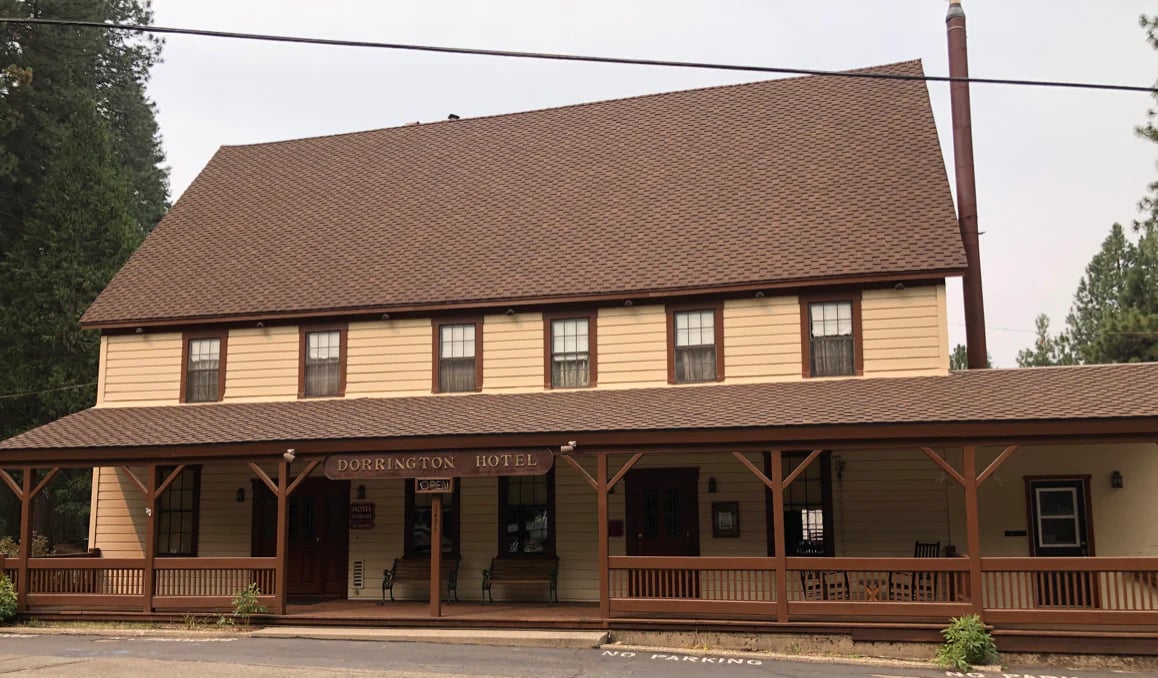
Ruston, LA

The Biomedical Engineering Building opened in 1928 as Ruston-Lincoln Sanitarium with morgue on the first floor and surgical suite on the fourth. It transitioned to a nursing home in 1963 and remained in operation until the 1970s. Louisiana Tech University acquired it for research purposes and currently operates it as the CREST Building.

$All AgesFamily: Moderate
Exterior of the Bourbon Orleans Hotel at 717 Orleans Street in New Orleans' French Quarter
Haunted Hotel / Inn

Bourbon Orleans Hotel

New Orleans, LA

The site at 717 Orleans Street in New Orleans' French Quarter has been continuously occupied since entrepreneur John Davis built the Orleans Theatre and Ballroom in 1817, designed by architect Henry Latrobe. The Sisters of the Holy Family — America's first African American religious order — operated a school and orphanage in the building from 1881 to 1964 before the property was converted to its current hotel use.

$$$All AgesFamily: Moderate
Two-and-a-half-story Greek Revival plantation house with columned gallery in DeSoto Parish, Louisiana
Photo coming soon
Haunted House / Historic Home

Buena Vista Plantation

Stonewall, LA

Buena Vista is an 1859 Greek Revival plantation house built for Boykin Witherspoon in DeSoto Parish, Louisiana, near Stonewall. The two-and-a-half-story frame mansion was added to the National Register of Historic Places in 1989 and is documented for its octagonal-columned gallery, fluted pilasters, and central-hall plan. Local tradition holds that the house served as a Civil War hospital for Confederate wounded.

FreeAll AgesFamily: High
Two-story red-brick Chretien Point Plantation house with double gallery porch in Sunset, Louisiana
Photo coming soon
Haunted House / Historic Home

Chretien Point Plantation

Sunset, LA

Chretien Point is a two-story, twelve-room red-brick mansion on twenty acres along Bayou Bourbeaux, two miles southwest of Sunset, Louisiana. Construction began in 1831 under Hippolyte Chretien and completed in 1835. The plantation was added to the National Register of Historic Places in 1977.

FreeAll AgesFamily: Moderate
Front facade of Destrehan Plantation on River Road in Destrehan, Louisiana
Museum / Historical Site

Destrehan Plantation

Destrehan, LA

Destrehan Plantation at 13034 River Road, Destrehan, Louisiana, is the oldest surviving plantation home in the lower Mississippi valley. Built between 1787 and 1790 for Robert de Logny, the property passed to Jean Noël Destrehan in 1792 and became a major sugar operation by the early 19th century. The plantation served as a trial and execution site following the 1811 German Coast Uprising.

$$All AgesFamily: Moderate
Masonry walls of Fort Jackson surrounded by its moat in Plaquemines Parish, Louisiana
Photo coming soon
Battlefield / Military Site

Fort Jackson

Buras, LA

Fort Jackson is a National Historic Landmark masonry fort 40 miles up the Mississippi River from its mouth, in Plaquemines Parish, Louisiana. Constructed between 1822 and 1832 as coastal defense for New Orleans, the fort was the site of the 12-day Battle of Forts Jackson and St. Philip in April 1862, after which Union forces captured New Orleans.

FreeAll AgesFamily: Moderate
Small overgrown rural cemetery off Ohlenforst Road in Acadia Parish Louisiana with moss-covered headstones
Photo coming soon
Cemetery / Burial Ground

Hookmans Graveyard

Rayne, LA

Hookman's Cemetery — formally the McClelland Cemetery — is a small rural burial ground on Ohlenforst Road in Acadia Parish west of Roberts Cove. Established in the early twentieth century as an informal plot for residents who could not afford church cemetery burial, the site contains seven marked graves with dates ranging from 1891 to 1934 and has been abandoned and overgrown for decades.

FreeAll AgesFamily: Moderate
Beaux-Arts facade of Hotel Monteleone on Royal Street in the New Orleans French Quarter
Haunted Hotel / Inn

Hotel Monteleone

New Orleans, LA

Hotel Monteleone has been owned and operated by five generations of the Monteleone family since Antonio Monteleone, a Sicilian immigrant cobbler, purchased a 64-room hotel at Royal and Iberville Streets in 1886. The current structure, substantially enlarged over the following decades, contains 570 rooms and is the only remaining family-owned luxury hotel in the French Quarter.

$$$All AgesFamily: High
Joseph Jefferson Mansion at Rip Van Winkle Gardens in New Iberia Louisiana
Museum / Historical Site

Joseph Jefferson Mansion at Rip Van Winkle Gardens

New Iberia, LA

The Joseph Jefferson House was built in 1870 as a hunting lodge and painting studio for actor Joseph Jefferson, who portrayed Rip Van Winkle on stage more than 4,500 times. The 22-room Moorish Revival and Gothic Revival house sits atop the Jefferson Island salt dome at an elevation of 75 feet — unusual for coastal south Louisiana. It is now operated as a museum and gardens by the Bayless family.

$$All AgesFamily: High
Ruins and overgrown grounds of Keatchie Female College in DeSoto Parish Louisiana with adjacent Confederate cemetery
Photo coming soon
Museum / Historical Site

Keatchi Women's College

Keatchie, LA

Keatchie Female College was founded in 1857 by the Grand Cane Association of Baptist Churches in DeSoto Parish, Louisiana. Following the Battle of Mansfield on April 8, 1864 — one of the last major Confederate victories in the Trans-Mississippi theater — the college's second floor was converted into a field hospital for wounded Confederate soldiers. Many who died there were buried in the Confederate Memorial Cemetery adjacent to the campus.

FreeAll AgesFamily: Moderate
Above-ground tombs and society vaults at Lafayette Cemetery No. 1 in the Garden District of New Orleans, Louisiana
Cemetery / Burial Ground

Lafayette Cemetery No. 1

New Orleans, LA

Lafayette Cemetery No. 1 in New Orleans's Garden District was established in 1833 by the City of Lafayette, then a separate municipality from New Orleans. The cemetery's above-ground tombs and society vaults serve a multi-ethnic immigrant population. The site is temporarily closed for repairs as of 2024-2025; tours operate from the gates.

FreeAll AgesFamily: High
Briquette-entre-poteaux French Colonial townhouse housing Lafitte's Blacksmith Shop bar on Bourbon Street in the New Orleans French Quarter
Haunted Dining / Bar

Lafitte's Blacksmith Shop

New Orleans, LA

Lafitte's Blacksmith Shop at 941 Bourbon Street in New Orleans is a French Colonial townhouse built between 1772 and 1791. The briquette-entre-poteaux structure is one of the oldest surviving buildings in the French Quarter and was designated a National Historic Landmark in 1970. It has operated as a bar since the 1940s.

$$21+Family: Not Recommended
Exterior of the LaLaurie Mansion, an Empire-style townhouse at 1140 Royal Street in the New Orleans French Quarter
Haunted House / Historic Home

LaLaurie Mansion

New Orleans, LA

The LaLaurie Mansion at 1140 Royal Street in New Orleans was built in 1832 by Delphine Macarty LaLaurie. An April 10, 1834 fire revealed enslaved people who had been tortured and confined in the attic. A mob sacked the house; LaLaurie fled to France. The current Empire-style building dates to an 1838 reconstruction. The property is a private residence.

FreeAll Ages (exterior viewing only)Family: Low
Open Graph image from www.frenchquarterguesthouses.com
Haunted Hotel / Inn

Lamothe House Hotel

New Orleans, LA

The Lamothe House Hotel at 621 Esplanade Avenue in New Orleans was built around 1839 by Jean Lamothe, a wealthy sugar cane planter, after his sister Marie Virginia Lamothe purchased the land in 1829. The double townhouse design was among the first of its kind on Esplanade Avenue. The property is listed on the National Register of Historic Places.

$$All AgesFamily: High
Le Pavillon Hotel exterior, historic high-rise hotel in downtown New Orleans, Louisiana
Haunted Hotel / Inn

Le Pavillon, New Orleans, a Tribute Portfolio Hotel

New Orleans, LA

Le Pavillon Hotel opened in 1907 as the New Hotel Denechaud at 833 Poydras Street in New Orleans' Central Business District. Designed in the French Renaissance style with the city's first hydraulic elevator, it was placed on the National Register of Historic Places in 1991 and joined Historic Hotels of America in 1994. It now operates as a Marriott Tribute Portfolio property.

$$$All AgesFamily: High
Le Petit Theatre du Vieux Carre exterior in New Orleans French Quarter near Jackson Square
Theater / Performance Venue

Le Petit Theatre du Vieux Carre

New Orleans, LA

Le Petit Theatre du Vieux Carre was founded in 1916 by a group of amateur theater enthusiasts in New Orleans and moved to its permanent home at 616 St. Peter Street in 1922. Architect Richard Koch designed the building in Spanish Colonial style, incorporating a surviving 1790s colonial structure at the corner. It is one of the nation's oldest continuously operating community theater organizations.

$$All AgesFamily: High
Hotel Le Richelieu — historic mid-nineteenth-century French Quarter hotel at 1234 Chartres Street
Photo coming soon
Haunted Hotel / Inn

Hotel Le Richelieu

New Orleans, LA

Hotel Le Richelieu occupies a row of mid-nineteenth-century townhouses at 1234 Chartres Street in the lower French Quarter of New Orleans, near the boundary with the Faubourg Marigny. The hotel has operated continuously since the 1960s and has hosted a notable roster of musicians, including Paul McCartney during the 1975-1976 Wings Venus and Mars recording sessions at Sea-Saint Studios.

$$$All AgesFamily: High
Photo of ajoh123.
Photo coming soon
Other Dark Tourism Site

Louisiana State University — Pleasant Hall

Baton Rouge, LA

Pleasant Hall at Louisiana State University was built in 1931 as the university's first women's dormitory, originally named Smith Hall after President James Monroe Smith. The building operated as a dormitory until 2002, when it was converted to house the continuing education department. It now serves as classroom and office space.

FreeAll AgesFamily: Moderate
Howard Auditorium at Louisiana Tech University, Streamline Moderne building on the campus quad in Ruston, Louisiana
Photo coming soon
Theater / Performance Venue

Louisiana Tech University — Howard Auditorium

Ruston, LA

Howard Auditorium at Louisiana Tech University was constructed between 1938 and 1940 as part of a campus expansion funded through federal programs. Architect Edward F. Neild designed the 3,000-seat building in Streamline Moderne style, and it was named for Harry Howard — the university's first graduate and its treasurer for 40 years. The building is listed on the National Register of Historic Places.

FreeAll AgesFamily: High
The Egyptian-style Brunswig pyramid mausoleum stands among elaborate tombs in Metairie Cemetery in New Orleans
Cemetery / Burial Ground

Metairie Cemetery

New Orleans, LA

Metairie Cemetery was founded in 1872 on the grounds of the bankrupt Metairie Race Course in New Orleans. The 150-acre cemetery preserves the oval racetrack as its perimeter road and contains some of the most elaborate funerary monuments in the United States, including burial places of nine Louisiana governors, three Confederate generals, and Storyville madam Josie Arlington.

FreeAll AgesFamily: High
Small rural Louisiana cemetery off an unpaved road in St. Landry Parish
Photo coming soon
Cemetery / Burial Ground

Miller Cemetery (Headless Cemetery)

Eunice, LA

Miller Cemetery, also called Headless Cemetery in local folklore, is a small late-19th-century burial ground on Miller Cemetery Road north of Eunice, Louisiana. It contains the grave of Alexandre Miller, one of early Eunice's prominent residents, and remains an active cemetery for the surrounding Cajun Prairie community.

FreeAll AgesFamily: Moderate
The wrought-iron balconied facade of Muriel's Jackson Square at Chartres and St. Ann in the French Quarter
Photo coming soon
Haunted Dining / Bar

Muriel's Jackson Square

New Orleans, LA

Muriel's Jackson Square occupies a French Quarter property whose history dates to 1718, when New Orleans founder Bienville awarded the lot to French-Canadian Claude Trepagnier. The current building was rebuilt after the Great New Orleans Fire of 1788 by Pierre Antoine Lepardi Jourdan. Muriel's opened in March 2001 as a Creole restaurant and rapidly became one of the French Quarter's signature dining destinations.

$$$All AgesFamily: High
The historic Myrtles Plantation antebellum home in St. Francisville, Louisiana
Haunted House / Historic Home

Myrtles Plantation

St. Francisville, LA

Myrtles Plantation in St. Francisville, Louisiana was built in 1796 by General David Bradford on land he received after fleeing federal prosecution following the Whiskey Rebellion. The property changed hands multiple times throughout the 19th century, accumulating a documented history of violent deaths including the 1871 murder of attorney William Winter on the entrance staircase.

$$All Ages for day tours; overnight stays may varyFamily: Moderate
Mary Jane's Bridge on Bayou Tortue Road near Broussard, Louisiana
Photo coming soon
Outdoor / Natural Site

Mary Jane's Bridge

Broussard, LA

Mary Jane's Bridge is a road bridge on Bayou Tortue Road near Broussard, Louisiana, where Parish Road 140 and the bayou road intersect south of Highway 90. The bridge serves as the setting for one of Acadiana's most persistent and widely documented urban legends — a story of a young woman killed on prom night whose body was never recovered from the bayou. No historical incident matching the legend's details has been verified.

FreeAll AgesFamily: Moderate
Oak Alley Plantation mansion with its famous canopy of southern live oaks in Vacherie, Louisiana
Museum / Historical Site

Oak Alley Plantation

Vacherie, LA

Oak Alley Plantation at 3645 LA-18 in Vacherie, Louisiana, is a National Historic Landmark built in 1839 for sugar planter Jacques Telesphore Roman. The property is named for the double row of 28 live oak trees lining the approach to the main house, estimated to have been planted between 1700 and 1750 — roughly a century before the Greek Revival manor was constructed.

$$$All AgesFamily: High
Gothic Revival facade of Louisiana's Old State Capitol at 100 North Blvd, Baton Rouge, with crenellated towers above the Mississippi River bluff
Photo coming soon
Museum / Historical Site

Louisiana's Old State Capitol

Baton Rouge, LA

Louisiana's Old State Capitol at 100 North Blvd in Baton Rouge was built in the mid-19th century as a Gothic Revival structure on the bluff above the Mississippi River. It served as the state capitol until the early 20th century. During the Civil War, the building was occupied by Union forces and used as a hospital and prison for soldiers. The museum is currently operated by the Louisiana Secretary of State's office.

$All AgesFamily: High
Two-story Louisiana plantation house with wraparound porches on all sides surrounded by oaks
Photo coming soon
Museum / Historical Site

Southdown Plantation House

Houma, LA

Southdown Plantation in Houma, Louisiana sits along Little Bayou Black on land first granted under Spanish rule in the 1790s. William J. Minor and James Dinsmore established the plantation in 1828 and shifted it from indigo to sugarcane in 1831. The 1858 main house was donated in 1975 and opened as a museum in 1982. It was added to the National Register of Historic Places in 1974.

$$All AgesFamily: High
Whitewashed above-ground tombs at St. Louis Cemetery No. 1 in New Orleans, Louisiana
Cemetery / Burial Ground

St. Louis Cemetery No. 1

New Orleans, LA

St. Louis Cemetery No. 1 is the oldest surviving cemetery in New Orleans, established in 1789 after a fire and yellow-fever epidemic destroyed the previous burying ground. Its above-ground tombs hold generations of French, Spanish, Creole, free people of color, and enslaved African burials. The Archdiocese restricted general public access in 2015.

$$All Ages — children accompanied by adultsFamily: Moderate
Entrance archway to St. Roch Cemetery (Campo Santo) in New Orleans, Louisiana
Cemetery / Burial Ground

St. Roch Cemetery

New Orleans, LA

St. Roch Cemetery and Chapel were dedicated on September 6, 1875, by Reverend Peter Thevis, the German-born pastor of Holy Trinity Church, in fulfillment of a vow he made during the 1867 yellow-fever epidemic. The site became a major Catholic pilgrimage destination, and its chapel side-room holds an accumulated collection of ex-voto offerings left by pilgrims healed through prayer.

FreeAll AgesFamily: Moderate
Antebellum Louisiana plantation house with above-ground tomb visible nearby on the grounds
Photo coming soon
Haunted House / Historic Home

Susie Plantation

Centerville, LA

Susie Plantation was built between 1848 and 1852 by Royal and Adeline Harris as a working sugar cane and rice plantation along Bayou Teche in St. Mary Parish, Louisiana. After Royal's death in 1858, his widow remarried John H. Darnall. Their daughter Adeliza E. Harris is interred in an above-ground tomb on the grounds, where she died in the early 1870s.

FreeAll AgesFamily: Moderate
Exterior of the Andrew Jackson Hotel at 919 Royal Street in the New Orleans French Quarter
Photo coming soon
Haunted Hotel / Inn

The Andrew Jackson Hotel

New Orleans, LA

The site at 919 Royal Street was originally a Spanish Colonial-era boys' boarding school and orphanage opened in 1792 for boys orphaned by yellow fever. The school was destroyed in the Great New Orleans Fire of 1794, in which five boys died. A U.S. Federal Courthouse later occupied the site, and the current hotel building was erected in 1890.

$$$21+Family: Not Recommended
The Old Absinthe House corner building at 240 Bourbon Street in the French Quarter of New Orleans, Louisiana
Haunted Dining / Bar

The Old Absinthe House

New Orleans, LA

The Old Absinthe House occupies a corner building at 240 Bourbon Street in the French Quarter of New Orleans. The structure was built in 1806 as a commission house and corner grocery; the ground floor was converted to a saloon in 1815, and the famous Absinthe House Frappe was created behind the bar in 1874 by mixologist Cayetano Ferrer.

$$21+ at the bar; underage visitors restricted by Louisiana alcohol lawFamily: Not Recommended
Two-story 1924 frame hospital building, now serving as the Elizabeth Town Hall in central Louisiana
Photo coming soon
Asylum / Hospital

Elizabeth Town Hall (Former Industrial Lumber Hospital)

Elizabeth, LA

The Elizabeth Hospital Building, completed in 1924, served the company town of Elizabeth, Louisiana, founded by the Industrial Lumber Company in 1907. The two-story frame structure operated as the company hospital until the lumber operation declined, after which the building was repurposed as the Elizabeth Town Hall.

FreeAll AgesFamily: High
The Big House at Whitney Plantation historic memorial site in Wallace Louisiana
Museum / Historical Site

Whitney Plantation

Wallace, LA

Whitney Plantation opened to the public in 2014 as the only museum in Louisiana dedicated solely to the history of slavery in the United States. The site preserves 16 original structures across a plantation that operated under sugar and rice cultivation from 1752 to 1975, using the forced labor of approximately 350 enslaved people across the antebellum period.

$$All AgesFamily: Moderate
Brick facade of the former Baltimore County Almshouse, now the Historical Society headquarters
Photo coming soon
Museum / Historical Site

Baltimore County Almshouse (Almes Mansion)

Cockeysville, MD

The Baltimore County Almshouse was built in the early 1870s as the county's third and last poorhouse, opening to residents in 1874. It housed the elderly, indigent, mentally ill, and dependent children for eighty-four years before closing in 1958. Since the 1960s the building has served as headquarters for the Historical Society of Baltimore County.

FreeAll AgesFamily: Moderate
The Governor Calvert House facade on State Circle in Annapolis, part of the Historic Inns of Annapolis
Photo coming soon
Haunted Hotel / Inn

Governor Calvert House

Annapolis, MD

The Governor Calvert House at 58 State Circle was built in the early 18th century and occupied by Charles Calvert, Maryland's governor from 1720 to 1727. The property was incorporated into the Historic Inns of Annapolis collection in the modern era and operates as a boutique hotel. Restoration uncovered a hypocaust-style heating system beneath the lobby floor that the hotel identifies as one of the oldest examples in North America.

$$$All AgesFamily: Moderate
The 1774 Hammond-Harwood House, a Palladian Georgian mansion designed by William Buckland on Maryland Avenue in Annapolis
Haunted House / Historic Home

Hammond-Harwood House

Annapolis, MD

The Hammond-Harwood House at 19 Maryland Avenue is a five-part Palladian-plan mansion designed in 1774 by William Buckland for Matthias Hammond. Hammond was a wealthy Annapolis lawyer and slaveholder; he never moved into the completed house. The property passed through the Harwood family in the 19th century and has operated as a house museum since 1938. It is a National Historic Landmark and one of the most important surviving examples of Palladian architecture in North America.

$$All AgesFamily: High
The five-part Georgian brick facade of the James Brice House on East Street in Annapolis
Photo coming soon
Haunted House / Historic Home

James Brice House

Annapolis, MD

The James Brice House at 42 East Street in Annapolis was begun in 1767 and completed in 1774 for James Brice, who served as Mayor of Annapolis and as acting Governor of Maryland in 1792. The five-part Georgian mansion was constructed using enslaved labor and is a National Historic Landmark. It has been owned by the State of Maryland since 2014 and is stewarded by Historic Annapolis.

$$All AgesFamily: Moderate
The 1772 Maryland State House in Annapolis, the oldest U.S. state capitol in continuous legislative use, crowned by its all-wood dome
Museum / Historical Site

Maryland State House

Annapolis, MD

The Maryland State House at 100 State Circle in Annapolis is the oldest United States state capitol still in continuous legislative use. Construction began in 1772 and the building hosted the Continental Congress in 1783-84, when George Washington resigned his military commission here and the Treaty of Paris was ratified, formally ending the Revolutionary War. The signature wooden dome above the building is the largest all-wooden dome in North America.

FreeAll AgesFamily: High
The Ram's Head Tavern facade on West Street in Annapolis with its ram's head signage
Photo coming soon
Haunted Dining / Bar

Ram's Head Tavern

Annapolis, MD

The structure at 33 West Street in Annapolis dates to the 18th century and has hosted brewer Benjamin Fordham (early 1700s), Supreme Court Justice and Maryland Constitutional signer Samuel Chase (1769), and the silversmith William Faris's Crown and Dial shop. By 1794 the building housed a 'Sign of the Green Tree' house of entertainment. Bill and Paula Muehlhauser bought the property in December 1989 and grew it into the Ram's Head Tavern and Rams Head On Stage venue.

$$All Ages dining; 21+ at the bar and for most music showsFamily: Moderate
The brick facade of Reynolds Tavern at Church Circle in Annapolis, with the spire of St. Anne's Church behind
Photo coming soon
Haunted Dining / Bar

Reynolds Tavern

Annapolis, MD

Reynolds Tavern was built in 1747 by William Reynolds, a hatter who leased the lot at Church Circle from St. Anne's Parish, and originally operated under the name Beaver and Lac'd Hat. After Reynolds's death in 1777 his widow Mary continued the tavern until her own death in 1785. Following two centuries of varied use, the building was repurposed as a tavern in 1984 and continues to operate as a restaurant, pub, tearoom, and inn.

$$All Ages dining; 21+ at the pub barFamily: High
The early-18th-century shiplap-sided yellow facade of the Shiplap House on Pinkney Street in Annapolis
Photo coming soon
Museum / Historical Site

Shiplap House

Annapolis, MD

The Shiplap House at 18 Pinkney Street is one of the earliest surviving buildings in Annapolis, dating to around 1715 and constructed by sawyer and innkeeper Edward Smith. By the 1780s it operated as the Harp and Crown tavern. Historic Annapolis Foundation acquired the building in 1957 and uses it as administrative offices; a re-created tavern room has been opened for public tours.

FreeAll AgesFamily: High
The front facade of St. Anne's Episcopal Church, completed 1859, standing at the center of Church Circle in colonial Annapolis, Maryland
Other Dark Tourism Site

St. Anne's Episcopal Church and Churchyard

Annapolis, MD

St. Anne's Parish in Annapolis was established in 1692 as one of the original 30 parishes of the Maryland Established Church. The current building at 1 Church Circle is the third on the site, completed in 1859 after the previous building was destroyed by fire on Valentine's Day 1858. The historic churchyard has been in use since 1692 and contains the graves of colonial governors and other notable Annapolitans.

FreeAll AgesFamily: High
The 1765 William Paca House, a five-part Georgian brick mansion built by a signer of the Declaration of Independence in Annapolis, Maryland
Haunted House / Historic Home

William Paca House and Garden

Annapolis, MD

The William Paca House at 186 Prince George Street is a five-part Georgian brick mansion built between 1763 and 1765 by William Paca, a signer of the Declaration of Independence and Maryland's third governor. The estate originally included a two-acre formal pleasure garden, which Historic Annapolis reconstructed in the 1970s. The property is a National Historic Landmark and is operated as a house museum by Historic Annapolis.

$$All AgesFamily: High
Antietam National Battlefield rolling fields in Sharpsburg, Maryland — site of bloodiest day in American military history
Battlefield / Military Site

Antietam National Battlefield

Sharpsburg, MD

On September 17, 1862, the Battle of Antietam near Sharpsburg, Maryland became the single bloodiest day in American military history, with 23,100 men killed, wounded, or missing in a 12-hour engagement between Union and Confederate forces.

$$All AgesFamily: Moderate
Sunken Road known as Bloody Lane at Antietam National Battlefield, Sharpsburg, Maryland, site of the bloodiest day in American military history
Battlefield / Military Site

Antietam National Battlefield

Sharpsburg, MD

Antietam National Battlefield preserves the site of the September 17, 1862 Battle of Antietam, in which combined Union and Confederate casualties reached 22,717 dead, wounded, or missing — the bloodiest single day in American military history. The Union strategic victory ended Robert E. Lee's first invasion of the North and gave President Lincoln the political opening to issue the Preliminary Emancipation Proclamation five days later.

$All AgesFamily: Moderate
Rural Furnace Hills property in Westminster, Maryland associated with the Avonlea Bed and Breakfast
Photo coming soon
Haunted Hotel / Inn

Avonlea Bed and Breakfast

Westminster, MD

Avonlea sits within the Furnace Hills district of Carroll County, Maryland, an area named for the eighteenth-century iron furnaces operated by English transplant Legh Master. Master arrived from England in 1765 and built a mansion on the property, where he lived until his death in 1796.

$$All AgesFamily: Moderate
Exterior of the 1927 reconstruction of the Barbara Fritchie House on West Patrick Street in Frederick, Maryland.
Photo coming soon
Haunted House / Historic Home

Barbara Fritchie House

Frederick, MD

The current building at 154 West Patrick Street is a 1927 reconstruction of the home of Barbara Fritchie (1766-1862), the elderly Frederick woman immortalized in John Greenleaf Whittier's 1864 ballad for allegedly waving a Union flag at Stonewall Jackson's troops as they marched through town. The original home was destroyed by flooding; the reconstruction was built using surviving materials from the original. It was sold to private owners in 2018 and converted to a period-style rental.

$$All AgesFamily: Moderate
Photo of BJ's Wholesale Club
Photo coming soon
Other Dark Tourism Site

BJ's Wholesale Club

Baltimore, MD

The BJ's Wholesale Club at 4201 Wholesale Club Drive was constructed on the site of a former Baltimore trailer park. The warehouse facility provides membership-based retail services to the Baltimore metropolitan area.

$All AgesFamily: High
Ceresville Mansion 1888 Victorian estate viewed from Liberty Road in Frederick, Maryland
Photo coming soon
Haunted House / Historic Home

Ceresville Mansion

Frederick, MD

Ceresville Mansion is an 1888 country house on 26 acres along Israel Creek northeast of Frederick, Maryland. The 9,000-square-foot home anchors a working private wedding and events venue and sits beside an 1818 stone gristmill that was once among the most productive flour mills in the state.

$$$$All AgesFamily: High
Brick former hospital building converted to residential apartments on North Broadway in East Baltimore
Photo coming soon
True Crime Site

Church Home and Hospital

Baltimore, MD

The east building of the former Church Home and Hospital was built in 1836 as the Washington Medical College and is the documented site of Edgar Allan Poe's death on October 7, 1849. The hospital operated continuously until 2000 and the building was converted to residential use in 2005.

FreeAll AgesFamily: High
Cockey's Tavern, an 1830s former tavern on East Main Street in Westminster, Maryland
Photo coming soon
Haunted Dining / Bar

Cockey's Tavern

Westminster, MD

Cockey's Tavern dates to the 1830s on Westminster's East Main Street and operated as a hostelry, store, and tavern at least through 1877. The oldest section of the building enlarged a simple log structure into the present form, and a third floor was added around 1905. Local tradition holds that Confederate General J.E.B. Stuart used the building as a temporary headquarters during the cavalry march to Gettysburg in June 1863. The Historical Society of Carroll County operates the Shop at Cockey's in the building today.

FreeAll AgesFamily: High
Hexagonal screw-pile Drum Point Lighthouse on display at the Calvert Marine Museum in Solomons, Maryland
Museum / Historical Site

Drum Point Lighthouse

Solomons, MD

Drum Point Lighthouse is one of three surviving Chesapeake Bay screwpile lighthouses, originally commissioned in 1883 at the mouth of the Patuxent River, Maryland. The hexagonal cottage-type light was decommissioned in 1962 and moved 2 nautical miles upriver to the Calvert Marine Museum in 1975, where it was restored and reopened to the public in 1978.

$$All AgesFamily: High
Aerial view of the star-shaped Fort McHenry with the American flag flying over the ramparts in Baltimore Harbor
Photo coming soon
Battlefield / Military Site

Fort McHenry

Baltimore, MD

Fort McHenry, completed in 1800, is the star-shaped fortification at the entrance to Baltimore Harbor whose defense against British bombardment in September 1814 inspired Francis Scott Key to write "The Star-Spangled Banner." It later served as a Civil War prison and a World War I military hospital before being designated a National Monument and Historic Shrine in 1939.

$$All AgesFamily: High
Historic 1913 photograph of the wooden Fort Washington Light with 1857 cast-iron light pole on the Potomac River, Maryland
Museum / Historical Site

Fort Washington Lighthouse

Fort Washington, MD

The Fort Washington Lighthouse stands on the Potomac River below Fort Washington, Maryland. The original 1857 light, authorized by Secretary of War Jefferson Davis, was replaced repeatedly; the present 32-foot wooden pyramidal bell tower was built in 1882. The station was unmanned in 1954, transferred to the National Park Service in 2005, and the Coast Guard removed the active light in 2020.

$All AgesFamily: High
The Greek Revival exterior of Frederick City Hall — formerly the Frederick County Courthouse — on Court Street in Frederick, Maryland.
Photo coming soon
Museum / Historical Site

Frederick City Hall

Frederick, MD

The current Greek Revival building at 101 North Court Street was constructed 1862-1864 by Thomas Dixon as the Frederick County Courthouse, replacing a 1785 Georgian courthouse destroyed by fire in 1861. The site has hosted Stamp Act protests in 1765, Revolutionary War Tory executions in 1781, and county judicial business through 1985, when a new county courthouse was built and the building became Frederick City Hall.

FreeAll AgesFamily: Moderate
Gaithersburg High School, Gaithersburg, United States
Other Dark Tourism Site

Gaithersburg High School

Gaithersburg, MD

Gaithersburg High School, the second high school established in Montgomery County, Maryland, was founded in 1904 with its first classes beginning in fall 1905. The current building was constructed in 1951 and underwent a full modernization in 2013. The original Gaithersburg School building, established earlier on a different site, was destroyed by fire in 1895 with no reported injuries.

FreeAll AgesFamily: High
Exterior of the 1810s Gaslight House on East Church Street in Frederick, Maryland, now home to the Gaslight Gallery.
Photo coming soon
Haunted House / Historic Home

Gaslight House (Gaslight Gallery)

Frederick, MD

The Gaslight House at 118 East Church Street is an Italianate rowhome dating to the 1810s, expanded over time into an L-shape by the mid-1880s. The building passed through multiple owners over two centuries; since November 2021 it has operated as the Gaslight Gallery, a contemporary art venue.

FreeAll AgesFamily: Moderate
Stone exterior of the 1739 Jonathan Hager House Museum in Hagerstown City Park, Maryland
Museum / Historical Site

Jonathan Hager House Museum

Hagerstown, MD

The Jonathan Hager House in Hagerstown City Park was built by Jonathan Hager beginning in 1739 — construction is documented as starting that year with the house presented publicly in 1740 — making it one of the oldest surviving structures in western Maryland. Jonathan Hager founded the town of Hager's Town (later Hagerstown) in 1762 on land he owned. He sold the house in 1745; it subsequently housed the Hammond family in the 1840s and the Downin family during the Civil War era. The city opened it as a museum in 1962.

$All Ages; ghost tour 10+; children 5 and under free for daytimeFamily: High
1703 Sotterley Plantation Manor House overlooking the Patuxent River in Hollywood, Maryland
Museum / Historical Site

Historic Sotterley Plantation

Hollywood, MD

Historic Sotterley is the only tidewater plantation in Maryland open to the public, with a 1703 Manor House and an 1830s slave cabin standing on 94 acres above the Patuxent River. It is a National Historic Landmark and a UNESCO Site of Memory tied to the Trans-Atlantic Slave Trade.

$$All AgesFamily: High
Open Graph image from www.hood.edu
Other Dark Tourism Site

Hood College

Frederick, MD

Hood College was founded in 1893 by the Potomac Synod of the Reformed Church as the Woman's College of Frederick, and was renamed in 1913 for benefactor Margaret Scholl Hood. The campus, originally located on East Church Street in Frederick's historic district, moved to its current 28-acre location after 1915. The oldest campus building, Brodbeck Hall, dates to 1868 and predates the college itself, having served as a German biergarten before its academic conversion.

FreeAll AgesFamily: Moderate
Exterior of the Landon House on Urbana Pike in Urbana, Maryland, a 1754 Virginia-built residence barged to Maryland in 1846.
Photo coming soon
Haunted House / Historic Home

Landon House

Urbana, MD

The Landon House (also known as the Stancioff House) was built in 1754 near the Rappahannock River in Virginia, where it served as a silk mill. In 1846 it was dismantled and barged up the Potomac to its present site at 3401 Urbana Pike in Urbana, Maryland. The house served as a girls' seminary and military institute before Confederate Gen. J.E.B. Stuart hosted his Sabers and Roses Ball there on September 8, 1862. The next day it was converted into a Civil War field hospital for wounded from both armies.

FreeAll AgesFamily: Moderate
Linville 1852 Manor exterior, center-hall Georgian Revival structure in Upper Marlboro, Maryland
Photo coming soon
Haunted House / Historic Home

Linville Manor

Upper Marlboro, MD

Linville Manor in Upper Marlboro, Maryland occupies a site with documented occupation dating to the late 1600s. The original structure burned under unclear circumstances; Sarah Marie Bowie-Johnson built the surviving center-hall Georgian Revival manor in 1852-1854 on the charred foundation. The property held approximately 50 enslaved individuals at the time of Charles's death, with a separate burial plot on the grounds.

$$$18+ for ghost hunts; 16+ with adultFamily: Not Recommended
Maryland Inn historic Colonial-era hotel facade in Annapolis Historic District, Maryland
Haunted Hotel / Inn

Maryland Inn (Historic Inns of Annapolis)

Annapolis, MD

The Maryland Inn in Annapolis was built in 1772 by Thomas Hyde, a merchant and civic leader, on the prominent Church Circle at the top of the colonial city's street plan. It holds the distinction of being America's longest continuously operating hotel and was named to the National Register of Historic Places. It is part of the Historic Inns of Annapolis collection alongside the Governor Calvert House and Robert Johnson House.

$$$All AgesFamily: High
The three-story brick Georgian facade of Middleton Tavern in the Colonial Annapolis Historic District, Maryland
Haunted Dining / Bar

Middleton Tavern

Annapolis, MD

Middleton Tavern occupies a 1740 brick building at the Annapolis waterfront, opened as a public house in 1750 by ferry operator Horatio Middleton. It is the oldest continuously-operating tavern in Maryland, located on a documented colonial ferry route that brought George Washington, Thomas Jefferson, Benjamin Franklin, and members of the Continental Congress through its doors on the way to and from Philadelphia.

$$$All Ages dining; 21+ at the barFamily: High
Four-story brick facade of Mount de Sales Academy in Catonsville, Maryland
Photo coming soon
Haunted House / Historic Home

Mount de Sales Academy

Catonsville, MD

Mount de Sales Academy was founded in 1852 by Visitation Sisters from Georgetown as the first Catholic institution in Baltimore County to educate young women of all denominations. The main building, completed in three construction phases and now listed on the National Register of Historic Places, rises four stories on one of Catonsville's highest parcels. Its central chapel remains the oldest place of worship in continuous use in Baltimore.

FreeAll AgesFamily: High
Rolling grounds and historic monuments of the 1852 Mount Olivet Cemetery, burial place of Francis Scott Key, in Frederick, Maryland
Cemetery / Burial Ground

Mount Olivet Cemetery (Frederick)

Frederick, MD

Mount Olivet Cemetery was established in 1852 as Frederick's garden cemetery, replacing crowded church burial grounds in town. It is the burial place of Francis Scott Key (author of 'The Star-Spangled Banner'), Barbara Fritchie, Maryland's first governor Thomas Johnson, and 408 unknown Confederate soldiers reinterred from area battlefields. The Key monument was dedicated in 1898 and the Confederate monument in 1881.

FreeAll AgesFamily: High
The brick storefront entrance to the National Museum of Civil War Medicine at 48 E Patrick Street in Frederick, Maryland
Museum / Historical Site

National Museum of Civil War Medicine

Frederick, MD

The museum opened in 1996 in an 1830s building at 48 E Patrick Street known as the Carty Building. Before the Civil War the structure was owned by furniture maker and undertaker James Whitehill. During the war, embalmer Dr. Richard Burr worked from this location, treating Union dead after the battles of South Mountain and Antietam.

$All AgesFamily: Moderate
The brick Greek Revival facade of Perry Hall Mansion in Baltimore County, Maryland.
Museum / Historical Site

Perry Hall Mansion

Perry Hall, MD

Construction of Perry Hall Mansion began in 1773 by Corbin Lee on a 1,000-acre Baltimore County estate. After Lee's death later that year, his widow sold the estate to Baltimore merchant Harry Dorsey Gough, who completed the 16-room five-part Georgian mansion. A 1839 fire destroyed roughly 60 percent of the structure, which was rebuilt in Greek Revival style. Baltimore County purchased the dwindled four-acre property in 2001 and is restoring the mansion as a museum and community center.

FreeAll AgesFamily: High
The 1836 Piney Point Lighthouse on the Potomac River in St. Mary's County, Maryland
Museum / Historical Site

Piney Point Lighthouse

Piney Point, MD

Piney Point Lighthouse is the oldest lighthouse on the Potomac River, built by John Donahoo in 1836 to warn vessels of the shoals at Piney Point and Ragged Point. Decommissioned by the U.S. Coast Guard in 1964, it is now a museum operated by St. Mary's County and a stop on the NPS Chesapeake Gateways network.

$All AgesFamily: High
The 1830 Point Lookout Lighthouse at Point Lookout State Park in St. Mary's County, Maryland
Museum / Historical Site

Point Lookout Lighthouse

Scotland, MD

Point Lookout Lighthouse, built by John Donahoo in 1830, marks the cape where the Potomac River meets the Chesapeake Bay. During the Civil War the cape served as a Union hospital and Confederate prisoner-of-war camp, where nearly four thousand prisoners died and were buried on the grounds.

$All AgesFamily: Moderate
A weathered eighteenth-century gravestone in a small rural Lutheran cemetery in Frederick County, Maryland
Photo coming soon
Cemetery / Burial Ground

Grace Rocky Hill Lutheran Church Cemetery

Woodsboro, MD

Grace Rocky Hill Lutheran Church Cemetery, also known as Rocky Hill Cemetery and Saint Peter Rocky Hill Cemetery, is a small rural cemetery at 10825 Coppermine Road in Woodsboro, Frederick County, Maryland. The cemetery's most-visited marker belongs to Mary Ann Fox, who died in 1783 at age 34 and whose stone is the subject of the longstanding bleeding-tombstone tradition.

FreeAll AgesFamily: Moderate
Schifferstadt, the 1758 stone German colonial farmhouse built by the Brunner family in Frederick, Maryland
Museum / Historical Site

Schifferstadt Architectural Museum

Frederick, MD

Schifferstadt is one of the oldest surviving houses in Frederick, completed in 1758 by Elias Brunner and his wife Albertina on the family's 303-acre farm tract. The Brunners named the property after their hometown in the German Palatinate. The Frederick County Landmarks Foundation purchased the house in 1974 and opened it as an architectural museum.

$All AgesFamily: High
Seven Foot Knoll Lighthouse, Maryland's oldest screwpile lighthouse, now relocated to Pier 5 at Baltimore's Inner Harbor
Museum / Historical Site

Seven Foot Knoll Lighthouse

Baltimore, MD

Built in 1855 at the mouth of the Patapsco River, Seven Foot Knoll Light is the oldest screwpile lighthouse in Maryland and the first ever built in the state. The cast-iron structure was relocated in 1988 to Pier 5 of Baltimore's Inner Harbor, where it now operates as a public museum.

$$All AgesFamily: High
View north from Point Lookout Lighthouse in Point Lookout State Park, St. Mary's County, Maryland
Battlefield / Military Site

Point Lookout State Park

Scotland, MD

Point Lookout occupies the southern tip of the St. Mary's County peninsula at the confluence of the Chesapeake Bay and the Potomac River. The Point Lookout Light was built in 1830. During the Civil War, the United States operated Camp Hoffman on the site from 1863 to 1865, a prisoner-of-war camp that held over 52,000 Confederate soldiers; nearly 4,000 died and are buried at the site. The peninsula was protected by three earthen forts including Fort Lincoln, partially reconstructed today. The Civil War Museum and a state park preserve the location.

$Public state park; appropriate for all ages during daylight hours.Family: High
The Castle at Mount Savage Maryland, Scottish-style stone castle bed and breakfast
Haunted Hotel / Inn

The Castle at Mount Savage

Mount Savage, MD

The Castle at Mount Savage was built in 1840 as a stone house for the Union Mining Company's company doctors. In 1898 it was purchased by Scottish immigrant Andrew Ramsay, who remodeled it into a replica of Craig Castle near his birthplace in Scotland. The property is on the National Register of Historic Places and has operated as a bed and breakfast since 1984.

$$$All AgesFamily: Moderate
Hampton Mansion in Towson Maryland, historic Georgian estate house at Hampton National Historic Site
Museum / Historical Site

Hampton Mansion (Hampton National Historic Site)

Towson, MD

Hampton Mansion in Towson, Maryland was built between 1783 and 1790 by Captain Charles Ridgely and was the largest private home in the United States at completion. The Ridgely family held the estate for seven generations. Hampton's prosperity was built on iron production, agriculture, and the labor of more than 300 enslaved people. The estate is now a National Historic Site administered by the National Park Service.

FreeAll AgesFamily: High
The 1790s Waters House History Center in Germantown, Maryland
Photo coming soon
Museum / Historical Site

Waters House History Center

Germantown, MD

The Waters House is the oldest house in Germantown, Maryland, with the original section dating to the mid-1790s. Built by Basil Waters on land inherited from his father William Waters of Brookeville, the home and 200-acre Pleasant Fields farm represents mid-1800s farm life. The Montgomery County Historical Society now uses the property as the Waters House History Center.

FreeAll AgesFamily: High
Exterior of the 1814 Tyler Spite House on West Church Street in Frederick, Maryland.
Photo coming soon
Haunted House / Historic Home

Tyler Spite House

Frederick, MD

Dr. John Tyler, the first American-born physician to perform a cataract operation, built the Tyler Spite House in 1814 to block the City of Frederick's planned extension of Record Street through his land. The 9,000-square-foot, three-story brick home at 112 West Church Street features 14-foot ceilings, eight working fireplaces, and elaborate woodwork. It has operated as a private residence, an office building, and a bed and breakfast over its two centuries.

FreeAll AgesFamily: Moderate
Exterior marquee of the Weinberg Center for the Arts — formerly the Tivoli Theatre — on West Patrick Street in Frederick, Maryland.
Photo coming soon
Theater / Performance Venue

Weinberg Center for the Arts

Frederick, MD

The Tivoli Theatre opened on December 23, 1926, built at a cost of over $350,000 by the Stanley-Crandall Company as the second-largest structure ever built in Frederick at the time. After 1976 flood damage, the theater was renovated and reopened in 1978 as the Weinberg Center for the Arts, named for Dan and Alyce Weinberg, who had bought the building in the late 1950s before donating it to the City of Frederick.

$$All AgesFamily: High
Edgar Allan Poe's monument grave at Westminster Hall Burying Ground in Baltimore Maryland
Cemetery / Burial Ground

Westminster Burying Ground — Edgar Allan Poe Grave

Baltimore, MD

Westminster Burying Ground was established in 1787 by the First Presbyterian Church of Baltimore and contains the graves of Revolutionary War officers, War of 1812 veterans, and Edgar Allan Poe. In 1852 the Westminster Presbyterian Church was built directly atop the cemetery on brick piers, creating the catacombs that preserve many of the original burials.

FreeAll AgesFamily: Moderate
Historic c.1857 lithograph of Gothic Revival Westminster Presbyterian Church and Burying Ground in Baltimore Maryland
Cemetery / Burial Ground

Westminster Hall and Burying Ground

Baltimore, MD

Westminster Hall and Burying Ground combines a 1787 Presbyterian cemetery with an 1852 church building constructed directly above on brick piers. The complex contains the catacombs that preserve many original 18th-century burials and the grave monument of Edgar Allan Poe. The University of Maryland has stewarded the property since 1977.

FreeAll AgesFamily: Moderate
Stone staircase rising up a wooded hillside to a 19th-century rural Indiana cemetery
Photo coming soon
Cemetery / Burial Ground

100 Steps Cemetery

Brazil, IN

100 Steps Cemetery, also called Carpenter Cemetery or Cloverland Cemetery, sits on a wooded hillside in Clay County, Indiana, between Brazil and Terre Haute. The burial ground was established around the time of the American Civil War and remains an active cemetery for descendants of early Cloverland-area settlers.

FreeAll AgesFamily: Moderate
Exterior of Winchester Hall, the 1843 Greek Revival Frederick County government building on East Church Street in Frederick, Maryland.
Photo coming soon
Museum / Historical Site

Winchester Hall

Frederick, MD

Winchester Hall was built starting in 1843 (cornerstone laid 1843; west wing completed 1850) to house the Frederick Female Seminary. After the September 1862 Battle of Antietam, the Union Army occupied the building as part of Frederick General Hospital No. 1. In 1887 workers digging behind the building unearthed sawn human arm and leg bones — remnants of wartime amputations. The building later housed the Women's College of Frederick (precursor to Hood College) before becoming Frederick County government offices.

FreeAll AgesFamily: Moderate
Adams Mill — historic 1845 grist mill on Wildcat Creek, Cutler, Indiana
Museum / Historical Site

Adams Mill

Cutler, IN

Adams Mill was constructed in 1845 by John Adams as a grist mill in Cutler, Indiana. The mill operated for over 100 years producing assorted grades of flour. Today, the structure is listed on the National Register of Historic Places and operates as a museum of early rural Americana.

$$All AgesFamily: Moderate
Blackfoot Cemetery rural burial grounds in Pike County, Indiana
Photo coming soon
Cemetery / Burial Ground

Blackfoot Cemetery

Oakland City, IN

Blackfoot Cemetery is located in Morgan Township, Pike County, Indiana and contains over 800 interments dating from the 1800s. The cemetery occupies the traditional burial grounds of the Blackfoot Native American tribe before it became a formal cemetery.

FreeAll AgesFamily: Moderate
Blue River waterway near Corydon, Indiana
Photo coming soon
Outdoor / Natural Site

Blue River

Corydon, IN

Blue River flows through Harrison County near Corydon, Indiana. The river has long been used for recreational canoeing and boating. The waterway is surrounded by natural forest and scenic landscape characteristic of southern Indiana.

FreeAll AgesFamily: Moderate
Boon Hutch Cemetery historic burial ground with cave system in Putnam County, Indiana
Photo coming soon
Cemetery / Burial Ground

Boon Hutch Cemetery

Greencastle, IN

Boon Hutch Cemetery (also known as Boone-Hutcheson Cemetery) is located southwest of Greencastle in Putnam County, Indiana. The cemetery contains graves dating from the 1800s and contains a cave system with an underground chamber.

FreeAll AgesFamily: Moderate
Open Graph image from www.visitelkhartcounty.com
Theater / Performance Venue

Bristol Opera House

Bristol, IN

Built in 1896-1897 by brothers Cyrus and Horace Mosier, the Bristol Opera House (originally the Moiser Opera House) opened with a production of U.S.S. Pinafore. After decades of service as a theater, music hall, and cinema, the building deteriorated significantly by the 1940s. The Elkhart Civic Theatre company leased and restored it beginning in 1960, reopening in July 1961 with theatrical performances that continue today.

$$All Ages (varies by production)Family: High
Historic steel Whipple truss bridge spanning the St. Marys River
Photo coming soon
Outdoor / Natural Site

Bostick Bridge

Fort Wayne, IN

The Bostick Road Bridge, constructed in 1894 by the Canton Bridge Company of Canton, Ohio, is a pin-connected Whipple through truss spanning the St. Marys River in Allen County. After closure for safety concerns in 2004, the historic structure underwent a comprehensive $1.1 million restoration, disassembling and replacing worn components while preserving its original engineering.

FreeAll AgesFamily: High
Historic 1894 metal truss bridge spanning the East Fork White River near Shoals, Indiana
Photo coming soon
Outdoor / Natural Site

Brooks Bridge

Shoals, IN

Brooks Bridge carries Brooks Bridge Road across the East Fork White River in rural Martin County near Shoals. Constructed in 1894 by the Lafayette Bridge Company of Lafayette, Indiana, the structure employs a metal pin-connected Pratt through truss design with ten panels. The single-lane bridge remains in active use.

FreeAll AgesFamily: Moderate
Photo of Butler
Photo coming soon
Cemetery / Burial Ground

Butler

Butler, IN

Butler is a small community in DeKalb County near the Indiana-Ohio line. The adjacent area known as the Land of Moses and Gypsy Hill encompasses woodland, a cemetery with a crematorium, and forest sections that have long held significance in regional folklore. The specific historical origins of the area's names remain locally grounded but are not formally documented.

FreeAll AgesFamily: Low
Southern (downstream) side of the Cataract Covered Bridge, which spans the White River near Cataract in Jennings Township, Owen County, Indiana, United States.  Built in 1876, it is listed on the National Register of Historic Places.
Outdoor / Natural Site

Cataract Covered Bridge

Cunot, IN

The Cataract Covered Bridge was built in 1876 under contract with Owen County Commissioners, replacing a bridge destroyed by flood over the Eel River in Jennings Township. Constructed by the Smith Bridge Company of Toledo, Ohio in a Smith's High Double Wood Truss design, the bridge was at one point one of the most photographed covered bridges in the United States. It is the only surviving covered bridge in Owen County. Vehicular traffic was diverted to a parallel concrete bridge in 1988, and the Indiana DNR undertook extensive restoration in 2000. The bridge was listed on the National Register of Historic Places in 2005 and rededicated in 2006.

FreeAll AgesFamily: Moderate
The Old Pathology Building of Central State Hospital, now the Indiana Medical History Museum in Indianapolis
Museum / Historical Site

Central State Hospital (Indiana) / Indiana Medical History Museum

Indianapolis, IN

Central State Hospital in Indianapolis, originally the Indiana Hospital for the Insane, operated from 1848 to 1994. Its 1895 Old Pathology Building — designed by Adolf Scherrer under hospital administrator George F. Edenharter — survives as the Indiana Medical History Museum, the oldest surviving pathology laboratory in the United States.

$$All AgesFamily: Moderate
Historic streetscape in Lockerbie Square Indianapolis featured on Chatham Arch Lockerbie ghost walk
Ghost Tour / Walking Tour

Chilling Chatham Arch Lockerbie Ghost Walk

Indianapolis, IN

The route covers two of Indianapolis's earliest near-downtown neighborhoods — Chatham Arch and Lockerbie Square — both designated historic districts on the National Register. Stops include the 1911 murder of Dr. Helene Knabe, one of Indianapolis's first female physicians, and the boarding-house corridor known historically as Cockroach Row.

$$Ages 10 and upFamily: Moderate
Front facade of the Kopper Kettle Inn restaurant in Morristown, Indiana
Photo coming soon
Haunted Dining / Bar

Kopper Kettle Inn

Morristown, IN

The Kopper Kettle Inn opened along old Route 52 in Morristown, Indiana in 1858 and has operated continuously as a restaurant for over 150 years. The dining rooms are decorated with marble and alabaster statuary, Dresden china, and Chinese chests collected by the original owners.

$$All AgesFamily: High
Culbertson Mansion 25-room Second Empire facade in New Albany Indiana
Haunted House / Historic Home

Culbertson Mansion State Historic Site

New Albany, IN

William Culbertson left Pennsylvania at age 21 and built a dry goods empire in New Albany, Indiana, eventually becoming the state's wealthiest man with a net worth of $3.5 million. He commissioned this 25-room Second Empire mansion in 1867 at a cost of $120,000, with construction completed in November 1869. Culbertson was widowed twice and married a third time at age 70. He died in 1892. The mansion passed through several owners, nearly faced demolition for a gas station in the 1960s, was purchased by Historic New Albany for $24,000 in 1964, and became part of the Indiana State Museum system in 1976.

$$All AgesFamily: Moderate
A rural wooded stretch of Cedar Canyon Road in Allen County, Indiana.
Photo coming soon
Other Dark Tourism Site

Devils Hollow - Cedar Canyon Road

Fort Wayne, IN

Cedar Canyon Road is a rural road in Allen County, Indiana, northwest of Fort Wayne. The Devils Hollow nickname refers to a wooded section of the corridor associated with local folklore; we found no police record, news-archive coverage, or court documentation that confirms the early-1980s arson incident attached to the legend.

FreeAll AgesFamily: Low
Lake Michigan shoreline at Indiana Dunes National Park near Porter, Indiana
Photo coming soon
Outdoor / Natural Site

Diana of the Dunes

Porter, IN

Alice Mabel Gray (1881-1930) was a University of Chicago honors graduate who abandoned urban life in 1915 to live alone in an abandoned shack on the Indiana Dunes shoreline. Press coverage of her naturalistic lifestyle created the mythologized identity 'Diana of the Dunes.' She died in 1930 and is buried in Gary, Indiana.

$All AgesFamily: Moderate
     sometimes spelled collins
Outdoor / Natural Site

Edna Collings Covered Bridge

Greencastle, IN

The Edna Collings Covered Bridge was built over Little Walnut Creek in 1922 by Charles Hendrix, replacing a concrete bridge washed out by flooding. At 80 feet long plus 8-foot overhangs, it is believed to be Indiana's smallest covered bridge and the only one named after a woman. The bridge takes its name from Edna Collings — born August 30, 1851 — whose family owned the farm southwest of the crossing. Historical research has found no record of a drowning near the bridge.

FreeAll AgesFamily: Moderate
Falls Park waterfall in Pendleton, Indiana with historic stone marker in foreground
Photo coming soon
Outdoor / Natural Site

Falls Park

Pendleton, IN

Falls Park in Pendleton, Indiana preserves the site of the 1825 public hangings of white settlers convicted of murdering nine Native Americans along Fall Creek — the first documented case in which white Americans were tried, convicted, and executed for killing Native Americans under U.S. law. The park was listed on the National Register of Historic Places in 1991.

FreeAll AgesFamily: High
Chief Richardville's house at the Historic Forks of the Wabash site in Huntington, Indiana
Museum / Historical Site

Historic Forks of the Wabash

Huntington, IN

The Historic Forks of the Wabash in Huntington, Indiana preserves a 7.3-acre site at the confluence of the Wabash and Little Wabash Rivers, including the Chief's House associated with Miami leader Jean Baptiste de Richardville. The 1838 Treaty at the Forks of the Wabash was signed at this location. The site was listed on the National Register of Historic Places in 1985 and preserves multiple structures including an 1841 log cabin and a pioneer schoolhouse.

FreeAll AgesFamily: High
A guided walking tour group on a downtown Indianapolis sidewalk at dusk, with the Soldiers and Sailors Monument visible in the background
Photo coming soon
Ghost Tour / Walking Tour

Ghost City Tours Indianapolis

Indianapolis, IN

Ghost City Tours is a multi-city ghost-tour operator with programs across the United States. The Indianapolis program covers downtown landmarks including Hannah House, Allison Mansion, the Indiana Repertory Theatre, the former Indiana Central State Hospital site, and the Soldiers and Sailors Monument area.

$$All Ages — check current schedule for specific tour minimumsFamily: Moderate
Facade of the 1901 Guyer Opera House on West Main Street in Lewisville, Indiana
Theater / Performance Venue

Guyer Opera House

Lewisville, IN

The Guyer Opera House was built in 1901 in Lewisville, Indiana after physician Dr. Oscar K. Guyer persuaded local citizens to fund construction on a block where earlier buildings had burned in 1893. Guyer died in March 1901 at age 49 before the building opened; his funeral was held in the auditorium. In spring 1923, six-year-old Newell Calpha was fatally shot in the forehead when a bullet ricocheted during a firearms demonstration, dying in his father's store downstairs. The theater closed in 1942, was rediscovered in 1969, and has operated as a nonprofit community civic theater since 1976. It was listed on the National Register of Historic Places in 1979.

$$All AgesFamily: Moderate
Weathered headstones at Southeast Grove Cemetery in Crown Point, Indiana, at dusk
Photo coming soon
Cemetery / Burial Ground

Gypsy's Graveyard

Crown Point, IN

Southeast Grove Cemetery, known locally as Gypsy's Graveyard, is a mid-19th-century burial ground near Crown Point, Indiana. The cemetery dates to the early settlement of Lake County and has accumulated a folklore reputation built largely on a single, disputed legend about traveling Romani people who allegedly camped near Crown Point in the 1820s.

FreeAll AgesFamily: High
Northern facade of the Hannah House, an 1858 Italianate brick mansion at 3801 Madison Avenue in Indianapolis, Indiana
Haunted House / Historic Home

Hannah House

Indianapolis, IN

Hannah House is an 1858 Italianate mansion at 3801 Madison Avenue on the south side of Indianapolis, built by Alexander Hannah, an Indiana businessman who returned wealthy from the California Gold Rush. The property is listed on the National Register of Historic Places.

$$Open House tours all ages; paranormal investigations 18+Family: Moderate
The Slippery Noodle Inn at 372 South Meridian Street, the meeting point for the Haunted Wholesale District Ghost Walk in Indianapolis
Ghost Tour / Walking Tour

Haunted Wholesale District Ghost Walk

Indianapolis, IN

The Wholesale District grew up south of Washington Street in late-19th-century Indianapolis as the city's commercial freight and warehousing center, anchored by Union Station and the Slippery Noodle Inn. The district preserves a dense layer of brick warehouses and historic taverns now rebuilt as restaurants, hotels, and theaters.

$$All ages on the walk; bar interior is 21+ before 8pmFamily: Moderate
Brick facade of the Historic Broadway Hotel & Tavern in Madison, Indiana
Photo coming soon
Haunted Hotel / Inn

Historic Broadway Hotel & Tavern

Madison, IN

Established in 1834 on Broadway Street near the Ohio River, the Broadway Hotel and Tavern has operated continuously as a tavern, hotel, and restaurant — claimed by the venue and tourism sources to be Indiana's oldest continuously operated family tavern.

$$All AgesFamily: Moderate
Colonial Revival marquee of the Historic Ohio Theatre in Madison, Indiana
Photo coming soon
Theater / Performance Venue

Historic Ohio Theatre

Madison, IN

The Historic Ohio Theatre is a 1,018-seat (now ~301 active orchestra seats) Colonial Revival movie palace built in 1938 on the site of the earlier Little Grand Theatre, which was destroyed by fire in 1937. A nonprofit, Friends of the Ohio Theatre, Inc., has been restoring the building since 2016.

$All AgesFamily: High
The 1913 Indiana limestone Old New Haven City Hall building in downtown New Haven Indiana
Photo coming soon
Museum / Historical Site

Old New Haven City Hall Historic Site

New Haven, IN

The Old New Haven City Hall is an Indiana limestone structure built in 1913 in New Haven, Indiana, just east of Fort Wayne. It served as city hall, fire station, jail, and police station through most of the twentieth century, with the police function ending in 1999 when a new municipal complex opened. The building is recognized as a historic site on the Fort Wayne/Allen County preservation registry.

FreeAll AgesFamily: High
Tall pine trees along the Springs Valley Trail in the Hoosier National Forest, Orange County, Indiana.
Outdoor / Natural Site

Hoosier National Forest — Step Family Cemetery

Bloomington, IN

The Step Family Cemetery is a small pioneer burial ground located within the boundaries of Hoosier National Forest in southern Indiana. The surrounding land passed from private agricultural ownership into the national forest system during the early 20th century. A folk legend claims two brothers killed each other over a disputed inheritance of their father's property, and both are buried at this site.

FreeAll AgesFamily: Moderate
Lake Michigan shoreline and dunes at Indiana Dunes National Park in northwestern Indiana
Outdoor / Natural Site

Indiana Dunes National Park

Porter, IN

Indiana Dunes National Park preserves fifteen miles of Lake Michigan shoreline in northwestern Indiana. The park was designated as a National Lakeshore in 1966 and elevated to National Park status in 2019. Alice Mabel Gray, the University of Chicago scholar known as 'Diana of the Dunes,' lived on the shoreline from 1915 to 1925 and helped build public support for preservation.

$$All AgesFamily: High
Indiana Theatre 1927 historic facade in downtown Indianapolis home of Indiana Repertory Theatre
Theater / Performance Venue

Indiana Repertory Theatre

Indianapolis, IN

The Indiana Theatre at 140 West Washington Street in Indianapolis opened in 1927 as a Paramount Pictures Publix Theatre — a Spanish Baroque movie palace with Indian and Egyptian decorative motifs. The Indiana Repertory Theatre took over the building in 1980 and converted it into three performance spaces. The 1927 structure was listed on the National Register of Historic Places in 1979.

$$All AgesFamily: High
Historic brick sanatorium buildings on wooded grounds near Little Raccoon Creek in Rockville Indiana
Photo coming soon
Asylum / Hospital

Indiana State Sanatorium

Rockville, IN

The Indiana State Sanatorium opened in Rockville, Indiana in 1908 as the state's primary tuberculosis hospital, following a 1905 legislative commission and a $250,000 state appropriation. Built on 504 wooded acres near Little Raccoon Creek, it operated under the 'Camp Trudeau' designation during construction — named for Dr. Edward Livingston Trudeau, who established the first TB hospital in New York. The facility operated through 1968, was repurposed as the Lee Alan Bryant Health Care Center nursing home in 1976, and closed in 2012.

$$All ages for day toursFamily: Moderate
The Irving Theater on East Washington Street in the Irvington neighborhood of Indianapolis, the staging point for the Irvington Ghost Tour
Photo coming soon
Ghost Tour / Walking Tour

Irvington Ghost Tours

Indianapolis, IN

Irvington Ghost Tours runs each October through the Irvington Historic District on Indianapolis's east side, a planned 1870s suburb that was the original home of Butler University. Tours depart from the Irving Theater at 5505 East Washington Street.

$$All ages; mature historical contentFamily: Moderate
Rural country road south of Highway 116 near New Corydon, Jay County, Indiana during harvest season
Photo coming soon
Outdoor / Natural Site

Jay County — The Laughing Scarecrow

New Corydon, IN

New Corydon is a small community in Jay County in northeastern Indiana. The surrounding area has developed a concentrated body of regional folklore, including the Laughing Scarecrow legend, a Cry Baby Bridge, and accounts of anomalous lights near an abandoned stone quarry. The Laughing Scarecrow is a seasonal apparition reported near the wooded areas south of Highway 116.

FreeAll AgesFamily: Moderate
Mount Jerome is located in the heart of the suburb of Harold’s Cross which is centrally located on the south side of Dublin city, just beyond the grand canal. It is on the 16 and 9 bus routes. If you are getting a taxi make sure that they do not bring you to Mount Argus church which is nearby [I men
Photo coming soon
Cemetery / Burial Ground

Jerome Cemetery

Jerome, IN

Jerome Cemetery is located in Howard Township in Howard County, Indiana, in the small unincorporated community of Jerome, approximately one hour north of Indianapolis. The cemetery's paranormal reputation centers on the legend of a phantom dog — an entity that may have originated from the documented death of a loyal dog at its owner's grave.

FreeAll AgesFamily: Moderate
Buildings on the northern side of Main Street (U.S. Route 40) on both sides of its Jefferson Street intersection in Knightstown, Indiana, United States.  This block is part of the Knightstown Historic District, a historic district that is listed on the National Register of Historic Places.  From lef
Haunted House / Historic Home

The Pest House

Knightstown, IN

The Pest House in Knightstown, Indiana served as a quarantine facility during the 1902 Henry County smallpox outbreak, one of the most severe in the state that year. The board of health and county commissioners placed the entire town and surrounding area under strict quarantine. The building is a private residence and is recognized as a local historical landmark.

FreeAll AgesFamily: High
Lakeside Park lagoon and historic district in Fort Wayne, Indiana, featuring George Kessler's 1912 landscape design
Photo coming soon
Outdoor / Natural Site

Lakeside Park Neighborhood

Fort Wayne, IN

Lakeside Park and its surrounding neighborhood in Fort Wayne, Indiana were platted in 1890, with the park designed in 1912 by landscape architect George Kessler. The district was listed on the National Register of Historic Places in 2018 and contains more than 470 buildings, the majority built between 1890 and 1940. The park's original design included four lagoons and a system of carriageways used for early recreational development in Allen County.

FreeAll AgesFamily: High
Rural cemetery at Lamb's Chapel in La Porte County, Indiana, established 1854
Photo coming soon
Cemetery / Burial Ground

Lamb's Chapel Cemetery

Rolling Prairie, IN

Lamb's Chapel was established as a Methodist congregation in La Porte County, Indiana. The chapel building was constructed in 1854 on land donated by Oren Lamb, and the associated cemetery holds approximately 370 documented burials. The chapel building was relocated twice over its history, in 1876 and 1887, before eventually serving simultaneously as a school and house of worship.

FreeAll AgesFamily: High
North elevation of the 1844 Greek Revival Lanier Mansion State Historic Site in Madison, Indiana
Haunted House / Historic Home

Lanier Mansion State Historic Site

Madison, IN

Greek Revival mansion completed in 1844 for banker James F. D. Lanier and designed by Madison architect Francis Costigan. The property was donated by the family in 1917, became a State Memorial in 1926, and was designated a National Historic Landmark in 1994.

$All AgesFamily: High
The Main Street Bridge over the St. Mary's River in Fort Wayne, Indiana, at dusk
Photo coming soon
Other Dark Tourism Site

Main Street Bridge

Fort Wayne, IN

The Main Street Bridge in Fort Wayne, Indiana carries an urban legend dating to the late 1880s when newspaper reports described a woman in white appearing on and near the bridge over the St. Mary's River and vanishing upon approach. A Fort Wayne police officer's encounter — attempting to cover the figure with a blanket that fell to the ground alone — became the defining incident of the legend. A separate account eventually attributed the sightings to a magic lantern projection from a nearby house.

FreeAll AgesFamily: High
The mansard-roofed limestone exterior of the 1880 Matthews Mansion (Graymont) in Ellettsville, Indiana
Photo coming soon
Haunted House / Historic Home

Matthews Mansion (Graymont)

Ellettsville, IN

The Matthews Mansion, also known as Graymont, is an 1880 French Second Empire limestone residence in Ellettsville, Indiana, built by a member of the Matthews family of the Matthews Stone Company. The mansion is privately owned and is part of the Matthews Stone Company Historic District.

FreeAll AgesFamily: High
Cemetery entrance and grounds at Memory Gardens of Rensselaer in Indiana
Photo coming soon
Cemetery / Burial Ground

Memory Gardens of Rensselaer

Rensselaer, IN

Memory Gardens of Rensselaer was chartered in 1961 as a not-for-profit cemetery corporation in Newton Township, Jasper County, Indiana. It is managed with two trust funds for perpetual care and features a Christ Resurrection Columbarium imported from Carrara, Italy.

FreeAll AgesFamily: High
Rural road and bridge area near the Porter/LaPorte county line in Indiana
Photo coming soon
Outdoor / Natural Site

Devil's Bridge

Porter, IN

Devil's Bridge is a rural road site on the Porter/LaPorte county line in northwestern Indiana. The location has carried a reputation since at least the 1980s as a site of alleged Prohibition-era criminal activity, with local lore claiming the area was used for the disposal of bodies by organized crime figures operating in the early 1920s.

FreeAll AgesFamily: Moderate
Exterior of the Monroe House on Monroe Street in Hartford City, Indiana
Photo coming soon
Haunted House / Historic Home

Monroe House

Hartford City, IN

The Monroe House in Hartford City, Indiana is a mid-19th century home with a paranormal history that became the subject of an actual police investigation in 2016 when Paranormal Lockdown hosts Nick Groff and Katrina Weidman discovered human skeletal remains in the basement crawlspace. A local funeral home director estimated the remains were at least 100 years old.

$$13+ (under 18 with adult)Family: Not Recommended
Stepp Cemetery within Morgan-Monroe State Forest in Indiana, a small rural burial ground surrounded by woods
Photo coming soon
Cemetery / Burial Ground

Stepp Cemetery at Morgan-Monroe State Forest

Martinsville, IN

Stepp Cemetery is a small rural burial ground located within Morgan-Monroe State Forest, approximately 15 miles north of Bloomington, Indiana, near the border of Morgan and Monroe counties. The cemetery sits off Old State Road 37 and is accessible via a narrow forest road. Monroe County Historical Society has documented the site and the legends attached to it.

FreeAll AgesFamily: Moderate
The Great Mound earthwork at Mounds State Park in Anderson, Indiana, surrounded by forest
Photo coming soon
Outdoor / Natural Site

Mounds State Park

Anderson, IN

Mounds State Park in Anderson, Indiana preserves ten earthworks constructed by the Adena-Hopewell peoples between approximately 160 and 120 BC. The site later hosted a commercial amusement park in the early 1900s before becoming an Indiana state park. The Great Mound, the park's largest earthwork, is 9 feet tall and 384 feet in circumference.

$All AgesFamily: High
The 1879 Hamilton County Courthouse in downtown Noblesville, Indiana, the meeting point for the Nefarious Noblesville Ghost Walk
Ghost Tour / Walking Tour

Nefarious Noblesville Ghost Walk

Noblesville, IN

Noblesville, the seat of Hamilton County, retains a well-preserved courthouse square anchored by the 1879 Hamilton County Courthouse and a former county jail now operated by the Hamilton County Historical Society. Unseen Press runs the Nefarious Noblesville Ghost Walk through the district, drawing on the criminal-justice history of the courthouse and the surrounding 19th-century commercial buildings.

$$All ages; content suited to children 10 and upFamily: Moderate
The brick exterior of the Old Blackford County Jail in Hartford City with its sheriff's-residence facade and cellblock at the rear
Prison / Reformatory

Old Blackford County Jail

Hartford City, IN

The Old Blackford County Jail in Hartford City, Indiana opened in 1879 with brick walls and foot-thick granite block transported from Michigan. It served the county for 116 years before closing in 1995, replaced by a modern correctional facility outside town.

$$$18+ for paranormal investigationsFamily: Low
The 1882 Second Empire brick exterior of the Lake County Sheriff's House and Jail in Crown Point, Indiana
Prison / Reformatory

Old Lake County Jail

Crown Point, IN

The Old Lake County Jail and Sheriff's House at 226 South Main Street in Crown Point, Indiana, was completed in 1882 as the first permanent Lake County jail. The complex expanded in 1928 to a capacity of about 150 cells. John Dillinger escaped from the jail on March 3, 1934, reportedly using a hand-carved wooden gun he had darkened with shoe polish. The building was used as a filming location for Public Enemies (2009).

$$All Ages for daytime; minimum age applies for evening eventsFamily: Moderate
The 1865 Morris-Butler House in the Old Northside Historic District of Indianapolis, the interior stop on the Old Northside Spooky Tour
Ghost Tour / Walking Tour

Old Northside Spooky Tour

Indianapolis, IN

The Old Northside Spooky Tour is Indiana Landmarks' annual fall walking tour through the Old Northside Historic District in Indianapolis. The tour departs from the Indiana Landmarks Center at 1201 Central Avenue and includes interior access to the 1865 Morris-Butler House.

$$All ages; mature historical contentFamily: Moderate
Old Perry County Courthouse historic exterior, Cannelton Indiana
Museum / Historical Site

Old Perry County Courthouse

Cannelton, IN

The Old Perry County Courthouse in Cannelton, Indiana was built in 1897 for $30,000 raised entirely by local citizens, who donated the completed structure to the county. Designed by Louisville architect John Bacon Hutchings in the Renaissance Revival style, the building served as Perry County's seat of government until 1994, when county offices relocated to Tell City. The Perry County Museum acquired the building in 1998.

$$13+ for ghost hunt events (American Hauntings policy)Family: Moderate
Randolph County Infirmary, Winchester, Indiana — 1899 brick institutional building with twin witch's hat towers
Asylum / Hospital

Randolph County Asylum / Infirmary

Winchester, IN

The Randolph County Infirmary was built in 1899 to serve the county's poor, sick, mentally ill, and orphaned. The brick institutional building, distinguished by its twin witch's hat towers, sits on what was once a 350-acre farm just south of Winchester, Indiana. It is preserved by S.T.O.P. (Saving the Old Properties) and operates today as a paranormal-investigation site.

$$$Adults preferred for investigations; events varyFamily: Low
Four-story brick former county infirmary building in Winchester, Indiana
Asylum / Hospital

Randolph County Infirmary

Winchester, IN

The Randolph County Infirmary traces its origins to Indiana's 1820s poor-relief system, which evolved into a formal county asylum by 1851. After the original wooden building burned in 1857, a brick replacement was built. The current 58,000-square-foot, four-story facility opened in December 1899 on the original foundation. Approximately 1,487 people resided there between 1899 and 2006, with roughly 500 dying on-site and receiving unmarked cemetery burials. The facility closed in 2006 and now operates as a paranormal investigation venue.

$$16 years minimumFamily: Low
A wooded former roadway corridor in Lake County, Indiana, lined with mature trees
Photo coming soon
Other Dark Tourism Site

Reeder Road

Griffith, IN

Reeder Road is a former connecting roadway between Griffith and Merrillville in Lake County, Indiana. The county closed the road to vehicle traffic in the 1970s; the right of way remains as wooded land and an informal walking path, with Ross Cemetery anchoring the southern end of the local legend cycle.

FreeAll AgesFamily: Moderate
Hillside gravestones and the 'Let There Be Light' statue at Springdale Cemetery in Madison, Indiana
Photo coming soon
Cemetery / Burial Ground

Springdale Cemetery

Madison, IN

Springdale Cemetery is Madison's oldest still-active municipal cemetery, established in 1839 after the Third Street Cemetery (now John Paul Park) was abandoned. It straddles W 5th Street between Vine and Cragmont and includes Civil War veterans, African American burials from the historic Georgetown neighborhood, and early-20th-century Jewish community members.

FreeAll AgesFamily: High
Small wooded clearing of Stepp Cemetery in Morgan-Monroe State Forest, Indiana, with weathered nineteenth-century headstones
Photo coming soon
Cemetery / Burial Ground

Stepp Cemetery

Bloomington, IN

Stepp Cemetery is a small rural burying ground in the Morgan-Monroe State Forest north of Bloomington, Indiana. The cemetery dates to the early 1800s and contains roughly 114 graves, including that of War of 1812 veteran Isaac Hartsock. It has become a fixture of central-Indiana folklore through the Lady in Black legend.

FreeAll AgesFamily: Moderate
Story Inn in Story Indiana, 1851 converted general store now country inn in Brown County
Haunted Hotel / Inn

Story Inn

Nashville, IN

Dr. George P. Story founded the village of Story in 1851 under a federal land patent signed by President Millard Fillmore. After flourishing as a logging community and then declining following the Great Depression, the abandoned village was purchased in the 1980s and reassembled into the Story Inn — Indiana's oldest country inn and one of the best-preserved 19th-century villages in the American Midwest.

$$$All AgesFamily: Moderate
The Barbee Hotel, a three-story 1897 frame building on Big Barbee Lake in Kosciusko County, Indiana.
Photo coming soon
Haunted Dining / Bar

The Barbee Hotel

Warsaw, IN

The Barbee Hotel opened in 1897 on Big Barbee Lake in Kosciusko County, Indiana, originally as Hotel Ormond. The building was a fashionable summer resort in the early 20th century, and Al Capone is documented as a frequent guest in the 1920s. The hotel's overnight operation has ended, but the ground-floor restaurant continues to operate.

$$All AgesFamily: Moderate
Old Pathology Building at Indiana Medical History Museum in Indianapolis, former Central State Hospital
Museum / Historical Site

Old Central State Hospital (Indiana Medical History Museum)

Indianapolis, IN

Central State Hospital, originally the Indiana Hospital for the Insane, opened in November 1848 in Indianapolis with five patients. It operated for 146 years until closing in 1994 amid allegations of abuse and reduced funding. The 1896 Old Pathology Building survives as the home of the Indiana Medical History Museum and is on the National Register of Historic Places.

$$All Ages (recommended for older children due to medical content)Family: Moderate
The Roads Hotel facade on West Main Street in Atlanta, Indiana, a 22-room 1893 Italianate hotel
Haunted Hotel / Inn

The Roads Hotel

Atlanta, IN

Newton and Clara Roads opened the 22-room Roads Hotel in 1893 in Atlanta, Indiana, serving travelers on the railroad line that passed through the town's commercial district. The hotel functioned as an inn through the gas-boom era, was repurposed during Prohibition, and operates today as a privately owned paranormal investigation site rather than a working hotel.

$$$18+ for overnight investigations; younger ages by special arrangementFamily: Low
1890 Strand Theatre marquee on Main Street in Kendallville, Indiana
Photo coming soon
Theater / Performance Venue

The Historic Strand Theatre

Kendallville, IN

The Strand Theatre at 119 N. Main Street in Kendallville, Indiana opened May 22, 1890 as the Spencer Opera House, built by Edward Spencer for $29,000 on the site of the Blockbuster Hotel. The 750-seat house was renamed the Boyer Opera House under A.J. Boyer in 1905, converted to a movie theater in 1919, and renamed the Strand Theatre by the Hudson family in 1929. The theater is one of the oldest continuously operating theaters in the United States.

$$All AgesFamily: High
Tippecanoe Place, the 1889 Clement Studebaker mansion at 620 W Washington Street in South Bend, Indiana
Haunted Dining / Bar

Tippecanoe Place Restaurant

South Bend, IN

Built 1889 as the residence of Studebaker wagon and automobile magnate Clement Studebaker, designed by Chicago architect Henry Ives Cobb. Continental Restaurant Systems converted the mansion into a restaurant in 1980 after a $2 million restoration.

$$$All AgesFamily: High
The 1937 CCC-built Hominy Ridge Shelter House in Salamonie River State Forest, Wabash County, Indiana
Outdoor / Natural Site

Salamonie River State Forest

Lagro, IN

Established in the mid-1930s as a demonstration riverside forest for the reclamation of eroded farmland. A 200-member Civilian Conservation Corps camp designed and built the recreation facilities, including Hominy Ridge Lake and the large CCC stone shelter house. Located in Wabash County, Indiana, near the confluence of the Salamonie and Wabash rivers.

FreeAll AgesFamily: High
A historic Quaker residence in Westfield, Indiana — a town founded in 1834 by abolitionist settlers and a documented stop on the Underground Railroad
Ghost Tour / Walking Tour

Westfield Historic Underground Railroad Ghost Walk

Westfield, IN

The Westfield Historic Underground Railroad Ghost Walk is operated by Michael and Nicole Kobrowski of Unseenpress.com, longtime authors of regional Indiana hauntings. The tour covers Westfield's founding by Quaker abolitionists in 1834 and the documented Underground Railroad infrastructure that ran through the town's residential streets.

$$All Ages (subject matter discusses slavery, abolition, and historical death)Family: Moderate
Exterior of Whisky's Restaurant on Front Street in Lawrenceburg, Indiana
Photo coming soon
Haunted Dining / Bar

Whisky's Restaurant

Lawrenceburg, IN

Whisky's Restaurant in Lawrenceburg, Indiana occupies two historic structures in the city's Newtown district: one built around 1835 and a second from approximately 1850, connected at their entrance foyer. The restaurant opened in June 1984 and is well-regarded for its regional American cuisine.

$$All AgesFamily: High
Victorian two-story frame house at 714 West Warren Street in Mitchell, Indiana — Whispers Estate
Haunted House / Historic Home

Whispers Estate

Mitchell, IN

Whispers Estate was built in 1894 in Mitchell, Indiana. Dr. John Gibbons purchased the property around 1899 and established his medical practice on the first floor while his family lived above. The Gibbons family was known locally for adopting orphaned and abandoned children. Three family members died in the house within a short period: ten-year-old Rachel (burned in a parlor fire), infant Elizabeth (unknown cause), and Jessie Gibbons (double pneumonia).

$$18+ onlyFamily: Not Recommended
The 1927 Indiana Repertory Theatre facade on West Washington Street in downtown Indianapolis at twilight
Ghost Tour / Walking Tour

Wicked Wraiths of White River Tour

Indianapolis, IN

The Wicked Wraiths of White River Tour is operated by US Ghost Adventures and meets nightly in front of the Indiana Repertory Theatre at 140 W Washington Street in downtown Indianapolis. The tour's route covers Monument Circle, the Indiana State Capitol, and additional historic downtown buildings.

$$All Ages; mature themes at parental discretionFamily: Moderate
Josephus Wolf House (Wolf Mansion) historic exterior, Porter County, Indiana
Haunted House / Historic Home

Wolf Mansion (Josephus Wolf House)

Valparaiso, IN

Josephus Wolf, a successful 19th-century Porter County landowner, built this Victorian Italianate mansion in 1875 at the heart of his 4,500-acre Portage Township farm. The three-story, 18-room house tops out in a 45-foot rooftop cupola and was added to the National Register of Historic Places in 2007.

$$All AgesFamily: High
Victorian houses on Middle Drive in Woodruff Place historic district, Indianapolis, Indiana
Ghost Tour / Walking Tour

Woodruff Place Neighborhood Walking Tour

Indianapolis, IN

Woodruff Place, established 1872 by entrepreneur James O. Woodruff, was Indianapolis's first planned residential suburb. The neighborhood's three north-south drives are connected by tree-lined esplanades and lined with Victorian-era homes. Indiana Landmarks operates a seasonal lantern-lit walking tour each October.

$$All AgesFamily: High
Victorian houses on Middle Drive in Woodruff Place historic district, Indianapolis, Indiana
Ghost Tour / Walking Tour

Woodruff Place Spooky Tour

Indianapolis, IN

Woodruff Place is an eighty-acre planned residential suburb established by James O. Woodruff in 1872, now Indianapolis's first such district. The Spooky Tour is a 90-minute lantern-led walk co-presented by Indiana Landmarks, the Woodruff Place Civic League, and the Historic Woodruff Place Foundation, running on Friday evenings in October.

$$All AgesFamily: High
Adam's Hill Park, Richfield Minnesota
Photo coming soon
Outdoor / Natural Site

Adam's Hill

Richfield, MN

Adam's Hill is a public park in Richfield, Hennepin County, Minnesota. The location carries historical significance related to early agricultural settlement of the region.

FreeAll AgesFamily: High
Photo of Benedicta Arts Center at College of St. Benedict's
Photo coming soon
Museum / Historical Site

Benedicta Arts Center at College of St. Benedict's

St. Joseph, MN

The Benedicta Arts Center was constructed in 1964 at the College of Saint Benedict in St. Joseph, Minnesota. The facility serves as a primary cultural and artistic venue for the college and surrounding community.

$College community and authorized visitorsFamily: Moderate
Exterior of Billy's Bar and Grill in the historic Jackson Hotel building at 214 Jackson Street, Anoka, Minnesota
Photo coming soon
Haunted Dining / Bar

Billy's Bar & Grill

Anoka, MN

Billy's Bar & Grill occupies the former Jackson Hotel at 214 Jackson Street in Anoka, Minnesota, built in the late 1800s by Swedish immigrant Charles G. Jackson. The building operated as an elegant hotel through the early 20th century before functioning as an unofficial brothel under Mrs. Jackson, then passing through multiple commercial uses including a French restaurant before becoming a bar and grill.

$$All AgesFamily: Moderate
Exterior of Black Woods Bar and Grill at 612 7th Avenue in Two Harbors, Minnesota
Photo coming soon
Haunted Dining / Bar

Black Woods Bar and Grill

Two Harbors, MN

The Black Woods Bar and Grill at 612 7th Avenue in Two Harbors, Minnesota has operated at this location since 1994. The building previously served as a boarding house and bakery, according to the Lake County Historical Society. Lake County records document approximately 16 property owners or organizations since 1900, none of which were orphanages.

$$All AgesFamily: High
Blaine High School exterior, Blaine Minnesota
Photo coming soon
Museum / Historical Site

Blaine High School

Blaine, MN

Blaine High School is a comprehensive secondary educational facility in Blaine, Minnesota, serving the Anoka-Hennepin school district. The school operates as an active community educational institution.

FreeSchool hours for studentsFamily: Moderate
Former Gordmans wing on lower level, currently blocked off.  The upper level hosts a Dick's Sporting Goods and is currently open.
Other Dark Tourism Site

Burnsville Center

Burnsville, MN

Burnsville Center opened in 1977 as a major retail shopping destination in Burnsville, Minnesota. The mall serves the Twin Cities metropolitan area with over 100 stores and dining establishments. Construction of the original facility involved standard commercial development practices of the era.

FreeAll AgesFamily: High
Exterior of Chanhassen Dinner Theatres at 501 W 78th Street in Chanhassen, Minnesota
Theater / Performance Venue

Chanhassen Dinner Theatres

Chanhassen, MN

Chanhassen Dinner Theatres opened in 1968 and operates today as the nation's largest Equity dinner theater, with four stages under one roof at 501 W 78th Street in Chanhassen, Minnesota. The complex is consistently ranked among the Twin Cities' top dining and entertainment destinations.

$$$All AgesFamily: High
Open Graph image from duluthairport.com
Other Dark Tourism Site

Duluth International Airport

Duluth, MN

Duluth International Airport was established in 1930 as Williamson-Johnson Municipal Airport on 640 acres purchased by the City of Duluth in 1929. Renamed Duluth International in 1961, the facility now covers 3,020 acres at 1,428 feet elevation and operates as a joint civil-military field hosting the Minnesota Air National Guard's 148th Fighter Wing alongside commercial service and Cirrus Aircraft's headquarters. The current terminal, named for Congressman Jim Oberstar, opened in January 2013.

FreeAll AgesFamily: High
Exterior of the iconic First Avenue nightclub on First Avenue North in downtown Minneapolis
Theater / Performance Venue

First Avenue

Minneapolis, MN

First Avenue began its life in 1937 as the Minneapolis Greyhound Bus Depot, a Streamline Moderne structure with shiny blue-brick exterior, checkered terrazzo floors, and on-site shower rooms. Allan Fingerhut purchased and converted it to a nightclub in 1970, opening as The Depot. The club became First Avenue in 1981 and gained international recognition through Prince's 1984 film Purple Rain.

$$18+ for most evening events; all-ages shows availableFamily: Moderate
Second Empire Joseph Forepaugh mansion on Exchange Street in St. Paul's Irvine Park
Haunted Dining / Bar

Forepaugh's Restaurant

Saint Paul, MN

Forepaugh's Restaurant occupies a Victorian mansion built in 1870 by Joseph Forepaugh, a St. Paul dry goods merchant whose company generated half a million dollars annually by 1864. Forepaugh retired, traveled to Paris with his family, and died by suicide in 1892. The building later became a boarding house, was shuttered in 1973, reopened as a restaurant in 1976, and underwent extensive renovation before reopening in 2024.

$$$All AgesFamily: Moderate
Lake Superior view of Glensheen Mansion, the historic Congdon estate in Duluth, Minnesota
Museum / Historical Site

Glensheen Mansion

Duluth, MN

Glensheen is a 39-room Jacobean Revival mansion on twelve acres of Lake Superior shoreline in Duluth, built between 1905 and 1908 for mining magnate Chester Adgate Congdon. The University of Minnesota Duluth has operated the estate as a historic-house museum since 1979. The site became internationally known after the June 27, 1977, murders of heiress Elisabeth Congdon and her night nurse Velma Pietila.

$$All AgesFamily: Moderate
Lake-side view of Glensheen Mansion, the 1908 Congdon estate on the Lake Superior shore in Duluth, Minnesota
Haunted House / Historic Home

Glensheen Historic Estate

Duluth, MN

Glensheen is a 39-room, 20,000-square-foot Jacobean Revival mansion completed in 1908 for iron-ore attorney Chester Congdon and his family on 22 acres along the Lake Superior shore in Duluth. Owned by the University of Minnesota Duluth since 1968, it operates as a house museum and is one of Minnesota's most-visited historic sites. The estate is also nationally known for the 1977 murders of Elisabeth Congdon and her night nurse, Velma Pietila.

$$All AgesFamily: Moderate
Gothic Revival LeDuc Historic Estate above the Vermillion River, Hastings, Minnesota
Museum / Historical Site

LeDuc Historic Estate

Hastings, MN

The LeDuc Historic Estate is one of the United States' best-preserved Gothic Revival residences in the Andrew Jackson Downing manner. William Gates LeDuc and his wife Mary built the Hastings, Minnesota home between 1862 and 1866 along the bluff above the Vermillion River. The estate is now operated by the Dakota County Historical Society.

$All AgesFamily: High
Wabasha Street Caves historic sandstone cave entrance in Saint Paul, Minnesota
Museum / Historical Site

Wabasha Street Caves

Saint Paul, MN

The Wabasha Street Caves are sandstone caverns carved beneath the bluffs of St. Paul's west side, originally mined for silica sand in the 19th century. French immigrant Albert Mouchnotte converted them to a mushroom farm in the early 1900s. His son-in-law William Lehmann later transformed the space into a Prohibition-era speakeasy and, after Repeal, the Castle Royal — a 1930s supper club described by local newspapers as the 'World's Most Gorgeous Underground Nightclub.'

$All AgesFamily: Moderate
Darling Cemetery and memorial site on Highway 10 north of Little Falls, Minnesota
Photo coming soon
Cemetery / Burial Ground

Darling Church Site and Darling Cemetery

Randall, MN

Darling Church was founded in 1893 as the Swedish Evangelical Lutheran Church of Darling by Scandinavian homesteaders in Morrison County, Minnesota. The church held its last service in 1969 and stood abandoned until it was destroyed by arson in March 2017. The adjacent Darling Cemetery remains in use.

FreeAll AgesFamily: High
Rural Loon Lake Cemetery headstones near Jackson, Minnesota, with lake visible in background
Photo coming soon
Cemetery / Burial Ground

Loon Lake Cemetery

Jackson, MN

Loon Lake Cemetery in Jackson County, Minnesota was established in 1877, with the last recorded interment in 1926. Extensive vandalism stripped most headstones over several decades, until restoration work in 2018–2019 began to recover the grounds. A young woman named Mary Jane Terwillegar, who died in March 1880 at age 17, occupies the grave around which the cemetery's witch legend grew.

FreeAll AgesFamily: High
Milford Mine Memorial Park boardwalk overlooking Foley Lake near Crosby Minnesota, site of the 1924 mining disaster that killed 41 men
Photo coming soon
Outdoor / Natural Site

Milford Mine Memorial Park

Crosby, MN

The Milford Mine opened in 1917 on the Cuyuna Iron Range near Crosby, Minnesota, extracting high-manganese iron ore from depths reaching 200 feet. On February 5, 1924, a surface cave-in at the mine's eastern end breached a mud layer connecting directly to Foley Lake. The flooded in under 20 minutes, killing 41 of the 48 miners then underground — the deadliest mining accident in Minnesota history. The site was listed on the National Register of Historic Places in 2011 and is now managed as Milford Mine Memorial Park by Crow Wing County.

FreeAll AgesFamily: High
Montgomery National Golf Club in Montgomery Minnesota with fairways surrounding the cottonwood tree near the first hole marking the pioneer farmer's gravesite
Photo coming soon
Other Dark Tourism Site

Montgomery National Golf Club

Montgomery, MN

Montgomery National Golf Club at 900 Rogers Drive in Montgomery, Minnesota, is an 18-hole course built on farmland once owned by Benedict Burii, a nineteenth-century pioneer settler. Burii and his wife are buried beneath a large cottonwood tree near the first hole — their grave was present on the property before the course was developed. The club has marketed itself as one of the world's most haunted golf courses.

$$All AgesFamily: High
Minneapolis College of Art and Design campus building on Stevens Ave in South Minneapolis Minnesota
Photo coming soon
Other Dark Tourism Site

Minneapolis College of Art and Design

Minneapolis, MN

Minneapolis College of Art and Design was founded in 1886 as the Minneapolis School of Fine Arts, affiliated with the Minneapolis Society of Fine Arts (now the Minneapolis Institute of Art). The school moved to its current 2501 Stevens Ave campus in 1915; the Julia Morrison Memorial Building was completed in 1916 (architect Edwin Hawley Hewitt), with a 1974 expansion designed by Kenzo Tange. MCAD is an accredited four-year college offering BFA and MFA degrees.

FreeAll AgesFamily: High
Weld Hall on Minnesota State University Moorhead campus, 1915 brick theater building currently under renovation, exterior view
Photo coming soon
Theater / Performance Venue

Minnesota State University Moorhead — Weld Hall

Moorhead, MN

Weld Hall, built in 1915, is the oldest building on the Minnesota State University Moorhead campus. Named after Frank Weld, the building houses Glasrud Auditorium with its balcony and backstage spiral staircases. A $23 million renovation of the building began in 2023, with reopening projected for fall 2026. The university was known as Moorhead State University until 2000, when it was renamed Minnesota State University Moorhead.

FreeAll AgesFamily: Moderate
New York Mills Regional Cultural Center in the 1885 commercial brick building on Main Avenue in downtown New York Mills Minnesota
Photo coming soon
Museum / Historical Site

New York Mills Regional Cultural Center

New York Mills, MN

The New York Mills Regional Cultural Center occupies a two-story commercial brick building constructed in 1885, originally built to house retail businesses including a general store. The building was later home to Karvonen Furniture for many years before being converted into a regional cultural center in 1992. The center has operated for more than 30 years offering visual arts, performing arts, artist residencies, and community programs.

$All AgesFamily: High
Weathered Victorian-era headstones on a wooded hillside at Oakwood Cemetery, Stillwater, Minnesota
Photo coming soon
Cemetery / Burial Ground

Oakwood Cemetery

Stillwater, MN

Oakwood Cemetery in Stillwater, Minnesota, was established in 1867 on a wooded hillside overlooking the St. Croix River. The cemetery contains burials of Stillwater's lumber-era founders, Civil War veterans, and several generations of Washington County families.

FreeAll AgesFamily: High
Palmer House Hotel three-story brick exterior, Sauk Centre Minnesota
Haunted Hotel / Inn

Palmer House Hotel

Sauk Centre, MN

The Palmer House Hotel in Sauk Centre, Minnesota was built in 1901 by Ralph and Christena Palmer on the site of the Sauk Centre House, which burned in 1900. Expanded in 1916 by architect Roland C. Buckley, the three-story brick building was the first in Sauk Centre to have electricity. Nobel Prize-winning author Sinclair Lewis worked two summers as a night desk clerk here before going on to write Main Street, in which he fictionalized the hotel as the 'Minniemashie House.'

$All AgesFamily: Moderate
The 1896 Sioux quartzite Old City Hall, now the Pipestone County Museum
Photo coming soon
Museum / Historical Site

Pipestone County Museum

Pipestone, MN

The Pipestone County Museum occupies the city's 1896 Old City Hall, a three-story Sioux quartzite building designed by regional architect Wallace Dow in the Richardsonian Romanesque style. The building originally housed city offices, the jail, fire department, the city's first public library, and a large meeting hall. It was deeded to the Pipestone County Historical Society in 1967 and listed on the National Register of Historic Places in 1976.

$All AgesFamily: High
Forested trail at Sibley State Park near New London, Minnesota with glacial lake visible through trees
Photo coming soon
Outdoor / Natural Site

Sibley State Park

New London, MN

Sibley State Park was established in 1919 near New London, Minnesota, centered on Mount Tom, the highest point in the surrounding lake country. The 2,852-acre park preserves a wooded glacial landscape and provides camping, hiking, swimming, and interpretive programming year-round. The park's name honors General Henry Sibley, a figure whose legacy has prompted recent public debate.

$All AgesFamily: High
SS William A. Irvin museum ship at Minnesota Slip Duluth Harbor, 1938 Great Lakes ore freighter
Museum / Historical Site

SS William A. Irvin

Duluth, MN

The SS William A. Irvin was launched November 10, 1937, at American Ship Building Company in Lorain, Ohio, at a cost of $1.3 million. She served as the flagship of US Steel's Pittsburgh Steamship Division fleet from 1938 to 1975, hauling primarily taconite ore across the Great Lakes before retirement in 1978. The Duluth Entertainment Convention Center purchased the vessel in 1986 for $110,000 and refurbished it as a museum ship; it was listed on the National Register of Historic Places in 1989.

$$18+ for ghost hunts; all ages for museum visitsFamily: Moderate
Warden's House Museum in Stillwater Minnesota, 1853 historic house, anchor of city ghost walk
Ghost Tour / Walking Tour

Stillwater

Stillwater, MN

Stillwater, Minnesota was established in 1843 as a lumber trade center on the St. Croix River and served as the site of Minnesota's first prison, established in 1853. The Warden's House (1853) and the Water Street Inn occupy sites that have accumulated documented paranormal reports over more than a century. The original prison was demolished; the Warden's former residence is now a museum operated by the Washington County Historical Society.

$$13+Family: Moderate
Thayer Hotel in Annandale Minnesota, 1895 historic three-story wooden hotel building
Haunted Hotel / Inn

The Thayer

Annandale, MN

The Thayer Hotel in Annandale, Minnesota was built in 1895 after the original Charles Hotel on the site burned down. The building has operated continuously as a lodging establishment through various ownerships and configurations, briefly closing for COVID-related renovations before reopening as a restaurant and event venue. The hotel reportedly hosted Al Capone during the Prohibition era.

$$All AgesFamily: Moderate
Original 1884 jail building of the Old Jail Bed and Breakfast in Taylors Falls, Minnesota
Photo coming soon
Haunted Hotel / Inn

Old Jail Bed and Breakfast

Taylors Falls, MN

The Old Jail Bed and Breakfast in Taylors Falls combines two nineteenth-century buildings: a saloon and brewery cave originally built in 1869 by the Schottmuller Brothers, and an 1884 jail that is the oldest in Minnesota. The complex includes a Prohibition-era tunnel and a former funeral-home space, all converted to private guest suites.

$$$All AgesFamily: Moderate
Rural property at 22 CR 510 near Corinth, Mississippi
Photo coming soon
Other Dark Tourism Site

22 CR 510

Corinth, MS

County Road 510 near Corinth, Mississippi marks a rural residential property in Alcorn County. The property is privately owned with no public access for paranormal investigation or touring.

$All AgesFamily: High
A small rural Mississippi cemetery in a wooded valley at the end of a dirt access road
Photo coming soon
Cemetery / Burial Ground

Asbury Cemetery

Van Vleet (near Houston), MS

Asbury Cemetery is a small rural burial ground near Van Vleet in Chickasaw County, Mississippi, off Highway 164 northwest of Houston. The cemetery serves the surrounding rural community and is documented in Chickasaw County genealogical records.

FreeAll AgesFamily: Moderate
Aunt Jenny's Catfish Restaurant exterior, antebellum home with historic oaks
Photo coming soon
Haunted Dining / Bar

Aunt Jenny's Catfish Restaurant

Ocean Springs, MS

Aunt Jenny's Catfish Restaurant occupies an antebellum home in Ocean Springs, Mississippi, converted from its original residential purpose. The building housed an asylum at some point in its history, predating the restaurant's establishment. The restaurant has operated for decades as a regional dining destination, famous for catfish and the historic Julep Room basement where entertainment figures including Elvis Presley and Billie Holiday once gathered.

$$All AgesFamily: Moderate
Bogue Homa Reservation church near Heidelberg, Mississippi
Photo coming soon
Outdoor / Natural Site

Bogue Homa Reservation

Heidelberg, MS

Bogue Homa Reservation near Heidelberg, Mississippi represents Native American cultural heritage site. The location is associated with Choctaw traditions and contemporary tribal activities. A church building located on the reservation grounds has become the focus of paranormal reports.

$All AgesFamily: High
Brooklyn Acres Cemetery in Brooklyn, Mississippi
Photo coming soon
Cemetery / Burial Ground

Brooklyn Acres

Brooklyn, MS

Brooklyn Acres Cemetery near Brooklyn, Mississippi serves as a burial ground for Stone County residents. The cemetery has been in operation for an extended historical period, containing graves spanning multiple generations. A young boy's death at the cemetery or associated with the location has become embedded in local paranormal folklore.

FreeAll AgesFamily: Moderate
Burnt Bridge Road in Hattiesburg, Mississippi at dusk
Photo coming soon
Outdoor / Natural Site

Burnt Bridge

Hattiesburg, MS

Burnt Bridge Road in Hattiesburg, Mississippi marks the site of a tragic automotive accident on prom night involving a young couple. An earlier bridge structure at this location was destroyed or damaged, and has since been replaced with modern infrastructure. The accident remains part of local folklore and cultural memory.

FreeAll AgesFamily: Moderate
Dunleith mansion in Natchez, Mississippi, ringed by its 26-column Tuscan colonnade, photographed by Carol M. Highsmith
Haunted Hotel / Inn

Dunleith Historic Inn

Natchez, MS

Dunleith is an antebellum mansion at 84 Homochitto Street in Natchez, built about 1855-1856 on the site of the earlier Routhland house. It is Mississippi's only surviving plantation house with a fully encircling 26-column Tuscan colonnade. After the original Routhland burned in 1855, Charles Dahlgren built the current house; planter Alfred Vidal Davis purchased it for $30,000 and renamed it Dunleith. It was designated a National Historic Landmark in 1974.

$$$All AgesFamily: Moderate
Glenburnie mansion in Natchez, Mississippi, an 1833 Federal-style home expanded with Classical Colonial features in 1901-1904
Photo coming soon
Haunted House / Historic Home

Glenburnie

Natchez, MS

Glenburnie is an 1833 Natchez mansion on land originally granted to Adam Lewis Bingaman in 1798, later expanded in 1901-1904 in the Classical Colonial idiom. It was the home of Jane 'Jennie' Surget Merrill, who was shot and killed inside the house on August 4, 1932 in a botched robbery that became national news as the 'Goat Castle Murder.' The home was listed on the National Register of Historic Places in 1978 and remains a private residence.

FreeAll AgesFamily: Moderate
Gothic Revival main section of Glenfield Plantation, a Natchez antebellum home held by the Field family since circa 1880
Photo coming soon
Haunted House / Historic Home

Glenfield Plantation

Natchez, MS

Glenfield Plantation is a Natchez antebellum home built in two distinct phases: a 1778-1812 Spanish/early-American rear wing on land originally granted by King George III to Henry LeFleur, and a Gothic Revival main section added in the 1840s. The Field family acquired the property circa 1880 and has retained it since. The grounds include a Civil War skirmish site with a bullet hole still visible in the front door. Glenfield was listed on the National Register of Historic Places in 1990.

$$All AgesFamily: Moderate
Exterior of King's Tavern, an 18th-century Natchez Mississippi blockhouse-turned-tavern, the oldest standing building in the city
Haunted Dining / Bar

King's Tavern

Natchez, MS

King's Tavern in Natchez, Mississippi is the oldest standing building in the city, built around 1769 originally as a blockhouse for nearby Fort Panmure under British rule. Richard King opened the building as a tavern and inn in 1789, serving travelers on the Natchez Trace. The building has operated intermittently as a restaurant; the most recent restaurant closed in 2022.

FreeAll AgesFamily: Moderate
Rear view of the 1853 Greek Revival Lansdowne mansion outside Natchez, Mississippi
Haunted House / Historic Home

Lansdowne

Natchez, MS

Lansdowne in Natchez, Mississippi was built in 1853 for George M. Marshall and his wife Charlotte. The Greek Revival house remains in the family of the original builder. The property is on the National Register of Historic Places and participates in the annual Natchez Pilgrimage tours.

$$All AgesFamily: Moderate
Federal-style facade of Linden, a circa-1785 Natchez mansion photographed by Frances Benjamin Johnston in 1938 for the Carnegie Survey of the Architecture of the South
Haunted Hotel / Inn

Linden — A Historic Bed & Breakfast

Natchez, MS

Linden is a circa-1785 Federal-style mansion on a 7-acre estate in Natchez, originally called Oaklands by builder Alexander Moore. U.S. Senator Thomas Buck Reed renamed it Reedland in 1818, and Dr. John Ker renamed it Linden in 1829. Jane Gustine Conner purchased the property in 1849 to raise her ten children, and the Conner family has retained ownership for six generations.

$$$All AgesFamily: Moderate
Longwood, also called Nutt's Folly, the largest octagonal house in America, an unfinished Oriental Revival mansion in Natchez, Mississippi
Museum / Historical Site

Longwood

Natchez, MS

Longwood, also called Nutt's Folly, is the largest octagonal house in the United States. Philadelphia architect Samuel Sloan designed the 32,000-square-foot mansion for Natchez cotton planter Haller Nutt in 1859. Construction began in 1860 and halted in 1861 when the Civil War sent Sloan's Northern workforce home. The Pilgrimage Garden Club of Natchez has operated the property as a museum since 1968.

$$All AgesFamily: High
Greek Revival front facade of Magnolia Hall (the 1858 Henderson-Britton House) on Pearl Street in Natchez, Mississippi
Museum / Historical Site

Magnolia Hall

Natchez, MS

Magnolia Hall (the Henderson-Britton House) is an 1858 Greek Revival mansion in Natchez built by wealthy merchant, planter, and cotton broker Thomas Henderson. Henderson died in 1863, and the house was struck by Union gunboat artillery during the Civil War. The property is operated as a house museum and costume collection by the Natchez Garden Club and is listed on the National Register of Historic Places.

$All AgesFamily: High
McRaven House in Vicksburg, Mississippi — antebellum tour home built in three phases beginning 1797
Haunted House / Historic Home

McRaven House

Vicksburg, MS

The McRaven Tour Home in Vicksburg, Mississippi was built in three principal phases between approximately 1797 and 1849. Its earliest section was constructed by Natchez Trace highwayman Andrew Glass; later sections by John H. Bobb and the Murray family. The house and its three-acre grounds served as a Confederate camp and field hospital during the 1863 Siege of Vicksburg.

$$All Ages for daytime; haunted tours recommended 10+Family: Moderate
McRaven Tour Home, the historic 1797 haunted mansion on Harrison Street in Vicksburg, Mississippi
Haunted House / Historic Home

McRaven Tour Home

Vicksburg, MS

McRaven House at 1445 Harrison Street in Vicksburg, Mississippi, is Mississippi's oldest multi-period residential structure, built in three distinct phases across 52 years. The first section was completed in 1797 as a frontier-style structure; a Greek Revival addition followed in 1836; the final Greek Revival section was added in 1849 by John Bobb. During the 1863 Siege of Vicksburg, Union troops occupied the grounds and Bobb was killed by Union soldiers in a documented dispute.

$$All AgesFamily: Moderate
Exterior view of Merrehope Victorian mansion in Meridian, Mississippi
Photo coming soon
Haunted House / Historic Home

Merrehope

Meridian, MS

Merrehope is a 26-room Victorian mansion in Meridian, Mississippi, built circa 1858 for Juriah Jackson. It survived General Sherman's 1864 burning of Meridian and has since served as a Union officer shelter, Confederate headquarters, boarding house, and apartment building. The Meridian Restorations Foundation purchased it in 1968 and opened it as a museum.

$All AgesFamily: High
Greek Revival facade of Monmouth, the 1818 antebellum mansion of John A. Quitman in Natchez, Mississippi (HABS, 1972)
Haunted Hotel / Inn

Monmouth Historic Inn & Gardens

Natchez, MS

Monmouth is an 1818 Natchez mansion built by John Hankinson and acquired in 1826 by John A. Quitman, the lawyer-soldier-politician who served as a Mexican-American War general, Mississippi governor, and U.S. congressman. Quitman renovated the house in the Greek Revival style and held it until his death in 1858. It is a National Historic Landmark and operates today as a luxury inn.

$$$All AgesFamily: Moderate
Rural Myrtle Grove Cemetery in Lamar County, Mississippi, with 19th-century gravestones
Photo coming soon
Cemetery / Burial Ground

Myrtle Grove Cemetery

Baxterville, MS

Myrtle Grove Cemetery on Lost John Road in Lamar County, Mississippi holds approximately 55 interments with burial dates reaching back to the mid-19th century. The cemetery is situated in the timber-country landscape of southern Lamar County, in a region shaped by the late-19th-century logging industry and the railroad networks that served it.

FreeAll AgesFamily: High
Overview of monuments and headstones at Natchez City Cemetery on the Mississippi River bluff in Adams County, Mississippi
Cemetery / Burial Ground

Natchez City Cemetery

Natchez, MS

Natchez City Cemetery was established in 1822 on a 100-acre site along the Mississippi River bluff just north of downtown Natchez. It contains burials representing nearly every era of Natchez history, including major 19th-century families, victims of the 1908 Natchez Drug Company explosion (commemorated by the Turning Angel monument), the unusual stairway grave of Florence Irene Ford, the single-name marker for 'Louise the Unfortunate,' and William Johnson, the diarist 'Barber of Natchez.'

FreeAll AgesFamily: High
Greek Revival facade of Rowan Oak at 916 Old Taylor Road in Oxford, Mississippi, surrounded by cedar trees and the grounds where Faulkner worked from 1930 to 1962
Photo coming soon
Museum / Historical Site

Rowan Oak

Oxford, MS

Rowan Oak at 916 Old Taylor Road in Oxford, Mississippi, is the former home of Nobel Prize-winning author William Faulkner, preserved as a museum by the University of Mississippi. The Greek Revival house was built in 1844 for Robert B. Sheegog; Faulkner purchased and renovated it in 1930, naming it for the rowan tree said to ward off evil. He lived there until his death in 1962.

$All AgesFamily: High
The columned Greek Revival facade of Stanton Hall, an antebellum mansion in Natchez, Mississippi
Haunted House / Historic Home

Stanton Hall

Natchez, MS

Stanton Hall in Natchez is one of the most opulent surviving antebellum mansions in the Southeast. Construction began in 1851 and was completed in 1857 for Irish immigrant and cotton broker Frederick Stanton, who died at the property only months after moving in. The Pilgrimage Garden Club has owned and operated the property as a historic house museum since 1938.

$$All AgesFamily: High
Exterior of the 1848 Blue Rose Mansion in Pass Christian, Mississippi
Photo coming soon
Haunted House / Historic Home

The Blue Rose Mansion (Former Restaurant)

Pass Christian, MS

The Blue Rose Mansion in Pass Christian, Mississippi, was built in 1848 as a private residence on Scenic Drive overlooking the Mississippi Sound. Philip LaGrange and Herbert Pursley purchased the property in 1990 and operated an antique store, restaurant, and gift shop. The five-star restaurant did not reopen after Hurricane Katrina struck the Gulf Coast in 2005.

$$$All AgesFamily: Moderate
The Towers of Natchez, an 1798 mansion with reconstructed twin third-story towers
Photo coming soon
Haunted House / Historic Home

The Towers of Natchez

Natchez, MS

The Towers is a Natchez mansion constructed in 1798 during the late Spanish/early American colonial era, initially in the West Indies style. Additions in 1826 and 1858 brought Neo-Classical and Italian Renaissance Revival elements. The home served as headquarters for Federal occupation forces during the Civil War. A 1920s fire destroyed the original twin tower rooms, which have since been reconstructed.

$$All AgesFamily: Moderate
Cinemark Tupelo Movies 8 at the Mall at Barnes Crossing in Tupelo, Mississippi
Photo coming soon
Theater / Performance Venue

Cinemark Tupelo Movies 8 at Barnes Crossing

Tupelo, MS

The Cinemark Tupelo Movies 8 is an eight-screen movie theater at the Mall at Barnes Crossing on Tupelo's north side. The mall opened in 1990 and serves northeast Mississippi as one of the region's main retail anchors. The theater appears in regional Mississippi paranormal writing as a venue with employee-oriented haunting accounts.

$All AgesFamily: High
North-elevation HABS photograph (1936) of Anchuca / Victor Wilson House at 1010 First East Street in Vicksburg, Mississippi
Haunted Hotel / Inn

Anchuca Historic Mansion & Inn

Vicksburg, MS

Anchuca is a Greek Revival mansion at 1010 First East Street in Vicksburg, Mississippi, built in 1830 in the Federal style by local politician J. W. Mauldin and enlarged in 1847 by merchant Victor Wilson with a two-story portico. The Archer family occupied the home from 1837. Listed on the National Register of Historic Places, the home survived the 1863 Siege of Vicksburg and was used afterward as a hospital; Jefferson Davis delivered a public address from its balcony in 1869.

$$$All AgesFamily: Moderate
Annabelle Bed & Breakfast — 1868 Victorian-Italianate home at 501 Speed Street, Vicksburg, Mississippi
Photo coming soon
Haunted Hotel / Inn

Annabelle Bed & Breakfast

Vicksburg, MS

Annabelle is a Victorian-Italianate home at 501 Speed Street in Vicksburg's historic Garden District, built in 1868 by Vicksburg banker John Alexander Klein on the original Cedar Grove estate as a home for his son, Madison Conrad Klein. An adjacent 1881 guest house with a fifty-five-foot gallery faces the Mississippi River. The property has operated as a bed-and-breakfast under the Annabelle name since the late 20th century.

$$All AgesFamily: Moderate
Ahern's Belle of the Bends — 1876 Victorian Italianate mansion at 508 Klein Street, Vicksburg, Mississippi
Photo coming soon
Haunted Hotel / Inn

Ahern's Belle of the Bends

Vicksburg, MS

Ahern's Belle of the Bends is an 1876 Victorian Italianate mansion at 508 Klein Street in Vicksburg, built by Mississippi State Senator Murray F. Smith on a bluff above the Mississippi River. The home was later named for the steamboat Belle of the Bends (1898). It is listed as a Vicksburg Historic Landmark and now operates as a six-acre bed-and-breakfast inn.

$$All AgesFamily: Moderate
Cedar Grove Mansion — 1840 Greek Revival antebellum house on the National Register of Historic Places in Vicksburg, Mississippi
Haunted Hotel / Inn

Cedar Grove Mansion Inn

Vicksburg, MS

Cedar Grove Mansion is a Greek Revival antebellum house at 2200 Oak Street in Vicksburg, Mississippi, begun in 1840 by jeweler-banker John Alexander Klein for his bride Elizabeth Bartley Day and largely completed by 1842. The house was struck dozens of times during the 1863 Union siege of Vicksburg, and one cannonball remains lodged in a parlor wall. It now operates as an inn and restaurant.

$$$All AgesFamily: Moderate
Duff Green House (Mansion) at the corner of Locust and First East Street in Vicksburg, Mississippi, photographed for HABS in 1936
Haunted Hotel / Inn

Duff Green Mansion

Vicksburg, MS

The Duff Green Mansion at 1114 First East Street in Vicksburg, Mississippi was built in 1856 by cotton broker Duff Green as a wedding gift for his bride, Mary Lake Green. During the 1863 Siege of Vicksburg the house was used as a combined Confederate and Union field hospital after Mary Green raised a yellow flag to signal its hospital status. The mansion later served as a boys' orphanage and a Salvation Army office before being restored as a bed-and-breakfast inn.

$$$All AgesFamily: Moderate
Lakemont — antebellum Judge William Lake mansion at 1103 Main Street, Vicksburg, Mississippi (private residence; cannonball-damaged gate visible from sidewalk)
Photo coming soon
Haunted House / Historic Home

Lakemont

Vicksburg, MS

Lakemont is an antebellum mansion in Vicksburg's historic district built c.1830-1835 by Judge William Lake — a Vicksburg lawyer who served as a Mississippi state senator, US Congressman, and member of the Confederate Congress in 1861. Sources cite 1103 Main Street as the address; the wrought-iron gate to the property still bears damage attributed to a Union cannon shell during the 1863 Siege of Vicksburg.

FreeAll AgesFamily: High
The Illinois State Memorial at Vicksburg National Military Park, Mississippi, a tall white Roman Pantheon-style monument
Battlefield / Military Site

Vicksburg National Military Park

Vicksburg, MS

Vicksburg National Military Park preserves the site of the 47-day Siege of Vicksburg, March 29 through July 4, 1863. The Union victory and the simultaneous Union success at Port Hudson gave the federal government control of the Mississippi River and split the Confederacy. The 1,800-acre park includes the restored Union ironclad USS Cairo and Vicksburg National Cemetery.

FreeAll AgesFamily: High
1936 HABS photograph of the Governor A. G. McNutt House at the corner of Monroe and First East Streets in Vicksburg, Mississippi
Haunted House / Historic Home

The McNutt House

Vicksburg, MS

The McNutt House at 815 First East Street in Vicksburg was built in 1826 and is among the oldest surviving homes in the city. Alexander Gallatin McNutt — Mississippi's 12th governor — purchased it in 1829 and added the rear wing in 1832. Listed on the National Register of Historic Places, it now operates as a tour home and bed-and-breakfast with multi-suite accommodations.

$$All AgesFamily: High
Old Court House Museum — 1858 Greek Revival former Warren County courthouse with its iconic dome in downtown Vicksburg, Mississippi
Museum / Historical Site

Old Court House Museum

Vicksburg, MS

The Old Court House Museum at 1008 Cherry Street in Vicksburg, Mississippi was built between 1858 and 1860 as the Warren County courthouse and served in that capacity until 1939. Perched on one of the city's highest hills, the building's dome was a visible landmark targeted by Union artillery during the 1863 siege; Confederate Signal Corps observers stationed inside were among those killed. The building reopened as a museum in 1948.

$All AgesFamily: High
Stained Glass Manor / Oak Hall — early 20th-century Mission Revival mansion at 2430 Drummond Street, Vicksburg, Mississippi
Photo coming soon
Haunted Hotel / Inn

Stained Glass Manor / Oak Hall Bed & Breakfast

Vicksburg, MS

The Fannie Vick Willis Johnson Home at 2430 Drummond Street in Vicksburg is a Mission Revival mansion built between 1902 and 1908-1910 (sources vary on the completion date) for philanthropist Fannie Willis Johnson. Designed by New Orleans architects Keenan & Weiss and supervised by local architect William Stanton, the house contains 32 custom stained-glass windows and original Louis Millet art-glass fixtures. It now operates as Oak Hall Bed & Breakfast.

$$All AgesFamily: High
HABS photograph of Waverley Plantation antebellum mansion with octagonal cupola in West Point Mississippi
Haunted House / Historic Home

Waverley Plantation Mansion

West Point, MS

Colonel George Hampton Young built Waverley in 1852 on the Tombigbee River, a Greek Revival plantation house distinguished by an octagonal cupola and a four-story self-supporting spiral staircase. After the last Young child died unmarried around 1913, the mansion stood vacant for nearly fifty years until Robert and Donna Snow purchased and restored it in 1962.

$$All AgesFamily: Moderate
Red Brick 1st Baptist Church on Walnut Street in Nevada, Missouri
Photo coming soon
Haunted House / Historic Home

1st Baptist Church on Walnut Street

Nevada, MO

The 1st Baptist Church on Walnut Street in Nevada, Missouri is one of the oldest structures in the city. The red brick church building was constructed during Nevada's earliest period of development. In 1998, the Community Council on Performing Arts (CCPA) temporarily housed their operations in the former church, converting it to the Red Brick Playhouse for staging community theatrical productions.

$All AgesFamily: Moderate
A small concrete-and-gravel rural bridge over a wooded creek in Callaway County, Missouri, near Auxvasse
Photo coming soon
Outdoor / Natural Site

Nine Mile Bridge

Auxvasse, MO

Nine Mile Bridge is a small rural bridge near Auxvasse in Callaway County, Missouri. No archival or county-level historical documentation accessed during research confirms a specific named event at the bridge; the site is documented primarily through folklore.

FreeAll AgesFamily: Moderate
Exterior of the Alexander Majors House Museum, an 1856 antebellum mansion in Kansas City, Missouri
Museum / Historical Site

Alexander Majors House Museum

Kansas City, MO

Alexander Majors built this antebellum mansion in 1856 at the height of his success as co-owner of Russell, Majors, and Waddell — the largest overland freighting company in the American West. In 1860, Majors partnered with Russell and Waddell to launch the Pony Express, a relay mail service that operated for just 18 months before the transcontinental telegraph made it obsolete.

$All AgesFamily: High
The bright red 1894 Alley Spring Mill rising above the turquoise outflow of Alley Spring in the Missouri Ozarks
Photo coming soon
Museum / Historical Site

Alley Spring Mill

Eminence, MO

Alley Spring Mill is an 1894 roller mill standing directly above one of the largest springs in the Missouri Ozarks. Built by George Washington McCaskill, the bright red mill anchored the small Alley community of farmers, dancers, and ballplayers who gathered for grain processing days. It is now preserved by the Ozark National Scenic Riverways and was featured on the 2017 America the Beautiful quarter.

FreeAll AgesFamily: High
Historic campus buildings of Arcadia Academy in Arcadia, Missouri, including church and dormitory structures dating to 1840
Haunted Hotel / Inn

Arcadia Academy

Arcadia, MO

Arcadia Academy was founded in 1846 by Methodist circuit rider Jerome C. Berryman as a high school in Arcadia, Missouri, in the Iron County Ozarks. The campus served as a Union hospital during the Civil War (1861-1863). In 1877 the Ursuline Order purchased the property for $30,000 and operated it as a girls' school until the final graduating class in 1971. The nuns continued to run a daycare on site until 1991, when they held a public auction and relocated to St. Louis. The campus is now under private family ownership, listed on the National Register of Historic Places, and operates as a bed-and-breakfast retaining its 19th-century structures.

$$All AgesFamily: Moderate
Bloody Hill Civil War battlefield
Photo coming soon
Battlefield / Military Site

Bloody Hill

Springfield, MO

Bloody Hill represents a Civil War battlefield in Missouri where combat occurred during the conflict. The location has historical significance to Civil War history.

FreeAll AgesFamily: High
Bluff Cemetery in Missouri
Photo coming soon
Cemetery / Burial Ground

Bluff Cemetery

Verdella, MO

Bluff Cemetery is a historic cemetery in Missouri serving the local community.

FreeAll AgesFamily: High
20160711 22 Hotel Bothwell, Sedalia, Missouri
Haunted Hotel / Inn

Bothwell Hotel

Sedalia, MO

The Hotel Bothwell opened in 1927 in downtown Sedalia, Missouri, becoming a landmark hospitality establishment. The historic property has hosted notable guests including U.S. President Harry S. Truman, actress Bette Davis, and actor Clint Eastwood. The hotel continues operations as a Choice Hotels Ascend Collection property, maintaining its historic architecture while providing modern amenities.

$$All AgesFamily: Moderate
Stone bridge in Phelps Grove Park at evening with park landscape
Photo coming soon
Outdoor / Natural Site

Brooks Phelps Grove Park Bridge

Springfield, MO

Phelps Grove Park was established in 1914 as one of the first parks acquired by Springfield's Park Board. Named for Gov. John S. Phelps and his wife Mary Whitney Phelps, whose homestead once occupied the land, the park features fieldstone pavilions and bridges constructed during its founding period. The park has evolved from its origins as a private estate into a 95-acre public green space.

FreeAll agesFamily: High
Below-street-level entrance to the Courthouse Exchange at 113 West Lexington Avenue in Independence, Missouri
Photo coming soon
Haunted Dining / Bar

Courthouse Exchange

Independence, MO

The Courthouse Exchange has operated as a bar and restaurant at 113 West Lexington Avenue in Independence, Missouri since 1899, making it one of the longest-continuously operating restaurants in the state. The below-street-level establishment is situated at the historic convergence of three western emigrant trails in downtown Independence — a city that served as the departure point for the Santa Fe, Oregon, and California Trails.

$All AgesFamily: High
View across Creve Coeur Lake in the St. Louis County park near Maryland Heights, Missouri
Outdoor / Natural Site

Creve Coeur Lake Memorial Park

Maryland Heights, MO

Creve Coeur Lake Memorial Park is a 2,145-acre St. Louis County park anchored by Creve Coeur Lake — one of Missouri's largest natural lakes, formed as an oxbow of the Missouri River. The park's name comes from French settlers, with French place-name lore predating American settlement and the legend of a heartbroken Indigenous woman attached secondarily.

FreeAll AgesFamily: High
The angel-figure monument at Oak Ridge Cemetery in Doniphan, Missouri.
Photo coming soon
Cemetery / Burial Ground

Oak Ridge Cemetery (Doniphan)

Doniphan, MO

Oak Ridge Cemetery in Doniphan, Missouri, serves the small Ripley County seat near the Arkansas border. Sometimes referred to as Doniphan Cemetery in local usage, it contains an angel-figure monument that has become the focal point of the cemetery's regional folklore.

FreeAll AgesFamily: High
Open Graph image from historicstegen.org
Ghost Tour / Walking Tour

Downtown Ste. Genevieve

Ste. Genevieve, MO

Ste. Genevieve is the oldest permanent European settlement in Missouri, established between 1735 and 1750 by French Canadian colonists drawn to the fertile agricultural plain known as Le Grand Champ. The town preserves the largest concentration of French colonial vertical-log architecture in North America and became the 422nd National Park in October 2020.

$$All AgesFamily: High
Suburban Drury Plaza Hotel exterior on Olive Boulevard, Creve Coeur
Photo coming soon
Haunted Hotel / Inn

Drury Plaza Hotel St. Louis Creve Coeur

Creve Coeur, MO

The Drury Plaza Hotel St. Louis Creve Coeur sits at 11980 Olive Boulevard near Interstate 270 in suburban St. Louis County. The property operates as part of the family-owned Drury Hotels chain founded in Missouri, offering the brand's standard amenities including free hot breakfast and evening Kickback service.

$$All AgesFamily: High
Tudor Revival limestone exterior of the historic Elms Hotel in Excelsior Springs, Missouri
Haunted Hotel / Inn

Elms Hotel & Spa

Excelsior Springs, MO

The Elms Hotel traces its origins to 1888, when Excelsior Springs' mineral water reputation drew wealthy visitors from across the Midwest. Two devastating fires — in 1898 and 1910 — destroyed successive structures. The current 1912 building, constructed of Missouri limestone with Tudor Revival and Gothic Revival detailing, survived Prohibition as a speakeasy and gained national attention when Harry Truman spent election night there in 1948.

$$$All AgesFamily: Moderate
Finn's Food and Spirits, a historic Main Street restaurant and bar in downtown Hannibal, Missouri
Photo coming soon
Haunted Dining / Bar

Finn's Food and Spirits

Hannibal, MO

Finn's Food and Spirits occupies a historic commercial building at 214 N Main Street in Hannibal's downtown historic district. The restaurant operates as an active New American eatery and bar, and is a member of the Hannibal Area Chamber of Commerce. The North Main Street block is part of the late-19th-century commercial core of Hannibal preserved as the central tourism district.

$$All Ages for dining; bar is 21+Family: High
WPA-era limestone grand staircase descending the bluff at Fort Belle Fontaine Park near St. Louis, Missouri
Photo coming soon
Battlefield / Military Site

Fort Belle Fontaine

Saint Louis, MO

Fort Belle Fontaine was established in 1805 under Lt. Col. Jacob Kingsbury as the first U.S. military installation west of the Mississippi River. The grounds north of St. Louis include a grand limestone staircase built by the Works Progress Administration in 1936. The site was acquired by St. Louis County in 1986 and now operates as Fort Belle Fontaine Park.

FreeAll AgesFamily: High
Earthwork remains of Fort Davidson with the powder-magazine crater and Pilot Knob hill in the background, Iron County, Missouri
Battlefield / Military Site

Battle of Pilot Knob State Historic Site (Fort Davidson)

Pilot Knob, MO

Fort Davidson was a hexagonal earthwork fortification built in 1863 at the base of Pilot Knob in Iron County, Missouri, to protect local iron deposits and the railroad. The September 27, 1864 Battle of Pilot Knob, fought as part of Confederate General Sterling Price's Missouri Expedition, saw outnumbered Union defenders repulse repeated assaults before detonating the powder magazine and slipping away overnight.

FreeAll AgesFamily: High
Garden House Bed & Breakfast, an 1896 Queen Anne Victorian mansion in Hannibal, Missouri's Central Park Historic District
Photo coming soon
Haunted Hotel / Inn

Garden House Bed & Breakfast

Hannibal, MO

The Garden House Bed and Breakfast occupies an 1896 Queen Anne Victorian mansion at 301 N 5th Street in Hannibal's Central Park Historic District. It was built by Albert Wells Pettibone Jr., son of the founder of the Hannibal Saw Mill and Sash Companies and a leading northeastern-Missouri philanthropist. The property has operated as a B&B for several decades and remains in active operation as of 2026.

$$All AgesFamily: High
Brick institutional building housing the Glore Psychiatric Museum in St. Joseph Missouri
Museum / Historical Site

Glore Psychiatric Museum

St. Joseph, MO

The State Lunatic Asylum No. 2 in St. Joseph, Missouri opened in November 1874 with 25 patients and expanded to house nearly 3,000 patients at its mid-20th century peak. George Glore, a Missouri Department of Mental Health employee, began building exhibit models for Mental Health Awareness Week in 1966; his collection became a formal museum in 1967 and is now operated by St. Joseph Museums as one of the most comprehensive psychiatric history collections in the country.

$$All Ages for museum; evening investigation events have own restrictionsFamily: Moderate
Hill Park Cemetery in Independence, Missouri — resting place of Frank James and Ann Ralston James on a grassy hillside
Photo coming soon
Cemetery / Burial Ground

Hill Park Cemetery

Independence, MO

Hill Park Cemetery in Independence, Missouri occupies land that originally formed part of the private holding of blacksmith Adam Hill. The cemetery's most historically notable interment is that of Frank James, older brother of Jesse James, along with his wife Ann Ralston James. Frank died February 18, 1915, and was cremated by request; his ashes remained in a bank vault until Ann Ralston James died in 1944, at age 91, when both sets of remains were interred here on July 26 of that year.

FreeAll AgesFamily: High
Looking up at One Kansas City Place, the tallest building in Kansas City.
Haunted Hotel / Inn

Hotel Savoy Kansas City

Kansas City, MO

The Hotel Savoy at 219 W. 9th Street in Kansas City was constructed in 1888 by owners of the Arbuckle Coffee Company and opened in 1889 as Hotel Thorne, receiving its current name in 1894. The hotel hosted Theodore Roosevelt, Harry S. Truman, Ronald Reagan, and Will Rogers, among others. Closed for renovations in 2016, it reopened as the 21c Museum Hotel in 2018 and returned to the Hotel Savoy name in early 2025 under new management.

$$$All AgesFamily: Moderate
Brick facade of the 1911 Jane Chinn Hospital building, now senior apartments, in Webb City, Missouri
Photo coming soon
Asylum / Hospital

Jane Chinn Hospital

Webb City, MO

The Jane Chinn Hospital opened in March 1911 in Webb City, Missouri, funded by a $60,000 gift from Jane and Charles R. Chinn to provide medical care for the lead and zinc miners working the Tri-State district. The 33-bed hospital replaced an earlier Salvation Army hospital and operated for decades before its conversion to senior apartments.

FreeAll AgesFamily: High
Exterior of Hy-Vee Arena (formerly Kemper Arena) in Kansas City Missouri, showing Helmut Jahn's distinctive suspended roof structure
Photo coming soon
Other Dark Tourism Site

Hy-Vee Arena (Formerly Kemper Arena)

Kansas City, MO

Kemper Arena opened in Kansas City's West Bottoms neighborhood on September 30, 1974, designed by German architect Helmut Jahn. The innovative suspended-roof structure hosted the 1976 Republican National Convention, NBA and NHL professional sports, and NCAA Final Fours before transitioning to a youth sports facility. Renamed Hy-Vee Arena after a $39 million renovation completed in 2018.

$$All AgesFamily: Moderate
Pictures from the long abandonded Kemper Military School in Boonville, MO.  The school shut down in 2002 and the grounds have sent empty since.  The city of Boonville owns the property and the fields are used for soccer games and other activities, but the buildings sit falling down and apart.  Mothe
Museum / Historical Site

Kemper Military School and College (Closed)

Boonville, MO

Kemper Military School and College in Boonville, Missouri was founded on June 3, 1844 by Frederick T. Kemper — the oldest military school west of the Mississippi River at the time of its founding. The 46-acre campus operated for 158 years before the institution filed for bankruptcy and closed on May 31, 2002. Notable alumni include Will Rogers, Hugh O'Brian, and multiple Medal of Honor recipients.

FreeAll AgesFamily: Moderate
Concrete Baird mourning chair sculpture in Highland Park Cemetery, Kirksville, Missouri
Photo coming soon
Cemetery / Burial Ground

Highland Park Cemetery — Devil's Chair

Kirksville, MO

Highland Park Cemetery in Kirksville, Missouri holds a concrete chair sculpture installed around 1890–1891 as a memorial commissioned by William Baird, a prominent Kirksville banker, to honor deceased family members. Sculptors Charles Grassle and John C. Baird crafted the piece. The chair belongs to a 19th-century cemetery tradition of mourning chairs — resting places for visitors to contemplate alongside the dead.

FreeAll AgesFamily: High
Lemp Mansion historic Victorian-era brewery family home in St. Louis, Missouri
Haunted House / Historic Home

Lemp Mansion

St. Louis, MO

The Lemp Mansion was built in 1868 at 3322 DeMenil Place in St. Louis, serving as the residence and later brewery office headquarters of the Lemp brewing dynasty. Between 1904 and 1949, four members of the family died by suicide within the property, ending one of America's most prominent pre-Prohibition brewing empires.

$$All Ages for dining; 13+ for paranormal eventsFamily: Low
Trail at Little Dixie Lake Conservation Area in Callaway County, Missouri, with oak canopy and lake visible
Photo coming soon
Outdoor / Natural Site

Little Dixie Lake Conservation Area

Millersburg, MO

Little Dixie Lake Conservation Area in Callaway County, Missouri was acquired by the Missouri Department of Conservation in 1957. The 205-acre lake was created by damming Owl Creek, flooding land that had been agricultural for generations. The conservation area now covers 733 acres and supports more than 10 miles of trails as well as university fisheries research.

FreeAll AgesFamily: Moderate
Lonesome Hill Cemetery on a hilltop in Phillipsburg Township, Laclede County, Missouri
Photo coming soon
Cemetery / Burial Ground

Lonesome Hill Cemetery

Phillipsburg, MO

Lonesome Hill Cemetery occupies a hilltop site in Phillipsburg Township, Laclede County, Missouri, near Lebanon. The cemetery holds 39 recorded graves spanning from the mid-19th century into the modern era and has been documented in historical photographs dating to approximately 1905.

FreeAll AgesFamily: High
Mark Twain Cave entrance and Cave Hollow grounds near Hannibal, Missouri
Photo coming soon
Outdoor / Natural Site

Mark Twain Cave

Hannibal, MO

Mark Twain Cave was originally known as McDowell's Cave after St. Louis anatomist Joseph Nash McDowell acquired it in the late 1840s and used it as a secret laboratory. The cave opened to paying tourists in 1886 under farmer John East, was renamed for Mark Twain in 1880 following the 1876 publication of The Adventures of Tom Sawyer, and has operated continuously as a show cave ever since — the oldest in Missouri.

$$All AgesFamily: High
Milan C-2 School District campus in Milan, Missouri
Photo coming soon
Other Dark Tourism Site

Milan C-2 School District

Milan, MO

Milan, the county seat of Sullivan County, Missouri, sits on land with a pre-European occupation history that became visible during courthouse construction. Excavation for the second Sullivan County Courthouse in the 1850s disturbed a V-shaped earthen mound elevated approximately 15 feet, from which three Native American skeletal remains were recovered. Milan has been the county seat since Sullivan County's formation and the C-2 school district has served the community for generations.

FreeAll AgesFamily: High
Exterior view of the historic Missouri State Penitentiary in Jefferson City, Missouri
Prison / Reformatory

Missouri State Penitentiary

Jefferson City, MO

The Missouri State Penitentiary opened in 1836 as the first state penal institution west of the Mississippi River, operating continuously for 168 years before its 2004 closure. During its operation it housed as many as 5,000 inmates, conducted 40 executions in the gas chamber, and earned the epithet 'the bloodiest 47 acres in America' from a 20th-century magazine profile. The facility is now operated as a museum and tour venue by the Jefferson City Convention and Visitors Bureau.

$$13+ for ghost tours and hunts; 17+ for overnight investigationsFamily: Low
Mt. Hope Cemetery in Webb City, Missouri, with the large central angel statue on an elevated section of the grounds
Photo coming soon
Cemetery / Burial Ground

Mt. Hope Cemetery

Webb City, MO

Mt. Hope Cemetery was incorporated on April 12, 1905, when eleven businessmen from Webb City and Joplin purchased 77 acres from Eliza Jane Webb Bigger for $11,500. The site was chosen for its elevation — it occupies the highest ground in Jasper County — and for its central location between the two cities. During the Civil War, the land had strategic value for the same reason. Eight of the nine prominent family mausoleums on the property were constructed between 1905 and 1918, during the golden age of private cemetery monuments.

FreeAll AgesFamily: High
Music City Centre theatre on W 76 Country Boulevard in Branson, Missouri
Photo coming soon
Theater / Performance Venue

Music City Centre

Branson, MO

Music City Centre is a performance venue on Branson's W 76 Country Boulevard, Missouri's primary entertainment strip. The venue has operated as a community and performance space in the Ozarks entertainment economy, hosting theatrical productions, faith-based programming, and community events.

$$All AgesFamily: High
Rural Ozarks road near Branson, Missouri, winding through wooded hillside near the former community of Garber
Photo coming soon
Outdoor / Natural Site

Noland Road

Branson, MO

Noland Road runs near the site of the former Ozarks community of Garber, a small settlement that existed in the Taney County hills before the modern Branson entertainment economy reshaped the region. The old trail that passed through here predates roads as they exist today. The postmistress of Garber, Ada Clodfelter, died when a mail thief burned her store. A church was built in Garber in 1927 but held only one service — her funeral — before being repurposed as the new post office.

FreeAll AgesFamily: High
The restored Jacobethan Revival orphanage building at Belvoir Winery, formerly the Odd Fellows Home in Liberty, Missouri
Asylum / Hospital

Belvoir Winery (Former Odd Fellows Home)

Liberty, MO

The Independent Order of Odd Fellows established a 240-acre fraternal-care complex in Liberty, Missouri, that operated as an orphanage, nursing home, hospital, and school built in the Jacobethan Revival architectural style. The hospital, completed in 1951, served members of the fraternity, their widows, and their orphans. The site has since been restored and reopened as Belvoir Winery and Inn.

$$21+ for tasting room; All Ages for toursFamily: Moderate
Old Baptist Cemetery, hilltop pioneer cemetery established 1837 at Section and Sumner Streets in Hannibal, Missouri
Photo coming soon
Cemetery / Burial Ground

Old Baptist Cemetery

Hannibal, MO

Old Baptist Cemetery was established in 1837 on a hilltop at Section and Sumner Streets in Hannibal. It is the oldest cemetery in the city, holds graves of pioneer settlers from Virginia and Kentucky, Civil War soldiers, and many formerly enslaved Black residents of Hannibal. Mark Twain drew on its setting for the graveyard scenes in The Adventures of Tom Sawyer.

FreeAll AgesFamily: Moderate
Restored Georgian Revival facade of the former St. Louis City Hospital, now The Georgian Condominiums
Photo coming soon
Asylum / Hospital

Old St. Louis City Hospital (The Georgian)

St. Louis, MO

The St. Louis City Hospital was founded in 1845 in response to a cholera outbreak. The site at 1515 Lafayette Avenue saw three successive hospitals: an 1846 building destroyed by fire in 1856, an 1857 replacement destroyed by the 1896 'Great Cyclone,' and the surviving 1912 Georgian Revival administrative building designed by Albert Groves, which closed as a hospital in 1985 and was redeveloped into condominiums.

FreeAll AgesFamily: High
Rural community of Patterson, Missouri along Route 34, site of Civil War Union Fort Benton
Photo coming soon
Battlefield / Military Site

Old Fort Benton / Old Patterson School Site

Patterson, MO

Patterson is an unincorporated community in northwest Wayne County, Missouri, approximately 7.5 miles east of Piedmont on Route 34. Union Fort Benton was constructed at Patterson in 1861 to anchor a string of fortifications protecting Union Missouri from Confederate Arkansas. The 1863 Battle of Patterson took place at the site.

FreeAll AgesFamily: Moderate
A narrow wooded rural road with weathered chevron signs approaching a wooden bridge
Photo coming soon
Other Dark Tourism Site

Rickey Road

Raytown, MO

Rickey Road is a short rural backroad in Raytown, Missouri, in the southeastern Kansas City metro. The road runs through wooded terrain off Old Noland Road and includes a wooden bridge and a series of chevron signs that anchor the local legend cycle.

FreeAll AgesFamily: Moderate
Rockcliffe Mansion, a Colonial Revival house museum atop a limestone bluff in Hannibal, Missouri
Photo coming soon
Haunted Hotel / Inn

Rockcliffe Mansion

Hannibal, MO

Rockcliffe Mansion was built in 1898 by lumber baron John J. Cruikshank Jr. on a limestone cliff overlooking Hannibal and the Mississippi River. After Cruikshank's death in 1924 the 13,500-square-foot Colonial Revival mansion sat empty for 43 years until private owners began restoration in 1967. It is on the National Register of Historic Places and operates as a house museum and bed and breakfast.

$$All AgesFamily: High
Brick exterior of the Glore Psychiatric Museum in St. Joseph, Missouri
Photo coming soon
Asylum / Hospital

Saint Joseph State Hospital

St. Joseph, MO

Saint Joseph State Hospital opened in 1874 as Missouri's State Lunatic Asylum No. 2, expanding to nearly 3,000 patients by the 1950s. The original campus closed in 1994 and now houses a state prison, while the adjacent Glore Psychiatric Museum preserves the institution's two-century medical history.

$$All AgesFamily: Moderate
Historic 19th-century gravestones at Sappington Cemetery in Crestwood, Missouri
Photo coming soon
Cemetery / Burial Ground

Sappington Cemetery

Crestwood, MO

Sappington Cemetery in Crestwood is one of the oldest burial grounds in Missouri, established by the Sappington family in the early 19th century on land that was once a vast plantation. The cemetery is now owned and maintained by the City of Crestwood as a historic site.

FreeAll AgesFamily: High
Small rural family cemetery in Livingston County, Missouri
Photo coming soon
Cemetery / Burial Ground

Slagle Cemetery

Chillicothe, MO

Slagle Cemetery is a small rural burial ground in Livingston County, Missouri, associated with Joseph Slagle, an early county settler who operated a mill on the property in the mid-nineteenth century. The companion Slagle Bridge has since been demolished.

FreeAll AgesFamily: High
Historic downtown Sullivan, Missouri along Route 66 in Franklin County
Photo coming soon
Other Dark Tourism Site

Sullivan, Missouri

Sullivan, MO

Sullivan, Missouri is a city of approximately 7,000 in Franklin County along historic Route 66, situated between St. Louis and the Missouri Ozarks. Rather than a single venue, the Shadowlands listing for 'Sullivan' reflects a cluster of distinct regional sites: Woodlock Cemetery in nearby Davisville with its unusual circular headstone arrangement and reported phantom horse; the Bourbon Road Ghost Lights, floating orbs documented since the early 1960s; the former Ramada Inn (now Holiday Inn) tied to the legend of a girl named Aggie; and the Possum Hollow Road bridge connected to a reported fatal accident.

FreeAll AgesFamily: High
The Elms Hotel exterior in Excelsior Springs Missouri, historic stone resort building
Haunted Hotel / Inn

The Elms Hotel & Spa

Excelsior Springs, MO

The Elms Hotel in Excelsior Springs, Missouri opened in 1888, was destroyed by fire in 1898, destroyed again in 1910, and rebuilt in 1912 using fireproof limestone and concrete. Harry Truman spent election night 1948 at the Elms while awaiting the results of his upset victory over Thomas Dewey. During Prohibition, Al Capone used the basement as a speakeasy, hosting all-night gambling parties. The hotel operates today as a Destination by Hyatt property with full spa facilities.

$$$All agesFamily: Moderate
The 1888 Thias House on Elm Street in Washington, Missouri
Photo coming soon
Haunted Hotel / Inn

Thias House

Washington, MO

The Thias House at 304 Elm Street in Washington, Missouri was built in 1888 by Henry Thias as a three-story Victorian intended to be 'an ornament to the city.' The house is on the National Register of Historic Places in Missouri. It has operated at various times as a restaurant and bed and breakfast, although some sources indicate those operations are no longer active.

FreeAll AgesFamily: High
A small rural family cemetery off a county road in Maries County, Missouri, with few surviving headstones
Photo coming soon
Cemetery / Burial Ground

Wheeler Cemetery

Dixon, MO

Wheeler Cemetery (also known as Byrd Cemetery or Rumfelt Cemetery) is a small family burial ground off Highway DD in Maries County, Missouri, near Dixon. The earliest marked burial is that of Ella A. Wheeler in May 1917, and the cemetery is documented as being in poor condition on private land.

FreeAll AgesFamily: High
Bloody Hill at Wilson's Creek National Battlefield in Republic, Missouri, site of the August 10, 1861 Civil War engagement
Photo coming soon
Battlefield / Military Site

Wilson's Creek National Battlefield

Republic, MO

The Battle of Wilson's Creek, fought on August 10, 1861, was the first major engagement of the Civil War in the Trans-Mississippi Theater and the second major battle of the war overall. Union General Nathaniel Lyon launched a surprise dawn attack on Confederate forces under General Ben McCulloch, resulting in Lyon's death — the first Union general killed in the war — and over 2,500 total casualties. The Confederate victory secured southwestern Missouri for the South and energized Confederate sentiment throughout the state.

FreeAll AgesFamily: High
Civil War cannons on the Wilson's Creek National Battlefield near Republic Missouri
Battlefield / Military Site

Wilson's Creek National Battlefield

Republic, MO

The Battle of Wilson's Creek, fought on August 10, 1861, was the first major Civil War battle west of the Mississippi River and the second major engagement of the war. Union General Nathaniel Lyon was killed leading a charge on Bloody Hill, becoming the first Union general killed in combat during the war. The 2,539 combined casualties forced a Union withdrawal and shaped Missouri's contested Civil War experience.

FreeAll AgesFamily: High
Exterior of Apthorp House, a 1760 yellow Georgian mansion enclosed within the courtyard of Harvard's Adams House at 10 Linden Street, Cambridge, Massachusetts
Photo coming soon
Haunted House / Historic Home

Apthorp House

Cambridge, MA

Apthorp House was built in 1760 for the Reverend East Apthorp, the first rector of Christ Church Cambridge, in what was then a rural stretch of Tory Row. Its grand scale earned it the nickname 'the Bishop's Palace.' British General John 'Gentleman Johnny' Burgoyne was held there in 1777–78 after his surrender at Saratoga. The house is now the residence of the Adams House Faculty Deans.

FreeAll AgesFamily: High
A nineteenth-century New England cemetery on a hillside with a Civil War monument visible above the entrance
Photo coming soon
Cemetery / Burial Ground

Aspen Grove Cemetery and Aspen Street District

Ware, MA

Aspen Grove Cemetery sits at the intersection of Pleasant Street and Aspen Street in Ware, Massachusetts, founded on a twenty-five-acre parcel donated by Orrin Sage and expanded in 1890 and 1910. The cemetery contains a Civil War monument completed in 1867 and the grave of baseball Hall of Famer William Candy Cummings.

FreeAll AgesFamily: High
The white clapboard exterior of the 1716 Barnstable House on Route 6A in Barnstable Village, Cape Cod
Photo coming soon
Haunted House / Historic Home

Barnstable House

Barnstable, MA

The Barnstable House was originally constructed in 1713 in Scituate and moved to its current Route 6A location above a freshwater spring in 1716. It has served as a private home, an inn, and a tavern across three centuries, and is one of Cape Cod's most documented colonial structures.

FreeAll AgesFamily: High
Fenway/Kenmore, Boston, MA, USA
Photo coming soon
Haunted House / Historic Home

Berklee College of Music

Boston, MA

The Sherry Biltmore Hotel, an early 20th-century residential building at 150 Massachusetts Avenue, was the site of a devastating fire on June 17, 1963 that killed multiple guests. Berklee College of Music purchased the building in 1972 and converted it into a residential dormitory.

$$$Berklee students only; no public paranormal toursFamily: Low
Bishop Fenwick High School in Peabody, Massachusetts
Other Dark Tourism Site

Bishop Fenwick High School

Peabody, MA

Bishop Fenwick High School is a private coeducational Catholic college-preparatory school founded in 1959 by Cardinal Richard Cushing on a 59-acre campus in Peabody, Massachusetts. It was the first coeducational Catholic high school on Boston's North Shore.

$$$Students and faculty only; no public accessFamily: High
Wooded interior of Arthur W. Blood Town Forest, a 600-acre town forest off Brockelman Road in Lancaster, Massachusetts
Photo coming soon
Outdoor / Natural Site

Arthur W. Blood Town Forest

Lancaster, MA

Arthur W. Blood Town Forest is a 600-acre town-managed forest on Brockelman Road in Lancaster, Massachusetts. The forest was established in 1946 with a land donation from Arthur W. Blood; the family surname accounts for the colloquial Blood Forest nickname rather than any historical event.

FreeAll AgesFamily: High
Fenway/Kenmore, Boston, MA, USA
Photo coming soon
Museum / Historical Site

Boston Conservatory Dorms

Boston, MA

The Boston Conservatory was founded in 1867 as an independent music conservatory. The building at 8 Fenway occupies the former site of a 19th-century hospital. The Boston Conservatory merged with Berklee College of Music on June 1, 2016, becoming Boston Conservatory at Berklee.

$$$Boston Conservatory students onlyFamily: Moderate
My Freshman Res Hall
Other Dark Tourism Site

Boston University

Boston, MA

Built in 1923 as one of the original Sheraton Hotels, Kilachand Hall (formerly Shelton Hall) was purchased by Boston University in 1954. Nobel Prize-winning playwright Eugene O'Neill lived in suite 401 from 1951 until his death in November 1953.

$$$Boston University students onlyFamily: High
Open Graph image from www.bridgew.edu
Other Dark Tourism Site

Bridgewater State College

Bridgewater, MA

Tillinghast Hall is the original dormitory building at Bridgewater State University, dating to the 1800s. The building was destroyed in a major campus fire on December 10, 1924, and was rebuilt, reopening in 1926. It remains a prominent administrative and residential building on campus.

FreeCampus visitors welcome; dormitory access restrictedFamily: Moderate
Pearl French's rocking chair granite headstone in Broadway Street Cemetery, Taunton, Massachusetts
Photo coming soon
Cemetery / Burial Ground

Broadway Street Cemetery

Taunton, MA

Pearl E. French was born August 21, 1878, and died March 26, 1882, from spinal meningitis at age three. Her parents commissioned an Empire-style rocking chair headstone carved from granite as a memorial, titled "Her Vacant Chair" after a poem about childhood mortality. Her cousin Veva Lucille Johnson, who also died of meningitis, was buried beside her in 1884.

FreeAll AgesFamily: High
Mall in Burlington, Massachusetts
Other Dark Tourism Site

Burlington Mall

Burlington, MA

Burlington Mall, opened in 1968, is a shopping center in Burlington, Massachusetts housing various retail establishments including Sears. The mall has served the region for decades as a commercial shopping destination.

FreeAll AgesFamily: High
A public high school on Broadway in Mid Cambridge.  Based on a survey of Harvard area architecture, this part of the old Rindge Manual Training School dates to the 1938.   Felton St between Broadway and Cambridge St.
Photo coming soon
Other Dark Tourism Site

Cambridge Rindge and Latin School

Cambridge, MA

Cambridge Rindge and Latin School includes the War Memorial Recreation Center, which commemorates World War II soldiers. The facility houses a pool, gymnasium, and other athletic spaces within the school infrastructure.

$School staff and students; limited public accessFamily: High
Needles Lodge, Camp Kiwanee, Hanson Massachusetts


This is an image of a place or building that is listed on the National Register of Historic Places in the United States of America. Its reference number is 05000081 (Wikidata).
Other Dark Tourism Site

Camp Kiwanee

Hanson, MA

Camp Kiwanee sits on the historic grounds of "The Needles," a summer estate built by industrialist Albert Cameron Burrage between 1899 and 1905. The property is now operated as a public camp facility offering summer camping, day trips, and event hosting.

$$All AgesFamily: Moderate
Wooded trails at Camp Titticut Reservation in Bridgewater, Massachusetts, site of Native American burial grounds and former boys' camp
Photo coming soon
Other Dark Tourism Site

Camp Titticut

Bridgewater, MA

Camp Titticut was first settled by Native Americans in the 1500s and served as a seasonal settlement and burial ground. In 1930, the site was developed as a boys' summer camp, operating through the 1950s. Excavations in 1946 uncovered numerous Native American artifacts and remains. Most buildings were destroyed in the late 1980s.

FreeAll AgesFamily: Moderate
Cape Cod Cafe pizza restaurant on Main Street in Brockton, Massachusetts
Photo coming soon
Haunted Dining / Bar

Cape Cod Cafe

Brockton, MA

Cape Cod Cafe opened in 1939 on Route 28 in Brockton, Massachusetts, taking its name from the road's role as the primary route to Cape Cod. The building previously operated as a funeral home. Third-generation owners now run the restaurant, maintaining the same bar pizza recipe developed in the early years.

$All AgesFamily: High
Exterior of Christ Church Cambridge, a 1761 white wooden Peter Harrison-designed Anglican church facing Cambridge Common in Cambridge, Massachusetts
Photo coming soon
Other Dark Tourism Site

Christ Church Cambridge

Cambridge, MA

Christ Church Cambridge was built 1760–1761 to a design by Peter Harrison, the first formally trained architect to work in the British colonies. It is a National Historic Landmark and the oldest church building in Cambridge. The congregation, founded in 1759 as an Anglican parish for Cambridge's Loyalist gentry on Brattle Street's 'Tory Row,' fled at the outbreak of the Revolution; the building was used to quarter Connecticut Continental troops during the Siege of Boston.

FreeAll AgesFamily: High
Concord's Colonial Inn historic Federal-style building on Monument Square in Concord Massachusetts
Haunted Hotel / Inn

Concord's Colonial Inn

Concord, MA

The 1716 structure at 48 Monument Square in Concord, Massachusetts was the home of Dr. Timothy Minot when the Battles of Lexington and Concord occurred on April 19, 1775. Minot's home served as an operating room for soldiers wounded in the first engagement of the American Revolution, with Room 24 functioning as the primary treatment space. Ralph Waldo Emerson later lived in a portion of the property during his early career.

$$All AgesFamily: High
The Tudor-style Wyndhurst Manor at the center of the former Cranwell Resort estate in Lenox, Massachusetts
Photo coming soon
Haunted Hotel / Inn

Cranwell Resort (now Miraval Berkshires & Wyndhurst Manor)

Lenox, MA

The Wyndhurst estate in Lenox, Massachusetts is a 380-acre Gilded Age property with a Tudor manor house and several historic cottages, including one once occupied by Harriet Beecher Stowe. After decades operating as Cranwell Resort, the property was acquired by Hyatt's Miraval brand in 2017 and reopened in 2020 as Miraval Berkshires and Wyndhurst Manor & Club.

$$$$Adults Only at Miraval Berkshires (18+); Wyndhurst Manor & Club operates separately on the same property.Family: Moderate
Historic c.1893 photograph of the Kirkbride Complex at Danvers State Hospital, the sprawling Gothic asylum in Danvers, Massachusetts
Asylum / Hospital

Danvers State Hospital

Danvers, MA

Danvers State Hospital was a Kirkbride Plan psychiatric facility designed by Nathaniel Jeremiah Bradlee, opened in 1878 on a hill overlooking Danvers, Massachusetts. The hospital closed in 1992. The Kirkbride was largely demolished in January-June 2006 for AvalonBay's apartment redevelopment, with only the outermost brick shell of the administration block and immediate adjacent wards retained as facade.

FreeAll AgesFamily: Moderate
Exterior of the historic Deerfield Inn on Old Main Street in Deerfield, Massachusetts
Haunted Hotel / Inn

Deerfield Inn

Deerfield, MA

The Deerfield Inn opened in 1884 in the preserved colonial village of Historic Deerfield, Massachusetts, one of New England's most intact 18th-century streetscapes. Operating continuously for over 140 years, the 24-room boutique inn has been managed by Historic Deerfield, Inc. since the mid-20th century, when former innkeeper Cora Carlisle sold the property to the organization's founders.

$$All AgesFamily: High
Open Graph image from visitlynnwoods.org
Outdoor / Natural Site

Dungeon Rock

Lynn, MA

Dungeon Rock is a geological feature in Lynn Woods Reservation — a 2,200-acre municipal park in Lynn, Massachusetts, the second-largest city-owned park in the United States. In the summer of 1658, a group of pirates arrived at Lynn Harbor via the Saugus River, trading tools with locals before retreating into the woods. One pirate, Thomas Veale, settled in a cave in the Lynn forest. An earthquake that year collapsed the cave entrance, sealing Veale within. In 1852, spiritualist Hiram Marble began excavating the rock guided by Veale's ghost in séance, spending thirty years — and his family fortune — digging a 135-foot passage that ended in a pool without treasure.

FreeAll AgesFamily: Moderate
Exterior facade of the Cutler Majestic Theatre in Boston's Piano Row District, a restored 1903 Beaux Arts opera house
Theater / Performance Venue

Emerson Cutler Majestic Theatre

Boston, MA

The Cutler Majestic Theatre at Emerson College, originally the Majestic Theatre, is a 1903 Beaux Arts opera house in Boston's Theatre District. Designed by John Galen Howard and commissioned by Eben Dyer Jordan, the theater served as a vaudeville house, a movie theater, and finally as a restored opera house operated by Emerson College.

$$$Varies by performanceFamily: High
Brick barracks and parade ground from the Fort Devens Historic District in Massachusetts
Photo coming soon
Battlefield / Military Site

Fort Devens

Devens, MA

Camp Devens was established in September 1917 on roughly 5,000 acres in the Massachusetts towns of Ayer, Harvard, Lancaster, and Shirley to serve as an induction and training facility during World War I. It became the permanent Fort Devens in 1931, served as the World War II reception and training center for New England, and operated as the home of the 10th Special Forces Group from 1968 until its 1996 decommissioning under Base Realignment and Closure.

FreeAll AgesFamily: High
Stone batteries and water tower of Fort Revere Park atop Telegraph Hill in Hull, Massachusetts
Photo coming soon
Battlefield / Military Site

Fort Revere Park

Hull, MA

Fort Revere stands on Telegraph Hill in Hull, Massachusetts, where Fort Independence was built as a star-shaped fortification in 1777 to protect Boston Harbor. The site was renamed in honor of Paul Revere and saw use through World War II, ceasing military function in 1947. In 1778, roughly 200 French soldiers died of smallpox at the fort and were buried on a grassy slope below the hill.

FreeAll AgesFamily: Moderate
Granite sally port arched entrance of Fort Warren on Georges Island in Boston Harbor
Battlefield / Military Site

Fort Warren

Boston, MA

Fort Warren is a granite pentagonal coastal fort on Georges Island in Boston Harbor, designed by Colonel Sylvanus Thayer and built between 1833 and 1861. During the Civil War it served as a training facility for Massachusetts regiments and a prison for Confederate soldiers and civilian officials. The fort was decommissioned in 1947 and is now part of the Boston Harbor Islands National and State Park.

$$All AgesFamily: High
Historic slate gravestones of Granary Burying Ground on Tremont Street in Boston, Massachusetts
Cemetery / Burial Ground

Granary Burying Ground

Boston, MA

Granary Burying Ground is Boston's third-oldest cemetery, established in 1660 on Tremont Street and renamed in 1737 for the granary building that once stood on the adjacent site of the present Park Street Church. Notable burials include three signers of the Declaration of Independence — Samuel Adams, John Hancock, and Robert Treat Paine — along with Paul Revere, James Otis, the five Boston Massacre victims, and members of the Franklin family.

FreeAll AgesFamily: High
Medieval-style stone towers of Hammond Castle Museum perched above the Atlantic Ocean in Gloucester, Massachusetts
Museum / Historical Site

Hammond Castle Museum

Gloucester, MA

John Hays Hammond Jr. was one of the most prolific inventors in American history, holding over 400 patents by his death. Between 1926 and 1929 he built Hammond Castle on the Atlantic shoreline of Gloucester, Massachusetts — a medieval-style structure housing his private laboratory, an extensive collection of Roman, medieval, and Renaissance artifacts, and one of the largest pipe organs in private ownership.

$$All AgesFamily: Moderate
Single-track forest trail in Harold Parker State Forest, a 3,000-acre wooded preserve in Essex County, Massachusetts
Outdoor / Natural Site

Harold Parker State Forest

North Andover, MA

Harold Parker State Forest was established in 1916 and named for Harold Parker, the first chairman of the Massachusetts State Forest Commission, who died that same year. The 3,000-acre forest in Essex County encompasses the remnants of an eighteenth-century farming community: stone walls that once marked property boundaries, cellar holes of houses that no longer stand, and numerous unmarked graves distributed through the woodland that was once agricultural land.

$All AgesFamily: Moderate
Exterior of the Hawthorne Hotel, a six-story 1925 brick hotel on Washington Square in Salem, Massachusetts
Haunted Hotel / Inn

Hawthorne Hotel

Salem, MA

The Hawthorne Hotel opened July 23, 1925, constructed on land that had once been Bridget Bishop's apple orchard — Bishop was the first person executed during the Salem Witch Trials of 1692. The 93-room hotel was built at the initiative of local businessman Frank Poor, who envisioned a modern commercial hotel for Salem, and was inaugurated with a city-wide parade organized by the Salem Chamber and Rotary Club.

$$$All AgesFamily: High
Exterior of Hicks House, a 1762 yellow clapboard pre-Revolutionary home now serving as the Kirkland House library at Harvard in Cambridge, Massachusetts
Photo coming soon
Museum / Historical Site

Hicks House (Kirkland House Library)

Cambridge, MA

Hicks House was built in 1762 for John Hicks, a Cambridge cordwainer (shoemaker) and one of two known Cambridge participants in the December 1773 Boston Tea Party. Hicks was killed on April 19, 1775 — the day of the Battles of Lexington and Concord — while fighting British troops withdrawing through Menotomy (now Arlington). The house was moved in 1928 and integrated into Harvard's Kirkland House as its library.

FreeAll AgesFamily: High
Steel-and-glass facade of the Higgins Armory Museum on Barber Avenue, opened 1931 as the Museum of Steel and Glass, Worcester, Massachusetts
Museum / Historical Site

Higgins Armory

Worcester, MA

The Higgins Armory Museum opened January 12, 1931, founded by industrialist John Woodman Higgins of the Worcester Pressed Steel Company. Architect Joseph D. Leland designed the steel-and-glass building, originally called The Museum of Steel and Glass, to display Higgins's arms-and-armor collection. The museum closed at the end of 2013 and the collection was integrated into the Worcester Art Museum.

$$All AgesFamily: High
Aerial view of the College of the Holy Cross campus on Mount Saint James in winter, showing historic Fenwick and O'Kane Halls, Worcester, Massachusetts
Other Dark Tourism Site

Fenwick Hall (College of the Holy Cross)

Worcester, MA

Fenwick Hall is the original 1843 academic building of the College of the Holy Cross, founded by Benedict Joseph Fenwick, the second Bishop of Boston, who named the college after the Cathedral of the Holy Cross. The cornerstone was laid June 21, 1843; the building was destroyed by fire in 1852 and rebuilt, reopening in 1853. It remains the campus's flagship structure and houses its prominent clock tower.

FreeAll AgesFamily: High
Exterior of the Hooper-Lee-Nichols House (c. 1685), Cambridge's second-oldest surviving residence and now headquarters of History Cambridge, on Brattle Street's Tory Row, Cambridge, Massachusetts
Haunted House / Historic Home

Hooper-Lee-Nichols House

Cambridge, MA

The Hooper-Lee-Nichols House was built around 1685 for Richard Hooper and is the second-oldest surviving residence in Cambridge. The building has passed through several families — Hooper, Lee, and Nichols — and is now the headquarters of History Cambridge (formerly the Cambridge Historical Society). It sits on Brattle Street's historic 'Tory Row.'

FreeAll AgesFamily: Moderate
The Charles Browne House at 932 South Church Street in North Adams, Masachusetts was built in 1869 in the Italianate style, and was added to the National Register of Historic Places in 1985.
Outdoor / Natural Site

Hoosac Tunnel

North Adams, MA

Construction of the Hoosac Tunnel began in 1851 and concluded in 1875 — 24 years of work that cost an estimated $21 million and 135 verified lives. Workers called it the Bloody Pit. The deadliest single incident occurred October 17, 1867, when a naphtha lamp explosion and subsequent shaft flooding killed 13 men trapped 538 feet underground. The first train passed through on February 9, 1875, and the tunnel remains the longest active transportation tunnel east of the Rocky Mountains.

FreeAll AgesFamily: Moderate
AutoZone at Watertown
Photo coming soon
Other Dark Tourism Site

Hosmer School

Watertown, MA

The original Hosmer School in Watertown, Massachusetts was established in 1900 on land donated by Dr. Hiram Hosmer, father of pioneering neoclassical sculptor Harriet Hosmer. The school takes its name from the Hosmer family; as of February 2022, a rededication ceremony formally included Harriet Hosmer in the school's official name. Harriet Hosmer was born in Watertown in 1830, became the most celebrated female sculptor in nineteenth-century America, and died here in 1908, buried at Mount Auburn Cemetery in Cambridge.

FreeAll AgesFamily: High
The dark-shingled gabled facade of the historic House of the Seven Gables in Salem, Massachusetts
Haunted House / Historic Home

House of the Seven Gables

Salem, MA

Captain John Turner built the earliest section of this seaside mansion in 1668, making it one of the oldest surviving timber-framed houses in North America. Nathaniel Hawthorne's cousin Susanna Ingersoll lived here and inspired his 1851 novel of the same name. The site became a museum in 1910 under Caroline Emmerton's settlement association.

$$All AgesFamily: High
Weathered slate headstones at Howard Street Cemetery in Salem
Photo coming soon
Cemetery / Burial Ground

Howard Street Cemetery

Salem, MA

Howard Street Cemetery in Salem, Massachusetts opened in 1801 on the open field where Giles Corey was pressed to death during the 1692 witch trials. The 2.5-acre burial ground holds roughly 1,100 markers and sits next to the historic Salem jail site.

FreeAll AgesFamily: High
Federal-style 1784 Joshua Ward House on Washington Street, Salem, Massachusetts
Haunted Hotel / Inn

Joshua Ward House

Salem, MA

The Joshua Ward House in Salem, Massachusetts was built in 1784 for merchant Joshua Ward on the foundation of Sheriff George Corwin's 1692 home. Architect Samuel McIntire designed the Federal-style mansion. President George Washington stayed at the house during his 1789 New England tour. The property currently operates as The Merchant, a Lark Hotels boutique property.

$$$$All AgesFamily: Moderate
Knox Trail Inn — Berkshires roadside restaurant on the historic Knox Trail in East Otis, Massachusetts
Photo coming soon
Haunted Dining / Bar

Knox Trail Inn

East Otis, MA

The Knox Trail Inn is a roadside restaurant on Route 23 in East Otis, Massachusetts, along the historic Knox Trail — the route taken by Henry Knox in the winter of 1775-1776 to transport 60 tons of captured Fort Ticonderoga artillery overland to George Washington's siege of Boston. The Knox Trail's Massachusetts segment passes through the southern Berkshires.

$$All AgesFamily: High
Tree-lined trail through Lake Dennison Recreation Area in Winchendon, Massachusetts
Photo coming soon
Outdoor / Natural Site

Lake Dennison Camp Grounds

Winchendon, MA

Lake Dennison Recreation Area is a 121-acre Massachusetts state park in Winchendon, part of the 4,221-acre Birch Hill Flood Control Project leased from the U.S. Army Corps of Engineers since 1976. The lakeshore was a summer-cottage destination by the 1930s with a dance pavilion, summer-camp boarding house, and steamboat cruises. A small family plot with Revolutionary-era stones sits within the recreation area.

$All AgesFamily: High
Stone foundations and timber frame of the Mordecai Lincoln Mill in Scituate, Massachusetts
Photo coming soon
Museum / Historical Site

Mordecai Lincoln Mill and Homestead

Scituate, MA

Mordecai Lincoln, the great-great-great grandfather of President Abraham Lincoln, established a mill and homestead in Scituate, Massachusetts around 1691-1692. The site at 62-68 Mordecai Lincoln Road is administered by the town's Mordecai Lincoln Property Committee, with public access along a half-mile loop trail and active restoration on the house and outbuildings.

FreeAll AgesFamily: Moderate
Exterior of the Lizzie Borden House at 230 Second Street in Fall River, Massachusetts
True Crime Site

Lizzie Borden House

Fall River, MA

The Lizzie Borden House at 230 Second Street in Fall River, Massachusetts was built in 1845 and purchased by banker Andrew Borden, who modified it into a single-family residence. On August 4, 1892, Andrew and his wife Abby were killed with a hatchet in separate rooms. Daughter Lizzie Borden was tried and acquitted; the murders remain officially unsolved.

$$$All Ages for tours; 18+ recommended for overnight investigationsFamily: Not Recommended
Exterior of the Vassall-Craigie-Longfellow House, a 1759 Georgian mansion at 105 Brattle Street that served as Washington's Siege of Boston headquarters and later Longfellow's home, Cambridge, Massachusetts
Museum / Historical Site

Longfellow House - Washington's Headquarters National Historic Site

Cambridge, MA

The Vassall–Craigie–Longfellow House was built in 1759 by John Vassall, a wealthy Loyalist whose family fled at the outbreak of the Revolution. The house then served as George Washington's headquarters during the Siege of Boston from July 1775 to April 1776. From 1843 until his death in 1882, the house was the home of poet Henry Wadsworth Longfellow. It is now a National Historic Site administered by the National Park Service.

FreeAll AgesFamily: High
Exterior of Harvard's Lowell House, a Georgian Revival residential complex with a distinctive blue bell tower at 10 Holyoke Place in Cambridge, Massachusetts
Photo coming soon
Other Dark Tourism Site

Lowell House

Cambridge, MA

Lowell House is a Harvard upperclassman residential House opened in 1930 as one of the original seven Houses funded by Edward Harkness. Designed by Coolidge, Shepley, Bulfinch and Abbott in a Georgian style, it is named for the Lowell family — a Boston Brahmin clan whose members included poet James Russell Lowell, astronomer Percival Lowell, and Pulitzer Prize-winning poet Amy Lowell.

FreeAll AgesFamily: High
Lowell Memorial Auditorium historic stone building front and south facades in Lowell, Massachusetts
Theater / Performance Venue

Lowell Memorial Auditorium

Lowell, MA

Lowell Memorial Auditorium at 50 East Merrimack Street was designed by the architectural firm Blackall, Clapp and Whittemore and formally dedicated September 21, 1922 by Vice President Calvin Coolidge. Built to honor Lowell's military veterans of all wars, it seated 4,000 at opening and was reduced to 3,000 after a $6.5 million renovation completed in 1984. It now hosts approximately 250 events per year under management by Spectacle Live.

$$All AgesFamily: High
Mack Cemetery in Middlefield, Massachusetts — a small family plot along the Skyline Trail with an 'IT' gravestone in the far corner near the tree line
Photo coming soon
Cemetery / Burial Ground

Mack Cemetery

Middlefield, MA

Mack Cemetery is a small family burial plot in Middlefield, Massachusetts, situated behind the town offices along the Skyline Trail. One grave marker bears only the letters 'IT,' with no name, date, or other identification. The origin of the stone is disputed; oral tradition holds that an unknown laborer died in town and was buried anonymously.

FreeAll AgesFamily: High
Boott Cotton Mills Museum brick mill exterior at Lowell National Historical Park, Massachusetts
Museum / Historical Site

Boott Cotton Mills Museum

Lowell, MA

The Boott Cotton Mills in Lowell, Massachusetts were established in the 1830s as part of the nation's first large-scale planned industrial city. The mills employed thousands of young women — the famous 'mill girls' — under conditions that deteriorated sharply as the textile industry matured. Mill No. 6, now managed by the National Park Service as part of Lowell National Historical Park, preserves one of the few remaining intact mill weave rooms in the country.

$All AgesFamily: High
Exterior of Massachusetts Hall, a four-story brick Georgian dormitory built 1718–1720 at the western edge of Harvard Yard in Cambridge
Photo coming soon
Other Dark Tourism Site

Massachusetts Hall

Cambridge, MA

Massachusetts Hall, constructed 1718–1720, is the oldest surviving Harvard building and the second-oldest academic building in the United States. It was designed as a student dormitory and has served as a barracks for Continental troops, a classroom building, an office building, and — since 1939 — the office of the Harvard president. The upper floors are still occupied by freshman students each year.

FreeAll AgesFamily: High
Tree-lined paths and 19th-century headstones at Melrose Cemetery on North Pearl Street in Brockton, Massachusetts
Photo coming soon
Cemetery / Burial Ground

Melrose Cemetery

Brockton, MA

Melrose Cemetery at 88 North Pearl Street is the largest cemetery in Brockton, Massachusetts, covering 126.5 acres and managed by the City of Brockton. The burial ground has roots extending to the mid-19th century and absorbed burials relocated from the earlier Mulberry Street Cemetery site, which dates to approximately 1820.

FreeAll AgesFamily: High
General exterior view of Memorial Hall, Harvard's 1878 High Victorian Gothic Civil War memorial designed by Ware and Van Brunt, Cambridge, Massachusetts
Other Dark Tourism Site

Memorial Hall (Harvard University)

Cambridge, MA

Memorial Hall is a High Victorian Gothic complex completed in 1878 to commemorate Harvard's Union dead from the U.S. Civil War. Designed by Ware and Van Brunt, the building contains three main spaces: the Memorial Transept (the commemorative space), Sanders Theatre (a horseshoe-shaped performance space), and Annenberg Hall (now the freshman dining hall). The building is notable for omitting the names of Harvard's 64 known Confederate dead from its commemorative tablets.

FreeAll AgesFamily: High
Victorian-era stone facade of the Millicent Library at 45 Center Street in Fairhaven, Massachusetts, with front turret
Photo coming soon
Museum / Historical Site

Millicent Library

Fairhaven, MA

Henry Huttleston Rogers, a Standard Oil partner and Fairhaven native who became one of the wealthiest industrialists of the Gilded Age, built the Millicent Library in 1892 in memory of his daughter Millicent Gifford Rogers, who died of heart disease at age 17. Dedicated on January 30, 1893 — what would have been Millicent's 20th birthday — the library was deeded to the Town of Fairhaven and has operated continuously as a public institution.

FreeAll AgesFamily: High
Turkey Hill Brook flowing past the stone mill foundations and restored sawmill at Moore State Park in Paxton, Massachusetts
Photo coming soon
Outdoor / Natural Site

Moore State Park

Paxton, MA

Moore State Park in Paxton, Worcester County, preserves the site of a former mill village powered by Turkey Hill Brook, which descends 90 feet over a 400-foot run. The first mills — a gristmill and sawmill — date to 1747. By the 19th century, the site supported at least five watermills along with a tavern, quarry, and schoolhouse. Sections of the park were listed on the National Register of Historic Places in 2004.

FreeAll AgesFamily: High
Mount Auburn Cemetery landscape in Cambridge, Massachusetts — the first rural garden cemetery in the United States, dedicated 1831
Cemetery / Burial Ground

Mount Auburn Cemetery

Cambridge, MA

Mount Auburn Cemetery in Cambridge and Watertown, Massachusetts, dedicated in 1831, is the first rural-style cemetery in the United States. Founded by Dr. Jacob Bigelow and the Massachusetts Horticultural Society on 72 acres, it broke with the Colonial-era model of dense urban churchyards and inspired more than 175 rural cemeteries across the country over the following four decades.

FreeAll AgesFamily: High
Gothic stone facade of Abbey Memorial Chapel on the Mount Holyoke College campus in South Hadley, Massachusetts
Photo coming soon
Museum / Historical Site

Mount Holyoke College

South Hadley, MA

Mount Holyoke College in South Hadley, Massachusetts, founded in 1837 by Mary Lyon, is the oldest of the Seven Sisters colleges. Abbey Memorial Chapel was built in 1938 as a gift from Emily Abbey Gill, housing two significant pipe organs including an 1897-era instrument and a C.B. Fisk tracker organ installed in 1984.

FreeAll AgesFamily: High
Sandy shoreline of Nantasket Beach in Hull, Massachusetts, with the Atlantic horizon and Paragon Carousel in the background
Photo coming soon
Outdoor / Natural Site

Nantasket Beach

Hull, MA

Nantasket Beach in Hull, Massachusetts, occupies a narrow peninsula at the mouth of Boston Harbor. The area has been inhabited since the Plymouth Colony established a trading post there in 1621. Hull's maritime history is defined by shipwrecks — dozens have occurred in the harbor approaches — and by lifesaving hero Captain Joshua James, credited with saving more than 500 lives from wreck in Boston Harbor.

FreeAll AgesFamily: High
New Bedford Free Public Library — 1830s building reconstructed after the 1906 fire, Pleasant Street, New Bedford, Massachusetts
Photo coming soon
Museum / Historical Site

New Bedford Free Public Library

New Bedford, MA

The New Bedford Free Public Library opened to the public on March 3, 1853 and is among the earliest free municipal libraries in the United States. The current building at 613 Pleasant Street was originally constructed in the 1830s as New Bedford's city hall, was reconstructed after a 1906 fire, and was occupied by the library beginning in 1910 after the prior library and city hall building combination was rearranged.

FreeAll AgesFamily: High
The historic c.1750 New Boston Inn in the New Boston village of Sandisfield, Massachusetts
Haunted Hotel / Inn

New Boston Inn

Sandisfield, MA

The New Boston Inn at the junction of Massachusetts Routes 8 and 57 in Sandisfield is one of the oldest inns in the United States, with its origins traced to Daniel Brown's 1755 tavern license. The current Federal-style main building was constructed around 1790 by Brown's grandson, Sanford Jr. The inn served the stagecoach route between Hartford and Albany through the early nineteenth century.

$$$All AgesFamily: High
Wide view of the Old Burying Ground in Cambridge, established 1635 — a 17th-century cemetery with weathered slate gravestones along Garden Street adjacent to Cambridge Common, Massachusetts
Cemetery / Burial Ground

Old Burying Ground (Cambridge)

Cambridge, MA

The Old Burying Ground at the corner of Massachusetts Avenue and Garden Street was established in 1635 — one year before Harvard's founding — and was Cambridge's primary burial ground for nearly two centuries. It contains the graves of early Harvard presidents (including Henry Dunster, the first), Revolutionary War soldiers, and notable Cambridge colonists.

FreeAll AgesFamily: High
Weathered colonial headstones at the Old Burying Point on Charter Street, Salem's oldest cemetery
Cemetery / Burial Ground

Old Burying Point (Charter Street Cemetery)

Salem, MA

Old Burying Point on Charter Street is Salem's oldest cemetery, established in 1637 and the second-oldest burying ground in the United States. The 1.47-acre cemetery contains roughly 700 headstones and 17 box tombs dating from the seventeenth through nineteenth centuries, including the grave of Salem Witch Trials magistrate John Hathorne.

FreeAll AgesFamily: High
Old Hill Burying Ground tombstones on hillside above Bartlet Mall in Newburyport, Massachusetts
Photo coming soon
Cemetery / Burial Ground

Old Hill Burying Ground

Newburyport, MA

Old Hill Burying Ground is Newburyport's oldest cemetery, established in 1729 on a hillside above what is now Bartlet Mall. It contains some of New England's most elaborate early tombstone carving, family mausoleums of the city's colonial elite, and a documented historic African American burial section with 18 unmarked graves confirmed by ground-penetrating radar in 2023.

FreeAll AgesFamily: High
Old Sturbridge Village living history museum center village wide view, Sturbridge Massachusetts
Museum / Historical Site

Old Sturbridge Village

Sturbridge, MA

Old Sturbridge Village opened in 1946 as a living history museum recreating rural New England life in the 1830s. It spans 200 acres in Sturbridge, Massachusetts, with over 40 original structures relocated from across the region. It is the largest living history museum in New England and draws hundreds of thousands of visitors annually.

$$All AgesFamily: High
Omni Parker House historic hotel exterior on School Street, Boston Massachusetts
Haunted Hotel / Inn

Omni Parker House

Boston, MA

Harvey Parker opened the Parker House in Boston in 1855 on School Street, establishing what would become America's longest continuously operating hotel. The property occupies historically layered ground: the site previously held the Boston Latin School and the pre-Revolutionary Mico mansion. The current 551-room building, rebuilt in 1927, has hosted presidents, writers, and dignitaries for 170 years and is the birthplace of both the Boston Cream Pie and Parker House rolls.

$$$All AgesFamily: High
Riverside Theatre Works in the restored 1899 French's Opera House on Fairmount Avenue, Hyde Park
Photo coming soon
Theater / Performance Venue

Riverside Theatre Works

Boston, MA

Riverside Theatre Works operates inside the 1897 French's Opera House on Fairmount Avenue in Hyde Park, Boston. The original opera house was built by L.J. French, suffered a fire in 1898, and was rebuilt larger and reopened in 1899. Riverside Theatre Works was founded in 1981 and moved into the opera house in 1983.

$$All AgesFamily: High
A glacial boulder carved with the word COURAGE, one of Roger Babson's Depression-era inscriptions, in the autumn woods of the abandoned Dogtown village on Cape Ann, Massachusetts
Outdoor / Natural Site

Dogtown

Gloucester, MA

Dogtown is an abandoned inland village on Cape Ann, divided between Gloucester and Rockport, Massachusetts. First settled in 1693, the village grew to roughly 100 families by the mid-1700s before declining after the War of 1812. By 1828 the community was effectively abandoned, leaving cellar holes and stone walls that survive in present-day conservation land.

FreeAll AgesFamily: Moderate
Cypress and red maple along the edge of Hockomock Swamp in southeastern Massachusetts
Photo coming soon
Outdoor / Natural Site

Hockomock Swamp

Bridgewater, MA

Hockomock Swamp is a 16,950-acre freshwater wetland in southeastern Massachusetts, the largest such wetland in the state. The swamp's name comes from the Algonquian word commonly translated as place where spirits dwell, and the area sits at the center of the so-called Bridgewater Triangle, a roughly 200-square-mile area named by cryptozoologist Loren Coleman.

FreeAll AgesFamily: Moderate
The 1819 Custom House at Salem Maritime National Historic Site in Salem Massachusetts
Museum / Historical Site

Salem Maritime National Historic Site

Salem, MA

Established in 1938 as the first National Historic Site in the United States, Salem Maritime preserves nine acres along Salem Harbor and twelve historic structures, including the 1762 Derby Wharf, the 1819 Custom House, and the Friendship of Salem tall-ship replica.

FreeAll AgesFamily: High
Exterior of the Salem Witch Dungeon Museum, a converted 1897 chapel on Lynde Street
Photo coming soon
Museum / Historical Site

Salem Witch Dungeon Museum

Salem, MA

The Salem Witch Dungeon Museum opened in 1979 inside an 1897 East Church chapel at 16 Lynde Street. It presents a live courtroom dramatization of a 1692 witch trial using transcribed dialogue, followed by a guided tour of a replica dungeon.

$$All AgesFamily: Moderate
S.K. Pierce Haunted Victorian Mansion, an 1875 Second Empire house at 4 West Broadway in Gardner, Massachusetts
Haunted House / Historic Home

S.K. Pierce Haunted Victorian Mansion

Gardner, MA

Sylvester K. Pierce built the 26-room Second Empire mansion at 4 West Broadway, Gardner, between 1873 and 1875 at the height of the city's reign as the chair-manufacturing capital of New England. His wife Susan died of bacterial illness within weeks of the family moving in.

$$$Adults preferred for overnight investigationsFamily: Low
SK Pierce Mansion in Gardner Massachusetts, 1875 Second Empire wooden house with mansard roof
Haunted House / Historic Home

SK Pierce Mansion

Gardner, MA

The SK Pierce Mansion in Gardner, Massachusetts was built between 1873 and 1875 for chair manufacturer Sylvester K. Pierce, a prominent figure in what became known as the 'Chair City.' Designed by E. Boyden & Son in the Second Empire style, the nearly 7,000-square-foot structure features a mansard roof, four-story tower, and elaborately detailed woodwork largely intact today. Listed on the National Register of Historic Places in 2022.

$$$All ages for tours; 18+ for overnight investigationsFamily: Low
Thoreau family gravesite on Authors' Ridge at Sleepy Hollow Cemetery in Concord, Massachusetts
Cemetery / Burial Ground

Sleepy Hollow Cemetery (Concord)

Concord, MA

Concord's Sleepy Hollow Cemetery was designed by landscape architects Cleveland and Copeland in 1855 and dedicated on September 29 that year with a speech by Ralph Waldo Emerson. The cemetery's Author's Ridge holds the graves of Emerson, Thoreau, Hawthorne, and Alcott.

FreeAll AgesFamily: High
Late-nineteenth-century Catholic cemetery with iron cross entrance in Attleboro, Massachusetts
Photo coming soon
Cemetery / Burial Ground

St. Stephen's Cemetery

Attleboro, MA

St. Stephen's Cemetery is a Catholic burial ground at 683 South Main Street in Attleboro, Massachusetts, established in 1889. The cemetery is associated with the parish of Our Lady Queen of Martyrs in Seekonk and serves descendant Catholic families from Attleboro, Seekonk, and surrounding southeastern Massachusetts communities.

FreeAll AgesFamily: High
The Groton Inn at 128 Main Street, a 2018 replica of the 1678 Stagecoach Inn
Haunted Hotel / Inn

The Groton Inn (Historic Stagecoach Inn)

Groton, MA

The Groton Inn at 128 Main Street traces its lineage to 1678, predating the American Revolution by nearly a century. The original structure was added to the National Register of Historic Places in 1976 and destroyed by fire in 2011. A 60-room boutique replica opened on the site in May 2018.

$$$All AgesFamily: High
Stone's Public House at 179 Main Street in Ashland, Massachusetts — 1832 railroad tavern
Photo coming soon
Haunted Dining / Bar

Stone's Public House

Ashland, MA

John Stone built his public house in Ashland, Massachusetts in 1832, opening it in 1834 as The Railway House in anticipation of the railroad expansion that would run through town. The tavern operated under various names until its current branding as Stone's Public House. The Ashland Historical Society documents several ghost stories associated with the building.

$$All AgesFamily: Moderate
The village green at Storrowton Village Museum in West Springfield, Massachusetts, surrounded by 18th- and 19th-century New England buildings
Photo coming soon
Museum / Historical Site

Storrowton Village Museum

West Springfield, MA

Storrowton Village Museum is an outdoor living-history complex of nine 18th- and 19th-century New England buildings assembled by Helen Osborne Storrow beginning in 1927 and dedicated in 1929 as the first permanent attraction on the Eastern States Exposition grounds. Each building was relocated from its original community in Massachusetts and New Hampshire and reassembled around a traditional village green.

$$16+Family: Moderate
The Sun Tavern at 500 Congress Street in Duxbury, Massachusetts — 1741 pre-Revolutionary farmhouse
Photo coming soon
Haunted Dining / Bar

The Sun Tavern

Duxbury, MA

The front section of The Sun Tavern was built in 1741, making it one of the oldest standing structures on the South Shore of Massachusetts. The building served various residential and commercial purposes before becoming a restaurant in the 1930s. It was renamed The Sun Tavern in 1987 and is currently operated by Gary, Debbie, and Annie James.

$$All AgesFamily: High
The Charlemont Inn on the Mohawk Trail in Charlemont, Massachusetts, a historic 1787 stagecoach stop
Haunted Hotel / Inn

The Charlemont Inn

Charlemont, MA

The Charlemont Inn has offered food and lodging since 1787, when it received its first liquor license. The inn served as a stagecoach stop and tavern on the Mohawk Trail in the Berkshires of western Massachusetts and counts Mark Twain and Calvin Coolidge among its historic guests.

$$All Ages (bar 21+)Family: Moderate
Three-story Colonial Revival mansion with wraparound porch overlooking Cape Cod Bay
Museum / Historical Site

Crosby Mansion

Brewster, MA

The Crosby Mansion in Brewster, Massachusetts is an 1876–1888 Colonial Revival estate built by Cape Cod native Albert Crosby on his return from Chicago. Designed in part to display his art collection and host his second wife Matilda's lavish entertaining, the mansion later served as a restaurant, music school, and summer camp before falling into disrepair. The Friends of Crosby Mansion began state-supported restoration in 1992.

$$All AgesFamily: High
Colonial-era headstones at Palmer Center Cemetery
Photo coming soon
Cemetery / Burial Ground

Palmer Center Cemetery

Palmer, MA

The cemetery referenced in Shadowlands material as 'the Hidden Cemetery off Flynt Street' is the Palmer Center Cemetery, founded in 1734 at what was then the religious, social, and government center of colonial Palmer. The first documented burial is Martha Parsons, who died March 30, 1737.

FreeAll AgesFamily: High
Stone-walled colonial cemetery on Athol Road in Royalston, Massachusetts
Photo coming soon
Cemetery / Burial Ground

Old Royalston Center Cemetery

Royalston, MA

The Old Royalston Center Cemetery, also called Olde Centre Cemetery, is the town of Royalston's earliest burial ground, located on the Athol Road. Burials were moved here from an earlier east-square site found unsuitable. The 1858 hearse house at the cemetery's northwest corner is part of the Royalston Historic District.

FreeAll AgesFamily: High
The 1839 Pilot House at Lewis Wharf on Boston's waterfront
Photo coming soon
Haunted Dining / Bar

The Pilot House at Lewis Wharf

Boston, MA

The Pilot House at Lewis Wharf was built in 1839 as a dormitory-style inn for ship captains and harbor pilots stopping overnight in Boston Harbor. It now functions as a waterfront restaurant in Boston's North End/Atlantic Avenue corridor.

$$All AgesFamily: High
The Red Lion Inn in Stockbridge Massachusetts, historic 1773 white wooden colonial inn
Haunted Hotel / Inn

The Red Lion Inn

Stockbridge, MA

The Red Lion Inn traces its origins to 1773, when Silas Pepoon established a tavern and inn at the corner of Pine and Main Streets in Stockbridge, Massachusetts. Continental Army soldiers passed through during the Revolutionary War. Destroyed by fire in 1896, the inn was rebuilt in 1897 and has operated continuously since. Jack and Jane Fitzpatrick purchased it in 1968 to prevent redevelopment and restored the original name, The Red Lion Inn.

$$$All agesFamily: High
Three-story Federal brick facade of The Salem Inn's West House on Summer Street in Salem, Massachusetts
Haunted Hotel / Inn

The Salem Inn

Salem, MA

The Salem Inn occupies three distinct Federal-period homes on Summer Street in Salem, Massachusetts. The oldest, West House, was built in 1834 by Captain Nathaniel West — the first Salem mariner to circumnavigate the globe. The adjacent Curwen House (1854) and Peabody House (1874) complete the ensemble, all listed on the National Register of Historic Places.

$$$All AgesFamily: High
The Witch House (Jonathan Corwin House) in Salem, Massachusetts, a 17th-century black-framed Colonial home with steep gables
Museum / Historical Site

The Witch House (Jonathan Corwin House)

Salem, MA

The Jonathan Corwin House at 310 Essex Street is the only surviving structure in Salem with direct ties to the 1692 Salem witch trials. Built circa 1675 and purchased by Corwin that same year, the house served as the site of pretrial examinations for several of the accused. The property has operated as a museum since 1948 under City of Salem ownership.

$$All AgesFamily: High
Exterior of Theodore's Booze, Blues and BBQ at 201 Worthington Street in downtown Springfield, Massachusetts, with Smith's Billiards in the adjacent building
Photo coming soon
Haunted Dining / Bar

Theodore's Booze, Blues and BBQ / Smith's Billiards

Springfield, MA

Theodore's Booze, Blues and BBQ occupies the ground floor at 201 Worthington Street in downtown Springfield, with Smith's Billiards — one of the oldest continuously operating pool halls in New England — directly next door at 207 Worthington Street and one floor above. The two businesses are intertwined: Theodore's diners can have food carried upstairs to Smith's, and Smith's customers comp their table time by eating at Theodore's. The block sits in the heart of downtown Springfield's tavern and entertainment district.

$$All AgesFamily: Moderate
The 1847 First Universalist (Unitarian Universalist) Meeting House at 236 Commercial Street in Provincetown, Massachusetts
Other Dark Tourism Site

Unitarian Universalist Meeting House of Provincetown

Provincetown, MA

Universalism arrived in Provincetown in 1820. The Church of the Redeemer (Universalist) was formed in 1829; the current Greek Revival meeting house, designed by Benjamin Hallett, was built in 1847 by off-duty seamen and fishermen and is the only surviving steeple in Provincetown. Listed on the National Register in 1972.

FreeAll AgesFamily: High
Exterior of University Hall, an 1815 Charles Bulfinch-designed Greek Revival granite building in the center of Harvard Yard, Cambridge, Massachusetts
Photo coming soon
Other Dark Tourism Site

University Hall (Harvard)

Cambridge, MA

University Hall is a granite Harvard administration building designed by Charles Bulfinch and completed in 1815. It originally housed faculty offices and four large student dining halls. The building was the site of the 'Rebellion of 1818,' a food fight that escalated into mass expulsions, and of the 1969 student takeover protesting the Vietnam War. A 2022 memorial by sculptor Martin Puryear, located adjacent to the building, commemorates enslaved people whose labor contributed to Harvard.

FreeAll AgesFamily: High
Exterior of Wadsworth House, a yellow clapboard 1726 building at the edge of Harvard Yard facing Massachusetts Avenue in Cambridge
Photo coming soon
Haunted House / Historic Home

Wadsworth House

Cambridge, MA

Wadsworth House was built in 1726 as the residence for Harvard president Benjamin Wadsworth and was used as a president's home until 1849. It is Harvard's second-oldest surviving building and briefly served as George Washington's headquarters in July 1775 before he moved to the larger Vassall House (today's Longfellow House). In 2016, Harvard installed a plaque at the building memorializing four enslaved people — Titus, Venus, Juba, and Bilhah — who lived and labored there.

FreeAll AgesFamily: High
Wachusett Mountain summit and ski slopes in Westminster, Massachusetts
Photo coming soon
Outdoor / Natural Site

Wachusett Mountain

Westminster, MA

Wachusett Mountain in Westminster, Massachusetts is a 2,006-foot peak that has hosted human activity for centuries. The first Summit House was constructed in 1870 and expanded in 1874; a second Summit House followed, hosting up to 30,000 visitors annually at its peak. The third Summit House, completed by 1908, was destroyed by arson in December 1970. Today the mountain operates as a ski resort.

$$All AgesFamily: Moderate
Beaux-Arts limestone facade of the Harry Elkins Widener Memorial Library (1915), Harvard Yard, Cambridge, Massachusetts
Museum / Historical Site

Harry Elkins Widener Memorial Library

Cambridge, MA

The Harry Elkins Widener Memorial Library was built 1913–1915 as a memorial to Harvard alumnus Harry Elkins Widener (Class of 1907), who died aboard the RMS Titanic in 1912. The library was funded by his mother, Eleanor Elkins Widener, and houses the Widener Memorial Rooms — a preserved private library and reading rooms commemorating Harry's book collection.

FreeAll AgesFamily: High
Dark wood-shingled Jonathan Corwin House (Witch House) with gabled roof in Salem Massachusetts
Museum / Historical Site

The Witch House (Jonathan Corwin House)

Salem, MA

The Jonathan Corwin House, known as the Witch House, was begun in 1675 by Captain Nathaniel Davenport and completed by Judge Jonathan Corwin (1640-1718). Corwin served on the Court of Oyer and Terminer that condemned 19 people to death by hanging during the 1692 Salem witch trials. The house was restored in 1945 by Historic Salem, Inc. and has operated as a city museum since 1947.

$$All AgesFamily: Moderate
Tudor Revival exterior of the Aldus Chapin Higgins House on the Worcester Polytechnic Institute campus, modeled on Compton Wynyates Castle and built by Aldus and Mary Higgins in the early 1920s, Worcester, Massachusetts
Haunted House / Historic Home

Higgins House

Worcester, MA

Higgins House was built in the early 1920s by industrialist Aldus C. Higgins and his wife Mary (May) Higgins as a 29-room Tudor Revival mansion designed by architect Grosvenor Atterbury and modeled on the c. 1525 Compton Wynyates Castle in Warwickshire, England. The Higgins family lived in the home until donating it to Worcester Polytechnic Institute in 1971; it now houses WPI's Office of Alumni Relations.

FreeAll AgesFamily: High
Yarmouth Resort exterior on Route 28 in West Yarmouth, Cape Cod
Photo coming soon
Haunted Hotel / Inn

Yarmouth Resort (formerly Flagship Inn)

West Yarmouth, MA

The Yarmouth Resort, formerly the Flagship Inn, sits at 343 Main Street on Route 28 in West Yarmouth, Massachusetts, a mid-Cape Cod tourism corridor. It operates as a 137-room family resort with indoor and outdoor pools and is positioned within walking distance of Englewood Beach.

$$All AgesFamily: High
Wooded cemetery with nineteenth-century burial stones
Photo coming soon
Cemetery / Burial Ground

18 Mile Road and Hayes Cemetery

Clinton Township, MI

Located in the woods off 18 Mile Road and Hayes Road in Clinton Township, this small cemetery contains approximately 30 burial stones dating primarily to the 1800s, representing the pioneer settlement period of Macomb County. The site reflects the region's early history during the nineteenth century.

FreeAll AgesFamily: High
Abandoned railroad corridor through Michigan fields
Photo coming soon
Outdoor / Natural Site

4 Mile Road

East Leroy, MI

East Leroy was settled in 1835 and became a station stop on the Michigan Central railroad branch line running from Battle Creek to Goshen, Indiana in the early twentieth century. The railroad was operational through the 1920s before eventually being abandoned, leaving behind the remnant corridor visible today.

FreeAll AgesFamily: Moderate
Livonia, City Hall
Photo coming soon
Cemetery / Burial Ground

Farmington Cemetery at 5 Mile and Farmington Road

Livonia, MI

Livonia Cemetery was established in 1836 along Farmington Road in Livonia, Michigan, serving as the primary burial ground for the developing community. The cemetery contains over 1,000 interments spanning nearly two centuries of local history, with graves dating from the nineteenth century through the present.

FreeAll AgesFamily: High
Rural Michigan road through woodland, Fennville area
Photo coming soon
Outdoor / Natural Site

54th Street, Fennville

Fennville, MI

Fennville is a city in Allegan County, Michigan, located on State Route 89 approximately eleven miles southeast of Saugatuck and thirteen miles west-northwest of Allegan. The area was settled in the mid-nineteenth century around sawmill and grist mill operations established by Benjamin Fenn, a lumberman who arrived from New York.

FreeAll AgesFamily: Moderate
A small Michigan township cemetery with weathered nineteenth-century headstones set among grass and mature trees
Photo coming soon
Cemetery / Burial Ground

Ada Cemetery (Ada Witch Legend Area)

Ada, MI

Ada Cemetery is a small township burial ground in Ada, Michigan, east of Grand Rapids. The much-circulated Ada Witch legend is geographically associated with Findlay Cemetery on 2 Mile Road NE rather than with the Ada Cemetery proper, though local retellings often conflate the two.

FreeAll AgesFamily: High
Amway Grand Plaza Hotel exterior in downtown Grand Rapids, Michigan
Haunted Hotel / Inn

Amway Grand Plaza Hotel

Grand Rapids, MI

The Amway Grand Plaza occupies the restored 1913 Pantlind Hotel, once named among America's top ten hotels in 1925. After decades of decline, the Amway Corporation purchased and rebuilt the property in 1981, joining the historic Pantlind Wing to a 29-story glass tower along the Grand River.

$$$All AgesFamily: High
A working automotive salvage yard along North Dort Highway in Mount Morris, Michigan, with stacked vehicles and a small office building
Photo coming soon
True Crime Site

Auto City Junk Yard (Rat Tech Engine Service)

Mount Morris, MI

The property at 7092 North Dort Highway in Mount Morris, Michigan, operated for decades as Auto City Junk Yard and is now home to Rat Tech Engine Service. A previous owner of the salvage business was murdered on the property in a case later featured on Court TV.

FreeAll AgesFamily: Low
Abandoned farmhouse on Berville Road, St. Clair County Michigan
Photo coming soon
Haunted House / Historic Home

Berville Road Farmhouse

Berville, MI

Berville is an old settlement in Berlin Township, St. Clair County, Michigan, founded in the 1840s. Originally known as Baker's Corners, the community developed as a small rural settlement along the Pere Marquette Railroad's Almont branch, approximately thirty miles west of Port Huron.

FreeAll AgesFamily: Moderate
Berwyn Senior Recreation Center exterior, former elementary school building
Photo coming soon
Museum / Historical Site

Berwyn Senior Center

Dearborn Heights, MI

Berwyn Elementary School was constructed in 1958 as an elementary school serving Dearborn Heights and the surrounding Wayne County community. In 1979, the City of Dearborn Heights began leasing the building from the Crestwood School District and converted it to the Berwyn Senior Recreation Center to serve the expanding senior population.

$55+Family: Moderate
Big Bay Point Lighthouse brick light station and keepers quarters in Marquette County Michigan
Haunted Hotel / Inn

Big Bay Point Lighthouse

Marquette, MI

Big Bay Point Lighthouse was constructed beginning in May 1896 and completed in October 1896. Congress authorized the light station in 1893, with $25,000 appropriated for construction. The lighthouse automated in 1944 and later opened as a Bed & Breakfast inn.

$$All AgesFamily: Moderate
Carlisle Hall on the campus of Ferris State University in Big Rapids, Michigan (United States).
Photo coming soon
Theater / Performance Venue

Big Rapids Cinema

Big Rapids, MI

The Big Rapids cinema occupies a historic theater building originally constructed as the Colonial Theatre, which opened on Michigan Avenue at Elm Street in Big Rapids. By 1930, the theater hosted Vitaphone and vaudeville performances. The facility was renamed Big Rapids Theatre by 1941 and has since operated under various cinema operators.

$All AgesFamily: High
Blood Road dirt roadway, Metamora Michigan swampland
Photo coming soon
Outdoor / Natural Site

Blood Road

Metamora, MI

Metamora Township was formed in 1838 from the eastern half of Hadley Township in Lapeer County, Michigan. Named after the character Metamora from an 1829 theatrical production, the township developed as a lumbering and agricultural community. Blood Road itself was named after Norman B. Blood, a township supervisor in the 1850s.

FreeAll AgesFamily: High
Open Graph image from www.boganlaneinn.com
Haunted Hotel / Inn

Bogan Lane Inn

Mackinac Island, MI

Bogan Lane Inn was built in the mid-1850s during Mackinac Island's transition from fur-trading center to fishing hub and emerging tourist destination. The structure represents residential architecture from an era when the island was rapidly developing economically and socially.

$$All AgesFamily: High
Bois Blanc Island lighthouse and shoreline, Michigan
Photo coming soon
Outdoor / Natural Site

Bois Blanc Island

Mackinac Island, MI

Bois Blanc Island was ceded to the United States in 1795 through the Treaty of Greenville. The island's primary economic activity during the 1800s centered on lime kiln operations and timber extraction serving Mackinac Island and mainland communities. A resort community developed in the late 1800s, with a post office established in 1884.

$All AgesFamily: Moderate
Ascension Borgess Hospital, Kalamazoo, United States, May 2019
Asylum / Hospital

Borgess Hospital

Kalamazoo, MI

Borgess Hospital officially opened to the public on December 8, 1889, Kalamazoo's first hospital. It was funded by Bishop Caspar Henry Borgess's donation of $5,000 toward a down payment on an Italian Revival mansion. Eleven Sisters of St. Joseph from Watertown, New York staffed the pioneering facility with untrained but dedicated workers.

$$$Hospital patients and staff onlyFamily: Moderate
Exterior of the Bowers Harbor Inn estate on Old Mission Peninsula, now operating as Mission Table restaurant and Jolly Pumpkin Artisan Brewery
Photo coming soon
Haunted Dining / Bar

Bower's Harbor Inn

Traverse City, MI

The Bower's Harbor Inn estate on Old Mission Peninsula was built in the 1880s by Chicago lumberman J.W. Stickney and his wife Jennie (the name Genevieve in popular legend is a corruption). The building operated for decades as the Bowers Harbor Inn, a well-regarded restaurant and small hotel. It now operates as Mission Table, a farm-to-table restaurant, and Jolly Pumpkin Artisan Ales, a craft brewery, under the same roof at 13512 Peninsula Drive.

$$All AgesFamily: High
Photo of BP Gas Station
Photo coming soon
Other Dark Tourism Site

BP Gas Station

Shepherd, MI

Shepherd, Michigan is a village located in Coe Township, Isabella County. The community was first settled by lumberman Isaac Shepherd and others along the Salt River. It was formally platted in 1866 and given a post office named Salt River in 1857. The village had a population of 1,469 at the 2020 census.

FreeAll AgesFamily: High
Bridgeport High School building exterior
Photo coming soon
Museum / Historical Site

Bridgeport High School

Bridgeport, MI

Bridgeport High School is located in Bridgeport, Saginaw County, Michigan. The school serves the Bridgeport Area Schools district and functions as an active secondary educational facility.

FreeAll Ages (public drive-by)Family: Moderate
Historic Brighton Women's Correctional Institute exterior
Photo coming soon
Prison / Reformatory

Brighton Women's Correctional Institute

Brighton, MI

Brighton Women's Correctional Institute operated as a women's detention facility in Livingston County, Michigan. The facility functioned during an era when capital punishment was legal in Michigan and housed inmates under conditions typical of nineteenth and twentieth century prisons.

$Not publicly accessibleFamily: Low
Wooded grounds of the historic Brook Lodge estate near Augusta, Michigan
Photo coming soon
Haunted House / Historic Home

Brook Lodge

Augusta, MI

Brook Lodge originated as an 1800s dairy farm and was purchased in 1895 by Dr. William Erastus Upjohn as a family summer residence. The Upjohn Company turned the estate into a corporate conference center in 1956. It closed in 2009, was sold to Michigan State University in 2010, and has cycled through several private owners since.

FreeAll AgesFamily: High
Calumet Theatre Renaissance Revival stone opera house in Calumet Michigan
Theater / Performance Venue

Calumet Theatre

Calumet, MI

The Calumet Theatre opened in 1900 in Calumet, Michigan's Upper Peninsula. The theater attracted major performers including Helena Modjeska, Sarah Bernhardt, Frank Morgan, Douglas Fairbanks Sr., and John Philip Sousa. The facility remains an active cultural venue.

$$All AgesFamily: Moderate
Abandoned Camp 8 Cabin, Atlanta Michigan
Photo coming soon
Haunted House / Historic Home

Camp 8 Cabin

Atlanta, MI

Camp 8 Cabin is an abandoned structure located on Camp 8 Road in Atlanta, Montmorency County, Michigan. The cabin served as a residential dwelling in the Upper Peninsula.

FreePrivate property - No trespassingFamily: Moderate
Camp Ticonderoga restaurant, converted residential home in Troy Michigan
Photo coming soon
Haunted Dining / Bar

Camp Ticonderoga

Troy, MI

Camp Ticonderoga is a restaurant located in a converted family home on Rochester Road in Troy, Oakland County, Michigan. The building originally served as a residential dwelling.

$$All AgesFamily: Moderate
The 1844 Ticknor-Campbell cobblestone farmhouse at Cobblestone Farm, built by naval surgeon Dr. Benajah Ticknor, Ann Arbor, Michigan
Museum / Historical Site

Cobblestone Farm (Ticknor-Campbell House)

Ann Arbor, MI

Naval surgeon Dr. Benajah Ticknor built the cobblestone farmhouse in 1844 with the help of mason Stephen Mills. After Ticknor's death in 1858, the property passed through several owners and was purchased by Scottish immigrant William Campbell in 1881; his descendants held it for 91 years before selling to the City of Ann Arbor in 1972 for use as a public museum.

FreeAll AgesFamily: High
Medway Council footpath closure notice for Town Hall Gardens resurfacing at Whiffens Avenue near Garrison Point and Great Lines Heritage Park entrance, Chatham, Kent, England, 15 October 2025
Photo coming soon
Outdoor / Natural Site

Council Point Park

Lincoln Park, MI

Council Point Park in Lincoln Park, Michigan occupies 27 acres at the confluence of the Ecorse River's northern and southern branches before it reaches the Detroit River. On April 27, 1763, Chief Pontiac convened a council of Ottawa, Wyandot, and Potawatomi leaders at this location to plan an assault on British-held Fort Detroit — one of the most consequential gatherings in Great Lakes history.

FreeAll AgesFamily: High
Stone exterior of the Detroit Historical Museum on Woodward Avenue in Detroit
Museum / Historical Site

Detroit Historical Museum

Detroit, MI

The Detroit Historical Museum at 5401 Woodward Avenue opened in 1951, coinciding with the 250th anniversary of Detroit's founding, though its institutional history begins in 1921 when civic leaders established the Detroit Historical Society. The current Woodward Avenue building replaced a one-room museum suite that had briefly occupied the 23rd floor of the Barlum Tower beginning in 1928.

$All AgesFamily: High
Beaux-Arts marble facade of the Detroit Institute of Arts on Woodward Avenue, Detroit
Museum / Historical Site

Detroit Institute of Arts

Detroit, MI

The Detroit Institute of Arts traces its institutional origins to 1883 and has occupied its Woodward Avenue building since 1927. The museum holds one of the most significant art collections in the United States, spanning more than 65,000 works across six continents and 5,000 years of human culture. Free admission for Macomb, Oakland, and Wayne County residents is funded through a millage passed in 2012.

$All AgesFamily: High
Rural cemetery on Dice Road in Richfield Township, Saginaw County, Michigan
Photo coming soon
Cemetery / Burial Ground

Dice Road Cemetery

Freeland, MI

The cemetery on Dice Road in Richfield Township, Saginaw County occupies a rural stretch of mid-Michigan between Saginaw and Midland. Anna Rhodes Millerton, whose story is tied to the site, came to America from Italy after surviving an arson attack that killed her family when she was five years old. She settled in Saginaw with her aunt and later married Jonathan Millerton, a lumber worker who sailed the Great Lakes.

FreeAll AgesFamily: Moderate
Exterior of the Dorsey House restaurant and whiskey bar at 6008 Beard Road at the corner of Wildcat Road in North Street, Michigan
Photo coming soon
Haunted Dining / Bar

Dorsey House

North Street, MI

The Dorsey House at 6008 Beard Road in Clyde Township, St. Clair County occupies the site of a stagecoach stop and halfway house that dates to 1847, when it served travelers along the route eleven miles northwest of Port Huron. The original building was demolished in 1995 and replaced with the current structure, which continues as a restaurant, whiskey bar, and banquet facility. The building's informal name references the Dorsey family associated with the site.

$$All AgesFamily: High
Southern and western sides of the Eaton County Courthouse, located along W. Lawrence Avenue in Charlotte, Michigan, United States.  Built in 1883, it is listed on the National Register of Historic Places.
Theater / Performance Venue

Eaton Theatre

Charlotte, MI

The Eaton Theatre opened January 7, 1931, in downtown Charlotte, Michigan, with its inaugural film 'Whoopee' starring Eddie Cantor. Designed by architect R.V. Day in the Art Deco style with a characteristic large square marquee and vertical sign, the original 750-seat single-screen cinema was expanded to two screens in 1992. It remains an operating first-run cinema.

$All AgesFamily: High
Surviving Kay Beard Building of the historic Eloise Asylum complex on Michigan Avenue, Westland
Asylum / Hospital

Eloise Asylum

Westland, MI

Eloise opened in 1839 as the Wayne County Poorhouse on 280 acres of farmland in Nankin Township, west of Detroit. Over the next century it grew into a self-sufficient complex of seventy-five buildings spread across 902 acres, peaking at roughly 10,000 residents during the Great Depression and combining a poorhouse, psychiatric hospital, tuberculosis sanatorium, and general hospital.

$$Family programming variable; Free Roam Fridays 18+ with valid Michigan IDFamily: Low
Brick Tudor exterior of the Dorr E. Felt Mansion near Holland, Michigan
Museum / Historical Site

Felt Mansion

Holland, MI

Dorr E. Felt, the Chicago inventor of the Comptometer adding machine, completed Felt Mansion in 1928 as a summer home for his wife Agnes. Agnes died of a stroke six weeks after moving in. The estate later served as a Catholic boys' school, a convent, and a Michigan State Police post before nonprofit restoration began.

$$All Ages (paranormal events typically 18+)Family: Moderate
Exterior of the Fenton Hotel Tavern and Grille at 302 N Leroy Street in Fenton, Michigan, showing the 1856 three-story brick building with its Michigan Historical State Marker
Photo coming soon
Haunted Dining / Bar

Fenton Hotel

Fenton, MI

The Fenton Hotel was built in 1856 at 302 N Leroy Street to serve the influx of railroad travelers that transformed Fenton, Michigan from a small settlement into a regional hub. The building hosted travelers, salesmen, and local social gatherings through the 19th and early 20th centuries. It now operates as the Fenton Hotel Tavern & Grille, with a Historical State Marker recognizing its 170-year continuous presence in Genesee County.

$$All AgesFamily: Moderate
Rural Findlay Cemetery along Honey Creek Avenue in Ada Township, Michigan
Photo coming soon
Cemetery / Burial Ground

Findlay Cemetery

Ada, MI

Findlay Cemetery sits along Honey Creek Avenue in rural Ada Township, Kent County, Michigan, dating to the 1800s as one of the area's oldest burial grounds. The cemetery contains the grave of Sarah McMillan, who died of typhoid fever in 1870 at age 29 and whose name has been folklorically attached to the regional Ada Witch legend.

FreeAll AgesFamily: Moderate
Stone entrance gateway to Forest Hill Cemetery at 415 S. Observatory Street, a 65-acre rural-style cemetery established 1856, Ann Arbor, Michigan
Cemetery / Burial Ground

Forest Hill Cemetery

Ann Arbor, MI

Forest Hill Cemetery was organized by an Ann Arbor cemetery company in 1856 and dedicated on May 19, 1859 to replace the city's cramped original burial ground. Designed in the Romantic 'rural cemetery' style by Colonel J.L. Glenn of Niles, the 65-acre grounds were inspired by Mount Auburn in Boston. The Gothic Revival gatehouse and caretaker's residence by Gordon W. Lloyd were completed in 1866. Over 17,000 people are interred here, including Ann Arbor's co-founders, multiple U-M presidents, and football coaches Yost and Schembechler.

FreeAll AgesFamily: High
Forestville Beach overlook on Lake Huron in Sanilac County, Michigan
Photo coming soon
Outdoor / Natural Site

Forestville Beach

Forestville, MI

Forestville Beach is a publicly accessible Lake Huron beach in the village of Forestville, Sanilac County, Michigan, on the southwest shore of Lake Huron approximately 13 miles south of Harbor Beach. The surrounding coast is part of the Sanilac Shores Underwater Preserve, which protects at least 16 historic shipwrecks.

FreeAll AgesFamily: High
Richardsonian Romanesque exterior of the 1886 Michigan Central Railroad Depot designed by Spier & Rohns, now the Gandy Dancer Restaurant, Ann Arbor, Michigan
Haunted Dining / Bar

The Gandy Dancer Restaurant

Ann Arbor, MI

The Gandy Dancer occupies the former Michigan Central Railroad Depot, completed in 1886 by Detroit architects Spier & Rohns. The Richardsonian Romanesque depot served Ann Arbor's rail traffic for decades, hosted whistle-stop appearances by John F. Kennedy and Richard Nixon during the 1960 campaign, and was converted to a restaurant by Chuck Muer in 1970. It was listed on the National Register of Historic Places in 1975.

$$$All AgesFamily: Moderate
Lyon Square along the Grand River, the meeting point for the Tours Around Michigan ghost hunt in downtown Grand Rapids
Ghost Tour / Walking Tour

Grand Rapids Ghost Hunt Tour (Tours Around Michigan)

Grand Rapids, MI

Grand Rapids developed at a series of rapids on the Grand River that once powered the city's lumber and furniture industries. Tours Around Michigan's downtown ghost hunt focuses on the Pantlind/Amway Grand corridor and adjoining 19th-century commercial blocks, drawing on documented river-fatality records and the building histories of the Pantlind and Morton hotels.

$$All ages; equipment use suited to teens and adultsFamily: Moderate
Downtown Grand Rapids historic buildings along Lyon Street near the Tours Around Michigan ghost-tour meeting point
Ghost Tour / Walking Tour

Grand Rapids Ghost Tour (Tours Around Michigan)

Grand Rapids, MI

Tours Around Michigan operates the Grand Rapids Ghost Tour, a downtown walking tour and a hands-on Ghost Hunt Tour covering the city's documented paranormal accounts. Tours depart from Lyon Square at 296 Lyon NW.

$$All Ages for walking tour; ghost-hunt tour age restrictions varyFamily: Moderate
Lyon Square at the Amway Grand Plaza Hotel, Grand Rapids, Michigan
Ghost Tour / Walking Tour

Grand Rapids Ghost Tour (Tours Around Michigan)

Grand Rapids, MI

The Grand Rapids Ghost Tour is operated by Tours Around Michigan and runs daily, year-round, departing from Lyon Square behind the Amway Grand Plaza Hotel. The two-mile route covers downtown buildings along the Grand River with embedded narratives about the city's nineteenth- and twentieth-century commercial history.

$$Ages 6 and up; children five and under are complimentaryFamily: Moderate
Civil War cemetery at Grand Rapids Home for Veterans
Cemetery / Burial Ground

Grand Rapids Home for Veterans

Grand Rapids, MI

The Michigan Veterans' Facility in Grand Rapids — originally the Michigan Soldiers' Home — was authorized by the Michigan Legislature in 1885 and dedicated in December 1886, with Governor Russell A. Alger presiding at the ceremony. The facility was established to care for disabled veterans of the Civil War. A $62.9 million renovation completed in 2021 modernized the residential facilities while preserving the site's historic character.

FreeAll AgesFamily: High
Grand River Riverwalk Promenade in downtown Grand Rapids, Michigan, the meeting point for the Wraiths & Witches Ghost Tour
Ghost Tour / Walking Tour

Grand Rapids Wraiths & Witches Ghost Tour

Grand Rapids, MI

The Grand Rapids Wraiths & Witches Ghost Tour is US Ghost Adventures' nightly downtown walking tour, departing from Riverwalk Promenade at 299 Lyon Street NW. The one-hour, one-mile lantern-led route covers the Amway Grand Plaza Hotel, the Michigan Bell Building, the Peck Building, the Grand Rapids Public Library, Veterans Memorial Park, and the St. Cecilia Music Center.

$$All Ages (parental discretion advised)Family: Moderate
A wooded private lake in West Bloomfield Township Michigan with the historic clubhouse partially visible through trees
Photo coming soon
Other Dark Tourism Site

Green Lake Country Club

West Bloomfield, MI

Green Lake in West Bloomfield Township sits at the center of what was once a thousand-acre estate owned by automobile entrepreneur Walter E. Flanders in the 1910s. After Flanders moved to Virginia in 1919, the Aviation Country Club bought the estate in 1920 and used the former Flanders garage as a clubhouse. The Green Lake Association purchased the clubhouse in 1949.

FreeAll Ages (members and exterior viewing)Family: High
Christie Street within Greenfield Village, Henry Ford's outdoor living-history museum in Dearborn, Michigan
Museum / Historical Site

Greenfield Village

Dearborn, MI

Greenfield Village is the outdoor portion of The Henry Ford in Dearborn, Michigan, opened to the public in 1933. Henry Ford established the 200-acre site to preserve and relocate buildings associated with American invention, industry, and rural life. The collection includes nearly 100 structures moved from their original locations across the United States.

$$All AgesFamily: High
1913 Herschell-Spillman Carousel at Greenfield Village in Dearborn, Michigan
Museum / Historical Site

Greenfield Village

Dearborn, MI

Greenfield Village at The Henry Ford complex in Dearborn, Michigan, was assembled by Henry Ford beginning in 1929 as a living record of American invention and daily life. The 90-acre outdoor museum contains more than 80 historic structures relocated from their original sites across the country, including Edison's Menlo Park laboratory, the Wright Brothers' cycle shop, and Noah Webster's home.

$$$All AgesFamily: High
The Lake Front Park Activities Building viewed from the Lake St. Clair shoreline in Grosse Pointe Woods Michigan
Photo coming soon
Outdoor / Natural Site

Grosse Pointe Woods Lake Front Park Bath House

Saint Clair Shores, MI

Lake Front Park is a Grosse Pointe Woods municipal park on Lake St. Clair, located just past the Edsel and Eleanor Ford House on Lakeshore Drive. The original bathhouse was converted into an Activities Building in 2000. The park serves Grosse Pointe Woods residents exclusively and closes nightly at 11pm.

$Grosse Pointe Woods residents onlyFamily: High
M-137 reassurance sign near Interlochen, Michigan
Photo coming soon
Theater / Performance Venue

Grunow Theatre — Interlochen Arts Academy

Interlochen, MI

Interlochen Center for the Arts was founded in 1928 by Joseph E. Maddy on a 1,200-acre campus in Green Lake Township, Grand Traverse County, about 10 miles southwest of Traverse City. The Grunow Theatre, a small black box venue built in the 1920s, was funded by a donation from the Grunow family, reportedly in memory of their young daughter who drowned in the lake behind the theater site.

$All AgesFamily: High
Halmich Park parkland and paths on 13 Mile Road in Warren, Michigan
Photo coming soon
Outdoor / Natural Site

Halmich Park

Warren, MI

Norman J. Halmich Park occupies 80 acres in Warren, Michigan, at 13 Mile Road and Ryan Road. The property traces to the 1850s when German immigrant families, including the Charles Halmich family, operated a cattle farm on the land. The city of Warren purchased the property in 1956 — chosen over a proposed Detroit airport site — and developed it as the city's largest park.

FreeAll AgesFamily: High
Exterior of the 1920 Harlan Hatcher Graduate Library, designed by Albert Kahn, on the south end of the University of Michigan Diag, Ann Arbor
Museum / Historical Site

Harlan Hatcher Graduate Library

Ann Arbor, MI

The Harlan Hatcher Graduate Library sits on the site of U-M's first General Library, completed in 1883. After fire-safety concerns about that largely wooden building grew, it was demolished in 1918 — except for the 1898 fireproof book stacks, which were incorporated into the Albert Kahn-designed replacement library, dedicated January 7, 1920. The building was renamed for President Harlan Hatcher in 1968.

FreeAll AgesFamily: High
White stucco exterior of Helen Newberry Residence Hall, opened 1915, on South State Street in Ann Arbor
Photo coming soon
Other Dark Tourism Site

Helen Newberry Residence

Ann Arbor, MI

Built in 1913-1914 and opened to women students in 1915, Helen Newberry Residence was funded by a roughly $75,000 gift from the three children of Detroit philanthropist Helen Handy Newberry. Designed by the Detroit firm of Kahn & Wilby, it is the oldest all-female residence hall on the University of Michigan campus.

FreeAll AgesFamily: High
Henry Ford Hospital campus on West Grand Boulevard, Detroit, Michigan
Asylum / Hospital

Henry Ford Hospital — Clara Ford Pavilion

Detroit, MI

The Clara Ford Pavilion opened in June 1925 as the Clara Ford Nurses Home for the Henry Ford School of Nursing and Hygiene, named after Henry Ford's wife and designed by Albert Kahn. The school operated until 1996.

FreeAll Ages (exterior viewing only; building is active hospital property)Family: High
Original 1848 limestone barracks at Historic Fort Wayne, a star fort on the Detroit River in Detroit, Michigan
Battlefield / Military Site

Historic Fort Wayne

Detroit, MI

Historic Fort Wayne in Detroit is a 22-acre 1845 star fort built on the Detroit River as part of the U.S. coastal defense system following the War of 1812. The fort served as a Union mustering point during the Civil War and remained in active military use through World War II.

FreeAll AgesFamily: Moderate
Ypsilanti Area historical maker,Ypsilanti Historical Museum, 220 North Huron, Ypsilanti, Michigan. The site is a Registered Michigan Historic Site.
Photo coming soon
Haunted House / Historic Home

Ladies' Library

Ypsilanti, MI

The Starkweather Home at 130 N. Huron Street in Ypsilanti was built in 1858 by Edwin Mills and later occupied by the Starkweather family. Upon her death, Mary Ann Starkweather donated the property to the Ladies Library Association in 1890, where it operated as a public library until 1964, when it was converted into office space.

FreeAll AgesFamily: High
Stone staircase leading up Ferry Hill at Lake Forest Cemetery in Grand Haven, Michigan
Photo coming soon
Cemetery / Burial Ground

Lake Forest Cemetery

Grand Haven, MI

Lake Forest Cemetery in Grand Haven, Michigan opened in 1872 and is managed by the City's Department of Public Works. Buried here are the founders of Grand Haven, including Reverend William Montague Ferry, who established the city in 1834 and died December 30, 1867. Ferry Hill, the elevated section of the cemetery where the founding families lie, offers a view across the city he built.

FreeAll AgesFamily: High
Lake Huron shoreline at Forester, Michigan at dusk
Photo coming soon
Outdoor / Natural Site

Lake Huron — Forester Beach

Forester, MI

Mary Jane 'Minnie' Quay was born in May 1861 and died on April 27, 1876, when she walked to Smith's dock in Forester, Michigan and jumped into Lake Huron. An 1876 newspaper account confirmed the death. She was 15. Her grave stands in the Forester Cemetery overlooking the lake.

FreeAll AgesFamily: High
Exterior of the Landmark Inn, a 1930 brick hotel originally the Northland Hotel, in downtown Marquette, Michigan
Haunted Hotel / Inn

Landmark Inn

Marquette, MI

The Landmark Inn in Marquette, Michigan opened in 1930 as the Northland Hotel, built by the Cleveland-Cliffs Iron Company during the iron-mining boom. The hotel closed in 1982 after years of decline. Team Landmark restored and reopened the property in 1995 under its current name.

$$$All AgesFamily: High
A view of the Mackinac Bridge from the bridge deck crossing the Straits of Mackinac in Michigan (United States).
Outdoor / Natural Site

Mackinac Bridge

Mackinaw City, MI

The Mackinac Bridge, completed in 1957, spans five miles across the Straits of Mackinac and stands as one of the longest suspension bridges in the Western Hemisphere. Five workers died during its construction between 1954 and 1956. Two separate incidents in 1989 and 1997 resulted in vehicles going over the railing, one fatally.

$All AgesFamily: High
The Majestic Theatre historic music venue exterior on Woodward Avenue in Detroit, Michigan
Theater / Performance Venue

The Majestic Theatre Center

Detroit, MI

The Majestic Theatre opened on April 1, 1915, designed by architect C. Howard Crane, and originally seated 1,651 people as what was billed the world's largest movie theater. The Art Deco facade was added in 1934 when Woodward Avenue was widened and the original Italian-style front was demolished. The building was added to the National Register of Historic Places in 2008.

$$All Ages for most events; 18+ or 21+ for some evening showsFamily: High
Puttygut Road bridge over the Belle River in rural St. Clair County Michigan at night
Photo coming soon
Outdoor / Natural Site

Puttygut Bridge

St. Clair, MI

Puttygut Bridge carries Puttygut Road over the Belle River in St. Clair County, Michigan, roughly seven miles southwest of the city of St. Clair. The bridge and surrounding area are the site of a local legend involving a drunk driver who lost his truck in the river during a flood. Neither the driver nor the vehicle were ever recovered, according to the tale.

FreeAll AgesFamily: Moderate
Morris Chapel white frame church at the corner of Pucker Street and Chapel Road in Berrien Township Michigan
Photo coming soon
Cemetery / Burial Ground

Morris Chapel

Niles, MI

Morris Chapel in Berrien Township, Michigan, was built in 1867 by the local Methodist Episcopal Society, which had organized in 1840. The building is named for Bishop Thomas A. Morris. It sits at the intersection of Pucker Street and Chapel Road, approximately six miles north of Niles, with a traditional graveyard on the grounds. The chapel has been in continuous use and has hosted weddings on the property since 1938.

FreeAll AgesFamily: Moderate
McMorran Place Tower at McMorran Place Theater entertainment complex in Port Huron, Michigan
Theater / Performance Venue

McMorran Place Theater

Port Huron, MI

McMorran Place opened January 10, 1960, designed by Michigan architect Alden B. Dow and funded by a donation from the McMorran family in memory of Henry McMorran (1844–1929). The 1,169-seat auditorium anchors downtown Port Huron's arts district. The complex also houses an ice arena and two rental event spaces.

$$All AgesFamily: High
Black marble sphere Miller family monument at Memphis Cemetery, Memphis Michigan
Photo coming soon
Cemetery / Burial Ground

Memphis Cemetery

Memphis, MI

Memphis Cemetery is a small rural graveyard on M-19 (Van Dyke Road) in St. Clair County, Michigan. Its principal curiosity is the Miller family monument: a large black marble sphere on a granite pedestal erected in 1903 in honor of twins Eli and Paul Miller, one of whom died that same year.

FreeAll AgesFamily: High
Taylor Methodist Cemetery entrance on Eureka Road in Taylor Michigan
Photo coming soon
Cemetery / Burial Ground

Methodist Cemetery (West Mound Cemetery)

Taylor, MI

Taylor's Methodist Episcopal Church Cemetery was platted in 1884, incorporating remains dating to the 1840s from earlier private family cemeteries. Renamed West Mound Cemetery in 1923 for the large sand hill on the site, it holds over 3,200 graves. Peter Coan, Taylor's first landowner, is among those interred there.

FreeAll AgesFamily: High
Hubbard Hall tower at Michigan State University campus in East Lansing Michigan
Photo coming soon
Other Dark Tourism Site

Michigan State University — Hubbard Hall

East Lansing, MI

Hubbard Hall is a high-rise residence hall on the Michigan State University campus in East Lansing, the tallest building in the city. It houses exclusively first-year students and is part of MSU's East Neighborhood residential complex. The 12th floor of Hubbard Hall is the site of recurring campus folklore about two male apparitions and unexplained elevator behavior.

FreeAll AgesFamily: High
Exterior of the historic 1930 Michigan Theatre in Jackson, Michigan
Theater / Performance Venue

Michigan Theatre

Jackson, MI

The Michigan Theatre at 124 N. Mechanic Street in Jackson opened April 30, 1930, designed by Detroit architect Maurice Herman Finkel for W.S. Butterfield Theatres. Its Spanish Colonial Revival interior — oil paintings, wool carpets, polychrome terra cotta — made it the most lavish venue in Jackson County. It was the first air-conditioned building in downtown Jackson.

$$All AgesFamily: High
Exterior of NCG Midland Cinemas multiplex in Midland Michigan
Photo coming soon
Other Dark Tourism Site

Midland Cinemas (NCG Midland)

Midland, MI

NCG Midland Cinemas is an eight-screen multiplex at 1600 Eastman Ave in Midland, Michigan, that opened May 13, 1992. The theater is currently operating and reviews have been positive following a recent remodel. Staff working after hours have reported unexplained phenomena including toilets flushing without use, figures in the seats, and a bearded man in overalls.

$$All AgesFamily: High
Wooded wetland trail along the Chippewa River in Mill Pond Park, Mount Pleasant, Michigan
Photo coming soon
Outdoor / Natural Site

Mill Pond Park

Mount Pleasant, MI

Mill Pond Park is a 90-acre wooded wetland park in central Mount Pleasant, Michigan, bordered by Broadway and High Streets with the Chippewa River running through its full length. Historic dams at the site once powered a sawmill and provided early electricity to the village. Today the park provides barrier-free trails, a canoe landing, a 400-foot beginner rapids course, a swimming beach, and a fishing deck.

FreeAll AgesFamily: High
Mission Point Resort on the southeastern shoreline of Mackinac Island, Michigan
Haunted Hotel / Inn

Mission Point Resort

Mackinac Island, MI

Mission Point Resort on Mackinac Island has occupied the same grounds through four distinct institutional lives: a church mission, a film production facility, Mackinac College (1966-1970), and since 1972, a resort. The college closed after a single graduating class. The land's most documented ghost — a student called Harvey — dates from the college era.

$$$All AgesFamily: Moderate
Rural cemetery in Grand Traverse County Michigan with trees and headstones, associated with Odawa Bear Walk folklore
Photo coming soon
Cemetery / Burial Ground

Monroe Center Cemetery

Monroe Center, MI

Monroe Center Cemetery is a rural burial ground in Grand Traverse County, Michigan, south of Traverse City. The surrounding area was historically Odawa territory, and the cemetery sits within a landscape shaped by centuries of Odawa presence and the forced assimilation policies of the late nineteenth and early twentieth centuries.

FreeAll AgesFamily: High
Rural two-lane road through wooded terrain in St. Clair County Michigan, the setting of the Morrow Road ghost legend
Photo coming soon
Outdoor / Natural Site

Morrow Road

Algonac, MI

Morrow Road is a 2.5-mile rural road in St. Clair County, Michigan, spanning Clay and Cottrellville Townships between Algonac and Marine City. The road originated as a cow path in the nineteenth century and was later paved with two culvert crossings over small creeks. The legend associated with the road traces to the late 1800s and involves a woman identified in some accounts by the initials 'I.C.' — possibly Isabella Chartier — who reportedly disappeared with her young son during a winter night in 1893.

FreeAll AgesFamily: Moderate
A street view of the Cass Corridor in Detroit, the route covered by the Motor City Ghosts walking tour
Photo coming soon
Ghost Tour / Walking Tour

Motor City Ghosts: Detroit Ghost Tour

Detroit, MI

Motor City Ghosts is the Detroit franchise of US Ghost Adventures, a national tour operator. The one-hour walking tour, branded Macabre, Murder, & Mayhem in Motor City, departs from 100 Temple Street and covers the Cass Corridor's Prohibition-era and 20th-century crime history.

$$All agesFamily: Moderate
The Whitney mansion exterior at dusk in Detroit, Michigan, a stop on the Motor City Ghosts walking tour
Ghost Tour / Walking Tour

Motor City Ghosts (Macabre, Murder, & Mayhem in Motor City)

Detroit, MI

Motor City Ghosts is the local brand of US Ghost Adventures' Detroit walking tour. The one-hour, one-mile lantern-led route departs from 100 Temple Street and concludes at the Detroit Medical Center campus, covering haunted history at The Whitney, the Masonic Temple, and the Alhambra Building.

$$All Ages (parental discretion advised)Family: Moderate
Exterior of Murphy Inn at 505 Clinton Avenue in St. Clair, Michigan, showing the restored 1836 boarding house building
Photo coming soon
Haunted Hotel / Inn

Murphy's Lamplight Inn

St Clair, MI

The Murphy Inn at 505 Clinton Avenue in St. Clair, Michigan is one of the oldest continuously operating inns in the state, built in 1836 as the Farmer's Home — a stopping point for horse traders and riverboat passengers on the St. Clair River. The building was renamed the Sheaffer Inn in 1937, then acquired by the Murphy family who added the Irish pub and renovated the seven guest rooms. It operates today as Murphy Inn with an Irish pub and bed-and-breakfast accommodations.

$$All AgesFamily: Moderate
Fernwood Cemetery on the North Bluff above Gladstone Michigan, with hillside graves overlooking Little Bay de Noc
Photo coming soon
Cemetery / Burial Ground

North Bluff Cemetery

Gladstone, MI

The North Bluff above Gladstone, Michigan, in Delta County is home to Fernwood Perpetual Care Cemetery, a roughly 40-acre municipal burial ground owned and operated by the City of Gladstone with over 5,900 documented memorial records. The cemetery occupies elevated terrain overlooking Little Bay de Noc on Lake Michigan and reflects the settlement history of Gladstone, established in the late 19th century as a port and railroad community.

FreeAll AgesFamily: High
The historic 1835 National House Inn on Fountain Circle in Marshall, Michigan
Haunted Hotel / Inn

National House Inn

Marshall, MI

Colonel Andrew Mann built a brick stagecoach inn in Marshall, Michigan in 1835, then named the Mann Hotel. It became the oldest brick building in Calhoun County and the oldest continuously operating hotel in Michigan. The inn served travelers on the Chicago-Detroit stagecoach route before the railroad arrived in the 1840s. The basement contains a hidden room built to shelter freedom seekers on the Underground Railroad.

$$All AgesFamily: High
Northern Michigan University campus on the Lake Superior shoreline in Marquette Michigan, with brick academic buildings
Photo coming soon
Other Dark Tourism Site

Northern Michigan University

Marquette, MI

Northern Michigan University was established in 1899 in Marquette, on the Lake Superior shoreline of Michigan's Upper Peninsula. The John X. Jamrich Hall, a major classroom and lecture facility on campus, houses a large ground-level lecture room used for film screenings; its attached control room is a small storage space where nursing students historically recorded their names on the wall before graduation.

FreeAll AgesFamily: High
Weathered nineteenth-century headstones in a wooded rural Michigan cemetery
Photo coming soon
Cemetery / Burial Ground

Nunica Cemetery

Nunica, MI

Nunica Cemetery in Ottawa County, Michigan, was established in 1883 to serve the small village of Nunica, which had been founded in 1872 along the Grand River corridor. The cemetery holds Civil War veterans, victims of the 1918 influenza epidemic, and several generations of West Michigan farming families.

FreeAll AgesFamily: High
Renaissance Revival brick facade of the former Holy Family Orphanage, now Grandview Apartments, in Marquette, Michigan
Photo coming soon
Other Dark Tourism Site

Holy Family Orphanage (Shadowlands: 'Old Children's Orphanage')

Marquette, MI

The Holy Family Orphanage opened in 1915 at 600 Altamont Street in Marquette, Michigan as a Catholic-run institution that housed roughly 200 children at its peak. It served its last orphan in 1967 and was abandoned in 1982. After more than three decades of vacancy, a $15.8 million rehabilitation completed in 2018 reopened the building as Grandview Marquette, a 56-unit affordable housing complex.

FreeAll Ages (exterior only)Family: Moderate
The 1840 stone tower of the Old Presque Isle Light on the shore of Lake Huron in Michigan
Museum / Historical Site

Old Presque Isle Lighthouse

Presque Isle, MI

The Old Presque Isle Lighthouse was constructed in 1840 on a small peninsula on the western shore of Lake Huron in what is now Presque Isle County, Michigan. It served the lower Great Lakes shipping route until 1871, when it was replaced by a taller new tower nearby. The 38-foot stone tower and keeper's cottage are listed on the National Register of Historic Places.

$All AgesFamily: High
Ontonagon Lighthouse on the western shore of the Ontonagon River, Michigan — 1866 cream-brick keeper's house with attached tower
Museum / Historical Site

Ontonagon Lighthouse

Ontonagon, MI

The Ontonagon Lighthouse marks the mouth of the Ontonagon River on Lake Superior. The original 1853 tower was replaced in 1866-1867 with the current 1.5-story cream brick structure with attached square light tower. Decommissioned in 1964, the lighthouse was placed on the National Register of Historic Places in 1975 and is operated as a museum by the Ontonagon County Historical Society.

$All AgesFamily: High
The State-Wayne Theater on Michigan Avenue in Wayne, Michigan, 1946 art deco marquee facade
Theater / Performance Venue

State-Wayne Theater

Wayne, MI

The State-Wayne Theater (operating name 'State Wayne' and historically referred to locally as the Palace) opened in December 1946 as an art deco single-auditorium movie palace built by Wayne Amusements. The 1,500-seat theater was designed in fireproof brick and cinder block. It operates today as a Phoenix Theatres cinema.

$$All AgesFamily: High
Wooded landscape of historic Pere Cheney Cemetery near Roscommon, Michigan, with scattered weathered headstones
Cemetery / Burial Ground

Pere Cheney Cemetery

Roscommon, MI

Pere Cheney Cemetery is the only surviving feature of the lumber-era town of Pere Cheney, established in 1873 in Crawford County, Michigan, on a Michigan Central Railroad rail stop and sawmill site. The town reached 1,500 residents in the late 1870s and briefly served as the Crawford County seat before being devastated by a diphtheria epidemic. By 1917 only 18 residents remained; the town was effectively abandoned shortly after.

FreeAll AgesFamily: Moderate
Stafford's Perry Hotel historic exterior, Petoskey Michigan
Haunted Hotel / Inn

Perry Hotel

Petoskey, MI

The Perry Hotel was built in 1899 by Dr. Norman J. Perry at 100 Lewis Street in Petoskey, Michigan. It is the only one of twenty luxury hotels operating in Petoskey at the turn of the 20th century that remains standing and operating as a hotel. Stafford's Hospitality purchased the property in 1989 and undertook extensive restoration. The hotel now operates as Stafford's Perry Hotel and is recognized as a historic landmark of northern Michigan.

$$$All AgesFamily: Moderate
The 1871 white brick Point Iroquois Lighthouse on Lake Superior in Brimley, Michigan
Museum / Historical Site

Point Iroquois Lighthouse

Brimley, MI

Point Iroquois Lighthouse stands on the south shore of Lake Superior near Brimley, Michigan, at the entrance to the St. Marys River and the Soo Locks. The site is named for an Iroquois war party defeated by the Ojibwe in 1662; the current brick Cape Cod-style lighthouse dates to 1871 and is now operated within the Hiawatha National Forest.

FreeAll AgesFamily: High
Exterior of Pompie's (Pompeii's) pizza restaurant at 113 S Chestnut Street in downtown Reed City, Michigan
Photo coming soon
Haunted Dining / Bar

Pompie's

Reed City, MI

Pompie's (also known as Pompeii's or Pompeiis) is a pizza restaurant at 113 S Chestnut Street in downtown Reed City, Michigan, operating in a building that possibly dates to 1871 as the Lonsbury and Crocker general store — a year before Reed City itself was platted in 1872. The building has housed various commercial tenants since the post-Civil War era.

$All AgesFamily: High
The 1870 New Presque Isle Lighthouse tower on Lake Huron in Presque Isle, Michigan
Museum / Historical Site

New Presque Isle Lighthouse

Presque Isle, MI

The New Presque Isle Lighthouse, completed in 1870 on the Lake Huron shore north of Alpena, Michigan, replaced an earlier 1840 light known today as the Old Presque Isle Lighthouse. At 113 feet, it is the tallest publicly climbable lighthouse tower on the Great Lakes and operates as a museum within Presque Isle Township Park.

$All AgesFamily: High
Indiana limestone classical Art Deco exterior of the Horace H. Rackham Graduate School Building, dedicated 1938, illuminated at night on the University of Michigan campus, Ann Arbor
Other Dark Tourism Site

Horace H. Rackham Graduate School Building

Ann Arbor, MI

Funded by a bequest from Detroit philanthropist Horace H. Rackham (who died in 1933), the Horace H. Rackham School of Graduate Studies Building was designed by William E. Kapp of Smith, Hinchman & Grylls. Ground was broken in May 1936 and the building was dedicated in June 1938. It sits on land in Ann Arbor that previously contained houses and, before that, the eastern edge of Michigan's first Jewish cemetery.

FreeAll AgesFamily: High
A lakefront residential property on Budd Lake in Harrison, Michigan
Photo coming soon
Haunted House / Historic Home

Reinke House

Harrison, MI

Reinke House refers to a private family residence on Budd Lake in Harrison, Clare County, Michigan. The structure does not appear in the National Register of Historic Places or in published Michigan historical society inventories, and no public records substantiating the property's history have been located.

FreeAll AgesFamily: Not Recommended
The waterfront facade of Riviera Restaurant overlooking the St. Clair River in Marine City, Michigan
Photo coming soon
Haunted Dining / Bar

Riviera Restaurant

Marine City, MI

The Riviera Restaurant operates as a waterfront tavern at 475 South Water Street in Marine City, Michigan, overlooking the St. Clair River. The restaurant serves a casual American menu with pizza, seafood, and a full cocktail lounge, and is a longstanding fixture of the small downstream-of-Port-Huron community.

$$All AgesFamily: High
Seul Choix Point Lighthouse, an 1895 white brick tower on Lake Michigan's Upper Peninsula shore in Gulliver, Michigan
Museum / Historical Site

Seul Choix Point Lighthouse

Gulliver, MI

Seul Choix Point Lighthouse, built in 1895 on a rocky point of Lake Michigan's north shore, marks one of the few natural harbors of refuge along Michigan's Upper Peninsula coast. The Gulliver Historical Society now operates the keeper's house as a maritime museum.

$All AgesFamily: High
The two-story 1886 brick commercial building at 113 South Front Street in Marquette, Michigan, current home to Elizabeth's Chophouse.
Photo coming soon
Other Dark Tourism Site

Former Shamrock Bar (113 South Front Street)

Marquette, MI

The building at 113 South Front Street in Marquette was built in 1886 as 'H. R. Oates Furniture / Undertaking,' a combined furniture-store-and-funeral-home — a common nineteenth-century commercial pairing because the same craftsmen built coffins and parlor furniture. The cellar served as embalming and winter-storage space for bodies awaiting spring burial. After the Oates business folded in the 1930s, the building operated as the Shamrock Bar from 1945 until being sold in 2007; it now houses Elizabeth's Chophouse.

FreeWorking downtown commercial property; current business hours apply.Family: Moderate
Early-twentieth-century brick residence hall at Siena Heights University, Adrian, Michigan
Photo coming soon
Other Dark Tourism Site

Siena Heights University

Adrian, MI

Siena Heights University was founded in 1919 by the Adrian Dominican Sisters in Adrian, Michigan, originally as St. Joseph's College, a women's institution. It became coeducational and reorganized as Siena Heights College in 1969, achieving university status in 1998.

FreeAll AgesFamily: High
SS City of Milwaukee railroad carferry at berth in Manistee Michigan, 1931 National Historic Landmark
Museum / Historical Site

SS City of Milwaukee

Manistee, MI

The SS City of Milwaukee, moored at 99 Arthur Street in Manistee, is the last surviving pre-1940 Great Lakes railroad carferry. Built in 1931 by Manitowoc Shipbuilding for the Grand Trunk Milwaukee Car Ferry Company, the vessel is a National Historic Landmark and operates as a museum, overnight B&B, and seasonal haunted attraction.

$$All ages for tours and B&B; Ghost Ship haunted house has its own age guidanceFamily: Moderate
Rockford Dam on the Rogue River in downtown Rockford, Michigan, viewed at first light
Outdoor / Natural Site

Rockford Dam Overlook

Rockford, MI

The Rockford Dam restrains the Rogue River in the city of Rockford, Michigan, with the original dam dating to 1844. The dam and overlook are part of Rockford's downtown riverfront, connecting to the city's parks and the White Pine Trail.

FreeAll AgesFamily: High
Thornapple Village Inn / Bistro Chloe Elan building along the Thornapple River in Ada, Michigan
Photo coming soon
Haunted Dining / Bar

Bistro Chloe Elan / Thornapple Village Inn (Former)

Ada, MI

The restaurant in Ada, Michigan opened in the late 1970s as the Thornapple Village Inn and won Grand Rapids Magazine's Restaurant of the Year award during its early years. Over the years the building has operated under multiple names, most recently as Bistro Chloe Elan and RiverHouse Ada under the Gilmore Collection.

$$$All AgesFamily: Moderate
Traverse City State Hospital Building 50 Victorian-Italianate facade, The Village at Grand Traverse Commons, Traverse City, Michigan
Asylum / Hospital

Traverse City State Hospital (The Village at Grand Traverse Commons)

Traverse City, MI

The Northern Michigan Asylum opened in 1885 as the third state psychiatric hospital in Michigan, designed under the Kirkbride Plan by architect Gordon W. Lloyd. Renamed the Traverse City State Hospital, the institution operated until 1989; the campus was redeveloped beginning in 2002 as the Village at Grand Traverse Commons, a mixed-use district of shops, restaurants, residences, and adaptive-reuse offices.

$$All AgesFamily: Moderate
Exterior of Stafford's Weathervane Restaurant at 106 Pine River Lane in Charlevoix, Michigan, on the channel between Lake Charlevoix and Lake Michigan
Photo coming soon
Haunted Dining / Bar

Weathervane Restaurant

Charlevoix, MI

The Weathervane Restaurant at 106 Pine River Lane in Charlevoix, Michigan occupies a former grist mill dating to the 1800s. Stafford's Hospitality, the northern Michigan restaurant group, has operated the property for over fifty years. The building sits on the Pine River channel — the narrow passage connecting Lake Charlevoix to Lake Michigan — and its position made it a commercial site from the earliest settlement of the Charlevoix area.

$$All AgesFamily: High
The Kay Beard Building and surrounding grounds of the former Eloise Hospital complex in Westland, Michigan, viewed from Michigan Avenue
Photo coming soon
Other Dark Tourism Site

Westland Meadows (Eloise Adjacent)

Westland, MI

Westland Meadows is a residential manufactured-home community in Westland, Michigan, situated adjacent to the former Eloise Hospital complex. The Eloise complex began in 1839 as the Wayne County Poorhouse, evolved into a 902-acre, 75-building campus housing up to 10,000 patients at its peak, and closed its general hospital in 1984. The Eloise Cemetery, where roughly 7,100 unclaimed patients are buried in numbered graves, lies a short distance away on Henry Ruff Road.

FreeAll AgesFamily: Moderate
Yellow brick White River Light Station tower and keeper's house near Whitehall Michigan
Museum / Historical Site

White River Light Station

Whitehall, MI

The White River Light Station was built in 1875 on a narrow peninsula separating White Lake from Lake Michigan. Captain William Robinson served as keeper for 47 years until his 1919 death at age 87. The Coast Guard decommissioned the light in 1960 and the station reopened as a museum in 1970.

$All AgesFamily: High
Whitefish Point Light steel skeletal tower beside white keeper's quarters on Lake Superior Michigan
Museum / Historical Site

Whitefish Point Light Station

Paradise, MI

Whitefish Point Light has operated continuously since 1861, the oldest active lighthouse on Lake Superior. The Great Lakes Shipwreck Museum, opened by the Great Lakes Shipwreck Historical Society in 1985, occupies the restored 1923 surfboat station and houses the recovered bell of the SS Edmund Fitzgerald, lost with all 29 crew on November 10, 1975.

$$All AgesFamily: High
Alpha School exterior in Nebraska
Photo coming soon
Other Dark Tourism Site

Alpha School

Omaha, NE

Alpha School is a historic educational institution in Nebraska serving the local community. The specific location and operational details are not documented in accessible sources.

$All AgesFamily: High
Historic Argo Hotel — 1912 brick hotel in Crofton, Nebraska
Haunted Hotel / Inn

The Historic Argo Hotel

Crofton, NE

The Historic Argo Hotel opened in 1912 in Crofton, Nebraska, built by local businessman Nick Michaelis to serve passengers of the booming railroad town. The brick building briefly operated as a sanitarium during the 1930s through 1950s before falling into disuse. It was restored in 1994 and added to the National Register of Historic Places in 1999.

$$All AgesFamily: Moderate
Small rural pioneer cemetery with weathered 19th-century markers in eastern Nebraska
Photo coming soon
Cemetery / Burial Ground

Ball Cemetery

Springfield, NE

Ball Cemetery is a small rural cemetery in Sarpy County, Nebraska, dating to 1869 and originally serving the Ball family and other early Springfield-area settlers. The cemetery is the burial site of William H. Liddiard — Rattlesnake Pete of Buffalo Bill's Wild West Show — and a number of additional 19th-century pioneer interments.

FreeAll Ages — daylight hours onlyFamily: Moderate
Tree-shaded city block park on Military Avenue in Fremont, Nebraska, layered atop the city's first municipal cemetery
Photo coming soon
Outdoor / Natural Site

Barnard Park

Fremont, NE

Barnard Park occupies a city block on Military Avenue in Fremont, Nebraska, layered with two significant histories. Brigham Young and the vanguard company of the Church of Jesus Christ of Latter-day Saints camped here on April 16, 1847; the park later sat atop the city's first municipal cemetery, which was relocated in the 1880s with some burials reportedly left in place.

FreeAll AgesFamily: High
Open Graph image from visitkeithcounty.com
Cemetery / Burial Ground

Boot Hill

Ogallala, NE

Boot Hill Cemetery in Ogallala, Nebraska developed during the lawless Texas Trail era of the 1870s, when rough cowhands and criminals flooded the community. The cemetery contains at least 48 documented graves from the era before its abandonment in 1885. The name derives from the custom of burying cowboys with their boots on. The site was restored in the 1960s with new wooden markers replacing original stones.

FreeAll AgesFamily: High
Brother Sebastian's Steakhouse & Winery exterior in Omaha
Photo coming soon
Haunted Dining / Bar

Brother Sebastian's Steakhouse & Winery

Omaha, NE

Brother Sebastian's Steakhouse & Winery opened in 1977 as a fine dining establishment in Omaha, Nebraska. The restaurant operates as a locally owned business featuring USDA Choice Prime Rib and over 150 wine selections. The distinctive architectural design incorporates monk-themed decor elements and atmospheric interior spaces.

$$$All AgesFamily: High
Buffalo Bill Cody's Second Empire Victorian Scout's Rest Ranch house in North Platte Nebraska
Haunted House / Historic Home

Buffalo Bill Cody's House

North Platte, NE

Buffalo Bill Cody's Second Empire-style mansion was constructed in 1886 at Scout's Rest Ranch near North Platte, Nebraska. The house was the largest residential structure in North Platte at the time of its construction. Cody lived there until 1913, using the property as a base during gaps in his Wild West show touring schedule. The property was acquired by the Nebraska Game and Parks Commission in 1964 and opened to the public as Buffalo Bill Ranch State Historical Park.

$$All AgesFamily: High
Brick facade of the Captain Bailey House at 404 Main Street in Brownville, Nebraska, a Civil War-era home relocated from the Missouri River bank in 1877
Photo coming soon
Museum / Historical Site

Captain Bailey House

Brownville, NE

The Captain Bailey House at 404 Main Street in Brownville, Nebraska, was built near the Missouri River before the shifting channel threatened the structure. In 1877, the house was disassembled brick by brick and rebuilt at its current location on Main Street. Captain Bailey was a Civil War officer; the house is now operated as a museum by the Brownville Historical Society, open mid-May through mid-October.

$All AgesFamily: High
Font in Weller Hall at Concordia University, Nebraska
Museum / Historical Site

Concordia University Nebraska — David Hall

Seward, NE

Concordia University Nebraska was established in Seward in 1894 by the Lutheran Church-Missouri Synod on 85 acres originally offered by four founding families. David Hall, built in the 1970s as a student dormitory, was constructed after the discovery of 18th-century Native American human remains underground. The remains were recovered and removed before construction proceeded, per an agreement with city authorities.

FreeAll AgesFamily: High
A rural Nebraska road near North Platte with a small adjacent cemetery.
Photo coming soon
Cemetery / Burial Ground

Dodge Hill Road & Cemetery

North Platte, NE

Dodge Hill Road is a rural road near North Platte, Nebraska, in Lincoln County, locally known for sledding in winter and for a small adjacent cemetery. The road has documented fatal crashes attributed to its sheer drops and winding curves. We did not surface formal historical records for the cemetery itself through general web search.

FreeAll AgesFamily: Moderate
Walking around in Hummel Park
Outdoor / Natural Site

Hummel Park

Omaha, NE

Hummel Park was developed on 202 acres donated to the City of Omaha in 1930 and named after Joseph B. Hummel, long-time superintendent of Omaha's Parks and Recreation Department. The site has a documented history of violent crime stretching back to 1933, including a 1992 kidnapping and murder of a high school student and the 2006 discovery of a missing 12-year-old's body. Before city acquisition, the property was part of Joshua Brown's family farm and historically adjoined Cabanne's Trading Post site.

FreeAll AgesFamily: Low
Wooded trails at Jewell Park in Bellevue, Nebraska, with the former rodeo arena grounds visible through the trees
Photo coming soon
Outdoor / Natural Site

Jewell Park

Bellevue, NE

Jewell Park in Bellevue, Nebraska takes its name from Arthur Jewell, a farmer-turned-developer who created the park around 1908 by platting his 160-acre farm around a natural wooded grove. In 1917, residents successfully sued to preserve the park as permanent public green space. The site hosted horse shows and regional rodeos — including Bellevue's 'Arrows to Aerospace' event — and served as the final regular-season venue for the Mid-States Rodeo Association in 1985.

FreeAll AgesFamily: High
Exterior of the John Rice Memorial Library in Bellevue, Nebraska
Photo coming soon
Museum / Historical Site

John Rice Memorial Library

Bellevue, NE

Bellevue, Nebraska's oldest settlement, began its public library tradition in 1929 with twelve donated books in a private residence; the collection moved through the Presbyterian Church, the county courthouse, and two buildings at Washington Park before the John Rice Memorial Library opened in September 1975. The library has served the Sarpy County community continuously since then, named for John Rice, a figure in mid-century Bellevue civic life.

FreeAll AgesFamily: High
Grassy depression of former Lake Street Lake at Rudge Memorial Park in Lincoln, Nebraska in winter
Photo coming soon
Outdoor / Natural Site

Rudge Memorial Park (Lake Street Lake)

Lincoln, NE

Rudge Memorial Park in Lincoln, Nebraska occupies the site of a former dairy farm that was converted to a skating rink, and later drained to become the deep grassy park visible today. Charles Rudge, who funded the park's renovation, died unexpectedly of blood poisoning. The site is sometimes called Lake Street Lake for the body of water that once filled the depression.

FreeAll AgesFamily: High
Nebraska Wesleyan University campus in Lincoln, Nebraska
Photo coming soon
Museum / Historical Site

Nebraska Wesleyan University

Lincoln, NE

Nebraska Wesleyan University in Lincoln, Nebraska was founded in 1887 by Methodist leaders and grew into a liberal arts institution. The campus's paranormal reputation centers on Clara Urania Mills, a music professor and department chair who taught piano, music theory, and music history at the university for 28 years before dying of a heart attack at her desk on April 12, 1940.

FreeAll AgesFamily: High
Fox Theater 1929 movie palace facade now Neville Center for Performing Arts in North Platte, Nebraska
Theater / Performance Venue

Neville Center for the Performing Arts (Fox Theater)

North Platte, NE

The Neville Center for the Performing Arts is a 1929 movie palace at 401 N Jeffers Street in North Platte, Nebraska. Originally the Fox Theater, designed by F. A. Henninger for the North Platte Realty Company headed by Keith Neville and Alex Beck, it opened on November 24, 1929 as the first Nebraska theater built to Fox's design standards for sound films. It was listed on the National Register of Historic Places in 1985 and donated to the North Platte Community Playhouse in 1980.

$$All AgesFamily: High
The historic Prospect Hill Cemetery, Omaha, Nebraska's oldest cemetery, established 1858 in north Omaha
Cemetery / Burial Ground

Prospect Hill Cemetery

Omaha, NE

Prospect Hill Cemetery in North Omaha was established in 1858 and is the oldest formally established cemetery in the city of Omaha. The grounds hold the remains of many of Omaha's territorial-era pioneers and have been documented as a focus of local ghost lore since at least 1874.

FreeAll AgesFamily: Moderate
Photo of Atlantic County Library Brigantine Branch in Brigantine, New Jersey. Photo taken from 15th Street looking north.
Photo coming soon
Outdoor / Natural Site

13th Street

South Brigantine, NJ

Brigantine, New Jersey, has a maritime history marked by shipwrecks and maritime disasters. The barrier island sits on notorious offshore shoals responsible for over 300 vessel wrecks across two centuries, including significant 19th-century tragedies. 13th Street occupies the prime beachfront district of South Brigantine.

FreeAll AgesFamily: Moderate
Photo of northbound Madison Street in Carlstadt, New Jersey. Photo taken looking northeast between Central Avenue and Summit Avenue.
Photo coming soon
Other Dark Tourism Site

629 Grove Street Industrial Building

Jersey City, NJ

The 629 Grove Street warehouse was constructed between 1929 and 1930 as a modern reinforced concrete freight terminal and dry storage facility for the Delaware, Lackawanna & Western Railroad Company. The eight-story structure spans a full city block (approximately 1.5 million square feet) and features 23 freight elevators and 22 loading docks for rail operations.

FreeAll AgesFamily: Moderate
Overgrown former runway of Aero-Haven Airport along Kettlerun Road in Marlton, New Jersey
Photo coming soon
Outdoor / Natural Site

Airport on Kettlerun Road

Marlton, NJ

Aero-Haven Airport was established in the mid-1950s on Kettlerun Road in the Marlton-Evesham area of Burlington County, New Jersey. Built around 1954-1956 by aviation enthusiasts including Bill Kennedy and associates, the airport was dedicated in 1961 with a 2,800-foot paved runway. It operated throughout the 1960s before closure and sale in 1967, and was finally abandoned by the mid-1970s.

FreeAll AgesFamily: Moderate
Preserved 1830s iron works village at Allaire State Park in Wall Township, New Jersey
Photo coming soon
Museum / Historical Site

Allaire Village

Wall Township, NJ

Allaire Village preserves a complete 1830s iron manufacturing town at the former Howell Iron Works site in Wall Township, New Jersey. James Peter Allaire, a New York steam engine and boiler manufacturer, purchased the Howell Iron Works in 1822 and transformed it into a self-sufficient industrial village before declining iron prices forced closure in 1848. The site is now part of Allaire State Park.

$All AgesFamily: High
The 1740 Ayers-Allen House at 16 Durham Avenue in Metuchen, New Jersey, with its NRHP plaque visible
Museum / Historical Site

Ayers-Allen House

Metuchen, NJ

The Ayers-Allen House at 16 Durham Avenue is the oldest standing house in Metuchen, New Jersey. Jonathan Ayers built the structure in 1740, and the property functioned as a tavern in the late 18th and early 19th centuries. It was added to the National Register of Historic Places on September 5, 1985, and is operated today by the Metuchen-Edison Historical Society.

FreeAll AgesFamily: High
Overgrown Berry's Chapel cemetery with ancient oak and barren graves among woodland vegetation
Photo coming soon
Cemetery / Burial Ground

Berry's Chapel

Quinton, NJ

Berry's Chapel originated as a Methodist house of worship built by John Berry in the Civil War era, serving an African-American community in the New Jersey pine woods. The chapel was abandoned in 1923 following the establishment of a replacement church, Haven M.E. Church, on Route 49. The original structure burned down, leaving only the cemetery as a remnant of the historic African-American settlement.

FreeAll AgesFamily: Low
File name: 06_10_011628
Title: View of lake, near athletic field, Branch Brook Park, Newark, N. J. 
Date issued: 1930 - 1945 (approximate)
Physical description: 1 print (postcard) : linen texture, color ; 3 1/2 x 5 1/2 in.
Genre: Postcards 
Subject: Parks; Lakes & ponds
Notes: Title from item.
C
Outdoor / Natural Site

Branch Brook Park

Newark, NJ

Branch Brook Park was formally established in 1895 as the first county park opened for public use in the United States, created by the Essex County Parks Commission. Frederick Law Olmsted, designer of Central Park, visited Newark and recommended the site. The park opened on approximately 60 acres of former Civil War Army training ground, with construction beginning in 1896. Today it remains Newark's largest park and is listed on the National Register of Historic Places.

FreeAll AgesFamily: Moderate
West elevation of the 1811 Robert Mills-designed Burlington County Prison at 128 High Street, Mount Holly, New Jersey
Prison / Reformatory

Burlington County Prison Museum

Mount Holly, NJ

The Burlington County Prison Museum occupies an 1811 jail designed by Robert Mills, one of the first American-born trained architects and the later designer of the Washington Monument. When it closed in 1965, it was the oldest operating prison in the United States. The building was designated a National Historic Landmark in 1987.

$All AgesFamily: Moderate
Historic Burlington County Prison stone facade in Mount Holly New Jersey designed by Robert Mills
Prison / Reformatory

Burlington County Prison

Mount Holly, NJ

Burlington County Prison was completed in 1811 to a design by Robert Mills, one of America's first native-born trained architects and later the designer of the Washington Monument. Operating for 154 years until its closure in 1965, it was the oldest continuously operating prison in the United States at the time it closed. Designated a National Historic Landmark in 1986, it operates today as a museum managed by a local nonprofit.

$All AgesFamily: Moderate
Camden County Technical Schools Gloucester Township campus, a sprawling 170-acre vocational facility in Sicklerville, New Jersey
Photo coming soon
Other Dark Tourism Site

Camden County Vo-Tech High School

Sicklerville, NJ

Camden County Technical Schools, Gloucester Township Campus, was established in 1969 as the second vocational and technical high school in the county, expanding educational access to the eastern, more rural portions of Camden County. The sprawling 170-acre campus located in Sicklerville serves high school and adult students throughout Camden County.

FreeAll Ages (during school hours)Family: Moderate
Victorian-era home exterior in Midland Park, New Jersey
Photo coming soon
Haunted House / Historic Home

Crayhay Mansion

Midland Park, NJ

The Crayhay Mansion is an 1864 Victorian residence in Midland Park, Bergen County, New Jersey. The home takes its informal name from the Crayhay family, who occupied the house from 1906 to 1934. It remains a private residence and has no public-tour program.

FreeAll AgesFamily: High
The 1919 Darress Theatre on Main Street in Boonton, New Jersey
Photo coming soon
Theater / Performance Venue

Darress Theatre

Boonton, NJ

The Darress Theatre opened in 1919 as a vaudeville stage on Boonton's Main Street, designed by local architect and inventor Clair Darress to be fireproof and to use a unique reverse-entry plan where audiences walk uphill into the auditorium from beneath the stage. The theater hosted vaudeville, silent film, and magic acts in the 1920s (including a performance by Harry Houdini's brother) and reopened as the 'State Theater' for movies in 1934. Boonton purchased the theater in February 2021.

$$All AgesFamily: High
Exterior of the historic Dey Mansion (Bloomsbury Manor) in Wayne, New Jersey
Museum / Historical Site

Dey Mansion

Wayne, NJ

Dey Mansion, also known historically as Bloomsbury Manor, was built in the 1770s by Colonel Theunis Dey. It served as George Washington's headquarters from October 8 to November 27, 1780, while the Continental Army camped in the surrounding Preakness Valley. The mansion is operated as a museum by the Passaic County Park System.

$All AgesFamily: High
Greek Revival columned front facade of Drumthwacket, the 1835 mansion serving as New Jersey's official governor's residence in Princeton
Haunted House / Historic Home

Drumthwacket

Princeton, NJ

Drumthwacket is the official residence of the Governor of New Jersey, a Greek Revival mansion built around 1835 for Charles Smith Olden, who served as governor of New Jersey during the American Civil War. The property was acquired by the State of New Jersey in 1966 to serve as the governor's residence, replacing Morven.

FreeAll AgesFamily: High
Exterior of Gabriel Davies Tavern, a 1756 colonial structure in Glendora, Gloucester Township, New Jersey
Photo coming soon
Museum / Historical Site

Gabriel Davies Tavern

Glendora, NJ

Gabriel Davies Tavern was built in 1756 near the Big Timber Creek in what is now the Glendora section of Gloucester Township, Camden County, New Jersey. It was constructed by Gabreil Daveis to house boatmen transporting lumber and goods toward Philadelphia. The tavern served as an election and meeting site for the earliest days of Gloucester Township, and during the Revolutionary War was designated a field hospital by General George Washington. The building, with its original furnishings intact, was donated to Gloucester Township by its last private owner in 1976.

FreeAll AgesFamily: High
Shades of Death Road near Ghost Lake in Independence Township, Warren County, New Jersey
Outdoor / Natural Site

Ghost Lake

Allamuchy Township, NJ

Ghost Lake is a small impoundment of approximately 0.1 square miles in Allamuchy Township, Warren County, New Jersey, created in the early twentieth century when two local landowners dammed a creek between their properties. It sits within Allamuchy Mountain State Park, off Shades of Death Road.

FreeAll AgesFamily: Moderate
Open Graph image from hotelmacomber.com
Haunted Hotel / Inn

Hotel Macomber

Cape May, NJ

The Hotel Macomber has stood at 727 Beach Avenue in Cape May, New Jersey since 1916, making it one of the oldest continuously operating hotels in this historic shore resort. Sarah Davis, who built and owned the hotel, died by suicide in the 1930s inside the building. Her daughter Cannell contracted encephalitis from a mosquito bite and died in the 1920s, as a young child.

$$$16 years and olderFamily: Moderate
Carroll Villa, 19 Jackson St. , Cape May, New Jersey.  IN the Cape May Historic District an NHL since 1976.
Haunted Hotel / Inn

Inn at 22 Jackson

Cape May, NJ

The Inn at 22 Jackson occupies an 1880s Victorian mansion in Cape May, New Jersey's historic seaside resort district. The building served as a private residence before its conversion to a bed and breakfast at 22 Jackson Street, half a block from the beach. Local accounts suggest the property had a prior history as a bordello and gambling parlour before the conversion.

$$All AgesFamily: High
View south along New Jersey State Route 29 (Main Street) at New Jersey State Route 165 in Lambertville, Hunterdon County, New Jersey
Photo coming soon
Haunted Dining / Bar

Inn of the Hawke

Lambertville, NJ

The building at 74 South Union Street in Lambertville was constructed in the early 1860s as the home of William McCreedy, who also operated McCreedy's Paper Mill across the street. It was converted to an inn and tavern in the early 1900s. In 1993, Doreen and Melissa Masset renamed it the Inn of the Hawke. The property endured the catastrophic 1903 Lambertville flood, which destroyed the original covered bridge. The Inn of the Hawke closed in March 2022 after 29 years; The Hawke steakhouse opened at the same location.

$$All AgesFamily: High
Lakeside exterior of Lake House Restaurant on Iona Lake in Newfield, New Jersey, formerly the Iona Lake Inn
Haunted Dining / Bar

Lake House Restaurant (former Iona Lake Inn)

Newfield, NJ

The property now occupied by Lake House Restaurant was built in the early 20th century as the Iona Lake Inn, a summer vacation destination on the shore of Iona Lake in Gloucester County, New Jersey. The building passed through multiple operators over the decades, including a period as Jake's Italian Restaurant before its current incarnation. Jake's on Iona Lake was marked as closed as of April 2026, with Lake House Restaurant operating at the same address.

$$All AgesFamily: High
Jenny Jump State Forest mountain vista landscape in Hope New Jersey
Outdoor / Natural Site

Jenny Jump State Forest

Hope, NJ

Jenny Jump State Forest covers 4,466 acres in Warren County, New Jersey, along the Jenny Jump Mountain Range. The forest takes its name from a folk legend connected to the Minsi band of the Lenni Lenape and a European settler family. The site includes the Greenwood Observatory, operated by the United Astronomy Clubs of New Jersey, and is adjacent to Shades of Death Road and Ghost Lake — place names that reflect the region's atmosphere rather than any documented events.

$All AgesFamily: Moderate
Open Graph image from www.laurelgrovecemetery.com
Cemetery / Burial Ground

Laurel Grove Cemetery

Totowa, NJ

Laurel Grove Cemetery was established in March 1872 by the Hinchcliffe family, who managed it for 127 years. Located in Totowa, Passaic County, approximately 15 miles west of New York City, the cemetery spans 200 acres with more than 100,000 interments and remains an active burial ground with roughly 900 interments per year.

FreeAll AgesFamily: High
Cemetery grounds at Lincoln Memorial Park in Mays Landing, Atlantic County, New Jersey
Photo coming soon
Cemetery / Burial Ground

Lincoln Memorial Cemetery

Mays Landing, NJ

Lincoln Memorial Cemetery, also listed as Lincoln Memorial Park, is located in Hamilton Township, Atlantic County, New Jersey, near Mays Landing. The cemetery holds approximately 2,858 documented memorials and is listed in Atlantic County genealogical records as a recognized historical burial site.

FreeAll AgesFamily: High
Winding rural road through wooded hills in Mendham, Morris County, New Jersey
Photo coming soon
Outdoor / Natural Site

Combs Hollow Road Bridge

Mendham, NJ

Combs Hollow Road runs through Morris County in Mendham Township, New Jersey, a rural area of heavily wooded hills traversed by narrow two-lane roads with sharp bends. The road's bridge became the focus of a regional ghost legend tied to a hit-and-run fatality, though no independent historical record of the specific incident has been located.

FreeAll AgesFamily: Moderate
Two-story 19th-century wood-frame tavern building beside the Neshanic Station depot in central New Jersey
Photo coming soon
Haunted Dining / Bar

Murphy's Crocodile Inn (now Riverside Inn)

Neshanic Station, NJ

The building at 102 Woodfern Road in Neshanic Station, New Jersey, was constructed in the 1880s and operated for years as the Neshanic Inn and later as Murphy's Crocodile Inn. After a closure period, the property reopened as the Riverside Inn in 2021 following a Covid-delayed renovation.

$$All AgesFamily: High
The 1748 Whitall House at Red Bank Battlefield Park along the Delaware River in National Park, New Jersey
Photo coming soon
Battlefield / Military Site

Red Bank Battlefield / Whitall House

National Park, NJ

Red Bank Battlefield in National Park, Gloucester County, New Jersey preserves the site of the October 22, 1777 Battle of Red Bank, where American forces at Fort Mercer repelled a Hessian assault and secured the Delaware River against British control. The 1748 Whitall House, home of Quakers James and Ann Whitall, served as a field hospital during and after the battle. Ann Whitall's decision to remain at her spinning wheel while artillery fired around the house became one of the war's enduring character portraits.

FreeAll AgesFamily: High
Red Mill Museum Village historic red grist mill on Raritan River, Clinton New Jersey
Museum / Historical Site

Red Mill Museum Village

Clinton, NJ

The Red Mill Museum Village in Clinton, New Jersey, centers on a four-story stone mill built around 1810 by Ralph Hunt to process wool. Across the next 120 years, the mill operated as a grist mill, flour mill, graphite mill, and finally a talc plant before closing in 1928. A citizens' group purchased the property in 1960 and converted the 10-acre site into a museum.

$$All AgesFamily: Moderate
Ringwood Manor, a sprawling 51-room Victorian mansion in Ringwood State Park, New Jersey
Photo coming soon
Museum / Historical Site

Ringwood Manor

Ringwood, NJ

Ringwood Manor was first built as an ironmaster's house in 1740 and grew into the 51-room summer estate of Peter Cooper and his son-in-law Abram S. Hewitt, beginning in 1853. The Hewitt family expanded the house in 1864, 1875, 1900, and 1910. In 1938, the family donated the house and grounds to the State of New Jersey. It is now a National Historic Landmark and the centerpiece of Ringwood State Park.

$$All AgesFamily: High
Residential street in New Monmouth, Middletown Township, New Jersey
Photo coming soon
Other Dark Tourism Site

Shelly Drive

Middletown, NJ

Shelly Drive is a residential street in the New Monmouth section of Middletown Township, Monmouth County, New Jersey. The street is part of a mid-twentieth-century suburban subdivision in an area with documented Revolutionary War activity, including the nearby Spy House at Port Monmouth.

FreeAll AgesFamily: Moderate
Exterior of the Spy House (Seabrook-Wilson House) at 719 Port Monmouth Road in Port Monmouth, New Jersey, a 1663 colonial homestead
Photo coming soon
Museum / Historical Site

Spy House (Seabrook-Wilson House)

Port Monmouth, NJ

The Seabrook-Wilson House in Port Monmouth, New Jersey, was originally constructed around 1663 by Thomas Whitlock, making it one of the oldest surviving structures in Monmouth County. The house was expanded and passed through the Seabrook and Wilson families before operating as an inn called Bay Side Manor and then The White House in the early 20th century. Added to the National Register of Historic Places in 1974, it now functions as an activity center within Bayshore Waterfront Park, managed by the Monmouth County Park System.

FreeAll AgesFamily: High
Two-story former tavern building of the Olde Columbus Inne on West Main Street, Columbus, New Jersey
Photo coming soon
Haunted Dining / Bar

The Olde Columbus Inne

Columbus, NJ

The Olde Columbus Inne stands at 24491 West Main Street in Columbus, New Jersey, in the village formerly known as Black Horse Village. The original Black Horse Tavern dated to 1769; the village was renamed Columbus in 1827 when the post office was established. The restaurant operating in the building has been closed for several years.

FreeAll AgesFamily: High
Victorian exterior of The Grenville Hotel at 345 Main Avenue in Bay Head, New Jersey, built in 1890
Photo coming soon
Haunted Hotel / Inn

The Grenville Hotel & Restaurant

Bay Head, NJ

The Grenville Hotel in Bay Head, New Jersey was constructed in 1890 on land purchased by Anna Nunemaker in 1886, with the building erected by Wycoff Applegate and his wife Susan. Several of the Applegate children died young, an event the building's paranormal tradition connects to reports of children's laughter in the corridors. The property changed hands multiple times before the Spurgat family purchased it in 1956; Harry and Renee Typaldos have owned it since 2003.

$$$All AgesFamily: Moderate
Italianate Southern Mansion (George Allen House) at 720 Washington Street in Cape May, New Jersey
Haunted Hotel / Inn

The Southern Mansion

Cape May, NJ

The Southern Mansion at 720 Washington Street in Cape May was built in 1863-64 by Philadelphia industrialist George Allen as a seaside estate, designed by nationally known Philadelphia architect Samuel Sloan. The Allen family used it as a country estate for 83 years. After mid-twentieth-century decline as a boarding house, the property was restored in the mid-1990s and reopened as a bed and breakfast in 1996.

$$$All AgesFamily: Moderate
The 1776 Wallace House at 38 Washington Place in Somerville, New Jersey, Washington's 1778-79 headquarters
Museum / Historical Site

Wallace House

Somerville, NJ

The Wallace House at 38 Washington Place in Somerville is an eight-room Georgian-style home built in 1776 by John Wallace, who named the estate Hope Farm. It served as the headquarters of General George Washington during the second Middlebrook encampment from December 11, 1778 to June 3, 1779, hosted the first official reception of foreign representatives by an American Commander-in-Chief, and was added to the National Register of Historic Places in 1970.

FreeAll AgesFamily: High
A small community cemetery off Route 57 in Washington Borough, New Jersey, with 19th and early-20th-century headstones
Photo coming soon
Cemetery / Burial Ground

Washington Cemetery

Washington, NJ

Washington Cemetery is a community cemetery off Route 57 in Washington Borough, Warren County, New Jersey. The Shadowlands narrative attributes the burial of the victims of the 1843 Changewater Murders to this cemetery, but contemporary historical research, including by the GraveMatters project, identifies the victims' burial site as Mansfield Cemetery elsewhere in Warren County.

FreeAll AgesFamily: Moderate
Three-story white clapboard colonial inn with dormer windows in rural South Jersey
Photo coming soon
Haunted Dining / Bar

Ye Olde Centerton Inn

Pittsgrove, NJ

Ye Olde Centerton Inn at 1136 Almond Road in Pittsgrove, New Jersey has served travelers since 1706, making it one of the oldest continuously operating inns in the United States. The three-story Colonial clapboard structure was a coach stop on the Philadelphia-Greenwich route and reportedly stored Continental Army munitions during the Revolution.

$$$All AgesFamily: High
Aladdin Hotel and Casino, Las Vegas Strip — historic resort that operated 1966-2003
Haunted Hotel / Inn

Aladdin Hotel

Las Vegas, NV

The Aladdin Hotel opened in Las Vegas in 1966 as a major resort and casino property. The hotel underwent renovations and continued operations until its closure in 2003. Planet Hollywood Entertainment acquired the property in 2005, completely renovating and reopening it in 2007 as Planet Hollywood Resort & Casino. The 7th floor Panorama Suite emerged as the property's most paranormally active location during Aladdin Hotel operations.

$$$18+ for casino; All Ages for hotel/resort facilitiesFamily: Moderate
Daytime exterior view of the Bellagio Hotel and Casino facade on the Las Vegas Strip
Haunted Hotel / Inn

Bellagio

Las Vegas, NV

The Bellagio opened in 1998 as a $1.6 billion luxury resort on the site of the Dunes Hotel, one of the Strip's original properties. The Dunes operated from 1955 until its closure in 1993, followed by a televised implosion on October 27, 1993. Steve Wynn built the Bellagio on the cleared lot, which opened with its iconic fountain displays on the exact location where the Dunes once stood.

$$$All AgesFamily: High
Bonanza building along C Street (Nevada State Route 341) just north of Union Street in Virginia City, Nevada
Haunted Dining / Bar

Bonanza Saloon

Virginia City, NV

The Bonanza Saloon was constructed in 1870 during Virginia City's peak mining prosperity, when the town supported over 100 saloons following the Big Bonanza discovery. The building has hosted numerous businesses over 150 years and remains a prominent fixture on C Street in Virginia City's historic downtown.

$$21+ for alcohol serviceFamily: Low
Caesars Palace Hotel Casino crescent towers and Roman themed entrance on the Las Vegas Strip
Haunted Hotel / Inn

Caesars Palace Hotel Casino

Las Vegas, NV

Caesars Palace opened on August 5, 1966, as a $24 million landmark resort developed by Jay Sarno. It was one of the first Las Vegas properties to incorporate a fully developed Roman Empire theme and the largest hotel built as a single unified project in Nevada at the time, featuring 700 rooms across 14 crescent-shaped floors.

$$$All Ages (gaming 21+)Family: High
Photo of Abraham Curry House
Photo coming soon
Haunted House / Historic Home

Abraham Curry House

Carson City, NV

Abraham Curry built his Carson City home in 1871, two years before his death in 1873. Curry was arguably the most consequential figure in early Nevada history — he laid out the town of Carson City in 1858, donated the land for the state capitol, supervised construction of the Nevada State Prison and the US Mint, and served as the first warden of the prison. The one-story masonry house was added to the National Register of Historic Places in 1987.

FreeAll AgesFamily: High
Pink-lit Flamingo Las Vegas Hotel & Casino exterior at night on the Las Vegas Strip
Haunted Hotel / Inn

Flamingo Las Vegas Hotel & Casino

Las Vegas, NV

The Flamingo Las Vegas opened on December 26, 1946, under the direction of Benjamin 'Bugsy' Siegel, making it the oldest continuously operating resort on the Las Vegas Strip. Siegel was murdered in Beverly Hills in June 1947, just months after the casino began turning a profit. The original hotel cost far more than projected — early estimates of $1.5 million ballooned to roughly $6 million — and the syndicate's patience ran out before Siegel could see his vision fully realized.

$$$All Ages (casino floor 21+)Family: Moderate
Four-story Second Empire Fourth Ward School building in Virginia City, Nevada
Museum / Historical Site

Historic Fourth Ward School Museum

Virginia City, NV

The Fourth Ward School was dedicated on November 28, 1876, during the peak of the Comstock Lode silver boom that briefly made Virginia City one of the wealthiest cities in the American West. Architect C.M. Bennett designed the four-story Second Empire building with a distinctive mansard roof; it could accommodate more than 1,000 students and was among the most sophisticated school buildings in the region. The school closed in 1936 and reopened as a museum in 1986.

$All AgesFamily: High
Foxridge Park playground and swing set, Henderson Nevada
Photo coming soon
Outdoor / Natural Site

Foxridge Park

Henderson, NV

Foxridge Park opened in September 1986 as part of Henderson's Green Valley development, a planned suburb east of Las Vegas. The 42-acre recreational area was conceived as a community amenity and has hosted Shakespeare in the Park productions and other civic events. The park is maintained by the City of Henderson.

FreeAll AgesFamily: High
Stone facade of the 1861 Gold Hill Hotel in the Nevada Comstock Historic District
Haunted Hotel / Inn

Gold Hill Hotel & Saloon

Gold Hill, NV

The Gold Hill Hotel in Storey County, Nevada is recognized as the oldest hotel in the state, with the original stone Riesen House structure under construction by July 1861. The property sits within the Comstock Historic District above workings of the Yellow Jacket Mine, where a fire on April 7, 1869 killed dozens of miners.

$$All AgesFamily: Moderate
Esmeralda County Courthouse, the 1907 stone landmark of the Goldfield, Nevada mining boomtown
Other Dark Tourism Site

Goldfield

Goldfield, NV

Goldfield is a former gold-mining boomtown in Esmeralda County, Nevada, established in 1902 and briefly the largest city in the state, with a peak population of about 20,000 in 1906. Mining declined sharply after 1910; a 1913 flash flood and a 1923 fire destroyed much of the town. Fewer than 300 residents remain, making Goldfield one of the most-visited still-occupied ghost towns in the American West.

FreeAll AgesFamily: High
Historical marker at the Grimes Point petroglyph site along US Highway 50 in Churchill County, Nevada
Outdoor / Natural Site

Grimes Point Archaeological Site

Fallon, NV

Grimes Point is a 720-acre archaeological site in Churchill County, Nevada, listed on the National Register of Historic Places since 1972. Approximately 150 basalt boulders along the trail bear petroglyphs carved between roughly 3,000 and 8,000 years ago, on what was once the shoreline of Pleistocene Lake Lahontan. Hidden Cave, discovered by modern visitors in the 1920s, yielded artifacts dated to approximately 9,470 years old, including a rare diamond-plaited matting specimen.

FreeAll AgesFamily: High
Las Vegas Academy of the Arts Art Deco main building exterior, formerly Las Vegas High School, Las Vegas Nevada
Theater / Performance Venue

Las Vegas Academy of the Arts Main Theatre

Las Vegas, NV

The Las Vegas Academy of the Arts occupies the original Las Vegas High School building at 315 South 7th Street, completed in 1930. Designed by Reno architects George A. Ferris and Son in an 'Aztec Moderne' style blending Art Deco and Southwestern motifs, the campus is listed on the National Register of Historic Places and represents downtown Las Vegas's best surviving example of 1930s civic architecture.

$All AgesFamily: High
View west along Taylor Street near E Street in Virginia City, Nevada
Photo coming soon
Haunted Dining / Bar

Long Branch Saloon

Virginia City, NV

The building at 76 North C Street in Virginia City, Nevada has operated as a saloon and entertainment venue under various names since the Comstock Lode era. Known at different periods as the Comstock House Hotel, Kitty's Longbranch, and the Red Dog Saloon, the property has been continuously occupied since the mid-19th century and sits in one of the American West's best-preserved Victorian mining towns.

$$21+ for bar; All Ages when diningFamily: Moderate
Exterior of the historic five-story Mizpah Hotel in Tonopah, Nevada
Haunted Hotel / Inn

Mizpah Hotel

Tonopah, NV

The Mizpah Hotel in Tonopah, Nevada was constructed in 1905 at a cost of $200,000, financed by mining magnates George Wingfield, George S. Nixon, Cal Brougher, and Bob Govan. The reinforced concrete and stone structure was Nevada's tallest building until 1927. It was added to the National Register of Historic Places in 1978, fell dormant in 1999, and reopened in August 2011 after a $4 million restoration by Fred and Nancy Cline.

$$All AgesFamily: High
Weathered wooden mining shacks and rusted vehicles populate the desert ghost town of Nelson, Nevada in the Eldorado Mountains
Other Dark Tourism Site

Nelson

Nelson, NV

Nelson is a privately preserved Nevada ghost town in Eldorado Canyon, 45 minutes south of Las Vegas. Built around the Techatticup Mine, discovered in 1861, the camp produced some of the richest gold ore in the early Nevada Territory. Nelson is preserved by owners Tony and Bobbie Werly, who acquired the property in 1994.

$$All AgesFamily: Moderate
The Classical Revival white-columned facade of the Nevada Governor's Mansion in Carson City, completed in 1909
Haunted House / Historic Home

Nevada Governor's Mansion

Carson City, NV

The Nevada Governor's Mansion at 606 Mountain Street in Carson City has been the official residence of Nevada's governors since 1909. Designed by Reno architect George A. Ferris in Classical Revival style, the mansion was authorized by State Assembly Bill 10 (the Mansion Bill) in 1907 and completed in 1909. Acting Governor Denver Dickerson and his family moved in that July.

FreeAll AgesFamily: High
The 1913 Pioneer Saloon, Nevada's oldest working saloon, in the ghost town of Goodsprings
Haunted Dining / Bar

Pioneer Saloon

Goodsprings, NV

The Pioneer Saloon in Goodsprings, Nevada, was built in 1913 by Clark County commissioner George Fayle and is one of the oldest continuously operating saloons in the state. It is closely associated with actress Carole Lombard, whose 1942 plane crash at nearby Mount Potosi was coordinated, in part, from the building.

$$21+ for bar, all ages for cafe and gift shopFamily: Moderate
Ruins of the three-story Cook Bank building standing in the Nevada desert at the Rhyolite ghost town
Outdoor / Natural Site

Rhyolite

Beatty, NV

Rhyolite, Nevada was a Bullfrog Mining District boom town that grew from a two-tent prospecting camp in early 1905 to the third-largest city in Nevada by 1908, with electric lights, concrete sidewalks, an opera house, and three banks. The 1907 financial panic and exhaustion of the gold ore led to a rapid collapse, and the town was effectively abandoned by 1916.

FreeAll AgesFamily: High
Wood-front 1863 International Hotel building on Main Street in Austin, Nevada
Photo coming soon
Haunted Dining / Bar

The International Cafe & Bar

Austin, NV

The International Hotel in Austin, Nevada is recognized as the oldest hotel in the state. Its wooden portion was originally part of an 1860 hotel in Virginia City, dismantled in 1863 and reconstructed in Austin during the Reese River silver rush. The building still stands on Main Street and is a Nevada State Historical Marker site. Today it operates as the International Cafe & Bar - the lodging component is no longer offered, with travelers using motels across the street.

$$All AgesFamily: High
Five-story Victorian Mizpah Hotel facade in the silver-mining town of Tonopah, Nevada
Haunted Hotel / Inn

The Mizpah Hotel

Tonopah, NV

The Mizpah Hotel opened in 1907 in the silver-mining boomtown of Tonopah, Nevada. With five Victorian-styled floors it was the tallest building in Nevada for the next 25 years, featuring all-electric lighting, steam heat, and the first electric elevator in the western United States.

$$All Ages (casino floor 21+)Family: Moderate
Brick facade of the Old Washoe Club saloon and museum on C Street in Virginia City, Nevada
Haunted Dining / Bar

The Washoe Club

Virginia City, NV

The Washoe Club opened on B Street in Virginia City, Nevada on June 1, 1875 as a private social institution serving Comstock Lode mining magnates and visiting dignitaries. The original location burned in the Great Fire of October 1875; the club rebuilt in 1876 above a tavern on C Street, where it operated until 1897. The building today functions as a museum and saloon.

$$All Ages (some night programs 21+)Family: Moderate
The brick facade and hose-drying tower of the 1900 Quartz Street Fire Station in Butte, Montana, now the Butte-Silver Bow Public Archives
Photo coming soon
Museum / Historical Site

Butte-Silver Bow Public Archives

Butte, MT

The Butte-Silver Bow Public Archives occupies the Quartz Street Fire Station, a 1900 brick fire hall on the National Register of Historic Places. The building served as an active firehouse from 1900 until the late twentieth century and has housed the city-county archives since 1981.

FreeAll AgesFamily: High
Broadwater Elementary School building exterior
Photo coming soon
Other Dark Tourism Site

Broadwater Elementary School

Helena, MT

Broadwater Elementary School is an active educational institution in Montana. The school serves the local community providing primary education to elementary-age students.

$All AgesFamily: High
Historic wooden buildings line the main street of Bannack ghost town and state park in Montana
Museum / Historical Site

Bannack State Park

Dillon, MT

Bannack State Park preserves Montana's first territorial capital and one of the West's most intact ghost towns. Founded after the July 28, 1862 gold strike at Grasshopper Creek, Bannack grew to a peak population of approximately 10,000 before declining through the late 19th and 20th centuries. More than 50 historic structures survive along the original main street.

$All AgesFamily: High
Exterior view of the William A. Clark Copper King Mansion in Butte, Montana
Haunted House / Historic Home

Copper King Mansion

Butte, MT

The Copper King Mansion was built between 1884 and 1888 by mining magnate and U.S. Senator William A. Clark, one of Montana's three Copper Kings. The 34-room Victorian mansion in Butte operates today as a bed and breakfast and a guided-tour destination, still privately owned by descendants of the family who purchased it in 1953.

$$All AgesFamily: High
Victorian-era commercial building facade on Wallace Street in Virginia City Montana ghost town
Haunted Hotel / Inn

Fairweather Inn

Virginia City, MT

The Fairweather Inn occupies a lot on Wallace Street in Virginia City, Montana, deeded in September 1863, weeks after Bill Fairweather's gold discovery at Alder Gulch turned the area into one of the most chaotic boomtowns in the American West. The building began as a meat market, became a hotel and saloon in the 1880s under Frank McKeen's Anaconda Hotel, and was renamed and restored by the Bovey family after their purchase in 1946.

$$$18+, or 16+ with responsible adultFamily: Low
Surviving commercial buildings of Garnet Ghost Town in the Garnet Mountains of Montana
Other Dark Tourism Site

Garnet Ghost Town

Drummond, MT

Garnet was a Montana gold-mining town founded in 1895 in the Garnet Mountains east of Missoula. At its 1898 peak it housed about a thousand residents; a 1912 fire and the exhaustion of accessible gold left it largely empty by 1917, and the Bureau of Land Management has preserved roughly thirty original buildings since 1971.

$All AgesFamily: High
The brick Italianate façade of Hotel Meade in Bannack ghost town, Montana
Photo coming soon
Museum / Historical Site

Hotel Meade

Dillon, MT

Hotel Meade in Bannack, Montana was constructed in 1875 as the Beaverhead County Courthouse. After Bannack lost the county seat to Dillon in 1881, the building stood vacant until 1890, when it was remodeled into the Hotel Meade. The hotel operated intermittently into the 1940s. Bannack became a Montana state park on August 15, 1954, and the Hotel Meade is preserved as part of the larger ghost-town complex.

$All AgesFamily: High
The historic red-stone Moss Mansion of 1903 in Billings, Montana
Haunted House / Historic Home

Moss Mansion

Billings, MT

Moss Mansion in Billings, Montana was designed by New York architect Henry Janeway Hardenbergh and completed in 1903 for banker Preston Boyd Moss. Hardenbergh is best known for designing the Plaza Hotel and Waldorf-Astoria in New York City. The mansion has been operated as a house museum since the 1980s.

$$All Ages; Ghost Tours recommended for ages 10+Family: Moderate
The 7th Cavalry memorial obelisk on Last Stand Hill at Little Bighorn Battlefield National Monument in southeastern Montana
Battlefield / Military Site

Little Bighorn Battlefield National Monument

Crow Agency, MT

Little Bighorn Battlefield National Monument in southeastern Montana preserves the site of the June 25-26, 1876 battle between Lt. Col. George Custer's U.S. 7th Cavalry and a Lakota, Cheyenne, and Arapaho force led by Sitting Bull, Crazy Horse, and other warriors. Custer and 210 troops were killed. The Indian Memorial was developed beginning in 1996 in partnership with the affected tribes.

$$All AgesFamily: High
Stone-walled main entrance of the Old Montana Prison in Deer Lodge, Montana
Prison / Reformatory

Old Montana Prison

Deer Lodge, MT

Old Montana Prison operated as the Montana Territorial Prison from 1870 and the Montana State Prison from 1889 until 1979, when inmates were transferred to a new facility west of Deer Lodge. The 1959 inmate riot lasted 36 hours, included the murder of the deputy warden, and ended with the deployment of the Montana National Guard. The prison is now operated as a museum by the Powell County Museum and Arts Foundation.

$$All Ages for daytime; minimum age 15 for overnight paranormal events (under 18 with parent/guardian)Family: Moderate
Old Montana State Prison main entrance, Deer Lodge Montana
Prison / Reformatory

Old Montana State Prison

Deer Lodge, MT

The Montana Territorial Prison in Deer Lodge received its first inmate on July 2, 1871. The cornerstone was laid June 2, 1870, after the territorial government selected Deer Lodge as the site in 1867. The prison served as Montana's primary penal institution from its 1871 opening through 1979, when a new facility replaced it. A 1959 riot held the prison and surrounding town under inmate control for 36 hours, killing three people. The facility was added to the National Register of Historic Places in 1976.

$$15+ (under 18 with parent or guardian)Family: Low
Old Ravalli County Courthouse Romanesque exterior, Hamilton Montana
Museum / Historical Site

Old Ravalli County Courthouse

Hamilton, MT

The Ravalli County Courthouse in Hamilton, Montana was built in 1900 on land donated by the Anaconda Copper Mining Company, funded by a $20,000 county bond. Designed by Missoula architect A.J. Gibson in Classical Revival and Romanesque styles, the building served as the county courthouse from 1901 to 1974 and was listed on the National Register of Historic Places in 1979. It now operates as the Ravalli County Museum.

$$18+ or 16 with responsible adult for ghost huntsFamily: Low
Former St. James Hospital building in Butte, Montana with distinctive cross-topped facade
Asylum / Hospital

Old St. James Hospital

Butte, MT

The Sisters of Charity founded St. James Hospital in Butte, Montana in 1881, establishing a sanctuary for miners, migrants, and the poor in what was then a raw mining boomtown. The facility expanded in 1889, 1896, 1906, and 1915 to serve a rapidly growing population, and added a nursing school in 1906. The hospital shifted operations to Butte Memorial Hospital in 1962, after which the old building served various functions before becoming a paranormal investigation venue.

$$18+ or 16 with adult supervisionFamily: Low
Wooded RV park property outside Libby, Montana, near the Kootenai River
Photo coming soon
Other Dark Tourism Site

Sportsman's RV Park

Libby, MT

Sportsman's RV Park outside Libby, Montana, occupies the former site of the Riverside Inn, a steak house, gas station, motel, and reportedly a brothel that served construction workers during the late 1960s Libby Dam project. The Inn burned down some years after the dam's completion and was not rebuilt.

$$All AgesFamily: High
Brick Victorian-era hotel facade with arched ground-floor windows in downtown Red Lodge, Montana
Haunted Hotel / Inn

The Pollard Hotel

Red Lodge, MT

The Pollard Hotel opened in 1893 as the Spofford Hotel, the first brick building in Red Lodge, Montana. Renamed by Thomas F. Pollard in 1902, it served as a frontier crossroads for coal miners and travelers, hosting Buffalo Bill Cody and Calamity Jane during the town's mining boom.

$$$All AgesFamily: High
Aerial view of Virginia City, Montana from a nearby hillside - the gold-rush territorial capital and National Historic Landmark District
Other Dark Tourism Site

Virginia City

Virginia City, MT

Virginia City was founded in 1863 after Bill Fairweather and Henry Edgar discovered gold at Alder Gulch. It served as Montana's territorial capital from 1865 to 1875 and was designated a National Historic Landmark District in 1961. The Montana Heritage Commission has managed the town as a living-history site since the state purchased the Bovey family preservation holdings in 1997.

FreeAll AgesFamily: High
1769 Pine Hill Cemetery (Blood Cemetery) on Nartoff Road in Hollis, New Hampshire — one of the oldest Hillsborough County burial grounds
Photo coming soon
Cemetery / Burial Ground

Pine Hill Cemetery (Blood Cemetery)

Hollis, NH

Pine Hill Cemetery in Hollis, New Hampshire, was donated by Benjamin Parker Jr. in 1769 and is one of the older Hillsborough County burial grounds. The cemetery's better-known nickname, Blood Cemetery, derives from the prominent Blood family plot, including the 1867 grave of Abel Blood, a Christian philanthropist whose memorable surname helped seed the cemetery's modern folklore.

FreeAll AgesFamily: High
Bow Lake stretches across 1,149 acres with wooded shoreline in Strafford, New Hampshire
Photo coming soon
Outdoor / Natural Site

Bow Lake and Its Surrounding Areas

Strafford, NH

Bow Lake, originally known as Bow Pond, spans 1,149 acres across Strafford and Northwood in eastern New Hampshire. The water body was dramatically enlarged in 1823 when the Dover Manufacturing Company constructed a dam to provide power to downstream mills. By the 19th century, the lake supported extensive milling operations including gristmills and sawmills.

FreeAll AgesFamily: Moderate
Memorial boulder for Eunice Goody Cole in Tuck Field, Hampton, New Hampshire
Photo coming soon
Cemetery / Burial Ground

Eunice Goody Cole Memorial

Hampton, NH

Eunice 'Goody' Cole of Hampton, New Hampshire, was the only person ever convicted of witchcraft in New Hampshire's history. Tried three times between 1656 and 1680, she was whipped, imprisoned, and stripped of her citizenship before dying in 1680. A memorial boulder was placed at Tuck Field in 1963; a named plaque was added in 2013.

FreeAll AgesFamily: High
Worn nineteenth-century gravestones at Gilson Road Cemetery in Nashua, New Hampshire
Photo coming soon
Cemetery / Burial Ground

Gilson Road Cemetery

Nashua, NH

Gilson Road Cemetery is a small family burial ground in Nashua, New Hampshire, with stones dating to the early 1800s. The most distinctive marker is that of Walter Gilson, who died in 1811 at the age of three; the stone has a round hole drilled through it. The cemetery has been documented in regional folklore writing for several decades.

FreeAll AgesFamily: Moderate
Exterior of The Common Man restaurant at 304 Daniel Webster Highway, Merrimack NH, the former Hannah Jack Tavern built in 1797
Photo coming soon
Haunted Dining / Bar

Hannah Jack Tavern (The Common Man)

Merrimack, NH

The building at 304 Daniel Webster Highway in Merrimack, New Hampshire began as the home of Edward Goldstone Lutwyche, a Loyalist whose property was seized during the American Revolution. Dr. Matthew Thornton, a New Hampshire signer of the Declaration of Independence, purchased the confiscated estate at auction and later passed it to his son James, who operated it as a tavern. James Thornton died by suicide in 1817 — the Farmer's Cabinet reported his death on July 5 of that year — and the building has changed hands and names several times since.

$$$All AgesFamily: High
Lorden Plaza shopping center in Milford, New Hampshire, anchored by Shaw's Supermarket
Photo coming soon
Other Dark Tourism Site

Lorden Plaza

Milford, NH

Lorden Plaza at 614 Nashua Street in Milford, New Hampshire occupies the former site of the Lorden Lumber yard. The 168,000-square-foot shopping center sits at the intersection of State Routes 101 and 101A and is anchored by a Shaw's Supermarket.

FreeAll AgesFamily: High
The Mark Wentworth House, also known as the Gov. John Wentworth House (Portsmouth, New Hampshire) undergoes restoration.
Haunted House / Historic Home

Wentworth Senior Living (formerly Mark H. Wentworth Home)

Portsmouth, NH

The mansion at 346 Pleasant Street in Portsmouth, New Hampshire was built around 1763 by Mark H. Wentworth as a wedding gift for his daughter. New Hampshire's last Royal Governor, John Wentworth, lived there until the start of the Revolution. Listed on the National Register of Historic Places, the building was adapted as an elder care facility by Wentworth descendants in 1911 and has operated continuously in that role.

FreeAll AgesFamily: High
Mount Washington Hotel grand white facade with red roof, Bretton Woods New Hampshire
Haunted Hotel / Inn

Omni Mount Washington Resort

Bretton Woods, NH

Railroad magnate Joseph Stickney commissioned the Mount Washington Hotel in Bretton Woods, New Hampshire, and it opened in 1902 after two years of construction. The Spanish Renaissance building, the largest wooden structure in New England, was designed to showcase Stickney's wealth and his devotion to his wife Caroline. After Stickney's death, Caroline married French nobleman Jean Baptiste Marie de Faucigny Lucinge, earning the informal title 'The Princess' from hotel staff.

$$$All AgesFamily: High
The 1915 Palace Theatre facade and marquee on Hanover Street in downtown Manchester, New Hampshire
Theater / Performance Venue

Palace Theatre

Manchester, NH

The Palace Theatre opened on April 9, 1915, as a 'fireproof and air-conditioned' first-class vaudeville and movie house. Greek immigrant Victor Charas commissioned the design from Leon Lempert & Son with general contractor Henry Macropol; construction took under a year. The building, also known historically as the Athens Building, was listed on the National Register of Historic Places in 1975 and survived a 1984 Hanover Street fire that destroyed much of the block. It now operates as Manchester's flagship 880-seat regional performing-arts venue.

$$All AgesFamily: High
The hillside burial ground of Pine Hill Cemetery, known locally as Blood Cemetery, in Hollis, New Hampshire
Photo coming soon
Cemetery / Burial Ground

Pine Hill Cemetery

Hollis, NH

Pine Hill Cemetery in Hollis, New Hampshire, was donated to the town by Benjamin Parker Jr. in 1769 and remains an active municipal burial ground. The Blood family plot near the center of the cemetery gave rise to the unofficial name "Blood Cemetery," by which the site is more widely known in New England folklore.

FreeAll AgesFamily: Moderate
The seven-story brick R.G. Sullivan 7-20-4 Cigar Factory Building on Canal Street in downtown Manchester, New Hampshire
Photo coming soon
Museum / Historical Site

R.G. Sullivan Cigar Factory Building (7-20-4 Building)
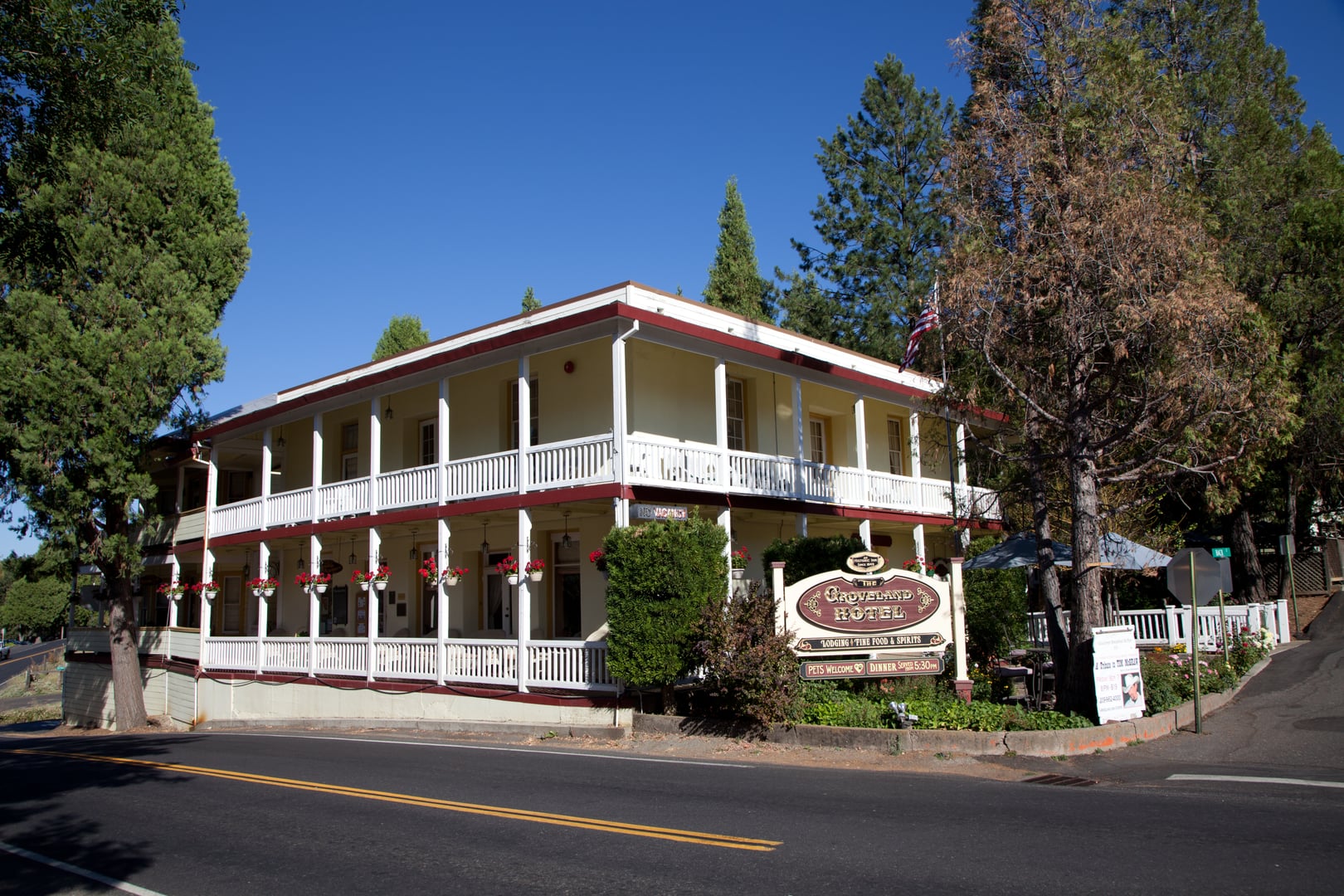
Manchester, NH

The R.G. Sullivan 7-20-4 Cigar Factory was built in 1906 at 175 Canal Street in Manchester by Roger G. Sullivan (1854-1918). At its peak the factory employed roughly 400 workers and produced about 12 million cigars per year, making it one of the largest cigar manufacturers in the country. The plant survived a 1947 fire, closed in 1963, and the seven-story building was converted to Class A office space in 1986.

FreeAll AgesFamily: High
Exterior of Ray's Seafood Restaurant at 1677 Ocean Boulevard, Rye NH, a Seacoast landmark in operation for over 50 years
Photo coming soon
Haunted Dining / Bar

Ray's Seafood Restaurant

Rye, NH

Ray's Seafood Restaurant at 1677 Ocean Boulevard in Rye, New Hampshire has operated for over 50 years and is recognized as one of the oldest continually running seafood restaurants on the state's Seacoast. The building's earlier residential use in the 1960s included tenants named Goldie and her sister Blanche, whose time in the building is the origin of the property's paranormal reputation.

$$All AgesFamily: High
Exterior view of Steele Hill Resort on Steele Hill Road, Sanbornton NH, with Lakes Region landscape
Haunted Hotel / Inn

Steele Hill Resort

Sanbornton, NH

Steele Hill Resort at 516 Steele Hill Road in Sanbornton, New Hampshire is a full-service resort hotel in New Hampshire's Lakes Region. The property is connected to an unsolved homicide: Francis 'Frank' J. Sidoti was shot to death in Sanbornton on September 4, 1977, a case that remains open with the New Hampshire Department of Justice Cold Case Unit. Staff have associated the resort's paranormal reputation with this unresolved death.

$$$All AgesFamily: Moderate
The Mount Washington Hotel in Bretton Woods New Hampshire, iconic white grand resort with red roof
Haunted Hotel / Inn

Omni Mount Washington Resort

Bretton Woods, NH

The Omni Mount Washington Resort opened on July 28, 1902, as a Spanish Renaissance grand hotel built by coal and railroad magnate Joseph Stickney for $1.7 million. Two hundred fifty Italian artisans constructed the property, and in July 1944 it hosted the Bretton Woods Conference, which established the International Monetary Fund and the World Bank.

$$$$All AgesFamily: High
Three Chimneys Inn in Durham New Hampshire, historic 1649 colonial-era inn
Haunted Hotel / Inn

Three Chimneys Inn

Durham, NH

The Three Chimneys Inn in Durham, New Hampshire occupies a homestead built in 1649 by Valentine Hill, a 17th-century New England merchant and entrepreneur. Hill's son Nathaniel later expanded the original single-story home into a three-story colonial. The inn is on the National Register of Historic Places and operates as a boutique hotel with the ffrost Sawyer Tavern and Maples Dining Room.

$$$All AgesFamily: High
Victorian-era cemetery chapel at Valley Cemetery, the 1841 garden cemetery in Manchester, New Hampshire
Cemetery / Burial Ground

Valley Cemetery

Manchester, NH

Valley Cemetery was established in 1841 on a 20-acre parcel donated to the City of Manchester by the Amoskeag Manufacturing Company in 1840. Designed as a Victorian-era garden cemetery, it was listed on the New Hampshire State Register of Historic Places in 2003 and on the U.S. National Register of Historic Places in 2004. The grounds include the 1885 white-marble Frederick Smyth Mausoleum and a pauper's section that received mass burials during 19th-century cholera outbreaks.

FreeAll AgesFamily: Moderate
Winnipesaukee Marketplace building and 1917 elevated footbridge at Weirs Beach
Photo coming soon
Haunted Hotel / Inn

Winnipesaukee Marketplace (Former Lakeside Hotel)
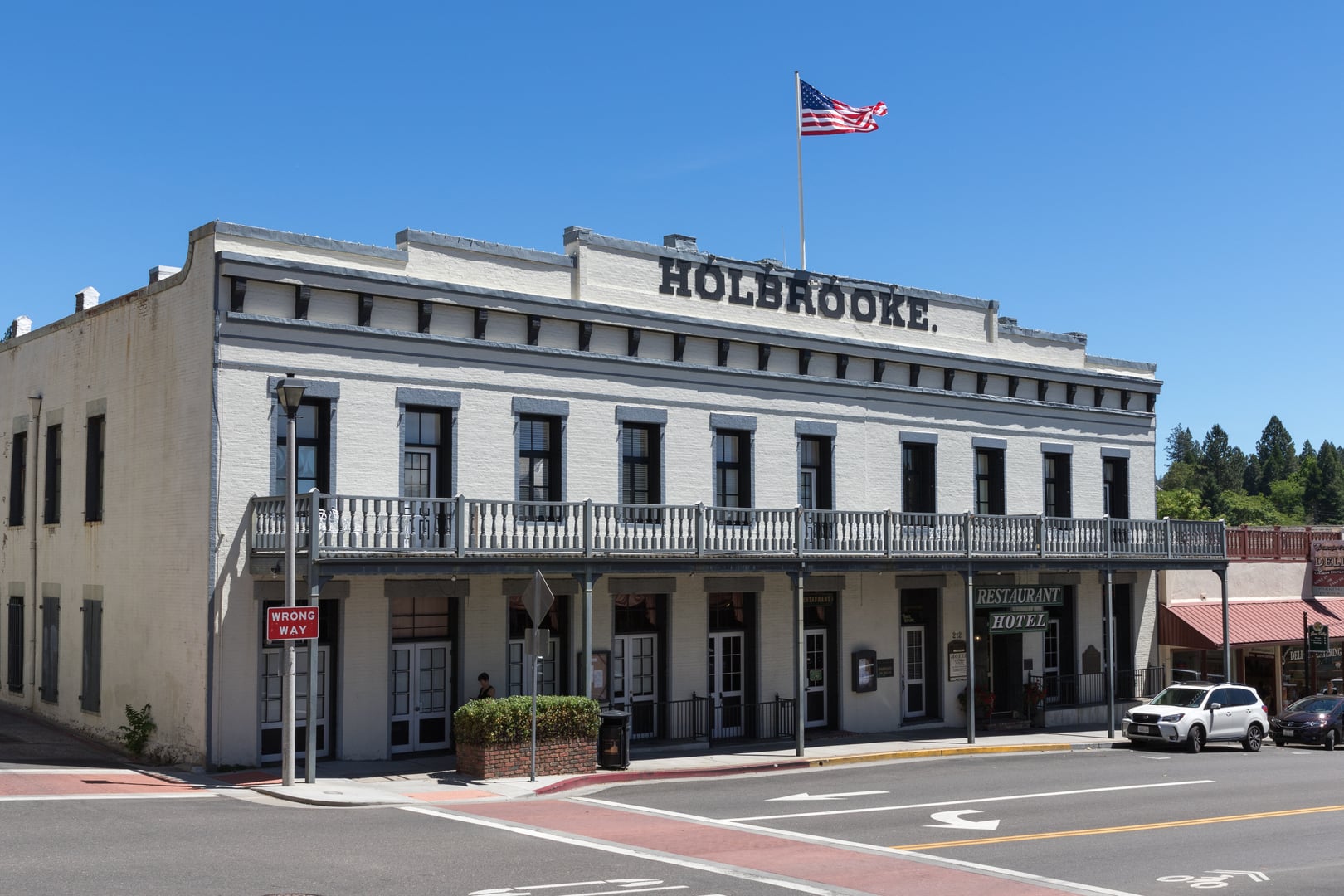
Laconia, NH

Built 1880 as the Lakeside House, later renamed the Lakeside Hotel under Edward T. Milton (owner 1913-1925) and Alberic Favreau (early 1940s). Became the Winnipesaukee Marketplace in 1986. The distinctive elevated footbridge over the railroad tracks was built in 1917.

FreeAll AgesFamily: Moderate
Autumn view of Woodland Cemetery grounds in Keene New Hampshire
Cemetery / Burial Ground

Woodland Cemetery (formerly listed as Woodlawn)

Keene, NH

Woodland Cemetery in Keene, New Hampshire (sometimes called Woodlawn locally), is the largest cemetery in the city, located on Beaver Street and merging into the adjacent Greenlawn Cemetery a block off Washington Street. The Sumner Knight Memorial Chapel stands on the grounds; Section 16 is the historically pauper section without headstones. The City of Keene maintains the cemetery and publishes a multi-page history in the resource by Esther P. Cook, available through the City Clerk's office.

FreeAll AgesFamily: High
Bonito Lake, New Mexico
Outdoor / Natural Site

Bonita Lake

Ruidoso, NM

Bonito City was founded in 1882 as a mining camp following the discovery of silver ore in the area. By the mid-1880s, the town had developed into a proper community with a schoolhouse, three general stores, saloon, post office, hotel, boarding house, blacksmith, and law office. As the gold rush ended and families departed, the town declined into abandonment. In 1930, the government authorized construction of a dam on Bonito Creek to supply water for the railroad. The resulting lake deliberately flooded the remaining structures of Bonito City beneath 40+ feet of water.

FreeAll AgesFamily: Moderate
Rows of identical iron crosses marking miners' graves at Dawson Cemetery in northeast New Mexico
Photo coming soon
Cemetery / Burial Ground

Dawson Cemetery

Dawson, NM

Dawson is a former coal company town in Colfax County, New Mexico, founded in 1901 and abandoned by 1954. The Dawson Cemetery on the National Register of Historic Places holds 383 victims of two catastrophic mine explosions in 1913 (263 dead) and 1923 (123 dead). Iron crosses identify miners from at least six immigrant nationalities.

FreeAll AgesFamily: High
Facade of the Double Eagle Restaurant on Historic Old Mesilla Plaza, an 1849 adobe building where the Gadsden Purchase was finalized
Photo coming soon
Haunted Dining / Bar

Double Eagle Restaurant & Peppers Restaurant

Mesilla, NM

The Double Eagle Restaurant occupies a large adobe structure on the Historic Old Mesilla Plaza that was built during the Mesilla boom period of the 1840s and is acknowledged as the oldest building in Old Mesilla. The Mesilla Plaza was the site where the Gadsden Purchase was formally transferred from Mexico to the United States. The Maes family relocated from Santa Fe to Mesilla following the Mexican-American War of 1846–1848 and occupied the building through the mid-19th century.

$$$All AgesFamily: Moderate
Exterior of El Patio Cantina at 2171 Calle De Parian on Historic Old Mesilla Plaza, New Mexico
Photo coming soon
Haunted Dining / Bar

El Patio Cantina

Mesilla, NM

El Patio Cantina at 2171 Calle de Parian has operated on Historic Old Mesilla Plaza for approximately 75 years, making it one of the longest-running establishments in the region. The site is adjacent to the former Butterfield Overland Mail stagecoach line's regional offices, a connection that places the property within the 1850s–1860s commercial infrastructure of Mesilla when the town was a critical waystation on the southern mail route.

$21+ for bar areasFamily: Low
Fort Bayard officers' quarters row at the edge of the historic parade ground in southwestern New Mexico
Photo coming soon
Battlefield / Military Site

Fort Bayard Historic District

Santa Clara, NM

Fort Bayard was established in 1866 in southwestern New Mexico Territory as a cavalry post protecting settlers and miners during the Apache Wars. The post was garrisoned by the 25th United States Colored Infantry and 9th Cavalry, the African American regiments who became known as the Buffalo Soldiers. Decommissioned as a fort in 1899, it was converted into the U.S. Army's first dedicated tuberculosis sanitarium and continues today as a New Mexico state long-term care facility within a National Historic Landmark District.

FreeAll AgesFamily: High
Abandoned Streamline Moderne cafe at Glenrio ghost town on the New Mexico-Texas Route 66 border
Other Dark Tourism Site

Glenrio

Glenrio, NM

Glenrio is a former railroad and Route 66 settlement straddling the Texas-New Mexico state line in Deaf Smith and Quay counties. Founded in 1903 as a Rock Island Railroad siding, it became a popular Route 66 service stop between Amarillo and Tucumcari before Interstate 40 bypassed the town in September 1973. The 31.7-acre Glenrio Historic District was listed on the National Register of Historic Places in 2007.

FreeAll AgesFamily: High
KiMo Theatre Pueblo Deco facade on Central Avenue in Albuquerque New Mexico
Theater / Performance Venue

KiMo Theatre

Albuquerque, NM

The KiMo Theatre opened on September 19, 1927, as the first theater constructed in the Pueblo Deco style — a fusion of adobe Pueblo Revival architecture with Art Deco linear decoration and indigenous cultural motifs. Designed at a total cost of $150,000, including an $18,000 Wurlitzer organ, the theater was built for Oreste Bachechi and named by Pablo Abeita, former governor of Isleta Pueblo, whose entry 'Kimo' (loosely 'king of the beasts') won a public naming contest. In 1977, Albuquerque citizens voted to purchase the building for preservation; restoration was completed in 2000.

$All AgesFamily: High
Pueblo Deco terracotta facade of the KiMo Theater on Central Avenue in downtown Albuquerque, New Mexico
Theater / Performance Venue

KiMo Theater

Albuquerque, NM

The KiMo Theater opened on September 19, 1927 in downtown Albuquerque as a Pueblo Deco picture palace. Italian-American entrepreneur Oreste Bachechi commissioned the theater; Carl Boller of the Boller Brothers firm designed it after studying Southwestern Indigenous architectural traditions. The City of Albuquerque purchased and restored the theater in 1977, and it remains a working performance venue.

$$All AgesFamily: High
La Fonda Hotel Pueblo Revival exterior on the plaza in Santa Fe New Mexico
Haunted Hotel / Inn

La Fonda on the Plaza

Santa Fe, NM

La Fonda on the Plaza in Santa Fe occupies the oldest continuously occupied inn site in the United States. Records show an inn at this location when the Spanish founded Santa Fe in 1607; the current building dates to 1922 and operated as a Fred Harvey property from 1926 to 1968. At least two documented violent deaths occurred within the original structure, including the 1867 shooting death of Chief Justice John P. Slough.

$$$All AgesFamily: High
Sandstone terrain and hiking trails at Lions Wilderness Park in Farmington, New Mexico
Photo coming soon
Outdoor / Natural Site

Lions Wilderness Park

Farmington, NM

Lions Wilderness Park is a 184.5-acre city park in Farmington, New Mexico, operated by the City of Farmington at 5800 College Blvd. The park features hiking and mountain bike trails with connections to Bureau of Land Management lands, a disc golf course, picnic areas, and the Sandstone Amphitheatre, which hosts outdoor summer theater productions.

FreeAll AgesFamily: Moderate
Former Montecarlo Cafe building on Route 66 in Grants, New Mexico
Photo coming soon
Haunted Dining / Bar

Montecarlo Cafe

Grants, NM

The Montecarlo Cafe was established by Escolástico Mazon in the early 1950s on W Santa Fe Avenue — the Route 66 corridor through Grants, New Mexico. Business boomed with uranium discovery in the region, and the cafe became a fixture for miners and local residents. An early 1990s fire gutted the upstairs apartments, which were subsequently rebuilt as banquet space. The restaurant has been closed for several years.

FreeAll AgesFamily: High
The historic 1886 Montezuma Castle hotel building, now part of UWC-USA campus near Las Vegas, New Mexico
Haunted House / Historic Home

Montezuma Castle — UWC-USA

Montezuma, NM

The Montezuma Castle near Las Vegas, New Mexico is the third hotel on this site — the first two, dating to 1881 and 1885, were among New Mexico's first electrically lit buildings and both burned down. The 90,000-square-foot Queen Anne structure built by the Atchison, Topeka & Santa Fe Railroad in 1886 hosted President Theodore Roosevelt and General William T. Sherman before closing in 1903. It passed through ownership by the YMCA, a Baptist college, and Catholic Jesuits before becoming the campus of UWC-USA (United World College) in 1981.

FreeAll AgesFamily: High
Gothic Revival buff brick buildings of New Mexico Military Institute in Roswell, New Mexico
Photo coming soon
Museum / Historical Site

New Mexico Military Institute

Roswell, NM

New Mexico Military Institute was founded in 1891 by Colonel Robert S. Goss and Captain Joseph C. Lea as the Goss Military Institute, initially enrolling 38 students. Recognized by the territorial legislature and renamed NMMI in 1893, it faced closure in 1895 but reopened in 1898 after James Hagerman donated 40 acres of land. Today it enrolls approximately 1,000 cadets at both high school and junior college levels.

FreeAll AgesFamily: High
Norman Petty Recording Studios at 1313 W 7th Street in Clovis, New Mexico
Museum / Historical Site

Norman Petty Studios

Clovis, NM

Norman Petty completed his recording studio at 1313 West 7th Street in Clovis, New Mexico in 1956, designing it for the acoustic properties that would define the Clovis Sound. Buddy Holly and the Crickets recorded the majority of their catalog here, including 'That'll Be the Day' and 'Peggy Sue.' Petty died in 1984; his wife Vi preserved the studio exactly as it was until her death, and it now operates as a museum with appointment-only tours.

$All AgesFamily: High
St. James Hotel in Cimarron New Mexico, 1872 Wild West hotel on Santa Fe Trail
Haunted Hotel / Inn

St. James Hotel

Cimarron, NM

The St. James Hotel in Cimarron, New Mexico was built in 1872 by Henri Lambert, who had served as personal chef to President Abraham Lincoln. Situated on the Santa Fe Trail, the hotel's saloon and restaurant witnessed at least 26 documented murders during the Wild West era. A father-daughter team under M Vacation Properties & Resorts purchased the property and reopened it December 20, 2024, after its previous closure in September 2024.

$$All agesFamily: Moderate
Exterior of the restored downtown Santa Fe St. Vincent Hospital complex, now the Drury Plaza Hotel Santa Fe
Photo coming soon
Asylum / Hospital

The Old St. Vincent Hospital (Marian Hall Complex)

Santa Fe, NM

The Old St. Vincent Hospital complex in downtown Santa Fe — the oldest hospital in New Mexico — was established in 1865 by the Sisters of Charity from Ohio. The complex grew across multiple buildings, including a tuberculosis sanitarium on the third floor of the 1911 Marian Hall. The hospital moved to St. Michael's Drive in 1977. The downtown complex was renovated and now operates as the Drury Plaza Hotel Santa Fe.

$$All AgesFamily: High
Reconstructed blockhouse and palisade at Fort Abercrombie State Historic Site, North Dakota
Photo coming soon
Battlefield / Military Site

Fort Abercrombie State Historic Site

Abercrombie, ND

Fort Abercrombie was established in 1857 as the first permanent United States military post in what is now North Dakota and was nicknamed the Gateway to the Dakotas. During the U.S.-Dakota War of 1862, the fort withstood a siege of more than six weeks. Today the State Historical Society of North Dakota operates the site, including reconstructed blockhouses and the original guardhouse.

FreeAll AgesFamily: High
Reconstructed Custer House at Fort Abraham Lincoln State Park near Mandan, North Dakota
Museum / Historical Site

Fort Abraham Lincoln State Park

Mandan, ND

Fort Abraham Lincoln was established in 1872 on the west bank of the Missouri River near present-day Mandan, North Dakota. Lieutenant Colonel George Armstrong Custer arrived in 1873 and commanded the fort until June 1876, when the 7th Cavalry departed for the campaign that ended at the Battle of Little Bighorn on June 25–26, 1876. Custer and 268 men died in that engagement. The fort was decommissioned in 1891; North Dakota State Parks reconstructed the Custer House and key fort structures in 1989.

$All Ages (daytime); 10+ recommended for Haunted Fort eventFamily: Moderate
Harvey Public Library in Harvey, North Dakota, built on the site of the 1931 Sophia Eberlein murder
Photo coming soon
Museum / Historical Site

Harvey Public Library

Harvey, ND

Harvey Public Library in Harvey, North Dakota, opened in 1990 on the site of the former Bentz residence, where Sophia Eberlein — a German-Russian immigrant and widow of local businessman Hugo Eberlein — was beaten to death by her second husband, Jacob Bentz, on October 2, 1931. Bentz attempted to destroy the evidence by burning her body outside city limits. He was identified by his stepdaughter, confessed during investigation, and was sentenced to life in prison.

FreeAll AgesFamily: Moderate
Renaissance Hall, the former Northern School Supply warehouse at 650 NP Ave in Fargo, North Dakota
Photo coming soon
Museum / Historical Site

Northern School Supply Warehouse (Renaissance Hall)

Fargo, ND

The Northern School Supply warehouse was built around 1910 at 650 NP Avenue in downtown Fargo as a farm implement warehouse and dealership. The four-story, 77,000-square-foot post-and-beam structure operated as a school supply distribution center until Northern School Supply closed in 1997. Saved from demolition in 2000 through a donation by Doug Burgum, the building was transferred to the NDSU Development Foundation and renamed Renaissance Hall in 2008.

FreeAll AgesFamily: High
Rail crossing in the Fargo-Moorhead corridor across the Red River Valley
Photo coming soon
Outdoor / Natural Site

Moorhead Train Tracks

Fargo, ND

The rail corridor running through Fargo, North Dakota, and crossing into Moorhead, Minnesota, has served as a freight and passenger route through the Red River Valley for over a century. The regional legend attached to it describes a woman who attempted to board a moving train along this corridor and was dragged to her death.

FreeAll AgesFamily: Moderate
Brick three-story former St. Joseph's Hospital building, now St. Joe's Plaza, in Dickinson North Dakota
Photo coming soon
Theatrical Haunted Attraction

St Joseph's Hospital

Dickinson, ND

St. Joseph's Hospital was founded in Dickinson, North Dakota in 1912 by six Swiss nuns of the Sisters of Mercy of the Holy Cross at the request of Bishop Vincent Wehrle. The order operated the hospital until 1987. It later became CHI St. Joseph's Health, was renamed CHI St. Alexius in 2016, and the original building was retired when a new medical center opened in 2014. The former hospital is now St. Joe's Plaza.

$All AgesFamily: Low
The 1884 Rough Riders Hotel facade in historic Medora, North Dakota
Haunted Hotel / Inn

Rough Riders Hotel

Medora, ND

The Rough Riders Hotel was built in 1884-1885 by George Fitzgerald in the frontier town of Medora, North Dakota. Originally named the Metropolitan, it was renamed in 1903 to honor Theodore Roosevelt's Rough Riders, the volunteer cavalry regiment that fought in the Spanish-American War. Roosevelt delivered a speech from the hotel's balcony that same year.

$$$All AgesFamily: High
Trollwood Park in North Fargo, North Dakota, with the County Cemetery Number 2 stone marker and willow tree where paranormal sightings have been reported
Photo coming soon
Outdoor / Natural Site

Trollwood Park

Fargo, ND

Cass County purchased farmland two miles north of Fargo in 1895 and established the Cass County Hospital and Poor Farm, a facility for residents without family or financial means. When the facility closed in 1973 and was demolished, the grounds held an estimated 1,000 unmarked graves across three cemeteries. Approximately 300 burials were relocated in 1985 due to neglect; some remain in place. The property became Trollwood Park and hosted a performing arts school whose outdoor performances coincided with the most frequently reported paranormal activity.

FreeAll AgesFamily: High
Boulevard Avenue in downtown Muskogee, Oklahoma
Photo coming soon
Other Dark Tourism Site

Boulevard Ave.

Muskogee, OK

Muskogee, Oklahoma, was founded in 1872 as a railroad town in Indian Territory and served as headquarters of the Union Agency for the Five Civilized Tribes. The surrounding area was shaped by the Trail of Tears forced-removal routes of the 1830s.

FreeAll AgesFamily: High
Open Graph image from www.tulsatheater.com
Theater / Performance Venue

Brady Theatre

Tulsa, OK

Tulsa Theater, formerly known as Brady Theater, is a historic performing arts venue completed in 1914. Designed by the architectural firm Rose and Peterson, the building served as a municipal auditorium and convention hall. It was renamed Tulsa Theater in 2019 after the previous namesake, W. Tate Brady, was revealed to have Ku Klux Klan affiliations.

$$All AgesFamily: High
Broken Bow Public Library, housed in a historic former high school building in McCurtain County
Photo coming soon
Museum / Historical Site

Broken Bow Library/Old High School

Broken Bow, OK

The Broken Bow Public Library is housed in the historic former Broken Bow High School building, located in McCurtain County in southeastern Oklahoma. The building was donated to the community by a group of Broken Bow businessmen for conversion into the public library. Broken Bow sits in central McCurtain County, approximately 12 miles north-northeast of Idabel.

FreeAll AgesFamily: High
Briggs Auditorium on the campus of Northern Oklahoma College, Enid, Oklahoma
Theater / Performance Venue

Briggs Auditorium

Enid, OK

Briggs Auditorium was built in 1957-58 at what was then Phillips University in Enid, Oklahoma, and is named for longtime Phillips president Eugene S. Briggs. The campus was acquired by Northern Oklahoma College in 1999 after Phillips's 1998 bankruptcy.

$All AgesFamily: High
Brown Springs Cemetery hilltop in Love County, Oklahoma, marked by barbed wire fence
Photo coming soon
Cemetery / Burial Ground

Brown Springs

Thackerville, OK

Brown Springs Cemetery is an abandoned, largely unmarked burial ground located on a steep hilltop in Love County near Thackerville, Oklahoma, about five miles north of the Texas state line. The cemetery's dark history involves outlaws and bodies from violent crimes, disposed in the springs as clandestine burial sites. The area has been a hiding place for criminals and a dumping ground for murdered individuals for well over a century.

FreeAll AgesFamily: Low
The two-story brick Cherokee County Courthouse on West Delaware Street in Tahlequah, Oklahoma.
Photo coming soon
Other Dark Tourism Site

Cherokee County Courthouse

Tahlequah, OK

The Cherokee County Courthouse in Tahlequah, Oklahoma, occupies a building that previously served as the city hospital before being remodeled in 1978-79 to house the county courts and city hall. The structure is a two-story brick and concrete building on a T-shaped plan in the center of Tahlequah, which served as the historic capital of the Cherokee Nation.

FreeAll Ages on exterior; security screening for interior court businessFamily: High
Former Alva General Hospital, now the Cherokee Strip Museum in Alva, Oklahoma
Photo coming soon
Museum / Historical Site

Cherokee Strip Museum

Alva, OK

The museum building was constructed in 1932 as the Alva General Hospital and operated as a hospital until 1972. The Morton Share Trust donated the building to the Cherokee Strip Museum Association in 1975, and the museum reopened in its current form in 1976. The collection had previously been housed at Northwestern State College (1961) and the Alva City Library (1965).

$All AgesFamily: High
Exterior of the former Kentucky Club building at 1226 NE 63rd Street, Oklahoma City, a Prohibition-era speakeasy now vacant
Photo coming soon
Haunted Dining / Bar

The County Line (Formerly)

Oklahoma City, OK

The building at 1226 NE 63rd Street in Oklahoma City was constructed around 1938 as the Kentucky Club, a Prohibition-era speakeasy, dance hall, gambling den, and bordello positioned far enough from the city center to operate outside immediate law enforcement reach. The County Line Barbeque occupied it until closing in 2010; Gabriella's Italian Grill subsequently operated in the space before the building became vacant. The site has been listed for commercial lease since at least 2024.

FreeAll AgesFamily: High
Discoveryland Ranch amphitheater in Sand Springs, Oklahoma, longtime outdoor home of the musical Oklahoma!
Photo coming soon
Theater / Performance Venue

Discoveryland Ranch (Discoveryland! Amphitheater)

Sand Springs, OK

Discoveryland Amphitheater opened in 1976 as a 2,000-seat outdoor venue west of Tulsa in Sand Springs, Oklahoma. From 1977 to 2011 it served as the official home of the Rodgers and Hammerstein musical 'Oklahoma!' The venue closed in 2014 and was reopened in 2019 as Discoveryland Ranch, a multi-use event property.

$$All AgesFamily: High
Early-20th-century three-story hotel building in downtown Waynoka, Oklahoma
Photo coming soon
Haunted House / Historic Home

Eastman Hotel

Waynoka, OK

The Eastman Hotel — originally the Campbell Hotel — was built in Waynoka, Oklahoma, to serve passengers of Transcontinental Air Transport, the first commercial transcontinental airline. Charles Lindbergh selected Waynoka as the airline's Oklahoma stop in 1929. The hotel is no longer in operation, but the building remains in Waynoka.

FreeAll AgesFamily: Moderate
The cobblestone pyramid marking Geronimo's grave at the Apache Prisoner-of-War Cemetery on Fort Sill, Oklahoma
Photo coming soon
Cemetery / Burial Ground

Fort Sill (Geronimo's Grave & Apache Cemeteries)

Lawton, OK

Fort Sill is an active U.S. Army post in southwest Oklahoma, established in 1869 during the Indian Wars. From 1894 onward it was the final imprisonment site of the Chiricahua Apache, including Geronimo, who is buried in the Apache Prisoner-of-War Cemetery on post.

FreeAll AgesFamily: Moderate
Overgrown ruins of the West Barracks at Fort Washita Historic Site near Durant, Oklahoma, photographed 1975
Battlefield / Military Site

Fort Washita Historic Site

Durant, OK

Fort Washita was established in 1842 by the United States Army to protect the Chickasaw and Choctaw Nations following their forced relocation to Indian Territory. The post operated until 1865, when it was abandoned during the Civil War. The Oklahoma Historical Society acquired the site in 1962, and it is now managed by the Chickasaw Nation.

$All AgesFamily: Moderate
Skirvin Hilton Hotel illuminated at night in downtown Oklahoma City, the restored 1911 landmark hotel
Haunted Hotel / Inn

Skirvin Hilton Hotel

Oklahoma City, OK

The Skirvin opened September 26, 1911 as Oklahoma City's premier hotel, built by oilman W.B. Skirvin. After decades of decline it closed in 1988, was meticulously restored, and reopened in 2007 as the Skirvin Hilton.

$$$All AgesFamily: High
Rural cemetery in Garfield County Oklahoma with flat plains visible behind the headstones
Photo coming soon
Cemetery / Burial Ground

Imo Cemetery

Drummond, OK

Imo Cemetery is a small rural burial ground in Drummond, Garfield County, Oklahoma, with 50 documented memorials and a history rooted in the homesteading families who settled the Cherokee Outlet after the 1893 land run. The cemetery is maintained on a volunteer basis.

FreeAll AgesFamily: High
Lake Jed Johnson reflection.
Outdoor / Natural Site

Lake Jed Johnson

Lawton, OK

Lake Jed Johnson is a 57.5-acre reservoir in the Wichita Mountains Wildlife Refuge in Comanche County, Oklahoma, created in 1940 by the construction of a dam across Blue Beaver Creek. The lake and adjacent stone observation tower — built in 1941 by the Civilian Conservation Corps — are named for Jed Johnson (1888-1963), a 10-term Oklahoma congressman who championed the refuge's development.

FreeAll AgesFamily: Moderate
A small overgrown rural cemetery set into the edge of woods off County Road 2700 south of Bartlesville Oklahoma
Photo coming soon
Cemetery / Burial Ground

Jesse Creek Cemetery

Bartlesville, OK

Jesse Creek Cemetery (also spelled Jessie Creek) is a small abandoned cemetery off County Road 2700 south of Bartlesville, in Washington County, Oklahoma. The cemetery is set back into the edge of the woods adjacent to a closed lawn and landscape business, and is hard to spot from the road. Available documentation is limited to community paranormal aggregators and local Oklahoma folklore sites.

FreeAll Ages (drive-by)Family: Moderate
Rural road through the Kalihoma Indian Reservation near Ada, Oklahoma at night
Photo coming soon
Outdoor / Natural Site

Kalihoma Indian Reservation Road

Ada, OK

The Kalihoma (also spelled Kullihoma) grounds near Ada, Oklahoma are part of the Chickasaw Nation's historic territory in Pontotoc County. The road connecting Highway 48 to Highway 1 through the reservation has accumulated a local legend of a phantom vehicle over several decades, with accounts dating at least to the late 1990s.

FreeAll AgesFamily: Moderate
Exterior of Keys Elementary School in Cherokee County, Oklahoma
Photo coming soon
Other Dark Tourism Site

Keys Elementary School

Keys, OK

Keys Elementary School is part of Keys Public Schools, a PK-12 district serving the rural Cherokee County area near Lake Tenkiller in eastern Oklahoma. The school serves a predominantly Cherokee Nation community; the school mascot, the Keys Cougars, reflects the local identity. The Keys area has a long history of Cherokee settlement following removal from the southeastern United States in the 1830s.

FreeAll AgesFamily: High
Rural Oklahoma cemetery with limestone headstones on open prairie
Photo coming soon
Cemetery / Burial Ground

Kiowa Cemetery

Hammon, OK

Kiowa Cemetery was established in March 1899 when homesteader George Lacey designated the southeast corner of his Roger Mills County property for community burial after infant Tommy Hill's death. Named for the Big and Little Kiowa Creeks flanking the site, the cemetery has always accepted all denominations free of charge and is maintained today under a trust fund.

FreeAll AgesFamily: High
Open Graph image from umcmission.org
Museum / Historical Site

Kulli Tuklo United Methodist Church

Idabel, OK

Kulli Tuklo United Methodist Church, located approximately seven miles southeast of Idabel in McCurtain County, is one of the oldest Choctaw congregations in the Oklahoma Indian Missionary Conference. The settlement was established in the late 1830s when Choctaw people removed from Mississippi during the Trail of Tears founded a community around two sandy springs, naming the location 'Kvlli Tuklo' — meaning Two Springs in the Choctaw language.

FreeAll AgesFamily: High
A rural Oklahoma road approaching the small bridge over Kitchen Lake outflow south of Oklahoma City
Photo coming soon
Outdoor / Natural Site

Kitchen Lake Bridge

Oklahoma City, OK

Kitchen Lake Bridge sits on a rural lane south of Oklahoma City near the corner of Air Depot Boulevard and SE 119th Street. A chimney and fireplace foundation remain from a house that once stood near the bridge. The witch-house legend appears to date from the 1960s; local researchers have not located any newspaper record of a fatal fire that would anchor the story.

FreeAll AgesFamily: Moderate
Two teams playing at the Kullihoma Stickball Tournament in Oklahoma.
Outdoor / Natural Site

Kullihoma

Ada, OK

Kullihoma — meaning 'Red Springs' in the Chickasaw language, referencing the reddish waters that preceded storms — was established as a Chickasaw Nation trust property following the Indian Welfare Act of 1936. The original parcel of over 146 acres expanded to more than 1,961 acres by 2011 and serves as a center for Chickasaw cultural practice, hosting stomp dancing and traditional activities that trace their roots to the 1800s.

FreeAll AgesFamily: High
Fairway at Mohawk Park Golf Course in Tulsa, Oklahoma
Photo coming soon
Outdoor / Natural Site

Mohawk Park Golf Course

Tulsa, OK

Mohawk Park was created in 1924 as part of Tulsa's infrastructure expansion and became home to Mohawk Golf Course in 1934, originally 18 holes later expanded to 36. The 3,300-acre park is one of the largest municipal parks in the United States and contains the Tulsa Zoo, Oxley Nature Center, and a lake.

$$All AgesFamily: High
Wooded trail through Mohawk Park in Tulsa, Oklahoma
Photo coming soon
Outdoor / Natural Site

Mohawk Park

Tulsa, OK

Mohawk Park was established in 1924 as an outgrowth of the Spavinaw Water Project that brought water to Tulsa. Federal New Deal programs developed it through the 1930s into a 3,300-acre complex containing the Tulsa Zoo, Mohawk Golf Course (1934), a recreation lake, and what would become the 804-acre Oxley Nature Center.

FreeAll AgesFamily: High
The Oklahoma City National Memorial commemorating victims of the 1995 Murrah Building bombing
Museum / Historical Site

Oklahoma City National Memorial

Oklahoma City, OK

At 9:02 a.m. on April 19, 1995, a truck bomb detonated beneath the north face of the Alfred P. Murrah Federal Building in Oklahoma City, killing 168 people and injuring 684 more. The building was demolished in May 1995. The Oklahoma City National Memorial was dedicated on the fifth anniversary of the bombing in 2000, occupying the former footprint of the building and the adjacent streets.

$$All AgesFamily: Moderate
Pawnee Bill Ranch mansion exterior, Pawnee Oklahoma
Museum / Historical Site

Pawnee Bill Ranch and Museum

Pawnee, OK

Pawnee Bill Ranch at 1141 Pawnee Bill Road in Pawnee, Oklahoma preserves the 500-acre estate of Gordon W. 'Pawnee Bill' Lillie, a Wild West entertainer who operated shows alongside Buffalo Bill Cody in the early 20th century. The 1910 mansion, fully furnished with original Lillie family belongings, is operated by the Oklahoma Historical Society and listed on the National Register of Historic Places.

$All AgesFamily: High
Shawnee Twin Lakes reservoir in Pottawatomie County, Oklahoma
Photo coming soon
Outdoor / Natural Site

Shawnee Twin Lakes

Shawnee, OK

Shawnee Twin Lakes are a pair of City of Shawnee water-supply reservoirs in Pottawatomie County, Oklahoma. Lake Number 1 was completed in 1935 and Lake Number 2 in 1960, with a connecting canal opened in 1962. The system supports municipal water supply and public recreation seven miles west of Shawnee.

$All AgesFamily: High
Skirvin Hilton Hotel illuminated at night in downtown Oklahoma City, 1911 historic high-rise
Haunted Hotel / Inn

Skirvin Hilton Hotel

Oklahoma City, OK

The Skirvin Hotel opened September 26, 1911, founded by Oklahoma City oil and land developer William Balser Skirvin. Oklahoma City's oldest operating hotel, the 13-story, 225-room Hilton-branded property is listed on the National Register of Historic Places. It closed in 1988 due to low occupancy and remained vacant for 19 years before a $51 million renovation restored it in 2007; a further $22 million renovation was completed in 2025.

$$$All agesFamily: High
Rural family cemetery near Catoosa, Oklahoma
Photo coming soon
Cemetery / Burial Ground

Timber Ridge Cemetery

Catoosa, OK

Timber Ridge Cemetery is a small family cemetery at 30356 S. 4130 Road near Catoosa, Oklahoma, six miles east of town off Highway 412. Find a Grave documents the site, and Catoosa-area sources describe it as an active family burial ground.

FreeAll AgesFamily: High
Fishing dock and eastern shoreline of Veterans Lake in Chickasaw National Recreation Area, Sulphur, Oklahoma
Outdoor / Natural Site

Veterans Lake

Sulphur, OK

Veterans Lake is a 67-acre reservoir in Murray County, Oklahoma, constructed by the Civilian Conservation Corps and Public Works Administration as a Great Depression-era public works project. The lake was dedicated to American war veterans in 1933 and was incorporated into Chickasaw National Recreation Area in 1983.

FreeAll AgesFamily: High
Acid Park site
Photo coming soon
Outdoor / Natural Site

Acid Park

Lucama, NC

Acid Park is a paranormal site in North Carolina.

FreeAll agesFamily: High
1790 Attmore-Oliver House at 511 Broad Street, a historic house museum in New Bern, Craven County, North Carolina
Museum / Historical Site

Attmore-Oliver House

New Bern, NC

The Attmore-Oliver House at 511 Broad Street in New Bern, North Carolina, was originally built around 1790 for Samuel Chapman, a retired Continental Army officer, and substantially enlarged around 1834. The home now serves as the administrative offices and primary museum of the New Bern Historical Society, with a Civil War exhibit focused on the 1862 fall of New Bern and the city's subsequent Union occupation.

$All AgesFamily: High
Spanish Renaissance Revival facade and tile dome of the Basilica of St. Lawrence on Haywood Street in Asheville
Photo coming soon
Other Dark Tourism Site

Basilica of St. Lawrence

Asheville, NC

The Basilica of St. Lawrence is a Spanish Renaissance Revival Catholic church completed in 1909, designed by Spanish architect Rafael Guastavino with R.S. Smith. Its 58-by-82-foot freestanding tile dome is reported as the largest of its kind in North America. Pope John Paul II elevated the church to minor basilica status in 1993.

FreeAll AgesFamily: High
Front exterior view of the Italianate Bellamy Mansion in Wilmington, North Carolina
Haunted House / Historic Home

Bellamy Mansion

Wilmington, NC

The Bellamy Mansion at 503 Market Street in Wilmington, North Carolina was constructed between 1859 and 1861 for Dr. John D. Bellamy and his family. The 22-room Italianate mansion was built largely by enslaved and freed Black artisans. Union forces occupied the home in early 1865, and two Bellamy daughters — Eliza and Ellen — lived in the house until their deaths, with Ellen remaining until 1946.

$$All Ages (museum); 18+ for ghost huntsFamily: Moderate
Bentonville Battleground Civil War site
Photo coming soon
Battlefield / Military Site

Bentonville Battleground

Four Oaks, NC

Bentonville Battleground is the site of the March 1865 Battle of Bentonville, one of the last major Civil War engagements in North Carolina. Hundreds of soldiers died in the fighting.

FreeAll agesFamily: Moderate
Brown Mountain ridge viewed from a Blue Ridge Parkway overlook at Beacon Heights, North Carolina
Outdoor / Natural Site

Brown Mountain Lights (Blue Ridge Parkway Overlooks)

near Morganton, NC

The Brown Mountain Lights are an intermittent light phenomenon visible from the Burke County, North Carolina, side of Brown Mountain, a low ridge along the Burke-Caldwell county line. Sightings have been documented since 1833. The U.S. Geological Survey investigated the lights in 1913 and again in the 1920s, and the phenomenon has been studied repeatedly by academic researchers since.

FreeAll AgesFamily: High
156-foot black-and-white horizontally-banded Bodie Island Lighthouse on the Outer Banks of North Carolina
Museum / Historical Site

Bodie Island Lighthouse

Nags Head, NC

The Bodie Island Lighthouse, built in 1872, is the third light station to stand on this stretch of the North Carolina Outer Banks. Its 156-foot tower marks one of the most treacherous sections of the Graveyard of the Atlantic between Cape Henry and Cape Hatteras.

$All AgesFamily: High
Bostian Bridge
Photo coming soon
Outdoor / Natural Site

Bostian Bridge

Statesville, NC

Bostian Bridge is a historic railroad bridge in North Carolina.

FreeAll agesFamily: High
Brown Mountain — the low Burke County ridge famous for the Brown Mountain Lights — seen from Beacon Heights on the Blue Ridge Parkway
Outdoor / Natural Site

Brown Mountain

Morganton, NC

The Brown Mountain Lights are an unexplained luminous phenomenon reported above Brown Mountain in the Pisgah National Forest of western North Carolina. The earliest documented observations date from the 1910s; Cherokee and Catawba oral traditions reference the lights for centuries before that. The United States Geological Survey investigated the phenomenon in 1913 and 1922.

FreeAll AgesFamily: High
Front exterior of the 1770 Burgwin-Wright House at 224 Market Street in downtown Wilmington, North Carolina.
Museum / Historical Site

Burgwin-Wright House

Wilmington, NC

The Burgwin-Wright House at 224 Market Street in Wilmington, North Carolina was built in 1770 for merchant, planter, and government official John Burgwin atop the ballast-stone foundations of Wilmington's former town jail (1744-1768). It is the only Wilmington structure from the colonial era open to the public and is preserved as a house museum by the National Society of The Colonial Dames of America in the State of North Carolina.

$All AgesFamily: High
Eno River State Park
Photo coming soon
Cemetery / Burial Ground

Cabe Lands Cemetery

Durham, NC

The Cabe Lands Cemetery serves as the family burial ground of John Cabe, a prominent planter, miller, and politician who acquired over 300 acres along the Eno River in 1780 and expanded his holdings to approximately 3,000 acres by his death in 1818. The cemetery reflects early settlement patterns in the Eno River Valley during the late eighteenth and early nineteenth centuries.

FreeAll AgesFamily: High
The 198-foot black-and-white striped brick Cape Hatteras Lighthouse on Hatteras Island, Outer Banks, North Carolina
Museum / Historical Site

Cape Hatteras Lighthouse

Buxton, NC

The current Cape Hatteras Lighthouse was completed in 1870 and stands 198 feet tall, making it one of the tallest brick lighthouses in the world. The Outer Banks coast it guards is historically called the Graveyard of the Atlantic. The earlier 1803 lighthouse on the same site was associated by tradition with the 1812 disappearance of Theodosia Burr Alston, daughter of former Vice President Aaron Burr.

FreeAll AgesFamily: High
210-foot brick Cape Hatteras Lighthouse with its distinctive black-and-white spiral barber-pole stripes in Buxton, North Carolina
Museum / Historical Site

Cape Hatteras Lighthouse

Buxton, NC

The current Cape Hatteras Lighthouse, completed in 1870 in Buxton on the Outer Banks of North Carolina, is the tallest brick lighthouse in the United States at 210 feet. It marks Diamond Shoals — the offshore sandbar at the heart of the Graveyard of the Atlantic — and was relocated 2,900 feet inland in 1999 to escape the eroding shoreline.

$All AgesFamily: High
Nighttime exterior of the 1926 Carolina Theatre of Durham, North Carolina, illuminated marquee and entrance.
Theater / Performance Venue

Carolina Theatre of Durham

Durham, NC

The Carolina Theatre of Durham opened as the Durham Auditorium on February 2, 1926, was remodeled for film in 1929 and renamed The Carolina, and became one of downtown Durham's signature venues. During its first 37 years it operated under segregation, and in 1962 it desegregated following years of student-led 'Round Robin' protests organized by the local NAACP youth chapter.

$$All AgesFamily: High
Marquee and facade of the Carolina Theatre in downtown Greensboro, North Carolina
Theater / Performance Venue

Carolina Theatre

Greensboro, NC

The Carolina Theatre in Greensboro, North Carolina, opened on Halloween night 1927 as a vaudeville and silent-movie palace. Designed in a lavish 1920s architectural style with chandeliers, ornate plaster, and a balcony auditorium, it hosted Ethel Barrymore, Bob Hope, and Elvis Presley during its operating decades. A 1981 arson fire killed the woman who set it; the theatre was subsequently restored.

$$All AgesFamily: High
Our Dead monument standing among gravestones at Cedar Grove Cemetery in New Bern, North Carolina
Cemetery / Burial Ground

Cedar Grove Cemetery

New Bern, NC

Cedar Grove Cemetery in New Bern, North Carolina, was acquired by Christ Episcopal Church in 1800 after the Yellow Fever epidemic of 1798-99 filled the original churchyard burial ground. The City of New Bern took over the cemetery in 1853 and added the distinctive coquina Weeping Arch entrance in 1854. The cemetery holds one of North Carolina's finest collections of 19th-century mortuary statuary.

FreeAll AgesFamily: High
Brick exterior of The Cotton Exchange complex on North Front Street in downtown Wilmington, North Carolina.
Haunted Dining / Bar

The Cotton Exchange

Wilmington, NC

The Cotton Exchange at 321 North Front Street in Wilmington, North Carolina is a downtown commercial complex of eight restored 19th-century buildings — many of them associated with the cotton trade that defined the city's commerce in the late 1800s — that have been adaptively reused since the 1970s as a unified shopping and dining district housing about 30 tenants.

FreeAll AgesFamily: High
The Devil's Tramping Ground bare-earth circle in the woods of Chatham County, North Carolina
Outdoor / Natural Site

Devil's Tramping Ground

Bear Creek, NC

The Devil's Tramping Ground in Chatham County, North Carolina is a 40-foot circle of bare earth where a foot-wide path supports no vegetation. Written accounts date to the 1800s; oral accounts extend to before the American Revolution. The site sits ten miles from Siler City in the Harper's Crossroads area of Bear Creek and appears on state historical records through the NCpedia and Visit North Carolina databases.

$All AgesFamily: High
The fieldstone exterior of Gimghoul Castle in Chapel Hill, North Carolina
Photo coming soon
Haunted House / Historic Home

Gimghoul Castle (Dromgoole's Castle)

Chapel Hill, NC

Gimghoul Castle is the Chapel Hill, North Carolina, headquarters of the Order of Gimghoul, a secret society founded in 1889 at the University of North Carolina. The fieldstone building was completed in 1926 by Waldensian stonemasons from Valdese, North Carolina. It sits near Battle Park and is closed to the public.

FreeAll AgesFamily: Moderate
Nine-story Beaux-Arts wedge of the 1926 Flatiron Building at Battery Park Avenue and Wall Street in downtown Asheville
Photo coming soon
Haunted Hotel / Inn

Flatiron Building (Flat Iron Hotel)

Asheville, NC

The Flatiron Building is a nine-story, 52,000-square-foot Beaux-Arts office building at the corner of Battery Park Avenue and Wall Street, completed in 1926 by architect Albert C. Wirth for developer L.B. Jackson as part of E.W. Grove's Battery Park Hill redevelopment. It opened on May 15, 2024 as the 71-room Flat Iron Hotel after a multi-year restoration.

$$$All AgesFamily: Moderate
Cannon and earthwork land face of Fort Fisher near Kure Beach, North Carolina
Battlefield / Military Site

Fort Fisher State Historic Site

Kure Beach, NC

Fort Fisher was the largest earthen fortification in the world by 1865, built by the Confederacy to defend the New Inlet entrance to the Cape Fear River and the port of Wilmington. Union assaults on December 24-25, 1864 and January 13-15, 1865 captured the fort, closing the last open Confederate port and contributing decisively to the end of the Civil War.

FreeAll AgesFamily: High
Restored earthwork traverses and gun emplacements at Fort Fisher State Historic Site near Kure Beach, North Carolina
Photo coming soon
Battlefield / Military Site

Fort Fisher State Historic Site

Kure Beach, NC

Fort Fisher was the largest earthwork fortification of the Civil War, built by the Confederacy beginning in 1861 to protect blockade-running traffic into the port of Wilmington. After a failed Christmas Eve 1864 assault, a combined Union land and naval bombardment captured the fort in January 1865. Fort Fisher's fall closed the last open Confederate seaport.

FreeAll AgesFamily: High
Brick walls of Fort Macon viewed from the shoreward side, Atlantic Beach, North Carolina
Battlefield / Military Site

Fort Macon State Park

Atlantic Beach, NC

Fort Macon is a brick Third System coastal fort completed in December 1834 on Bogue Banks, North Carolina, named for U.S. Senator Nathaniel Macon. Erosion control devised by then-Lieutenant Robert E. Lee in the 1840s protected the structure. The Union recaptured the fort on April 26, 1862, after an 11-hour bombardment. Fort Macon became North Carolina's first state park in 1936.

FreeAll AgesFamily: High
Brick shoreward walls of Fort Macon at Atlantic Beach, North Carolina
Battlefield / Military Site

Fort Macon State Park

Atlantic Beach, NC

Fort Macon is a Third System brick coastal fort built between 1826 and 1834 to guard Beaufort Inlet on the North Carolina coast, named for U.S. Senator Nathaniel Macon. North Carolina militia seized the fort for the Confederacy in April 1861, and Union forces under Major General Ambrose E. Burnside recaptured it in 1862. It is now the centerpiece of Fort Macon State Park.

FreeAll AgesFamily: High
Open Graph image from gsmr.com
Other Dark Tourism Site

Cowee Tunnel — Great Smoky Mountains Railroad

Bryson City, NC

On December 30, 1882, a group of approximately 30 incarcerated men — almost all of them Black, working under the post-Civil War convict lease system — were being ferried across the rain-swollen Tuckasegee River to continue construction of the Western North Carolina Railroad's Cowee Tunnel near Dillsboro. The raft capsized. Nineteen men, shackled in leg irons, drowned. They were buried in unmarked graves on the mountain above the tunnel. A North Carolina historical marker acknowledging their deaths was unveiled in May 2024.

$$All AgesFamily: High
Hayesville, North Carolina courthouse square and Blue Ridge Mountain backdrop
Photo coming soon
Outdoor / Natural Site

Hayesville Area — Cherokee County Haunts

Hayesville, NC

Hayesville is the county seat of Clay County, North Carolina, situated in the Blue Ridge Mountains near the Georgia border. The surrounding Cherokee County and Clay County region lies within the ancestral territory of the Cherokee Nation — the Trail of Tears passed through this area in 1838-1839. European settlement followed in the early 19th century, and the town of Hayesville was formally established in 1861. The region's layered history — Cherokee displacement, mountain settlement, and 20th-century commercial development — provides the context for its paranormal character.

FreeAll AgesFamily: High
Neo-Gothic terra-cotta facade of the 1924 Jackson Building rising over Pack Square in downtown Asheville
Photo coming soon
Other Dark Tourism Site

Jackson Building

Asheville, NC

The Jackson Building is a 15-story, 140-foot neo-Gothic skyscraper completed in 1924 on Pack Square, the first skyscraper in Western North Carolina. Developer Lynwood B. Jackson commissioned architect Ronald Greene to design it on a 27-by-60-foot lot previously occupied by Thomas Wolfe's father's tombstone business.

FreeAll AgesFamily: Moderate
Latta Plantation, Huntersville, North Carolina
Haunted House / Historic Home

Latta Place

Huntersville, NC

Latta Place in Huntersville, North Carolina was built around 1800 by James Latta, an Irish immigrant who arrived in the United States in 1785 and built a successful merchant business before converting his Mecklenburg County land into a cotton plantation. By his retirement in 1820, the property encompassed 742 acres worked by 34 enslaved people. Mecklenburg County closed the site in 2021 and is investing $11.2 million in a redesigned interpretive experience expected to open in 2026.

FreeAll AgesFamily: Moderate
Exterior of the four-story 1852 Italianate Latimer House in downtown Wilmington, NC
Photo coming soon
Haunted House / Historic Home

Latimer House Museum

Wilmington, NC

The Latimer House at 126 South Third Street in Wilmington, North Carolina was completed in 1852 for merchant Zebulon Latimer and his family. The four-story, 10,000-square-foot Italianate home was acquired by the Lower Cape Fear Historical Society in 1963 and serves as its headquarters and as a house museum. The property includes preserved outbuildings associated with the people Latimer enslaved.

$All AgesFamily: Moderate
Tate Hall dormitory at Lees-McRae College in Banner Elk, North Carolina, surrounded by mountain landscape
Photo coming soon
Museum / Historical Site

Lees-McRae College — Tate Hall

Banner Elk, NC

Lees-McRae College in Banner Elk, North Carolina was founded in 1900 by Edgar Tufts as an Appalachian mission school and grew into a four-year liberal arts college. Tate Hall, the dormitory at the center of the college's ghost folklore, was originally Grace Memorial Hospital — a 20-bed medical facility established by Tufts that served the surrounding mountain communities. The hospital was renovated into dormitory use in 1961 and renamed in honor of Dr. Tate.

FreeAll AgesFamily: High
Linville Falls, as seen from the Plunge Basin Overlook on the eastern side of the Linville Gorge.Photo taken with a Panasonic Lumix DMC-FZ50 in Burke County, NC, USA.
Outdoor / Natural Site

Linville Gorge

Linville Falls, NC

The Linville Gorge Wilderness in Burke County, North Carolina is part of the Pisgah National Forest and contains the deepest river gorge in the eastern United States. The Brown Mountain Lights — unexplained luminous phenomena visible from Wiseman's View and other overlooks near the gorge — were first reported in published accounts around 1910. A 1922 investigation by USGS scientist George R. Mansfield attempted to explain them as reflected headlights and brush fires but could not account for all reported sightings.

FreeAll AgesFamily: Low
Loonis McGlohon Theatre at Spirit Square — 1909 former First Baptist Church in downtown Charlotte, North Carolina
Photo coming soon
Theater / Performance Venue

Loonis McGlohon Theatre at Spirit Square

Charlotte, NC

The Loonis McGlohon Theatre occupies the 1909 former First Baptist Church sanctuary in downtown Charlotte, North Carolina. The building was converted to a performing-arts venue in 1976 as the centerpiece of Spirit Square, an arts campus now operated by Blumenthal Performing Arts. The theater is named for the late Charlotte jazz pianist and composer Loonis McGlohon.

$$All AgesFamily: High
Pfc. Jodson B. Graves, a combat photographer with Marine Wing Headquarters Squadron 2, participates in a pie eating contest during the Big Chill event at the Roadhouse Dec. 17.
Unit: II Marine Expeditionary Force
Battlefield / Military Site

Marine Corps Air Station Cherry Point

Havelock, NC

Marine Corps Air Station Cherry Point, established during World War II on land in Craven County, North Carolina, was built on land that included the Little Witness Cemetery, where Kissie Ann Sykes and members of her family were buried. Construction of the flight line disturbed or displaced some of the cemetery's graves, separating Kissie's burial site from those of family members.

FreeAll AgesFamily: High
Stone ruins of the Lucas Family Grist Mill along McAlpine Creek greenway trail
Photo coming soon
Outdoor / Natural Site

McAlpine Creek Park

Charlotte, NC

McAlpine Creek Greenway, opened in 1978 as North Carolina's first Piedmont public greenway, follows a creek corridor near Charlotte's Independence Boulevard. The trail passes the ruins of the Lucas Family Grist Mill, constructed in the early 1900s on the foundations of a mill operating as early as 1820.

FreeAll AgesFamily: High
Grave markers at Meadowbrook Cemetery in Lumberton, North Carolina
Photo coming soon
Cemetery / Burial Ground

Meadowbrook Cemetery

Lumberton, NC

Meadowbrook Cemetery is a city-owned burial ground in Lumberton, North Carolina, opened in 1907. It is maintained by the City of Lumberton and contains grave markers spanning more than a century of Robeson County residents.

FreeAll AgesFamily: High
Rural bridge crossing on Morphus Bridge Road outside Wendell, North Carolina
Photo coming soon
Outdoor / Natural Site

Morpheus Bridge

Wendell, NC

Morphus Bridge Road runs through rural Wake County near Wendell, North Carolina. The bridge crossing has accumulated a local ghost legend involving a family accident said to have occurred in the 1940s, though no historical documentation of the specific event has been found in public records.

FreeAll AgesFamily: High
The Queen Anne-style Cropsey house at 1901 Riverside Avenue in Elizabeth City, North Carolina.
Photo coming soon
True Crime Site

Nell Cropsey House (Seven Pines)

Elizabeth City, NC

The Cropsey family moved from Brooklyn to Elizabeth City, North Carolina, in 1898 and settled at 1901 Riverside Avenue, a Queen Anne house they called Seven Pines on the bank of the Pasquotank River. On the night of November 20, 1901, 19-year-old Ella Maud 'Nell' Cropsey vanished after speaking with her boyfriend James Wilcox on the porch. Her body was recovered from the river 37 days later. Wilcox was tried twice, convicted of second-degree murder in 1903, and served roughly fifteen years.

FreePrivate property; not a public attractionFamily: Moderate
Exterior of the New Hanover County Public Library main branch at Third and Chestnut Streets, Wilmington NC
Photo coming soon
Museum / Historical Site

New Hanover County Public Library (Main Branch)

Wilmington, NC

The main branch of the New Hanover County Public Library at 201 Chestnut Street in Wilmington, North Carolina opened in March 1981 in a converted former Belk-Beery department store at the corner of Third and Chestnut Streets. The library houses the North Carolina Room, the county's principal local-history and genealogy collection.

FreeAll AgesFamily: High
The whitewashed brick tower of Ocracoke Light, North Carolina's oldest operating lighthouse
Museum / Historical Site

Ocracoke Light

Ocracoke, NC

Ocracoke Light is the oldest operating lighthouse in North Carolina and the second-oldest operating lighthouse in the United States. Built in 1823 by Noah Porter for $11,359, the 75-foot whitewashed brick tower has guided ships through Ocracoke Inlet for over two centuries and has been administered by the Cape Hatteras National Seashore since 1951.

FreeAll AgesFamily: High
Battery Park Hotel 14-story Renaissance Revival brick tower in downtown Asheville, North Carolina
Haunted Hotel / Inn

Battery Park Hotel

Asheville, NC

The Battery Park Hotel is a 14-story brick Renaissance Revival hotel completed in 1924 in downtown Asheville. Built by tonic magnate Edwin W. Grove on the leveled site of an earlier 1886 Queen Anne hotel of the same name, the building closed as a hotel in 1972 and was converted into senior apartments, which it remains today.

FreeAll AgesFamily: Moderate
Front Street entrance to the basement Orton Billiards and Pool Room, Wilmington NC
Photo coming soon
Haunted Dining / Bar

Orton Billiards and Pool Room

Wilmington, NC

The Orton Billiards and Pool Room at 133 North Front Street in Wilmington, North Carolina occupies the surviving basement of the Orton Hotel (built 1886), which burned in a 1949 fire that killed at least two guests. The pool room added in 1888 has operated continuously since and is recognized as the oldest continuously operating pool room in the United States.

$$21+Family: Not Recommended
Antebellum manor house at Poplar Grove Plantation on US-17 north of Wilmington, North Carolina
Haunted House / Historic Home

Poplar Grove Plantation

Wilmington, NC

Poplar Grove Plantation north of Wilmington, North Carolina began when James Foy purchased the land in 1795. His grandson Joseph Mumford Foy rebuilt the manor house circa 1849 after the original homestead burned, and under his stewardship the plantation became one of North Carolina's earliest large-scale peanut farms, encompassing over 2,000 acres with 59 enslaved workers by 1860. The manor was restored in 1980 and listed on the National Register of Historic Places.

$$Not recommended for children under 12 for paranormal toursFamily: Moderate
Exterior of the 1843 Price-Gause House along Market Street, Wilmington NC
Photo coming soon
Haunted House / Historic Home

Price-Gause House

Wilmington, NC

The Price-Gause House at 514 Market Street in Wilmington, North Carolina was built in 1843 by Dr. William Price on a parcel historically known as Gallows Hill — a site at which public hangings occurred during the colonial and early-republic eras, with many unclaimed bodies reportedly buried on the property. The house currently functions as private commercial offices and is not open to the public.

FreeAll AgesFamily: Moderate
Wilmington Railroad Museum exterior at 505 Nutt Street, Wilmington NC
Photo coming soon
Museum / Historical Site

Wilmington Railroad Museum

Wilmington, NC

The Wilmington Railroad Museum at 505 Nutt Street in Wilmington, North Carolina has operated since 1979 in a late-1800s warehouse preserving the history of the Atlantic Coast Line Railroad, headquartered in Wilmington from 1840 until its move to Jacksonville in 1960. The building is part of Wilmington's broader downtown waterfront railroad heritage corridor.

$All AgesFamily: High
Wooded slopes and historic monuments of Riverside Cemetery in Asheville's Montford Historic District
Photo coming soon
Cemetery / Burial Ground

Riverside Cemetery

Asheville, NC

Riverside Cemetery was founded on August 4, 1885 by the Asheville Cemetery Company as a garden-style burial ground in the Montford neighborhood. The 87-acre site contains more than 13,000 burials including writers Thomas Wolfe and O. Henry, and sits near the location of the 1865 Battle of Asheville. The City of Asheville has owned and operated the cemetery since 1952.

FreeAll AgesFamily: High
Reconstructed earthen fort at Fort Raleigh National Historic Site on Roanoke Island North Carolina
Museum / Historical Site

Roanoke Island Historic Site

Manteo, NC

Fort Raleigh National Historic Site on Roanoke Island in North Carolina preserves the location of the 1585-1590 English Roanoke colonies, including the 1587 colony of 117 men, women, and children that vanished before John White's return supply voyage in 1590. The site is administered by the National Park Service.

FreeAll AgesFamily: High
c.1840 brick Greek Revival facade of the Smith-McDowell House on Victoria Road in Asheville
Photo coming soon
Haunted House / Historic Home

Smith-McDowell House

Asheville, NC

The Smith-McDowell House is a c.1840 brick Greek Revival mansion in Asheville — the oldest surviving brick structure in Buncombe County — built by James McConnell Smith, one of the county's largest enslavers. The house was added to the National Register in 1975 and now operates as the Asheville Museum of History under the Western North Carolina Historical Association.

$$All AgesFamily: Moderate
Art Deco façade of the Snow Building on West Main Street, Durham
Photo coming soon
Other Dark Tourism Site

Snow Building

Durham, NC

Completed in 1930 and designed by Durham architect George Watts Carr Sr. with George W. Kane as general contractor, the Snow Building is considered — alongside the Kress Building — one of Durham's two most elaborate Art Deco buildings. It was developed by Anna Exum Snow on family land gifted to her as a wedding present and continues to function as offices, retail, and a rooftop penthouse.

FreeAll AgesFamily: High
The 1830 Collins family residence at Somerset Place State Historic Site, Creswell, North Carolina
Photo coming soon
Museum / Historical Site

Somerset Place State Historic Site

Creswell, NC

Somerset Place is a state historic site on the northern shore of Lake Phelps in Washington County, North Carolina. Between 1785 and 1865 it was one of the four largest plantations in North Carolina; by 1860 more than 300 enslaved people lived and worked on the property. The site is now operated by the North Carolina Department of Natural and Cultural Resources.

FreeAll AgesFamily: Moderate
Former Mount Pleasant Prison Camp building with barbed wire fencing and guard watchtower, now home to Southern Grace Distilleries
Photo coming soon
Prison / Reformatory

Southern Grace Prison Distillery

Mt Pleasant, NC

Mount Pleasant Prison Camp opened in 1929 in Cabarrus County, North Carolina, operating during the chain-gang era before closing in 2011. The compound remained structurally intact — barbed wire, watchtower, and original dormitories — when distillers Leanne Powell and Thomas Thacker converted it into Southern Grace Distilleries in 2016, releasing their first barrel of bourbon from the former prison dorm in January 2017.

$$$21+ for paranormal investigationsFamily: Low
Gothic Revival exterior of St. James Episcopal Church at 25 South Third Street in Wilmington, North Carolina.
Other Dark Tourism Site

St. James Episcopal Church and Graveyard

Wilmington, NC

St. James Episcopal Church at 25 South Third Street in Wilmington, North Carolina is a Gothic Revival parish church whose current building was completed in 1840 for a congregation chartered in 1729. The adjacent graveyard is the oldest cemetery in Wilmington and remained the primary downtown burying ground until Oakdale Cemetery opened in 1855.

FreeAll AgesFamily: Moderate
Italianate facade of Thalian Hall and Wilmington City Hall at 310 Chestnut Street in downtown Wilmington, North Carolina.
Theater / Performance Venue

Thalian Hall

Wilmington, NC

Thalian Hall at 310 Chestnut Street in Wilmington, North Carolina opened on October 12, 1858 as the combined east wing of Wilmington City Hall and a public theater. Designed by John Montague Trimble, the leading 19th-century American theater architect, it is the only surviving Trimble theater and one of the oldest continuously operating performing-arts venues in the United States.

$All AgesFamily: High
Biltmore Estate front facade in Asheville North Carolina, 1895 Vanderbilt 250-room mansion
Haunted House / Historic Home

The Biltmore Estate

Asheville, NC

The Biltmore Estate in Asheville, North Carolina was designed by Richard Morris Hunt and constructed between 1889 and 1895 for George Washington Vanderbilt II. At 178,926 square feet with 250 rooms, it remains the largest privately owned house in the United States. Vanderbilt died unexpectedly in 1914 from complications following an appendectomy; the estate has been open to the public since 1930 and was designated a National Historic Landmark in 1963.

$$$All AgesFamily: High
1903 Classical Revival Blakeney House on East Franklin Street, Monroe NC
Photo coming soon
Haunted House / Historic Home

The Blakeney House

Monroe, NC

The Blakeney House at 418 E. Franklin Street in Monroe, North Carolina was built in 1903 by W.S. Blakeney, president of the Bank of Union, who relocated from South Carolina. The Classical Revival design is by the noted Charlotte firm of Hook and Sawyer, with John Wallace as contractor.

FreeAll AgesFamily: High
Granite Arts and Crafts facade of The Grove Park Inn on Sunset Mountain in Asheville, North Carolina
Haunted Hotel / Inn

The Grove Park Inn

Asheville, NC

The Grove Park Inn opened on July 12, 1913, built in just under a year by St. Louis pharmaceutical magnate Edwin Wiley Grove and his son-in-law Fred Loring Seely. The Arts and Crafts resort is faced with native granite hauled from Sunset Mountain.

$$$$All AgesFamily: High
Queen Anne Victorian Thomas Wolfe Memorial boardinghouse at 52 North Market Street in downtown Asheville
Photo coming soon
Museum / Historical Site

Thomas Wolfe Memorial (Old Kentucky Home)

Asheville, NC

The Thomas Wolfe Memorial is the 29-room Queen Anne boardinghouse 'Old Kentucky Home,' purchased in 1906 by Julia Wolfe and immortalized as 'Dixieland' in her son Thomas Wolfe's 1929 novel Look Homeward, Angel. The house was built in 1883 and designated a National Historic Landmark in 1971.

$All AgesFamily: High
Historic district streetscape in uptown Rockingham, North Carolina, along the Rock the Ghost Walk route
Photo coming soon
Ghost Tour / Walking Tour

Rock the Ghost Walk — Rockingham, NC

Rockingham, NC

Rock the Ghost Walk has offered guided tours through Richmond County, North Carolina's documented dark and historic sites since 2018, organized by the Preservation of Downtown Rockingham Project. Tours rotate between an Uptown Ghouls walk through uptown Rockingham, a Haunted Homes walk through the Rockingham Historic District, and a Hamlet Ghost Walk along Main Street in the neighboring Amtrak depot town of Hamlet — alternating annual October public events between the two municipalities.

$All AgesFamily: High
A concrete highway underpass marked with graffiti and surrounded by kudzu along old US Highway 70 in Jamestown, North Carolina
Photo coming soon
Other Dark Tourism Site

U.S. Highway 70 Underpass (Lydia's Bridge)

Jamestown, NC

The bridge associated with Lydia's Bridge folklore is a former railroad underpass along old US Highway 70 in Jamestown, North Carolina. The legend has been linked by researchers Michael Renegar and Amy Greer to Annie L. Jackson, a Greensboro woman killed in a June 1920 automobile accident on the High Point Road. A state historical marker was installed at the site in 2023.

FreeAll AgesFamily: High
USS Battleship North Carolina moored on the Cape Fear River in Wilmington, NC with 16-inch gun turrets visible
Museum / Historical Site

USS Battleship North Carolina

Wilmington, NC

The USS North Carolina (BB-55) was commissioned in April 1941 and served throughout the Pacific War, earning 15 battle stars — more than any other American battleship. When the Navy scheduled her for scrapping in 1960, North Carolina citizens launched a successful campaign to preserve the ship. She has been moored on the Cape Fear River in Wilmington as a memorial and museum since October 1961.

$$All Ages for daytime museum; 18+ for ghost huntsFamily: Moderate
USS North Carolina (BB-55) battleship museum moored across the Cape Fear River in Wilmington, North Carolina
Museum / Historical Site

USS North Carolina (BB-55)

Wilmington, NC

USS North Carolina (BB-55) is the lead ship of the North Carolina-class fast battleships, commissioned in April 1941. The battleship served throughout the Pacific campaign of World War II and earned fifteen battle stars, more than any other American battleship. North Carolina was decommissioned in 1947 and opened as a memorial museum ship in Wilmington in October 1961.

$$All AgesFamily: Moderate
Dutch Colonial house at the former 112 Ocean Avenue (now 108) in Amityville, New York, site of the 1974 DeFeo murders
Haunted House / Historic Home

Amityville Horror House (112 Ocean Avenue)

Amityville, NY

The address 112 Ocean Avenue, Amityville, was the original number of the Dutch Colonial home where the DeFeo family was murdered on November 13, 1974, and where the Lutz family briefly lived in late 1975 and early 1976. The street address was renumbered to 108 Ocean Avenue in 1977 after the publication of Jay Anson's The Amityville Horror brought sustained tourist traffic to the property. The house itself was not relocated.

FreeView from public street only — private residenceFamily: Low
Dutch Colonial house at 108 Ocean Avenue (originally 112) in Amityville, New York, site of the 1974 DeFeo murders and the Amityville Horror story
Haunted House / Historic Home

Amityville Horror House

Amityville, NY

On November 13, 1974, Ronald DeFeo Jr. shot and killed his parents and four siblings as they slept in the Dutch Colonial home at 112 Ocean Avenue in Amityville, New York. The Lutz family purchased the property in December 1975 and departed after 28 days, generating the claims that became Jay Anson's 1977 book The Amityville Horror and a long-running film franchise.

FreeView from public street only — private residenceFamily: Low
Photo of Ballston Spa
Photo coming soon
Haunted House / Historic Home

Ballston Spa

Ballston Spa, NY

The Crandall House was constructed in the 1800s as a Victorian mansion for Sylvester Crandall, an unsuccessful stockbroker, and his wife Julia. On a winter night in 1887, Crandall murdered Julia's mother and stepdaughter with a shotgun, fatally shot his wife, and then walked to the cupola where he shot himself. The building now operates as an apartment complex.

FreeAll AgesFamily: Low
Blithewood Mansion at Bard College — 1900 Zabriskie family estate house in Annandale-on-Hudson, NY
Haunted House / Historic Home

Bard College

Annandale-on-Hudson, NY

Blithewood Mansion was built in 1900 by National Guard captain and real estate developer Andrew C. Zabriskie as his family residence. One of his daughters fell to her death from a window in Zabriskie's New York City apartment under unclear circumstances. In 1951, the mansion was donated to Bard College, which uses it as a library facility. The estate's gardens still contain three statues of Zabriskie's daughters commissioned during his ownership, with a notably empty pedestal marking the fourth daughter.

FreeAll Ages (college campus)Family: Moderate
Baron Hirsch Cemetery grounds with stone monuments and pathways
Photo coming soon
Cemetery / Burial Ground

Baron Hirsch Cemetery

Staten Island, NY

Baron Hirsch Cemetery was established in 1899 by an association of Jewish men in New York and named for philanthropist Baron Maurice de Hirsch. Located in the Graniteville neighborhood of Staten Island, the 65-acre cemetery is the final resting place of approximately 65,000 individuals. The cemetery is organized into approximately 500 plots belonging to various synagogues, Jewish associations, and family groups.

FreeAll agesFamily: High
Brick Stuyvesant-era facade of the Belasco Theatre at 111 West 44th Street in Manhattan's Theater District
Theater / Performance Venue

Belasco Theatre

New York, NY

The Belasco Theatre opened on October 16, 1907, as the Stuyvesant Theatre, designed by George Keister for impresario David Belasco. Renamed in 1910 when Belasco gave up his earlier 42nd Street theatre, the venue served as the laboratory for Belasco's experiments in stage naturalism and remains an active Shubert Organization Broadway theatre.

$$$$Varies by productionFamily: High
Belhurst Castle — Romanesque Revival sandstone mansion on Seneca Lake in Geneva, New York
Haunted Hotel / Inn

Belhurst Castle

Geneva, NY

Belhurst Castle is a Romanesque Revival mansion on the western shore of Seneca Lake, designed by the Albany firm Fuller & Wheeler and built between 1885 and 1889 for Carrie Harron Collins. The property became the Belhurst Hotel in 1932 and is now a member of the Haunted History Trail of New York State, operating as a hotel, restaurant, and winery.

$$$All Ages (hotel and winery); some restaurant areas may have minimum age in eveningFamily: High
Fall Foliage on Big Moose Lake - Adirondack State Park
Photo coming soon
Haunted Hotel / Inn

Big Moose Inn

Eagle Bay, NY

Big Moose Inn is a historic Adirondack lodge built in 1903, located on the shores of Big Moose Lake near Old Forge, New York. The property gained notoriety as the setting of one of upstate New York's most sensational murder cases: the July 1906 killing of Grace Brown by Chester Gillette, which inspired Theodore Dreiser's 1925 novel An American Tragedy.

$$All ages, though history is adult-appropriateFamily: Moderate
Big Moose Lake in the Adirondacks of Herkimer County New York with reflective water and tree-lined shore
Outdoor / Natural Site

Big Moose Lake

Eagle Bay, NY

Big Moose Lake in the central Adirondacks is the site of one of New York's most infamous murders. On July 11, 1906, Chester Gillette murdered his pregnant girlfriend Grace Brown on the lake, causing a crime that captured national attention, inspired Theodore Dreiser's 1925 novel An American Tragedy, and contributed to the psychological landscape of early 20th-century American letters.

FreeAll agesFamily: Moderate
First Annual XMas Tree Lighting
Photo coming soon
Haunted House / Historic Home

Billop House

Staten Island, NY

The Billop House, also known as the Conference House, was built by Royal Navy Officer Christopher Billopp around 1680 and served as the site of the 1776 Staten Island Peace Conference between British Commander William Howe and Colonial representatives including Benjamin Franklin, John Adams, and Edward Rutledge. The historical significance of this failed peace negotiation shaped the trajectory of the American Revolutionary War.

FreeAll agesFamily: High
Historic Bird and Bottle Inn colonial stagecoach stop in Garrison New York
Haunted Hotel / Inn

Bird and Bottle Inn

Garrison, NY

The Bird and Bottle Inn originated as a stagecoach stop established in 1761 on the Old Albany Post Road in the Hudson Valley. The building was later reopened as an inn and restaurant in 1940, and continues to operate today as a boutique inn, restaurant, and event venue. The structure retains significant original Colonial architecture and fixtures from its centuries of operation.

$$All ages for dining; overnight guests 18+Family: High
Boldt Castle six-story stone mansion on Heart Island in the Thousand Islands of New York
Museum / Historical Site

Boldt Castle

Alexandria Bay, NY

Boldt Castle is an unfinished six-story stone mansion on Heart Island in the Thousand Islands region of upstate New York. Hotelier George Boldt commissioned it in 1900 as a gift to his wife Louise. When Louise died unexpectedly in January 1904, Boldt halted construction by telegraph and never returned. The structure stood abandoned until the Thousand Islands Bridge Authority purchased it in 1977 and began ongoing restoration.

$$All AgesFamily: High
Boughton Hill Park woodland area in Victor, New York
Photo coming soon
Outdoor / Natural Site

Boughton Hill Park

Victor, NY

Boughton Hill Park in Victor, New York sits on land with documented Colonial history. According to local tradition, a woman accused of witchcraft was buried just outside the park's northern boundary during the 17th century.

FreeAll agesFamily: High
Maple sap collecting at Bowdoin Park in Dutchess County, New York.
Outdoor / Natural Site

Bowdoin Park / Old Haunted Mansion Site

Wappingers Falls, NY

Bowdoin Park in Wappingers Falls occupies Hudson River shoreline with a complex history. The property once included structures and facilities connected to military detention and prisoner-of-war treatment. The paranormal accounts reference a prisoner who died at an on-site facility, possibly from forced labor or inhumane treatment methods.

FreeAll agesFamily: High
Brightside Hotel abandoned structure
Photo coming soon
Haunted Hotel / Inn

Brightside Hotel

Raquette Lake, NY

The Brightside Hotel was a prominent resort in the Adirondacks during the early 20th century. The hotel ceased business approximately twenty years ago (circa 2000s). The building remains standing but abandoned, with original furnishings preserved in situ.

FreeAll agesFamily: Not Recommended
Historic Hotel Broadalbin building exterior on West Main Street in Broadalbin New York
Haunted Hotel / Inn

Broadalbin Hotel

Broadalbin, NY

The Historic Hotel Broadalbin is a restored 1854 establishment in Broadalbin, New York. Originally built as a glove factory, it became the Kennyetto Inn before operating as Dr. H.C. Finch's Keeley Cure Hospital (1895-1898), a controversial inebriate treatment facility. Renovated and reopened as a full-service hotel in July 2019, it features 12 guest rooms, a restaurant, and bar.

$All agesFamily: High
Stony Hill Cemetery, Buckout Road, Harrison, New York.  A 19th-century cemetery for African Americans.
Photo coming soon
Outdoor / Natural Site

Buckhout Road

Westchester, NY

Buckhout Road is a wooded backroads location in Westchester County, New York dating to the 1600s. The site is historically significant as a location of alleged witch executions in colonial America, and later the location of grave crimes and murder. The road's dark history spans centuries, from witchcraft trials through 19th-century violent crimes, creating layers of documented tragedy.

FreeAll agesFamily: Not Recommended
Buffalo and Erie County Naval Military Park museum ships including USS The Sullivans destroyer in Buffalo NY
Museum / Historical Site

Buffalo Naval Park

Buffalo, NY

USS The Sullivans (DD-537) was a Fletcher-class destroyer commissioned in 1943 and named after the five Sullivan brothers who died together when their ship, USS Juneau, was sunk in November 1942. The destroyer served the U.S. Navy through World War II and the Korean War before being decommissioned in 1965. The vessel has served as a museum ship at Buffalo Naval Park since 1977.

$$All agesFamily: Moderate
Richardsonian Romanesque Central Wing of the former Buffalo State Asylum with twin towers in Buffalo NY
Asylum / Hospital

Buffalo Psychiatric Center

Buffalo, NY

The Richardson Olmsted Complex in Buffalo was constructed beginning in 1871 as the Buffalo State Asylum for the Insane, based on the Kirkbride Plan of psychiatric treatment. Designed by renowned architect H.H. Richardson and landscape architect Frederick Law Olmsted, the 203-acre campus formally opened in 1880. The facility operated as a psychiatric hospital until 1974, when patients were transferred and the complex fell into decay. Modern restoration efforts have partially reopened the campus as Hotel Henry.

$$18+ for most facilities due to construction and hazardsFamily: Low
Central wing and Richardsonian-Romanesque twin towers of the Richardson Olmsted Campus (Buffalo State Asylum) in Buffalo, New York
Museum / Historical Site

Buffalo State Asylum / Richardson Olmsted Campus

Buffalo, NY

The Richardson Olmsted Campus in Buffalo, New York, was designed in 1870 by architect Henry Hobson Richardson, with grounds by Frederick Law Olmsted and Calvert Vaux. Built as the Buffalo State Asylum for the Insane on Dr. Thomas Story Kirkbride's plan, it opened to patients in 1880 and operated as a psychiatric hospital until 1974. It was designated a National Historic Landmark in 1986.

$$All AgesFamily: High
The red-brick Victorian Gothic and Queen Anne Revival exterior of the Hotel Chelsea seen from across West 23rd Street in Manhattan
Haunted Hotel / Inn

Hotel Chelsea

New York, NY

The Hotel Chelsea opened in 1884 at 222 West 23rd Street in Manhattan as a cooperative apartment building, designed in a mix of Victorian Gothic and Queen Anne Revival styles. It became one of the most-storied artists' residences in American culture, housing writers, musicians, and painters across the 20th century. After a multi-year redevelopment, the hotel reopened in 2022 as a boutique hotel and remains a landmarked Manhattan building.

$$$$All AgesFamily: Moderate
South profile of the Cherry Hill historic Van Rensselaer house in Albany, New York
Haunted House / Historic Home

Historic Cherry Hill

Albany, NY

Cherry Hill is a 1787 Georgian house built by Philip Van Rensselaer of Albany's largest landholding family. After five generations of family occupation, the home opened as a museum in 1964 and is operated today by the Historic Cherry Hill Association.

$$All AgesFamily: Moderate
Cohoes Music Hall Second Empire brick facade in Cohoes New York
Theater / Performance Venue

Cohoes Music Hall

Cohoes, NY

Cohoes Music Hall opened November 23, 1874, built by businessmen William Acheson and James Masten at a cost of $60,000. The four-story building housed retail on the first floor and a 475-seat theater on the third and fourth floors. After the National Bank of Cohoes took over in 1905 and the hall sat unused for over 60 years, the city acquired the building for $1 in 1968 and invested more than a million dollars in restoration before reopening it on March 7, 1974.

$$All AgesFamily: High
Exterior of the 1710 Country House Restaurant colonial building in Stony Brook, New York
Photo coming soon
Haunted Dining / Bar

Country House Restaurant

Stony Brook, NY

Built around 1710, the Country House Restaurant in Stony Brook is one of Long Island's oldest surviving domestic structures. The building served as a private residence and farm before British troops occupied it during the Revolutionary War. Over its three centuries of use it has housed a tavern, a private home, and its current incarnation as a full-service restaurant.

$$All AgesFamily: Moderate
The pond and reflections at Downing Park in Newburgh, New York, the last Olmsted and Vaux collaboration
Outdoor / Natural Site

Downing Park

Newburgh, NY

Downing Park is a 35-acre public park in Newburgh, New York, designed in 1889 by Frederick Law Olmsted and Calvert Vaux as a gift to the city, on the condition that it be named for their mentor Andrew Jackson Downing, the Newburgh-born landscape designer who died in 1852. The park opened in 1897 and was the last design collaboration between Olmsted and Vaux.

FreeAll AgesFamily: High
Wooded entrance and arboretum sign at Durand Eastman Park, the 965-acre Olmsted-influenced park on Rochester, New York's Lake Ontario shore
Outdoor / Natural Site

Durand Eastman Park

Rochester, NY

Durand Eastman Park is a major Monroe County public park on Lake Ontario in Rochester, New York, founded in 1907 from farmland purchased by Dr. Henry S. Durand and George Eastman. The park includes the stone ruins of an early-twentieth-century refectory popularly known as the White Lady's Castle.

FreeAll AgesFamily: High
Colossal Corinthian colonnade fronting the 1912 New York State Education Building on Washington Avenue in Albany
Other Dark Tourism Site

New York State Education Building

Albany, NY

The New York State Education Building opened in 1912 in Albany as a Beaux-Arts state office building designed by Henry Hornbostel, distinguished by 36 Corinthian columns forming one of the longest colonnades in the world. It originally housed the New York State Museum, State Library, and State Education Department, and continues to serve as headquarters for the Education Department.

FreeAll Ages on public exterior; interior access during business hours with securityFamily: High
Signage along the Tonawanda Rail Trail near its intersection with Brighton Road, Tonawanda, New York, 13th January 2020.
Photo coming soon
Cemetery / Burial Ground

Elmlawn Memorial Park

Tonawanda, NY

Elmlawn Memorial Park in the Town of Tonawanda was established in 1901 as a not-for-profit cemetery serving the Buffalo metropolitan area. The 100-acre grounds now contain over 70,000 burials and mausoleum entombments. A church adjacent to the cemetery grounds has been the setting for a persistent local legend about a bride struck by a carriage on her wedding day.

FreeAll AgesFamily: High
1850 Syracuse Weighlock Building, home of the Erie Canal Museum
Photo coming soon
Museum / Historical Site

Erie Canal Museum

Syracuse, NY

The Erie Canal Museum occupies the 1850 Syracuse Weighlock Building, the last surviving structure of its kind in the United States. The building served as a working weighlock — essentially a giant scale for canal boats determining toll fees — from 1850 until weighing was discontinued in 1883. The museum was founded as a private non-profit in 1962, and the building was added to the National Register of Historic Places in 1971.

FreeAll AgesFamily: High
Narrow rural road through wooded terrain along Federal Hill Road in Brewster, New York
Photo coming soon
Outdoor / Natural Site

Federal Hill Road

Brewster, NY

Federal Hill Road runs through the rural border between Brewster, New York, in Putnam County and Danbury, Connecticut, where it continues as Joe's Hill Road. The route's most notable landmark is Morefar Back O'Beyond, a private golf course associated with the American International Group corporate empire, designed by Edward Ryder and Val Carlson and opened in 1962.

FreeAll Ages (drive-by only)Family: Moderate
The 168-foot Fire Island Lighthouse tower rising above the barrier island dunes, Fire Island, New York
Photo coming soon
Museum / Historical Site

Fire Island Lighthouse

Fire Island, NY

Fire Island's first lighthouse, a 74-foot tower, was built in 1826 but proved inadequate for navigating the treacherous barrier island coastline. The current 168-foot stone tower entered service in 1858 and operated under U.S. Coast Guard management until 1974. The Fire Island Lighthouse Preservation Society formed in 1982 and raised over $1.2 million to restore the structure, which the Coast Guard returned to service as an active aid to navigation in 1986.

$All Ages (tower requires 42" minimum height)Family: Moderate
Mausoleums and mature trees at Forest Lawn Cemetery on Delaware Avenue in Buffalo, New York
Cemetery / Burial Ground

Forest Lawn Cemetery (Buffalo)

Buffalo, NY

Forest Lawn Cemetery in Buffalo, New York, was founded in 1849 by Charles E. Clarke as one of America's first purpose-designed rural cemeteries. The 269-acre grounds contain nearly 170,000 burials, including 13th President Millard Fillmore, Seneca chief Red Jacket, Congresswoman Shirley Chisholm, and musician Rick James.

FreeAll AgesFamily: High
Reconstructed timber walls and earthen bastions of Fort Stanwix National Monument in downtown Rome, New York
Photo coming soon
Battlefield / Military Site

Fort Stanwix

Rome, NY

Fort Stanwix National Monument occupies 16 acres in downtown Rome, New York. The current structure is a 1970s full-scale reconstruction of the 1758 British fort that, under Continental command in August 1777, withstood a 21-day siege by British, Loyalist, and Iroquois forces during the Saratoga campaign.

FreeAll AgesFamily: High
Earthwork ramparts of Fort Ontario overlooking Lake Ontario in Oswego, New York
Museum / Historical Site

Fort Ontario State Historic Site

Oswego, NY

Fort Ontario stands above Lake Ontario at the mouth of the Oswego River, a star-shaped earthwork first built by the British in 1755 during the French and Indian War. The fort served through the American Revolution, the War of 1812, the Civil War, and both world wars. It now operates as a New York State Historic Site.

$All AgesFamily: Moderate
Reconstructed log-and-stone exterior of Fort William Henry at Lake George, New York
Museum / Historical Site

Fort William Henry Museum

Lake George, NY

Fort William Henry was a British garrison built in 1755 at the southern end of Lake George during the French and Indian War. After a six-day French siege in August 1757, the surrendering British column was attacked by allied Native warriors during their withdrawal — an event later dramatized in James Fenimore Cooper's The Last of the Mohicans. The current museum is a 1950s reconstruction on the original site.

$$All AgesFamily: High
Side view of the reconstructed Fort William Henry at Lake George, New York, a 1950s replica of the 1755 British fort
Museum / Historical Site

Fort William Henry Museum

Lake George, NY

Fort William Henry was a British fort built in 1755 at the southern end of Lake George during the French and Indian War. A French and allied Native force of approximately 10,000 besieged the fort in August 1757, forcing surrender on August 10. The post-surrender violence inflicted on the British column by Native combatants became the historical core of James Fenimore Cooper's 1826 novel The Last of the Mohicans. The fort was reconstructed in the 1950s and operates today as a museum.

$$All AgesFamily: Moderate
Red sandstone fortification of Battery Weed at the entrance to New York Harbor under the Verrazzano Bridge
Battlefield / Military Site

Fort Wadsworth

Staten Island, NY

Fort Wadsworth occupies the Staten Island side of the Narrows, the natural choke point at the entrance to New York Bay. The site has held continuous military fortification since 1655, beginning with a Dutch blockhouse on Signal Hill. The current Battery Weed and Fort Tompkins date from federal rebuilding completed in the mid-19th century. Decommissioned in 1994, the fort is now part of the Gateway National Recreation Area.

FreeAll AgesFamily: High
Small rural cemetery on a wooded hilltop in Wyoming County, New York
Photo coming soon
Cemetery / Burial Ground

Goosehill Cemetery

Strykersville, NY

Goosehill Cemetery — also recorded as Goose Hill Cemetery or St. John's Cemetery — sits on the summit of Goose Hill in Wyoming County, New York, just west of the four corners where Dutch Hollow Road meets Centerline Road, north of Strykersville. The cemetery is associated with St. John's Evangelical & Reformed Church (now part of the United Church of Christ) and contains approximately 30 graves. Burials were regular from the first settlement of the surrounding area until about 1867, after which the ground was largely abandoned.

FreeAll AgesFamily: Low
Nighttime view of Goodleburg Cemetery on Goodleburg Road near South Wales, New York
Cemetery / Burial Ground

Goodleburg Cemetery

South Wales, NY

Goodleburg Cemetery (correct spelling; the Shadowlands entry uses Gootleburg) is an inactive historic burial ground on Goodleburg Road in the Town of Wales, Erie County, New York. The cemetery was active from 1811 to 1927 and contains approximately 69 documented memorial records. Many of the original settlers of Wales and surrounding areas are buried here.
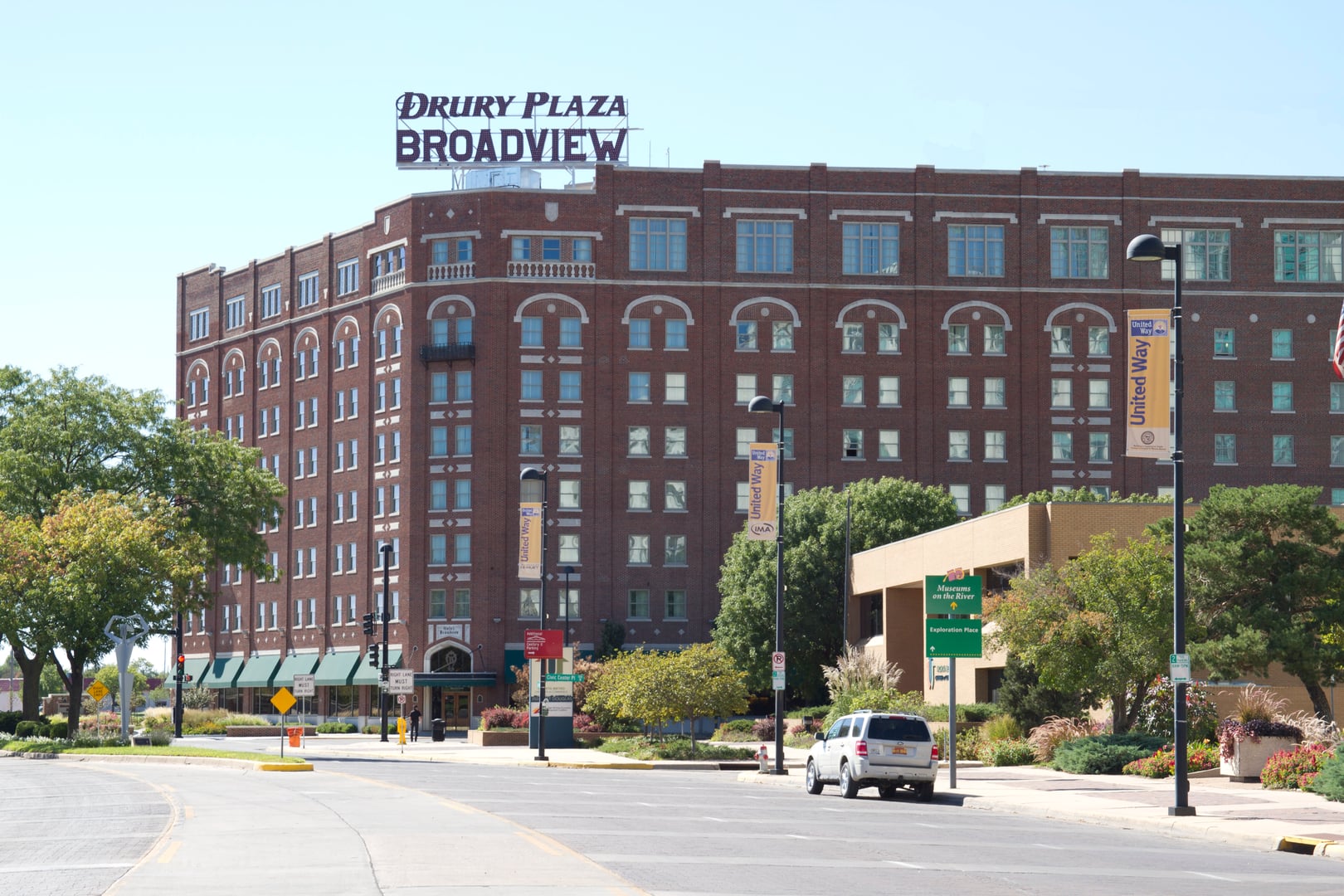
FreeAll Ages (daylight only)Family: Moderate
Exterior of the Henry DeLand House / Green Lantern Inn, an 1876 Second Empire mansion in Fairport, New York
Museum / Historical Site

Green Lantern Inn (Henry DeLand House)
Fairport, NY

Built in 1876 by Fairport baking-soda industrialist Henry DeLand, the mansion at Main and Church Streets is one of western New York's largest surviving Second Empire residences. After DeLand lost his fortune in a Florida orange-grove freeze, the home passed through multiple uses before reopening as the Green Lantern Inn in 1925. It has since been rebranded as the DeLand House on Main.

$$All AgesFamily: High
The Gothic Revival entrance gate of Green-Wood Cemetery on 25th Street in Brooklyn, New York
Cemetery / Burial Ground

Green-Wood Cemetery

Brooklyn, NY

Green-Wood Cemetery is a 478-acre rural-style cemetery in Brooklyn's Sunset Park, established in 1838 as one of the first rural cemeteries in the United States. Civic planner Henry Evelyn Pierrepont led a group of investors in purchasing 178 acres on the moraine ridge; the cemetery has since expanded to encompass roughly 600,000 burials, including Leonard Bernstein, Jean-Michel Basquiat, Louis Comfort Tiffany, Boss Tweed, and sixteen Union generals. Green-Wood is a National Historic Landmark.

FreeAll AgesFamily: High
Hudson River frontage and picnic area at Henry Hudson Park in Glenmont New York
Photo coming soon
Outdoor / Natural Site

Henry Hudson Park

Glenmont, NY

Henry Hudson Park is an 85-acre Town of Bethlehem park on the Hudson River, located off Route 144 in the Cedar Hill section of Glenmont, New York. The park includes boat launches, picnic facilities, and ball fields. It was expanded through partnerships with Scenic Hudson and the Mohawk Hudson Land Conservancy.

FreeAll AgesFamily: High
A train passes parallel to the Orange Heritage Trail rail-trail in Chester, Orange County, New York
Outdoor / Natural Site

Orange Heritage Trail (Chester Section)

Chester, NY

The Orange Heritage Trail is a 19.5-mile rail-trail in Orange County, New York, running along the historic Erie Railroad Main Line from Harriman to Middletown. The Chester section passes through landscape settled by Europeans in the early 1700s, including small protected cemeteries.

FreeAll AgesFamily: High
Historic brick commercial streetscape in the East Main Street Historic District of Palmyra, New York
Museum / Historical Site

Historic Palmyra

Palmyra, NY

The William Phelps General Store at 132 Market Street in Palmyra, New York was built in 1826, serving multiple functions as a boarding house, tavern, bakery, and general store. William Phelps purchased the building in November 1868 and completed renovations by 1875. His son Julius locked the doors in 1940, creating an intact 19th-century commercial time capsule. The last Phelps family member, Sibyl, lived in the house without electricity or indoor plumbing until her death in 1976.

$$All ages for ghost tours; investigation events by arrangementFamily: Moderate
Open Graph image from www.hws.edu
Museum / Historical Site

Hobart and William Smith Colleges

Geneva, NY

Hobart and William Smith Colleges trace their origins to Geneva Academy, founded in 1796 on the western shore of Seneca Lake. Renamed Hobart College in 1852 to honor Bishop John Henry Hobart, the institution later incorporated William Smith College in 1908 as a coordinated women's college. Its affiliated Geneva Medical College made history in 1849 when Elizabeth Blackwell became the first woman to earn a medical degree in the Northern Hemisphere.

FreeAll AgesFamily: High
The gravesite of James Prendergast (1764-1846) at Lakeview Cemetery in Jamestown, New York, as seen in April 2021. The son of an Irish-born immigrant and a native of Dutchess County, New York, Prendergast came to Chautauqua County in 1806 and built a sawmill and dam on the Chadakoin River, around wh
Photo coming soon
Cemetery / Burial Ground

Hollen Beck Cemetery

Jamestown, NY

Hollenbeck Cemetery is a small 19th-century family burial ground on Moon Road in the Town of Ellicott, Chautauqua County, NY, with roughly 25–35 burials of the Hollenbeck, Aldrich, Brown, Moon, and other early-settler families. The headstones were stolen in 1995 and replaced with a township memorial in 1996.

FreeAll AgesFamily: Low
Victorian Gothic facade of Hotel Chelsea on West 23rd Street in Manhattan
Haunted Hotel / Inn

Hotel Chelsea

New York, NY

The Hotel Chelsea opened in 1884 as a Victorian Gothic and Queen Anne Revival structure designed as a socialist commune where artists and musicians could live and create collectively. It became one of America's most storied residential hotels, home at various times to Mark Twain, Arthur Miller, Dylan Thomas, Patti Smith, Bob Dylan, Janis Joplin, Leonard Cohen, Andy Warhol, and Allen Ginsberg. It underwent a comprehensive renovation and reopened in mid-2022.

$$$$All AgesFamily: Moderate
Looking up the facade of Hotel Des Artistes, above en:Café des Artistes on a cloudy afternoon.
Haunted House / Historic Home

Hotel des Artistes

New York, NY

Hotel des Artistes at 1 West 67th Street in Manhattan was completed in 1917 to a design by architect George Mort Pollard. A group of artists including Walter Russell and Frank DuMond purchased the site in 1914 for $250,000, intending to create live-work studio space with 20-foot atelier ceilings. The building housed Noël Coward, Norman Rockwell, Isadora Duncan, Rudolph Valentino, and writer Fannie Hurst, among many others. In 1929, writer Harry Crosby — nephew of J.P. Morgan — died in a murder-suicide in the building. The property was converted to a full cooperative in 1970.

FreeAll AgesFamily: High
A view of Indian Falls, as seen in January 2023 from the parking lot of the Indian Falls Log Cabin Restaurant in the town of Pembroke, New York (the only publicly accessible view of the falls from land). Locally renowned as a fishing spot, this 20-foot curtain cascade is located at the point where T
Outdoor / Natural Site

Indian Falls

Corfu, NY

Indian Falls is a 20-foot waterfall on Tonawanda Creek in Genesee County, New York, located in the hamlet of Indian Falls within the town of Pembroke. The region was home to the Seneca Tribe of the Iroquois Nation; Ely Samuel Parker, who became Ulysses S. Grant's Adjutant General during the Civil War and later Commissioner of Indian Affairs, was born here in 1828.

FreeAll AgesFamily: Moderate
John Burroughs Gravesite- overlooking Ford Lot (named in honor of Henry Ford- his friend and traveling companion
Cemetery / Burial Ground

John Burroughs Gravesite

Roxbury, NY

John Burroughs Memorial State Historic Site in Roxbury, New York marks the birthplace and burial ground of naturalist John Burroughs (1837–1921), whose 27 books of nature and philosophical essays shaped American conservation thought. Burroughs was interred at the foot of Boyhood Rock — a boulder he had played on as a child — on what would have been his 84th birthday.

FreeAll AgesFamily: High
Open Graph image from www.keuka.edu
Other Dark Tourism Site

Keuka College — Ball Hall

Keuka Park, NY

Keuka College was founded in 1890 by Reverend George Harvey Ball in Keuka Park, New York, on the shore of Keuka Lake in the Finger Lakes region. Ball Hall, the original campus building, housed all student residences and classrooms when it opened. It was renamed for the founder in 1921 and underwent a major restoration in the late 2000s that earned a Citation Award from the American Institute of Architects.

FreeAll AgesFamily: High
Historic 1901 view of the North Beach at Lake Ronkonkoma, a kettle pond on Long Island, New York
Outdoor / Natural Site

Lake Ronkonkoma

Lake Ronkonkoma, NY

Lake Ronkonkoma is the largest freshwater lake on Long Island, a roughly 240-acre kettle pond at the geographic center of Suffolk County. Four towns meet at its shoreline. The lake's persistent local folklore concerns a Native American figure remembered as the Lady of the Lake, with a documented historical marker erected by the Pomeroy Foundation.

FreeAll AgesFamily: High
Lancaster Opera House and Town Hall, three-story 1896 Italianate brick building in Lancaster, New York
Theater / Performance Venue

Lancaster Opera House

Lancaster, NY

The Lancaster Opera House was built in 1897 in Lancaster, New York, designed by architect George J. Metzger as a combined town hall and music hall. After decades of use as a community anchor — including serving as a food distribution center during the Depression and a parachute-packing facility during World War II — it fell into disuse before a volunteer nonprofit reopened it on September 20, 1981.

$$All Ages for performances; 18+ for ghost huntsFamily: Moderate
Exterior of Loew's State Theatre (now the Landmark Theatre) at 362 South Salina Street in downtown Syracuse, New York, on a snowy December afternoon
Theater / Performance Venue

Landmark Theatre

Syracuse, NY

The Landmark Theatre opened in February 1928 as Loew's State Theatre, a 2,908-seat Indo-Persian fantasy movie palace designed by Thomas W. Lamb. Built at a reported cost of $1.5 million by Marcus Loew's theatre chain, it was advertised at its debut as 'the last word in theatrical ornateness and luxuriousness.' After narrowly escaping demolition in 1977, it was rescued by community activists and now operates as a regional live-performance venue.

$$All AgesFamily: High
Residential two-family homes on Lee Avenue in Yonkers, New York
Photo coming soon
True Crime Site

Lee Avenue

Yonkers, NY

Lee Avenue is a short residential street in Yonkers, Westchester County, New York. The block became the subject of documented paranormal accounts when author Donna Parish-Bischoff published The Lee Avenue Haunting, first released in 2012, chronicling her family's five-year experience in a two-family home on the street from 1974 to 1979. Prior occupants of the home had died by suicide — the owners' mother had hanged herself in the house, and a previous downstairs tenant had also died by suicide.

FreeAll AgesFamily: High
The Little Theatre historic Art Deco cinema marquee at night, Rochester, New York
Theater / Performance Venue

The Little Theatre

Rochester, NY

The Little Theatre opened October 17, 1929, billed as 'The House of Silent Shadows' and debuting with the silent film Cyrano de Bergerac. The Art Deco building at 240 East Avenue in Rochester is recognized as the oldest continuously operating independent film theater in the United States. It has operated without interruption through the sound transition, the multiplex era, and the streaming era.

$All Ages (varies by film)Family: High
Open Graph image from dec.ny.gov
Outdoor / Natural Site

Long Island Campground

Lake George, NY

Long Island is a 100-acre New York State campsite in the southern basin of Lake George, near the hamlet of Diamond Point in Warren County. The New York State Forest Commission, predecessor to the Department of Environmental Conservation, assumed management of Lake George forest preserve lands in 1885. The island's campsite infrastructure was developed during the late 1930s and 1940s with support from the Civilian Conservation Corps.

$All AgesFamily: Moderate
Madison Barracks historic military complex aerial view in Sackets Harbor, New York
Haunted Dining / Bar

Madison Barracks Pub

Sackets Harbor, NY

Madison Barracks in Sackets Harbor, New York was established in 1815 following the War of 1812, built to garrison 600 troops at one of the nation's key northern defense posts. Named for President James Madison, the limestone complex hosted notable figures including General Ulysses S. Grant, General Mark Clark, and General Henry 'Hap' Arnold, founder of the modern U.S. Air Force.

$All AgesFamily: High
Open Graph image from www.lilydaleassembly.org
Haunted Hotel / Inn

Maplewood Hotel

Lily Dale, NY

The Maplewood Hotel was built in 1880 as a converted horse barn in the heart of Lily Dale, New York — a Chautauqua County hamlet established in 1879 as a camp meeting ground for the American Spiritualist movement. Lily Dale Assembly is now the world's largest Spiritualist community, drawing thousands of visitors each summer for lectures, healing sessions, and demonstrations of mediumship.

$$All AgesFamily: High
Marriott Syracuse Downtown historic 1924 hotel facade on East Onondaga Street
Photo coming soon
Haunted Hotel / Inn

Marriott Syracuse Downtown (Hotel Syracuse)

Syracuse, NY

The Hotel Syracuse opened on August 16, 1924, designed by William Stone Post of George B. Post & Sons — an architectural firm whose other work includes the New York Stock Exchange Building. After bankruptcy and closure in 2004, the hotel was acquired in 2014 by developer Ed Riley, who led a $57 million restoration. The building reopened as Marriott Syracuse Downtown on August 19, 2016, and was inducted into Historic Hotels of America.

$$$All AgesFamily: High
The 1818 Federal-style McClurg Mansion on East Main Street in Westfield, New York
Photo coming soon
Museum / Historical Site

McClurg Museum

Westfield, NY

McClurg Mansion was built in 1818 by James McClurg, the son of a Pittsburgh industrialist, in what was then frontier western New York. Contemporaries called it 'McClurg's Folly' for its ambitious scale — large rooms and high ceilings at odds with the surrounding log cabins. The 14-room Federal-style mansion was added to the National Register of Historic Places in 1984 and has housed the Chautauqua County Historical Society since 1951.

$All AgesFamily: High
Main building of the former Medaille University campus on Agassiz Circle in Buffalo, New York
Photo coming soon
Other Dark Tourism Site

Medaille University (Former Campus)

Buffalo, NY

Medaille University in Buffalo, New York was founded in 1937 by the Sisters of St. Joseph, named for the order's founder Jean Paul Médaille. The institution closed permanently on August 31, 2023, after holding its final commencement ceremony in May of that year. The campus was subsequently sold and now houses BuffSci Charter School.

FreeAll AgesFamily: Moderate
Merchant's House Museum facade at 29 East 4th Street in NoHo, Manhattan — 1832 Federal-style brick home
Museum / Historical Site

Merchant's House Museum

New York, NY

The Merchant's House Museum at 29 East 4th Street is the only 19th-century family home in New York City preserved intact inside and out. Built in 1832 by hatter Joseph Brewster, it was purchased in 1835 by merchant Seabury Tredwell. Eight Tredwell children grew up in the house; the youngest, Gertrude, lived there until her death in 1933.

$$All AgesFamily: High
Exterior buildings of the former Mid Orange Correctional Facility in Warwick, New York
Prison / Reformatory

Mid Orange Correctional Facility

Warwick, NY

The Mid Orange Correctional Facility in Warwick, New York opened in 1932 as the New York State Training School for Boys, prior to which the site served as America's first inpatient substance abuse treatment center. The facility was converted to a medium-security adult prison in 1977 and closed in 2011 alongside six other state prisons. The property was acquired by the Town of Warwick in 2014 and became the Hudson Sports Complex in 2019.

$$18+ (16+ with responsible adult)Family: Not Recommended
The 1750 Stony Brook Grist Mill at the edge of the harbor in Stony Brook, New York
Photo coming soon
Museum / Historical Site

Stony Brook Grist Mill

Stony Brook, NY

The Stony Brook Grist Mill occupies a site that has hosted a functioning mill since approximately 1700. The original structure was destroyed in a storm around 1750, and the replacement mill built on the same footprint remains standing today. It is maintained by the Ward Melville Heritage Organization and operates as a working mill during Sunday tours from April through October.

$All AgesFamily: High
Morris-Jumel Mansion in Washington Heights, Manhattan — 1765 Palladian villa, oldest extant house in Manhattan
Museum / Historical Site

Morris-Jumel Mansion

New York, NY

The Morris-Jumel Mansion at 65 Jumel Terrace in Washington Heights, Manhattan is the oldest extant house on the island, built in 1765 as a Palladian summer villa for British Colonel Roger Morris. The house served as General George Washington's headquarters from September 14 to October 18, 1776, and later as the home of merchants Stephen and Eliza Jumel. New York City has owned the property since 1903.

$All AgesFamily: High
West Hills County Park — Jayne's Hill and the wooded Mount Misery road area, Huntington, Long Island
Photo coming soon
Outdoor / Natural Site

West Hills County Park (Mount Misery)

Huntington, NY

West Hills County Park covers 853 acres of forested hills in Huntington, New York, including Jayne's Hill, Long Island's highest natural point at 401 feet. The park is maintained by Suffolk County and incorporates Mount Misery Road, a winding rural road through the West Hills moraine area associated with extensive local folklore.

$All AgesFamily: High
Facade of the historic New Amsterdam Theatre on 42nd Street in Manhattan, New York City
Theater / Performance Venue

New Amsterdam Theatre

New York City, NY

The New Amsterdam Theatre at 214 West 42nd Street opened on October 26, 1903, designed by architects Henry Herts and Hugh Tallant in an exuberant Art Nouveau style immediately dubbed 'The House Beautiful.' From 1913 to 1927 it served as the home of Florenz Ziegfeld's Follies. After decades as a movie theater and subsequent abandonment, The Walt Disney Company undertook a $34 million restoration beginning in 1995, reopening the theater in 1997.

$$$All AgesFamily: High
Exterior of New Hartford Senior High School in New Hartford, New York, built over an 18th-century burial ground
Photo coming soon
Other Dark Tourism Site

New Hartford Senior High School

New Hartford, NY

New Hartford Senior High School in Oneida County, New York sits on land that has included a burial ground since 1788. A 1952 addition was constructed on the cemetery space, with historical records indicating that not all remains were relocated prior to construction. In 2009, remains were discovered on the grounds during maintenance work.

FreeAll AgesFamily: High
Exterior of NYU Brittany Hall at 55 East 10th Street, a 1929 Gothic Revival apartment hotel across from Grace Church in Greenwich Village
Photo coming soon
Other Dark Tourism Site

NYU Brittany Residence Hall

New York City, NY

Brittany Hall at 55 East 10th Street was built in 1929 as a luxury apartment hotel, designed by Farrar & Watmough in a Gothic Revival style that mirrors the adjacent Grace Church. The building became an NYU residence hall and has housed notable alumni including Al Pacino, Jerry Garcia, and Adam Sandler.

FreeAll AgesFamily: High
Rural road near Chodikee Lake in Highland, Ulster County, New York, site of a phantom family legend
Photo coming soon
Cemetery / Burial Ground

Washington Cemetery, North Chodikee Lake Road

Highland, NY

Washington Cemetery near North Chodikee Lake Road in Highland, Ulster County, New York is a small, difficult-to-find 19th-century burial ground adjacent to farmland on a spade-shaped 100-acre lake whose name derives from an Algonkian phrase meaning 'the place of the signal fire.' The area's history spans Indigenous use by the Esopus, a circa-1800 religious commune led by Jemima Wilkinson's Pang Yang settlers, the early-20th-century Riordon all-boys academy, and 1940s bootlegging operations.

FreeAll AgesFamily: Moderate
1909 postcard view of the entrance and Victorian monuments at Oakwood Cemetery in Syracuse, New York
Cemetery / Burial Ground

Oakwood Cemetery

Syracuse, NY

Oakwood Cemetery was dedicated in November 1859 and designed by Howard Daniels, a New York City landscape gardener whose picturesque plan made Oakwood one of the most notable examples of the American rural cemetery movement. Adjacent to what would become Syracuse University, the 160-acre cemetery is the last of Daniels' fifteen rural cemetery designs and remains an active burial ground today.

FreeAll AgesFamily: High
Exterior of the 1832 Old Bermuda Inn on Veterans Road West in Staten Island, New York
Haunted Dining / Bar

Old Bermuda Inn

Staten Island, NY

The Mesereau family built the house at 301 Veterans Road West on Staten Island in 1832. After passing through various uses, it now operates as a bed and breakfast, restaurant, bar, and event venue. The building retains much of its nineteenth-century residential character, including an oil portrait of Martha Mesereau that still shows singe marks from an unexplained fire during renovations.

$$All AgesFamily: Moderate
Four-story brick and terra-cotta Demarest Building on Railroad Avenue in Warwick, New York
Photo coming soon
Haunted Dining / Bar

Demarest Building (Former National Hotel)

Warwick, NY

The Demarest Building stands on Railroad Avenue in the Village of Warwick, New York. The earlier National Hotel was built on the site in 1863 to serve travelers arriving on the newly completed Warwick Valley Railroad. The current four-story brick and terra-cotta Demarest House was erected on the site in 1887.

FreeAll AgesFamily: High
Old Fort Niagara French Castle, Youngstown New York
Battlefield / Military Site

Old Fort Niagara

Youngstown, NY

Old Fort Niagara guards the mouth of the Niagara River where it meets Lake Ontario. The 1726 French Castle, called the "House of Peace," remains the oldest building in the Great Lakes region and anchors a fortification that flew French, British, and American flags between 1726 and 1815.

$$All AgesFamily: High
Brick exterior of Rolling Hills Asylum, the former Genesee County Home and Infirmary in East Bethany, New York
Asylum / Hospital

Rolling Hills Asylum (Genesee County Home and Infirmary)

East Bethany, NY

Rolling Hills Asylum opened in 1827 as the Genesee County Poorhouse on a 200-acre farm in East Bethany, New York. The institution operated for 147 years, becoming the Genesee County Infirmary in 1938 and the Genesee County Nursing Home in 1964 before closing in 1974. More than 1,700 deaths are documented on the property. The building reopened in 1992 and now operates as a documented paranormal-tourism site on the Haunted History Trail of New York State.

$$All Ages for daytime tours; ghost-hunt experiences typically 18+Family: Low
Abandoned pavilion at Sea View Hospital on Staten Island, with overgrown approach and original brick facade
Photo coming soon
Asylum / Hospital

Sea View Hospital (Old)

Staten Island, NY

Sea View Hospital opened in 1913 on Staten Island as the largest and most expensive municipal tuberculosis sanatorium in the United States. Built on the former 25-acre hilltop estate of Charles Schmidt, the campus eventually held 37 buildings constructed between 1905 and 1938. Streptomycin trials at Sea View in 1952 produced one of the foundational breakthroughs in tuberculosis treatment.

FreeAll Ages (perimeter only)Family: Moderate
Exterior of Orchard Hall at 2955 Oneida Street in Sauquoit, New York
Photo coming soon
Haunted Dining / Bar

Orchard Hall

Sauquoit, NY

Orchard Hall at 2955 Oneida Street in Sauquoit has operated as a community gathering place since 1843, cycling through uses as a homestead, hotel, and restaurant. The Puleo family owned and operated the restaurant for 33 years before retiring in October 2025; new ownership assumed operations under the same name. A Rome Sentinel feature documented the building's connection to local figures including a George Washington visit to the vicinity.

$$All AgesFamily: Moderate
The 1870 Second Empire brick and stone Phelps Mansion Museum on Court Street in Binghamton, New York
Haunted House / Historic Home

Phelps Mansion Museum

Binghamton, NY

The Phelps Mansion Museum is an 1870 Second Empire residence in Binghamton, New York, designed by architect Isaac G. Perry for banker and former mayor Sherman D. Phelps. It is the last surviving mansion on Court Street's Gilded Age "Mansion Row" and operates today as a historic house museum.

$All AgesFamily: Moderate
The Wm. Phelps General Store and Home on Market Street in Palmyra, New York
Photo coming soon
Museum / Historical Site

Wm. Phelps General Store and Home

Palmyra, NY

The Wm. Phelps General Store and family residence in Palmyra, New York was built in 1826 and operated as a general store, boarding house, tavern, and bakery in the busy Erie Canal era. William Phelps renovated the property in 1875, and the family ran the store until 1940, when Julius Phelps closed it abruptly. Sibyl Phelps lived in the home until her death in 1976.

$All AgesFamily: High
The Plum Point on Hudson condominium community along the Hudson River in New Windsor, New York
Photo coming soon
Haunted House / Historic Home

Plum Point on Hudson Condominiums

New Windsor, NY

Plum Point on Hudson is a private condominium community on the Hudson River shoreline in New Windsor, New York, with townhomes first built in 1978 and expanded in phases through the 1980s and 1990s. The condos occupy former estate grounds that were once home to a girls' home and orphanage. The adjacent Kowawese Unique Area (Plum Point Park) opened to the public in 1996.

FreeNo public access; private residential communityFamily: High
Disused rail bed running along Lake Ontario behind Fort Ontario in Oswego, New York
Photo coming soon
Outdoor / Natural Site

Railroad Tracks Behind Fort Ontario

Oswego, NY

Fort Ontario, built in 1755 in present-day Oswego, New York, played roles in the French and Indian War, the American Revolution, the War of 1812, and both World Wars. The disused rail line that ran along the shore between the fort and Lake Ontario served the city's industrial waterfront before declining with the rest of Oswego's port economy.

FreeAll AgesFamily: High
The 1738 Raynham Hall Museum on West Main Street in Oyster Bay, New York, former home of the Townsend family
Museum / Historical Site

Raynham Hall

Oyster Bay, NY

Raynham Hall is a 20-room historic house museum in Oyster Bay, New York, owned by the Town of Oyster Bay and accredited by the American Alliance of Museums. The Townsend family home served as quarters for British officers during the Revolutionary War and figured in the Culper Spy Ring's interception of the Benedict Arnold plot.

$All AgesFamily: High
Springwood, Franklin D. Roosevelt's home in Hyde Park New York, east facade exterior
Museum / Historical Site

Springwood (Home of Franklin D. Roosevelt National Historic Site)

Hyde Park, NY

Springwood, the lifelong home and burial site of Franklin Delano Roosevelt, is preserved as the Home of Franklin D. Roosevelt National Historic Site in Hyde Park, New York. The estate was acquired by James Roosevelt in 1867, expanded by FDR in 1915 with architect Francis L. V. Hoppin, and donated to the federal government on FDR's death in 1945.

$$All AgesFamily: High
Rolling Hills Asylum in East Bethany New York, former Genesee County Poorhouse exterior
Asylum / Hospital

Rolling Hills Asylum

East Bethany, NY

The Genesee County Board of Supervisors established the county's poorhouse in East Bethany on December 4, 1826, and it opened in a converted stagecoach tavern in January 1827. For nearly 150 years, the facility housed orphaned children, the elderly, the physically disabled, the mentally ill, and those convicted of vagrancy. The 200-acre working farm required able-bodied residents to contribute labor. Operations cost approximately $1.08 per resident per week by 1871. The poor farm closed in 1965; the nursing home facility closed in 1974.

$$18+ with valid ID; 14-17 require parental accompanimentFamily: Not Recommended
Roycroft Inn exterior in East Aurora New York, Arts and Crafts era hostelry
Haunted Hotel / Inn

Roycroft Inn

East Aurora, NY

Elbert Hubbard opened the Roycroft Inn in 1905 in East Aurora as a hostelry for visitors to his Arts and Crafts community. Hubbard had established the Roycroft campus in 1895 as a printing and craftsmanship collective inspired by William Morris's English Arts and Crafts movement. He died on May 7, 1915, aboard the RMS Lusitania. The Inn was designated a National Historic Landmark in 1986 and continues to operate as a hotel and restaurant.

$$$All AgesFamily: Moderate
Bannerman Castle ruins on Pollepel Island in Hudson River near Beacon New York
Outdoor / Natural Site

Bannerman Castle (Pollepel Island)

Beacon, NY

Pollepel Island is a 6.5-acre uninhabited island in the Hudson River about 50 miles north of New York City. Frank Bannerman VI, a Scotland-born munitions dealer, purchased it in 1900 and personally designed a complex of Scottish-baronial-style warehouses, walls, and outbuildings to store military surplus. An August 1969 fire of unknown origin destroyed the buildings. The Bannerman Castle Trust has stabilized the ruins; the island has been open for guided tours since 2004.

$$$12 and up for toursFamily: Moderate
Temple Row Greek Revival buildings at Sailors Snug Harbor on Staten Island New York
Museum / Historical Site

Sailors' Snug Harbor

Staten Island, NY

Sailors' Snug Harbor opened on Staten Island in 1831 as one of the first retirement homes in the United States, funded by the 1801 bequest of Revolutionary War mariner Captain Robert Richard Randall. The 83-acre campus grew to fifty buildings and 900 residents at its peak, and now operates as Snug Harbor Cultural Center and Botanical Garden.

$All AgesFamily: High
The Sanger Mansion, a 52-room stone house atop West Hill in Waterville, New York.
Photo coming soon
Haunted House / Historic Home

Sanger Mansion (Sangerfield House)

Waterville, NY

The Sanger Mansion, also called Sangerfield House, is a 52-room stone manor built in 1906 by Colonel William Carey Sanger Sr. on West Hill above Waterville, New York. The grounds were laid out by the Olmsted firm. The house served as a Stigmatine monastery from 1960 to 1970 before returning to private ownership.

FreeAll AgesFamily: High
The Arcade Building — 1907 commercial building on Broadway in Saratoga Springs, NY
Photo coming soon
Other Dark Tourism Site

The Arcade Building

Saratoga Springs, NY

On June 9, 1902, a devastating fire broke out at 376 Broadway, then home to The Saratogian newspaper, the U.S. Post Office, a bank, and a theater. Five people died and damage was estimated at $200,000 — roughly $4.1 million in today's dollars. The fire is still remembered locally as 'Saratoga's Great Fire.' The replacement Arcade Building opened in 1907 as one of the city's earliest commercial mall structures and remains a working mixed-use building.

FreeAll AgesFamily: Moderate
Batcheller Mansion — 1873 High Victorian Gothic mansion with conical minaret-style tower at 20 Circular Street, Saratoga Springs, New York
Haunted Hotel / Inn

Batcheller Mansion Inn

Saratoga Springs, NY

The Batcheller Mansion was built in 1873 at a cost of $100,000 as the home of George Sherman Batcheller, a Civil War officer, New York State Assemblyman, judge, U.S. diplomat to Egypt, and President of the Universal Postal Congress. The High Victorian Gothic design featured eleven bedrooms, steam-vapor furnaces, and gas illumination throughout. The mansion was sold out of the Batcheller family in 1916 and now operates as a boutique bed-and-breakfast.

$$$All AgesFamily: Moderate
Canfield Casino main building and east wing in Congress Park, Saratoga Springs, New York — the 1870 Italianate Saratoga Club House
Museum / Historical Site

Canfield Casino

Saratoga Springs, NY

The Canfield Casino was built in 1870 by prizefighter-turned-entrepreneur John 'Old Smoke' Morrissey as the Saratoga Club House and operated as one of the most exclusive gambling halls in 19th-century America until reformers ended gambling in 1907. Richard Canfield bought the property in 1894, sold it to the City of Saratoga Springs in 1911, and the building has housed the Saratoga Springs History Museum since 1911.

$All AgesFamily: Moderate
The Gideon Putnam — 1935 Georgian Revival resort hotel in Saratoga Spa State Park, NY
Photo coming soon
Haunted Hotel / Inn

The Gideon Putnam

Saratoga Springs, NY

The Gideon Putnam Hotel opened in 1935 inside Saratoga Spa State Park and is named for Gideon Putnam (1763-1812), the entrepreneur who founded Saratoga Springs in the early 1800s. Putnam built the city's original Putnam's Tavern and Boarding House (later Grand Union) in 1803 and began Congress Hall in 1811. While overseeing construction of Congress Hall, he fell from scaffolding and broke ribs; he died December 1, 1812, of pneumonia complications. The hotel is a National Historic Landmark and member of Historic Hotels of America.

$$$All AgesFamily: High
Olde Bryan Inn — 1825 stone tavern and restaurant in Saratoga Springs, NY
Photo coming soon
Haunted Dining / Bar

Olde Bryan Inn

Saratoga Springs, NY

The site at 123 Maple Avenue has been occupied since 1773, when Dirck Schoughten built a crude log cabin overlooking High Rock Spring. Revolutionary intelligence agent Alexander Bryan purchased the property in 1787; his son John Bryan built the current stone house on the site of his father's tavern in 1825. The building served as a private residence and laundry before being restored as a restaurant in 1979.

$$All AgesFamily: High
The Parting Glass — Irish pub on Lake Avenue in Saratoga Springs, NY
Photo coming soon
Haunted Dining / Bar

The Parting Glass

Saratoga Springs, NY

The Parting Glass opened on St. Patrick's Day 1981 in a 1926 building that had previously housed Rocco's Royal Spring Grill, Lou Rocco's Italian restaurant. The tiger-oak front bar was built in 1936 by Frank K. Spalt, with a partition that originally separated a men's bar side from a ladies' entrance. The Parting Glass is said to be the oldest continuously running bar and restaurant in Saratoga Springs.

$$21+Family: Low
Yaddo — Queen Anne-style mansion and artists' retreat in Saratoga Springs, NY
Photo coming soon
Haunted House / Historic Home

Yaddo

Saratoga Springs, NY

Yaddo is a 55-room Queen Anne-style mansion on a 400-acre estate purchased by financier Spencer Trask and writer Katrina Trask in 1881. After the deaths of all four of their children and the destruction of the original house by fire in 1891, the Trasks built the current mansion and in 1900 conceived of it as a future retreat for artists; the first residents arrived in 1926. The estate is now the largest artist-residency program in the United States.

FreeAll AgesFamily: High
Historic Shanley Hotel building on Main Street in Napanoch, New York
Haunted Hotel / Inn

Shanley Hotel

Napanoch, NY

The Shanley Hotel in Napanoch, New York traces its origins to 1845, when Thomas Ritch built a hotel on the site that housed an exclusive gentlemen's club. A fire destroyed the original structure in 1895, and the rebuilt hotel was purchased by Irish immigrant James Shanley in 1906. Shanley married Beatrice Rowley at the hotel in 1910, added a barn-like wing housing a barbershop and later a brothel's gentlemen's quarters, and concealed secret rooms and cellar tunnels during Prohibition to hide contraband from authorities.

$$18+ or 16 with responsible adultFamily: Low
Exterior of the 1913 Sherwood Hotel in downtown Greene, NY
Photo coming soon
Haunted Hotel / Inn

The Sherwood Hotel

Greene, NY

The Sherwood Hotel anchors downtown Greene, New York, on a site occupied by an inn since 1807, when stagecoach operator Isaac Sherwood built a tavern at the edge of a cedar swamp to headquarter his coaching business. After an early 20th-century fire, the present structure was rebuilt in 1913 and remains in continuous operation as a hotel, restaurant, and bar.

$$All AgesFamily: Moderate
Washington Irving family graveplot at Sleepy Hollow Cemetery in Sleepy Hollow, New York, the historic Hudson Valley burying ground
Cemetery / Burial Ground

Sleepy Hollow Cemetery

Sleepy Hollow, NY

Sleepy Hollow Cemetery was incorporated in 1849 as Tarrytown Cemetery and renamed in 1865. The 90-acre nonsectarian burying ground is the resting place of Washington Irving, who co-founded the cemetery, along with Andrew Carnegie, Walter Chrysler, and several generations of Hudson Valley families. The cemetery was listed on the National Register of Historic Places in 2009.

FreeAll AgesFamily: High
Skeletal concrete ruins of the Semet-Solvay rock crusher at Split Rock Quarry
Photo coming soon
Other Dark Tourism Site

Split Rock Quarry

Camillus, NY

Split Rock Quarry, west of Syracuse, New York, was the site of a Semet-Solvay Company TNT plant that supplied roughly a quarter of the United States' explosives during World War I. On July 2, 1918, a fire in the main TNT building triggered explosions that killed approximately 50 workers and effectively ended the operation.

FreeAll Ages (parental judgment recommended)Family: Moderate
Wooded residential road in Saint James, Long Island, associated with the Mary's Grave urban legend
Photo coming soon
Other Dark Tourism Site

Mary's Grave (Long Island)

Saint James, NY

Mary's Grave is one of Long Island's longest-running urban legends, claimed across at least seven towns. The most concrete location cited in tradition is along Shep Jones Lane in Saint James in Smithtown's Head of the Harbor area, though no documented grave matches the lore.

FreeAll AgesFamily: Moderate
Edge of the Silver Beach Gardens bungalow community on the Throgs Neck peninsula
Photo coming soon
Other Dark Tourism Site

Strawberry Fields of Silver Beach Gardens

Bronx, NY

Silver Beach Gardens is a private bungalow community at the southeastern edge of the Throgs Neck peninsula in the Bronx, overlooking the Long Island Sound. The 'strawberry fields' folklore attached to the inlet is community urban legend rather than documented history.

FreeAll AgesFamily: Low
Adelphi Hotel facade in Saratoga Springs New York, 1877 Gilded Age Broadway hotel
Haunted Hotel / Inn

The Adelphi Hotel

Saratoga Springs, NY

The Adelphi Hotel opened in 1877 in Saratoga Springs and quickly became a hub of Gilded Age society, hosting politicians, racing figures, and business leaders during the spa city's peak. The 123-room property underwent a multi-year preservation renovation completed in 2018.

$$$$All AgesFamily: High
Aurora Inn at night in Aurora New York, 1833 historic Cayuga Lake village inn
Haunted Hotel / Inn

The Aurora Inn

Aurora, NY

The Aurora Inn was built in 1833 by Colonel Edwin B. Morgan, a co-founder of the New York Times and one of the village's founding entrepreneurs. The inn served stagecoach, Erie Canal, and rail travelers throughout the 19th century. After decades of decline, it was restored by the Aurora Foundation and reopened in May 2003 as part of the Inns of Aurora resort.

$$$$All AgesFamily: High
Exterior of the 1802 Bull's Head Inn at 105 Park Place in Cobleskill, New York
Photo coming soon
Haunted Dining / Bar

Bull's Head Inn

Cobleskill, NY

The Bull's Head Inn building at 105 Park Place in Cobleskill is the oldest standing structure in the village, built in 1802. It has operated in various capacities for over two centuries — as a private residence, a tavern, and a restaurant. The building is currently open for lunch and dinner Tuesday through Sunday as a traditional American restaurant and pub.

$$All AgesFamily: High
Victorian mansion in Fort Covington, New York, known locally as Dunwich Manor
Photo coming soon
Haunted House / Historic Home

The Dupree House (Dunwich Manor)

Fort Covington, NY

The Dupree House, also called Dunwich Manor, is a Victorian-era mansion in Fort Covington, New York, a hamlet on the Canadian border in Franklin County. It is best known as the former residence of occult writer Gerina Dunwich, who moved into the house in December 1993.

FreeAll AgesFamily: Moderate
Oneida Community Mansion House in Oneida New York, historic 1862 brick Victorian communal home
Haunted Hotel / Inn

Oneida Community Mansion House

Oneida, NY

The Oneida Community Mansion House in Oneida, New York, served as headquarters for the 19th-century utopian Oneida Community from 1848 to 1880. Built in stages between 1862 and 1914, the 93,000-square-foot National Historic Landmark sits on 33 acres and now operates as a museum and 14-room guesthouse adjacent to the city of Sherrill.

$$All AgesFamily: High
The Federal-era McGarrah Stagecoach Inn in Monroe, New York, built around 1799
Museum / Historical Site

The McGarrah Stagecoach Tavern Inn

Monroe, NY

Built around 1799 by John McGarrah, the Stagecoach Tavern Inn is one of the oldest buildings in Monroe, New York. It operated as an inn for nearly a century, served as a Freemason meeting place from 1817 to 1826, and houses what the Cornerstone Masonic Historical Society describes as the oldest Masonic lodge room in New York State. The building was added to the National Register of Historic Places in 1998.

$All AgesFamily: High
The 1855 Carpenter Gothic Parsonage at Historic Richmond Town on Staten Island, New York
Photo coming soon
Haunted Dining / Bar

The Parsonage at Historic Richmond Town

Staten Island, NY

The Parsonage at Historic Richmond Town is an 1855 Carpenter Gothic building constructed as the home for the pastor of the local Dutch Reformed Church. It served as the Parsonage Restaurant between 1995 and 2008 and is one of the historic structures at the Historic Richmond Town living-history village operated by the Staten Island Historical Society.

$All AgesFamily: High
Italian Renaissance Alonzo Roberson House at 30 Front Street in Binghamton, New York
Museum / Historical Site

Roberson Museum and Science Center

Binghamton, NY

The Roberson Mansion was designed in 1904 by Binghamton architect C. Edward Vosbury for lumber magnate Alonzo Roberson Jr. and completed in 1907. After Roberson's widow Margaret died, the Roberson Memorial Center opened to the public in 1954 and has since grown into the Roberson Museum and Science Center.

$All AgesFamily: High
The Townsend Manor Inn at 714 Main Street in Greenport, an 1835 whaling-captain's residence on Long Island's North Fork
Haunted Hotel / Inn

Townsend Manor Inn

Greenport, NY

The Townsend Manor Inn occupies a residence built in 1835 by whaling captain George Cogswell on the Greenport waterfront. Cogswell left for the California Gold Rush in 1849. The widow of Joseph Lawrence Townsend, Lillian Cook Townsend, purchased the property in 1925, giving the inn its current name and connecting it to a Townsend family lineage that traces back to 1638 Salem.

$$$All AgesFamily: High
Van Horn Mansion brick Colonial Revival historic home, Burt/Newfane, New York
Haunted House / Historic Home

Van Horn Mansion

Burt, NY

Judge James Van Horn built the mansion at 2159 Lockport-Olcott Road in Niagara County in 1823. The property passed through the Van Horn family and later the Noury Chemical Company before the latter donated it to the Newfane Historical Society in 1987. The Society has maintained and restored the four-story mansion, hosting Victorian teas, historical tours, and paranormal events. It is managed entirely by volunteers.

$All Ages (under 18 must be accompanied by adult for evening tours)Family: Moderate
Exterior of the Wayside Irish Pub in Elbridge, New York, in the historic 1830 Munro Tavern building
Photo coming soon
Haunted Hotel / Inn

Wayside Irish Pub (Former Webber's Wayside Inn)

Elbridge, NY

The building has housed travelers since 1830, when Squire Munro built the Munro Hotel and Tavern on the Jordan-to-Skaneateles stagecoach route. Frederick Weber purchased and renovated the property in 1967 as Weber's Wayside Inn. The Wayside Irish Pub is the current operator.

$$All AgesFamily: Moderate
Coffee Creek
Photo coming soon
Outdoor / Natural Site

Agaard Road

Gales Creek, OR

Agaard Road is located on Highway 6 heading toward Tillamook from Forest Grove, Washington County, Oregon. The road crosses a creek and passes an abandoned residential property. The area has a dark history involving at least one death.

FreeAll AgesFamily: Moderate
Woodlawn Cemetery monuments and Civil War memorial section in Syracuse New York
Photo coming soon
Cemetery / Burial Ground

Woodlawn Cemetery

Syracuse, NY

Woodlawn Cemetery Association was incorporated in April 1881 to provide a picturesque burial ground for the growing city of Syracuse. The non-denominational, non-profit cemetery spans roughly 160 acres on Grant Boulevard on the city's north side and includes a Civil War memorial section honoring more than 100 soldiers interred there, along with a Sunset Mausoleum Complex for above-ground entombment.

FreeAll AgesFamily: Moderate
10-inch disappearing rifle gun emplacement at Battery Russell, Fort Stevens, Oregon, photographed during WWII service (c. 1942).
Battlefield / Military Site

Battery Russell at Fort Stevens

Hammond, OR

Battery Russell is one of nine concrete coastal-artillery emplacements built between 1897 and 1906 to defend the mouth of the Columbia River as part of Fort Stevens. Completed in 1904 and named for Civil War Brig. Gen. David A. Russell, the battery mounted two 10-inch M1888 'disappearing' rifles. It was decommissioned in 1944. On the night of June 21-22, 1942, the Japanese submarine I-25 surfaced offshore and fired roughly 17 shells in the direction of the fort — the first foreign attack on a mainland U.S. military installation since the War of 1812. The site is preserved within Fort Stevens State Park, Hammond, Oregon.

$All AgesFamily: Moderate
11,600-square-foot Queen Anne Captain George Flavel House Museum (1885) at 441 8th Street in Astoria, Oregon.
Museum / Historical Site

Captain George Flavel House Museum

Astoria, OR

The Captain George Flavel House was completed in 1885 at 441 8th Street in Astoria as the retirement home of Captain George Flavel (1823-1893), a Columbia River bar pilot and early Oregon millionaire. Designed by German-born architect Carl W. Leick, the 11,600-square-foot Queen Anne mansion occupies a full city block and has been operated as a house museum by the Clatsop County Historical Society since 1951. The home was listed on the National Register of Historic Places in 1980.

$All AgesFamily: High
Five-story Hotel Elliott (1924) at 357 12th Street in downtown Astoria, Oregon, rebuilt after the Great Astoria Fire.
Haunted Hotel / Inn

Hotel Elliott

Astoria, OR

Hotel Elliott opened in 1924 at 357 12th Street as one of the first major rebuilt structures after the Great Astoria Fire of 1922, originally named Hotel Niemi before local entrepreneur Jeremiah Elliott took over and gave it his name. The hotel operated continuously through the 20th century, falling into decline before a 1999-2003 renovation by new ownership reopened the building with 32 rooms and 11 suites. It is among downtown Astoria's longest-standing hotels.

$$$All AgesFamily: High
Italian Renaissance facade of the Liberty Theatre (1925), the first major theater rebuilt after the 1922 Astoria fire.
Theater / Performance Venue

Liberty Theatre

Astoria, OR

The Liberty Theatre opened in April 1925 as the first major theater rebuilt after the Great Astoria Fire of 1922 destroyed downtown. Designed by Portland firm Bennes and Herzog in Italian Renaissance style for theater operators Claude Jensen and John von Herberg, it served as a 1,300-seat vaudeville and motion-picture palace and now operates as a nonprofit performing-arts venue. The building was added to the National Register of Historic Places in 1984.

$$All AgesFamily: High
Restored brick facade of the Norblad Hotel on 14th Street in downtown Astoria, Oregon
Photo coming soon
Haunted Hotel / Inn

Norblad Hotel

Astoria, OR

The Norblad Hotel opened in January 1924 at 443 14th Street and is the oldest continuously operating hotel in Astoria. Designed by architect John E. Wicks and named for George F. Norblad, it originally housed a bank on the ground floor and a hotel above. Restored in 2007 by Paul Caruana and partners, it now operates as a boutique hotel and is rumored to connect via the basement to Astoria's underground tunnel network.

$$All AgesFamily: Moderate
Pier 39 cannery building extending over the Columbia River at the foot of 39th Street, Astoria, Oregon
Photo coming soon
Museum / Historical Site

Pier 39 / Hanthorn Cannery Museum

Astoria, OR

Pier 39 is the oldest surviving cannery pier on the Columbia River. Opened in 1875 by tinsmith-turned-cannery-operator J.O. Hanthorn, the Hanthorn Cannery operated continuously through the late-19th-century salmon boom and was later absorbed into the Bumble Bee Seafoods operation. Today the 150-year-old, 84,800-square-foot pier complex houses the Hanthorn Cannery Museum, Rogue Pier 39 Public House, Coffee Girl coffee shop, the Vineside wine bar, the Fisherman's Suites lodging, and artist studios.

$All AgesFamily: High
Brick-walled subterranean passage on the Astoria Underground Tour beneath downtown Astoria, Oregon
Photo coming soon
Other Dark Tourism Site

Astoria Underground (Shanghai Tunnels)

Astoria, OR

Astoria's downtown sits atop a network of subterranean voids, basements, and reinforced passages that originated in the late 19th century as practical infrastructure (basement-to-basement passages, smuggling chambers, opium dens) and acquired enduring association with the city's shanghaiing era. The Old Astoria Underground Tour operates rehabilitated sections of the network as a guided historical tour from 1125 Marine Drive. The tunnel network itself has no single street address; the tour starting point on Marine Drive is the documented public access point.

$$All AgesFamily: Moderate
Asahel Bush House Museum 1878 Italianate mansion in Salem Oregon
Museum / Historical Site

Bush House

Salem, OR

Bush House, built in 1878, is a historic estate in Salem, Oregon. Asahel Bush, founding editor of the Oregon Statesman (1851-1863) and co-founder of Ladd & Bush Bank (1868), constructed the mansion. Since 1953, the house has operated as a museum operated by the Salem Art Association.

$$All AgesFamily: High
The small central La Grande, Oregon park known locally as Candy Cane Park and as Hatchet Park
Photo coming soon
True Crime Site

Candy Cane Park (Hatchet Park)

La Grande, OR

Candy Cane Park is a small municipal park in central La Grande, Oregon. In the early hours of February 12, 1983, the body of 21-year-old bartender Dana DuMars was found in the park; she had been attacked with a hatchet and died of her injuries later that day. A suspect was tried and convicted but the conviction was overturned on appeal due to interrogation and evidence issues; the case remains officially unsolved.

FreeAll AgesFamily: Moderate
Hilltop Sunset Pioneer Cemetery off Canterbury Lane in Tigard, Oregon, dating to the 1886 Emanuel German Evangelical Church congregation
Photo coming soon
Cemetery / Burial Ground

Sunset Pioneer Cemetery (Canterbury Hill)

Tigard, OR

Sunset Pioneer Cemetery in Tigard, Oregon, sits on the small hill above Canterbury Lane and dates to the 1886 founding of the Emanuel German Evangelical Church. Many headstones bear German inscriptions reflecting the early settlers who built the church on what was then a dirt road that became Highway 99.

FreeAll AgesFamily: High
The St. Johns Bridge is a steel suspension bridge that spans the Willamette River in Portland, Oregon, USA.
Outdoor / Natural Site

Cathedral Park

Portland, OR

Cathedral Park in Portland's St. Johns neighborhood occupies the riverbank beneath the 1931 St. Johns Bridge, whose Gothic pointed arches gave both the park and its name their character. In August 1949, 15-year-old Thelma Taylor was abducted and murdered near this site. The land was acquired by the city in 1968 and formally opened as a public park on May 3, 1980.

FreeAll AgesFamily: Moderate
Columbia Gorge Hotel historic 1920 hotel above the Columbia River in Hood River Oregon
Haunted Hotel / Inn

Columbia Gorge Hotel

Hood River, OR

Simon Benson, a Portland lumber magnate and notable philanthropist, built the Columbia Gorge Hotel in 1920 at the edge of a dramatic cliff overlooking the Columbia River in Hood River, Oregon. The hotel hosted presidents and celebrities during the Jazz Age and operated continuously through several ownership changes. It served as a retirement home for a period in the mid-20th century before returning to hotel use.

$$$All AgesFamily: High
Paved Fanno Creek Trail running along Fanno Creek in Tigard, Oregon
Photo coming soon
Outdoor / Natural Site

Fanno Creek Trail

Tigard, OR

The Fanno Creek Trail is an 8.3-mile paved regional trail along Fanno Creek through Tigard, Beaverton, and Washington County, Oregon. The creek and trail are named for Augustus Fanno, a Missouri-born pioneer who established a 1847 donation land claim along the creek and was known as the 'Onion King' for his agricultural production.

FreeAll AgesFamily: High
Heceta Head Lighthouse perched on a coastal headland at sunset on the Oregon coast
Haunted Hotel / Inn

Heceta Head Lighthouse

Yachats, OR

Heceta Head Lighthouse at 92072 US-101 South was completed in 1894, lit on March 30 of that year, and has operated continuously since as a critical navigation aid on the central Oregon Coast. The keeper's cottage — the assistant lightkeeper's quarters, dating to the same period — is one of the last intact examples of its type on the Pacific Coast and has operated as a bed and breakfast since 1994. The lighthouse is administered by the Oregon Parks and Recreation Department.

$$$All AgesFamily: High
The historic Echo Community Church (historically Echo Methodist Church, built 1886), located at 21 North Bonanza Street in Echo, Oregon, United States, is listed on the US National Register of Historic Places.


This is an image of a place or building that is listed on the National Register of Hi
Outdoor / Natural Site

Echo, Oregon

Echo, OR

Echo, Oregon sits at the historic crossroads of Indian trails and the Oregon Trail on the Umatilla River. In 1847, an emigrant party crossed here and opened the Columbia Plateau Route, which became the primary path of the Oregon Trail. The town was platted in 1880 by James H. Koontz, named for his three-year-old daughter, and incorporated in 1904. Ten of its buildings are listed on the National Register of Historic Places.

FreeAll AgesFamily: High
Historic 1920s photograph of the Hot Lake Hotel and Sanitarium near La Grande, Oregon
Haunted Hotel / Inn

Hot Lake Springs Resort

La Grande, OR

The Hot Lake Hotel traces its origins to 1864, when Samuel Fitzgerald Newhart constructed the first building at the natural hot springs southeast of La Grande, Oregon. Architect John V. Bennes designed the landmark 65,000-square-foot Colonial Revival brick addition, completed in 1906. The resort became one of the Pacific Northwest's leading destinations, billed as the Mayo Clinic of the West under Dr. W.T. Phy's medical management after 1917. A 1934 fire destroyed the wooden west wing; the brick structure survived. After decades of abandonment following the facility's 1991 closure, restoration began in 2003. New owners took over in 2020 and have continued restoration, operating the property today as The Lodge at Hot Lake Springs.

$$All AgesFamily: Moderate
St. Helens / Deer Island / Columbia City, Oregon
Photo coming soon
Cemetery / Burial Ground

Kinder Cemetery

Deer Island, OR

Kinder Cemetery is a small rural burial ground in Columbia County, Oregon, located on the north side of Highway 30 in the Deer Island area between St. Helens and Rainier. The cemetery sits in the Columbia River Highway corridor, a region settled in the 19th century as part of Oregon's agricultural development along the lower Columbia River.

FreeAll AgesFamily: Moderate
Portland, Oregon
Photo coming soon
Haunted House / Historic Home

Wilcox Mansion (Former KWJJ Radio)

Portland, OR

The Wilcox Mansion at 931 SW King Avenue in Portland was built in 1893 for Theodore B. Wilcox, a flour and banking magnate, by the prominent Portland architecture firm Whidden & Lewis. The 12,882-square-foot Victorian structure served as the Wilcox family residence until mid-century, housed a Soviet purchasing mission during World War II and a music conservatory afterward, then became the home of country radio station KWJJ from 1957 to 1997.

FreeAll AgesFamily: High
Lane Community College main campus buildings in Eugene Oregon
Photo coming soon
Other Dark Tourism Site

Lane Community College

Eugene, OR

Lane Community College was authorized by Lane County voters in October 1964 following Oregon's 1959 community-college legislation, and held its first classes on September 20, 1965, at leased space on North Monroe Street in Eugene. The main East 30th Avenue campus opened in September 1968 on 105.81 acres donated by Eugene industrialist Wilfred Gonyea; satellite campuses followed in Florence, Cottage Grove, and downtown Eugene.

FreeAll AgesFamily: High
Central Area, Salem, OR, USA
Photo coming soon
Other Dark Tourism Site

Lausanne Hall

Salem, OR

Lausanne Hall, built in 1920, is the oldest residential building at Willamette University in Salem, Oregon. The three-story red-brick dormitory on the western edge of campus originally housed women exclusively and can accommodate up to 152 students. It stands as one of the more architecturally intact examples of early 20th-century collegiate construction in the Pacific Northwest.

FreeAll AgesFamily: High
Open Graph image from www.lclark.edu
Other Dark Tourism Site

Lewis & Clark College

Portland, OR

Lewis & Clark College was founded as Albany Collegiate Institute in 1867 in Albany, Oregon and relocated to Portland beginning in 1934. The college's current campus was established in 1942 on the former Lloyd and Edna Levy Frank Fir Acres estate in southwest Portland, a forested ridgeline property southwest of the city.

FreeAll AgesFamily: High
County Court House. American Legion Headquarters. Klamath Post Number Eight. Main office of Southern Oregon Northern California project occupied one quarter of the first floor of this building, just right of the entrance. 316 Main Street, Klamath Falls, Oregon.
Note: "This Klamath County courthouse
Photo coming soon
Theater / Performance Venue

Linkville Playhouse

Klamath Falls, OR

The Linkville Players are the oldest community theater group in the Klamath Basin, tracing their history through predecessor organizations including the Pelican Players and Klamath Civic Theatre. The current playhouse at 201 Main Street in Klamath Falls has been the organization's home since the mid-1980s. The organization has presented amateur theatrical productions for the region for more than 50 years.

$$All AgesFamily: High
Open Graph image from ashlandoregon.gov
Outdoor / Natural Site

Lithia Park

Ashland, OR

Lithia Park began as an 8-acre city reserve in 1892 and was formally dedicated over the Independence Day holiday, July 4-6, 1916, after landscape architect John McLaren — superintendent of San Francisco's Golden Gate Park — developed its master plan. The park expanded to 93 acres along Ashland Creek and was listed on the National Register of Historic Places in 1982.

FreeAll AgesFamily: High
Little Crater Lake, brilliant blue artesian spring-fed lake in Mount Hood National Forest, Oregon
Outdoor / Natural Site

Little Crater Lake

Mount Hood National Forest, OR

Little Crater Lake is a spring-fed pond in the Mount Hood National Forest in Clackamas County, Oregon, created by artesian water forcing through soft volcanic rock along a fault line. The water maintains a constant 33-34°F year-round and reaches a depth of 45 feet, with visibility to the bottom due to the suppression of algae growth at that temperature. No swimming is permitted.

$$All AgesFamily: Moderate
Exterior of Mazama High School in Klamath Falls, Oregon, home of the Vikings
Photo coming soon
Other Dark Tourism Site

Mazama High School Football Field

Klamath Falls, OR

Mazama High School in Klamath Falls, Oregon is an active public high school operated by the Klamath County School District, serving approximately 692 students in grades 9-12 as of 2024. The school's mascot is the Viking.

FreeAll AgesFamily: High
McCully House historic 1860 Gothic Revival home at 240 East California Street, Jacksonville, Oregon (HABS 1971)
Haunted Hotel / Inn

McCully House Inn

Jacksonville, OR

McCully House was built in 1860 by Dr. John McCully, Jacksonville's first physician, and his wife Jane. In 1862, after losing his money in gold mining, John abandoned the family, leaving Jane with three young children and substantial debt. Jane McCully proved exceptionally resourceful — first baking for the mining community, then opening Mrs. McCully's Seminary in June 1862, Jacksonville's first school for girls. The inn is the oldest home in Oregon currently operating as an inn and is listed on the National Register of Historic Places.

$$$All AgesFamily: High
McLoughlin House at 713 Center Street in Oregon City, Oregon, an 1846 historic house museum and unit of Fort Vancouver National Historic Site
Photo coming soon
Haunted House / Historic Home

McLoughlin House

Oregon City, OR

The McLoughlin House at 713 Center Street in Oregon City was built by Dr. John McLoughlin in 1846 following his retirement as chief factor of the Hudson's Bay Company's Columbia District. McLoughlin had governed the Pacific Northwest fur trade from Fort Vancouver since 1824, and his policy of providing supplies and assistance to American settlers made him a central figure in the Oregon Territory's transition to American governance. He founded Oregon City and is commemorated as 'the Father of Oregon.' McLoughlin died in his house in 1857; the building opened as a museum in 1910 and is operated by the McLoughlin Memorial Association.

FreeAll AgesFamily: High
McMenamins Grand Lodge historic hotel exterior in Forest Grove, Oregon
Haunted Hotel / Inn

McMenamins Grand Lodge

Forest Grove, OR

McMenamins Grand Lodge opened in 1922 as the Masonic and Eastern Star Home, a retirement community for aging members of the Freemason fraternal order. It served 'poor, sick, and elderly' Master Masons and their families for approximately 80 years before new facilities were built in 1999. McMenamins, a family-owned Oregon hospitality company specializing in historic building renovation, acquired the property in 1999.

$$All AgesFamily: High
Thomas Kay Woolen Mill building at the Willamette Heritage Center in Salem, Oregon, a 19th-century industrial timber-frame structure
Photo coming soon
Museum / Historical Site

Willamette Heritage Center (Mission Mill)

Salem, OR

The Willamette Heritage Center in Salem encompasses the Thomas Kay Woolen Mill (1889), the oldest standing timber-frame structure in Oregon, and fourteen historic buildings including the Jason Lee House (1841), the oldest single-family home in the Salem area. The site was created in 2010 through the merger of the Mission Mill Museum and the Marion County Historical Society.

$$All AgesFamily: High
Mt. David bluff on the western edge of Cottage Grove, Oregon, with McFarland Cemetery at its base
Photo coming soon
Outdoor / Natural Site

Mt. David

Cottage Grove, OR

Mt. David is an 881-foot bluff on the western edge of Cottage Grove, Oregon. The Kalapuya people held the hill as sacred ground, associating its rock outcroppings with the birthplace of the culture hero Le-lu. John McFarland claimed the land in 1850 under the Oregon Donation Land Act, and the McFarland family cemetery at the hill's base contains burials from 1863 through 2012.

FreeAll AgesFamily: Moderate
The historic 1928 New Redmond Hotel facade on 6th Street in Redmond, Oregon
Haunted Hotel / Inn

SCP Hotel Redmond (New Redmond Hotel)

Redmond, OR

The original Redmond Hotel was built in 1906 by William and Fanny Wilson. After it burned in June 1927, construction on the New Redmond Hotel began immediately, with grand opening in July 1928. The building's Georgian architecture earned it a listing on the National Register of Historic Places in October 1980. The hotel closed in 2004, sat vacant until 2017, underwent a $7 million renovation, and reopened as SCP Hotel Redmond in December 2019.

$$All AgesFamily: High
Exterior of the Newberg Graphic newspaper office at 500 East Hancock Street in Newberg, Oregon
Photo coming soon
Other Dark Tourism Site

The Newberg Graphic

Newberg, OR

The Newberg Graphic was founded on December 1, 1888, by Hiatt & Hobson as a four-page weekly newspaper. It is one of Oregon's longest-running community papers. The paper has changed ownership several times, passing through Eagle Newspapers (1985), Pamplin Media Group (2013), and Carpenter Media Group (June 2024). It currently operates at 500 East Hancock Street.

FreeAll AgesFamily: High
West facade of the original Kirkbride J Building at Oregon State Hospital in Salem, Oregon — 1883 psychiatric hospital
Museum / Historical Site

Oregon State Hospital

Salem, OR

Oregon State Hospital opened in Salem in 1883 and is the oldest operating psychiatric hospital in Oregon. The original Kirkbride Building, designed on Thomas Story Kirkbride's reform-era plan, served as the primary filming location for the 1975 film One Flew Over the Cuckoo's Nest. The center of the Kirkbride Building was preserved during the 2008-onward redevelopment and now houses the Museum of Mental Health.

$All AgesFamily: Moderate
Elgin Opera House historic exterior, Elgin Oregon
Theater / Performance Venue

Elgin Opera House

Elgin, OR

The Elgin Opera House was completed in 1912 as a dual-purpose Colonial Revival building housing the city government and a 400-seat theater. Walter M. Pierce, later governor of Oregon, delivered the dedication address on July 4, 1912. The opera house was added to the National Register of Historic Places in 1980.

$$All AgesFamily: High
The 1914 French Renaissance-style Pittock Mansion overlooking Portland, Oregon
Haunted House / Historic Home

Pittock Mansion

Portland, OR

Pittock Mansion is a 1914 French Renaissance chateau in Portland, Oregon, built for newspaper publisher Henry Pittock and his wife Georgiana Burton Pittock. Now owned by the City of Portland Bureau of Parks and Recreation, the 46-room sandstone estate operates as a historic house museum and city overlook.

$$All AgesFamily: High
Portland's Shanghai Tunnels, a network of brick-arched basement passages beneath Old Town Chinatown
Other Dark Tourism Site

Portland's Shanghai Tunnels

Portland, OR

Portland's Shanghai Tunnels are a network of interconnected basements and brick-arched passages beneath Old Town Chinatown, originally built to move goods between waterfront docks and merchant cellars during the late nineteenth century. The 'shanghaiing' narrative was popularized in 1933 by Stewart Holbrook in Sunday Oregonian articles.

$$All Ages (some tours 21+)Family: Moderate
Tudor-style exterior of Todd Hall on the Western Oregon University campus in Monmouth, Oregon
Photo coming soon
Haunted House / Historic Home

Todd Hall, Western Oregon University

Monmouth, OR

Todd Hall on the Western Oregon University campus in Monmouth, Oregon, was built in 1912 as the school's first dormitory. It is named for Jessica M. Todd, the first Dean of Women at what was then Oregon Normal School, who served the institution until her retirement in 1931. Today the Tudor-style building houses Behavioral Sciences, Modern Languages, and the Teaching Research Institute.

FreeAll AgesFamily: High
Wolf Creek Inn historic 1883 stagecoach inn exterior, Wolf Creek, Oregon
Haunted Hotel / Inn

Wolf Creek Inn

Wolf Creek, OR

Wolf Creek Inn opened in 1883 as a refuge for stagecoach travelers on the Applegate Trail through the Siskiyou Mountains and is the oldest continuously operating inn in the Pacific Northwest. The State of Oregon acquired and restored the property between 1975 and 1979, and it now operates as Wolf Creek Inn State Heritage Site.

$$All AgesFamily: High
White wooden Yaquina Bay Lighthouse with attached keeper's quarters in Newport Oregon
Museum / Historical Site

Yaquina Bay Lighthouse

Newport, OR

Yaquina Bay Lighthouse was lit on November 3, 1871 on the north shore of Yaquina Bay near Newport, Oregon. It served as an active navigational aid for only three years before being decommissioned in October 1874 after the larger Yaquina Head Light came online. The structure is the only surviving wooden lighthouse in Oregon and the only U.S. lighthouse with its original keeper's quarters still attached.

FreeAll AgesFamily: High
Single-story former restaurant facade on W Monroe Street in Burns, Oregon
Photo coming soon
Haunted Dining / Bar

Ye Olde Castle Restaurant (Closed)

Burns, OR

Ye Olde Castle Restaurant operated at 186 W Monroe Street in Burns, Oregon, as a combined steakhouse and antique emporium. The structure was built as a private home in the early nineteenth century and converted to its restaurant role in the late twentieth century. The restaurant has since closed.

FreeAll AgesFamily: High
North Pond Parking and Entrance
Outdoor / Natural Site

Kelleys Island 4-H Camp

Kelleys Island, OH

Kelleys Island 4-H Camp has served Ohio youth since 1945, operating on Ward Road on one of Lake Erie's most significant islands. The camp provides residential and day-use programming for thousands of children, teens, and adults, serving as a major 4-H education facility for nearly eighty years.

$$Group Booking RequiredFamily: Moderate
736 Lakeview Avenue building in Glenville, Cleveland, Ohio
Photo coming soon
Other Dark Tourism Site

736 Lakeview Ave

Cleveland, OH

The building at 736 Lakeview Avenue in the Glenville area of Cleveland, Ohio, originally functioned as a nursing home facility. The structure was vacant for approximately ten years before being repurposed as Virtual Schoolhouse, an alternative educational institution serving at-risk students in grades K-12.

$Not Accessible - Venue ClosedFamily: Moderate
Wright Modified “B” Flyer
Museum / Historical Site

National Museum of the United States Air Force

Dayton, OH

The National Museum of the United States Air Force, located at Wright-Patterson Air Force Base six miles northeast of Dayton, Ohio, is the oldest and largest military aviation museum in the world. Established to preserve and display American aviation heritage, the museum houses over 360 aircraft, helicopters, and missiles spanning from the Wright Brothers era through modern military operations.

FreeAll AgesFamily: High
Two-way protected cycletrack and bus stop island on Summit Street (at 15th Street) in Columbus, Ohio in September 2016
Photo coming soon
Haunted House / Historic Home

Alpha Omicron Pi House

Columbus, OH

The Alpha Omicron Pi house is a sorority residence associated with Ohio State University in Columbus, Ohio. The building has served as housing for the sorority chapter for extended periods, maintaining its institutional role within the university community.

$Private ResidenceFamily: Moderate
Cedar Point amusement park main entrance in Sandusky, Ohio, with the Gatekeeper roller coaster looping overhead
Other Dark Tourism Site

Cedar Point Amusement Park

Sandusky, OH

Cedar Point opened in 1870 on a Lake Erie peninsula in Sandusky, Ohio, and is one of the oldest continuously operating amusement parks in the United States. The 1912 Midway Carousel, built by carver Daniel Muller and moved to Cedar Point in 1946, was listed on the National Register of Historic Places in 1982 and remains the oldest operating ride in the park.

$$$$All AgesFamily: High
Former administration building of the Athens Lunatic Asylum, now Kennedy Museum of Art on Ohio University's Ridges campus in Athens, Ohio
Asylum / Hospital

Athens Lunatic Asylum (The Ridges)

Athens, OH

The Athens Lunatic Asylum opened on January 9, 1874, on more than 1,000 acres above the Hocking River in southeastern Ohio. Designed by Levi T. Scofield following the Kirkbride plan, the facility expanded from an original capacity of 200 patients to a peak population of approximately 2,000 by the early 20th century before closing in 1993. Most of the campus is now owned by Ohio University.

FreeAll Ages for grounds; interior tours follow university guidelinesFamily: Moderate
The Thomas J. Malone Covered Bridge over Little Beaver Creek along Echo Dell Road in Beaver Creek State Park, Columbiana County, Ohio
Museum / Historical Site

Beaver Creek State Park

East Liverpool, OH

Beaver Creek State Park was established by the Ohio legislature in 1945 and now covers more than 3,050 acres along Little Beaver Creek in Columbiana County. The park preserves what remains of Sprucevale, a small village founded in 1837 by the Hambleton Brothers, and significant ruins of the 73-mile Sandy and Beaver Canal, which operated in the 1830s through 1853 as a spur off the Erie Canal system.

FreeAll AgesFamily: High
Blacks Cemetery near New Carlisle, Ohio
Photo coming soon
Cemetery / Burial Ground

Blacks Cemetery

New Carlisle, OH

Blacks Cemetery is a historic burial ground located approximately 4 miles outside of New Carlisle, Ohio, in Clark County. The cemetery contains graves dating from multiple periods, representing the burial traditions and community history of the New Carlisle area.

FreeAll AgesFamily: High
Blue Limestone Park (park in Delaware County, Ohio, United States of America)
Outdoor / Natural Site

Blue Limestone Park

Delaware, OH

Blue Limestone Park in Delaware, Ohio, is a former limestone quarry that operated until the 1930s, then filled with water to become a swimming hole. The site features two connected limestone quarries separated by a historic tunnel through which the Delaware Run river flows. The park now functions as a public recreational and historical site approximately 26 miles north of Columbus.

FreeAll AgesFamily: Moderate
Bluebridge
Photo coming soon
Outdoor / Natural Site

Bluebridge

Monroeville, OH

The Bluebridge area near Monroeville, Ohio in Huron County was settled beginning in 1812 by Seth Brown of Massachusetts and shaped by frontier conflict during the War of 1812. Seymour Creek is named for a militia scout killed on a nearby bluff.

FreeAll AgesFamily: Moderate
Saturday night Sunset at the Butler Co. Fairground
Other Dark Tourism Site

Butler County Fairgrounds

Hamilton, OH

The Butler County Fairgrounds in Hamilton, Ohio have hosted agricultural exhibitions since 1851, when the Butler County Agricultural Society officially organized the annual fair. Located on 54 acres, the venue was moved to its current Fairgrove Avenue location in 1856 and features a historic grandstand rebuilt in 1913 after a fire destroyed its predecessor.

FreeAll AgesFamily: Moderate
Exterior of the Buxton Inn at 313 East Broadway in Granville, Ohio, a Federal-style building from 1812
Haunted Hotel / Inn

Buxton Inn

Granville, OH

The Buxton Inn in Granville, Ohio was built in 1812 by Orrin Granger and operated as a tavern and post office for early westward travelers. Major Horton Buxton purchased it in 1865 and operated it until his death in 1934. Opera singer Ethel 'Bonnie' Bounell ran the inn from 1934 until her death in Room 9 in 1960. Preservationists Orville and Audrey Orr rescued the building in 1972 and expanded it. The inn was sold in March 2026 to New England Development Company and continues operating as a hotel.

$$$All AgesFamily: Moderate
A photograph of young men attending the YMCA Men's Camp in 1927 at Lake Mac-O-Chee in Bellefontaine, Ohio. The lake was previously known as Silver Lake and is located at Camp Willson. The camp began in 1918 and was later named Camp Willson after Columbus carriage maker Alfred L. Willson donated $20,
Outdoor / Natural Site

YMCA Camp Willson

Bellefontaine, OH

YMCA Camp Willson in Bellefontaine, Ohio was established in 1918 and sits on 500 acres in Logan County. The property's lake was formerly an amusement park destination served by electric interurban rail. A dining hall fire in 1982 is one of the more recent recorded events at the site.

$$$All Ages (camp programs for ages 6–16)Family: Moderate
Brick exterior entrance and flag-pole row at the Campus Martius Museum in Marietta, Ohio
Museum / Historical Site

Campus Martius Museum

Marietta, OH

Campus Martius Museum is an Ohio History Connection site at 601 Second Street in Marietta, Ohio, built on the location of the 1788 Campus Martius fortification — the first civilian-built defensive structure in the Northwest Territory. The museum preserves the Rufus Putnam House and the Ohio Company Land Office in situ.

$All AgesFamily: High
The surviving Rose family house at Malabar Farm State Park near Lucas, Ohio, site of the 1896 Ceely Rose case
Photo coming soon
Museum / Historical Site

Ceely Rose House at Malabar Farm

Lucas, OH

The Ceely Rose case is one of central Ohio's best-documented 19th-century family tragedies. In the spring of 1896, 23-year-old Celia 'Ceely' Rose poisoned her father and brother in Pleasant Valley, Ohio. A subsequent dose killed her mother Rebecca. Ceely confessed near the Pleasant Valley Lutheran Church, was tried, and found not guilty by reason of insanity. She lived in state hospital care until her death at age 61. The Rose family house survives on the grounds of what later became Malabar Farm, the estate of Pulitzer Prize-winning author Louis Bromfield, now an Ohio state park.

FreeAll AgesFamily: Moderate
Moonville Cemetery headstones in the Vinton County woods of southeastern Ohio
Photo coming soon
Cemetery / Burial Ground

Civil War Cemetery at Moonville

Moonville, OH

Moonville, Ohio was a railroad town established around 1856 in Vinton County, built around coal and clay mining operations. The community of roughly 100 residents included a school, post office, store, depot, and cemetery. The area's mining output contributed materials to the Civil War effort. As natural resources were depleted, Moonville declined, with the last family leaving by 1947.

FreeAll AgesFamily: Moderate
The Victorian Gothic facade of Cincinnati Music Hall on Elm Street after its 2017 renovation
Theater / Performance Venue

Cincinnati Music Hall

Cincinnati, OH

Cincinnati Music Hall opened in 1878 in the city's Over-the-Rhine district, built atop ground that had served as a pauper's burying field and Asylum cemetery from roughly 1818 to 1865. The Samuel Hannaford Victorian Gothic building is a National Historic Landmark and home to the Cincinnati Symphony Orchestra, Cincinnati Pops, Cincinnati Opera, and Cincinnati Ballet.

$$All AgesFamily: Moderate
Wooded path leading to the Civil War graveyard at Moonville in Vinton County Ohio
Photo coming soon
Cemetery / Burial Ground

Civil War Graveyard at Moonville

Moonville, OH

The Civil War graveyard at Moonville, Ohio served the residents of a small railroad and mining community established around 1856 in Vinton County. The town of Moonville — roughly 100 residents at its peak — produced coal and clay that contributed to Civil War industrial supply. The community gradually emptied as resources were depleted, with the last family departing by 1947.

FreeAll AgesFamily: Moderate
Built between 1929 and 1931, this Romanesque Revival-style church was designed by Joseph Steinkamp to house the congregation of St. William Catholic Church, founded in 1909.  Towering over the corner of West 8th Street and Sunset Avenue, the sandstone-clad church features a red tile roof, roman arch
Photo coming soon
Haunted House / Historic Home

Cornell Place Apartments (Stenton House)

Cincinnati, OH

The Stenton House at Cornell Place in Cincinnati, Ohio is an 1850 Victorian mansion in the city's west side. The building has served multiple functions over its history: private residence, the Ealy School for girls in 1900, and apartment housing. Multiple violent events occurred in the building across different periods of its occupancy.

FreeAll AgesFamily: Moderate
1876 Old Paulding County Jail and Sheriff's Residence in Paulding, Ohio
Photo coming soon
Prison / Reformatory

Old Paulding County Jail

Paulding, OH

The Old Paulding County Jail in Paulding, Ohio was contracted in 1874 and completed in 1876 at a cost of $25,000. The basement is limestone with two upper stories of brick and stone trimmings. The jail combined cells with a sheriff's residence, and Paulding County sheriffs and their families lived in the building until 1977. The jail operated until 2006 and was used as county storage from 2006 to 2013.

FreeAll AgesFamily: Moderate
Storefront of Crosskeys Tavern on East Main Street in downtown Chillicothe, Ohio
Photo coming soon
Haunted Dining / Bar

Crosskeys Tavern

Chillicothe, OH

Crosskeys Tavern occupies an early-20th-century commercial building at 19 East Main Street in downtown Chillicothe, Ohio. The current Irish-style tavern opened in the early 1970s, and the building has previously housed the Chillicothe Baking Co., the Wissler Electric Co., and Stones Grill Restaurant. Local lore connects the site to a network of underground tunnels beneath downtown.

$$21+ after 9 PMFamily: Moderate
Waterfall cascading through wooded sandstone ledges inside Cuyahoga Valley National Park in northeastern Ohio
Outdoor / Natural Site

Cuyahoga Valley National Park

Brecksville, OH

Cuyahoga Valley National Park was designated as a National Recreation Area in 1974 and elevated to National Park status in 2000. The 32,572-acre park preserves the Cuyahoga River corridor between Cleveland and Akron, including the Ohio & Erie Canal Towpath Trail, the Cuyahoga Valley Scenic Railroad, and the Everett Covered Bridge.

FreeAll AgesFamily: High
Sandstone tower of the 1871 Fairport Harbor Marine Museum and Lighthouse on Lake Erie in Fairport Harbor, Ohio
Museum / Historical Site

Fairport Harbor Marine Museum and Lighthouse

Fairport Harbor, OH

The Fairport Harbor Light, also known as the Grand River Light, was first built in 1825 on Lake Erie and rebuilt in 1871 at the same location. Decommissioned in 1925, the lighthouse and keeper's quarters were converted in 1945 into the first Great Lakes Lighthouse Marine Museum in the United States.

$All AgesFamily: High
Fairport Harbor Lighthouse tower and keeper's dwelling on Lake Erie in Fairport Harbor, Ohio
Museum / Historical Site

Fairport Harbor Marine Museum and Lighthouse

Fairport Harbor, OH

The Fairport Harbor Lighthouse on Lake Erie was originally built in 1825 and rebuilt in 1871. The tower was retired from active service in 1925 when its light was transferred to a new station on the west breakwater. The keeper's dwelling opened as the Fairport Harbor Marine Museum in 1945, the first lighthouse-museum of its kind in the United States.

$All AgesFamily: High
Twin Lakes reflecting autumn trees inside Eden Park, the 186-acre hilltop park overlooking the Ohio River in Cincinnati
Outdoor / Natural Site

Eden Park

Cincinnati, OH

Eden Park is a 186-acre Cincinnati city park established in 1859, occupying hilltop land on the city's east side with views of the Ohio River. On October 6, 1927, Prohibition-era bootlegger George Remus shot his wife Imogene Holmes Remus to death near the park's Spring House Gazebo on the way to their divorce hearing — an incident chronicled in Karen Abbott's 2019 book The Ghosts of Eden Park.

FreeAll AgesFamily: Moderate
Stone Victorian exterior of Franklin Castle (Hannes Tiedemann House) in Cleveland, Ohio
Haunted House / Historic Home

Franklin Castle

Cleveland, OH

Franklin Castle is a four-story High Victorian Eclectic stone mansion built between 1881 and 1883 for German-born wholesale grocer and banker Hannes Tiedemann, on Franklin Boulevard in Cleveland's Ohio City neighborhood. The Tiedemann family's tenure included several documented family deaths, none on the property; the building's haunted reputation emerged in the late 1960s. Restored by current ownership and operated as a tour and overnight venue, the property is widely cited as Ohio's most famous haunted house.

$$$21+ for overnight stays; tours all agesFamily: Moderate
One of several steel mills at Lorain, Ohio, United States.  This one is viewed looking northward from E. 28th Street (State Route 57 at the Globe Street intersection.
Photo coming soon
Outdoor / Natural Site

G Street Park

Lorain, OH

G Street Park is a neighborhood green space in Lorain, Ohio — a Lake Erie industrial city whose late-19th-century growth was driven by steel mills, shipyards, and rail traffic. The park sits in a residential neighborhood whose development paralleled the rise of Lorain's heavy industry. The Ohio Exploration Society documents the park among Lorain County's hauntings and legends, alongside more famous sites such as the Gore Orphanage ruins.

FreeAll AgesFamily: High
Front facade of the 1854 Daniel Hertzler House at George Rogers Clark Park, Springfield, Ohio
Battlefield / Military Site

George Rogers Clark Park

Springfield, OH

George Rogers Clark Park preserves the site of the August 8, 1780 Battle of Piqua, in which 1,000 Kentucky militia under George Rogers Clark defeated a Shawnee force in the largest battle of the American Revolution in Ohio. The 282-acre Clark County park also contains the 1854 Daniel Hertzler House, restored as a house museum.

FreeAll AgesFamily: High
Exterior of Glamorgan Castle, a 1904 stone mansion in Alliance, Ohio, now serving as Alliance City Schools administration
Haunted House / Historic Home

Glamorgan Castle

Alliance, OH

Col. William Henry Morgan commissioned Glamorgan Castle in 1904, naming it after Glamorganshire in Wales — his father Thomas Rees's birthplace. Architect Willard Hirsh traveled to Europe to study castle design before drafting plans. The 40-room, 28,000-square-foot structure on 50 acres took until 1909 to complete. Morgan died in 1928 and the family sold the property in the late 1930s. Today it serves as the administrative offices of Alliance City Schools.

$All AgesFamily: Moderate
Exterior of The Golden Lamb Inn and Restaurant, Ohio's oldest inn, in Lebanon, Ohio
Haunted Hotel / Inn

Golden Lamb

Lebanon, OH

The Golden Lamb in Lebanon, Ohio has operated continuously since 1803, making it Ohio's oldest business. Founded by Jonas Seaman as a stagecoach stop, the inn grew through the 19th century into a four-story landmark that hosted twelve U.S. presidents, Charles Dickens, and Harriet Beecher Stowe. In 2026, the property celebrates 100 years of family ownership.

$$$All AgesFamily: High
Main east entrance of Green Lawn Cemetery on Greenlawn Avenue in Columbus, Ohio
Cemetery / Burial Ground

Green Lawn Cemetery

Columbus, OH

Green Lawn Cemetery is the second-largest cemetery in Ohio, encompassing 360 acres of rolling rural-style burial ground on the southwest side of Columbus. Established in 1848 and opened on July 7, 1849, it holds more than 160,000 interments including five Ohio governors, five Medal of Honor recipients, author James Thurber, and World War I fighter ace Eddie Rickenbacker.

FreeAll AgesFamily: High
Storefront of The Hackett Hotel and Galley Restaurant on Second Street in downtown Marietta, Ohio
Haunted Hotel / Inn

The Hackett Hotel

Marietta, OH

The Hackett Hotel occupies the upper floors of the 1899 Riley building at 203 Second Street in Marietta, Ohio. The building was constructed by Marietta oil man John H. Riley; the modern five-room boutique hotel opened in 2012 after renovation of the historic upper floors above what is now The Galley restaurant.

$$All AgesFamily: Moderate
A rocky Lake Erie shoreline at Reno Beach in the Point Place neighborhood of Toledo Ohio
Photo coming soon
Outdoor / Natural Site

Haunted Rocky Shore

Toledo, OH

The Haunted Rocky Shore is a stretch of Lake Erie shoreline in the Reno Beach area of Point Place, on Toledo's north side. The location is not formally a tourist site. Available documentation is limited to community paranormal posts and local Toledo folklore blogs.

FreeAll AgesFamily: Moderate
Haws Chapel Cemetery on Haws Chapel Road outside Wilmington, Ohio, site of the glowing tombstone legend
Photo coming soon
Cemetery / Burial Ground

Haws Chapel Cemetery

Wilmington, OH

Haws Chapel Cemetery is a small rural burial ground on Haws Chapel Road outside Wilmington, Ohio, in Clinton County. The cemetery is documented in Clinton County genealogical records and appears in regional cemetery mapping databases. No specific historical events associated with the cemetery's paranormal reputation have been documented through web research.

FreeAll AgesFamily: High
The historic Boston Store and M.D. Garage in Boston Township, Summit County, Ohio, locally known as Helltown
Other Dark Tourism Site

Helltown

Boston, OH

Boston, Ohio, is a small village in Summit County first settled in 1806 and developed as a transportation node after the Ohio & Erie Canal opened through the Cuyahoga Valley in the 1820s. In 1974 federal legislation authorized creation of the Cuyahoga Valley National Recreation Area (now Cuyahoga Valley National Park); over the following years the National Park Service acquired most residential property in Boston and adjacent villages. Many structures stood vacant for decades before demolition in 2016. Internet-era folklore renamed the depopulated area 'Helltown.'

FreeAll AgesFamily: High
Henry Fearing House Museum exterior on Gilman Avenue in Marietta Ohio
Photo coming soon
Museum / Historical Site

Henry Fearing House Museum

Marietta, OH

The Henry Fearing House at 131 Gilman Avenue in Marietta, Ohio, was built in 1847 for prominent local attorney Henry Fearing and later occupied by Civil War General Benjamin D. Fearing. The Washington County Historical Society purchased the home in 1974 and reopened it as a museum in 1982.

$All AgesFamily: Moderate
Covered bridge spanning Four Mile Creek at Hueston Woods State Park in Preble County, Ohio
Haunted Hotel / Inn

Hueston Woods State Park Lodge

College Corner, OH

Hueston Woods State Park in Preble County, Ohio takes its name from Matthew Hueston, who received the land as compensation for military service under General Anthony Wayne in the 1790s. The Hueston family preserved more than 200 acres of old-growth forest, which the state acquired in 1947. The park's 625-acre Acton Lake was impounded in 1957 following completion of a dam across Four Mile Creek. The site has Adena Indian ceremonial mounds dating to 500 B.C.

$$All AgesFamily: High
Cincinnati - Spring Grove Cemetery & Arboretum "Morning Foggy Hill"
Photo coming soon
Cemetery / Burial Ground

Hill Grove Cemetery

Miamisburg, OH

Hillgrove Union Cemetery was established in 1863 on 30 acres of rolling land along East Central Avenue in Miamisburg, Ohio. In 1884, the cemetery received the relocated remains from the town's original burial ground — Village Cemetery, now Library Park — following an extraordinary series of apparition sightings at that site that drew hundreds of witnesses.

FreeAll AgesFamily: Moderate
Hotel Breakers historic French chateau-style hotel exterior at Cedar Point in Sandusky Ohio
Haunted Hotel / Inn

Hotel Breakers

Sandusky, OH

Hotel Breakers opened on June 12, 1905, inside Cedar Point amusement park near Sandusky, Ohio, designed by the Knox and Elliott architectural firm in the French chateau style. The original 600-room hotel offered running water in every room, with one hundred rooms having private baths — an amenity remarkable for its era. It was listed on the National Register of Historic Places and held National Historic Landmark status before delisting in 2001 due to alterations. Now owned by Six Flags Entertainment Corporation, the hotel has 669 rooms.

$$$All AgesFamily: High
Front and northern side of the Hower Mansion (now a University of Akron museum), located at 60 Fir Hill in Akron, Ohio, United States.  Built in 1871, it is listed on the National Register of Historic Places.
Haunted House / Historic Home

Hower House Museum

Akron, OH

Hower House at 60 Fir Hill in Akron, Ohio was completed in 1871 for John Henry Hower, a prominent Akron industrialist active in milling, reaping, and cereal production. The 28-room mansion features a distinctive Second Empire mansard roof and soaring corner tower. The Hower family occupied the house for a century before Grace Hower, the last family matriarch, bequeathed it to the University of Akron in 1973. A separate servant quarters building dating to 1889, later used by the Tau Kappa Epsilon fraternity, stands nearby on the same campus.

$All AgesFamily: High
Confederate Cemetery
Cemetery / Burial Ground

Johnson's Island Confederate Cemetery

Lakeside Marblehead, OH

Johnson's Island, a 300-acre island in Sandusky Bay on Lake Erie, served as a Union prisoner-of-war camp for Confederate officers from April 1862 through September 1865. More than 10,000 men passed through the facility; 206 died and were buried in what is now a federally maintained Confederate cemetery managed by the U.S. Department of Veterans Affairs.

$All AgesFamily: High
Open Graph image from keltonhouse.com
Haunted House / Historic Home

Kelton House Museum & Garden

Columbus, OH

The Kelton House was built in 1852 by dry goods merchant Fernando Cortez Kelton and his wife Sophia, passionate abolitionists who used the property as a stop on the Underground Railroad. Their son Oscar enlisted in the 95th Ohio Volunteer Infantry and was killed in Mississippi in 1864. After housing five generations of Keltons until 1975, the mansion was donated to the Junior League of Columbus and opened as a museum.

$All AgesFamily: High
Interior view of the Memorial Athletic and Convocation Center at Kent State University in Kent, Ohio during a men's basketball game between Kent State and Miami University.  The Blue and Gold Loge can be seen on the upper left of the picture.
Photo coming soon
Other Dark Tourism Site

Kent State University — Stuart Hall

Kent, OH

Kent State University in Kent, Ohio, is a public research university whose campus history is inseparable from May 4, 1970, when Ohio National Guard troops shot and killed four students and wounded nine others during an antiwar protest. Stuart Hall is a dormitory on the Kent State campus that was closed and fell into disuse, becoming a focus of campus paranormal lore.

FreeAll AgesFamily: Moderate
Illuminated one-third-scale Eiffel Tower replica and Grand Carousel at Kings Island theme park in Mason, Ohio at night
Theatrical Haunted Attraction

Kings Island

Mason, OH

Kings Island opened on April 29, 1972 in Mason, Ohio, about 24 miles northeast of Cincinnati. The land previously hosted operations connected to the Peters Cartridge Company. A small private cemetery in the guest parking lot dates to the nineteenth century and predates the park.

$$$All Ages (some rides height-restricted)Family: High
Open Graph image from www.sixflags.com
Other Dark Tourism Site

Kings Island

Mason, OH

Kings Island opened in April 1972 after Paramount Parks relocated from flood-prone Coney Island on the Ohio River. Construction of the 364-acre site in Mason, Warren County, required working around a pre-existing pioneer burial ground — Dogstreet Cemetery, dating to at least 1803 — which remains at the north end of the parking lot to this day.

$$$All AgesFamily: High
Front of College Hall, the main administration building of Lake Erie College, in Painesville, Ohio, United States.  Built in 1859, the building is listed on the National Register of Historic Places.
Other Dark Tourism Site

Lake Erie College

Painesville, OH

Lake Erie College traces its origins to the 1845 Willoughby Female Seminary, the only women's college in the Western Reserve before it burned down in 1854. The institution reopened in Painesville in 1859 as Lake Erie Female Seminary; College Hall, where the first classes met, was built that year in Italianate style and was added to the National Register of Historic Places in 1973.

FreeAll AgesFamily: Moderate
Southeastern side of the Vesuvius Furnace, located along County Highway 29 in the Vesuvius Recreation Area of the Wayne National Forest, near the city of Ironton in Elizabeth Township, Lawrence County, Ohio, United States.  The furnace is listed on the National Register of Historic Places.
Outdoor / Natural Site

Lake Vesuvius

Ironton, OH

The Vesuvius iron furnace at Lake Vesuvius was built in 1833, one of 46 charcoal iron furnaces in the Hanging Rock region of southeastern Ohio. Under manager William Firmstone, the operation pioneered a hot-blast technique that increased production to 8-12 tons of iron daily. The furnace closed around 1906 as local ore seams depleted; the Civilian Conservation Corps built the dam on Storms Creek between 1937 and 1941, creating the 143-acre lake that bears the furnace's name.

$All AgesFamily: Moderate
Weathered gravestones and church ruins at Lawrence Chapel Cemetery in Scottown, Ohio
Photo coming soon
Cemetery / Burial Ground

Lawrence Chapel Graveyard

Scottown, OH

Lawrence Chapel Cemetery was established in 1865 in Windsor Township, Lawrence County, Ohio. It occupies approximately one acre in the NE quarter of Section 26 on County Road 63, and contains fewer than 30 surviving tombstones according to county records. The adjacent chapel has fallen into ruin.

FreeAll AgesFamily: Moderate
The Levee House restaurant exterior on Ohio Street at the Marietta riverfront
Photo coming soon
Haunted Dining / Bar

The Levee House

Marietta, OH

The Levee House at 127 Ohio Street is the last surviving original riverfront commercial structure in historic Marietta, Ohio. Built in 1826 for merchant Dudley Woodbridge Jr. — the first dry-goods merchant in the Northwest Territory — the building later housed the La Belle Hotel and the Golden Eagle, and currently operates as The Levee House restaurant.

$$All AgesFamily: Moderate
Maud Hughes Road overpass above active Norfolk Southern railroad tracks in Liberty Township, Ohio
Photo coming soon
Outdoor / Natural Site

Liberty Township — Screaming Bridge

West Chester, OH

The Maud Hughes Road overpass in Liberty Township, Butler County has spanned railway tracks continuously since the 1870s under successive railroad operators — the Short Line, Big Four, New York Central, Penn Central, Conrail, and currently Norfolk Southern. Two engineers died when a steam locomotive boiler exploded on October 24, 1909. In June 1976, a Penn Central employee was killed when rails protruding from a southbound work train penetrated the cab of a northbound locomotive at the Princeton Road overpass nearby.

FreeAll AgesFamily: Moderate
Lick Road leading through Richardson Forest Preserve near Cincinnati, Ohio
Photo coming soon
Outdoor / Natural Site

Lick Road

Cincinnati, OH

On August 24, 1976, fifteen-year-old Linda Dyer was hitchhiking near North Bend Road when two men in a Volkswagen picked her up. Her body was found the following day under a bridge at Crest and Banks Road, near Lick Road. The autopsy confirmed she had been stabbed and strangled; evidence indicated she was killed elsewhere and dumped. Her murderers were never identified.

FreeAll AgesFamily: Moderate
Historical marker for the Malone Covered Bridge, located along Echo Dell Road within Beaver Creek State Park in Middleton Township, Columbiana County, Ohio, United States.
Outdoor / Natural Site

Little Beaver Creek

Lisbon, OH

Little Beaver Creek in Columbiana County, Ohio was designated the state's first wild river on January 15, 1974. The Sandy and Beaver Canal, completed in 1848 with 30 dams, 90 locks, and 2 tunnels, once linked the Ohio River with the Ohio-Erie Canal along this corridor. All five of Columbiana County's covered bridges have been restored, including the Church Hill Road Bridge built in 1870.

FreeAll AgesFamily: Moderate
Mount Olive Cemetery near Lucas, Ohio with rural treeline
Photo coming soon
Cemetery / Burial Ground

Mount Olive Cemetery (Lucas Cemetery)

Lucas, OH

Mount Olive Cemetery, known locally as Lucas Cemetery, sits on rural land outside the village of Lucas in Richland County, Ohio. It is the burial place of Mary Jane Hendrickson, born 1825 in Holmes County and died at age 72 in 1898. The grave has been the focus of regional folklore for more than a century, documented in Jannette Quackenbush's Haunted Ohio research series.

FreeAll AgesFamily: High
Lexington Road in Smith Township, Mahoning County, Ohio — known locally as Jewish Cemetery Road — at dusk
Photo coming soon
Cemetery / Burial Ground

Mahoning County

Smith Township, OH

Lexington Road in Smith Township, Mahoning County, Ohio — known locally as Jewish Cemetery Road — was the site of a fatal traffic accident involving an elderly cemetery caretaker named Zeke, who was struck and killed while walking to lock up the adjacent Jewish cemetery. His dog was later killed in a similar accident on the same road.

FreeAll AgesFamily: High
Weathered gravestones along the Mahoning River edge at Warren's Pioneer Cemetery, adjacent to the Red Cross Central Office
Photo coming soon
Cemetery / Burial Ground

Mahoning Avenue Pioneer Cemetery

Warren, OH

The Pioneer Cemetery at 661 Mahoning Avenue in Warren, Ohio is the city's oldest burial ground, with graves dating to 1804. The cemetery sits along the edge of the Mahoning River, behind what is now the Red Cross Central Office for the Warren area. Approximately thirty markers remain, weathered and difficult to read — a small remnant of Warren's earliest settlement period.

FreeAll AgesFamily: High
File:2003-Mahoning-flood-0.jpg
Outdoor / Natural Site

Mahoning River

Warren, OH

The Mahoning River in downtown Warren, Ohio sits above a sealed Underground Railroad tunnel approximately the length of a football field. Built to shelter and transport escaping enslaved people, the tunnel collapsed at some point during the antebellum period, blocking a group inside. It has been fortified closed since due to structural danger.

FreeAll AgesFamily: Moderate
Built in 1855, this Greek Revival and Classical Revival-style house was built for W. P. Skinner, and was later the home of George White, whom was the governor of Ohio from 1931 until 1934.  The house is clad in painted brick with a side-gable roof, one-over-one windows, a two-story rear ell, a stone
Haunted House / Historic Home

Marietta College Alpha Xi Delta House

Marietta, OH

The Alpha Xi Delta house at 322 Fifth Street in Marietta, Ohio was built in 1855 for William P. Skinner, a merchant and Washington County's second sheriff. George White, an oilman and Democratic National Committee chairman who served as Ohio's 55th governor from 1931 to 1935, purchased the property in 1908. Marietta College's Alpha Xi Delta chapter has occupied the house since 1955.

FreeAll AgesFamily: High
Marion Cemetery (cemetery in Marion, Ohio)
Cemetery / Burial Ground

Marion Cemetery — The Merchant Ball

Marion, OH

The Merchant Ball is a funerary monument at Marion Cemetery in Marion, Ohio, commissioned by the Merchant family in 1886. The polished black granite sphere, measuring roughly three feet in diameter and weighing 5,200 pounds, sits atop a pedestal above the family burial plot. Within two years of installation, observers noticed the ball had begun to rotate on its base — a motion that has continued uninterrupted since.

FreeAll AgesFamily: High
Title: Marion Country Club, Marion, Ohio
Subjects: Organizations' facilities
Places: Ohio > Marion (county) > Marion
Notes: Title from item.
Extent: 1 print (postcard) : linen texture, color ; 3 1/2 x 5 1/2 in.
Accession #: 06_10_016762
Haunted Dining / Bar

Marion Country Club

Marion, OH

Marion Country Club was established in 1920 at 2415 Crissinger Road in Marion, Ohio, and has operated continuously as a private golf and dining club. In 1981, a 19-year-old club secretary named Annette Huddle was raped and murdered; her body was found in the Olentangy River. The primary suspect, a club cook named Paul Steven Mack, evaded conviction for decades before confessing from a California prison cell in 2018, shortly before his death.

$$All AgesFamily: Moderate
McMecham Road at night, Greenville Ohio
Photo coming soon
Outdoor / Natural Site

McMecham Road

Greenville, OH

McMecham Road in Greenville, Ohio is said to run through land that once served as burial grounds before the surrounding neighborhood was developed. Local accounts claim that houses built in the area have experienced unexplained activity consistent with disturbance of burial sites.

FreeAll AgesFamily: Moderate
Peabody Hall exterior at Miami University's Western College Historic District, Oxford Ohio
Photo coming soon
Haunted House / Historic Home

Miami University — Oxford College (Peabody Hall)

Oxford, OH

Peabody Hall at Miami University stands at the center of the Western Female Seminary National Historic District in Oxford, Ohio. The original building opened in 1855; it survived two fires and was renamed in 1905 to honor Helen Peabody, the institution's founding principal from 1855 to 1888.

FreeAll AgesFamily: High
Miami University campus in Oxford Ohio, with Peabody Hall in the Western College Historic District
Photo coming soon
Haunted House / Historic Home

Miami University — Peabody Hall

Oxford, OH

Miami University was founded in 1809 in Oxford, Ohio, and is one of the oldest public universities in the United States. Peabody Hall, built in 1855 as the Western Female Seminary, is the campus's primary site of documented haunting tradition, connected to founding principal Helen Peabody.

FreeAll AgesFamily: High
Mid-Ohio Valley Players Theatre marquee and storefront on Putnam Street, Marietta Ohio
Photo coming soon
Theater / Performance Venue

Mid-Ohio Valley Players Theatre

Marietta, OH

The building at 229 Putnam Street in Marietta, Ohio originally opened in 1914 as the Putnam Theatre, a vaudeville house. Mid-Ohio Valley Players, an all-volunteer community theater company founded in 1959, purchased the building in 1977 and has staged year-round productions there ever since.

$All AgesFamily: High
Milan Cemetery grounds and grave markers, Milan Ohio
Photo coming soon
Cemetery / Burial Ground

Milan Cemetery

Milan, OH

Milan Cemetery is located in Milan Township, Erie County, Ohio, a small community known as the birthplace of Thomas Edison. The cemetery serves the broader Milan community and contains graves dating to the 19th century.

FreeAll AgesFamily: High
Oxford-Milford Road at night, Butler County Ohio, with the barn at the road's terminus
Photo coming soon
Outdoor / Natural Site

Oxford Milford Road

Oxford, OH

The Oxford Light is an enduring paranormal legend associated with Oxford-Milford Road in rural Butler County, Ohio, reported consistently since at least the 1940s. The story involves a doomed romance, a fatal motorcycle accident, and a young woman's death in a barn that still stands at the road's end.

FreeAll AgesFamily: Moderate
Millville Cemetery headstones along Millville Avenue, Hamilton Ohio
Photo coming soon
Cemetery / Burial Ground

Millville Cemetery

Hamilton, OH

Millville Cemetery in Millville, Butler County, Ohio was established in 1822 and came under the management of Hanover Township Trustees in the early 1900s. The cemetery occupies a prominent position along Millville Avenue (State Route 129) and remains an active burial ground.

FreeAll AgesFamily: High
Mirror Lake at Ohio State University campus in Columbus, Ohio, after the 2016-2018 restoration
Photo coming soon
Outdoor / Natural Site

Mirror Lake

Columbus, OH

Mirror Lake at the Ohio State University in Columbus has occupied its current location on the historic oval since the university's early development. The lake underwent a major restoration beginning around 2016, with the Mirror Lake District project redesigning the surrounding landscape including Oxley and Pomerene Halls and Browning Amphitheater. The restored lake reopened with safer, shallower contours and native vegetation.

FreeAll AgesFamily: High
Victorian mansion exterior of Mortuary Manor at 2907 Lagrange Street in north Toledo, Ohio
Other Dark Tourism Site

Mortuary Manor

Toledo, OH

Mortuary Manor at 2907 Lagrange Street in north Toledo, Ohio is a Victorian mansion-style funeral home that operated as Urbanski's Funeral Home from 1889 until 2025 — approximately 136 years of continuous operation, one of the longest-serving mortuaries in the region. Thousands of bodies passed through its basement morgue, embalming rooms, and viewing parlors. Nine people died on the property itself. New ownership converted the building into a paranormal investigation venue in 2025.

$$18+ recommendedFamily: Not Recommended
Muirfield Village Golf Club fairway in Dublin, Ohio during the Memorial Tournament
Outdoor / Natural Site

Muirfield Village Golf Club

Dublin, OH

Muirfield Village Golf Club in Dublin, Ohio was designed by Jack Nicklaus and opened in 1976, when the inaugural Memorial Tournament was also held. The course sits near the documented 1810 execution site of Chief Leatherlips, a Wyandot leader killed by members of his own tribe near the banks of the Scioto River. The Memorial Tournament has experienced weather disruptions in a majority of its years, a pattern Dublin residents and golfers have attributed to the 'Curse of Chief Leatherlips.'

$$$$All Ages (public access during Memorial Tournament is ticketed)Family: High
Cincinnati Music Hall Venetian Gothic Revival concert hall in Cincinnati, Ohio
Theater / Performance Venue

Cincinnati Music Hall

Cincinnati, OH

Cincinnati Music Hall at 1241 Elm Street opened in 1878, designed in the High Victorian Gothic style. It was built on land that had served as the city's potter's field — a burial ground for the indigent, disease victims, and unidentified dead — used from the 1820s until the cemetery closed around 1857. Bones have been discovered beneath the building in 1927, 1988, and again during the 2016-2017 renovation. The building was designated a National Historic Landmark in 1975.

$$All AgesFamily: Moderate
Myers Hall at Wittenberg University in Springfield, Ohio — the oldest building on campus, opened 1846
Photo coming soon
Haunted House / Historic Home

Myers Hall, Wittenberg University

Springfield, OH

Myers Hall at Wittenberg University in Springfield, Ohio is the oldest building on campus, with the east wing opening in 1846. The structure is listed on the National Register of Historic Places. During the Civil War, the building served as a hospital for Union soldiers — a well-documented use that provides the historical basis for the horse legend. Myers Hall is currently offline as a dormitory.

FreeAll AgesFamily: High
Myrtle Hill Cemetery in Valley City, Ohio with the granite Witch's Ball grave marker visible in the foreground
Photo coming soon
Cemetery / Burial Ground

Myrtle Hill Cemetery

Valley City, OH

Myrtle Hill Cemetery in Valley City, Medina County, Ohio contains 14.45 acres of burials in Liverpool Township. The cemetery is known primarily for a large granite sphere grave marker that local tradition connects to witchcraft. The marker's actual history has not been definitively established in publicly available sources, but the legend was likely amplified by the proximity of the real Martha Wise case: in the 1920s, Wise poisoned her family approximately one mile from the cemetery, killing three relatives. She died in 1971 at the Marysville Reformatory.

FreeAll AgesFamily: High
Exterior of Nationwide Arena in the Arena District of Columbus, Ohio
Other Dark Tourism Site

Nationwide Arena

Columbus, OH

Nationwide Arena in Columbus, Ohio opened in 2000 as the home of the Columbus Blue Jackets NHL team. The arena and its surrounding Arena District occupy the site of the Ohio State Penitentiary, which operated from 1834 until 1984 and was demolished in the mid-1990s. On April 21, 1930, a fire in the penitentiary's West Block killed 322 inmates and hospitalized 230 more — one of the worst prison fires in North American history.

$$All AgesFamily: Moderate
Union Cemetery near New Washington in Crawford County, Ohio
Photo coming soon
Cemetery / Burial Ground

New Washington (Union Cemetery)

New Washington, OH

New Washington is a small village in Crawford County, Ohio, located off Route 602 between Cleveland and Columbus, approximately 45 minutes from Mansfield. Union Cemetery near New Washington contains Victorian-era grave markers typical of central Ohio rural cemeteries. The Shadowlands account incorrectly named the town's founder as George Washington Carver; the actual history of New Washington's founding has not been confirmed in the sources surveyed.

FreeAll AgesFamily: High
Normandy United Methodist Church at 450 W Alex Bell Road in Centerville, Ohio — a 1920s mansion converted to church use
Photo coming soon
Haunted House / Historic Home

Normandy United Methodist Church

Centerville, OH

Normandy United Methodist Church in Centerville, Ohio is housed in a mansion originally constructed in the 1920s as the private residence of a prominent Dayton-area figure. The building was later converted to a church through the addition of a chapel and music room onto the original structure. The church continues as an active congregation at 450 W Alex Bell Road.

FreeAll AgesFamily: High
Victorian Gothic limestone exterior of the Ohio State Reformatory at 100 Reformatory Road in Mansfield, Ohio
Prison / Reformatory

Ohio State Reformatory

Mansfield, OH

The Ohio State Reformatory in Mansfield was built between 1886 and 1910 on 40 acres, designed by architect Levi T. Scofield in a blend of Victorian Gothic, Richardsonian Romanesque, and Queen Anne styles intended to encourage spiritual reform in young offenders. The facility opened September 15, 1896, and operated until 1990 when a federal court ordered its closure due to overcrowding and inhumane conditions. Over 200 people died during its operation. The Mansfield Reformatory Preservation Society has operated it as a museum since 1995.

$$13+ for ghost walks and public hunts; 18+ for overnight investigationsFamily: Low
The Richardsonian Romanesque corner tower of Fort Piqua Plaza in downtown Piqua, Ohio
Photo coming soon
Museum / Historical Site

Fort Piqua Plaza

Piqua, OH

Fort Piqua Plaza, originally the Fort Piqua Hotel, was built in 1891 in downtown Piqua, Ohio. Columbus architect Joseph W. Yost designed the five-story Richardsonian Romanesque building with a 115-foot corner tower, 100 guest rooms, and a grand two-story fourth-floor dining room. After decades of varied use the building was extensively restored and reopened in 2008 to house the Piqua Public Library, the Piqua Historical Museum, and a banquet center.

FreeAll AgesFamily: High
Brick Colonial Revival mansion with white columned portico at 1234 East Broad Street, Columbus Ohio
Photo coming soon
Haunted House / Historic Home

Old Governor's Mansion

Columbus, OH

The Old Governor's Mansion at 1234 East Broad Street in Columbus is a 1904 Colonial Revival residence designed by Ohio architect Frank Packard for industrialist Charles H. Lindenberg. The State of Ohio purchased the property in 1919, and it served as the Governor's Mansion from 1911 to 1957. The building is now headquarters of the Columbus Foundation and is listed on the National Register of Historic Places.

FreeAll AgesFamily: High
The former Mount St. Mary's Hospital building, now the Mary Hill Center, in Nelsonville, Ohio
Photo coming soon
Asylum / Hospital

Mount St. Mary's Hospital (Mary Hill Center)

Nelsonville, OH

Mount St. Mary's Hospital opened in 1950 in Nelsonville, Ohio, founded and staffed by the Sisters of St. Francis under Mother Lidwina Jacobs. The Franciscan sisters operated the hospital from 1949 to 1979, after which it became Doctors Hospital of Nelsonville. OhioHealth donated the building to Integrated Services for Behavioral Health in 2017, and it now operates as the Mary Hill Center.

FreeAll AgesFamily: High
Single-story brick Poasttown Elementary School building in Middletown, Ohio
Other Dark Tourism Site

Poasttown Elementary

Middletown, OH

Poasttown Elementary School opened September 7, 1937, in Poasttown, Ohio — a community established in 1818 by Peter Post near Middletown. The school was built near the railroad tracks on land that served as an emergency triage area for the July 4, 1910 Big Four railway collision, one of Ohio's worst rail disasters, which killed 36 people. The school operated as a public elementary until 2000 and has since been used exclusively for paranormal investigation events.

$$All Ages for daytime; check individual events for evening investigation age requirementsFamily: Moderate
Punderson Manor State Park Lodge exterior, Newbury Township Ohio
Haunted Hotel / Inn

Punderson Manor

Newbury Township, OH

Punderson Manor is a 43-room English Tudor mansion built in 1929 within what is now Punderson State Park in Newbury Township, Ohio. The property's history begins with Lemuel Punderson, who settled the land around 1806 and died in 1822. The Tudor structure was commissioned by Karl Long in 1925 and completed in 1929; Ohio acquired it as a state park lodge managed by Xanterra Parks & Resorts.

$$$All AgesFamily: Low
Rider's Inn, an 1812 stagecoach inn in Painesville, Ohio
Photo coming soon
Haunted Hotel / Inn

Rider's Inn

Painesville, OH

Rider's Inn was built in 1812 by Joseph Rider on the route that would become US Route 20 in Painesville, Ohio. It served as a stagecoach stop along the early national road network and later as a stop on the Underground Railroad. The inn has operated continuously and is today a restaurant and bed-and-breakfast.

$$All Ages for restaurant; 18+ for overnight stays at owner's discretionFamily: Moderate
Exterior of Sam's Pizza Shop at 2228 S Canal Street in Newton Falls, Ohio
Photo coming soon
Haunted Dining / Bar

Sam's Pizza Shop

Newton Falls, OH

Sam Giuliano opened Sam's Pizza Shop in 1958 after immigrating from Gioiosa Marea, Sicily in 1948. He established the restaurant with his wife Katie and raised six children in the business. The building at 2228 S Canal Street predates the pizza shop, previously housing a bar and gambling operation run by Italian immigrant relatives of the Giuliano family.

$All AgesFamily: High
Cholera Cemetery historical marker and bronze monument on Harrison Street
Photo coming soon
Cemetery / Burial Ground

Cholera Cemetery (Sandusky's First Cemetery)

Sandusky, OH

Cholera Cemetery on Harrison Street is Sandusky's earliest burial ground and the site of a mass grave from the 1849 cholera epidemic, when roughly 400 of the city's 4,000-6,000 residents died. Records indicate 357 burials occurred over just 68 days between July and September 1849, with about 60 of those interred in the mass grave. The cemetery was closed shortly after when Oakland Cemetery opened in Perkins Township, and was restored in 1924 with a central bronze monument; the Ohio Historical Society marker was placed in 1965.

FreeAll AgesFamily: Moderate
Merry-Go-Round Museum in the historic 1927 Sandusky Post Office
Photo coming soon
Museum / Historical Site

Merry-Go-Round Museum

Sandusky, OH

The Merry-Go-Round Museum occupies the historic 1925-1927 Sandusky Post Office at 301 Jackson Street, a building on the National Register of Historic Places. The Postal Service moved out in 1986 to a new facility on Caldwell Street; the building sat vacant until the museum opened on July 14, 1990, inspired by the 1988 USPS issuance of carousel-themed stamps. The museum has operated as a regional carousel-history attraction ever since.

$All AgesFamily: High
Modern chain-hotel exterior of the Sleep Inn Sandusky on Milan Road
Photo coming soon
Haunted Hotel / Inn

Sleep Inn Sandusky

Sandusky, OH

The Sleep Inn Sandusky operates as a Choice Hotels-branded property at 5509 Milan Road in Sandusky, Ohio, near Cedar Point and the Lake Erie shoreline. It is a contemporary chain hotel rather than a historic structure; its haunted reputation comes from staff accounts logged on Ohio paranormal aggregators rather than from documented prior use of the building.

$$All AgesFamily: High
Gothic Revival Dexter Memorial at Spring Grove Cemetery and Arboretum in Cincinnati, Ohio, a National Historic Landmark
Cemetery / Burial Ground

Spring Grove Cemetery and Arboretum

Cincinnati, OH

Spring Grove Cemetery and Arboretum, founded in 1844 in Cincinnati, is the second-largest cemetery in the United States by acreage and a designated National Historic Landmark. The grounds, designed by Adolph Strauch in Gothic Revival style, helped define the American 'rural cemetery' movement of the nineteenth century.

FreeAll AgesFamily: High
Squire's Castle, a roofless 1897 Romanesque Revival stone gatehouse at North Chagrin Reservation in Willoughby Hills, Ohio
Photo coming soon
Haunted House / Historic Home

Squire's Castle

Willoughby Hills, OH

Squire's Castle is the shell of a gatekeeper's lodge built around 1895-1897 by Standard Oil executive Feargus B. Squire, who purchased 525 acres near Willoughby Hills to develop as an English country estate. The manor house was never built; Squire rarely visited after 1908 and sold in 1922. Cleveland Metroparks acquired the land in 1925 and named it North Chagrin Reservation.

FreeAll AgesFamily: High
The former Terrace View healthcare facility building in Millersburg, Ohio
Asylum / Hospital

Terrace View

Millersburg, OH

Terrace View in Millersburg, Ohio is a former nursing home and mental health facility, built in 1958 and expanded in 1981, that served thousands of patients over five decades before closing in 2005. The 60,000-square-foot building in Ohio's Holmes County Amish Country sat abandoned for over two decades before restoration began. Post-closure renovation crews discovered ritual symbols and animal remains in the basement.

$$18+, or 16 with a responsible adultFamily: Not Recommended
The Akron Civic Theatre, a 1929 atmospheric movie palace on South Main Street in Akron, Ohio
Theater / Performance Venue

The Akron Civic Theatre

Akron, OH

The Akron Civic Theatre opened in 1929 as Loew's Theatre, an atmospheric movie palace designed by John Eberson with a Moorish courtyard interior and a ceiling painted to mimic the night sky. It is one of only sixteen surviving Eberson atmospherics in the country.

$$All AgesFamily: High
The Anchorage Italianate sandstone mansion with octagonal tower in Harmar Village, Marietta, Ohio
Haunted House / Historic Home

The Anchorage (Putnam Villa)

Marietta, OH

The Anchorage, also called Putnam Villa, is an Italianate sandstone mansion completed in 1859 in the Harmar neighborhood of Marietta, Ohio. It was built by industrialist Douglas Putnam for his wife Eliza Putnam, who died there of heart disease in September 1862. Since 1996 it has been owned by the Washington County Historical Society.

$$All AgesFamily: Moderate
Late-Victorian residential architecture of the 1884 building now housing House of Spirits in Marysville, Ohio
Photo coming soon
Haunted Dining / Bar

House of Spirits (The Castle)

Marysville, OH

The 1884 Victorian residence in downtown Marysville, Ohio, has operated under several names including The Castle Bed and Breakfast, Doc Henderson's Restaurant, and Hinkley's. The building reopened in 2019 as House of Spirits, a Prohibition-era themed cocktail bar with the same multi-story Victorian footprint and rounded front porch.

$$21+Family: Not Recommended
The Castle Gothic Revival house museum with octagonal tower at 418 Fourth Street, Marietta, Ohio
Museum / Historical Site

The Castle

Marietta, OH

The Castle is a Gothic Revival house museum at 418 Fourth Street in Marietta, Ohio, completed in 1855. Built for attorney Melvin C. Clarke and designed by John Slocomb, it features an octagonal tower and stone-capped spires that distinguish it from the city's predominantly Greek Revival and Italianate housing stock. The building has operated as a museum since 1994.

$All AgesFamily: Moderate
The Colonel Taylor Inn, an 1878 three-story Victorian brick mansion in Cambridge, Ohio.
Haunted Hotel / Inn

Colonel Taylor Inn Bed & Breakfast

Cambridge, OH

The Colonel Taylor Inn occupies the 1878 Victorian mansion built by Joseph D. Taylor, a Civil War veteran, U.S. Congressman, attorney, and Cambridge newspaper owner. The 9,000 square foot residence on Upland Road is listed on the National Register of Historic Places and operates today as a four-room bed and breakfast.

$$$All AgesFamily: High
The Lafayette Hotel facade on Front Street along the Ohio River in Marietta, Ohio
Haunted Hotel / Inn

The Lafayette Hotel

Marietta, OH

The Lafayette Hotel in Marietta, Ohio opened in 1918, built on the foundation of the 1892 Bellevue Hotel that had been heavily damaged by fire in 1916. The new structure incorporated surviving portions of the original building and was named for Marquis de Lafayette, who visited Marietta in 1825. Reno Hoag and his son S. Durward Hoag incorporated ownership of the hotel in 1924; Durward ran the property until selling it December 17, 1973.

$$All agesFamily: Moderate
Stone towers of Chateau Laroche overlooking the Little Miami River
Photo coming soon
Museum / Historical Site

Loveland Castle (Chateau Laroche)

Loveland, OH

Loveland Castle, also called Chateau Laroche, is a one-acre stone castle on the Little Miami River, hand-built by World War I veteran and Boy Scout leader Harry D. Andrews beginning in 1927. Andrews worked on the structure for over fifty years, and bequeathed it on his death in 1981 to his Boy Scout troop, the Knights of the Golden Trail, who continue to operate it as a museum.

$All AgesFamily: High
Exterior of the Olde Jaol Steakhouse and Tavern at 215 N Walnut Street in Wooster, Ohio, the former Wayne County Jail built in 1865
Photo coming soon
Haunted Dining / Bar

Olde Jaol Steakhouse and Tavern

Wooster, OH

The Olde Jaol Steakhouse and Tavern in Wooster, Ohio occupies the Third Jail of Wayne County, constructed in 1865 and modeled after Cincinnati's finest prison of that era. The building functioned as the Wayne County Sheriff's Office and jail until 1977. Preservationists led by Mayor Robert Anderson saved it from demolition in 1979; it became the Olde Jaol restaurant in 1995.

$$All AgesFamily: Moderate
Federal-style brick Our House Tavern (1819) at 434 First Avenue in Gallipolis, Ohio
Haunted Dining / Bar

Our House Tavern Museum

Gallipolis, OH

Our House was established in 1819 by Henry Cushing as a tavern and inn for travelers arriving by Ohio River steamboat at Gallipolis. The Marquis de Lafayette stayed in 1825 and left behind a jacket still held by the museum, and Jenny Lind performed in the second-floor ballroom during her 1850s American tour.

$All AgesFamily: High
Victorian Gothic Ohio State Reformatory administration block in Mansfield, Ohio
Prison / Reformatory

Ohio State Reformatory

Mansfield, OH

The Ohio State Reformatory in Mansfield was begun in 1886 and built in stages until 1910, designed by Cleveland architect Levi T. Scofield in a mix of Victorian Gothic, Richardsonian Romanesque, and Queen Anne styles. It closed in 1990 and is now operated by the Mansfield Reformatory Preservation Society as a museum and filming location, including for The Shawshank Redemption.

$$Varies by tourFamily: Moderate
Memorial Hall in Circleville, Ohio, the 1890s Civil War memorial that hosts the Roundtown Players
Theater / Performance Venue

Roundtown Players Theater (Memorial Hall)

Circleville, OH

The Roundtown Players company performs in Memorial Hall in Circleville, an 1890s building constructed as a Civil War memorial that has also served as a public library and an armory. The Roundtown Players grew out of 1960s fundraising efforts for Berger Hospital and produced their first show, William Inge's Picnic, in 1967.

$All AgesFamily: High
Front facade of the James Thurber House at 77 Jefferson Avenue in Columbus, Ohio, an 1873 Queen Anne brick residence
Museum / Historical Site

Thurber House

Columbus, OH

Thurber House is the 1873 Victorian residence at 77 Jefferson Avenue in Columbus, Ohio that humorist James Thurber occupied as a student at Ohio State University from 1913 through 1917. The house operated as a private rooming property and as the Ohio Penitentiary's adjacent staff housing across the early twentieth century. It opened as a literary museum and writers' center in 1984.

FreeAll AgesFamily: High
1908 Washington Township Hall, home of Town Hall Theatre, in downtown Centerville, Ohio
Photo coming soon
Theater / Performance Venue

Town Hall Theatre

Centerville, OH

Built 1908 as Washington Township Hall for town meetings, graduations, and Grange activities; served as Washington Township government offices until 1985. Converted to a performing-arts center beginning in 1989 and now home to the Town Hall Theatre children's company.

$All AgesFamily: High
1906 brick warehouse on the Ohio and Erie Canal in Canal Fulton, Ohio
Photo coming soon
Other Dark Tourism Site

Warehouse on the Canal

Canal Fulton, OH

Built 1906 by Charles O. Finefrock along the banks of the historic Ohio and Erie Canal in Canal Fulton. Original operation included furniture warehousing on the first two floors, a basement funeral parlor operating from roughly 1916 to the 1930s, and tombstone storage on the third floor. Now an event venue.

$$All AgesFamily: Moderate
The brick Wickerham Inn standing back from Ohio Route 41 with its stone foundation visible
Photo coming soon
Haunted House / Historic Home

Wickerham Inn

Peebles, OH

The Wickerham Inn is Adams County, Ohio's oldest brick home, built in 1800-1801 by Revolutionary War veteran Peter Wickerham as a tavern and stagecoach stop on Zane's Trace. The home served as a documented stop on the Underground Railroad and was placed on the National Register of Historic Places in 1979. It remains a private residence owned by Wickerham descendants.

FreeAll AgesFamily: High
Queen Anne Victorian house with corner tower and ornate spindlework in Deadwood, South Dakota
Photo coming soon
Museum / Historical Site

Historic Adams House

Deadwood, SD

The Historic Adams House is an 1892 Queen Anne Victorian in Deadwood, South Dakota, built for the Harris Franklin family at the height of the Black Hills gold-rush economy. Mercantile magnate W.E. Adams purchased the home in 1920, and it remained sealed and largely untouched from his widow's 1936 departure until restoration began in the late 1990s.

$$All AgesFamily: High
Rolling hills and woodland surrounding Old Agency Village, Roberts County, South Dakota
Photo coming soon
Outdoor / Natural Site

Old Agency Village

Old Agency, SD

Old Agency Village, located in Roberts County, South Dakota, served as the historical headquarters of the Sisseton Agency from 1869 to 1923. The site is significant to the Sisseton Wahpeton Oyate, a federally recognized tribe whose governance, cultural preservation, and community services remain centered in this region. The surrounding hills and woodlands maintain the natural character of the northern plains landscape.

FreeAll AgesFamily: Moderate
Hotel Alex Johnson — historic 1927 brick hotel in downtown Rapid City, South Dakota
Haunted Hotel / Inn

Hotel Alex Johnson

Rapid City, SD

The Hotel Alex Johnson opened July 1, 1928, in downtown Rapid City as the vision of Alex Carlton Johnson. The Art Deco masterpiece represents early 20th-century hospitality luxury, featuring architectural distinction and historical significance throughout the Black Hills region. Johnson himself operated the hotel until his death in 1938. The facility has remained continuously operational and is now part of the Curio Collection by Hilton.

$$$All AgesFamily: High
Exterior of the Alpine Inn in Hill City, South Dakota, a Black Hills landmark built in 1886
Photo coming soon
Haunted Hotel / Inn

Alpine Inn

Hill City, SD

The Alpine Inn in Hill City, South Dakota was built in 1886 and has functioned as a Hill City landmark for over 130 years, evolving from its origins as a structure associated with Black Hills tin mining into a restaurant recognized for its authentic German-Bavarian cuisine. South Dakota Public Broadcasting has described it as 'a showplace of Hill City.'

$$All AgesFamily: High
Eroded buttes and prairie landscape at Badlands National Park in southwestern South Dakota
Outdoor / Natural Site

Badlands National Park

Interior, SD

Badlands National Park preserves approximately 244,000 acres of eroded buttes, prairie, and Lakota homeland in southwestern South Dakota. Established as a National Monument in 1939 and redesignated as a National Park in 1978, the park's South Unit (Stronghold District) has been jointly managed with the Oglala Sioux Tribe since 1976.

$$All AgesFamily: High
Episcopal Church of All Angels, Spearfish, South Dakota
Other Dark Tourism Site

Black Hills State University

Spearfish, SD

Black Hills State University, founded as Dakota State Normal School in 1883, is located in Spearfish in the northern Black Hills region. The university operates as a comprehensive regional institution providing liberal arts education to the surrounding region. Wenonah Cook residence hall, BHSU's oldest dormitory, was named after Wenonah Cook (Dub-C), who founded the university's first Art Department and was the wife of BHSU's first president.

Free18+ for dorm accessFamily: High
Historic Bullock Hotel brick facade on Main Street in Deadwood South Dakota
Haunted Hotel / Inn

Historic Bullock Hotel

Deadwood, SD

Seth Bullock and Sol Star constructed the Historic Bullock Hotel in 1895 in Deadwood, South Dakota at a cost of $40,000. Bullock, appointed the first Sheriff of Deadwood in 1876 following Wild Bill Hickok's death, built the hotel as a premier hospitality establishment featuring 63 oak and brass-appointed rooms and a 100-seat restaurant serving refined cuisine. The hotel remains continuously operational as Deadwood's most iconic lodging.

$$All AgesFamily: High
The 1892 Queen Anne Adams House on Van Buren Street in Deadwood South Dakota
Photo coming soon
Haunted House / Historic Home

Historic Adams House

Deadwood, SD

The Historic Adams House is a Queen Anne-style mansion built in 1892 for Harris and Anna Franklin in Deadwood, South Dakota. William E. Adams — Deadwood mayor and Black Hills merchant — purchased the home in 1920 after the deaths of his first wife and his only surviving daughter. The house museum is operated by Deadwood History, Inc., and has been listed on the National Register since 1974.

$$All AgesFamily: Moderate
Historic 321 Seventh Street building in Rapid City, South Dakota
Photo coming soon
Haunted Dining / Bar

Hooky Jack's Building (321 Seventh Street)

Rapid City, SD

The building at 321 Seventh Street is said to be the oldest building in Rapid City, South Dakota, dating to the late 1800s. It is named for John "Hooky Jack" Leary, who lost both arms and an eye in a mining explosion and lived on the building's third floor until his death in 1926.

$$21+ for tavern; All Ages exterior viewingFamily: Moderate
Exterior of the Hotel Alex Johnson, a historic brick Tudor-style hotel in downtown Rapid City, South Dakota
Haunted Hotel / Inn

Hotel Alex Johnson

Rapid City, SD

The Hotel Alex Johnson opened July 1, 1928 in Rapid City, South Dakota, built by Alex Carlton Johnson, Vice President of the Chicago & North Western Railroad, who envisioned a 'Showplace of the West' that would honor both the region's Indigenous heritage and its European immigrant history. The hotel combined Tudor Revival architecture with extensive Lakota Sioux design elements and was one of the earliest tall buildings in South Dakota. Alfred Hitchcock, Cary Grant, and Eva Marie Saint stayed here during the filming of North by Northwest in 1959.

$$All AgesFamily: High
Hillside cemetery overlooking Deadwood Gulch with historic stone markers and paved roads
Photo coming soon
Cemetery / Burial Ground

Mount Moriah Cemetery

Deadwood, SD

Mount Moriah Cemetery in Deadwood, South Dakota was established in 1878 on a mountainous plateau overlooking Deadwood Gulch. The cemetery serves as the final resting place for James Butler "Wild Bill" Hickok, Martha Jane "Calamity Jane" Cannary, Potato Creek Johnny Pertrault, and Deadwood Sheriff Seth Bullock — figures who defined the Black Hills frontier era.

$All AgesFamily: High
Exterior of Johnson Fine Arts Center at Northern State University in Aberdeen, South Dakota
Photo coming soon
Other Dark Tourism Site

Northern State University — Johnson Fine Arts Center

Aberdeen, SD

Northern State University's Johnson Fine Arts Center in Aberdeen, South Dakota was constructed in the early 1970s. The building houses performance spaces, a costume shop, makeup rooms, and a wheelchair lift. Despite its relative youth, the building has accumulated a persistent body of reports from students and staff describing unexplained events.

FreeAll AgesFamily: High
500px provided description: The lighthouse at Castle Hill, Newport, Rhode Island, USA. [#clouds ,#lighthouse ,#ocean]
Haunted Hotel / Inn

Agassiz Mansion on Castle Hill

Newport, RI

Castle Hill Inn, originally the Agassiz Mansion, was constructed in 1875 as a summer estate for Alexander Agassiz, a renowned marine biologist and Harvard professor. The Gilded Age mansion was designed by architect Robert H. Slack and served the Agassiz family for generations. The property later housed a naval base during World War II and was eventually converted into a luxury inn.

$$$All AgesFamily: Moderate
Windowless brick facade of the Annmary Brown Memorial at 21 Brown Street on the Brown University campus, Providence, Rhode Island
Museum / Historical Site

Annmary Brown Memorial

Providence, RI

The Annmary Brown Memorial is a windowless brick library, art gallery, and mausoleum at 21 Brown Street, designed by Providence architect Norman Isham and built 1903-1907 by Civil War General Rush Christopher Hawkins as a memorial to his wife Annmary Brown, who died in 1903. Both Annmary Brown and General Hawkins are interred in the building. It is now operated by the Brown University Library.

FreeAll AgesFamily: High
The limestone facade of Belcourt of Newport, a 60-room Gilded Age summer cottage on Bellevue Avenue
Haunted House / Historic Home

Belcourt of Newport

Newport, RI

Belcourt of Newport is a 60-room, 50,000-square-foot summer cottage designed by Richard Morris Hunt for Oliver Hazard Perry Belmont, with construction beginning in 1891 and completing in 1894. The Tinney family acquired the deteriorated property in 1956 for $25,000 and operated it as Belcourt Castle until the 2012 sale to Alex and Ani founder Carolyn Rafaelian, who funded a multi-million-dollar restoration.

$$All AgesFamily: Moderate
View north along historic Benefit Street in Providence Rhode Island lined with 18th and 19th-century homes
Outdoor / Natural Site

Benefit Street

Providence, RI

Benefit Street is a historic thoroughfare in Providence's East Side, lined with 18th and 19th-century homes and institutions. The street holds literary significance through Edgar Allan Poe's 1848 engagement to Providence resident Sarah Helen Whitman, whom he met at 88 Benefit Street. Their courtship included time spent at the Providence Athenaeum library.

FreeAll AgesFamily: High
Brenton Point State Park, Newport Rhode Island
Outdoor / Natural Site

Brenton Point State Park

Newport, RI

Brenton Point began as a sheep farm in the 1600s under William Brenton, a religious refugee from Massachusetts. During the Revolutionary War, the site served as a strategic fort. In 1876, prominent attorney and amateur Egyptologist Theodore M. Davis built his grand mansion, The Reef (later The Bells), along with elaborate carriage houses, stables, and servant quarters to display his collection of Egyptian antiquities.

FreeAll AgesFamily: High
Mercy Brown's gravestone at Chestnut Hill Baptist Cemetery in Exeter, Rhode Island
Cemetery / Burial Ground

Chestnut Hill Baptist Cemetery (Mercy Brown's Grave)

Exeter, RI

Chestnut Hill Baptist Cemetery in Exeter, Rhode Island, holds the grave of Mercy Lena Brown, a 19-year-old who died of consumption in January 1892. Two months later her body was exhumed by villagers convinced she was the cause of a wasting illness in her family. The Brown case is the best-documented incident in what scholars call the New England vampire panic.

FreeAll AgesFamily: Moderate
The Colt-era main stone building at Colt State Park in the Poppasquash Farms Historic District, Bristol, Rhode Island
Museum / Historical Site

Colt State Park

Bristol, RI

Colt State Park is a 464-acre Rhode Island State Park on Poppasquash Neck in Bristol. The property was assembled by industrialist Samuel P. Colt starting in 1905 by consolidating the Chase, Church, and Van Wickle farms. Colt built the Casino summer house and a stone barn for a prize Jersey herd. He died in 1921; his marble entrance piers were carved with the inscription 'Private Property, Public Welcome.' Rhode Island purchased the property in 1965 and dedicated it as a state park on August 21, 1968.

FreeAll AgesFamily: High
Slate gravestones at the Common Burying Ground on Farewell Street in Newport, Rhode Island
Cemetery / Burial Ground

Common Burying Ground and God's Little Acre

Newport, RI

The Common Burying Ground was established in 1665 in Newport, Rhode Island, on land given to the city by Dr. John Clarke. Its northern section, God's Little Acre, holds 499 marked graves of free and enslaved African Americans and is considered the largest surviving colonial African burial ground in the United States.

FreeAll AgesFamily: High
Modern Fairfield Inn & Suites hotel exterior on Post Road in Warwick, Rhode Island
Haunted Hotel / Inn

Fairfield by Marriott Inn & Suites Providence Airport Warwick

Warwick, RI

The Fairfield by Marriott Inn & Suites Providence Airport Warwick is an active limited-service hotel at 1940 Post Road in Warwick, Rhode Island, near T.F. Green International Airport. The property has operated under various flag transitions; older paranormal compilations identify it under Fairfield Inn Marriott and La Quinta names.

$$All AgesFamily: High
Beaux-Arts facade of the Providence Biltmore Hotel (now Graduate Providence) at 11 Dorrance Street in downtown Providence, Rhode Island
Haunted Hotel / Inn

Graduate Providence (Providence Biltmore Hotel)

Providence, RI

The Providence Biltmore opened in 1922 as a Beaux-Arts hotel designed by New York firm Warren & Wetmore, who also designed Grand Central Terminal. It became Rhode Island's tallest building upon completion and was part of the Bowman-Biltmore chain. Acquired by AJ Capital Partners in 2017 and renovated, it now operates as the Graduate Providence.

$$$All AgesFamily: Moderate
Open Graph image from www.visitrhodeisland.com
Battlefield / Military Site

Great Swamp Fight Monument

South Kingstown, RI

On December 19, 1675, colonial forces from Plymouth, Connecticut, and Massachusetts Bay Colonies attacked the main Narragansett winter settlement in what is now South Kingstown, Rhode Island, during King Philip's War. As many as 600 Narragansett people were killed, many burned alive when colonial troops set fire to the encampment. Historians have described it as one of the most brutal engagements in New England history. A granite obelisk erected in 1906 marks the site.

FreeAll AgesFamily: Moderate
Kickemuit River shoreline along Schoolhouse Road in Warren, Rhode Island near the Route 136 bridge
Photo coming soon
Outdoor / Natural Site

Kickemuit River — Schoolhouse Road

Warren, RI

The Kickemuit River in Warren, Rhode Island, flows through the site where King Philip's War began on June 20, 1675. A band of Pokanoket warriors attacked English settlement along the river's banks, burning homes and setting off the 14-month conflict that would devastate both Native and English populations across New England. The Kickemuit Cemetery, between Child Street and Schoolhouse Road, is among Warren's oldest.

FreeAll AgesFamily: Moderate
Exterior of the Nathanael Greene Homestead in Coventry, Rhode Island, an 18th-century Colonial-era residence
Photo coming soon
Museum / Historical Site

Nathanael Greene Homestead

Coventry, RI

The Nathanael Greene Homestead in Coventry, Rhode Island, known as Spell Hall, was established in 1770 on the grounds of the Greene family's iron foundry. Nathanael Greene co-founded the Kentish Guards state militia before the Revolutionary War, rose to Quartermaster General of the Continental Army, and as Commander of the Southern Department executed the strategic retreat that forced the British surrender at Yorktown in 1781.

$All AgesFamily: High
Greek Revival facade of the Providence Athenaeum, an 1838 William Strickland-designed membership library at 251 Benefit Street, Providence, Rhode Island
Museum / Historical Site

Providence Athenaeum

Providence, RI

The Providence Athenaeum is a membership library founded in 1836 and housed since 1838 in a Greek Revival building at 251 Benefit Street designed by William Strickland. It is one of the oldest libraries of its kind in the United States and is closely associated with the 1848 courtship between Edgar Allan Poe and Providence poet Sarah Helen Whitman.

FreeAll AgesFamily: High
Second Empire facade of Providence City Hall at 25 Dorrance Street facing Kennedy Plaza, completed 1878 by Samuel J.F. Thayer, Providence, Rhode Island
Museum / Historical Site

Providence City Hall

Providence, RI

Providence City Hall is a Second Empire municipal building completed in 1878 from designs by architect Samuel J.F. Thayer. Construction began in 1875 under Mayor Thomas A. Doyle, the city's longest-serving 19th-century mayor. The building remains in use as the seat of Providence city government.

FreeAll AgesFamily: High
The Barn at Roger Williams University in Bristol, Rhode Island — a reconstructed nineteenth-century farm-barn structure now used as a campus theatre.
Photo coming soon
Other Dark Tourism Site

The Barn / William N. Grandgeorge Theatre at Roger Williams University

Bristol, RI

The Barn at Roger Williams University in Bristol, Rhode Island is a relocated nineteenth-century structure composed of two former Glocester, Rhode Island farm barns dating to 1840 and 1894. The barns were rescued by historic-preservation students and faculty in 1981, dismantled, and reconstructed on the RWU campus, opening as a theatre in 1986. The building now houses the William N. Grandgeorge Theatre, university theatre program, and Barn Summer Playhouse.

$$University campus; access for ticketed performance events and university-sponsored tours.Family: High
Exterior view of the colonial Stephen Harris House (the 'Shunned House') at 135 Benefit Street, Providence, Rhode Island, fictionalized in H.P. Lovecraft's 1924 novelette
Haunted House / Historic Home

The Shunned House (Stephen Harris House)

Providence, RI

The Stephen Harris House at 135 Benefit Street is a colonial-era Providence residence built around 1763. According to local tradition, it was constructed near or atop a former Huguenot burial ground, and a series of misfortunes — failed shipping ventures and multiple stillbirths — befell the Harris family in the early 19th century. H.P. Lovecraft fictionalized the dwelling in his 1924 novelette 'The Shunned House.'

FreeAll AgesFamily: High
The South County Museum at Canonchet Farm in Narragansett, Rhode Island, a Victorian-era farm museum complex
Museum / Historical Site

South County Museum at Canonchet Farm

Narragansett, RI

The South County Museum was founded in 1933 and has operated at Canonchet Farm in Narragansett, Rhode Island since 1985. The 175-acre property was originally a Narragansett Tribe summer campsite, then the William Robinson farm, purchased by Governor (and later Senator) William Sprague in 1850. In 1863, Sprague and his wife Kate built a 64-room four-story Victorian mansion called Canonchet on the property; the mansion burned to the ground on October 11, 1909 after a defective fireplace flue ignited the building. The museum operates today as a rural-history institution focused on southern Rhode Island.

$Public museum; family-friendly programming.Family: High
Governor Sprague Mansion in Cranston Rhode Island, 1790 historic house museum exterior
Museum / Historical Site

Governor Sprague Mansion

Cranston, RI

Built in 1790 by William Sprague, the Cranston mansion was home to four generations of one of Rhode Island's most powerful industrial families, including Governors William Sprague III and IV. It is now the headquarters of the Cranston Historical Society and a 28-room museum at the corner of Cranston Street and Dyer Avenue.

$All AgesFamily: Moderate
Stone entrance gate to Swan Point Cemetery, a 200-acre garden cemetery established 1846 along the Seekonk River in Providence, Rhode Island
Cemetery / Burial Ground

Swan Point Cemetery

Providence, RI

Swan Point Cemetery was established in 1846 as one of the United States' earliest garden cemeteries, on an initial 60-acre tract along the Seekonk River in Providence's East Side. Subsequent land acquisitions expanded it to its current 200 acres. It was listed on the National Register of Historic Places in 1977 and contains roughly 40,000 interments, including H.P. Lovecraft.

FreeAll AgesFamily: High
Aldrich Mansion in Warwick Rhode Island, 1896 seventy-room estate on Narragansett Bay
Haunted House / Historic Home

The Aldrich Mansion

Warwick, RI

The Aldrich Mansion is a seventy-room estate on Narragansett Bay developed beginning in 1896 by U.S. Senator Nelson W. Aldrich, whose daughter Abby married John D. Rockefeller Jr. at the property in 1901. After the Aldrich heirs sold it to the Roman Catholic Church in 1939, it served as Our Lady of Providence Seminary until 1983.

$$All AgesFamily: High
The seaward façade of Beechwood Mansion on Bellevue Avenue, Newport
Photo coming soon
Haunted House / Historic Home

The Astors' Beechwood Mansion

Newport, RI

Beechwood is a Gilded Age estate at 580 Bellevue Avenue in Newport, originally built in 1851 for New York merchant Daniel Parrish. After fire damage in 1855 it was rebuilt and was acquired in 1881 by William Backhouse Astor, Jr. Mrs. Caroline Astor used Beechwood as the social capital of New York's elite. Larry Ellison purchased the estate in 2010 and is restoring it as a private art museum.

FreeAll AgesFamily: High
1736 center-chimney colonial farmhouse known as the Old Arnold Estate on Round Top Road in Harrisville, Rhode Island
Photo coming soon
Haunted House / Historic Home

The Conjuring House (Old Arnold Estate)

Harrisville, RI

The Old Arnold Estate is a 1736 colonial farmhouse on Round Top Road in Harrisville, Rhode Island. The property became internationally known through the experiences of the Perron family, who lived there from 1971 to 1980 and whose accounts inspired the 2013 film The Conjuring. The property's recent commercial operation as a paranormal attraction ended with the November 2024 revocation of its entertainment license.

$$$18+ (formerly)Family: Low
Hotel Viking in Newport Rhode Island, historic Georgian Revival brick hotel exterior
Haunted Hotel / Inn

The Hotel Viking

Newport, RI

The Hotel Viking opened May 25, 1926 as Newport's first large-scale hotel, featuring Beaux-Arts architecture and 208 rooms on Bellevue Avenue. It was the anchor property for Newport's early tourism infrastructure. The hotel closed November 3, 2025 for a multimillion-dollar renovation led by KHP Capital Partners, designed to honor its centennial, and reopened May 1, 2026 with four new dining concepts and renovated spa facilities.

$$$All agesFamily: High
Headstones and Judah Touro's monument inside Touro Cemetery, North America's second-oldest Jewish burial ground in Newport, Rhode Island
Cemetery / Burial Ground

Touro Cemetery

Newport, RI

Touro Cemetery in Newport, Rhode Island was dedicated in 1677 and is the second-oldest Jewish cemetery in North America. The cemetery served the colonial-era Spanish-Portuguese Jewish community of Newport, with origins tracing through Amsterdam, London, and the Caribbean. The site is closely associated with the adjacent Touro Synagogue, the oldest surviving synagogue building in the United States.

FreeAll AgesFamily: High
Georgian colonial brick facade of University Hall at Brown University, completed 1770, viewed from the College Green, Providence, Rhode Island
Other Dark Tourism Site

University Hall, Brown University

Providence, RI

University Hall is the oldest building on the Brown University campus, completed in 1770 as the College Edifice. It served as American and French army barracks and hospital during the Revolutionary War. Construction involved the labor of enslaved Africans, including men documented in Brown's records as 'Pero,' 'Mary Young's Negro Man,' 'Earle's Negro,' and 'Abraham'; the building's history is part of Brown's institutional reckoning with its ties to slavery and the slave trade.

FreeAll AgesFamily: Moderate
Stevens-Lathers House at 20 South Battery, Charleston SC — antebellum mansion that houses Battery Carriage House Inn
Haunted Hotel / Inn

20 South Battery (Battery Carriage House Inn)

Charleston, SC

The Battery Carriage House Inn at 20 South Battery in Charleston, South Carolina occupies an 1845 antebellum mansion steps from White Point Garden. The property survived the Civil War, duels fought nearby, and Charleston's 20th-century preservation battles. Dr. Jack Schaeffer's restoration returned the mansion to its 1800s appearance, preserving its original marble staircase and Italian mosaic floors.

$$$All AgesFamily: Moderate
Abbeville Opera House — three-story Beaux-Arts brick theater on Court Square, Abbeville, South Carolina
Theater / Performance Venue

Abbeville Opera House

Abbeville, SC

The Abbeville Opera House opened in 1908 as part of a combined Opera House and City Hall complex on Court Square. Listed on the National Register of Historic Places, the venue once hosted touring vaudeville circuits and silent films and continues to operate as a working community theater in upstate South Carolina.

$$All AgesFamily: High
Red brick modernist facade of Airport High School, West Columbia, South Carolina
Photo coming soon
Other Dark Tourism Site

Airport High School

West Columbia, SC

Airport High School was constructed and opened in 1958 in West Columbia, South Carolina, initially as Airport Junior High School to accommodate rising student enrollment in the district. The school operated as a junior high before later transitioning to a full secondary institution. The red brick modernist structure reflects post-war educational expansion in the Midlands region.

FreeAll Ages (exterior viewing only)Family: High
All Saints Episcopal Church on the Waccamaw Neck near Pawleys Island, South Carolina, home parish of the Flagg family cemetery and Alice Flagg's grave marker
Cemetery / Burial Ground

Alice Flagg's Grave at All Saints Cemetery

Pawleys Island, SC

All Saints Waccamaw Parish was established in 1737 as the Anglican parish for the Waccamaw Neck rice planters of coastal South Carolina. The cemetery contains burials from prominent antebellum planting families, including the Flagg family — whose youngest daughter Alice, died of fever in 1849, has become the subject of South Carolina's most-visited folklore gravesite.

FreeAll AgesFamily: High
Tabby ruins of plantation main house under live oaks on Hilton Head Island
Outdoor / Natural Site

Stoney-Baynard Plantation Ruins

Hilton Head Island, SC

The Stoney-Baynard Plantation ruins on Hilton Head Island are the surviving tabby walls of a 1793 main house built by Revolutionary War captain Jack Stoney as part of the Braddock's Point Plantation. The Bank of Charleston sold the property to William E. Baynard in 1845; the plantation was raided and used as a Union headquarters during the Civil War before being burned.

$All AgesFamily: High
Historic cemetery grounds at Bethabara Baptist Church, Cross Hill, South Carolina
Photo coming soon
Cemetery / Burial Ground

Bethabara Baptist Church Cemetery

Cross Hill, SC

Bethabara Baptist Church was founded in 1794 by Elders John Waller, Richard Shackleford, and David Lilly in the rural piedmont region of South Carolina. The accompanying cemetery contains 218 graves spanning generations, including burial sites from the Civil War period when this region saw significant military activity and loss.

FreeAll AgesFamily: High
Brick plantation house at historic Boone Hall Plantation in Mount Pleasant South Carolina
Haunted House / Historic Home

Boone Hall Plantation

Mount Pleasant, SC

Boone Hall Plantation was founded in 1681 by Major John Boone and developed into America's oldest continuously operating plantation. The 738-acre estate originally produced rice using enslaved labor. In the 19th century, the plantation shifted to producing bricks and clay products through dangerous kiln operations that claimed many lives. The property has remained active through the present day.

$$All AgesFamily: Moderate
Brewer Middle School gymnasium and athletic facility, Greenwood, South Carolina
Photo coming soon
Other Dark Tourism Site

Brewer Middle School

Greenwood, SC

Brewer Middle School serves the Greenwood 50 School District in Greenwood County, South Carolina, educating students in grades 6-8. The school's gymnasium is a standard institutional facility hosting athletics, assemblies, and student activities. The school's documented history as an educational institution spans decades of community service.

FreeAll Ages (exterior viewing only)Family: Moderate
Broome High School exterior and rooftop, Spartanburg, South Carolina
Photo coming soon
Other Dark Tourism Site

Broome High School

Spartanburg, SC

Gettys D. Broome High School was constructed in 1975-1976 in Spartanburg as a result of school district consolidation, merging Cowpens and Pacolet High Schools into a single new facility. The school opened in 1976 as a modern secondary education institution serving the southwestern Spartanburg County region.

FreeAll Ages (exterior viewing only)Family: Moderate
Busbee Middle School exterior building, Cayce, South Carolina
Photo coming soon
Other Dark Tourism Site

Busbee Middle School

Cayce, SC

Cyril B. Busbee Middle School (now Cyril B. Busbee Creative Arts Academy) is a public magnet school in Cayce, South Carolina, serving grades 6-8 as part of the Lexington County School District Two. The school specializes in arts-based education while maintaining traditional academic curriculum. The facility includes multiple instructional pods, including E-pod where the alleged accident occurred.

FreeAll Ages (exterior viewing only)Family: Moderate
1857 brick lighthouse tower on Lighthouse Island in the Cape Romain National Wildlife Refuge, South Carolina
Photo coming soon
Outdoor / Natural Site

Cape Romain Lighthouses

McClellanville, SC

The Cape Romain lighthouses on Lighthouse Island, within the Cape Romain National Wildlife Refuge in South Carolina, comprise an 1827 65-foot tower and an 1857 150-foot replacement built using enslaved labor. The 1857 tower has been visibly leaning for more than a century due to foundation settling. The site is accessible only by boat.

$$All AgesFamily: Moderate
Front facade of Drayton Hall, the 1738 Georgian-Palladian plantation house preserved as a ruin near Charleston, South Carolina
Haunted House / Historic Home

Drayton Hall

Charleston, SC

Drayton Hall is an unrestored Palladian plantation house on the Ashley River outside Charleston, South Carolina, built beginning in 1738 by John Drayton Sr. It is the only Ashley River plantation house to survive intact through both the Revolutionary and Civil Wars and is preserved by the National Trust for Historic Preservation.

$$$All AgesFamily: Moderate
Front elevation of the c.1730 Georgian brick Fenwick Hall plantation house on Johns Island, South Carolina
Haunted House / Historic Home

Fenwick Hall

Johns Island, SC

Fenwick Hall is a Georgian plantation house built around 1730 on Johns Island, South Carolina. The property was acquired by the Fenwick family, served as a British headquarters during the 1780 occupation of Charleston, and functioned as a hospital during the Civil War. From 1980 to 1995 it operated as Fenwick Hall Hospital, a private addiction treatment center.

FreeAll AgesFamily: Moderate
CCC-built picnic shelter and granite boulder at Molly's Rock Picnic Area in the Sumter National Forest, South Carolina
Photo coming soon
Outdoor / Natural Site

Molly's Rock Picnic Area

Whitmire, SC

Molly's Rock Picnic Area is a day-use recreation site within the Sumter National Forest in Newberry County, South Carolina. The picnic shelter was built by the Civilian Conservation Corps between 1936 and 1942. The site was originally the Suber Recreation Area and was renamed to honor the local Molly's Rock landmark.

FreeAll AgesFamily: High
The Hermitage, an 1849 summer home on Chandler Avenue in Murrells Inlet, South Carolina, private residence and site of the Alice Flagg legend
Photo coming soon
Haunted House / Historic Home

The Hermitage

Murrells Inlet, SC

The Hermitage in Murrells Inlet, South Carolina, was constructed in 1849 as the summer home of rice planter and Methodist minister James Lynch Belin. The property subsequently became the summer residence of Dr. Allard Belin Flagg, a physician whose sister Alice spent time at the house. The Hermitage is listed as a contributing property in the Murrells Inlet Historic District on the National Register of Historic Places. It is a private residence and is not open to public visits.

FreeAll AgesFamily: High
Hotel Aiken (former Holley House) at the corner of Richland and Laurens, Aiken SC
Photo coming soon
Haunted Hotel / Inn

Hotel Aiken (Holley House)

Aiken, SC

The hotel at the corner of Richland Avenue and Laurens Street in Aiken was built in 1898 by Henry Hahn as the Commercial Hotel. It was bought by Leonard R. Holley in 1929 and operated as the Holley House for over 70 years before becoming Hotel Aiken in 2001.

$$All AgesFamily: High
Circular barren patch in a Lancaster County South Carolina field beside Highway 521, known as the Devil's Stomping Ground
Photo coming soon
Outdoor / Natural Site

Devil's Stomping Ground (Hwy 521)

Indian Land, SC

The Devil's Stomping Ground is a circular area of barren earth beside Highway 521 in the Indian Land area of Lancaster County, South Carolina. The location sits in territory historically occupied by the Waxhaw and Catawba peoples. The Waxhaw, believed by some historians to be a branch of the larger Catawba nation, were present in this area when European settlers arrived and later became extinct as a distinct tribe. Lancaster County's Indian Land community takes its name from the sustained Indigenous presence here long after surrounding areas were settled by Europeans.

FreeAll AgesFamily: Moderate
Open Graph image from southcarolinaparks.com
Battlefield / Military Site

Kings Mountain State Park

Blacksburg, SC

Kings Mountain State Park in York County, South Carolina preserves the landscape adjoining the October 7, 1780 battlefield where Patriot militia defeated Major Patrick Ferguson's Loyalist force — the only British officer on the field. Thomas Jefferson described the outcome as 'the turn of the tide of success' in the Revolution. The park itself was developed by the Civilian Conservation Corps in the 1930s.

$All AgesFamily: High
Water tower in Lockhart, South Carolina, a small mill town in Union County
Photo coming soon
Other Dark Tourism Site

Lockhart Water Tower

Lockhart, SC

Lockhart, South Carolina is a small mill community in Union County whose founding was tied to the first Lockhart Mill, completed in 1894. The two-mile Lockhart Canal, originally completed in 1823 and designed by state architect Robert Mills, powers the Lockhart Power Company's hydroelectric facility. The water tower serving this mill community dates to the industrial infrastructure of that era.

FreeAll AgesFamily: High
Rural bridge near Westminster, South Carolina at dusk, adjacent to a former sawmill site
Photo coming soon
Outdoor / Natural Site

Lonely Bridge

Westminster, SC

The bridge near Westminster in Oconee County, South Carolina sits adjacent to a former sawmill site over a creek. Local accounts state that a woman drowned in the water below the bridge in the late 1950s. The site is known regionally as Lonely Bridge and is included in South Carolina paranormal folklore collections.

FreeAll AgesFamily: Moderate
Longstreet Theatre, 1855 Greek Revival building at University of South Carolina in Columbia
Theater / Performance Venue

Longstreet Theatre

Columbia, SC

Longstreet Theatre was constructed in 1855 as a chapel and auditorium at the University of South Carolina. During the Civil War, when the university suspended operations, the building was converted into a 300-bed Confederate field hospital with a working morgue in its barrel-vaulted basement. The Department of Theatre and Dance has occupied the building since the 1970s after extensive renovation converted it into a 312-seat arena stage.

$All AgesFamily: High
Rural lowcountry road through swamp near Conway, South Carolina, formerly known as Lucas Bay Road
Photo coming soon
Outdoor / Natural Site

Lucas Bay Light

Conway, SC

The Lucas Bay Light was a documented mystery light phenomenon observed along what is now Gilbert Road in Horry County, South Carolina for decades before approximately 1996. Following SCDOT road construction in the Lucas Bay area around that time, reports of the light ceased. The road was renamed as part of the same infrastructure work — what was Lucas Bay Road is now Gilbert Road, and the name Lucas Bay Road now applies to a different local road.

FreeAll AgesFamily: High
Brick early 20th century cotton mill ruins adjacent to railroad tracks in upstate South Carolina
Photo coming soon
Outdoor / Natural Site

Lydia Mill Ruins

Clinton, SC

Lydia Mill operated as a cotton mill in Clinton, South Carolina, with origins in the early 20th century. The mill, like many in the upstate Piedmont, supported a small village of worker housing on its grounds. The mill is no longer in operation and the surviving ruins sit adjacent to active railroad tracks.

FreeAll AgesFamily: Moderate
Open Graph image from www.spartanburgparks.org
Photo coming soon
Outdoor / Natural Site

Lyman Lake

Lyman, SC

Lyman Lake is a 350-acre reservoir on the Middle Tyger River in Spartanburg County, South Carolina. The dam was commissioned in 1955 for recreational purposes and is managed by the SJWD Water District. The public park at 200 Lyman Lodge Road provides fishing and boating access.

$All AgesFamily: High
Spanish-moss-draped live oak overhanging tombstones at Magnolia Cemetery in Charleston, South Carolina, photographed circa 1900
Cemetery / Burial Ground

Magnolia Cemetery

Charleston, SC

Magnolia Cemetery was dedicated in 1850 on the grounds of the former Magnolia Umbra Plantation on the Cooper River, becoming Charleston's first rural-style cemetery. Architect Edward C. Jones designed both the landscape plan and a Gothic Revival chapel. The cemetery's Soldiers Ground became the principal Confederate burial location for Charleston during the Civil War.

FreeAll AgesFamily: Moderate
The iconic Long White Bridge spanning a reflective garden pond at Magnolia Plantation in Charleston, South Carolina
Museum / Historical Site

Magnolia Plantation and Gardens

Charleston, SC

Magnolia Plantation was established in 1676 by Thomas and Ann Drayton, English settlers from Barbados, and remains under the control of the Drayton family after fifteen generations. The plantation's wealth derived from Carolina Gold rice cultivated by enslaved Africans. Magnolia opened its gardens to the public in 1871, making it one of the oldest public gardens in the United States.

$$All AgesFamily: Moderate
Manning SC Cemetery
Cemetery / Burial Ground

Manning Cemetery

Manning, SC

Manning Cemetery in Clarendon County, South Carolina is a rural roadside burial ground in the Santee Cooper Country region. No documented historical records specific to the cemetery were located in web research beyond its presence in Find a Grave records and local ghost story collections.

FreeAll AgesFamily: High
A new Marine stands with his Drill Instructor on graduation day at Parris Island. Charlie Company, Platoon 1097, December 6th, 2019.
Battlefield / Military Site

Marine Corps Recruit Depot Parris Island

Parris Island, SC

Marine Corps Recruit Depot Parris Island, established in 1915 on a South Carolina sea island, has trained Marine recruits for over a century. On April 8, 1956, Staff Sergeant Matthew McKeon marched his 74-man Platoon 71 into Ribbon Creek — a tidal swamp creek — at night. Six recruits drowned. McKeon was court-martialed and convicted of negligent homicide.

FreeAll AgesFamily: High
Rural Martinville Church Road in Sumter County South Carolina with old church and iron gate cemetery
Photo coming soon
Cemetery / Burial Ground

Martinville Church Road

Sumter, SC

Martinville Church Road (County Road 9) runs through the Martin Town community in rural Sumter County, South Carolina. The road passes at least two documented historic cemeteries — St. Paul Church Cemetery and New Covenant Presbyterian Church Cemetery (formerly Bethlehem Second Presbyterian Church). The road is also known as Martin Town Road, and the surrounding area is sometimes called the Martin Town Community.

FreeAll AgesFamily: Moderate
Entrance stone at Montrose Cemetery in Darlington County, South Carolina, established 1789
Photo coming soon
Cemetery / Burial Ground

Montrose Cemetery — Lowther's Hill Cemetery

Darlington, SC

Montrose Cemetery — also known as Lowther's Hill Cemetery — was established in 1789 on the grounds of Mount Pleasant Baptist Church in Darlington County, South Carolina. A large entrance stone records the names and dates of burial of those interred. The cemetery was reportedly moved from its original location at some point in its history.

FreeAll AgesFamily: Moderate
Panoramic view of the Myrtle Beach oceanfront with sandy shoreline and resort towers along the South Carolina coast
Outdoor / Natural Site

Myrtle Beach

Myrtle Beach, SC

Myrtle Beach has been a South Carolina resort destination since the early twentieth century, growing from a small community to one of the most-visited beaches on the East Coast. Its coastline and surrounding region carry centuries of maritime history — shipwrecks, pirate activity, lighthouse tragedies — that form the foundation for its substantial body of local ghost lore.

$All AgesFamily: High
New Salem Baptist Church Cemetery on Highway 414 in Tigerville, South Carolina
Photo coming soon
Cemetery / Burial Ground

New Salem Baptist Church Cemetery

Tigerville, SC

New Salem Baptist Church Cemetery in Tigerville, South Carolina holds more than 100 interments, with the earliest dating to the early twentieth century. The cemetery is associated with an African American Baptist congregation on Highway 414 in Greenville County.

FreeAll AgesFamily: Moderate
Romanesque Revival exterior of the Old Charleston Jail at 21 Magazine Street, Charleston, South Carolina
Prison / Reformatory

Old Charleston Jail

Charleston, SC

The Old Charleston Jail at 21 Magazine Street operated as the Charleston city jail from 1802 to 1939. The building held debtors, enslaved people accused of resistance, Civil War prisoners of war, and criminals awaiting execution, including Lavinia and John Fisher, who were hanged in 1820. The jail is on the National Register of Historic Places and is operated for tours by Bulldog Tours.

$$Generally 7+ for evening tours; check Bulldog Tours for specific event policiesFamily: Moderate
The LeGare family mausoleum at Edisto Island Presbyterian Church, with its stone door resting on the ground beside it
Photo coming soon
Cemetery / Burial Ground

Parker's Ferry Road and the Tomb of Julia Legare

Edisto Island, SC

Parker's Ferry Road on Edisto Island leads to Edisto Island Presbyterian Church and its historic cemetery. The cemetery contains the LeGare family mausoleum, focal point of a regional buried-alive legend dating to the mid-1800s. The mausoleum's stone door, repeatedly resealed, now lies on the ground beside the structure.

FreeAll AgesFamily: Moderate
The ruins of Prince Frederick's Chapel near Plantersville in Georgetown County, South Carolina
Cemetery / Burial Ground

Prince Frederick's Chapel Ruins

Plantersville, SC

Prince Frederick's Chapel Ruins in Plantersville, South Carolina are the surviving wall and tower of a Gothic Revival church begun in 1859, interrupted by the Civil War, and completed in 1876. The chapel served Pee Dee River rice planters until the decline of the rice economy and was demolished in 1966. The ruins were listed on the National Register of Historic Places in 1974.

FreeAll AgesFamily: High
The Pelican Inn on Pawleys Island, South Carolina, an 1840s beachfront inn built with cypress and hand-cut nails behind the island's highest dune
Haunted Hotel / Inn

The Pelican Inn

Pawleys Island, SC

The Pelican Inn on Pawleys Island, South Carolina, was built in the 1840s as the summer residence of Plowden Charles Jenrette Weston, owner of the Hagley Plantation on the Waccamaw River. Constructed of cypress lumber with wooden pegs and hand-cut nails, the structure has survived Hurricane Hazel (1954) and Hurricane Hugo (1989) intact, aided by its position behind the highest dune on the island. Current owners Corinne and Bruce purchased it in 2009. The inn operates as an eight-room beachfront bed and breakfast.

$$All Ages; note all guest rooms are upstairs — no elevatorFamily: Moderate
Rose Hill Plantation Gist mansion exterior, Union South Carolina
Museum / Historical Site

Rose Hill Plantation State Historic Site

Union, SC

Rose Hill is the antebellum home of William Henry Gist, the 68th governor of South Carolina, who from this house wrote other Southern governors in 1860 urging secession. By 1860 the cotton plantation comprised more than 8,000 acres and held 178 enslaved people. The property became a South Carolina state historic site in 1960.

$All AgesFamily: Moderate
Redcliffe Plantation antebellum mansion exterior, Beech Island South Carolina
Museum / Historical Site

Redcliffe Plantation State Historic Site

Beech Island, SC

Redcliffe was built between 1857 and 1859 for South Carolina governor and U.S. senator James Henry Hammond. The transitional Greek Revival mansion served as the residence of three generations of the Hammond family before being donated to the state in 1973 by Hammond's great-grandson, John Shaw Billings, the managing editor of Time and Life magazines.

$$All AgesFamily: Moderate
A two-lane rural road through wooded country in upstate South Carolina near Kings Mountain
Photo coming soon
Other Dark Tourism Site

Rock House Road

Blacksburg, SC

Rock House Road runs along the western edge of Kings Mountain National Military Park in Cherokee County, South Carolina, near Blacksburg. The road takes its name from an early nineteenth-century stone house that still stands on private property and is opened to the public only one day per year.

FreeAll AgesFamily: Moderate
The 1902 Greek Revival Rosemary Hall mansion in North Augusta South Carolina
Haunted Hotel / Inn

Rosemary Hall

North Augusta, SC

Rosemary Hall in North Augusta, South Carolina, was completed in 1902 by James U. Jackson, the founding father of the city of North Augusta. The two-story Greek Revival home is built around rare rosemary pine paneling that gave the house its name, and is listed on the National Register of Historic Places. It currently operates as the Rosemary Inn bed and breakfast.

$$$All AgesFamily: Moderate
Forested burial ground at Historic Brattonsville with markers for enslaved community members
Photo coming soon
Cemetery / Burial Ground

Enslaved Ancestral Burial Ground at Historic Brattonsville

McConnells, SC

The Enslaved Ancestral Burial Ground at Historic Brattonsville in York County, South Carolina, holds the remains of at least 481 people of African descent enslaved at the Bratton plantation. The cemetery was formally reconsecrated in February 2025 with markers placed at each documented grave. Watt, the enslaved man whose 1780 warning enabled the Patriot victory at the Battle of Huck's Defeat, is buried here.

$$All AgesFamily: Moderate
St. Philip's Episcopal Church's Greek Revival exterior and steeple on Church Street in Charleston, South Carolina
Cemetery / Burial Ground

St. Philip's Church Graveyard

Charleston, SC

St. Philip's Episcopal Church is one of the oldest religious congregations in the southern United States, founded in 1681. The present 1838 Greek Revival church on Church Street replaced an earlier 1723 building destroyed by fire. The two graveyards across Church Street contain burials from the early 18th century through the present, including signers of the Declaration of Independence and the Constitution.

FreeAll AgesFamily: High
The Joseph Johnson House (The Castle), a Greek Revival mansion at 411 Craven Street in Beaufort, South Carolina
Haunted House / Historic Home

The Castle (Joseph Johnson House)

Beaufort, SC

The Castle, also known as the Joseph Johnson House, is a Greek Revival mansion in Beaufort's Point neighborhood. Construction was substantially complete in 1861 when Union troops occupied the city; the unfinished building served as a Union military hospital before the Johnson family reclaimed it after the war. The Verdier-Marshall House name in the discovery context appears to conflate The Castle with the separate John Mark Verdier House on Bay Street.

FreeAll AgesFamily: High
Preserved Civil War rifle pits and trenches at the Honey Hill Battlefield in Jasper County, South Carolina
Photo coming soon
Battlefield / Military Site

Honey Hill-Boyd's Neck Battlefield

Ridgeland, SC

The Battle of Honey Hill, fought November 30, 1864, in present-day Jasper County, South Carolina, was the third engagement of the Savannah Campaign. A Union expedition under Brig. Gen. John P. Hatch attempted to sever the Charleston and Savannah Railroad in support of Sherman's advance and was repulsed by entrenched Confederates under Col. Charles J. Colcock.

FreeAll AgesFamily: Moderate
Skeletal-framed Hilton Head Rear Range Light (Leamington Lighthouse) at Palmetto Dunes, South Carolina
Outdoor / Natural Site

The Old Lighthouse (Hilton Head Rear Range Light)

Hilton Head Island, SC

The Hilton Head Rear Range Light, also called the Leamington Lighthouse, is a skeletal-framed lighthouse on Hilton Head Island, South Carolina. It is the island's only true working-era lighthouse and is preserved at Palmetto Dunes Oceanfront Resort, distinct from the better-known faux Harbour Town Lighthouse.

FreeAll AgesFamily: High
The Rutledge Victorian Bed & Breakfast on Rutledge Avenue in downtown Charleston, South Carolina
Photo coming soon
Haunted Hotel / Inn

Rutledge Victorian Bed & Breakfast

Charleston, SC

The Rutledge Victorian Bed & Breakfast is a downtown Charleston painted-lady inn on Rutledge Avenue. The building is described in inn directories and traveler reviews as having been rebuilt in the 1980s following an earlier fire, and operated as a guest house since at least 2004.

$$All AgesFamily: Moderate
USS Yorktown (CV-10) Essex-class aircraft carrier preserved as a museum ship at Patriots Point, Mount Pleasant, South Carolina
Museum / Historical Site

USS Yorktown (CV-10)

Mount Pleasant, SC

USS Yorktown (CV-10) is an Essex-class aircraft carrier commissioned in April 1943. The carrier earned eleven battle stars in the Pacific campaign of World War II and an additional five battle stars during the Vietnam War. Yorktown was decommissioned in 1970 and donated to South Carolina in 1974; she opened to the public at Patriots Point in Mount Pleasant in 1975.

$$All Ages (some night programs age-restricted)Family: Moderate
Grove Event Center at 20 S Main Street in Pleasant Grove Utah, the former Alhambra and Grove Theatre building
Photo coming soon
Theater / Performance Venue

Grove Event Center (former Alhambra Theater)

Pleasant Grove, UT

The building at 20 S Main Street in Pleasant Grove opened in 1926 as the New Alhambra Theatre, a silent movie house built by Albert Vanwagoner and his brothers. It operated as a discount cinema until December 1997, then briefly as the Little London Dinner Theatre (1999-2002), then as the Grove Theatre under owners Gayliene Omary and Jan Shelton. It currently operates as the Grove Event Center, a multipurpose banquet hall and live performance space with 180 seats.

$All AgesFamily: High
Bell Printing and Design building exterior in Layton, Utah
Photo coming soon
Other Dark Tourism Site

Bell Printing

Layton, UT

Bell Printing and Design operates at 901 East Highway 193 in Layton, Utah, serving as a full-service printing and graphic design company. The business acquired the property approximately three years before documentation of paranormal activity. The building's pre-Bell Printing history and original construction date remain undocumented in available sources.

FreeAll AgesFamily: High
Hill Air Force Base exterior near BLDG 1205 in Ogden, Utah
Photo coming soon
Other Dark Tourism Site

BLDG 1205

Ogden, UT

Hill Air Force Base was established in 1940 on land near Ogden, Utah, designated as Ogden Air Depot. Named after Major Ployer Peter Hill, a U.S. Army Air Corps pilot who died testing the B-17 Flying Fortress prototype in 1935, the base officially opened November 7, 1940. The facility was expanded during World War II and redesignated as Hill Air Force Base in 1948. BLDG 1205 represents one of the numerous structures constructed during the base's expansive mid-twentieth-century development.

Free18+ (Military installation — restricted access)Family: Moderate
Bridal Veil Falls, United States
Outdoor / Natural Site

Bridal Veil Falls Road

Ogden Canyon, UT

Ogden Canyon, a scenic mountain pass between Ogden and Huntsville in Weber County, Utah, has served as a primary transportation corridor for over a century. The canyon road is characterized by winding curves and elevation changes that have historically contributed to vehicle accidents. The area has long been associated with paranormal folklore, including the widely distributed vanishing hitchhiker legend that emerged across North America in the 1930s.

FreeAll AgesFamily: Moderate
Brigham City Museum-Gallery, a museum in Brigham City, Utah, United States.
Photo coming soon
Other Dark Tourism Site

Brigham City

Brigham City, UT

Box Elder Middle School is an active public middle school in Brigham City, Utah, serving grades 6-8 for the Box Elder School District. The school provides standard secondary education and athletic facilities including gymnasium, locker rooms, and weight room amenities.

Free18+ (Active school — no public access)Family: High
BYU graduates waiting to march to the Marriott Center for Commencement.
Museum / Historical Site

Brigham Young University

Provo, UT

Brigham Young University is a private research institution operated by The Church of Jesus Christ of Latter-day Saints, located in Provo, Utah. The Harold B. Lee Library serves as BYU's primary library facility, housing extensive collections across multiple subject areas including music, archives, and recordings. The Music Section occupies Level 4 of the library, providing specialized resources for music scholarship and research.

FreeAll Ages (University campus)Family: High
Mesa Arch at sunrise framing the canyon country of Canyonlands National Park's Island in the Sky district in southeastern Utah
Outdoor / Natural Site

Canyonlands National Park

Moab, UT

Canyonlands National Park preserves 337,598 acres of sandstone canyons, mesas, and rivers at the confluence of the Colorado and Green Rivers in southeastern Utah. The landscape has been continuously inhabited for at least 10,000 years, including substantial Ancestral Puebloan settlement between approximately 300 and 1300 AD, and remains within the ancestral homeland of the Ute people.

$$All AgesFamily: Moderate
Crystal Springs in 1949, Okauia
Theatrical Haunted Attraction

Crystal Hot Springs

Honeyville, UT

Crystal Hot Springs in Honeyville, Utah operates on a site known since at least the early 1900s, when it was commercially developed as Madsen Hot Springs. The Great Basin Shoshone-Bannock people used the springs long before European settlement. A 1937 lightning strike destroyed the original indoor pool structure; the modern outdoor complex was built in its place.

$$All AgesFamily: High
Exterior of the former Family Tree Restaurant at 77 W Main Street in Santaquin, Utah, closed November 2020
Photo coming soon
Haunted Dining / Bar

Family Tree Restaurant (Leslie's)

Santaquin, UT

Leslie's Family Tree Restaurant operated at 77 W Main Street in Santaquin, Utah for 36 years before permanently closing on November 13, 2020. The building is over 100 years old and served as a mechanic shop, floral shop, post office, and Greyhound bus stop before becoming a restaurant. The owners retired during the COVID-19 pandemic; the closure ended a three-generation community institution.

$All AgesFamily: Moderate
Glenn Weaver Memorial Park at 6380 Cape Ridge Lane in West Valley City, Utah
Photo coming soon
Outdoor / Natural Site

Glenn Weaver Memorial Park

West Valley City, UT

Glenn Weaver Memorial Park is a public neighborhood park in West Valley City, Utah, operated by the city's Parks and Recreation department. The park sits at 6385 West Cape Ridge Lane and offers playground equipment, a baseball field, paved walking paths, and maintained green space. West Valley City was incorporated in 1980 and grew rapidly through the late 20th century as suburban development extended south and west from Salt Lake City; Glenn Weaver Park's namesake honors a community member memorialized by the city.

FreeAll AgesFamily: High
The Augustus Hardy House at 46 West St George Boulevard in Ancestor Square, St. George, Utah
Photo coming soon
Haunted House / Historic Home

Hardy House — Ancestor Square

St. George, UT

The Augustus Hardy House at 46 West St. George Boulevard was built around 1871 for the local sheriff, constructed with a basalt rock foundation and double-thick adobe walls. While Hardy served as sheriff, vigilantes broke into the house, overpowered him, seized his jail keys, and removed a prisoner accused of murder — hanging him from a nearby tree. A bullet hole from the confrontation remains visible in one of the original doors.

FreeAll AgesFamily: High
The Howard Hotel, a historic building in Brigham City, Utah, United States.
Haunted Dining / Bar

Idle Isle Cafe and Candy Co.

Brigham City, UT

Idle Isle Cafe was established on May 7, 1921 by P.C. Knudson and his wife Verabel in Brigham City, Utah, originally operating as an ice cream parlor and candy store. The name was selected through a community contest won by Mrs. Waldemar Call on April 5, 1921. The building itself predates the cafe — it is the 1892 Armeda Block, built by B.M. Young, son of Brigham Young, in honor of his wife Armeda Snow Young. Idle Isle operated continuously for over 104 years before closing in May 2025, at which point it was sold to an undisclosed buyer.

FreeAll AgesFamily: High
Tree-lined canyon trail at Kiwanis Park with Battle Creek monument visible
Photo coming soon
Outdoor / Natural Site

Kiwanis Park

Pleasant Grove, UT

Kiwanis Park in Pleasant Grove, Utah stands at the mouth of Battle Creek Canyon, where Mormon militiamen killed at least four Timpanogos men on March 5, 1849. The settlement bearing the creek's name was later renamed Pleasant Grove. A monument in the park commemorates the confrontation, described on its plaque as the first armed engagement between Mormon pioneers and the Timpanogos people of Utah Valley.

FreeAll AgesFamily: Moderate
Layton City Center, Layton, Utah, United States
Photo coming soon
Outdoor / Natural Site

Layton City Park

Layton, UT

Layton City Park sits on land that was Verdeland Park — a wartime federal housing project built to house Hill Field workers after the base broke ground in January 1940. As the housing crisis eased in the 1950s, the project was dismantled and the cleared land became a civic complex now including Layton High School, the Davis County Library branch, the Heritage Museum, city offices, and the park itself.

FreeAll AgesFamily: High
Memory Grove Park in Salt Lake City, Utah, with stone paths and mature trees in City Creek Canyon
Photo coming soon
Outdoor / Natural Site

Memory Grove

Salt Lake City, UT

Memory Grove Park in Salt Lake City occupies a portion of City Creek Canyon at the mouth of the Wasatch Mountains. The city set aside the land as a park in 1902. In the 1920s, the Service Star Legion — a women's memorial organization — led the effort to develop it as a formal military memorial, planting trees and installing monuments honoring Utah's veterans.

FreeAll AgesFamily: High
Park City Museum and former City Hall housing the Territorial Jail on Main Street in Park City, Utah
Museum / Historical Site

Park City Territorial Jail at the Park City Museum

Park City, UT

The Park City Territorial Jail is preserved in the basement of the Park City Museum at 528 Main Street, the building that historically served as Park City's City Hall. Built in 1885 during the silver-mining boom, the jail operated for more than 80 years and held its final prisoners in 1966. Today it functions as the centerpiece exhibit of the Park City Museum, operated by the Park City Historical Society.

$$All AgesFamily: High
Exterior of Old Tooele Hospital, now Asylum 49, at 140 E 200 S in Tooele, Utah
Asylum / Hospital

Old Tooele Hospital (Asylum 49)

Tooele, UT

The building at 140 E 200 S in Tooele, Utah was originally constructed in 1873 as a private residence by Samuel F. Lee. It was converted into a hospital serving the Tooele area and operated as a medical and elderly care facility through much of the 20th century. The hospital closed in 2001 when a modern medical center opened elsewhere in the county. In 2006, the building was converted into Asylum 49, a haunted attraction and paranormal investigation venue.

$$18+ for ghost hunts and haunted attractionFamily: Not Recommended
Brick exterior of the former Tooele Hospital, now operating as the Asylum 49 haunted attraction in Tooele, Utah
Photo coming soon
Theatrical Haunted Attraction

Old Tooele Hospital (Asylum 49)

Tooele, UT

The building now operating as Asylum 49 in Tooele, Utah, was constructed in 1873 by Samuel F. Lee as a residence. It was converted in 1913 to a county poor house and later operated as the Tooele Hospital. The new Tooele Hospital opened in 1953, and the older facility reverted to an elderly care use. Since 2006 the structure has functioned as Asylum 49, a haunted attraction and paranormal investigation venue.

$$18+ for full-contact attraction; younger ages for daytime paranormal investigationsFamily: Not Recommended
The Pioneer Memorial Museum, a stately neoclassical building on Capitol Hill in Salt Lake City, Utah
Museum / Historical Site

Pioneer Memorial Museum

Salt Lake City, UT

The Pioneer Memorial Museum is operated by the International Society Daughters of Utah Pioneers (DUP) on Capitol Hill in Salt Lake City. The museum displays artifacts spanning Utah's pioneer era, from the earliest settlers entering the Salt Lake Valley through the completion of the transcontinental railroad at Promontory Summit on May 10, 1869.

FreeAll AgesFamily: High
Front facade of the Salt Lake Masonic Temple's Egyptian Revival granite building on South Temple Street, Salt Lake City, Utah
Museum / Historical Site

Salt Lake Masonic Temple

Salt Lake City, UT

The Salt Lake Masonic Temple is the headquarters of Utah Freemasonry. Built between 1925 and 1927 from Little Cottonwood Canyon granite at a cost of approximately $750,000 and dedicated in November 1927, the five-story building is widely regarded as Salt Lake City's best example of Egyptian Revival architecture. The building has been in continuous Masonic use since opening.

FreeAll AgesFamily: High
Silver Fork Lodge and Restaurant at 11332 Big Cottonwood Canyon Road, Brighton, Utah at 8,000 feet elevation
Photo coming soon
Haunted Hotel / Inn

Silver Fork Lodge and Restaurant

Brighton, UT

The Silver Fork community in Big Cottonwood Canyon, Utah dates to the 1850s as a mining and sawmill settlement of approximately 2,500 residents. The current lodge building evolved from a general store; Ethel and Ted Glines added the dining room and lodge addition in the mid-1950s. The reclaimed wood ceiling beams in the dining room came from the Cardiff Fork Mine. Current owner Dan Knopp purchased the property in 1993 and undertook extensive renovations while preserving historical materials.

$$All AgesFamily: High
Entrance to Skinwalker Ranch in the Uintah Basin near Ballard, Utah, subject of paranormal research since the 1990s
Other Dark Tourism Site

Skinwalker Ranch

Ballard, UT

Skinwalker Ranch is a 512-acre property southeast of Ballard, Utah, in the Uintah Basin. Formerly known as the Sherman Ranch, it has been the subject of paranormal and UAP research since the mid-1990s and is now owned by businessman Brandon Fugal, whose investigation has been documented in the History Channel series The Secret of Skinwalker Ranch.

FreePublic access prohibitedFamily: Moderate
The Devereaux House (Staines-Jennings Mansion), Utah's first mansion built in 1857 in downtown Salt Lake City
Haunted House / Historic Home

The Devereaux House

Salt Lake City, UT

The Devereaux House, also called the Staines-Jennings Mansion, was built in 1857 for William Staines and is the first building in the Salt Lake Valley constructed on a scale that could be described as a mansion. Local entrepreneur William Jennings, the valley's first millionaire, named the house 'Devereaux' for a family property in Yardley, Birmingham, England.

FreeAll AgesFamily: High
Gothic Revival exterior of the 1901 Alfred McCune Home (McCune Mansion) in Salt Lake City, Utah
Haunted House / Historic Home

The McCune Mansion

Salt Lake City, UT

The McCune Mansion was built between 1898 and 1901 for railroad magnate Alfred William McCune and his wife Elizabeth at a reported cost of $1 million. The Gothic Revival design with East Asian influences was developed by architect S.C. Dallas after a two-year McCune-funded study tour of America and Europe.

$$$All AgesFamily: Moderate
The Snowed Inn Victorian-style replica building at Park City Mountain Resort, Utah
Photo coming soon
Haunted Hotel / Inn

Snowed Inn

Park City, UT

The Snowed Inn operated as a bed and breakfast in an older mansion off Park City's State Route 224 beginning in 1986. The original owners launched a sleigh-ride dining program in 1990. After selling the original property in 2000, the operation moved to a new Victorian-style replica building at Park City Mountain Resort, which opened in December 2000 and continues to host sleigh rides and dinners.

$$All AgesFamily: High
The Alexander Inn, a restored 1943 colonial-style hotel building in Oak Ridge, Tennessee, viewed from Kentucky Avenue.
Photo coming soon
Museum / Historical Site

Alexander Inn

Oak Ridge, TN

The Alexander Inn opened in 1943 as the Guest House for the secret federal city of Oak Ridge, Tennessee, lodging Manhattan Project scientists and military officials including Robert Oppenheimer, Enrico Fermi, and General Leslie Groves. Renamed in 1950, it operated as a hotel until the mid-1990s, sat derelict for two decades, and reopened in 2015 as the Alexander Guest House senior living community.

FreeActive senior living community; not a public attractionFamily: High
The 1847 antebellum manor at Ames Plantation, surrounded by mature trees and rolling West Tennessee farmland
Photo coming soon
Museum / Historical Site

Ames Plantation

Grand Junction, TN

Ames Plantation is an 18,400-acre research and heritage property in West Tennessee, anchored by an 1847 antebellum manor built for Cedar Grove Plantation. Industrialist Hobart Ames purchased the estate in 1901 as a private hunting retreat, and it now operates under the University of Tennessee as an agricultural research station and historic site.

$All AgesFamily: High
Beaux-Arts brick high-rise Andrew Johnson Building (1929) at 912 South Gay Street in downtown Knoxville, Tennessee.
Haunted Hotel / Inn

Andrew Johnson Hotel

Knoxville, TN

The Andrew Johnson Hotel, an eighteen-story Beaux-Arts brick high-rise at 912 South Gay Street, opened in 1929 and was named for President Andrew Johnson. After 1980 it was converted to county and state offices. The building is best known as the site where country singer Hank Williams spent his final conscious hours on New Year's Eve 1952. Redevelopment back to a hotel ('Hotel Americana') was approved in 2020.

FreeAll AgesFamily: Moderate
A two-story Greek Revival brick farmhouse on Kingston Pike in Knoxville, Tennessee, with white columns and a roadside historical marker
Photo coming soon
Haunted Dining / Bar

Baker-Peters House (Finn's Restaurant and Tavern)

Knoxville, TN

The Baker-Peters House on Kingston Pike west of downtown Knoxville was built in 1840 by Dr. James Harvey Baker. The house was used as a field hospital for Confederate wounded during the Civil War; Dr. Baker was shot through a bedroom door by Union soldiers in 1864, and his son Abner was lynched by a mob in 1865. The building is a Tennessee Historical Commission-recognized site and operates today as Finn's Restaurant and Tavern.

$$$All Ages in dining room; 21+ in lounge after evening hoursFamily: Moderate
Bell Witch Cave entrance — legendary haunted cave in Adams, Tennessee
Outdoor / Natural Site

Bell Witch Cave

Adams, TN

The Bell Witch legend originated with the Bell family of Robertson County, Tennessee, beginning in 1817 on John Bell's farm near the Red River. From 1817 to 1821, the family reported an invisible entity capable of physical violence, audible speech, and foreknowledge — accounts that spread to surrounding communities and eventually reached Andrew Jackson, who reportedly visited the farm.

$$$$12+ for public investigations; under 16 requires adult supervision; under 16 additional restrictions for private bookingsFamily: Low
Dark karst opening of the Bell Witch Cave on the former John Bell farm near Adams, Tennessee
Other Dark Tourism Site

Bell Witch Farm and Cave

Adams, TN

The Bell Witch Cave is a 490-foot karst cave on the former farmland of John Bell, who moved his family from North Carolina to Robertson County, Tennessee around 1804. The 1817 to 1821 phenomena reported by the Bell family produced the most extensively documented early American haunting account and one of the only American cases in which a death has been formally attributed to supernatural causes.

$$All Ages — cave tours require adult supervision for childrenFamily: Moderate
Exterior of the historic Bijou Theatre and Lamar House Hotel on Gay Street in Knoxville Tennessee
Theater / Performance Venue

Bijou Theatre

Knoxville, TN

The Bijou Theatre at 803 South Gay Street in Knoxville occupies a structure dating to 1817, built as a hotel by developer Thomas Humes on land purchased in 1801. The building served as Union General William Sanders' headquarters during the 1863 Siege of Knoxville; Sanders was shot by a Confederate sharpshooter and died in the bridal suite on November 19, 1863. The venue has operated as a performance space since the early 20th century.

$$All Ages (varies by show)Family: Moderate
Historic cemetery grounds at Bloomingdale, Kingsport, Tennessee
Photo coming soon
Cemetery / Burial Ground

Bloomingdale Cemetery

Kingsport, TN

Bloomingdale Cemetery in Kingsport, Sullivan County, Tennessee contains graves spanning centuries of regional history. Local folklore suggests one burial site contains the remains of a woman persecuted as a witch, buried at the cemetery's edge rather than in consecrated ground, reflecting historical attitudes toward witchcraft accusations.

FreeAll AgesFamily: High
Bluff Mountain scenic overlook, Sevier County, Tennessee
Photo coming soon
Outdoor / Natural Site

Bluff Mountain Old Hotel Site

Sevierville, TN

Bluff Mountain served as a Continental Army lookout post in the 1790s, monitoring the trade route from North Carolina to Franklin (present-day Tennessee) for hostile activity. A rogue band of Cherokee attacked the small military garrison, resulting in significant casualties. The site became popular for outdoor recreation in the 1920s, though few visitors knew of the historic cemetery nearby.

FreeAll AgesFamily: Moderate
Haunted Hollow road, Chinqapin, Tennessee
Photo coming soon
Outdoor / Natural Site

Bristol Haunted Hollow

Chinqapin, TN

Bristol/Chinqapin area in Tennessee contains Haunted Hollow, a small road leading to a dead end through rural terrain.

FreeAll AgesFamily: High
Brushy Mountain State Penitentiary stone walls and guard tower in Petros Tennessee
Prison / Reformatory

Brushy Mountain State Penitentiary

Petros, TN

Brushy Mountain State Penitentiary opened in 1896 in the aftermath of Tennessee's Coal Creek War, built in part by the convicts who would subsequently mine coal on the same grounds. The prison operated for 113 years before closing in 2009, housing notable inmates including James Earl Ray — the convicted assassin of Martin Luther King Jr. — who made a 1977 escape using a pipe ladder and was recaptured after 54 hours.

$$$18+ for paranormal tours (16-17 with parent/guardian)Family: Not Recommended
Front exterior of Carnton mansion in Franklin, Tennessee, a Federal-style plantation house
Haunted House / Historic Home

Carnton Mansion

Franklin, TN

Carnton Mansion, built in 1826 in Franklin, Tennessee, served as the largest temporary Confederate field hospital after the November 30, 1864, Battle of Franklin. Roughly 300 wounded soldiers were treated inside the house in a single night, with four Confederate generals' bodies laid out on the back porch the following morning. This record duplicates the canonical Carnton entry.

$$All AgesFamily: Moderate
Front exterior of Carnton mansion in Franklin, Tennessee, a Federal-style plantation house
Museum / Historical Site

Carnton

Franklin, TN

Carnton, built in 1826 in Franklin, Tennessee, served as the largest temporary Confederate field hospital after the November 30, 1864, Battle of Franklin. Approximately 300 wounded soldiers were treated inside the house in a single night, and four Confederate generals' bodies were laid out on the back porch the following morning. Carrie and John McGavock later donated land for the McGavock Confederate Cemetery on the property — the largest privately owned military cemetery in the United States.

$$All AgesFamily: Moderate
Front facade of Carnton red brick Federal mansion in Franklin Tennessee adjacent McGavock Confederate Cemetery
Cemetery / Burial Ground

McGavock Confederate Cemetery at Carnton

Franklin, TN

Carnton Plantation in Franklin, Tennessee was built in 1826 by Randal McGavock and became one of the most consequential sites of the November 30, 1864 Battle of Franklin. More than 1,750 men died in the battle; Carnton served as the primary Confederate field hospital, with surgeons operating through the night. The McGavock family established the adjacent Confederate cemetery in 1866, and Carrie McGavock personally maintained it and catalogued its 1,500 dead for the rest of her life.

$$All AgesFamily: Moderate
Craighead-Jackson House exterior, 1818 Federal-style brick residence in downtown Knoxville, Tennessee
Photo coming soon
Museum / Historical Site

Craighead-Jackson House

Knoxville, TN

Built in 1818 by Knoxville alderman John Craighead, the Craighead-Jackson House is a two-story Federal-style brick residence on State Street in downtown Knoxville. The Jackson family owned the home from the late 1850s until about 1885. The Blount Mansion Association acquired the property in 1962, and it is now operated as part of the adjacent Blount Mansion historic site.

$All AgesFamily: High
A rural cemetery and large cedar tree at the gate of Dyer Cemetery in Rutherford County, Tennessee.
Photo coming soon
Cemetery / Burial Ground

Dyer Cemetery

Eagleville / Rockvale, TN

Dyer Cemetery is a rural family cemetery in Rutherford County, Tennessee, between Eagleville and Rockvale. Despite its strong regional folklore reputation, formal historical documentation of the witch-trial-and-execution narrative attached to the site is not surfaced through accessible historical-society or court records.

FreeAll AgesFamily: Moderate
Oldest graveyard in Knoxville (platted 1795), looking south at the First Presbyterian Church behind weathered headstones.
Cemetery / Burial Ground

First Presbyterian Church Cemetery

Knoxville, TN

First Presbyterian Church Cemetery is the oldest graveyard in Knoxville, reserved by city founder James White and surveyor Charles McClung in 1791 and officially platted in 1795. It contains the graves of William Blount, James White, Hugh Lawson White, Samuel Carrick, and other early Knoxville citizens. It was added to the National Register of Historic Places in 1996.

FreeAll AgesFamily: High
Confederate monument and earthworks at Fort Donelson National Battlefield in Dover, Tennessee
Photo coming soon
Battlefield / Military Site

Fort Donelson National Battlefield

Dover, TN

Fort Donelson National Battlefield preserves the site of the February 1862 Union victory that opened the Cumberland and Tennessee Rivers to Federal naval traffic. Brigadier General Ulysses S. Grant's demand for unconditional surrender at Fort Donelson became one of the most repeated phrases of the Civil War.

FreeAll AgesFamily: High
Misty Appalachian ridges viewed from Cliff Tops atop Mount LeConte in Great Smoky Mountains National Park, Tennessee
Outdoor / Natural Site

Great Smoky Mountains National Park

Gatlinburg, TN

Great Smoky Mountains National Park preserves 522,427 acres of southern Appalachian terrain across Tennessee and North Carolina. The land was the heart of the Cherokee Nation before forced removal in 1838 along what became the Trail of Tears, and home to Appalachian Scots-Irish and English settler communities through the early twentieth century. Congress authorized the park in 1926; it was formally dedicated by Franklin D. Roosevelt on September 2, 1940.

$All AgesFamily: High
Log and timber exterior of The Greenbrier Restaurant at 370 Newman Road in Gatlinburg, Tennessee, surrounded by Smoky Mountain forest
Haunted Dining / Bar

The Greenbrier Restaurant

Gatlinburg, TN

The Greenbrier Restaurant at 370 Newman Road in Gatlinburg, Tennessee, occupies a log lodge built in the 1930s to accommodate hunters, loggers, and outdoor visitors in the Great Smoky Mountains region. The building's post-and-beam construction is largely original, including the support beam above the bar that is central to the restaurant's most prominent ghost story.

$$$All AgesFamily: Moderate
Preserved powerhouse of the former Hales Bar Dam on the Tennessee River near Guild, Tennessee
Photo coming soon
Other Dark Tourism Site

Hales Bar Dam & Marina

Guild, TN

Hales Bar Dam was built on the Tennessee River near Haletown in Marion County, Tennessee between 1905 and 1913 as one of the first major hydroelectric dams in the southeastern United States. Plagued by leaks throughout its operational life, the dam was decommissioned in 1968 and replaced by Nickajack Dam six miles downstream. The main dam was demolished, but the powerhouse was preserved and now anchors a marina, an event venue, and the Dam Whiskey and Moonshine Distillery.

$$All AgesFamily: Moderate
The NRHP-listed Old Scott County Jail, a stone fortress-like building in Huntsville, Tennessee
Prison / Reformatory

Historic Scott County Jail

Huntsville, TN

The Historic Scott County Jail is a 1904 county jail building in Huntsville, Tennessee, on the Cumberland Plateau. The jail operated for slightly over a century until 2005 and reopened as a museum in 2021. It is on the National Register of Historic Places. Two violent episodes — the 1925 ambush killing of Sheriff R.D. Ellis outside the jail and the 1933 mob lynching of Jerome Boyette and Harvey Winchester from the third floor — anchor much of its history.

$All AgesFamily: Moderate
Hampton Inn Gatlinburg Historic Nature Trail hotel exterior at 520 Airport Road, formerly the Holiday Inn SunSpree Resort
Photo coming soon
Haunted Hotel / Inn

Hampton Inn Gatlinburg Historic Nature Trail

Gatlinburg, TN

The property at 520 Airport Road in Gatlinburg opened in 1991 as the Holiday Inn SunSpree Resort. It later operated as the Garden Plaza Hotel before rebranding as the Hampton Inn Gatlinburg Historic Nature Trail, now part of the Hilton portfolio. The 114-room hotel sits along the Little Pigeon River adjacent to the Great Smoky Mountains National Park.

$$$All AgesFamily: High
The small wooden dollhouse grave marker of Dorothy Marie Harvey at Hope Hill Cemetery in Medina Tennessee
Photo coming soon
Cemetery / Burial Ground

Hope Hill Cemetery

Medina, TN

Dorothy Marie Harvey died at age five on June 1, 1931 and was buried in Hope Hill Cemetery in Medina, Tennessee. Local accounts describe the Harvey family as travelers passing through during the Depression; community members assisted with the burial and built a wooden playhouse over her grave because Dorothy loved her dolls. The dollhouse is one of four such markers documented in the United States.

FreeAll AgesFamily: High
Stone Gothic Revival facade of James D. Hoskins Library on UT Knoxville's historic Hill, photographed 2022.
Museum / Historical Site

Hoskins Library

Knoxville, TN

James D. Hoskins Library opened in 1931 as the main library of the University of Tennessee, Knoxville, on the historic Hill. After the John C. Hodges Library opened in 1987, Hoskins was converted into the home of UT's Special Collections department. The building remains an active research library and academic landmark on Cumberland Avenue.

FreeAll AgesFamily: High
The Hunter Museum of American Art on its bluff overlooking the Tennessee River in Chattanooga
Photo coming soon
Museum / Historical Site

Hunter Museum of American Art

Chattanooga, TN

The Hunter Museum occupies a Neoclassical mansion completed in 1905 for insurance broker Ross Faxon, perched on an 80-foot bluff above the Tennessee River near the historic Ross's Landing area. The mansion was later owned by Coca-Cola bottling magnate George Thomas Hunter, and after his death it became the home of Chattanooga's first art museum, opening as the George Thomas Hunter Gallery of Art on July 12, 1952.

$$All AgesFamily: High
Reconstructed two-story log cabin at James White's Fort (1786), founding site of Knoxville, Tennessee.
Museum / Historical Site

James White's Fort

Knoxville, TN

James White's Fort marks the 1786 founding site of Knoxville, where Revolutionary War veteran James White (1747-1821) built the first permanent two-story log cabin and, by 1788, enclosed it within a stockade. In 1791 William Blount moved the capital of the Southwest Territory here and renamed the settlement Knoxville. The reconstructed fort operates today as an open-air museum.

$All AgesFamily: High
Exterior of Ketron school building in Kingsport, Tennessee
Photo coming soon
Other Dark Tourism Site

Ketron Middle School

Kingsport, TN

Ketron, a school facility in Kingsport, Tennessee, operated as a high school before being converted to elementary and then middle school use over the decades. The building's paranormal reputation centers on the 1966 collapse and death of a student, Barbara Ann Dixon, who died suddenly in the hallway during the school day.

FreeAll AgesFamily: High
Kingstone Lisle 1884 Victorian historic home in Rugby Tennessee colony
Haunted House / Historic Home

Kingstone Lisle

Rugby, TN

Kingstone Lisle is the 1884 Carpenter Gothic cottage Thomas Hughes built at Historic Rugby, his utopian colony on the Cumberland Plateau of Tennessee. Hughes — British author of Tom Brown's School Days — founded Rugby in 1880 as a settlement for England's landed gentry's younger sons. He intended the cottage for his mother, though she rarely visited.

$All AgesFamily: High
Surviving administration building of the former Lakeshore Mental Health Institute, now part of Lakeshore Park in Knoxville
Photo coming soon
Asylum / Hospital

Lakeshore Mental Health Institute (Lakeshore Park)

Knoxville, TN

The Lakeshore Mental Health Institute opened in 1886 as the East Tennessee Hospital for the Insane on the present site of Lakeshore Park in Knoxville. At its 1960s peak the hospital housed roughly 2,800 patients. State plans beginning in 1980 transitioned care into community settings, and the hospital closed in 2012. Most of the original buildings have been demolished; the surviving administration building has been renovated for park use.

FreeAll AgesFamily: High
Open Graph image from www.thelostsea.com
Museum / Historical Site

The Lost Sea Adventure

Sweetwater, TN

Craighead Caverns in Sweetwater, Tennessee, has been continuously used for roughly 10,000 years — by Cherokee peoples, European settlers who cooled food in its constant 58-degree chambers, and Confederate soldiers who mined its saltpeter deposits for gunpowder during the Civil War. The underground lake itself remained unknown to outsiders until 1905, when Ben Sands, a local teenager, discovered it.

$$All AgesFamily: High
Italianate-Greek Revival Mabry-Hazen House (1858) on a Knoxville, Tennessee hilltop, three-generation Mabry family home.
Haunted House / Historic Home

Mabry-Hazen House

Knoxville, TN

Built in 1858 for Joseph Alexander Mabry II and originally called Pine Hill Cottage, the Mabry-Hazen House combines Italianate and Greek Revival elements. Three generations of the same family lived here, ending with Evelyn Hazen, who died in 1987 after stipulating the property become a museum or be demolished. The home opened to the public as a museum in 1992.

$$All AgesFamily: Moderate
Maryville College campus in Maryville, Tennessee, with historic collegiate architecture set among mature trees
Photo coming soon
Other Dark Tourism Site

Maryville College — Wilson Chapel / Former Theatre

Maryville, TN

Maryville College was founded in 1819 by Presbyterian minister Isaac L. Anderson in what was then America's southwestern frontier. Originally chartered as the Southern and Western Theological Seminary, it received its current name from the Tennessee General Assembly in 1842. The Samuel Tyndale Wilson Chapel, the campus's main performance and worship space, was designed by architects Schweikher & Elting and Barber & McMurry; it was demolished in 2007.

FreeAll AgesFamily: High
The Metal Museum entrance, housed in the historic former U.S. Marine Hospital staff quarters in Memphis, Tennessee
Museum / Historical Site

Metal Museum (Former U.S. Marine Hospital)

Memphis, TN

The Metal Museum occupies the western half of a former United States Marine Hospital that opened in Memphis in 1884. The campus was created in part to address the yellow fever epidemics that devastated the city in the 1870s and to care for sick and disabled seamen. The museum opened on the grounds in 1979 and is the only U.S. institution devoted exclusively to fine art metalwork.

$$All AgesFamily: High
The rustic LeConte Lodge office cabin atop Mount LeConte in Great Smoky Mountains National Park, Tennessee
Haunted Hotel / Inn

LeConte Lodge

Sevierville, TN

LeConte Lodge began as a tent camp established by Paul Adams in 1925 on Mount LeConte, the third-highest peak in the Great Smoky Mountains. The permanent lodge was built in 1926 by Jack Huff, who ran it with his wife Pauline and their family until 1960. The lodge operates within Great Smoky Mountains National Park, the most visited national park in the United States, accessible only by hiking trail.

$$$All AgesFamily: Low
Doe Mountain Recreation Area in Johnson County, Tennessee, showing mountain ridgelines and trail access points
Photo coming soon
Outdoor / Natural Site

Doe Mountain Recreation Area

Mountain City, TN

Doe Mountain in Johnson County, Tennessee is a protected mountain landscape now managed as Doe Mountain Recreation Area, covering 8,600 acres of Appalachian Highland terrain. The mountain has been part of the Johnson County landscape for centuries, with the surrounding region carrying a long history of Cherokee habitation before European settlement in the 18th and 19th centuries.

$All AgesFamily: Moderate
Nashville City Cemetery in Nashville, Tennessee — established 1822, the city's oldest public cemetery
Cemetery / Burial Ground

Nashville City Cemetery

Nashville, TN

Nashville City Cemetery opened on January 1, 1822 on a four-acre site two miles south of downtown Nashville, replacing the flood-prone Sulphur Springs burial ground. Designed by Captain Alpha Kingsley, the cemetery has accumulated more than 20,000 burials, including Nashville founders, four Confederate generals, original Fisk Jubilee Singers, and Captain William Driver, who named the American flag Old Glory.

FreeAll AgesFamily: High
Netherland Inn 1808 stagecoach stop facade on Netherland Inn Road in Kingsport, Tennessee
Outdoor / Natural Site

Netherland Inn Road

Kingsport, TN

Netherland Inn Road follows the Holston River through Kingsport, Tennessee, passing the 1808 Netherland Inn historic site and the Rotherwood Bridge. The road takes its name from Richard Netherland, who purchased the inn in 1818 and operated it as a stagecoach stop on the Great Stage Road serving travelers between Knoxville and Abingdon, Virginia.

FreeAll AgesFamily: High
The 1880 Newbury House, original inn of the Historic Rugby colony in Morgan County, Tennessee
Haunted Hotel / Inn

1880 Newbury House at Historic Rugby

Rugby, TN

The 1880 Newbury House is the original inn of Historic Rugby, the British-American colony founded that year by Tom Brown's School Days author Thomas Hughes. The Victorian-era building has welcomed guests almost continuously since 1880; its large downstairs parlor was used by Hughes himself to host village dinners. The site is operated by the nonprofit Historic Rugby, Inc.

$$All AgesFamily: High
Tall stone obelisk among Victorian-era monuments at Old Gray Cemetery in Knoxville, Tennessee
Cemetery / Burial Ground

Old Gray Cemetery

Knoxville, TN

Old Gray Cemetery in Knoxville, Tennessee, was established in 1850 and named for English poet Thomas Gray, author of "Elegy Written in a Country Churchyard." The thirteen-acre cemetery contains roughly 5,700 graves, including those of a Tennessee governor, U.S. senators, mayors, and Civil War-era figures, and is listed on the National Register of Historic Places.

FreeAll AgesFamily: High
Multi-wing brick exterior of Old Historic Harriman Hospital at 401 North Roane Street in Harriman, Tennessee
Asylum / Hospital

Old Historic Harriman Hospital

Harriman, TN

Old Historic Harriman Hospital at 401 North Roane Street in Harriman, Tennessee was built in 1938 and opened in 1939 in a city founded as a temperance community in 1889. The facility expanded through multiple wings over subsequent decades, with 1950s-era operating rooms that remain intact today. Additional wings were added in the 1960s-1990s, culminating in a modern four-story addition in the early 1990s. The hospital closed in 2013 and was purchased in 2022 for preservation and paranormal investigation.

$$$All Ages for guided tours; 18+ recommended for overnight investigationsFamily: Moderate
Old Knox County Courthouse, 1886 Romanesque-Gothic building in downtown Knoxville, Tennessee
Photo coming soon
Prison / Reformatory

Old Knox County Courthouse

Knoxville, TN

The Knox County Courthouse was completed in 1886 at 300 West Main Street in downtown Knoxville. Designed by Palliser and Palliser with construction by Stephenson and Getaz, it was the fourth courthouse to serve Knox County and remained the county's primary courthouse until 1980, when the City-County Building opened. The site previously held a county jail (1845-1873) and continues to house Knox County offices.

FreeAll AgesFamily: High
Multi-story former community hospital building in South Pittsburg, Tennessee
Asylum / Hospital

Old South Pittsburg Hospital

South Pittsburg, TN

The Old South Pittsburg Hospital opened in 1959, founded by four physicians to serve this small Tennessee community near the Alabama border. The 68,000-square-foot facility operated for nearly four decades before closing in 1998. The property has deeper historical roots: Union soldiers occupied the land during the Civil War in 1863, and the area was inhabited by Native Americans dating back to at least 1778.

$$$18+ with valid ID required for all eventsFamily: Not Recommended
Gaylord Opryland Resort and Convention Center exterior, Nashville Tennessee
Haunted Hotel / Inn

Gaylord Opryland Resort

Nashville, TN

The Gaylord Opryland Resort sits on land that was once part of the McGavock family's plantation, near the Two Rivers Mansion built in 1859 by David and Willie Elizabeth Harding McGavock. The resort opened in 1977 as the Opryland Hotel, anchoring the Opryland USA theme park, and has expanded into a 2,888-room convention destination with extensive indoor gardens.

$$$$All AgesFamily: High
Pink marble Late-Georgian two-story Ramsey House (1797) east of Knoxville, the first stone house in Knox County, Tennessee.
Haunted House / Historic Home

Historic Ramsey House

Knoxville, TN

Historic Ramsey House is a 1797 Late-Georgian two-story residence built by London-trained architect Thomas Hope for Francis Alexander Ramsey on the Swan Pond tract east of Knoxville. Constructed primarily of local pink marble with blueish-gray limestone trim, it was the first stone house in Knox County. The Association for the Preservation of Tennessee Antiquities' Knoxville Chapter has operated the property as a museum since 1952.

$All AgesFamily: High
The 1842 Greek Revival Rose Mont mansion in Gallatin Tennessee
Haunted House / Historic Home

Rose Mont

Gallatin, TN

Rose Mont is an 1842 Greek Revival home in Gallatin, Tennessee, built by Judge Josephus Conn Guild. The five-hundred-acre property was the site of one of Middle Tennessee's largest thoroughbred horse operations and was a regular visit destination for President Andrew Jackson. It is listed on the National Register of Historic Places and operates as a historic house museum.

$All AgesFamily: Moderate
Ross's Landing Riverfront Park beside the Tennessee Aquarium in Chattanooga, with Cherokee-designed pedestrian path
Photo coming soon
Museum / Historical Site

Ross's Landing

Chattanooga, TN

Ross's Landing was established in 1816 by John Ross — later Principal Chief of the Cherokee Nation — as a trading post and ferry on the northern border of Cherokee territory at the Tennessee River. On June 6, 1838, more than 1,500 Cherokee departed from Ross's Landing in steamboats and barges, beginning the forced removal known as the Trail of Tears. The site was added to the National Register of Historic Places in 1974 and was redeveloped in 2005 as Ross's Landing Riverfront Park with Cherokee-designed commemorative installations.

FreeAll AgesFamily: High
The brick façade of Rotherwood Mansion above the Holston River in Kingsport, Tennessee
Photo coming soon
Haunted House / Historic Home

Rotherwood Mansion

Kingsport, TN

Rotherwood Mansion was built in three phases between 1818 and 1845 by the Reverend Frederick A. Ross, the founder of Rossville, which later merged into Kingsport, Tennessee. Ross sold the house in 1847 to his bookkeeper Joshua Phipps after the failure of his silk-mill enterprise. The mansion overlooks the Holston River at 3401 Netherland Inn Road and remains a private residence today.

FreeAll AgesFamily: High
Ruby Falls underground waterfall lit dramatically inside Lookout Mountain cave
Photo coming soon
Outdoor / Natural Site

Ruby Falls

Chattanooga, TN

Ruby Falls was discovered in 1928 by chemist and cave explorer Leo Lambert during tunneling intended to reopen the Lookout Mountain cave system as a tourist attraction. Lambert named the underground waterfall — reached after approximately 200 feet of horizontal exploration at the end of an 1,120-foot vertical descent into Lookout Mountain — for his wife Ruby. The attraction opened to the public in 1930 and has operated continuously since.

$$$All AgesFamily: Moderate
A narrow single-lane stone tunnel on a rural road in Hawkins County, Tennessee
Photo coming soon
Other Dark Tourism Site

Sensabaugh Tunnel

Kingsport, TN

Sensabaugh Tunnel is a 1920s single-lane stone tunnel on Big Elm Road in Hawkins County, Tennessee, just north of Kingsport. The tunnel was built on land owned by Edward Sensabaugh and was originally constructed to direct creek runoff and provide passage through a steep hillside. The City of Kingsport maintains a brief tourism page acknowledging the site's reputation.

FreeAll AgesFamily: Moderate
Replica of the historic Shiloh Church at Shiloh National Military Park, Tennessee, site of the 1862 Civil War battle
Battlefield / Military Site

Shiloh National Military Park

Shiloh, TN

The Battle of Shiloh on April 6 and 7, 1862, was the bloodiest engagement in American history to that point, producing 23,746 combined casualties. Congress established the battlefield as one of the first four national military parks in 1894; the National Park Service has administered it since 1933.

FreeAll AgesFamily: High
Smith-Trahern Mansion, an 1858 antebellum home with a widow's walk overlooking the Cumberland River in Clarksville, Tennessee
Photo coming soon
Haunted House / Historic Home

Smith-Trahern Mansion

Clarksville, TN

The Smith-Trahern Mansion in Clarksville, Tennessee was built in 1858 by tobacco merchant Christopher H. Smith for his bride Lucy. The transitional Greek Revival and Italianate house overlooks the Cumberland River and was added to the National Register of Historic Places in 1988. It is owned by the City of Clarksville.

FreeAll AgesFamily: High
The Hazen Brigade Monument, the oldest intact Civil War monument, at Stones River National Battlefield in Murfreesboro, Tennessee
Battlefield / Military Site

Stones River National Battlefield

Murfreesboro, TN

Stones River National Battlefield preserves 570 acres of the December 1862 to January 1863 battlefield three miles northwest of Murfreesboro, Tennessee. The Battle of Stones River produced the highest percentage of casualties of any major Civil War engagement and secured Nashville as a Union supply base for the remainder of the war.

FreeAll AgesFamily: High
Sophronia Strong Hall at the University of Tennessee, Knoxville
Photo coming soon
Other Dark Tourism Site

Sophronia Strong Hall

Knoxville, TN

Sophronia Strong Hall opened in 1925 as a women's residence hall at the University of Tennessee, Knoxville, funded by a 1915 bequest from Benjamin Rush Strong in memory of his mother Sophronia Marrs Strong (1817-1867). It housed 50 women and the 'Sophie's Place' cafeteria, served as a dormitory until 2008, and reopened in 2011 as an academic building housing biology and science departments.

FreeAll AgesFamily: High
The exterior balcony walkway of the former Tennessee Mountain Inn in Dandridge, Tennessee
Haunted Hotel / Inn

Tennessee Mountain Inn (Now Red Roof Inn Dandridge)

Dandridge, TN

The Tennessee Mountain Inn operated as an independent motel in Dandridge, Tennessee, near Douglas Lake. The property has since rebranded under the Econo Lodge banner. Documented institutional history is limited; published material focuses on its role as a budget lodging stop on the I-40 corridor toward the Smoky Mountains.

$$All AgesFamily: High
The R.M. Brooks General Store in historic Rugby, Tennessee, an NRHP-listed building in the Big South Fork area
Museum / Historical Site

Big South Fork National River and Recreation Area (Historic Rugby)

Rugby, TN

Big South Fork National River and Recreation Area, established in 1974, protects 125,000 acres of the Cumberland Plateau on the Tennessee-Kentucky border. Inside the park area, Historic Rugby was founded in 1880 by English author Thomas Hughes ('Tom Brown's School Days') as a utopian colony for the younger sons of English gentry. USA Today named Rugby a must-stop destination in 1997.

$All AgesFamily: High
Rainbow Lake in Memphis's Overton Park with playground area visible through trees
Outdoor / Natural Site

Rainbow Lake at Overton Park

Memphis, TN

Rainbow Lake at Overton Park is a 2-acre, concrete-lined lake forming the eastern boundary of the Greensward in Memphis's 342-acre Overton Park. The lake is the only remaining water feature from landscape architect George Kessler's original park plan and is named for the rainbow effect created by 1929 spray-type fountains. The park itself was at the center of the landmark 1971 Supreme Court case Citizens to Preserve Overton Park v. Volpe.

FreeAll AgesFamily: High
Exterior of the Read House Hotel, a ten-story 1926 Georgian-style hotel in downtown Chattanooga, Tennessee
Photo coming soon
Haunted Hotel / Inn

The Read House Hotel

Chattanooga, TN

The Read House occupies a corner of downtown Chattanooga continuously hosting a hotel since 1847, when the Crutchfield House opened on the site. The present 1926 Georgian-style building was designed by Chicago firm Holabird & Roche. Through its long history the hotel has hosted Civil War officers (after Confederate General Samuel Jones converted the Crutchfield House to a military hospital in 1862) and 20th-century notables including Al Capone, who reportedly stayed in Room 311 during a federal trial.

$$$All AgesFamily: High
The historic Dover Hotel (Surrender House) on the Cumberland River at Fort Donelson National Battlefield
Battlefield / Military Site

Surrender House / Dover Hotel

Dover, TN

The Dover Hotel (also called the Surrender House) was built between 1851 and 1853 on the banks of the Cumberland River. On February 16, 1862, General Ulysses S. Grant accepted General Simon B. Buckner's surrender of Fort Donelson here, the first major Confederate surrender of the Civil War. The building was donated to Fort Donelson National Battlefield in 1959.

FreeAll AgesFamily: High
Cragfont, the 1798-1802 stone mansion of General James Winchester in Castalian Springs, Tennessee
Museum / Historical Site

Cragfont (General James Winchester House)

Castalian Springs, TN

Cragfont was begun in 1798 and completed in 1802 by Maryland artisans for General James Winchester, a Revolutionary War officer and one of the founders of Memphis, Tennessee. Located in the hills of Castalian Springs, the stone mansion was the finest home on the Tennessee frontier and typified late-Georgian architecture. Winchester died at Cragfont in 1826 and is buried in the family plot.

$All AgesFamily: High
White weatherboard facade of the Thomas House Hotel with multi-level verandas in Red Boiling Springs, Tennessee
Haunted Hotel / Inn

Thomas House Hotel

Red Boiling Springs, TN

The Thomas House Hotel in Red Boiling Springs, Tennessee began as the Cloyd Hotel, built in 1890 during the town's mineral spring resort boom. Red Boiling Springs attracted visitors claiming therapeutic benefits from its sulfur springs, and the hotel served that clientele through multiple ownership changes before the springs fell from commercial favor. The building has experienced at least three fires, numerous deaths, and a brief period of reported cult activity in the late 1980s.

$$All Ages for hotel/dining; 16+ with adult supervision for Ghost Hunt Weekends investigation events (18+ as independent adult)Family: Low
Tyson Alumni Center, former home of General Lawrence D. Tyson, on the University of Tennessee Knoxville campus
Photo coming soon
Other Dark Tourism Site

Tyson Alumni Center

Knoxville, TN

Tyson Alumni Center is the former home of WWI Brigadier General and U.S. Senator Lawrence D. Tyson (1861-1929) and his family. Designed by Knoxville architect George Barber in the 'Colonial Classic' style, it was donated to the University of Tennessee and now serves as the UTK Office of Alumni Relations. The yard contains the grave of the Tysons' dog Bonita - the only marked grave on the main campus.

FreeAll AgesFamily: High
Union Station Nashville historic Romanesque Revival train station and hotel exterior, Nashville, Tennessee
Haunted Hotel / Inn

Union Station Nashville Yards

Nashville, TN

Nashville's Union Station opened in 1900, built by the Louisville & Nashville Railroad to serve the city's growing rail traffic. Designed in Richardsonian Romanesque style with a 65-foot vaulted ceiling in the main hall, the building served as Nashville's primary passenger rail terminal for seven decades before closing in the 1970s. A $20 million renovation converted it to a hotel in 1986.

$$$All AgesFamily: High
Walnut Street Bridge spanning the Tennessee River in Chattanooga, restored 1890 wrought-iron pedestrian bridge
Photo coming soon
Outdoor / Natural Site

Walnut Street Bridge

Chattanooga, TN

Built in 1890 as a wrought-iron Camelback through-truss bridge, the Walnut Street Bridge was the first non-military highway bridge across the Tennessee River. Closed to vehicles in 1978 and restored as a pedestrian bridge in 1993, it is the site of two documented lynchings — Alfred Blount on February 14, 1893, and Ed Johnson on March 19, 1906 — whose memory and the resulting Supreme Court case United States v. Shipp are commemorated at the Ed Johnson Memorial at the bridge's south foot.

FreeAll AgesFamily: Moderate
The 1871 Woodruff-Fontaine House at 680 Adams Avenue in the Victorian Village of Memphis, Tennessee
Museum / Historical Site

Woodruff-Fontaine House

Memphis, TN

Built 1870 for Memphis carriage-maker Amos Woodruff in the French Victorian style on Adams Avenue. Acquired by the Fontaine family in 1883, donated to the city in 1936, and operated since 1962 as a house museum by the Association for the Preservation of Tennessee Antiquities.

$All AgesFamily: High
Jennings Music Building, the former mansion at Bennington College in Bennington Vermont
Museum / Historical Site

Bennington College

Bennington, VT

Jennings Hall is a former mansion on Bennington College's campus that was converted into music facilities. Shirley Jackson, author of 'The Haunting of Hill House,' lived in North Bennington from 1940 until her death in 1965, creating scholarly debate about whether Jennings Hall partly inspired her 1959 novel. The building continues to serve as active college facilities while maintaining its paranormal reputation.

FreeAll Ages (College campus)Family: High
Open Graph image from blacklanternvt.com
Haunted Hotel / Inn

Black Lantern Inn – Room #3

Montgomery Center, VT

The Black Lantern Inn has operated continuously in Montgomery, Vermont since 1803, making it one of Vermont's longest-established inns. The facility consists of the main inn building plus the Burdette House, offering six rooms in the main structure and four suites in the outbuilding. The inn serves as both a lodging facility and restaurant, maintaining its historic hospitality traditions for over two centuries.

$$All AgesFamily: High
1881 Laurel Glen Mausoleum (Bowman Mausoleum) raised above Route 103 in Cuttingsville, Vermont, with John Bowman's life-size statue at the door
Cemetery / Burial Ground

Bowman Cemetery (Laurel Glen Mausoleum)

Cuttingsville, VT

Laurel Glen Mausoleum, built in 1881 in Cuttingsville, Vermont, was commissioned by tannery magnate John Porter Bowman after he lost his wife and both daughters within six years. Sculptor Giovanni Turini's life-size marble statue of Bowman mounting the tomb's steps in mourning dress is among the most emotionally direct monuments of the American Victorian period.

FreeAll AgesFamily: High
Bromley Brooke School in Manchester Center, Vermont
Photo coming soon
Other Dark Tourism Site

Bromley Brooke School

Manchester Center, VT

Bromley Brooke School in Manchester Center, Vermont was originally built as a nursing home by a man for his ill mother. After her death, the building was sold and converted to a boarding school. The facility now operates as an active educational institution.

Free18+ (Active school — no public access)Family: Moderate
Photo of the Week - 6/25/12

Purple pitcher plants are common in bogs in and around the Nulhegan Basin and Pondicherry Divisions of the Silvio O. Conte National Fish and Wildlife Refuge.


Credit: Patrick Comins
Photo coming soon
Outdoor / Natural Site

Brunswick Springs

Brunswick, VT

Brunswick Springs is a natural springs location in Brunswick, Vermont characterized by local paranormal folklore and visitor reports of unexplained phenomena.

FreeAll AgesFamily: Moderate
Thetford Hill, VT, from the northwest
Photo coming soon
Other Dark Tourism Site

Camp Farnsworth

Thetford, VT

Camp Farnsworth is a summer camp in Thetford, Vermont with a primary gathering hall called the Keushk. The camp features residential tree house units and traditional dormitory buildings.

$Restricted (Private camp facility)Family: High
The St. Paul Street storefront in downtown Burlington, Vermont that housed Carbur's Restaurant from 1974 to 2002 and now houses American Flatbread
Photo coming soon
Haunted Dining / Bar

Former Carbur's Restaurant (American Flatbread Hearth)

Burlington, VT

Carbur's was a multi-location restaurant chain founded by brothers Carl and Burr Vail. The Burlington, Vermont location opened in 1974 at 115 St. Paul Street and operated until October 2002. The building is now home to American Flatbread's Burlington Hearth restaurant. The downtown Burlington basement is reportedly connected to other 19th-century downtown buildings through prohibition-era tunnel infrastructure.

$$All AgesFamily: High
White-columned exterior of The Equinox Hotel in Manchester Village, Vermont
Haunted Hotel / Inn

The Equinox Golf Resort & Spa

Manchester Village, VT

The Equinox Golf Resort & Spa in Manchester Village, Vermont occupies a hotel complex whose oldest sections date to 1769. The property's most-cited historical association is with the Lincoln family: Mary Todd Lincoln and her sons stayed here during the Civil War era, and the family's later residence at Hildene continued the connection.

$$$$All AgesFamily: High
Dense Vermont wilderness covering Glastenberry Mountain in Bennington County with Long Trail signage in foreground
Photo coming soon
Outdoor / Natural Site

Glastenberry Mountain

Bennington, VT

Glastenberry Mountain, at 3,747 feet in southwestern Vermont, sits at the center of the area author Joseph Citro named the Bennington Triangle in 1992. Between 1945 and 1950, five people disappeared within the mountain's territory under unexplained circumstances. The mountain includes the ghost town of Glastenbury, once a logging community of a few hundred residents that the forest reclaimed after the railroad withdrew in the early 20th century.

FreeAll AgesFamily: Not Recommended
Front facade of the 1904 Hartness House Inn in Springfield, Vermont
Haunted Hotel / Inn

The Hartness House Inn

Springfield, VT

The Hartness House Inn was built in 1904 for James Hartness, an inventor, machine tool industrialist, and eventual Vermont governor who died in 1933. Hartness was 27 when construction began. He had an underground complex built beneath the front lawn — a private office and astronomical observatory connected to the house by a 240-foot tunnel — to escape the noise of daily life. After his family sold the property, it passed to local machine shops as a guest facility and was later developed into a boutique inn.

$$All AgesFamily: High
Caption text says "The Thirtieth President of the United States. Calvin Coolidge reached Washington last night with his wife. They went direct to the Willard hotel, where they will remain until Mrs. Harding leaves the White House."
Photo coming soon
Museum / Historical Site

House of President Calvin Coolidge

Plymouth Notch, VT

The President Calvin Coolidge State Historic Site in Plymouth Notch, Vermont preserves the birthplace and childhood home of Calvin Coolidge, the 30th President of the United States, born July 4, 1872. The site encompasses 12 historic buildings and 200 acres including the Plymouth Notch Cemetery where Coolidge is buried. One of the most historically significant events preserved at the site is the midnight swearing-in ceremony on August 3, 1923, when Coolidge's father — a notary public — administered the presidential oath of office by kerosene lamp after the sudden death of President Warren Harding.

$$All AgesFamily: High
The Norwich Inn on Main Street, Norwich, Vermont
Haunted Hotel / Inn

The Norwich Inn

Norwich, VT

The Norwich Inn dates to 1797, when Dartmouth graduate Colonel Jasper Murdock completed what was reputed to be the finest mansion in Vermont. Across more than 220 years, the inn has hosted President James Monroe, survived a December 1889 fire, and operated under the Walker family during Prohibition. It continues today as a 40-room property in the Upper Valley.

$$$All AgesFamily: High
Federal-style 1826 inn with white clapboard siding and porch in Waterbury Village, Vermont
Haunted Hotel / Inn

Old Stagecoach Inn

Waterbury, VT

The Old Stagecoach Inn was constructed in 1826 in Waterbury Village and served as a tavern, stagecoach stop, and private residence before its current operation as a bed and breakfast. The property is listed in the National Register of Historic Places as part of the Waterbury Village Historic District.

$$$All AgesFamily: High
Exterior of the 1810 Gettysburg Academy, a historic brick building in downtown Gettysburg, Pennsylvania
Other Dark Tourism Site

1810 Gettysburg Academy

Gettysburg, PA

The 1810 Gettysburg Academy operated at 66 W High St as an educational institution before the Battle of Gettysburg transformed its classrooms into field hospital wards. Students of theology and young women of the Female Institute were among those who learned within these walls; in 1836, Anti-Slavery Society meetings convened here. A Confederate artillery shell remains embedded in the exterior wall.

$$$18+ only (16 with responsible adult)Family: Not Recommended
Meadville, Pennsylvania
Photo coming soon
Theater / Performance Venue

Academy Theatre

Meadville, PA

Meadville's Academy Theatre opened in 1885 as the Academy of Music, the project of newspaper editor Ernest P. Hempstead and architect J. M. Wood. The building operated as an opera house in the late 1880s, then as a vaudeville and movie venue through the 1980s before fire damage forced its closure. The Academy Theatre Foundation, established in 1989, reopened the restored theater in 1992.

$$All AgesFamily: High
Allegheny Cemetery spires and monuments in Pittsburgh, Pennsylvania, fourth-oldest incorporated public cemetery in the United States
Cemetery / Burial Ground

Allegheny Cemetery

Pittsburgh, PA

Allegheny Cemetery was chartered on April 24, 1844, by forty prominent Pittsburgh citizens and is the fourth-oldest incorporated public cemetery in the United States. The 300-acre grounds, the oldest suburban cemetery west of the Alleghenies, contain approximately 120,000 burials, including songwriter Stephen Foster, banking-family patriarch Thomas Mellon, and Negro Leagues star Josh Gibson.

FreeAll AgesFamily: High
Baker Mansion — neoclassical Greek Revival house in Altoona, Pennsylvania
Museum / Historical Site

Baker Mansion

Altoona, PA

Baker Mansion is an 1849 Greek Revival stone home built by ironmaster Elias Baker, co-owner of the Allegheny Furnace ironworks. Now operated as a museum by the Blair County Historical Society, the three-story mansion preserves period furnishings and exhibits on 19th-century industry, transportation, and family life in Altoona.

$All AgesFamily: Moderate
Bedford Springs Resort — historic Pennsylvania mountain spa hotel in Bedford, PA
Haunted Hotel / Inn

Omni Bedford Springs Resort

Bedford, PA

The Bedford Springs Hotel grew from a small 1806 inn around eight mineral springs in the Allegheny foothills into one of the most important resort hotels of nineteenth-century America. Eleven U.S. presidents are documented as having visited; James Buchanan made it his summer White House. After closing in 1986, the property was restored and reopened as the Omni Bedford Springs Resort in 2007.

$$$$All AgesFamily: High
Fieldstone 1739 tavern building with shuttered windows along Allentown Road
Photo coming soon
Haunted Dining / Bar

Rising Sun Inn

Telford, PA

The Rising Sun Inn is a 1739 fieldstone tavern on Allentown Road in Franconia Township, Pennsylvania, built by Peter Gerhart along the colonial-era post road between Philadelphia and Bethlehem. The building sheltered the Liberty Bell overnight in 1777 during its evacuation from Philadelphia, served as an Underground Railroad station, and continues to operate as a working restaurant and tavern today.

$$All AgesFamily: High
Exterior of Baleroy Mansion in the Chestnut Hill neighborhood of Philadelphia, Pennsylvania
Haunted House / Historic Home

Baleroy Mansion

Philadelphia, PA

Baleroy Mansion is a 32-room private estate in the Chestnut Hill section of Philadelphia, occupied for most of the 20th century by the Easby family. George Meade Easby (1918 to 2005), great-grandson of Civil War General George Meade, inherited the property and cultivated its reputation as one of America's most-publicized haunted private homes.

FreeView from public street only — private propertyFamily: Moderate
Open Graph image from highschool.mccort.org
Photo coming soon
Haunted House / Historic Home

Bishop McCort High School

Johnstown, PA

Bishop McCort Catholic High School opened in 1922 as Johnstown Catholic High School under Bishop John Joseph McCort and was renamed in his honor in 1962. The school survived the 1936 Johnstown flood and now operates as an independent Catholic academy.

FreeNot Applicable — Active Private SchoolFamily: Not Recommended
Historic milestone along the Bethlehem Pike in Flourtown, Pennsylvania giving the distance to Philadelphia and Chestnut Hill
Photo coming soon
Museum / Historical Site

Black Horse Inn

Flourtown, PA

The Black Horse Inn was constructed in 1744, 32 years before American independence. General George Washington requisitioned the inn as a rest stop for his troops en route to Valley Forge during the Revolutionary War. The building received significant architectural additions in 1833 and was designated a National Register historic site in 2005.

FreeAll AgesFamily: High
Lake in Boiling Springs, Pennsylvania, formed by damming Yellow Breeches Creek.
Outdoor / Natural Site

Boiling Springs Lake

Boiling Springs, PA

Boiling Springs Lake was created in the mid-1700s when area residents dammed natural springs to power an ironworks that operated until the late 1800s. The town of Boiling Springs was formally laid out in 1845. The lake's distinctive appearance results from natural limestone and basalt geology that forces groundwater to the surface, creating the characteristic bubbling effect.

FreeAll AgesFamily: High
Photo of northbound Old Bristol Pike in Tullytown, Pennsylvania. Photo taken looking north-northeast past the split from U.S. Route 13.
Outdoor / Natural Site

Bordentown Road

Tullytown, PA

On May 30, 1935, Gertrude Louise Spring, a 25-year-old woman dressed in formal pink gown attire, died in an automobile accident near Tullytown, Pennsylvania. The incident involved a vehicle plunging into or near Tullytown Lake (also known as Van Sciver Lake or Penn Warner Lake). Her companion's body was recovered, but Gertrude's remains were never found.

FreeAll AgesFamily: Moderate
Photo of Brackenridge-Heights Country Club
Photo coming soon
Other Dark Tourism Site

Brackenridge-Heights Country Club

Natrona Heights, PA

Brackenridge Heights Country Club was founded in 1914 as a private nine-hole golf course in Natrona Heights, Pennsylvania, with a Tom Bendelow-designed layout. The club closed as a private country club in 2017 and now operates as a public course and event venue.

$$All AgesFamily: Moderate
Headstones and pathways of Brady's Bend Cemetery, East Brady Pennsylvania
Photo coming soon
Cemetery / Burial Ground

Brady's Bend Cemetery

East Brady, PA

Brady's Bend Cemetery operates as a historic burial ground in Armstrong County, Pennsylvania, with interments dating to at least 1816. Nearly 2,000 graves document local genealogy, military service, and community history spanning more than two centuries.

FreeAll AgesFamily: High
Braddock Run creek crossing near Farmington Pennsylvania, 1755 French and Indian War site
Photo coming soon
Outdoor / Natural Site

Braddock's Run Bridge

Farmington, PA

Braddock's Run Bridge sits on U.S. Route 40 near Farmington, Pennsylvania, beside the 1913 monument over General Edward Braddock's grave. Braddock died here on July 13, 1755 after the disastrous Battle of the Monongahela.

FreeAll AgesFamily: Moderate
Photo of Brighton Township
Photo coming soon
Outdoor / Natural Site

Brighton Township

Beaver, PA

Mudlick Hollow in Brighton Township, Beaver County, was the site of a tragic 1800s carriage accident. According to local legend, a newlywed couple's horse-drawn buggy was spooked by an animal, rolled into a creek, and resulted in the deaths of both the bride (broken neck) and groom (crushed under horse).

FreeAll AgesFamily: Moderate
Photo of Bright Hope Baptist Church
Photo coming soon
Haunted House / Historic Home

Bright Hope Baptist Church

Philadelphia, PA

Bright Hope Baptist Church was founded in 1910-1911 in North Philadelphia and has been led by three generations of the Gray family, including U.S. Congressman William H. Gray III. The current church at 1601 N. 12th Street opened in 1964.

FreeAll AgesFamily: High
Brush Creek Inn bar interior in Warrendale Pennsylvania
Photo coming soon
Haunted Dining / Bar

Brush Creek Inn

Warrendale, PA

Brush Creek Inn operates as a dive bar and casual restaurant in Warrendale, Pennsylvania at 295 Northgate Drive. The establishment continues active service as a community bar.

$21+ after 8pmFamily: Low
Bryn Mawr College historic stone Collegiate Gothic campus building exterior in Pennsylvania
Haunted House / Historic Home

Bryn Mawr College

Bryn Mawr, PA

Bryn Mawr College, founded in 1885, is a women's liberal arts college located in Bryn Mawr, Delaware County. Merion Hall, the oldest dormitory, was built at the college's founding. In 1901, a student named Lillian Vickers died under disputed circumstances involving fire.

FreeAll AgesFamily: Moderate
en:Bucks County Community College is a two-year community college located in Bucks County, Pennsylvania, near Philadelphia. Allied Health Building: Continuing Education Nursing Program, LPN Program, Radiography Program.
Other Dark Tourism Site

Bucks County Community College

Newtown, PA

Bucks County Community College occupies the former 200-acre Tyler estate in Newtown, Pennsylvania, donated to Temple University by Stella Elkins Tyler in 1963 and acquired by Bucks County in 1965. The 60-room 1930 Tyler mansion is now Tyler Hall.

FreeAll AgesFamily: High
View east along Pennsylvania State Route 993 (Bushy Run Road) at Chestnut Lane in Penn Township, Westmoreland County, Pennsylvania
Battlefield / Military Site

Bushy Run Battlefield

Harrison City, PA

Bushy Run Battlefield near Harrison City, Pennsylvania, was the site of a significant 1763 colonial-era military engagement. The battle involved British forces, colonists, and Native American combatants during Pontiac's War. Scottish Highland soldiers formed part of the British contingent.

FreeAll AgesFamily: Moderate
Camp Hill High School exterior in Camp Hill Pennsylvania
Photo coming soon
Haunted House / Historic Home

Camp Hill High School

Camp Hill, PA

Camp Hill High School was constructed on land that historically contained a children's cemetery. During school construction, the cemetery remains were not excavated, and the burial ground remains beneath the school structure. A small metal door three feet above ground level provides access to the original dirt-floored space with burial mounds.

FreeNot ApplicableFamily: Moderate
Camp Security trail in wooded area York Pennsylvania
Photo coming soon
Battlefield / Military Site

Camp Security

York, PA

Camp Security operated as a British prisoner-of-war camp during the Revolutionary War, holding captive British soldiers. The camp represents a significant historical site related to Revolutionary War logistics and prisoner treatment.

FreeAll AgesFamily: Moderate
Exterior of Cashtown Inn, an 1797 inn in Orrtanna, Pennsylvania, 8 miles west of Gettysburg
Haunted Hotel / Inn

Cashtown Inn

Orrtanna, PA

The Cashtown Inn was built in 1797 at what was then a turnpike tollbooth community 8 miles west of Gettysburg, Pennsylvania. In late June and early July 1863, Confederate General A.P. Hill used the inn as his headquarters in the days immediately before the Battle of Gettysburg; General Robert E. Lee also visited the building during the campaign. The inn's basement served as a field hospital during and after the battle.

$$All AgesFamily: High
University of Pittsburgh Cathedral of Learning Gothic Revival skyscraper at dusk
Museum / Historical Site

Cathedral of Learning

Pittsburgh, PA

The Cathedral of Learning at the University of Pittsburgh was commissioned in 1921, with ground broken in 1926 under architect Charles Klauder. The first classes met in the building in 1931; the exterior was completed in October 1934 and formally dedicated in June 1937. At 535 feet and 42 stories, it remains the tallest educational building in the Western Hemisphere.

$All AgesFamily: High
Exterior facade of Brinton Lodge, a 28-room historic mansion in Douglassville, Pennsylvania
Haunted House / Historic Home

Brinton Lodge

Douglassville, PA

Brinton Lodge in Douglassville, Pennsylvania began as a modest farmhouse on land purchased from William Penn by the Millard family in the 1700s. In the early 20th century the Wittman family, connected to the Philadelphia iron industry, expanded it into a 28-room mansion. During Prohibition it became an exclusive gentleman's club under Reading hotelier Caleb Brinton.

$$All AgesFamily: Moderate
Russian Orthodox cemetery entrance at the near-abandoned coal-fire town of Centralia, Pennsylvania
Outdoor / Natural Site

Centralia

Centralia, PA

Centralia is a near-ghost town in Columbia County, Pennsylvania, atop an underground coal-mine fire that has been burning since May 1962. The borough's population fell from 1,000 in 1980 to five residents in 2020. The Commonwealth of Pennsylvania condemned the borough in 1992 and acquired most properties by eminent domain. The fire is estimated to be capable of burning for another 250 years.

FreeAll AgesFamily: Moderate
Christ Church Burial Ground at 5th and Arch Streets in Philadelphia, with historic gravestones
Cemetery / Burial Ground

Christ Church Burial Ground

Philadelphia, PA

Christ Church Burial Ground opened in 1719 at 5th and Arch Streets in Philadelphia. The two-acre colonial cemetery is the resting place of Benjamin Franklin and four other signers of the Declaration of Independence and remains an active cemetery of the historic Episcopal congregation founded in 1695.

$$All AgesFamily: High
Open Graph image from www.gettysburgmuseum.com
Museum / Historical Site

Gettysburg Heritage Center (former National Civil War Wax Museum)

Gettysburg, PA

The National Civil War Wax Museum opened on Steinwehr Avenue in Gettysburg, Pennsylvania in April 1962, the centennial of the Civil War. Over its 50-year run it served more than 9 million visitors before closing in 2014. After renovation, the building reopened as the Gettysburg Heritage Center in 2015, focusing on interactive exhibits about civilian experience during the Battle of Gettysburg.

$$All AgesFamily: High
Hotel Conneaut, the 1903 wooden resort hotel at Conneaut Lake Park, Pennsylvania, photographed in 2014
Haunted Hotel / Inn

Hotel Conneaut

Conneaut Lake, PA

Hotel Conneaut opened in 1903 after the Pittsburgh & Shenango Valley Railroad began rebuilding the earlier Exposition Hotel into a larger resort. The hotel originally had 150 rooms and added a north wing with a 1,000-person dining room and a south wing with the Crystal Ballroom in 1925. On April 29, 1943, lightning struck the wooden roof and a fire destroyed more than half of it. The hotel is the last of more than a dozen hotels that once stood at Conneaut Lake Park.

$$All AgesFamily: Moderate
Westmoreland County Courthouse Square office building in Greensburg, Pennsylvania
Photo coming soon
Museum / Historical Site

Westmoreland County Courthouse Square Office Building

Greensburg, PA

The Courthouse Square office building in Greensburg stands on the site of the former Westmoreland County jail, which operated from the early 1900s until the 1960s. Public hangings were conducted at the earlier jail on the second floor of the prison building. Joseph Evans was hanged in front of the courthouse on April 20, 1830, an event of long county memory. The 1906 Westmoreland County Courthouse, designed by William S. Kaufman in Beaux Arts style, stands adjacent and is listed on the National Register of Historic Places (1978).

FreeAll AgesFamily: Moderate
The abandoned brick wings of the Cresson Sanatorium and Prison atop the Allegheny ridge
Photo coming soon
Asylum / Hospital

Cresson Sanatorium and Prison

Cresson, PA

The Cresson Sanatorium opened in 1913 on land donated by Andrew Carnegie as a tuberculosis treatment facility in the Allegheny Mountains of Pennsylvania. The campus was repurposed in 1956 as the Lawrence F. Flick State Hospital for mental-health patients, and again in 1987 as SCI Cresson state prison, which closed in 2013. The site now operates as a legal abandoned-exploration destination.

$$$All AgesFamily: Low
The two-building Days Inn Meadville Conference Center exterior
Haunted Hotel / Inn

Days Inn Meadville Conference Center

Meadville, PA

The Days Inn Meadville Conference Center occupies a two-building, 163-room property at 18360 Conneaut Lake Road in northwestern Pennsylvania. It has operated as a Days Inn-branded conference hotel for several decades, with staff accounts of paranormal activity in the main and auxiliary buildings.

$$All AgesFamily: High
Photograph of a statue of George Washington in British uniform, a statue which stands in Waterford, Pennsylvania at the site of the old Fort Le Boeuf. The statue commemorates Washington's presentation of a message to the French at this site in 1753 demanding that the French leave the Ohio country.
Photo coming soon
Museum / Historical Site

Eagle Hotel

Waterford, PA

The Eagle Hotel in Waterford, Erie County, Pennsylvania was built in 1826 by Thomas King, using locally quarried fieldstone. The 2½-story L-shaped inn served as a stagecoach stop and livery stable during the canal and turnpike era. President Zachary Taylor was among its guests. It was listed on the National Register of Historic Places in 1977.

$All AgesFamily: High
Stone main gate of the historic Erie Cemetery in Erie, Pennsylvania
Cemetery / Burial Ground

Erie Cemetery

Erie, PA

Erie Cemetery, established on May 20, 1851, is the oldest non-denominational cemetery in Erie, Pennsylvania. The 75-acre grounds are bounded by Chestnut, Cherry, 19th, and 26th Streets and contain burials reflecting more than 170 years of the city's history. The Erie Cemetery Association administers the grounds and hosts regular historical and paranormal tours.

$All AgesFamily: Moderate
Aerial view of Eastern State Penitentiary's radial-plan stone walls and cell blocks in Philadelphia
Prison / Reformatory

Eastern State Penitentiary

Philadelphia, PA

Eastern State Penitentiary opened in 1829 in Philadelphia as the world's most expensive and closely studied prison, pioneering the Pennsylvania System of total solitary confinement intended to produce penitence through isolation and silence. The prison operated for 142 years, holding over 75,000 inmates including Al Capone, before closing in 1971. It has operated as a historic site since 1994.

$$All Ages (children under 7 free)Family: Moderate
Brick south wall pocked with Civil War-era bullet holes at the Farnsworth House Inn in Gettysburg, Pennsylvania
Haunted Hotel / Inn

Farnsworth House Inn

Gettysburg, PA

Built around 1810 by tanner John F. McFarlane and expanded with an 1833 brick addition, the Farnsworth House sits on Baltimore Street in Gettysburg. During the 1863 battle, Confederate sharpshooters occupied the structure, and the south-facing wall still carries 135 bullet holes from Union counter-fire.

$$All Ages (some ghost programs 12+)Family: Moderate
Diagnothian Hall, an 1857 literary-society building flanking Old Main at Franklin & Marshall College in Lancaster, Pennsylvania
Other Dark Tourism Site

Diagnothian Hall (Franklin & Marshall College)

Lancaster, PA

Diagnothian Hall is one of two literary-society halls flanking Old Main on the Franklin & Marshall campus, completed in 1857 by the architectural firm Dixon, Balburnie, & Dixon. Together with Old Main and Goethean Hall, it was added to the National Register of Historic Places on July 30, 1975 (reference 75001645). During the American Civil War, the F&M buildings served as a Union military hospital, particularly receiving wounded after the July 1863 Battle of Gettysburg.

FreeAll AgesFamily: Moderate
1910 photograph of Old Main, the Gothic Revival central building of Franklin & Marshall College in Lancaster, Pennsylvania.
Other Dark Tourism Site

Franklin & Marshall College - Old Main

Lancaster, PA

Old Main is the historic central building of Franklin & Marshall College, constructed in 1854-1856 in the Gothic Revival style by the architectural firm Dixon, Balburnie, & Dixon. Together with Goethean Hall and Diagnothian Hall, it was added to the National Register of Historic Places on July 30, 1975 (reference 75001645). The building sits on or immediately adjacent to Lancaster's pre-1834 Gallows Hill, the county's public-execution site, and served as a Civil War-era military hospital alongside its companion halls.

FreeAll AgesFamily: Moderate
Brick fortifications of Fort Mifflin on Mud Island in Philadelphia, Pennsylvania
Battlefield / Military Site

Fort Mifflin

Philadelphia, PA

Fort Mifflin on the Delaware was constructed beginning in 1771 as a British colonial fortification and was claimed by American forces at the start of the Revolutionary War. In the autumn of 1777, a garrison of roughly 400 Continental soldiers held the fort against 250 British warships for six weeks in the largest bombardment of the Revolutionary War, buying time for Washington's army to reach Valley Forge.

$$18+ for evening events; all ages for daytime toursFamily: Low
Henry Mercer's concrete-castle Fonthill in Doylestown, Pennsylvania
Museum / Historical Site

Fonthill Castle

Doylestown, PA

Fonthill Castle in Doylestown, Pennsylvania was designed and built by Henry Chapman Mercer between 1908 and 1912. Mercer, an archaeologist, anthropologist, and ceramicist, constructed the 44-room concrete structure to showcase his collection of decorative tiles and prints. The property is managed by the Bucks County Historical Society and is open year-round for guided tours.

$$All AgesFamily: High
Reconstructed circular stockade at Fort Necessity National Battlefield in Farmington, Pennsylvania
Photo coming soon
Battlefield / Military Site

Fort Necessity National Battlefield

Farmington, PA

Fort Necessity National Battlefield in Fayette County, Pennsylvania, preserves the site of the July 3, 1754, battle that ended in George Washington's only surrender. The engagement was an early flashpoint in the French and Indian War. The site, managed by the National Park Service, includes a reconstructed stockade, the visitor center, and the historic Mount Washington Tavern.

FreeAll AgesFamily: High
Clayton, Henry Clay Frick's chateau-style mansion in Pittsburgh's Point Breeze neighborhood
Haunted House / Historic Home

Clayton — The Frick Pittsburgh Mansion

Pittsburgh, PA

Clayton, the Point Breeze mansion of industrialist Henry Clay Frick, became the family home in 1882 and was transformed by architect Frederick J. Osterling in 1891 into a 23-room chateau-style Gilded Age residence. The Fricks moved out in 1905. Two of their children died young — an infant and six-year-old Martha, who died at Clayton in 1891. The mansion opened to the public in 1990 through the preservation efforts of Helen Clay Frick, with 93 percent of the family's original furnishings intact.

$$All AgesFamily: High
The ornate red-brick facade of the 1852 Fulton Opera House on North Prince Street in Lancaster, Pennsylvania
Theater / Performance Venue

Fulton Opera House

Lancaster, PA

The Fulton Opera House at 12 North Prince Street in Lancaster, Pennsylvania, opened in 1852 and is one of the longest continuously-operating theaters in the United States. The building was constructed on the foundation of Lancaster's colonial jail, where in December 1763 the Paxton Boys massacred fourteen Conestoga held in protective custody. The Fulton was designated a National Historic Landmark in 1964.

$$$All AgesFamily: Moderate
Pennsylvania Hall at Gettysburg College, the 1837 building used as a Confederate field hospital during the Battle of Gettysburg
Other Dark Tourism Site

Gettysburg College (Stevens Hall and Former Theta Chi House)

Gettysburg, PA

Gettysburg College, founded in 1832 as Pennsylvania College, occupied much of its current campus during the Battle of Gettysburg in July 1863. Pennsylvania Hall served as a Confederate field hospital. Stevens Hall, completed in 1868, is the fourth-oldest building on campus. The former Theta Chi house at 339 Carlisle Street was converted to academic use in 2013.

FreeActive college campusFamily: Moderate
Soldiers' National Monument at the center of Gettysburg National Cemetery in Gettysburg, Pennsylvania
Cemetery / Burial Ground

Gettysburg National Cemetery

Gettysburg, PA

Gettysburg National Cemetery — originally Soldiers' National Cemetery — was established in 1863 to bury Union dead from the July 1863 battle. Local attorney David Wills organized the effort; landscape architect William Saunders designed the radial layout. President Abraham Lincoln dedicated the cemetery on November 19, 1863, with the Gettysburg Address. The site is now managed by the National Park Service as part of Gettysburg National Military Park.

FreeAll AgesFamily: High
Wooded slopes of Broad Mountain near Gordon, Schuylkill County, Pennsylvania
Photo coming soon
Outdoor / Natural Site

Gordon Mountain (Broad Mountain)

Gordon, PA

On April 5, 1925, hikers discovered the body of a young woman along an old logging road on Broad Mountain between Heckscherville and Gordon, Pennsylvania. The victim, judged to be between 16 and 20 years old, had been beaten and burned. She has never been identified and the case remains unsolved.

FreeAll AgesFamily: Moderate
A 3-inch Ordnance rifle cannon silhouetted against the sky overlooking the Gettysburg battlefield in Pennsylvania
Battlefield / Military Site

Gettysburg National Military Park

Gettysburg, PA

Gettysburg National Military Park preserves the site of the July 1-3, 1863, battle in which the Union Army of the Potomac stopped Robert E. Lee's second invasion of the North. Roughly 51,000 casualties were recorded across the three days. The 6,000-acre park is managed by the National Park Service and is a National Historic Landmark.

FreeAll AgesFamily: Moderate
Historic multi-story brick hotel in Windber Pennsylvania with rooftop Ouija board painting
Photo coming soon
Haunted Hotel / Inn

Grand Midway Hotel

Windber, PA

The Grand Midway Hotel traces to the late 1880s in Windber, Pennsylvania, a coal-mining town established by the Berwind-White Coal Mining Company. The building served successive functions as a train station stop, brothel, funeral parlor, bar, and reception hall before sitting vacant. In 2000, Los Angeles artist Blair Murphy purchased it on eBay and reopened it as a hotel and artist compound in 2001.

$$18+ for overnight investigationsFamily: Low
The Andalusia — also known as the Nicholas Biddle Estate.
1790s Greek Revival style house located in Bensalem Township, Bucks County, eastern Pennsylvania.
A Historic American Buildings Survey—HABS image by Jack Boucher (1976).
Museum / Historical Site

Growden Mansion

Bensalem, PA

Growden Mansion, also known as Trevose Manor, was built in the 1680s on approximately 5,000 acres purchased from William Penn by Cornish settlers Lawrence and Joseph Growdon. Added to the National Register of Historic Places in 1976, the mansion now operates as a museum run by the Historical Society of Bensalem Township.

$All AgesFamily: High
Old field stones at the small Hans Graf family cemetery on Old River Road in Lancaster County Pennsylvania
Photo coming soon
Cemetery / Burial Ground

Hans Graf Cemetery

Marietta, PA

Hans Graf Cemetery is a small family burying ground on Old River Road between Marietta and Rowenna in Lancaster County, Pennsylvania. The plot holds descendants of Hans Graf, a Swiss Mennonite immigrant whose family was among the earliest Pennsylvania-German settlers in Lancaster County in the early eighteenth century. The cemetery is best known regionally for the cluster of folklore that has accumulated around it.

FreeAll AgesFamily: High
Exterior of The Harmony Inn, an 1856 Italianate building in Harmony, Pennsylvania's National Historic District
Photo coming soon
Haunted Dining / Bar

The Harmony Inn

Harmony, PA

The Harmony Inn was built in 1856 as the Italianate-style residence of Austin Pearce, a prominent Harmony banker, mill operator, and railroad executive. Located in the town's National Historic District, the building features original black walnut and chestnut woodwork and is believed to have had the first indoor plumbing in the area. It now operates as a German-style restaurant and craft beer destination under North Country Brewing Company.

$$All AgesFamily: Moderate
Hansell Road in Buckingham Township, Bucks County, Pennsylvania, site of the Green Ghost light legend
Photo coming soon
Outdoor / Natural Site

Hansell Road

Buckingham, PA

Hansell Road in Buckingham Township, Bucks County, Pennsylvania was historically a gravel country road running between farm fields and woods, just off Route 413. In the late 1990s, the township widened and paved the road, and Hansell Park — a 40-acre public recreation area — was developed on adjacent farmland in 2000. Prior to development, the road was one of the most frequently cited ghost light locations in Bucks County.

FreeAll AgesFamily: High
Historic multi-story hotel building in Windber Pennsylvania coal country
Haunted Hotel / Inn

Haunted Grand Midway Hotel

Windber, PA

The Grand Midway Hotel complex in Windber, Pennsylvania dates to the late 1880s, when it served coal miners and rail travelers in Somerset County. The building operated as a train station stop, brothel, funeral home, and reception hall before sitting vacant. Artist Blair Murphy purchased it in 2000 and transformed it into a hotel and art compound, earning multiple Guinness World Records for the installations on its roof.

$$$18+, or 16+ with responsible adultFamily: Low
The boulder field below the summit of Haycock Mountain in Bucks County Pennsylvania
Photo coming soon
Outdoor / Natural Site

Haycock Mountain

Nockamixon, PA

Haycock Mountain is the highest summit in Bucks County, Pennsylvania, located in Nockamixon Township near Nockamixon State Park. The mountain is part of Pennsylvania State Game Lands No. 157 and is informally known as Ghost Mountain. The Top Rock Trail leads through a substantial granite boulder field to a summit-area table rock formation. Indigenous Lenape use of the area is well-documented.

FreeAll AgesFamily: Moderate
Stone Pennsylvania residence at the corner of Painters Crossing and Rose Tree Road
Photo coming soon
Haunted House / Historic Home

Heilbron Mansion (Heilbron House)

Media, PA

The Heilbron House sits at the corner of Painters Crossing and Rose Tree Road in Middletown Township, Delaware County, Pennsylvania. The Edwards family built a stone residence called Chroledale in 1837 atop the foundations of an earlier Murchison-family house lost to fire. The Heilbron family lived there as recently as 1980; a second fire in 1987 was followed by reconstruction in 1988.

FreePrivate property — no public accessFamily: Low
Hersheypark main entrance lit at night, the theme park founded by Milton Hershey in 1906 in Hershey, Pennsylvania
Theatrical Haunted Attraction

Hersheypark

Hershey, PA

Milton S. Hershey opened Hersheypark on May 30, 1906 as a leisure park for the workers of his new chocolate factory. It has grown into Pennsylvania's largest theme park and one of the most visited in the United States.

$$$All AgesFamily: High
Hexenkopf Rock outcrop on the ridge in Williams Township, Northampton County, Pennsylvania, with mica-embedded stone visible
Photo coming soon
Outdoor / Natural Site

Hexenkopf Rock

Williams Township, PA

Hexenkopf, German for Witch's Head, is a rocky hilltop in Williams Township, Northampton County, rising to approximately 1,030 feet — the highest point in the county. Ancient Native American tribes used it as a healing site, drawing evil spirits into the rock during ritual ceremonies. German immigrants who arrived in the 18th century adopted and transformed this practice into the tradition of Pennsylvania German powwowing, or braucherei, which local healers practiced at the rock from the 1700s through at least the 1950s.

FreeAll AgesFamily: Moderate
Hibernia Mansion at Hibernia County Park in Chester County, Pennsylvania, a 19th-century ironmaster's estate
Outdoor / Natural Site

Hibernia Mansion at Hibernia County Park

Coatesville, PA

Hibernia is a 19th-century iron plantation in Chester County, Pennsylvania, anchored by an ironmaster's mansion redesigned in the early 20th century to resemble an English country house. The estate is on the National Register of Historic Places and is preserved as Hibernia County Park.

FreeAll AgesFamily: High
The Federal-style Hill-Physick-Keith House at 321 S 4th Street in Philadelphia's Society Hill neighborhood
Museum / Historical Site

Hill-Physick House

Philadelphia, PA

The Hill-Physick House is a free-standing Federal-style townhouse at 321 South 4th Street in Philadelphia's Society Hill, built in 1786 for Madeira wine importer Henry Hill. From 1815 to 1837 it was the home of Dr. Philip Syng Physick, the surgeon widely regarded as the father of American surgery. The house was designated a National Historic Landmark in 1976 and operates as a museum of the Philadelphia Society for the Preservation of Landmarks.

$$All AgesFamily: High
Large red brick institutional building at 2801 Ellwood Road in New Castle Pennsylvania
Asylum / Hospital

Hill View Manor

New Castle, PA

The Lawrence County Home for the Aged opened October 19, 1926 in New Castle, Pennsylvania, replacing an earlier county home that had operated since 1867. The 80,000-square-foot building served as a poor farm, shelter for the homeless, county morgue, and eventually a skilled nursing home renamed Hill View Manor in 1977. Financial constraints forced closure in February 2004.

$$$All ages for day tours; investigation events recommended for adultsFamily: Low
Rural road corridor north of Hillsville, Pennsylvania, known as Zombie Land, with wooded terrain on both sides
Photo coming soon
Outdoor / Natural Site

Hillsville Road — Zombie Land

Hillsville, PA

The area known as Zombie Land occupies a several-mile stretch of Lawrence County, Pennsylvania, just north of the small Italian immigrant village of Hillsville, near the Ohio-Pennsylvania border. The legends trace to the early 1970s but are rooted in a 1907 incident in which Italian residents of the Hillsville district, believed to be connected to organized crime, issued a public declaration that no one would cooperate with law enforcement. Shortly after, a farmer allowed an officer named Sealy Houk to use his phone during a criminal investigation; Houk was reportedly killed and his body disposed of in the region locals call the Killing Fields.

FreeAll AgesFamily: Moderate
Narrow winding Holicong Road through tree cover near Buckingham Mountain in Bucks County, Pennsylvania
Photo coming soon
Outdoor / Natural Site

Holicong Road

Buckingham, PA

The community of Holicong takes its name from the Lenni Lenape word for the natural spring that drew indigenous encampment to this area long before European settlement. The village was known as Grintown before the early 1800s and formally became Holicong in 1881 when a post office was established. Among its historically significant structures is Mount Gilead AME Church, originally built in 1835 by runaway enslaved people and used as a station on the Underground Railroad.

FreeAll AgesFamily: High
Conneaut Lake Park @ Conneaut Lake, Pennsylvania
Haunted Hotel / Inn

Hotel Conneaut

Conneaut Lake, PA

Hotel Conneaut was established in 1903 on the grounds of Conneaut Lake Park in Crawford County, Pennsylvania, replacing an earlier Exposition Hotel. The property was expanded substantially in 1925 with the addition of a main dining room and the Crystal Ballroom. On April 29, 1943, lightning ignited a fire that destroyed the main lobby, dining room, and approximately 150 guest rooms. The hotel survived and continued operating. New ownership in 2024 brought renovations. It remains the only hotel still in operation on Conneaut Lake.

$$All AgesFamily: Moderate
Hershey, Pennsylvania
Haunted Hotel / Inn

The Hotel Hershey

Hershey, PA

Milton S. Hershey formally opened The Hotel Hershey on May 26, 1933, with a dinner and dance for 400 invited guests. Construction began in 1932 and was completed in an unusually mild winter, employing up to 800 workers at a time when Hershey deliberately kept his factory town employed through the Depression. Architect D. Paul Witmer based the design on a postcard of a 30-room Mediterranean hotel that the Hersheys had admired — the result was a 170-room Spanish Colonial revival building with mosaic tiles, arched loggias, and a villa-style balcony overlooking the town of Hershey.

$$$All AgesFamily: High
Photo of westbound Pennsylvania Route 443 (Moonshine Road) in East Hanover Township, Lebanon County, Pennsylvania inside Fort Indiantown Gap. The fort was previously an open campus however changes circa 2024date QS:P,+2024-00-00T00:00:00Z/9,P1480,Q5727902 closed off most entrances to the public forc
Cemetery / Burial Ground

Moonshine Church & Cemetery at Indiantown Gap

Jonestown, PA

Moonshine United Zion Church and its adjacent cemetery sit within the Fort Indiantown Gap military reservation in Lebanon County, Pennsylvania. The cemetery contains the grave of Joseph Raber, the victim of a premeditated insurance murder carried out in 1878 by a group of six conspirators who became known as the Blue-Eyed Six.

FreeAll AgesFamily: Moderate
500px provided description: taken with  iPhone 5 + olloclip telephoto lens [#bird ,#animal ,#telephoto ,#dove ,#olloclip ,#iphone5]
Photo coming soon
Haunted Dining / Bar

Inn 422 (Now Misago Bistro)

Lebanon, PA

The building at 1800 Cumberland Street in Lebanon, Pennsylvania was constructed by ironmaster Robert Coleman for his daughter Anne in the early 1800s. Anne Coleman died on December 9, 1819, of a laudanum overdose — whether deliberate or accidental remains unresolved — following the collapse of her engagement to James Buchanan, who later became the 15th President of the United States.

$$All AgesFamily: High
New Hope-Lambertville Toll Bridge over Delaware River, Solebury Township PA - Delaware Township NJ (looking southwest by kayak)
Photo coming soon
Haunted House / Historic Home

The Inn at Phillips Mill

New Hope, PA

The Inn at Phillips Mill at 2590 River Road in New Hope, Pennsylvania was built by Aaron Phillips around 1756 as a stone barn. It is part of the Phillips Mill Historic District, listed on the National Register of Historic Places. The property has operated as an inn for several decades and is among the older continuously occupied structures in Bucks County.

FreeAll AgesFamily: High
19660226 06 PAT PCC Streetcar, Braddock, Pennsylvania
Photo coming soon
Battlefield / Military Site

Edgar Thomson Steel Works

Braddock, PA

The Edgar Thomson Steel Works in Braddock, Pennsylvania — named for Pennsylvania Railroad president J. Edgar Thomson — occupies the site of Braddock's Field, where French and Native American forces defeated British General Edward Braddock's expedition on July 9, 1755. Andrew Carnegie opened the mill on August 22, 1875, producing steel rails for the Pennsylvania Railroad. The facility remains operational under U.S. Steel ownership.

FreeAll AgesFamily: High
Narrow mountain road winding through the Allegheny highlands of Blair County, Pennsylvania at night
Photo coming soon
Outdoor / Natural Site

Janesville Pike

Tyrone, PA

Janesville Pike is a mountain road outside Tyrone, Blair County, Pennsylvania, with a documented record of over thirty fatal automobile accidents. The road climbs steeply into the Allegheny highlands and is known locally for its dangerous curves and limited visibility, factors that have contributed to both its body count and its folklore.

FreeAll AgesFamily: Moderate
Jean Bonnet Tavern historic stone tavern and inn in Bedford Pennsylvania
Haunted Hotel / Inn

Jean Bonnet Tavern

Bedford, PA

The Jean Bonnet Tavern has operated along the Lincoln Highway in Bedford, Pennsylvania since the 1760s, making it among the oldest continuously operating taverns in the commonwealth. In 1794, the building served as a gathering point during the Whiskey Rebellion, one of the first challenges to federal authority in the new United States. The building also served as a waypoint for troops during the French and Indian War period.

$$All AgesFamily: Moderate
Modern hospital building of the Jeanes Campus at Temple University Health System
Photo coming soon
Asylum / Hospital

Jeanes Hospital (Temple Health)

Philadelphia, PA

Jeanes Hospital opened on January 25, 1928, in the Fox Chase section of northeast Philadelphia, funded by an endowment in the will of Quaker philanthropist Anna T. Jeanes for treatment of "cancerous, nervous, and disabling ailments." The hospital became part of Temple University Health System in 1996; in 2019, the Pennsylvania Historical Commission placed a marker on the grounds.

FreeAll Ages (active hospital — visitor policies apply)Family: High
Open Graph image from www.heinzhistorycenter.org
Museum / Historical Site

Senator John Heinz History Center

Pittsburgh, PA

The Senator John Heinz History Center occupies a massive warehouse in Pittsburgh's Strip District that once belonged to the Chautauqua Lake Ice Company. On February 9, 1898, an ammonia-fueled explosion and fire destroyed the building, killing 11 workers. The structure was eventually rebuilt and renovated, and now serves as the largest history museum in Pennsylvania.

$$All AgesFamily: High
Pine-lined entrance road leading to Service Creek Church and John T. Anderson Cemetery in Independence Township, Beaver County, Pennsylvania
Photo coming soon
Cemetery / Burial Ground

John T. Anderson Cemetery

Independence, PA

Service Creek Church in Independence Township, Beaver County, Pennsylvania, dates to the late 18th century. The adjoining John T. Anderson Cemetery — named for pastor Dr. John Anderson, who served the congregation from 1788 to 1810 — contains graves of Revolutionary War and Civil War soldiers alongside more recent burials. Both the church and cemetery remain active.

FreeAll AgesFamily: High
Keith House northwest front at Graeme Park, the 1722 governor's residence in Horsham, Pennsylvania
Museum / Historical Site

Keith House at Graeme Park

Horsham, PA

The Keith House was built between 1721 and 1722 as the country residence of Sir William Keith, the colonial governor of Pennsylvania. It is the only surviving home of a Pennsylvania colonial governor and is preserved by the Commonwealth of Pennsylvania as the Graeme Park state historic site. The house and grounds are a National Historic Landmark.

$All AgesFamily: High
Kennywood Park ornate entrance gates in West Mifflin, Pennsylvania
Theatrical Haunted Attraction

Kennywood Park

West Mifflin, PA

Kennywood Park opened in 1898 on a bluff above the Monongahela River in West Mifflin, Pennsylvania, originally as a trolley park operated by the Monongahela Street Railway. It is one of only two amusement parks in the United States designated a National Historic Landmark and retains an unusually intact collection of early-twentieth-century rides, including the 1901 Old Mill dark ride and the wooden coasters Jack Rabbit (1920) and Racer (1927).

$$$All AgesFamily: High
Photo of southbound College Avenue in Factoryville, Pennsylvania on the campus of Keystone College. Photo taken looking east-southeast between Regina Way Street and Edwards Lane.
Other Dark Tourism Site

Keystone College — Ward Hall

La Plume, PA

Keystone College in La Plume, Lackawanna County, Pennsylvania, was founded in 1868 as Keystone Academy. Re-chartered as Scranton-Keystone Junior College in 1934 and then Keystone College in 1995, it operates as a small liberal arts college on a wooded campus in northeastern Pennsylvania. Ward Hall houses the photo lab and offices, and its basement has been the focus of multiple paranormal reports.

FreeAll AgesFamily: High
King George II Inn historic 1681 tavern and inn in Bristol Pennsylvania
Haunted Dining / Bar

King George II Inn

Bristol, PA

The King George II Inn in Bristol, Pennsylvania began as the Ferry House in 1681, opened by Samuel Clift to serve travelers using the Bristol–New Jersey ferry crossing. It is considered the oldest continuously operated bar in Pennsylvania and one of the oldest in the United States. George Washington's troops are documented to have stopped at the inn in December 1776, days before crossing the Delaware to attack Hessian forces at Trenton.

$$All AgesFamily: Moderate
Three-story 1882 brick hotel with arched windows on West Erie Street in Linesville, Pennsylvania
Photo coming soon
Theatrical Haunted Attraction

The Knickerbocker Hotel

Linesville, PA

The Knickerbocker Hotel was built by Milo and Clara Arnold and opened on January 12, 1882 in Linesville, Pennsylvania. The structure functioned as a combined hotel, restaurant, entertainment lounge, and family residence. Clara Arnold died of tuberculosis in 1885 at age 37, and the building remains in use today as a paranormal investigation site.

$$18+ for paranormal investigationsFamily: Low
Open Graph image from www.kutztownhistory.com
Museum / Historical Site

Kutztown Area Historical Society

Kutztown, PA

The Kutztown Area Historical Society occupies the 1892 Public School Building in Kutztown, Berks County, Pennsylvania. The two-story brick and stone structure, designed in the Late Victorian style with a three-story bell tower, was the first school in Pennsylvania to feature central heating. The Kutztown Area School District transferred the building to the Historical Society in 1979; it was listed on the National Register of Historic Places in June 1980.

$All AgesFamily: High
Granite Augusta Bitner statue with broken column at Lancaster Cemetery's northeast corner in Lancaster, Pennsylvania.
Photo coming soon
Cemetery / Burial Ground

Lancaster Cemetery

Lancaster, PA

Lancaster Cemetery is a 20-acre nonprofit Victorian-era cemetery established in 1846-1847 on East Lemon Street in Lancaster city. It is the burial place of Civil War Union Major General John Fulton Reynolds, killed at the Battle of Gettysburg on July 1, 1863, and of early-twentieth-century modernist painter Charles Demuth, who died at his Lancaster home on October 23, 1935. The cemetery's most famous monument, the six-foot-five-inch granite statue of Augusta Bitner, stands in the northeast corner.

FreeAll AgesFamily: Moderate
1889 Romanesque Revival brick market house with twin towers at Penn Square in downtown Lancaster, Pennsylvania.
Photo coming soon
Museum / Historical Site

Lancaster Central Market

Lancaster, PA

Lancaster Central Market traces its origins to a public marketplace chartered on this site by King George II on May 1, 1742; an earlier informal market dates to 1730. The current Romanesque Revival market house at 23 North Market Street was designed by architect James H. Warner and built in 1889. The building was listed on the National Register of Historic Places in 1972 and is operated by the Central Market Trust, a 501(c)(3) nonprofit, following a transfer in 2005.

FreeAll AgesFamily: High
Lancaster County Prison's 1851 limestone exterior with crenellated towers and faux portcullis on East King Street.
Photo coming soon
Prison / Reformatory

Lancaster County Prison

Lancaster, PA

The Lancaster County Prison was completed in 1851 at a cost of $110,000 and remains an operating county jail. Its architect modeled the exterior on Lancaster Castle in Lancaster, England, the namesake of the Pennsylvania city. The prison was the site of public hangings until 1912 and currently houses approximately 800 inmates. Lancaster County voters in 2021 approved planning for a replacement facility.

FreeAll AgesFamily: Moderate
Multi-level municipal parking garage at the corner of Duke and Chestnut Streets in downtown Lancaster, Pennsylvania.
Photo coming soon
Other Dark Tourism Site

Duke Street Parking Garage

Lancaster, PA

The Duke Street Parking Garage at 50 North Duke Street, operated by the Lancaster Parking Authority, stands on the original burial ground of the Conestoga people murdered by the Paxton Boys in late December 1763. Following the December 27, 1763 massacre of the fourteen Conestoga sheltering in the Lancaster County workhouse (today the Fulton Theatre block), the victims were buried outside a nearby Mennonite cemetery at what is now the intersection of Chestnut and Duke. The remains were relocated in 1833 to make way for railroad construction.

$All AgesFamily: Moderate
1794 Georgian brick mansion of General Edward Hand at Historic Rock Ford in Lancaster County Central Park, Pennsylvania.
Photo coming soon
Haunted House / Historic Home

Historic Rock Ford

Lancaster, PA

Historic Rock Ford is the preserved 1794 Georgian-style brick mansion of Revolutionary War General Edward Hand, who served as adjutant general to George Washington. The house and grounds are operated as a historic-house museum by the Rock Ford Foundation within Lancaster County Central Park. The site was listed on the National Register of Historic Places on November 21, 1976.

$$All AgesFamily: Moderate
John Notman's 1836 Roman Doric gatehouse at the Ridge Avenue entrance to Laurel Hill Cemetery in Philadelphia
Cemetery / Burial Ground

Laurel Hill Cemetery

Philadelphia, PA

Laurel Hill Cemetery in Philadelphia was founded in 1836 by Quaker librarian John Jay Smith as the second major rural cemetery in the United States. Scottish architect John Notman designed the 78-acre landscape and the Roman Doric gatehouse. The cemetery was designated a National Historic Landmark in 1998.

FreeAll AgesFamily: High
Weathered headstones in Old Brush Creek Cemetery, North Huntingdon Township, Westmoreland County, Pennsylvania
Photo coming soon
Cemetery / Burial Ground

Old Brush Creek Cemetery

North Huntingdon Township, PA

Old Brush Creek Cemetery in North Huntingdon Township, Westmoreland County, is one of the oldest burial grounds in western Pennsylvania, associated with a Presbyterian congregation dating to the 1700s. Revolutionary War soldiers are among those interred here. The adjacent log school-church was burned by Native Americans in 1782, according to local historical accounts.

FreeAll AgesFamily: Moderate
View south along U.S. Route 209 (Bankway Street) at Sergeant Stanley Hoffman Boulevard in Lehighton, Carbon County, Pennsylvania
Photo coming soon
Cemetery / Burial Ground

Lehighton Cemetery / Gnaden Huetten Cemetery

Lehighton, PA

Lehighton Cemetery adjoins the Gnaden Huetten Cemetery, the burial ground of 11 Moravian missionaries killed in the French and Indian War attack of November 24, 1755. The Gnadenhütten settlement — the first in present-day Carbon County — was founded in 1746 by Moravian missionaries. The massacre victims are memorialized by an 1788 stone listing their names and an 1906 obelisk.

$All Ages (guided historical walk 13+)Family: Moderate
Open Graph image from www.nps.gov
Museum / Historical Site

Lemon House

Gallitzin, PA

Samuel and Jean Lemon built this substantial seven-bay stone tavern by 1834 at the eastern summit of the Allegheny Mountains, serving passengers and workers of the newly completed Allegheny Portage Railroad. The railroad operated from 1834 to 1857 as Pennsylvania's first railroad to cross the Alleghenies, using a system of inclined planes and stationary steam engines. The National Park Service acquired the property in 1966 and completed a major restoration in 1997.

FreeAll AgesFamily: High
Wooded shoreline and dam area at Lewis Lake near Uniondale, Pennsylvania
Photo coming soon
Outdoor / Natural Site

Lewis Lake

Uniondale, PA

Lewis Lake in Uniondale, Pennsylvania is a natural lake in Susquehanna County in the northeastern Pennsylvania ridge-and-valley region. No independent historical documentation was found to corroborate the specific events described in the local legend associated with the dam site.

FreeAll AgesFamily: Moderate
Livermore Cemetery above the Conemaugh reservoir in Westmoreland County, Pennsylvania, the only surface remnant of the flooded town of Livermore
Photo coming soon
Cemetery / Burial Ground

Livermore Cemetery

Saltsburg, PA

The town of Livermore, Pennsylvania was established in 1827 by John Livermore on the Conemaugh River in Derry Township, Westmoreland County. A catastrophic flood in March 1936 submerged it under 18 feet of water. Flood control legislation authorized construction of the Conemaugh Dam, and in 1952 the town's remaining structures were demolished and the site was intentionally flooded. The cemetery was relocated above the waterline as required by law.

FreeAll AgesFamily: Moderate
The William Clinger Riverwalk along the West Branch Susquehanna River in Lock Haven, Pennsylvania.
Photo coming soon
Other Dark Tourism Site

Lock Haven University — Sloan Fine Arts Building

Lock Haven, PA

The Sloan Fine Arts Building at Lock Haven University is named for John Sloan (1871-1951), the Ashcan School painter who was born in Lock Haven. The building houses the Countdown Theater and other performance spaces. The university, founded in 1870 as Central State Normal School, is set along the Susquehanna River in Clinton County.

FreeAll AgesFamily: Moderate
Open Graph image from www.loganinn.com
Haunted Hotel / Inn

Logan Inn

New Hope, PA

The Logan Inn in New Hope, Pennsylvania was established in 1727 by John Wells as the Ferry Tavern, making it one of the five oldest continuously operated inns in the United States. Originally serving travelers crossing the Delaware River, the building was renamed the Logan Inn in 1828 in honor of Chief Logan of the Lenni-Lenape. It now operates as a 38-room boutique hotel with a full-service restaurant.

$$$All AgesFamily: High
Pennypack Creek viewed from a bridge in Lorimer Park, Huntingdon Valley, Pennsylvania
Museum / Historical Site

Lorimer Park

Huntingdon Valley, PA

Lorimer Park is a 230-acre Montgomery County park along Pennypack Creek in Huntingdon Valley, Pennsylvania. The property was donated to Montgomery County in 1940 by George Horace Lorimer, the editor of the Saturday Evening Post, who had assembled the land as a private estate. The park preserves Council Rock, a sandstone outcropping documented as a Lenape council site.

FreeAll AgesFamily: High
Exterior of Lynnewood Hall, a 110-room Neoclassical Revival mansion by Horace Trumbauer in Elkins Park, Pennsylvania
Haunted House / Historic Home

Lynnewood Hall

Elkins Park, PA

Lynnewood Hall is a 110-room Neoclassical Revival mansion in Elkins Park, Pennsylvania, designed by Horace Trumbauer for Philadelphia traction magnate Peter A.B. Widener. Built between 1897 and 1900, it housed one of the era's most significant private art collections, much of which was donated to the National Gallery of Art in 1942.

$$$Tours typically 12+ due to active restorationFamily: Moderate
Madonna Cemetery in Union Township, New Castle, Pennsylvania, a Polish Catholic cemetery established 1902 for the Madonna of Czestochowa parish
Photo coming soon
Cemetery / Burial Ground

Madonna Cemetery

New Castle, PA

Madonna Cemetery was established for the Madonna of Czestochowa Catholic Church, a Polish-ethnic parish founded in New Castle in 1902. The cemetery lies in Union Township, Lawrence County, in a residential area at the intersection of Scotland Lane and Cameron Avenue. It is administered by the Catholic Parish Cemeteries Association in Pittsburgh.

FreeAll AgesFamily: High
North Hall library historic building at Mansfield University in Pennsylvania
Museum / Historical Site

Mansfield University — North Hall

Mansfield, PA

North Hall at what is now Commonwealth University-Mansfield was constructed in the 1870s and expanded around 1908 with a six-story interior atrium known as the Well. The Well was sealed for fire safety in 1930, and the building closed in the 1970s before reopening as the North Hall Library in 1996. Mansfield University merged into Commonwealth University of Pennsylvania in 2022 and the Mansfield campus remains active.

$$All Ages (ghost tours by arrangement)Family: Moderate
Downtown Mars, PA
Museum / Historical Site

Mars Railroad Station

Mars, PA

The Mars Railroad Station was built in 1897 by the Pittsburgh and Western Railroad and is the only surviving station from that line. It closed in the early 1980s, was relocated 150 yards south in August 1999, and reopened as a museum operated by the Mars Area History and Landmarks Society. During the 2000 relocation, workers discovered a mummified cat sealed inside the original foundation.

FreeAll AgesFamily: High
McCandless Town Hall municipal building exterior, Allegheny County Pennsylvania
Photo coming soon
Other Dark Tourism Site

McCandless Town Hall

McCandless, PA

McCandless Town Hall at 9955 Grubbs Road sits on land that was once active farmland in what is now Allegheny County. The township itself dates to 1851 as Taylor Township, renamed McCandless Township in 1857 after District Judge Wilson McCandless. The current building was constructed in 1960.

FreeAll AgesFamily: High
The 1868 grist mill at McConnells Mill State Park in Lawrence County, Pennsylvania, overlooking Slippery Rock Creek gorge
Photo coming soon
Outdoor / Natural Site

McConnells Mill State Park

Portersville, PA

McConnells Mill State Park preserves 2,546 acres of glacially-carved gorge along Slippery Rock Creek in Lawrence County, Pennsylvania. The centerpiece is an 1868 grist mill and an 1874 covered bridge. The ironworks property was developed starting in 1764 and sold to the Western Pennsylvania Conservancy in the 1940s, eventually becoming a state park.

FreeAll AgesFamily: Low
UPMC Mercy Hospital exterior at 1400 Locust Street, Pittsburgh, Pennsylvania
Photo coming soon
Asylum / Hospital

UPMC Mercy Hospital

Pittsburgh, PA

UPMC Mercy, located at 1400 Locust Street in Pittsburgh, was founded on January 1, 1847 by the Sisters of Mercy, making it simultaneously the first hospital in Pittsburgh and the world's first Mercy Hospital. The institution established Western Pennsylvania's first teaching hospital with resident physicians in 1848 and merged with the UPMC health system in 2008.

FreeAll AgesFamily: High
Exterior of Mike's York Road Tavern, a 1730 stone building in Warminster, Pennsylvania
Photo coming soon
Haunted Dining / Bar

Mike's York Road Tavern

Warminster, PA

The building at 544 York Road in Warminster, Pennsylvania was petitioned in 1730 to operate as a house of entertainment for travelers and their horses — making the original stone section one of the oldest structures in Warminster Township. Known for generations as the Warminster Hotel, it reopened in late 2023 under new ownership as Mike's York Road Tavern.

$$All AgesFamily: Moderate
Miller Auditorium performing arts building at Slippery Rock University, Butler County Pennsylvania
Photo coming soon
Theater / Performance Venue

Miller Auditorium

Slippery Rock, PA

Miller Auditorium at Slippery Rock University was named in honor of Emma Guffey Miller, a Pennsylvania Democratic Party stalwart who served as an SRU trustee for decades and helped secure state funding for eight campus buildings between 1928 and 1939. Born July 6, 1874, in Westmoreland County, she became the first woman to receive votes for a presidential nomination at a Democratic National Convention, in 1924.

$$All AgesFamily: High
Stone exterior of the Milton Public Library on Broadway Street in Milton, Pennsylvania
Photo coming soon
Museum / Historical Site

Milton Public Library

Milton, PA

The Milton Public Library has served Northumberland County since 1923, when it was established as a community institution along the West Branch Susquehanna River. The library moved into its current stone building at 541 Broadway Street — known historically as the Rose Hill property — and completed a $4 million renovation in 2012 that expanded the facility to 11,000 square feet while preserving original architectural details including two fireplaces, a wall safe, and the original front doors that now appear in the library's logo.

FreeAll AgesFamily: High
Historic covered wooden bridge spanning the Conestoga River in Lancaster County, Pennsylvania
Photo coming soon
Outdoor / Natural Site

Mondale Bridge

Lancaster, PA

The covered bridges near Mondale Road in Lancaster County represent 19th-century timber-framing craftsmanship built to protect wooden plank decks from weather. Hunsecker's Mill Covered Bridge, the most frequently cited in connection with the haunting legend, spans the Conestoga River and dates to 1843, making it one of Lancaster County's oldest surviving structures.

FreeAll AgesFamily: High
Limestone facade of Comenius Hall on the Main Street campus of Moravian University in Bethlehem, Pennsylvania
Photo coming soon
Museum / Historical Site

Moravian University

Bethlehem, PA

Moravian College's Comenius Hall was constructed in 1892 on Main Street in Bethlehem, Pennsylvania, designed as the complete physical home for the Moravian College and Theological Seminary — classrooms, dormitories, offices, cafeteria, and gymnasium under one roof. The building is named for John Amos Comenius, a 17th-century Moravian bishop who became the philosopher of modern universal education.

FreeAll AgesFamily: High
Old Brick Burial Yard section of Mount Bethel Cemetery in Columbia, Pennsylvania, with weathered colonial-era headstones
Photo coming soon
Cemetery / Burial Ground

Mount Bethel Cemetery

Columbia, PA

Mount Bethel Cemetery in Columbia, Pennsylvania is the oldest continuously used burial ground in the Columbia area. The original section, the Old Brick Burial Yard, was designated as a cemetery in 1730 by physician, poet, and Wright's Ferry resident Susanna Wright. More than 10,000 burials include over 680 veterans from nine American wars.

FreeAll AgesFamily: High
Front facade of historic Nemacolin Castle in Brownsville, Pennsylvania
Museum / Historical Site

Nemacolin Castle

Brownsville, PA

Nemacolin Castle in Brownsville, Pennsylvania was built in 1786 as a trading post by Jacob Bowman. Over generations the family expanded it into what is now known as the third-oldest castle in the United States. The Brownsville Historical Society manages the property today and offers seasonal guided tours.

$$All AgesFamily: Moderate
Historic almshouse-era stone buildings at the Neshaminy Manor Center complex on Almshouse Road in Doylestown, Bucks County Pennsylvania
Photo coming soon
Museum / Historical Site

Neshaminy Manor Center

Doylestown, PA

The Bucks County Almshouse operated at this site from 1810 to 1966 — over a century and a half of housing the county's indigent poor, elderly, and mentally ill. The complex was repurposed as Neshaminy Manor, a county nursing home, in 1966. Several original almshouse buildings remain standing, including a barn dating to 1732 that served the farm which sustained the facility.

FreeAll AgesFamily: Moderate
North Fork Dam earthen embankment and reservoir in wooded Somerset County terrain near Johnstown, Pennsylvania
Photo coming soon
Outdoor / Natural Site

North Fork Dam

Johnstown, PA

The North Fork Dam near Johnstown, Pennsylvania, was constructed between 1925 and 1932 by the Johnstown Water Company following the 1922 drought, with design work by engineers from Bethlehem Steel. The 1,000-foot-long, 105-foot-high earthen embankment dam stores 1.1 billion gallons for the Greater Johnstown Water Authority system, which serves roughly 21,500 customers. The Yoder North Fork Dam Cemetery, with 25 documented burials, lies within the watershed area.

FreeAll AgesFamily: Low
Hillside St. Patrick's Catholic Cemetery on Noblestown Road in Oakdale, Allegheny County Pennsylvania, with wooded boundary
Photo coming soon
Cemetery / Burial Ground

Noblestown Road

Oakdale, PA

Saint Patrick's Cemetery in Oakdale, Pennsylvania was acquired in October 1915 and contains 3.57 acres of burial grounds directly behind St. Patrick's Roman Catholic Church. The cemetery sits on a hill along Noblestown Road, which follows Robinson Run westward — a route that retraces the former Mingo Trail, a path used by Indigenous raiding parties in the pre-settlement period.

FreeAll AgesFamily: Moderate
North Hall dormitory building on Slippery Rock University campus, Butler County Pennsylvania
Photo coming soon
Haunted House / Historic Home

North Hall

Slippery Rock, PA

North Hall is a residential dormitory on the campus of Slippery Rock University in Butler County, Pennsylvania. It shares a ghostly association with Miller Auditorium as one of two buildings where the spirit of Emma Guffey Miller — the university trustee who helped build much of the SRU campus between 1928 and 1939 — is believed to manifest.

FreeAll AgesFamily: High
Norwin Elks Lodge No. 2313 building in Manor, Pennsylvania
Photo coming soon
Other Dark Tourism Site

Norwin Elks Lodge No. 2313

Manor, PA

Norwin Elks Lodge No. 2313 was instituted on December 13, 1964 in Manor Borough, Westmoreland County, Pennsylvania, on a 22-acre property previously associated with the Fletcher family farm operation. The lodge has grown to over 1,200 members and operates a seasonal Terror Barn haunted attraction in a converted barn on the property.

$$Members and guests only at lodge; seasonal Terror Barn attraction has separate admissionFamily: Low
Old Carbon County Prison stone exterior, Jim Thorpe Pennsylvania
Prison / Reformatory

The Old Jail Museum (Old Carbon County Prison)

Jim Thorpe, PA

The Old Jail Museum in Jim Thorpe, Pennsylvania occupies the former Carbon County Jail, built in 1871 by architect Edward Haviland and listed on the National Register of Historic Places in 1974. Seven men convicted as Molly Maguires were hanged here in 1877, and the building remained an active jail until 1995.

$$All AgesFamily: Moderate
Old Mill Village historic museum buildings, New Milford Pennsylvania
Museum / Historical Site

Old Mill Village Museum

New Milford, PA

Old Mill Village Museum was founded in 1960 in response to the Borough of New Milford's centennial celebration to preserve rural life in Pennsylvania's Endless Mountains region. The open-air museum, located one mile south of New Milford on Route 848, includes a restored carriage house, one-room schoolhouse, general store, and blacksmith shop and operates seasonally with educational programming.

$All AgesFamily: High
1839 farmhouse at the Inn at Turkey Hill, Bloomsburg, Pennsylvania
Haunted Hotel / Inn

Old Turkey Hill Inn

Bloomsburg, PA

The Inn at Turkey Hill is built around an 1839 farmhouse on a 100-acre property in Bloomsburg, Pennsylvania. Paul Eyerly, publisher of the Bloomsburg Press Enterprise, purchased the farm in 1942. His daughter opened the country inn in 1984, the year after Eyerly's death. The property now offers 23 rooms, a restaurant, and the Turkey Hill Brewing Company.

$$$All AgesFamily: High
Stone and frame exterior of the Old Village Inn on Main Street in Morgantown, Pennsylvania
Photo coming soon
Haunted Dining / Bar

Old Village Inn

Morgantown, PA

The Old Village Inn occupies an early-1800s structure at 3198 Main Street in Morgantown, Pennsylvania, a Berks County village along the original road network connecting Reading and Lancaster. The inn has operated continuously as a tavern and restaurant and has been held by the same family for over seventy years. Sources differ on the exact construction date, with references ranging from 1770 to 1790.

$$All AgesFamily: High
A concrete dome-shaped WWII ammunition bunker overgrown by forest in State Game Lands 252, Pennsylvania
Photo coming soon
Outdoor / Natural Site

Bunkers of Alvira (State Game Lands 252)

Allenwood, PA

In March 1942, the U.S. federal government seized the town of Alvira, Pennsylvania, and surrounding farms to build the Pennsylvania Ordnance Works. The town was razed and roughly 149 concrete bunkers were built to store munitions. After the war, 4,000 acres were transferred to the Federal Bureau of Prisons for the Allenwood facility, and 3,000 acres became State Game Lands 252, where the surviving bunkers and Alvira's cemeteries are open to the public.

FreeAll AgesFamily: Moderate
Pendora Park in East Reading, Pennsylvania, beneath the 1927 Lindbergh Viaduct
Photo coming soon
Outdoor / Natural Site

Pendora Park

Reading, PA

Pendora Park is a 14-acre city park in East Reading, Pennsylvania, originally developed as a commercial amusement park that opened in 1907 and closed after a 1911 fire. The land was acquired by the City of Reading in 1918 and converted to a city playground. The 1927 Lindbergh Viaduct passes above the park.

FreeAll AgesFamily: Moderate
Historic postcard view of Schwab Auditorium at Penn State University in State College, Pennsylvania
Theater / Performance Venue

Penn State University - Schwab Auditorium

State College, PA

Schwab Auditorium was built in 1902-1903 at Penn State's University Park campus through a $150,000 donation by trustee Charles M. Schwab, then president of Bethlehem Steel. The auditorium stands directly behind Old Main and beside the grave of George W. Atherton, who served as Penn State's seventh president from 1882 until his death in 1906.

FreeAll Ages (varies by performance)Family: High
Pennhurst Asylum administration building exterior, Spring City Pennsylvania
Asylum / Hospital

Pennhurst Asylum

Spring City, PA

Pennhurst State School and Hospital in Spring City, Pennsylvania opened on November 23, 1908 as the Eastern Pennsylvania State Institution for the Feeble-Minded and Epileptic. Over eight decades, more than 10,500 individuals lived on the 1,400-acre campus. A 1974 class-action lawsuit — Halderman v. Pennhurst — established landmark disability rights law after federal courts found conditions violated residents' constitutional rights under the Eighth and Fourteenth Amendments. The institution closed December 9, 1987.

$$$18+ for all investigation eventsFamily: Not Recommended
The historic ironworks and lake at Pine Grove Furnace State Park in Cumberland County, Pennsylvania
Photo coming soon
Outdoor / Natural Site

Pine Grove Furnace State Park

Gardners, PA

Pine Grove Furnace State Park occupies 696 acres along Pennsylvania's South Mountain range in Cumberland County. Iron furnace operations began here in 1764; the park's 1829 Ironmaster's Mansion, built by Peter Ege, is one of the most historically significant structures on the property. The Appalachian Trail's exact halfway point runs through the park, which has been a state park since 1913.

FreeAll AgesFamily: Moderate
Aerial view of Point State Park at the confluence of Pittsburgh's three rivers, with the iconic fountain visible
Museum / Historical Site

Point State Park

Pittsburgh, PA

Point State Park covers 36 acres at the confluence of the Allegheny, Monongahela, and Ohio Rivers in downtown Pittsburgh. The site held a succession of 18th-century forts: a 1754 Virginia outpost, the French Fort Duquesne, and the British Fort Pitt. George Washington identified the site for fortification in 1753, and it was the focal point of the western theater of the French and Indian War. The state park was authorized in 1945 and dedicated in 1974.

FreeAll AgesFamily: High
The 1765 Georgian Samuel Powel House at 244 South 3rd Street in Philadelphia's Society Hill
Haunted House / Historic Home

Powel House

Philadelphia, PA

The Powel House at 244 South 3rd Street in Philadelphia's Society Hill neighborhood was built in 1765 in the Georgian style. Samuel Powel, the last colonial-era mayor of Philadelphia and the city's first mayor after independence, purchased the home in 1769 and embellished its interior into what is often called the finest surviving Georgian townhouse in America.

$All AgesFamily: High
A wooded stretch of Rehmeyer's Hollow Road in rural southern York County, Pennsylvania
Photo coming soon
True Crime Site

Rehmeyer's Hollow (Hex House)

Stewartstown, PA

Rehmeyer's Hollow in southern York County, Pennsylvania, was the site of the 1928 murder of Nelson Rehmeyer, a Pennsylvania Dutch powwow practitioner. Three men beat Rehmeyer to death in his home in an attempt to break what they believed was his curse on them. The case became a national news story and the basis for ongoing folklore around the hollow.

FreeAll AgesFamily: Low
Victorian mansion on Church Street in the forested town of Kane, Pennsylvania
Haunted House / Historic Home

Reliquarian House

Kane, PA

The Reliquarian House in Kane, Pennsylvania was built as a gift by Elisha Kent Kane — son of Civil War General Thomas L. Kane — for his wife Zella, whom he called 'Silverside.' The town of Kane was founded in 1863 by General Thomas L. Kane, commander of the Pennsylvania Bucktail Regiment. The mansion remained in the Kane family for generations, and its walk-in safe preserves the original deeds, maps, photographs, and correspondence from the town's founding.

$$18+ or 16 with responsible adultFamily: Low
Sayre Mansion in Bethlehem Pennsylvania, 1858 Gothic Revival house in Fountain Hill
Haunted Hotel / Inn

Sayre Mansion

Bethlehem, PA

Robert Heysham Sayre commissioned the Gothic Revival mansion at 250 Wyandotte Street in Bethlehem, Pennsylvania in 1858, placing it at the center of Fountain Hill — the enclave where Bethlehem's industrial pioneers and railroad executives built their estates. Sayre, chief engineer of the Lehigh Valley Railroad, lived in the house until his death in 1907, raising eight children with four successive wives across nearly fifty years of residence. In 1898 he added a three-story library wing housing 15,000 volumes under a glass roof, served by a live-in librarian.

$$All AgesFamily: High
The portal entrance of the Seldom Seen Tourist Coal Mine in the western Pennsylvania mountains
Photo coming soon
Museum / Historical Site

Seldom Seen Tourist Coal Mine

Hastings, PA

The Seldom Seen Tourist Coal Mine is a working bituminous-coal tour mine in the Cambria County, Pennsylvania mountains near Hastings. The mine operates seasonal tours led by former coal miners through preserved early-twentieth-century workings, with a separately programmed Halloween dramatic tour during October.

$$All AgesFamily: Moderate
Weathered headstones in a forest clearing at Snyder Cemetery inside Moraine State Park
Photo coming soon
Cemetery / Burial Ground

Snyder Cemetery

Portersville, PA

Snyder Cemetery sits on land once owned by Conrad and Nancy Snyder, Swiss immigrants who arrived in western Pennsylvania in the 1770s. The cemetery is one of several abandoned settler cemeteries preserved within the boundaries of Moraine State Park, which was established in 1970 around the artificial Lake Arthur.

FreeAll AgesFamily: High
The 1761 brick St. Peter's Episcopal Church and surrounding churchyard in Philadelphia, Pennsylvania
Cemetery / Burial Ground

St. Peter's Episcopal Church Cemetery

Philadelphia, PA

St. Peter's Episcopal Church was completed in 1761 to relieve overcrowding at Christ Church in Old City. The Robert Smith-designed brick church and its churchyard stand on Pine Street in Society Hill. Seven Iroquois chiefs who died during the January 1793 smallpox epidemic — in Philadelphia for a diplomatic visit to President Washington — are buried in the cemetery.

FreeAll AgesFamily: High
The Inn at Saint Peter's Village, an 1881 bed and breakfast in Chester County, Pennsylvania
Photo coming soon
Haunted Hotel / Inn

The Inn at Saint Peter's Village

Saint Peters, PA

The Inn at Saint Peter's Village was built in 1881 in the small French Creek mill village of Saint Peters, Pennsylvania. Restored in the 21st century, it offers six rooms and a suite, with a restaurant, bar, and surrounding shops including an olive-oil store and a winery in the village.

$$$All AgesFamily: Moderate
Century Inn (Hill's Tavern) in Scenery Hill Pennsylvania, 1794 stagecoach stop on the National Road
Haunted Hotel / Inn

The Century Inn

Scenery Hill, PA

The Century Inn was built in 1794 in Scenery Hill, Pennsylvania, as a stagecoach stop on the road that would become the National Road. It is the oldest continuously operating inn on that route, and it hosted Andrew Jackson, Henry Clay, James K. Polk, and the Marquis de Lafayette during their journeys west.

$$$All AgesFamily: High
The 1704 Newlin Grist Mill beside Chester Creek in Glen Mills, Pennsylvania
Photo coming soon
Museum / Historical Site

Newlin Grist Mill

Glen Mills, PA

Newlin Grist Mill was built in 1704 by Quaker immigrants Nathaniel and Mary Newlin on the West Branch of Chester Creek in what is now Delaware County, Pennsylvania. The mill operated commercially until 1941, when an ice storm damaged the dam. The 160-acre site was preserved as a historical park beginning in 1956 and is now operated by the Nicholas Newlin Foundation. Five buildings were added to the National Register of Historic Places in 1983.

$All AgesFamily: High
Riverside exterior of The Narrows restaurant on River Road in Upper Black Eddy, Pennsylvania
Haunted Dining / Bar

The Narrows (Former Indian Rock Inn)

Upper Black Eddy, PA

The parcel at 2206 River Road in Upper Black Eddy, Pennsylvania, has hosted a tavern since approximately 1812, operating over two centuries under names including Rising Sun, Merchant House, the Narrowsville Hotel, and most recently the Indian Rock Inn. After a devastating 2015 fire, owners James and Tamara Vipond and partner Anthony Capone rebuilt the structure and reopened in April 2016 as The Narrows.

$$$All AgesFamily: High
The Irondale Inn, an 1838 brick ironmaster's residence in Bloomsburg, Pennsylvania
Photo coming soon
Haunted House / Historic Home

The Irondale Inn

Bloomsburg, PA

The Irondale Inn occupies the 1838 brick residence built for the local ironmaster of Bloomsburg, Pennsylvania. The Greek Revival house later served as a documented stop on the Underground Railroad before operating for years as a small bed and breakfast. As of late 2025, the inn is listed as closed.

FreeAll Ages (exterior viewing only)Family: High
The Inn at Montrose on South Main Street, Montrose Pennsylvania
Photo coming soon
Haunted Hotel / Inn

The Inn at Montrose

Montrose, PA

The Inn at Montrose stands at 458 S. Main Street in Montrose, Pennsylvania. The site previously held two earlier inns, both of which burned — the first in the mid-1920s, and a second nearly-completed replacement immediately after. The current building was completed around 1926 and now offers 29 hotel rooms and additional furnished suites.

$$All AgesFamily: High
Exterior of the 1744 Pen Ryn Mansion on the Delaware River in Bensalem, Pennsylvania
Photo coming soon
Haunted House / Historic Home

Pen Ryn Mansion (Old Penn Rhyn Manor)

Bensalem, PA

Pen Ryn Mansion was built in 1744 by shipping merchant Abraham Bickley on the Delaware River in what is now Bensalem, Pennsylvania. Originally called Belle Voir ('beautiful view' in French), the property was renamed Penn Rhyn and later passed to the Drexel and Wharton families. A third floor was added in 1790, and the estate has been a working historic site for nearly 300 years.

$$$$All AgesFamily: Moderate
The Pub & Restaurant on Lincoln Square in downtown Gettysburg, Pennsylvania
Photo coming soon
Haunted Dining / Bar

The Pub & Restaurant

Gettysburg, PA

The Pub & Restaurant occupies a Lincoln Square storefront in downtown Gettysburg. Lisa Grim opened the current Pub in April 1996 and added a second-floor banquet space in 1998. The building was engulfed in flames in February 2001 and reopened in April 2002.

$$All AgesFamily: Moderate
The 1785 Stouch Tavern at 138 West High Street in Womelsdorf, Pennsylvania
Photo coming soon
Haunted Dining / Bar

Stouch Tavern

Womelsdorf, PA

The Stouch Tavern at 138 West High Street in Womelsdorf, Pennsylvania dates to roughly 1785, when Conrad Stouch purchased the property from town innkeeper Jacob Seltzer. The tavern served the Stouch-Calder Stagecoach line between Harrisburg and Reading for nearly a century. George Washington stayed at the tavern on November 13, 1793 while inspecting Union Canal construction, and the building still operates as a fine-dining tavern.

$$All AgesFamily: High
The 1758 Moravian Sun Inn on Main Street in Bethlehem, Pennsylvania, limestone facade
Haunted Hotel / Inn

The 1758 Sun Inn

Bethlehem, PA

The Sun Inn was built in 1758 by the Moravian community of Bethlehem and quickly became a well-known inn serving Revolutionary-era travelers including George Washington, Alexander Hamilton, and Benjamin Franklin. The Moravians built defensive tunnels in case of hostile attack, and one tunnel entrance is documented in the inn's cellar. The Sun Inn now operates as a historic museum and dining venue.

$All AgesFamily: High
The Tom Quick Inn, a Victorian boutique hotel on Broad Street in Milford, Pennsylvania.
Haunted Hotel / Inn

Tom Quick Inn

Milford, PA

The Tom Quick Inn at 411 Broad Street in Milford, Pennsylvania operates inside two adjoining 1880s hotels — the Terwilliger House (1880) and the Centre Square House (1882) — combined into a single inn in the 1940s. Its namesake is the 18th-century frontiersman Tom Quick, a controversial figure whose monument and legacy remain subjects of regional debate.

$$$All AgesFamily: Moderate
Broadway Boulevard in Pitcairn Borough, Pennsylvania, near the historic Pennsylvania Railroad yards
Outdoor / Natural Site

The Trails (Pitcairn Borough)

Pitcairn, PA

The Trails sit behind the former Pitcairn Borough baseball fields, adjacent to the historic Pitcairn rail yards opened by the Pennsylvania Railroad in 1892. The Pitcairn yard, named for Pittsburgh-division superintendent Robert Pitcairn, was at its peak one of the largest rail yards in the country, handling more than 200 trains daily during World War II and employing roughly 7,000 valley residents.

FreeAll AgesFamily: Moderate
Autumn sunset over the stone-walled Triangular Field at Gettysburg National Military Park near Devil's Den, Pennsylvania
Battlefield / Military Site

Triangular Field

Gettysburg, PA

The Triangular Field is a three-acre triangular meadow bounded by stone walls just north of Devil's Den at Gettysburg National Military Park. On July 2, 1863, the 1st Texas and 3rd Arkansas of Robertson's Brigade charged across this ground in the fight for Houck's Ridge.

FreeAll AgesFamily: Moderate
Exterior of Trum Tavern at 1 East Broad Street in Trumbauersville, Bucks County, Pennsylvania
Photo coming soon
Haunted Dining / Bar

Trum Tavern

Trumbauersville, PA

The Trum Tavern at 1 East Broad Street in Trumbauersville, Bucks County, Pennsylvania is believed to be the first tavern in the township. In 1752, Elisha Parker applied for and received one of the earliest tavern licenses in the area, establishing what would become a commercial anchor in Trumbauersville for centuries. The building previously served as a courthouse.

$$All AgesFamily: Moderate
The United States National Memorial Arch at Valley Forge National Historical Park, Pennsylvania, set in autumn parkland
Battlefield / Military Site

Valley Forge National Historical Park

King of Prussia, PA

Valley Forge was the winter encampment of George Washington's Continental Army from December 19, 1777 to June 19, 1778. Roughly 12,000 soldiers and 400 women and children built 1,500 to 2,000 log huts here while typhus, dysentery, and exposure killed an estimated 2,000 troops over six months. The site is administered by the National Park Service as Valley Forge National Historical Park.

FreeAll AgesFamily: High
The 1826 Captain William Vicary stone mansion in Freedom, Beaver County, Pennsylvania
Museum / Historical Site

Captain William Vicary Mansion

Freedom, PA

Built 1829 by Captain William Vicary, a War of 1812 U.S. Navy captain, retired Philadelphia merchant sea captain, and member of the Abolitionist Society. Listed on the National Register of Historic Places in 1974; now the home of the Beaver County Historical Research & Landmarks Foundation.

$All AgesFamily: High
1893 photograph of the Altoona, Clearfield and Northern Railroad train at Wopsononock, Pennsylvania, the narrow-gauge line up Wopsononock Mountain
Outdoor / Natural Site

Wapsononock Mountain

Altoona, PA

Wopsononock Mountain rises above Altoona, Pennsylvania, and was crossed in the early 20th century by a narrow-gauge railroad known as the Wopsononock Railroad. The Wopsononock Hotel and observation tower at the summit, a popular Edwardian-era resort, was destroyed by fire in 1903 and not rebuilt; the summit today is occupied by communications towers. The mountain road, now Juniata Gap Road, includes the steep curve known locally as Devil's Elbow.

FreeAll AgesFamily: Moderate
A wooded cemetery on a curving rural road between Weatherly and Buck Mountain in Carbon County, Pennsylvania
Photo coming soon
Cemetery / Burial Ground

Weatherly Union Cemetery

Weatherly, PA

The cemetery on Lehigh Gorge Drive in Weatherly, Carbon County, Pennsylvania, is formally known as Weatherly Union Cemetery and is operated by the Weatherly Union Cemetery Association. The grounds occupy the former site of St. Joseph's Catholic Church and Cemetery, which served the area until 1875, and contain over 6,800 documented memorials.

FreeAll AgesFamily: High
The restored 1938 Powerhouse Eatery, formerly the steam plant for the White Haven Sanatorium in northeastern Pennsylvania
Asylum / Hospital

White Haven Sanatorium Ruins (behind Powerhouse Eatery)

White Haven, PA

The White Haven Sanatorium opened in August 1901 as one of the first tuberculosis sanatoria in the United States, founded by Dr. Lawrence F. Flick on a farm halfway up a Pocono mountainside. From 1901 to 1941 it treated 25,335 patients. After tuberculosis declined as a public-health crisis, the property was sold to the Commonwealth of Pennsylvania in 1956 as Pennhurst State School Annex #2. The original sanatorium complex stood vacant by 1976.

FreeAll AgesFamily: Moderate
The Yellow House Hotel at the intersection of Routes 662 and 562 in Berks County, PA
Haunted Dining / Bar

Yellow House Hotel

Douglassville, PA

The Yellow House Hotel was built in 1801 at the junction of Routes 662 and 562 in the Oley Valley, originally serving as a stagecoach stop and country store on the Reading-to-Philadelphia route. It has continuously operated under the same name for over 220 years and lent its name to the surrounding hamlet of Yellow House, Pennsylvania.

$$All AgesFamily: Moderate
Historic entrance gateway and chapel at Wildwood Cemetery in Williamsport Pennsylvania
Cemetery / Burial Ground

Wildwood Cemetery

Williamsport, PA

The Wildwood Cemetery Association of Williamsport incorporated on August 17, 1863, establishing a 340-acre rural-style garden cemetery on hills west of the city. The site holds the burials of Williamsport's lumber-boom industrialists and remains an active private cemetery.

FreeAll AgesFamily: High
The Old Hidalgo County Jail in Edinburg, Texas, United States was built in 1910 and served as the county jail until 1922 when a larger jail was built. It was designated a Recorded Texas Historic Landmark in 1967 and listed on the National Register of Historic Places on May 26, 2020. The building is
Photo coming soon
Haunted House / Historic Home

18th Street House

Edinburg, TX

This corner house at 18th Street and Shunior in Edinburg has served as a residential rental for decades. Its primary distinction lies not in architectural heritage or documented historical events, but in a persistent pattern of tenant departures.

FreeAll AgesFamily: High
The National Museum of the Pacific War in Fredericksburg, Texas, featuring the historic Nimitz Hotel facade
Photo coming soon
Museum / Historical Site

National Museum of the Pacific War

Fredericksburg, TX

The National Museum of the Pacific War in Fredericksburg, Texas — formerly the Admiral Nimitz Museum — occupies the site of the historic Nimitz Hotel, where Fleet Admiral Chester W. Nimitz, Commander in Chief of the Pacific Fleet during World War II, was born and raised. It is the only museum in the United States dedicated exclusively to WWII Pacific theater history.

$$All AgesFamily: High
A city road marks the El Camino Real de Tierra Adentro National Historic Trail in San Elizario, TX
A city road marks the El Camino Real de Tierra Adentro National Historic Trail in San Elizario, TX; https://www.nps.gov/nr/travel/el_camino_real_de_tierra_adentro/San_Elizario_Historic_District.html
Ke
Photo coming soon
Haunted Dining / Bar

Adobe Horseshoe Restaurant / Dinner Theater

San Elizario, TX

The Adobe Horseshoe occupies a restored adobe structure in San Elizario, a settlement with territorial roots dating to the 16th century. San Elizario served as a county seat and witnessed the 1877 Salt War—a violent dispute over salt deposit rights that claimed several lives. The structure itself likely dates to the 19th century.

$$All AgesFamily: Moderate
Alpine, Texas.
Photo coming soon
Other Dark Tourism Site

Alpine

Alpine, TX

Sul Ross State University was founded in 1917 as Sul Ross Normal College and became a four-year university in 1969. Named after Texas Governor and Confederate General Lawrence Sullivan Ross, the institution opened operations on June 14, 1920. Fletcher Hall, named after the institution's early president Thomas J. Fletcher, served as a residential facility housing 110 students (110 residents, both male and female) and continues to operate as both primary and overflow housing for contemporary students.

Free18+ (College campus — limited public access)Family: Moderate
1859 Italianate brick mansion Ashton Villa on Broadway Street in Galveston, Texas, home of the James Moreau Brown family
Haunted House / Historic Home

Ashton Villa

Galveston, TX

Ashton Villa is an 1859 Italianate brick mansion on Broadway in Galveston, Texas, built for James Moreau Brown — one of the wealthiest men in antebellum Texas. The house served as a military hospital and successive headquarters for Confederate and Union forces during the Civil War. Brown's daughter Bettie, known as the Texas Princess, became one of late 19th-century America's most-traveled independent women.

$$All AgesFamily: High
Photo of Bailey's Prairie
Photo coming soon
Outdoor / Natural Site

Bailey's Prairie

Brazoria County, TX

Bailey's Prairie is named after James Briton Bailey, a quarrelsome North Carolina-born settler who joined Stephen F. Austin's colony in Texas. Bailey received land rights along the Brazos River despite chronic conflicts with Austin's authority. He died of cholera on December 6, 1832, at approximately age 53. The area retains his name to this day.

FreeAll AgesFamily: Moderate
The 14-story Spanish Colonial Revival Baker Hotel rising over downtown Mineral Wells, Texas, photographed in 2023
Haunted Hotel / Inn

The Baker Hotel

Mineral Wells, TX

The Baker Hotel opened in 1929 in Mineral Wells, Texas as a 14-story, 450-room Spanish Colonial Revival resort hotel built by T.B. Baker around the town's mineral springs. It was the first air-conditioned hotel in Texas and one of the first with an Olympic-sized swimming pool. The hotel hosted celebrity guests through the 1930s and 1940s, declined with the mineral-springs tourism economy, and closed in 1972. It sat abandoned until a $65 million restoration began in 2019 to reopen the property as The Baker Hotel and Spa.

FreeAll AgesFamily: High
Not to be confused with the much more well known abandoned hotel of the same name in Mineral Wells, TX.
Haunted Hotel / Inn

Baker Hotel

Colorado City, TX

The Baker Hotel, originally called the Colorado Hotel, opened on March 12, 1927, at a cost of $225,000. The structure represents the architectural ambitions of the 1920s, designed as a luxury hotel with five stories. The building operated until 1970, when it ceased accepting guests and began its long decline into abandonment.

FreeAll AgesFamily: High
Lonely cemetery and scattered ruins of Belle Plain, the lost West Texas county seat in Callahan County
Photo coming soon
Cemetery / Burial Ground

Belle Plain Cemetery

Baird, TX

Belle Plain Cemetery is the most-intact surviving feature of the lost West Texas town of Belle Plain, established in 1870 in Callahan County and abandoned within 25 years. Belle Plain was the county seat from 1877 to 1883 and home to Belle Plain College, one of the first institutions of higher education in West Texas. The drought of 1886 to 1887 effectively ended the town's viability.

FreeAll Ages — daylight hours onlyFamily: Moderate
New house at 1132 Belvin St., San Marcos, Texas, United States where historic Fisher Hall was located before it burned down.
Photo coming soon
Other Dark Tourism Site

Pike House

San Marcos, TX

The Pike House, originally Fisher Hall, was constructed in 1903 as a boy's dormitory for Coronal Institute in San Marcos, Texas. The building served multiple functions over its 104-year existence: dormitory, WWI barracks, Military Academy, hospital, Baptist Academy dorm, and finally a Phi Kappa Alpha fraternity house. In 2007, the building was destroyed by arson and later demolished.

FreeAll AgesFamily: Low
Railroad tracks at Bethesda Road, Burleson, Texas
Photo coming soon
Outdoor / Natural Site

Bethesda Road

Burleson, TX

Bethesda Road in Burleson, Texas, is primarily known as the location of an urban legend rather than documented historical events. The folklore claims a school bus collided with a train on these tracks, killing most of the children aboard. No historical records in Burleson verify this specific incident.

FreeAll AgesFamily: Low
Overgrown lot at Bill Witt Park where the WWII hangar once stood
Photo coming soon
Outdoor / Natural Site

Bill Witt Park

Corpus Christi, TX

Bill Witt Park in Corpus Christi sits on the site of a significant WWII-era structure. The airplane hangar, built in 1941, functioned as a training and housing facility during World War II. It later served as a NASA tracking station for the Mercury and Gemini space programs, including training for astronaut Neil Armstrong. The hangar was demolished in 2008.

FreeAll AgesFamily: Moderate
Ornate 1893 Bishop's Palace (Gresham House) by Nicholas J. Clayton, on Broadway in Galveston, Texas
Haunted House / Historic Home

Bishop's Palace (Gresham House)

Galveston, TX

Bishop's Palace, originally Gresham's Castle, was designed by Galveston architect Nicholas J. Clayton and built between 1887 and 1893 for attorney Walter Gresham and his wife Josephine. The American Institute of Architects ranks it among the 100 most significant buildings in the United States. Note: this record is a duplicate of `bishops-palace`.

$$All AgesFamily: High
Ornate 1893 Bishop's Palace (Gresham's Castle) by Nicholas J. Clayton, on Broadway in Galveston, Texas
Museum / Historical Site

Bishop's Palace

Galveston, TX

The Bishop's Palace, originally Gresham's Castle, was designed by Galveston architect Nicholas J. Clayton and built between 1887 and 1893 for attorney Walter Gresham and his wife Josephine. The American Institute of Architects ranks it among the 100 most significant buildings in the United States.

$$All AgesFamily: High
Wooded grounds of Blue Light Cemetery in Spring, Texas
Photo coming soon
Cemetery / Burial Ground

Blue Light Cemetery

Spring, TX

Blue Light Cemetery in Spring, Texas, is a historic burial ground with roots extending to the 19th century. The cemetery's distinctive name derives from unexplained luminous phenomena reported by visitors over decades. The location has accumulated a reputation as one of Texas's paranormally active cemeteries.

FreeAll AgesFamily: Moderate
The three-story Victorian wing of Brackenridge Villa on the University of the Incarnate Word campus in San Antonio, Texas
Photo coming soon
Haunted House / Historic Home

Brackenridge Villa

San Antonio, TX

Brackenridge Villa sits on the University of the Incarnate Word campus in San Antonio at the headwaters of the San Antonio River. The original single-story Sweet Homestead was built in the early 1800s by Alderman J.R. Sweet. Colonel George W. Brackenridge purchased the estate in the late 1800s and added the three-story Victorian wing for his mother. In 1897 the Sisters of Charity of the Incarnate Word bought the 283-acre Fernridge property as the site of their new Motherhouse, which was completed on the grounds in 1900. The Villa has subsequently served as a chaplains' residence, university offices, and currently as offices and meeting space for the Sisters of Charity's General Leadership Team.

FreeAll AgesFamily: High
Bragg Road (aka "Ghost Road") located in Hardin County, Texas. Located north of Saratoga, looking south. This is where the GCSF Railroad tracks ran from Bragg Station to Saratoga until 1934.
Outdoor / Natural Site

Bragg Road

Saratoga, TX

Bragg Road is a historic dirt road in the Big Thicket forest of Southeast Texas, running north-south from near Saratoga to the ghost town of Bragg Station. The road follows the path of a former railroad line operated by the Gulf, Colorado and Santa Fe Railway from 1902 until the rails were removed in 1934.

FreeAll AgesFamily: Moderate
Open Graph image from www.pioneerpockethotel.com
Haunted Hotel / Inn

Broadway Avenue

Lubbock, TX

The Pioneer Hotel at 1200 Broadway Street was constructed during the 1920s as a premier eleven-story lodging establishment during Lubbock's economic boom period. The building served as the city's flagship hotel for decades. Following periods of decline and extensive renovation, the structure now houses the Pioneer Pocket Hotel and mixed-use retail spaces, preserving its distinctive renaissance revival architecture.

$$All AgesFamily: High
Hangar 9 at the former Brooks Air Force Base, San Antonio, Texas
Battlefield / Military Site

Brooks AFB

San Antonio, TX

Brooks Air Force Base operated in southeast San Antonio from 1917 until 2011, training pilots including Lindbergh and Doolittle and serving as home of the Air Force School of Aerospace Medicine, dedicated by President Kennedy the day before his assassination.

Free18+Family: High
Exterior of Calallen High School campus building in Corpus Christi, Texas
Photo coming soon
Other Dark Tourism Site

Calallen High School

Corpus Christi, TX

Calallen High School was founded in 1928 as a three-grade institution serving a rural cattle ranching community established in 1910 by early rancher Calvin Joseph Allen. The school was annexed by Corpus Christi in 1970 and continues to serve grades 9-12 as a standard public education facility.

Free18+ (Active school — no public access)Family: High
Caldwell High School in Caldwell, Texas, United States.
Other Dark Tourism Site

Caldwell High School

Caldwell, TX

Caldwell High School is a 4A public secondary institution located in Caldwell, Texas, part of Burleson County. The Caldwell Independent School District was established in 1923. The current high school building is relatively modern, constructed within the last thirty years, and serves grades 9-12 in the rural agricultural region.

Free18+ (Active school — no public access)Family: High
A giraffe at the Cameron Park Zoo in Waco, TX
Outdoor / Natural Site

Cameron Park

Waco, TX

Cameron Park, a 416-acre urban park, was dedicated May 27, 1910, in memory of lumber baron William Cameron. Flora B. Cameron donated 125 acres to Waco in his honor, with subsequent additions in 1917 and 1920 extending the park from Proctor Springs along the Brazos and Bosque Rivers to Lover's Leap. The park remains one of Texas's largest municipal parks and includes the 52-acre Cameron Park Zoo.

FreeAll AgesFamily: High
Historic Gunter Hotel Beaux-Arts building in downtown San Antonio Texas
Haunted Hotel / Inn

Camberly Gunter Hotel

San Antonio, TX

The Gunter Hotel stands on a site where hospitality has operated since 1837, when the Frontier Inn welcomed pioneers. The current Italianate structure opened November 20, 1909, designed by architect John Mauran and built by the San Antonio Hotel Company. At eleven stories with 301 rooms, it was San Antonio's largest building at completion. An expansion in 1926 added three more stories. The hotel underwent a comprehensive $57 million restoration completed in 2025 and now operates as a Marriott Tribute Collection property.

$$All AgesFamily: Moderate
A buzzard circling around Pine Gully Park in Seabrook, TX, searching for, oh, I don't know... I hope it didn't think I had a chance to be its next meal.
Photo coming soon
Other Dark Tourism Site

Camp Casa Mare

Seabrook, TX

The Scott Mansion, built in 1910 by Southern Pacific Railroad executive William Scott on Galveston Bay in Seabrook, was described by the Texas Historical Commission as the most distinctive mission-style residence in Texas. The three-story concrete house featured six bedrooms, six bathrooms, and multiple screened sleeping porches. The San Jacinto Girl Scouts Council purchased the property in 1958 and demolished the mansion in 1992, establishing Camp Casa Mare as a youth facility.

$Girl Scouts only (private facility)Family: Moderate
Historic 1950s Girl Scout cabin at Camp RIO (formerly Camp Lula Sams) in Brownsville, Texas
Photo coming soon
Other Dark Tourism Site

Camp Lulu

Brownsville, TX

Camp Lula Sams was founded in the 1920s by local philanthropist Lula Sams to provide outdoor recreation for children. The camp operated as a Girl Scout facility from the 1950s through the 1980s, serving as a cherished destination for generations of South Texas youth. In 2015, IDEA Public Schools purchased the property and established Camp RIO, which operates summer programming while preserving the historic site's cultural heritage.

$$All Ages (currently Camp RIO operations)Family: Moderate
Possum Kingdom Lake and Castle Cliff from Camp Constantine shoreline
Photo coming soon
Other Dark Tourism Site

Camp Constantine

Graford, TX

Camp Constantine sits on the shores of Possum Kingdom Lake in Palo Pinto County, Texas, occupying 385 acres with six miles of waterfront. The region was settled in the mid-1850s by pioneering cattlemen including Oliver Loving, Charles Goodnight, and Reuben Vaughn. Possum Kingdom Lake was impounded by the Morris Sheppard Dam (completed 1941), becoming the first water supply reservoir in the Brazos River basin.

$Boy Scouts only (private facility)Family: Moderate
Stone residence with round crenellated tower on Lake Worth shoreline in Fort Worth
Photo coming soon
Haunted House / Historic Home

The Whiting Castle

Fort Worth, TX

The structure locals call the Whiting Castle began as an 1860s rock farmhouse on the shore of Lake Worth, west of Fort Worth. Samuel and Bess Whiting acquired the property in the 1920s and oversaw a decade of renovations that added a crenellated round tower and rear keep. Mrs. Whiting named the finished house Inverness in 1938.

FreeAll AgesFamily: High
Open Graph image from www.concordiacemetery.org
Cemetery / Burial Ground

Concordia Cemetery

El Paso, TX

Concordia Cemetery in El Paso, Texas has hosted burials since 1856, when it began as a family plot on a ranch owned by Don Hugh Stephenson. The first burial took place that year. The cemetery expanded to absorb 60,000 interments representing nearly every strand of El Paso's history: Buffalo Soldiers from the 9th and 10th Cavalry, Confederate and Union veterans, Texas Rangers, Spanish-American War veterans, and the many victims of smallpox and influenza epidemics.

$All AgesFamily: Moderate
Two-story Neo-Classical brick courthouse with four-column portico and triangular pediment
Photo coming soon
Museum / Historical Site

Crosby County Courthouse

Crosbyton, TX

The Crosby County Courthouse in Crosbyton, Texas was completed in late 1914, designed by Fort Worth architect M. L. Waller in the Neo-Classical style. It is the third courthouse to serve Crosby County, following county seats at Estacado and Emma, and was built after Crosbyton won an election to become the new county seat in conjunction with the arrival of the Crosbyton-South Plains Railroad.

FreeAll AgesFamily: High
The two-story motel at 901 Navigation Boulevard in Corpus Christi, Texas, now operated as a Red Roof Inn.
Photo coming soon
True Crime Site

Days Inn (now Red Roof Inn) — Site of Selena's Death

Corpus Christi, TX

On March 31, 1995, Tejano singer Selena Quintanilla-Perez was fatally shot in Room 158 of the Days Inn at 901 Navigation Boulevard in Corpus Christi by Yolanda Saldivar, the president of her fan club, who had embezzled from the singer. The motel building still stands and operates today as a Red Roof Inn.

FreeAll Ages (drive-by); standard hotel rules apply if bookingFamily: Low
Del Frisco's Double Eagle Steakhouse at 812 Main Street in downtown Fort Worth, Texas
Photo coming soon
Haunted Dining / Bar

Del Frisco's Double Eagle Steakhouse

Fort Worth, TX

The building at 812 Main Street in Fort Worth was constructed in 1890 as an upper-class bathhouse on the edge of Hell's Half Acre — a 2.5-acre stretch of downtown Fort Worth notorious for saloons, gambling halls, and prostitution. The area was known as Fort Worth's 'Bloody Third Ward' and was cleared in the early 20th century.

$$$All AgesFamily: Moderate
East Campus of Del Mar College in Corpus Christi, Texas, showing the Memorial Classroom Building
Photo coming soon
Museum / Historical Site

Del Mar College — East Campus

Corpus Christi, TX

Del Mar College in Corpus Christi, Texas is a public community college serving South Texas since 1935. The East Campus Memorial Classroom Building is a historically designated structure on the campus, notable for hosting meetings and speeches during the Chicano civil rights movement of the late 1960s and early 1970s.

FreeAll AgesFamily: High
The Classical Revival exterior of the Dimmit County Courthouse in Carrizo Springs, Texas, a 1926 remodel of an 1884 Italianate original
Photo coming soon
Museum / Historical Site

Dimmit County Courthouse

Carrizo Springs, TX

The Dimmit County Courthouse in Carrizo Springs, Texas, is a layered structure: an 1884 Italianate building by J.C. Breeding and Sons, enclosed in 1926 by a Classical Revival remodel designed by Henry T. Phelps. The courthouse remains the seat of Dimmit County government and was restored under the Texas Historical Commission's courthouse preservation program.

FreeAll AgesFamily: High
Ornate Romanesque Revival brick facade of The Driskill Hotel, the 1886 cattleman's hotel in downtown Austin, Texas
Haunted Hotel / Inn

The Driskill

Austin, TX

The Driskill opened on December 20, 1886, in downtown Austin as the grandest hotel in central Texas. Colonel Jesse Lincoln Driskill, a Tennessee-born cattle baron who had supplied beef to the Confederate Army and Texas Rangers, financed the construction. A harsh winter and drought devastated his herds and forced him to sell the hotel in 1888; he died in 1890.

$$$$All AgesFamily: Moderate
Exterior of Ascension Seton Edgar B. Davis Hospital in Luling, Texas
Photo coming soon
Asylum / Hospital

Ascension Seton Edgar B. Davis Hospital

Luling, TX

Edgar B. Davis Memorial Hospital was built in 1966 in Luling, Texas on the site of one of philanthropist Edgar Byram Davis's former homes. Davis (1873-1951), a shoe-industry and rubber-plantation investor turned Texas oilman, donated at least $5 million to charity in his lifetime. His gravesite remains on the hospital grounds. The hospital is now Ascension Seton Edgar B. Davis, a 24-bed critical access facility.

FreeAll AgesFamily: High
El Paso Museum of Art at Arts Festival Plaza in downtown El Paso, Texas
Photo coming soon
Museum / Historical Site

El Paso Museum of Art

El Paso, TX

The El Paso Museum of Art is a public art museum at Arts Festival Plaza in downtown El Paso, Texas. It emphasizes Latin American and regional collections and has been a free civic institution for decades. The building's specific construction history was not found during research.

FreeAll AgesFamily: High
Small pioneer cemetery on Arlington Webb-Britton Road near Joe Pool Lake in Grand Prairie, Texas
Photo coming soon
Cemetery / Burial Ground

Estes Cemetery

Grand Prairie, TX

Estes Cemetery was established in 1857 when James Estes set aside one acre of his Tarrant County land for the burial of his wife Sarah, who died on April 16, 1857. The cemetery is a documented pioneer family burial ground designated a Grand Prairie Significant Landmark, with over 140 burials from fifty known families.

FreeAll Ages (daytime only; respect posted no-trespassing signs)Family: Moderate
Two-story brick and frame facade of the Excelsior House, the 1858 hotel still operating in Jefferson, Texas
Haunted Hotel / Inn

Excelsior House Hotel

Jefferson, TX

The Excelsior House Hotel in Jefferson, Texas, dates to the 1850s and is recognized as one of the oldest continuously operating hotels in East Texas. The property is operated by the Jefferson Historical Society and has hosted Ulysses S. Grant, Oscar Wilde, Rutherford B. Hayes, and Lady Bird Johnson.

$$$All AgesFamily: Moderate
Bank of America Center (Houston)
Photo coming soon
Museum / Historical Site

Bob Casey Federal Courthouse

Houston, TX

The Bob Casey Federal Courthouse at 515 Rusk Street in Houston has served as the seat of the Southern District of Texas since 1962. Named after U.S. Representative Robert R. Casey, the building houses six New Deal-era murals painted by Jerry Bywaters and Alexandre Hogue in 1941, depicting the Houston Ship Channel — works rediscovered in 1976 after decades in storage.

FreeAll AgesFamily: High
Historic 1892 brick and stone jail in Roby, Texas, county seat of Fisher County
Photo coming soon
Prison / Reformatory

Fisher County Jail

Roby, TX

Roby has served as the county seat of Fisher County, Texas, since the 1880s, and the county's first stone jail was built in 1892. A brick jail replaced the original stone structure in 1926, then served as the primary detention facility until 2016, when a new modern jail opened. The 1926 brick jailhouse was subsequently designated a historic landmark and remains part of the active Fisher County Sheriff's Office complex.

FreeAll AgesFamily: High
Historic adobe-style barracks at Fort Bliss in El Paso, Texas
Photo coming soon
Battlefield / Military Site

Fort Bliss

Fort Bliss, TX

Fort Bliss is an active United States Army installation in El Paso, Texas, established in 1849. Spanning over 1.1 million acres across Texas and New Mexico, it is one of the largest Army posts in the country. The 1st Armored Division and Fort Bliss Museum on post traces the installation's history from its frontier-era origins through World War II, the Cold War, and the present.

FreeAll Ages; ID required for ages 17+Family: High
Surviving earthwork remnants at Fort Brown on the UTRGV campus, Brownsville, Texas
Battlefield / Military Site

Fort Brown

Brownsville, TX

Fort Brown, originally Fort Texas, was the first major United States military post on the Rio Grande, built by General Zachary Taylor in 1846 across from Matamoros. The post was the site of the May 1846 Siege of Fort Texas, the first active combat of the Mexican-American War, during which Major Jacob Brown was mortally wounded; the fort was renamed in his honor. The site is part of Palo Alto Battlefield National Historical Park interpretation today.

FreeAll AgesFamily: High
Historic limestone cavalry post buildings at Fort Clark Springs, Brackettville, Texas
Photo coming soon
Battlefield / Military Site

Fort Clark Springs

Brackettville, TX

Fort Clark was established on June 20, 1852, at Las Moras Springs near present-day Brackettville, Texas, to protect the southern border and the wagon road to El Paso. The post served as a major cavalry installation through World War II and was home to the Seminole-Negro Indian Scouts beginning in 1872. The fort is now a private residential community with an active museum.

$All AgesFamily: High
Lake Fort Phantom Hill north of Abilene, Texas, the setting of the Lady of the Lake legend
Photo coming soon
Outdoor / Natural Site

Lake Fort Phantom Hill

Abilene, TX

Lake Fort Phantom Hill is a reservoir north of Abilene, Texas, named for the nearby 1850s frontier fort. The fort was built in the early 1850s to protect westbound settlers and was occupied for only a few years before being burned and abandoned. The lake itself was created by impoundment of Elm Creek.

FreeAll AgesFamily: Moderate
Restored 1880s officers' quarters and parade ground at Fort Davis National Historic Site, West Texas
Photo coming soon
Battlefield / Military Site

Fort Davis National Historic Site

Fort Davis, TX

Fort Davis National Historic Site preserves a frontier U.S. Army fort that operated from 1854 to 1891 along the San Antonio-El Paso Road in West Texas. After the Civil War, the post became home to the all-Black 24th and 25th Infantry and 9th and 10th Cavalry regiments — the Buffalo Soldiers. The site became a National Historic Site in 1961.

$All AgesFamily: High
Art Deco era brick hospital building with central tower at Fort Sam Houston, now serving as Army South headquarters
Photo coming soon
Asylum / Hospital

Old Brooke Army Medical Center (Building 1000)

Fort Sam Houston, TX

Building 1000 at Fort Sam Houston in San Antonio housed the original Brooke Army Medical Center from 1937 through 1996. After patients transferred to the new BAMC facility on April 13, 1996, the historic hospital sat empty for several years before becoming the headquarters of U.S. Army South.

FreeAll AgesFamily: High
Stone headquarters building and parade ground at Fort Concho National Historic Landmark in San Angelo, Texas
Museum / Historical Site

Fort Concho National Historic Landmark

San Angelo, TX

Fort Concho was established in November 1867 at the confluence of the North and South Concho Rivers to protect West Texas frontier settlements. It served as the principal base of the 4th Cavalry from 1867 to 1875 and the Buffalo Soldiers of the 10th Cavalry from 1875 to 1882. Designated a National Historic Landmark District on July 4, 1961, the fort is operated as a museum by the City of San Angelo.

$$All AgesFamily: High
The 1876 Quadrangle and clock tower at Fort Sam Houston in San Antonio, Texas
Photo coming soon
Battlefield / Military Site

Fort Sam Houston

San Antonio, TX

Fort Sam Houston is one of the oldest continuously active Army installations in the United States. Construction on the iconic Quadrangle began in 1876, and the post became the headquarters of the Department of Texas. The Quadrangle is a National Historic Landmark, and the fifteen Staff Post officers' quarters along the parade ground were designed by San Antonio architect Alfred Giles in the early 1880s.

FreeAll AgesFamily: High
WPA-era stone entrance gate to Fort Wolters in Mineral Wells, Texas
Battlefield / Military Site

Fort Wolters

Mineral Wells, TX

Camp Wolters opened in 1925 as a Texas National Guard training site for the 56th Cavalry Brigade. During World War II it was the largest U.S. Army Infantry Replacement Training Center, peaking at 30,000 men. In 1956 it became the U.S. Army Primary Helicopter School; nearly every helicopter pilot who flew in Vietnam trained at Fort Wolters. The base closed in 1973.

FreeAll AgesFamily: Moderate
Fort Worth Zoo entrance, Fort Worth, Texas
Photo coming soon
Museum / Historical Site

Fort Worth Zoo

Fort Worth, TX

The Fort Worth Zoo opened in 1909 and is the oldest continuously operating zoo in Texas. It sits on 64 acres of Forest Park along the Trinity River. The zoo has consistently ranked among the top in the United States in independent reviews.

$$All AgesFamily: High
Earthen dam at Grapevine Lake, the Corps of Engineers reservoir on the Trinity River near Grapevine, Texas
Outdoor / Natural Site

Grapevine Lake

Grapevine, TX

Grapevine Lake is a U.S. Army Corps of Engineers reservoir on Denton Creek, a tributary of the Trinity River, in northeast Tarrant County, Texas. Construction of the dam began in January 1948; impoundment of water began on July 3, 1952. The lake serves as a flood-control and water-supply reservoir for the Dallas-Fort Worth region.

FreeAll AgesFamily: High
Aged residential A-frame home at 501 NE 1st Street in Mineral Wells Texas
Photo coming soon
Haunted House / Historic Home

Haunted Hill House

Mineral Wells, TX

Haunted Hill House at 501 NE 1st Street in Mineral Wells, Texas was established in 1880 as an A-frame home belonging to one of the founding families of Mineral Wells. From 1880 through early 1929, the property functioned as a makeshift hospital for the region. During and after that period it became associated with illegal activity including gambling, bootlegging, and prostitution.

$$All ages for public tours (spring and October); private investigations adults recommendedFamily: Moderate
Charlotte Sidbury House, an 1883 Victorian wooden home and centerpiece of Heritage Park in Corpus Christi, Texas
Museum / Historical Site

Heritage Park

Corpus Christi, TX

Heritage Park at 1581 N. Chaparral Street in Corpus Christi, Texas contains eleven historic homes, several recorded as Texas Historical Landmarks, with the oldest dating to 1851. The Sidbury House, built in 1893, is the only surviving High Victorian structure in the city. Multiple homes now function as cultural museums operated by civic organizations.

$All AgesFamily: Moderate
The Hotel Galvez, Galveston's historic Spanish Colonial Revival seaside resort on Seawall Boulevard, Texas
Haunted Hotel / Inn

Hotel Galvez

Galveston, TX

Hotel Galvez — now Grand Galvez Resort — is a Spanish Colonial Revival hotel on Galveston's seawall, opened in 1911 to restore tourism after the 1900 Storm. The site adjacent to the hotel was previously occupied by St. Mary's Orphan Asylum, where ten Sisters of Charity and 90 orphan children drowned during the September 8, 1900, hurricane. The hotel is listed on the National Register of Historic Places.

$$$All AgesFamily: Moderate
The Jefferson Palace Hotel in historic downtown Jefferson, Texas — the oldest hotel building in the state
Haunted Hotel / Inn

Jefferson Palace Hotel

Jefferson, TX

The Jefferson Palace Hotel occupies the oldest building in Texas still operating as a hotel, constructed in 1851 by Jefferson's founder, Allen Urquhart. Before its current use, the structure housed more than 40 different businesses over 170 years. Jefferson, Texas was a major 19th-century port city on Caddo Lake before the Army Corps of Engineers redirected the waterway in 1874.

$$All AgesFamily: Moderate
The former Howard Johnson Inn, now Econo Lodge, at 415 W Beauregard Avenue in San Angelo, Texas
Photo coming soon
Haunted Hotel / Inn

Howard Johnson Inn (Now Econo Lodge)

San Angelo, TX

The property at 415 W Beauregard Avenue in San Angelo, Texas originally operated as a Howard Johnson Inn and is now an Econo Lodge. No documented historical incidents at this specific address were found during research.

$All AgesFamily: Moderate
Jefferson Davis Hospital brick facade now the Elder Street Artist Lofts in Houston, Texas
Other Dark Tourism Site

Jefferson Davis Hospital (Elder Street Artist Lofts)

Houston, TX

Jefferson Davis Hospital was Houston's first centralized public hospital, opening on March 15, 1925 atop the 1840 Houston City Cemetery. After decades of mixed use and vacancy, it was rehabilitated in 2003-2005 as the Elder Street Artist Lofts and listed on the National Register in 2005.

FreeAll Ages (exterior viewing)Family: Moderate
Bandera Pass. Celebrated Indian pass known from the earliest days of Spanish settlement. Identified with many a frontier fight and many a hostile inroad. Old Ranger trail from the Medina to the Guadalupe River and the United States Army route between frontier posts followed this route through the mo
Outdoor / Natural Site

Bandera Pass

Bandera, TX

Bandera Pass is a natural hill country divide separating Kerr County and Bandera County in South-Central Texas. The pass sits along roads that formed part of the 19th-century frontier corridors between San Antonio and the Texas hill country settlements, and it was the scene of documented violent encounters between settlers, Apache raiding parties, and mail riders during the 1800s.

FreeAll AgesFamily: High
City Hall of Bullard, Texas, United States.
Museum / Historical Site

Killough Massacre Monument

Bullard, TX

The Killough Massacre occurred on October 5, 1838, near Larissa in northwestern Cherokee County, Texas, when 18 members of the Killough family settlement were killed or abducted. The Killough family had emigrated from Alabama in 1837 and settled on land in disputed Cherokee territory. Later historical investigation established that the attack was conducted by white, Mexican, and Indian renegades from Nacogdoches — not by the Cherokee, who have long maintained their non-involvement.

FreeAll AgesFamily: Moderate
Hilltop residential area at Knob Hill in North Richland Hills, Texas — tree-lined rise at dusk
Photo coming soon
Outdoor / Natural Site

Knob Hill

North Richland Hills, TX

Sam Bass was a Texas outlaw who arrived in Denton County in the fall of 1870 and became notorious for robbing Union Pacific trains and, in 1878, staging four train robberies within 25 miles of Dallas. His gang operated throughout North Texas. Bass died on July 21, 1878, after being shot in a failed bank robbery in Round Rock. The North Richland Hills area falls within the North Texas territory his gang frequented.

FreeAll AgesFamily: High
Irish native John Kennedy (1819-78) came to Houston in 1842. A baker, he operated a store at other locations in the city before commissioning the construction of this building about 1860 for a steam bakery. Kennedy later established other operations and became a leading businessman of Houston. One o
Haunted Dining / Bar

La Carafe

Houston, TX

La Carafe occupies the oldest surviving commercial building in Houston — a two-story brick structure built in 1860 as the Kennedy Bakery, replacing an 1847 wooden building destroyed by fire. Listed on the National Register of Historic Places, it anchors the Market Square Historic District and has operated continuously as a public venue since the Civil War era.

$21+Family: Low
La Minita Creek crossing on old Highway 83 north of Roma, Texas — rural South Texas brushland at the Rio Grande
Photo coming soon
Outdoor / Natural Site

La Minita Creek

Roma, TX

In the early 1950s, a vehicle traveling on old Highway 83 approximately seven miles north of Roma, Texas struck a concrete guardrail during a severe thunderstorm, plunging into the swollen La Minita Creek. The driver pulled his unconscious wife from the water but could not reach his eight-year-old daughter, who was not recovered. The creek flows into the Rio Grande River.

FreeAll AgesFamily: Moderate
La Posada Hotel historic Spanish Colonial exterior in Laredo Texas
Haunted Hotel / Inn

La Posada Hotel

Laredo, TX

La Posada Hotel in downtown Laredo incorporates four historic structures spanning nearly two centuries. The primary building was Laredo High School, constructed in 1916 on the site of a Spanish Colonial government building, and converted to a hotel in 1961. Adjacent structures include an 1830s convent and the former capitol building of the Republic of the Rio Grande.

$$$All AgesFamily: Moderate
Flat Rock Park boat ramp at Lake Brownwood, Texas — reservoir shoreline at dusk
Photo coming soon
Outdoor / Natural Site

Lake Brownwood — Flat Rock Park

Brownwood, TX

Lake Brownwood is an artificial reservoir on Pecan Bayou, authorized in 1929 after a devastating 1900 flood and developed by the Civilian Conservation Corps between 1934 and 1942. The lake opened with Lake Brownwood State Park in 1938. The Flat Rock area on the south shore operates as a public recreation site with boat ramp, camping, and swimming.

$All AgesFamily: High
I took photo on Dec. 12, 2008.Billy Hathorn (talk) 03:54, 16 December 2008 (UTC)
Outdoor / Natural Site

Lake Casa Blanca International State Park

Laredo, TX

Lake Casa Blanca occupies land first settled in 1754 when Tomás Sánchez de la Barrera y Gallardo, the captain of Laredo, founded a settlement on two Spanish land grant parcels. The ruins of the original Casa Blanca structure remain within the state park boundaries. The ballroom referenced in the ghost legend was associated with social events at the lake through much of the 20th century.

$All AgesFamily: High
Open Graph image from texastimetravel.com
Museum / Historical Site

La Lomita Mission

Mission, TX

La Lomita Mission is a small stone chapel built in 1899 by Oblate priests on a Rio Grande hilltop five miles south of what is now Mission, Texas. The Oblate Fathers received the property as a bequest in 1861 and used it as a circuit-riding waystation for decades before the residential headquarters of a new Oblate mission district was established here. When the city of Mission was founded in 1908, it was named in the chapel's honor.

FreeAll AgesFamily: High
Historic Fort McIntosh brick buildings on the Laredo College campus — 19th-century military architecture above the Rio Grande
Photo coming soon
Museum / Historical Site

Laredo Community College — Fort McIntosh Campus

Laredo, TX

Fort McIntosh was established on the Rio Grande bluff at Laredo on March 3, 1849, named in honor of Lt. Col. James Simmons McIntosh who died at the Battle of Molino del Rey during the Mexican-American War. The fort served as a military post through World War II and was decommissioned in 1946. Laredo Junior College was founded on the site in 1947 to serve returning veterans; it became Laredo Community College in 1993.

FreeAll AgesFamily: High
Exterior of Mall del Norte, a large regional shopping mall in Laredo, Texas
Photo coming soon
Other Dark Tourism Site

Mall del Norte

Laredo, TX

Mall del Norte opened in Laredo, Texas on August 10, 1977, designed by William Graves of Gordon Sibeck and Associates of Dallas. At 1.2 million square feet, it is the second-largest mall in South Texas and one of the largest in the state. The mall has undergone four major renovations, in 1991, 1993, 2007, and 2012.

FreeAll AgesFamily: High
Laredo National Bank headquarters building formally Plaza Hotel in Laredo
Other Dark Tourism Site

Laredo National Bank Building

Laredo, TX

John King Beretta, a San Antonio merchant who would become known as the Dean of Texas Bankers, opened a private bank in Laredo in 1892; the U.S. Treasury chartered the Laredo National Bank in 1895. The headquarters at 700 San Bernardo Avenue was rebuilt in 1979–1983 on the site of the former Robert E. Lee and Plaza Hotels. The bank merged into Compass Bank on March 13, 2008, ending more than a century of independent operation.

FreeAll AgesFamily: High
Largent Cemetery entrance in Angelina County, Texas — rural East Texas burial ground surrounded by pine and hardwood
Photo coming soon
Cemetery / Burial Ground

Largent Cemetery

Lufkin, TX

Largent Cemetery in Angelina County's Bethlehem Community has been in active use since at least 1862. William J. Largent, born 1800, is the earliest documented burial, having died August 18, 1862, followed by his wife Martha in November 1865. Adjoining land was formally deeded to the cemetery by G.W. Dunn and W.E. Dunn in 1916. The cemetery spans approximately 4 acres.

FreeAll AgesFamily: High
Exterior of the ten-story Lawrence Hotel building at 302 South Houston Street in downtown Dallas, Texas
Haunted Hotel / Inn

Lawrence Hotel

Dallas, TX

The Lawrence Hotel at 302 South Houston Street in Dallas opened in October 1925 as the Scott Hotel, a ten-story commercial brick structure designed by C.D. Hill & Co. to serve rail passengers arriving at Union Station across the street. It operated under several names — including Bradford Hotel and Hotel Lawrence — before being purchased by IHG and operating today as the Holiday Inn Express Dallas Downtown.

$$$All AgesFamily: Moderate
Leo Aguilar Memorial Stadium at Los Fresnos, Texas, an active high school football facility with bleacher seating
Photo coming soon
Other Dark Tourism Site

Leo Aguilar Memorial Stadium

Los Fresnos, TX

Leonardo 'Leo' Aguilar Jr., fullback for the Los Fresnos Falcons, collapsed during football practice on September 29, 1970, and died twelve days later at Mercy Hospital in Brownsville. He was 17. In 1988, the Los Fresnos CISD Board of Trustees renamed the facility to Leo Aguilar Memorial Stadium in his honor, and his jersey number 44 was retired.

$All AgesFamily: High
The Caldwell County, Texas courthouse located in Lockhart, Texas, United States was built in 1893. The courthouse and environs were listed on the National Register of Historic Places on January 3, 1978.
Museum / Historical Site

Lockhart County Court and Jail House

Lockhart, TX

The Caldwell County Jail at 315 East Market Street in Lockhart was constructed in 1908 to serve as the county's fourth detention facility, replacing earlier log and frame jails dating to 1855. The five-story Norman castellated structure held detainees until 1983, when a new facility replaced it. The Caldwell County Historical Commission took ownership in 1986 and operates it as a public museum.

FreeAll AgesFamily: Moderate
The Foster Cabin at Log Cabin Village in Fort Worth, Texas, a large 1853 dogtrot-style log structure on a landscaped museum campus
Photo coming soon
Museum / Historical Site

Log Cabin Village

Fort Worth, TX

Log Cabin Village at 2100 Log Cabin Village Lane in Fort Worth is a living history museum comprising authentic 19th-century log structures relocated from North Texas sites. The Foster Cabin — built in 1853 near Port Sullivan, Texas — is the largest of its kind surviving from the mid-19th century and served as a plantation home before its preservation and relocation.

$All AgesFamily: High
Rural Lone Oak Cemetery in Blooming Grove, Texas, with headstones visible among native Texas vegetation
Photo coming soon
Cemetery / Burial Ground

Lone Oak Cemetery

Blooming Grove, TX

Lone Oak Cemetery is a small rural burial ground located approximately two miles off a dirt road outside Blooming Grove in Navarro County, Texas. The cemetery serves the rural community and is accessible to the public. No documented construction date or historical records for the cemetery were found in available sources.

FreeAll AgesFamily: High
Open Graph image from loretto.org
Haunted House / Historic Home

Loretto Academy

El Paso, TX

Loretto Academy at 1300 Hardaway Street in El Paso opened on September 11, 1923, founded by Mother M. Praxedes Carty of the Sisters of Loretto. The campus was designed by El Paso architect Henry Trost and built on 19 acres in the Austin Terrace area, then open desert on a hilltop north of downtown. The school remains an active independent Catholic institution serving pre-K through grade 12.

FreeAll AgesFamily: High
Buddy Holly's grave marker at the City of Lubbock Cemetery in Lubbock, Texas
Cemetery / Burial Ground

Lubbock Cemetery

Lubbock, TX

The City of Lubbock Cemetery was established in 1892 with the burial of Cochran County cowboy Henry Jenkins. It now holds more than 60,000 graves across roughly 350 acres, ranking as the third-largest cemetery in Texas. Among its most-visited graves is that of musician Buddy Holly, who died in the February 1959 plane crash near Clear Lake, Iowa.

FreeAll AgesFamily: High
The 'Little Sister' marble statue of Flora Kemp at Riverside Cemetery in Wichita Falls, Texas, depicting a young girl descending a staircase
Photo coming soon
Cemetery / Burial Ground

Lucy Park

Wichita Falls, TX

Flora Charlotte Kemp was born in 1890, the daughter of Joseph Alexander Kemp — a prominent Wichita Falls businessman and the brother-in-law of Frank Kell. She died in 1910 at age twenty while visiting Detroit, Michigan with her family. The cause was typhoid fever. Her remains were returned to Wichita Falls for burial at Riverside Cemetery, where her family erected a marble statue of a young girl descending stairs, inscribed 'Little Sister.'

FreeAll AgesFamily: High
Small rural Texas cemetery surrounded by pine forest along an unpaved road
Photo coming soon
Cemetery / Burial Ground

Martha Chapel Cemetery

Huntsville, TX

Martha Chapel Cemetery in Walker County, Texas, is the surviving burial ground of an 1830s Methodist settlement established by Reverend Littleton Fowler. The cemetery takes its name from Martha Palmer, the wife of a church trustee, who was buried behind the chapel in 1854. The Texas Historical Commission placed a marker at the site in 1990.

FreeAll AgesFamily: Moderate
Maxdale Cemetery iron bridge approach and historic headstones in Bell County, Texas
Photo coming soon
Cemetery / Burial Ground

Maxdale Cemetery and Bridge

Maxdale, TX

Maxdale Cemetery, established in the 1860s in Bell County south of Killeen, is one of the older pioneer burial grounds in Central Texas. The earliest documented grave belongs to Louisa Marlar, who died in 1867 at age 18. The cemetery holds Civil War veterans alongside veterans of World Wars I and II and the Korean War, reflecting the community's military generations.

FreeAll AgesFamily: Moderate
McCulloch County Courthouse 1900 Richardson Romanesque sandstone building in Brady, Texas
Photo coming soon
Museum / Historical Site

McCulloch County Courthouse

Brady, TX

The McCulloch County Courthouse in Brady, Texas was completed in 1900 by contractors Martin and Moodie on the site of an 1879 courthouse that developed structural failure within two years. The present three-story building was designed in the Richardson Romanesque style with native local sandstone, featuring a Victorian cupola, flanking turrets, and arched windows. A 2004-2009 restoration culminated in rededication on September 5, 2009.

FreeAll AgesFamily: High
McNay Art Museum Spanish Colonial Revival mansion exterior in San Antonio, Texas
Museum / Historical Site

McNay Art Museum

San Antonio, TX

Marion Koogler McNay was born in 1883, raised in Kansas, and made her fortune in oil. She established her Spanish-Mediterranean-style villa at 6000 N New Braunfels Avenue in San Antonio in 1927, designed by Atlee B. and Robert M. Ayres. Upon her death in 1950, she bequeathed the estate, her art collection, and two-thirds of her wealth to create what became Texas's first modern art museum, which opened in 1954.

$$All AgesFamily: High
Exterior of the historic Menger Hotel in San Antonio, Texas, with its 1859 facade
Haunted Hotel / Inn

Menger Hotel

San Antonio, TX

William Menger, a German immigrant who had established the first brewery in Texas, opened the Menger Hotel on February 1, 1859, at 204 Alamo Plaza in San Antonio. Built adjacent to the Alamo ruins on the site of his brewery, it became the premier hotel in the American Southwest and hosted Presidents McKinley, Taft, Eisenhower, and Roosevelt. The hotel was added to the National Register of Historic Places in 1976.

$$All AgesFamily: High
Millermore 1861 Greek Revival mansion at Dallas Heritage Village in Dallas, Texas
Photo coming soon
Haunted House / Historic Home

Millermore

Dallas, TX

Millermore is a two-story Greek Revival home completed in 1861, originally built for the Miller family on their Dallas-area plantation. The same family occupied it for more than 100 years. In 1966, the Founders Garden Club relocated the structure to Old City Park, where it became the centerpiece of what is now Dallas Heritage Village — a museum preserving 38 structures from Dallas's 1840-1910 history.

$$All AgesFamily: High
The reconstructed chapel and grounds of Mission Espiritu Santo at Goliad State Park, Texas
Photo coming soon
Museum / Historical Site

Mission Espiritu Santo

Goliad, TX

Mission Nuestra Señora del Espíritu Santo de Zúñiga was established in 1722 by Franciscan priests to Christianize the Karankawa people and secure the Texas coastline from French expansion. Relocated three times, it reached its permanent site on the San Antonio River near Goliad in 1749. By 1788, the mission operated over 15,000 head of cattle — a figure that may have reached 40,000 at peak production.

$All AgesFamily: High
La Lomita Chapel near Mission, Texas, the 19th-century Oblate mission site along the Rio Grande
Photo coming soon
Museum / Historical Site

La Lomita Chapel

Mission, TX

La Lomita Chapel is a 19th-century Oblate mission site near Mission, Texas — the city from which Mission takes its name. The chapel served the Rio Grande Valley Catholic community through the late 19th century before its primary structure was destroyed by fire. The remaining grounds are near the Rio Grande and Bentsen-Rio Grande Valley State Park.

FreeAll AgesFamily: Moderate
Bridge on West College Street in Athens, Texas associated with the Monkey Bridge legend
Photo coming soon
Outdoor / Natural Site

Monkey Bridge

Athens, TX

The Monkey Bridge legend in Athens, Texas centers on a circus that traveled through the early town. In the most plausible version of the story, a circus wagon overturned near the bridge and some monkeys escaped into the surrounding woods. The full elaboration — including a man named Reverend Fuller who allegedly collected the monkeys for dark purposes and underground pentagram tunnels — has been thoroughly debunked by local researchers and geologists.

FreeAll AgesFamily: High
The Romanesque limestone facade of the Moody Mansion in Galveston, Texas, a 31-room historic house museum completed in 1895
Museum / Historical Site

Moody Mansion

Galveston, TX

The 1895 Moody Mansion at 2618 Broadway in Galveston, Texas, is a 30,000-square-foot Richardsonian Romanesque house designed by English-born architect William H. Tyndall. Built for grocery merchant Richard S. Willis's widow Narcissa, it was purchased by financier William L. Moody Jr. shortly after the 1900 Galveston Hurricane and remained in the Moody family for 83 years.

$$All AgesFamily: High
Navarro County Courthouse 1905 Beaux Arts building in Corsicana, Texas
Photo coming soon
Museum / Historical Site

Navarro County Courthouse

Corsicana, TX

The Navarro County Courthouse in Corsicana, Texas was completed in 1905, designed by architect James E. Flanders in the Beaux Arts style. The building serves as the active seat of Navarro County government. Local lore connects a political shooting on the courthouse steps — the County Sheriff allegedly killing the District Clerk over a political dispute — to the footsteps subsequently reported descending from the upper floors.

FreeAll AgesFamily: Moderate
Old San Patricio Courthouse Site — 2010 Texas historical marker for Josepha Chipita Rodriguez
Photo coming soon
Museum / Historical Site

Old San Patricio Courthouse Site

San Patricio, TX

Old San Patricio is the original site of San Patricio de Hibernia, an Irish Catholic colony founded in 1829 under Mexican empresarios James McGloin and John McMullen. The former county courthouse here was the site of the 1863 hanging of Josepha Chipita Rodriguez, recognized by Texas as the only woman legally executed in the state. A 2010 historical marker stands at the site.

FreeAll AgesFamily: Moderate
The Old Hilton Hotel, an eight-story 1929 building now operating as Conrad Lofts in downtown Plainview, Texas.
Photo coming soon
Museum / Historical Site

Old Hilton Hotel (Conrad Lofts)

Plainview, TX

The Old Hilton Hotel in Plainview, Texas opened on July 3, 1929 — the sixth hotel built by Conrad Hilton, with 125 rooms, a ballroom, and private dining rooms. It left the Hilton chain in 1946, closed in 1983, and sat abandoned for more than thirty years. In 2020 it reopened as Conrad Lofts, a 29-unit affordable housing development.

FreeAll AgesFamily: High
Classical Revival 1913 Old Parkland Hospital campus at 3819 Maple Avenue in Dallas, Texas
Haunted House / Historic Home

Old Parkland

Dallas, TX

Old Parkland is the restored campus of Dallas's first public hospital, founded in 1894 and rebuilt in 1913 in the Classical Revival style. After closing as a hospital, the deteriorating complex was acquired by Crow Holdings in 2006 and reopened in 2008 as a private office campus and headquarters.

FreeAll Ages (exterior only for public)Family: High
Orphanage Road off U.S. 77 in Cameron County, near Combes, Texas
Photo coming soon
Other Dark Tourism Site

Orphanage Road

Combes, TX

Orphanage Road takes its name from a small orphanage that operated near Combes, Texas, in northern Cameron County after World War I. Regional accounts describe an orphanage assigned to care for Black children of the Rio Grande Valley during a period of social isolation following the Civil War. A small cemetery survives in a grove of trees off U.S. 77 near the road's exit.

FreeAll AgesFamily: Low
Sacred Heart Conventual Chapel at Our Lady of the Lake University in San Antonio, Texas — Gothic Revival campus chapel
Haunted House / Historic Home

Our Lady of the Lake University

San Antonio, TX

Our Lady of the Lake University was founded in 1895 in San Antonio by the Sisters of Divine Providence. The Catholic liberal-arts institution operates a residential west-side campus including the historic Main Building and the adjacent Sacred Heart Conventual Chapel, a Texas landmark of late-19th-century Catholic architecture.

FreeAll Ages (active university; respect campus operations)Family: High
Pleasant Grove Christian Church on Pleasant Drive in Dallas, Texas
Photo coming soon
Other Dark Tourism Site

Pleasant Grove Christian Church

Dallas, TX

Pleasant Grove Christian Church in Dallas, Texas traces its origins to a rural Union church that met as early as 1875. The first dedicated building was constructed in 1908 and was destroyed by lightning in 1913. Subsequent sanctuaries were built in the early 20th century and in 1950, with rebuilding after a 1965 fire. The congregation continues today and is the subject of a Texas Historical Marker.

FreeAll AgesFamily: High
Presidio La Bahia Spanish colonial fort exterior, Goliad Texas
Battlefield / Military Site

Presidio La Bahia

Goliad, TX

Presidio La Bahia in Goliad, Texas, is one of the most significant sites of the Texas Revolution and one of the best-preserved Spanish colonial forts in North America. Founded in 1749 on its current site, it was the location of the Goliad Massacre on March 27, 1836 — the execution of approximately 341 Texan prisoners of war by the Mexican Army on the orders of General Antonio López de Santa Anna.

$All Ages (ghost hunts 18+)Family: Moderate
A wooded riverbank trail along the West Fork of the Trinity River in Arlington, Texas
Photo coming soon
Outdoor / Natural Site

River Legacy Park

Arlington, TX

River Legacy Park is a 1,300-acre urban park along the West Fork of the Trinity River in northern Arlington, Texas. The park borders the historic Mosier Valley community, one of the earliest freedmen's settlements established in Texas after emancipation, and includes the River Legacy Living Science Center.

FreeAll AgesFamily: High
Downtown San Antonio campus of Christus Santa Rosa Hospital, founded by the Sisters of Charity of the Incarnate Word in 1869
Photo coming soon
Asylum / Hospital

Christus Santa Rosa Hospital (Downtown Campus)

San Antonio, TX

Santa Rosa Hospital opened in San Antonio on December 3, 1869 as the city's first private hospital, founded by three Incarnate Word Sisters who arrived during a cholera epidemic. Now Christus Santa Rosa, the downtown campus continues to operate as Christus Children's Hospital while the adjacent adult Medical Center is closing.

FreeAll AgesFamily: High
The railroad crossing at Shane and Villamain Roads in south San Antonio, Texas — the site of the Ghost Tracks urban legend
Photo coming soon
Other Dark Tourism Site

Shane and Villamain Roads Ghost Tracks

San Antonio, TX

The railroad crossing at Shane and Villamain Roads in south San Antonio became the subject of an urban legend claiming children killed in a bus accident push stranded cars to safety. Documented investigation found no such accident ever occurred at this location. The legend likely derives from a real 1938 school bus-train crash in Salt Lake City, Utah, that killed 23 students.

FreeAll AgesFamily: High
Rural East Texas cemetery in Morris County known locally as Blue Light Cemetery
Photo coming soon
Cemetery / Burial Ground

Slaton Cemetery (Blue Light Cemetery)

Cason, TX

Slaton Cemetery, locally known as Blue Light Cemetery, is a small rural burial ground in Morris County, East Texas, near the community of Cason. The cemetery has a longstanding regional reputation for a blue floating light reported at night among the graves.

FreeAll AgesFamily: Moderate
Snuffer's Restaurant & Bar at 3526 Greenville Avenue in Lower Greenville, Dallas, Texas
Photo coming soon
Haunted Dining / Bar

Snuffer's Restaurant & Bar

Dallas, TX

Snuffer's Restaurant & Bar opened in 1978 at 3526 Greenville Avenue in Lower Greenville, Dallas, in a building that previously operated as a pool hall. Local historians believe the property sits on or adjacent to a 19th-century children's cemetery, predating both the pool hall and the surrounding neighborhood development.

$$All AgesFamily: High
The St. Anthony Hotel in downtown San Antonio, Texas, a 10-story historic luxury hotel built in 1909
Haunted Hotel / Inn

The St. Anthony Hotel

San Antonio, TX

The St. Anthony Hotel opened on Travis Park in San Antonio in 1909, financed by three cattle ranchers — A. H. Jones, B. L. Naylor, and L. J. Hart — who set out to build a luxury property to attract wealthy tourists to the growing city. Reported as the first hotel in the world to install central air-conditioning, the property has hosted presidents, film stars, and convention business for over a century and is part of Marriott's Luxury Collection.

$$$$All ages welcome as a hotel guest; working luxury hotel.Family: Moderate
Ralph W. Steen Library on the Stephen F. Austin State University campus in Nacogdoches, Texas
Other Dark Tourism Site

Stephen F. Austin State University (Wilson Hall, Demolished)

Nacogdoches, TX

Stephen F. Austin State University was established in 1923 in Nacogdoches, Texas, named for the principal Anglo-American empresario of early Texas settlement. The campus has accumulated several long-running pieces of campus folklore tied to residence halls, the auditorium, and the theater building over its century of operation.

FreeAll AgesFamily: High
Restored Spanish Colonial Revival Stewart's Mansion on Galveston's West End
Photo coming soon
Haunted House / Historic Home

Stewart's Mansion (Isla Ranch)

Galveston, TX

Stewart's Mansion is an 8,200-square-foot Spanish Colonial Revival residence built in 1926 on Galveston's West End. Industrialist George Sealy Jr. commissioned San Antonio architects Atlee B. and Robert M. Ayres for the design and called the property Isla Ranch. Maco Stewart, founder of Stewart Title Co., bought the estate in 1933. After decades of decline, the mansion has been restored as part of the Bayside at Waterman's development.

FreeAll AgesFamily: High
Fort Worth Stockyards iconic entrance sign in Fort Worth Texas, 1902 historic livestock district
Museum / Historical Site

Fort Worth Stockyards

Fort Worth, TX

The Fort Worth Stockyards National Historic District developed around the 1902 establishment of the Fort Worth Stockyards Company on the Trinity River north of downtown. At peak operation in the early 20th century, the facility processed millions of cattle and hogs annually, making Fort Worth one of the largest livestock markets in the Southwest.

$All AgesFamily: Moderate
Tarpon Inn in Port Aransas Texas, 1925 reconstruction of 1886 historic Mustang Island hotel
Haunted Hotel / Inn

The Tarpon Inn

Port Aransas, TX

The Tarpon Inn was built on Mustang Island in 1886 by boat pilot and assistant lighthouse keeper Frank Stephenson, using surplus lumber from a Civil War barracks. The original structure burned in 1900, the second was destroyed by the 1919 hurricane, and the current 1925 reconstruction was engineered with twenty-foot piling-reinforced corners. The Tarpon Inn was added to the National Register of Historic Places in September 1979.

$$$Guests must be 25+ to rent a roomFamily: Moderate
Limestone facade of Lambermont, also known as Terrell Castle, in San Antonio's Government Hill district
Haunted House / Historic Home

Lambermont (Terrell Castle)

San Antonio, TX

Lambermont, originally known as Terrell Castle, is a limestone residence in San Antonio's Government Hill district commissioned in the 1890s by attorney and diplomat Edwin Holland Terrell. Designed by English architect Alfred Giles, the castle takes its current name from Terrell's Belgian colleague, Baron Auguste Lambermont. The property currently operates as Lambermont Events, a wedding and event venue.

$$$All AgesFamily: Moderate
The Driskill hotel exterior in Austin Texas, historic Romanesque Revival brick building on 6th Street
Haunted Hotel / Inn

The Driskill

Austin, TX

Colonel Jesse Lincoln Driskill, a Tennessee-born cattle baron who supplied beef to the Confederate Army and later the Texas Rangers, opened The Driskill Hotel on December 20, 1886. Its first event, two weeks after opening, was the inaugural ball for Texas Governor Sul Ross. Driskill sold the hotel in 1888 after severe drought devastated his cattle herds and died in 1890. The hotel has hosted every Texas governor's inaugural ball since 1887.

$$$All agesFamily: Moderate
The 13-story Gothic Revival Emily Morgan Hotel tower with gargoyle exterior details, overlooking the Alamo in downtown San Antonio, Texas
Haunted Hotel / Inn

The Emily Morgan San Antonio - a DoubleTree by Hilton Hotel

San Antonio, TX

The Medical Arts Building opened in 1924 as San Antonio's first skyscraper, designed in the Gothic Revival style with gargoyle exterior details depicting medical ailments including toothaches. Doctors operated private clinics throughout the tower while the upper floors served as a working hospital; the basement housed the building's morgue. The building was converted to offices in 1976 and became the Emily Morgan Hotel in 1984, now operating as a DoubleTree by Hilton.

$$All agesFamily: Moderate
Restored 1875 Post Hospital at Fort Davis National Historic Site in West Texas, with the Davis Mountains in the background
Photo coming soon
Museum / Historical Site

Fort Davis Post Hospital

Fort Davis, TX

Fort Davis was a U.S. Army post in West Texas from 1854 to 1891, stationed to protect travelers along the San Antonio-El Paso Road and the Chihuahua Trail. Today it is operated by the National Park Service as Fort Davis National Historic Site, and the restored Post Hospital, completed in 1875, is one of the best-preserved frontier-era army hospitals in the Southwest.

$All AgesFamily: High
The Faust Hotel exterior in New Braunfels Texas, historic 1929 Spanish Colonial Revival hotel
Haunted Hotel / Inn

The Faust Hotel

New Braunfels, TX

The Faust Hotel opened in 1929 as the Travelers Hotel, built by businessman Walter Faust in New Braunfels's downtown German-heritage district. It was renamed the Faust Hotel after Walter's death in 1933. The four-story brick boutique reopened in spring 2026 after renovations reduced the room count from 64 to 45 and added new dining concepts.

$$$All AgesFamily: Moderate
Hotel Galvez (Grand Galvez) in Galveston Texas, Spanish Colonial Revival beachfront resort
Haunted Hotel / Inn

Grand Galvez (Hotel Galvez)

Galveston, TX

Grand Galvez, originally Hotel Galvez, opened in 1911 as part of Galveston's recovery from the catastrophic 1900 hurricane. The Spanish Colonial Revival landmark on Seawall Boulevard is the only historic beachfront hotel on the Texas Gulf Coast and now operates as part of Marriott's Autograph Collection.

$$$$All AgesFamily: Moderate
The 1897 red-brick Romanesque Revival Old Fort Bend County Jail in downtown Richmond, Texas
Photo coming soon
Prison / Reformatory

Old Fort Bend County Jail (Richmond Police Department)

Richmond, TX

The Old Fort Bend County Jail at 600 Preston Street in Richmond, Texas was completed in 1897 as the third county jail. The Romanesque Revival building, designed for both incarceration and the sheriff's family residence, served until 1955 and was renovated in 1996 to house the Richmond Police Department. A Texas Historical Commission marker was installed in 1985.

FreeAll AgesFamily: High
Panhandle-Plains Historical Museum building on the West Texas A&M campus in Canyon, Texas
Museum / Historical Site

Panhandle-Plains Historical Museum

Canyon, TX

The Panhandle-Plains Historical Museum is the largest history museum in Texas, located on the West Texas A&M University campus in Canyon. Its collection includes the World War I-era Red Cross horse-drawn ambulance wagon known locally as the Sarah Jane wagon, on display for decades and currently in storage.

$All AgesFamily: High
Parker Bros. Trail Dust Steakhouse at 1200 S Stemmons Street in Sanger, Texas
Photo coming soon
Haunted Dining / Bar

Parker Bros. Trail Dust Steakhouse

Sanger, TX

Trail Dust Steakhouse has operated in Sanger, Texas, since 1973. Now operating as Parker Bros. Trail Dust Steakhouse at 1200 S Stemmons Street, the restaurant is known for fresh-cut daily steaks, live music, and a signature tradition of cutting the ties of business-attired customers. The Sanger location is one of multiple Texas Trail Dust operations.

$$All AgesFamily: Moderate
Aerial view of USS Lexington (CV-16) aircraft carrier museum docked along the Corpus Christi, Texas waterfront
Museum / Historical Site

USS Lexington (CV-16)

Corpus Christi, TX

USS Lexington (CV-16) is an Essex-class aircraft carrier commissioned in February 1943. Nicknamed the Blue Ghost by Japanese propaganda broadcasters during World War II after multiple incorrect reports of her sinking, the carrier served through the Pacific campaign earning eleven battle stars. The Lexington was decommissioned in 1991 and opened as the Lexington Museum on the Bay in November 1992.

$$All AgesFamily: Moderate
White Rock Lake in autumn at Dallas, Texas, the CCC-developed reservoir and park
Outdoor / Natural Site

White Rock Lake

Dallas, TX

Dallas built White Rock Lake between 1910 and 1911 as a water-supply reservoir; the surrounding 1,015-acre park was developed beginning in the 1930s with major contributions from the Civilian Conservation Corps. The Lady of the Lake vanishing-hitchhiker legend has been published since at least 1943.

FreeAll AgesFamily: High
The Y.O. Ranch Hotel exterior in Kerrville, Texas, with western-themed signage
Haunted Hotel / Inn

Y.O. Ranch Hotel

Kerrville, TX

The Y.O. Ranch Hotel in Kerrville, Texas, takes its name from the historic Y.O. Ranch founded in 1880 by Charles Schreiner. The hotel offers 190 rooms with Hill Country and Old West design and houses the Y.O. Ranch Steakhouse. Although the hotel itself is a relatively recent build, it serves as a public expression of the Schreiner cattle and conservation legacy.

$$$All AgesFamily: High
Here is a statue of the famous folk hero John Henry. The statue is in a small park/overlook far above the CSX Big Bend tunnel. Travel along WV Routes 63, 12 and 3 between This sign explains the tunnel that is far below the John Henry overlook. Travel along WV Routes 63, 12 and 3 between Ronceverte a
Photo coming soon
Outdoor / Natural Site

Big Bend Tunnel

Talcott, WV

The Great Bend Tunnel near Talcott, West Virginia, was constructed between 1870 and 1873 by the Chesapeake & Ohio Railway as part of its major expansion through southern West Virginia. Upon completion, it was the longest tunnel on the C&O line. The tunnel became the setting for one of America's most enduring folk legends.

FreeAll AgesFamily: High
Queen Anne style Blennerhassett Hotel exterior on Market Street in Parkersburg West Virginia
Haunted Hotel / Inn

Blennerhasset Hotel

Parkersburg, WV

The Blennerhasset Hotel opened in 1889, constructed by Colonel William Nelson Chancellor as a Queen Anne-style luxury hotel in Parkersburg, West Virginia. Built to cater to oil and gas barons and millionaire businessmen, the hotel represents Gilded Age architectural and commercial ambition.

$$$All AgesFamily: Moderate
Mahood Hall, one of Bluefield State College's original buildings
Photo coming soon
Other Dark Tourism Site

Bluefield State College

Bluefield, WV

Bluefield State College, founded in 1895, is a historically black college in Bluefield, West Virginia. Mahood Hall, named after Senator William Mahood, was one of the first three buildings constructed on campus and remains one of the oldest structures on the grounds.

FreeAll AgesFamily: High
Restored marquee of the WVSU Capitol Center Theater (formerly the 1912 Capitol Plaza Theatre) on Summers Street in Charleston, West Virginia
Photo coming soon
Theater / Performance Venue

WVSU Capitol Center Theater (formerly Capitol Plaza Theatre)

Charleston, WV

The Capitol Plaza Theatre opened on Summers Street in 1912 as a vaudeville house designed by architect P. Norwood Higgins. After a 1922 fire and full rebuild for film, it operated as a movie theater until 1981. Restored in 1985, donated to West Virginia State College in 1991, it was added to the National Register of Historic Places in 1985.

$$All AgesFamily: High
North front of Sunrise Mansion, the MacCorkle estate connected by carriage trail in Charleston, West Virginia
Outdoor / Natural Site

C&O Train Depot and Sunrise Carriage Trail

Charleston, WV

The Sunrise Carriage Trail in Charleston, West Virginia, was built in 1905 by Governor William A. MacCorkle to haul building materials by oxen up the hillside for construction of his Sunrise Mansion. The trail begins behind the C&O Railroad Depot — itself listed on the National Register of Historic Places — and climbs 180 feet over 0.65 miles to the former mansion site.

FreeAll AgesFamily: Moderate
Heading southbound on the w:Morgantown PRT, approaching Beechurst Station.
Museum / Historical Site

Elizabeth Moore Hall

Morgantown, WV

Elizabeth Moore Hall at West Virginia University in Morgantown was built between 1926 and 1928 as a women's physical education and campus center facility. The three-story Georgian Revival brick building is dedicated to Elizabeth Moore, who co-founded the Woodburn Female Seminary in 1858 — a forerunner institution to WVU.

FreeAll AgesFamily: High
Panorama of Harpers Ferry from Maryland Heights, where the Shenandoah and Potomac Rivers meet in West Virginia
Battlefield / Military Site

Harpers Ferry National Historical Park

Harpers Ferry, WV

Harpers Ferry National Historical Park preserves the riverside industrial town at the confluence of the Shenandoah and Potomac rivers where, on October 16-18, 1859, abolitionist John Brown and 21 men seized the U.S. armory and arsenal in an attempt to spark a slave rebellion. The raid was suppressed by U.S. Marines under Colonel Robert E. Lee; Brown was tried and hanged in nearby Charles Town on December 2, 1859. The site was central to the outbreak of the Civil War and to the federal armaments industry.

$$All AgesFamily: Moderate
B & O Railroad Potomac River Crossing
Photo coming soon
Haunted Hotel / Inn

Hill Top House Hotel

Harpers Ferry, WV

Thomas S. Lovett, a Black entrepreneur and Storer College graduate, opened the Hill Top House Hotel in 1890 overlooking the confluence of the Potomac and Shenandoah rivers at Harpers Ferry. As one of the few large hotels in the United States owned by an African American, it served a predominantly white clientele and hosted Mark Twain, Alexander Graham Bell, and Presidents Wilson and Clinton. The original building burned in 1912; its replacement was destroyed by fire in 1919. The rebuilt hotel eventually closed in 2007 and is now undergoing a $150 million restoration.

FreeAll AgesFamily: Moderate
Michael Dunlop at Kate's Cottage in 2009, a left-bend on the TT course starting the run down off the Snaefell Mountain section, riding an updated rotary-engined Norton on a demonstration lap for fans as the bike didn't qualify to race
Photo coming soon
Outdoor / Natural Site

Kate's Mountain

Caldwell, WV

Kate's Mountain, the highest peak in Greenbrier State Forest at 3,280 feet, takes its name from Catherine 'Kate' Carpenter, who took refuge on the mountain with her child during a 1756 frontier raid near Fort Dinwiddie. The attack killed her husband Nicholas near present-day White Sulphur Springs, West Virginia, during the period of intense frontier conflict in the French and Indian War era.

FreeAll AgesFamily: Low
Keith-Albee Performing Arts Center historic theater illuminated at night in Huntington West Virginia
Theater / Performance Venue

Keith-Albee Performing Arts Center

Huntington, WV

The Keith-Albee Theatre in Huntington, West Virginia, opened May 8, 1928 as a vaudeville and motion picture palace designed by Scottish-born architect Thomas W. Lamb. Brothers Abe and Sol Hyman commissioned the project, which ballooned from a $250,000 budget to $2 million over 14 months of construction. At 2,720 seats the venue was the largest in West Virginia and second in the United States only to New York's Roxy Theatre.

$$$All AgesFamily: High
Rural road in West Virginia passing under a railroad bridge at a sharp blind curve near Buckhannon
Photo coming soon
Outdoor / Natural Site

Macedonia Road

Buckhannon, WV

Macedonia Road outside Buckhannon, West Virginia passes under a railroad bridge at a sharp, blind curve. Multiple traffic fatalities have occurred at this location due to the road's geometry — the curve is not visible to approaching drivers until they are already in it. The road's dark reputation stems from these real accidents rather than any documented historical event.

FreeAll AgesFamily: Moderate
Marrtown Road in Parkersburg West Virginia, the Scottish immigrant settlement founded by Thomas and Mary Marr in 1836
Photo coming soon
Other Dark Tourism Site

Marrtown

Parkersburg, WV

Marrtown is a small residential community approximately one mile south of downtown Parkersburg, West Virginia, named for Thomas Marr, a Scottish immigrant who arrived with his wife Mary in 1836. Thomas Marr worked as a night watchman on a toll bridge spanning the Little Kanawha River in Parkersburg. He died in February 1876, his body recovered from the river. The circumstances of his death — shooting, accident, or drowning — were never resolved.

FreeAll AgesFamily: High
Rural mountain landscape of Roane County, West Virginia
Photo coming soon
Outdoor / Natural Site

Mountains near Spencer

Spencer, WV

Spencer is the seat of Roane County, West Virginia, established in 1856 in the rural central part of the state. The county is heavily forested and lightly populated, with a long oral tradition of unidentified animal encounters that fits within the broader Appalachian cryptid-folklore record.

FreeAll AgesFamily: High
Small Appalachian family cemetery in Dry Branch Hollow, Lincoln County, West Virginia
Photo coming soon
Cemetery / Burial Ground

Spry-Lambert Family Cemetery at Dry Branch Hollow

Harts, WV

The Spry-Lambert Family Cemetery, sometimes recorded simply as Spry Cemetery or Lambert-Spry Cemetery, is a small family burial ground in Dry Branch Hollow near the unincorporated community of Harts in Lincoln County, West Virginia. The cemetery serves descendant Spry and Lambert families with roots in the Harts Creek area.

FreeAll AgesFamily: High
The West Virginia State Penitentiary, a gothic-style stone prison fortress in Moundsville, West Virginia
Prison / Reformatory

West Virginia Penitentiary

Moundsville, WV

The West Virginia Penitentiary opened in Moundsville in 1866 as the state's first penal institution, operating for 129 years until its 1995 closure. The stone Gothic Revival design — castellated walls, turrets, battlements — was modeled at half-scale on the 1858 Illinois state prison at Joliet. The site is now operated as a tourist attraction, museum, and training facility by the Moundsville Economic Development Council.

$$Day tours are open to all ages; overnight paranormal investigations have minimum-age requirements set by the tour operator.Family: Moderate
The Wells Inn historic 1894 brick hotel with two-story verandah, Sistersville, West Virginia
Haunted Hotel / Inn

The Wells Inn

Sistersville, WV

The Wells Inn opened on January 15, 1895, built by Ephraim Wells, grandson of Sistersville's founder, to accommodate the flood of oil prospectors arriving after crude was struck in Tyler County in 1894. The two-story brick hotel with its wraparound verandah retains its original 1890s mosaic tile, oak furnishings, and tiled fireplace.

$$All AgesFamily: High
The historic Thurmond Depot in Thurmond, West Virginia, now a New River Gorge National Park visitor center
Other Dark Tourism Site

Thurmond

Thurmond, WV

Thurmond is a preserved coal-and-railroad town in the New River Gorge of southern West Virginia. Founded in 1900 on land deeded to Captain W. D. Thurmond in the 1870s, the town reached a peak population of several hundred in the 1920s as the largest revenue-generating stop on the Chesapeake and Ohio Railway. Approximately 80 percent of the townsite is now owned by the National Park Service.

FreeAll AgesFamily: High
Trans-Allegheny Lunatic Asylum main Kirkbride building with central clock tower, Weston, West Virginia
Asylum / Hospital

Trans-Allegheny Lunatic Asylum

Weston, WV

Trans-Allegheny Lunatic Asylum in Weston, West Virginia is the largest hand-cut stone masonry building in North America. Construction began in 1858 on the Kirkbride plan — a 19th-century therapeutic design philosophy emphasizing fresh air, natural light, and spatial dignity for psychiatric patients. The facility opened in 1864 with intended capacity for 250 patients. At its mid-20th-century peak, it held approximately 2,600.

$$12+ with adult; 18+ for overnight investigationsFamily: Low
West Virginia State Penitentiary Gothic Revival stone facade, Moundsville, West Virginia
Prison / Reformatory

West Virginia Penitentiary

Moundsville, WV

West Virginia Penitentiary in Moundsville opened in 1876, modeled on Joliet Prison's Gothic Revival design at half scale. Over 119 years of operation it housed more than 36 homicides within its walls, 94 executions, and was ranked among the top ten most violent correctional facilities in the United States. A 1986 West Virginia Supreme Court ruling that its 5-by-7-foot cells constituted cruel and unusual punishment contributed to its closure in 1995.

$$$Guided tours: all ages. Ghost hunts and private investigations: 18+ with photo ID.Family: Low
West Virginia State Penitentiary Gothic Revival stone facade, Moundsville, West Virginia
Prison / Reformatory

West Virginia State Penitentiary

Moundsville, WV

West Virginia State Penitentiary — locally known as the Moundsville Penitentiary — opened in 1876 in Gothic Revival style modeled on Illinois's Joliet Prison. Over 119 years, it witnessed 94 executions, 36 inmate homicides, and a catastrophic 1986 New Year's Day riot. The West Virginia Supreme Court ruled its 5x7-foot cells unconstitutional in 1986; the prison closed in 1995 and reopened as a museum and paranormal attraction.

$$$Public ghost hunts: 18+ with photo ID. Guided day tours: all ages (13+ for Twilight Tour).Family: Low
Brick tower residence of Alexander's Castle (1883), the oldest building at Fort Worden State Park, Port Townsend, Washington.
Museum / Historical Site

Alexander's Castle (Fort Worden)

Port Townsend, WA

Alexander's Castle is a brick tower residence on Madrona Hill, the oldest building on Fort Worden. It was built in 1883 by Reverend John B. Alexander, rector of St. Paul Episcopal Church, reportedly for his Scottish bride-to-be. It is now a vacation rental operated by Washington State Parks within Fort Worden Historical State Park.

$$$All AgesFamily: Moderate
Crab Creek landscape with dunes near historic Milwaukee Road crossing
Photo coming soon
Outdoor / Natural Site

Beverly Dunes

Beverly, WA

Beverly, Washington sits in Grant County along the historic path of the Chicago, Milwaukee & St. Paul Railroad, which crossed Crab Creek near the abandoned town site of Jericho. The region was home to Interior Salish and other Native American cultures before European settlement.

FreeAll AgesFamily: Moderate
Billy's Bar and Grill at 322 E Heron Street in Aberdeen, Washington, in the 1904 Crowther-Wooding Building
Photo coming soon
Haunted Dining / Bar

Billy's Bar and Grill

Aberdeen, WA

The Crowther-Wooding Building at 322 E Heron Street in Aberdeen, Washington was constructed in 1904 and has housed the Red Cross Pharmacy, Evans Drugs, and multiple taverns across its first 80 years of operation. The upstairs 'Elenora rooms' operated as a brothel during the mid-20th century. Sonny Bridges purchased the building in 1981 and opened Billy's Bar and Grill as a family restaurant, naming it in reference to Aberdeen's most notorious historical figure, Billy Gohl.

$All AgesFamily: High
Exterior of the 1890 Bishop Block at 714 Washington Street, now The Bishop Hotel in downtown Port Townsend, Washington.
Haunted Hotel / Inn

The Bishop Hotel

Port Townsend, WA

The Bishop Block was erected in 1890 by William H. Bishop, a British sailor who jumped ship in 1853 and became a leading Port Townsend builder after retiring there in 1889. The building has housed a cigar store, a tavern, a U.S. Navy WWII rooming house, and since 1980 a hotel.

$$All AgesFamily: High
Bremerton Community Theater building exterior
Theater / Performance Venue

Bremerton Community Theater

Bremerton, WA

The Bremerton Community Theater was established in 1944 to entertain workers from the Puget Sound Naval Shipyard during World War II. The theater relocated to 599 Lebo Boulevard in 1976, moving to a larger facility to accommodate its growing audience.

$$All AgesFamily: Moderate
Roslyn 2014
Photo coming soon
Haunted Dining / Bar

Brick Tavern

Roslyn, WA

The Brick Saloon, established in 1889, is Washington's oldest continuously operating bar. Built by John Buffo and Peter Giovanni, it was rebuilt in 1898 using 45,000 bricks after a destructive fire. The building retains its original character and historic back bar imported from England.

$$21+ for bar service; families welcome in dining area until 9pmFamily: Moderate
1856 Cape Disappointment Lighthouse on a sea-cliff above the Columbia River bar near Ilwaco, Washington
Museum / Historical Site

Cape Disappointment Lighthouse

Ilwaco, WA

Cape Disappointment Lighthouse, completed in 1856 on the north side of the Columbia River bar, is the oldest functioning lighthouse on the United States West Coast. It was built to reduce the appalling shipwreck rate at one of the most dangerous river-to-sea entrances in the world, known to mariners as the Graveyard of the Pacific.

$All AgesFamily: High
Manicured grounds of Chateau Ste. Michelle winery and historic Stimson Manor House in Woodinville, Washington
Haunted House / Historic Home

Stimson Manor House at Chateau Ste. Michelle

Woodinville, WA

The Stimson Manor House was built in 1911 by Seattle lumber baron Frederick Stimson and his wife Nellie as a summer home on what became known as Hollywood Farm. The 87-acre estate later passed through the Macbride family, who restored the gardens, and in 1976 became the founding site of Chateau Ste. Michelle.

$$21+ for tastings; All Ages on groundsFamily: Moderate
Sunnyside Cemetery on the prairie bluff at Ebey's Landing National Historical Reserve on Whidbey Island, Washington
Photo coming soon
Cemetery / Burial Ground

Sunnyside Cemetery at Ebey's Landing

Coupeville, WA

Sunnyside Cemetery on Whidbey Island, Washington holds the grave of Colonel Isaac Neff Ebey, the first permanent white settler on the island. Ebey was killed and beheaded on August 11, 1857 by a Haida raiding party from northern British Columbia in retaliation for the U.S. Navy's massacre of 27 Haida individuals at Port Gamble. His headless remains were interred in the original Ebey family cemetery; the cemetery later became Sunnyside Cemetery, founded on the family's Donation Land Claim.

FreeAll AgesFamily: Moderate
Concrete gun batteries and the Admiralty Head Lighthouse at Fort Casey Historical State Park, Whidbey Island, Washington
Photo coming soon
Battlefield / Military Site

Fort Casey Historical State Park

Coupeville, WA

Fort Casey is a coastal artillery fortification built beginning in 1897 on the southwest coast of Whidbey Island, Washington. With Forts Worden and Flagler, it formed a 'triangle of fire' guarding the entrance to Puget Sound. The 1903 Admiralty Head Lighthouse stands within the park.

$All AgesFamily: Moderate
Three-story 1918 wood-frame former Red Shield Inn now housing the Lewis Army Museum at Joint Base Lewis-McChord, Washington
Photo coming soon
Museum / Historical Site

Lewis Army Museum (Former Red Shield Inn)

Joint Base Lewis-McChord, WA

The Lewis Army Museum is the only certified U.S. Army Museum on the West Coast. The building was constructed in 1918 by the Salvation Army as the Red Shield Inn for soldiers, families, and visitors at Camp Lewis. The Salvation Army sold the inn to the U.S. Army for $1 on July 1, 1921, and it has served as a museum since.

FreeAll AgesFamily: High
E. Green Lake Way (in foreground) and Ravenna Boulevard, Seattle, Washington, 1963. Looking roughly SSE. Greenlake Bicycle Shop is now Gregg's Greenlake Bicycles.
Photo coming soon
Outdoor / Natural Site

Green Lake Park — Gaines Point

Seattle, WA

On June 17, 1926, the body of 22-year-old Sylvia Gaines was found on the shore of Green Lake in Seattle. Her father, Robert Gaines, was convicted of her murder and executed on August 31, 1928, at the Washington State Penitentiary. The trial revealed that Gaines had killed his daughter in a jealous rage when she attempted to leave his home and end an incestuous relationship. The point of land where her body was discovered is still called Gaines Point.

FreeAll AgesFamily: High
Open Graph image from hotelandra.com
Haunted Hotel / Inn

Hotel Ändra Seattle

Seattle, WA

Built in 1926 as the Claremont Hotel, Hotel Ändra occupies the corner of 4th Avenue and Virginia Street in Seattle's Belltown neighborhood. During Prohibition, the hotel attracted both society clientele and the criminal element — bootleggers and rum-runners made it a regular stop. The hotel briefly served as a Women's Army Corps transfer station during World War II before transitioning to boutique hotel use. It was rebranded as Hotel Ändra in 2004, adopting a Scandinavian aesthetic.

$$$All AgesFamily: Moderate
Exterior of the 1889 James and Hastings Building at Water and Tyler Streets in Port Townsend
Photo coming soon
Museum / Historical Site

James and Hastings Building

Port Townsend, WA

The James and Hastings Building was built in 1889 at the northeast corner of Water and Tyler Streets by Francis W. James and Lucinda Hastings. The four-story brick-and-stone commercial block is a contributing property to the Port Townsend Historic District and today houses retail tenants including Wynwoods Gallery and Bead Studio.

FreeAll AgesFamily: High
Lake Quinault Lodge Cape Cod timber facade on the south shore of Lake Quinault, Washington
Haunted Hotel / Inn

Lake Quinault Lodge

Quinault, WA

Lake Quinault Lodge opened in August 1926 on the south shore of Lake Quinault in the Olympic National Forest, Washington. The Cape Cod-style timber lodge was built in a single summer to replace an earlier hotel destroyed by fire, and has operated continuously since. Franklin D. Roosevelt's 1937 lunch in the dining room contributed to the political momentum behind the creation of Olympic National Park in 1938.

$$$All AgesFamily: High
Japanese child grave at Leavenworth Cemetery on North Road Chelan County Washington- "Uki Tajiri Died Jan. 30 1915 aged 1 yr. 3 mos"
Cemetery / Burial Ground

Leavenworth Cemetery

Leavenworth, WA

Leavenworth Cemetery, started around 1892 by the Great Northern Railroad east of Tumwater Canyon, is the oldest burial ground in Leavenworth, Washington. The railroad provided free interment to deceased employees and the city sold the cemetery in 1907. A September 1905 Wenatchee Republic article reported about 75 burials, and by 1999 no intact headstones remained. Community volunteers have cleaned the site twice yearly since 2013.

FreeAll AgesFamily: Moderate
Exterior of the Liberty Theatre in Ellensburg, Washington, a 1940 Streamline Moderne cinema building at 5th and Pine Street
Photo coming soon
Haunted House / Historic Home

Liberty Theatre

Ellensburg, WA

The Liberty Theatre in Ellensburg, Washington opened in 1940, operated by Midstate Amusement Corp. The building was constructed in a blocky Streamline Moderne style that architect commentators have described as resembling the bridge of an ocean liner. The theater went dark in August 2009 when Hallett Theatres sold it to the local Calvary Baptist Church, which converted it to a church facility in 2010.

FreeAll AgesFamily: High
Lighthouse Oceanfront Resort condo buildings in Long Beach, Washington
Haunted Hotel / Inn

Lighthouse Oceanfront Resort

Long Beach, WA

The Lighthouse Oceanfront Resort on Washington's Long Beach Peninsula was originally constructed in the 1950s as the Lighthouse Motel. The facility now features 32 oceanfront suites and 9 cottages, including the original 'ridge' cabins, which retain their mid-century character. The resort maintains guest journals in the most reportedly active cabins — units 101 and 105 — where guests have documented their experiences for years.

$$All AgesFamily: Moderate
Gated entrance to Maltby Cemetery on a terraced hillside in Woodinville, Washington, marked with No Trespassing signs
Photo coming soon
Cemetery / Burial Ground

Maltby Cemetery

Woodinville, WA

Maltby Cemetery, more accurately known as Paradise Lake Cemetery or Paradise Valley Cemetery, is one of the oldest cemeteries in Washington state, built in 1901 just twelve years after Washington achieved statehood. Located in Woodinville in King County, the cemetery sits on a terraced hillside and is privately owned. It serves only family members of those interred there and is not open to the public.

FreeAll AgesFamily: Low
Manresa Castle historic 1892 hotel building exterior in Port Townsend, Washington
Haunted Hotel / Inn

Manresa Castle

Port Townsend, WA

Charles Eisenbeis, Port Townsend's first mayor and a prominent German-born businessman, built Manresa Castle in 1892 as his family residence. The 30-room, three-story structure was designed in a Prussian-influenced Victorian style to overlook the Puget Sound. Following the Eisenbeis family's tenure, the building served as a Jesuit training college from approximately 1927 to 1968, then was converted into a hotel in 1968 and renamed Manresa Castle.

$$All AgesFamily: Moderate
The historic stone building at Minnehaha Park in Spokane, Washington, originally the home of spa developer Edgar J. Webster
Photo coming soon
Outdoor / Natural Site

Minnehaha Park

Spokane, WA

Minnehaha Park in Spokane's northeast side was developed on land purchased by the city between 1909 and 1913 for $30,000. Before becoming a park, the 39-acre site served as a mineral spring spa developed by Spokane lawyer Edgar J. Webster in the late 1890s, and briefly as an outdoor film studio between 1918 and 1924.

FreeAll AgesFamily: High
Mirabeau Park Hotel at 1100 N Sullivan Road in Spokane Valley, Washington
Haunted Hotel / Inn

Mirabeau Park Hotel

Spokane Valley, WA

Mirabeau Park Hotel at 1100 N Sullivan Road in Spokane Valley is the Spokane Valley area's only full-service hotel, combining a convention center, restaurant, and guest rooms. The hotel is known locally both for its event capacity and for a persistent paranormal reputation that has attracted investigation teams. West Sound Paranormal conducted a formal investigation and recorded an EVP on the third-floor landing.

$$All AgesFamily: High
Exterior of the 1889 N.D. Hill Building, home of The Monarch Hotel (formerly The Waterstreet Hotel) in Port Townsend
Photo coming soon
Haunted Hotel / Inn

The Monarch Hotel (formerly The Waterstreet Hotel)

Port Townsend, WA

The hotel occupies the second and third floors of the 1889 N.D. Hill Building at 635 Water Street. Long operated as The Waterstreet Hotel, it has been rebranded as The Monarch Hotel under new ownership that has renovated rooms while keeping the building's historic Victorian character.

$$All AgesFamily: Moderate
The 1924 Mt. Baker Hotel facade on Main Street in Concrete, Washington
Photo coming soon
Haunted Hotel / Inn

Mt. Baker Hotel

Concrete, WA

The Mt. Baker Hotel in Concrete, Washington was built in 1924 in the small Skagit County town at the edge of the North Cascades. Over its century of operation, the building has served as a rooming house, liquor store, cafe, barber shop, and office building before operating as its current hotel configuration with suite-style accommodations.

$$All AgesFamily: Moderate
Exterior of the 1890 Mount Baker Block at the corner of Water and Taylor in Port Townsend
Photo coming soon
Museum / Historical Site

Mount Baker Block Building

Port Townsend, WA

The Mount Baker Block was built in 1890 by Charles Eisenbeis Sr., a German emigrant baker who became Port Townsend's first mayor and one of its most powerful merchants. It is one of several Eisenbeis-commissioned buildings constructed during the 1889 boom; today it houses commercial offices and studios.

FreeAll AgesFamily: High
Remaining agricultural structures at Northern State Recreation Area near Sedro-Woolley, Washington
Photo coming soon
Asylum / Hospital

Northern State Hospital / Northern State Recreation Area

Sedro-Woolley, WA

Northern State Hospital opened in 1912 near Sedro-Woolley, Washington, designed by Seattle architects Saunders and Lawton in the Spanish Colonial Revival style with grounds by the Olmsted Brothers. It grew to house more than 2,100 patients at its peak in the 1950s and closed in 1973. Over 1,400 patients who died at the facility are buried in a 1.5-acre cemetery on the grounds.

FreeAll AgesFamily: Moderate
Old City Hall Tacoma at 950 Pacific Avenue — 1893 Italian Renaissance Revival building with clock tower under restoration
Photo coming soon
Museum / Historical Site

Old City Hall Tacoma

Tacoma, WA

Tacoma's Old City Hall was constructed in 1893 at a cost of $257,965, designed by architects Edward Hatherton and Colin McIntosh in the Italian Renaissance Revival style. The building served as Tacoma's civic center for 64 years until the city government relocated in 1957. It was added to the National Register of Historic Places in 1974. After sitting largely vacant since 2008, the building is being revitalized by Surge Co. as a coworking space, museum, and mixed-use commercial destination.

$All AgesFamily: High
Cedar Creek and Abbey Island from Ruby Beach in Olympic National Park, Washington — Pacific coastline of the Olympic Peninsula
Outdoor / Natural Site

Olympic National Park

Port Angeles, WA

Olympic National Park was established in 1938 and covers nearly one million acres across the Olympic Peninsula in northwestern Washington. The park includes temperate rainforest, alpine ridges, and Pacific coastline, and is a UNESCO World Heritage Site. Lake Crescent, in the park's northern section, is the site of the documented 1937 murder of Hallie Illingworth.

$$All AgesFamily: High
Exterior of the Palace Hotel in the 1889 Capt. Henry L. Tibbals Building on Water Street in Port Townsend
Photo coming soon
Haunted Hotel / Inn

The Palace Hotel

Port Townsend, WA

Built in 1889 by retired sea captain Henry L. Tibbals during Port Townsend's Victorian boom, the building has served many purposes; it operated 1925-1933 as the 'Palace of Sweets,' a combination hotel and brothel. Today it is a restored boutique hotel inside the Port Townsend Historic District (a National Historic Landmark).

$$All AgesFamily: Moderate
Paradise Inn historic lodge exterior at Mount Rainier National Park, Ashford Washington
Haunted Hotel / Inn

Paradise Inn

Ashford, WA

Paradise Inn opened on July 1, 1917 at an elevation of 5,400 feet on the south flank of Mount Rainier. Designed by Tacoma architect Frederick Heath in the National Park Service rustic tradition, the cedar-and-stone lodge is a National Historic Landmark and the centerpiece of Mount Rainier National Park's Paradise area.

$$$All AgesFamily: High
Waterfront view at Point Defiance Park in Tacoma, Washington, one of the largest urban parks in the United States
Outdoor / Natural Site

Point Defiance Park

Tacoma, WA

Point Defiance Park occupies 760 acres at the northern tip of Tacoma's peninsula, with old-growth forest, Puget Sound beaches, and the historic 1914 Pagoda. The Pagoda, originally a streetcar terminus designed in the style of 17th-century Japanese architecture, is listed on the National Register of Historic Places.

FreeAll AgesFamily: High
Point Wilson Lighthouse tower at Fort Worden in Port Townsend, Washington, an active Coast Guard aid to navigation since 1879.
Outdoor / Natural Site

Point Wilson Lighthouse

Port Townsend, WA

Point Wilson Light has guarded the entrance to Admiralty Inlet since 1879. David M. Littlefield (1840-1913) served as its first keeper and married Maria C. Hastings (1850-1912), eldest daughter of Port Townsend founder Loren B. Hastings. Their son Loren drowned October 6, 1900 at age 12. The current 1914 tower remains an active Coast Guard aid to navigation.

FreeAll AgesFamily: High
Historic Hotel de Haro at Roche Harbor Resort, San Juan Island Washington
Haunted Hotel / Inn

Roche Harbor Resort

Roche Harbor, WA

Roche Harbor began as a Hudson's Bay Company outpost and became the largest lime-producing operation west of the Mississippi under industrialist John S. McMillin. Hotel de Haro opened in 1886 atop an earlier bunkhouse and is the oldest operating hotel in Washington state. McMillin commissioned the Afterglow Vista mausoleum, completed in 1936, as a Masonic-symbolic family tomb.

$$$All AgesFamily: High
Exterior of the 1868 Rothschild House Museum on Taylor Street in Port Townsend, an example of Greek Revival residential architecture
Photo coming soon
Museum / Historical Site

Rothschild House Museum

Port Townsend, WA

The Rothschild House was built in 1868 by Bavarian-immigrant merchant David Charles Henry Rothschild, with carpentry by Horace Tucker. It is among Port Townsend's oldest surviving residences and one of the best-preserved Greek Revival houses on the West Coast. The Jefferson County Historical Society manages it as a historic house museum; it was listed on the National Register in 1970.

$All AgesFamily: High
Rucker Mansion exterior on Rucker Hill in Everett, Washington
Photo coming soon
Haunted House / Historic Home

Rucker Mansion

Everett, WA

The Rucker Mansion in Everett, Washington was completed in 1905 by Bethel Rucker as a wedding gift for his bride Ruby Brown, at a reported construction cost of $400,000. The Rucker family helped found Everett through the Everett Land Company. The mansion is a National Historic Landmark and remains a private residence.

FreeAll AgesFamily: High
Bush House Inn in Index Washington, 1898 historic country hotel in mining village near Skykomish River
Haunted Hotel / Inn

Bush House Inn

Index, WA

The Bush House Inn was established in 1898 in Index, Washington, a small mining town on the North Fork of the Skykomish River about an hour northeast of Seattle. The inn served miners working the surrounding silver, gold, and granite operations, and it remains the only hotel in the historic mining village.

$$$All AgesFamily: High
The Historic Everett Theatre exterior brick facade with vintage ghost-sign cigar advertisements, Everett, Washington
Theater / Performance Venue

The Historic Everett Theatre

Everett, WA

The Historic Everett Theatre opened in 1901 as the Everett Opera House, designed by architect Charles Herbert Bebb for the Everett Theatre Company at a cost of $70,000 with 1,200 seats. A 1923 fire destroyed the interior; the building was rebuilt and reopened as the New Everett Theater in 1924. After a 2000–2004 restoration and a 2014 ownership rescue, the theater operates as a live performance venue.

$$All AgesFamily: High
The Grant House on Officers Row at Fort Vancouver in Vancouver, Washington
Haunted Dining / Bar

The Grant House

Vancouver, WA

The Grant House at 1101 Officers Row in Vancouver, Washington, is the oldest building on Officers Row, built in 1850 as a log structure later covered with plank siding. It served as home and headquarters for the commanding officer of Camp Vancouver (later Columbia Barracks) and was named in honor of Ulysses S. Grant during his 1879 visit.

$$All AgesFamily: High
1890 Oakland Block housing The Old Town Cafe at the tip of a triangular block in downtown Bellingham, Washington
Haunted Dining / Bar

The Old Town Cafe (Oakland Block)

Bellingham, WA

The Old Town Cafe occupies the ground floor of the 1890 Oakland Block in downtown Bellingham, Washington. The brick and Chuckanut sandstone building was built by Dr. Ambrose Cornwall and named after his California hometown. The current cafe heritage traces to the 1904 Mobile Restaurant, one of Whatcom County's only African-American-owned businesses at the time.

$All AgesFamily: High
Thornewood Castle English Gothic estate viewed from formal garden, Lakewood, Washington
Haunted Hotel / Inn

Thornewood Castle

Lakewood, WA

Thornewood Castle is a 1908 English Gothic Tudor estate on American Lake in Lakewood, Washington. Built by Chester Thorne over four years at a cost of approximately one million dollars, the 27,000-square-foot manor was assembled in part from bricks and architectural elements imported from a dismantled 400-year-old Elizabethan house in England.

$$$$Guests must be over the age of twelve to spend the night inside the main CastleFamily: Moderate
Historic Tokeland Hotel exterior, Washington state's oldest resort hotel, Tokeland, WA
Haunted Hotel / Inn

Tokeland Hotel

Tokeland, WA

The Tokeland Hotel was built in 1885 by William and Lizzie Kindred as a private home and expanded into a hotel by 1899 to serve travelers crossing Willapa Bay. It is the oldest operating hotel in Washington State and was added to the National Register of Historic Places in 1978.

$$$All AgesFamily: Moderate
Fort Steilacoom Park grounds and asylum-era cemetery in Lakewood, Washington
Photo coming soon
Asylum / Hospital

Old Western State Hospital Ruins (Fort Steilacoom Park)

Lakewood, WA

Western State Hospital began as the Fort Steilacoom Asylum in 1871, established in former U.S. Army buildings in what is now Lakewood, Washington. The original structure was demolished in 1886 and replaced by a larger John G. Proctor-designed building completed in 1887. The hospital was renamed Western State Hospital in 1915 and remains an active 806-bed psychiatric facility today.

FreeAll AgesFamily: Moderate
Mid-century hospital campus on Tieton Drive in Yakima Washington
Photo coming soon
Asylum / Hospital

MultiCare Yakima Memorial Hospital

Yakima, WA

Yakima Valley Memorial Hospital opened on June 20, 1950 at 2811 Tieton Drive in Yakima, Washington, founded after Yakima accountant Edwin B. Mueller lost his daughter Carol to polio at the city's then-only hospital. It became Virginia Mason Memorial in 2016 and MultiCare Yakima Memorial in 2023.

FreeAll AgesFamily: High
Old Appomattox Court House and reconstructed McLean House at Appomattox Court House National Historical Park, Appomattox County, Virginia
Battlefield / Military Site

Appomattox Court House National Historical Park

Appomattox, VA

Appomattox Court House National Historical Park preserves the rural Virginia village where Confederate General Robert E. Lee surrendered the Army of Northern Virginia to Lieutenant General Ulysses S. Grant on April 9, 1865, effectively ending the Civil War. The park preserves more than two dozen original and reconstructed structures, including the McLean House parlor where surrender terms were signed.

$All AgesFamily: High
Bacon's Castle (Arthur Allen House) — 1665 Carolean brick house in Surry County, Virginia
Museum / Historical Site

Bacon's Castle

Surry, VA

Bacon's Castle, built in 1665 in Surry County, Virginia, is the oldest documented brick dwelling in what is now the United States and the sole surviving example of High Jacobean architecture in the Western Hemisphere. Originally the home of merchant-planter Arthur Allen, the structure was seized during Bacon's Rebellion in 1676 and held by rebel forces for several months — earning its popular name despite Nathaniel Bacon himself never setting foot there. Preservation Virginia has owned and maintained the property since 1972.

$$12+ for Haunted History Tours; all ages for daytime toursFamily: Moderate
USS Wisconsin (BB-64), the Iowa-class battleship now permanently berthed as a museum ship at Nauticus in downtown Norfolk, Virginia.
Museum / Historical Site

Battleship Wisconsin (USS Wisconsin BB-64)

Norfolk, VA

USS Wisconsin (BB-64) is an Iowa-class battleship commissioned April 16, 1944, that served in the closing campaigns of World War II in the Pacific, then in the Korean War (1951–52), and was reactivated for Operation Desert Storm in 1991. She was officially transferred to the City of Norfolk in December 2009 and is permanently berthed at Nauticus on the downtown Norfolk waterfront as a museum ship.

$$All AgesFamily: High
Front facade of The Lafayette Inn on Main Street, Stanardsville, Virginia
Photo coming soon
Haunted Hotel / Inn

The Lafayette Inn

Stanardsville, VA

The Lafayette Inn has welcomed guests in Stanardsville, Virginia since 1840, occupying a Main Street building near the foothills of the Shenandoah Mountains. The Battle of Stanardsville, a small Civil War cavalry engagement, took place in the surrounding town in 1864 and is woven into the inn's local lore.

$$$All AgesFamily: Moderate
Federal-style Belle Grove plantation house at Port Conway in King George County, Virginia
Haunted House / Historic Home

Belle Grove Plantation

King George, VA

Belle Grove Plantation in King George County, Virginia was established around 1670 on the banks of the Rappahannock River. The plantation is the birthplace of President James Madison, born here March 16, 1751 in an earlier house that no longer stands; his mother Eleanor Conway Madison was visiting her family's plantation. The current Federal-style mansion was built in 1790 by John Hipkins for his daughter Fannie, and expanded in the mid-1800s by Carolinus Turner who added the porticos and terminal wings. The property now operates as a bed and breakfast and paranormal investigation venue.

$$$18+ for ghost hunts (16+ with adult); All ages for B&B staysFamily: Low
Georgian three-story brick mansion at Berkeley Plantation, the Harrison family home in Charles City Virginia
Haunted House / Historic Home

Berkeley Plantation

Charles City, VA

Benjamin Harrison IV built the current mansion at Berkeley Plantation in 1726, making it the oldest three-story brick structure in Virginia. The plantation became the birthplace of President William Henry Harrison in 1773 and the ancestral seat of a family that produced a signer of the Declaration of Independence and two U.S. Presidents. During the Civil War, General McClellan used the mansion as his headquarters and the cellar held Confederate prisoners.

$$All Ages for daytime tours; 18+ (16 with adult) for ghost huntsFamily: Moderate
Photo of Boissevain Road
Photo coming soon
Outdoor / Natural Site

Boissevain Road

Boissevain, VA

Boissevain Road is a rural road in Virginia with reported paranormal phenomena.

FreeAll AgesFamily: High
Colonial Revival exterior of the 1897 Simon Reid Curtis House, now the Historic Boxwood Inn at 10 Elmhurst Street, Newport News, Virginia.
Haunted Hotel / Inn

The Historic Boxwood Inn

Newport News, VA

The Historic Boxwood Inn is the 1897 Simon Reid Curtis House at 10 Elmhurst Street in the Lee Hall neighborhood of Newport News. Curtis, the 'Boss Man' of then-Warwick County, built the 2.5-story Colonial Revival house to combine his family dwelling with the county Hall of Records, post office, and general store. The house was added to the Virginia Landmarks Register in June 2009 and the National Register of Historic Places in August 2009.

$$All AgesFamily: High
Photo of Braleys Pond Area
Photo coming soon
Outdoor / Natural Site

Braleys Pond Area

West Augusta, VA

Braleys Pond is a natural water feature in Virginia with reported paranormal phenomena.

FreeAll AgesFamily: High
Marquee and French Empire facade of the 1928 Byrd Theatre on West Cary Street in the Carytown neighborhood of Richmond, Virginia.
Theater / Performance Venue

The Byrd Theatre

Richmond, VA

The Byrd Theatre opened on December 24, 1928, on West Cary Street in Richmond's Carytown neighborhood. Designed by architect Fred Bishop in an opulent French Empire style, the 1,400-seat movie palace remains in continuous operation as a cinema and live-performance venue. Robert Coulter served as manager from opening night until his retirement in 1971.

$All AgesFamily: High
Photo of Camp Peary
Photo coming soon
Other Dark Tourism Site

Camp Peary

Williamsburg, VA

Camp Peary is a U.S. military intelligence training facility in Virginia with reported paranormal activity.

$18+ (Restricted military facility)Family: High
The 1755 Georgian brick facade of Carter's Grove plantation house above the James River in James City County, Virginia
Photo coming soon
Haunted House / Historic Home

Carter's Grove Plantation

Williamsburg, VA

Carter's Grove is a 1755 Georgian plantation house overlooking the James River in James City County, Virginia. Long owned and operated as a museum by the Colonial Williamsburg Foundation, the 476-acre estate was sold to a private buyer in 2007 and is no longer open to the public.

FreeAll AgesFamily: Moderate
Federal-era brick facade of Castle Hill plantation in Albemarle County, Virginia
Photo coming soon
Haunted House / Historic Home

Castle Hill

Cismont, VA

Castle Hill is a Virginia plantation home in Albemarle County, originally built in 1764 by Dr. Thomas Walker. On June 4, 1781, Walker's wife reportedly delayed British Colonel Banastre Tarleton at breakfast long enough for the rider Jack Jouett to warn Thomas Jefferson of an approaching cavalry raid.

FreeAll AgesFamily: High
Historic Cavalier Hotel beaux-arts brick facade in Virginia Beach Virginia
Haunted Hotel / Inn

The Historic Cavalier Hotel

Virginia Beach, VA

The Cavalier Hotel opened on Easter Sunday, April 17, 1927, as a 195-room beaux-arts seaside resort on the Virginia Beach oceanfront. Across nearly a century it has hosted ten U.S. presidents, F. Scott Fitzgerald, Bette Davis, Elizabeth Taylor, Muhammad Ali, and Frank Sinatra, anchoring the Atlantic Avenue skyline as a designated National Trust property.

$$$$All AgesFamily: High
Open Graph image from fortmonroe.org
Other Dark Tourism Site

The Chamberlin

Hampton, VA

The original Hotel Chamberlin opened at Old Point Comfort in 1896 and was destroyed by fire on March 7, 1920. The current nine-story Georgian-style Chamberlin opened in April 1928 and served as a Chesapeake Bay resort for decades. The hotel closed after the 2001 security tightening at Fort Monroe and reopened in 2008 as a 55+ independent-living residence.

FreeAll AgesFamily: High
Open field and treeline at Chancellorsville Battlefield in Spotsylvania County, Virginia
Battlefield / Military Site

Chancellorsville Battlefield

Spotsylvania, VA

The Chancellorsville Battlefield preserves the site of Robert E. Lee's tactically celebrated May 1863 victory over a Union army nearly twice his size. The four-day battle produced roughly 30,000 combined casualties and mortally wounded Confederate Lt. Gen. Thomas J. "Stonewall" Jackson.

FreeAll AgesFamily: High
The Georgian-style brick Chatham Manor on the Rappahannock River in Falmouth, Stafford County, Virginia, completed in 1771
Museum / Historical Site

Chatham Manor

Fredericksburg, VA

Chatham Manor is a Georgian-style brick mansion completed in 1771 by William Fitzhugh on the Rappahannock River in Stafford County, Virginia. Built as the center of a plantation that operated on enslaved labor, it later served as a Union headquarters and field hospital during the Battle of Fredericksburg in December 1862. Volunteers at the hospital included Walt Whitman and Clara Barton. The estate was donated to the National Park Service in 1975 and opened to the public in 1977 as the headquarters of the Fredericksburg and Spotsylvania National Military Park.

FreeAll AgesFamily: High
Trail at First Landing State Park that is lined by beautiful spanish moss.
Photo coming soon
Haunted Dining / Bar

Chicks Beach Volunteer Fire Station (New Realm Brewing Co.)

Virginia Beach, VA

The Chesapeake Beach Volunteer Fire and Rescue Station opened in 1962 in the Chicks Beach neighborhood of Virginia Beach. The station served the community for decades before eventually closing and being converted into a commercial space. New Realm Brewing Co. now operates at the site.

$$21+ for alcohol service; all ages for diningFamily: High
Railroad tracks at Cohoke Crossing in King William County Virginia at night
Photo coming soon
Outdoor / Natural Site

Cohoke Light (Cohoke Crossing)

Cohoke, VA

Cohoke Crossing is a rural railroad intersection in King William County, Virginia, near the small crossroads community of Cohoke between Richmond and West Point. The railroad line running through Cohoke carried Confederate supply and troop movements during the Civil War. The crossing drew visitors so consistently during the mid-twentieth century that the county sheriff regularly had to disperse crowds.

FreeAll AgesFamily: High
The 1930s concrete overpass where Tour Road crosses Crawford Road in York County, Virginia.
Photo coming soon
Other Dark Tourism Site

Crawford Road

Yorktown, VA

Crawford Road is a 3.6-mile rural road in York County, Virginia, designated Route 637, running between Goosley Road and Yorktown Road through woods adjacent to the Yorktown Battlefield and Newport News Park. The bridge associated with the road's folklore is a 1930s concrete overpass where the National Park Service's Tour Road crosses Crawford Road. At least five murders have been documented on or near the road since 1990.

FreeAll AgesFamily: Low
Entrance to the Edgar Allan Poe Museum centered on the c.1740 Old Stone House in Shockoe Bottom, Richmond, Virginia.
Museum / Historical Site

Edgar Allan Poe Museum (Old Stone House)
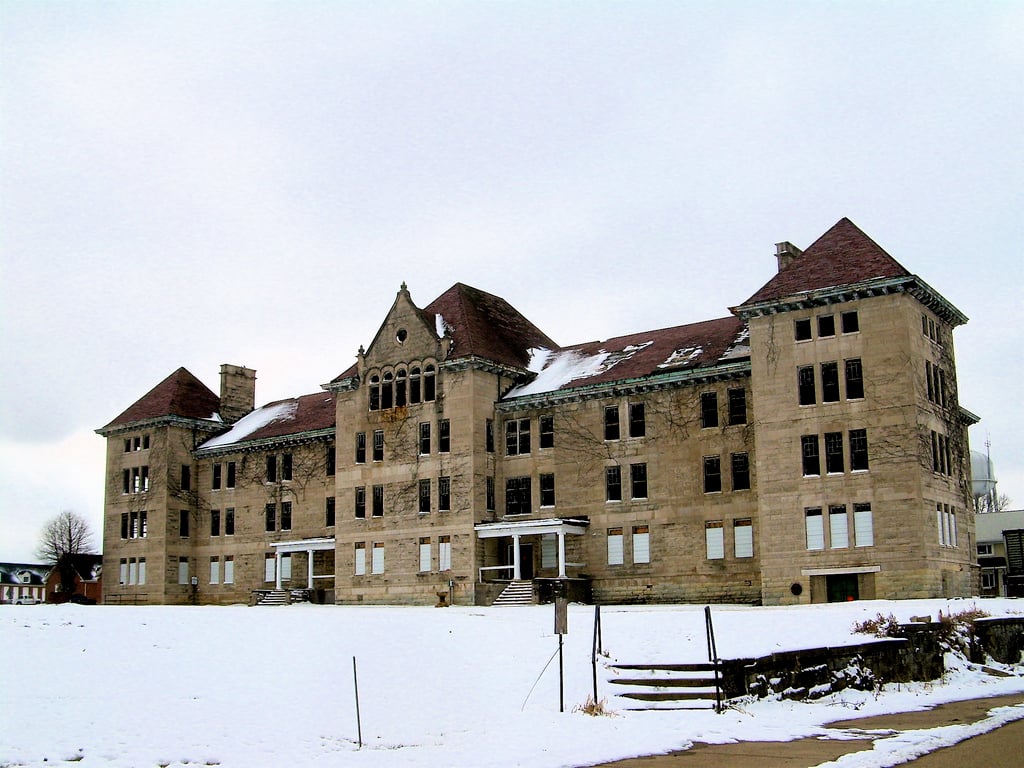
Richmond, VA

The Edgar Allan Poe Museum opened as the Poe Shrine in 1922 and is centered on the Old Stone House, built around 1740 by German immigrant Jacob Ege and widely cited as the oldest original residential building in Richmond. The complex occupies five buildings in Shockoe Bottom and holds one of the world's most comprehensive collections of Poe manuscripts, personal artifacts, and first editions.

$All AgesFamily: High
Yellow Carpenter Gothic-style Edgewood Plantation house and adjacent Harrison's Mill in Charles City County, Virginia
Haunted Hotel / Inn

Edgewood Plantation

Charles City, VA

Edgewood Plantation is an 1854 Gothic Revival mansion in Charles City County, Virginia, built by the Rowland brothers, millers from New Jersey. Listed on the National Register of Historic Places in 1982, the property served as a Confederate lookout during the Civil War and has operated as a post office, restaurant, and bed-and-breakfast.

$$$All AgesFamily: Moderate
Greek Revival facade of the Ellen Glasgow House at 1 West Main Street, Richmond
Photo coming soon
Haunted House / Historic Home

Ellen Glasgow House

Richmond, VA

The Ellen Glasgow House, also known as the Branch-Glasgow House, was built in 1841 as a Greek Revival townhouse at the southwest corner of West Main and Foushee Streets. Ellen Glasgow lived there from 1887 until her death in 1945 and produced most of her major novels in its second-floor study. It was designated a National Historic Landmark in 1971.

FreeAll AgesFamily: High
Front facade of Ferry Plantation House, an 1830 three-story brick museum in Virginia Beach, Virginia
Museum / Historical Site

Ferry Plantation House

Virginia Beach, VA

Ferry Plantation House, also known as Walke Manor House or Old Donation Farm, is an 1830 brick house in Virginia Beach. The three-story structure has served as a plantation, courthouse, school, and post office. The City of Virginia Beach received the deed in 1996; the Friends of the Ferry Plantation House restored the building and operate it as a museum.

$All AgesFamily: Moderate
Preserved 1860s brick house at Fort Collier Civil War Center, Winchester, Virginia
Battlefield / Military Site

Fort Collier Civil War Center

Winchester, VA

Fort Collier is a Confederate earthwork fortification near Winchester, Virginia, constructed in the early summer of 1861 under Lieutenant Cowles Miles Collier. On September 19, 1864, the site was the location of a Union cavalry charge that helped end the Third Battle of Winchester. The Fort Collier Civil War Center, Inc. purchased the ten-acre core of the site in 2002.

FreeAll AgesFamily: High
Aerial view of the stone walls and moat of Fort Monroe at Old Point Comfort, Hampton, Virginia
Museum / Historical Site

Fort Monroe National Monument

Hampton, VA

Fort Monroe is the largest stone fort ever built in the United States, completed in 1834 on the Hampton, Virginia peninsula at Old Point Comfort. The site is also the landing point where the first documented enslaved Africans arrived in English North America in 1619. Decommissioned by the Army in 2011, the property became Fort Monroe National Monument under the National Park Service.

FreeAll AgesFamily: High
Restored Sunken Road and adjacent stone wall at Fredericksburg and Spotsylvania National Military Park, Virginia
Battlefield / Military Site

Fredericksburg and Spotsylvania National Military Park

Fredericksburg, VA

Fredericksburg and Spotsylvania National Military Park preserves land from four Civil War battlefields fought between December 1862 and May 1864: Fredericksburg, Chancellorsville, the Wilderness, and Spotsylvania Court House. Established February 14, 1927, the park covers 8,405 acres and records more than 15,000 killed and 85,000 wounded across the four engagements. It remains the longest-named unit in the National Park system.

FreeAll AgesFamily: High
Exterior of the 1873 former Presbyterian church now housing Freemason Abbey Restaurant in downtown Norfolk, Virginia
Photo coming soon
Haunted Dining / Bar

Freemason Abbey Restaurant

Norfolk, VA

Freemason Abbey occupies an 1873 brick church in Norfolk's Freemason historic district. Built originally for the Second Presbyterian congregation, the building passed to the First Church of Christ Scientist (1902–1948), then to the Independent Order of Odd Fellows (1948–1987) as a meeting hall, before being converted into a restaurant beginning in 1988.

$$$All AgesFamily: High
Brick exterior of Gadsby's Tavern on North Royal Street in Old Town Alexandria, Virginia
Haunted Dining / Bar

Gadsby's Tavern

Alexandria, VA

Gadsby's Tavern in Alexandria, Virginia consists of two 18th-century buildings: a circa-1785 tavern and the 1792 City Hotel. Named for Englishman John Gadsby, who operated both from 1796 to 1808, the complex hosted George Washington, Thomas Jefferson, and the Marquis de Lafayette. Washington's birthday celebrations were held here for years. The buildings are now a working restaurant and a city-operated museum.

$$$All AgesFamily: High
Georgian brick George Wythe House on the Palace Green in Colonial Williamsburg, Virginia
Museum / Historical Site

George Wythe House

Williamsburg, VA

The George Wythe House is a Georgian brick residence on Williamsburg's Palace Green, built around 1755 by Richard Taliaferro and given to his daughter Elizabeth on her marriage to George Wythe. Wythe — the first Virginian to sign the Declaration of Independence, the first American law professor, and mentor to Thomas Jefferson — was poisoned in Richmond in 1806 by his grandnephew George Sweeney. The house is now an interpreted museum operated by the Colonial Williamsburg Foundation.

$$$All AgesFamily: High
Front facade of the reconstructed Governor's Palace at Colonial Williamsburg, Virginia
Haunted House / Historic Home

Governor's Palace (Colonial Williamsburg)
Williamsburg, VA

The Governor's Palace served as the official residence of British royal governors of Virginia from 1722 and later of Patrick Henry and Thomas Jefferson, the first two governors of the Commonwealth. The original building burned on December 22, 1781, while in use as a Continental Army hospital. The Palace was reconstructed in the 1930s, during which 156 Revolutionary War soldiers' remains were unearthed.

$$$All AgesFamily: High
View across the historic rolling grounds of Hollywood Cemetery overlooking the James River in Richmond, Virginia.
Cemetery / Burial Ground

Hollywood Cemetery

Richmond, VA

Hollywood Cemetery was founded in 1847 by William Haxall and Joshua Fry, modeled on Mount Auburn in Cambridge, Massachusetts. Architect John Notman designed the rolling 135-acre garden cemetery overlooking the James River. It became the burial place of Presidents James Monroe and John Tyler, Confederate President Jefferson Davis, and approximately 18,000 Confederate veterans, and was listed on the National Register of Historic Places in 1969.

FreeAll AgesFamily: High
Haw Branch in January of 2025
Haunted House / Historic Home

Haw Branch Plantation

Amelia, VA

Haw Branch Plantation was first settled by Colonel Thomas Tabb in 1735 on a 15,000-acre parcel in Amelia County, Virginia, south of Richmond. The main Georgian house was built around 1745 and added to the National Register of Historic Places in 1973. The property remains a working farm and private residence, restored and owned by a descendant of the Tabb family who purchased it in 1965.

FreeAll AgesFamily: High
Beaux-Arts facade of The Jefferson Hotel on Franklin Street in downtown Richmond, Virginia, built 1895.
Haunted Hotel / Inn

The Jefferson Hotel

Richmond, VA

The Jefferson Hotel was built by Richmond tobacco magnate Lewis Ginter and opened October 31, 1895. Designed by Carrère and Hastings in the Beaux-Arts style, the hotel was conceived as the most luxurious in the American South. The property has been a National Historic Landmark since 1969 and remains a AAA Five Diamond hotel.

$$$$All AgesFamily: High
Federal-style brick exterior of the 1790 John Marshall House in the Court End neighborhood of Richmond, Virginia.
Haunted House / Historic Home

John Marshall House

Richmond, VA

The John Marshall House was built in 1790 by future Chief Justice John Marshall in Richmond's Court End neighborhood. Marshall lived there with his wife Mary Willis 'Polly' Ambler Marshall and their family for 45 years until his death in 1835. The Federal-style brick house is a National Historic Landmark and is operated as a museum by Preservation Virginia.

$All AgesFamily: Moderate
View south along U.S. Route 11 (Main Street) at Fairview Avenue in Harrisonburg, Virginia
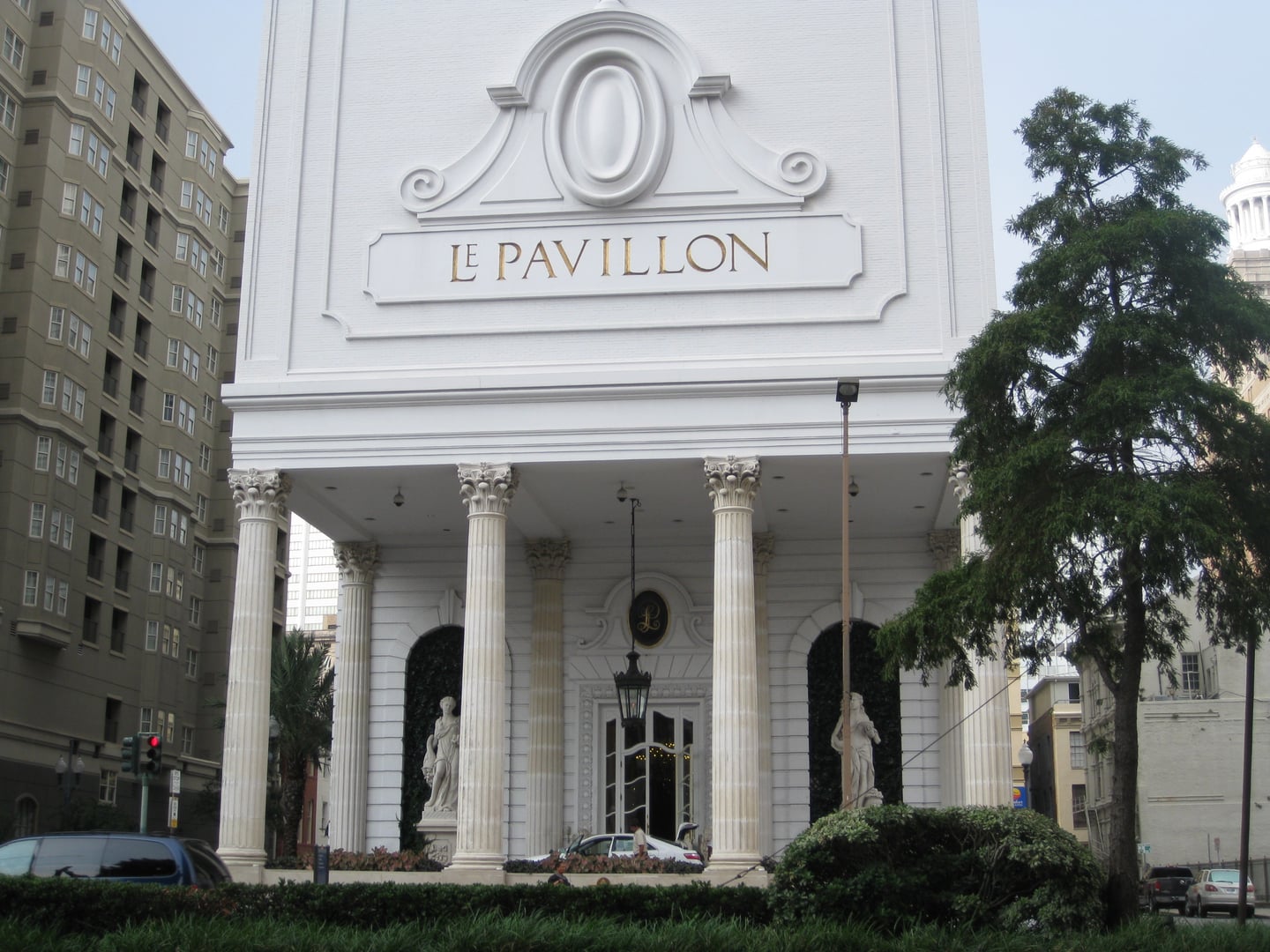
Photo coming soon
Other Dark Tourism Site

Keister Elementary School

Harrisonburg, VA

Keister Elementary School in Harrisonburg, Virginia, was built in 1955 and named in honor of Dr. William H. Keister, who served in the Harrisonburg public school system for more than fifty years. The school serves the Harrisonburg City Public Schools district and maintains an active nature trail on wooded property behind the building.

FreeAll AgesFamily: High
Exterior of King's Arms Tavern on Duke of Gloucester Street in Colonial Williamsburg, Virginia, showing 18th-century brick facade with period signage
Haunted Dining / Bar

King's Arms Tavern

Williamsburg, VA

King's Arms Tavern was opened on February 6, 1772, by Jane Vobe on East Duke of Gloucester Street in Colonial Williamsburg. It served as one of the foremost gathering places in colonial Virginia, where genteel planters, merchants, and politicians dined on dishes including peanut soup and Virginia ham. The tavern is now operated by Colonial Williamsburg and continues as a full-service restaurant in a carefully restored 18th-century structure.

$$$All AgesFamily: High
Two-story Federal-style Lanier House with neo-Classical portico at 770 Main Street Danville Virginia
Photo coming soon
Haunted House / Historic Home

Lanier House

Danville, VA

The Lanier House at 770 Main Street was built in 1830 by Captain James Lanier, Danville's first mayor, making it the oldest surviving residence in the city. The early Federal-style frame structure passed through several prominent owners, including the Wyllie family, who added the imposing two-story neo-Classical portico. From the 1940s through the 1970s the house served as home and diagnostic clinic for Dr. Samuel Newman, Danville's first pediatrician.

FreeAll AgesFamily: High
Street view of the 1785 Lee-Fendall House on Oronoco Street in Old Town Alexandria, Virginia
Museum / Historical Site

Lee-Fendall House

Alexandria, VA

The Lee-Fendall House in Old Town Alexandria, Virginia was built in 1785 by Philip Fendall on land originally purchased by Henry 'Light-Horse Harry' Lee. Thirty-seven members of the Lee family lived in the house between 1785 and 1903. The property served as a Union hospital during the Civil War and was the residence of labor leader John L. Lewis from 1937 to 1969. It opened as a museum in 1974.

$$All AgesFamily: High
Open Graph image from www.longwood.edu
Other Dark Tourism Site

Longwood College (Longwood University)
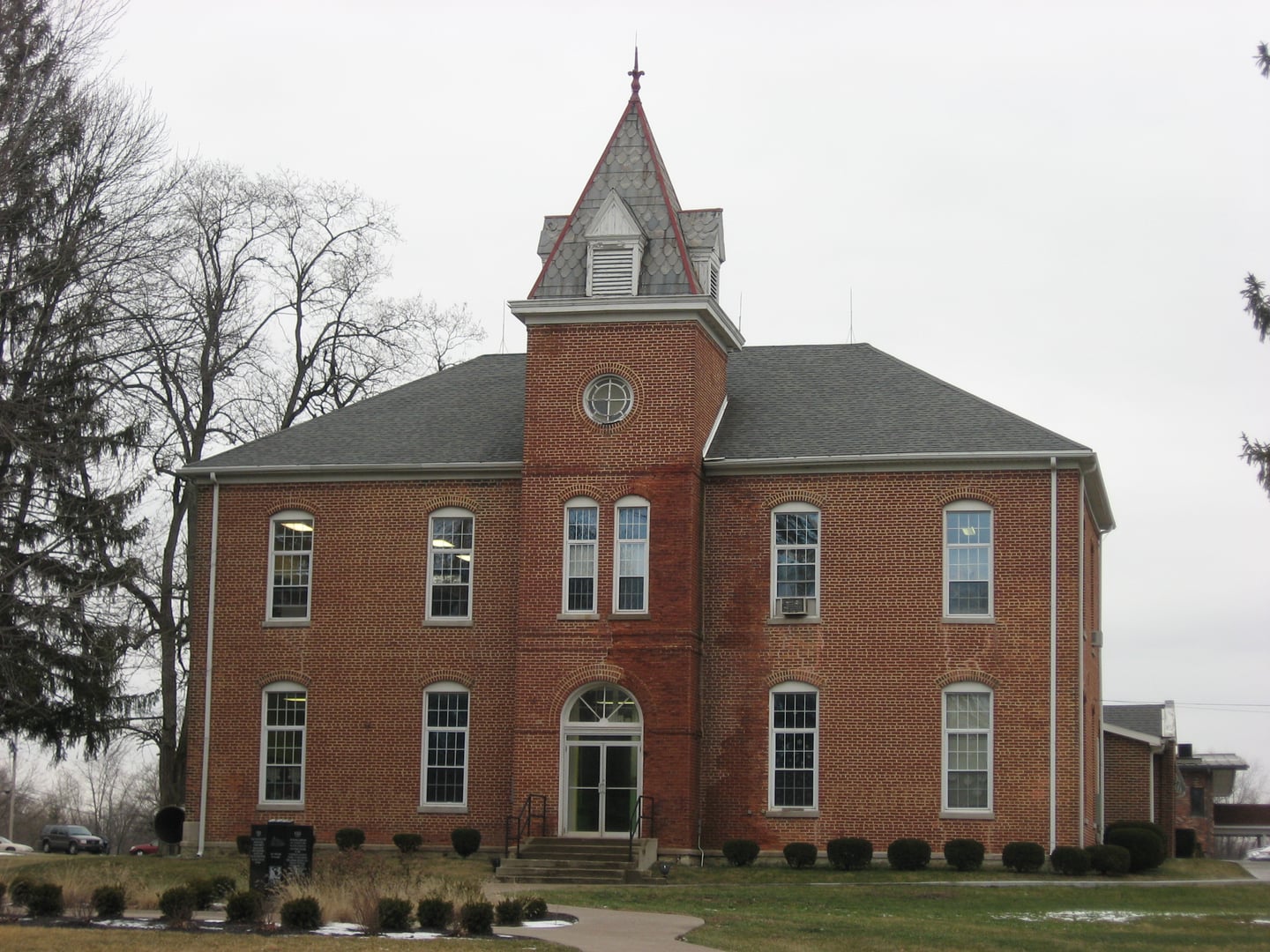
Farmville, VA

Longwood University in Farmville, Virginia was founded in 1839 and is one of the oldest public universities in the United States. The building associated with the elevator legend, formerly called Curry Hall, was constructed in 1969 as one of two 10-story high-rise residence halls. In 2020, both towers were extensively renovated and renamed: Curry Hall became Johns Hall, in honor of Barbara Rose Johns, who led the 1951 student walkout at Robert Russa Moton High School.

FreeAll AgesFamily: Moderate
Lyric Theater historic 1930 movie theater facade with marquee in Blacksburg, Virginia
Theater / Performance Venue

Lyric Theater

Blacksburg, VA

The Lyric Theatre at 135 College Avenue in Blacksburg opened on April 17, 1930, designed by Roanoke architect Louis Phillipe Smithey in an Art Deco and Spanish Colonial Revival blend. The theater seated 900 and was one of Virginia's first cinemas to screen sound films. After closing in 1989 due to multiplex competition, it reopened in 1996 and underwent renovation in 1998-1999, becoming a not-for-profit community arts center.

$All AgesFamily: High
Exterior of the Major David Graham House at Cedar Run Farm in Wythe County, Virginia, an iron-furnace-era plantation home
Haunted House / Historic Home

Major Graham Mansion

Max Meadows, VA

Major Graham Mansion at Cedar Run Farm was built in four sections between roughly 1830 and 1890 by the Graham family of Wythe County, Virginia. Constructed around an existing 1785 log house, the mansion served as the seat of an iron-furnace operation and was the home of Major David Pierce Graham of the 51st Virginia Infantry. It was added to the National Register of Historic Places in 1985.

$$All Ages for history tours; seasonal attraction has separate age guidanceFamily: Moderate
Historic Stone House at Manassas National Battlefield Park, Virginia Civil War site
Battlefield / Military Site

Manassas Battlefield

Manassas, VA

Manassas National Battlefield Park preserves the sites of the First and Second Battles of Bull Run, fought in July 1861 and August 1862 respectively. The two engagements produced combined casualties exceeding 22,000. The Second Battle included a brutal contest over the Unfinished Railroad — a partially constructed rail line that Confederate forces used as a defensive position — where the 5th New York Zouave Regiment suffered approximately 300 casualties in ten minutes, the highest single-regiment loss rate of the entire war.

FreeAll AgesFamily: Moderate
A period-style wooden fence runs across the preserved Civil War battlefield at Manassas National Battlefield Park in Virginia
Battlefield / Military Site

Manassas National Battlefield Park

Manassas, VA

Manassas National Battlefield Park preserves over 5,000 acres of the ground on which the First and Second Battles of Bull Run were fought in July 1861 and August 1862. The First Battle was the first major land engagement of the American Civil War. The park was established in 1936 and listed on the National Register of Historic Places in 1966.

FreeAll AgesFamily: High
Martha Washington Inn historic 1832 mansion exterior on Main Street in Abingdon, Virginia
Haunted Hotel / Inn

Martha Washington Inn

Abingdon, VA

The Martha Washington Inn was constructed in 1832 for General Francis Preston and his family as a private residence costing approximately $15,000. In 1858 the Preston home was purchased for $21,000 to establish Martha Washington College for young women, an institution that operated for over 70 years until the Great Depression and declining enrollment forced its closure in 1932. During the Civil War the building served as a field hospital, treating both Union and Confederate wounded, and schoolgirls became nurses. The property has operated as a hotel since 1935.

$$$All AgesFamily: High
Cubic Federal-era brick facade of Mason's Hall at 1805 East Franklin Street in Richmond
Photo coming soon
Museum / Historical Site

Mason's Hall

Richmond, VA

Mason's Hall was begun in 1785 and completed by 1787 in Richmond's Shockoe Bottom. It is the oldest Masonic temple in continuous use in the United States. Edmund Randolph and John Marshall were members; the Marquis de Lafayette was made an honorary member here in 1824. The building served as a makeshift hospital during the War of 1812.

$All AgesFamily: High
Federal-era brick exterior of the 1792 Moses Myers House at East Freemason and North Bank Streets in Norfolk, Virginia.
Museum / Historical Site

Moses Myers House

Norfolk, VA

The Moses Myers House is a 1792 Federal-era brick townhouse built by merchant Moses Myers, one of the first Jewish residents of Norfolk and an early American millionaire. Five generations of the Myers family lived here from 1795 to 1931. The house is now operated by the Chrysler Museum of Art as a historic house museum and is on the National Register of Historic Places.

FreeAll AgesFamily: High
Thomas Nelson House (York Hall) in Yorktown, Virginia — 1730 Georgian home of Declaration signer Thomas Nelson Jr.
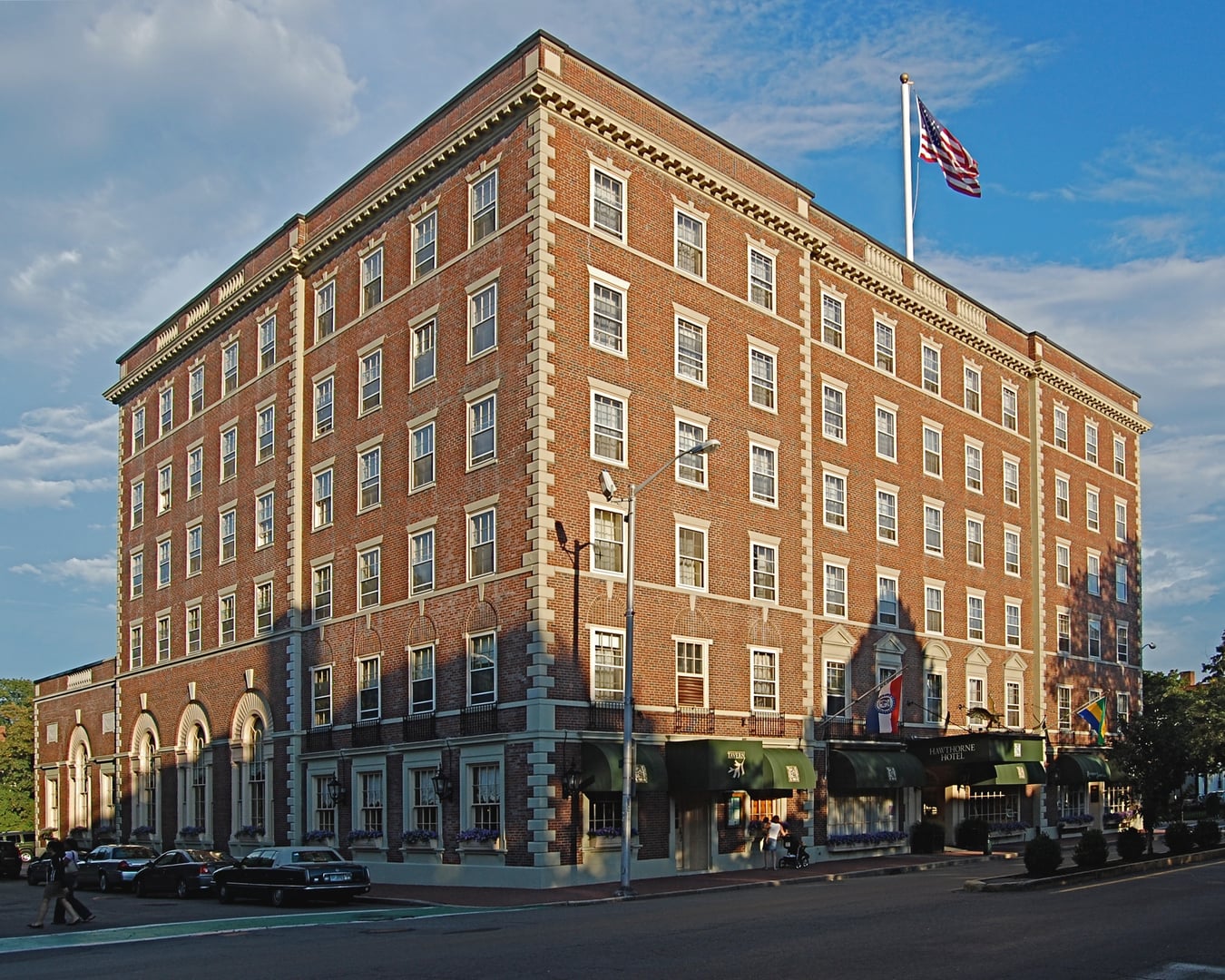
Battlefield / Military Site

Nelson House

Yorktown, VA

The Nelson House at 501 Main Street in Yorktown, Virginia, is a circa-1730 brick Georgian townhouse built by Thomas Nelson, called Scotch Tom. His grandson Thomas Nelson Jr. signed the Declaration of Independence, served as wartime Governor of Virginia, and commanded the Virginia Militia at the 1781 Siege of Yorktown. The house was acquired by the National Park Service in 1968 and restored in 1976.

$All AgesFamily: High
Dense coastal forest at Old House Woods, Mathews County, Virginia
Photo coming soon
Outdoor / Natural Site

Old House Woods

Diggs, VA

Old House Woods is a stretch of dense coastal forest near Diggs in Mathews County, Virginia, on the western shore of the Chesapeake Bay. The woods take their name from the eighteenth-century Frannie Knight house that once stood at the center of the area. The associated folklore — pirate treasure, a ghost Spanish galleon, headless dogs, and the green light — has been documented in regional oral history for more than two centuries and is included in the Virginia Department of Forestry's Ghosts of Forests Past program.

FreeAll AgesFamily: High
Brick colonial-era exterior of Old Mansion in Bowling Green, Virginia
Photo coming soon
Haunted House / Historic Home

Old Mansion

Bowling Green, VA

Old Mansion at 200 South Main Street in Bowling Green, Virginia was built around 1741 by the Hoomes family. Major John Hoomes donated property for the Caroline County courthouse and gave permission for the new county seat to take the name of his estate, The Bowling Green. The property was added to the National Register of Historic Places in 1969.

FreeAll AgesFamily: High
Trinity Episcopal Church on Court Street in Olde Towne Portsmouth, Virginia, the start of the annual Ghost Walk
Photo coming soon
Ghost Tour / Walking Tour

Olde Towne Portsmouth

Portsmouth, VA

Olde Towne Portsmouth is a 20-square-block historic district preserving more than three centuries of waterfront architecture across approximately 500 buildings. The neighborhood is anchored by Trinity Episcopal Church and has hosted the Olde Towne Ghost Walk, one of the longest-running events of its kind in the United States, every year since 1980.

$$All AgesFamily: Moderate
A line of four Civil War cannons in tall grass marking the earthworks of Fort Morton at Petersburg National Battlefield, Virginia
Battlefield / Military Site

Petersburg National Battlefield

Petersburg, VA

Petersburg National Battlefield preserves sites associated with the Siege of Petersburg, a nine-and-a-half-month Civil War operation from June 1864 to April 1865 in which the Union Army under Grant cut Confederate supply lines into Richmond. The siege's most-recounted action is the July 30, 1864 Battle of the Crater. Approximately 70,000 soldiers became casualties during the siege; the war effectively ended within days of the Confederate evacuation of Petersburg.

FreeAll AgesFamily: High
Peyton Randolph House colonial-era residence, Colonial Williamsburg Virginia
Haunted House / Historic Home

Peyton Randolph House

Williamsburg, VA

The Peyton Randolph House in Colonial Williamsburg was built circa 1715 by William Robertson and expanded in subsequent decades. Sir John Randolph purchased the property in 1721; his son Peyton Randolph, who served as the first President of the Continental Congress, inherited and enlarged it. The house enslaved approximately 27 people. During the Civil War the building served as a field hospital, with wounded soldiers treated in its rooms.

$$All Ages for daytime tours; check ghost tour operators for evening age restrictionsFamily: Moderate
The reconstructed Public Hospital of 1773 at Colonial Williamsburg, a one-story brick building on Francis Street
Photo coming soon
Museum / Historical Site

Public Hospital of 1773

Williamsburg, VA

The Public Hospital of 1773 in Williamsburg, Virginia, was the first public facility in British North America built specifically for the care and treatment of people with mental illness. The original building burned in 1885; the current structure is a 1985 reconstruction by the Colonial Williamsburg Foundation, opened together with the DeWitt Wallace Decorative Arts Museum.

$$All AgesFamily: Moderate
The wrought-iron fence around Ramsey Cemetery in rural Wise County, Virginia
Photo coming soon
Cemetery / Burial Ground

Ramsey Cemetery (Laurel Grove Cemetery, Ramsey Section)
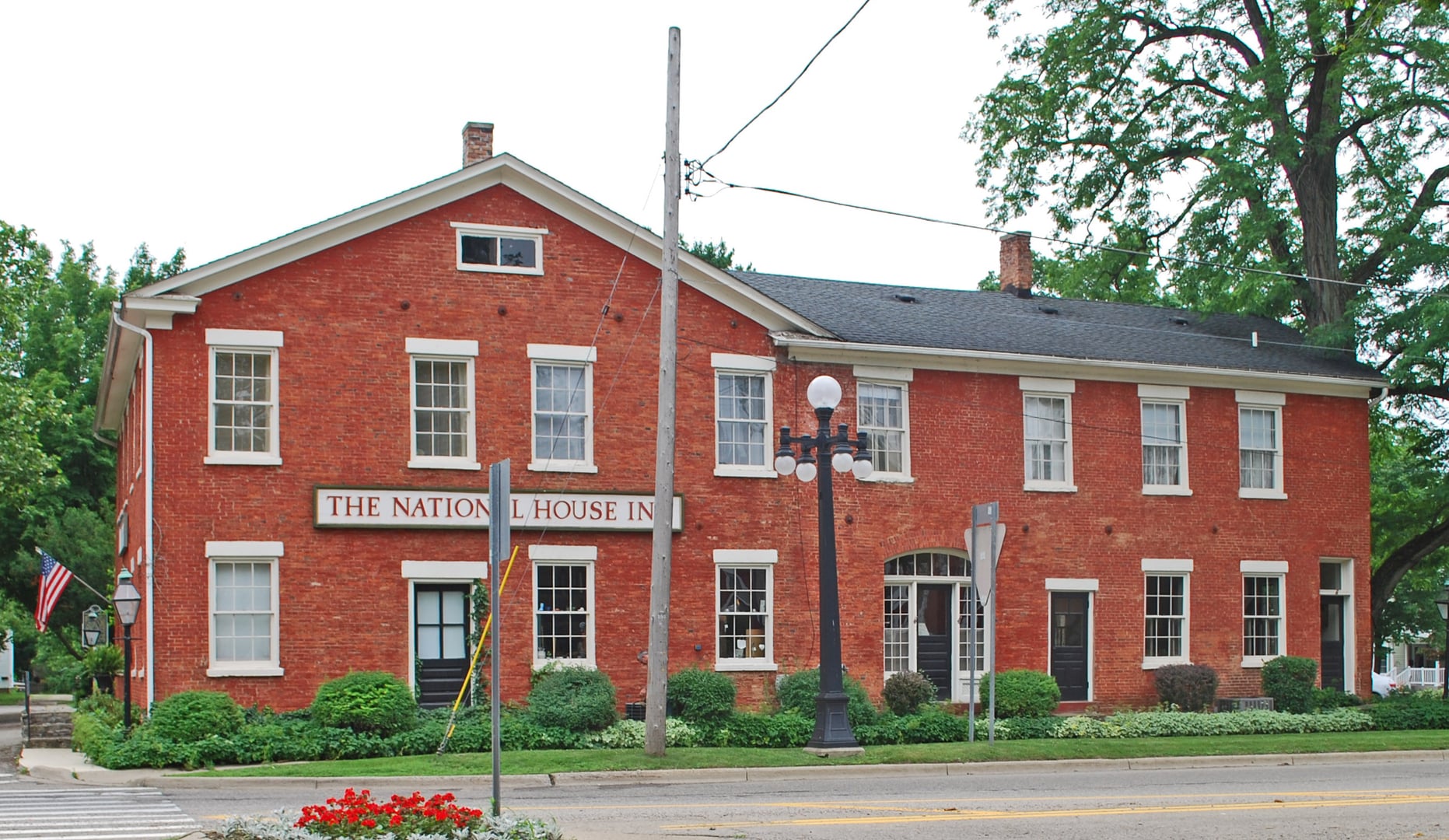
Norton, VA

Ramsey Cemetery, also known as Laurel Grove Cemetery's Ramsey Section, is a small rural family cemetery in Wise County, Virginia, holding burials of the Ramsey and Nance families. The cemetery has been documented for genealogical research by Paul Kilgore in Laurel Grove Cemetery: Ramsey Section of Norton, Virginia, Wise County.

FreeAll Ages (respect cemetery boundaries)Family: Moderate
St Albans Sanatorium front exterior in Radford Virginia, 1892 former Lutheran school turned psychiatric hospital
Asylum / Hospital

St Albans Sanatorium

Radford, VA

St Albans Sanatorium in Radford, Virginia was founded in 1892 by George W. Miles, a University of Virginia graduate, as a Lutheran preparatory school for boys. In 1916 it was converted to a psychiatric hospital; it joined the Carilion Health System in the 1990s and closed in 2004. The structure, built on a 56-acre tract in what was then rural Pulaski County, is now operated as a paranormal investigation and event venue.

$$All ages for some events; 18+ for overnight investigationsFamily: Moderate
Historic 1907 view of St. Paul's Episcopal Church, the 1739 colonial-era brick church in downtown Norfolk, Virginia.
Other Dark Tourism Site

St. Paul's Episcopal Church

Norfolk, VA

St. Paul's Episcopal Church is the only colonial-era building in Norfolk to survive the British bombardment of January 1, 1776. The current nave was built in 1739 on the site of an earlier 1699 brick chapel known as the 'Borough Church.' A cannonball — purportedly fired by HMS Liverpool during Lord Dunmore's attack — remains embedded in the church's south wall.

FreeAll AgesFamily: High
East front of the 1700 Wren Building at the College of William and Mary in Williamsburg, Virginia
Other Dark Tourism Site

Wren Building & President's House

Williamsburg, VA

The Wren Building is the oldest college building in the United States, first constructed between 1695 and 1700 at the College of William & Mary. The President's House was completed in 1733. During the Revolutionary War the Wren served as a hospital for French soldiers wounded at Yorktown in 1781, and the President's House was occupied successively by Cornwallis, the French and Continental Army wounded, and Lafayette.

FreeAll AgesFamily: High
The Kimball Theatre on Merchants Square in Colonial Williamsburg, Virginia
Photo coming soon
Theater / Performance Venue

The Kimball Theatre

Williamsburg, VA

The Kimball Theatre stands on Merchants Square in Williamsburg, Virginia, on the site of the former Ware family home. Mrs. Ware, widowed before the Civil War, converted her home to a refuge for poorer families and later to a makeshift field hospital during the May 1862 Battle of Williamsburg, when Union and Confederate forces clashed in the streets of the town.

$$All AgesFamily: Moderate
Tuckahoe Plantation H-shaped colonial mansion, Thomas Jefferson childhood home near Richmond, Virginia
Haunted House / Historic Home

Tuckahoe Plantation

Richmond, VA

Tuckahoe Plantation, built circa 1733 along the James River west of Richmond, is one of Virginia's best-preserved early 18th-century plantation complexes. The property was developed by the Randolph family and is most famous as the boyhood home of Thomas Jefferson, who lived here from approximately 1745 to 1752 while his father Peter managed the estate during the wardship of Thomas Mann Randolph Jr. The plantation is listed on the National Register of Historic Places.

$All AgesFamily: High
Federal-style facade of the Virginia Executive Mansion on Capitol Square in Richmond
Photo coming soon
Haunted House / Historic Home

Virginia Executive Mansion

Richmond, VA

The Virginia Executive Mansion was completed in 1813 on the northeast corner of Capitol Square in Richmond, designed by Alexander Parris in Federal style. Continuously occupied since opening, it is the oldest sitting governor's mansion in the United States and a National Historic Landmark. Every Virginia governor since James Barbour has lived in the building.

FreeAll AgesFamily: Moderate
Jefferson-designed neoclassical facade of the Virginia State Capitol in Richmond
Photo coming soon
Museum / Historical Site

Virginia State Capitol

Richmond, VA

The Virginia State Capitol was designed by Thomas Jefferson with assistance from French architect Charles-Louis Clérisseau, completed in 1788. It is the second-oldest U.S. state capitol building still in use. On April 27, 1870, the floor of an upper-story courtroom collapsed during a crowded mayoral hearing, killing approximately 62 people and injuring 251 in what became known as the Capitol Disaster.

FreeAll AgesFamily: High
Beaux-Arts neoclassical facade of the 1913 Wells Theatre on East Tazewell Street in downtown Norfolk, Virginia.
Theater / Performance Venue

The Wells Theatre

Norfolk, VA

The Wells Theatre opened August 26, 1913, as a vaudeville and legitimate-stage house built by brothers Jake and Otto Wells. Designed by the New York firm E.C. Horn & Sons in Beaux-Arts neoclassical style, it once seated 1,650 across three balconies and twelve boxes. The Virginia Stage Company has been the resident professional theater company since 1979, and the building is owned by the City of Norfolk. It was added to the National Register of Historic Places on May 19, 1980.

$$All AgesFamily: High
Chesapeake Bay beach along Willoughby Spit, a narrow Norfolk peninsula formed by 18th-century hurricanes
Photo coming soon
Outdoor / Natural Site

Willoughby Spit

Norfolk, VA

Willoughby Spit is a narrow sand peninsula extending into the Chesapeake Bay from Norfolk's Ocean View neighborhood. It is named for Thomas Willoughby, who received a land grant in 1625. The spit was largely formed by an 18th-century hurricane in 1749 and substantially reshaped by the Great Coastal Hurricane of 1806, with major erosion and replenishment cycles continuing into the 21st century.

FreeAll AgesFamily: High
Federal-style brick manor house at The Inn at Willow Grove with willow trees in foreground
Haunted Hotel / Inn

The Inn at Willow Grove

Orange, VA

The Inn at Willow Grove occupies a Federal-style manor house begun in 1778 by Joseph Clark in Orange County, Virginia. A brick wing was added by his son in 1820. The property witnessed both Revolutionary War and Civil War activity in the rolling country at the foothills of the Blue Ridge Mountains.

$$$$All AgesFamily: High
Woodlawn estate east front, historic 126-acre property originally part of Mount Vernon, Alexandria, Virginia
Museum / Historical Site

Woodlawn

Alexandria, VA

Woodlawn was built in 1805 on land George Washington gave to his nephew Lawrence Lewis and Lewis's wife Eleanor "Nelly" Parke Custis Lewis, Martha Washington's granddaughter. The 126-acre Federal-style estate is owned by the National Trust for Historic Preservation and operates as a museum alongside the relocated Pope-Leighey House by Frank Lloyd Wright.

$$All AgesFamily: High
Yorktown Battlefield earthworks and cannon at the First Allied Siege Line, Colonial National Historical Park, Yorktown, Virginia
Battlefield / Military Site

Yorktown Battlefield

Yorktown, VA

The Siege of Yorktown, fought September 28 to October 19, 1781, was the decisive engagement of the American Revolutionary War. American and French forces under General Washington and General Rochambeau besieged British General Cornwallis's fortified position; after 19 days, Cornwallis surrendered approximately 8,000 soldiers — the largest British capitulation of the war. Yorktown Battlefield is administered by the National Park Service as part of Colonial National Historical Park.

$All AgesFamily: Moderate
Acme Theater exterior in Riverton, Wyoming
Photo coming soon
Theater / Performance Venue

Acme Theater

Riverton, WY

The Acme Theater was built in the 1920s in Riverton, Wyoming by Belle Mote, one of Riverton's most prominent businesswomen. Originally hosted live stage shows, vaudeville, and penny shows before transitioning to modern movie theater operations.

$$All AgesFamily: High
Sparse remnants of the Battle, Wyoming mining camp at 9,924-foot elevation in the Sierra Madre Range near Encampment
Photo coming soon
Outdoor / Natural Site

Battle Lake and Slaughterhouse Gulch

Encampment, WY

Battle was a short-lived mining camp in Wyoming's Sierra Madre Range, founded in 1898 to support the Ferris-Haggarty Mine on Battle Pass. The town reached its peak between 1898 and 1905 as a freight stop for ore moving from the mine to the Encampment smelter, then declined when copper prices collapsed and the world's-longest 1902 aerial tramway was built around it.

FreeAll AgesFamily: Moderate
Devils Tower, on west bank of Belle Fourche River, south of Hulett. Crook Wyoming. Circa 1900. Plate 17, as Ives Three Color Process, in U.S. Geological Survey. Professional paper 32. 1905, figure 1 in U.S. Geological Survey. Folio 150. 1907.
Outdoor / Natural Site

Devils Tower National Monument

Devils Tower, WY

Devils Tower, known to many Plains tribes as Mato Tipila or Bear Lodge, is an 867-foot igneous butte in the Black Hills region of northeastern Wyoming. It was the first site designated as a U.S. National Monument, declared by President Theodore Roosevelt on September 24, 1906. The name 'Devils Tower' originated with a 1875 military expedition in which an interpreter mistranslated a Lakota name as 'Bad God's Tower.'

$All AgesFamily: High
Historic structures at Fort Bridger State Historic Site against the Wyoming high plains
Photo coming soon
Museum / Historical Site

Fort Bridger State Historic Site

Fort Bridger, WY

Fort Bridger was established in 1843 by mountain man Jim Bridger and Louis Vasquez as a fur trading post and resupply stop on the Oregon, California, and Mormon trails. The U.S. Army took control in 1858 during the Utah War and operated the fort as a military outpost until 1890. The site is now a 37-acre Wyoming state historic site with 27 surviving historic structures.

$All AgesFamily: High
Entrance to Fort Laramie National Historic Site on the North Platte River in Goshen County, Wyoming
Museum / Historical Site

Fort Laramie National Historic Site

Fort Laramie, WY

Fort Laramie originated in 1834 as a private fur-trading post called Fort William on the North Platte River in present-day Wyoming. The U.S. Army acquired the site in 1849, making Fort Laramie the largest and best-known military post on the Northern Plains. The fort was abandoned in 1890; it became a National Monument in 1938 and a National Historic Site in 1960.

FreeAll AgesFamily: High
Open Graph image from www.hamsforkmuseum.com
Museum / Historical Site

Hamsfork Museum

Kemmerer, WY

The Hamsfork Museum, previously known as the Fossil Country Museum, is housed at 400 Pine Avenue in Kemmerer, Wyoming, the seat of Lincoln County. The museum preserves the area's coal mining heritage, fossil history, and early settler life, including the story of J.C. Penney's original mother store that opened in Kemmerer in 1902.

$All AgesFamily: High
Sweetwater County Library exterior at 300 N. 1st East in Green River, Wyoming, photographed by Carol Highsmith
Museum / Historical Site

Sweetwater County Library

Green River, WY

The Sweetwater County Library in Green River, Wyoming, opened in 1980 on land that served as Green River's first official cemetery from 1862 until the early twentieth century. During multiple construction and renovation projects from 1926 forward, human remains were repeatedly found on the site, including during the 1978–1979 library construction.

FreeAll AgesFamily: High
Heart Mountain Relocation Center historical marker with Heart Mountain visible behind, Park County, Wyoming
Museum / Historical Site

Heart Mountain Relocation Center

Powell, WY

The Heart Mountain Relocation Center operated in Park County, Wyoming from August 1942 to November 1945, confining up to 10,767 Japanese Americans at its peak — making it Wyoming's third-largest city almost overnight. Authorized by President Roosevelt's Executive Order 9066, the camp held nearly 14,000 people across a three-year span, across 650 barracks-style buildings on 46,000 acres of high desert.

$$All AgesFamily: Moderate
Buffalo Bill's Irma Hotel historic exterior on Sheridan Avenue in Cody Wyoming
Haunted Hotel / Inn

Buffalo Bill's Irma Hotel

Cody, WY

Buffalo Bill's Irma Hotel opened on November 1, 1902, in Cody, Wyoming. William F. Cody spent approximately $80,000 of his own funds building the property and named it for his youngest daughter, Irma. The hotel was conceived as a stopover for visitors traveling to Yellowstone National Park.

$$$All AgesFamily: High
Trail End Kendrick Mansion historic site in Sheridan Wyoming
Museum / Historical Site

Trail End (Kendrick Mansion)

Sheridan, WY

Trail End is a 39-room Flemish Revival mansion in Sheridan, Wyoming, built between 1908 and 1913 for John B. Kendrick, Texas-born cattleman who served as Governor of Wyoming and a U.S. Senator. Designed by architect Glenn Charles McAlister, the house cost approximately $164,000 to construct. Saved from demolition by the Sheridan County Historical Society in 1968 and transferred to Wyoming State Parks in 1982, the property is now operated as a historic house museum.

$All AgesFamily: High
Open Graph image from lpccwy.org
Museum / Historical Site

Laramie Plains Civic Center

Laramie, WY

The Laramie Plains Civic Center at 710 Garfield Street was constructed in 1878 as the East Side School, making it the oldest school building in Wyoming. The building served as a school until 1979 and became a civic center in 1982. Its 167,000 square feet now include a theater, gymnasium, ballroom, and the original east wing classrooms.

FreeAll AgesFamily: High
The historic Virginian Hotel in Medicine Bow, Wyoming, completed in 1911
Haunted Hotel / Inn

Medicine Bow (Virginian Hotel)

Medicine Bow, WY

The Virginian Hotel in Medicine Bow, Wyoming opened in 1911, built by August Grimm, the town's first mayor, and his partner George Plummer. Upon completion it was the largest hotel between Denver and Salt Lake City. It takes its name from Owen Wister's 1902 novel 'The Virginian,' set partly in Medicine Bow, and is listed on the National Register of Historic Places.

$$All AgesFamily: High
The seven-story log facade of Old Faithful Inn against the Yellowstone caldera at dusk
Haunted Hotel / Inn

Old Faithful Inn

Yellowstone National Park, WY

The Old Faithful Inn opened in 1904 as the first of the great national park lodges, designed by 29-year-old architect Robert Reamer in a rustic style that defined a century of park architecture. The seven-story log structure stands within sight of Old Faithful Geyser and remains in continuous operation under Xanterra Travel Collection.

$$$$All AgesFamily: High
Wyoming Frontier Prison (Old Pen) in Rawlins, Wyoming — 1901 sandstone penitentiary, now a museum
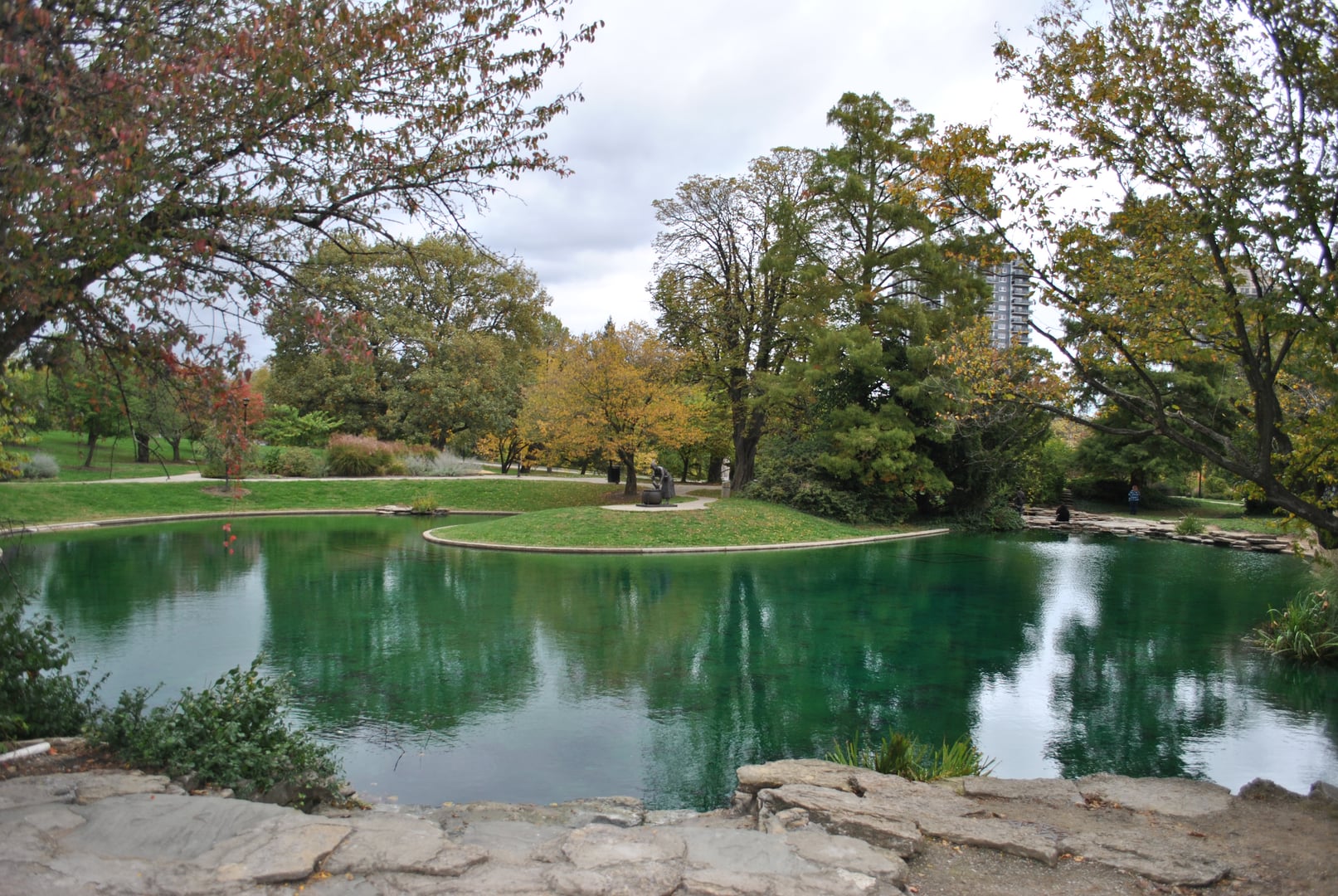
Prison / Reformatory

Wyoming Frontier Prison

Rawlins, WY

The Wyoming Frontier Prison in Rawlins operated as the state's first penitentiary from 1901 to 1981. Now a museum and National Register of Historic Places site, the sandstone facility held more than 13,500 inmates over eight decades and executed 14 men, the last by gas chamber.

$$All Ages (historic tour); evening paranormal events typically 18+Family: Moderate
Sheridan Inn in Sheridan Wyoming, 1893 wood-frame hotel with wide front porches
Haunted Hotel / Inn

Sheridan Inn

Sheridan, WY

The Sheridan Inn opened on May 27, 1893, and was hailed as the finest hotel between Chicago and San Francisco. Buffalo Bill Cody, who held a part interest in the property, made it the auditioning headquarters for his Wild West Show, hiring riders, ropers, and trick shooters from the Inn's broad front porch.

$$$All AgesFamily: High
The Smith Mansion, Lee Smith's hand-built timber tower overlooking the Wapiti Valley in Park County, Wyoming
Haunted House / Historic Home

Smith Mansion

Wapiti, WY

Francis Lee Smith, a Montana State University-trained architect, began building the Smith Mansion in 1973 as a family cabin in the Wapiti Valley between Cody and Yellowstone. Smith continued adding stories and balconies to the structure for nineteen years until his death from a fall on April 25, 1992.

FreeExterior view only — private propertyFamily: High
Wyoming Frontier Prison Romanesque Revival administration building exterior, Rawlins, Wyoming
Prison / Reformatory

Wyoming Frontier Prison

Rawlins, WY

Construction of the Wyoming Frontier Prison began in 1888 and completed in December 1901, opening with 104 cells, no electricity, no running water, and minimal heating. Over its operational history, 13,500 people were incarcerated there and 14 death sentences were carried out — nine by hanging and five in the gas chamber added in 1936. The prison closed in 1981 when a new facility opened near Rawlins.

$$Guided tours: all ages (dogs on leash welcome). Ghost hunts: 18+ with photo ID.Family: Moderate
Brick administrative buildings of the historic Wyoming State Hospital campus in Evanston
Photo coming soon
Asylum / Hospital

Wyoming State Hospital

Evanston, WY

The Wyoming State Hospital was authorized as the Wyoming Insane Asylum by the Territorial Legislature in 1886 and opened in Evanston on May 15, 1889. Designed in part by Cheyenne architect William Dubois, the campus comprises fifteen contributing brick buildings on a hill south of downtown. The first patients arrived by Pullman rail car from Jacksonville, Illinois. The original 1889 building burned in 1917; the surviving cluster of buildings is listed on the National Register.

FreeAll AgesFamily: Moderate
Historic facade of Wyoming Territorial Penitentiary stone main building in Laramie Wyoming
Prison / Reformatory

Wyoming Territorial Prison State Historic Site

Laramie, WY

Wyoming Territorial Prison was built in 1872 in Laramie with two-foot-thick walls of hand-quarried limestone trimmed in red sandstone. It operated as a federal penitentiary until 1890 and then as Wyoming's first state prison until 1901, when operations transferred to Rawlins. Notable inmates included Butch Cassidy, who served 18 months in the broom factory beginning in 1894. The site was restored in 1991 and is on the National Register of Historic Places.

$$All AgesFamily: Moderate
A guided walking tour gathered on a Wisconsin downtown sidewalk at dusk
Photo coming soon
Ghost Tour / Walking Tour

American Ghost Walks

Madison, WI

American Ghost Walks is a multi-city tour operator founded around 2010, running guided storytelling walks across more than two dozen U.S. cities and territories, including five Wisconsin markets — Madison, Milwaukee, Waukesha, Lake Geneva, and Bayfield — plus stops in Illinois, Maine, Minnesota, Louisiana, Hawaii, Alaska, and Puerto Rico.

$$Most tours recommended 13+Family: Moderate
Appleton Curling Club building on Westhill Boulevard
Photo coming soon
Haunted Dining / Bar

Appleton Curling Club

Appleton, WI

The Appleton Curling Club was established in 1939 and relocated to its present facility on Westhill Boulevard in January 1960. In 1967, fire damaged the clubhouse but did not destroy the ice rink or compressor room, necessitating rebuilding of the spectators' area.

$$All AgesFamily: High
A small Wisconsin pioneer cemetery with weathered Scandinavian-style headstones set among mature trees in rural Barron County
Photo coming soon
Cemetery / Burial Ground

Pioneers Rest Cemetery (Bandli Graveyard)
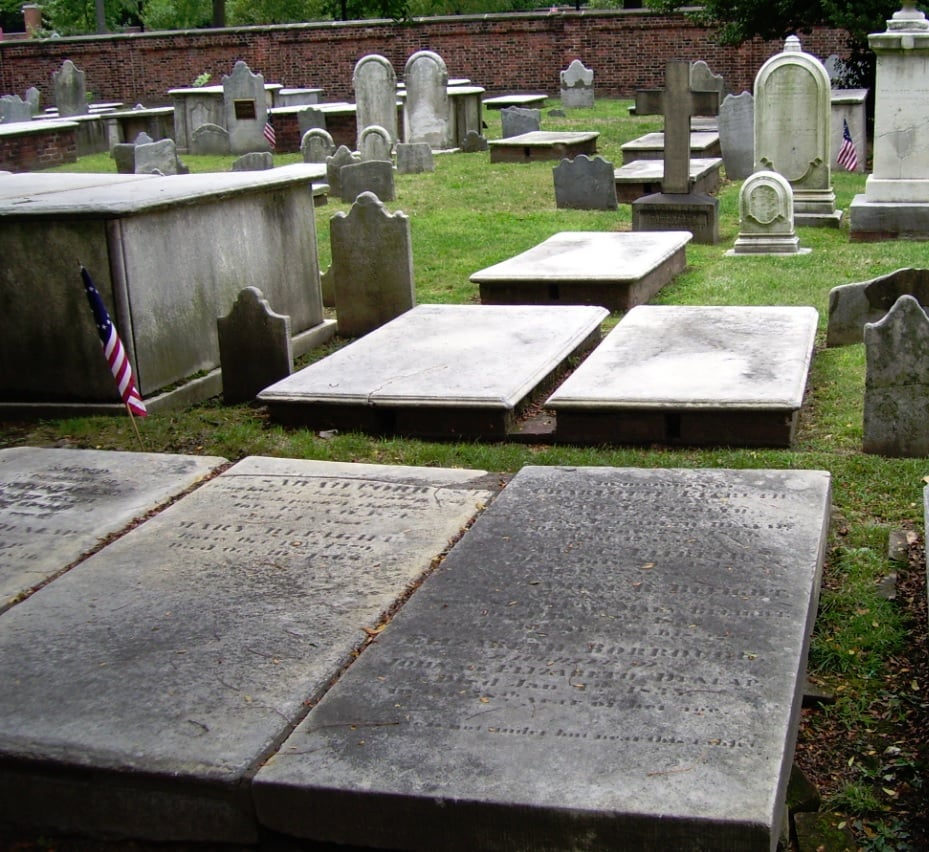
Canton, WI

Pioneers Rest Cemetery, also known locally as the Bandli Graveyard, sits north of Canton in Barron County, Wisconsin. The cemetery serves the descendants of Scandinavian pioneer families who settled the area in the late nineteenth century. In 2008, the cemetery was the site of a documented grave robbery in which the remains of an infant interred in 1925 were exhumed and removed.

FreeAll AgesFamily: Moderate
The 1883 Old Courthouse in Bayfield, Wisconsin, the meeting point for the Bayfield Ghost Walk, with Lake Superior visible beyond
Ghost Tour / Walking Tour

Bayfield Ghost Walk

Bayfield, WI

Bayfield, Wisconsin, sits on Lake Superior at the gateway to the Apostle Islands National Lakeshore and was founded in 1856 as a port for shipping and brownstone quarrying. The Bayfield Ghost Walk meets at the Old Courthouse — now home to the Apostle Islands National Lakeshore headquarters — at 415 Washington Avenue.

$10+ recommendedFamily: Moderate
Bender Park overlooking Lake Michigan cliffs in Oak Creek, Wisconsin
Photo coming soon
Outdoor / Natural Site

Bender Park

Oak Creek, WI

Bender Park in Oak Creek overlooks Lake Michigan, offering recreational access to the shoreline. The park's location on cliffs above the beach creates natural hazard conditions. The surrounding roads—particularly Fitzsimmons Road and E. Oakwood Road—have acquired dark reputations from multiple tragedies.

FreeAll AgesFamily: Moderate
Exterior of the Berlin Sanctuary church complex in Berlin, Wisconsin, featuring the 1908 church building
Other Dark Tourism Site

Berlin Sanctuary

Berlin, WI

The Berlin Sanctuary complex comprises four structures built between 1908 and 1953 in Berlin, Wisconsin: a church, a rectory, a school, and a convent. The complex served an active religious community through most of the 20th century. American Hauntings, the investigation program founded by paranormal author Troy Taylor in 1993, has been hosting investigation events at the complex and describes it as one of the most documented sites in Wisconsin.

$$$Check American Hauntings for current age requirementsFamily: Low
Big River Inn/Water View Inn in Genoa, Wisconsin
Photo coming soon
Haunted Hotel / Inn

Big River Restaurant

Genoa, WI

Big River Inn dates to either 1879 or 1896 (sources vary) in Genoa, Wisconsin. The building originally functioned as a restaurant before evolving into a combined inn and restaurant. It now operates as Water View Inn, maintaining its paranormal reputation while serving contemporary hospitality functions.
$$All AgesFamily: High
The 1910 Brumder Mansion, an English Arts and Crafts residence on Milwaukee's West Wisconsin Avenue
Haunted Hotel / Inn

Brumder Mansion

Milwaukee, WI

The Brumder Mansion was built in 1910 by Milwaukee German-language publisher George Brumder for his eldest son. The English Arts and Crafts residence later operated as a Lutheran women's residence and, during Prohibition, as the cover for a basement speakeasy reportedly tied to local bootlegging networks. It has run as a bed and breakfast since the 1990s.

$$$Adults preferred; check property policy for childrenFamily: Moderate
Burlington Public Cemetery in Burlington, Wisconsin
Photo coming soon
Cemetery / Burial Ground

Burlington Public Cemetery

Burlington, WI

Burlington Public Cemetery serves as the primary burial ground for Burlington, Wisconsin. Behind the main cemetery lies an older pioneer cemetery approximately 40 years removed from public consciousness, containing the remains of early Burlington settlers and their families.

FreeAll AgesFamily: Moderate
Open Graph image from www.cuw.edu
Haunted House / Historic Home

Concordia University Wisconsin

Mequon, WI

Concordia University Wisconsin's 102-acre Mequon campus was purchased on September 15, 1982, from the School Sisters of Notre Dame, who sold the property to the Lutheran Church–Missouri Synod for $7.1 million. The sisters had maintained a high school for novices on the lakefront grounds; with diminishing enrollment and a community of 130 resident nuns, the campus was too large to sustain. Concordia moved from downtown Milwaukee to Mequon the following year.

FreeAll AgesFamily: High
Cornell City Hall in Wisconsin
Museum / Historical Site

Cornell Public Library

Cornell, WI

Cornell Public Library occupies a building constructed in 1928 as the Cornell village hall at 117 N 3rd Street in Chippewa County, Wisconsin. The building's basement originally housed the fire hall, jail cells, and furnace room, while the upper floor served as library and council chamber. The building has undergone minimal remodeling since construction.

FreeAll AgesFamily: High
The pioneer-era headstones and family vaults of Dartford Cemetery in Green Lake, Wisconsin.
Photo coming soon
Cemetery / Burial Ground

Dartford Cemetery

Green Lake, WI

Dartford Cemetery is an old burial ground in the village of Green Lake, Wisconsin, holding pioneer-era burials including Civil War veterans and the relocated grave of Chief Highknocker — a Ho-Chunk leader born Henaga in 1820 who lived around Green Lake (Daycholah) and died in a drowning accident in 1911. His son moved his grave to Dartford in the 1930s.
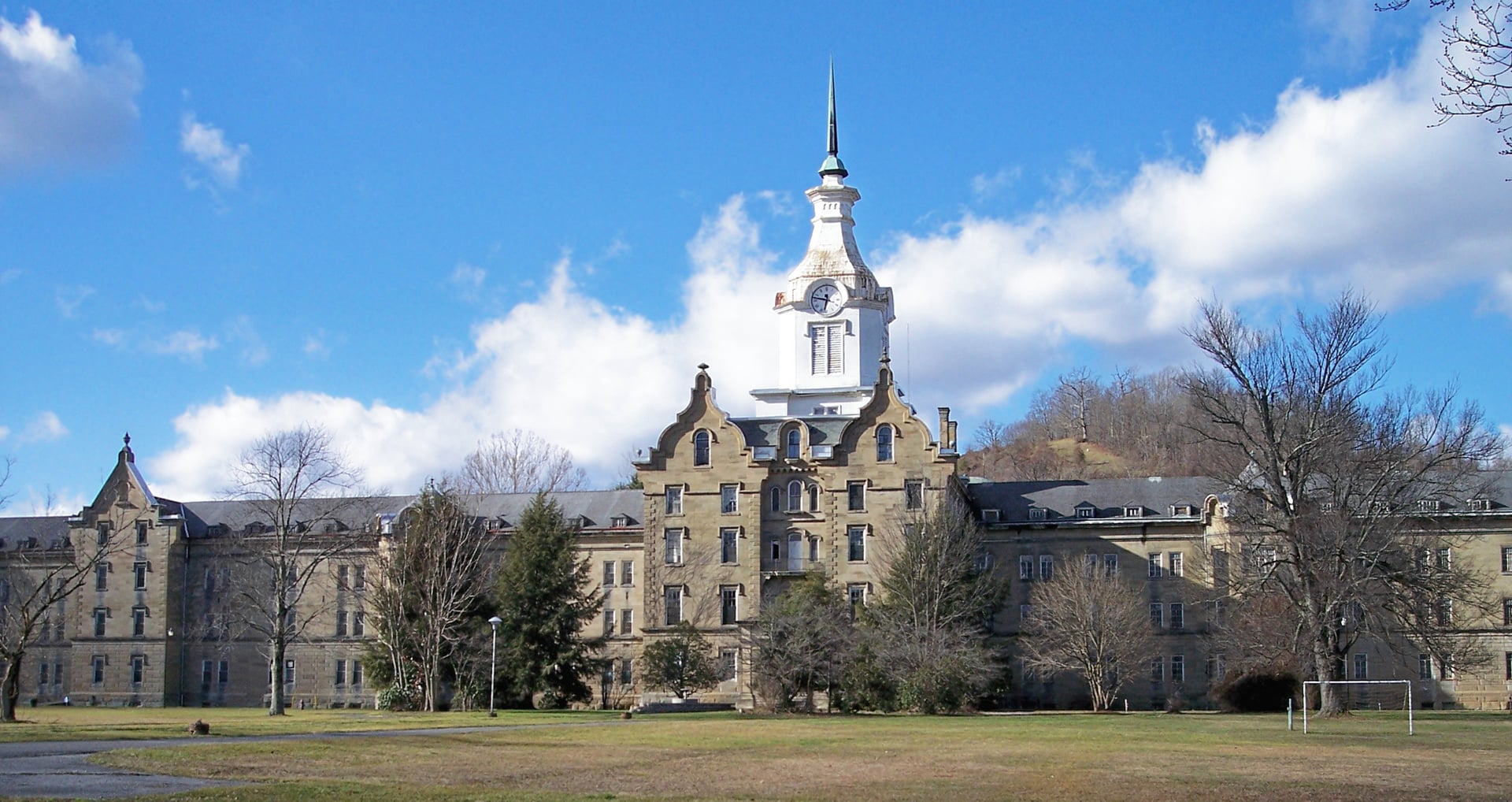
FreeAll AgesFamily: High
The white Greek Revival façade of the Dousman Stagecoach Inn at the Elmbrook Historical Society park
Photo coming soon
Museum / Historical Site

Dousman Stagecoach Inn

Brookfield, WI

The Dousman Stagecoach Inn was built in 1843 by Talbot Dousman at the corner of Bluemound Road and Watertown Plank Road in what is now Brookfield, Wisconsin. It served as a stagecoach inn from the 1840s until 1872, then as a private home. In 1981 the Elmbrook Historical Society moved the building to a 20-acre park at 1075 Pilgrim Parkway, where it operates today as a museum. It is listed on the National Register of Historic Places and the Historic American Buildings Survey.

FreeAll AgesFamily: High
View of a downtown side street. Green Bay, Wisconsin, on Pine Street between Adams and Jefferson Streets.
Other Dark Tourism Site

Ferguson Family YMCA

Green Bay, WI

The Ferguson Family YMCA at 235 N Jefferson Street in Green Bay, Wisconsin was constructed in 1924 during the city's paper industry boom. The six-story Tudor Revival building served as a residential housing facility for decades before being converted to a fitness and community center. A $13 million renovation modernized the structure while preserving its historic character.

$$All AgesFamily: High
Italianate Durkee Mansion at Kemper Center on the Lake Michigan shoreline in Kenosha, Wisconsin
Museum / Historical Site

Durkee Mansion / Kemper Center

Kenosha, WI

The Durkee Mansion was built in 1861 by Charles Durkee, an early Wisconsin settler completing his term as U.S. Senator. Beginning in 1865 the property was converted into Kemper Hall, an Episcopal girls school operated by the Sisters of St. Mary that ran for 105 years until its closure in 1975.

FreeAll AgesFamily: High
Small rural cemetery along Eagle Road near Juneau in Dodge County, Wisconsin
Photo coming soon
Cemetery / Burial Ground

Eagle Road Cemetery

Juneau, WI

Eagle Road Cemetery near Juneau, Wisconsin — also documented as Evangelical Church Cemetery and Tabor Cemetery — is a small rural burial ground along Eagle Road in Dodge County. It is a historic community cemetery associated with a local Lutheran congregation, though it has developed a separate reputation in regional paranormal accounts.

FreeAll AgesFamily: Moderate
Gallup, New Mexico.
Photo coming soon
Haunted Hotel / Inn

El Rancho Motel

Ladysmith, WI

The El Rancho Motel in Ladysmith, Wisconsin operates north of town along Highway 27 in the Northwoods region of Rusk County. The property has operated under several names — including Mondor's El Rancho and Northern Lights — and has a long local history that includes a period as a dance hall and, in earlier eras, a house of ill repute. A local newspaper account from 2013 documents the motel's history and the Peavey family's tenure as operators.

$$All AgesFamily: Moderate
Eight-story brick early 20th century commercial building in downtown Manitowoc
Photo coming soon
Haunted House / Historic Home

Evergreen Inn (Manitowoc Place Apartments)
Manitowoc, WI

The eight-story building at 204 North 8th Street in downtown Manitowoc opened in 1906 as the New California Hotel. It later operated as the Evergreen Inn before standing vacant in the early 21st century. A $5.2 million historic rehabilitation completed the conversion to the Manitowoc Place apartments, an income-restricted residential building that opened in the early 2010s.

FreeAll AgesFamily: High
Queen Anne facade of the Martin Pattison House (Fairlawn Mansion) in Superior, Wisconsin
Museum / Historical Site

Fairlawn Mansion

Superior, WI

Fairlawn Mansion was completed in 1891 as the 42-room Queen Anne home of lumber baron Martin Pattison, a three-time mayor of Superior, Wisconsin. After his 1918 death, his widow Grace donated the house to the Superior Children's Home and Refuge Society, which ran it as an orphanage until 1962. The City of Superior acquired the property in 1963 and now operates it as a public museum.

$$All AgesFamily: High
Consolidated nineteenth-century cemetery monument at Founder's Park, Cedarburg, Wisconsin
Photo coming soon
Cemetery / Burial Ground

Founder's Park Cemetery

Cedarburg, WI

Founder's Park, on the east side of Evergreen Boulevard north of Western Avenue in Cedarburg, Wisconsin, served as the first burial ground for the Trinity Lutheran congregation in the mid-nineteenth century. Sometime before 1877, the original individual headstones were removed and replaced with a single consolidated monument listing the recovered names of those interred.

FreeAll AgesFamily: High
Exterior of Fox and Hounds Restaurant in Hubertus Wisconsin, built around an 1845 log cabin in the Kettle Moraine
Photo coming soon
Haunted Dining / Bar

Fox & Hounds Restaurant & Tavern

Hubertus, WI

The Fox & Hounds traces its origins to 1845, when the first clerk of Washington County constructed a one-room log cabin in the rolling hills north of Milwaukee. In 1933, equestrian Ray Wolf restored the structure, added a basement bar, and opened it as a restaurant centered on the fox hunts that had become a tradition at the site. The venue has operated continuously for over 90 years.

$$$All AgesFamily: High
Mr. Knox and Oxen concrete sculpture by Fred Smith at Wisconsin Concrete Park in Phillips, Wisconsin
Museum / Historical Site

Fred Smith's Wisconsin Concrete Park

Phillips, WI

Fred Smith, a retired lumberjack and tavern owner born in 1886 to German immigrant parents, began building concrete sculptures on his property along Highway 13 in Phillips, Wisconsin, in 1948. He completed 230 figures before a 1964 stroke ended the work. The Kohler Foundation acquired the site in 1976 and it is now a National Register property.

FreeAll AgesFamily: High
Wooded cemetery path leading to early 19th century graves at Glenbeulah Cemetery in Sheboygan County Wisconsin
Photo coming soon
Cemetery / Burial Ground

Glenbeulah Cemetery

Glenbeulah, WI

Glenbeulah Cemetery, also known as Walnut Grove Cemetery, contains graves dating to the early 19th century in Sheboygan County, Wisconsin. The cemetery's remote woodland setting and its inclusion in a segment of the television program Unsolved Mysteries have made it the most discussed haunted burial ground in the state among paranormal researchers.

FreeAll AgesFamily: Moderate
Old train station in Boscobel, Wisconsin.
Photo coming soon
Haunted Dining / Bar

Hotel Boscobel (Central House)

Boscobel, WI

The Central House — now known as the Hotel Boscobel — was built in 1865 in Boscobel, Wisconsin by Prussian-born entrepreneur Adam Bobel, who constructed the original two-story limestone structure with a business partner for $5,000. A three-story extension was added in 1873. Fire gutted the building on January 7, 1881, but Bobel rebuilt; the hotel reopened by May 13 of the same year. Adam Bobel managed the property until his death in 1885. In 1898, two traveling salesmen sharing Room 19 conceived the idea that became the Gideons International, one of the world's largest Bible distribution organizations. The building is listed on both the State and National Registers of Historic Places.

$All AgesFamily: High
Stevens Point, United States
Photo coming soon
Outdoor / Natural Site

Bloody Bride Bridge (Hwy 66)

Stevens Point, WI

The Highway 66 bridge near Jordan Park in Stevens Point, Wisconsin has no documented tragedy in accessible historical records despite the persistent legend attached to it. No newspaper archives or police records confirm a bride's death at this location. The site sits in Portage County's central Wisconsin corridor and is a popular seasonal destination for folklore enthusiasts.

FreeAll AgesFamily: High
Exterior of the 1857 Ludlow Mansion in Monroe, Wisconsin, with rooftop widow's walk
Haunted House / Historic Home

Ludlow Mansion (Idle Hour Farm)

Monroe, WI

The Ludlow Mansion in Monroe, Wisconsin was built in 1857 by businessman and farmer Arabut Ludlow with his wife Caroline Sanderson-Ludlow. The estate was once part of the Underground Railroad and later became Idle Hour Farm, nationally known for champion trotting horses Peter McKinney and Calumet Delco. Granddaughter May Ludlow Luchsinger restored the home in 1937.

$$All AgesFamily: High
The exterior of Fork in the Road restaurant on North Rochester Street in Mukwonago, Wisconsin
Photo coming soon
Haunted Dining / Bar

Fork in the Road (Formerly Inn the Olden Days)

Mukwonago, WI

The building at 215 N Rochester Street in Mukwonago, Wisconsin has operated as a tavern and restaurant since its early days, and for many years was known as Inn the Olden Days. It was renamed Fork in the Road and now operates as a popular scratch-kitchen American restaurant. A fatal fire in an upstairs apartment is part of the building's documented history.

$$All AgesFamily: High
A narrow rural Wisconsin road through a wooded swamp in Washington County
Photo coming soon
Other Dark Tourism Site

Jay Road / Seven Bridges Road

Boltonville, WI

Jay Road is a rural road in Washington County, Wisconsin that runs from Boltonville east to the Lake Michigan shore. A swampy section locally called Seven Bridges Road is closed seasonally for flooding and ice. The underlying hit-and-run incident anchored to the folklore is not confirmed in publicly searchable Washington County records.

FreeAll Ages (drive-by)Family: Moderate
Gravity Hill optical illusion on Joe road in the town of Stockbridge, WI. The road appears to be going down in elevation, but it is in fact gaining elevation.
Outdoor / Natural Site

Joe Road Gravity Hill

Stockbridge, WI

Joe Road in the Town of Stockbridge, Calumet County, Wisconsin is a documented 'gravity hill' site on the eastern shore of Lake Winnebago, where a slightly-downhill road appears to climb due to a surrounding-horizon optical illusion. The Stockbridge name reflects the historical presence of the Stockbridge-Munsee Mohican community in the region.

FreeAll AgesFamily: High
The Arts and Crafts facade of the Karsten Nest Hotel on Ellis Street in Kewaunee, Wisconsin, near the Lake Michigan shoreline
Photo coming soon
Haunted Hotel / Inn

Karsten Nest Hotel

Kewaunee, WI

The Hotel Karsten opened on Valentine's Day 1913 in Kewaunee, Wisconsin, replacing an earlier wood inn called The Steamboat House that burned in the early 1910s. Built and operated by William Karsten Sr., the 52-room Arts and Crafts hotel sits on the Lake Michigan shoreline and remains one of the few surviving hotels of its period in the region.

$$All AgesFamily: Moderate
The Nathusius Monument, a granite sculpture of a woman overlooking Fowler Lake at LaBelle Cemetery in Oconomowoc, Wisconsin
Photo coming soon
Cemetery / Burial Ground

LaBelle Cemetery

Oconomowoc, WI

LaBelle Cemetery in Oconomowoc, Wisconsin was established in 1851 as the town's first official burial ground, originally known as Henshall Place. In 1864, the Wisconsin Legislature authorized the removal of all remains from the original Walnut Street cemetery to the current La Belle grounds. The cemetery now holds more than 8,000 interments and contains over 90 veterans of the Civil War.

FreeAll AgesFamily: High
Sevenwinds Casino Lodge and Conference Center exterior in Hayward, Wisconsin
Photo coming soon
Other Dark Tourism Site

Sevenwinds Casino, Lodge & Conference Center

Hayward, WI

The Lac Courte Oreilles Band of Lake Superior Chippewa Indians operates Sevenwinds Casino on land in Sawyer County, Wisconsin. The property was previously a farmstead, and when casino construction began in the 1990s, the farmhouse was physically moved approximately one mile down the road rather than demolished. The casino, originally known as LCO Casino Lodge & Convention Center, rebranded as Sevenwinds Casino, Lodge & Conference Center when a new facility opened on September 21, 2018.

$Casino floor 21+; lodge and restaurant all agesFamily: Moderate
Late-19th-century Queen Anne mansion exterior on the Lake Geneva, Wisconsin, lakefront at dusk
Ghost Tour / Walking Tour

Lake Geneva Ghost Walk

Lake Geneva, WI

Lake Geneva, Wisconsin, was founded in 1837 and developed in the late 19th century as a resort destination for Chicago industrialists. The Lake Geneva Ghost Walk meets at Seminary Park and covers downtown and lakefront sites including the 1856 Maxwell Mansion and the 1885 Baker House.

$$10+ recommendedFamily: Moderate
Lions Park playground at 319 Moraine Drive in Elkhart Lake, Wisconsin, with swings and open green space
Photo coming soon
Outdoor / Natural Site

Lions Park

Elkhart Lake, WI

Lions Park is a community park at 319 Moraine Drive in Elkhart Lake, Wisconsin, maintained by the Village of Elkhart Lake and equipped by the Elkhart Lake Lions Club. No historical documentation of the childhood accident that underlies the park's paranormal folklore has been found through web search.

FreeAll AgesFamily: High
Wisconsin State Capitol building dome at Capitol Square in Madison, Wisconsin — site of haunted history walking tour
Ghost Tour / Walking Tour

Madison Capitol Square Spirits Ghost Walk

Madison, WI

The Capitol Square and King Street walk operates within Madison's oldest commercial corridor — a district platted in the 1830s as the territorial capital and built up across the 19th century with hotels, taverns, and political clubrooms whose footprints remain in today's streetscape.

$$13+ recommendedFamily: Moderate
Wisconsin State Capitol building dome at Capitol Square in Madison, Wisconsin — site of haunted history walking tour
Ghost Tour / Walking Tour

Madison Lost Souls of State Street Ghost Walk

Madison, WI

The Madison Lost Souls of State Street tour, operated by American Ghost Walks, was founded by Mike Huberty in 2010 as the first ghost tour in Wisconsin's capital city. The route covers State Street — the pedestrian-priority corridor connecting the Wisconsin State Capitol to the University of Wisconsin–Madison campus — and centers on documented witness reports from the corridor's historic theaters and bars.

$$13+Family: Moderate
Bascom Hall and the bronze Abraham Lincoln statue at the top of Bascom Hill on the University of Wisconsin–Madison campus
Ghost Tour / Walking Tour

Madison UW Campus Ghost Walk

Madison, WI

The University of Wisconsin–Madison was founded in 1848, and the Bascom Hill core of the modern campus was the site of an 1837–1846 settler cemetery. The Madison UW Campus Ghost Walk covers Bascom Hill, Science Hall, and additional sites with documented institutional history and reported paranormal accounts.

$$10+ recommendedFamily: Moderate
Marsh Road in Waupaca County Wisconsin where the paved road meets dense wetland forest
Photo coming soon
Outdoor / Natural Site

Marsh Road

Weyauwega, WI

Marsh Road is a short rural road in Waupaca County, Wisconsin, running south from State Highway 54 on the east side of White Lake near Weyauwega. The road is paved for approximately one mile before transitioning to unpaved ground as it enters the wetland. It has no road markings. The county road is unremarkable by day; it gained a regional paranormal reputation in local oral tradition and through periodic documentation by Wisconsin paranormal researchers.

FreeAll AgesFamily: Moderate
Wooded campsite along the Peshtigo River at McClintock Park in Marinette County, Wisconsin
Photo coming soon
Outdoor / Natural Site

McClintock Park

Athelstane, WI

McClintock Park is a Marinette County campground on the Peshtigo River in Silver Cliff, Wisconsin. On July 9, 1976, campers David Schuldes, 25, and Ellen Matheys, 24, were shot to death here in a double murder that went unsolved for more than four decades. DNA evidence collected from the crime scene eventually led to the 2019 arrest and 2021 conviction of Raymand Vannieuwenhoven, who died in prison in 2022.

$All AgesFamily: Moderate
Hotel Mead resort and conference center exterior in Wisconsin Rapids, Wisconsin
Photo coming soon
Haunted Hotel / Inn

Hotel Mead

Wisconsin Rapids, WI

Hotel Mead at 451 East Grand Avenue in Wisconsin Rapids has operated as a resort and conference center for decades. Its basement level, known as the Shanghai Room, served as a bar and gambling operation in the 1950s. The establishment continues in operation today as one of the area's primary lodging venues.

$$All AgesFamily: Moderate
Memorial Union at the University of Wisconsin-Madison on Lake Mendota in Madison, Wisconsin
Museum / Historical Site

Memorial Union

Madison, WI

Memorial Union at the University of Wisconsin-Madison opened in 1928 as both a student union and a war memorial honoring veterans of World War I. Plans for the building began in 1919 and groundbreaking took place on Armistice Day 1925 before a crowd of 5,000. The Union sits on the shores of Lake Mendota and remains one of the university's most visited public spaces.

$All AgesFamily: High
Menominee Casino Resort exterior on the Menominee Indian Reservation in Keshena, Wisconsin
Photo coming soon
Haunted Hotel / Inn

Menominee Casino Resort

Keshena, WI

The Menominee Casino Resort is owned and operated by the Menominee Indian Tribe of Wisconsin on tribal land in Keshena. It includes a 103-room hotel, a 13,000-square-foot convention center, and a full casino facility. The resort operates 24 hours daily and serves as the primary economic development venue for the Menominee Nation.

$$All Ages (casino floor 21+)Family: Moderate
Pabst Theater facade on East Wells Street, Milwaukee — meeting point for the Shadow of City Hall Ghost Walk
Ghost Tour / Walking Tour

Milwaukee Shadow of City Hall Ghost Walk

Milwaukee, WI

American Ghost Walks operates the Shadow of City Hall Ghost Walk on Saturdays at 7:30 PM, departing from the Pabst Theater on East Wells Street. The tour was developed by lifelong Milwaukeean and paranormal researcher Allison Jornlin, recipient of the Milwaukee Paranormal Conference's 2016 Researcher of the Year award, and has been the city's longest-running ghost tour since 2008.

$$13 and olderFamily: Moderate
Cream City brick warehouses lining the streets of Milwaukee's Historic Third Ward at twilight
Ghost Tour / Walking Tour

Milwaukee Third Ward Ghost Walk

Milwaukee, WI

The Milwaukee Third Ward Ghost Walk, run by American Ghost Walks, covers the city's Historic Third Ward — an arts and shopping district with a 19th-century history as the densely populated Irish immigrant neighborhood known as 'The Bloody Third.'

$$All Ages with adult accompanimentFamily: Moderate
Muirdale Tuberculosis Sanatorium building in Wauwatosa, Wisconsin — 1915 Milwaukee County facility on Watertown Plank Road
Asylum / Hospital

Muirdale Sanatorium

Wauwatosa, WI

Muirdale Tuberculosis Sanatorium was built by Milwaukee County in 1914 and 1915 in Wauwatosa, Wisconsin. Named for Wisconsin-raised naturalist John Muir, it pioneered the centralized three-story TB sanatorium design that became a model nationwide. Muirdale ceased TB treatment in the 1960s and closed entirely in 1978. Its main building survives as the Technology Innovation Center within the Milwaukee County Research Park, and was listed on the National Register of Historic Places in 2018.

FreeAll AgesFamily: Moderate
Nelsen's Hall and Bitters Pub exterior on Washington Island, Wisconsin
Photo coming soon
Haunted Dining / Bar

Nelsen's Hall & Bitters Pub

Washington Island, WI

Nelsen's Hall has operated on Washington Island in Door County since 1899, founded by Danish immigrant Tom Nelsen as a dance hall. During Prohibition, Nelsen obtained a pharmacist's license solely to dispense Angostura Bitters as medicinal alcohol — a ruse that kept the establishment open and established the Bitters Club tradition still maintained today. Nelsen died at age 90 in an upstairs room in 1960.

$All AgesFamily: High
Nola Cemetery, a small rural burial ground near Park Falls in Price County, Wisconsin
Photo coming soon
Cemetery / Burial Ground

Nola Cemetery

Park Falls, WI

Nola Cemetery is a small rural burial ground in Price County near Park Falls, Wisconsin, maintained by the City of Park Falls. The cemetery takes its name from Nola Dell Blackburn (1896-1902), a six-year-old girl whose 1902 death made her the first interment on the site and gave the cemetery its name.

FreeAll AgesFamily: High
Norbert Hill Center campus on Seminary Road in Oneida, Wisconsin — former Catholic seminary and current Oneida Nation headquarters
Photo coming soon
Museum / Historical Site

Norbert Hill Center

Oneida, WI

The Norbert Hill Center in Oneida, Wisconsin occupies a campus that began in 1893 as the Oneida Boarding School, an Indian boarding school that operated under federal authority until 1918. The Catholic Diocese of Green Bay purchased the site in 1924 and reopened it as Guardian Angel Boarding School, later converting it to the Sacred Heart Seminary for Catholic priests in 1954. The Oneida Nation leased the space in 1976 and purchased it from the Diocese in 1984, renaming it for Norbert Hill Sr., a community leader.

FreeAll AgesFamily: High
Oak Hill Cemetery landscaped grounds in Janesville, Wisconsin
Photo coming soon
Cemetery / Burial Ground

Oak Hill Cemetery

Janesville, WI

Oak Hill Cemetery is Janesville, Wisconsin's oldest operating burial ground, established in 1851 by the Oak Hill Cemetery Association under an act of the Wisconsin Legislature. The cemetery has grown from 20 to 85 acres and contains more than 24,000 burials, including George Parker of Parker Pen, NPS director Arno Cammerer, and Medal of Honor recipient James E. Croft.

FreeAll AgesFamily: High
Old Baraboo Inn exterior at 135 Walnut Street, Baraboo, Wisconsin — three-story 1864 brick building
Haunted Dining / Bar

Old Baraboo Inn

Baraboo, WI

The Old Baraboo Inn was built as a boarding house in 1864 directly across from the Baraboo railroad depot. Over a century and a half it served as a honky-tonk bar, a brothel, and a roadhouse said in local accounts to have hosted Prohibition-era figures including Al Capone. It now operates as a bar and grill at 135 Walnut Street and hosts regular ghost-hunt events.

$$21+ for bar service; ghost hunts typically 18+Family: Low
The Veterans Memorial gardens at Pritchard Park in Racine, Wisconsin
Photo coming soon
Outdoor / Natural Site

Pritchard Park

Racine, WI

Pritchard Park is a 79-acre Racine County community park at 2800 Ohio Street in Racine, Wisconsin, containing the Racine County Veterans Memorial (dedicated 1993), restored wetlands, a 9-acre woodlot, sports fields, and the SC Johnson Community Aquatic Center.

FreeAll Ages (park closes at dusk)Family: High
Hotel Retlaw historic exterior, Fond du Lac Wisconsin
Haunted Hotel / Inn

Hotel Retlaw

Fond du Lac, WI

Hotel Retlaw opened in 1923 as a vision of Walter Schroeder, a Milwaukee-area hotelier who named the property by spelling his first name backwards. The Milwaukee firm of Herbert W. Tullgren & Son designed the eight-story neoclassical red-brick tower, which originally contained 265 guest rooms. Listed on the National Register of Historic Places, the hotel has survived conversion to a psychiatric facility and subsequent decades of varying uses before its restoration as a boutique hotel.

$$$All AgesFamily: Moderate
Historic 1927 theater facade in downtown Kenosha, Wisconsin
Theater / Performance Venue

Rhode Center for the Arts (Rhode Opera House)

Kenosha, WI

Peter Rhode, a German immigrant and Kenosha hotelier, opened the original 1,000-seat Rhode Opera House in downtown Kenosha in 1890. The original theater burned in 1896, was rebuilt, and was demolished in 1927 by the Saxe Amusement Company, which constructed the Gateway Theater on the site. The Lakeside Players purchased the building in 1988 and operate it today as the Rhode Center for the Arts.

$$All Ages (varies by performance)Family: High
The brick facade of Shaker's Cigar Bar at 422 S. 2nd Street in Milwaukee's Walker's Point neighborhood
Haunted Dining / Bar

Shaker's Cigar Bar

Milwaukee, WI

Shaker's Cigar Bar occupies an 1894 building in Milwaukee's Walker's Point neighborhood, built as a cooperage for the Schlitz Brewing Company. During Prohibition the building reportedly operated as a speakeasy associated with Frank and Al Capone, with rumored brothel use on its upper floors.

$$21+ for the bar; ghost tours typically all ages with adult accompanimentFamily: Moderate
Brick exterior of Shaker's Cigar Bar at 422 S 2nd Street in Milwaukee's Walker's Point neighborhood
Haunted Dining / Bar

Shaker's Original Historical Ghost Tour

Milwaukee, WI

Shaker's Cigar Bar occupies an 1894 Walker's Point building originally constructed as a cooperage for the Schlitz Brewing Company. During Prohibition the structure operated as a speakeasy reportedly tied to the Capone family, with a brothel on the upper floors. Bob Weiss converted it to its current cigar-bar configuration in 1986.

$$21+ inside the bar; ghost tour open to all ages with parental discretionFamily: Low
Exterior of Sheeley House Saloon on West River Street in Chippewa Falls, Wisconsin, oldest saloon in the city
Photo coming soon
Haunted Dining / Bar

Sheeley House Saloon

Chippewa Falls, WI

The Sheeley House Saloon was built in 1864 and stands as the oldest continuously operating saloon in Chippewa Falls, Wisconsin. Originally a livery and boarding house, the building came into the hands of Irish immigrant James Sheeley and his wife Kate in 1905. Kate Sheeley died in the building in 1934, an event frequently cited in accounts of the property's paranormal reputation.

$All AgesFamily: Moderate
The Grand Opera House in Oshkosh Wisconsin, historic 1883 Victorian theater exterior
Theater / Performance Venue

The Grand Opera House

Oshkosh, WI

The Grand Opera House opened on August 9, 1883 in Oshkosh, Wisconsin and is the oldest continuously operating theater building in the state. The Victorian-era hall was designed by architect William Waters and continues to host performances under the management of The Grand Oshkosh.

$$PG-13 for ghost toursFamily: Moderate
Exterior of The Inn in Hartland, Wisconsin, a 1906 building reopened as a wood-fired restaurant in 2025
Photo coming soon
Haunted Dining / Bar

The Inn (Former Hartland Inn / Max Meier's)

Hartland, WI

The Inn at 110 Cottonwood Avenue in Hartland, Wisconsin occupies a 1906 building that opened as a hotel along the Watertown Plank Road. Pabst Brewing Company owned the property during its hotel decades. The building reopened in January 2025 as The Inn after a 2019 kitchen fire closed the long-running Hartland Inn restaurant.

$$$All AgesFamily: High
Exterior of the 1913 Karsten Inn in Kewaunee, Wisconsin
Photo coming soon
Haunted Hotel / Inn

The Historic Karsten Inn

Kewaunee, WI

The Karsten Inn opened on Valentine's Day 1913 as Hotel Karsten, built by William Karsten Sr. on the site of an earlier wooden lodging known as the Steamboat House that burned in the early 1910s. The building featured 52 rooms, a 90-seat dining room, and a bar with its own entrance.

$$All Ages (bar 21+)Family: Moderate
The Pfister Hotel in Milwaukee Wisconsin, historic 1893 Romanesque Revival luxury hotel
Haunted Hotel / Inn

The Pfister Hotel

Milwaukee, WI

The Pfister Hotel opened in 1893, built to fulfill the vision of Guido Pfister, a German immigrant leather manufacturer who died in 1889 before completion. His son Charles Pfister oversaw the project to completion, spending approximately $1 million. Known as the 'Grand Hotel of the West' at opening, the 307-room building features the largest collection of 19th-century Victorian art in any American hotel. Charles Pfister died in 1927.

$$$All agesFamily: High
The Rave / Eagles Club in Milwaukee Wisconsin, historic 1927 music venue and concert hall
Theater / Performance Venue

The Rave / Eagles Club

Milwaukee, WI

The Eagles Club opened on September 13, 1927, as the Milwaukee headquarters of the Fraternal Order of Eagles. Designed as a civic social club, the 180,000-square-foot, seven-level granite block structure originally contained a grand ballroom, barbershop, bowling alley, and swimming pool. Three days before opening, 15-year-old Francis Wren drowned in the basement pool — the event that anchors the building's paranormal reputation. In 1991, the building became The Rave, a concert venue.

$$All Ages (18+ for some events)Family: Moderate
The 1925 Retlaw Theater facade in downtown Fond du Lac, Wisconsin
Photo coming soon
Theater / Performance Venue

Retlaw Theater (Historic)

Fond du Lac, WI

The Retlaw Theater opened December 25, 1925 in Fond du Lac as a 1,100-seat single-floor vaudeville and movie house designed by Chicago's Rapp & Rapp architects for owner Walter Schroeder. The original construction cost was approximately $1.5 million. 'Retlaw' is Schroeder's first name spelled backwards.

FreeAll AgesFamily: High
Exterior of Showboat Saloon at 24 Broadway in Wisconsin Dells, Wisconsin
Photo coming soon
Haunted Dining / Bar

Showboat Saloon

Wisconsin Dells, WI

The Showboat Saloon building was constructed in 1907 as a tavern on the ground floor with railroad office space on the second floor. Originally called Stanton's Palm Garden, operated by William and Minnie Stanton, it survived Prohibition and resumed tavern operations until 1965, when it became the Showboat Saloon with a focus on live music. The building has since been associated with the Wisconsin Dells ghost tour circuit under the name Ghost Molly's Showboat Saloon.

$All AgesFamily: High
A small kettle lake surrounded by mixed hardwood forest in Waushara County, Wisconsin
Photo coming soon
Outdoor / Natural Site

Tuttle Lake

Wild Rose, WI

Tuttle Lake is a small lake in Waushara County, Wisconsin, near the village of Wild Rose. The Village of Wild Rose's official history records the Tuttle Lake shoreline as a longstanding Native American camping ground in the period before European settlement, when seasonal gatherings drew hundreds of indigenous visitors.

FreeAll AgesFamily: High
Stone exterior of Walker House inn in Mineral Point, Wisconsin, one of the oldest inns in the state, built in 1836
Photo coming soon
Haunted Hotel / Inn

Walker House

Mineral Point, WI

Walker House was constructed in 1836 in Mineral Point, Iowa County, Wisconsin, making it one of the oldest inns in the state. The site began as a Cornish miners' cave carved from limestone in the 1820s, expanded into a stone house in 1836, and grew to a three-story structure by the late 1850s. On November 1, 1842, William Caffee was publicly hanged in the inn's yard after a murder conviction — the event most cited in the building's paranormal history.

$$All AgesFamily: Moderate
The Waukesha Riverwalk along the Fox River at dusk, with downtown brick storefronts visible behind
Ghost Tour / Walking Tour

Waukesha Ghost Walk

Waukesha, WI

Waukesha rose to national prominence in the 1860s and 1870s as Springs City — a destination resort built around mineral water claimed to have medicinal properties. Many of the route's downtown stops were constructed during that era; the Riverwalk now follows the Fox River through the historic core.

$$13+ recommendedFamily: Moderate
Modern campus buildings of the Winnebago Mental Health Institute on Lake Winnebago
Photo coming soon
Asylum / Hospital

Winnebago Mental Health Institute (Winnebago State Hospital)

Oshkosh, WI

The Winnebago Mental Health Institute opened in 1873 as the Northern State Hospital for the Insane, on a Lake Winnebago shoreline campus near Oshkosh. The original Kirkbride-plan main building was completed in 1875 with 500 beds and was demolished in stages during the 1950s and 1960s as the campus shifted to a cluster of specialized halls including Sherman Hall. The facility remains an active state psychiatric hospital under the Wisconsin Department of Health Services.

FreeAll Ages (museum)Family: Moderate
The 1870 Henry H. Huson House in Plymouth, Wisconsin, part of the Yankee Hill Inn Bed and Breakfast
Haunted Hotel / Inn

Yankee Hill Inn Bed and Breakfast

Plymouth, WI

The Yankee Hill Inn operates from two historic Huson family homes in Plymouth, Wisconsin: the 1870 Gothic Italianate Henry Huson House (on the National Register) and the 1891 Queen Anne Gilbert Huson House. Both homes were built by affluent brothers in the Yankee Hill neighborhood and reflect the woodworking and stone-masonry craftsmanship of the period.

$$All AgesFamily: High