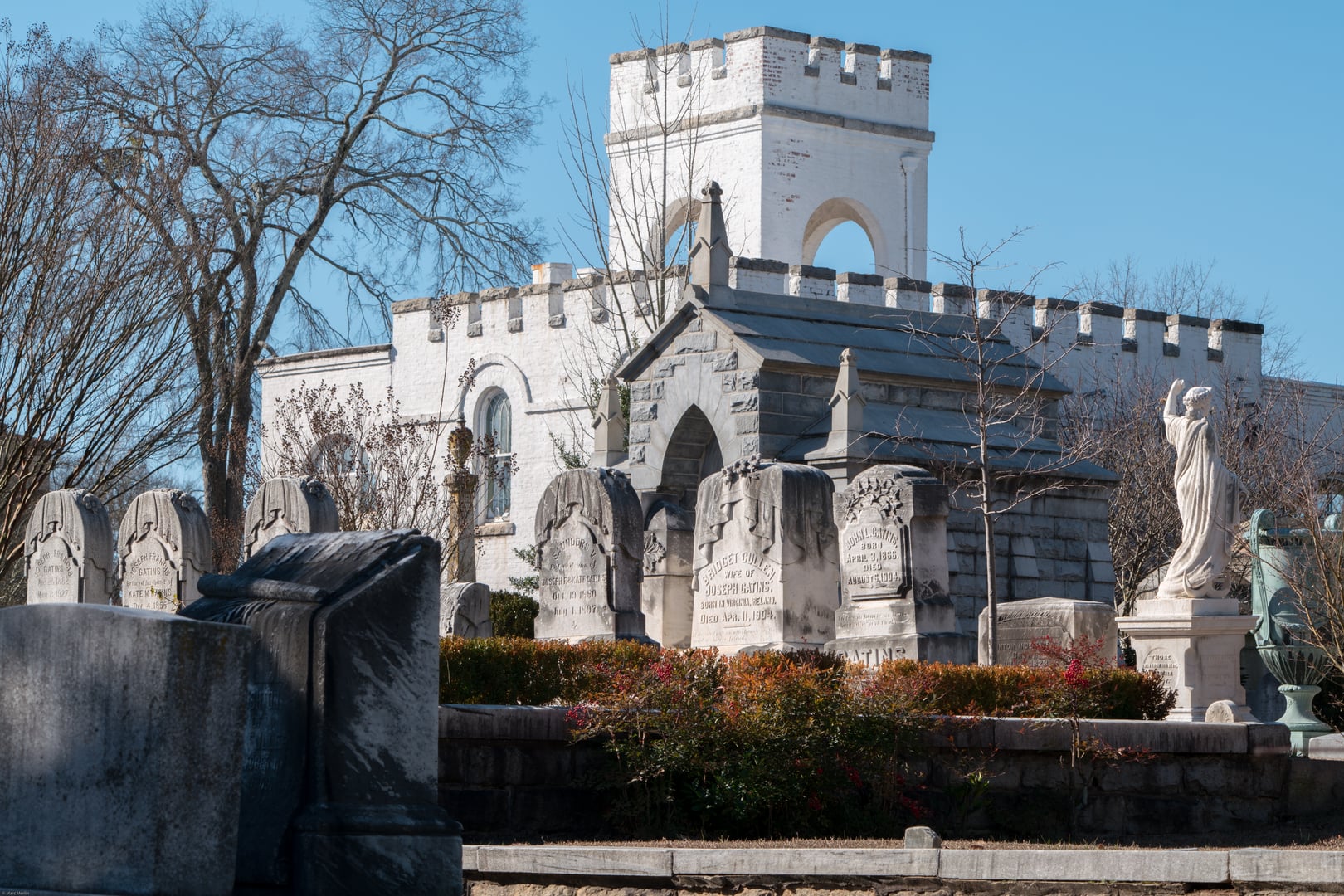
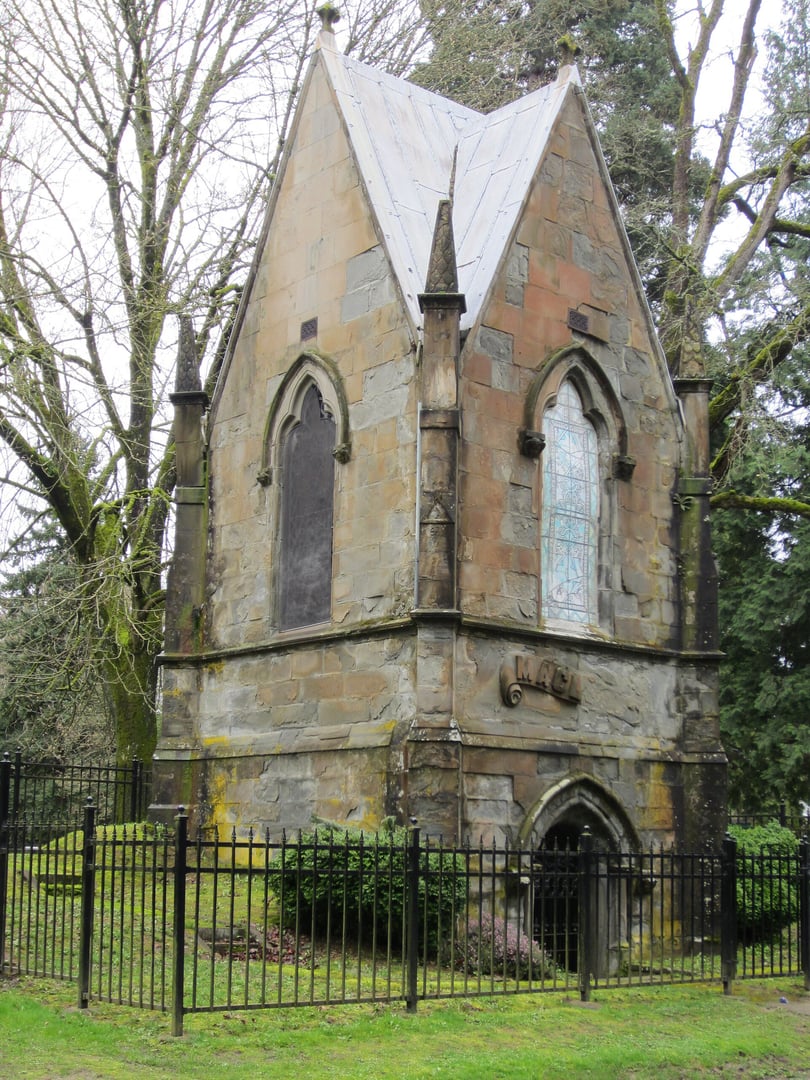
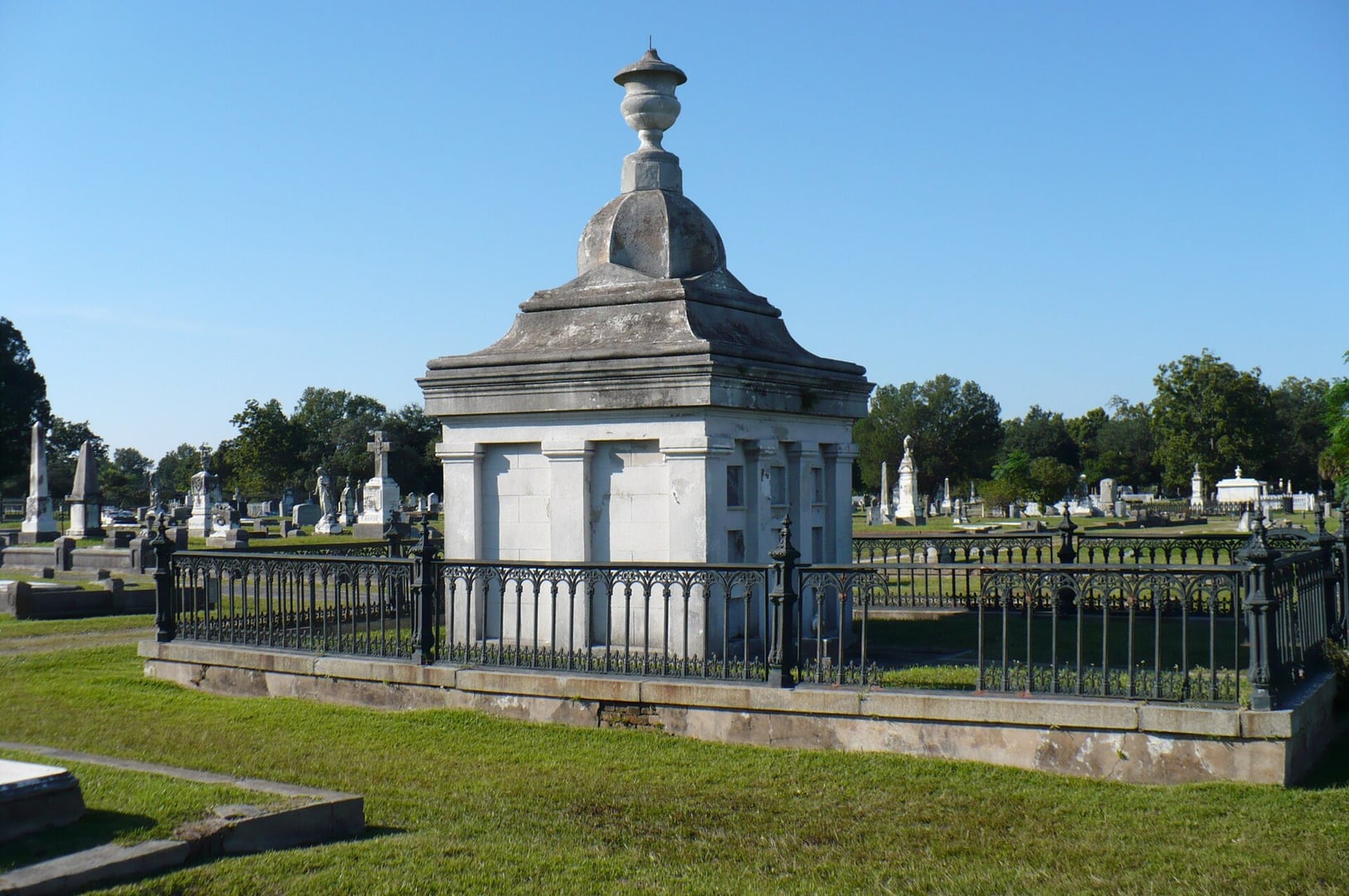
Est. 1843 · NRHP Listed · Westminster Abbey of Arkansas · Eleven Arkansas Governors · Four Confederate Generals · Significant White Bronze Marker Collection
Mount Holly Cemetery's four-square-block site between 11th and 13th streets and from Broadway to Gaines Street was deeded to the City of Little Rock on February 23, 1843, by two leading Arkansas figures, attorney Chester Ashley and developer Roswell Beebe. The cemetery replaced earlier burials in private family plots and a public burial ground that occupied the site of what later became the Federal Building at Capitol and Gaines.
In its first decades Mount Holly served Little Rock's principal families as well as the city's poor. A cemetery commission was formally organized on March 20, 1877, with charter members J.H. Haney, Fay Hempstead, James Austin Henry, Philo O. Hooper, and Frederick Kramer. In 1915 the Ladies' Mount Holly Cemetery Association was incorporated and assumed ongoing stewardship of the grounds, a role it continues to fulfill.
Mount Holly is widely called the Westminster Abbey of Arkansas because of the historical density of its burials. The cemetery holds the graves of eleven Arkansas governors, including five who served during or immediately after the Civil War; thirteen Arkansas Supreme Court justices; four United States senators; four Confederate generals; twenty-one Little Rock mayors; and many of Arkansas's leading 19th- and early 20th-century writers, clergy, and educators.
The cemetery's funerary architecture is exceptional. Mount Holly contains a substantial number of white bronze markers, which were manufactured only between 1875 and 1915 by the Monumental Bronze Company of Bridgeport, Connecticut. The markers are not actually bronze but are sand-cast zinc; the surface oxidizes to a pale gray-blue. White bronze monuments are relatively rare in southern cemeteries and Mount Holly's collection is one of the largest in the region.
Mount Holly is on the National Register of Historic Places and the Arkansas Register of Historic Places. The cemetery hosts an annual Tales of the Crypt living-history walking tour each October.
Sources
- https://mounthollycemetery.org/
- https://encyclopediaofarkansas.net/entries/mount-holly-cemetery-49/
- https://en.wikipedia.org/wiki/Mount_Holly_Cemetery
- https://theclio.com/entry/22029
- https://onlyinark.com/places-and-travel/mount-holly-cemetery-an-arkansas-whos-who-of-the-hereafter/
- https://paranormaltraveler.com/1258/mount-holly-cemetery-a-portal-to-the-past/
Cold spotsOrbsApparitions
Mount Holly Cemetery sits in an interesting tonal position among Southern historic cemeteries. With more than 180 years of operation and a roster of high-profile Arkansas burials, the site has accumulated enough oral tradition to appear in regional ghost-tour literature, but the Ladies' Mount Holly Cemetery Association's curatorial culture is decidedly archival rather than promotional.
Reported phenomena at the cemetery are general rather than tied to specific named entities. Visitors describe cold spots in the older eastern section, the sense of being watched from the white bronze monuments, and unexplained orbs in flash photography. Little Rock paranormal groups have included Mount Holly in casual investigations, but the cemetery does not permit organized after-hours paranormal access.
The most-discussed individual burial in paranormal circles is that of Quatie Ross, wife of Cherokee Principal Chief John Ross, who died on the Trail of Tears in Little Rock on February 1, 1839 — four years before the cemetery was formally established. Quatie Ross's remains were reinterred at Mount Holly after the cemetery opened. The cemetery includes her grave on its self-guided tour as a significant Trail of Tears burial; Cherokee Nation tradition encourages quiet, respectful visits.
The Tales of the Crypt event presents documented biographies of Mount Holly residents through costumed re-enactors. The Ladies' Cemetery Association describes the event explicitly as living history rather than ghost theater, and the cemetery does not host any spirit-investigation tours.