Est. 1861 · Union Fort Benton · Battle of Patterson 1863 · Civil War Missouri
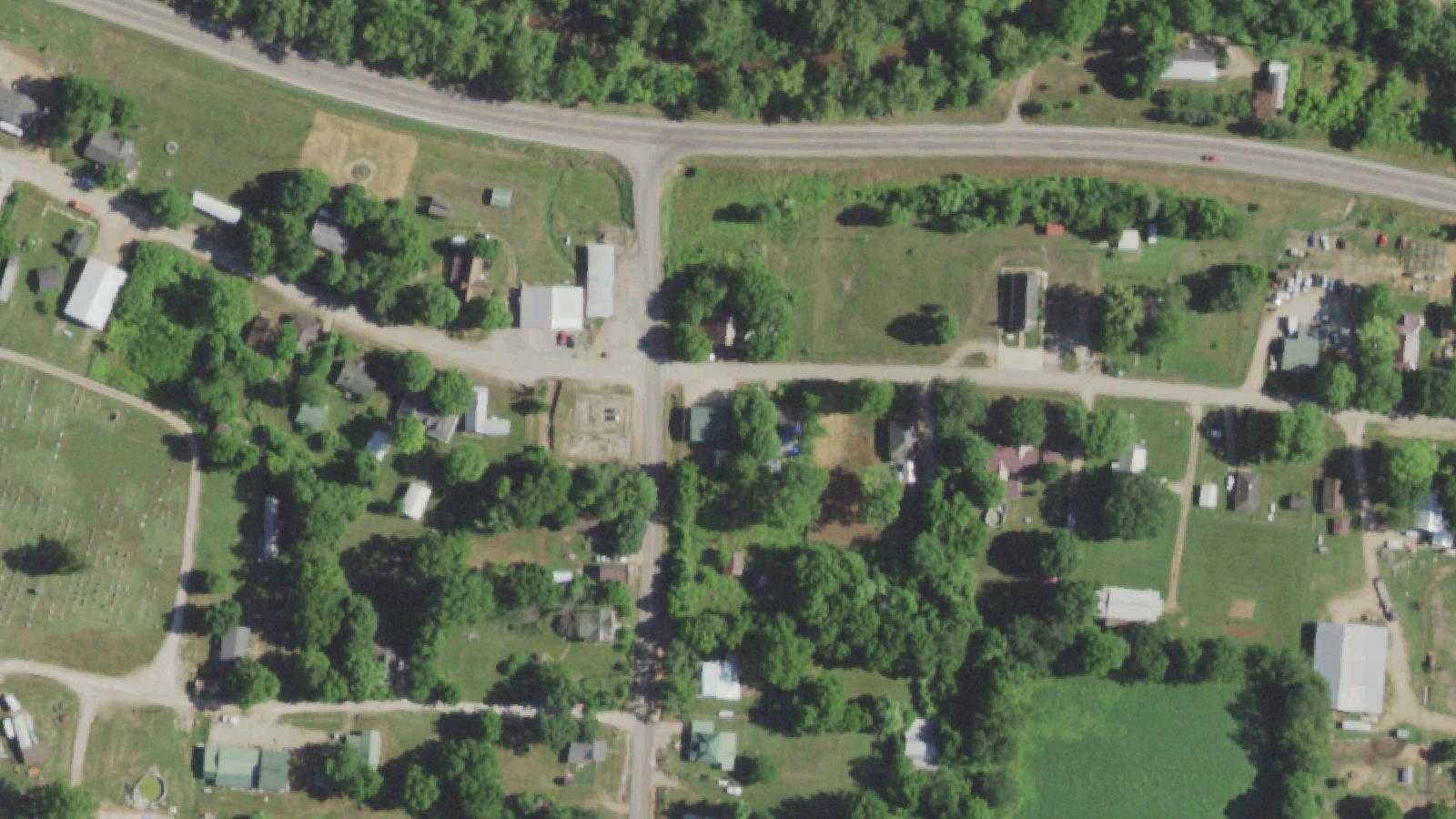
The community of Patterson sits in the Ozark foothills of northwest Wayne County, Missouri, along what is now Route 34 between Piedmont and Lutesville. During the Civil War, Patterson lay along an important corridor between the Mississippi River valley and the increasingly contested southern-Missouri-and-northern-Arkansas border country.
In 1861, the Union Army established Fort Benton at Patterson to support an encampment of federal troops stationed there. The fort was one of a series of fortifications designed to secure southeastern Missouri against Confederate guerrilla activity from across the Arkansas line and against larger Confederate cavalry incursions. The 1863 Battle of Patterson — also called the Battle of Stony Battery — was fought near the fortification.
The physical fort did not survive the postwar period. The Patterson Community Center now stands on the site of the old Patterson school, which was the principal twentieth-century institutional building in the small community. The Shadowlands report's reference to Fort Benton and the Patterson school appears to compress these two distinct historical layers — Civil War fortification and twentieth-century school — into a single location designation.
Sources
- https://en.wikipedia.org/wiki/Patterson,_Missouri
- https://www.hmdb.org/m.asp?m=257395
- https://semorpc.org/wp-content/uploads/2022/09/Civil-War-brochure.pdf
- https://keithragan.blogspot.com/2013/10/civil-war-in-moore-community-of-wayne.html
Residual haunting
The paranormal account associated with Patterson is unusually vague — even by Shadowlands standards. The original report describes weird feelings around the area and ties those feelings to the Civil War period. There are no specific apparitions, no named witnesses, no recurring phenomena.
The Battle of Patterson and the broader pattern of Wayne County guerrilla violence during the Civil War provide the historical substrate that local lore attaches to. Battlefield-adjacent sites across Missouri — particularly those associated with guerrilla violence rather than set-piece battles — frequently accumulate this kind of diffuse unease in regional storytelling. Independent paranormal investigation specific to Patterson does not appear in available sources.
Without specific phenomena to document, the entry sits closer to atmospheric travel writing than to a haunting account. The community is genuinely worth visiting for Civil War heritage interest; the paranormal angle is best treated as ambient folklore.