Est. 1864 · Civil War Battlefield · Atlanta Campaign · Confederate Supply Lines
On August 20, 1864, Union cavalry commander Judson Kilpatrick led a raid against Confederate railroad supply lines south of Atlanta as part of Sherman's broader Atlanta Campaign. Kilpatrick's forces reached Lovejoy's Station on the Macon and Western Railroad and began destroying track and supplies — a link Sherman needed to sever to force Confederate General John Bell Hood's withdrawal from Atlanta.
Cleburne's Division of Confederate infantry arrived and engaged the Union cavalry, forcing prolonged fighting that continued into the night. Kilpatrick's forces eventually withdrew to avoid encirclement. Both sides sustained approximately 237-240 casualties, and the battle is recorded as a Confederate tactical victory — though the broader strategic pressure on Atlanta continued. The railroad line was back in operation within two days.
The broader significance of the Lovejoy area in the campaign extended into September 1864, when Confederate forces regrouped here after Atlanta fell. The Crawford-Talmadge Plantation, located on nearby Talmadge Road, served as a staging point for Hood's defeated army following the city's fall.
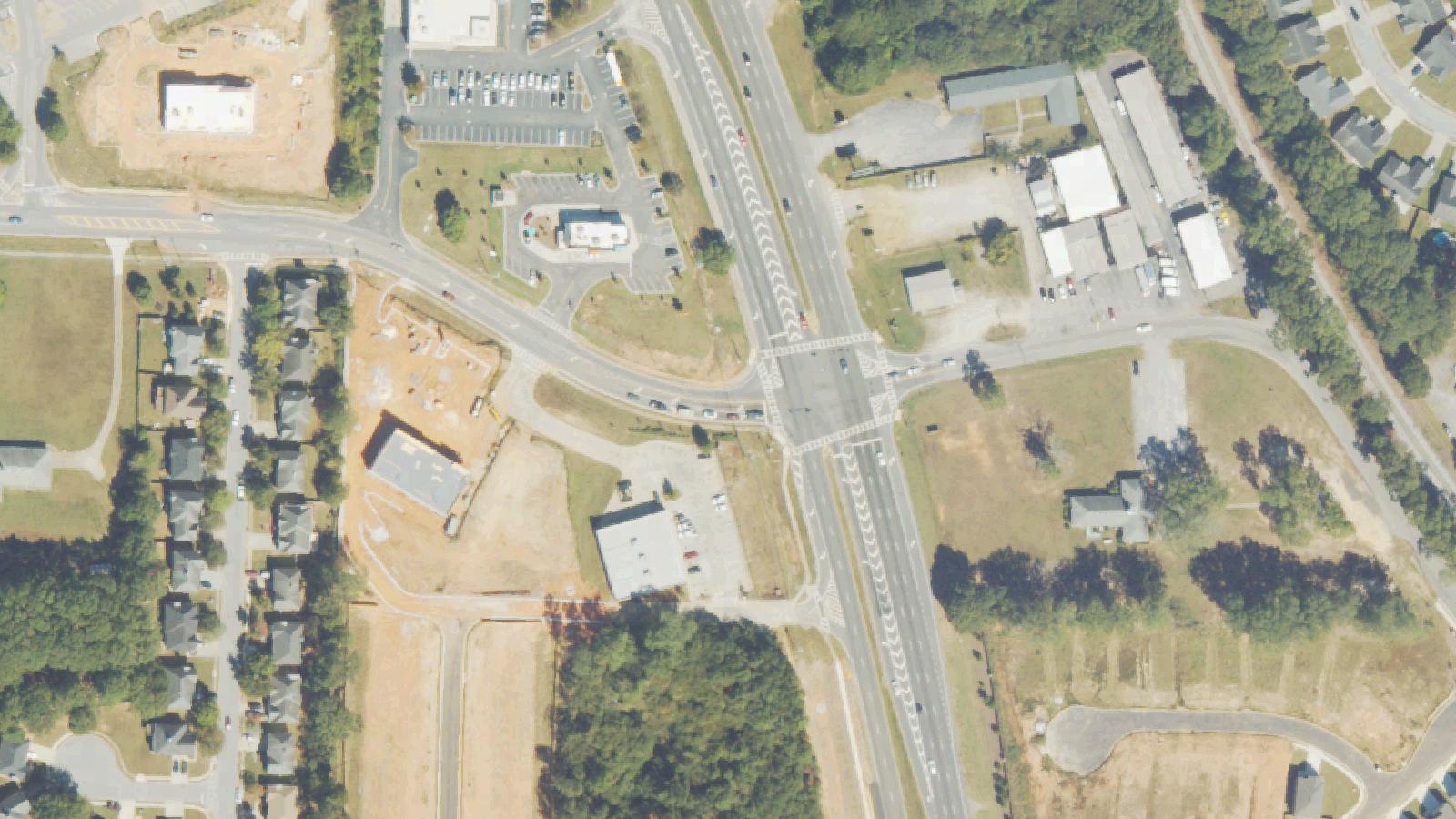
The historic battlefield has been almost entirely lost to suburban sprawl across Clayton and Henry Counties. Henry County opened Nash Farm Battlefield Park on 202 acres of associated terrain, with a museum and interpretive facilities; however, that facility closed permanently in June 2017. The National Park Service has documented the military significance of the broader engagement area.
Sources
- https://en.wikipedia.org/wiki/Battle_of_Lovejoy%27s_Station
- https://jamesribble.us/civilwargeorgia/encyclopedia/battle-of-lovejoys-station/
- https://exploregeorgia.org/hampton/history-heritage/civil-war/nash-farm-battlefield
ApparitionsPhantom soundsResidual haunting
The Shadowlands Haunted Places Index entry for Lovejoy Road describes witnesses seeing Confederate soldiers in homes along the road at night, and hearing the sound of a train on what is now a largely suburban corridor. Two distinct phenomena are named: apparitions of soldiers, and what the entry calls a 'specter train.'
The Civil War history of the immediate area is well-documented. Fighting took place at Lovejoy's Station on August 20, 1864, with combined casualties near 480 men. Confederate forces camped in the vicinity again in September 1864 after Atlanta fell. The Macon and Western Railroad ran through this corridor — the same line Kilpatrick's cavalry attempted to destroy — and trains carrying wounded soldiers passed through the area for weeks around the time of the engagement.
Phantom train legends appear across Civil War corridors in Georgia. The most documented parallel is Allatoona Pass, where a late-19th-century Atlanta newspaper reported a train engineer stopping his locomotive after seeing what he believed were Confederate soldiers on the tracks — figures that disappeared as he approached. Whether similar reports have been made at Lovejoy in a documented source has not been confirmed.
The specific claim of Confederate soldiers appearing inside homes is consistent with residual-haunting folklore attached to Civil War engagement sites throughout Georgia. No first-person accounts or independent documentation of these specific Lovejoy Road reports were found during research.