Haunted Georgia

100 haunted destinations cataloged across Georgia, spanning 45 counties. The collection features museum, cemetery, and outdoor — every listing verified with family ratings, accessibility info, and practical visit logistics.

100 locations 45 counties 10 classifications 52 wheelchair accessible

Featured in Georgia

Top 6
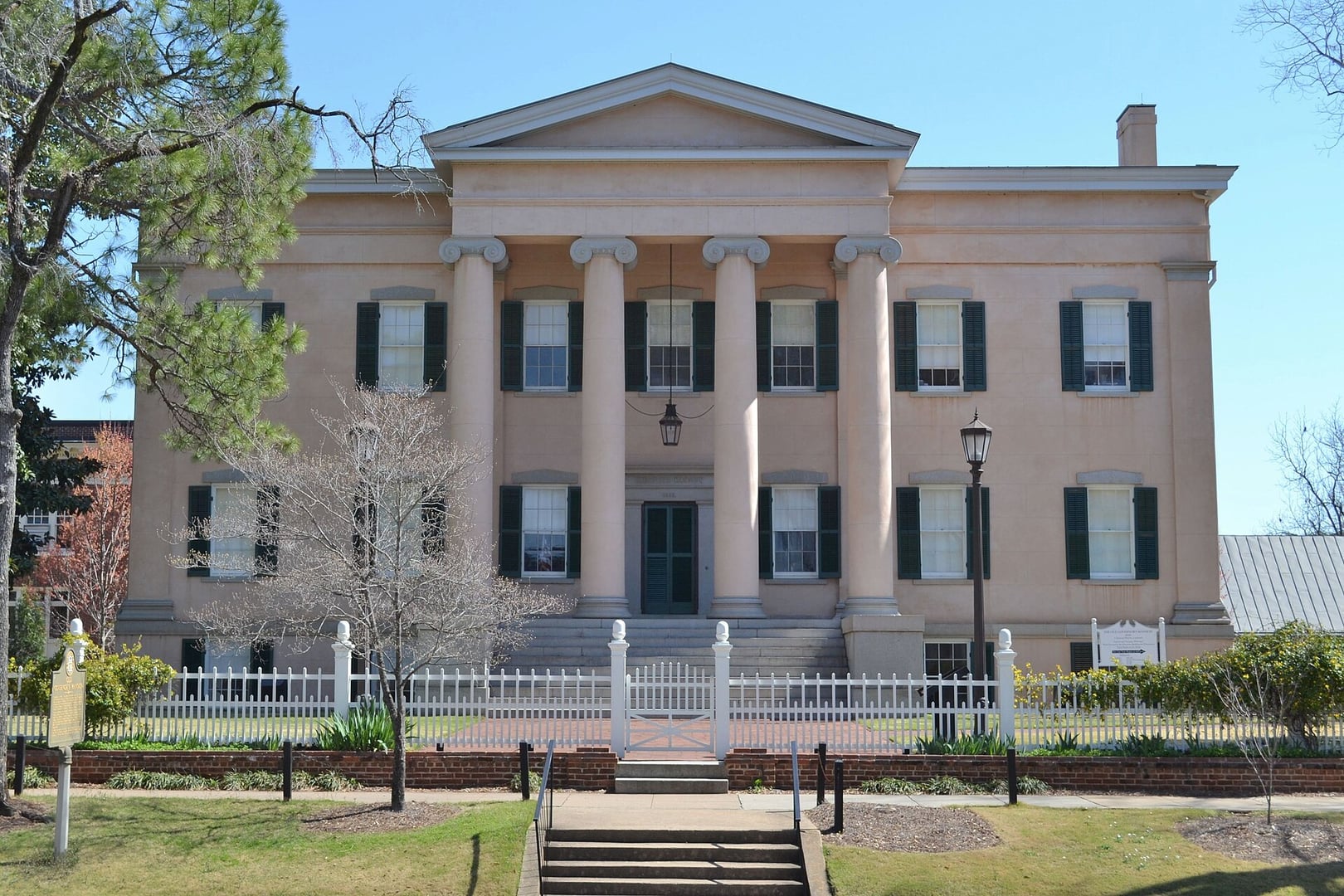
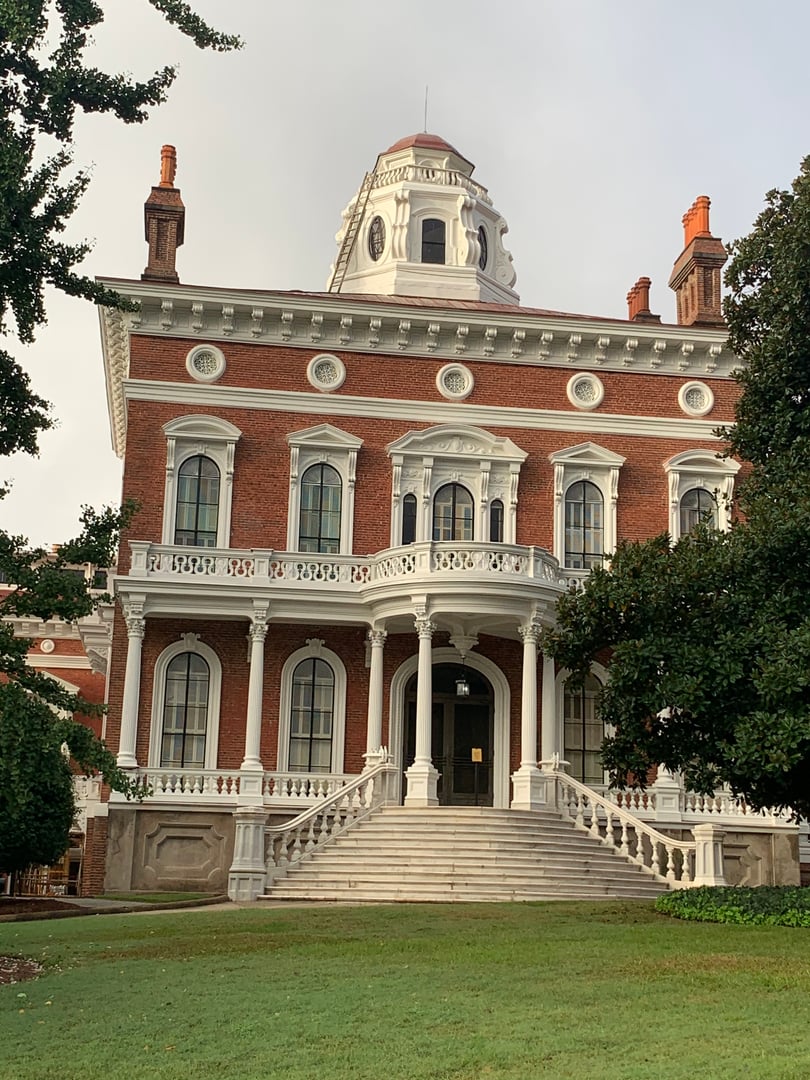
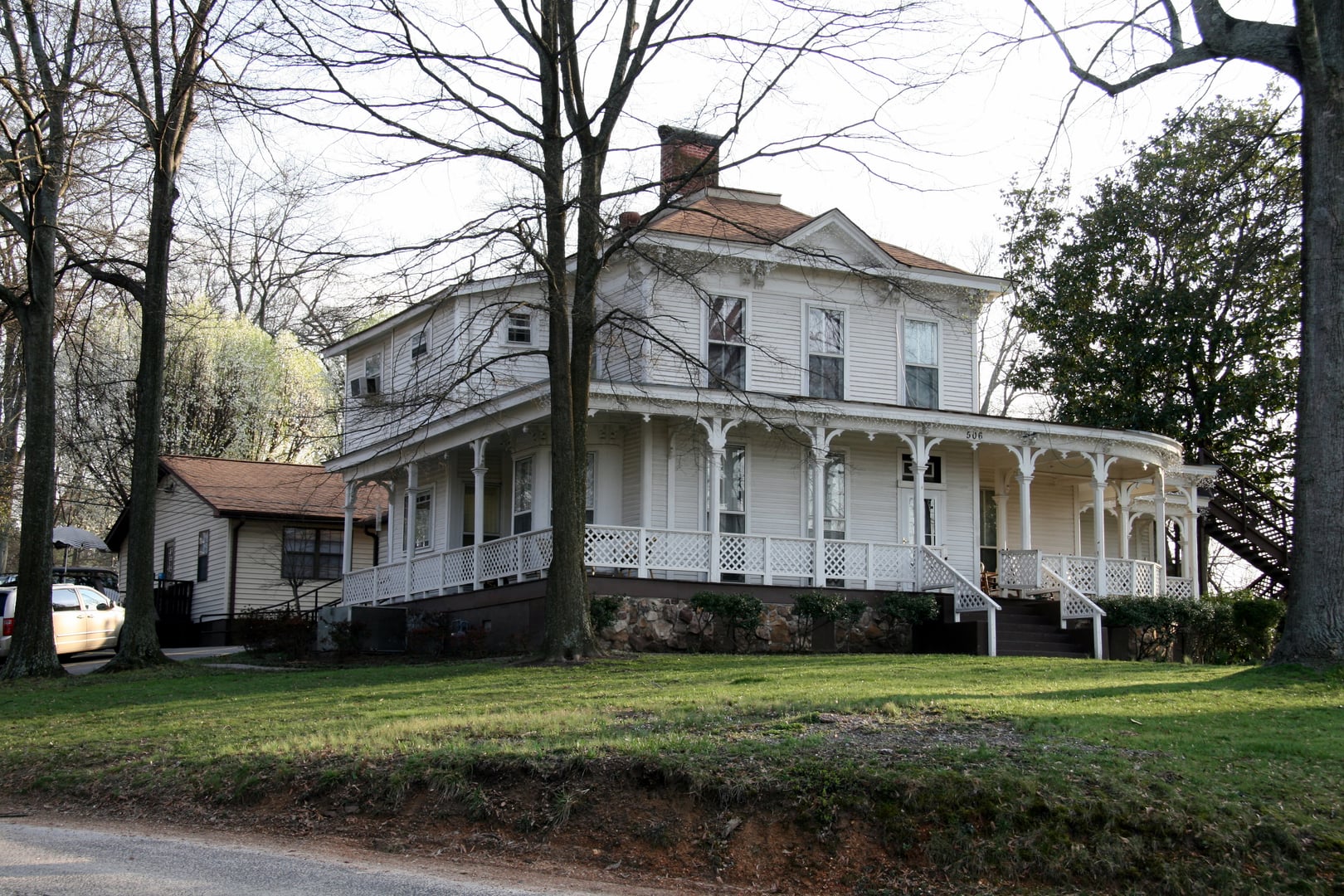
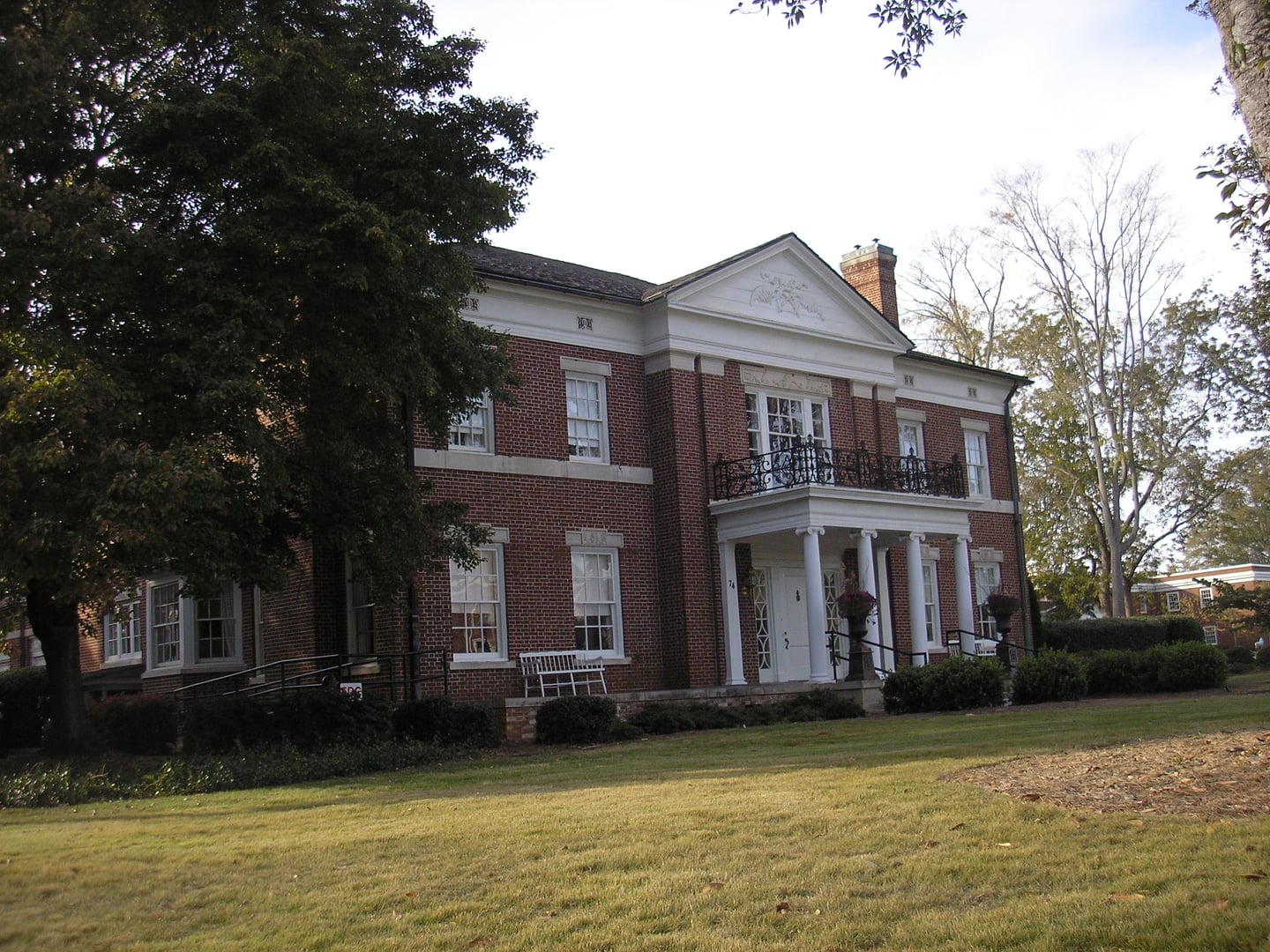
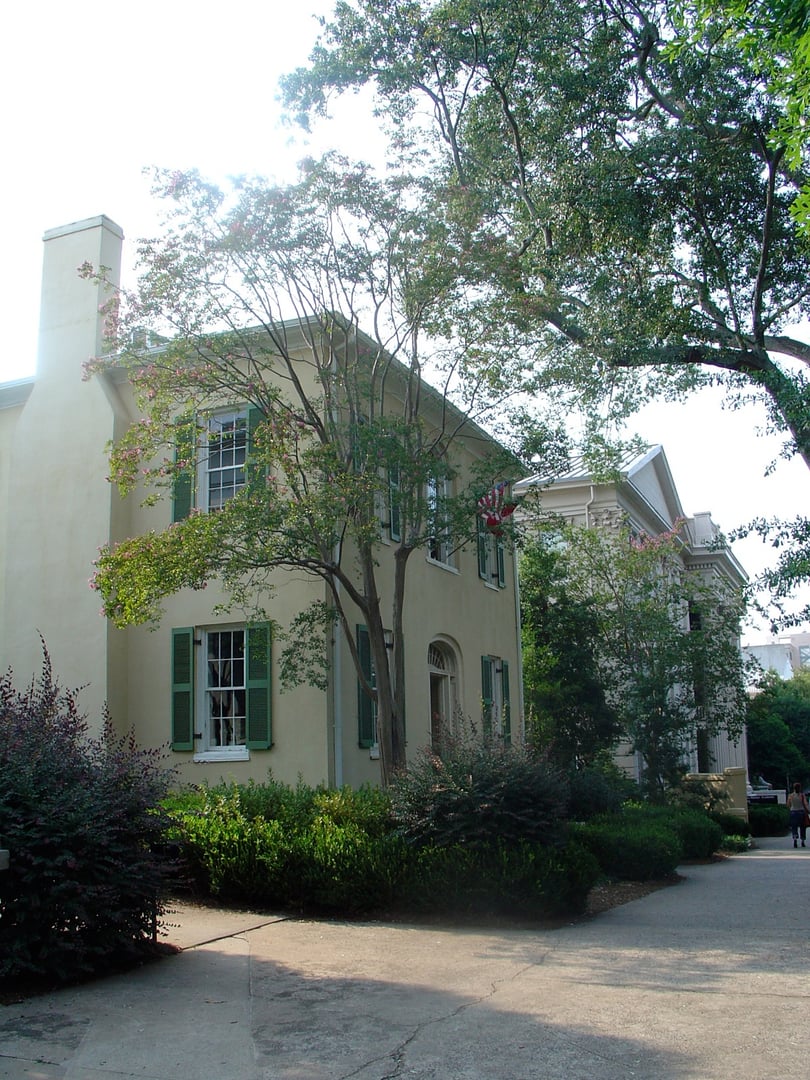
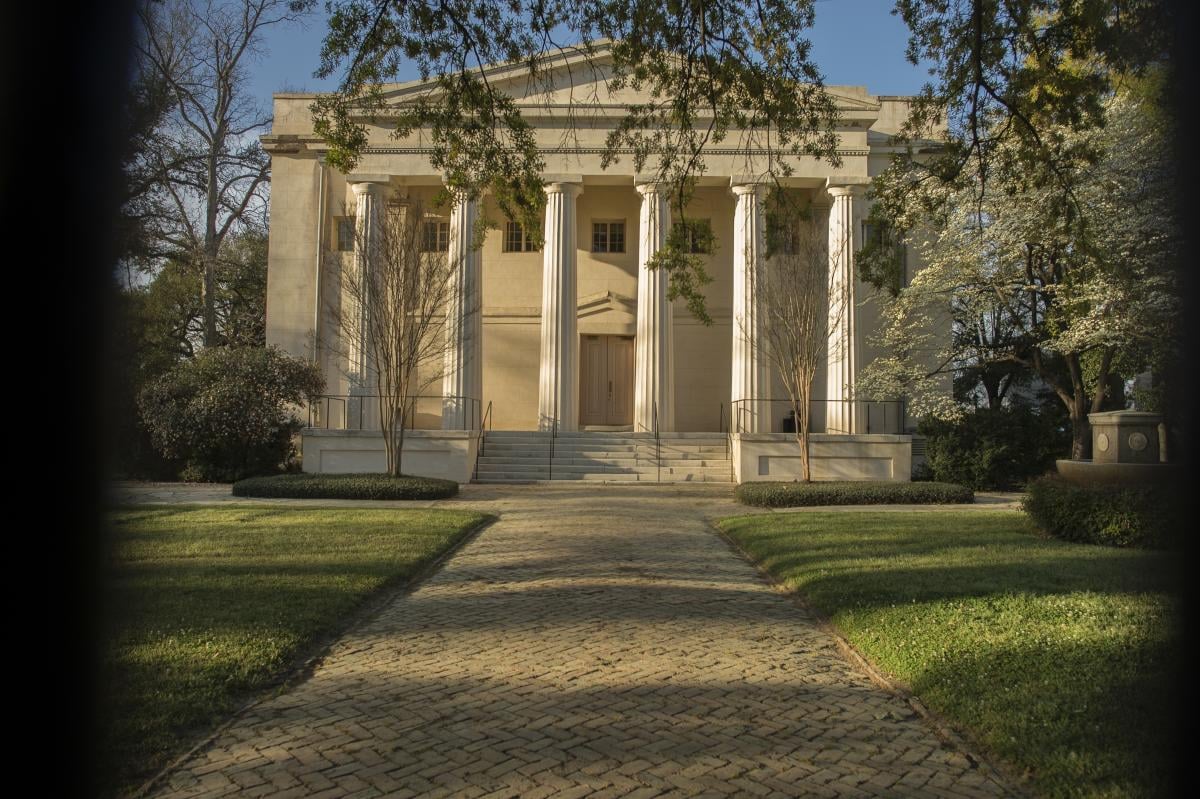
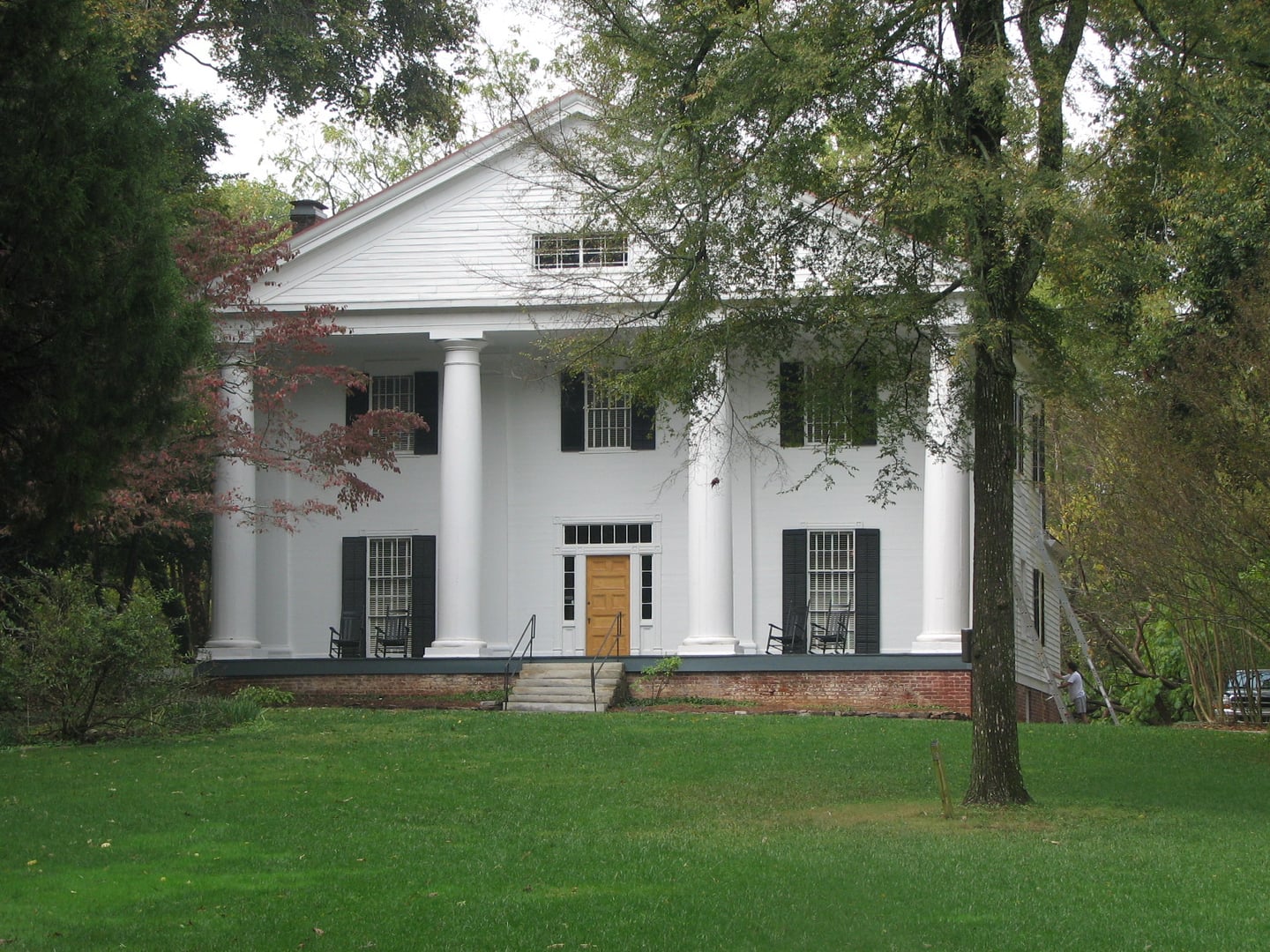
Two-story antebellum 1847 Lustrat House on UGA's North Campus.
Photo coming soon
Other Dark Tourism Site

Lustrat House

Athens, GA

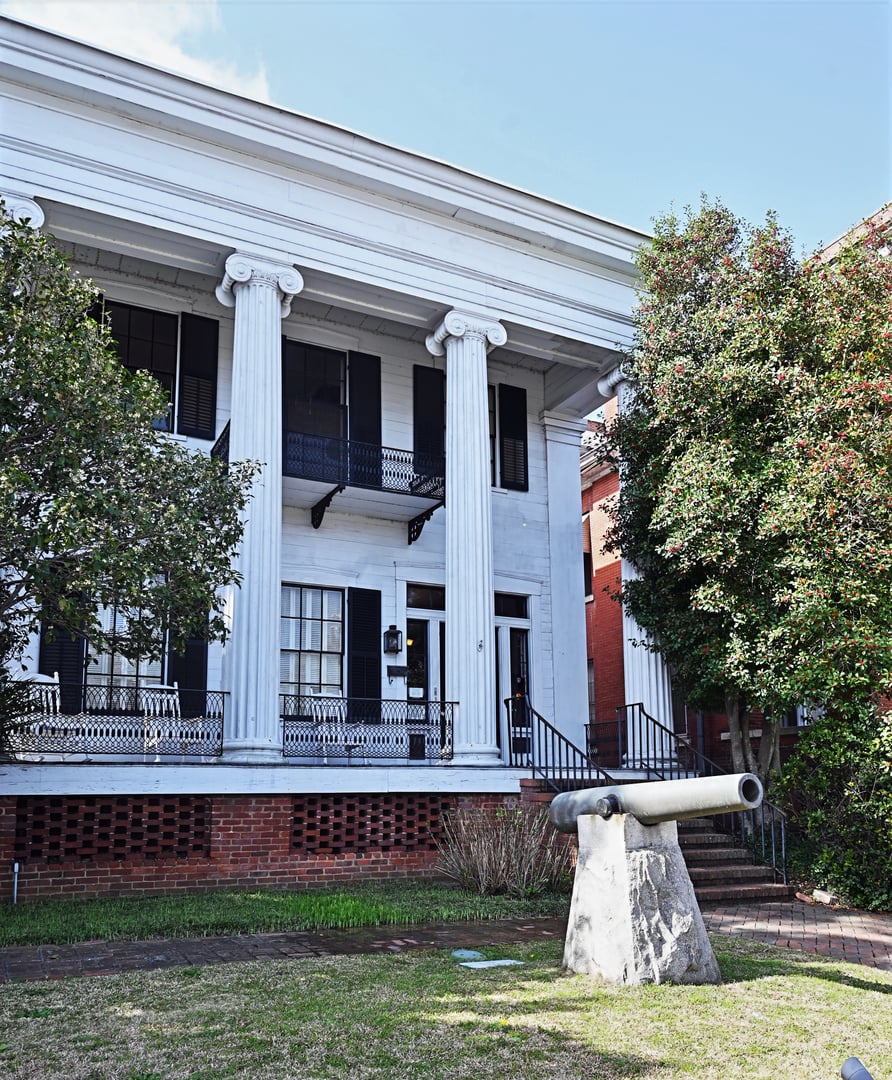
The Lustrat House was built in 1847 as a UGA professor's residence and is one of two surviving antebellum faculty residences on the campus. The building was moved on campus in 1903 to make way for the present-day Administration building and was renamed for Joseph Lustrat, who chaired the Department of Romance Languages. It now houses the UGA Office of Legal Affairs.

$ All Ages Family: High
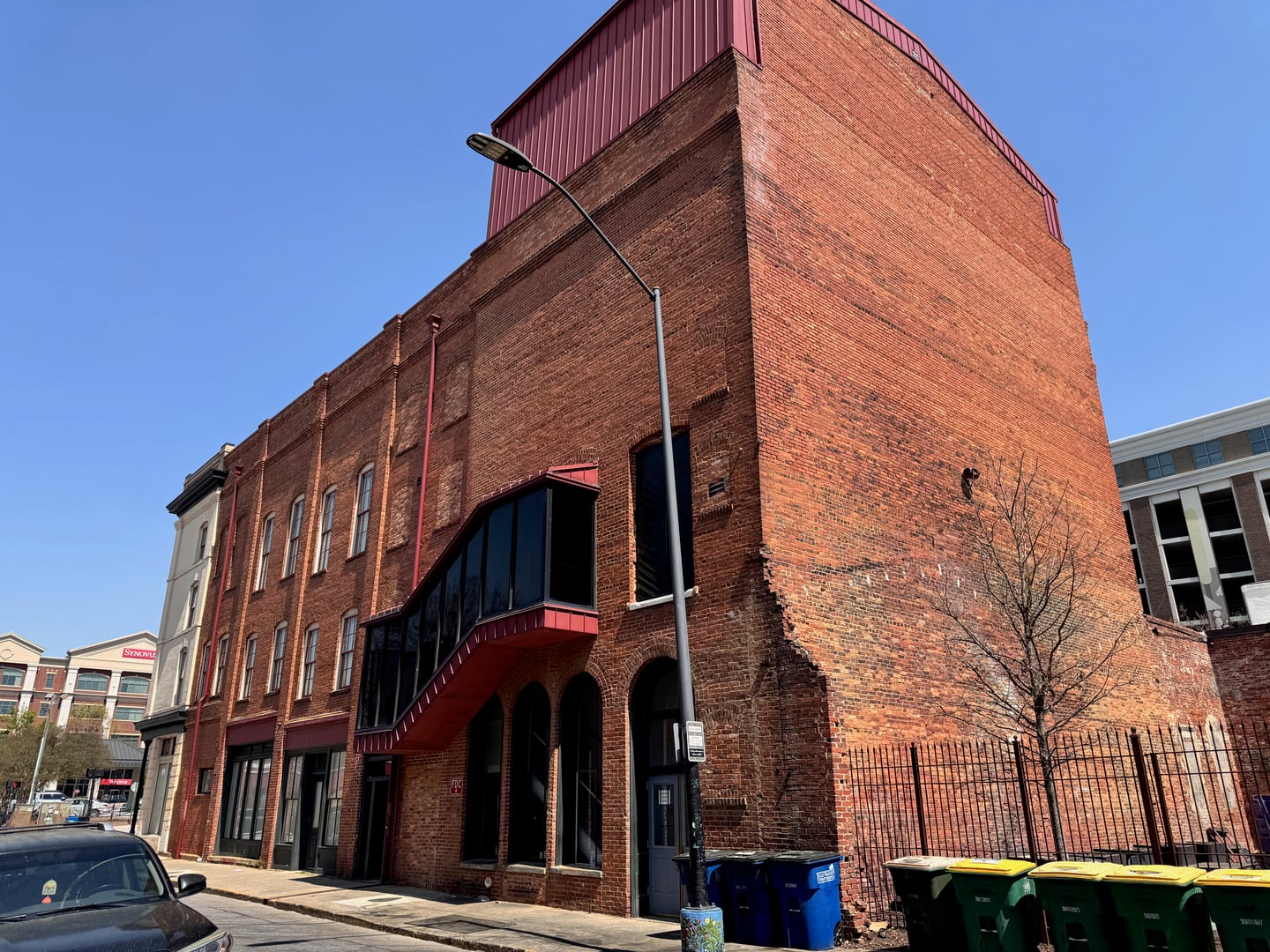
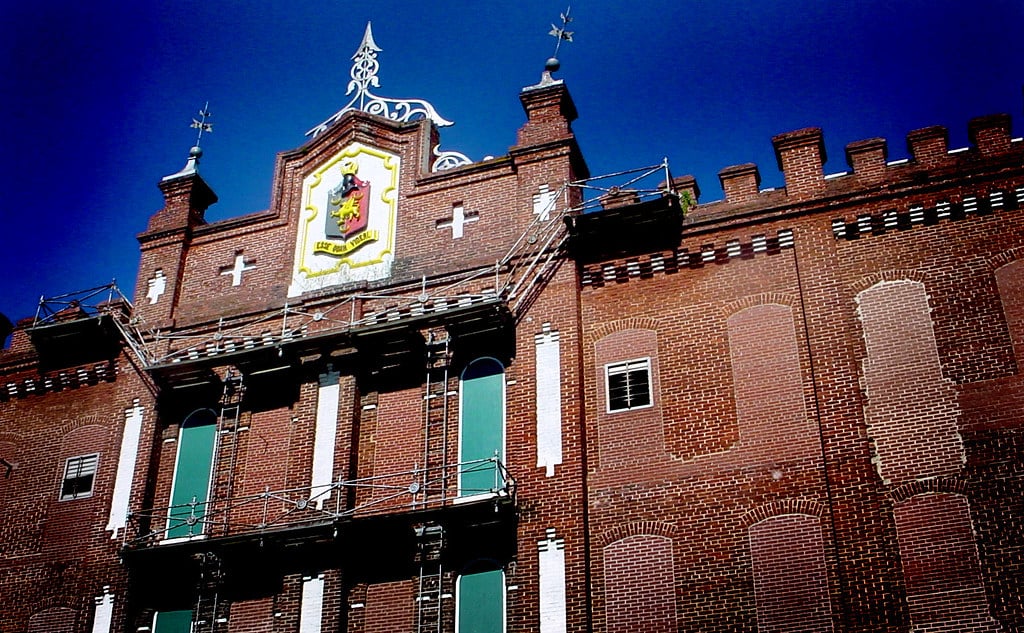
Hotel Abacus Athens, formerly Graduate Athens, in the historic Athens Foundry complex on East Dougherty Street.
Photo coming soon
Haunted Hotel / Inn

Hotel Abacus Athens (Formerly Graduate Athens)

Athens, GA

The hotel occupies the historic Athens Foundry complex, the iron mill that cast the UGA Arch. The property reopened as Graduate Athens in 2014, has since rebranded as Hotel Abacus Athens, and continues to operate as a boutique hotel and event venue.

$$$ 18+ Family: Moderate
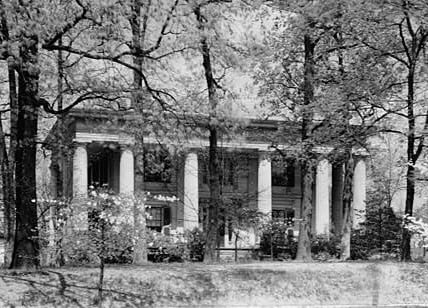
1932 Joe Brown Hall on the University of Georgia's main quad at 595 South Lumpkin Street.
Photo coming soon
Other Dark Tourism Site

Joe Brown Hall

Athens, GA

Joe Brown Hall, built in 1932, was originally a men's dormitory and is now an academic and administrative building at the University of Georgia. The hall is named for Joseph E. Brown, the 42nd governor of Georgia and a proponent of secession during the Civil War.

$ All Ages Family: Moderate
1821 Waddel Hall on the University of Georgia library quad.
Photo coming soon
Other Dark Tourism Site

Waddel Hall

Athens, GA

Waddel Hall is the second-oldest building on the UGA campus, completed in 1821. Originally a dormitory, it has served as a boarding house, gymnasium, snack bar, and scientific-equipment storage, and is currently the UGA Office of Special Events.

$ All Ages Family: Moderate
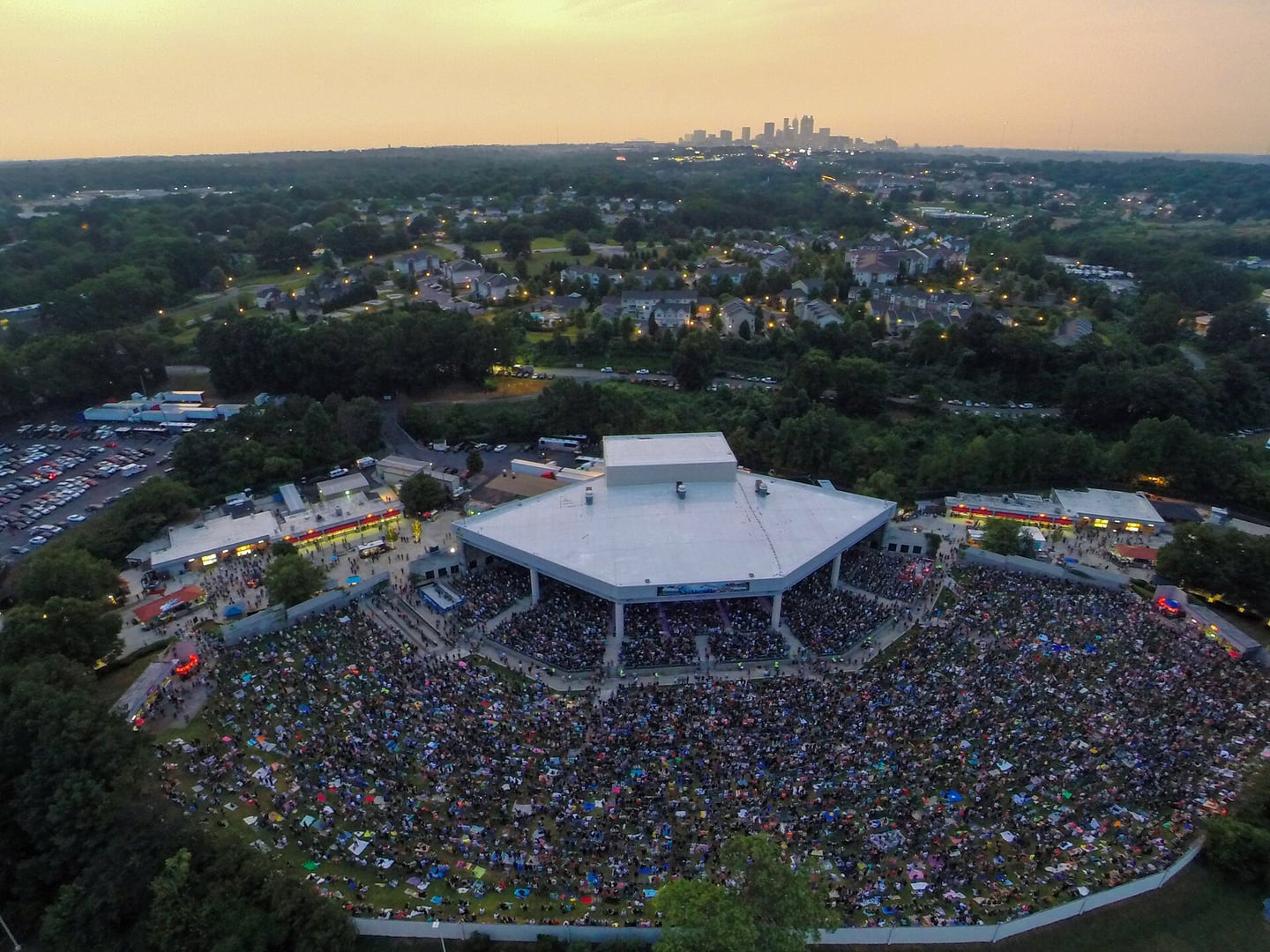
DMB - ATL - 5/28/16
Photo coming soon
Theater / Performance Venue

Lakewood Amphitheatre

Atlanta, GA

Lakewood Amphitheatre opened in July 1989 on the historic Lakewood Fairgrounds in Atlanta, an 18,920-capacity Live Nation venue that has carried at least six sponsor names including HiFi Buys Amphitheatre (2001–2007) and currently Cellairis. The surrounding fairgrounds hosted the Southeastern Fair from 1915 to 1975 and the Lakewood Speedway from 1917 to 1979, the latter the site of multiple documented racing fatalities.

$$ All Ages Family: Moderate
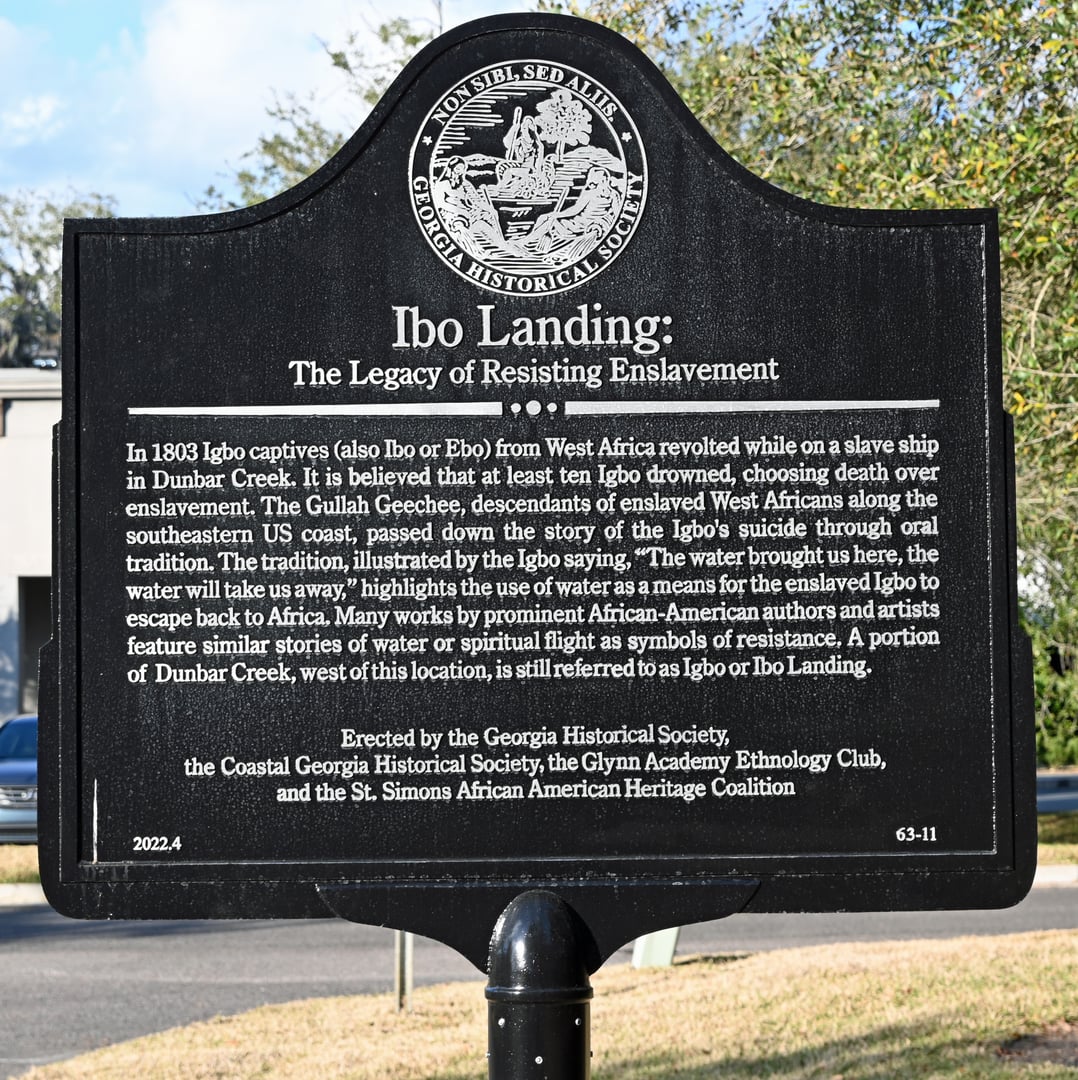
Georgia Historical Society marker commemorating Igbo Landing and the 1803 act of resistance, St. Simons Island, Georgia
Outdoor / Natural Site

Igbo Landing

St. Simons Island, GA

In May 1803, captive Igbo people who had taken control of a small vessel near Dunbar Creek on St. Simons Island, Georgia chose to walk into the marsh rather than submit to enslavement. The event is commemorated by a Georgia Historical Society marker and recognized by the National Park Service as one of the earliest documented acts of large-scale resistance by enslaved Africans in North America.

$ All Ages Family: Moderate

More in Georgia

Savannah — 23

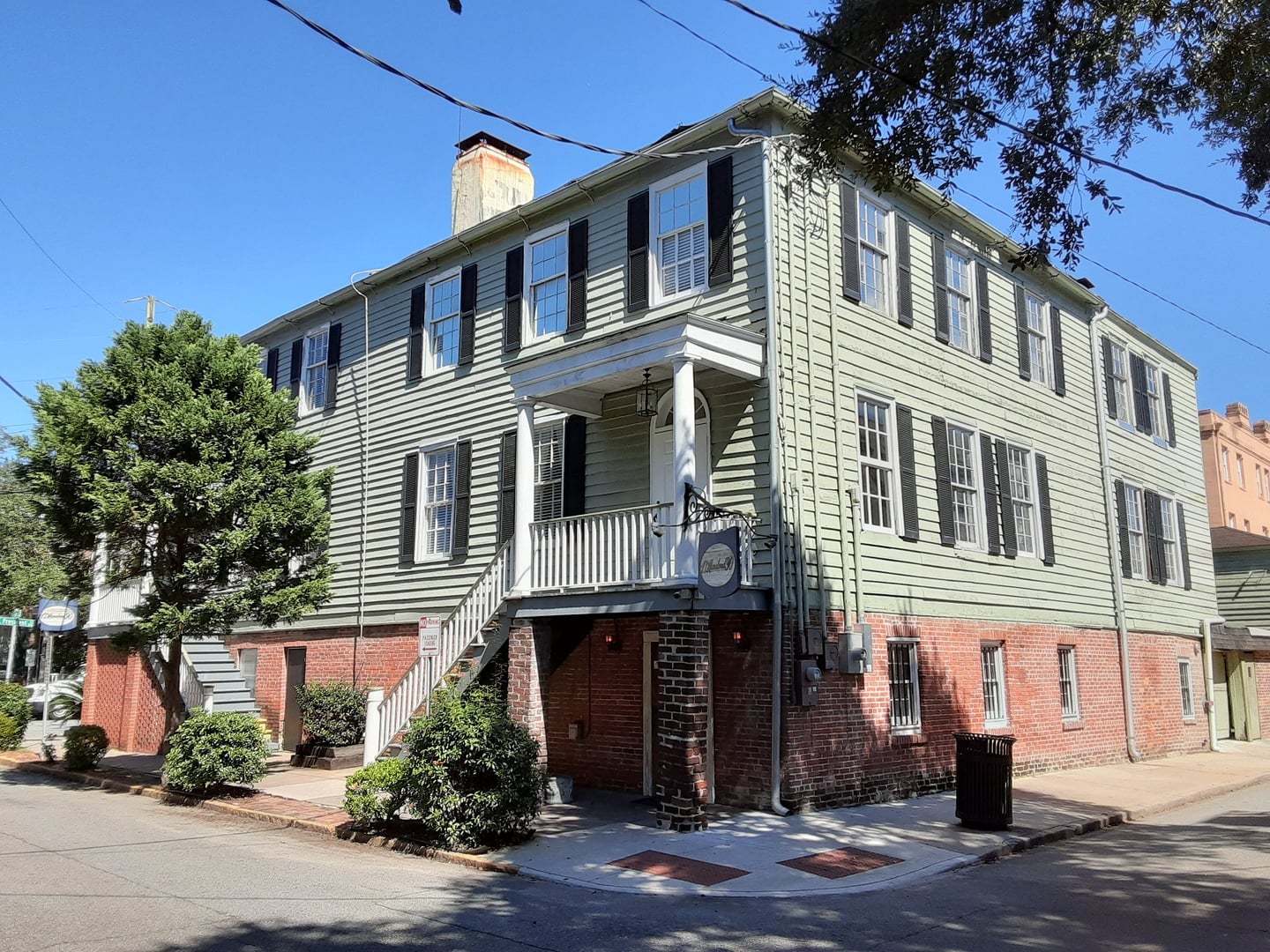
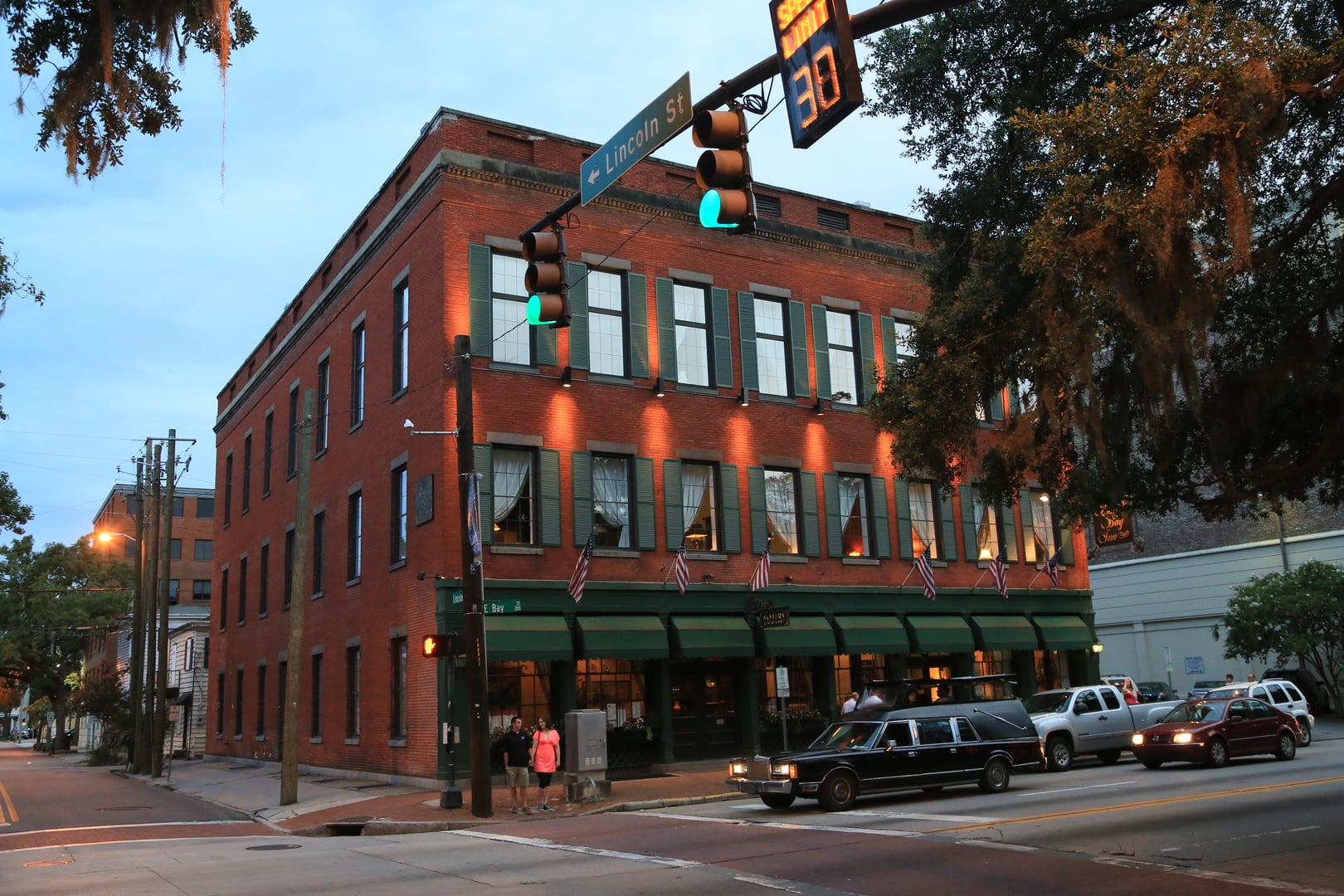
Three-story brick corner building of 17Hundred90 Inn at 130-132 Lincoln Street, Savannah, Georgia, photographed in 2021
Haunted Hotel / Inn

17Hundred90 Inn and Restaurant

Savannah, GA

The 17Hundred90 Inn and Restaurant occupies three adjoining historic buildings in downtown Savannah, Georgia. The oldest section is traditionally dated to 1790, with the larger surviving structure built between 1821 and 1823 and a third addition added in 1888. The complex operates today as a fourteen-room inn and dinner restaurant.

$$$ All Ages in restaurant; 21+ in tavern after 9pm Family: Moderate
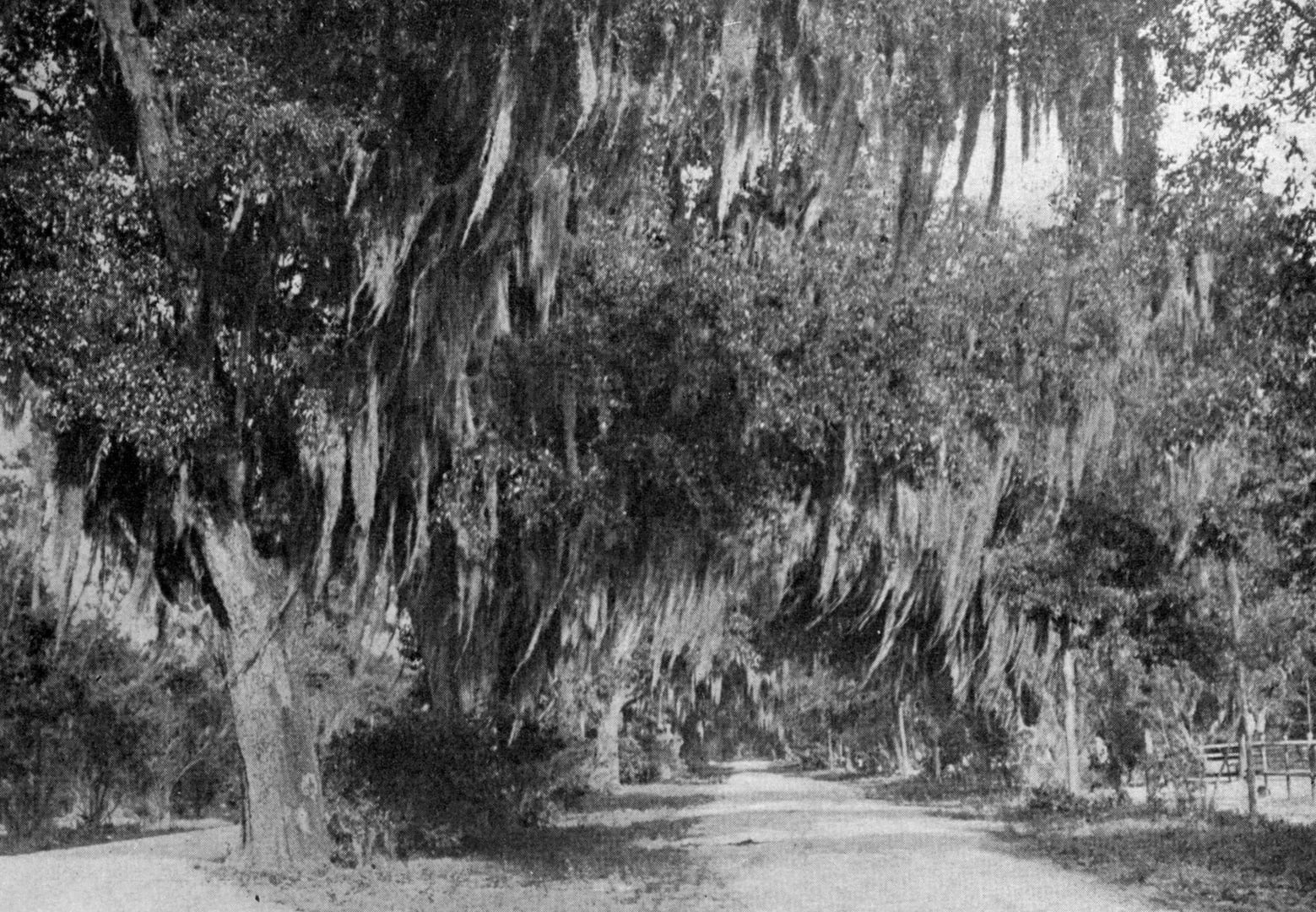
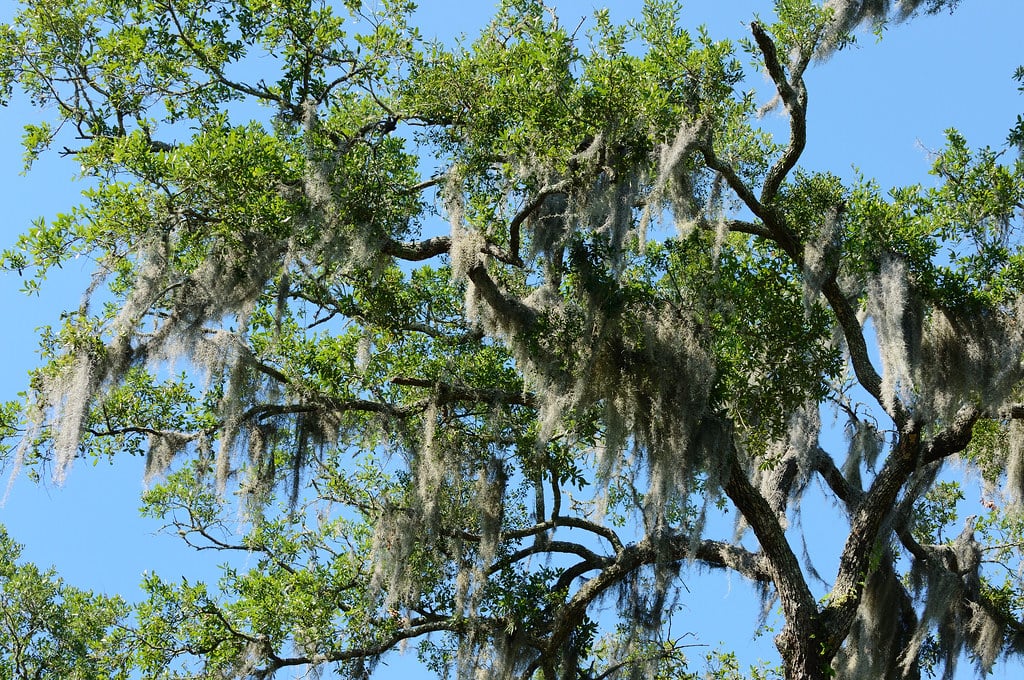
Spanish moss-draped live oaks at historic Bonaventure Cemetery in Savannah Georgia
Cemetery / Burial Ground

Bonaventure Cemetery

Savannah, GA

Bonaventure Cemetery is a Victorian-era burial ground in Savannah, Georgia, established as part of the city's 19th-century cemetery expansion. Its most famous burial is that of Gracie Watson, a young girl who died of pneumonia on April 7, 1889, two days before Easter. Her father, W.J. Watson, manager of the Pulaski Hotel in Savannah, commissioned sculptor John Walz to create a life-sized marble statue as a memorial—a monument that has become one of the most visited graves in Georgia.

$ All Ages Family: High
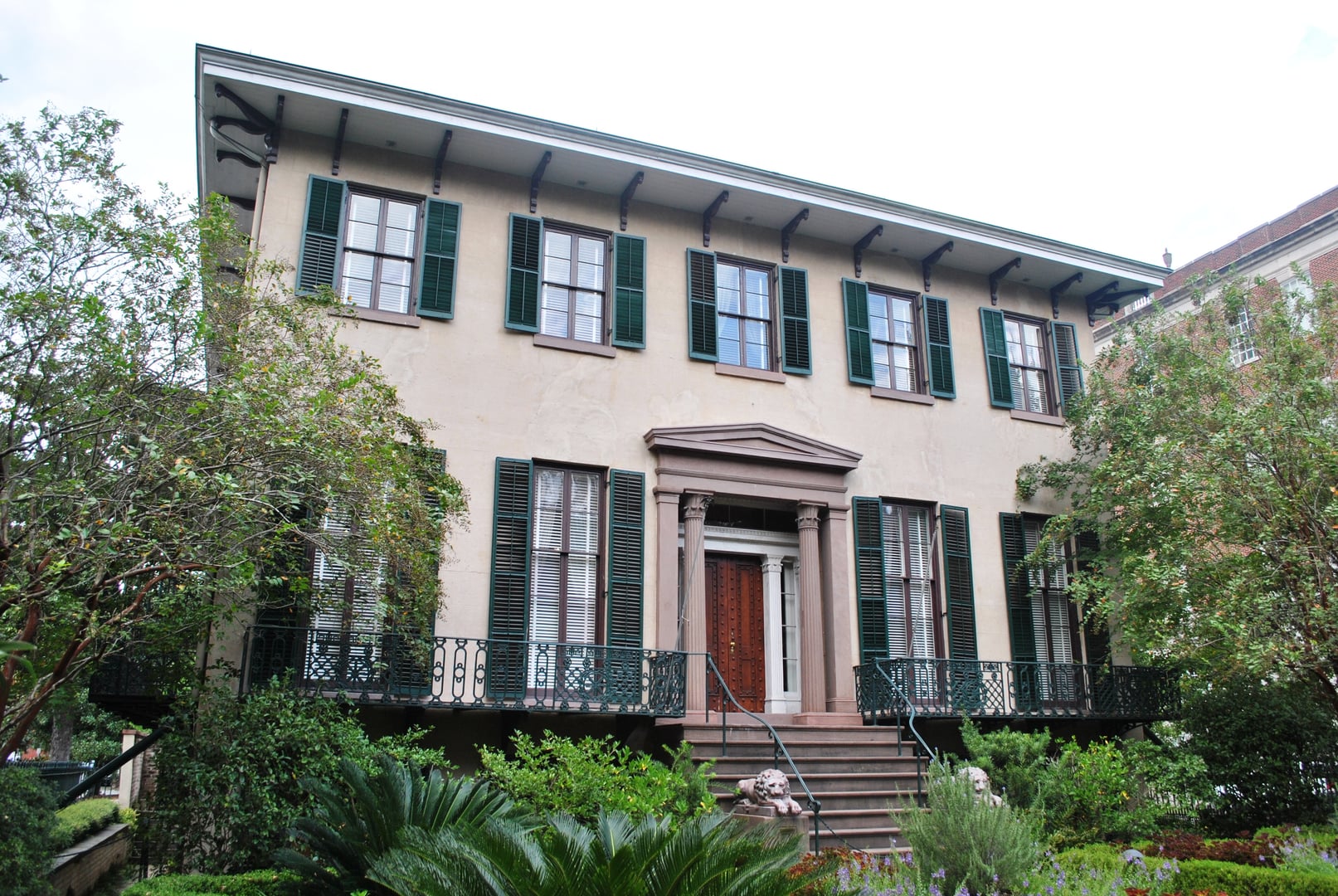
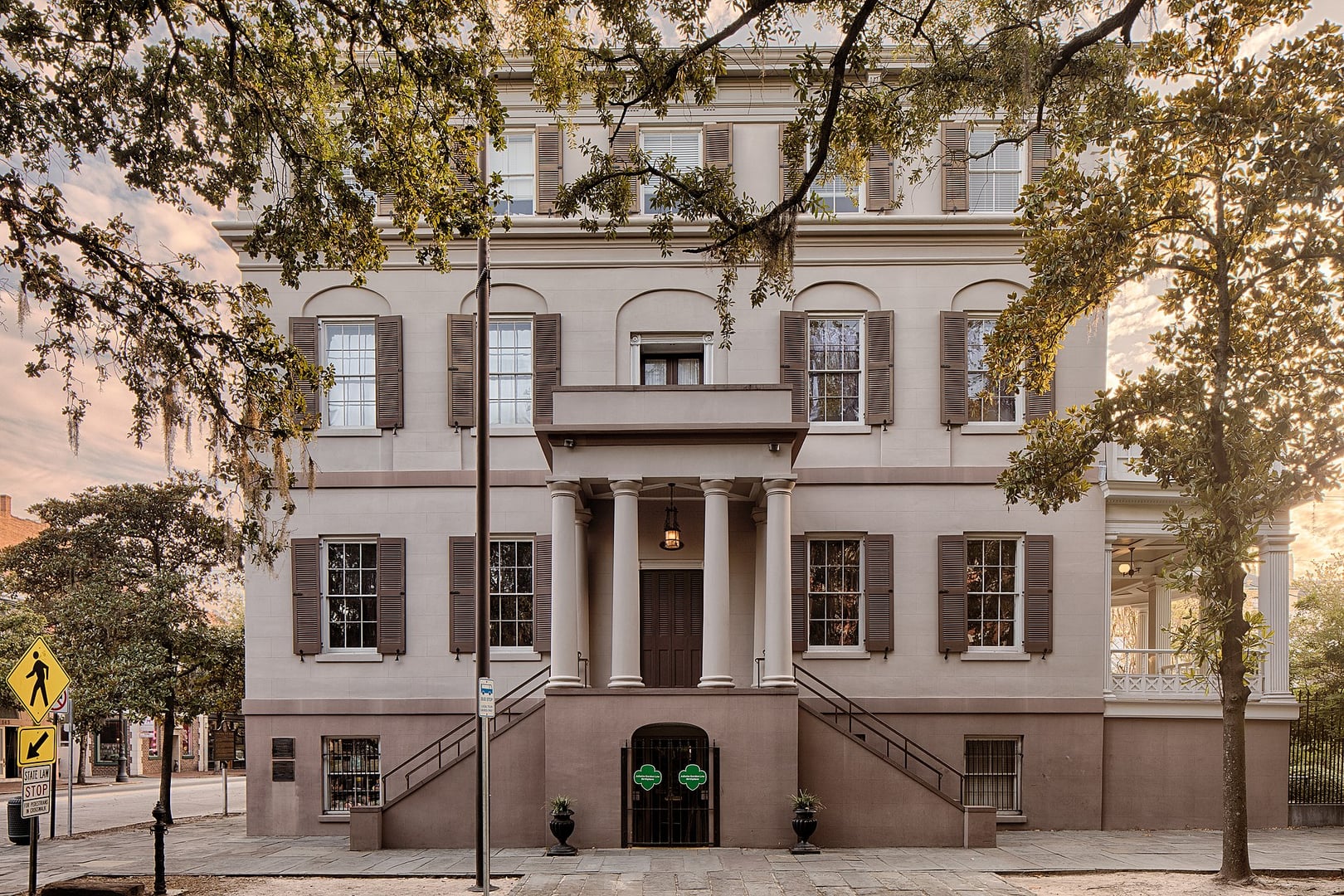
Greek Revival Andrew Low House at 329 Abercorn Street in Savannah, Georgia, built 1849 and later residence of Juliette Gordon Low
Museum / Historical Site

Andrew Low House

Savannah, GA

The Andrew Low House was completed in 1849 for Scottish-born cotton merchant Andrew Low, then one of the wealthiest men in Savannah. The Greek Revival town house hosted William Makepeace Thackeray and Robert E. Lee, and became the residence of Juliette Gordon Low — Andrew Low's daughter-in-law — who founded the Girl Scouts of the United States in the house on March 12, 1912.

$$ All Ages Family: High
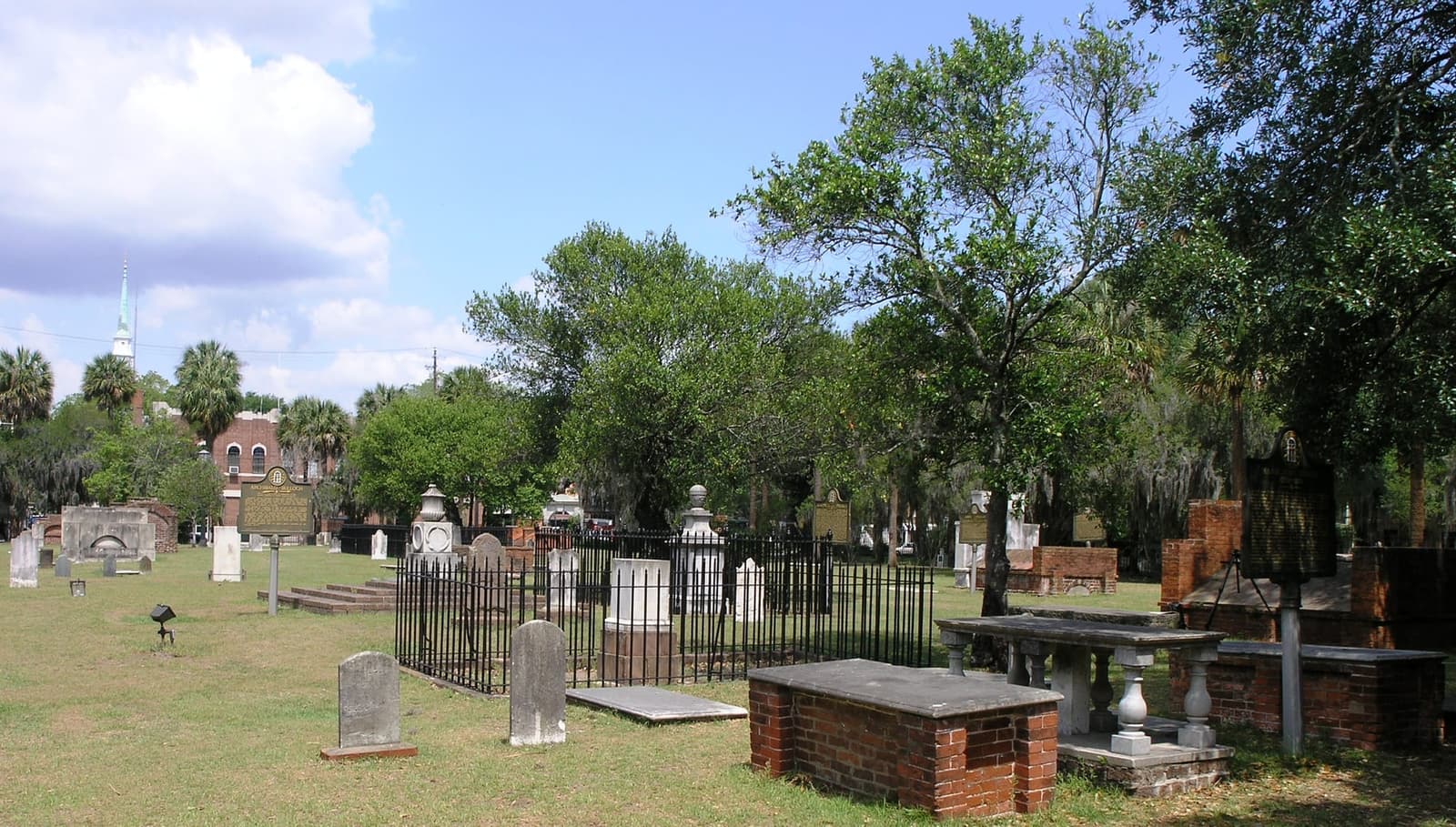
Colonial Park Cemetery in Savannah Georgia, looking west toward Abercorn Street with weathered colonial gravestones
Cemetery / Burial Ground

Colonial Park Cemetery

Savannah, GA

Colonial Park Cemetery was established in 1750 as Savannah's principal burial ground and remained active through 1853. The six-acre site at Abercorn and Oglethorpe Avenue holds Button Gwinnett, signer of the Declaration of Independence, and a mass grave for nearly seven hundred victims of the 1820 yellow fever epidemic.

$ All Ages Family: High
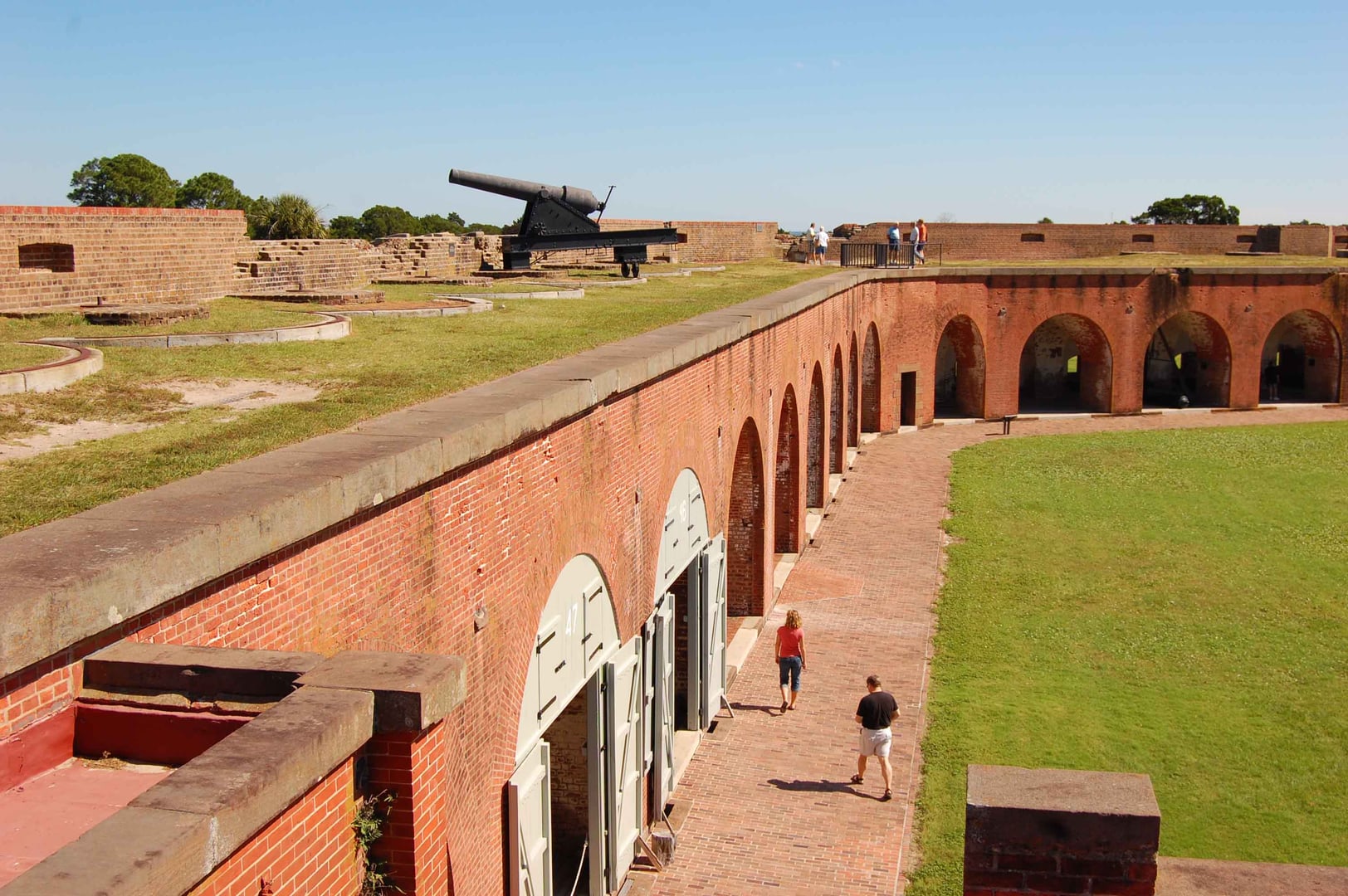
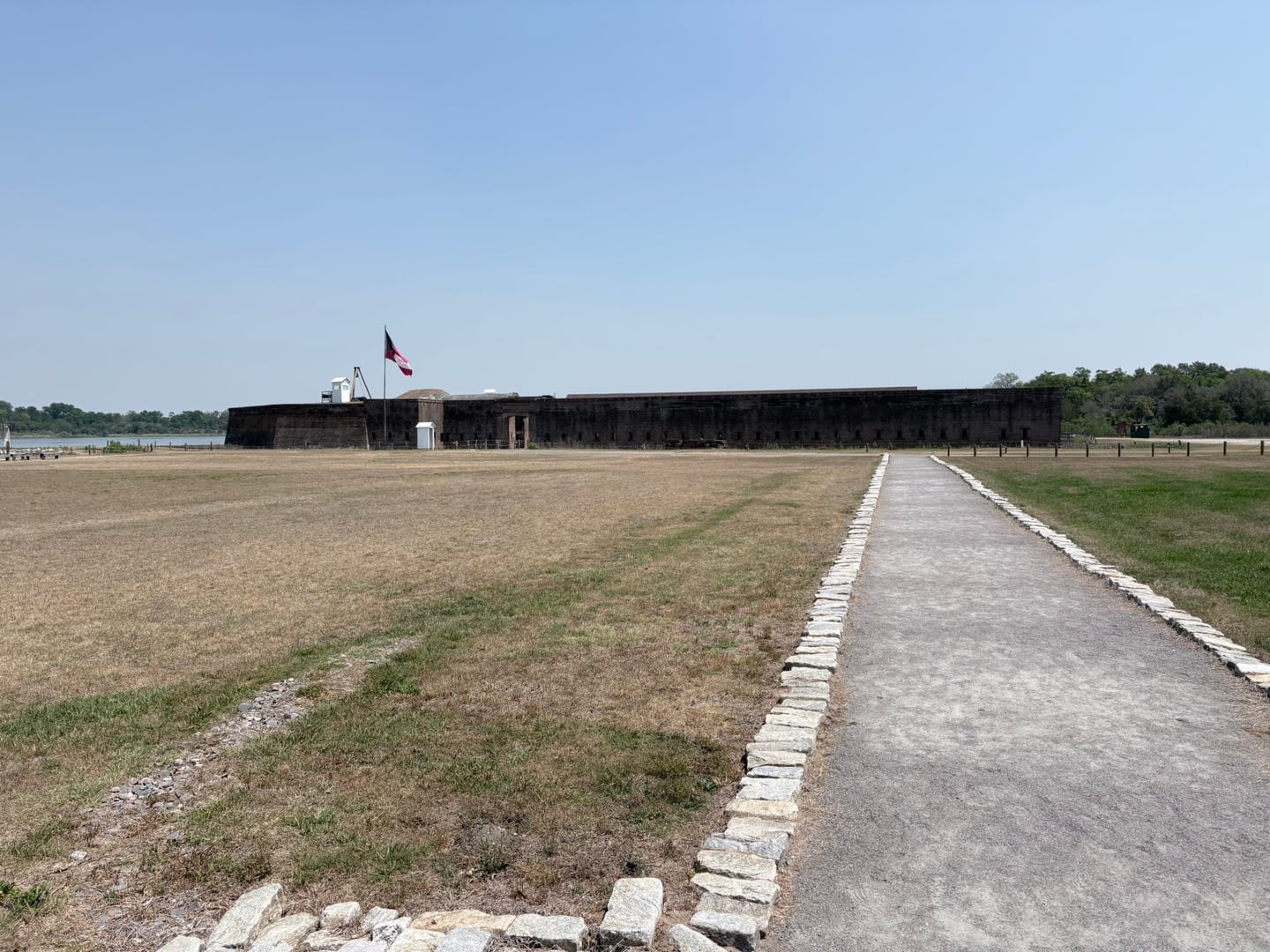
Interior of Fort Pulaski National Monument showing brick casemates on Cockspur Island, Savannah, Georgia
Battlefield / Military Site

Fort Pulaski National Monument

Savannah, GA

Fort Pulaski is a brick coastal fort on Cockspur Island at the mouth of the Savannah River, constructed between 1829 and 1847. The April 1862 Union bombardment with new rifled cannon breached the fort's masonry walls in 30 hours, demonstrating that masonry forts had become obsolete. In late 1864 the fort held the Immortal Six Hundred, Confederate officers held in retaliation; thirteen died on the island.

$ All Ages Family: High
HABS archival 1935 distant view of Fort Pulaski National Monument, the pentagonal brick coastal fort on Cockspur Island near Savannah, Georgia
Battlefield / Military Site

Fort Pulaski National Monument

Savannah, GA

Fort Pulaski occupies Cockspur Island at the mouth of the Savannah River, fifteen miles east of Savannah. Constructed between 1829 and 1847 as part of the United States's Third System of coastal fortifications, the fort is the site where rifled artillery first breached a masonry fort in combat, on April 11, 1862, signaling the obsolescence of brick coastal defenses.

$ All Ages Family: High
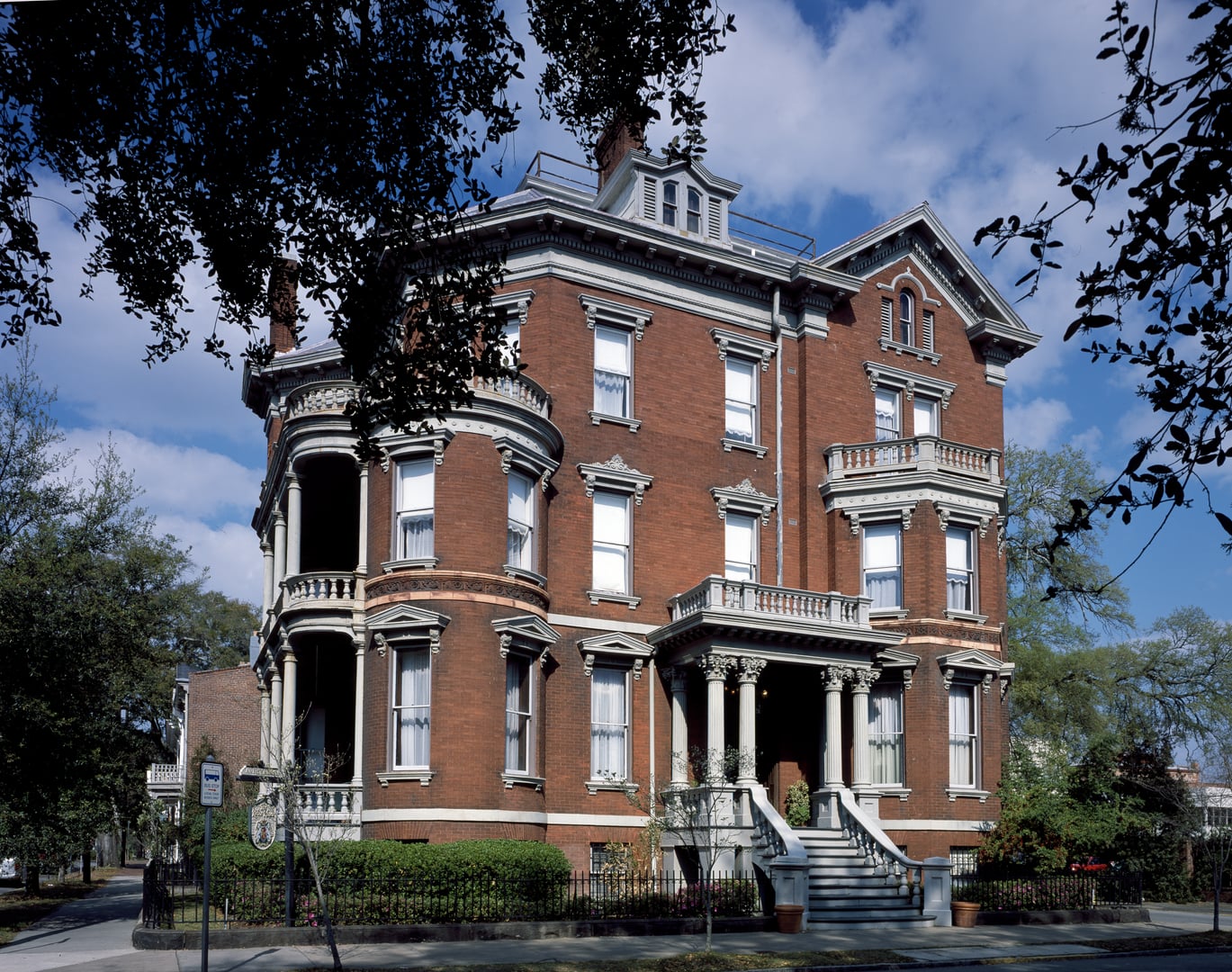
Kehoe House 1892 Victorian mansion bed and breakfast in Savannah Georgia
Haunted Hotel / Inn

Kehoe House

Savannah, GA

William Kehoe, an Irish immigrant who built a fortune running a Savannah iron foundry, commissioned architect DeWitt Bruyn to design this Queen Anne Revival mansion on Columbia Square in 1892. Kehoe spent $25,000 on the construction — an enormous sum — and much of the exterior ornament was cast in iron from his own foundry. The house served as a funeral parlor and was briefly owned by NFL quarterback Joe Namath before opening as a bed and breakfast in 1990.

$$$ Adults only (21+) Family: Low
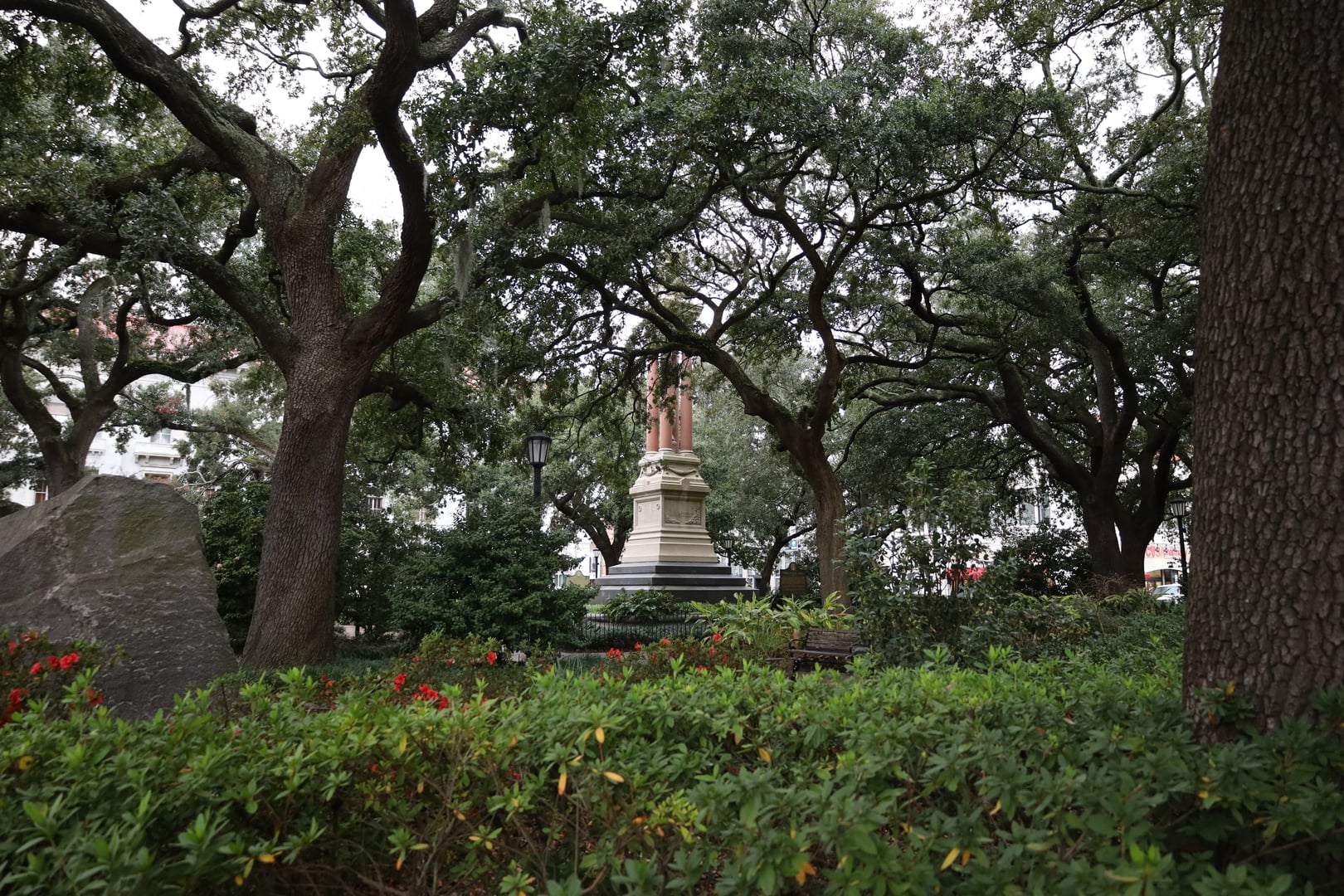
Wright Square historic public square with monument and oak trees in Savannah, Georgia
Outdoor / Natural Site

Wright Square

Savannah, GA

Wright Square in Savannah, Georgia is one of the city's original colonial squares, laid out under General James Oglethorpe's 1733 city plan. On January 19, 1735, Irish indentured servant Alice Riley was hanged there — the first woman executed in the Georgia colony. Chief Tomochichi of the Yamacraw tribe, Oglethorpe's key Native American ally, was later buried in the square; his burial site was subsequently displaced by a monument to a local businessman.

$ All Ages Family: High
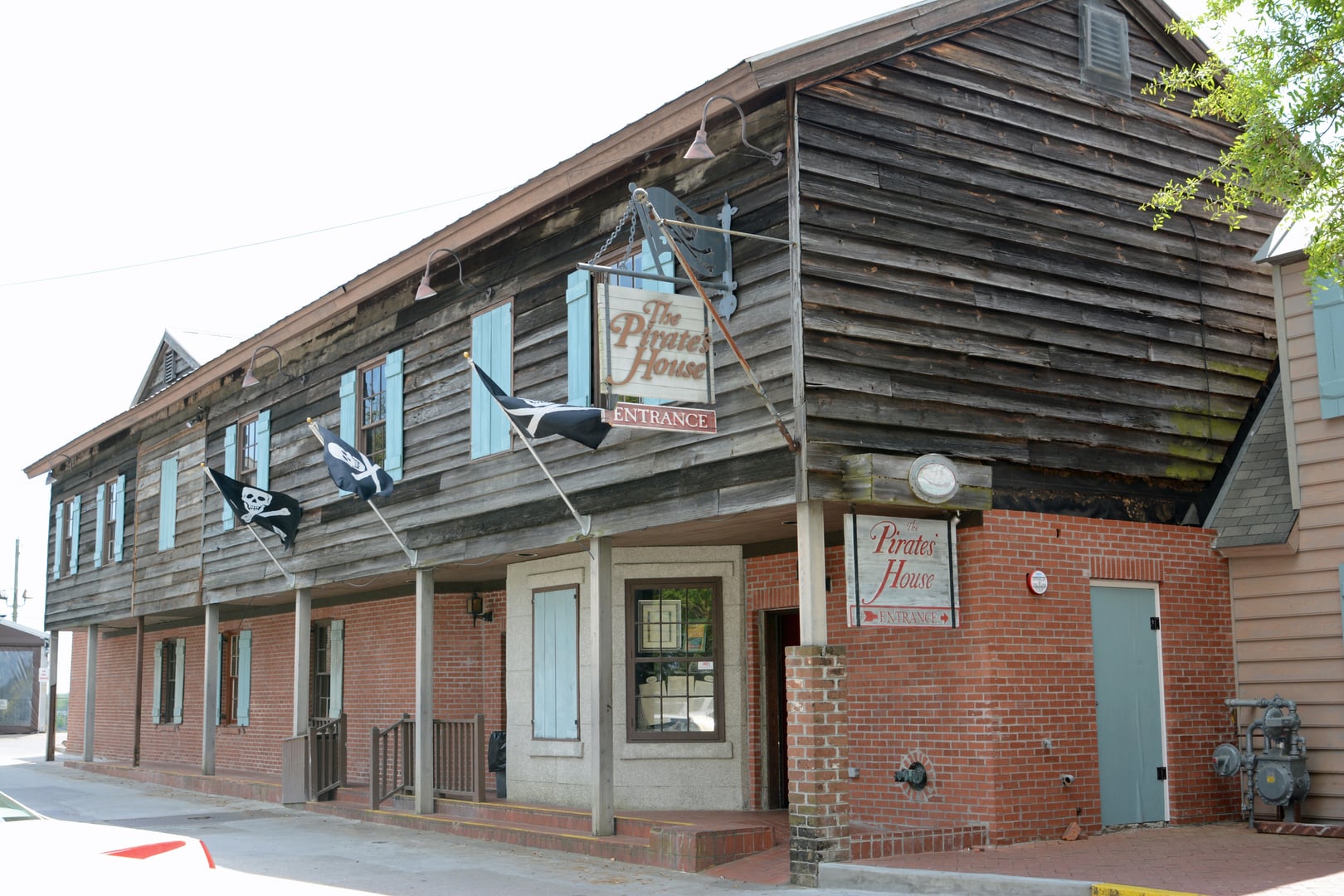
The Pirates' House restaurant exterior in Savannah, Georgia, a centuries-old tavern from 1734
Haunted Dining / Bar

The Pirates' House

Savannah, GA

The Pirates' House occupies a structure that began in 1734 as the Herb House on James Oglethorpe's Trustees' Garden tract. In 1753 the site opened as an inn for seafarers and quickly became a meeting place for sailors and crew working the Savannah River port. The Savannah Gas Company acquired the property in 1948, and the modern restaurant opened in 1953.

$$ All Ages Family: High
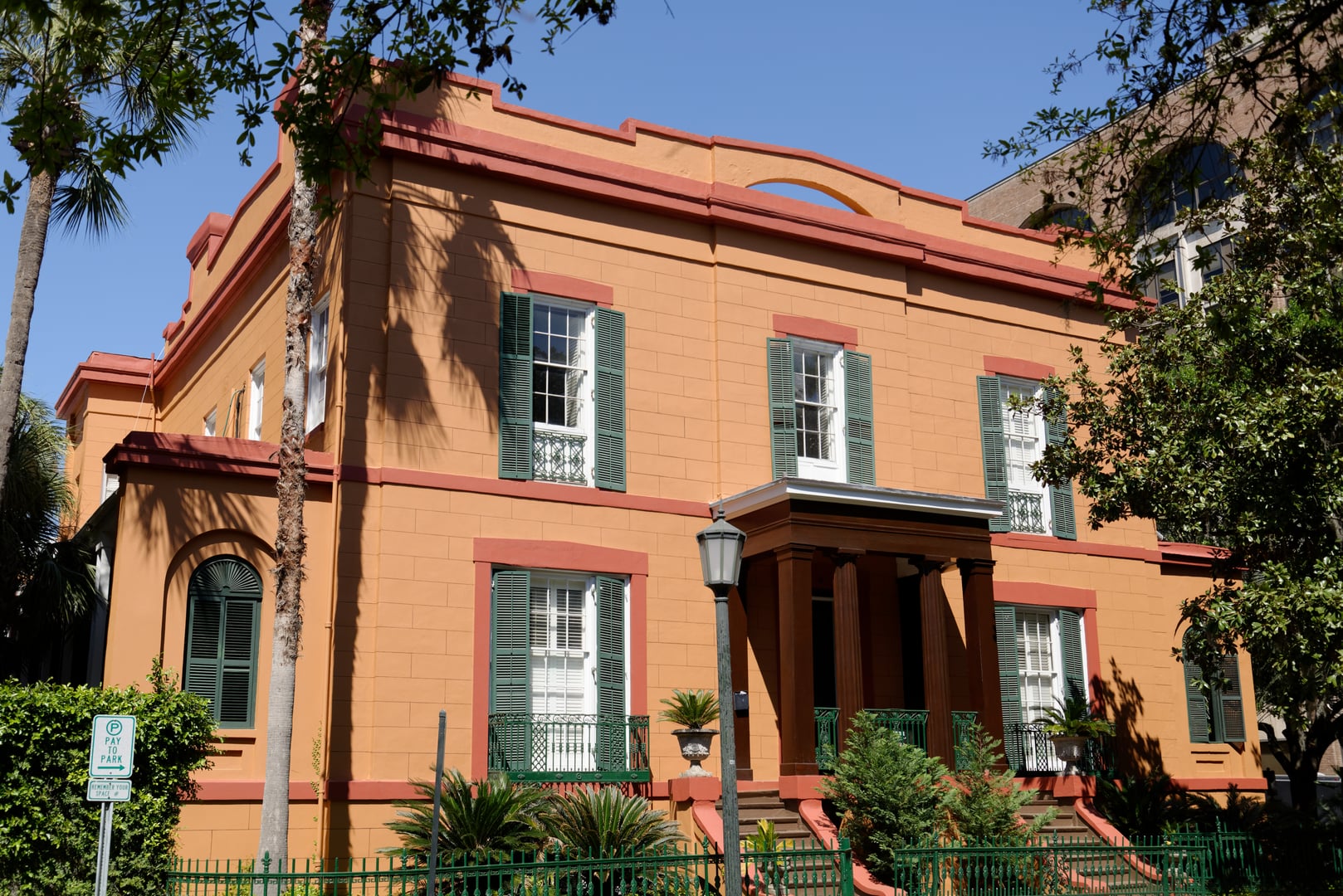
The Sorrel-Weed House, an 1840 Greek Revival mansion at 6 West Harris Street in Savannah, Georgia
Haunted House / Historic Home

Sorrel-Weed House

Savannah, GA

The Sorrel-Weed House was built around 1840 for shipping merchant Francis Sorrel to a design by architect Charles Cluskey, who moved to Savannah from New York in 1829. The mansion was one of the first two Georgia State Landmarks designated in 1954 and is among the finest Greek Revival and Regency residences in Savannah.

$$ All Ages for daytime tours; evening ghost tours recommended for 12+ Family: Moderate
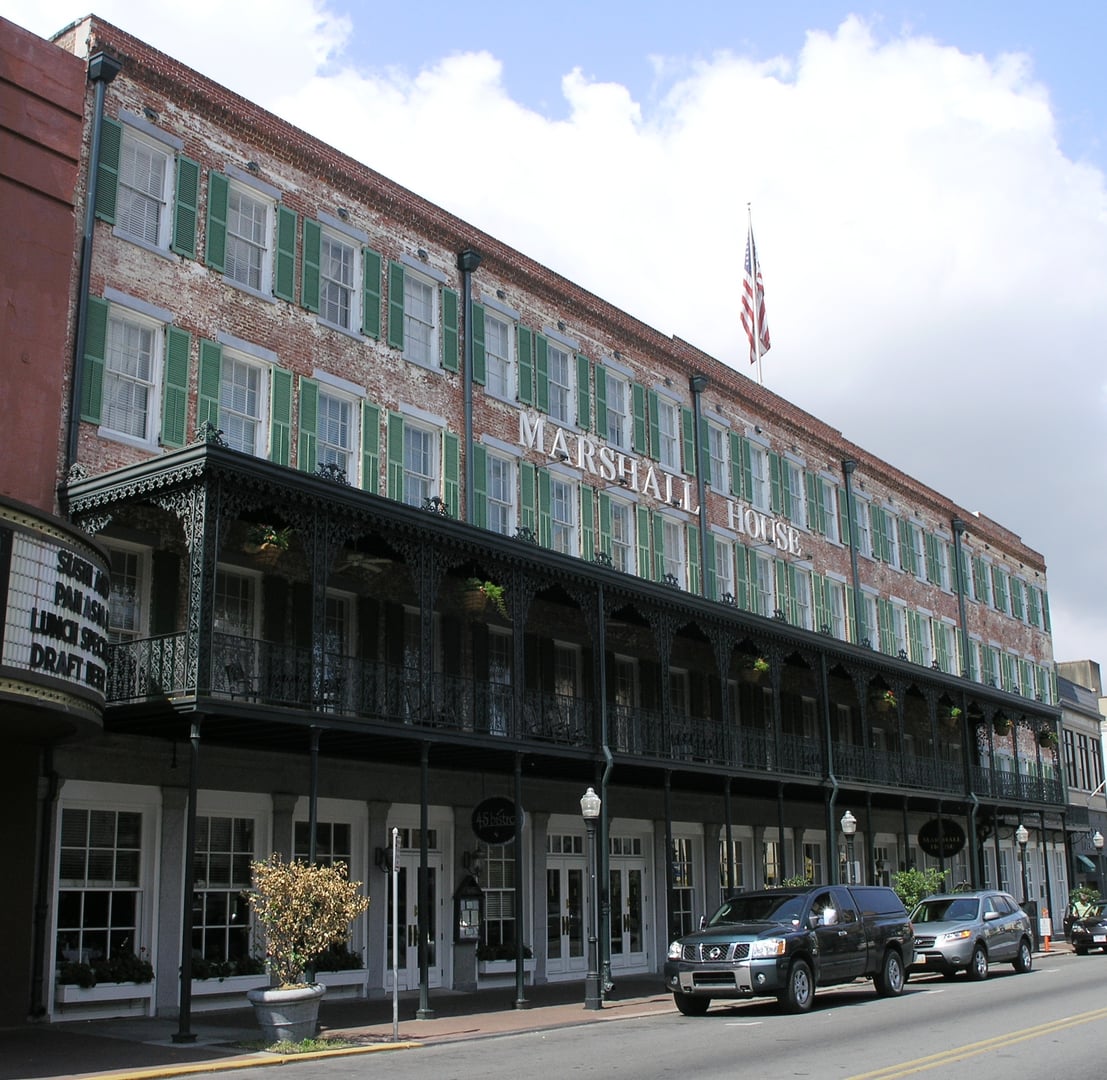
The Marshall House in Savannah Georgia, historic 1851 hotel with iron balconies
Haunted Hotel / Inn

The Marshall House

Savannah, GA

The Marshall House opened in 1851, developed by Mary Marshall, who became one of Savannah's most respected businesswomen. During the Civil War, Union forces occupied the building and used it as a hospital. The hotel also served as a hospital during the 1854 and 1876 yellow fever epidemics. During a late 1990s restoration, workers discovered human remains beneath the first-floor boards — amputated limbs from the Civil War surgery room that had been deposited there.

$$$ All ages Family: Moderate
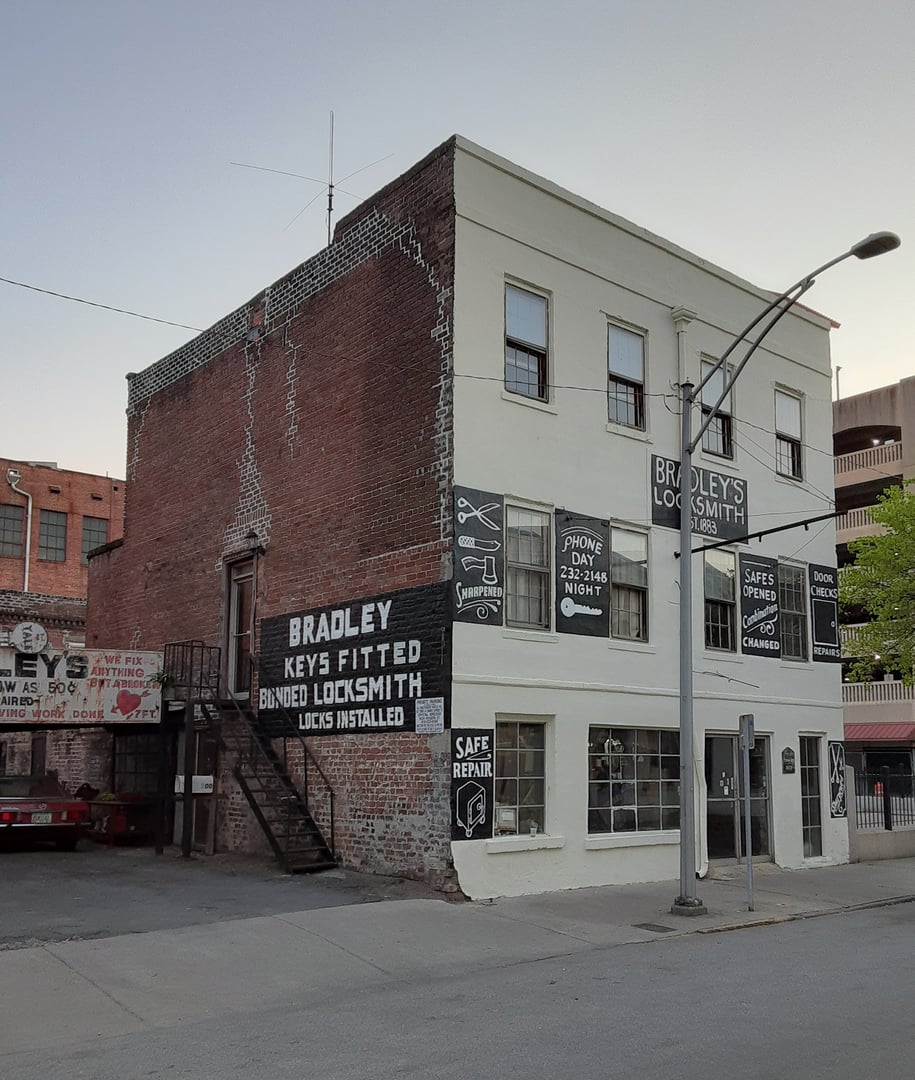
The 1855 Patrick Duffy Building at 24 East State Street in Savannah, home of Bradley Lock & Key Shop (est. 1883), Savannah's oldest continuously operating business.
Other Dark Tourism Site

Bradley Lock & Key Shop

Savannah, GA

Bradley Lock & Key was founded in 1883 by Simon Bradley and is recognized as the oldest business in continuous operation in Savannah. The shop has stood in the Patrick Duffy Building at 24 East State Street, on the northeast tything block of Wright Square, since 1967. William 'Dini' Bradley — middle-named Houdini after his father Aaron, a stage hypnotist who reportedly traveled with Harry Houdini — owned the shop from the 1950s until his 2019 retirement.

$ All Ages Family: High
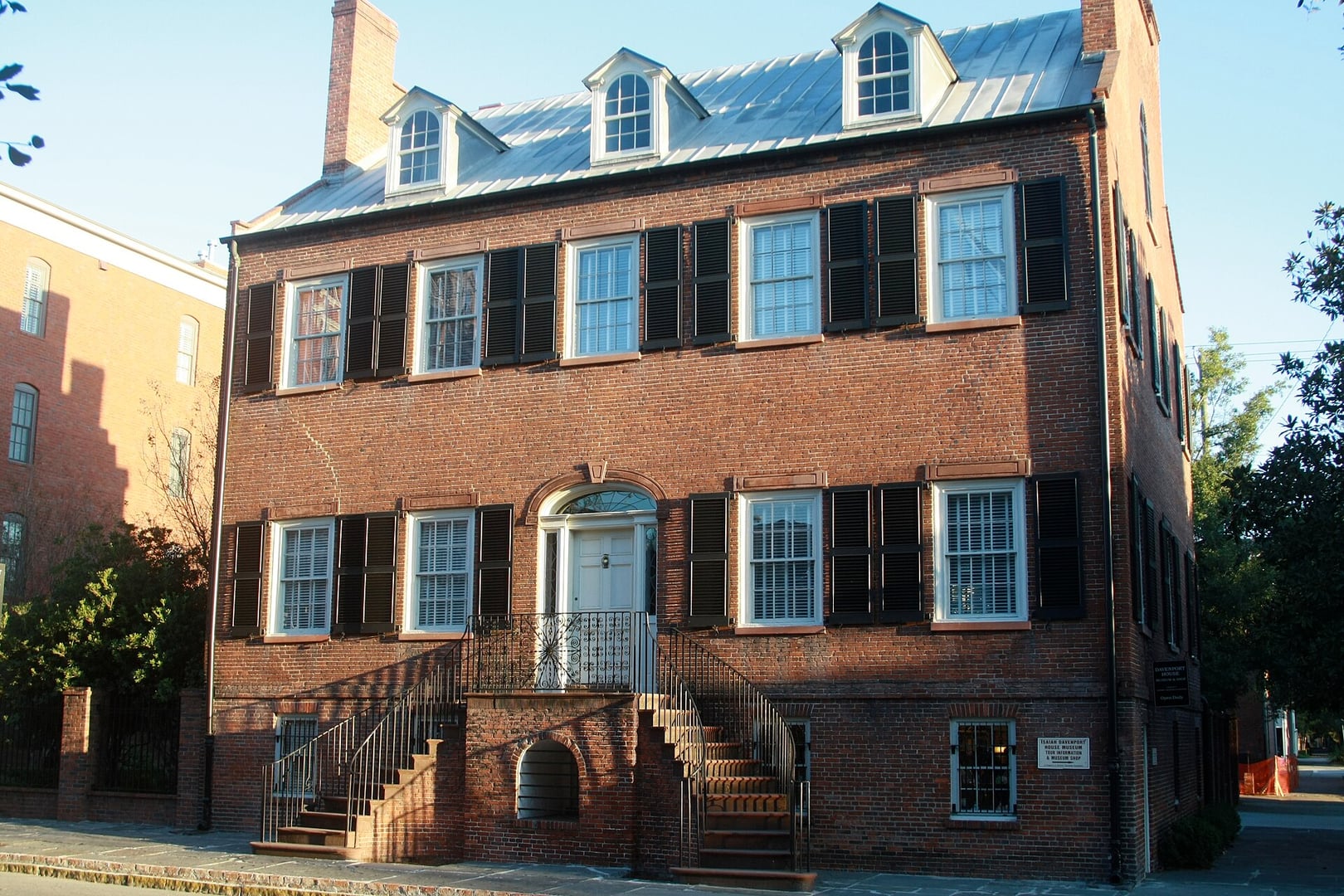
The Isaiah Davenport House (1820), a Federal-style brick mansion on Columbia Square in Savannah, Georgia, now operated as a museum.
Museum / Historical Site

Davenport House Museum

Savannah, GA

The Federal-style brick mansion at 324 East State Street was built in 1820 by Rhode Island-born master-builder Isaiah Davenport (1784-1827). Davenport, who also served Savannah as alderman, fire master, constable, and a member of the board of health, died of yellow fever on September 16, 1827, at age 43. The 1955 effort to save the deteriorating house from demolition launched the Historic Savannah Foundation and Savannah's modern historic-preservation movement; the museum opened in 1963.

$$ All Ages Family: High
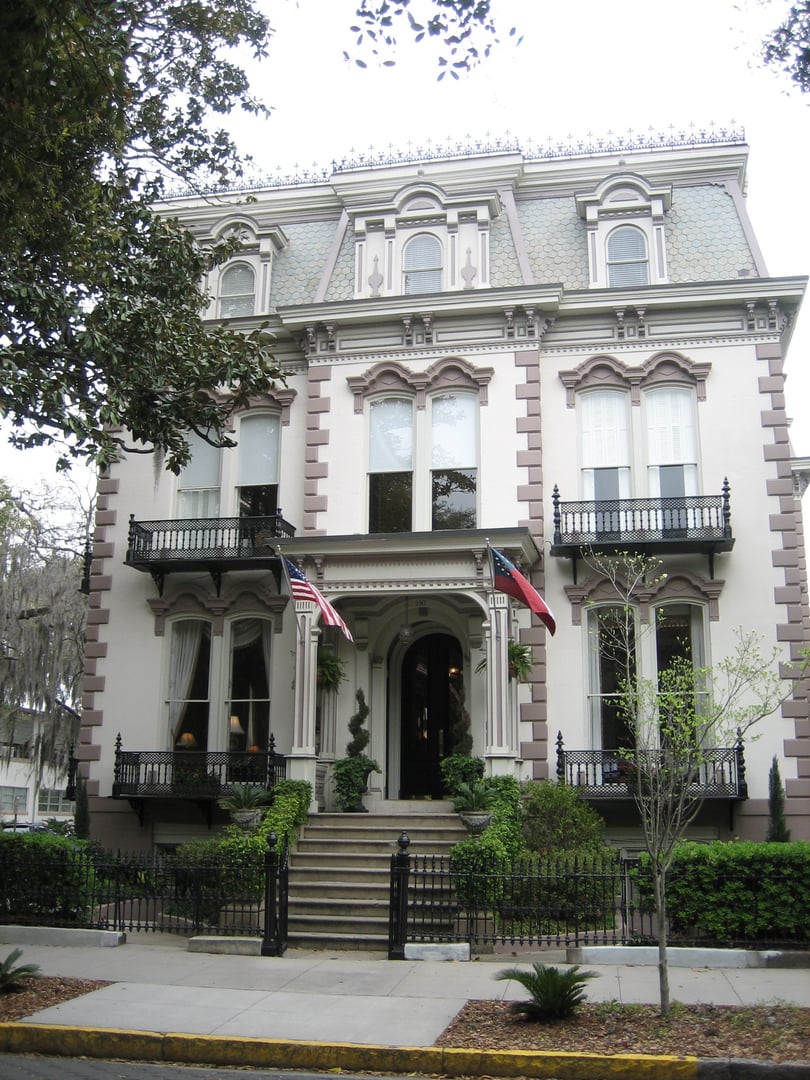
The 1873 Hamilton-Turner House (now Hamilton-Turner Inn), a French Empire-style mansion on Lafayette Square in Savannah's Historic District.
Haunted Hotel / Inn

Hamilton-Turner Inn

Savannah, GA

Built in 1873 for Virginia-born businessman Samuel Pugh Hamilton (1837-1899), the Second Empire-style mansion at 330 Abercorn Street was the first private residence in Savannah with electricity, installed in 1883 through Hamilton's work with the Brush Electric Light & Power Company. The home passed through multiple owners — including the Turner family, the Catholic Cathedral of St. John the Baptist, and the Historic Savannah Foundation — before opening as a luxury inn in 1997.

$$$ All Ages Family: Moderate
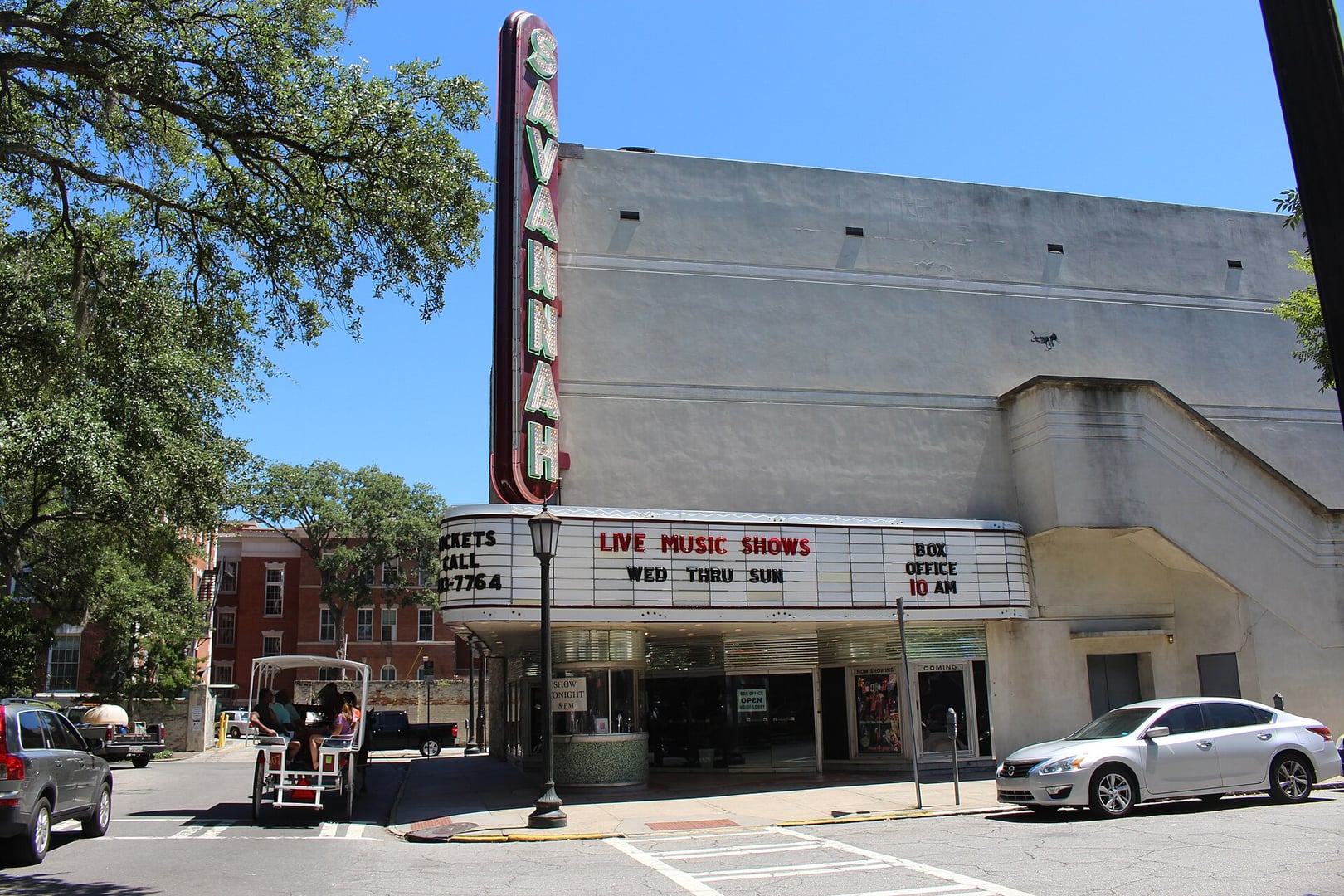
Historic Savannah Theatre marquee on Bull Street at Chippewa Square
Photo coming soon
Theater / Performance Venue

Historic Savannah Theatre

Savannah, GA

The Savannah Theatre opened on December 4, 1818, with a performance of 'The Soldier's Daughter,' in a building designed by English-born Regency architect William Jay. The site has hosted live performances and films continuously for more than two centuries, making it one of the oldest continually operating theaters in the United States on its original location.

$$ All Ages Family: High
The Juliette Gordon Low Birthplace (Wayne-Gordon House), an 1821 Regency mansion in the Savannah Historic District where the Girl Scouts founder was born in 1860.
Museum / Historical Site

Juliette Gordon Low Birthplace (Wayne-Gordon House)

Savannah, GA

Construction of the Regency-style brick townhouse at 10 East Oglethorpe Avenue began in 1818 for James Moore Wayne, a Savannah mayor and later U.S. Supreme Court Justice; the home was completed in 1821. In 1831 the Gordon family acquired the property, and on October 31, 1860, Juliette Magill Kinzie 'Daisy' Gordon was born there. She founded Girl Scouts of the USA in 1912. The Girl Scouts purchased the property in 1953 and opened it as a museum in 1956; the home was designated Savannah's first National Historic Landmark in 1965.

$$ All Ages Family: High
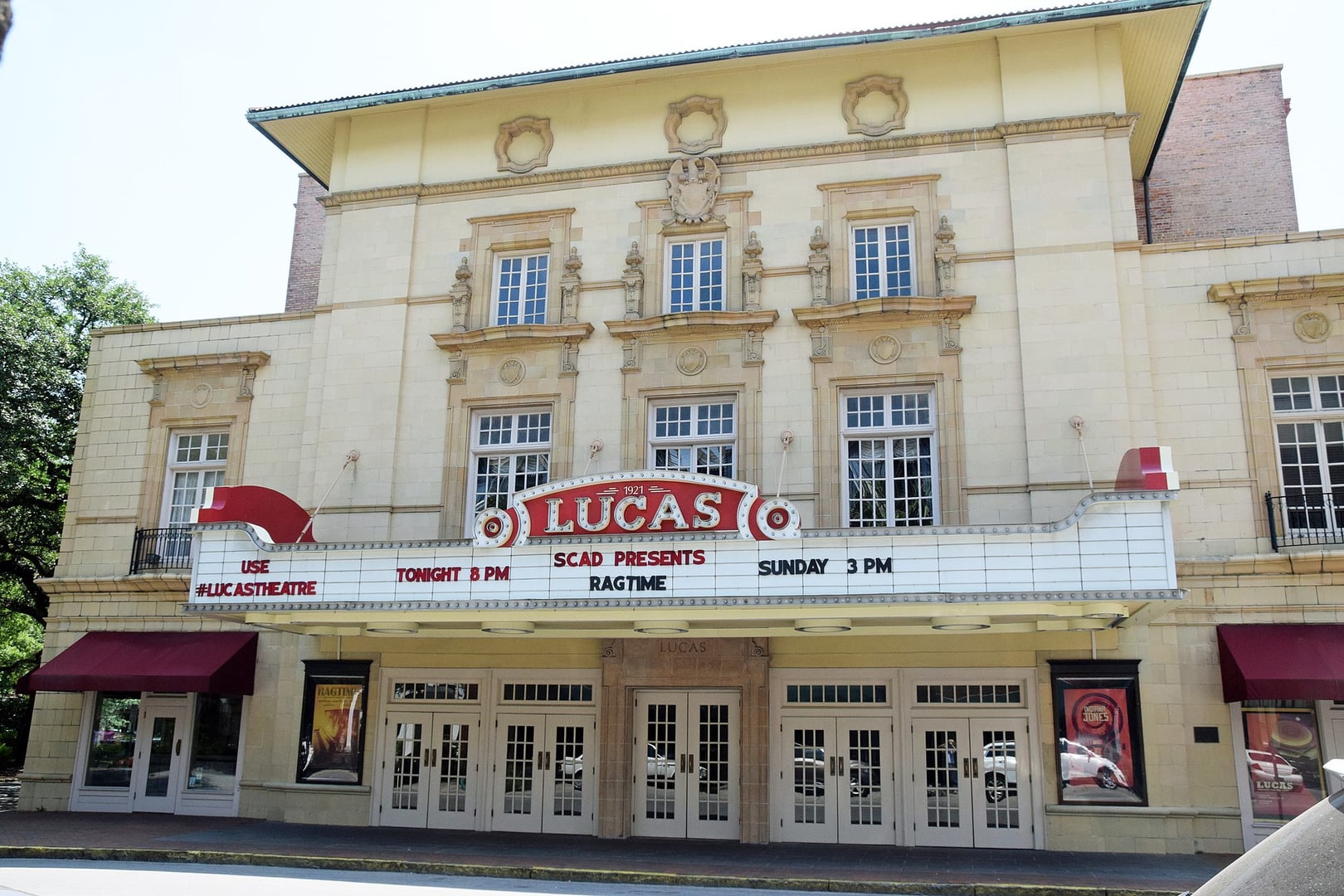
The Lucas Theatre, a 1921 movie palace on Abercorn Street near Reynolds Square in Savannah, Georgia, showing its restored marquee.
Theater / Performance Venue

Lucas Theatre for the Arts

Savannah, GA

The Lucas Theatre opened December 26, 1921, with a screening of Rudolph Valentino's 'Camille' and the short 'Hard Luck.' Designed by architect Claude K. Howell for theater impresario Arthur Lucas, it was Savannah's first air-conditioned building. The theater closed in 1976, narrowly escaped demolition, and reopened in December 2000 after a $4 million restoration; SCAD has managed the venue since 2002.

$$ All Ages Family: High
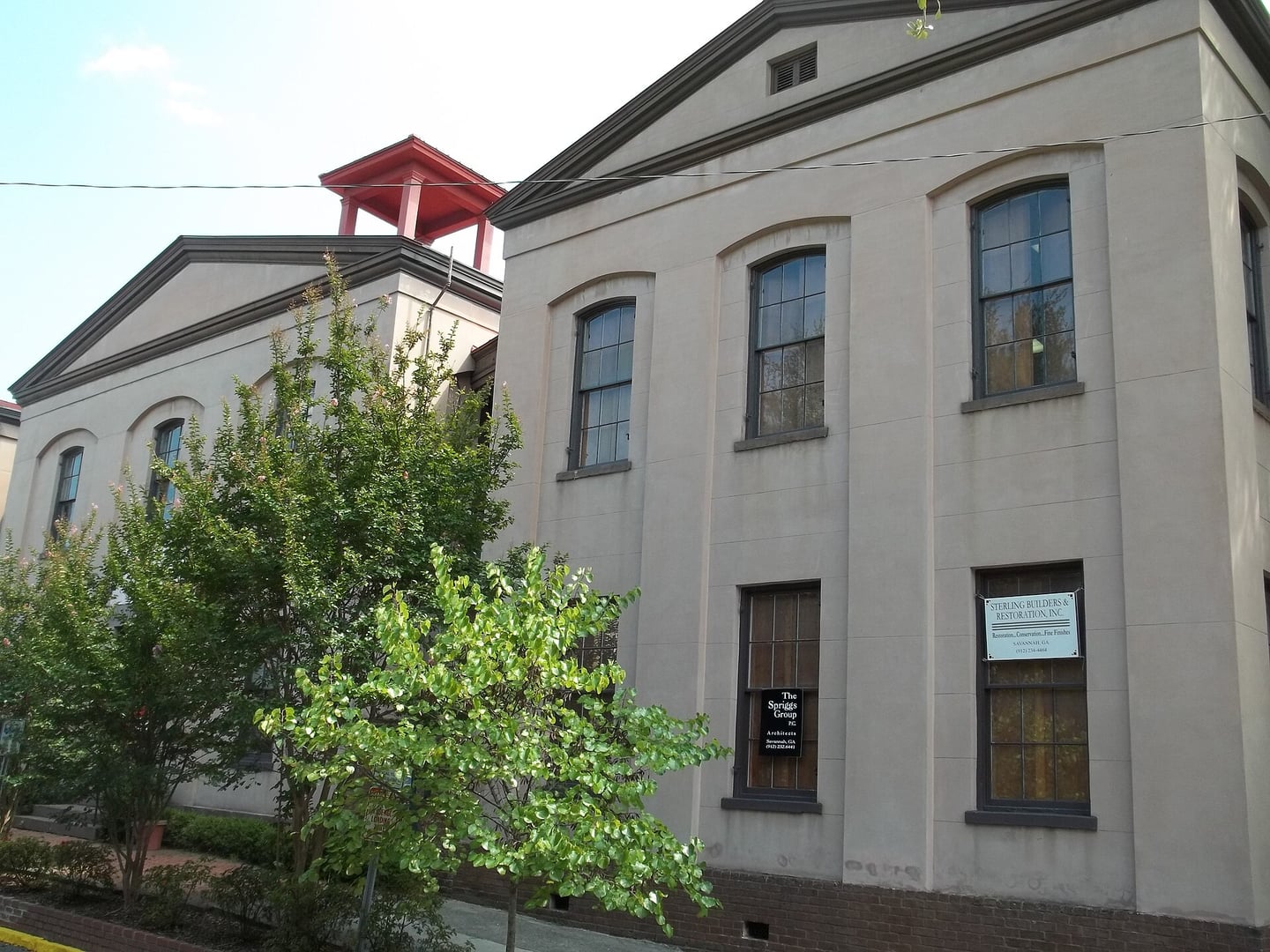
Massie Common School (now Massie Heritage Center), a Greek Revival schoolhouse built 1856 in Savannah, Georgia, on the National Register of Historic Places.
Museum / Historical Site

Massie Heritage Center (Massie Common School)

Savannah, GA

Funded by an 1841 bequest of $5,000 from Scottish-born Peter Massie of Glynn County and designed by architect John Norris, the Massie Common School House opened in 1856 as Savannah's first public school. Union forces used it as a hospital during Sherman's 1864 occupation. It closed as a school at the end of the 1974 school year and reopened in 1978 as the Massie Heritage Center.

$ All Ages Family: High
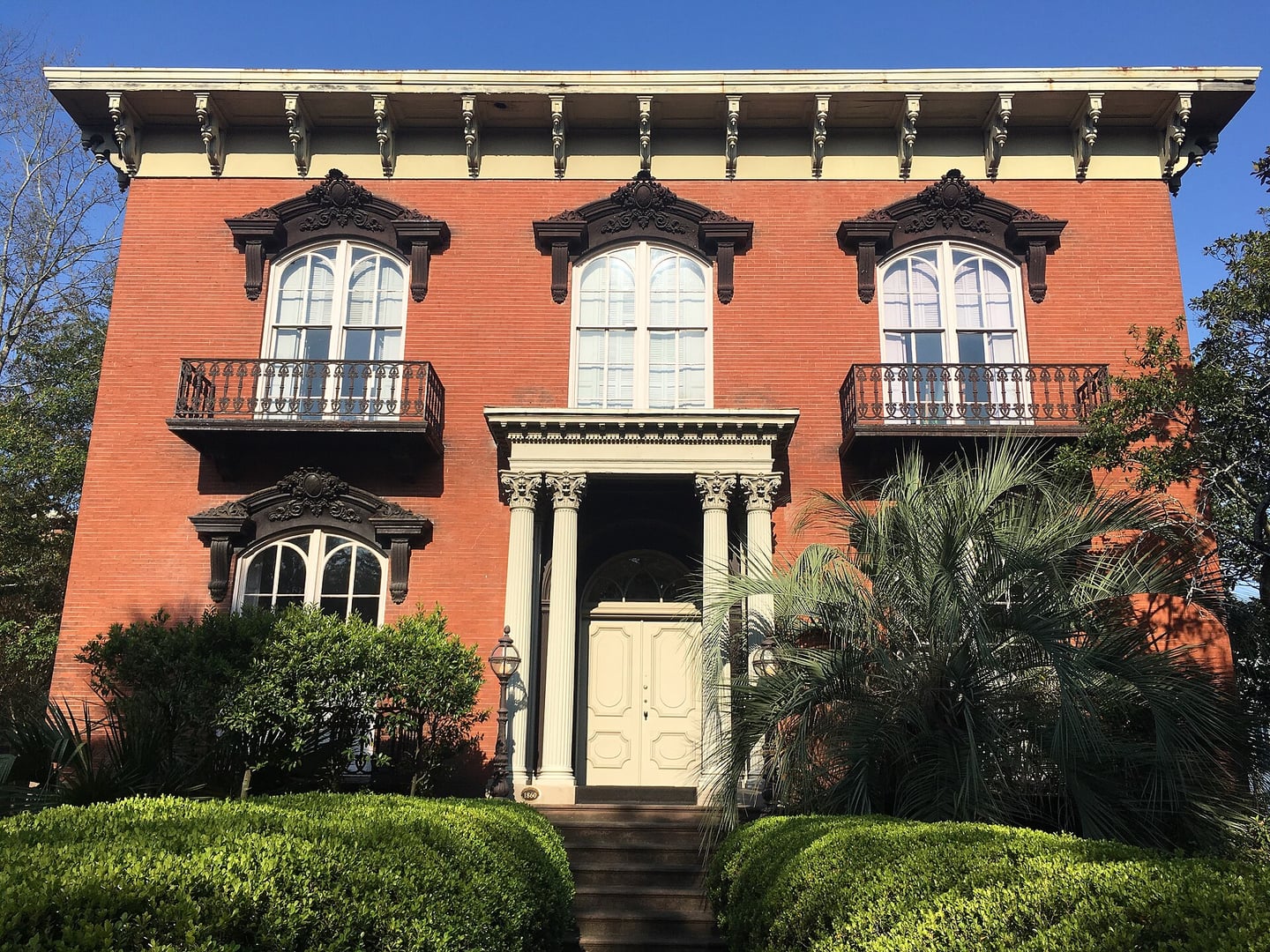
The Mercer-Williams House at 429 Bull Street in Savannah, Georgia, an 1860s Italianate mansion made famous by 'Midnight in the Garden of Good and Evil.'
Museum / Historical Site

Mercer-Williams House Museum

Savannah, GA

Construction of the Italianate mansion at 429 Bull Street began in 1860 for Confederate General Hugh Weedon Mercer and was completed in 1868, after the Civil War. Antiques dealer Jim Williams purchased and restored the home in 1969. Williams was tried four times and ultimately acquitted in 1989 for the 1981 shooting death of Danny Hansford inside the house; Williams himself died at the home in January 1990. The property has operated as the Mercer Williams House Museum since 2004, with the upper floors retained as a private residence by Williams's sister, Dorothy Williams Kingery.

$$ All Ages Family: Moderate
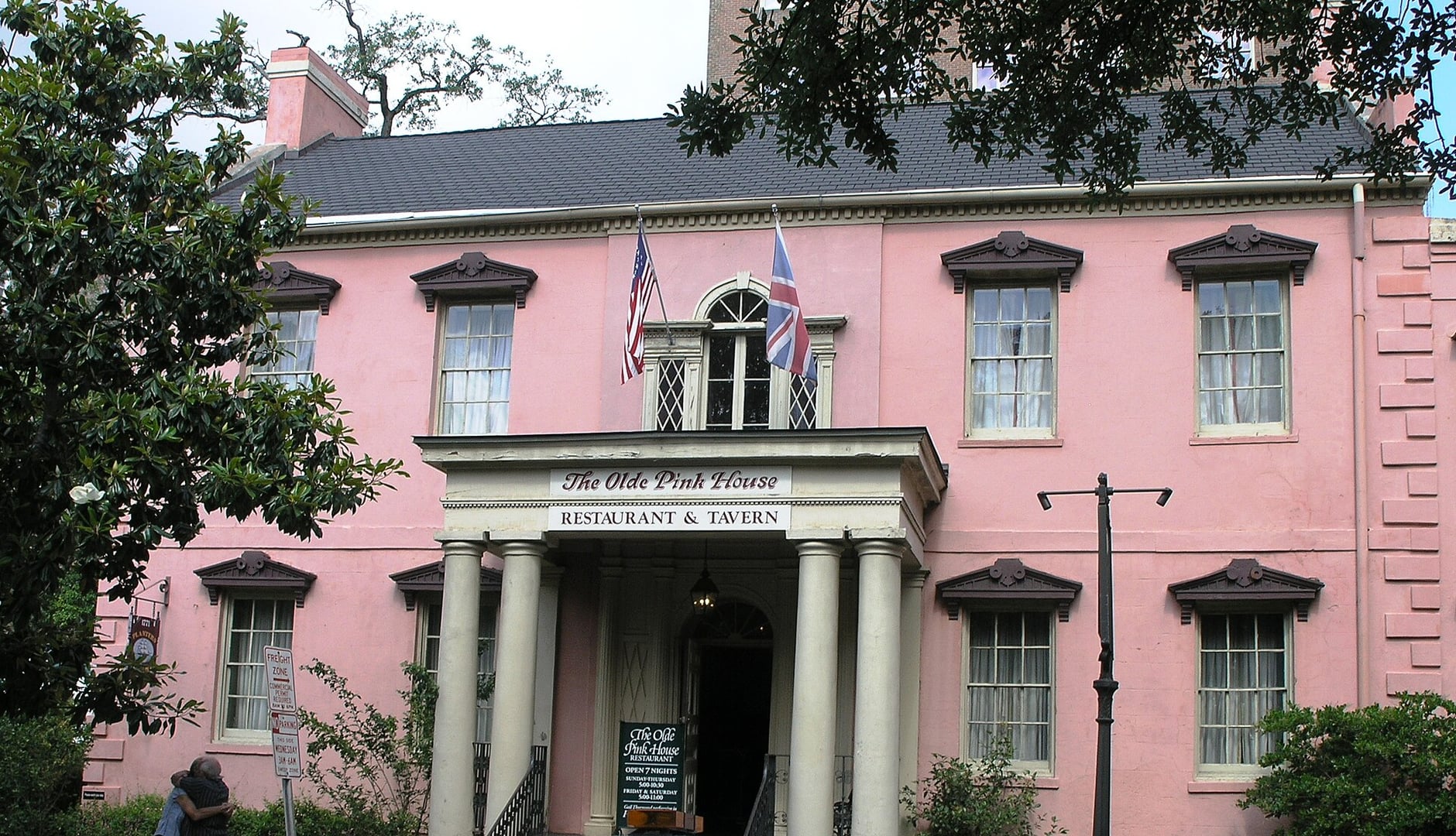
The Olde Pink House, the 1789 Georgian Habersham mansion on Reynolds Square in Savannah, Georgia, showing its distinctive pink stucco facade.
Haunted Dining / Bar

The Olde Pink House

Savannah, GA

Construction of the Habersham House began in 1771 by the Habersham family — one of Savannah's founding families — and was completed in 1789 for James Habersham Jr. (1745-1799). The building survived Savannah's catastrophic 1796 fire, served as the Planters Bank of Georgia beginning in 1812, briefly housed Union General Zebulon York's headquarters during the Civil War, and has operated as The Olde Pink House restaurant since 1971.

$$$ All Ages Family: Moderate
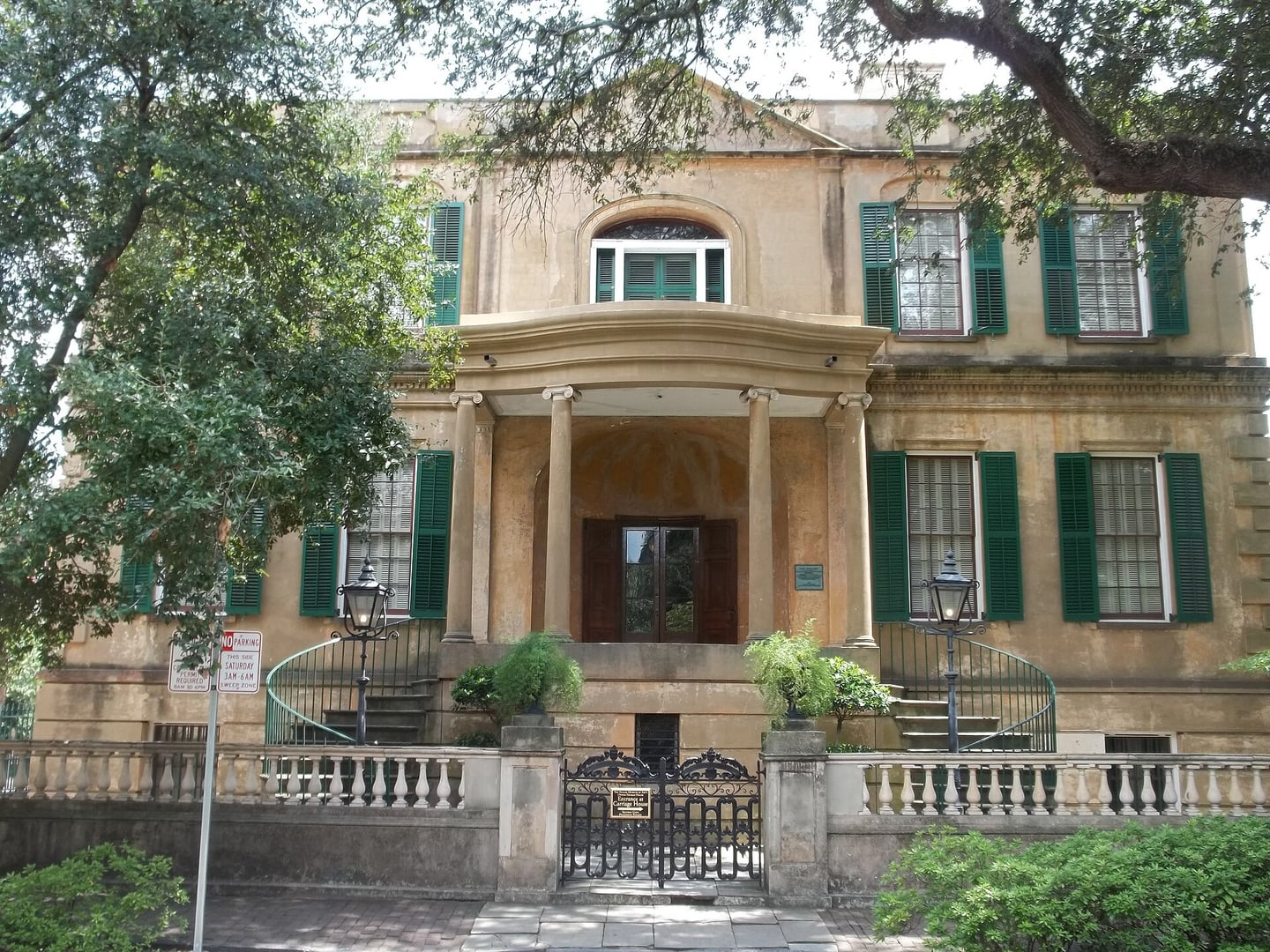
The Owens-Thomas House (1819), a Regency mansion at 124 Abercorn Street on Oglethorpe Square in Savannah, Georgia, National Historic Landmark.
Photo coming soon
Museum / Historical Site

Owens-Thomas House & Slave Quarters

Savannah, GA

The English Regency mansion at 124 Abercorn Street was designed by English-born architect William Jay (1792-1837) — one of the first professionally trained architects to practice in the United States — and completed in 1819 for cotton merchant Richard Richardson. After Richardson's financial collapse, the home was purchased in 1830 by attorney George Welshman Owens. The Marquis de Lafayette addressed Savannah from the south-facing cast-iron veranda on March 19, 1825. Margaret Thomas, Owens's granddaughter, bequeathed the property to the Telfair Academy in 1951. The mansion is a National Historic Landmark and operates as the Owens-Thomas House & Slave Quarters under Telfair Museums.

$$ All Ages Family: Moderate
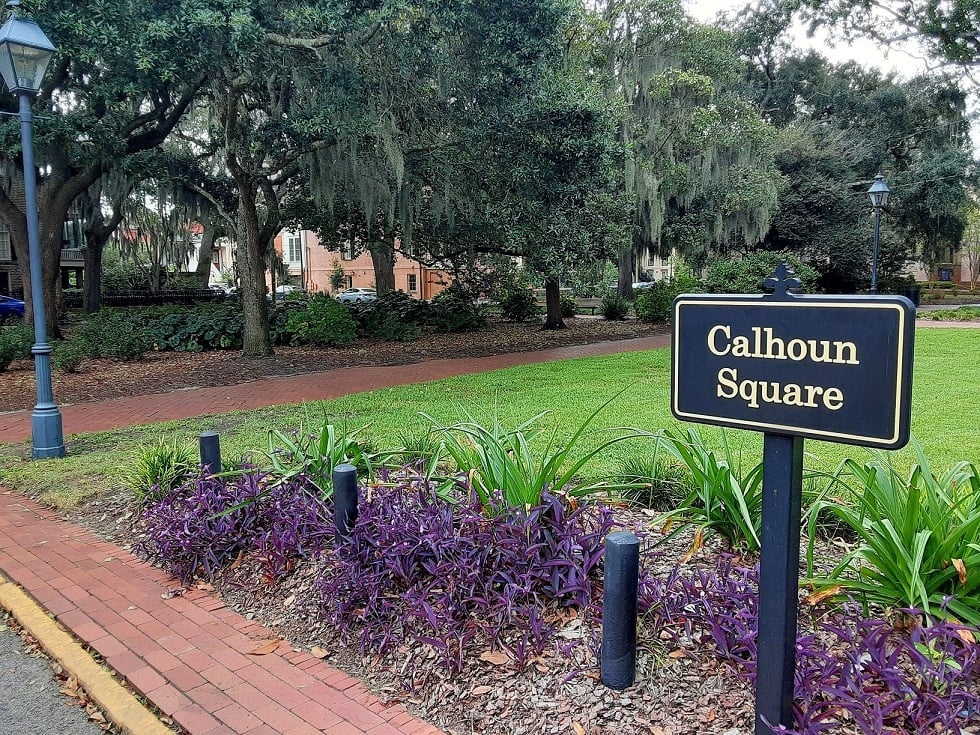
Taylor Square (formerly Calhoun Square) in the Savannah Historic District, with live oaks and surrounding 19th-century residences.
Outdoor / Natural Site

Taylor Square (formerly Calhoun Square)

Savannah, GA

Taylor Square was laid out in 1851 as the last of James Oglethorpe's Savannah ward squares to be completed. The block had previously been used as an unmarked 'Strangers Burial Ground' and 'Potter's Field' for the burial of enslaved African Americans and the city's poor. In 1855 the remains of two enslaved residents, Emily and Rinah, were relocated to Laurel Grove Cemetery, but many burials remained beneath the square. Savannah City Council voted in November 2022 to rename Calhoun Square; in August 2023 the city formally renamed it Taylor Square in honor of Susie King Taylor.

$ All Ages Family: High
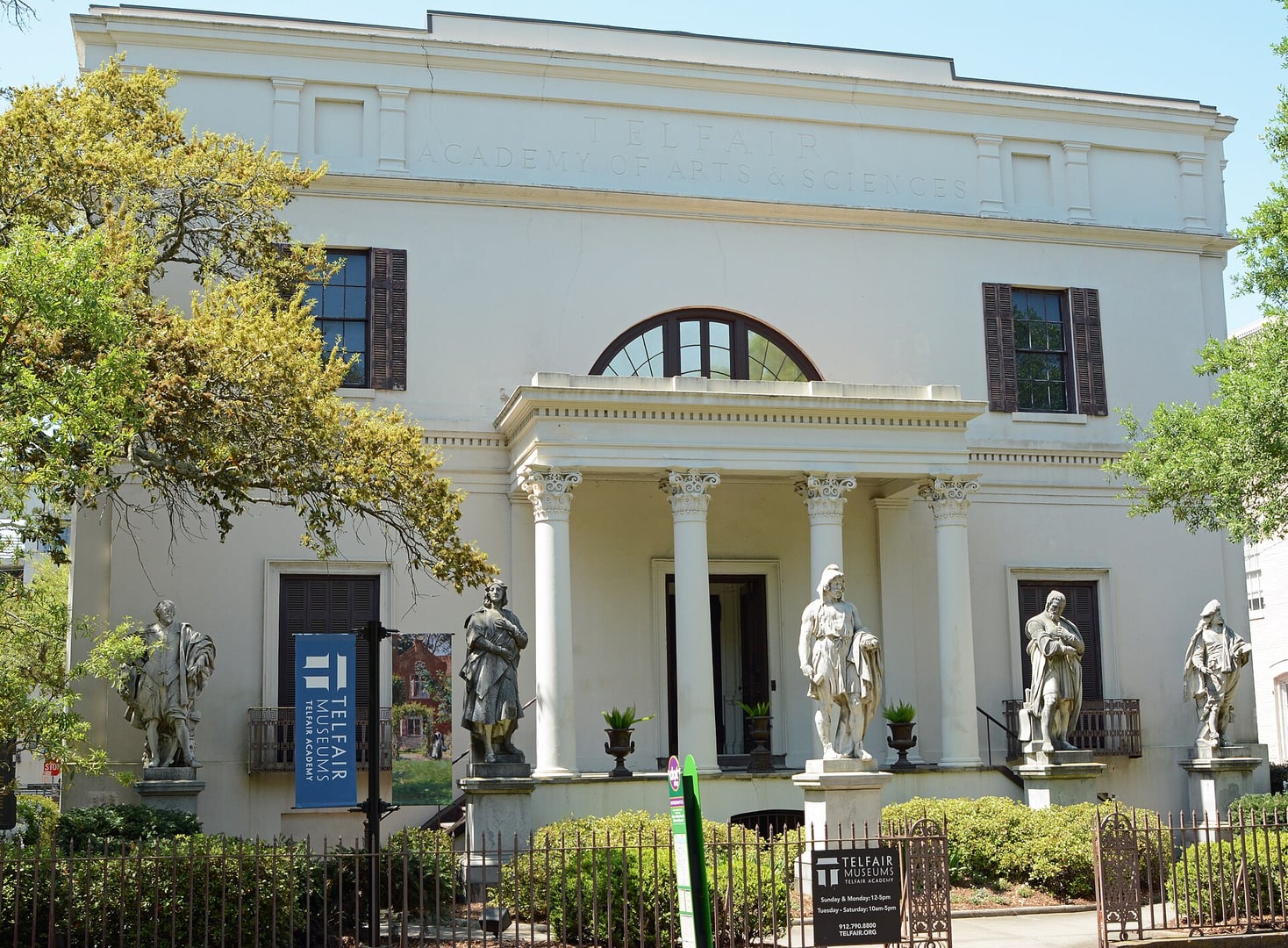
The Telfair Academy of Arts and Sciences, a Regency mansion built 1818 on Telfair Square in Savannah, Georgia.
Museum / Historical Site

Telfair Academy

Savannah, GA

The Telfair Academy is the original Telfair family mansion, designed circa 1818 by English architect William Jay for Alexander Telfair. Mary Telfair bequeathed the house and its contents to the Georgia Historical Society in 1875, and after additions by German-born architect Detlef Lienau, it opened in 1886 as the first public art museum in the American South.

$$ All Ages Family: High

Athens — 9

1901 Candler Hall on the University of Georgia's North Campus at 202 Herty Drive.
Photo coming soon
Other Dark Tourism Site

Candler Hall

Athens, GA

Candler Hall was built in 1901 as a UGA men's residence hall and was named for Allen D. Candler, then governor of Georgia. The building, which could house up to 84 students at opening, has been adapted for academic and administrative use.

$ All Ages Family: Moderate
Preserved 1912 Fire Hall No. 1 incorporated into the Classic Center at 300 North Thomas Street in Athens, Georgia.
Photo coming soon
Museum / Historical Site

The Classic Center (former Fire Hall No. 1)

Athens, GA

The Classic Center is an Athens performing arts and convention center that incorporates the preserved 1912 Fire Hall No. 1. The historic firehouse, originally slated for demolition during the Classic Center's late-1980s construction, was saved by community advocacy and now houses the box office, meeting space, and a fire-history display.

$ All Ages Family: High
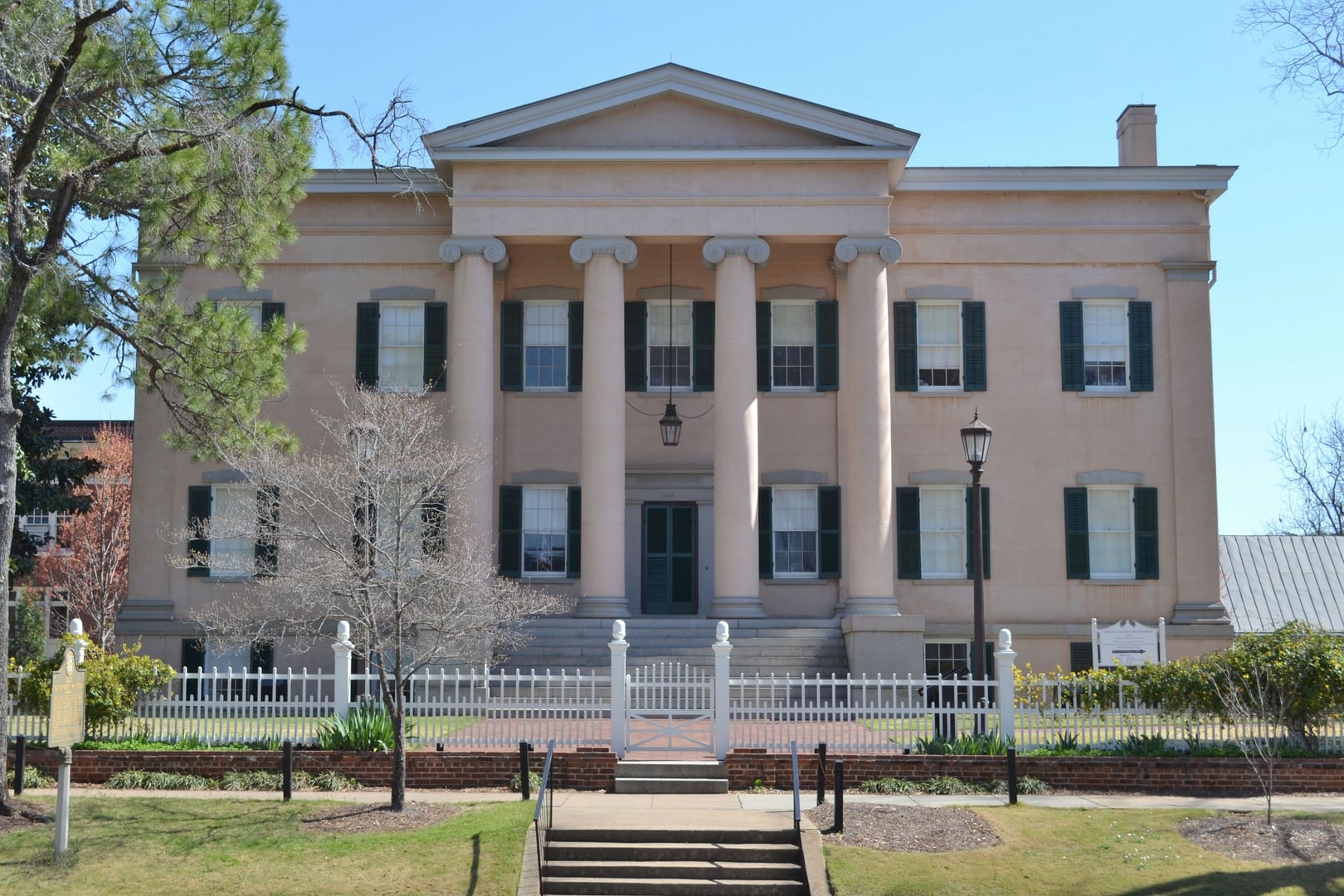
Two-story stucco-fronted Demosthenian Hall, built 1824, on the University of Georgia's North Campus in Athens, Georgia.
Other Dark Tourism Site

Demosthenian Hall

Athens, GA

Demosthenian Hall, built in 1824, is the fourth-oldest building at the University of Georgia and is home to the Demosthenian Literary Society, founded in 1803 — the longest continuously running student organization in the country. The two-story tan stucco building served as headquarters for occupying Union troops during the Civil War.

$ All Ages Family: High
Exterior facade of the 1910 Morton Theatre, a Beaux-Arts building at 195 West Washington Street in downtown Athens, Georgia.
Theater / Performance Venue

Morton Theatre

Athens, GA

Built in 1910 by Monroe Bowers 'Pink' Morton, the Morton Theatre is one of the first vaudeville theatres in the United States built, owned, and operated by an African-American and is the oldest such surviving theatre. It hosted Cab Calloway, Duke Ellington, Bessie Smith, Louis Armstrong, and Ma Rainey in its heyday.

$$ All Ages Family: High
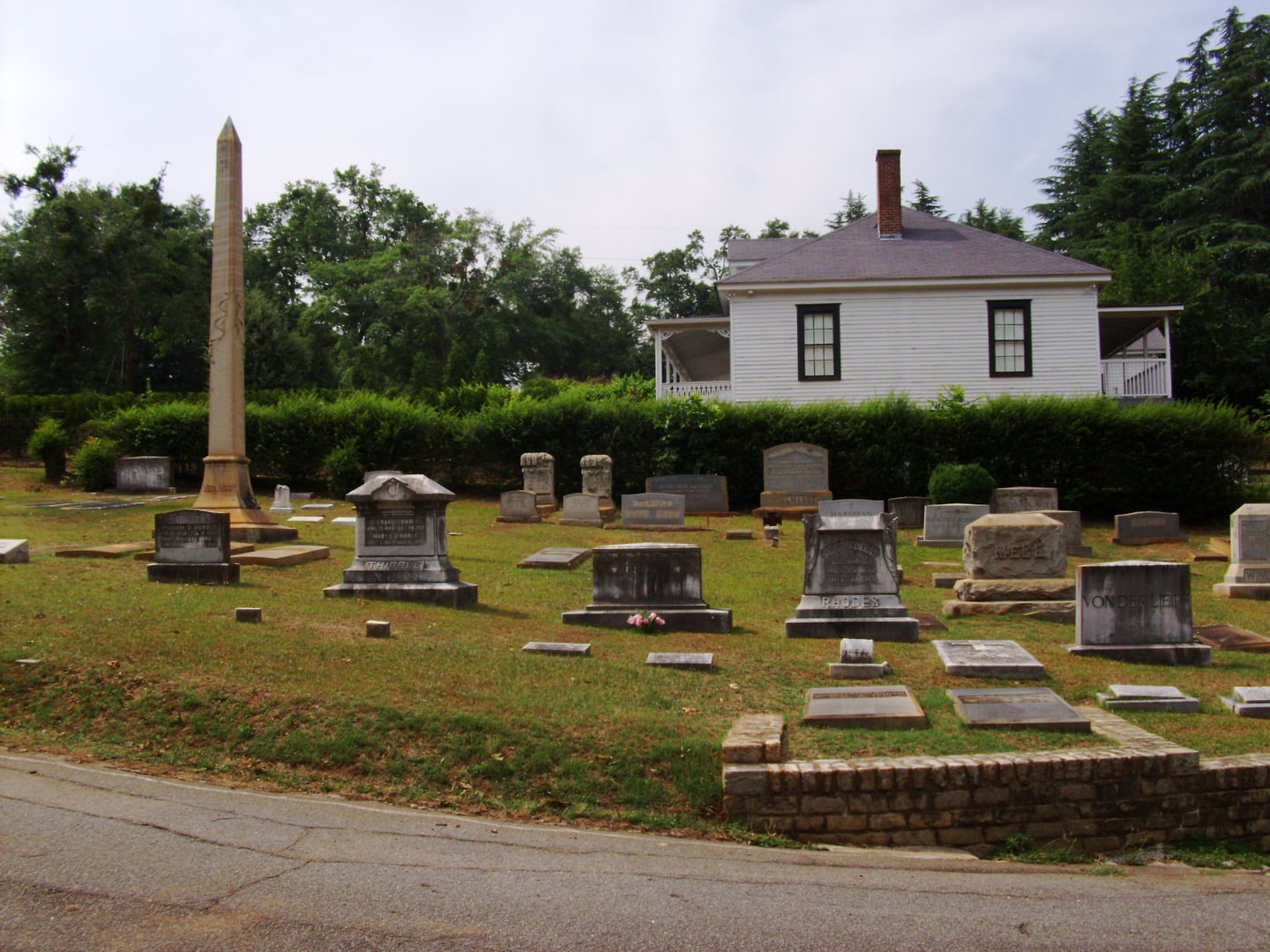
Groundskeeper's house at historic Oconee Hill Cemetery in Athens, Georgia, founded 1855 across from the University of Georgia campus.
Cemetery / Burial Ground

Oconee Hill Cemetery

Athens, GA

Oconee Hill Cemetery was purchased by the city of Athens in 1855 when burials at the older Jackson Street Cemetery were closed. A self-perpetuating Board of Trustees was created in 1856 to manage the original 17 acres on the west side of the North Oconee River. The cemetery was added to the National Register of Historic Places in 2013.

$ All Ages Family: High
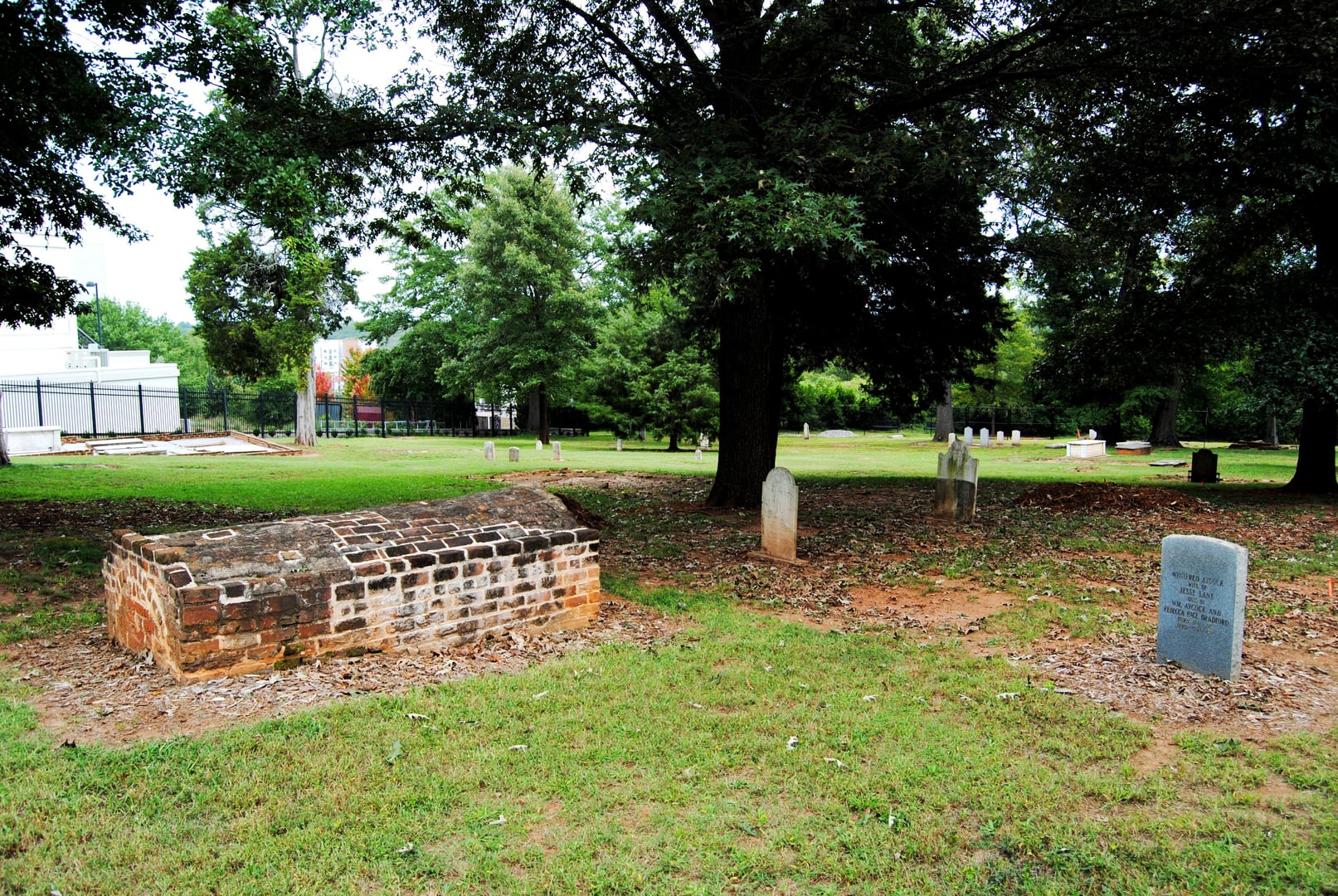
Northeast view of the historic Jackson Street Cemetery (Old Athens Cemetery) on the University of Georgia's North Campus in Athens, Georgia.
Cemetery / Burial Ground

Old Athens Cemetery (Jackson Street Cemetery)

Athens, GA

Established around 1810, the Old Athens Cemetery — also called the Jackson Street Cemetery — was Athens's official burial ground from about 1810 to 1856, when Oconee Hill Cemetery opened. Approximately 800 graves remain, including two UGA presidents. The cemetery was added to the National Register of Historic Places.

$ All Ages Family: High
Greek Revival mid-1840s Taylor-Grady House at 634 Prince Avenue in Athens, Georgia, a National Historic Landmark.
Haunted House / Historic Home

Taylor-Grady House

Athens, GA

The Taylor-Grady House is a Greek Revival residence built in the mid-1840s for General Robert Taylor, an Irish immigrant cotton merchant and Georgia militia leader. In 1863 it was purchased by Major William S. Grady, father of the journalist Henry W. Grady, who spent his childhood there. The house was declared a National Historic Landmark in 1976 and is owned by the City of Athens.

$ All Ages Family: Moderate
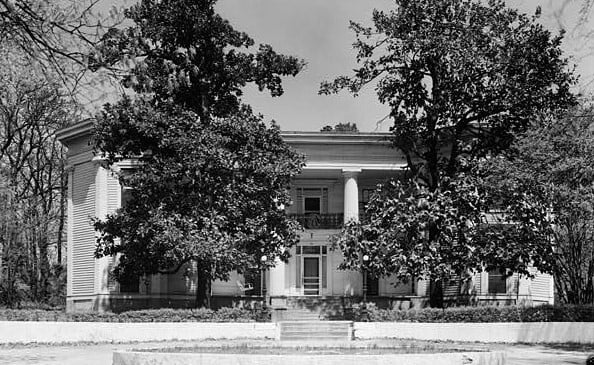
Historic American Buildings Survey photograph of the Greek Revival T.R.R. Cobb House in Athens, Georgia, showing the octagon wing additions documented in 1940.
Museum / Historical Site

T.R.R. Cobb House

Athens, GA

The T.R.R. Cobb House began as a Greek Revival 'Plantation Plain' house built about 1834 and given in 1844 to Thomas Reade Rootes Cobb and his bride Marion Lumpkin by Marion's father, Chief Justice Joseph Henry Lumpkin. Cobb expanded the residence into its distinctive octagon-wing form by 1852. The home now operates as an Athens house museum interpreting the Cobb family and the people they enslaved.

$ All Ages Family: Moderate
Front view of the mid-19th-century Ware-Lyndon House in Athens, Georgia, now operating as part of the Lyndon House Arts Center.
Museum / Historical Site

Ware-Lyndon House (Lyndon House Arts Center)

Athens, GA

The Ware-Lyndon House is a mid-19th-century historic home built circa 1850 in a blend of Greek Revival and Italianate styles. Originally owned by Edward R. Ware, the property was sold to Dr. Edward S. Lyndon in 1880, purchased by the City of Athens in 1939, restored in 1960, and listed on the National Register of Historic Places in 1976.

$ All Ages Family: High

Atlanta — 9

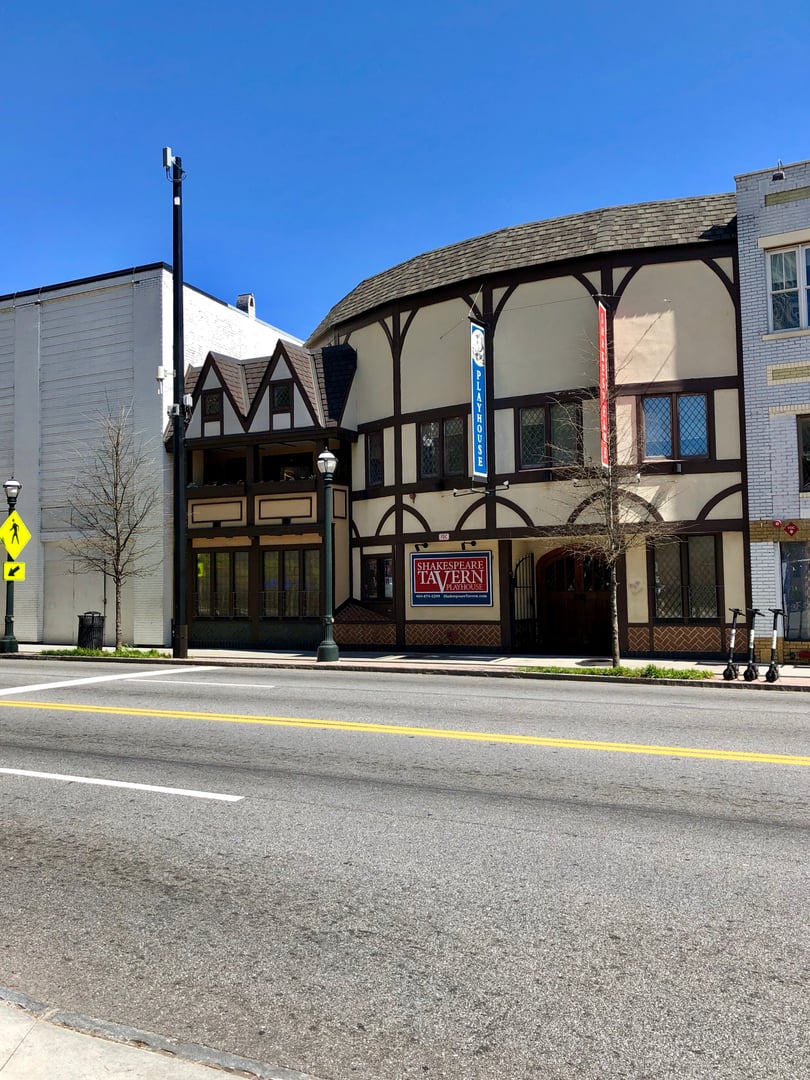
Globe-inspired facade of the Shakespeare Tavern Playhouse on Peachtree Street in downtown Atlanta
Theater / Performance Venue

Shakespeare Tavern Playhouse

Atlanta, GA

The Shakespeare Tavern Playhouse is an Elizabethan-style theater in downtown Atlanta and the home of the Atlanta Shakespeare Company. The company began producing at Manuel's Tavern in 1984 and moved to its current Peachtree Street home in 1990. A 1999 $1.6 million renovation added a Globe-inspired balcony, and a 2006 $500,000 renovation added a Globe-inspired facade.

$$ All Ages Family: High
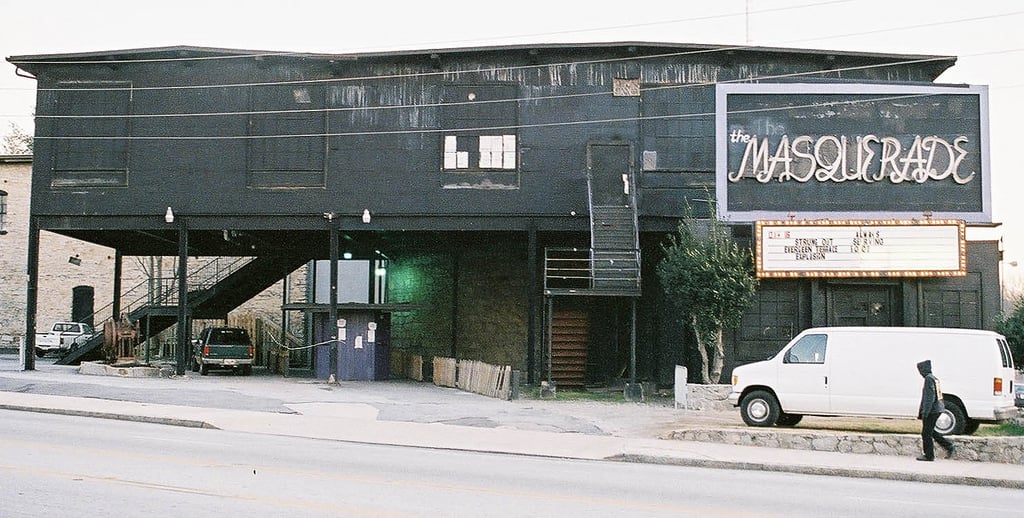
The 1890 brick DuPre Excelsior Mill at 695 North Avenue in Atlanta's Old Fourth Ward — long the home of The Masquerade nightclub's Heaven, Hell, and Purgatory rooms.
Other Dark Tourism Site

DuPre Excelsior Mill (The Mill at 695 North Avenue)

Atlanta, GA

The DuPre Excelsior Mill at 695 North Avenue produced excelsior — fine wood-wool packing material — for the railroad era; Wikipedia notes construction may date as early as 1890 with documented activity by 1907. Excelsior production collapsed after WWII; the building became a pizzeria-theater in 1977-78, then the Masquerade nightclub from 1989 to 2016, and has since been redeveloped as 'The Mill,' a mixed-use complex along the Atlanta BeltLine.

$ All Ages Family: Moderate
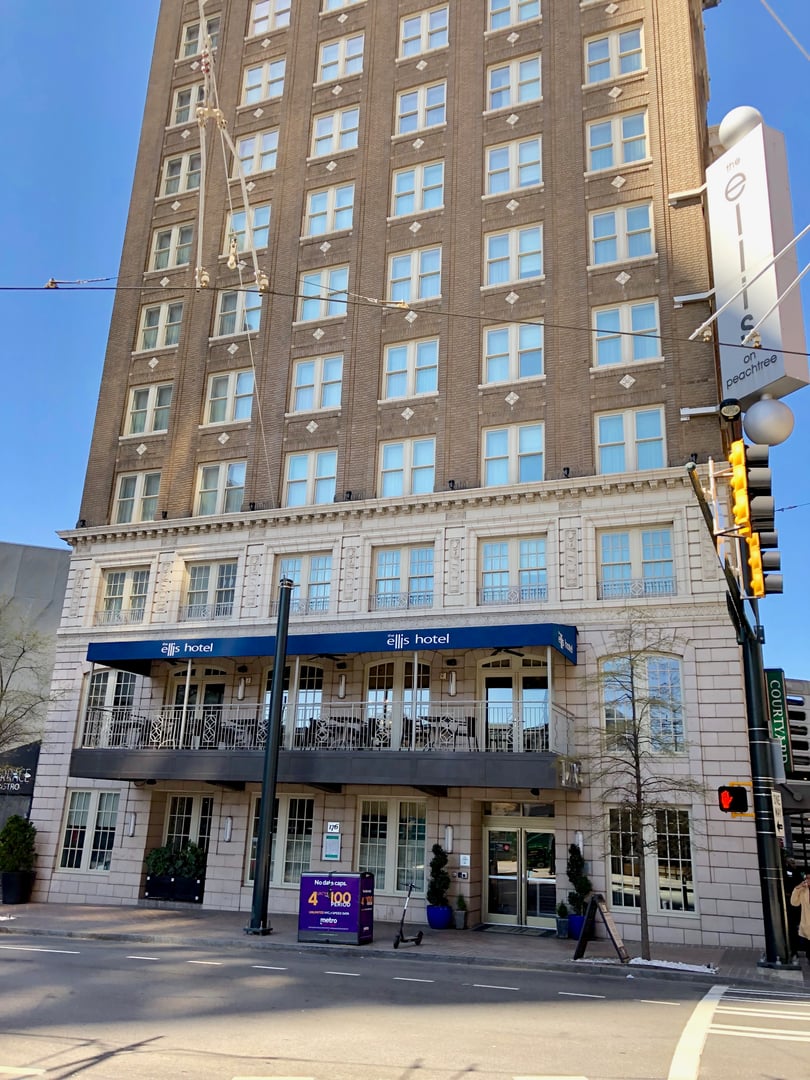
The Ellis Hotel at 176 Peachtree Street NW, Atlanta — the rebuilt 1913 Winecoff Hotel building
Photo coming soon
Haunted Hotel / Inn

Ellis Hotel

Atlanta, GA

The Ellis Hotel occupies the rebuilt 1913 Winecoff Hotel, a 15-story William Lee Stoddart-designed building at 176 Peachtree Street NW in downtown Atlanta. The Winecoff Hotel fire of December 7, 1946 killed 119 people and remains the deadliest hotel fire in U.S. history. The building was renovated in 2006-2007 and reopened as the Ellis Hotel on October 1, 2007.

$$$ All Ages Family: Moderate
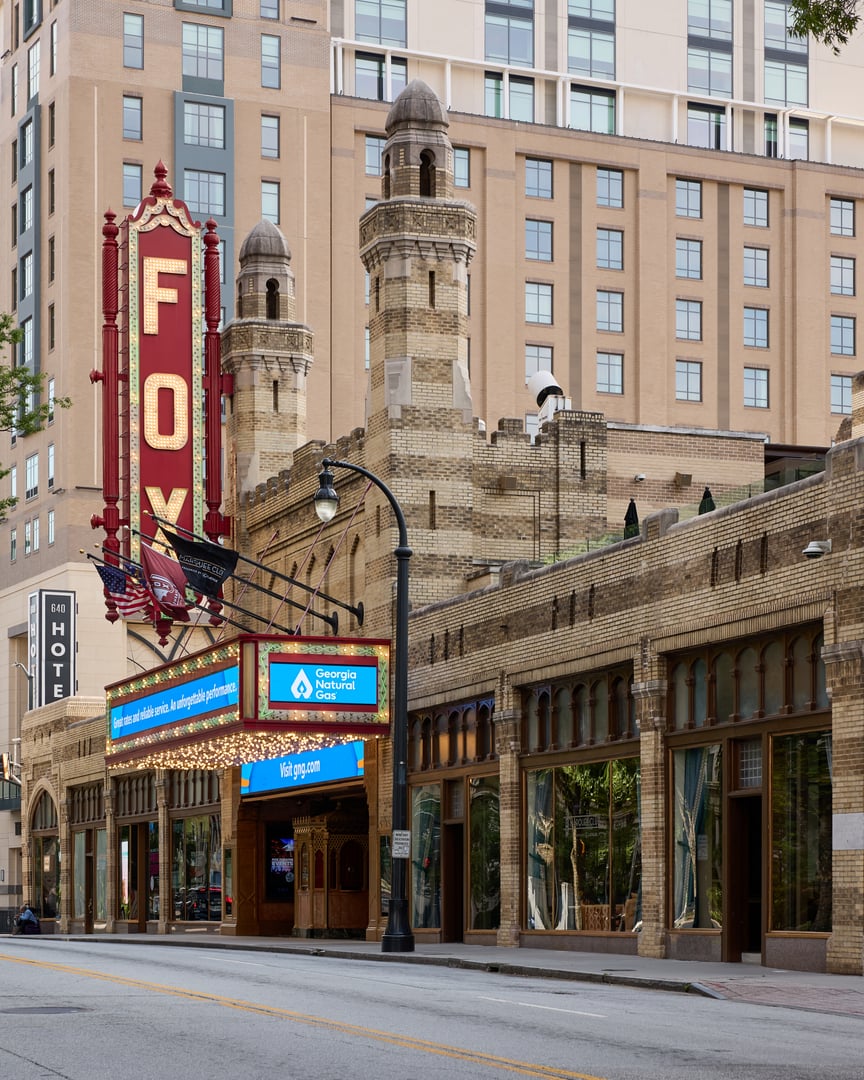
The Fox Theatre marquee on Peachtree Street, Atlanta — 1929 Moorish-Egyptian Revival movie palace and National Historic Landmark
Photo coming soon
Theater / Performance Venue

Fox Theatre

Atlanta, GA

The Fox Theatre opened on Christmas Day 1929 as a movie palace originally designed as the Yaarab Shrine Temple. The 4,665-seat venue at 660 Peachtree Street NE was designed by Olivier J. Vinour of the firm Marye, Alger and Vinour in a lavish Moorish and Egyptian Revival style. It was designated a National Historic Landmark on May 11, 1976 and operates today as a major concert and touring-show venue.

$$ All Ages for general tours; haunted ghost-tour events recommended for 10+ Family: Moderate
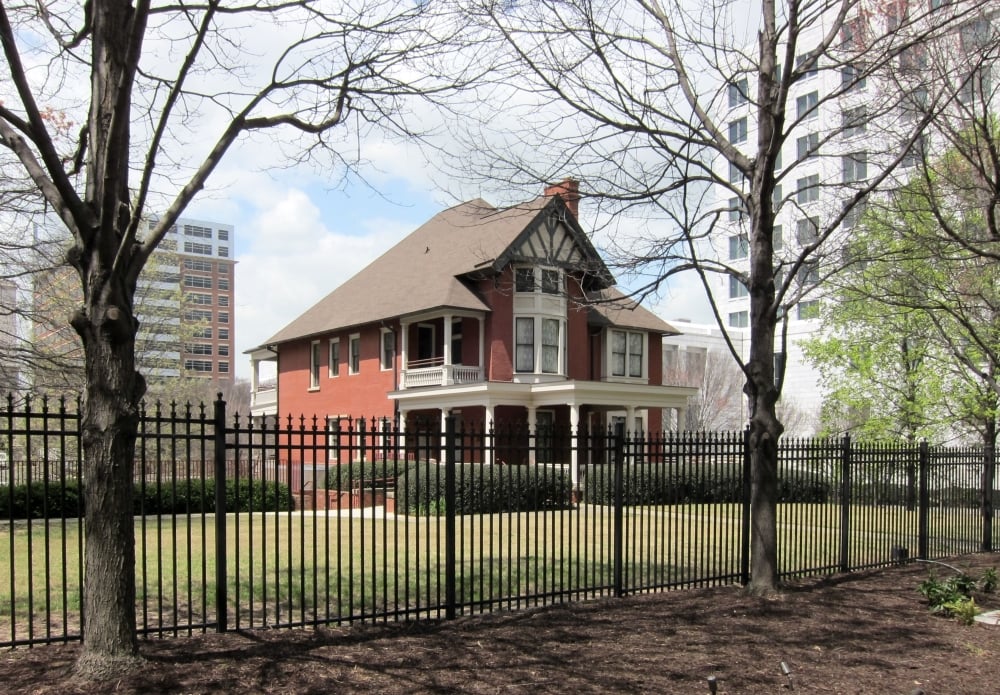
The Margaret Mitchell House at 979 Crescent Avenue NE, Atlanta — site of 'Gone with the Wind's' composition
Photo coming soon
Haunted House / Historic Home

Margaret Mitchell House

Atlanta, GA

The Margaret Mitchell House was built in 1899 by Cornelius J. Sheehan as a Tudor Revival single-family residence at 979 Crescent Avenue NE (collectively addressed today as 990 Peachtree). Converted to the 10-unit Crescent Apartments in 1919. Margaret Mitchell and husband John Marsh lived in Apartment 1 from 1925-1932, where she wrote most of her 1936 Pulitzer Prize-winning novel 'Gone with the Wind.' The building suffered two arson fires (1994 and 1996) and was reconstructed, rededicated May 16, 1997.

$$ All Ages Family: High
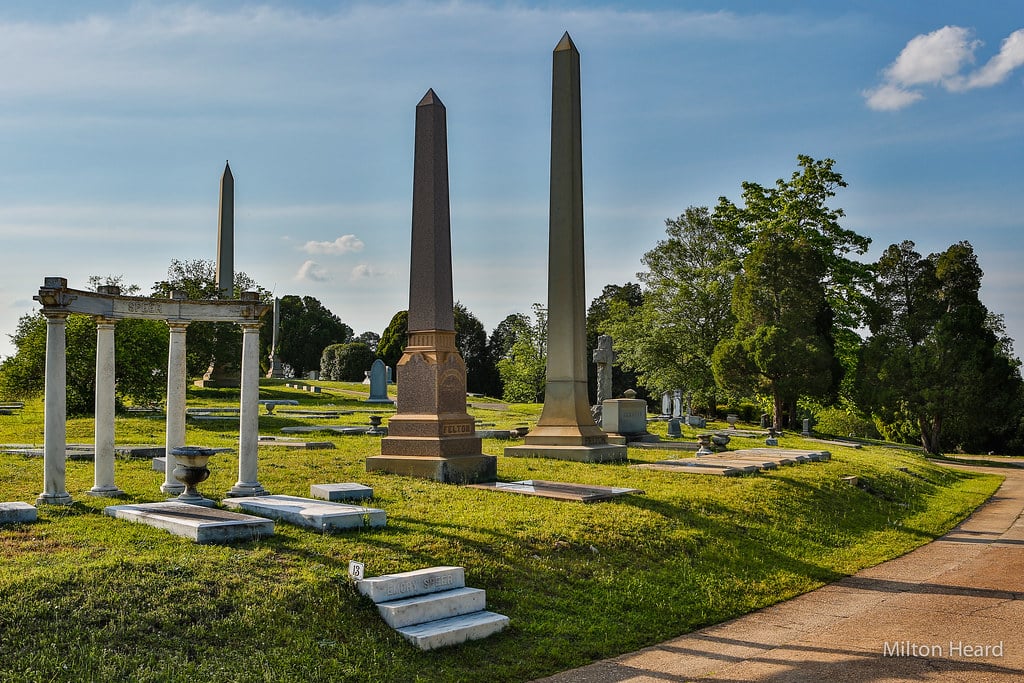
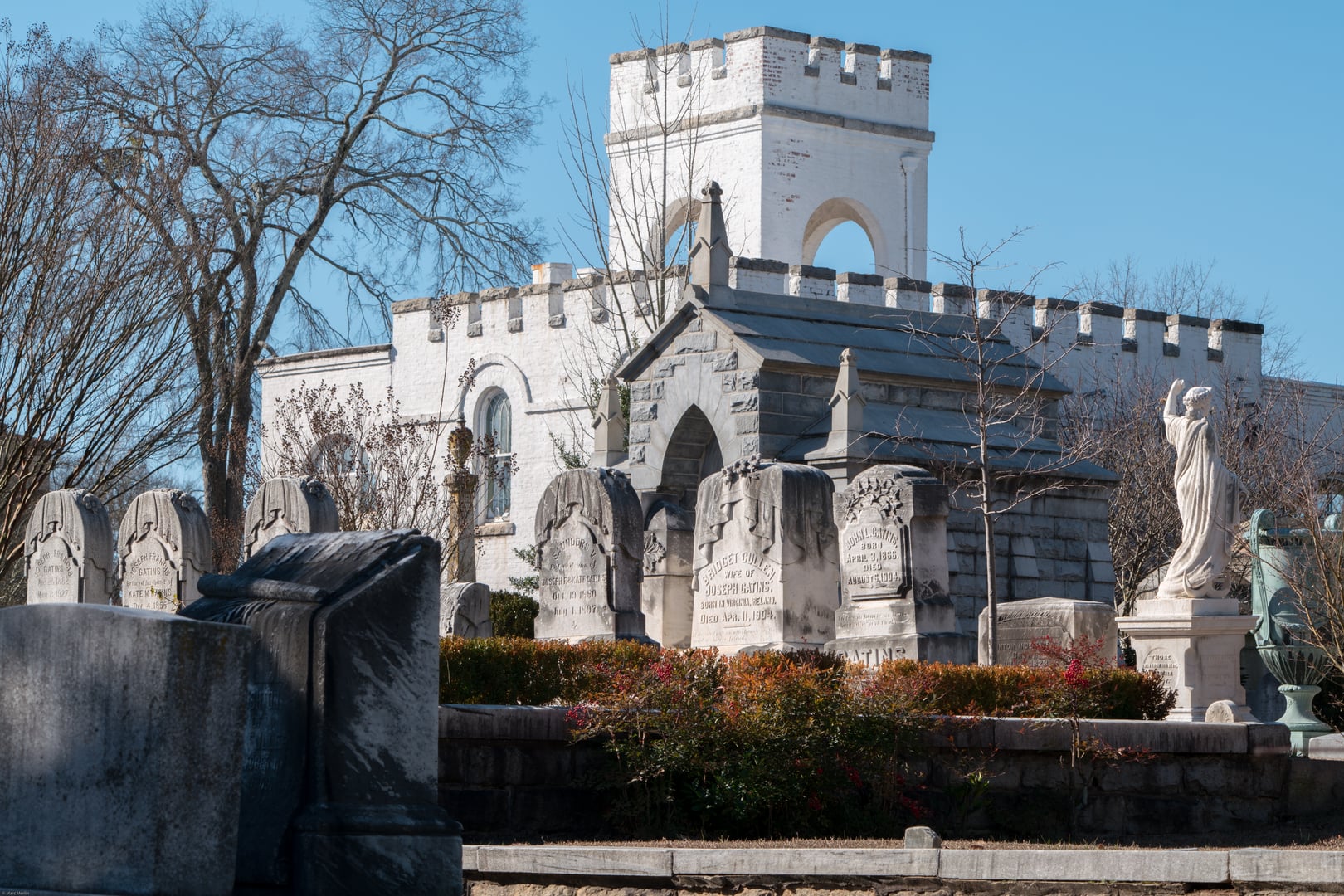
Historic Oakland Cemetery in Atlanta, Georgia — the 48-acre Victorian-era municipal cemetery chartered in 1850
Photo coming soon
Cemetery / Burial Ground

Historic Oakland Cemetery

Atlanta, GA

Historic Oakland Cemetery was chartered in 1850 as the six-acre 'Atlanta Cemetery,' renamed Oakland in 1872, and expanded to 48 acres. Approximately 70,000 people are interred, including roughly 6,900 Confederate soldiers (3,000 unidentified), four Confederate generals, six Georgia governors, 27 Atlanta mayors, Margaret Mitchell, golfer Bobby Jones, and Maynard Jackson, Atlanta's first African American mayor. The cemetery was listed on the National Register of Historic Places on April 28, 1976.

$ All Ages Family: High
Victorian monuments and oak-lined paths of Historic Oakland Cemetery framed against the downtown Atlanta skyline.
Cemetery / Burial Ground

Historic Oakland Cemetery

Atlanta, GA

Oakland Cemetery was founded in 1850 as Atlanta Cemetery on six acres purchased from A. W. Wooding on the city's southeastern edge; renamed Oakland in 1872 for its oak and magnolia trees, it expanded over the late 19th century to 48 acres and was added to the National Register of Historic Places on April 28, 1976.

$ All Ages Family: Moderate
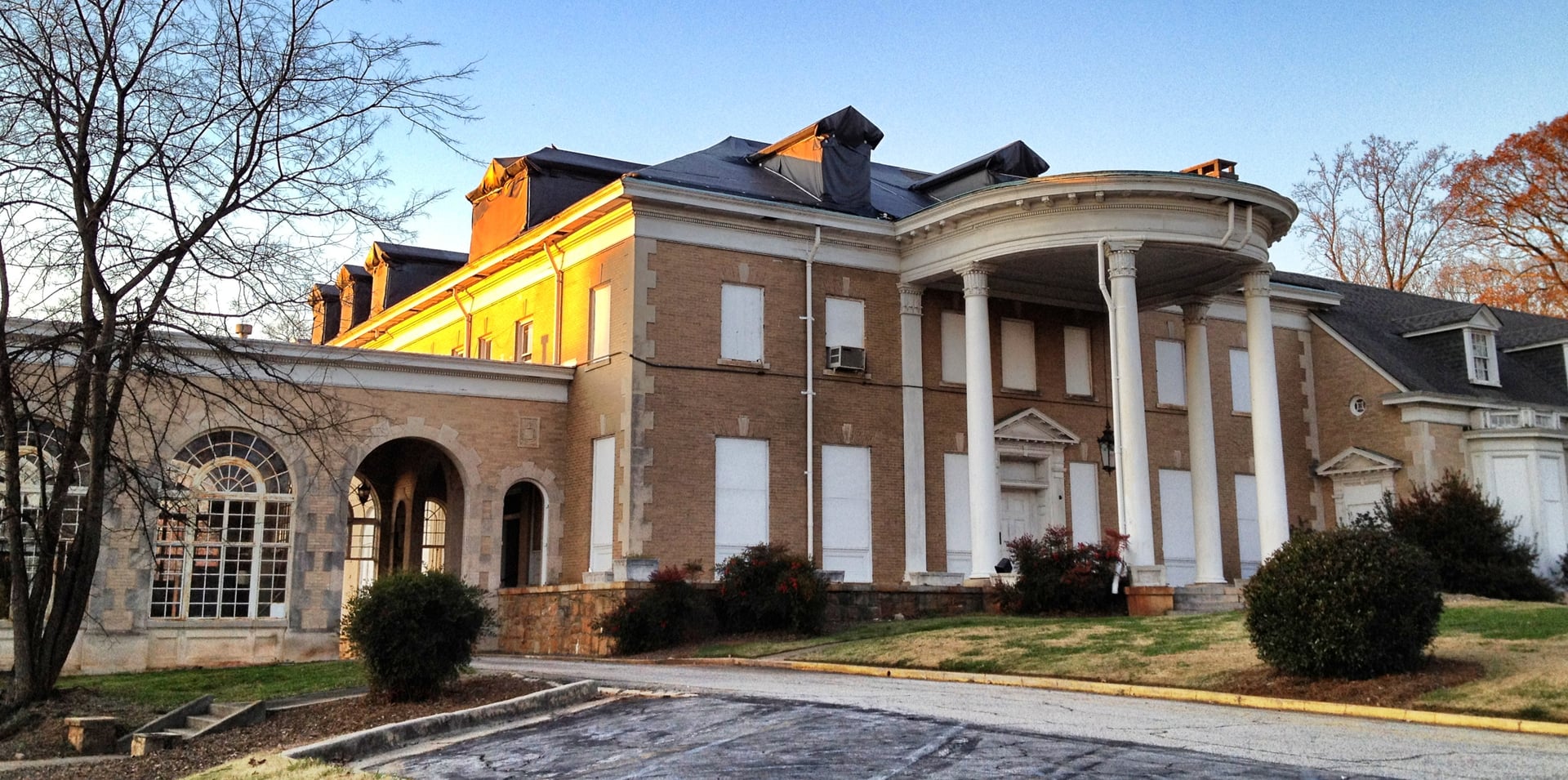
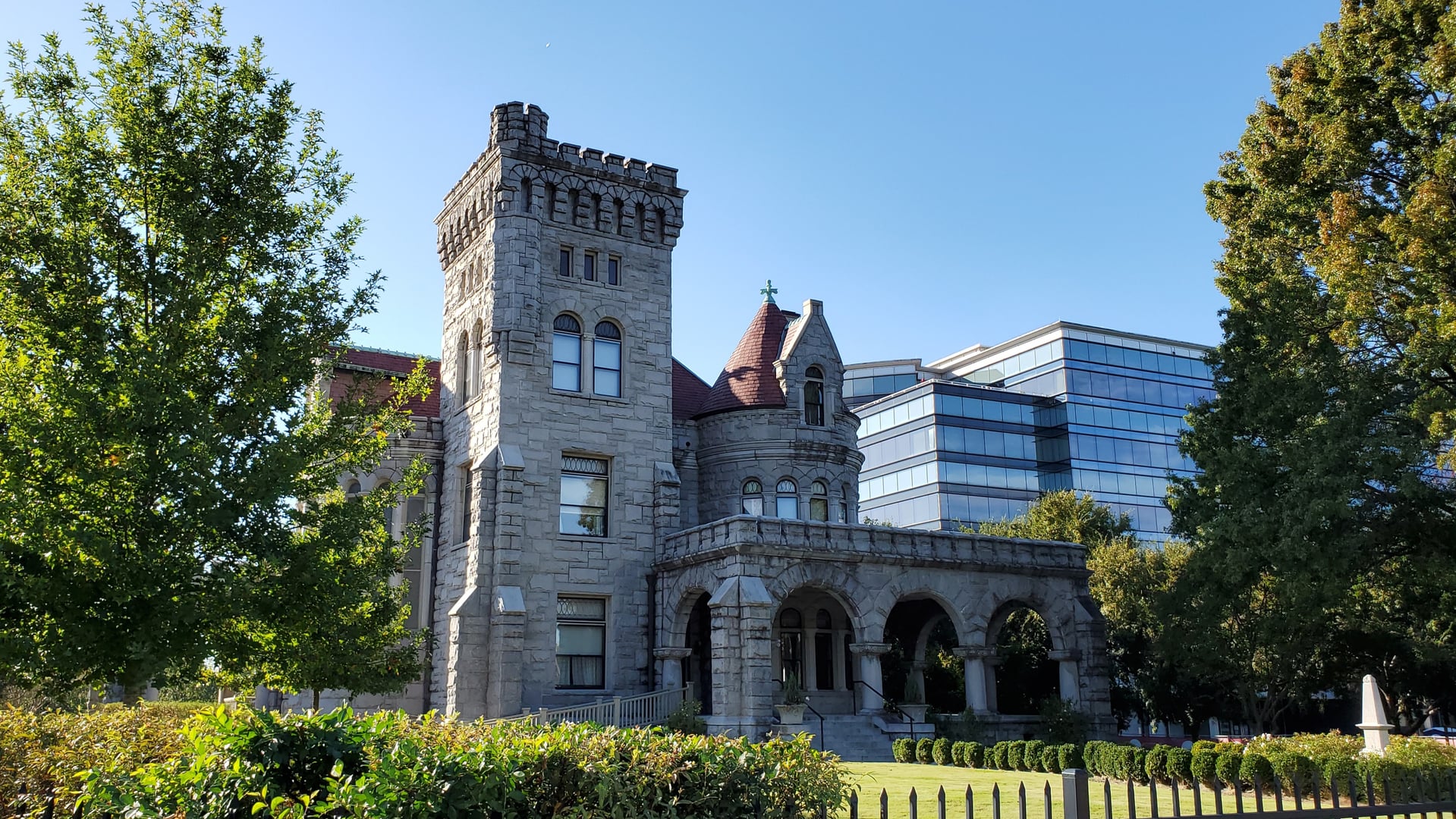
Rhodes Hall, the 1904 Stone Mountain granite 'Castle on Peachtree' at 1516 Peachtree Street NW in Atlanta
Photo coming soon
Haunted House / Historic Home

Rhodes Hall

Atlanta, GA

Rhodes Hall was built 1902-1904 for furniture magnate Amos Giles Rhodes, founder of Rhodes Furniture. Designed by Atlanta architect Willis F. Denny II of Stone Mountain granite in a Romanesque Revival style with Victorian and Arts and Crafts interior elements. Listed on the National Register of Historic Places in 1974; Atlanta Landmark Building since 1989; headquarters of the Georgia Trust for Historic Preservation since 1983.

$$ All Ages Family: Moderate
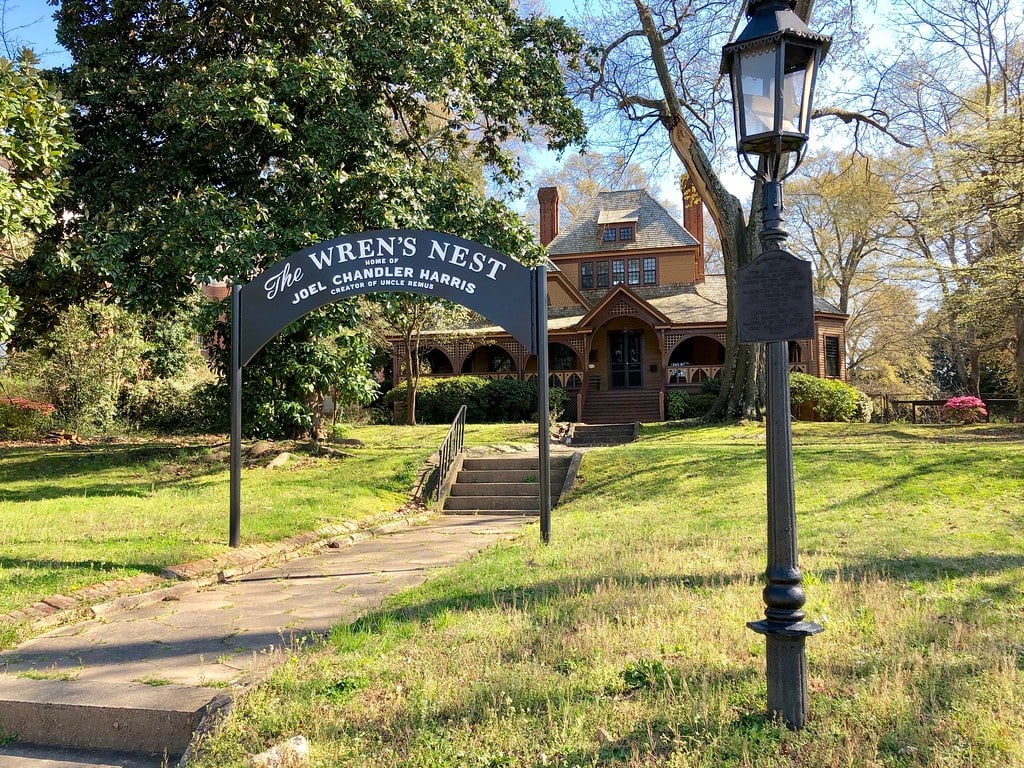
The Wren's Nest in Atlanta's West End — Queen Anne house museum and home of Joel Chandler Harris
Photo coming soon
Haunted House / Historic Home

The Wren's Nest (Joel Chandler Harris House)

Atlanta, GA

The Wren's Nest is a Queen Anne-style historic house in Atlanta's West End neighborhood. Built circa 1868 with major 1884 Queen Anne renovations; rented by Joel Chandler Harris from 1881, purchased 1883, and his residence until his 1908 death. Designated a National Historic Landmark on December 19, 1962. Operated as Atlanta's oldest house museum.

$ All Ages Family: High

Andersonville — 3

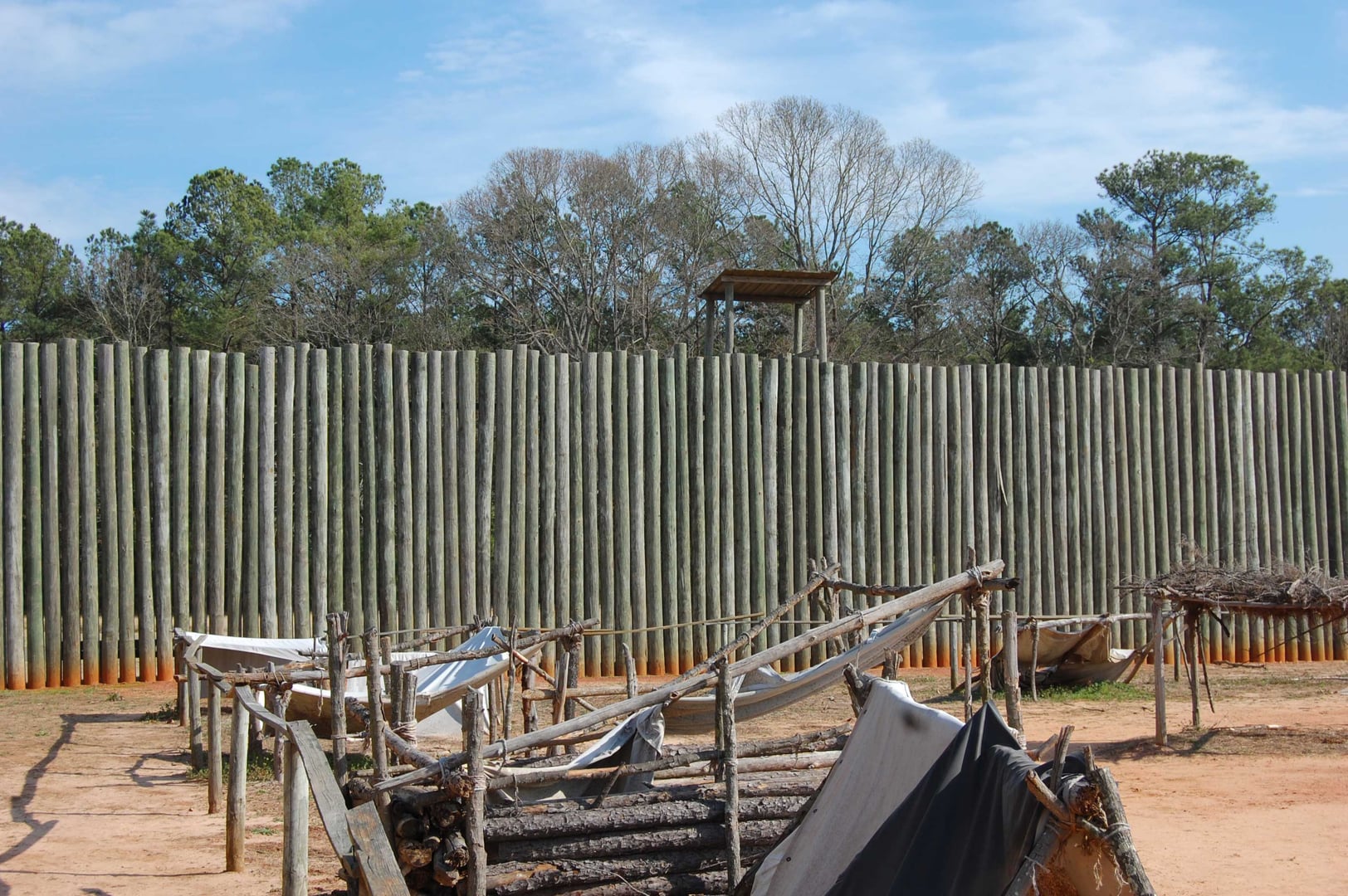
Reconstructed timber stockade wall at Andersonville National Historic Site, the Confederate Civil War prison camp in Andersonville, Georgia
Battlefield / Military Site

Andersonville National Historic Site

Andersonville, GA

Andersonville National Historic Site preserves Camp Sumter, the largest Confederate military prison of the Civil War, where nearly 13,000 of approximately 45,000 Union prisoners died in 14 months from disease, starvation, and exposure. The site also encompasses Andersonville National Cemetery and the National Prisoner of War Museum, the only National Park unit dedicated to all American POWs.

$ All Ages Family: Low
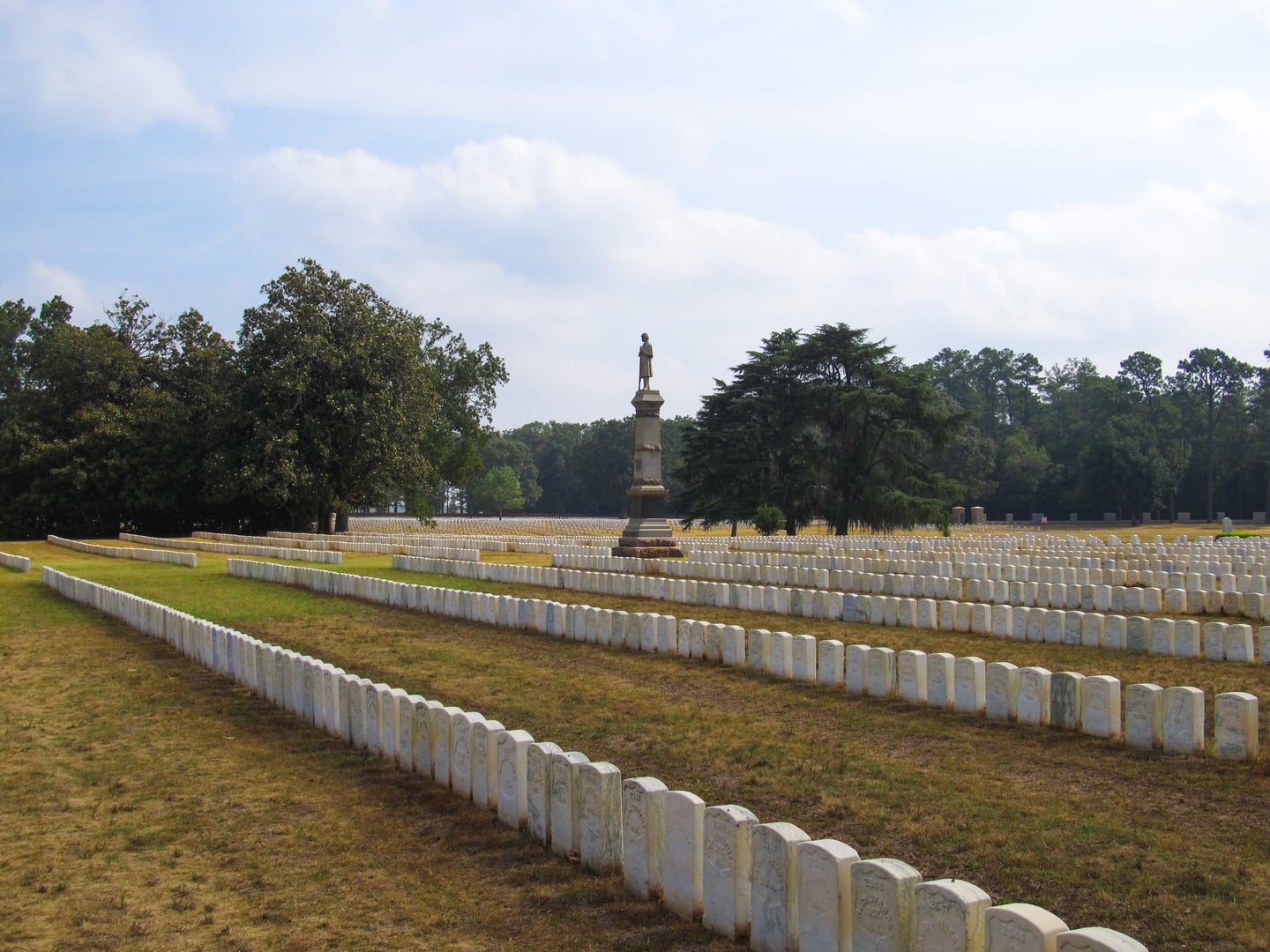
Rows of white marble headstones at Andersonville National Cemetery in Andersonville, Georgia, marking the graves of Union prisoners who died at Camp Sumter.
Cemetery / Burial Ground

Andersonville National Cemetery

Andersonville, GA

Andersonville National Cemetery was established adjacent to the Camp Sumter prison stockade in 1864 to inter the Union soldiers dying there in large numbers. The cemetery holds 13,714 Civil War-era graves, the majority prisoners who died at the adjacent prison. It remains an active national cemetery where veterans continue to be buried.

$ All Ages Family: Moderate
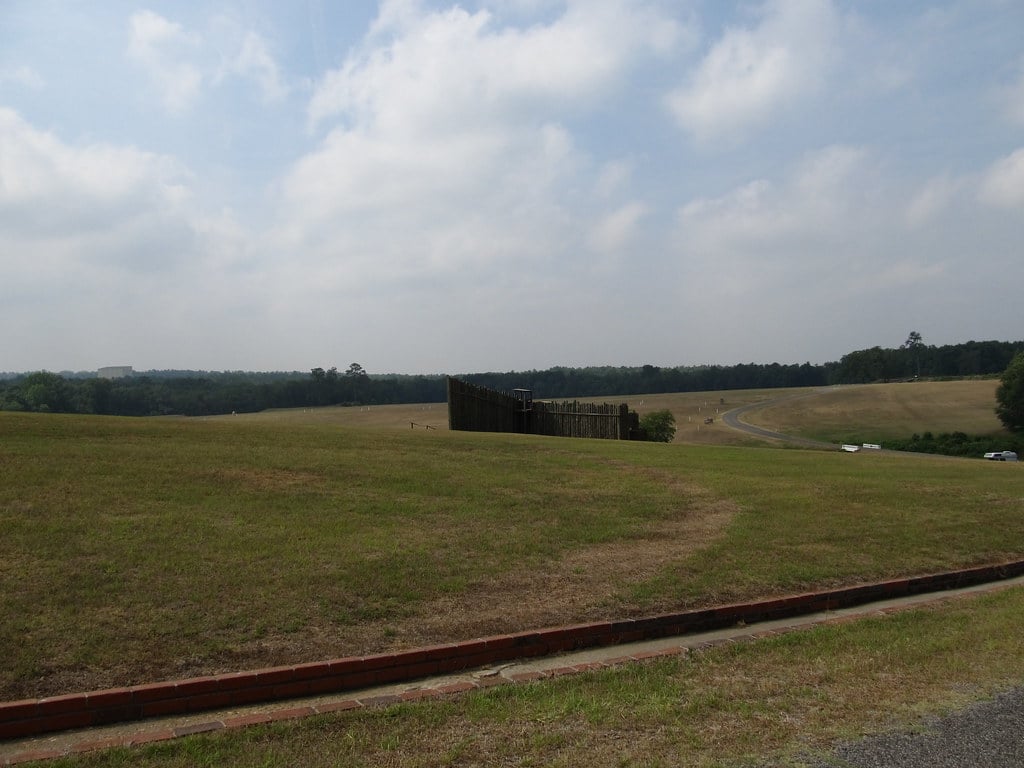
Reconstructed section of the Camp Sumter stockade wall at Andersonville National Historic Site in Andersonville, Georgia.
Battlefield / Military Site

Andersonville National Historic Site

Andersonville, GA

Camp Sumter, commonly called Andersonville Prison, was a Confederate prisoner of war facility that operated in southwestern Georgia from February 1864 to April or May 1865. It held approximately 45,000 Union soldiers across its existence; nearly 13,000 died there from disease, malnutrition, and exposure. Camp commandant Henry Wirz was convicted of war crimes and executed in 1865. The site is now the Andersonville National Historic Site, maintained by the National Park Service.

$ All Ages Family: Moderate

Dahlonega — 3

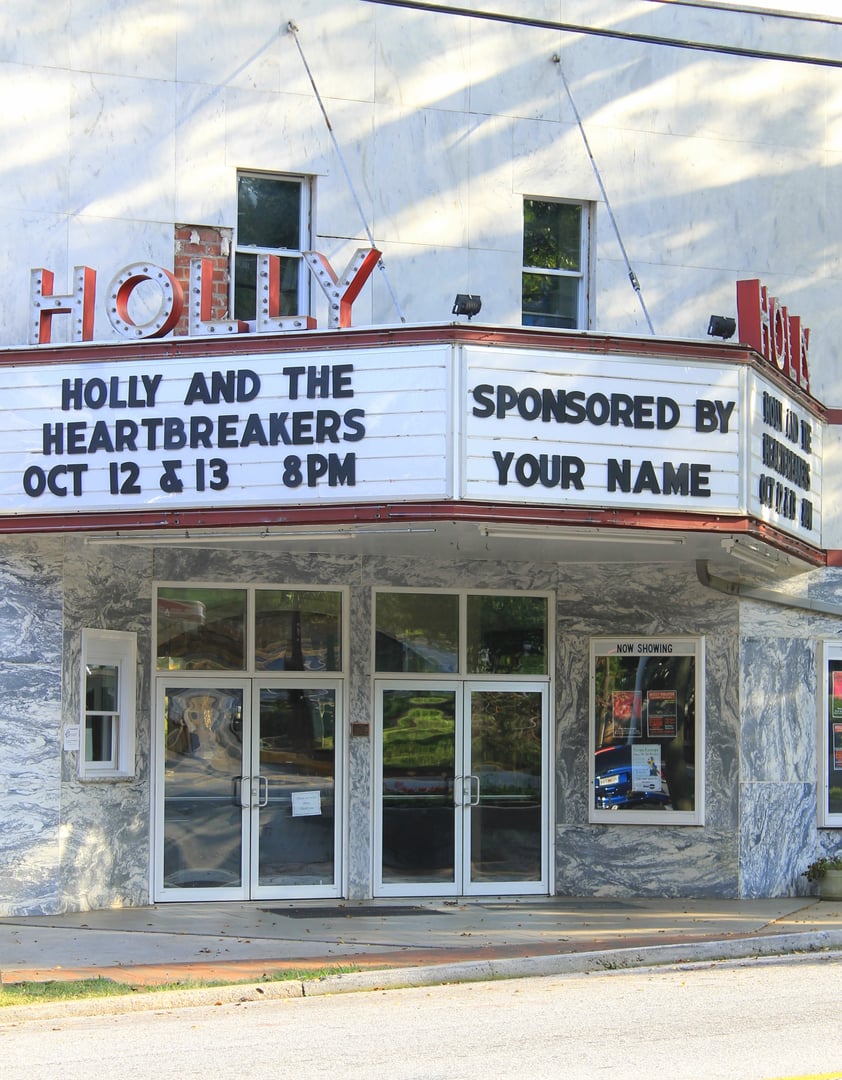
Holly Theatre Art Moderne marquee and facade on West Main Street in Dahlonega, Georgia
Theater / Performance Venue

Holly Theater

Dahlonega, GA

The Holly Theater opened on July 12, 1948 as a movie theater built by Randall Holly Brannon in the Art Moderne style designed by G.R. Vinson. After 50 years of dormancy it was restored and now operates as a nonprofit theatrical venue.

$$ All Ages Family: High
Mt. Hope Cemetery hillside in downtown Dahlonega, Georgia
Photo coming soon
Cemetery / Burial Ground

Mt. Hope Cemetery

Dahlonega, GA

Mt. Hope Cemetery is the oldest public cemetery within the city of Dahlonega, Georgia, established alongside the town in 1833. The first recorded burial was Samuel Darter, the same year. The cemetery is the burial place of veterans from every American war back to the Revolution and features the regionally distinctive slot-and-tab grave markers.

$ All Ages Family: High
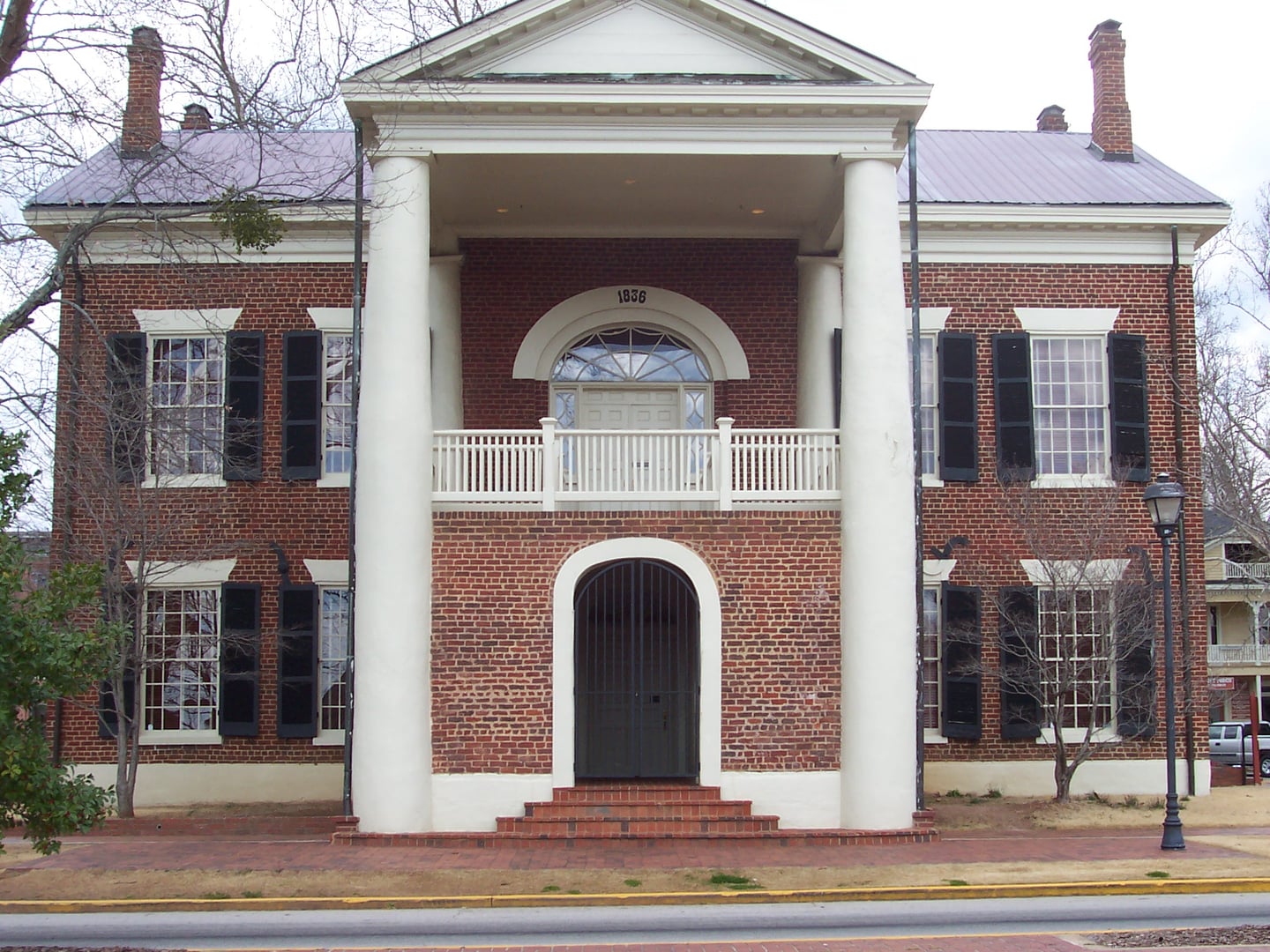
Exterior of the 1836 Old Lumpkin County Courthouse housing the Dahlonega Gold Museum in north Georgia
Museum / Historical Site

The Dahlonega Gold Museum (Old Lumpkin County Courthouse)

Dahlonega, GA

The Dahlonega Gold Museum occupies the 1836 Lumpkin County Courthouse, the oldest existing courthouse in Georgia. The building served as the seat of Lumpkin County government from 1836 to 1965 and is now a Georgia State Parks State Historic Site, with bricks containing trace amounts of gold.

$ All Ages Family: High

Dawsonville — 2

Amicalola Falls State Park Lodge in Dawsonville, Georgia, with the 729-foot cascading falls visible in the background
Haunted Hotel / Inn

Amicalola Falls State Park & Lodge

Dawsonville, GA

Amicalola Falls State Park & Lodge sits in the North Georgia Mountains in Dawson County. The name comes from the Cherokee for 'tumbling waters,' referencing the 729-foot cascading waterfall — among the tallest cascading falls east of the Mississippi. The lodge was built in 1990 by the State of Georgia with 57 guestrooms and 14 cabins. The park serves as the official start of the Appalachian Trail's approach route.

$$$ All Ages Family: High
A small rural church beside a wooded graveyard in Dawson County, Georgia
Photo coming soon
Cemetery / Burial Ground

Salem Church and Graveyard

Dawsonville, GA

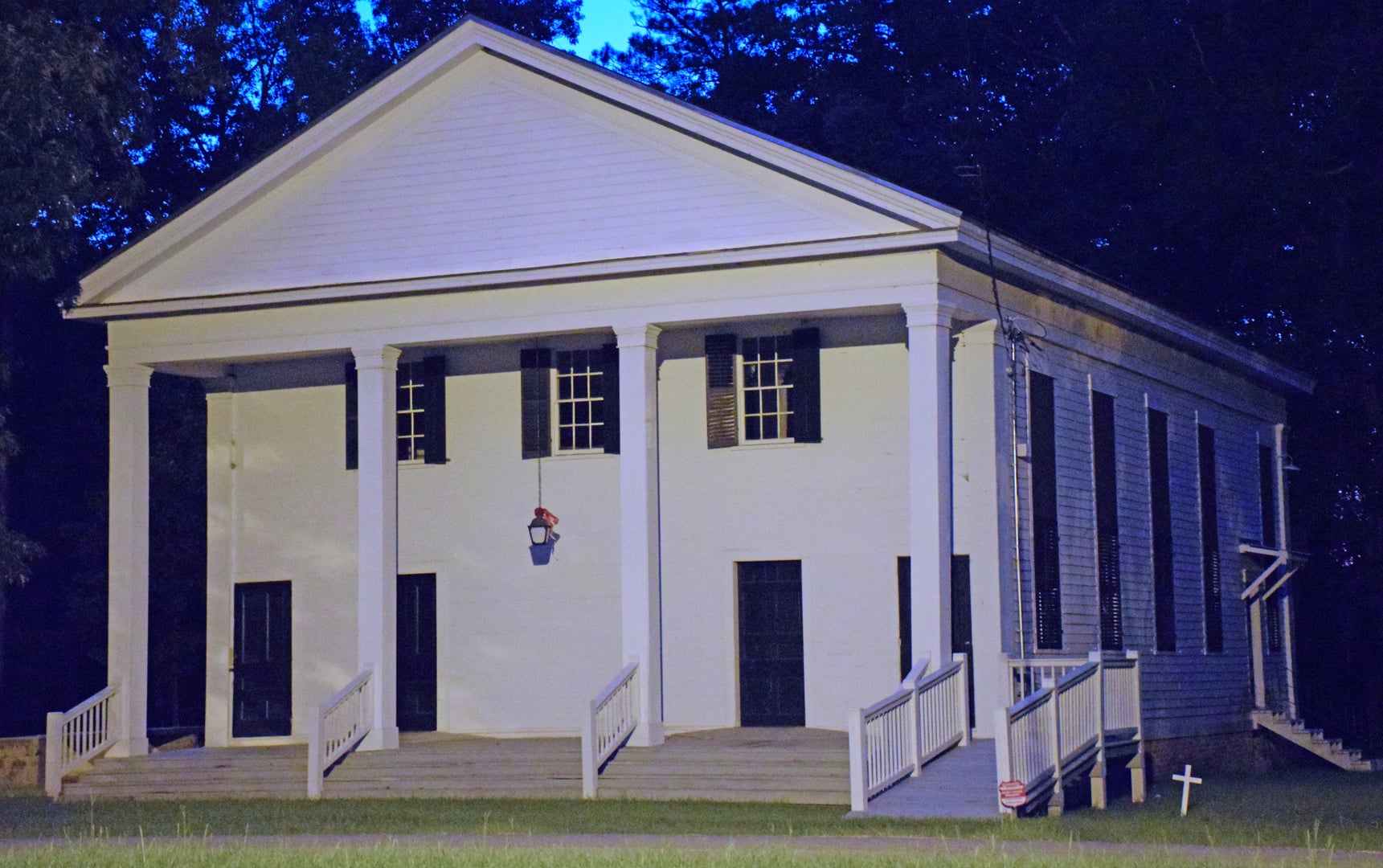
Salem Church and Graveyard is a rural church property in Dawson County, Georgia, off Salem Church Road north of Dawsonville. The church property is private and is reported in local folklore writing as being police-patrolled at night following recurring trespass incidents.

$ All Ages Family: Not Recommended

Fort Oglethorpe — 2

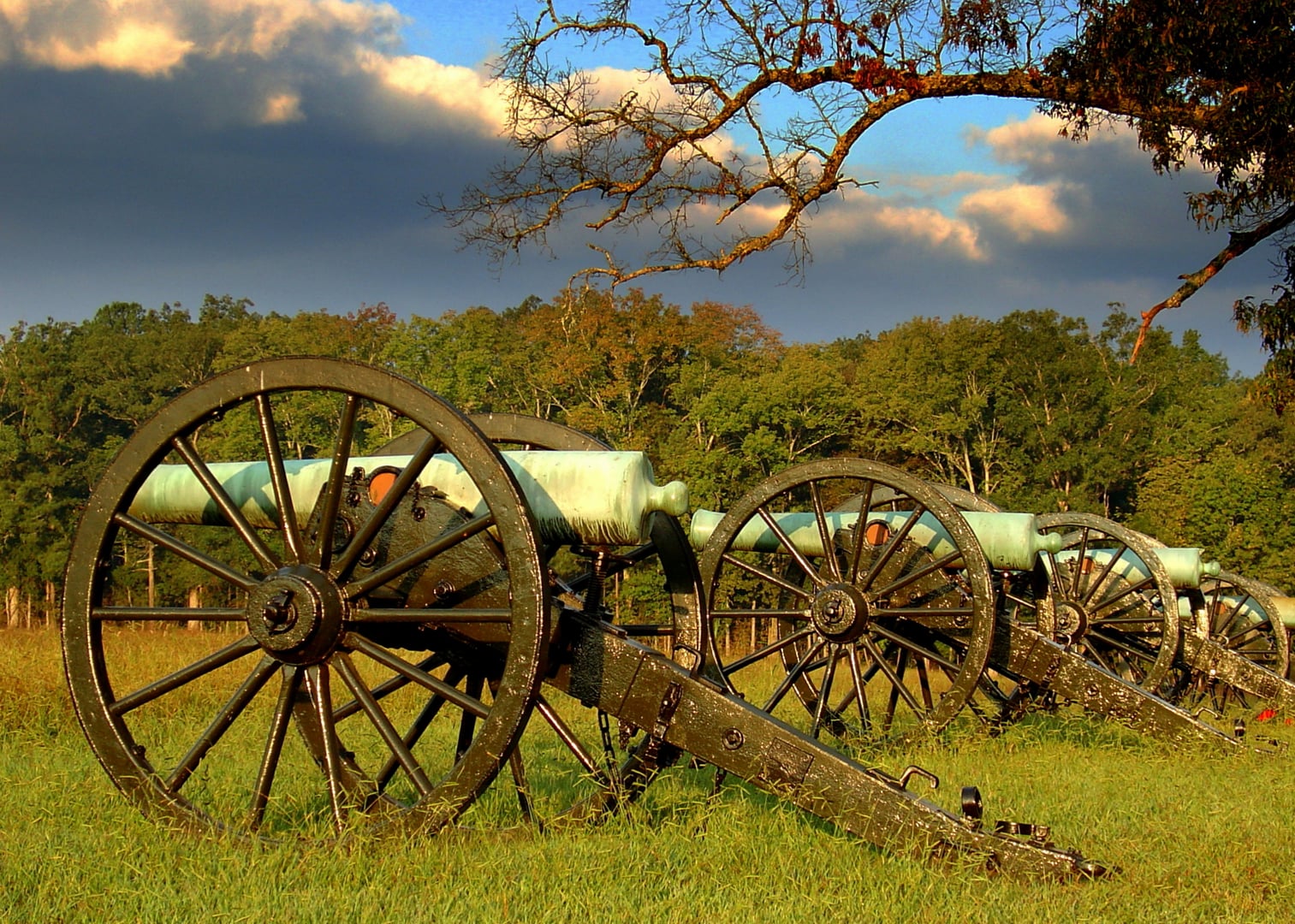
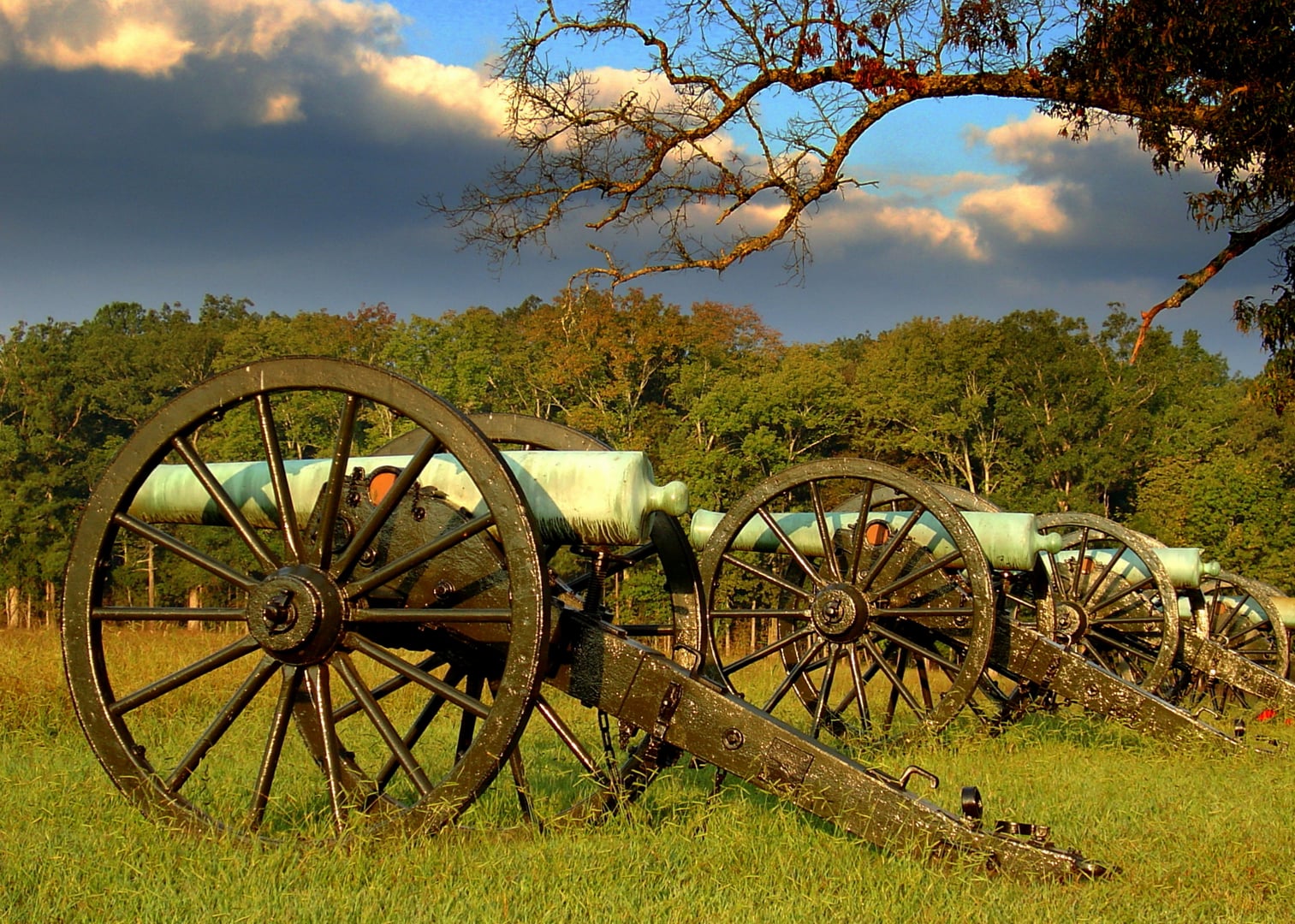
Row of Civil War cannon at Bloom's Louisiana Battery, Chickamauga and Chattanooga National Military Park, Georgia
Battlefield / Military Site

Chickamauga and Chattanooga National Military Park

Fort Oglethorpe, GA

Chickamauga and Chattanooga National Military Park was established by Congress in 1890 as America's first and largest national military park. It preserves the September 1863 Battle of Chickamauga, which produced approximately 34,000 casualties across two days, and the November 1863 Battles for Chattanooga that broke the Confederate siege of the city.

$ All Ages Family: High
A line of Civil War-era cannons at the Blooms Louisiana Battery position inside Chickamauga and Chattanooga National Military Park, Fort Oglethorpe, Georgia.
Battlefield / Military Site

Chickamauga & Chattanooga National Military Park

Fort Oglethorpe, GA

The Battle of Chickamauga, September 18–20, 1863, was the Civil War's second-bloodiest engagement with 34,624 casualties. A Confederate tactical victory that was soon rendered strategically meaningless when Union forces broke the siege of Chattanooga. The national military park established here in 1890 was the first of its kind in the United States.

$ All Ages Family: High

Kennesaw — 2

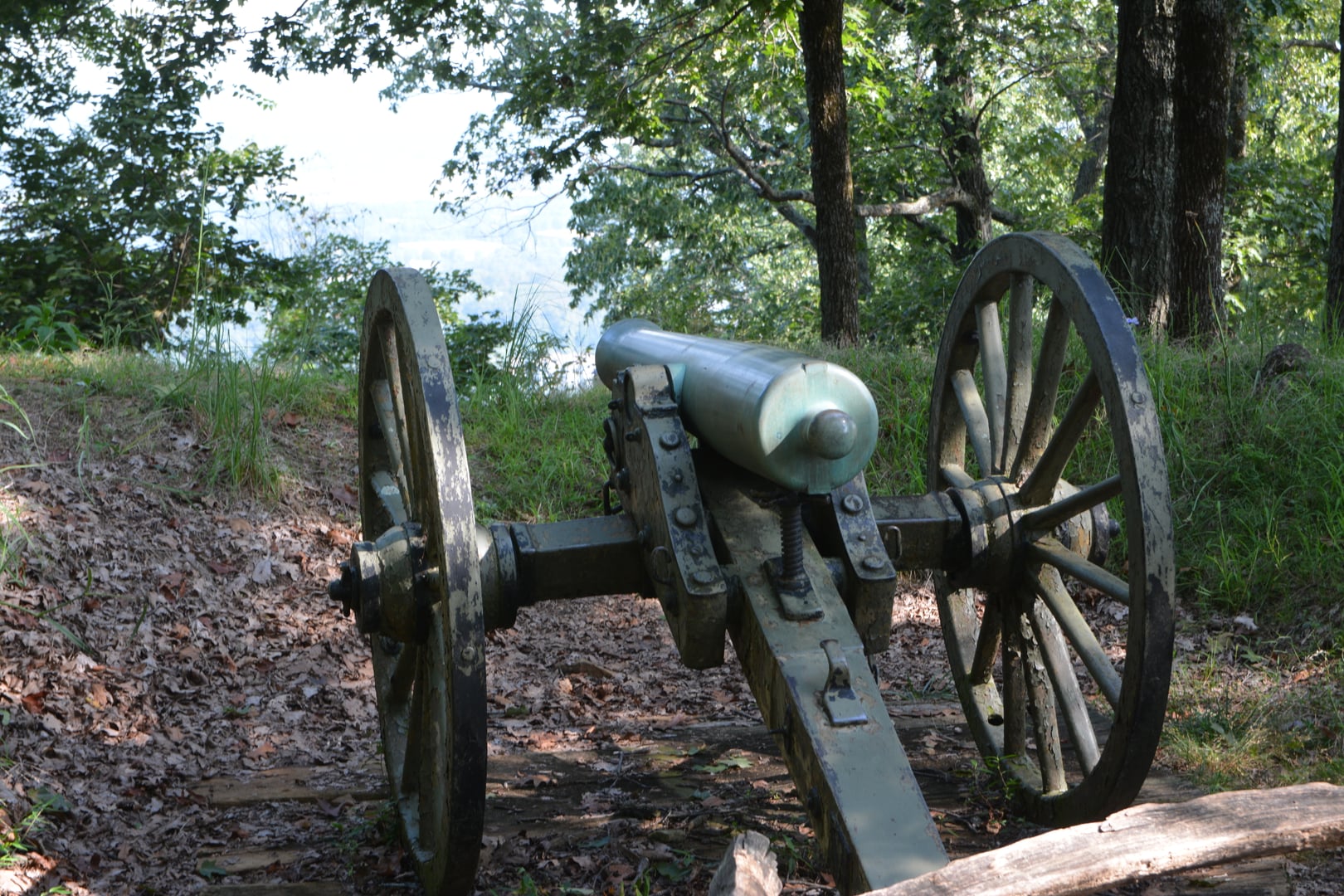
A recreated Confederate artillery position on the ridgeline at Kennesaw Mountain National Battlefield Park in Cobb County, Georgia.
Battlefield / Military Site

Kennesaw Mountain National Battlefield Park

Kennesaw, GA

The Battle of Kennesaw Mountain, fought June 19 through July 2, 1864, was a major engagement in Sherman's Atlanta Campaign. Confederate forces under General Johnston held the mountain and surrounding terrain, inflicting roughly 3,000 Union casualties when Sherman ordered a frontal assault on June 27. Total campaign casualties near Kennesaw reached approximately 5,000. The NPS park preserves the mountain and surrounding battlefield including Kolb's Farm.

$ All Ages Family: High
Recreated Civil War artillery position at Kennesaw Mountain National Battlefield Park in Cobb County, Georgia
Battlefield / Military Site

Kennesaw Mountain National Battlefield Park

Kennesaw, GA

Kennesaw Mountain National Battlefield Park preserves 2,965 acres of the June 1864 Atlanta Campaign battleground in Cobb County, Georgia. Union General William T. Sherman's frontal assault on Confederate General Joseph E. Johnston's defensive line failed on June 27, 1864. The park was authorized in 1917 and transferred to the National Park Service in 1933.

$ All Ages Family: High

Sautee Nacoochee — 2

Cemetery beside Nacoochee United Methodist Church in Sautee Nacoochee, Georgia, with weathered grave markers among mature trees
Photo coming soon
Cemetery / Burial Ground

Nacoochee United Methodist Church Cemetery

Sautee Nacoochee, GA

A Methodist congregation has used this site in the Nacoochee Valley since the early 1820s, when the first church was built by the valley's initial white settlers. Six acres were formally deeded for the church and cemetery in 1836 by Major Edward Williams. The cemetery maintains an inventory of over 700 identified graves from the 19th century onward. A 1992 monument was installed near the slave graves to honor those buried without individual markers.

$ All Ages Family: High
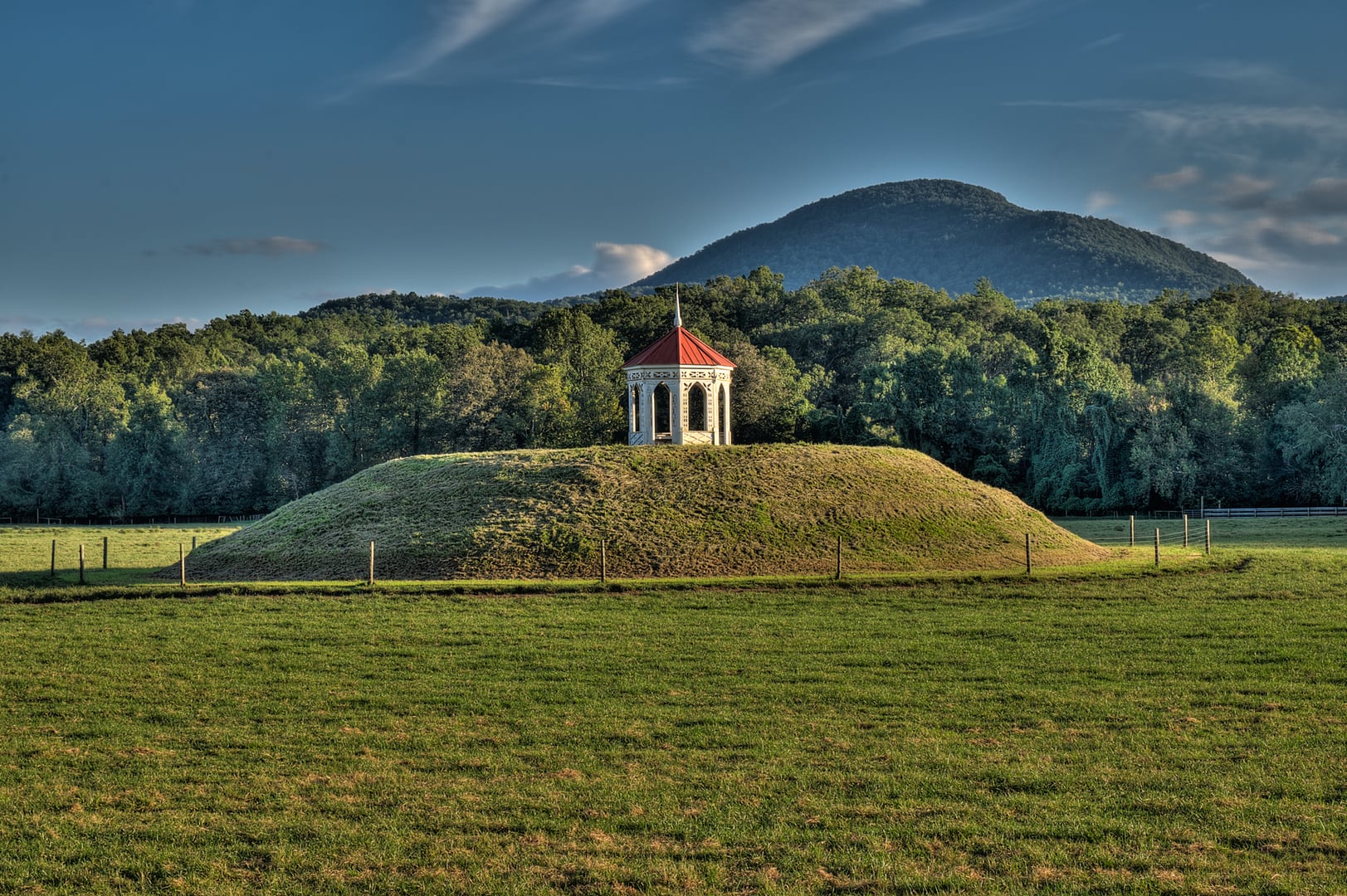
The Nacoochee Mound platform earthwork topped by a gazebo, on the Hardman Farm site in White County, Georgia
Cemetery / Burial Ground

Nacoochee Mound

Sautee Nacoochee, GA

The Nacoochee Mound is a South Appalachian Mississippian-period platform mound at the intersection of Georgia Highways 17 and 75, on the grounds of the Hardman Farm State Historic Site in White County. The site was first occupied between 100 and 500 CE by Woodland-period peoples and more intensively from 1350 to 1600 CE. A 1915 joint Smithsonian, Museum of the American Indian, and Bureau of American Ethnology excavation recovered 75 burials and Mississippian artifacts.

$ All Ages Family: High

St. Simons Island — 2

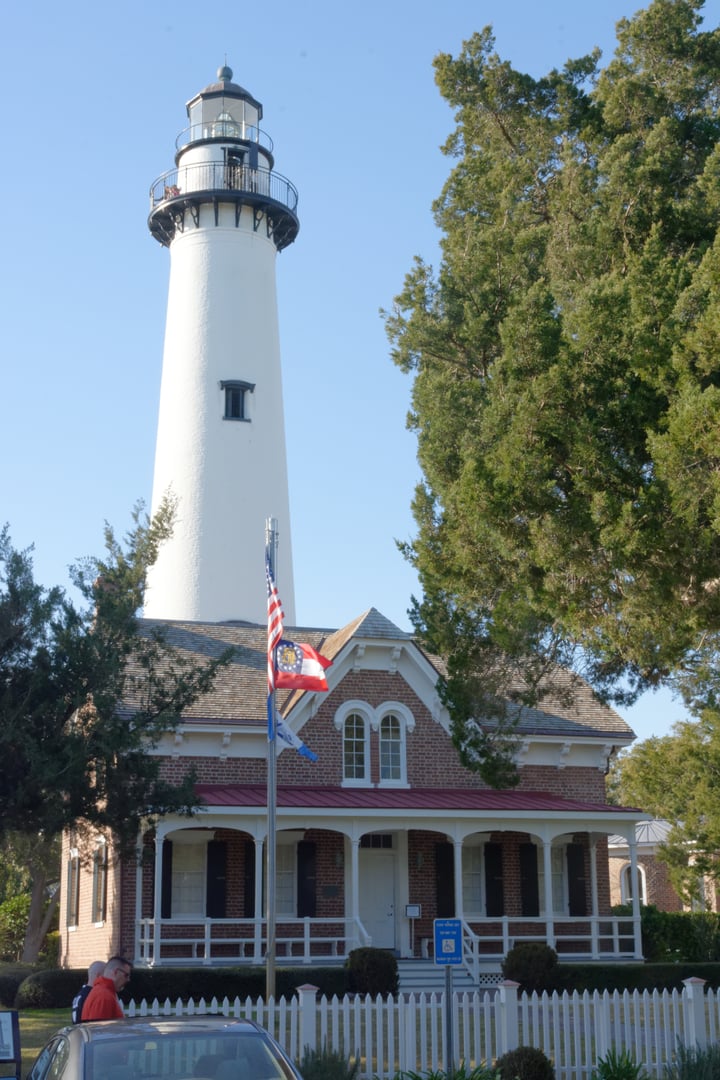
The 1872 St. Simons Lighthouse and adjacent keeper's house museum on St. Simons Island, Georgia
Museum / Historical Site

St. Simons Lighthouse

St. Simons Island, GA

The St. Simons Lighthouse is Georgia's oldest continuously operating lighthouse. Built in 1872 to replace a Civil War-era predecessor destroyed by retreating Confederate troops, it has guided ships into the Brunswick channel for more than 150 years. In 1880, head keeper Frederick Osborne was shot by his assistant John Stevens after a personal dispute.

$$ All Ages Family: Moderate
Gothic Revival Christ Church Frederica building surrounded by moss-draped oaks on St. Simons Island Georgia
Photo coming soon
Cemetery / Burial Ground

Christ Church, Frederica

St. Simons Island, GA

Christ Church, Frederica was established in February 1736 when Charles Wesley — brother of John Wesley and co-founder of Methodism — arrived at Fort Frederica as General James Oglethorpe's chaplain. The parish was formally organized in 1807 and incorporated by the Georgia Legislature on December 22, 1808, becoming the second oldest Episcopal church in the state. The present Gothic Revival church building dates to 1884, reconstructed by Anson Greene Phelps Dodge Jr. as a memorial to his wife. The surrounding cemetery contains graves dating to 1803.

$ All Ages Family: High

Americus — 1

The Windsor Hotel five-story Queen Anne facade, historic 1892 hotel in Americus, Georgia
Haunted Hotel / Inn

The Windsor Hotel

Americus, GA

The Windsor Hotel opened in 1892 in downtown Americus, Georgia, built to draw winter tourists from the northeastern United States. The five-story Queen Anne building features a three-story open atrium lobby and now operates as a 53-room independent hotel in the Ascend Hotel Collection. Franklin D. Roosevelt delivered a 1928 speech at the property.

$$$ All Ages Family: Moderate

Augusta — 1

The Partridge Inn historic hotel exterior, Augusta Georgia
Haunted Hotel / Inn

The Partridge Inn

Augusta, GA

The Partridge Inn was originally built in 1836 as a private residence in Augusta, Georgia. Morris Partridge purchased the property in 1892 and converted it into a hotel; the current building configuration dates substantially to its formal opening as a hotel in 1910. The Partridge Inn now operates as part of Hilton's Curio Collection.

$$$ All Ages Family: High

Braselton — 1

Two-story Neoclassical Revival 1913 William Henry Braselton home now serving as Braselton Town Hall in Jackson County, Georgia
Photo coming soon
Haunted House / Historic Home

Braselton Town Hall

Braselton, GA

Braselton Town Hall occupies the early-1900s Greek Revival home built by William Henry Braselton, the town's first mayor and one of four Braselton brothers whose family founded and built the surrounding community in Jackson County, Georgia.

$ All Ages Family: High

Cave Spring — 1

Fannin Hall, the 1848 building of the old Georgia School for the Deaf in Cave Spring, Georgia
Photo coming soon
Museum / Historical Site

Old Georgia School for the Deaf (Fannin Hall)

Cave Spring, GA

The Georgia School for the Deaf was founded in Cave Spring in 1846, and its Fannin Hall building was erected in 1848. The school closed during the Civil War (roughly 1862-1867), when the building was used as a military hospital, including for wounded soldiers after fighting in the area. The City of Cave Spring acquired the original campus in 1997 and moved its offices into Fannin Hall in 1999.

$ All Ages Family: High

Colquitt — 1

Rural road in Miller County, Georgia near White's Bridge, with Spring Creek visible in the distance
Photo coming soon
Outdoor / Natural Site

Mason Road and White's Bridge Area

Colquitt, GA

Mason Road in Miller County, Georgia runs parallel to White's Bridge Road near Colquitt. Spring Creek flows beneath White's Bridge at the southeast end of the road, where a small church and cemetery have stood for generations. Repeated flooding cycles have deposited and withdrawn creek water against the cemetery boundaries, with grave markers visible in the creek bed and on the eroded banks over time.

$ All Ages Family: High

Columbus — 1

The Springer Opera House at 103 E 10th Street in Columbus, Georgia, Georgia's official State Theater since 1971
Photo coming soon
Theater / Performance Venue

Springer Opera House

Columbus, GA

The Springer Opera House opened in 1871 in Columbus, Georgia, and was designated the official State Theater of Georgia in 1971. Named for Francis Joseph Springer, the German-born merchant who funded its construction, it hosted prominent touring performers throughout the late 19th and early 20th centuries including Edwin Booth, Oscar Wilde, and John Philip Sousa. The building was restored in the late 20th century and remains an active performing arts venue.

$$ Ghost tour recommended ages 12+ Family: High

Dallas — 1

Wooded terrain and preserved Civil War earthworks at Pickett's Mill Battlefield State Historic Site in Paulding County, Georgia.
Battlefield / Military Site

Pickett's Mill Battlefield State Historic Site

Dallas, GA

Pickett's Mill Battlefield in Paulding County, Georgia preserves the site of a May 27, 1864 Civil War engagement during the Atlanta Campaign. The 765-acre state historic site is considered one of the best-preserved Civil War battlefields in the nation. The state acquired the land between 1973 and 1981, opening the site to the public in 1990.

$ All Ages Family: Moderate

Douglas — 1

A historic former hospital building in Douglas, Georgia
Photo coming soon
Asylum / Hospital

Old Douglas Hospital

Douglas, GA

The original Douglas Hospital, in Douglas, Georgia, opened in 1935 on land donated by the city on East Ward Street, growing from a small 1932 clinic founded by two local nurses. Renamed Coffee General Hospital in 1968, the facility expanded to 155 beds by 1975 before being replaced by the current Coffee Regional Medical Center campus in 1998. The original 1935 building has since been adapted for educational use.

$ All Ages Family: Moderate

Douglasville — 1

A rural backroad in Douglas County Georgia bordered by woods and the remnants of an old barn
Photo coming soon
Outdoor / Natural Site

Gray Road

Douglasville, GA

Gray Road is a roughly mile-and-a-half rural road in Douglas County, Georgia, west of Atlanta. Local legend names it for a Civil War officer surnamed Gray; no specific officer has been documented through Civil War records. The road sits in a region with substantial enslaved-people history that local folklore has folded into ghost-story form.

$ All Ages (drive-by) Family: Moderate

Greensboro — 1

Two-and-a-half-story gabled frame plantation house with grounds in Greene County, Georgia
Photo coming soon
Haunted House / Historic Home

Early Hill Plantation

Greensboro, GA

Early Hill is a circa-1825 plantation house in Greene County, Georgia, two miles northwest of Greensboro. The two-and-a-half-story home was built for Joel Early Jr., son of one of Greene County's earliest Revolutionary-era settlers. By 1850 the plantation reached approximately 2,200 acres worked by sixty enslaved people. The property later operated as a bed and breakfast and is now closed to overnight guests.

$ All Ages Family: High

Hawkinsville — 1

Gothic-influenced brick facade of the former R.J. Taylor Memorial Hospital in Hawkinsville, Georgia
Photo coming soon
Asylum / Hospital

Old Taylor Memorial Hospital (Shadowlands: 'Hawkinsville State Hospital')

Hawkinsville, GA

The R.J. Taylor Memorial Hospital was chartered in 1936 with a $100,000 gift from Robert Jenks Taylor Sr. and served Hawkinsville, Georgia until 1977, when operations moved to the new Taylor Regional Hospital on the north side of town. The Gothic-style building stood vacant for roughly 40 years before TBG Residential acquired it in 2016 and reopened it in October 2019 as Taylor Village, a 34-unit workforce-housing apartment complex.

$ All Ages (exterior only) Family: Moderate

Helen — 1

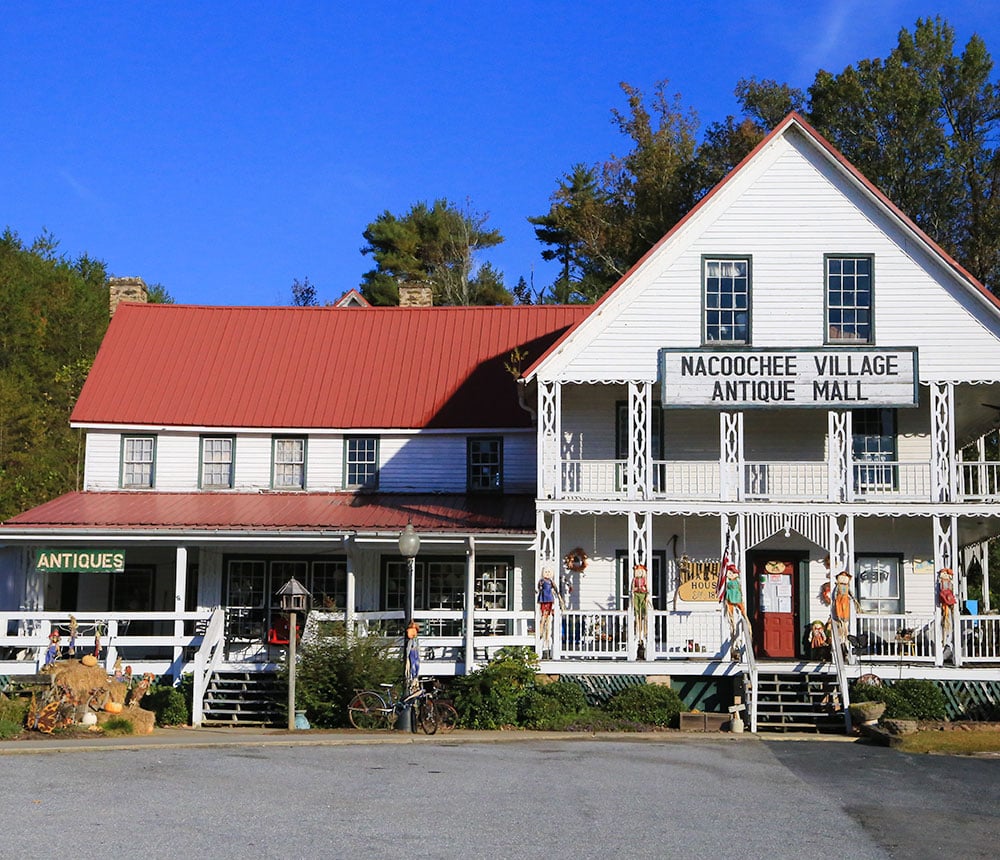
Exterior of the 1876 Martin House housing the Nacoochee Village Antique Mall in Helen, Georgia
Haunted Dining / Bar

Nacoochee Village Antique Mall

Helen, GA

The Martin House in historic Nacoochee Village was built in 1876 by John Martin, the original owner of the nearby Nora Mill. The property later passed to the Hardman and Ivie families. At various points the building served as a boarding house and small hotel before being repurposed as an antique mall. The 1876 structure retains its three-story form and sits across from Nora Mill in White County.

$ All Ages Family: High

Jeffersonville — 1

Greek Revival 1844 sanctuary of Historic Richland Baptist Church in Twiggs County, Georgia
Cemetery / Burial Ground

Historic Richland Baptist Church

Jeffersonville, GA

Historic Richland Baptist Church in Twiggs County, Georgia, was organized in October 1811 on the banks of Richland Creek. The current Greek Revival building, the third on the site, was constructed in the mid-1840s. The church is on the National Register of Historic Places and is owned and stewarded by the nonprofit Richland Restoration League.

$ All Ages (visitors must arrange access through the Restoration League) Family: High

Jekyll Island — 1

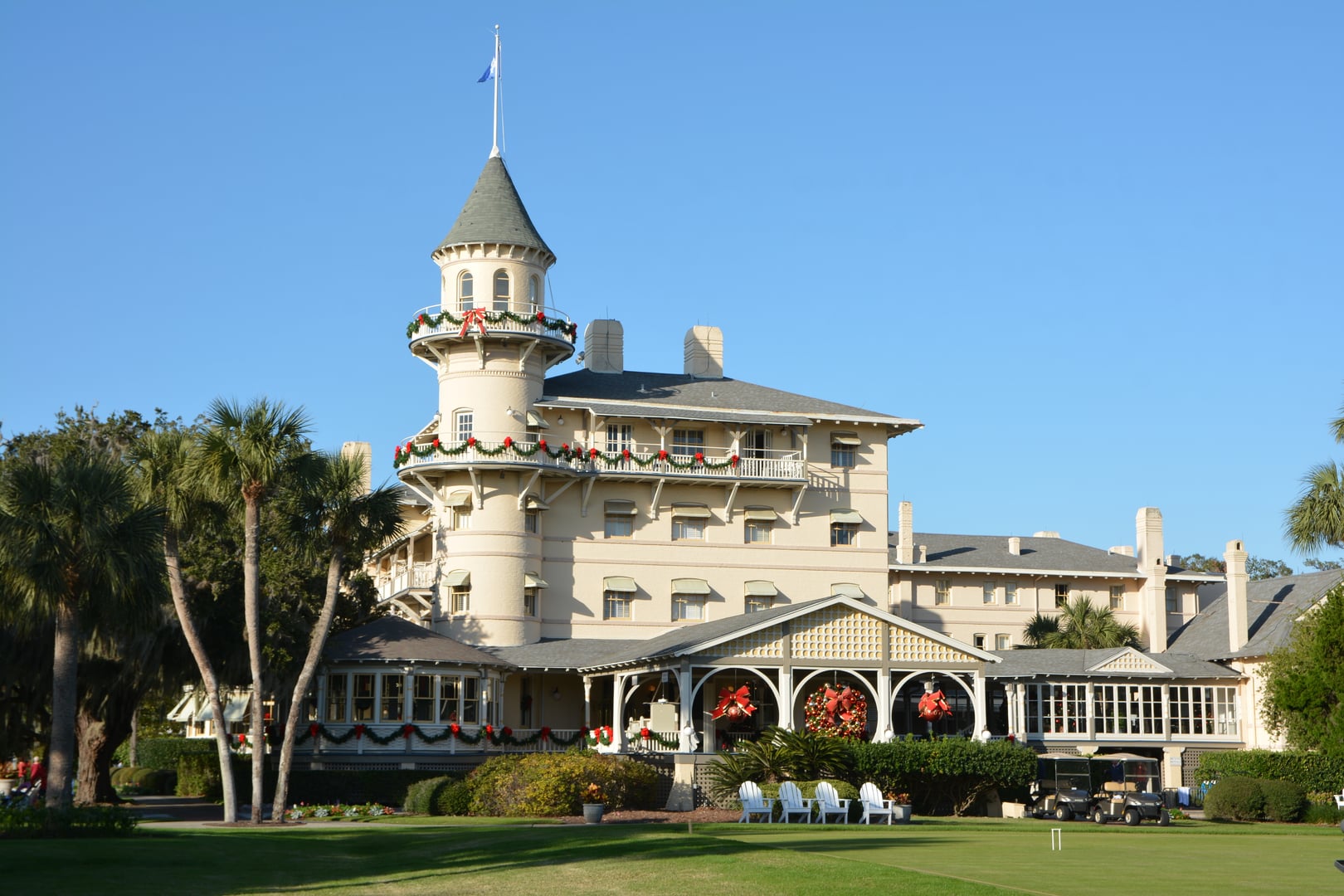
Jekyll Island Club Victorian clubhouse historic resort on Jekyll Island Georgia
Haunted Hotel / Inn

Jekyll Island Club Resort

Jekyll Island, GA

The Jekyll Island Club was founded in 1886 when a group of wealthy New Yorkers and Georgians created a private hunting club on Jekyll Island, a barrier island off the Georgia coast. The clubhouse opened in 1887 and became a winter retreat for families including the Rockefellers, Vanderbilts, and J.P. Morgan's family. The club operated until World War II before being purchased by the state of Georgia in 1947.

$$$ All Ages Family: High

Jonesboro — 1

Exterior of the 1840 Warren House, a Greek Revival mansion and Civil War landmark in Jonesboro, Georgia
Haunted House / Historic Home

The Warren House

Jonesboro, GA

The Warren House at 102 W Mimosa Drive in Jonesboro was built in 1859 for Guy Lewis Warren, a Connecticut native who married Mary Ruberry Vardell of Charleston. The house became Confederate headquarters during the August 31-September 1, 1864 Battle of Jonesborough and was then taken over by the 52nd Illinois Infantry as a hospital for both Union and Confederate wounded. Signatures of convalescing Union soldiers still appear on upstairs walls.

$$ All Ages Family: Moderate

Kingston — 1

The old single-lane Hardin Bridge over the Etowah River in Bartow County, Georgia
Photo coming soon
Outdoor / Natural Site

Hardin Bridge Road

Kingston, GA

Hardin Bridge Road crosses the Etowah River in rural Bartow County, Georgia, near Kingston and Cartersville. The original narrow single-lane bridge still stands alongside a newer replacement span built around 2010-2011. The old bridge has periodically been closed for safety.

$ All Ages (drive-by) Family: Moderate

LaGrange — 1

Stone foundation and mill race ruins along Wehadkee Creek at the former McCosh Mill in Troup County, Georgia
Photo coming soon
Outdoor / Natural Site

McCosh Mill Ruins

LaGrange, GA

McCosh Mill was a grist mill built in the early 1870s on the banks of Wehadkee Creek in Troup County, Georgia, by James Eichelburger McCosh, grandson of Rock Mills industrialist Jacob Eichelburger. The mill ground corn into meal and wheat into flour until 1958. The U.S. Army Corps of Engineers acquired the land in 1970 as part of the West Point Lake project, and the wood-frame structure later burned, leaving only the stone foundation and mill race.

$ All Ages Family: Moderate

Lawrenceville — 1

The Georgian mansion at Natalie House (formerly Little Gardens), a seven-acre estate at 3571 Lawrenceville Highway in Lawrenceville, Georgia
Haunted Dining / Bar

Little Gardens

Lawrenceville, GA

Little Gardens is a restored historic Lawrenceville home operating as a wedding and special-event venue in Gwinnett County, Georgia. The property has been adapted across multiple twentieth- and twenty-first-century uses, including a previous tenure as a fine-dining restaurant before its conversion to an events-primary model.

$$$ All Ages Family: High

Lovejoy — 1

Suburban road through Lovejoy, Georgia, in Clayton County, site of the 1864 Battle of Lovejoy's Station
Photo coming soon
Battlefield / Military Site

Lovejoy Road

Lovejoy, GA

Lovejoy Road in Clayton County, Georgia passes through terrain that was the scene of active military engagement on August 20, 1864. The Battle of Lovejoy's Station was part of Major General William T. Sherman's campaign against Confederate supply lines during the Atlanta Campaign. Both sides reported approximately 237-240 casualties. The historic battlefield has largely been subsumed by suburban development.

$ All Ages Family: High

Macon — 1

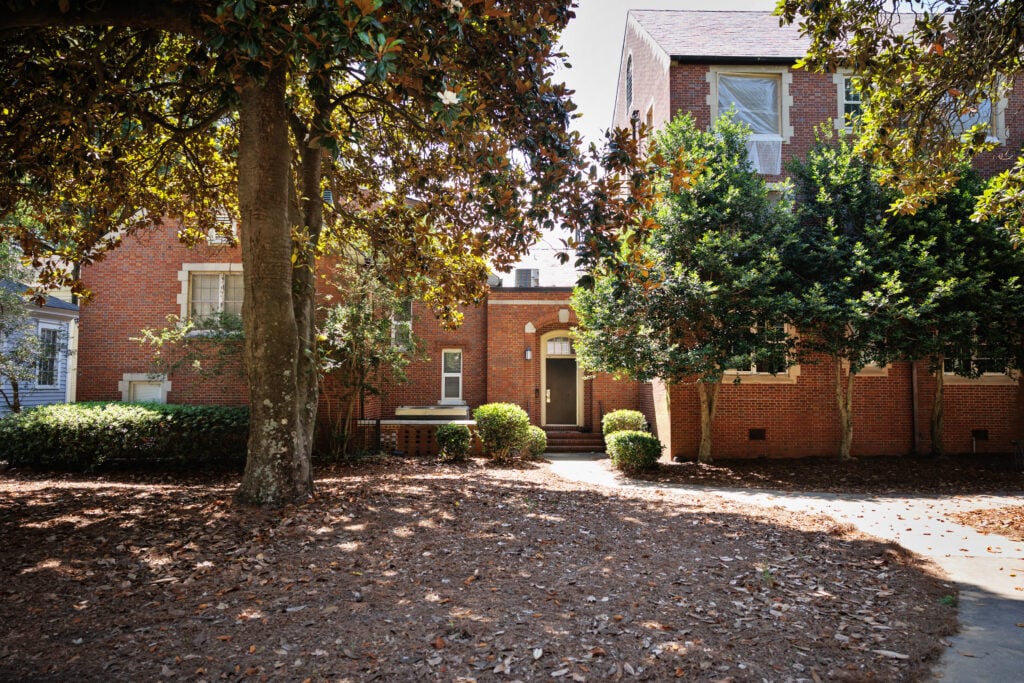
Boone Hall at Mercer University in Macon, Georgia — a brick residence hall with arched doorway and symmetrical windows shaded by mature trees
Other Dark Tourism Site

Mercer University — Boone Hall

Macon, GA

Mercer University was founded in 1833 as Mercer Institute in Penfield, Georgia, by Jesse Mercer, a Baptist leader who provided the founding endowment along with Josiah Penfield. The university relocated to Macon in 1871. Boone Hall was completed in 1950 and is named for Sallie Goelz Boone, who served the university from 1904 as librarian, literature professor, and counselor.

$ All Ages Family: Moderate

Marietta — 1

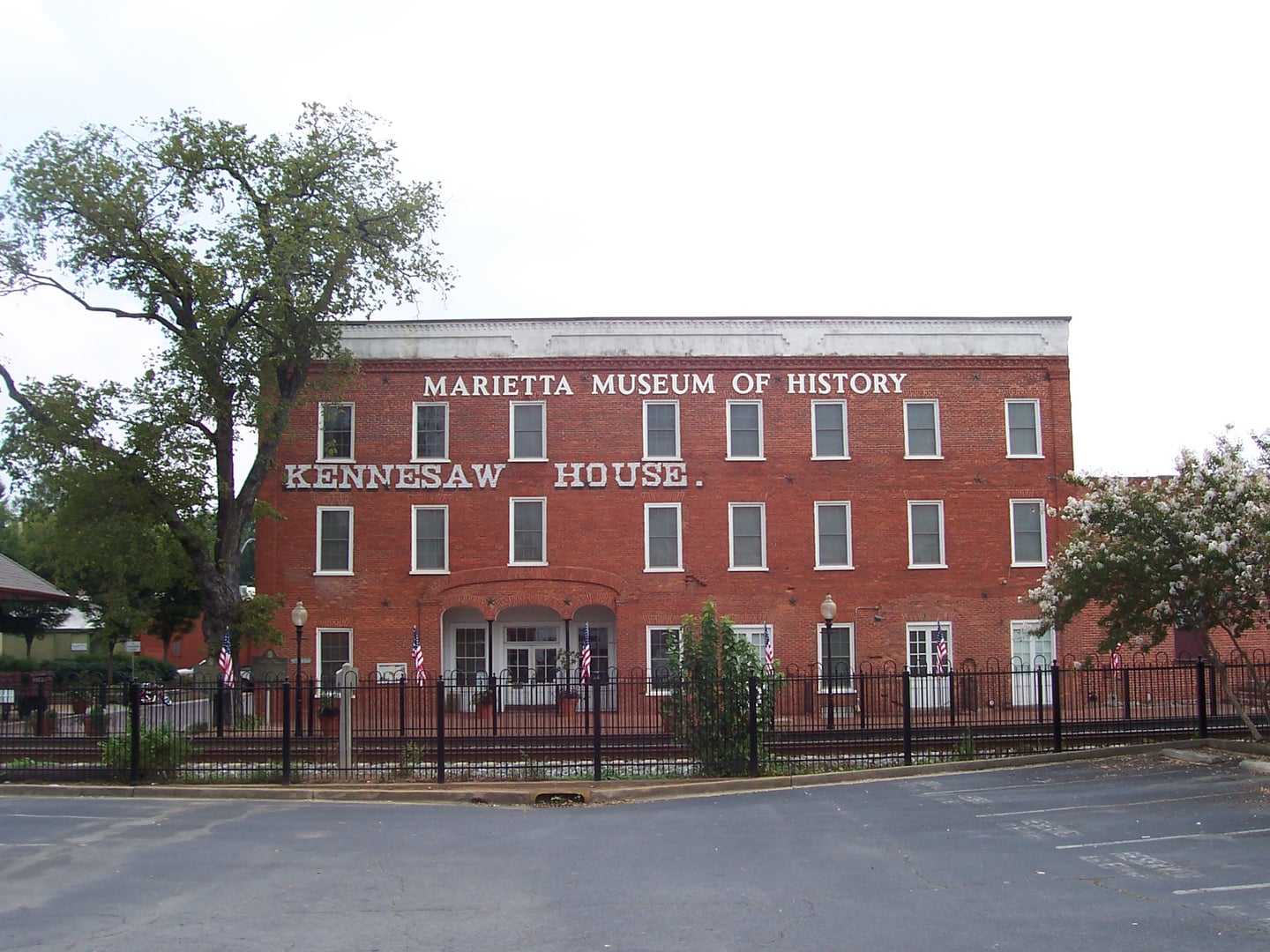
Kennesaw House historic 1845 building Marietta History Center in Marietta Georgia
Museum / Historical Site

Kennesaw House / Marietta History Center

Marietta, GA

The Kennesaw House was built in 1845 as a cotton warehouse on what is now Marietta Square, adjacent to the railroad tracks that would define its Civil War history. Purchased by Dix Fletcher in 1855 and converted into the Fletcher House hotel, it served as both a staging point for the famous Great Locomotive Chase of April 1862 and as a hospital and morgue for Confederate and Union forces during Sherman's Atlanta campaign. Today it houses the Marietta History Center.

$ All Ages Family: Moderate

Milledgeville — 1

Old Governor's Mansion on the Georgia College & State University campus in Milledgeville, Georgia
Photo coming soon
Museum / Historical Site

Georgia College & State University

Milledgeville, GA

Georgia College & State University occupies a campus in Milledgeville, Georgia's antebellum state capital. The Old Governor's Mansion on campus housed ten Georgia governors from 1839 to 1868 before becoming part of the college. Sanford Hall, a campus residence hall, became the site of a 1952 tragedy when student Betty Jean Cook died there.

$ All Ages Family: Moderate

Millen — 1

The Birdsville Plantation main house, Jenkins County, Georgia — 1789 antebellum residence listed on the National Register of Historic Places.
Haunted House / Historic Home

Birdsville Plantation

Millen, GA

Birdsville Plantation in Jenkins County, Georgia is a 50-acre property dating to circa 1789, established on land granted by King George III to the Welsh-born settler Francis Jones. The Greek Revival and Italianate front façade was added around 1847 under Henry Philip Jones. The plantation was added to the National Register of Historic Places in 1971 and remains owned by the Jones family.

$ All Ages Family: Moderate

Newnan — 1

The 1925 Old Newnan Hospital building, now the University of West Georgia Newnan campus on Jackson Street
Photo coming soon
Museum / Historical Site

Old Newnan Hospital (UWG Newnan Campus)

Newnan, GA

The Old Newnan Hospital opened in 1925 as a community hospital in Newnan, Georgia, funded by a citywide subscription drive that raised the equivalent of approximately $20 million in present-day dollars. After serving Coweta County for 86 years, the hospital relocated in 2012 to a new Piedmont facility on Poplar Road. The original building was rehabilitated and reopened in 2015 as the University of West Georgia's Newnan campus.

$ All Ages Family: High

Newton — 1

Overgrown rural road lined with mature trees in Baker County, Georgia, the former path of Hard-Up Road known as Seven Churches Road
Photo coming soon
Outdoor / Natural Site

Seven Churches Road (Hard-Up Road)

Newton, GA

Hard-Up Road, also called Seven Churches Road, is a remote dirt track in Baker County, Georgia near Newton. Despite its name, only three Baptist churches ever stood along the road: Mount Airy Baptist, Weldon Springs Baptist, and Mount Ephesus (a small Black congregation). The churches were established in the late 19th and early 20th centuries; they gradually fell into disrepair, and the road itself was purchased by Pineland Plantation, removing it from public access. The Adams Family Cemetery remains on a spur off Colquitt-Ford Road.

$ All Ages Family: Moderate

Richmond Hill — 1

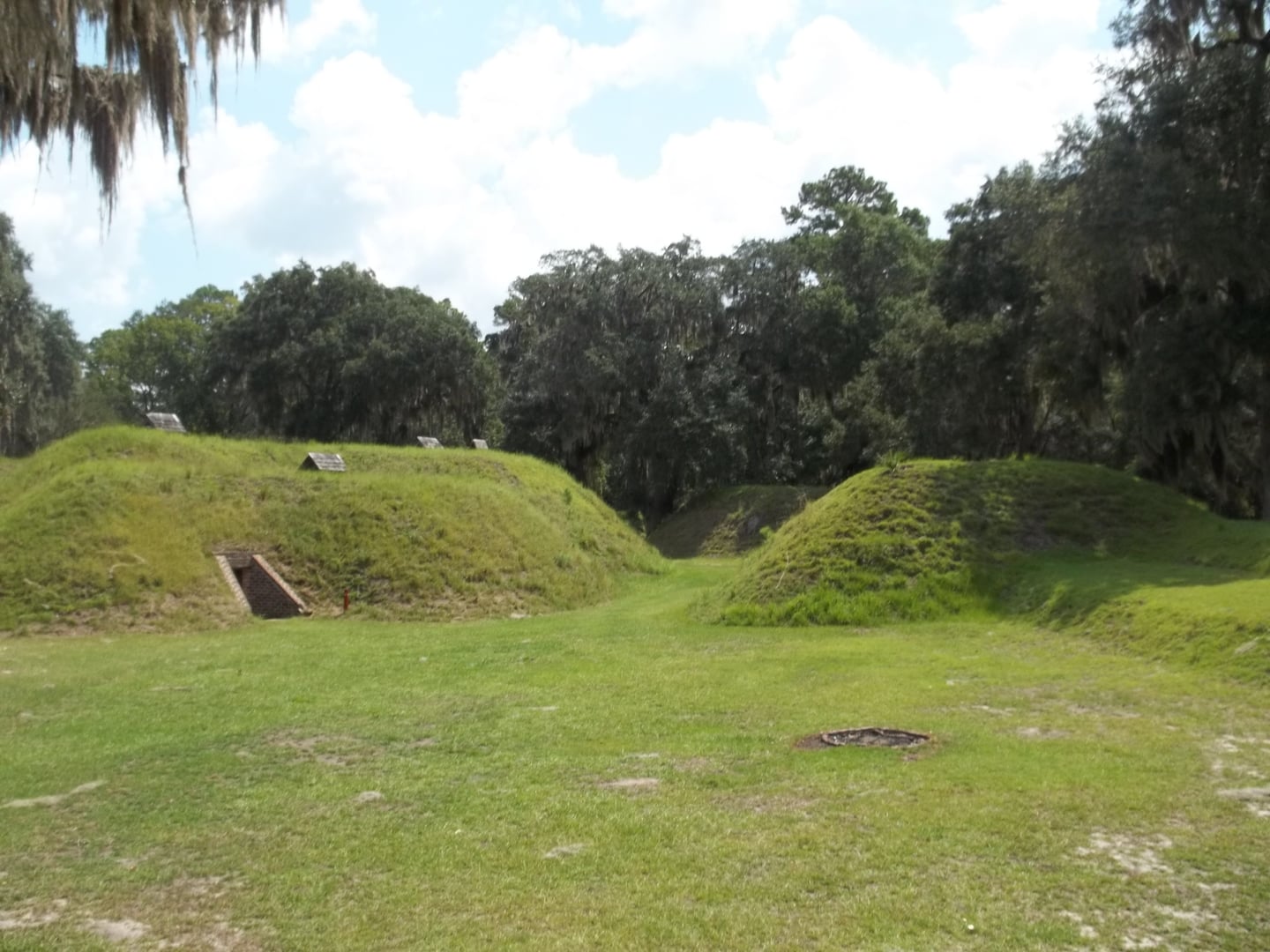
Interior earthworks and emplacements at Fort McAllister Historic State Park near Richmond Hill, Georgia
Battlefield / Military Site

Fort McAllister State Park

Richmond Hill, GA

Fort McAllister was an earthwork Confederate fort constructed in 1861 by the Dekalb Rifles on the Ogeechee River south of Savannah. Along with Fort Pulaski and Fort James Jackson, it formed Savannah's outer defenses. Resisting seven Union naval attacks, the fort fell on December 13, 1864, in a 15-minute infantry assault that ended Sherman's March to the Sea.

$ All Ages Family: High

Roswell — 1

The Public House at 605 South Atlanta Street on Roswell Historic Square in Georgia
Photo coming soon
Haunted Dining / Bar

The Public House

Roswell, GA

The Public House at 605 South Atlanta Street in Roswell was constructed in 1854 as the commissary for the Roswell Mill. During the Civil War it served as a Union hospital after the July 1864 occupation of Roswell. It later housed the Dunwoody Shoe Shop and a funeral parlor before becoming a restaurant (first as the Peasant in the 1970s and now as The Public House).

$$ All Ages Family: High

Sale City — 1

Rural Georgia cemetery with small prayer chapel along a dirt road
Photo coming soon
Cemetery / Burial Ground

Shady Grove Cemetery

Sale City, GA

Shady Grove Cemetery is a small historic burial ground in Mitchell County, Georgia, located along a dirt road outside Sale City. Find a Grave records document approximately 131 memorials at the site.

$ All Ages Family: High

Smyrna — 1

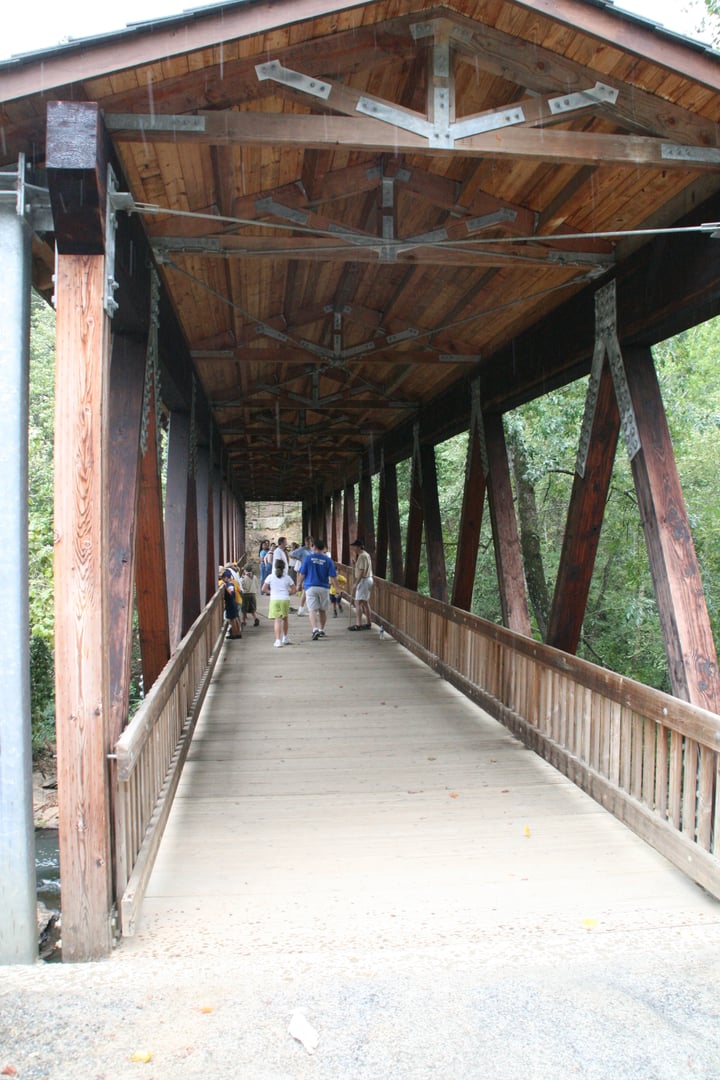
Wooden covered bridge over Nickajack Creek in Cobb County Georgia surrounded by trees
Photo coming soon
Outdoor / Natural Site

Concord Covered Bridge (Crybaby Bridge)

Smyrna, GA

The Concord Covered Bridge spans Nickajack Creek on Concord Road SW in Cobb County, Georgia. Originally constructed circa 1848, the bridge was burned during the Civil War and rebuilt in 1872 using a Burr-arch truss design. At 131 feet long and 16 feet wide, it remains Georgia's only covered bridge still open to automobile traffic. Cobb County created the Concord Covered Bridge Historic District — the county's first — around the structure in 1986, and the bridge was renovated in 1999.

$ All Ages Family: High

Stone Mountain — 1

The 1840 Dickey/Davis House at Stone Mountain Park's Historic Square — relocated antebellum Georgia plantation home.
Museum / Historical Site

Stone Mountain Park — Historic Square

Stone Mountain, GA

Stone Mountain Park encompasses the quartz monzonite dome of Stone Mountain, one of the largest exposed granite formations in the world, along with a 3,200-acre park with various attractions. Historic Square is a curated collection of original antebellum structures built between 1793 and 1875, each relocated from its original site elsewhere in Georgia and restored on park grounds.

$$ All Ages Family: High

Surrency — 1

A rural railroad line cutting through pine forest near Surrency, Georgia, at dusk
Photo coming soon
Outdoor / Natural Site

Surrency Ghost Light

Surrency, GA

Surrency is a small town in Appling County, Georgia, named for the family of Allen Powell Surrency, a sawmill owner whose home became the center of a widely reported series of poltergeist-style disturbances in the 1870s. A separate 'spook light' reported along the nearby railroad tracks from the early 20th century onward became locally linked to that earlier haunting.

$ All Ages Family: Moderate

Talking Rock — 1

Carver Mill Road bridge over Scarecorn Creek, western Pickens County, Georgia
Photo coming soon
Outdoor / Natural Site

Carver Mill Bridge

Talking Rock, GA

Carver Mill Bridge carries Carver Mill Road over Scarecorn Creek in a remote, wooded part of western Pickens County, Georgia, near Talking Rock. An older wooden bridge that once spanned the creek was replaced decades ago by the modern paved bridge that stands today.

$ All Ages Family: Low

Tallapoosa — 1

A wooded creek valley off Old Ridgeway Road near Tallapoosa, Georgia, known as Devil's Kitchen
Photo coming soon
Outdoor / Natural Site

Devil's Kitchen

Tallapoosa, GA

Devil's Kitchen is a wooded creek valley off Old Ridgeway Road near Tallapoosa in Haralson County, Georgia. The name is locally said to come from moonshine ('the Devil's water') once made in the creek valley. The adjacent property known as Key's Castle was a grape vineyard in the late 1800s.

$ All Ages Family: Moderate

Toomsboro — 1

The Willett Hotel exterior in the historic core of Toomsboro, Georgia
Photo coming soon
Other Dark Tourism Site

Old Toomsboro Hotel (Willett Hotel)

Toomsboro, GA

Toomsboro, Georgia, was chartered in 1904 along the Central of Georgia Railroad line connecting Savannah and Macon. The town was named for Robert Augustus Toombs, a U.S. congressman and Confederate Secretary of State. The Willett Hotel, the historic property referenced in haunted-place listings, served traveling salesmen and teachers during the railroad-era boom and is now part of a 40-acre property cluster repeatedly listed for sale.

$ All Ages Family: Moderate

Tybee Island — 1

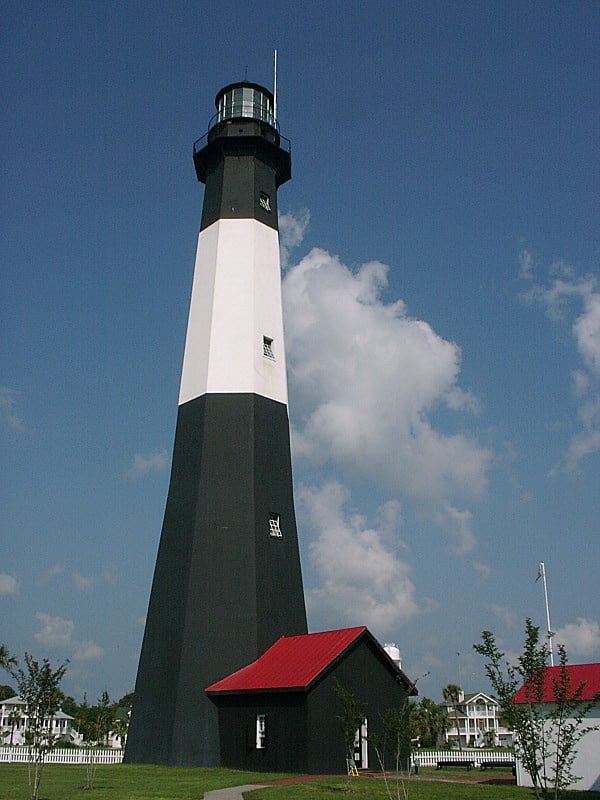
Tybee Island Light Station, a black-and-white striped lighthouse on Tybee Island, Georgia
Museum / Historical Site

Tybee Island Lighthouse

Tybee Island, GA

Tybee Island Lighthouse is Georgia's oldest and tallest active lighthouse, standing at the mouth of the Savannah River. The first day-mark was constructed in 1736 under Noble Jones of Wormsloe Plantation; the current 154-foot tower combines the lower sixty feet of an 1773 structure with an 1867 upper section. The original first-order Fresnel lens has been in service since 1867.

$$ All Ages Family: Moderate

Valdosta — 1

A Victorian-era residence on a Valdosta, Georgia corner lot with wraparound porch and gabled roof
Photo coming soon
Haunted House / Historic Home

Warren's Blue Bayou (Bell House)

Valdosta, GA

The Bell House at 500 N Ashley Street in Valdosta, Georgia, was the residence of Dr. David S. Bell, a traveling salesman of patent medicines known for a tonic called Re-Nue-U. The Victorian-era home has subsequently operated as a bed and breakfast, a Cajun restaurant, and most recently as Vito's Pizzeria and Lounge. As of current public records, Vito's is closed.

$ All Ages Family: High

Waverly Hall — 1

Old headstones in Waverly Hall Cemetery Harris County Georgia
Photo coming soon
Cemetery / Burial Ground

Waverly Hall Cemetery

Waverly Hall, GA

Waverly Hall Cemetery is the oldest burial ground in the small Harris County community of Waverly Hall, Georgia, with documented burials dating to 1829. Notable antebellum-era graves include those of Major Osborne Crook (died 1851) and General Henry H. Lowe (died 1854). The cemetery remains an active burial ground serving the community. The town itself sits roughly 30 miles from Columbus along the Chattahoochee River corridor.

$ All Ages Family: Moderate

By type