Deadliest train wreck in Georgia history (39 dead, June 23, 1900) · City of McDonough historical marker erected 2013 · Archival photographs in Digital Library of Georgia (GSU/AJC collection) · Subject of Arcadia Publishing historical book (2010)
The Camp Creek rail disaster of June 23, 1900, is the deadliest train wreck in Georgia history and one of the most tragic in the Southeast. The context was a catastrophic flood: rain had fallen almost continuously for three weeks across Henry County, swelling every creek and stream to dangerous levels and undermining the brick-and-masonry supports of bridges and trestles throughout the region.
Train No. 7 of the Southern Railway departed Macon that evening, stopping at the McDonough Station to collect passengers. The flooding was common knowledge, and at least one warning was issued to hold the train. Engineer J.T. Sullivan—filling in that night for the regularly scheduled engineer, whose daughter had fallen ill with pneumonia—reportedly said to those who warned him, 'We will either be eating breakfast in Atlanta or in hell.' He departed for Atlanta.
Approximately seven miles north of McDonough, Train No. 7 reached the trestle over Camp Creek. The trestle's brick masonry supports had been undermined and partially washed away by the swollen creek minutes before the train arrived. Moving at speed in the darkness, Engineer Sullivan had no chance to stop in time. The engine, tender, and forward cars plunged approximately 60 feet into the raging creek waters below, bursting into flames upon impact.
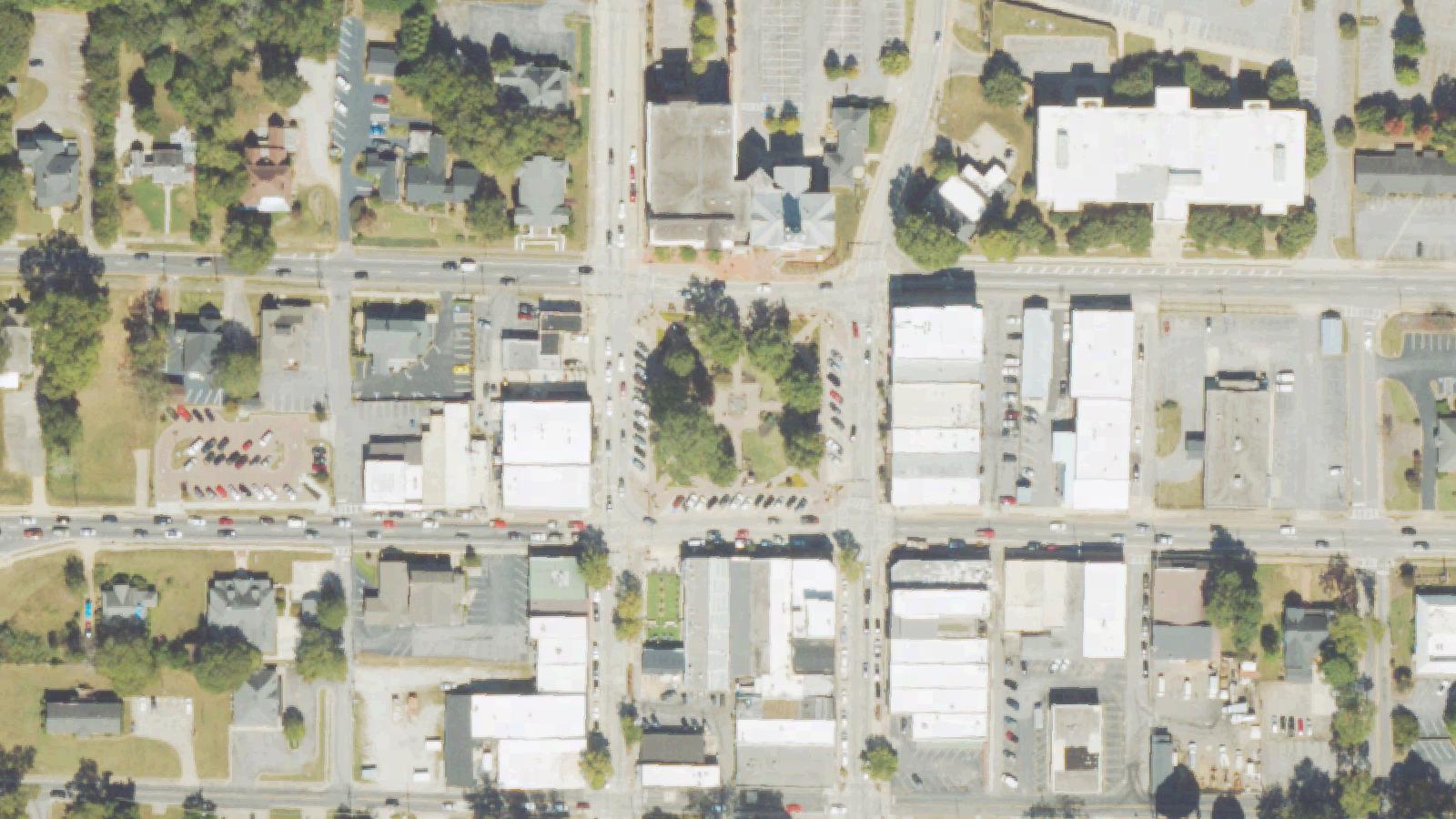
Of approximately 45–48 people aboard, 35–39 died—some from the impact, others from drowning in the floodwaters, and still others from the fire that consumed the wreckage (contemporary newspaper accounts, including the New York Times, recovered 35 bodies; the 2013 City of McDonough historical marker lists 39, reflecting later identification of remains). The ten survivors were all in the rear Pullman sleeping car, which remained partially intact. Flagman J.J. Quinlan was the first survivor to scale the embankment; he secured rope to help rescue survivors before running to alert McDonough. The bodies of the dead were brought to McDonough's courthouse square for identification—a sight that traumatized the community for generations.
Archival photographs of the wreckage are preserved in the Georgia State University Digital Collections (Atlanta Journal-Constitution archive) and the Digital Library of Georgia. An Arcadia Publishing book—'The Camp Creek Train Crash of 1900: In Atlanta or In Hell' by Jeffery C. Wells—provides the fullest documented account. A City of McDonough historical marker was erected in 2013 at Atlanta Street and Chase Court (near U.S. 23) commemorating the 39 victims.
Sources
- https://en.wikipedia.org/wiki/Camp_Creek_train_wreck
- https://railfanning.org/2023/07/a-closer-look-at-the-camp-creek-train-wreck-of-1900/
- https://dlg.usg.edu/record/gsu_ajc_127
- https://www.arcadiapublishing.com/products/9781596298262
- https://atlantaghosts.com/the-camp-creek-rail-disaster/
- https://www.southernspiritguide.org/spirits-of-the-camp-creek-disaster-haunt-brief/
Phantom locomotive sounds (roar, whistle, ground shaking) without visible trainBlack smoke rising near trestle approachResidual hauntings near McDonough courthouse square
The paranormal tradition at Camp Creek Trestle is documented by Atlanta Ghosts, Southern Spirit Guide, and Georgia Mysteries (a regional paranormal blog), all of which collected accounts from local residents and area ghost hunters.
According to these sources, individuals at the trestle site and on the tracks approaching Camp Creek have reported hearing what can only be described as a phantom locomotive: the roar of an engine straining to speed, the blow of a steam whistle, and a dramatic shaking of the ground—as if a heavy train is bearing down. Black smoke reportedly rises in the air. But the train itself never materializes, and the sounds stop as it would reach the trestle crossing. The phenomenon is interpreted as a residual loop of Train No. 7's final approach on the night of June 23, 1900.
A secondary tradition connects to the McDonough courthouse square, where the bodies of the unidentified dead were laid out on tables for relatives to come and claim. Local lore holds that this communal grief left a residual impression on the square itself, with some reporting unexplained sounds and cold spots in the vicinity.
Engineer Sullivan's last words—'We will either be eating breakfast in Atlanta or in hell'—are documented in contemporary newspaper accounts and the Arcadia Publishing history, and have since become part of Georgia railroad folklore. The quote appears in the Shadowlands entry as 'We will either be eating breakfast in Atlanta or in hell,' which is consistent with the documented historical record.
Media Appearances
- Atlanta Ghosts — The Camp Creek Rail Disaster
- Southern Spirit Guide — Spirits of the Camp Creek Disaster
- Georgia Mysteries — Camp Creek Train Wreck of 1900