Est. 1854 · Greek Revival Architecture · Antebellum Putnam County History · Historic American Buildings Survey Documentation
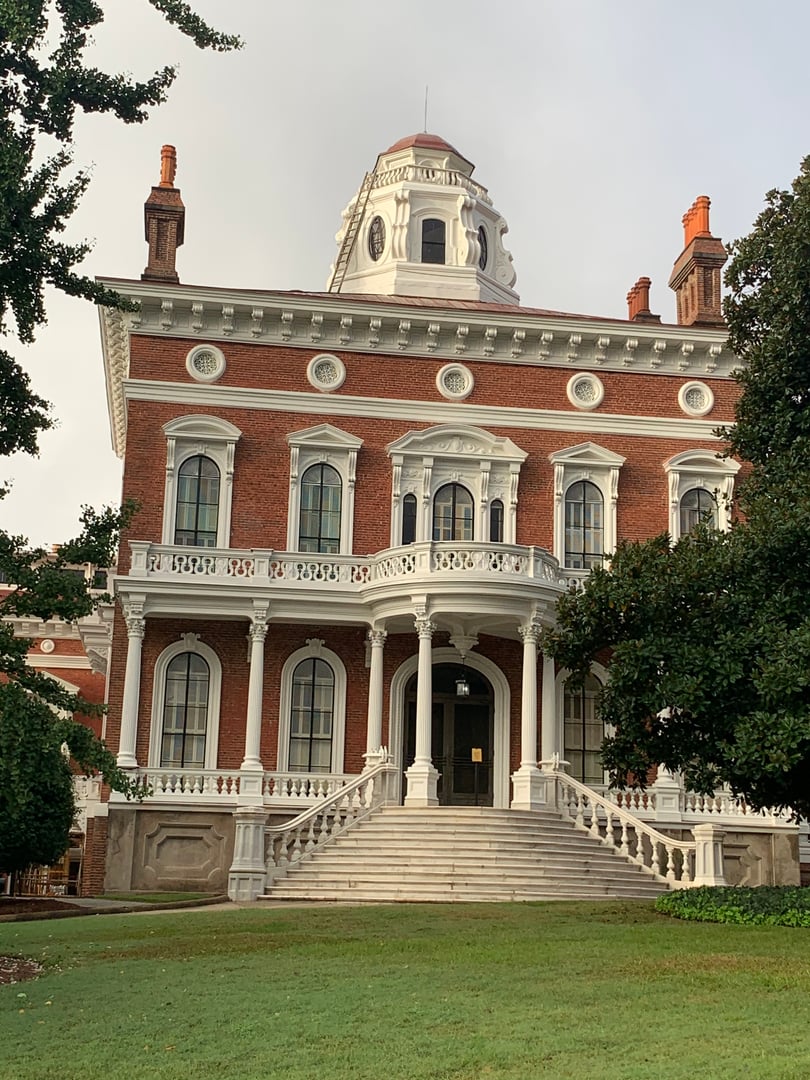
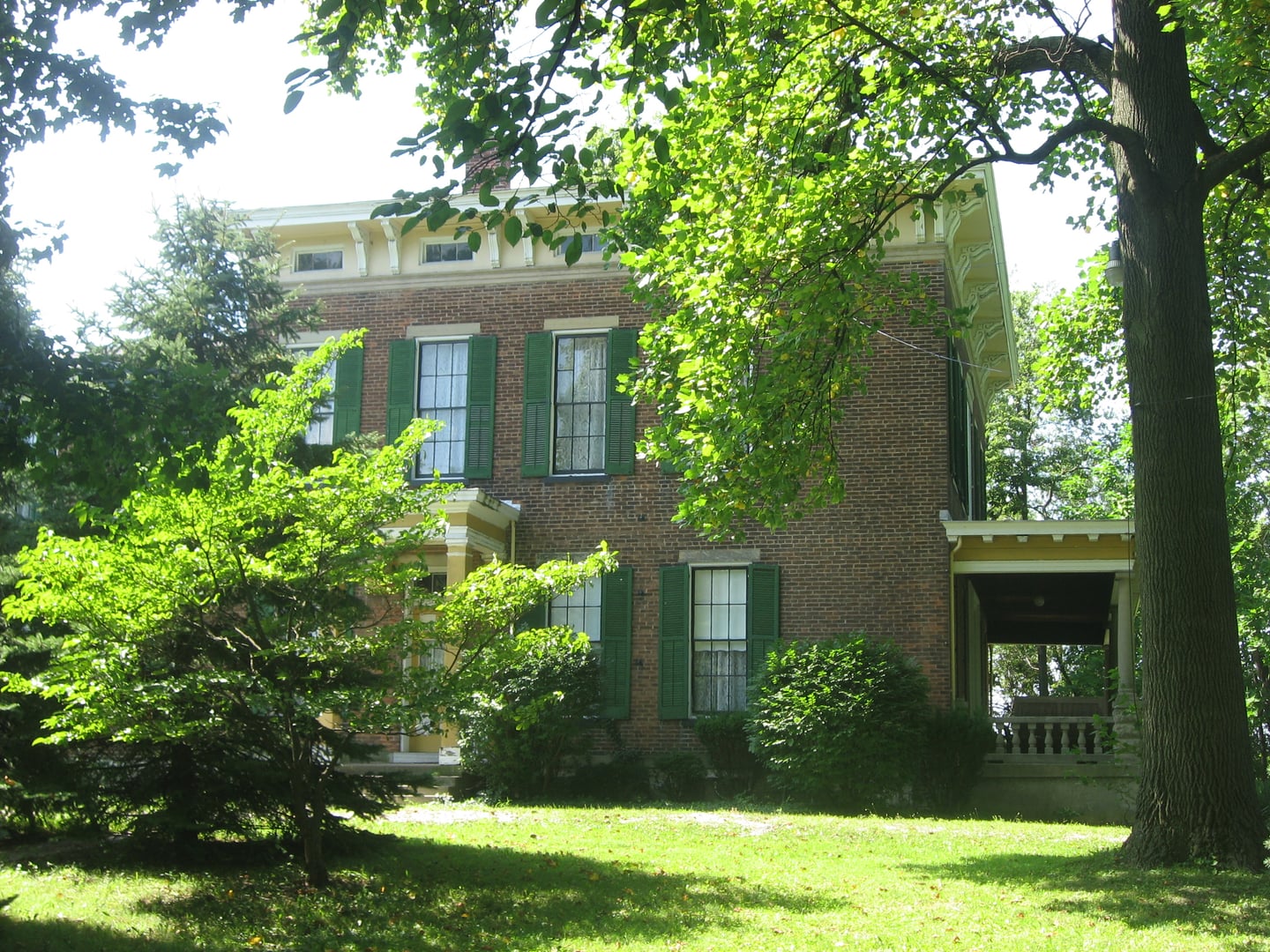
Panola Hall was constructed in 1854 by builder James M. Broadfield for Henry Trippe on North Madison Avenue in Eatonton, the county seat of Putnam County. The design is straightforwardly Greek Revival: four fluted Doric columns across the front elevation, matching Doric pilasters flanking the main entrance, and a heavy parapet above the entablature that conceals an almost flat roof. Photographs taken in November 1966 by Hubert B. Owens for the Historic American Buildings Survey document the front and side elevations as they appeared more than a century after construction.
In 1891, Benjamin Hunt — a banker and dairyman — purchased the property following his connection to the Eatonton community, and undertook Victorian-era modifications alongside general restoration of the structure. The house remained in private hands through the twentieth century. Dr. Robert Lott performed additional restoration work in the 1990s.
The house is located within Eatonton's historic downtown, a concentration of pre-Civil War structures that regional media have described as making Eatonton the 'second most haunted town in Georgia.' Panola Hall is among the most architecturally intact examples of the antebellum Greek Revival residential tradition in Putnam County.
The Georgia Writers Museum, based at 109 S. Jefferson Ave. in Eatonton, incorporates Panola Hall as the centerpiece stop on its annual Haunted Eatonton Ghost Tour, a ticketed evening walk organized in partnership with The Arts Barn. The Southeastern Institute of Paranormal Research has conducted formal investigations of several properties along the tour route.
Sources
- https://dlg.usg.edu/record/dlg_larc_hbo0030
- https://visiteatonton.com/haunted-stories-sylvia/
- https://www.georgiawritersmuseum.org/hauntedeatonton/
ApparitionsVisual phenomena at upper windows
The Sylvia legend traces to at least the 1870s in Eatonton local tradition. The account holds that a young woman — known only as Sylvia — was forced into a marriage she did not want. On the day of the wedding, dressed in a white hoop dress with a rose in her hair, she attempted to escape through the second-floor bedroom window. In the attempt, she became trapped in a large trunk positioned near the window. Her family, believing she had fled the house entirely, boarded the room. Her body was not discovered until later.
The apparition reported at Panola Hall since the 1870s is consistently described as a woman in a white hoop dress, seen either in the second-floor bedroom, in the hallway, or looking out the window from the room below. Multiple accounts characterize her presence as 'a comforting one' — not threatening — which accounts in part for the affection the legend receives locally. Sylvia's story inspired the creation of a Sylvia's Coffee branded café in the Eatonton community, underscoring how embedded the legend is in local identity.
The Southeastern Institute of Paranormal Research has investigated Panola Hall and the other properties on the Haunted Eatonton tour route. Their findings are incorporated into the tour presentations led by Ann Hite for the Georgia Writers Museum.
Notable Entities
Sylvia (alleged)