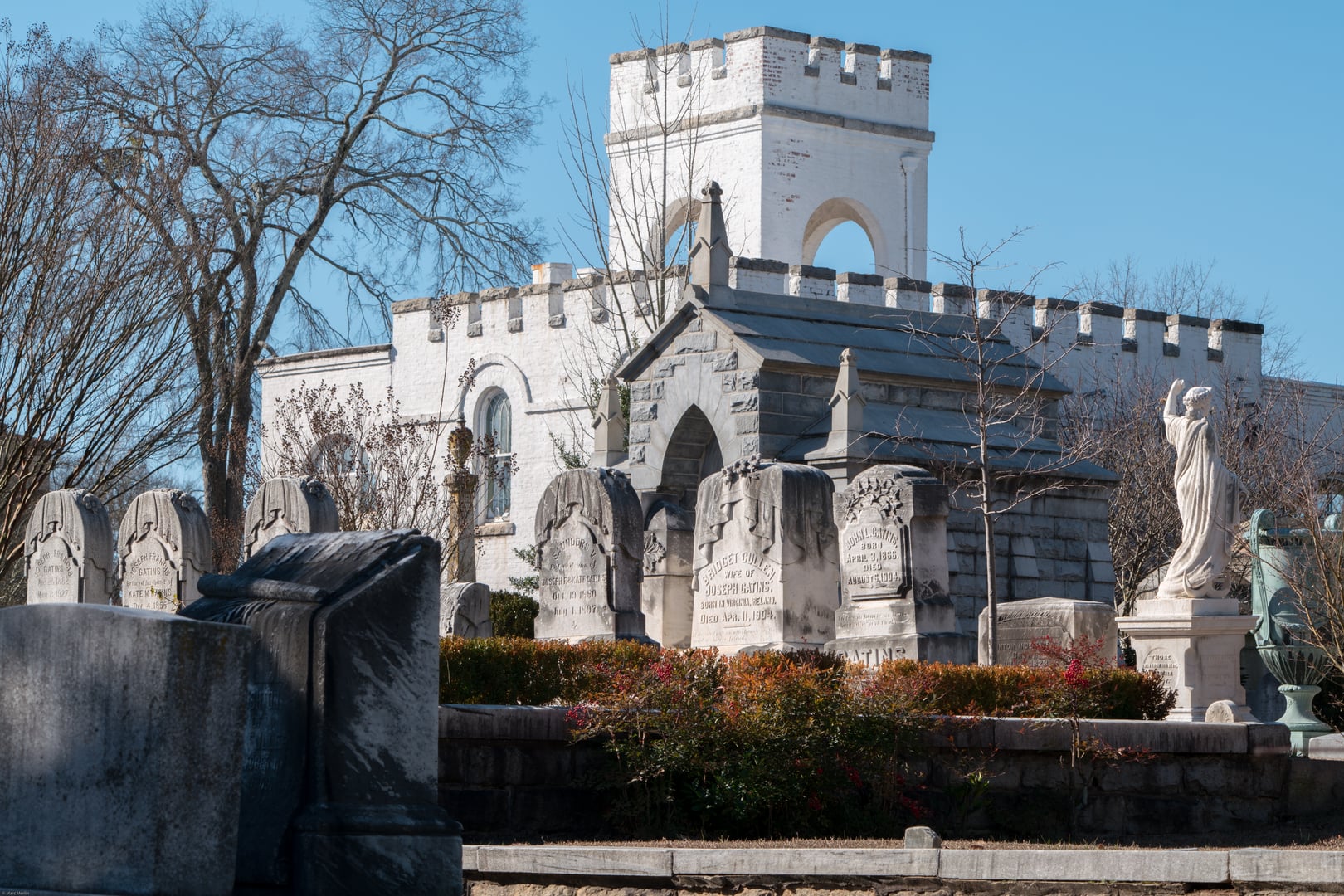
Est. 1855 · 1855 Garden Cemetery · Iron-Truss River Bridge · Sexton's House of Architectural Significance · National Register of Historic Places (2013)
Oconee Hill Cemetery occupies a hilltop east of downtown Athens, immediately adjacent to the University of Georgia's Sanford Stadium. The land was purchased by the city of Athens in 1855 after further burials were prohibited in the older Jackson Street Cemetery on UGA land. The city formed a self-perpetuating Board of Trustees in 1856 to hold and manage the original 17 acres in trust as a public cemetery for the benefit of the town.
The cemetery later expanded across the North Oconee River; the two sections are connected by an iron-truss bridge that is a contributing element of the National Register listing. Oconee Hill is significant for its landscape architecture, decorative funerary markers, distinctive cast-iron fencing, the through-truss river bridge, and a Sexton's House of architectural significance. The cemetery was added to the National Register of Historic Places in 2013.
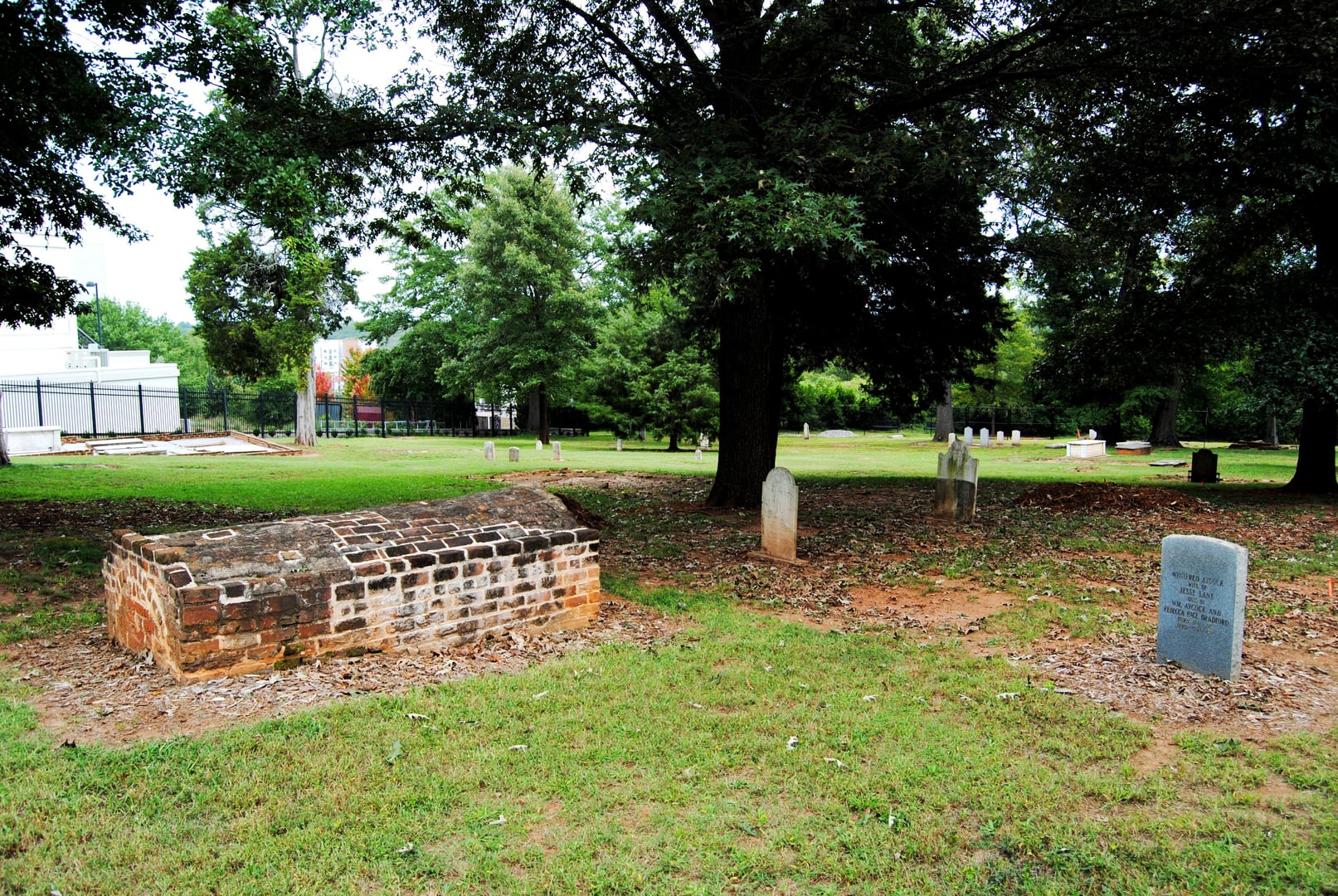
Notable interments include numerous UGA faculty and administrators, Athens civic leaders, and the reburied remains of the African Americans whose graves were disturbed at the Jackson Street Cemetery during the 2015 Baldwin Hall renovations.
Sources
- https://en.wikipedia.org/wiki/Oconee_Hill_Cemetery
- https://www.oconeehillcemetery.com/
- https://exploregeorgia.org/athens/general/historic-sites-trails-tours/oconee-hill-cemetery
- https://digilab.libs.uga.edu/cemetery/exhibits/show/history/oconeehill
Phantom carriage and horseSound of hooves and carriage wheelsSilhouette of a buggy driver on the bridge
According to the Red & Black student newspaper's 2014 piece on the ghostly folklore of Athens's two oldest cemeteries, which traces the legend back to a 1972 Red & Black article, the most enduring story at Oconee Hill Cemetery is the phantom carriage. The legend describes a 19th-century farmer who, intoxicated, drove his horse and carriage off of the cemetery bridge and into the river below, dying in the fall. He is said to return on nights of the full moon and continue his ride, sometimes seen and sometimes only heard, on the iron-truss bridge connecting the old and new sections of the cemetery.
UGA Libraries' ghost-stories research guide and the Visit Athens GA tourism office cite the same tradition. Variant accounts described in the Southern Spirit Guide describe sounds of horses' hooves, the creak of carriage wheels, and the occasional silhouette of a buggy driver on the bridge near dusk.
The legend is single-narrative — there is only one published origin source from 1972 — and is unverified at the level of an identified historical individual. It is best treated as cemetery folklore rather than as biographical history.
Notable Entities
Phantom carriage driver (unidentified 19th-century farmer)