Est. 1750 · Colonial Burial Ground · Yellow Fever Mass Grave · Button Gwinnett · Antebellum Dueling Ground
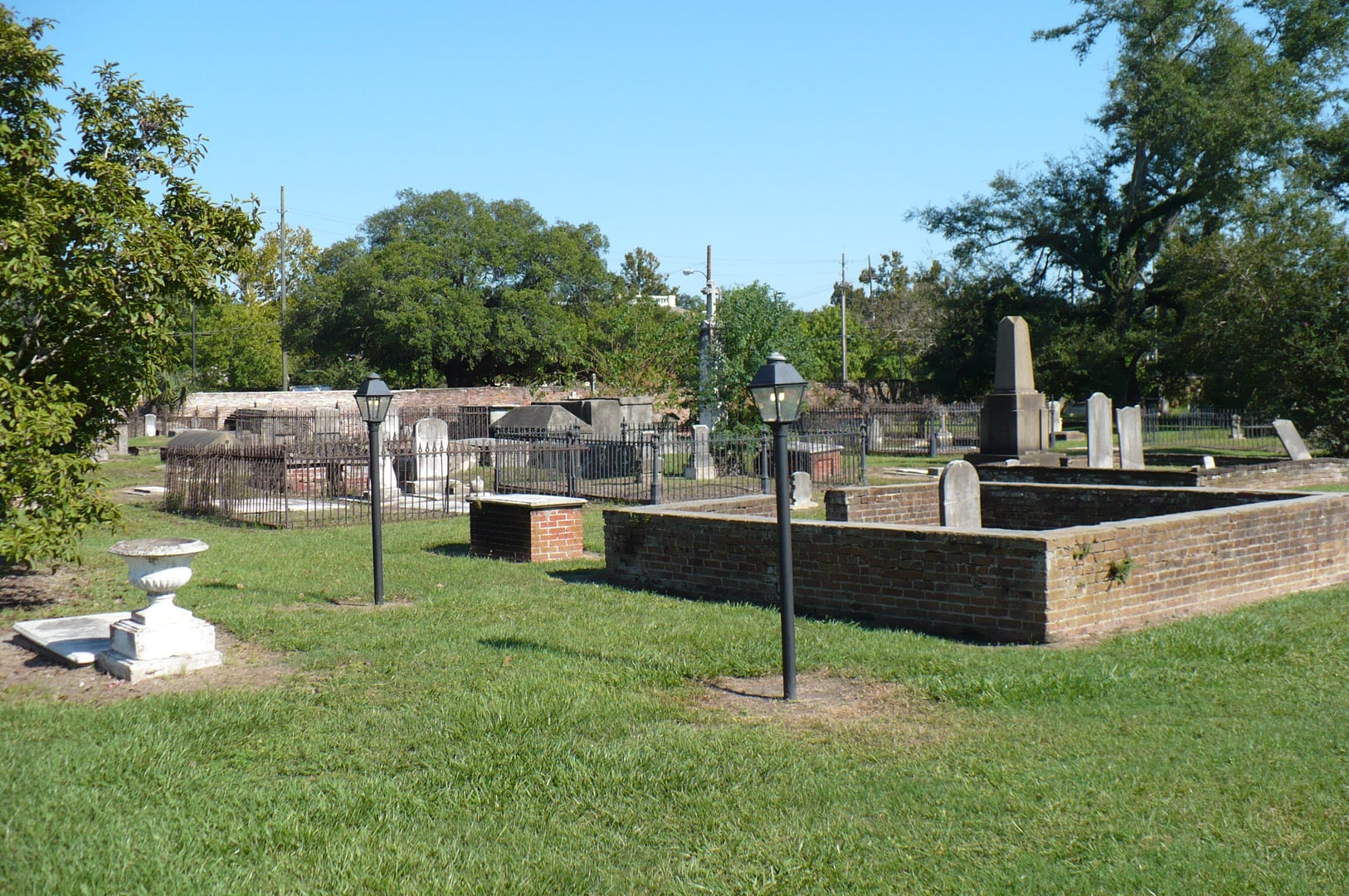
Colonial Park Cemetery opened in 1750 to serve the growing colony of Georgia, founded in 1733. For over a century the six-acre grounds served as Savannah's primary cemetery, accepting interments until the city closed it to new burials in 1853 and moved active burial activity to the larger Laurel Grove Cemetery west of town. The cemetery was renamed Colonial Park and converted to a public park-cemetery in 1896.
The cemetery holds the remains of Button Gwinnett, the Georgia signer of the Declaration of Independence who died from wounds sustained in a 1777 duel with rival Georgia politician Lachlan McIntosh. Several hundred Revolutionary War soldiers and early Savannah settlers are interred here, along with members of nearly every prominent eighteenth-century Georgia family.
Savannah experienced devastating yellow fever epidemics in 1820, 1854, and 1876. The 1820 outbreak killed roughly seven hundred people within weeks, and the city used the north end of Colonial Park as a mass burial ground. A bronze marker now identifies the area; primary sources indicate approximately 666 victims were buried together in the mass grave.
The cemetery also served as Savannah's principal dueling ground in the antebellum period, when the city's gentry resolved disputes by formal pistol duels at the edge of the grounds. The combination of mass-disease burials, dueling deaths, and the high mortality of the early colonial period gives the cemetery a particular weight among Savannah's historic sites. Colonial Park Cemetery is operated today by the City of Savannah's parks department.
Sources
- https://www.atlasobscura.com/places/colonial-park-cemetery-2
- https://genteelandbard.com/savannah-ghost-stories/2018/11/7/the-ghosts-of-colonial-park-cemetery
- https://ghostcitytours.com/savannah/ghost-stories/disease-dying/
- https://www.trolleytours.com/savannah/haunted-colonial-park-cemetery
Shadow figuresApparitionsCold spotsPhantom voicesPhantom footsteps
Colonial Park Cemetery is one of the central stops on virtually every haunted-Savannah walking tour and has generated a deep archive of visitor reports. The most common account is of shadow figures seen weaving through the older stones at dusk, particularly along the brick path connecting the Abercorn and Oglethorpe entrances. Photographs taken in the cemetery routinely include faces or partial figures that the photographer did not see in life; the proliferation of these images on social media has reinforced the cemetery's reputation.
Local tour traditions assign specific identities to several recurring presences. The mass grave at the north end, holding the 1820 yellow fever dead, is described as carrying a heaviness particularly noticeable on summer evenings. A figure in eighteenth-century dress has been reported near the Button Gwinnett area. Sounds of distant footsteps, occasional voices in conversational cadence with no source, and cold spots along the western wall are commonly reported.
The cemetery sustained significant Union vandalism during Sherman's March in 1864-65, when soldiers reportedly altered dates and names on several stones. Some of those altered markers remain visible. The City of Savannah maintains the grounds; ghost-tour operators rather than the city itself develop the cemetery's paranormal programming.
Notable Entities
Yellow fever victimsButton Gwinnett
Media Appearances
- Multiple Travel Channel and Atlas Obscura features