National Battlefield · Civil War Atlanta Campaign · Sherman's March
By mid-June 1864, the Atlanta Campaign had pushed Confederate General Joseph E. Johnston's Army of Tennessee back nearly one hundred miles from Chattanooga. Johnston established a seven-mile crescent-shaped defensive line anchored on Kennesaw Mountain, which rises more than 1,800 feet above the Marietta basin. Union General William T. Sherman commanded approximately 100,000 men, 254 guns, and 35,000 horses against Johnston's 63,000-man force and 187 guns.
Fighting opened on June 19 and continued through skirmishes at Pigeon Hill and the June 22 engagement at Kolb Farm. The Kolb Farm action convinced Sherman that Johnston's line was overstretched on its left. Sherman ordered a frontal assault for June 27, his first major frontal attack of the campaign. The Union assault failed by noon, with significant casualties along the Confederate line at Cheatham Hill. Survivors of the assaulting columns held advanced positions yards from the Confederate line for the next five days. On July 2, Sherman maneuvered around Johnston's left flank, forcing the Confederate withdrawal toward Atlanta and ending the Kennesaw Mountain phase of the campaign.
The Atlanta Campaign as a whole produced approximately 67,000 killed, wounded, and captured. The Kennesaw Mountain engagement specifically resulted in roughly 3,000 Union and 1,000 Confederate casualties.
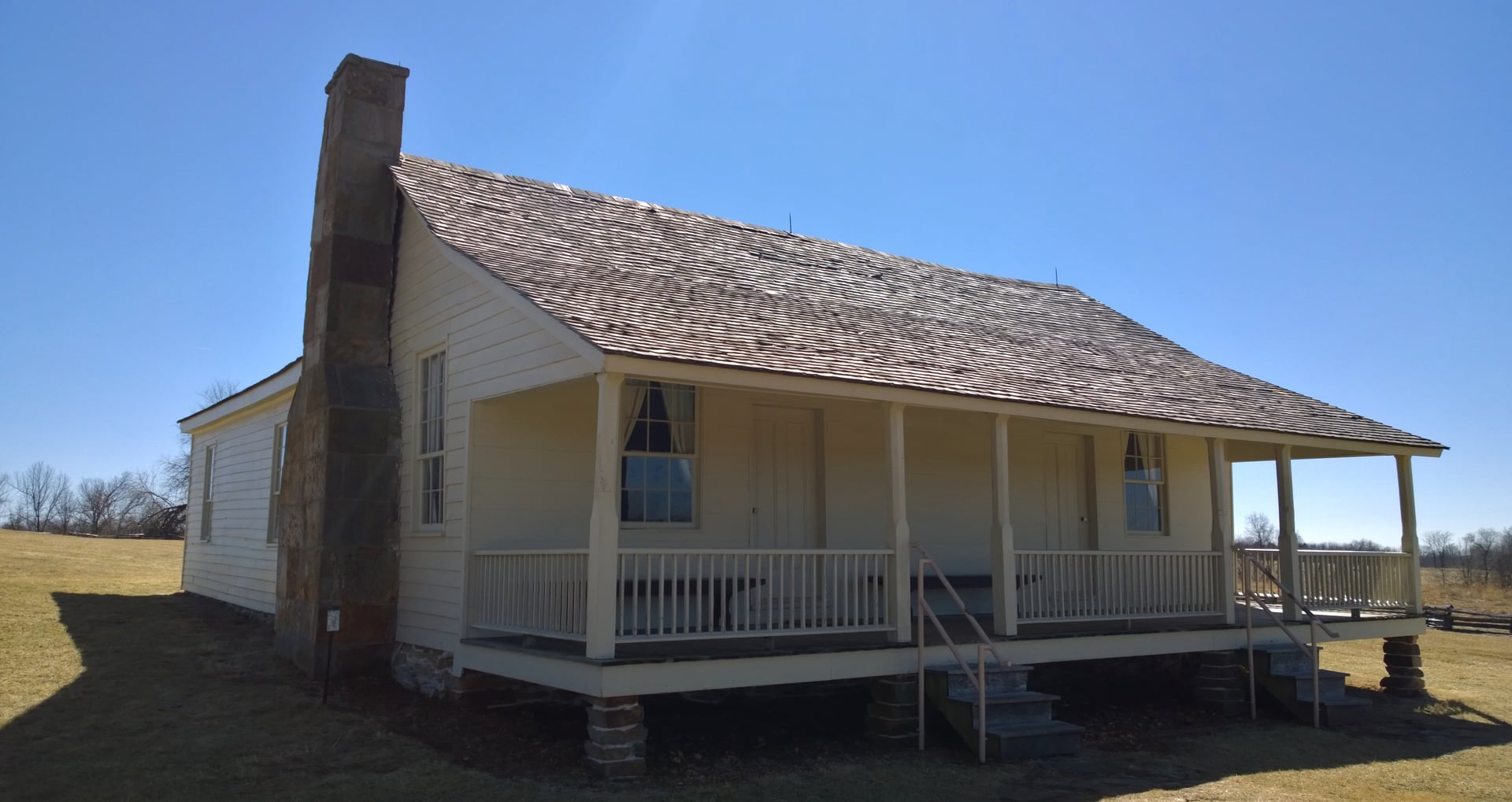
Congress authorized the battlefield's protection in 1917 through the U.S. War Department. The site was transferred to the Department of the Interior as a unit of the National Park System in 1933. The park preserves earthworks, the Kolb Farm house, and miles of trails through the historic engagement areas.
Sources
- https://www.nps.gov/kemo/
- https://en.wikipedia.org/wiki/Kennesaw_Mountain_National_Battlefield_Park
- https://home.nps.gov/kemo/learn/historyculture/the-atlanta-campaign.htm
- https://www.battlefields.org/learn/civil-war/battles/kennesaw-mountain
- https://www.nps.gov/kemo/index.htm
- https://civilwartalk.com/threads/haunted-kolbs-farm-marietta-georgia.190103/
- https://www.hauntjaunts.net/lewis-powell-ivs-haunted-georgia-a-primer-series-part-3/
ApparitionsPhantom soundsPhantom smellsResidual haunting
Kennesaw Mountain has accumulated the standard folklore of an American Civil War battlefield. Visitor accounts collected by paranormal hobbyist sites and local historical groups describe figures in period uniform observed at dawn and dusk along the Cheatham Hill earthworks where the June 27 frontal assault failed. Kolb Farm, the small farmhouse that served as Confederate Lieutenant General John Bell Hood's position during the June 22 engagement, has generated accounts of footsteps in the empty house and figures observed in the windows.
Pigeon Hill, the site of preliminary engagement on June 23, is the third location most often cited in local accounts. Hikers have reported the sound of musket fire, the smell of black powder, and figures observed moving through the wooded slopes.
The National Park Service treats Kennesaw Mountain as a military history park. Interpretive materials focus on the campaign, the tactical situation, and the casualties; the agency does not stage or endorse ghost-themed programming. Local Civil War tourism providers occasionally include the battlefield as a stop on regional haunted-history tours, but no organized paranormal investigations have been documented on park property.