Museum Visit
Massie Heritage Center Tour
Self-guided or staff-led visit to the restored 1856 schoolhouse, including the original classroom, the Heritage Classroom programs, and exhibits on Savannah's town plan and architecture.
- Duration:
- 1 hr
HauntBound archive · catalog record
Reported phenomena, as catalogued
Savannah's first public school, opened in 1856 on what is now Taylor Square — a Greek Revival schoolhouse that sits over a documented unmarked burial ground for enslaved African Americans.
207 East Gordon Street, Savannah, GA 31401
Research updated May 2026
Age
All Ages
Cost
$
Standard admission for heritage center exhibits; check massie.sccpss.com for current rates.
Access
Wheelchair OK
Historic schoolhouse with main-level access; some areas reached by stairs.
Equipment
Photos OK
Est. 1856 · Savannah's first public school (opened 1856) · Designed by architect John S. Norris; funded by 1841 Peter Massie bequest · Used as a Union hospital during Sherman's 1864 occupation · Closed as a school in 1974; reopened as heritage center in 1978 · Sits opposite a documented unmarked African-American burial ground on Taylor Square
Peter Massie, a Scottish immigrant who had settled in Glynn County, Georgia, died in 1841 having bequeathed $5,000 to the city of Savannah for the construction of a school 'for the education of the children of the poor.' By 1856, with the trust having grown through interest to roughly $14,000, the city engaged architect John S. Norris — already at work on several major Savannah commissions — to design the schoolhouse. Norris produced a Greek Revival central building on East Gordon Street facing what was then Calhoun Square and is today Taylor Square.
The Massie Common School House opened in 1856 with 150 students and three teachers, marking the establishment of free public education in Savannah. East and west wings designed by architect John Hogg were added in 1872 and 1886 respectively, expanding the campus. When Union General William T. Sherman captured Savannah in December 1864, the school was temporarily closed and converted into a hospital for U.S. Army troops. The occupation caused lasting damage to the building: with the Union blockade preventing coal from reaching the city, soldiers burned the school's furniture for heat, irreparably damaging the building's furnace.
The school operated continuously for more than a century, closing at the end of the 1974 academic year due to declining enrollment and rising costs. Savannah preservationists Emma Adler and Saxon Pope Bargeron formed the Friends of Massie Committee in 1975, and the building was nominated to the National Register of Historic Places in 1976. The Massie Heritage Center opened in 1978 and has since become one of the earliest school-district-operated heritage education programs in the United States, serving more than 10,000 student visitors annually through the Savannah-Chatham County Public School System.
The building also sits in a charged location. Taylor Square, on which the school faces, overlays a documented unmarked burial ground for enslaved African Americans (see Taylor Square entry). A skull was uncovered by utility workers outside the Heritage Center in 2004, prompting renewed historical attention to the burials beneath the square.
Sources
Massie Heritage Center's paranormal lore is closely interwoven with the lore of Taylor Square (formerly Calhoun Square), on which the schoolhouse faces. Ghost City Tours and Savannah Ghost Tours describe a layered set of reports that overlap with the square's broader history: children's voices and laughter heard in classrooms after closing time, soft footsteps in upstairs spaces when no one is on the floor, and figures interpreted as children briefly seen near the windows facing the square.
Tour-circuit accounts sometimes attribute the children's-spirit reports to victims of Savannah's recurring 19th-century yellow-fever epidemics. The epidemic context is historically grounded — Savannah suffered devastating yellow-fever outbreaks in 1820, 1854, and 1876 — though no specific student deaths at Massie are documented in the available sources to anchor these reports. The Union hospital use during Sherman's occupation is sometimes cited in tour scripts as another possible source of residual presence in the building.
The most editorially careful framing of Massie's hauntedness, however, ties it to the documented unmarked burial ground beneath the square. The 2004 skull discovery during utility work directly in front of the Heritage Center brought the burials into public attention, and the schoolhouse's proximity to those graves is the most commonly cited source of unease at the site by both staff and visitors. HauntBound treats these reports with the sensitivity owed to a slavery-era burial site — the lore is a contemporary acknowledgment of an ongoing reckoning, not romanticized antebellum theater.
Notable Entities
Self-guided or staff-led visit to the restored 1856 schoolhouse, including the original classroom, the Heritage Classroom programs, and exhibits on Savannah's town plan and architecture.
Some links on this page may earn HauntBound a small commission when you book, at no extra cost to you. Our editorial picks are independent. Full disclosure
Every HauntBound history is researched from documented sources. We clearly separate verified historical fact from paranormal folklore.
Free Guide
11 verified stops, rated for families, mapped in order. Free.
One email to confirm, then the guide link. Unsubscribe anytime.
Savannah, GA
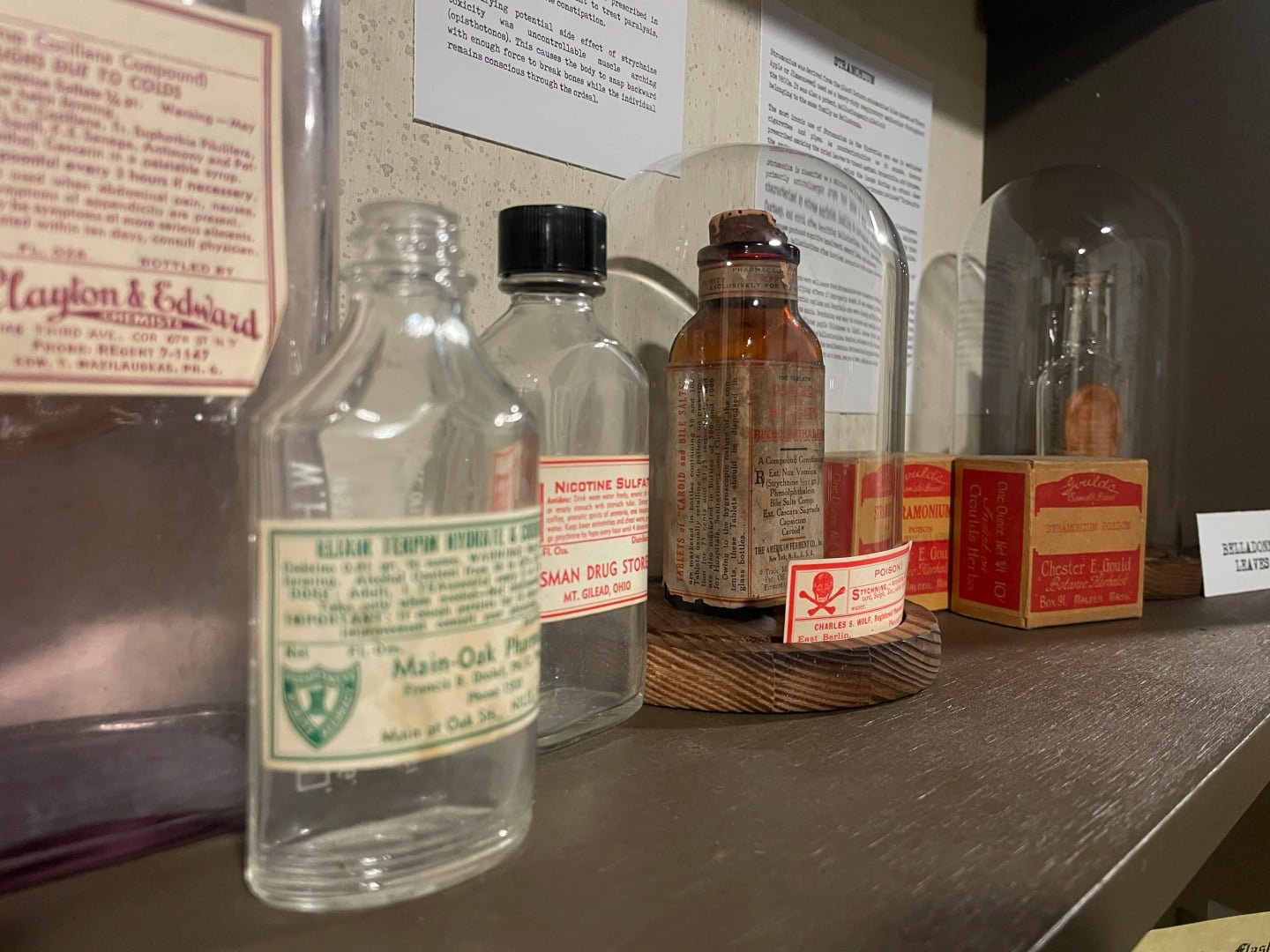
Graveface Museum opened in 2020 on Savannah's historic Factors Walk, founded by Ryan Graveface — a musician and record label owner who built the collection over decades. The museum holds over 30,000 Gacy items including hundreds of original paintings, making it the largest documented collection of his work. It also holds the most extensive public display of Ed Gein artifacts.
Savannah, GA
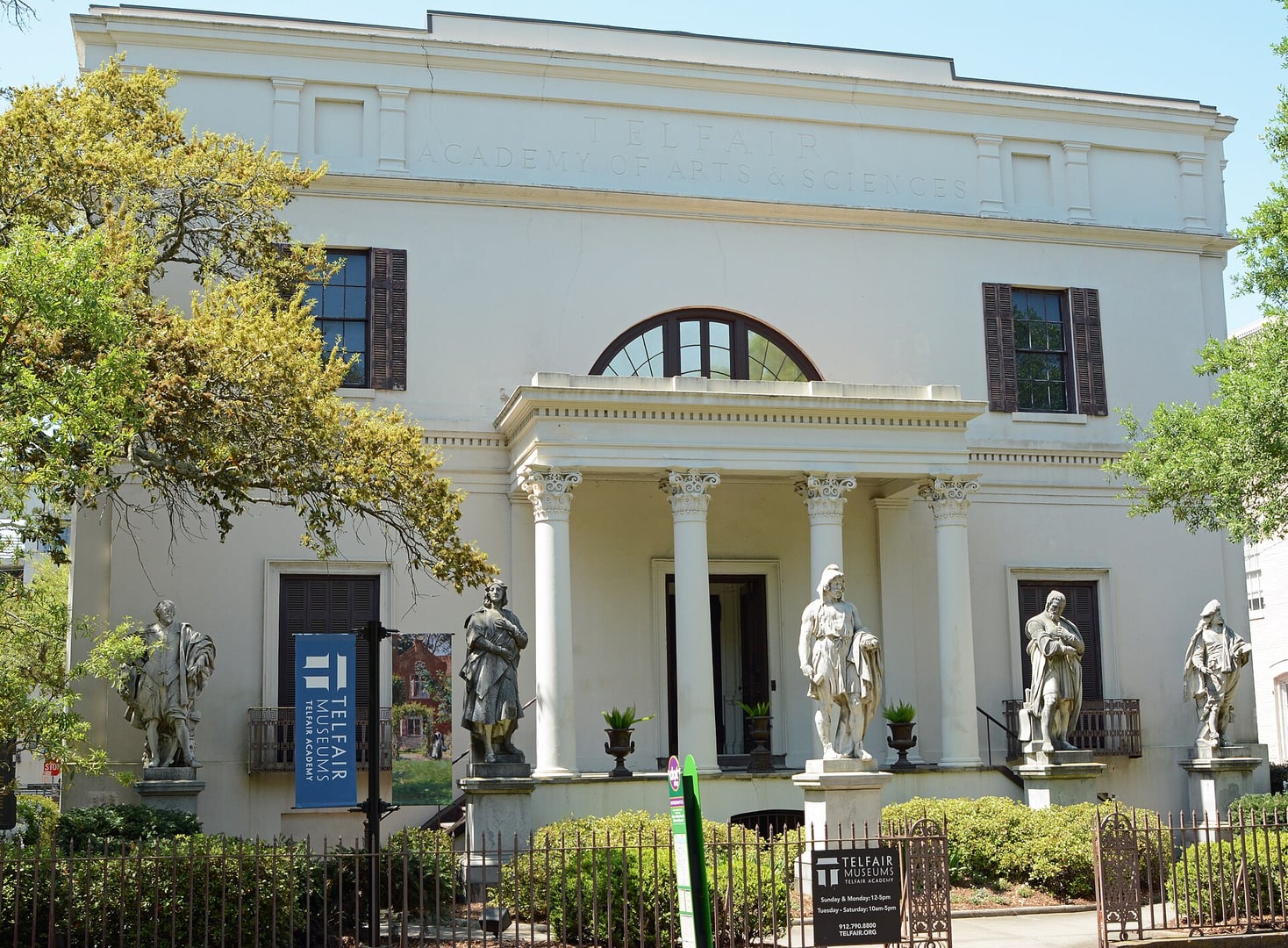
The Telfair Academy is the original Telfair family mansion, designed circa 1818 by English architect William Jay for Alexander Telfair. Mary Telfair bequeathed the house and its contents to the Georgia Historical Society in 1875, and after additions by German-born architect Detlef Lienau, it opened in 1886 as the first public art museum in the American South.
St. Augustine, FL
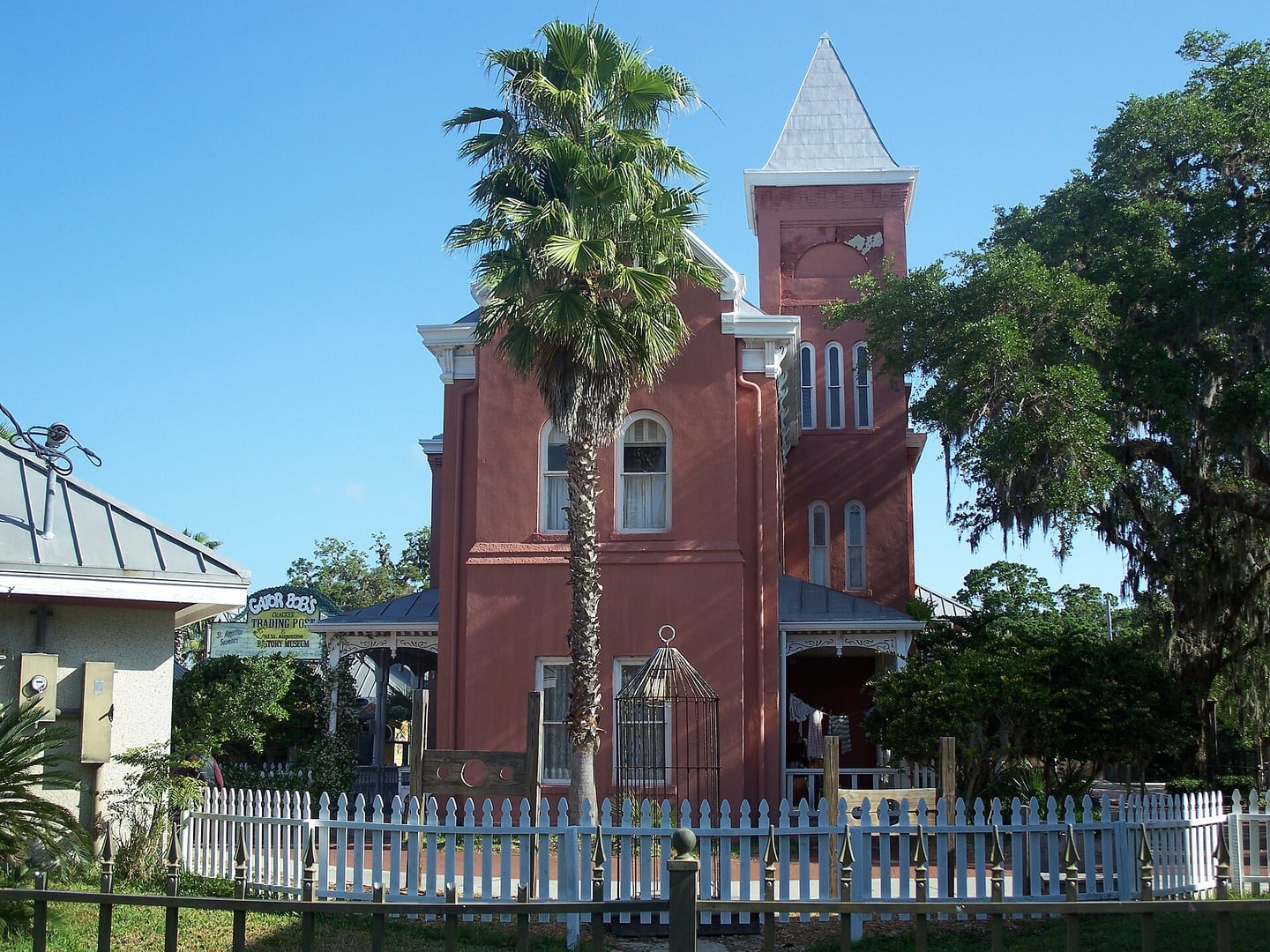
The Old St. Johns County Jail at 167 San Marco Avenue in St. Augustine, Florida was commissioned by railroad magnate Henry Flagler and constructed in 1891. Designed by the same architectural firm later used for Alcatraz, the facility housed prisoners under conditions so severe — one bucket per cell as a toilet, minimal diet, and labor in Flagler's fields — that it was closed in 1953. Eight documented executions occurred on site before the county converted the building to a tourist attraction in 1954.