Est. 1847 · National Monument · Civil War Battlefield · Third System Coastal Fortification · Robert E. Lee Engineering Project · Rifled-Cannon Watershed Battle
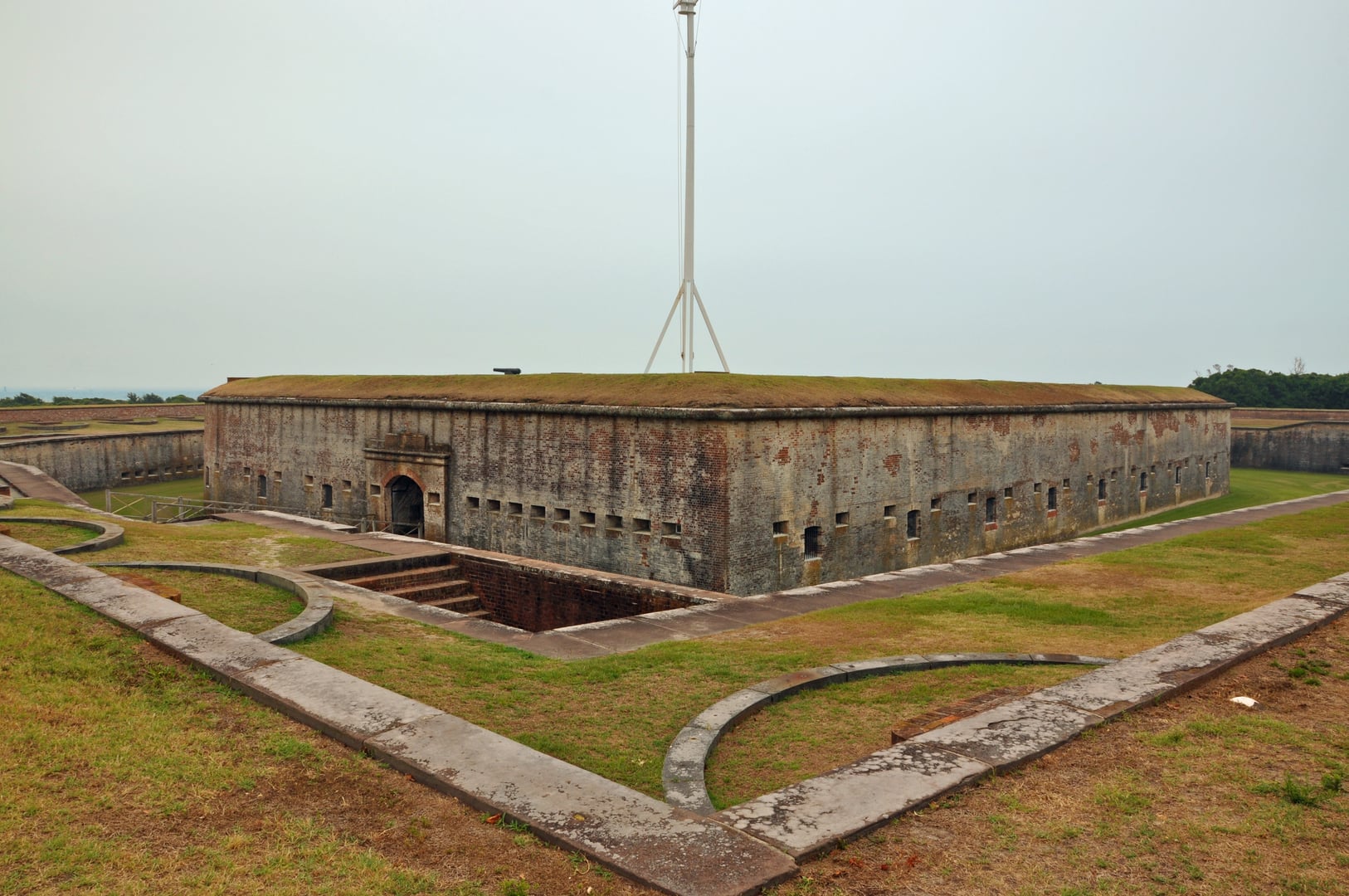
Construction of Fort Pulaski began in 1829 under Major Samuel Babcock and continued under Second Lieutenant Robert E. Lee, who served as engineering officer at the start of his career. The fort was completed in 1847 on Cockspur Island in the Savannah River, defending the approach to the port of Savannah. Named for Count Casimir Pulaski, a Polish-born cavalry officer killed at the 1779 Siege of Savannah, the fort was one of the strongest masonry fortifications in the Third System of American coastal defense.
Confederate forces seized Fort Pulaski in January 1861, before Georgia formally seceded. Union Captain Quincy A. Gillmore established batteries on Tybee Island a mile away and brought up newly developed rifled cannon. On April 10-11, 1862, the rifled batteries opened fire. Within 30 hours, the Union artillery breached the fort's seven-and-a-half-foot brick walls and threatened the magazine. The Confederate garrison surrendered. The battle proved that rifled artillery had rendered masonry forts obsolete and effectively ended Third System construction doctrine.
In October 1864, Fort Pulaski received the Immortal Six Hundred, a group of captured Confederate officers held in retaliation for Confederate placement of Union prisoners under artillery fire at Charleston. The men were issued rations of moldy bread, soured pickles, and limited water for an extended period. Cases of starvation, dehydration, dysentery, and scurvy developed; thirteen of the men died at the fort and were buried outside the walls.
Fort Pulaski was designated a National Monument on October 15, 1924. The National Park Service has managed the site since 1933 and has carried out extensive restoration of both the masonry damage from the 1862 bombardment and the broader fort architecture.
Sources
- https://en.wikipedia.org/wiki/Fort_Pulaski_National_Monument
- https://www.nps.gov/fopu/
- https://savannahghosttour.com/ghosts-of-fort-pulaski/
- https://www.nps.gov/fopu/planyourvisit/hours.htm
- https://www.nps.gov/fopu/planyourvisit/fees.htm
ApparitionsPhantom voicesPhantom soundsCold spotsEVP
Civil War prison fortifications consistently produce some of the most documented paranormal reporting in dark-tourism literature, and Fort Pulaski's role as a holding site for the Immortal Six Hundred has anchored a substantial body of ghost-tour and visitor accounts. The thirteen documented deaths in 1864-65, primarily from scurvy and dysentery, are well established in NPS records.
Reports gathered by Savannah ghost-tour operators include a Confederate officer who reportedly appeared as a solid, life-sized figure and reprimanded visitors for failing to salute before disappearing. Other accounts describe a Union officer near the breached wall, sounds of bat-cracks and shouting that some have attributed to the documented 1863 baseball game played by the Union garrison (one of the earliest organized baseball games on record in Georgia), and a notable audio capture of a voice humming the 'Battle Hymn of the Republic' during a recorded ceremony.
The National Park Service does not promote paranormal tourism at Fort Pulaski. The interpretive frame is the documented military and prison history, including respectful treatment of the prisoners' suffering. Visitors interested in the paranormal dimension should treat the lore as folkloric overlay and engage with the considerable documented history that makes Fort Pulaski one of the most important Civil War sites in the South.
Notable Entities
Confederate OfficerUnion Officer