Est. 1892 · National Register of Historic Places · Savannah Historic District · Victorian Architecture
William Kehoe emigrated from Ireland with his family at age 10 and settled in Savannah, and during the Civil War made munitions for the Confederate Army in Selma, Alabama. After returning to Savannah he apprenticed as an iron molder, worked his way up, and bought the foundry himself. By the late 19th century he was among Savannah's most prosperous merchants.
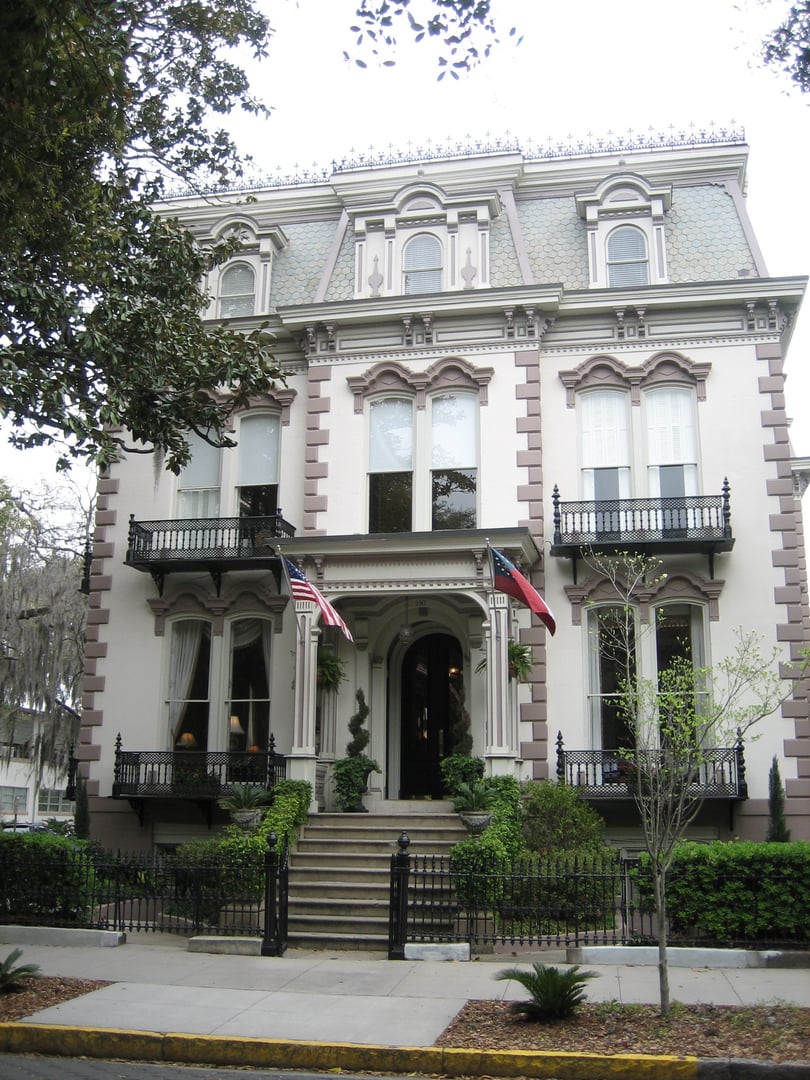
In 1892 he commissioned architect DeWitt Bruyn to design a stately family home on Columbia Square in Savannah's historic district. The cost was $25,000 — an enormous sum at the time — and the Queen Anne Revival design pays direct tribute to Kehoe's trade. The exterior stairways, balustrades, window casings, fluted columns, capitals, fences, and gates were all cast in iron at his own foundry.
Kehoe had married Anne Flood in 1868. The couple raised ten children in the house after moving in that May. After William's death, the Kehoe heirs sold the property in 1927. The building served variously as a family residence and later as a funeral parlor. Professional football player Joe Namath owned it for a period and sold it in 1990.
A historic renovation followed, and after about two years the Kehoe House opened as a bed and breakfast. It is listed on the National Register of Historic Places and operates 13 guest rooms on an adults-only (21+) basis.
Sources
- https://en.wikipedia.org/wiki/Kehoe_House
- https://en.wikipedia.org/wiki/William_Kehoe_(businessman)
- https://www.kehoehouse.com/history
- https://savannahgavisitors.com/attractions/historic-district/landmarks/1555-kehoe-house-circa-1892
- https://ghostcitytours.com/savannah/haunted-savannah/haunted-hotels/kehoe-house/
- https://beyondhaunted.com/georgia/kehoe-house
- https://www.newoaktheatre.org/things-to-do/kehoe-house
ApparitionsPhantom soundsPhantom smellsTouching/pushingSensed presencePhantom footsteps
The most frequently circulated legend involves twin Kehoe children getting trapped and dying inside the parlor chimney, which was subsequently sealed and decorated with angels. Ghost tour operators in Savannah repeat this account reliably. Historians and the Ghost City Tours website note it has been "debunked pretty heavily" — there is no documented record of such a death in the house.
A Savannah ghost-tour operator describes a belief that two of the Kehoe children died in the home in a careless accident and that their spirits are thought to still roam the mansion. The property saw a decade as a funeral parlor following the Kehoes — a detail the building absorbed into its atmosphere.
Guest accounts from multiple sources describe a consistent pattern: the scent of old floral perfumes and musky tobacco drifting through hallways and stairwells. The sounds of running feet on upper floors when no children are present — a notable detail given the property's adults-only policy. Tugs at clothing and pant legs reported near the stairs.
Room 203 is the specific focus of the 'Lady in Gray' accounts. Guests who have stayed there describe a gentle physical presence: hands touching their own in the dark, and what several have described as light kisses on the cheek. The figure is characterized in these accounts as communicative rather than distressing — a distinction that distinguishes her from the more ambiguous children's presences throughout the rest of the house.
Notable Entities
The Lady in GrayThe Kehoe Children