Est. 1840 · Georgia State Landmark (1954) · Charles Cluskey Architecture · Antebellum Savannah Merchant House
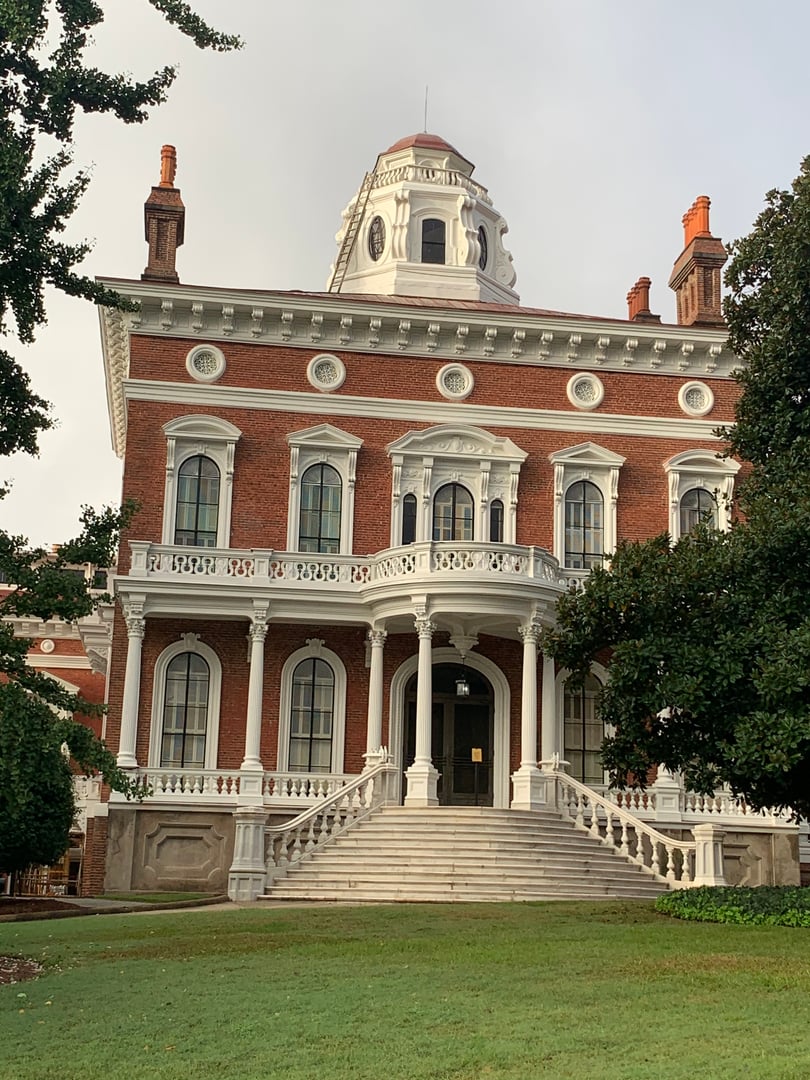
Francis Sorrel (1793-1870) was a shipping merchant born in Saint-Domingue (now Haiti) who relocated to Savannah after the Haitian Revolution and built one of the largest mercantile fortunes in the antebellum city. Sorrel commissioned a Greek Revival and Regency mansion on the northwest corner of Madison Square around 1840 from Charles Cluskey, an Irish-born architect who had moved to Savannah from New York City in 1829 and become one of the South's most accomplished antebellum architects.
The house has a stuccoed brick exterior, a pedimented entrance portico, and an interior featuring a curved walnut staircase rising through three floors. The original property included a carriage house and quarters for the enslaved people who served the household.
The second owner, Savannah businessman Henry D. Weed, entered into a purchase agreement in 1859 and took possession in 1862. The Weed family held the property until 1914.
The Sorrel-Weed House was opened to the public in January 1940 by the Society for the Preservation of Savannah Landmarks. In 1954 it was one of the first two homes in Georgia designated as a State Landmark. The property has subsequently changed hands and is now operated as a private museum offering daytime historical and architectural tours, evening ghost tours, and after-hours paranormal investigations.
The Wall Street Journal profiled the house's paranormal tourism business in 2009. USA Today's 10best feature has ranked the Old Sorrel-Weed House Museum among top Halloween destinations.
Sources
- https://en.wikipedia.org/wiki/Sorrel%E2%80%93Weed_House
- https://sorrelweedhouse.com/
- https://www.trolleytours.com/savannah/sorrel-weed-house
- https://gallivantertours.com/savannah/historic-homes/sorrel-weed-house/
ApparitionsShadow figuresCold spotsPhantom voicesEquipment malfunctionEVP
The first paranormal narrative associated with the Sorrel-Weed House concerns Matilda Moxley Sorrel, Francis Sorrel's second wife, whose 1860 suicide is documented in family papers. Lore places her death from a fall in the upper hall of the mansion, but a letter written the day she died places it at the family's residence next door, where the Sorrels had moved after selling the house in 1859; reported phenomena in the central staircase include the figure of a woman in 19th-century dress and the sound of soft weeping.
The second narrative — the account of a 16-year-old enslaved servant named Molly, alleged to have been killed in the carriage house — is acknowledged by the venue's own interpretive material as not supported by historical records. The story circulates widely in Savannah ghost-tour traditions despite the absence of any documented enslaved person by that name in surviving Sorrel family papers.
Hauntbound treats the Molly narrative with editorial care. The historical conditions of slavery in antebellum Savannah produced real and widespread sexual violence against enslaved women, and the venue's interpretation explicitly frames the Molly story as reflecting that broader documented history rather than as a verified individual case. Visitors deserve a clear distinction between documented history and ghost-tour folklore.
Reported phenomena in the carriage house include shadow figures, cold spots, equipment malfunction during investigations, and disembodied voices. The basement, used historically for service and storage, produces reports of a heavy presence in the back rooms and unexplained sounds during investigation sessions. Multiple paranormal television programs have featured the property since the early 2000s.
Notable Entities
Matilda Moxley Sorrel
Media Appearances
- Wall Street Journal 2009 feature
- USA Today 10best Halloween destinations