Est. 1828 · Founded 1828 — Predates Columbus City Incorporation · John Stith Pemberton (Coca-Cola Inventor) Burial · Civil War Veterans — Including Battle of Columbus (1865) · Georgia Governor and U.S. Senator Interments
Linwood Cemetery's founding in 1828 predates the formal incorporation of Columbus, Georgia, by approximately four months, giving the burial ground a claim to being older than the city it serves. The 28.7-acre cemetery at 721 Linwood Boulevard in Muscogee County has accumulated between 14,000 and 18,000 graves across nearly two centuries, representing a cross-section of Columbus's civic, military, and commercial history.
The cemetery's most-visited grave belongs to Dr. John Stith Pemberton (July 8, 1831–August 16, 1888), the Columbus-trained pharmacist who formulated what became Coca-Cola. Pemberton served as a Confederate officer and sustained a saber wound to the chest during the Battle of Columbus in April 1865 — the final land battle of the Civil War east of the Mississippi. The wound triggered a morphine dependency that remained with him for the rest of his life. Seeking a morphine-free alternative painkiller, he began experimenting with coca-leaf extracts in 1866; the work eventually produced the syrup he sold as a patent medicine in Atlanta in 1886. Pemberton sold the formula to Asa Griggs Candler for $300 in 1888 — the same year he died of stomach cancer at age 57, impoverished and still dependent on morphine. His marker at Linwood displays symbols of his Confederate service and Freemasonry membership. Roadside America has documented the grave as a recognized dark-tourism destination.
Among the cemetery's other notable interments: Henry Benning (1814–1875), the Confederate general for whom Fort Benning (now Fort Moore) was named; Georgia Governor James Johnson (1811–1891); and Noble Leslie DeVotie (1838–1861), a founder of the Sigma Alpha Epsilon fraternity. The cemetery also holds W.C. Bradley, industrialist and long-serving chairman of The Coca-Cola Company, and Tom Huston, the inventor behind Tom's Peanuts.
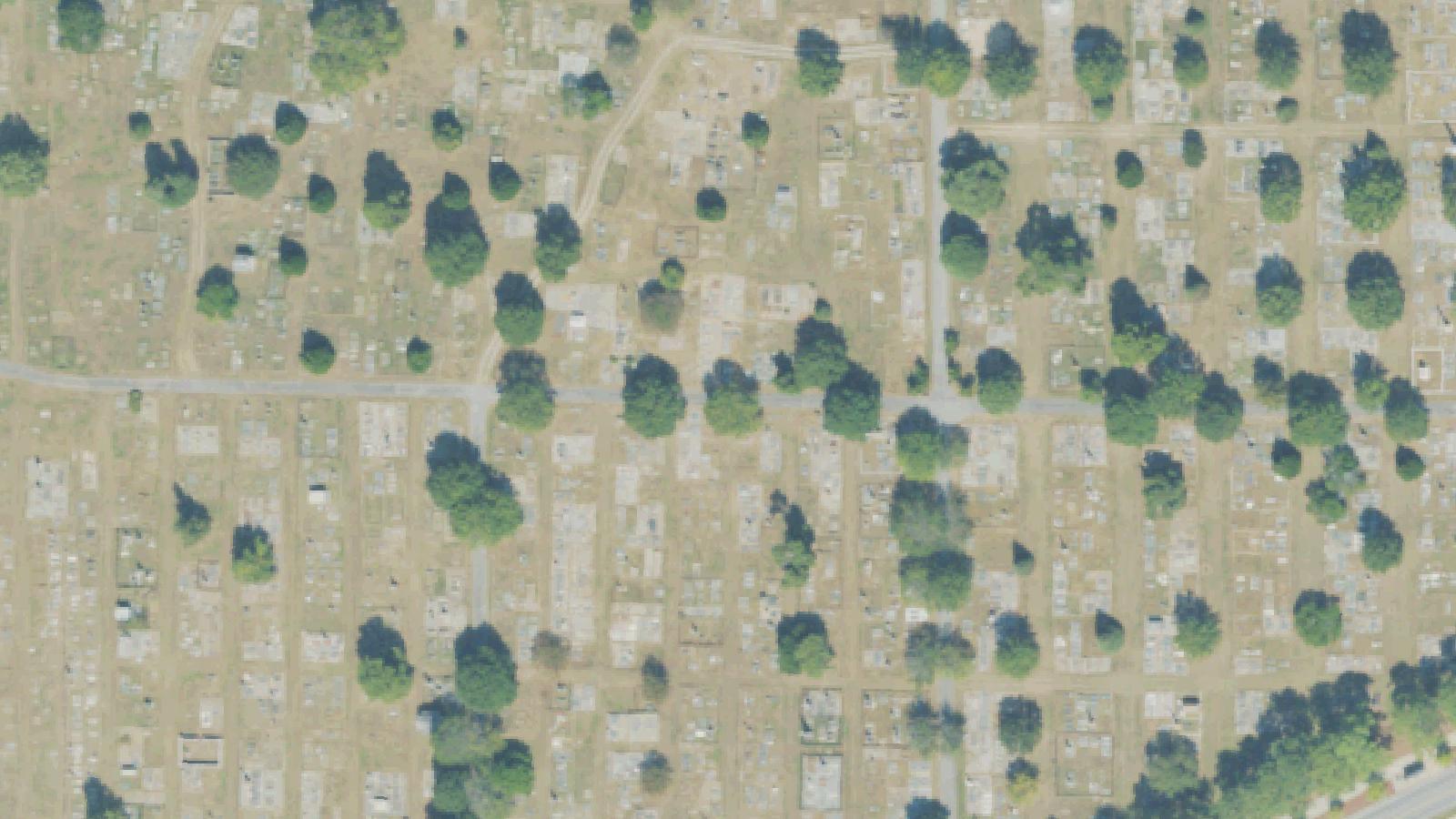
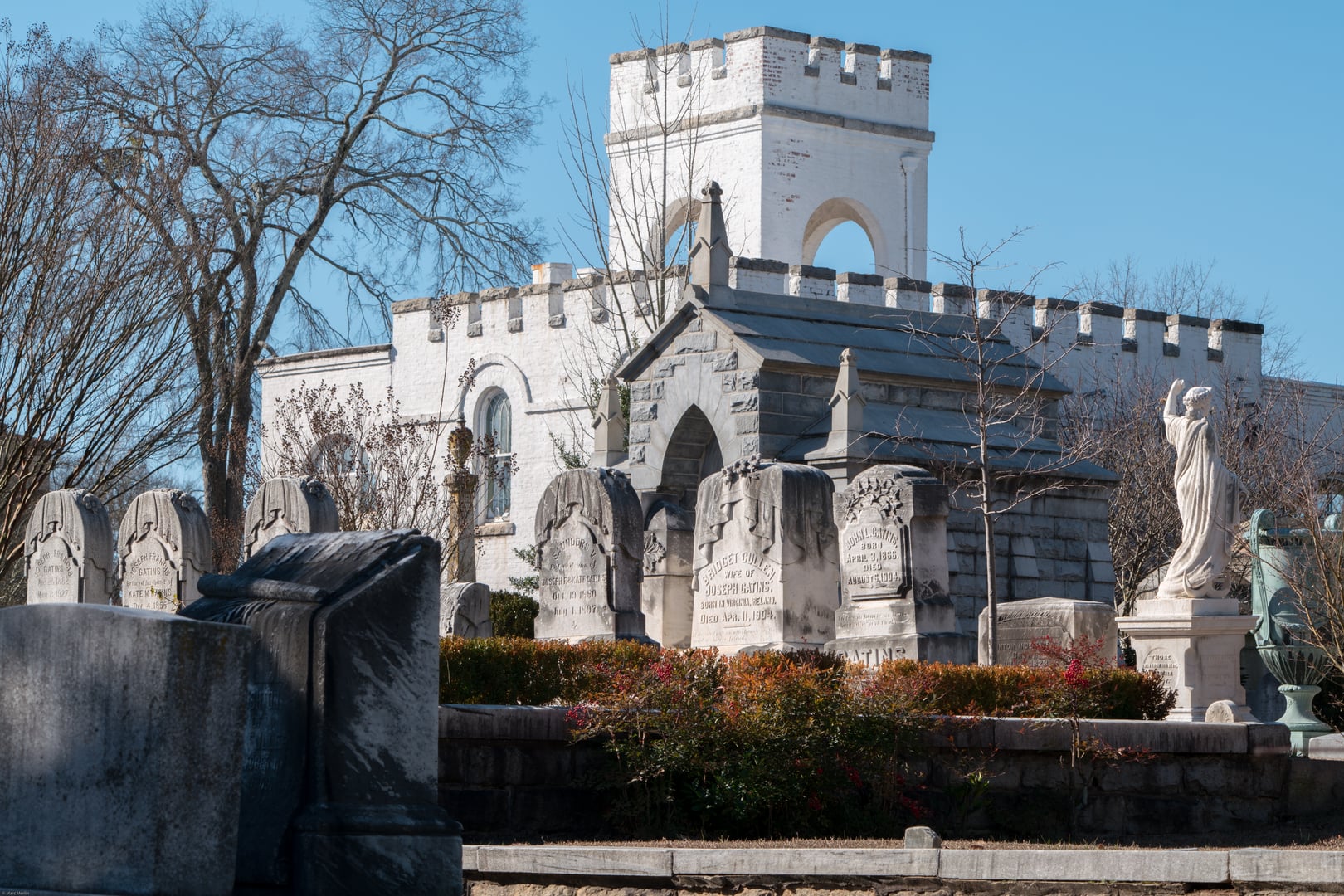
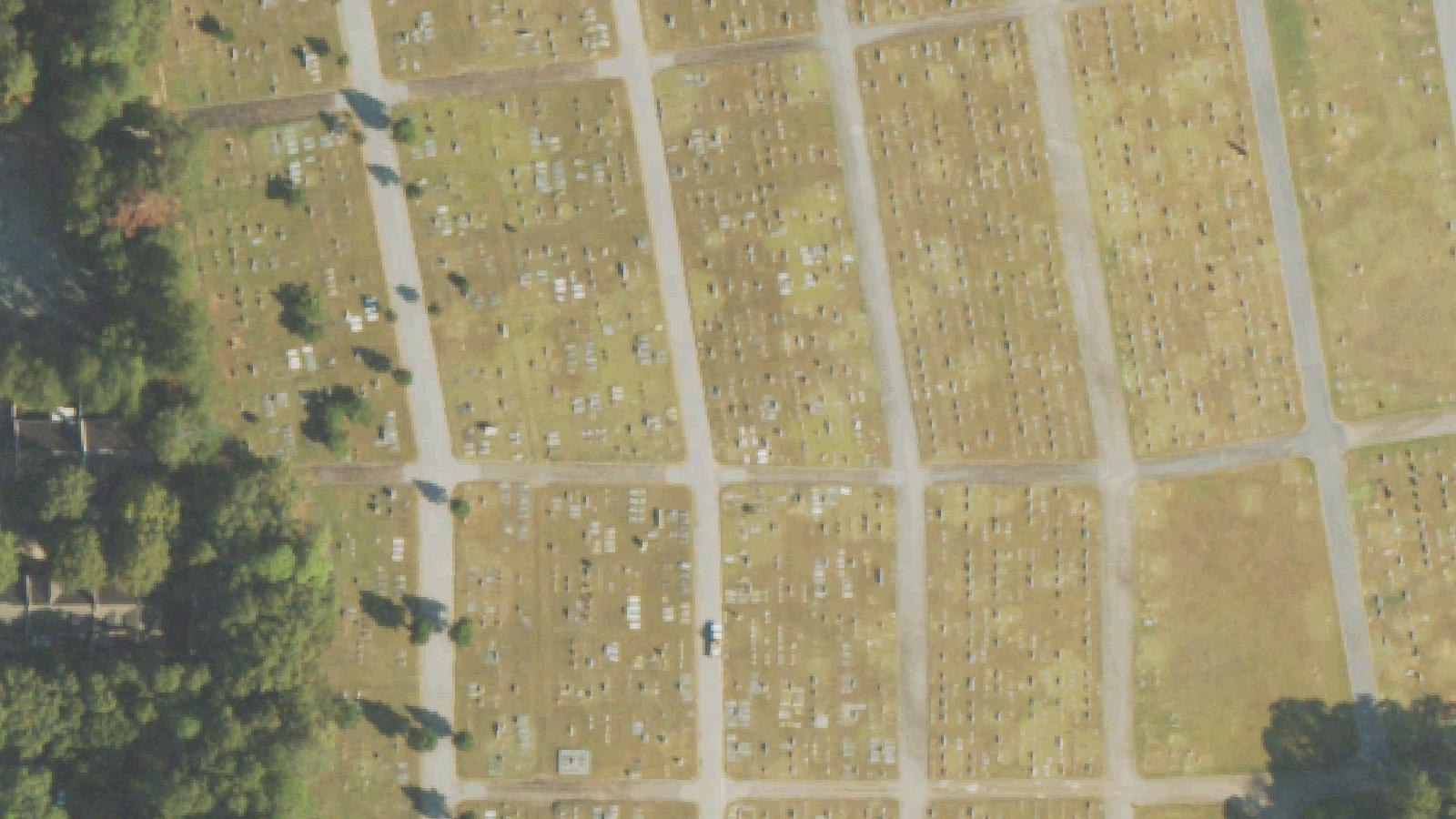
The grounds are laid out in rectangular family plots bordered by iron fences and brick or granite walls, with tombstone styles ranging from simple markers to elaborate Egyptian Revival and Gothic forms consistent with nineteenth-century funerary fashion.
Sources
- https://www.linwoodcemetery.org/famous-residents
- https://en.wikipedia.org/wiki/Old_City_Cemetery_(Columbus,_Georgia)
- https://www.roadsideamerica.com/story/2075
- https://en.wikipedia.org/wiki/John_Stith_Pemberton
Spectral mists (1953 photograph — uninvestigated)Gathering of veteran spirits (psychic account)
The paranormal claims at Linwood Cemetery are secondary to a factual dark history that needs little embellishment. Pemberton's arc — war wound, addiction, the accidental invention of a global commodity he sold away for $300, and death in poverty from cancer the same year — gives the cemetery a weight that most haunted burial grounds can only approximate.
A 1953 photograph attributed to a Columbus town historian was later examined by paranormal investigators, who identified what they described as spectral mists in the image. The photograph itself has not been widely reproduced or independently authenticated in published sources, and the claim should be read as part of the oral tradition surrounding the cemetery rather than documented evidence.
A visiting psychic described Linwood as a gathering place for the spirits of Civil War veterans, a characterization consistent with the cemetery's documented concentration of Confederate veterans including soldiers killed in the Battle of Columbus, the final land engagement of the war in April 1865. The battle was fought within two miles of the cemetery.
The cemetery's dark-tourism value is primarily historical rather than paranormal. Roadside America lists Pemberton's grave as a named draw, and the site attracts visitors interested in the origins of Coca-Cola, the Civil War's final weeks, and the lives of Columbus's nineteenth-century civic figures.
Notable Entities
John Stith PembertonHenry Benning