Est. 1853 · Union Artillery Strike July 30, 1864 · National Register of Historic Places · Greek Revival Antebellum Architecture · Civil War and Reconstruction Museum
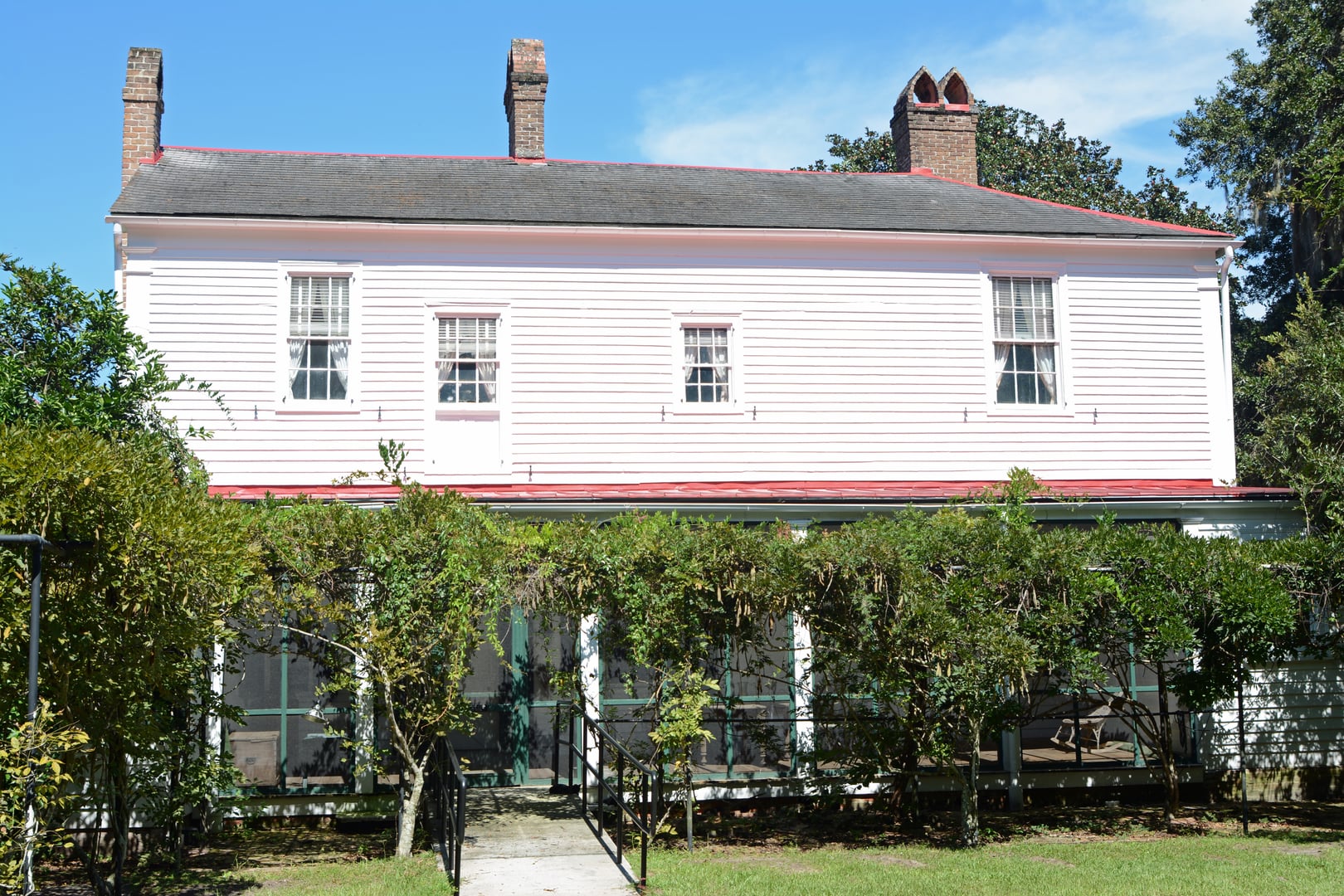
The house at 856 Mulberry Street was built in 1853 for Judge Asa Holt, one of Macon's prominent antebellum attorneys. The Greek Revival design features a columned portico and symmetrical facade typical of middle Georgia's prosperous pre-war architecture. The structure stood near the center of Macon's commercial district, reflecting Holt's standing in the city.
On July 30, 1864, Union forces under General George Stoneman bombarded Macon as part of a cavalry raid intended to reach Andersonville Prison to the south. An artillery round struck the house's front columns and penetrated into the structure before failing to explode. The unexploded shell remained lodged in the house, and the impact damage—visible in the original columns—became a defining feature of the property's identity. Stoneman's force was repulsed at Dunlap's Farm outside Macon before reaching the city center; the bombardment was the only Civil War damage most of Macon's downtown structures sustained.
The house passed through several private owners after the war. It was acquired by the United Daughters of the Confederacy in the 20th century and converted to a museum. The cannonball itself and the point of impact in the front of the house are the museum's central artifacts, displayed alongside period furnishings, Confederate documents, and Reconstruction-era materials. The building was added to the National Register of Historic Places, recognizing its architectural integrity and its direct connection to Civil War combat action in middle Georgia.
Sources
- https://www.cannonballhouse.org/
- https://en.wikipedia.org/wiki/Cannonball_House_(Macon,_Georgia)
- https://visitmacon.org/blog/explore-haunted-history-of-macon-georgia/
Phantom footstepsShadowy figuresCold spots
The Cannonball House has accumulated a quiet reputation for paranormal activity that Visit Macon includes in its official haunted history documentation. The most commonly reported phenomena are phantom footsteps—the sound of someone moving through rooms or up the stairs when the space has been confirmed empty—and shadowy figures observed in the interior of the historic structure.
No specific historical identity is attached to these figures in the documentation available, and the museum's programming does not foreground the ghost-story tradition. The building's documented history—a Civil War artillery strike, an unexploded shell embedded in the structure, and more than 170 years of continuous occupation—provides a factual backdrop that visitors frequently connect to the reported activity.
The house appears on the US Ghost Adventures Macon ghost tour itinerary alongside several other downtown Macon properties, which has contributed to broader awareness of its paranormal reputation. The core historical record—the cannonball strike, Stoneman's raid, the building's NRHP listing—is well-documented through the museum's own materials and Wikipedia's article on the property.
Where this legend is told