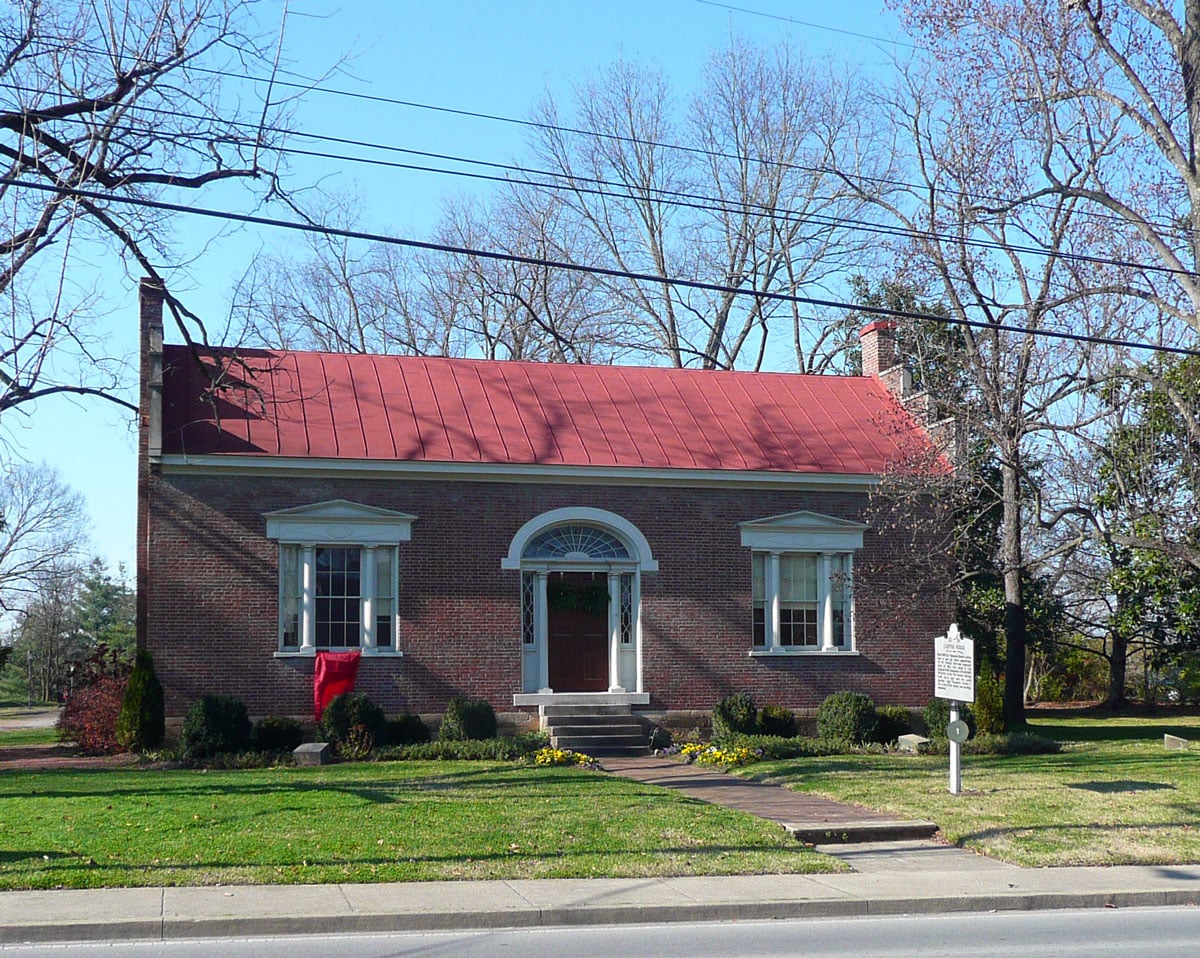
Est. 1829 · Oldest surviving building on the University of Alabama campus · National Register of Historic Places · Home of Confederate Brigadier General and UA President Josiah Gorgas · Survived the 1865 Union burning of the UA campus
The University of Alabama was chartered in 1820 and held its first classes in 1831. The building now known as Gorgas House was constructed in 1829 as a dining facility for the young institution. It is the oldest building on campus to survive intact, having escaped the destruction that overtook most of the university's original structures when Union forces burned the campus in April 1865.
Brigadier General Josiah Gorgas served as the Confederate Army's chief of ordnance throughout the Civil War, overseeing the manufacture and distribution of munitions for the Confederacy from his headquarters in Richmond. After the war, Gorgas transitioned to academic administration. He became vice chancellor of the University of the South at Sewanee in 1868, then accepted the presidency of the University of Alabama in 1878.
Gorgas and his wife Amelia lived in what is now called the Gorgas House. He served as president until declining health forced him to step down in 1879; he remained on campus as university librarian until his death in the building on May 15, 1883. Amelia Gorgas continued to live in the house until her own death in 1913, anchoring the family's long association with the property.
The building was converted to its current use as a museum house and is operated by the University of Alabama Museums. It holds the Gorgas family's furniture, portraits, and personal effects, giving visitors a direct view into the domestic life of one of the Confederacy's senior logistical officers in the years after the war. The structure was listed on the National Register of Historic Places.
Sources
- https://gorgashouse.museums.ua.edu/2024/10/14/haunted-tours-of-the-gorgas-house-museum/
- https://visittuscaloosa.com/blog/top-haunted-places-in-tuscaloosa/
- https://en.wikipedia.org/wiki/Josiah_Gorgas
Phantom footsteps with sword-clink sound on stairsElevator doors opening to fourth floor unpromptedSense of protective presence
The paranormal tradition at Gorgas House is unusually specific in its detail, organized around acoustic rather than visual phenomena. Tour guides and staff report a recurring sound described as 'step, step, clink' — the cadence of Josiah Gorgas's gait combined with the sound of a sword or scabbard striking the wooden stairs. The sound is reported when no one is in the stairwell. Gorgas was a military officer throughout his career and would have habitually worn a sword; the specificity of the auditory description has made it the most consistent and often-repeated element of the building's ghost tradition.
A secondary phenomenon centers on the building's elevator. Staff report that the elevator doors open on their own and the car travels to the fourth floor without anyone operating it. Local tradition attributes this to Amelia Gorgas, whose writing desk was located on that floor. The elevator behavior, by the accounts collected by regional haunted-tourism writers, recurs with enough frequency that staff have come to treat it as routine.
The museum's own Halloween programming, documented on the official Gorgas House website, acknowledges the ghost traditions explicitly. The haunted tours treat the phenomena as part of the building's documented history rather than as entertainment fabrications, noting that the staff's relationship to the presences is described as comfortable — a protective atmosphere attributed to the Gorgas family's long and close association with the building over multiple generations.
Amelia Gorgas outlived her husband by 30 years, remaining in the building until 1913. Their son William Crawford Gorgas, who became the Army's Surgeon General and directed the mosquito-eradication campaign that made the Panama Canal construction possible, also grew up in the house. The depth of the family's roots in the building is the frame through which staff and guides interpret the reported phenomena.
Notable Entities
Josiah GorgasAmelia Gorgas