Haunted Alabama

66 haunted destinations cataloged across Alabama, spanning 37 counties. The collection features museum, outdoor, and cemetery — every listing verified with family ratings, accessibility info, and practical visit logistics.

66 locations 37 counties 8 classifications 29 wheelchair accessible

Featured in Alabama

Top 6
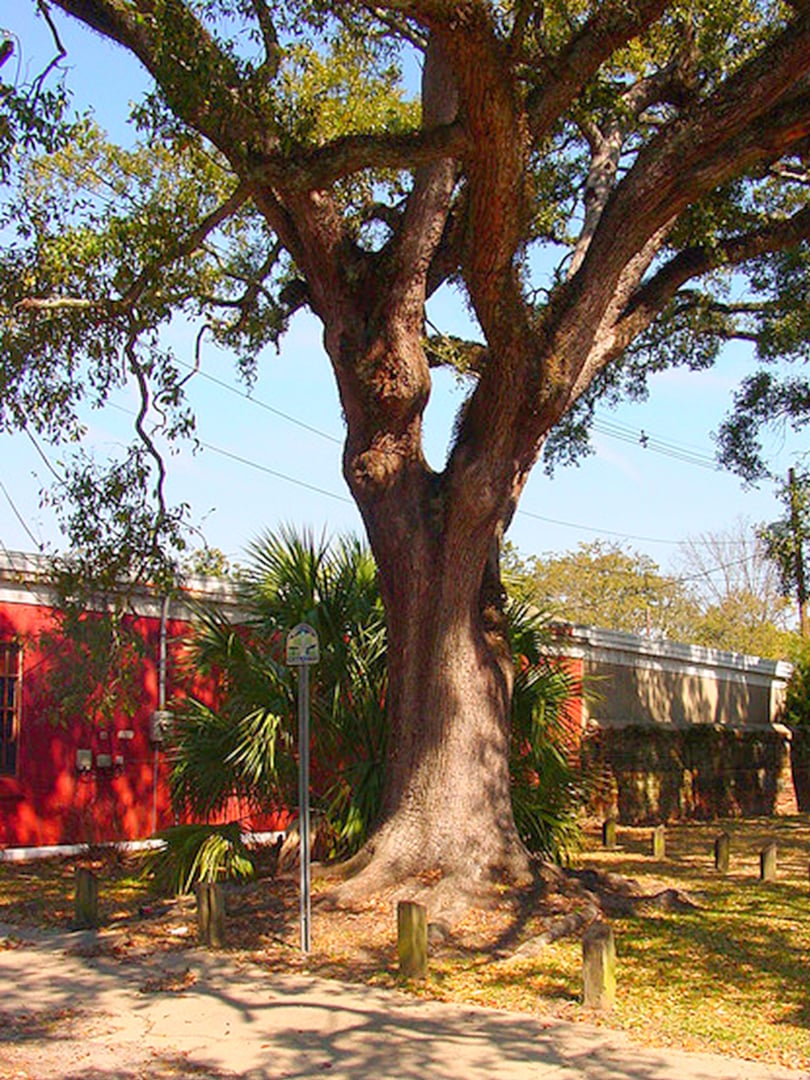
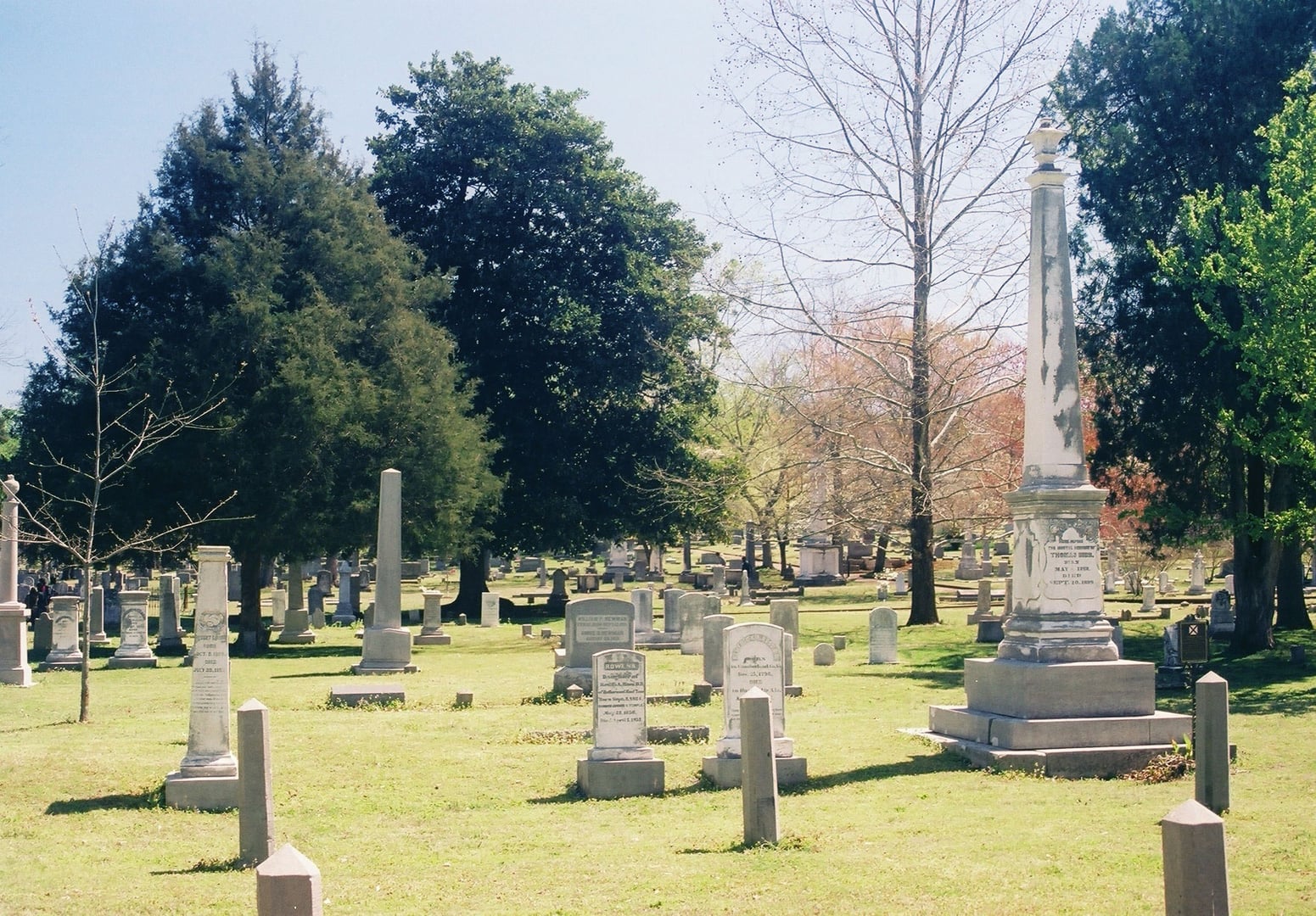
The historic Boyington Oak, a Southern live oak said to have sprung from the grave of Charles R.S. Boyington beside Church Street Cemetery in Mobile, Alabama.
Outdoor / Natural Site

Boyington Oak

Mobile, AL

The Boyington Oak is a historic Southern live oak that grew from the grave of Charles R.S. Boyington, a 21-year-old Connecticut printer hanged on February 20, 1835 for the stabbing murder of his roommate Nathaniel Frost — a crime Boyington denied to the gallows, vowing that an oak would rise from his heart as proof of his innocence. Two people are said to have later confessed to the killing on their deathbeds.

$ All Ages Family: High
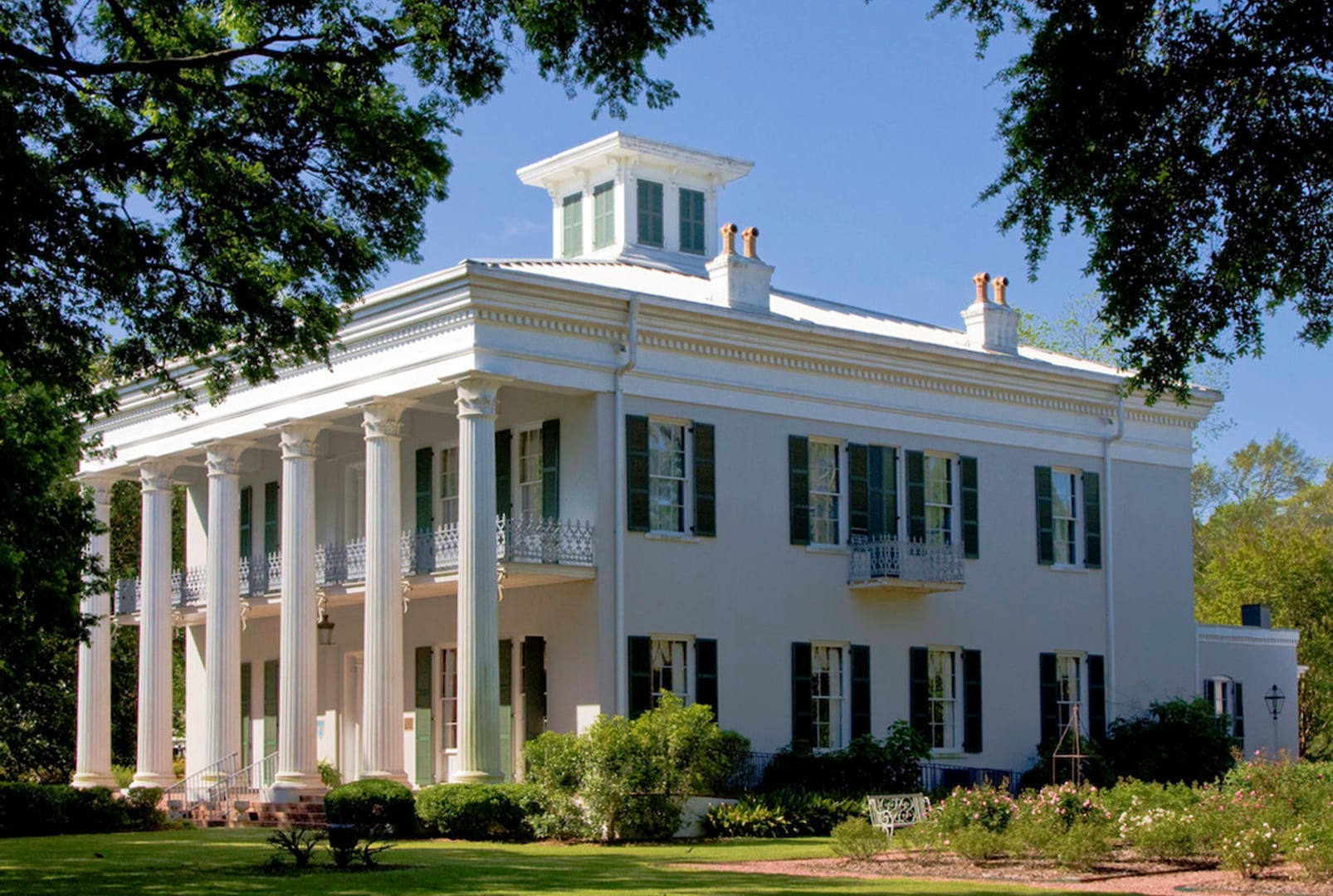
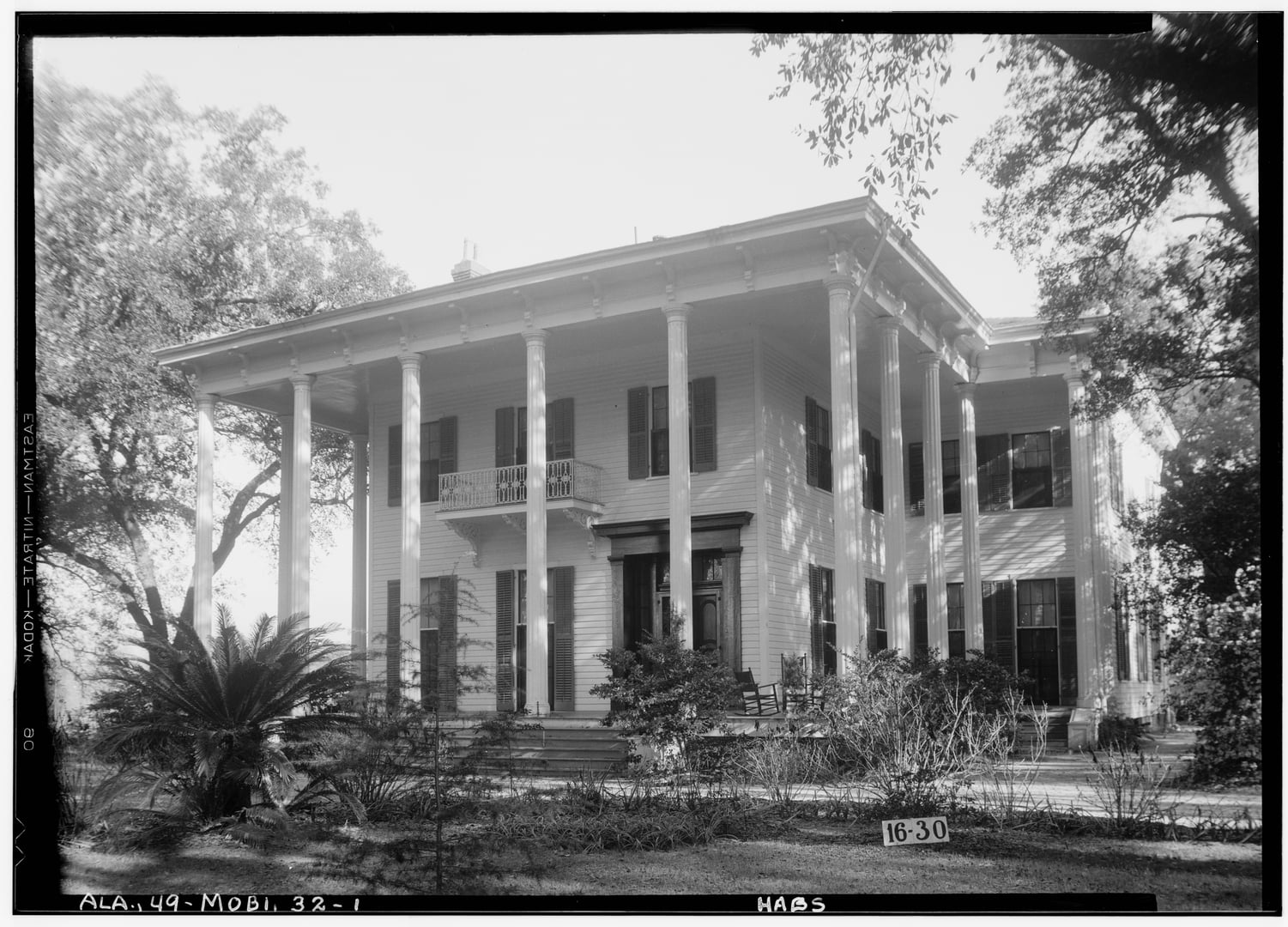
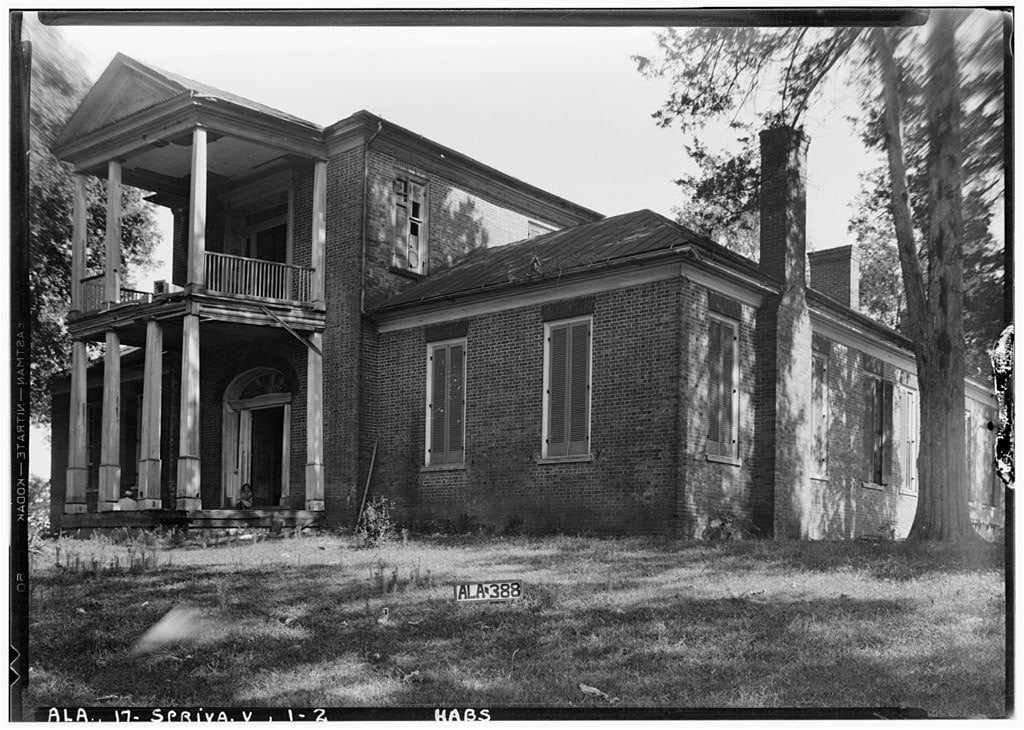
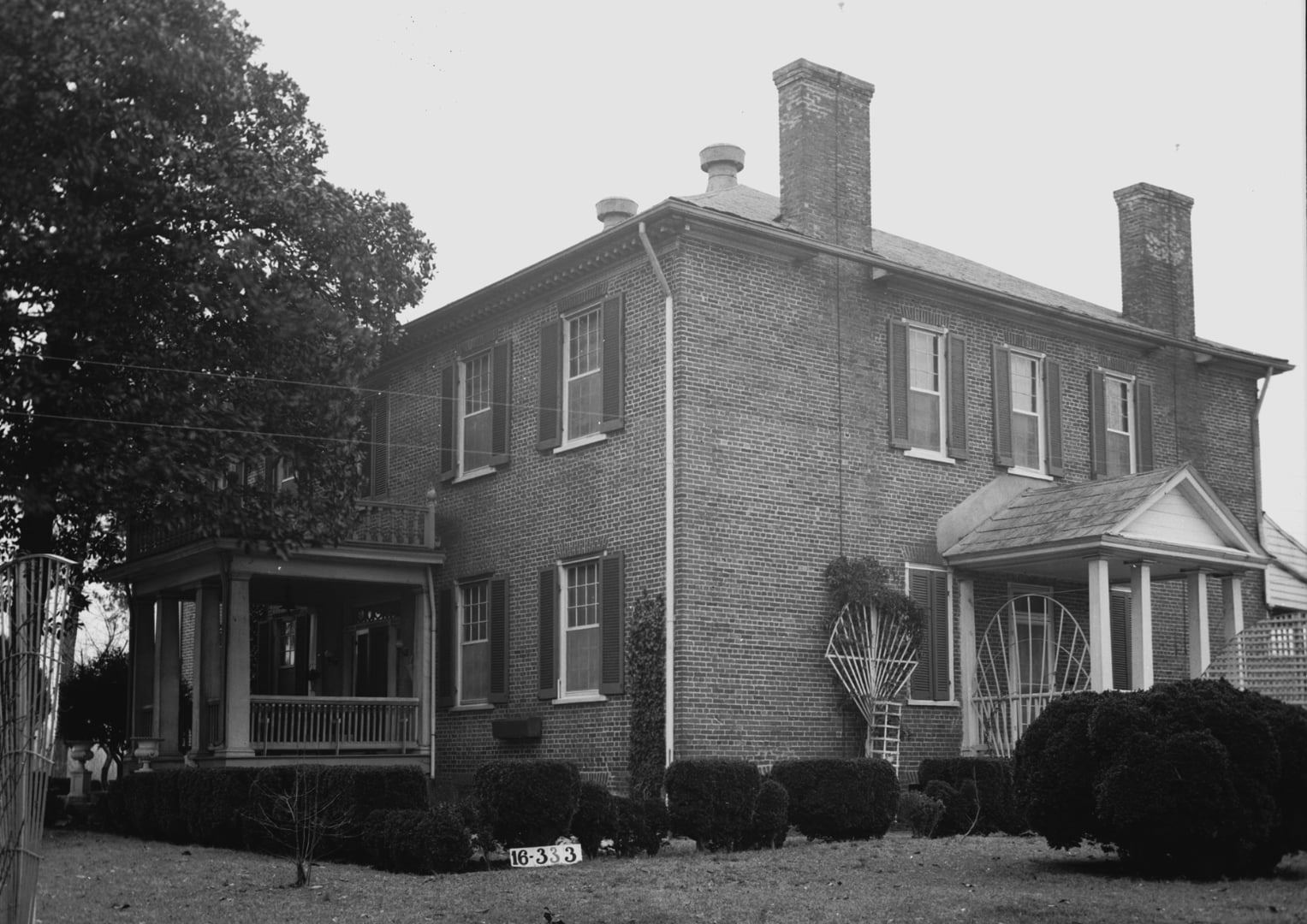
1934 HABS photograph showing the south front of the Greek Revival Bragg-Mitchell Mansion (Judge John Bragg House) on Spring Hill Avenue in Mobile, Alabama
Haunted House / Historic Home

Bragg-Mitchell Mansion

Mobile, AL

The Bragg-Mitchell Mansion is a 13,000-square-foot Greek Revival house completed in 1855 for Judge John Bragg, designed by his brother, architect Alexander J. Bragg. The mansion survived the Civil War in part because Mrs. Bragg removed the family's furnishings to the family's Lowndes County plantation — which was later burned by Wilson's Raiders. The property now operates as a historic house museum and event venue.

$ All Ages Family: High
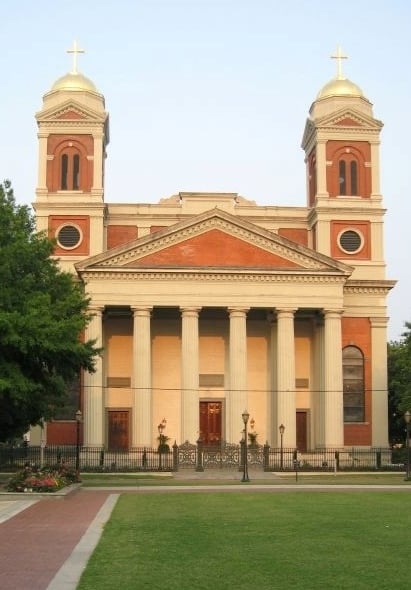
Cathedral Basilica of the Immaculate Conception facing Cathedral Square (the former Campo Santo burial site) in downtown Mobile, Alabama.
Cemetery / Burial Ground

Cathedral Square (Campo Santo site)

Mobile, AL

Cathedral Square occupies part of Mobile's 18th-century Catholic Campo Santo cemetery, a roughly 400-by-300-foot burial ground spanning portions of city blocks between Joachim, Dauphin, Franklin, and Conti Streets. Most burials were moved to the new Church Street Graveyard in 1819 when Mobile's city limits expanded, but additional remains continued to surface along Conti Street as late as the 1890s. The blocks were filled with buildings through most of the nineteenth and twentieth centuries before being demolished in 1979 to create the public park facing the Cathedral Basilica.

$ All Ages Family: High
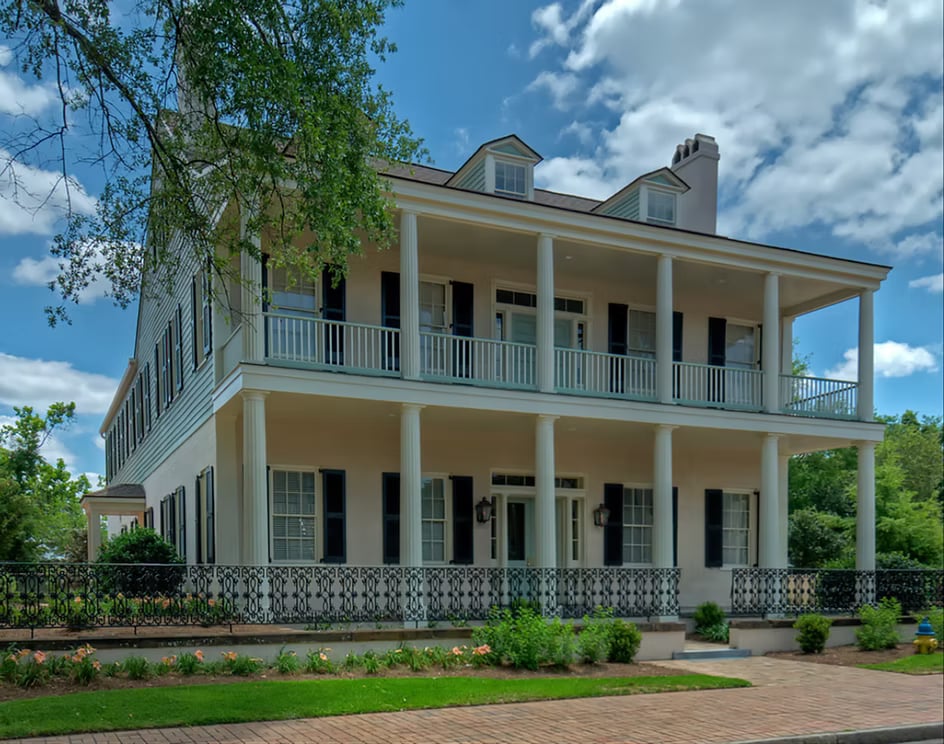
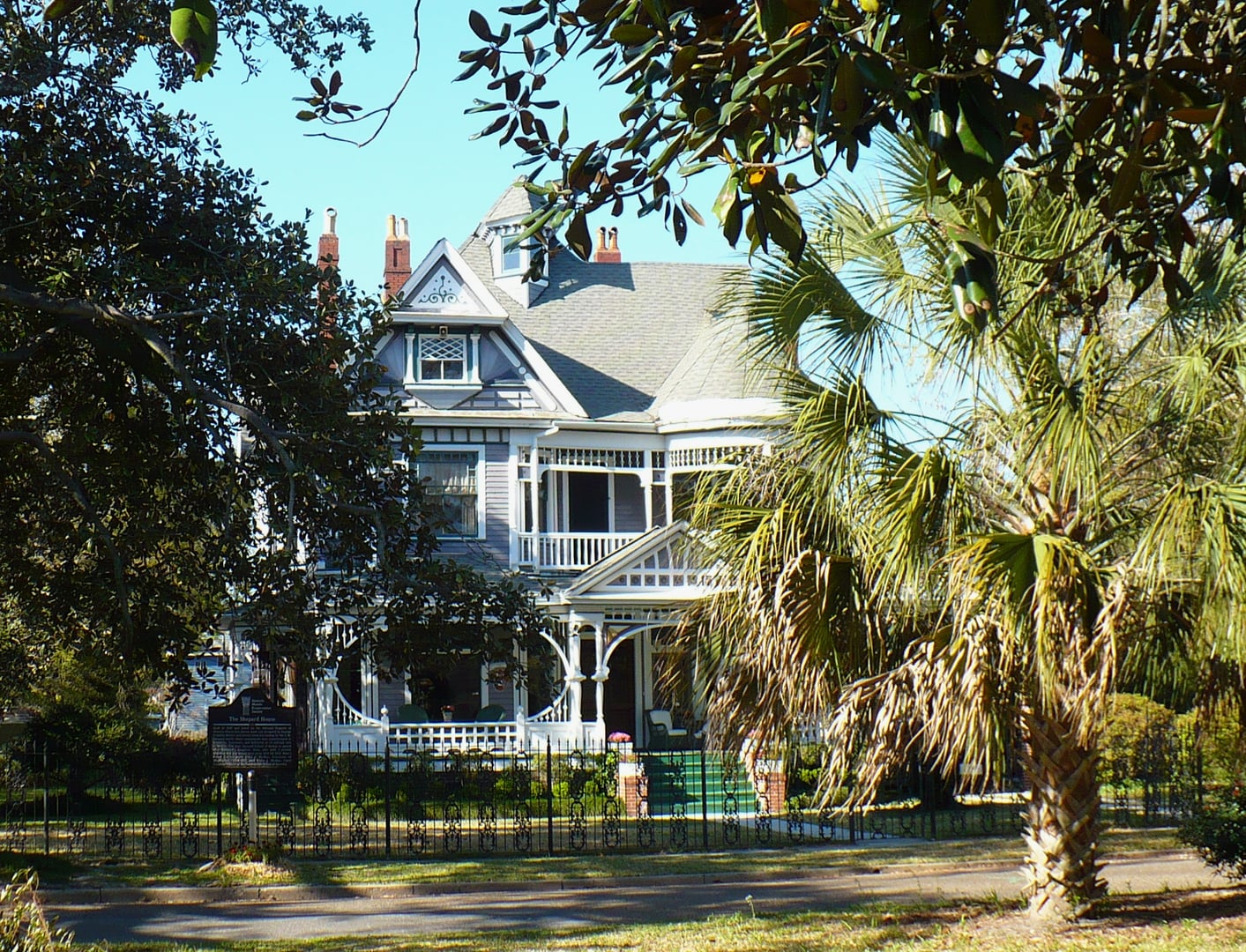
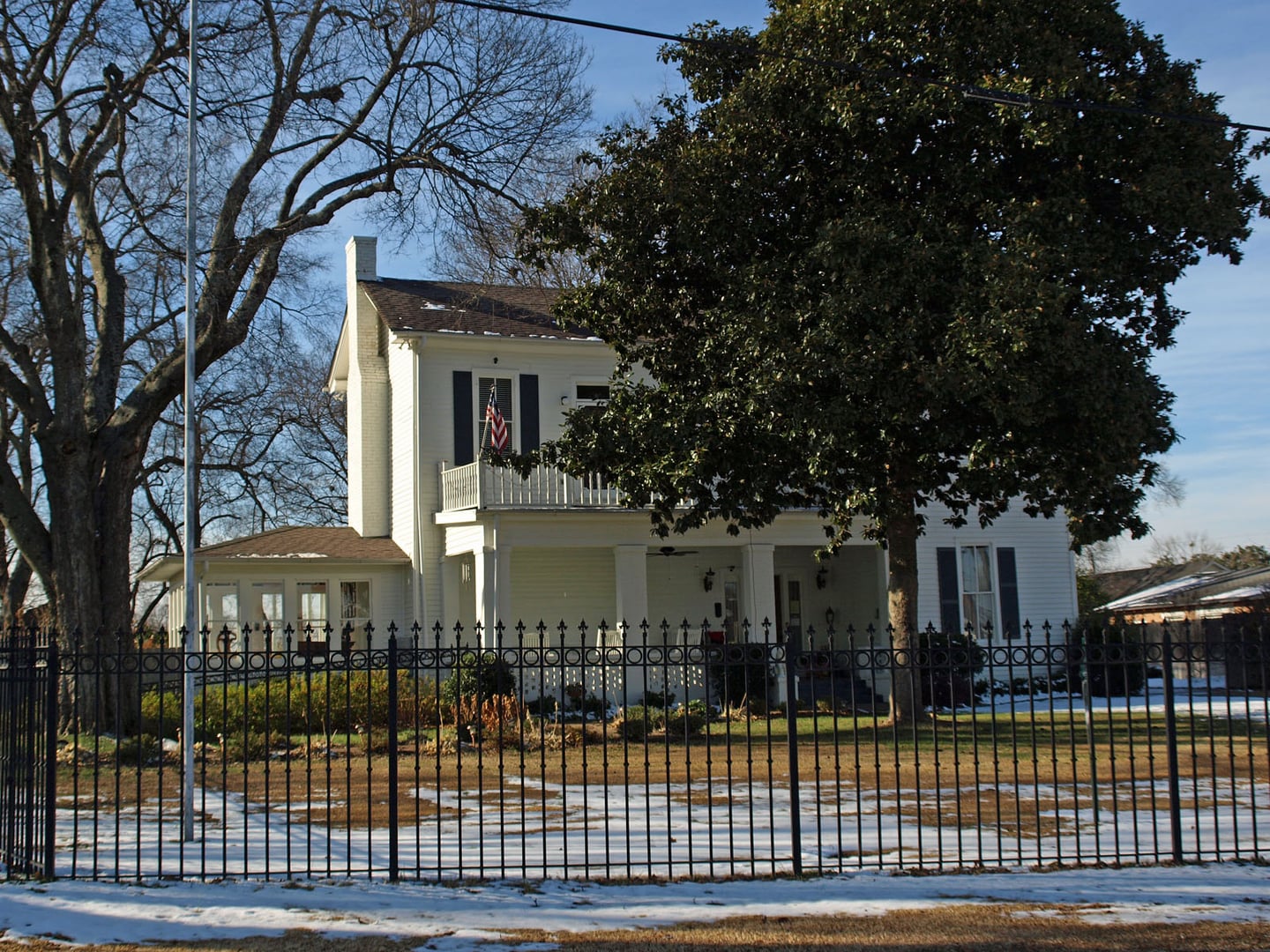
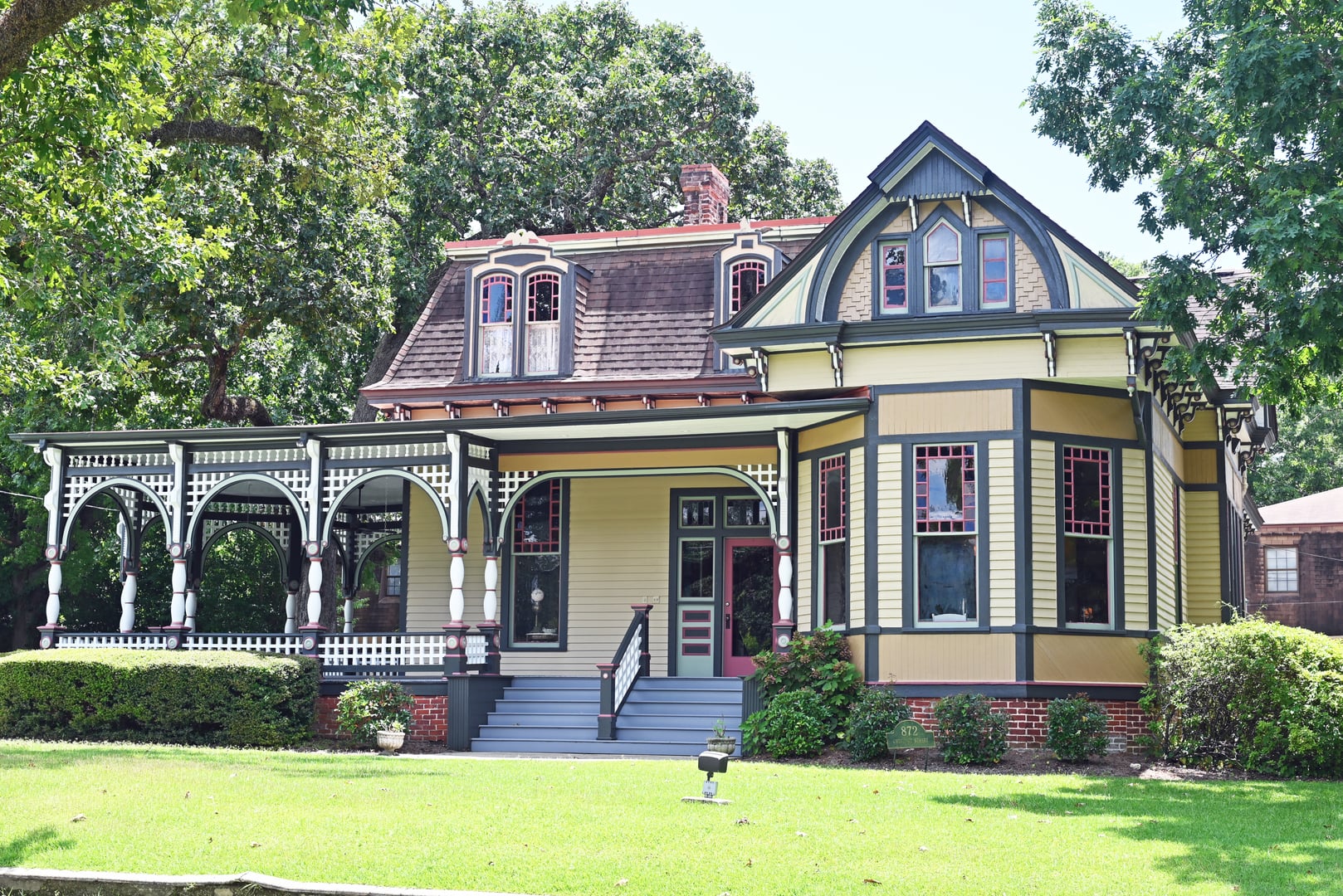
Queen Anne Victorian Kate Shepard House (Monterey Place), built 1897 from a George Franklin Barber catalog design, in midtown Mobile, Alabama.
Haunted Hotel / Inn

Kate Shepard House Bed and Breakfast

Mobile, AL

The Kate Shepard House is a 1897 Queen Anne Victorian designed by Tennessee architect George Franklin Barber. The home was ordered from Barber's catalog and required thirteen railroad cars to deliver its components from Knoxville to Mobile. Built for Charles Martin Shepard, the general passenger agent of the Mobile and Ohio Railroad, it served from 1910 as a girls' boarding/day school run by his daughters Kate and Isabel, and reopened as a bed and breakfast around 2002.

$$ All Ages Family: High
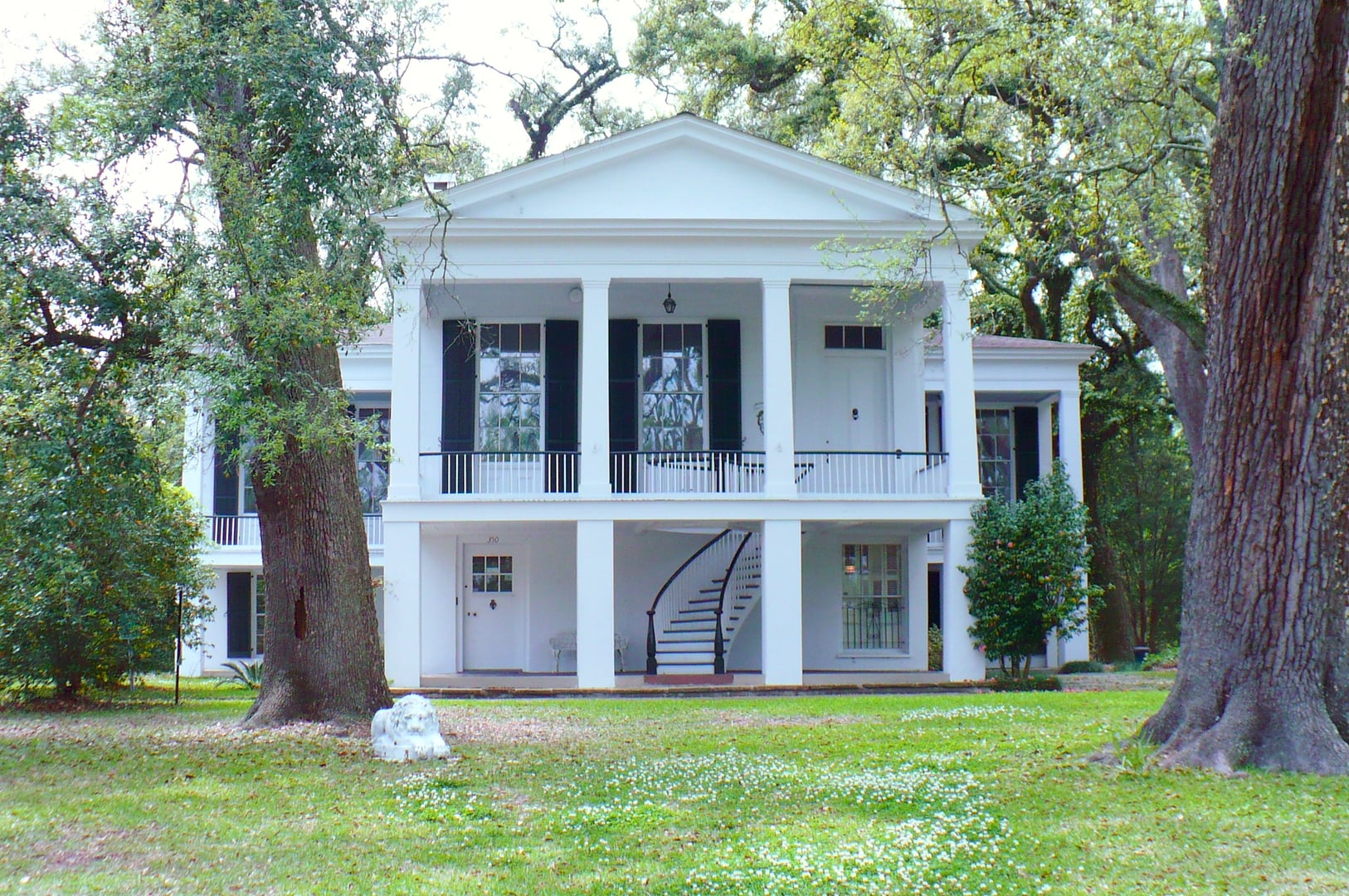
T-shaped Greek Revival raised villa of the Oakleigh House Museum, built 1833, in the Oakleigh Garden Historic District of Mobile, Alabama.
Haunted House / Historic Home

Historic Oakleigh House Museum

Mobile, AL

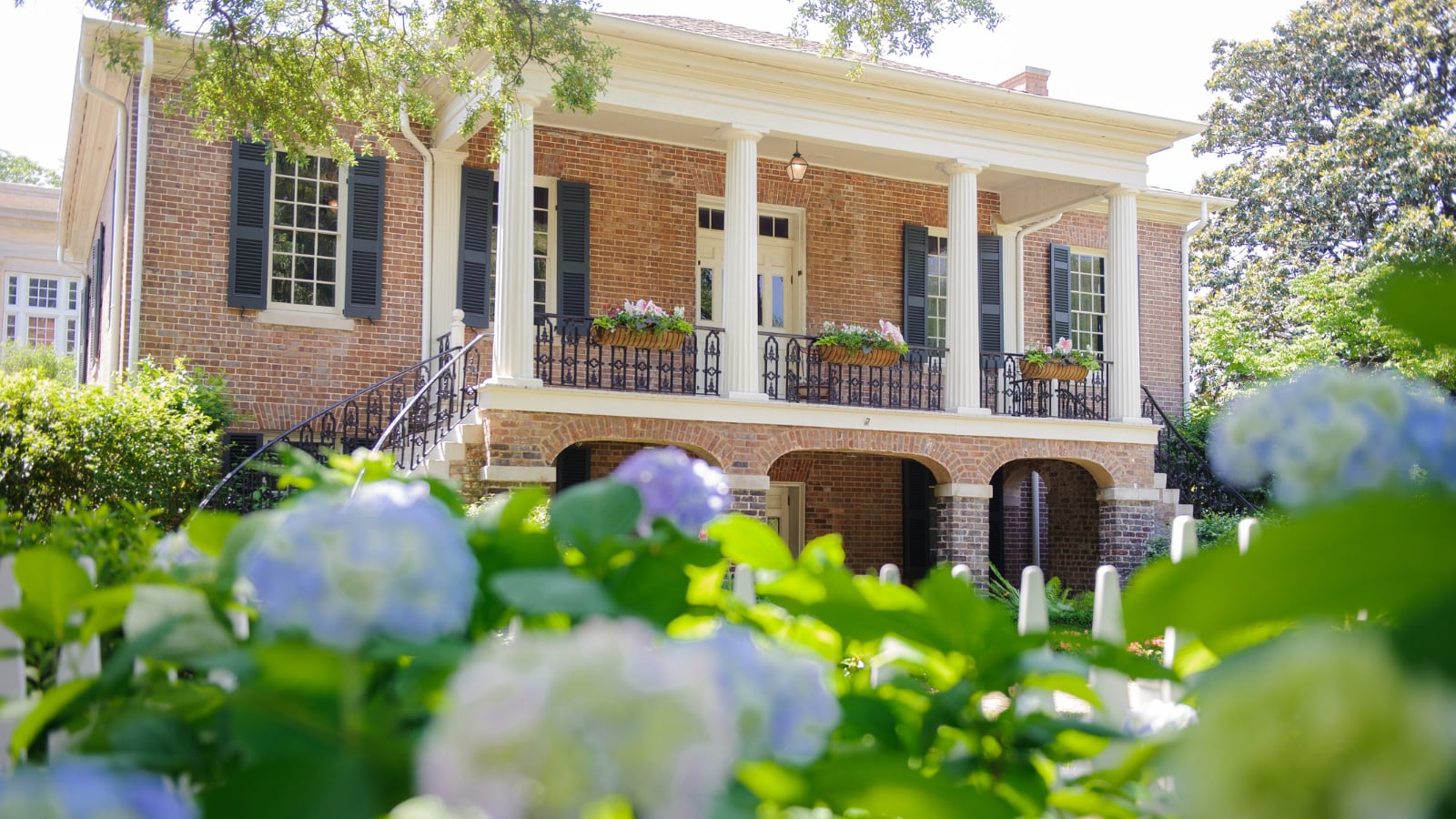
Oakleigh is a T-shaped Greek Revival raised villa built in 1833 by James W. Roper, a brick mason from James City County, Virginia, who selected the site for its clay pit. The Irwin family occupied the home from 1852 until 1916. The Historic Mobile Preservation Society now operates the property as the city's oldest house museum, with adjacent structures including the Union Barracks (formerly the Cook's House), the Cox-Deasy Cottage, and the Minnie Mitchell Archives.

$ All Ages Family: High
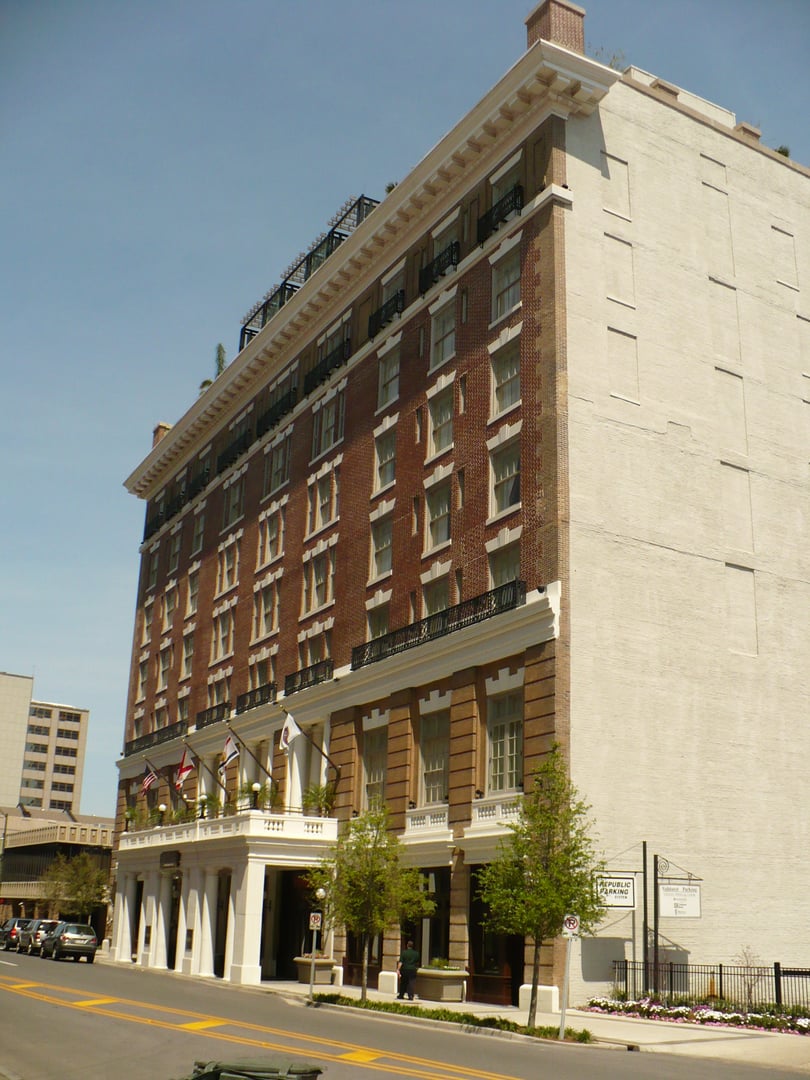
East view from Royal Street of the 1908 Battle House Hotel in Mobile, Alabama, a steel-frame replacement of an 1852 hotel built on Andrew Jackson's 1814 headquarters site.
Haunted Hotel / Inn

Battle House Renaissance Mobile Hotel

Mobile, AL

The Battle House traces to 1852, when James Battle and his nephews opened a 200-room hotel on the site of Andrew Jackson's 1814 military headquarters. The original burned on February 12, 1905; the current steel-frame structure was built 1906-1908 to designs by New York architect Frank Mills Andrews. After decades of decline, the Marriott Renaissance brand reopened the restored hotel on May 11, 2007.

$$$ All Ages Family: Moderate

More in Alabama

Birmingham — 10

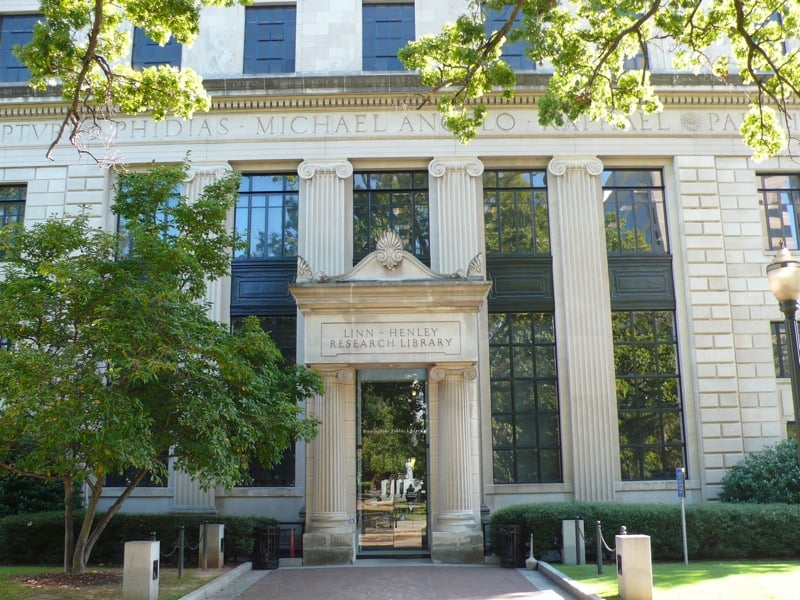
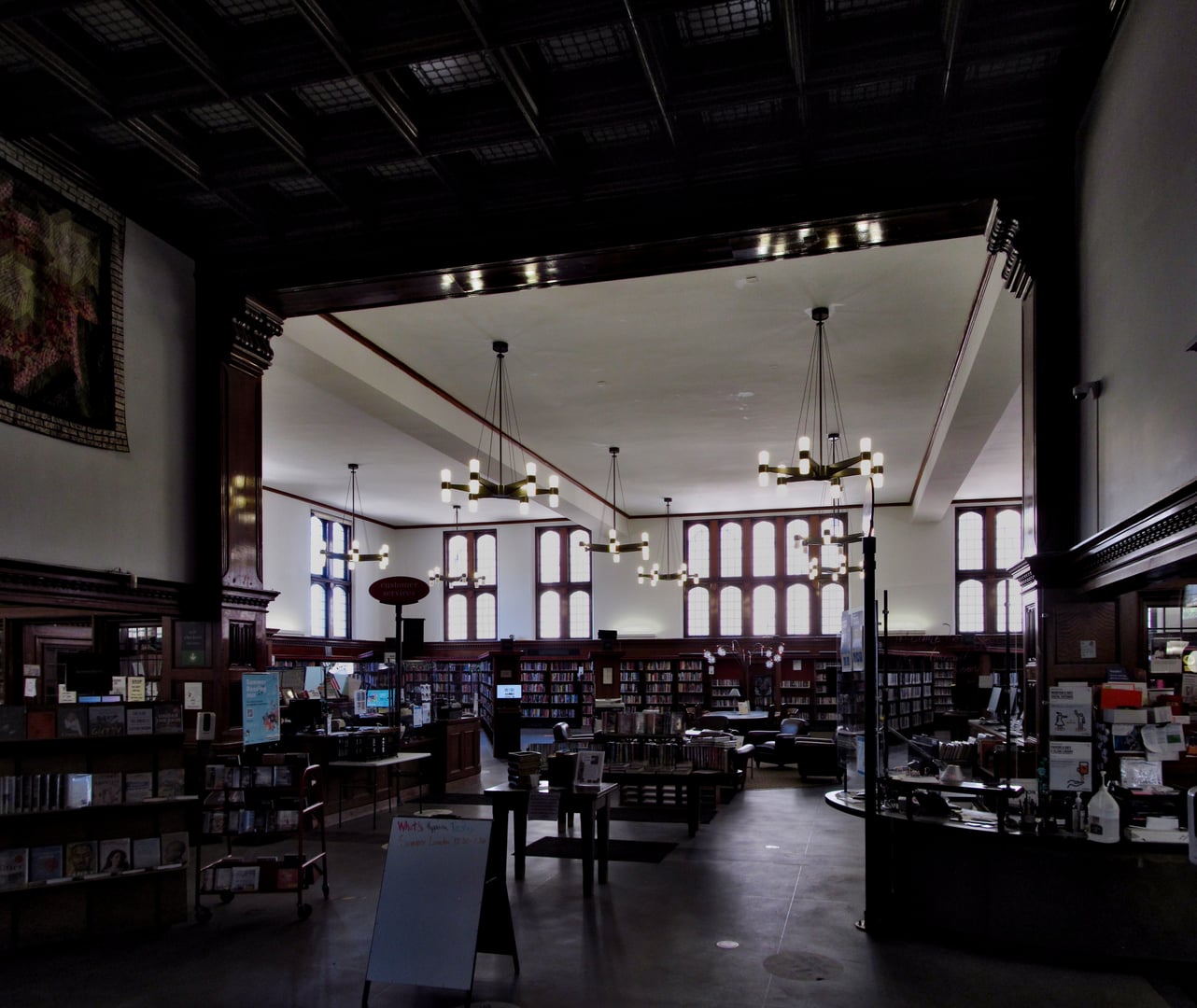
Linn-Henley Research Library 1927 Beaux Arts facade at Linn Park in Birmingham, Alabama
Museum / Historical Site

Birmingham Public Library Linn-Henley Research Library

Birmingham, AL

The Birmingham Public Library traces its origins to 1886, when superintendent of education John Herbert Phillips set aside books for teachers and students. The library moved several times before opening its 1927 Beaux Arts building - the city's first free-standing central library - at Linn Park. The 1927 building serves today as the Linn-Henley Research Library.

$ All Ages Family: High
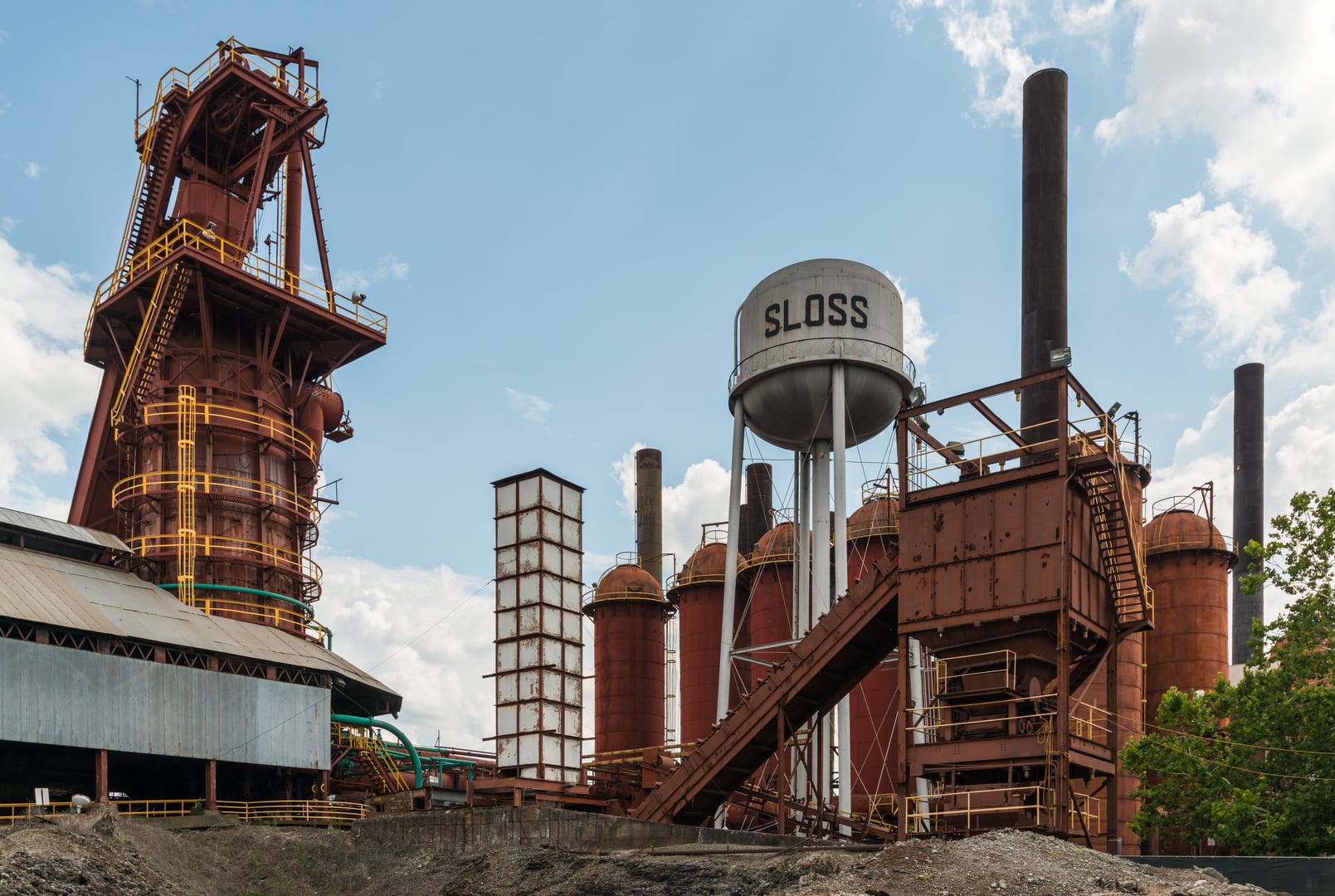
Sloss Furnaces National Historic Landmark in Birmingham, Alabama, blast-furnace works that produced pig iron 1882 to 1971
Museum / Historical Site

Sloss Furnaces National Historic Landmark

Birmingham, AL

Sloss Furnaces produced pig iron continuously from 1882 to 1971 in central Birmingham. Founded by Colonel James W. Sloss, the works powered the city's growth into the South's leading industrial center. The complex was designated a National Historic Landmark in 1981 and is the only 20th-century blast-furnace site in the United States preserved for public interpretation.

$ All Ages Family: Moderate
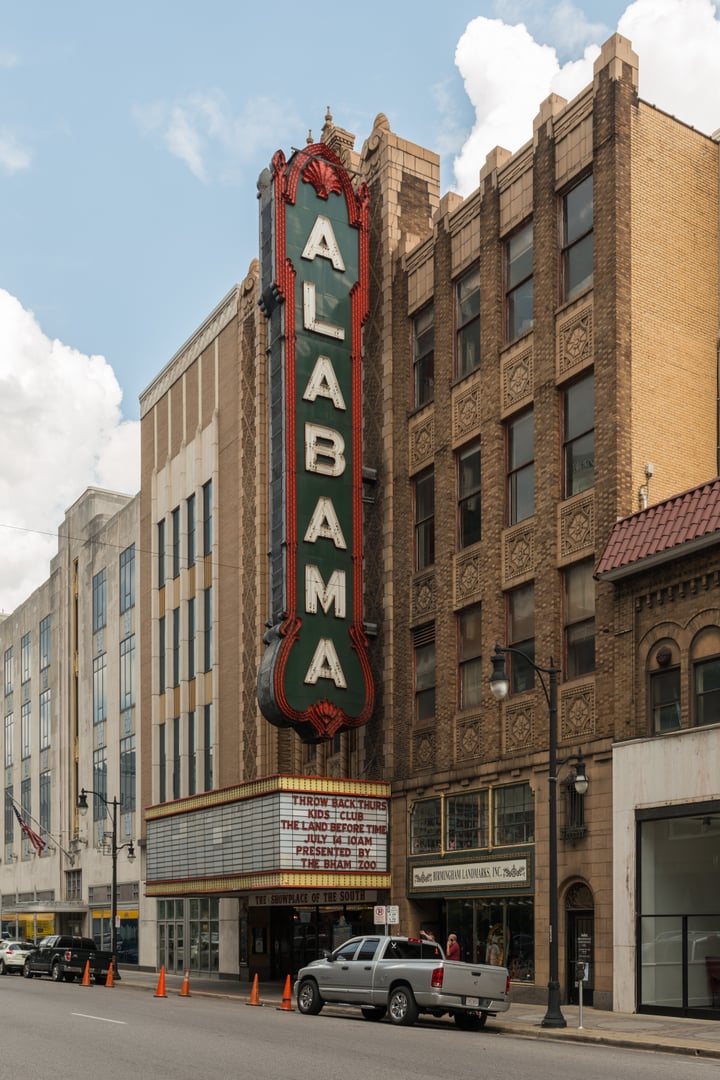
The 1927 Alabama Theatre marquee on 3rd Avenue North in downtown Birmingham
Photo coming soon
Theater / Performance Venue

The Alabama Theatre

Birmingham, AL

The Alabama Theatre is a 1927 Paramount-Publix movie palace in downtown Birmingham, designed by the Chicago firm Graven & Mayger in a Spanish-Moorish style. The theatre houses one of the country's surviving Wurlitzer pipe organs (the 'Mighty Wurlitzer') installed at construction. It is operated today as a live-performance venue by Birmingham Landmarks, Inc., the same nonprofit that operates the nearby Lyric Theatre.

$$ All Ages Family: High
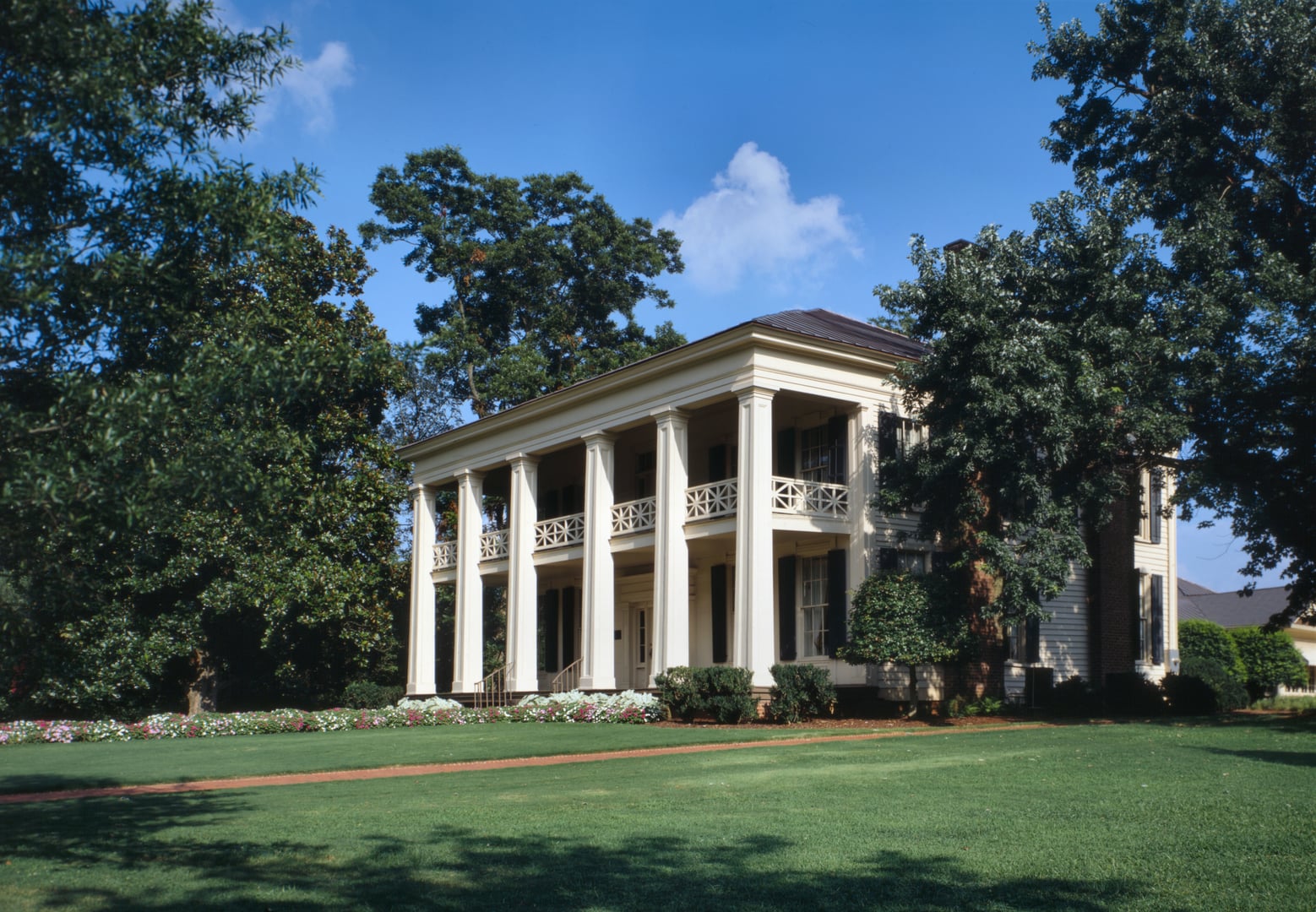
Arlington Antebellum Home, an 1842 Greek Revival mansion in Birmingham, Alabama
Photo coming soon
Haunted House / Historic Home

Arlington Antebellum Home & Gardens

Birmingham, AL

Arlington Antebellum Home & Gardens is Birmingham's only surviving antebellum Greek Revival mansion. The two-story frame house was built in the 1840s under the direction of Judge William S. Mudd, who acquired the property at public auction in 1842; the construction was performed by enslaved African-American laborers. During the 1865 Wilson's Raid the home served as a temporary Union headquarters under General James H. Wilson, which spared it from the destruction that consumed many surrounding properties. It is operated today as a decorative arts museum by the City of Birmingham and was added to the National Register of Historic Places in 1970.

$ All Ages Family: Moderate
Hotel Indigo Birmingham Five Points South, the former 1931 Medical Arts Building
Photo coming soon
Haunted Hotel / Inn

Hotel Indigo Birmingham Five Points South (Former Medical Arts Building)

Birmingham, AL

The Hotel Indigo Birmingham Five Points South occupies the former Medical Arts Building, an eight-story Art Deco tower designed by Roy J. Wyatt and Henry C. Bortz and completed in 1931. The building was developed by the Kamram Grotto Masonic order alongside the adjacent Pickwick Club. It housed medical and dental offices, surgical suites, and a basement morgue through the mid-20th century. In 1986-88 the building was converted to the Pickwick Hotel and Conference Center, later operated as Hotel Highland, and reopened as Hotel Indigo Five Points South in 2018.

$$$ All Ages Family: Moderate
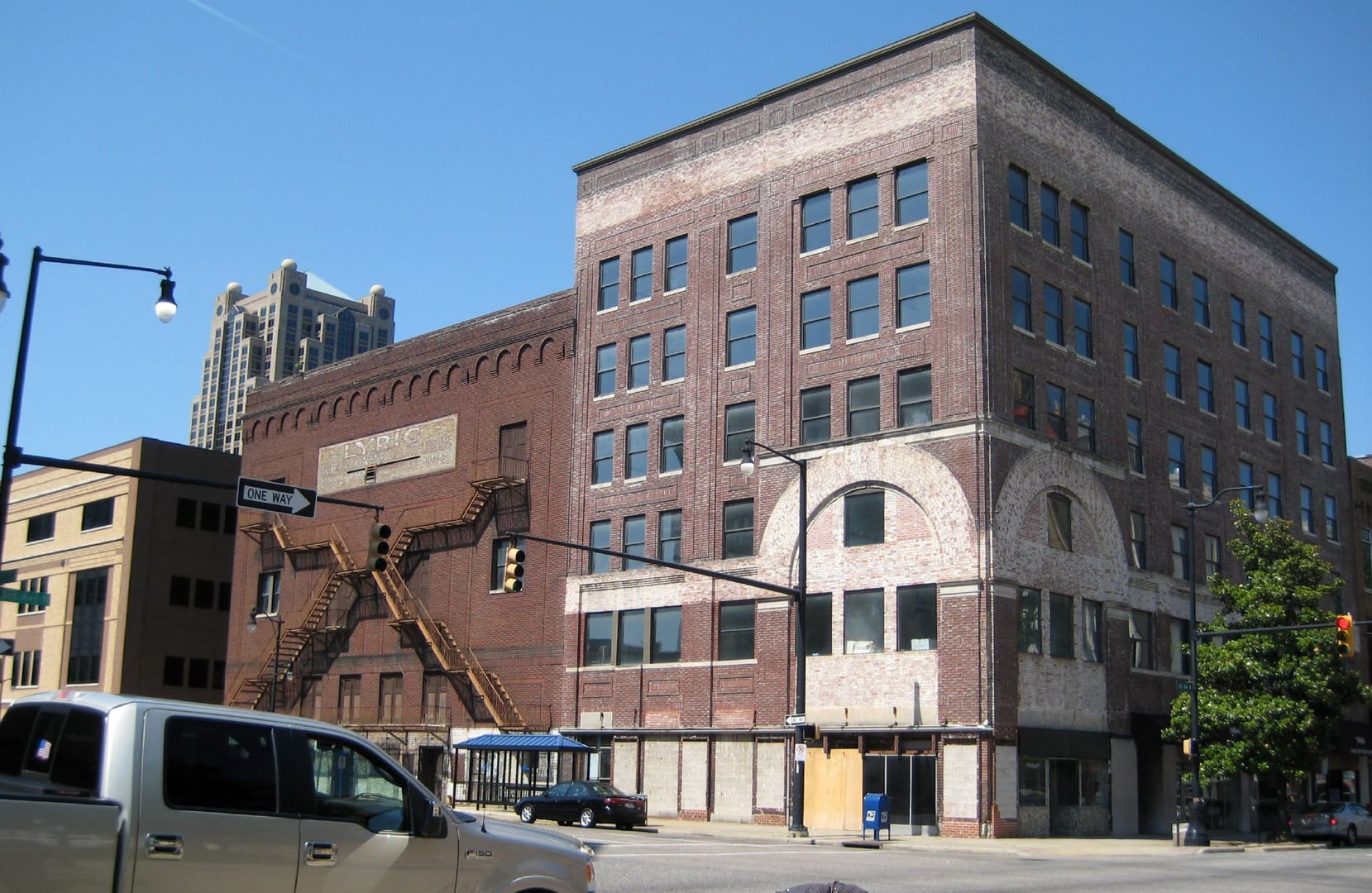
The restored 1914 Lyric Theatre marquee on 3rd Avenue North in downtown Birmingham
Photo coming soon
Theater / Performance Venue

The Lyric Theatre

Birmingham, AL

The Lyric Theatre opened in January 1914 as a B.F. Keith vaudeville house in downtown Birmingham. Designed specifically for vaudeville acoustics, it seated approximately 1,500 patrons and was notable as one of the first Southern theaters to admit Black and white audiences to the same performance — though with the segregated seating typical of the era. The theater closed in the late 20th century and underwent an extensive restoration that culminated in its January 2016 reopening as a live-performance venue, operated by Birmingham Landmarks, Inc.

$$ All Ages Family: High
Oak Hill Cemetery in Birmingham, Alabama — the city's pioneer cemetery established in 1871
Photo coming soon
Cemetery / Burial Ground

Oak Hill Cemetery (Birmingham)

Birmingham, AL

Oak Hill Cemetery is Birmingham's oldest cemetery, established by the Elyton Land Company in December 1871 as the first official city cemetery. It was already serving as a burial ground by April 1869, when it received the infant daughter of future mayor Robert H. Henley. The cemetery covers 22.3 acres with more than 10,000 recorded burials and was the first cemetery in Alabama to be added to the National Register of Historic Places, in 1977. It remains active for new burials.

$ All Ages Family: High
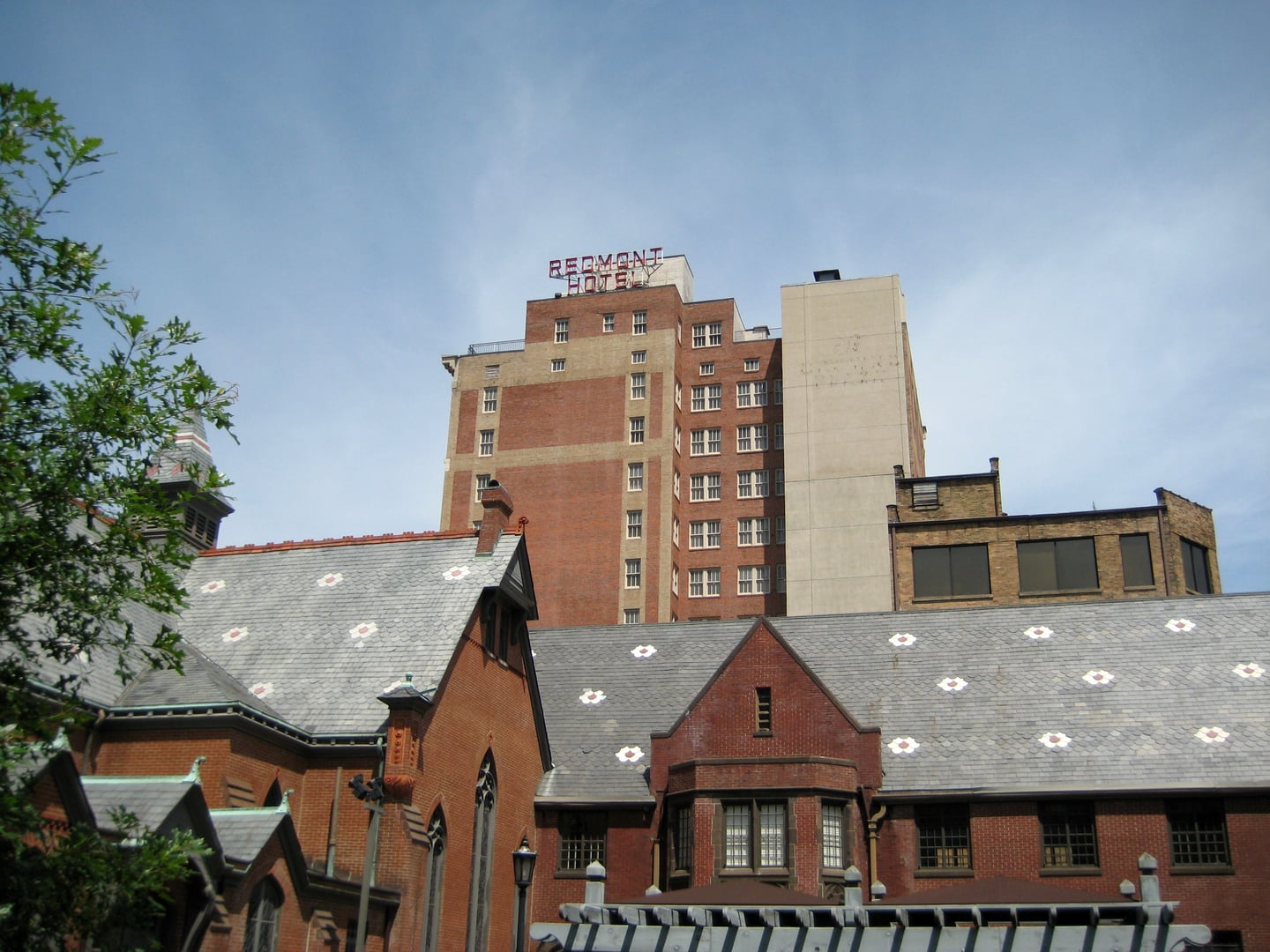
The 1925 Redmont Hotel in downtown Birmingham, Alabama
Photo coming soon
Haunted Hotel / Inn

The Redmont Hotel

Birmingham, AL

The Redmont Hotel opened in 1925 as a 200-room downtown hotel — Birmingham's oldest continuously operating hotel. Designed by Atlanta architect G. Lloyd Preacher in Chicago School style, it was purchased in 1946 by hotelier Clifford Stiles, who converted the top floor into a private penthouse for his family in 1947. Country music legend Hank Williams Sr. spent his last night at the Redmont before his death en route to a January 1, 1953 show. The hotel was added to the National Register of Historic Places in 1983 and operates today as a Curio Collection by Hilton property.

$$$ All Ages Family: High
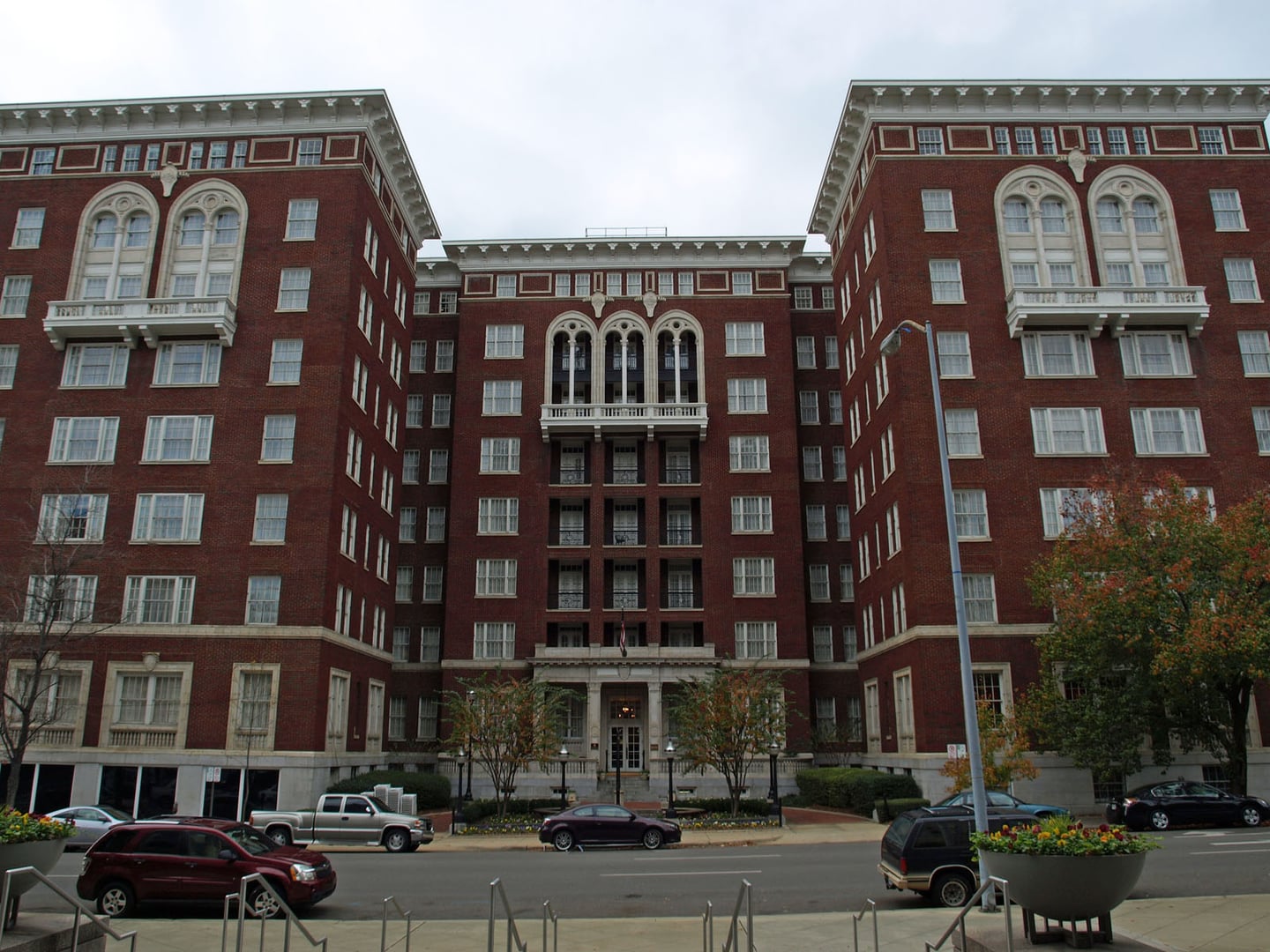
The Tutwiler Hotel, an eight-story 1914 brick building at Park Place in downtown Birmingham, Alabama
Photo coming soon
Haunted Hotel / Inn

The Tutwiler Hotel (Hampton Inn & Suites Birmingham-Downtown-Tutwiler)

Birmingham, AL

The Tutwiler Hotel building was opened in 1914 as the Ridgely Apartments, an eight-story luxury residential building financed by Major Edward Magruder Tutwiler and developed by Robert Jemison Jr. After decades of residential and office use, it was converted to a hotel in 1986 and rebranded as the Tutwiler Hotel. It is today operated as the Hampton Inn & Suites Birmingham-Downtown-Tutwiler, part of Hilton's Curio Collection.

$$$ All Ages Family: High
East Lake Park Birmingham man-made lake
Photo coming soon
Outdoor / Natural Site

East Lake Park

Birmingham, AL

East Lake Park began in 1886 when the East Lake Land Company was incorporated by James Van Hoose, Robert Jemison Sr., and Rufus Hagood to sell home sites to Birmingham steelworkers. A 45-acre man-made lake — originally called Lake Como — was constructed by damming Roebuck Springs and Village Creek, with East Lake Railroad service inaugurated in 1887. The City of Birmingham purchased the property for $65,000 in 1917 and dedicated it as a public park on May 10, 1918.

$ All Ages Family: High

Mobile — 9

Bow view of the WWII battleship USS Alabama (BB-60) at her permanent berth in Battleship Memorial Park, Mobile, Alabama
Museum / Historical Site

Battleship USS Alabama

Mobile, AL

USS Alabama (BB-60) is a South Dakota-class battleship commissioned in 1942 that served 37 months in combat across both the Atlantic and Pacific theaters of World War II. Saved from scrapping in the early 1960s through an Alabama citizens' fundraising campaign, the ship has been moored at Battleship Memorial Park on Mobile Bay since January 1965.

$$ All Ages Family: Moderate
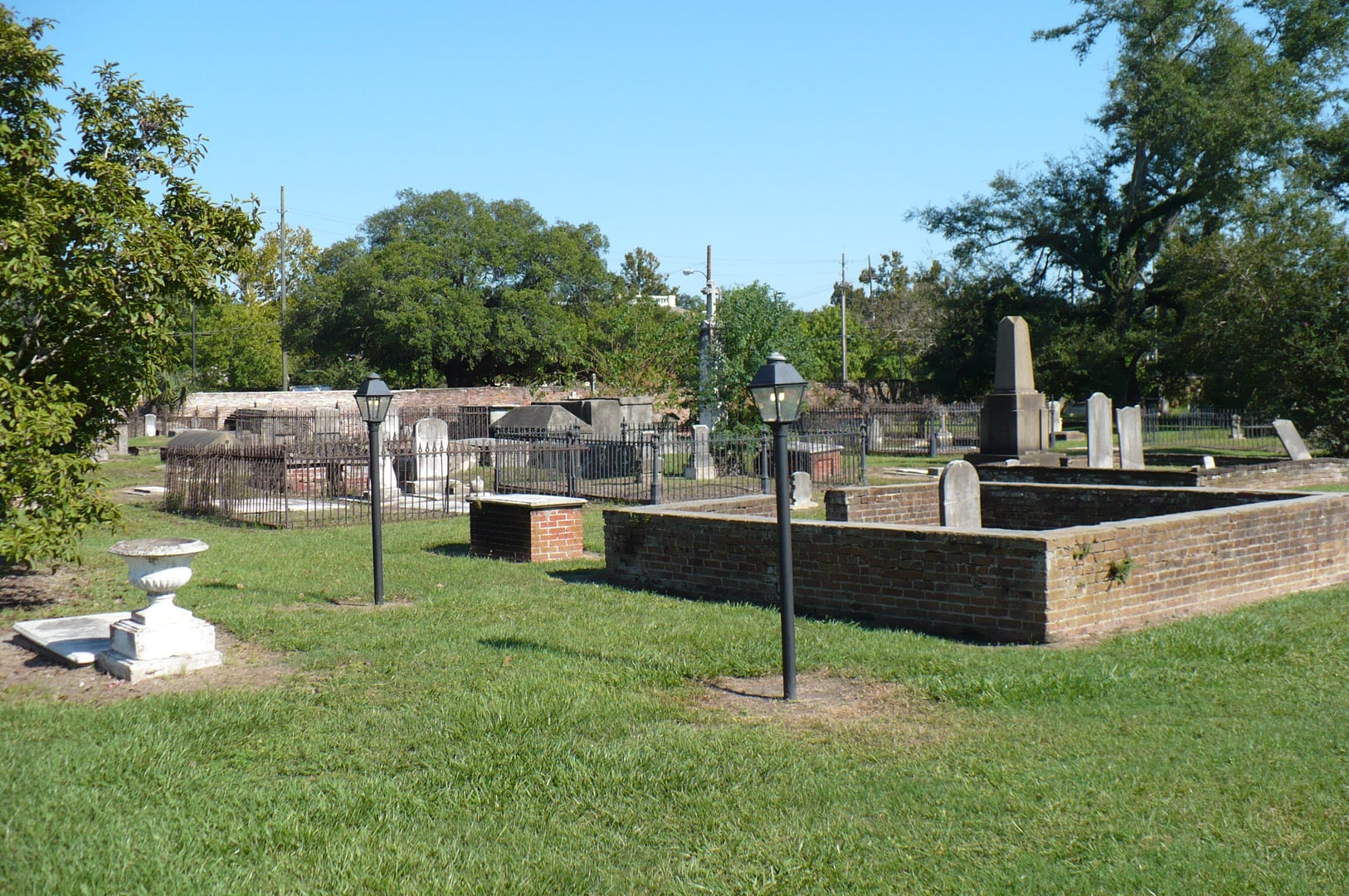
Brick walls and gravestones within Church Street Graveyard in Mobile, Alabama
Cemetery / Burial Ground

Church Street Graveyard

Mobile, AL

Church Street Graveyard opened in 1819 as Mobile's first municipal burial ground, replacing the smaller churchyard at the Catholic cathedral. The four-acre walled cemetery operated until 1898 and was Mobile's principal burial ground through the antebellum period.

$ All Ages Family: High
Exterior of the 1836 Fort Condé Inn, a historic boutique inn in Mobile, Alabama, with white columned facade
Haunted Hotel / Inn

Fort Condé Inn

Mobile, AL

Fort Condé Inn occupies the 1836 main house — Mobile's second-oldest house — and a cluster of restored cottages in Fort Condé Village, adjacent to the reconstructed eighteenth-century French Fort Condé. The site lineage runs from 1711 (French colonial fort) through nineteenth-century residential use to its current four-diamond boutique-inn operation.

$$ All Ages Family: Moderate
Twin antebellum townhouses of the Malaga Inn at 359 Church Street, Mobile
Photo coming soon
Haunted Hotel / Inn

Malaga Inn

Mobile, AL

The Malaga Inn occupies twin 1862 townhouses built on Church Street in Mobile's downtown historic district. The two halves were constructed for the Goldsmith and Frohlichstein families shortly after Alabama's secession ordinance, and have been combined into a 39-room boutique hotel since the 1960s.

$$ All Ages Family: Moderate
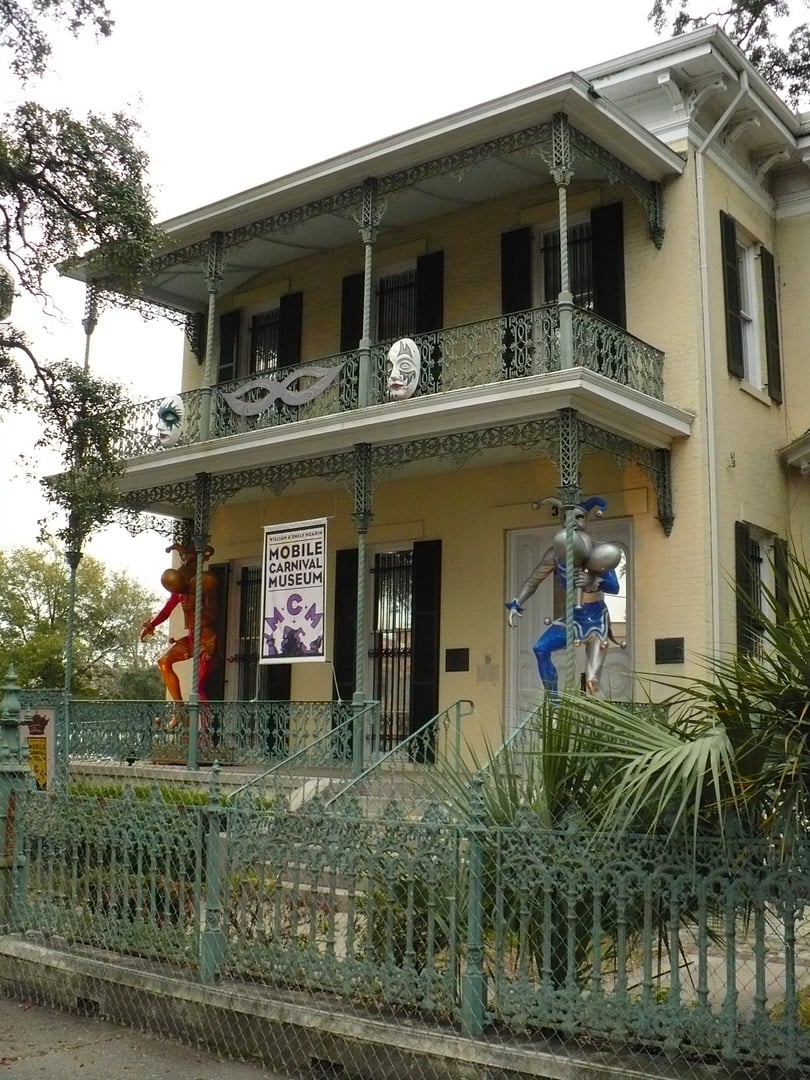
Restored 1872 Bernstein-Bush House at 355 Government Street housing the Mobile Carnival Museum, chronicling more than 300 years of Mardi Gras in Mobile, Alabama.
Museum / Historical Site

Mobile Carnival Museum

Mobile, AL

The Mobile Carnival Museum opened in 2005 in the restored 1872 Bernstein-Bush House at 355 Government Street, chronicling more than 300 years of Mardi Gras in Mobile. The Bernstein-Bush House served as a private residence and, in the 1920s, the Roche Funeral Home before standing vacant in the 1960s and ultimately being restored as the museum.

$ All Ages Family: High
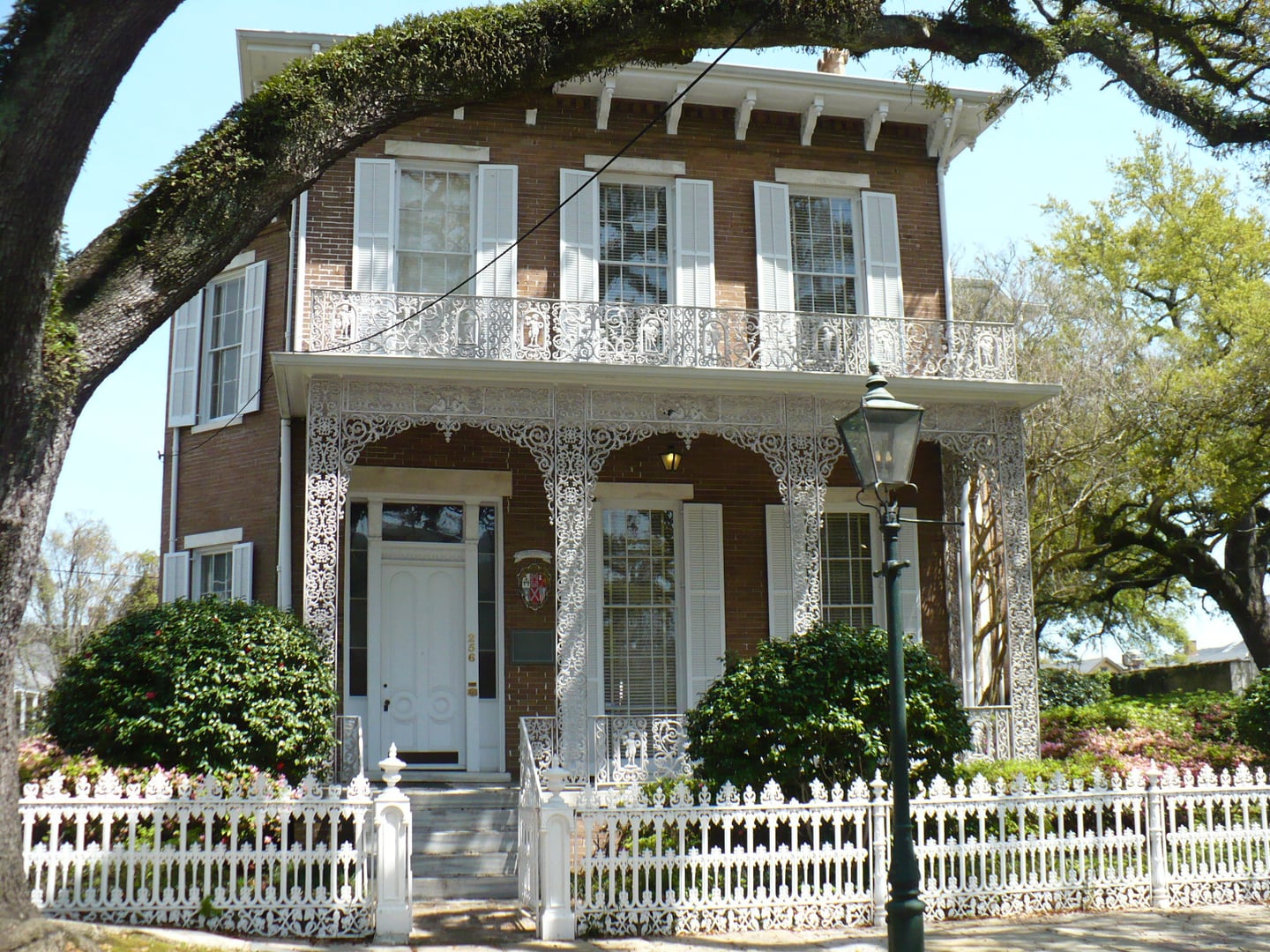
Ornate Italianate brick Richards-DAR House Museum at 256 Joachim Street in Mobile, Alabama's De Tonti Square Historic District, completed in 1860.
Haunted House / Historic Home

Richards-DAR House Museum

Mobile, AL

The Richards-DAR House is an ornate Italianate brick mansion completed in 1860 for steamboat captain Charles G. Richards and his wife Caroline Elizabeth Steele. It is a contributing property to the De Tonti Square Historic District, listed on the National Register of Historic Places in 1972, and is operated as a house museum by Mobile DAR chapters.

$ All Ages Family: High
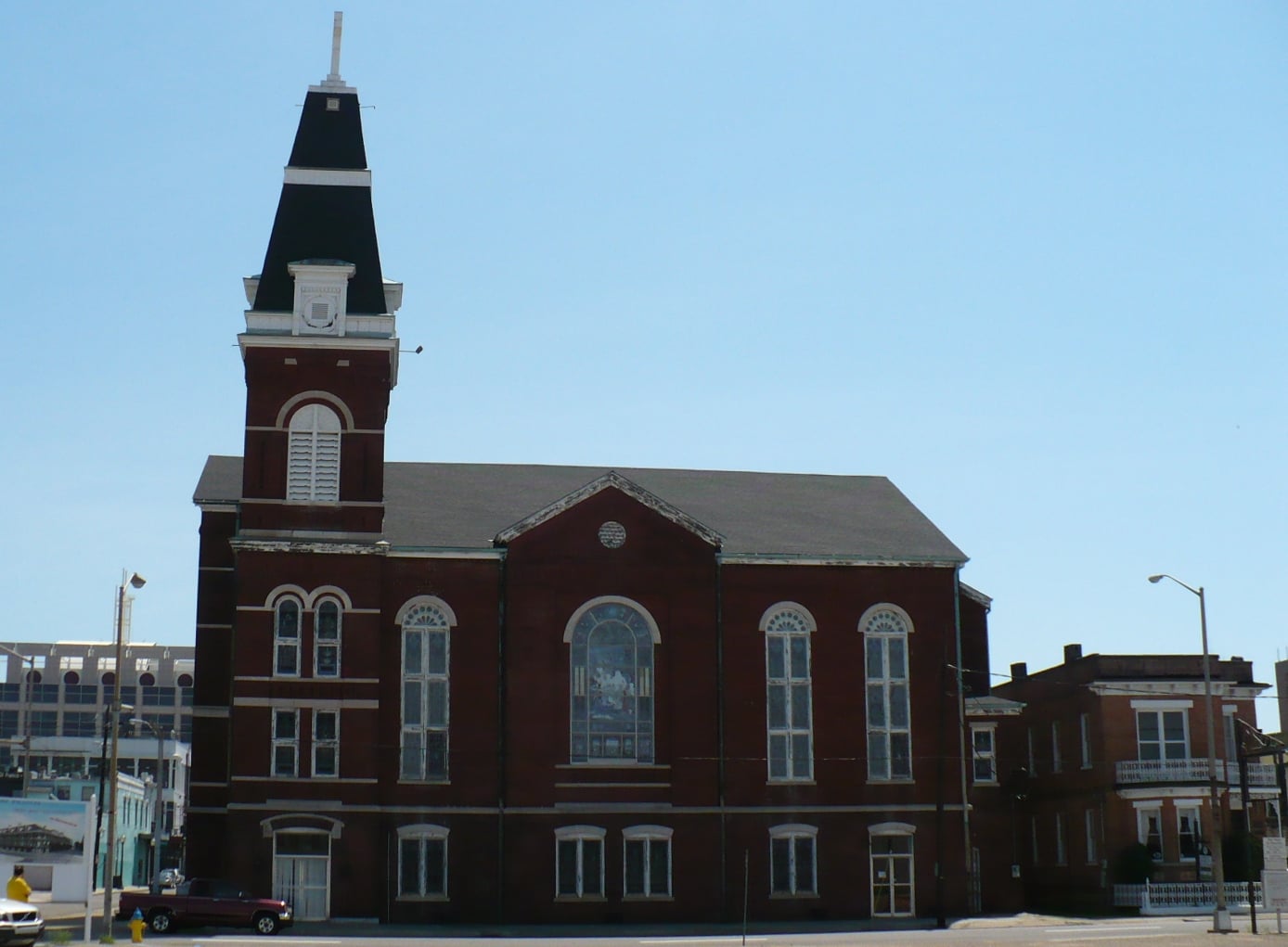
St. Francis Street Methodist Church 1895 Queen Anne brick facade, now The Steeple on St. Francis venue, in Mobile, Alabama
Other Dark Tourism Site

The Steeple on St. Francis

Mobile, AL

The St. Francis Street Methodist Church congregation opened its mahogany doors at this site in 1842, having split from Mobile's first Methodist church. The current Romanesque-revival structure was built in 1896 by architectural firm Watkins and Johnson after an 1894 ammunition-depot fire damaged the downtown area and led to demolition of the original building in 1895. The church closed in 1993 and was renovated in 2015 as The Steeple, a concert and event venue and the home of Downtown Church Sunday services.

$$ All Ages Family: Moderate
USS Alabama battleship at permanent berth in Battleship Memorial Park, Mobile, Alabama, viewed from shore
Museum / Historical Site

USS Alabama Battleship

Mobile, AL

The USS Alabama (BB-60) is a South Dakota-class battleship launched in 1942 and commissioned in 1942 for service in World War II. The ship was moved to Mobile in 1964 and opened as Battleship Memorial Park in January 1965. The vessel was designated a National Historic Landmark in 1986.

$$ All Ages Family: Moderate
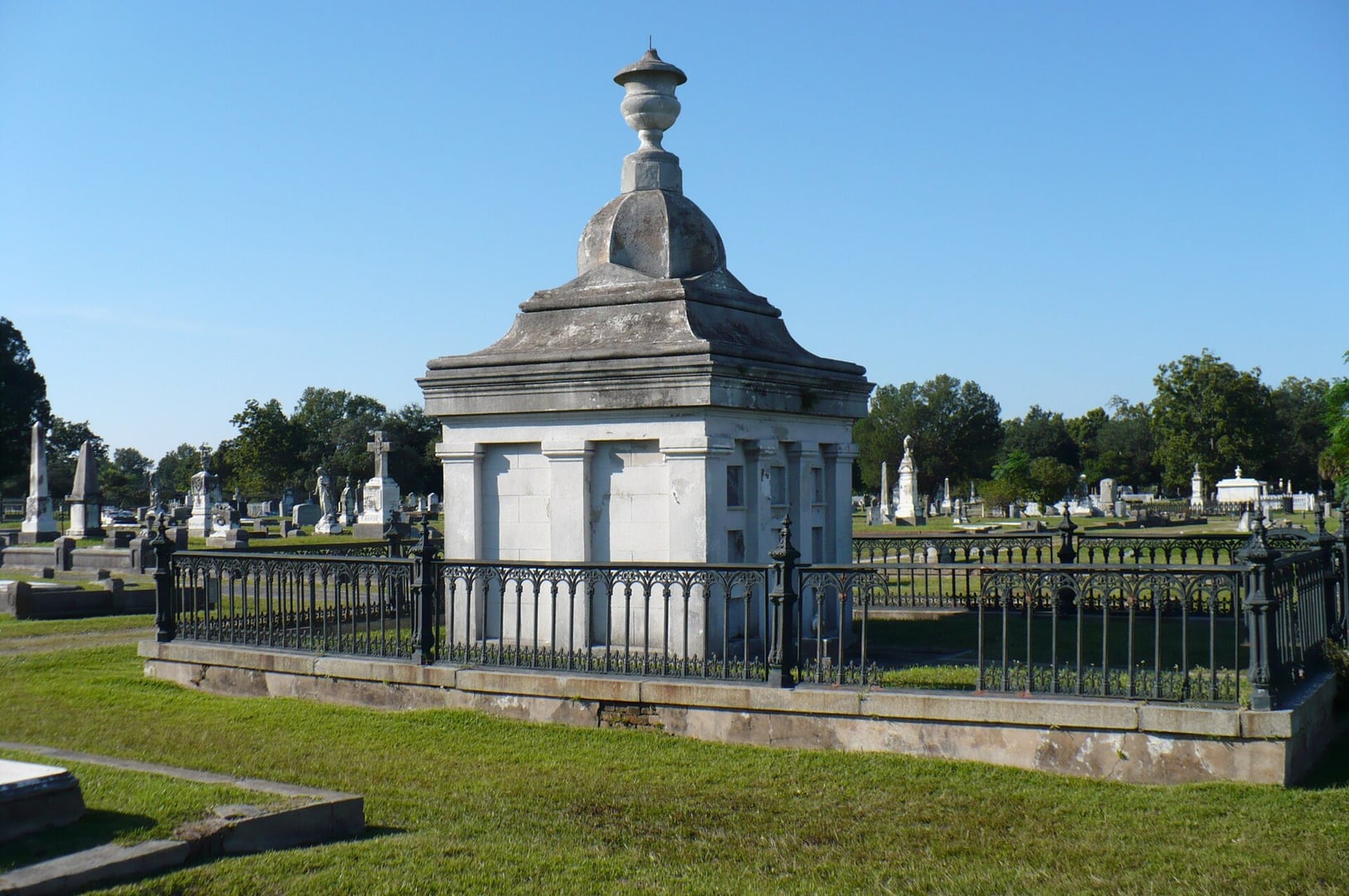
The Wilson Mausoleum at Magnolia Cemetery in Mobile, Alabama, a historic cemetery established 1836.
Cemetery / Burial Ground

Magnolia Cemetery

Mobile, AL

Established in 1836 as Mobile's primary municipal burial ground, Magnolia Cemetery spans more than 100 acres and contains over 80,000 burials. It was added to the National Register of Historic Places on June 13, 1986, and remains an active, though limited, burial site. The cemetery holds an exceptional collection of Victorian funerary art, including a rare mid-19th-century cast-iron statue cast by the Wood & Perot foundry of Philadelphia.

$ All Ages Family: High

Albertville — 2

Exterior view of Albertville Middle School, an active educational facility in Marshall County, Alabama
Photo coming soon
Museum / Historical Site

Albertville Middle School

Albertville, AL

Albertville Middle School operates as the sole middle school in Albertville City School District at its East Alabama Avenue location. The facility serves students in grades 6-8 and maintains academic and athletic programs. The school's construction date and historical development remain part of the district's documented heritage.

$ School Hours Only Family: High
Aerial view of Memory Hill Cemetery's 45-acre grounds in Albertville, Alabama, with rows of headstones and a central mausoleum
Photo coming soon
Cemetery / Burial Ground

Memory Hill Cemetery

Albertville, AL

Memory Hill Cemetery in Albertville, Alabama is the city's largest burial ground, covering 45 acres along Highway 431 with graves dating to the late nineteenth century. The cemetery is managed by the City of Albertville. In September 2012, vandals destroyed 44 headstones, including markers for four victims of Albertville's 1908 Great Cyclone — three of them children.

$ All Ages Family: High

Florence — 2

Historic 1934 photograph of Sweetwater Mansion, a Federal-style plantation house in Florence, Alabama
Haunted House / Historic Home

Sweetwater Mansion

Florence, AL

Sweetwater Mansion in Florence, Alabama is a Federal-style plantation house completed in 1835. The property was designed by General John Brahan and completed by his son-in-law, post-Civil War governor Robert M. Patton. The mansion was listed on the National Register of Historic Places in 1976 and is now undergoing restoration under new ownership.

$ All Ages Family: Moderate
The surviving Ionic columns of the Forks of Cypress plantation ruins near Florence, Alabama
Photo coming soon
Outdoor / Natural Site

The Forks of Cypress

Florence, AL

The Forks of Cypress was a cotton plantation near Florence in Lauderdale County, built for Irish immigrant James Jackson and completed in 1830. Architect William Nichols designed it as the only Alabama house with a two-story colonnade of 24 Ionic columns wrapping the entire structure. The house burned after a lightning strike on June 6, 1966; the columns survived and remain a landmark.

$ All Ages Family: Moderate

Gulf Shores — 2

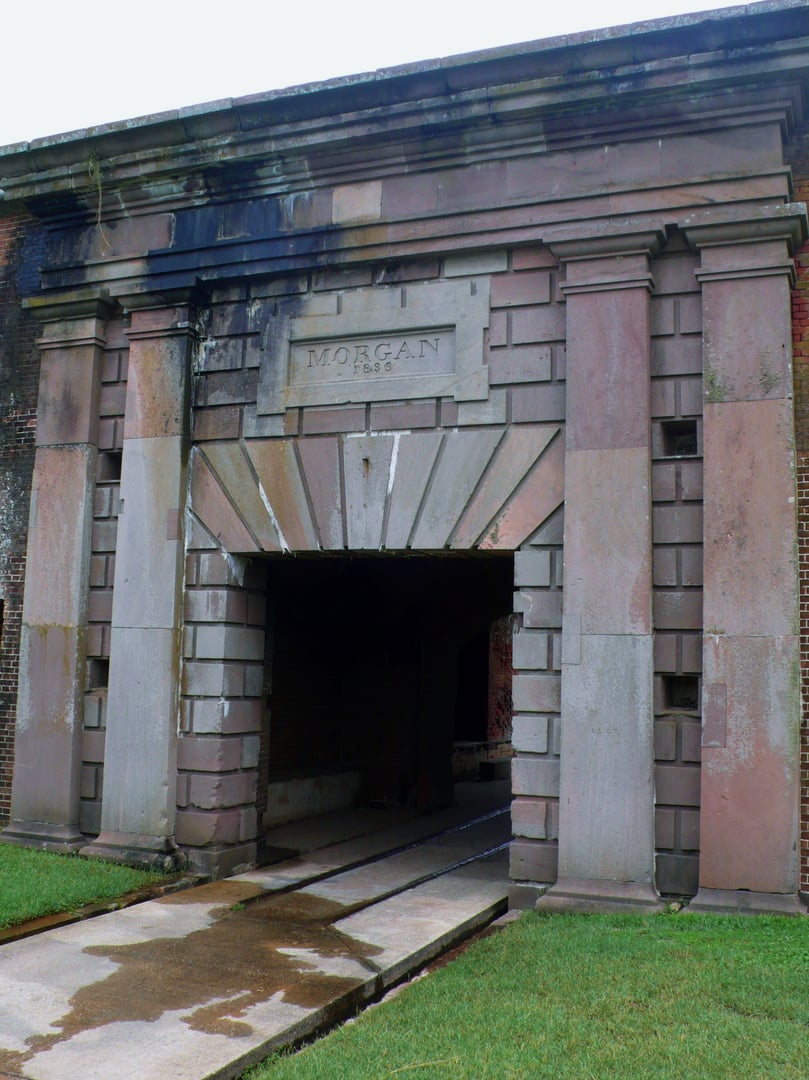
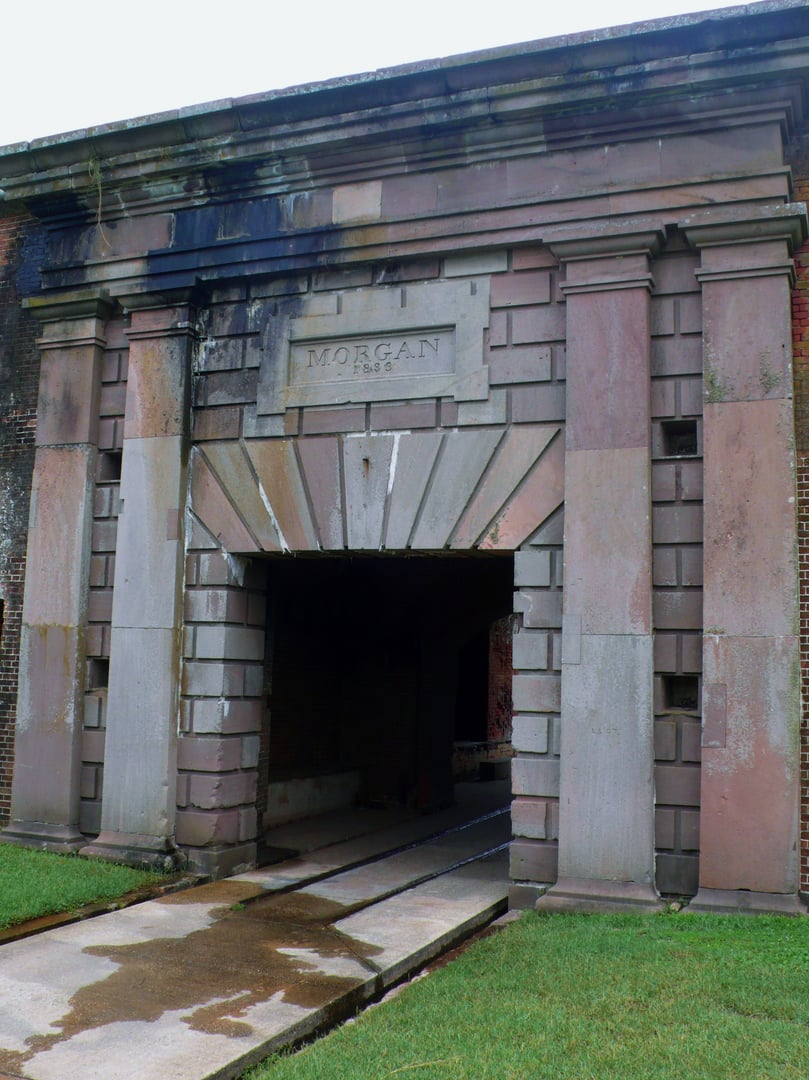
Brick entrance archway at Fort Morgan on Mobile Point in Baldwin County, Alabama
Battlefield / Military Site

Fort Morgan State Historic Site

Gulf Shores, AL

Fort Morgan is a brick pentagonal masonry fort completed in 1834 on Mobile Point at the entrance to Mobile Bay, Alabama. Named for Revolutionary War hero Daniel Morgan, the fort was the principal Confederate defense in the August 5, 1864 Battle of Mobile Bay, where Admiral David Farragut's Union fleet charged through mined waters. General Richard Page surrendered the fort on August 23, 1864. Control transferred to the Alabama Historical Commission in 1977.

$ All Ages Family: High
Brick entrance archway of Fort Morgan at the mouth of Mobile Bay, Alabama
Battlefield / Military Site

Fort Morgan

Gulf Shores, AL

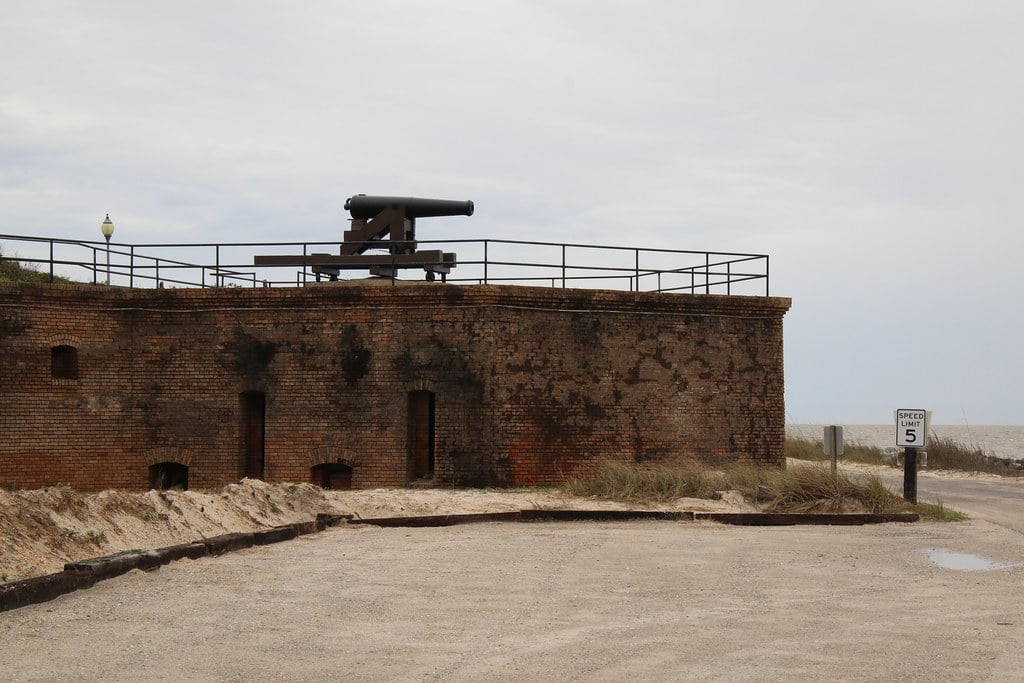
Fort Morgan is a star-shaped masonry fort built between 1819 and 1833 at the western entrance to Mobile Bay, Alabama. It saw active service in the Civil War, the Spanish-American War, and both World Wars and is now operated as a state historic site by the Alabama Historical Commission.

$$ All Ages Family: Moderate

Munford — 2

Bethlehem United Methodist Church cemetery along McElderry Road in Munford, Alabama
Photo coming soon
Other Dark Tourism Site

Bethlehem United Methodist Church

Munford, AL

Bethlehem United Methodist Church in Munford, Talladega County, Alabama, is a rural religious institution with a cemetery containing over 400 graves. The site holds documented burials of Civil War veterans and early Alabama settlers, making it a site of local historical significance.

$ All Ages Family: High
A wooded Alabama hillside near Munford with scattered small pioneer cemeteries.
Photo coming soon
Cemetery / Burial Ground

Cemetery Mountain

Munford, AL

Cemetery Mountain is the colloquial name for a wooded hillside near Munford, Alabama, in Talladega County. The name reflects the presence of multiple small pioneer-era family cemeteries on the slope, with some markers dating to the 1890s and early 1900s.

$ All Ages Family: Moderate

Tuscaloosa — 2

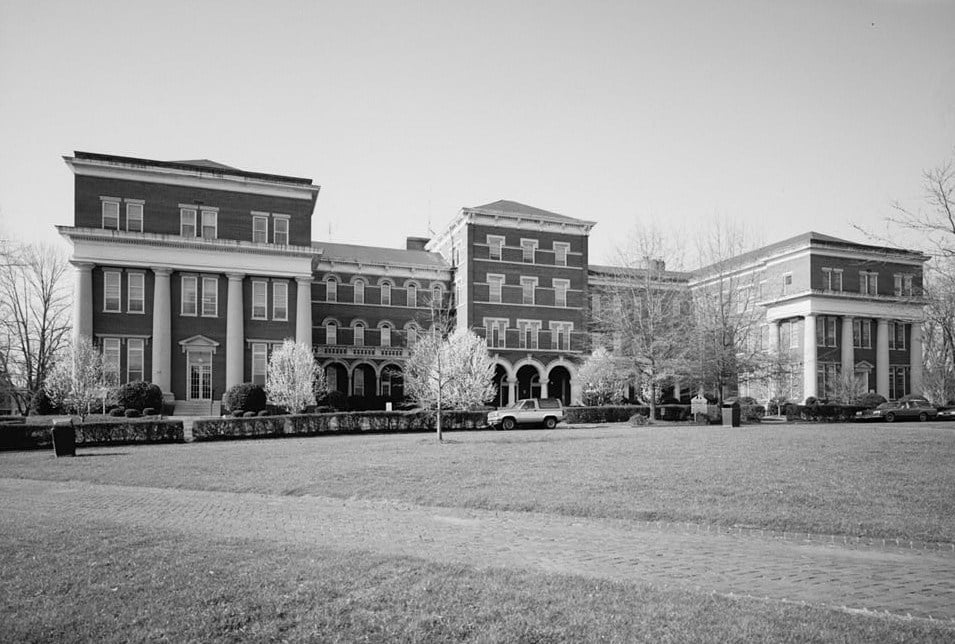
Kirkbride-plan facade of historic Bryce Hospital, opened in 1861 in Tuscaloosa, Alabama
Museum / Historical Site

Bryce Hospital

Tuscaloosa, AL

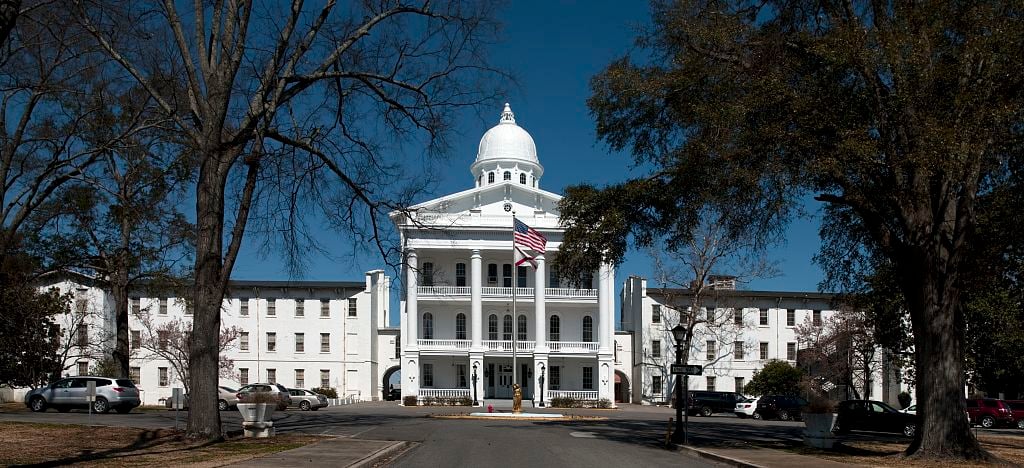
Bryce Hospital opened in 1861 in Tuscaloosa, Alabama, as the Alabama State Hospital for the Insane. Designed by Dr. Thomas Story Kirkbride in collaboration with architect Samuel Sloan, it served as the prototype for the Alabama Plan that shaped more than 100 psychiatric facilities across North America. The University of Alabama purchased the property in 2010 and opened the Bryce Hospital Museum in 2024.

$ All Ages Family: Moderate
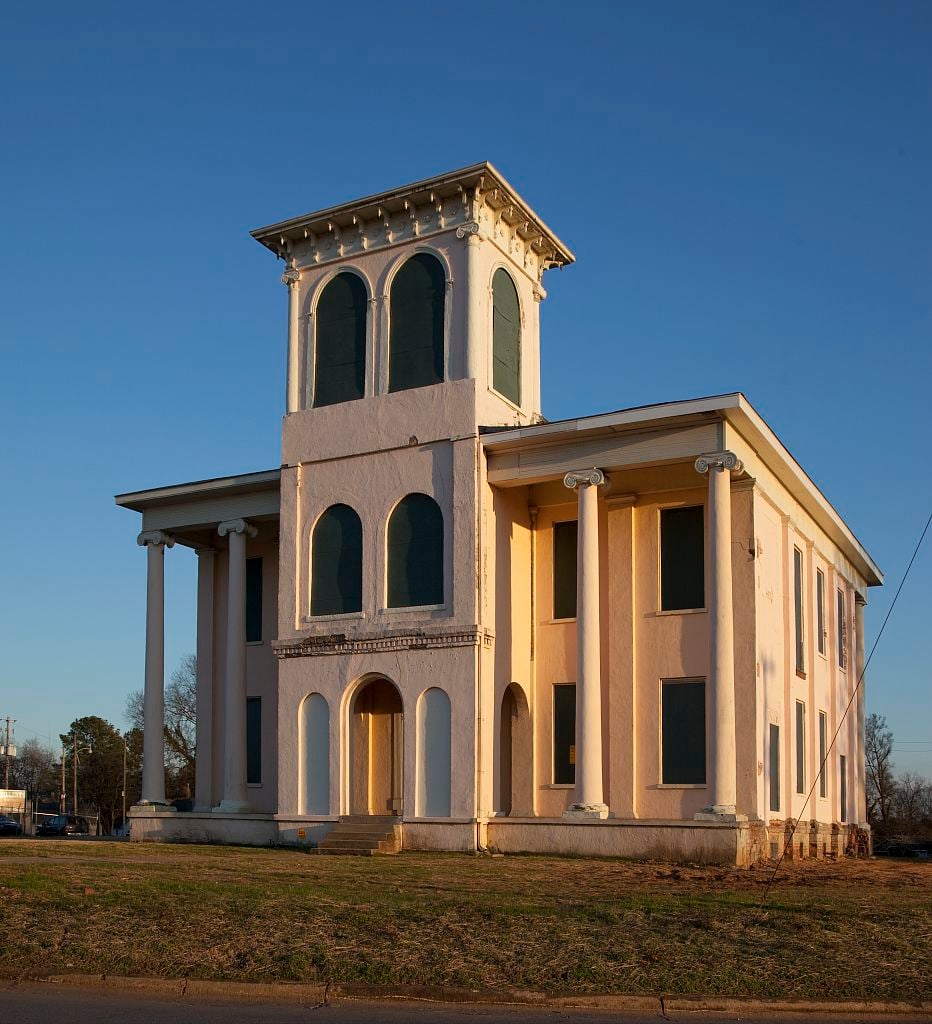
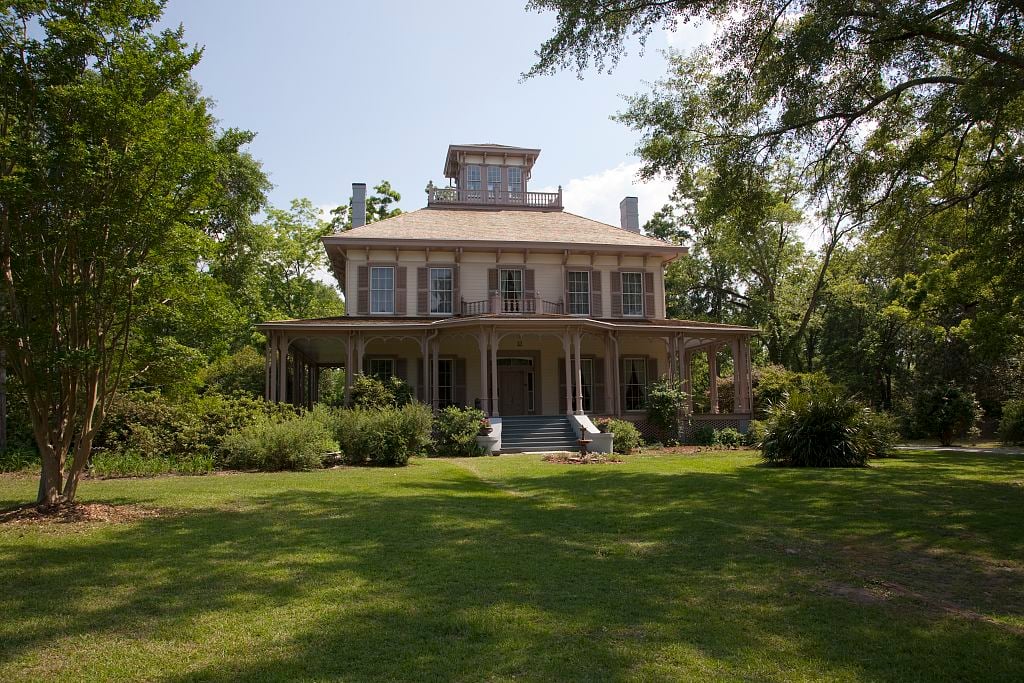
Greek Revival Drish House mansion with Italianate tower in Tuscaloosa, Alabama
Haunted House / Historic Home

The Historic Drish House

Tuscaloosa, AL

The Drish House is an 1837 Greek Revival mansion with a later Italianate tower in Tuscaloosa, Alabama. It was built by Dr. John R. Drish, a physician, and his wife Sarah, on what was then a 450-acre cotton plantation worked by enslaved laborers. The house has served as a school, a church, and an automotive shop; it was restored in the 2010s and is listed on the National Register of Historic Places.

$$ All Ages Family: Moderate

Adamsville — 1

Bottenfield Middle School exterior in Adamsville, Alabama
Photo coming soon
Museum / Historical Site

Bottenfield Middle School

Adamsville, AL

Bottenfield Middle School, now known as Minor Middle School, operates as a comprehensive middle school in Adamsville's Jefferson County school system. The facility serves grades 6-8 and is located on Hillcrest Road. The school's construction and operation reflect standard educational infrastructure of mid-to-late twentieth century development.

$ School Hours Only Family: High

Alabaster — 1

The 1903-1904 Buck Creek water tower in Alabaster, Alabama
Photo coming soon
Outdoor / Natural Site

Buck Creek Cotton Mill Historic Site

Alabaster, AL

The Buck Creek Cotton Mill in Alabaster, Alabama was founded in 1896 by Thomas C. Thompson and grew into a substantial mill village with cottages, a school, a hotel, and a jail. The mill closed in 1979; most buildings were demolished between 2007 and 2009 by the city of Alabaster, leaving only the 1903-1904 water tower and the former mill jail.

$ All Ages Family: High

Anniston — 1

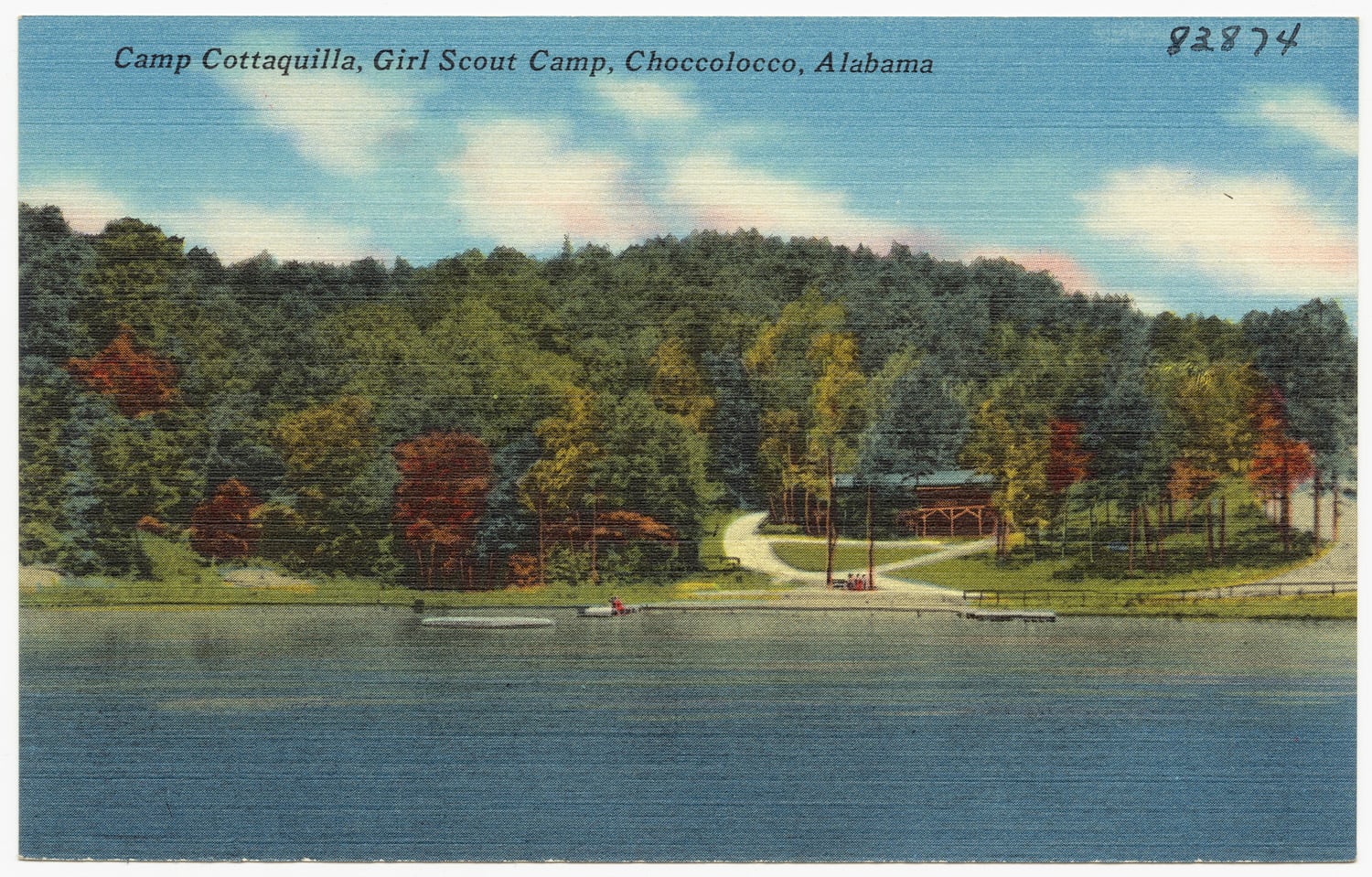
File name: 06_10_012860
Title: Camp Cottaquilla, Girl Scout Camp, Choccolocco, Alabama
Created/Published:
Date issued: 1930 - 1945 (approximate)
Physical description: 1 print (postcard) : linen texture, color ; 3 1/2 x 5 1/2 in.
Genre: Postcards 
Subject: Cabins; Lakes & ponds
Notes: Title from
Outdoor / Natural Site

Camp Cottaquilla

Anniston, AL

Camp Cottaquilla was established in 1947 as a permanent residential facility for Girl Scouts of North-Central Alabama. The 1600-acre facility occupies 300 acres in the Whites Gap section of Calhoun County, chosen for its scenic beauty, natural streams, and hardwood forests. The camp continues active operation as a premier Girl Scout camping destination.

$$ Girl Scouts Only (Residential Camp) Family: High

Ashland — 1

Historic Hudson House on Watts Mill Road, Ashland, Alabama
Photo coming soon
Haunted House / Historic Home

Hudson House

Ashland, AL

The Hudson House was built in 1905 on Watts Mill Road in Ashland, Alabama. According to local sources it was built by Charles and William K. Hudson for their brother John I. Hudson; the original land was owned by their father, reportedly killed in the Civil War.

$ All Ages (exterior viewing only) Family: Moderate

Carrollton — 1

Pickens County Courthouse historic exterior, Carrollton Alabama
Museum / Historical Site

Pickens County Courthouse

Carrollton, AL

The Pickens County Courthouse in Carrollton, Alabama was built in 1877-1878 as the third courthouse in the city, after the previous courthouse burned in 1876. The current building remains the active seat of Pickens County government and is best known for an image in a garret window pane that is locally attributed to freedman Henry Wells.

$ All Ages Family: Moderate

Clanton — 1

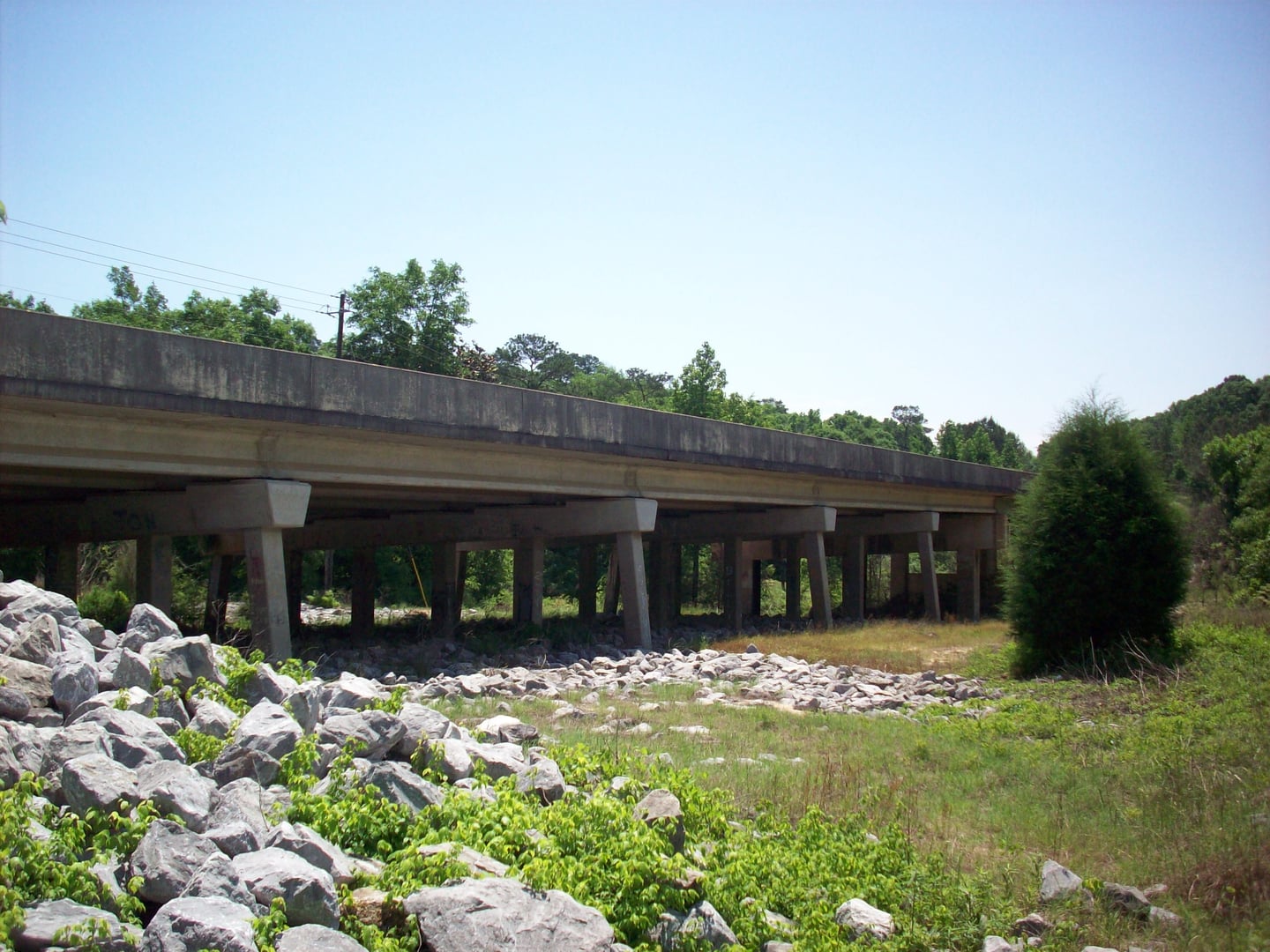
One-lane bridge over Walnut Creek in Chilton County Alabama near Refuge community
Photo coming soon
Outdoor / Natural Site

Refuge Bridge

Clanton, AL

Refuge Bridge spans Walnut Creek on Chilton County Road 32, located in the rural Refuge community near Clanton, Alabama. The bridge is in the vicinity of Refuge Cemetery and Refuge Baptist Church, a congregation established by an early settler family. The bridge has been rebuilt at least once following flood damage.

$ All Ages Family: Moderate

Dauphin Island — 1

The brick masonry walls and bastions of Fort Gaines at the eastern tip of Dauphin Island, Alabama.
Battlefield / Military Site

Fort Gaines

Dauphin Island, AL

Fort Gaines is a brick masonry coastal fortification on the eastern tip of Dauphin Island, Alabama, completed in 1861 to defend the western entrance to Mobile Bay. It is best known for its role in the August 1864 Battle of Mobile Bay, when Union Admiral David Farragut ran the fort's torpedo line. The fort was used through both World Wars and is now operated by the Dauphin Island Park and Beach Board.

$$ All Ages Family: Moderate

Deatsville — 1

Marbury High School athletic field in Deatsville Alabama viewed from road
Photo coming soon
Other Dark Tourism Site

Marbury High School

Deatsville, AL

Marbury High School in Deatsville, Autauga County, Alabama is an active public high school serving grades 9-12. In 1966, a cheerleading accident during a pyramid maneuver at the school's football field resulted in the death of a student, Sandy Vinson. A 2005 Andalusia Star-News investigation concluded that the accompanying ghost legend was an urban legend, though the accident itself was verified as real.

$ All Ages Family: Moderate

Demopolis — 1

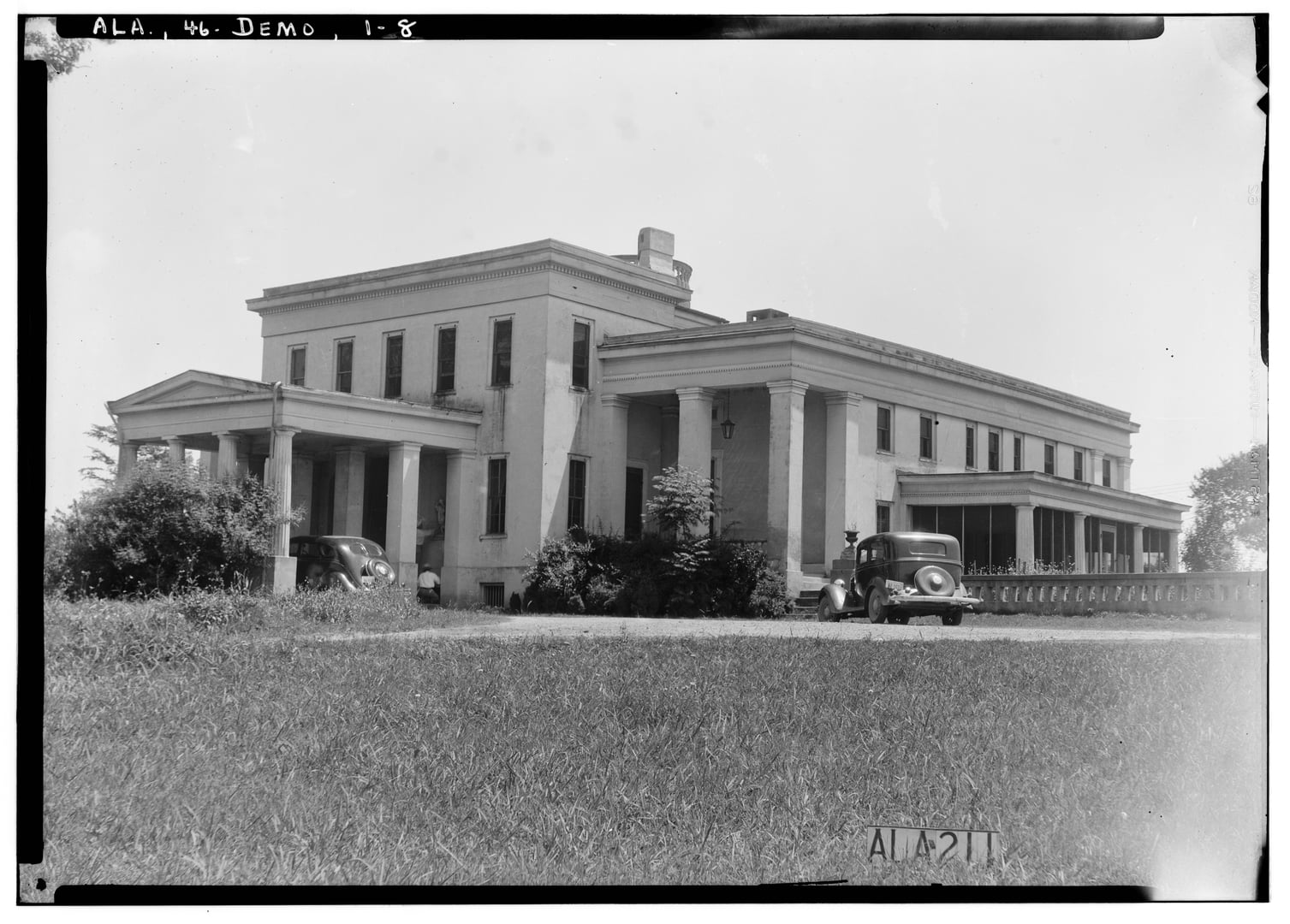
HABS 1936 photograph showing the north and east sides of Gaineswood, the Greek Revival plantation house designed by Nathan Bryan Whitfield in Demopolis, Alabama
Museum / Historical Site

Gaineswood

Demopolis, AL

Gaineswood was built in stages between 1843 and 1861 by General Nathan Bryan Whitfield, who designed the house himself. It is regarded as one of the finest Greek Revival residences in the United States and is a National Historic Landmark, owned and operated by the Alabama Historical Commission as a historic-house museum.

$ All Ages Family: High

Franklin — 1

Wooded ridge trail at Haines Island Park on the Alabama River, the setting of the Nancy Mountain apparition legend
Photo coming soon
Outdoor / Natural Site

Nancy Mountain

Franklin, AL

Nancy Mountain sits within Haines Island Park, a 480-acre U.S. Army Corps of Engineers recreation area on the Alabama River west of Franklin, Monroe County. The mountain is described in regional accounts as a double-humped ridge overlooking the river where a steamboat landing once operated during the Civil War period.

$ All Ages Family: Moderate

Gardendale — 1

Grave of Edward Hodges Baily in Highgate Cemetery
Photo coming soon
Cemetery / Burial Ground

Hodges Cemetery

Gardendale, AL

Hodges Cemetery is a small private family burial ground on Hodges Cemetery Road in Jefferson County, Alabama, about 4.4 miles outside Gardendale, with an estimated 135 graves but only around 35 surviving markers. Documented in Bhamwiki and regional cemetery surveys, the site is actively threatened by ATV incursion and overgrowth.

$ All Ages Family: Moderate

Guntersville — 1

This is a photo of the Guntersville Railroad Depot Museum, a newly renovated depot with miniature train display, plus memorabilia from years past. www.guntersvillehistoricalsociety.org
Photo coming soon
Cemetery / Burial Ground

Bishop's Graveyard

Guntersville, AL

Bishop's Graveyard is a historic cemetery located in Guntersville, Marshall County, Alabama. Like many rural cemeteries in the region, it serves as both a burial ground and a documented site of local genealogical significance.

$ All Ages Family: High

Homewood — 1

Homewood Public Library former Church of Christ building exterior
Photo coming soon
Museum / Historical Site

Homewood Public Library

Homewood, AL

The Homewood Public Library opened at 1721 Oxmoor Road on March 1, 1987 in a former Church of Christ building purchased by the City of Homewood in 1984 and remodeled by architects Paul and Walter Anderton with Sherrod Construction. A major renovation begun in 1996 culminated in a grand reopening on April 16, 1998.

$ All Ages Family: High

Hueytown — 1

Residential street in Hueytown Alabama at dusk, lined with mid-century homes
Photo coming soon
Outdoor / Natural Site

Lilly Lane

Hueytown, AL

Lilly Lane is a residential street in Hueytown, Alabama, a city in western Jefferson County incorporated in 1955 and part of the greater Birmingham metropolitan area. The surrounding community developed largely in the mid-twentieth century alongside Birmingham's industrial growth.

$ All Ages Family: High

Huntsville — 1

Older section of Maple Hill Cemetery in Huntsville, Alabama, featuring the Bibb obelisk and historic markers
Cemetery / Burial Ground

Maple Hill Cemetery

Huntsville, AL

Maple Hill Cemetery in Huntsville, Alabama was founded in 1822 when planter LeRoy Pope sold two acres to the city for use as a burial ground. It is the oldest and largest cemetery in Alabama, now covering nearly 100 acres with more than 80,000 burials, including five Alabama governors and five United States senators.

$ All Ages Family: Moderate

Jacksonville — 1

The wooded foothills above Brownwood Estates in Jacksonville, Alabama, near the Chief Ladiga Trail corridor.
Photo coming soon
Outdoor / Natural Site

Dump Road (Old Chief Ladiga Trail)

Jacksonville, AL

Dump Road is a colloquial name for an unfinished subdivision road extension in Jacksonville, Alabama, located above the Brownwood Estates neighborhood and along a section of the Old Chief Ladiga Trail corridor. The road was paved in the 1980s as part of a planned development that was never completed; the formal Chief Ladiga Trail today provides 39.2 miles of paved rail-trail through eastern Alabama.

$ All Ages Family: Moderate

Marion — 1

Kenworthy Hall, the 1860 Richard Upjohn Italian villa near Marion, Alabama, a National Historic Landmark
Haunted House / Historic Home

Kenworthy Hall

Marion, AL

Kenworthy Hall in Marion, Alabama is the only surviving residential example of architect Richard Upjohn's Italian villa style adapted for Southern plantation life. Built 1858-1860 for cotton factor Edward Kenworthy Carlisle, the house was designated a National Historic Landmark in 2004. It remains a private residence.

$ All Ages (drive-by only) Family: High

Mentone — 1

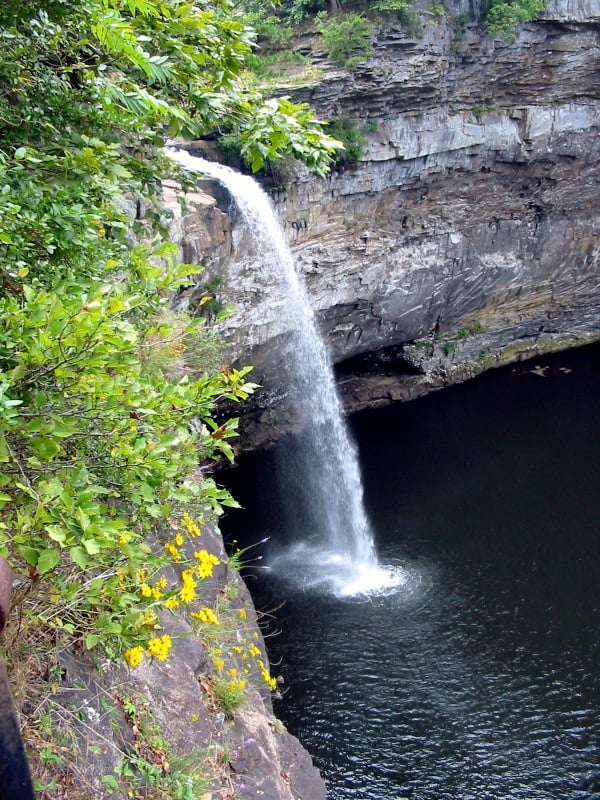
DeSoto Falls dropping over a Lookout Mountain cliff into the West Fork of the Little River, DeSoto State Park, Mentone, Alabama
Museum / Historical Site

DeSoto Falls

Mentone, AL

DeSoto Falls is a 104-foot waterfall on the West Fork of the Little River within DeSoto State Park, atop Lookout Mountain in northeast Alabama. The falls were named for Hernando de Soto, whose 1540 Spanish expedition passed nearby. An early hydroelectric dam built upstream first brought electricity to the Mentone area.

$ All Ages Family: Moderate

Midway — 1

Rural Baptist church and adjacent cemetery in Conecuh County Alabama surrounded by pine trees
Photo coming soon
Cemetery / Burial Ground

Midway Baptist Church

Midway, AL

Midway Baptist Church sits in Conecuh County, Alabama, accompanied by a historic cemetery with burials documented from the nineteenth century. The church serves an active congregation. The cemetery, transcribed and documented by genealogical researchers, contains markers for local farming families from the region's early settlement period.

$ All Ages Family: High

Montevallo — 1

A historic building on the University of Montevallo campus in Montevallo, Alabama
Photo coming soon
Other Dark Tourism Site

University of Montevallo

Montevallo, AL

The University of Montevallo opened in 1896 as the Alabama Girls' Industrial School and is today a public liberal-arts university in Shelby County. Several of its 19th-century buildings, including Main Hall and Reynolds Hall, predate the school or its early years. The campus is well known regionally for ghost stories documented in university archives, local newspapers, and student publications.

$ All Ages Family: Moderate

Moundville — 1

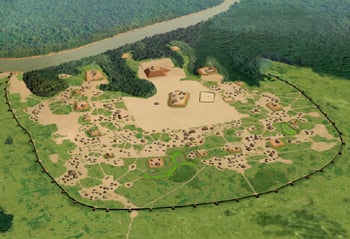
Aerial illustration of Moundville Archaeological Park showing the Mississippian-culture earthwork plaza and platform mounds in Hale County, Alabama.
Museum / Historical Site

Moundville Archaeological Park

Moundville, AL

Moundville Archaeological Park preserves 326 acres of a Mississippian culture settlement occupied from approximately 1000 to 1450 AD on the Black Warrior River, 13 miles south of Tuscaloosa. At its peak around 1200 AD, the walled community housed an estimated 1,000 to 3,000 residents, making it one of the largest cities in pre-Columbian North America. The site was designated a National Historic Landmark in 1964 and is administered by the University of Alabama Museums.

$ All Ages Family: High

Mount Hope — 1

Rural road dip on County Road 25 in Mount Hope, Alabama, site of the Henry's Hill gravity phenomenon
Photo coming soon
Outdoor / Natural Site

Henry Hill (Gravity Hill)

Mount Hope, AL

Henry Hill on County Road 25 in Mount Hope, Alabama has accumulated multiple origin stories over generations. The most common modern version describes a man named Henry who died pushing his family's stalled car out of the path of an oncoming vehicle. Older community accounts predate this narrative, with elder residents recalling stories of a young enslaved person killed by a horse-drawn vehicle at the same spot long before the Civil War.

$ All Ages Family: High

Mulga — 1

Village Falls Cemetery in Mulga, Alabama, with mature trees and nineteenth-century headstones
Photo coming soon
Cemetery / Burial Ground

Village Falls Cemetery

Mulga, AL

Village Falls Cemetery in Mulga, Jefferson County, was established in 1866 and contains approximately 1,173 documented graves. It originated as the burial ground of the Village Falls Methodist Church, which no longer exists. The oldest recorded burial is Dannie Carmichael, dated May 11, 1866, and the cemetery holds markers for local families throughout the late nineteenth and early twentieth centuries.

$ All Ages Family: Moderate

Nixburg — 1

Historic Oakachoy Covered Bridge in Coosa County, Alabama, before it was destroyed by arson in 2001
Photo coming soon
Outdoor / Natural Site

Oakachoy Covered Bridge (Site)

Nixburg, AL

The Oakachoy Covered Bridge was a 56-foot modified Queen-post truss covered bridge built in 1916 by Melton Harris to connect the Coosa and Tallapoosa county seats. One of the shortest covered bridges in Alabama, it was listed on the National Register of Historic Places in 1990 and burned by vandals in 2001, leaving only its stone foundations.

$ All Ages Family: Low

Northport — 1

Abandoned church building at Brownville, Alabama ghost town
Photo coming soon
Outdoor / Natural Site

Brownville

Northport, AL

Brownville, formerly known as Brownsville, Hog Eye, Red Valley, and Sulpher Springs, was a rural community in Tuscaloosa County that flourished during the early twentieth century. The town operated a post office from 1926 to 1966, marking its period of active settlement. Today, only the church building remains standing amid the overgrown landscape.

$ All Ages Family: High

Notasulga — 1

The Notasulga Volunteer Fire Department in Notasulga, Alabama
Photo coming soon
Other Dark Tourism Site

Notasulga Volunteer Fire Department

Notasulga, AL

The Notasulga Volunteer Fire Department serves the small town of Notasulga in Macon County, Alabama. For years the town's fire and police stations stood side by side; the operation today is housed in a newer, larger station. Local tradition links a haunting to a fatal late-1990s vehicle crash into the original stations.

$ All Ages Family: Moderate

Opelika — 1

Rural road in Lee County Alabama with tree canopy overhead at dusk
Photo coming soon
Outdoor / Natural Site

Double Hill Road

Opelika, AL

Double Hill Road near Opelika, Alabama follows the course of a pre-statehood native trail and later a horse-and-wagon route connecting Columbus, Georgia, to Auburn and Opelika. A small Daniel family cemetery is situated along the road, containing the grave of Mary Melissa Daniel (born 1846). The road has been part of Lee County's rural landscape since before Alabama achieved statehood in 1819.

$ All Ages Family: Moderate

Red Level — 1

Rural cemetery at the former Consolation Church site near Red Level, Alabama
Photo coming soon
Cemetery / Burial Ground

Consolation Church Cemetery

Red Level, AL

Consolation Church Cemetery is a rural burial ground near Red Level in Covington County, Alabama, with graves dating to the early 1800s, including men who served in the Confederate army. The associated wood-frame church, long abandoned, burned to the ground in February 2015, leaving only the cemetery. The site is the focus of a well-known south-Alabama ghost legend.

$ All Ages Family: Moderate

Selma — 1

The Greek Revival columned facade of Sturdivant Hall, a 1856 mansion in Selma, Alabama
Haunted House / Historic Home

Sturdivant Hall

Selma, AL

Sturdivant Hall, also known as the Watts-Parkman-Gillman House, is a Greek Revival mansion in Selma's Old Town Historic District. Construction began in 1853 and was completed in 1856 for Colonel Edward T. Watts. The property is owned by the city of Selma and operated by the Sturdivant Museum Association.

$$ All Ages Family: High

Tuscumbia — 1

1935 HABS photograph showing the north front and west side of Belle Mont (Belmont) mansion at Spring Valley near Tuscumbia, Colbert County, Alabama
Museum / Historical Site

Belle Mont Mansion

Tuscumbia, AL

Belle Mont Mansion was built circa 1828-1832 by Alexander Williams Mitchell and is one of the few Palladian-style houses in the Deep South, with neoclassical features influenced by Thomas Jefferson's architectural work. It was the centerpiece of a 1,680-acre plantation that included 152 enslaved people in 1860. The Winston family donated the property to the State of Alabama in 1983; it is now owned by the Alabama Historical Commission.

$ All Ages Family: Moderate

Tuskegee — 1

The Bartram Trail through Tuskegee National Forest in Macon County, Alabama
Photo coming soon
Outdoor / Natural Site

Tuskegee National Forest

Tuskegee, AL

Established 1959 as the Tuskegee Purchase Unit; the smallest national forest in the United States at 11,252 acres. The land was historically Creek Nation territory; following the Indian Removal Act of 1830, approximately 5,000 Creek people were forcibly relocated from Macon County, after which the land was farmed and later eroded into the soil-restoration project that became the national forest.

$ All Ages Family: High

By type