Est. 1860 · Italianate antebellum mansion · Civil War hospital use · Alabama Historical Commission property · National Register of Historic Places
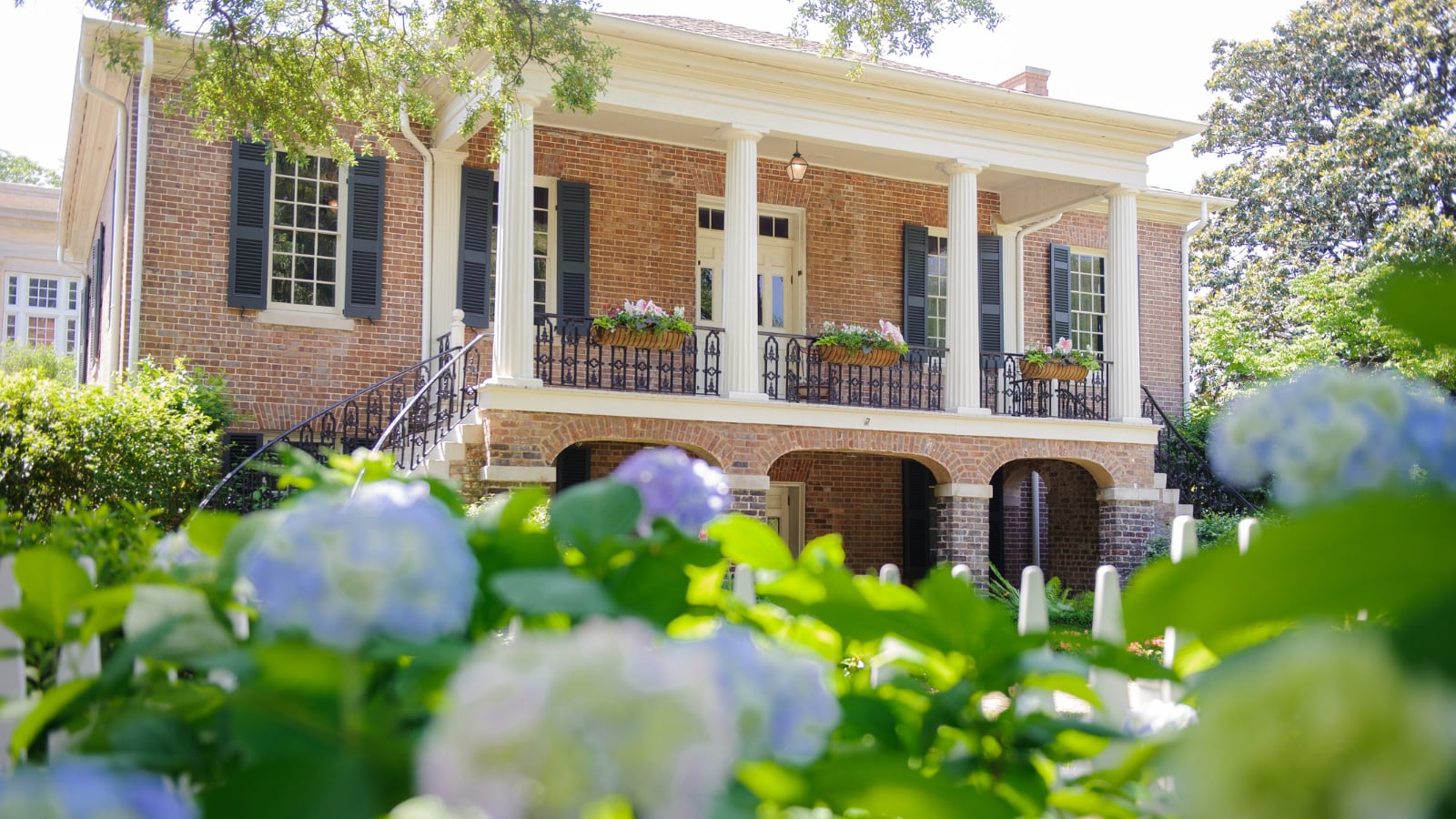
Edward Brown Young completed Fendall Hall in 1860 on a rise above Eufaula's Barbour Street, drawing on the Italianate style then fashionable among Alabama's cotton-era merchant class. The house's defining interior feature — a pair of Italian marble fireplaces — arrived via the port at Mobile and were hauled inland at considerable expense.
When Union forces threatened Eufaula during the Civil War, Confederate authorities briefly commandeered the mansion as a field hospital. The Young family recovered the house after the war and maintained ownership through the early twentieth century. Subsequent private owners kept the structure largely intact before the Alabama Historical Commission acquired Fendall Hall in 1973, listing it on the National Register of Historic Places and opening it as a state-operated house museum.
The mansion's architecture reflects the prosperity Eufaula briefly commanded as a regional commercial hub in the 1850s, when the Chattahoochee River trade brought significant capital to Barbour County. The AHC restoration preserved the original floor plan, mantlepieces, and much of the period millwork.
Sources
- https://ahc.alabama.gov/properties/fendall/fendall.aspx
- https://en.wikipedia.org/wiki/Fendall_Hall
Doors opening and closingCold spotsApparitionsRunning figure vanishing at front door
The most-cited account at Fendall Hall concerns a young woman in period dress who appears at the edge of the property, runs toward the front entrance, and disappears at the door — never entering. Caretakers and AHC staff have not identified a historical figure who matches the description.
Interior reports are more diffuse: doors on the upper floor open and close without mechanical explanation, cold spots appear in rooms with no air circulation, and full apparitions have been described by visitors and staff moving through the hallways before vanishing. The book Haunted Alabama Black Belt by Alan Brown and Docia Schultz Williams (2013) collected several firsthand accounts from people connected to the property during the AHC's stewardship.