Est. 1826 · National Register of Historic Places · Battle of Franklin · Largest Privately Owned US Military Cemetery · Confederate Field Hospital · Enslaved-People Historical Site
Randal McGavock, a Nashville mayor and Tennessee state senator, began construction of Carnton in 1826 on land he had inherited north of Franklin. The 1,420-acre plantation was named after the McGavock family's ancestral home in County Antrim, Ireland. The Federal-style house was completed in stages through the 1820s and 1830s, with a Greek Revival addition in 1847. The McGavocks held approximately 39 enslaved men, women, and children who worked the property; their labor produced the cotton, corn, and livestock that supported the family's wealth. The Battle of Franklin Trust now presents the history of slavery at Carnton in dedicated tour content developed with descendant-community input.
Randal McGavock died in 1843. His son John McGavock and John's wife Carrie were living in the house when the Confederate Army of Tennessee, approximately 19,000 men under General John Bell Hood, marched past Carnton on the afternoon of November 30, 1864, heading toward the entrenched Union positions south of the town of Franklin. The combat that followed lasted approximately five hours. Casualties were among the highest concentration in the Civil War: roughly 9,500 total — 2,000 dead, 6,500 wounded, and 1,000 missing.
Carnton was pressed into service as a field hospital for Confederate General William W. Loring's division. By midnight, an estimated 300 wounded soldiers crowded the interior. Hundreds more filled the lawn, outbuildings, and barn. Approximately 150 men died inside the house that first night. The upstairs bedroom floors are still stained with their blood — the staining is preserved by the Battle of Franklin Trust as part of the interpretive material.
On the morning of December 1, 1864, the bodies of several Confederate generals killed in the previous day's fighting were laid out on Carnton's back porch. Patrick Cleburne, Hiram Granbury, John Adams, and Otho Strahl are the four most commonly identified in primary period accounts. Other Confederate general officers were killed in the battle, but the back-porch tableau as preserved in historical record specifically describes these four.
Carrie McGavock continued to care for soldiers who died at Carnton in the weeks following the battle, and she committed the family to the protection of their graves. In 1866, the McGavocks designated two acres of the property for permanent reburial of approximately 1,500 Confederate dead from the battle. Carrie McGavock kept a manuscript record of the names, units, and burial locations — a document that has remained the primary reference for cemetery identifications. The McGavock Confederate Cemetery remains the largest privately owned military cemetery in the United States.
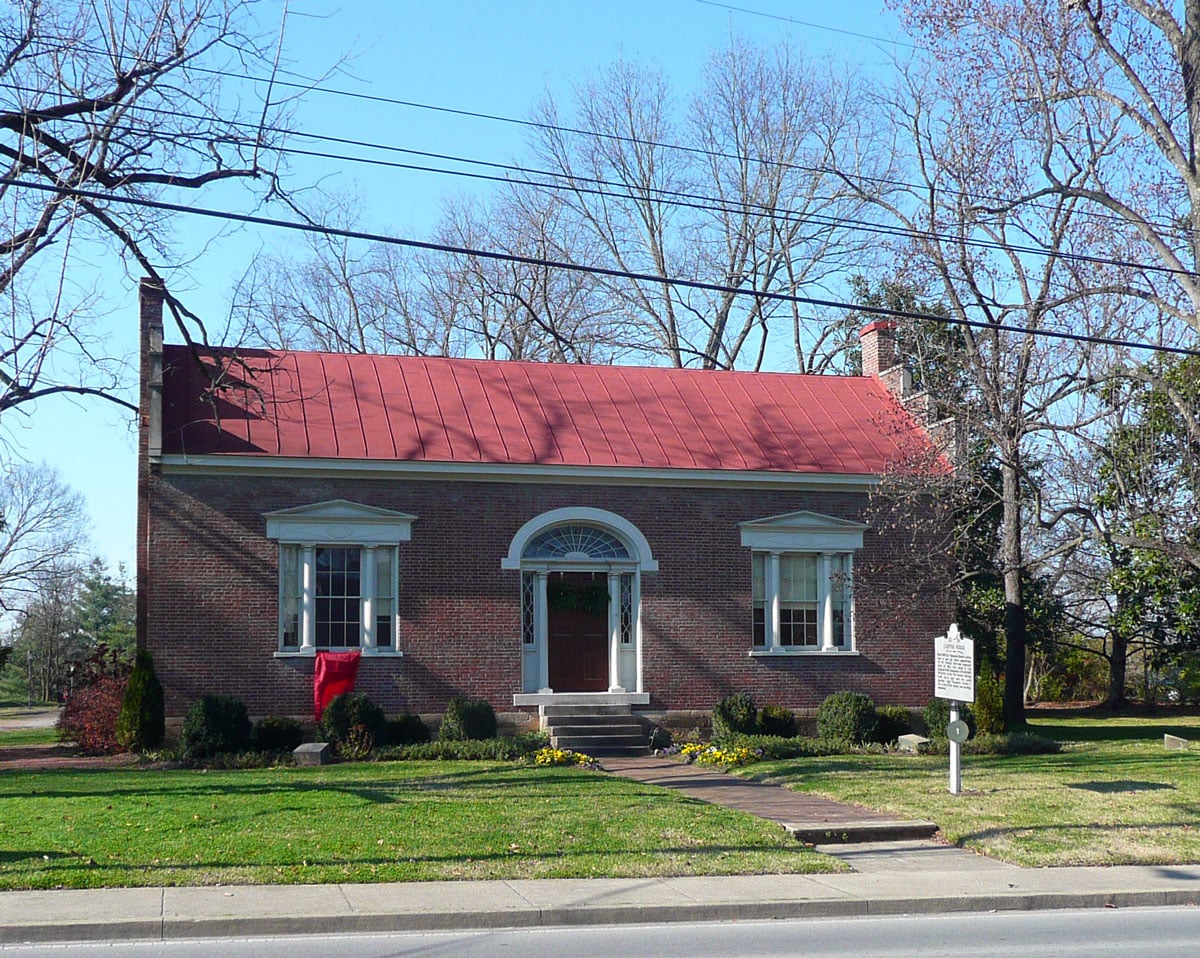
The McGavock family owned Carnton until 1911. The property passed through several private owners before the Battle of Franklin Trust acquired and restored it. Today the trust operates Carnton and the adjacent Eastern Flank Battlefield Park alongside the Carter House and Lotz House properties in Franklin proper.