Self-Guided Visit
Self-Guided Daylight Walk
Wander 100+ acres of cast-iron and marble Victorian monuments, including the Confederate Rest, Pomeroy mausoleum, and the legendary 'Iron Lady' on the Rowan Family Lot in Square 17.
- Duration:
- 1.5 hr
HauntBound archive · catalog record
Reported phenomena, as catalogued
Mobile's 100-acre Victorian-era municipal cemetery founded in 1836, where a cast-iron statue called 'Solemnity' is said to summon storms if turned away from the sea.
1202 Virginia Street, Mobile, AL 36604
Research updated September 2026
Age
All Ages
Cost
Free
Free to walk; donations welcome. Paid guided 'Whispers of Magnolia' tours offered seasonally.
Access
Wheelchair OK
Paved drives and gravel paths through 100+ acres; uneven turf around historic plots.
Equipment
Photos OK
Est. 1836 · National Register of Historic Places (added June 13, 1986) · Mobile's primary 19th-century municipal cemetery with 80,000+ burials · Burial site of Confederate Gen. Braxton Bragg and Alabama Gov. John Gayle · Holds the rare cast-iron Wood & Perot statue 'Solemnity' (the 'Iron Lady')
Magnolia Cemetery was established in 1836 on land south of antebellum Mobile to serve as the city's primary municipal burial ground, replacing the earlier Church Street Graveyard, which had reached capacity. Over the following century the grounds expanded to more than 100 acres bisected by Virginia Street, eventually accommodating over 80,000 interments. The cemetery was added to the National Register of Historic Places on June 13, 1986.
Notable burials include Confederate general Braxton Bragg, Alabama governor John Gayle (served 1831-1835), Civil War-era novelist Augusta Evans Wilson, Bellingrath Gardens founders Walter D. and Bessie Morse Bellingrath, and 19th-century African American businesswoman Bettie Hunter. A Confederate Rest section anchored by a tall obelisk commemorates Civil War dead, and the grounds contain elaborate Victorian-era mausolea including the Pomeroy, Wilson, Caldwell, and LeBlanc memorials.
The cemetery's signature artistic work is the cast-iron statue titled 'Solemnity,' colloquially known as the 'Iron Lady,' which stands on the Rowan Family Lot in Square 17. Forged by the iron foundry of Wood & Perot of Philadelphia around the mid-1800s, the statue is unusual among American cemetery monuments because it was cast in iron rather than carved from stone, and it faces seaward rather than the conventional eastern orientation.
Magnolia served as the burial ground for many of the city's yellow-fever epidemic victims through the late 19th century, and its grounds contain memorials to victims of Mobile's deadliest disease outbreaks. The Magnolia Cemetery Historical Preservation Society and Friends of Magnolia Cemetery work to maintain and document the grounds today, and the on-site office can direct visitors to specific historic plots.
Sources
According to local lore documented by The Alabama Tourist, the cast-iron statue 'Solemnity' on the Rowan Family Lot in Square 17 was placed to commemorate a woman who spent her days gazing seaward, watching for a lover who never returned. Unlike most cemetery sculptures, she faces the ocean rather than the conventional east. The legend holds that if anyone attempts to reposition her away from the sea, Mobile will be lashed by severe storms until she is returned to her original ocean-facing orientation. The story is invoked playfully each hurricane season as a warning to leave the Iron Lady alone.
The cemetery is also the resting place of Mary Eoline Eilands (1854-1937), buried between her parents in the Eilands family plot. According to The Alabama Tourist's account of her life, Eilands accepted a marriage proposal from a Confederate veteran who promised to return from the sea and marry her. He never came back. For more than sixty years until her death at age 83 on September 24, 1937, she walked daily from her home to the Cathedral of the Immaculate Conception for mass, then on to the Mobile River docks to search for him. Her distinctive gliding gait and long black silk skirts gave her the nickname 'Floating Island,' and local lore holds that her figure still drifts along downtown Mobile streets in the direction of the river.
The cemetery's 'Whispers of Magnolia' guided tours recount these stories and others tied to its 'unseen inhabitants,' framing the cemetery as a place where Mobile's 19th-century memory has not entirely settled. No first-person investigation reports rise above local oral tradition; the lore here is folkloric rather than evidential.
Notable Entities
Wander 100+ acres of cast-iron and marble Victorian monuments, including the Confederate Rest, Pomeroy mausoleum, and the legendary 'Iron Lady' on the Rowan Family Lot in Square 17.
Seasonal docent-led tour recounting cemetery history, art, and the 'unseen inhabitants' of Magnolia, including the Iron Lady and 'Floating Island' Mary Eilands legends.
Some links on this page may earn HauntBound a small commission when you book, at no extra cost to you. Our editorial picks are independent. Full disclosure
Every HauntBound history is researched from documented sources. We clearly separate verified historical fact from paranormal folklore.
Free Guide
11 verified stops, rated for families, mapped in order. Free.
One email to confirm, then the guide link. Unsubscribe anytime.
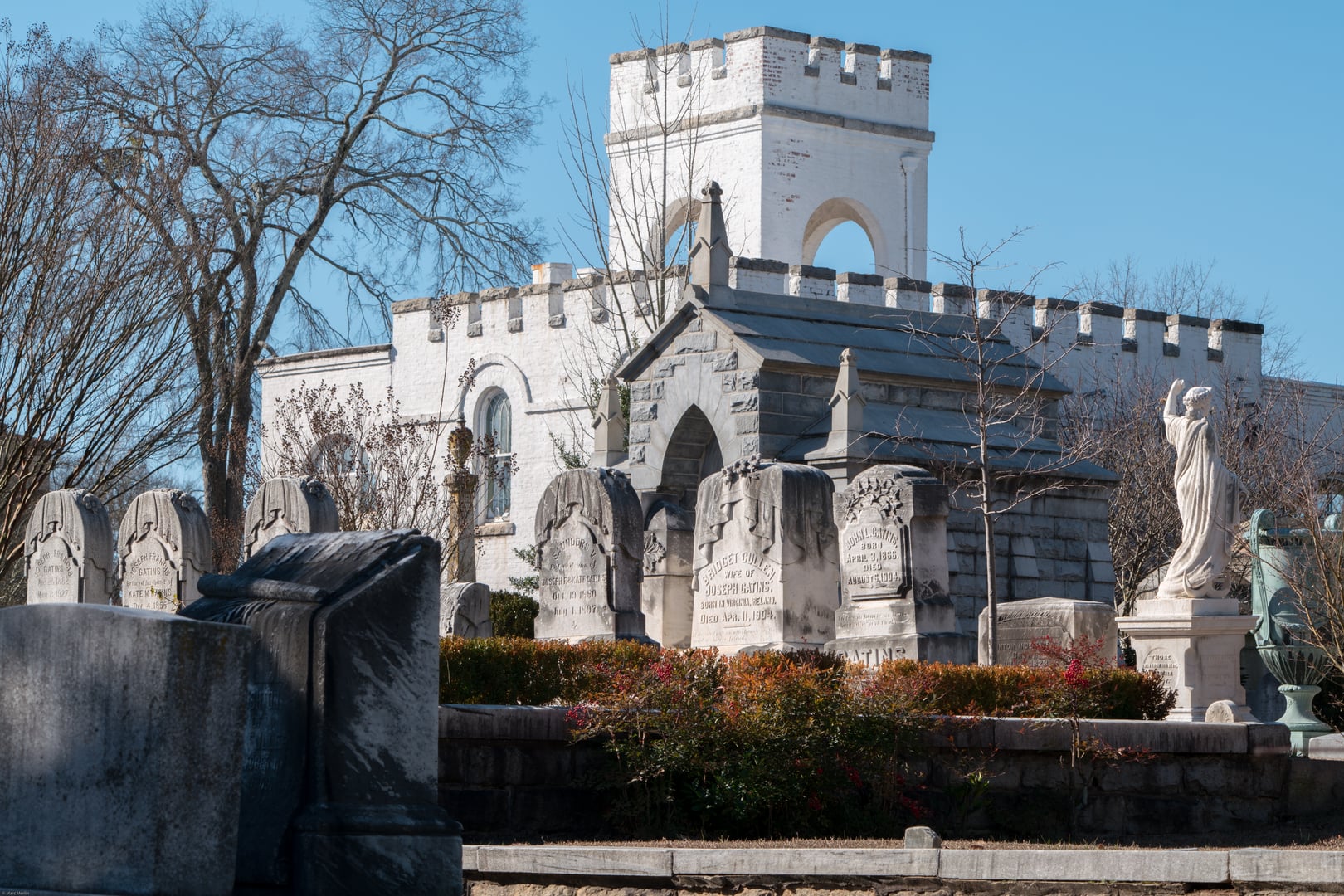
Atlanta, GA
Historic Oakland Cemetery was chartered in 1850 as the six-acre 'Atlanta Cemetery,' renamed Oakland in 1872, and expanded to 48 acres. Approximately 70,000 people are interred, including roughly 6,900 Confederate soldiers (3,000 unidentified), four Confederate generals, six Georgia governors, 27 Atlanta mayors, Margaret Mitchell, golfer Bobby Jones, and Maynard Jackson, Atlanta's first African American mayor. The cemetery was listed on the National Register of Historic Places on April 28, 1976.
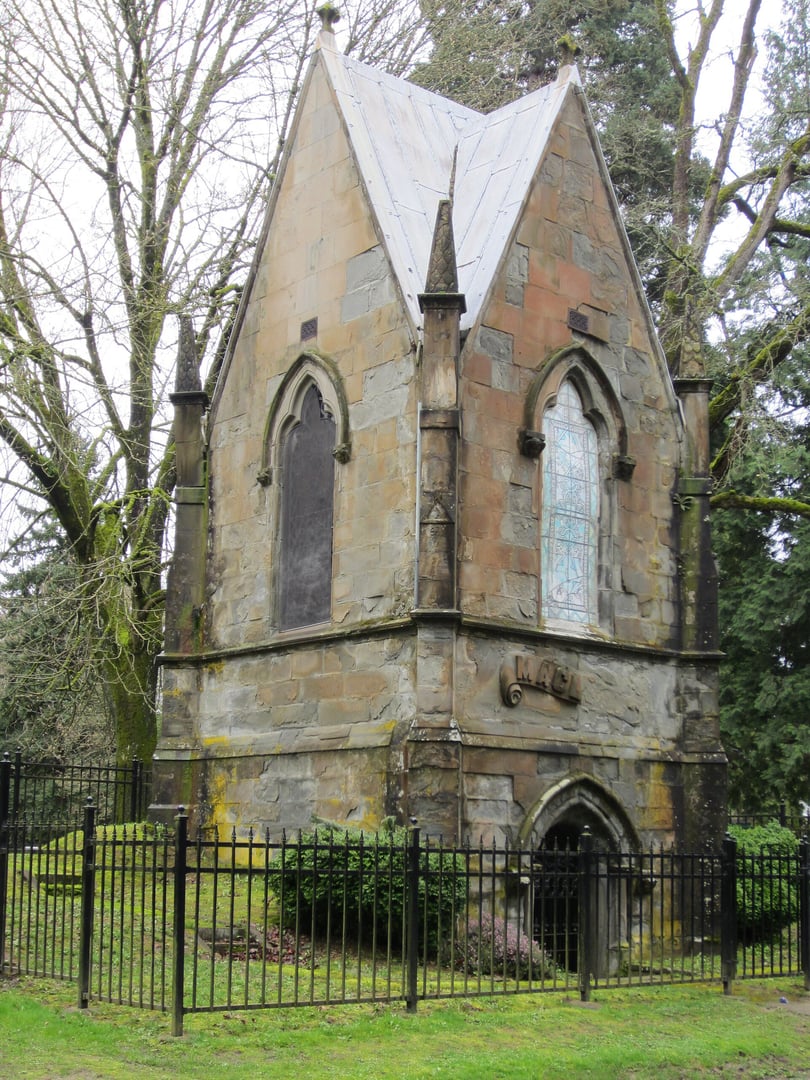
Portland, OR
The cemetery began with the 1846 burial of pioneer Emmor Stephens on a family farm in what is now southeast Portland. In 1854 Colburn Barrell bought the land and dedicated 10 acres as 'Mount Crawford,' named after his business partner Crawford Dobbins, who died with 23 others when the steamboat Gazelle exploded at Canemah that April. Later renamed Lone Fir, the 30-acre site holds about 25,000 burials including six Portland mayors and was listed on the National Register of Historic Places in 2007. It is now operated by Metro.
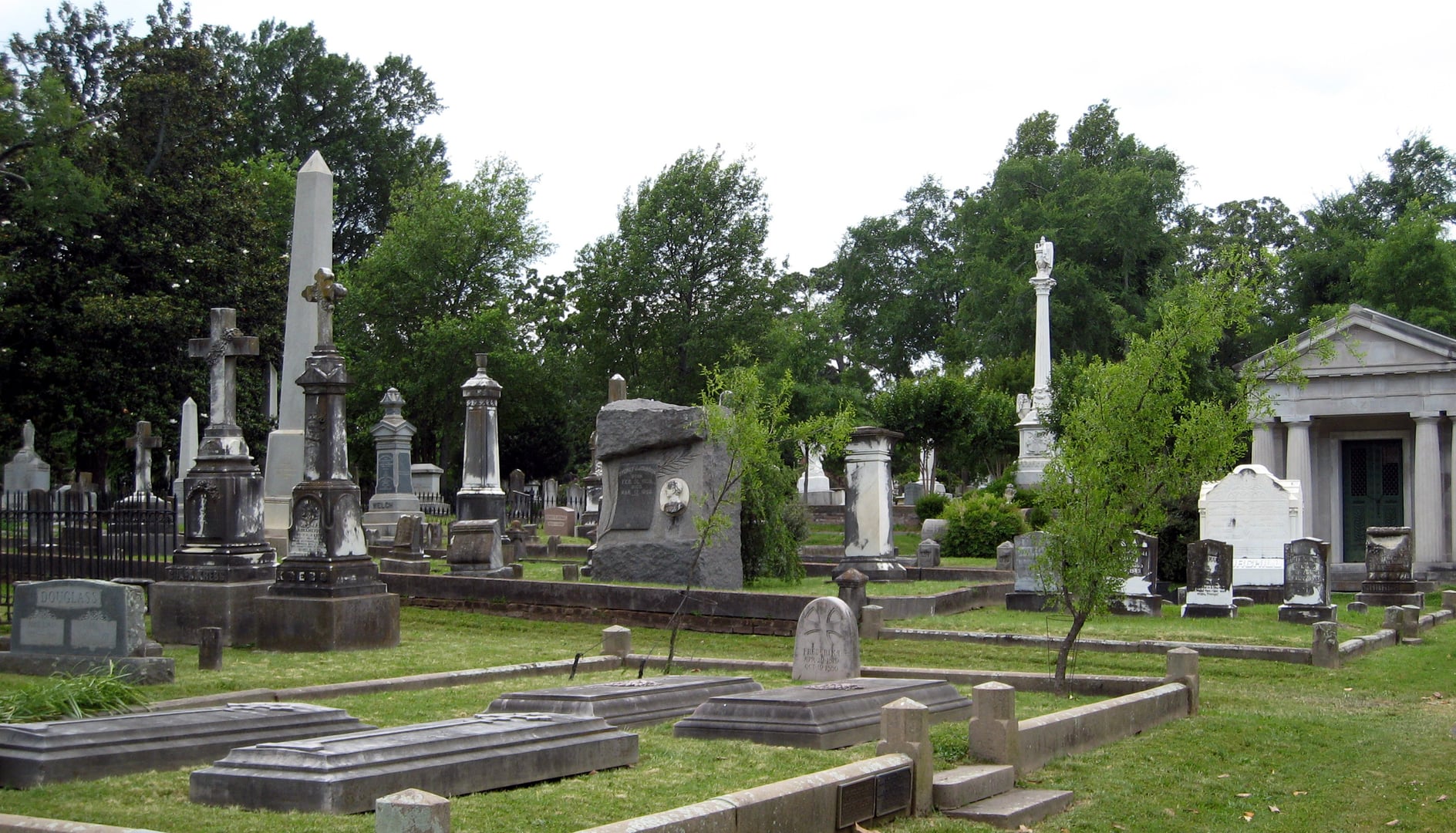
Little Rock, AR
Mount Holly Cemetery in Little Rock, Arkansas was established on February 23, 1843 when prominent citizens Chester Ashley and Roswell Beebe deeded a four-block site to the city. Known as the Westminster Abbey of Arkansas, it holds the burials of eleven Arkansas governors, four U.S. senators, four Confederate generals, and many of the state's leading 19th-century figures.