Est. 1864 · Founded 1863; dedicated June 1, 1864 · 555 acres — third-largest non-governmental cemetery in the United States · Burial place of President Benjamin Harrison and three U.S. vice presidents · Grave of poet James Whitcomb Riley at the highest point in Marion County · Grave of John Dillinger and many Civil War soldiers · Caleb Blood Smith Mausoleum — first family mausoleum at Crown Hill, completed 1864 · Listed on the National Register of Historic Places
Crown Hill Cemetery was incorporated in 1863 as Indianapolis's premier rural cemetery, designed in the tradition of Mount Auburn in Cambridge, Massachusetts and Spring Grove in Cincinnati. The cemetery was formally dedicated on June 1, 1864 and grew to its present 555 acres on rolling land north of downtown. It is the third-largest non-governmental cemetery in the United States.
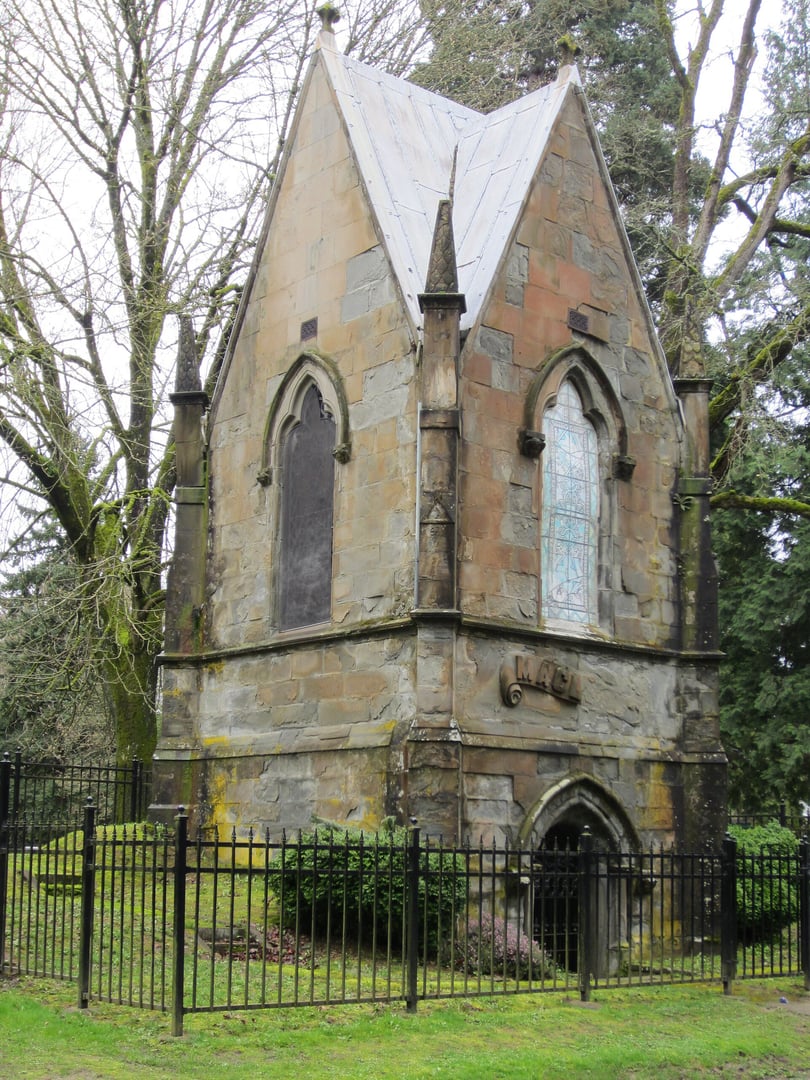
Crown Hill is the final resting place of an extraordinary roster of American historical figures. President Benjamin Harrison is interred here, as are three U.S. vice presidents (Thomas A. Hendricks, Charles W. Fairbanks, and Thomas R. Marshall). The cemetery also contains the graves of Indiana poet James Whitcomb Riley (whose hilltop tomb crowns the highest point in Marion County), abolitionist editor Calvin Fletcher, and gangster John Dillinger, whose grave has been replaced multiple times because of vandalism and visitor scavenging. The Caleb Blood Smith Mausoleum, completed in 1864, was the first family mausoleum built at Crown Hill; Smith served as Secretary of the Interior in Lincoln's cabinet.
A dedicated Civil War section contains thousands of Union soldier burials and a smaller Confederate prisoner section, marking Indianapolis's role as a Civil War hospital and supply city. The Crown Hill Foundation manages preservation of significant monuments and offers public history programs throughout the year, including the seasonal 'Ghost Stories at Crown Hill' storytelling event covered by WISH-TV.
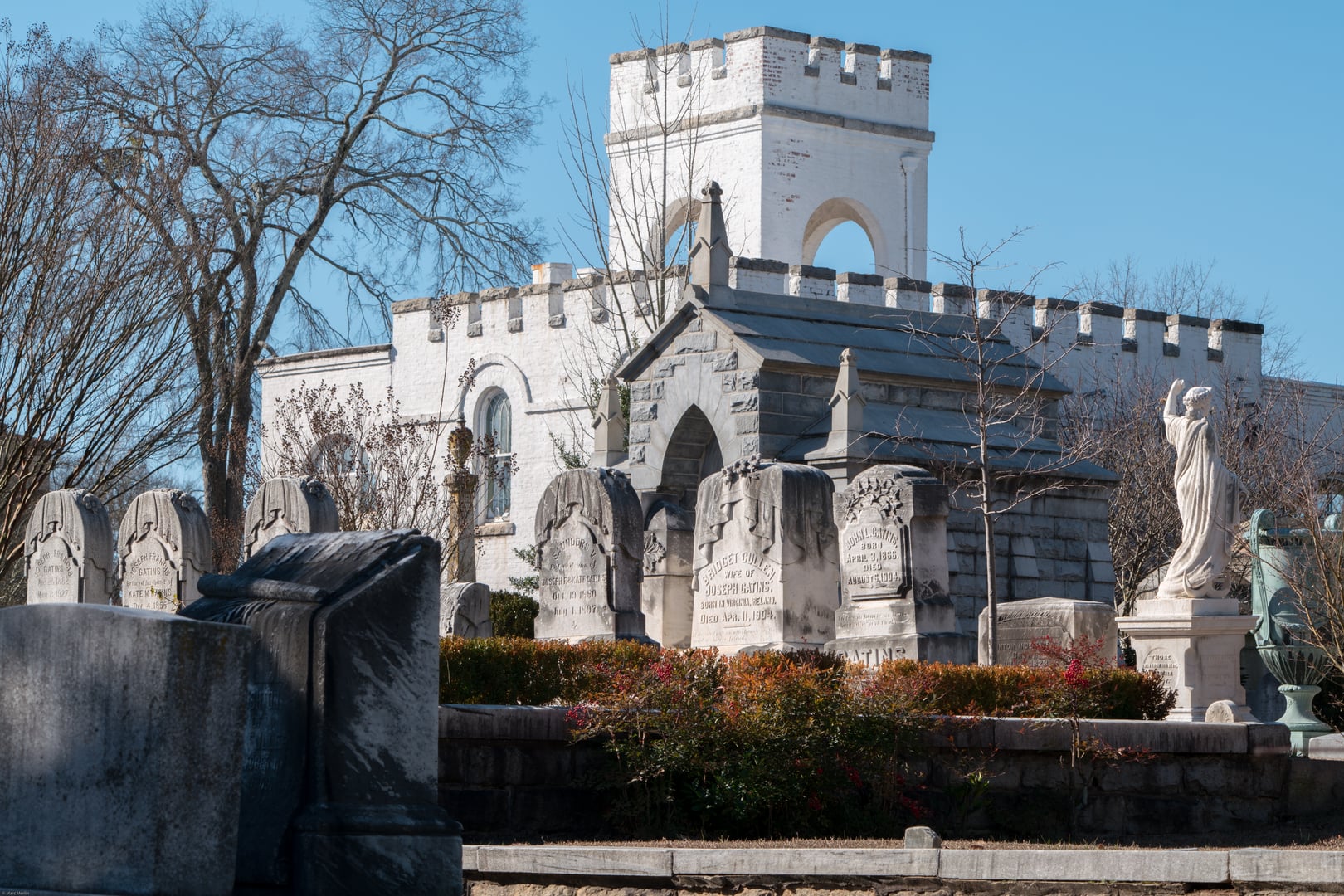
The cemetery's Gothic Revival office and chapel buildings, its winding paths designed in the rural cemetery style, and its monuments and mausoleums are all listed on the National Register of Historic Places.
Sources
- https://en.wikipedia.org/wiki/Crown_Hill_Cemetery
- https://indyencyclopedia.org/urban-legends/
- https://crownhillhf.org/preservation/caleb-blood-smith-mausoleum/
- https://crownhillhf.org/visit/places-of-interest/
- https://www.wishtv.com/lifestyle/lifestylelive/storytellers-spin-tales-for-ghost-stories-at-crown-hill-cemetery/
- https://www.onlyinyourstate.com/experiences/indiana/haunted-crown-hill-cemetery-in
Soaking-wet teenage hitchhiker who vanishes from the back seatWoman in White seen near the 38th Street gateWine bottles left on the 'Gypsy King' grave reportedly disappearing overnightShadowy figures in older sections at duskCold spots near specific monuments and mausoleums
Crown Hill is one of the most lore-rich locations in central Indiana, with stories collected formally by the Encyclopedia of Indianapolis's 'Urban Legends' entry. The principal stories include:
— **The Woman in White and the Phantom Hitchhiker.** Near the 38th Street and Dr. Martin Luther King Jr. Boulevard gate, drivers passing late at night are said to have picked up a soaking-wet teenage girl in prom attire who asks for a ride to a nearby address. Upon arrival, the back seat is wet but the passenger has vanished; the homeowner explains that the girl died at her prom six years earlier. The story follows the classic vanishing-hitchhiker template documented in folklore scholarship and has been told about Crown Hill for decades.
— **The Caleb Blood Smith Mausoleum.** Local lore long held that the fire-blackened sandstone of this 1864 mausoleum resulted from fires lit by Black Indianapolis residents at the turn of the 20th century, who believed the flames would contain the spirit of a 'Lincoln-assassination conspirator.' The Encyclopedia of Indianapolis explicitly debunks this premise: Smith was Lincoln's Secretary of the Interior and friend, not a conspirator, and 'no Hoosier is known to have been involved in the Lincoln assassination.' The story illustrates how Indianapolis ghostlore can preserve historical misattribution alongside its scares. Smith's remains were never placed in the mausoleum; his actual burial site remains unknown.
— **The Gypsy King.** A separate Crown Hill legend describes relatives leaving wine bottles on the grave of a so-called 'Gypsy King,' said to disappear by morning — a story documented by the Encyclopedia of Indianapolis among Crown Hill's regular folklore.
— **Generalized Crown Hill ghostlore.** Visitors and Crown Hill Foundation staff have described shadowy figures among the older sections at dusk, cold spots near specific monuments, and feelings of being watched. The Crown Hill Foundation hosts an annual 'Ghost Stories at Crown Hill' storytelling event that draws on these legends; WISH-TV has covered the event in feature pieces.
Notable Entities
Woman in White (folkloric)Phantom prom-night hitchhiker (folkloric)'Gypsy King' figure (folkloric)
Media Appearances
- Encyclopedia of Indianapolis 'Urban Legends' entry
- WISH-TV 'Storytellers spin tales for Ghost Stories at Crown Hill' feature
- Crown Hill Foundation 'Ghost Stories at Crown Hill' annual event