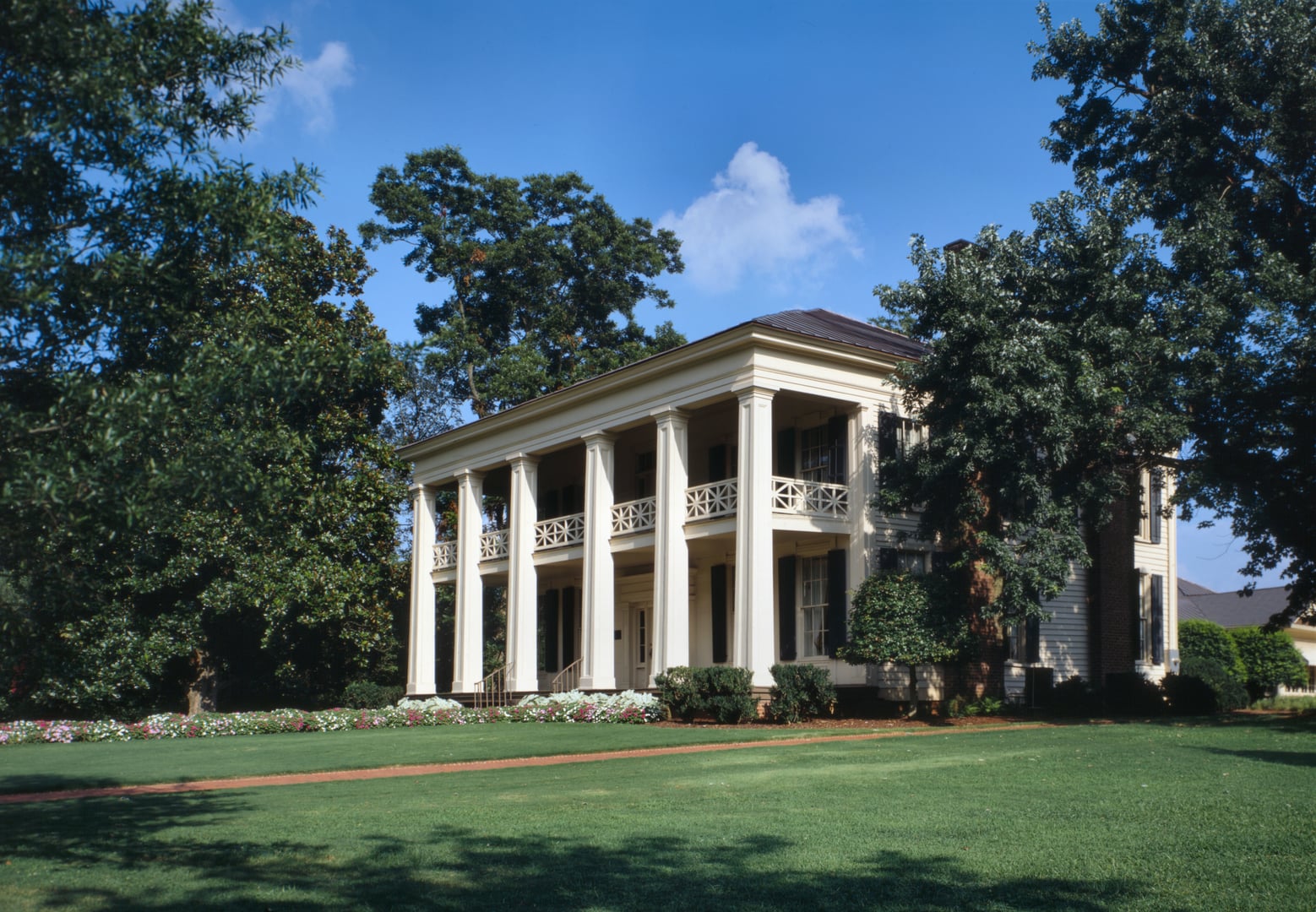
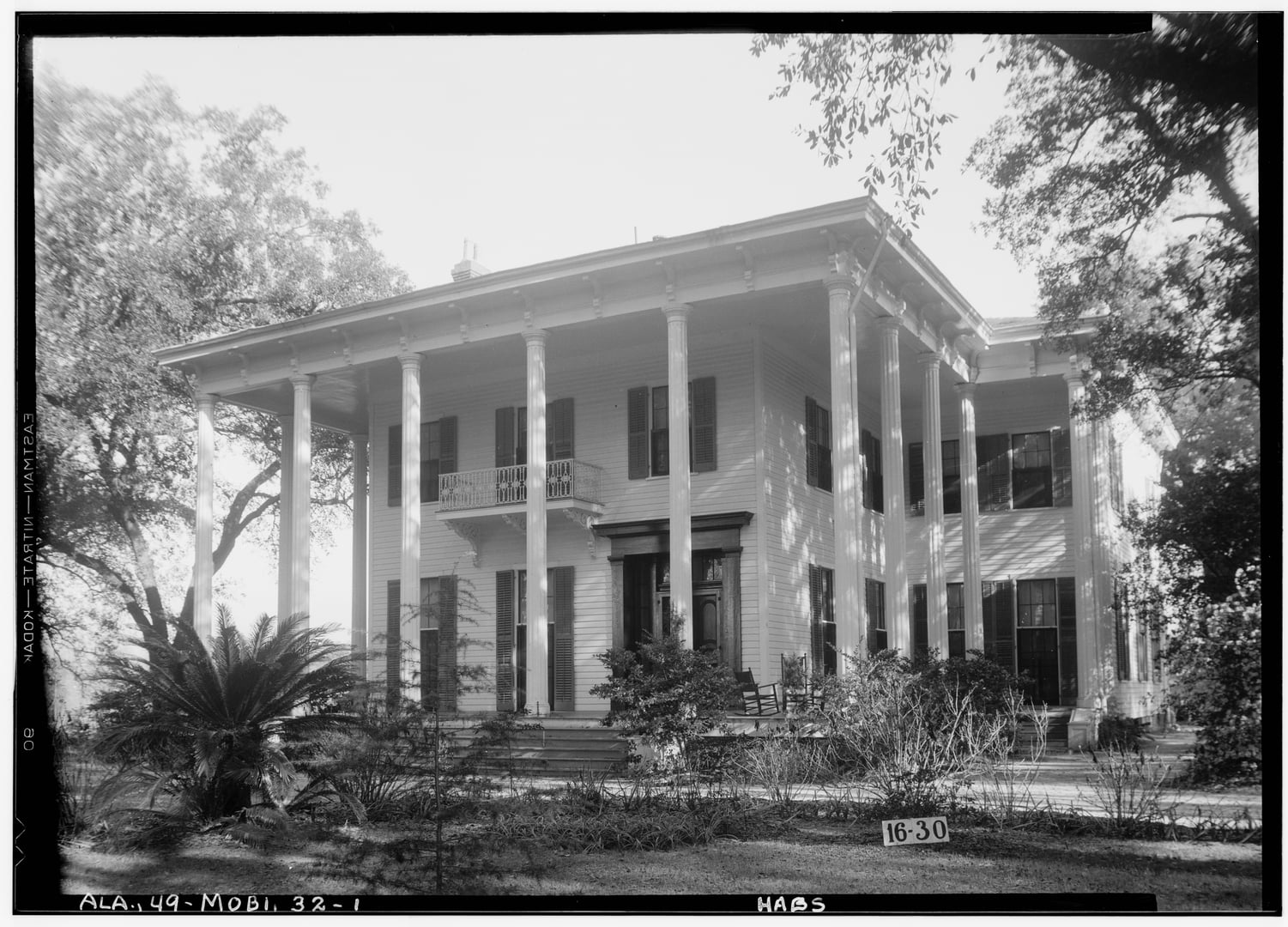
Est. 1856 · National Register of Historic Places · Old Town Historic District · Reconstruction-Era Alabama Banking
Edward T. Watts, a planter, purchased the building lot for $1,830 in 1852. Construction began in 1853 and was completed in 1856 at a reported cost of $69,000. The architect was Thomas Helm Lee, a Virginia native and cousin of Robert E. Lee; Italian artisans were brought in to complete the plaster and marble work, with marble imported directly from Italy. The result is one of the best-preserved examples of Greek Revival residential architecture in central Alabama.
Watts sold the home in 1864 to John McGee Parkman, a local banker who served as president of the First National Bank of Selma following the Civil War. Parkman's tenure as bank president ended in financial collapse when speculative cotton investments produced large losses. He was arrested by Reconstruction authorities, charged with embezzlement, and imprisoned at the nearby Cahaba Federal Prison, also called Castle Morgan.
On May 23, 1867, Parkman attempted to escape Cahaba with assistance from friends. He was shot during the attempt and died of his wounds. Local tradition holds that he vowed before his death that he would never leave the Sturdivant Hall property.
The Gillman family acquired the home from the Parkman estate and held it until 1957, by which time the property had fallen into disrepair. The city of Selma purchased the mansion for $75,000 that year, and the newly-formed Sturdivant Museum Association assumed operational responsibility. The property opened to the public as a house museum and has operated continuously since. Sturdivant Hall was listed on the National Register of Historic Places in 1973.
Sources
- https://en.wikipedia.org/wiki/Sturdivant_Hall
- https://encyclopediaofalabama.org/article/sturdivant-hall-museum/
- https://alabama.travel/places-to-go/sturdivant-hall-museum
- https://www.alabamapioneers.com/ghost-haunting-selma-alabama/
ApparitionsPhantom footstepsDoors opening/closingObject movementDisembodied laughterShadow figures
Sturdivant Hall's paranormal reputation is concentrated on the figure of John McGee Parkman, killed during the 1867 Cahaba escape attempt. Local tradition holds that Parkman's deathbed vow to remain at the property has produced more than a century of reports from staff, museum-association members, and visitors. Author Kathryn Tucker Windham, a Selma native, included the Parkman story in her 1969 collection 13 Alabama Ghosts and Jeffrey, which remains the most-referenced source for the narrative.
Reported phenomena cluster on the second floor and along the main staircase. Phantom footsteps are described as moving along the upper-floor hallway when no one is present, often during early morning hours before the museum opens. Latches on interior windows and exterior shutters have been reported opening and closing without apparent cause. A pair of rocking chairs in one of the parlors has been reported moving independently. Staff and tour visitors have produced photographs that show shadow shapes not visible at the time of exposure.
A secondary strand of the lore concerns two child apparitions seen peering out of a second-floor window. Local interpretation attributes them to Parkman's daughters, though the museum's documentary record on the family is limited, and the figures could equally represent any of the children who lived at the property across its various tenancies. Echoing laughter has been reported from the same second-floor area.
The Sturdivant Museum Association acknowledges the paranormal tradition without actively marketing it. Tour scripts treat the Parkman story as part of the property's documented Reconstruction-era history, with the supernatural elements presented as enduring local tradition rather than confirmed phenomena.
Notable Entities
John McGee ParkmanThe Parkman daughters
Media Appearances
- 13 Alabama Ghosts and Jeffrey by Kathryn Tucker Windham (1969)