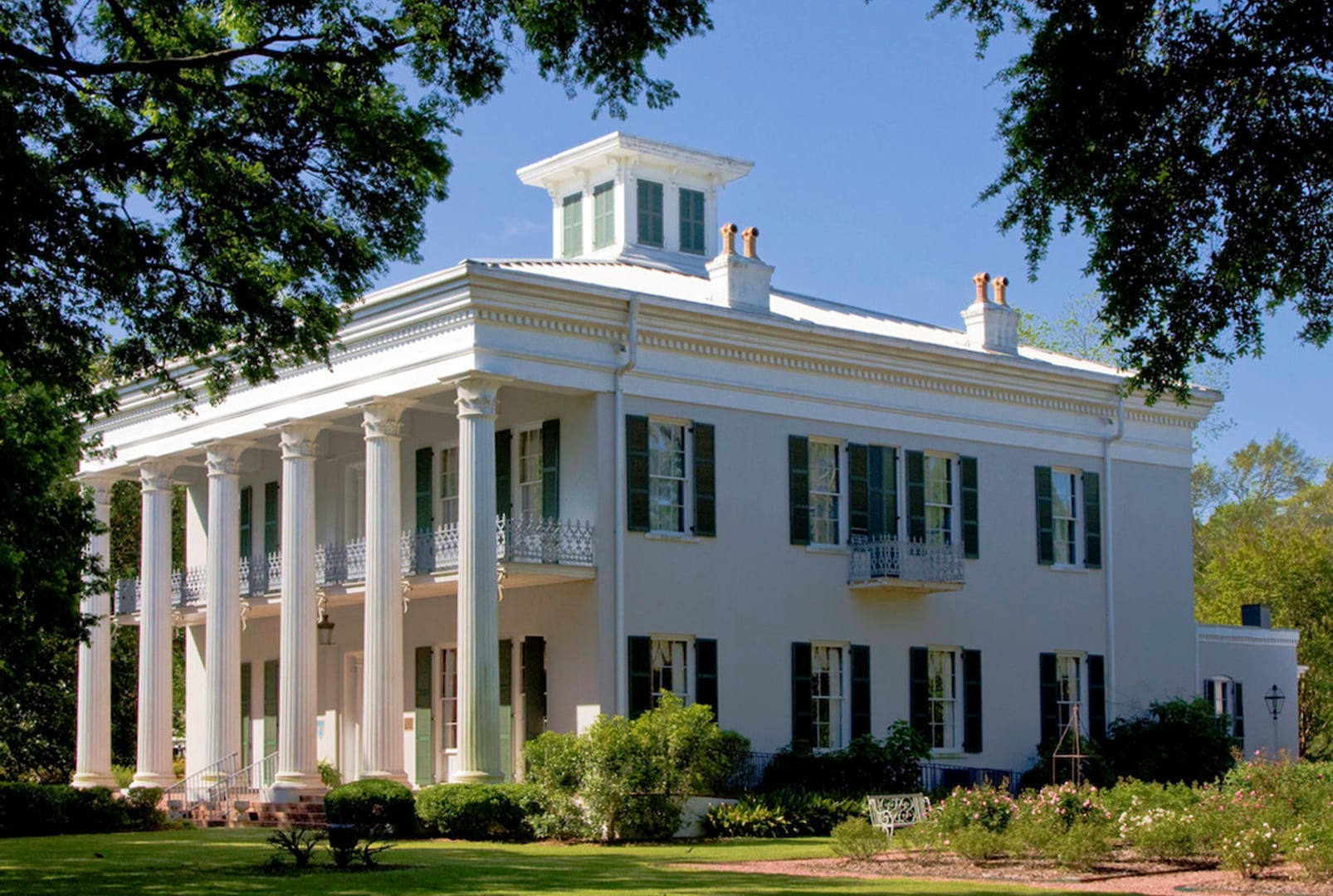
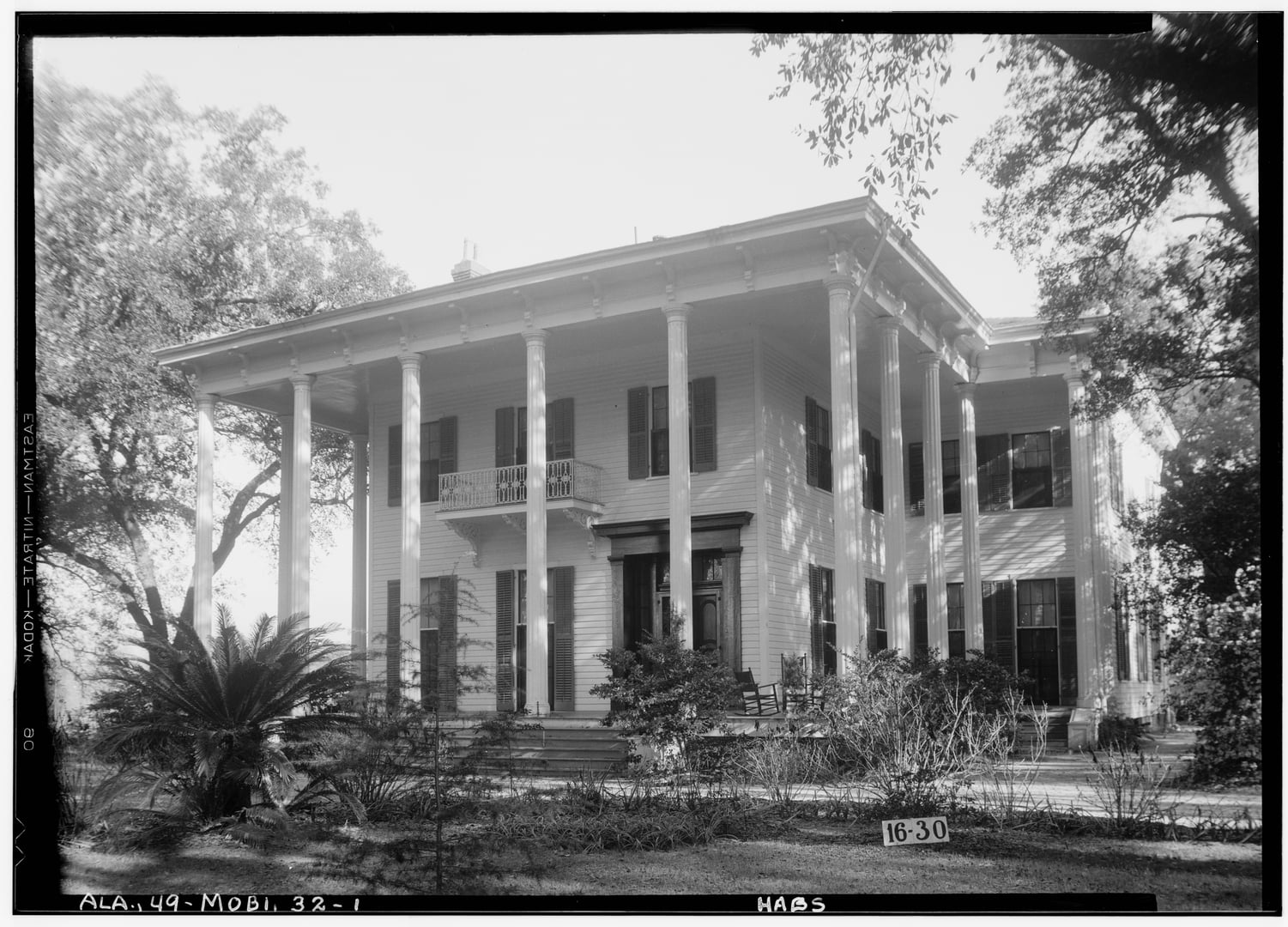
Est. 1842 · National Register of Historic Places (1970) · Birmingham's only surviving antebellum mansion · Site of Wilson's Raid Union headquarters (1865) · Constructed by enslaved African-American laborers
William Swearingen Mudd, a young Virginia-born lawyer, acquired the property that would become Arlington at public auction in 1842. He commissioned a colonnaded Greek Revival mansion to be built for his bride Florence Earle. Under Mudd's direction, enslaved African-American laborers and craftsmen constructed the eight-room mansion; the 1860 federal census recorded that Mudd held 14 enslaved persons at the property he then called The Grove. The names of those enslaved at the property were not preserved in surviving records. The City of Birmingham and the home's educational programming today address this history explicitly during tours, and a monument on the grounds memorializes the enslaved laborers.
Mudd served more than twenty years as a Jefferson County Circuit Court Judge in nearby Elyton (the county seat prior to Birmingham's founding) and resigned in 1883. During Wilson's Raid in the spring of 1865, Union General James H. Wilson commandeered The Grove as a temporary headquarters; this Union occupation is widely credited with sparing the home from the destruction that consumed the rest of Elyton and surrounding plantations.
The property passed through several private owners after the Civil War. Henry DeBardeleben, the industrialist sometimes called 'the father of Birmingham,' acquired the property and renamed it Arlington. The City of Birmingham purchased the home and six remaining acres in 1953 and has operated it since as a decorative arts museum.
Arlington was added to the National Register of Historic Places in 1970. It is recognized as the only intact antebellum house remaining within the city limits of Birmingham and serves as the city's principal interpretive site for the pre-Civil War period. The property hosts a regular calendar of museum tours, special-event dinners, and — since the late 2010s — paranormal investigation events conducted by Southern Ghost Girls Tours under the auspices of the City of Birmingham.
Sources
- https://en.wikipedia.org/wiki/Arlington_Antebellum_Home_%26_Gardens
- https://www.bhamwiki.com/w/Arlington_Antebellum_Home_%26_Gardens
- https://www.birminghamal.gov/government/city-departments/arlington-historic-house/history-arlington-house
- https://www.arlingtonantebellumhomeandgardens.com/history
- https://www.loc.gov/item/al0245/
Doors slammingObject manipulation (rocking chairs)Sensed presenceCold spots
Arlington's paranormal reports are inseparable from the longer history of who lived, worked, suffered, and died at the property. According to OnlyInYourState, the Greater Birmingham Convention & Visitors Bureau, Birmingham365, and the City of Birmingham's own event listings, recurring paranormal investigations have been conducted at the mansion since the late 2010s by Southern Ghost Girls Tours, a paranormal investigation group led by psychic medium Lesley Ann Hyde of Cullman, Alabama.
Reports collected during these investigations and during regular museum operating hours describe doors slamming without anyone present, rocking chairs moving on their own, and unexplained presences in the upstairs bedrooms. Lesley Hyde and her investigation team have publicly described multiple investigation incidents at the property in regional press coverage.
The broader narrative framing offered by tour materials connects the activity to two layers of the home's history: the Civil War era (Wilson's Raid, the use of the home as a Union headquarters, and the deaths and dislocations of that period) and a 'tragic romance' narrative associated with one of the home's 19th-century occupants. The story is treated by Southern Ghost Girls Tours and the City of Birmingham as part of the property's memorial role.
HauntBound notes that any paranormal lore at a former plantation must be understood in the context of the enslaved people whose lives and labor built and sustained the property. Their names were not preserved in the surviving records, but their presence on the grounds — recorded in the 1860 census and acknowledged today by the on-site monument and by the museum's interpretive programming — is a foundational part of the home's history. The home's paranormal lore does not romanticize the antebellum period; the museum and its event partners contextualize activity within the site's full history.
Notable Entities
Unnamed Civil War-era figuresUnnamed 'tragic romance' figure (per Southern Ghost Girls Tours narrative)
Media Appearances
- Real Ghost Hunt / Paranormal Investigation event series (Southern Ghost Girls Tours, City of Birmingham, 2018-present)