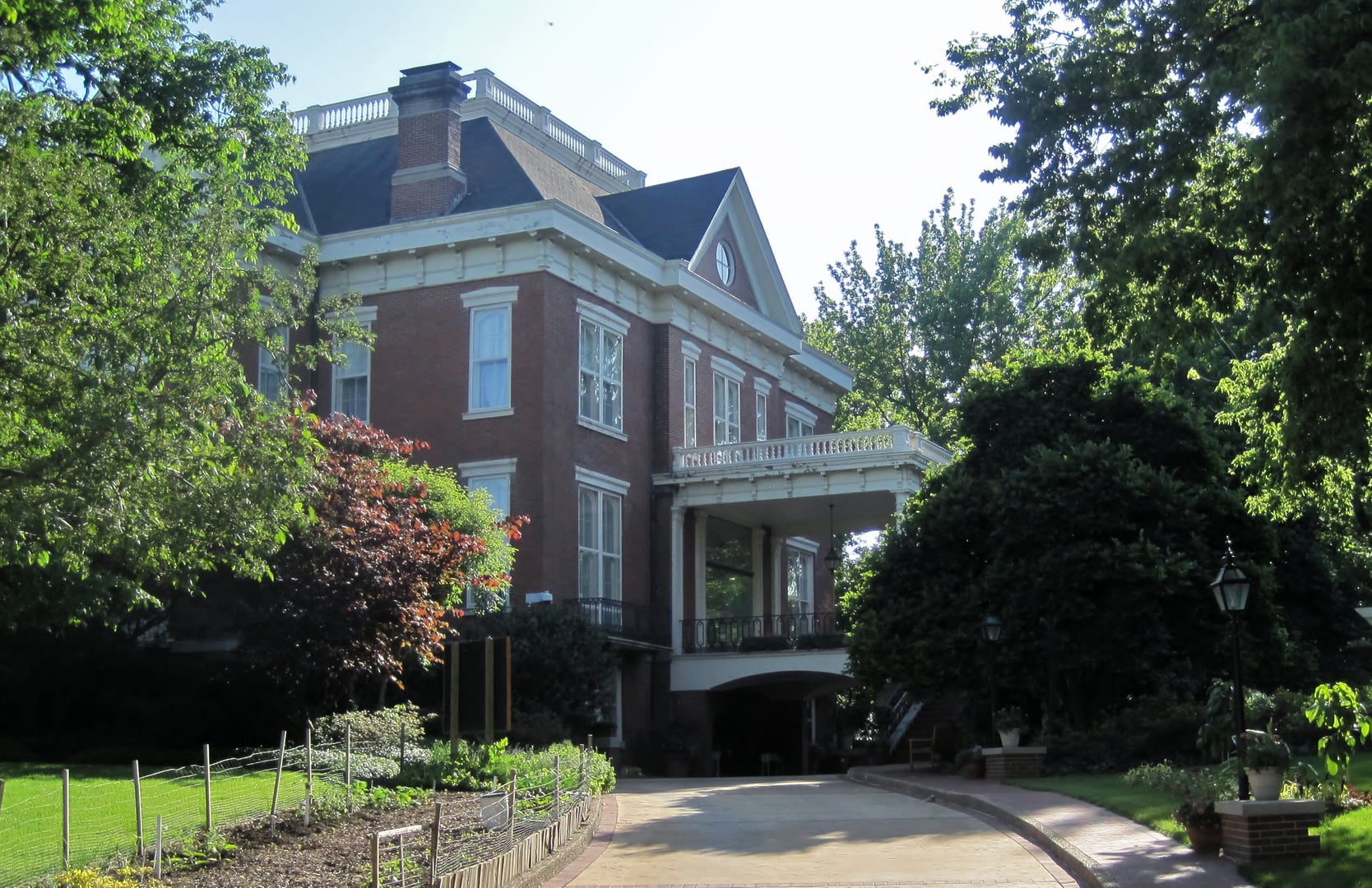
Est. 1836 · One of only four Decatur buildings documented to survive the Civil War · Served as headquarters for both Union and Confederate generals during the Decatur campaign · Greek Revival antebellum construction circa 1836 · Listed on the National Register of Historic Places
The Rhea-McEntire House was constructed circa 1836 in Greek Revival style on a bluff overlooking the Tennessee River, in what was then a prime residential location in the young town of Decatur, Alabama. Its original owners, the Rhea family, were among the town's founding-era settlers.
During the Civil War, Decatur became a contested point on the Tennessee River. Most of the town was destroyed during the Union occupation and subsequent Confederate attempts to retake it. The Rhea-McEntire House survived — a fact attributed to its construction quality and its documented use by military command on both sides. According to its National Register of Historic Places listing and the Wikipedia entry, the house served as headquarters for Union generals during the occupation and was also used by Confederate command during separate periods of the campaign, making it a documented site of dual-occupancy military command.
The house is a private residence and is listed on the National Register of Historic Places. It appears in Decatur ghost walk accounts and in the Southern Spirit Guide's documentation of Alabama's most historically significant haunted houses.
Sources
- https://en.wikipedia.org/wiki/Rhea%E2%80%93McEntire_House
- https://www.southernspiritguide.org/alabamas-haunted-thirteen/
- Decatur Daily, Catherine Godbey, 'Pre-Civil War era home features ghost room, tales of Union soldier buried there,' December 4, 2011 (decaturdaily.com)
Female apparition in upstairs Ghost RoomPresence associated with parlor, attributed to buried Union soldier
The Rhea-McEntire House carries two principal ghost accounts. The first involves a Union soldier said to have died inside the house during the occupation and been buried beneath the parlor floor — an improvised wartime burial of a kind documented at other Civil War sites across the South. Whether physical evidence of such a burial exists at this location is not confirmed in available sources, but the legend is specific enough in its detail to have circulated in Decatur oral tradition for generations.
The second legend involves a female spirit occupying an upstairs room that has come to be called the 'Ghost Room' in local accounts. The Southern Spirit Guide's chapter on Alabama haunted sites identifies the room and the female apparition, and the house appears in Decatur ghost walk accounts with both legends treated as part of its documented haunted history.
The building's architectural survival as one of four structures to outlast the Civil War in Decatur, and its documented use as a command center for both armies, lends the accounts an unusual degree of historical grounding — the building's wartime role is verified, even where the paranormal details are not.
Notable Entities
Female spirit (unnamed, upstairs Ghost Room)Union soldier (unnamed, reportedly buried under parlor)