Est. 1828 · National Register of Historic Places · Palladian Architecture in the Deep South · Jefferson-Influenced Plantation House · Alabama Historical Commission Property
Belle Mont sits on a low hilltop just outside Tuscumbia in Colbert County, Alabama. It was built between 1828 and 1832 by Alexander Williams Mitchell, an early Tennessee Valley planter, and acquired by the Winston family in 1834.
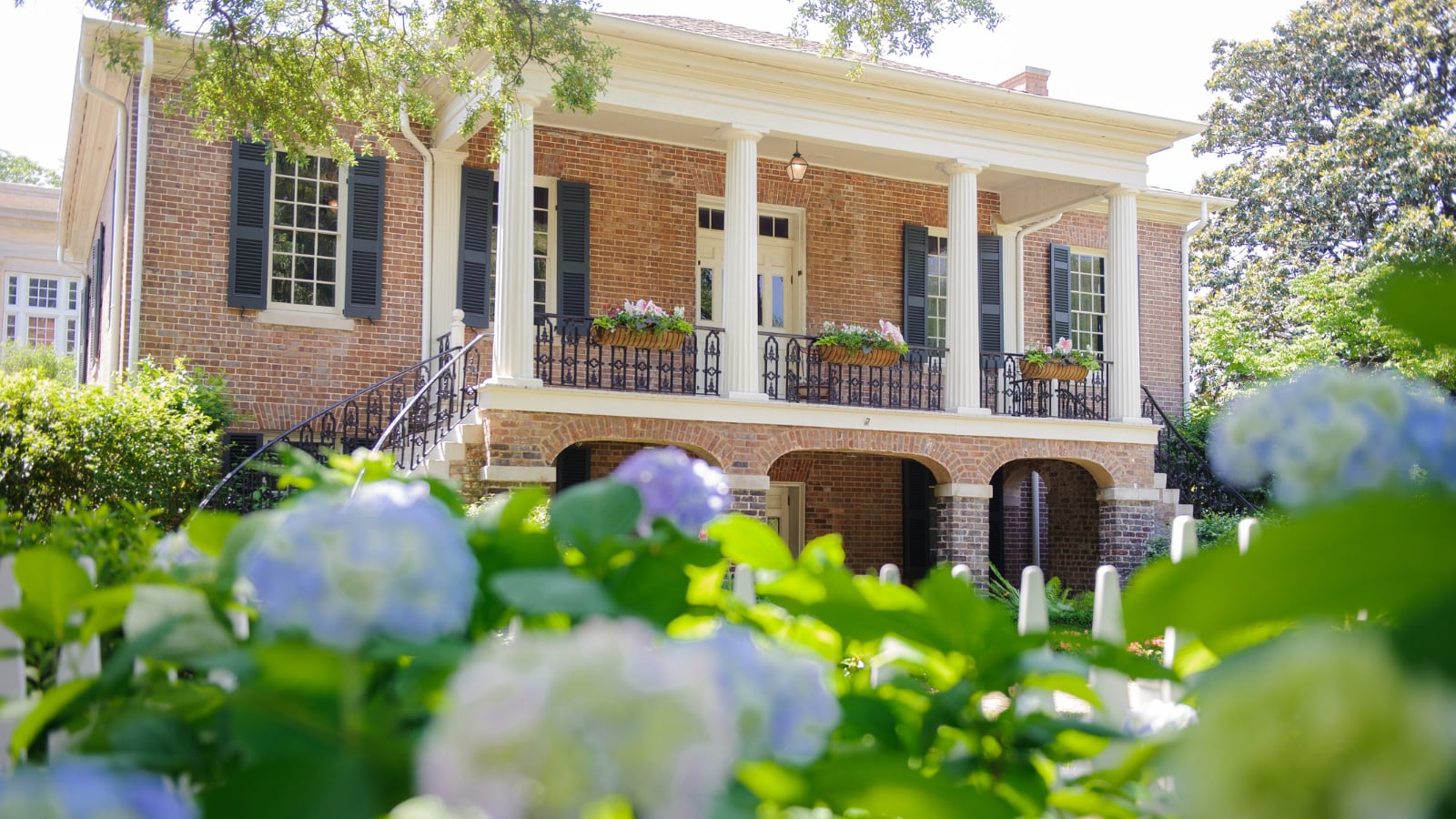
The architecture is unusual for the Deep South. Belle Mont follows a Palladian plan, with a central block flanked by lower wings and connected by curved hyphens, in a manner directly influenced by Thomas Jefferson's Virginia residences. The result is one of the only Jefferson-derived plantation houses in Alabama and one of the very few Palladian residences anywhere in the Deep South.
The surrounding plantation covered 1,680 acres at its peak. The 1860 census recorded 152 enslaved people living on the property in thirteen cabins. Several of the cabin foundations have been located by archaeologists; the Alabama Historical Commission's interpretation includes this documented history.
The Winston family donated Belle Mont to the State of Alabama in 1983 in deteriorated condition. The Alabama Historical Commission has restored the structure and grounds toward their antebellum-period appearance. The house is open for guided tours Wednesday through Saturday and is part of the Muscle Shoals National Heritage Area.
Sources
- https://encyclopediaofalabama.org/article/belle-mont-mansion/
- https://ahc.alabama.gov/properties/bellemont/bellemont.aspx
- https://msnha.una.edu/sites-attractions/belle-mont-mansion/
- https://en.wikipedia.org/wiki/Belle_Mont
Shadow figuresPhantom soundsPhantom smellsCold spots
Belle Mont's lore sits closer to the soil than to the architectural symmetry of the main house. Visitors arriving at dusk have reported shadow figures crossing the open fields below the hilltop, in the area where the slave cabins once stood. Several guest accounts describe the sound of chains rattling near the foundation of the house.
A former volunteer interpreter reported a recurring presence on the upper floor. The figure is not seen but is registered through a sudden cold sensation and a distinct floral perfume that does not correspond to any cleaning or interpretive product used in the building. The volunteer associated the figure with the Winston-era women of the family, possibly a daughter or former mistress.
The Alabama Historical Commission and the Belle Mont Mansion site itself acknowledge the property's paranormal reputation in informal staff conversation but do not include it in the formal interpretive program. The interpretation prioritizes the architectural history and the documented record of the people, free and enslaved, who lived and worked on the property.
Visitors interested in the lore should bring it up with guides only after the formal tour, as a side conversation.