Est. 1861 · American Civil War · Battle of Mobile Bay · National Historic Landmark · Coastal Defense
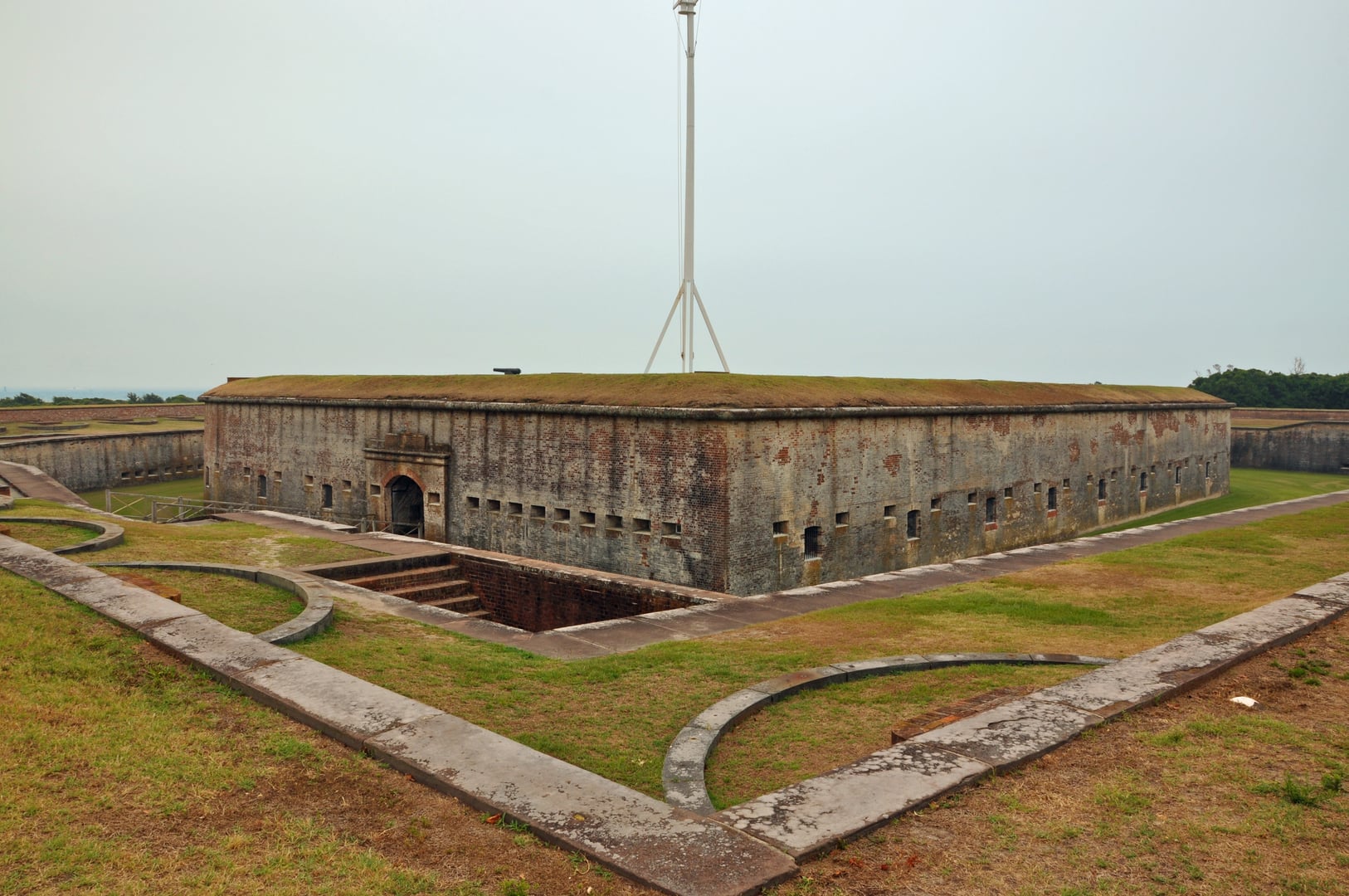
Fort Gaines guards the eastern point of Dauphin Island at the western entrance to Mobile Bay, paired across the channel with Fort Morgan. Construction of the current pentagonal masonry structure began in 1853 and was largely complete by 1861. Confederate forces seized the fort that year and held it for the duration of the early war.
The fort's place in American military history was secured on August 5, 1864, during the Battle of Mobile Bay. Union Rear Admiral David Farragut led a fleet of fourteen wooden ships and four ironclad monitors past the guns of Forts Morgan and Gaines, navigating a torpedo line - a Confederate minefield - that sank the lead monitor USS Tecumseh. Farragut's reported order, often paraphrased as "Damn the torpedoes - full speed ahead," entered American military folklore from this engagement. Fort Gaines surrendered on August 8, 1864.
The installation continued in federal use through the Spanish-American War, World War I, and World War II, when it served as a Coast Guard training facility and harbor defense post. It was decommissioned after 1946.
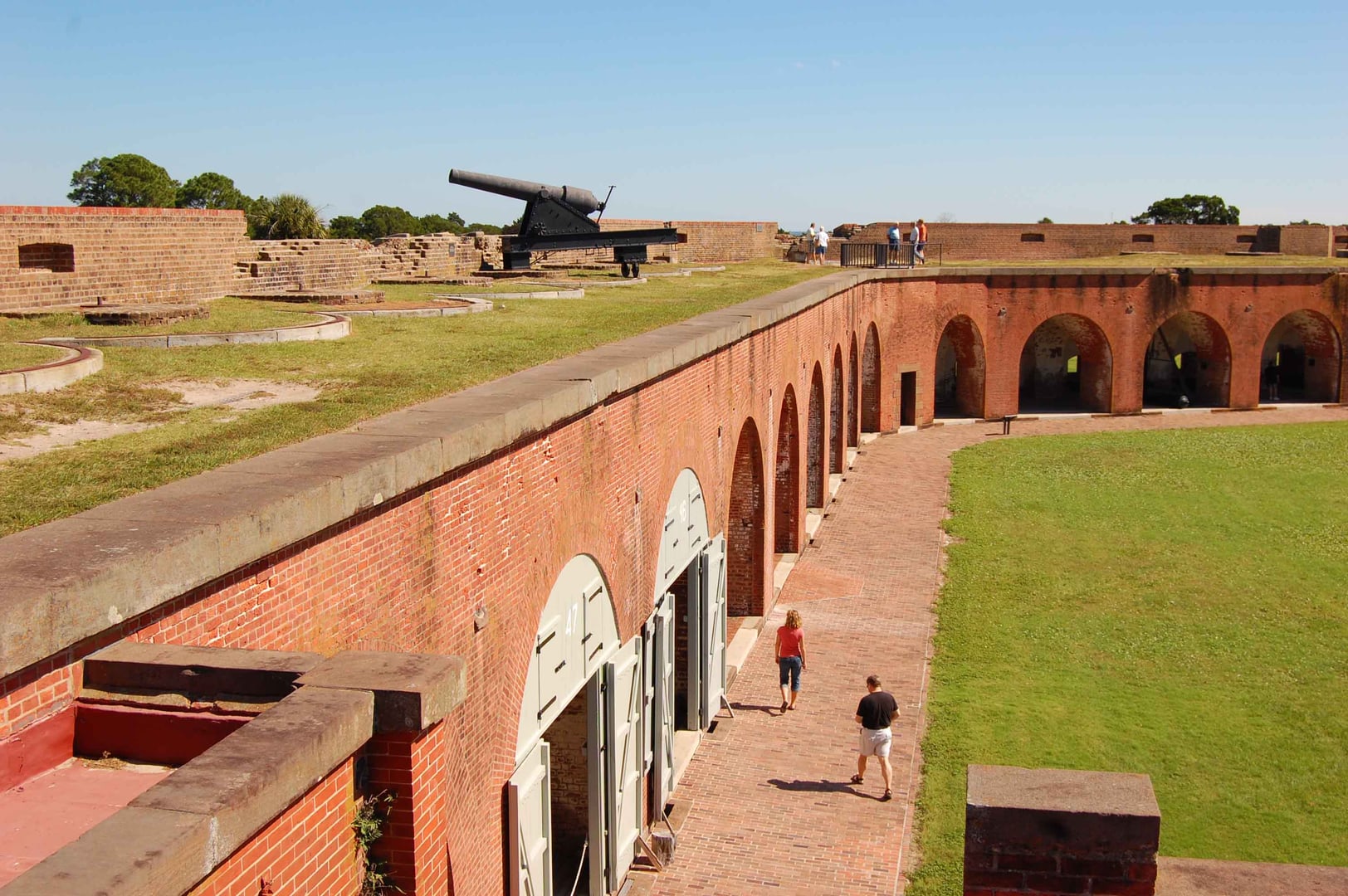
Fort Gaines is operated today by the Dauphin Island Park and Beach Board as a historic site and museum. It is a National Historic Landmark and one of the country's best-preserved 19th-century masonry forts. Period reenactments, cannon firing demonstrations, and blacksmithing programs are scheduled throughout the year.
Sources
- https://fort-gaines.com/
- https://www.townofdauphinisland.org/fort-gaines
- https://www.wkrg.com/haunted-history/haunted-history-of-massacre-island-alabama/
- https://www.southernspiritguide.org/haunted-dauphin-island-alabama-of-fowl-and-phantoms/
ApparitionsShadow figuresCold spotsPhantom footsteps
Fort Gaines's reputation for paranormal activity is grounded in the documented violence of August 1864 and the subsequent decades of garrison death from disease and accident. Most accounts collected by regional paranormal sources are first-person rather than legendary - reenactors, staff, and visitors describe encounters in and around the casemates, the fort hospital, and the parade ground.
The most-reported figure is a man in 19th-century military uniform observed standing at one of the upper batteries facing south toward the gulf. Visitors have approached the figure, sometimes assuming him to be a costumed interpreter, and watched him disappear from view as they closed the distance. Cold spots and unexplained shifts in air temperature are reported throughout the brick interior.
A second body of reports concerns a sense of being followed when leaving the fort grounds, occasionally accompanied by a figure observed at the periphery that vanishes when directly faced. Audible phenomena - distant voices, footsteps along the upper galleries - are described, but the fort does not host overnight investigations and most accounts are daytime visitor reports.