Est. 1834 · Third System Coastal Fortification · Civil War Union Stronghold · Geronimo Apache Imprisonment · Gulf Islands National Seashore
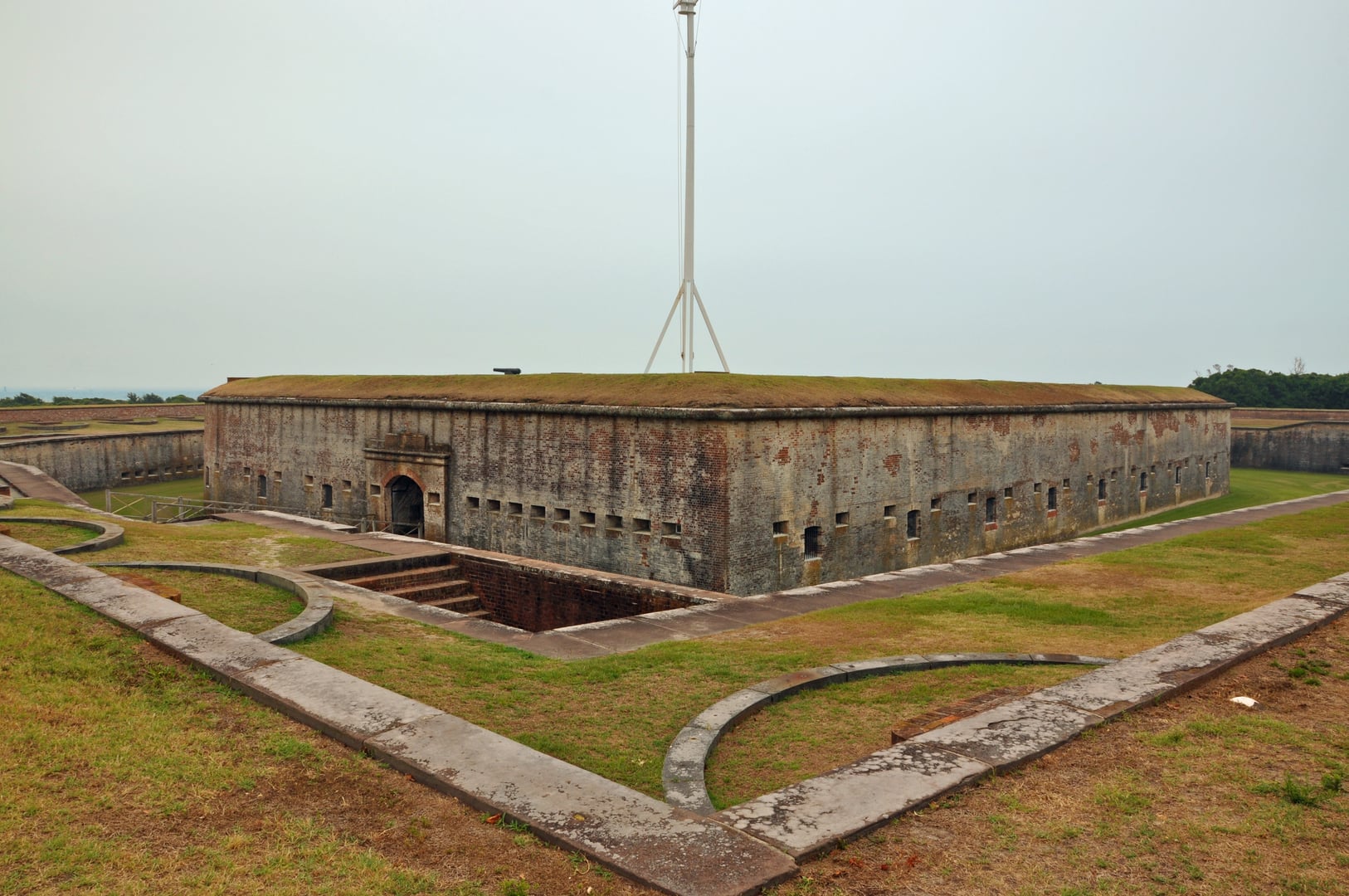
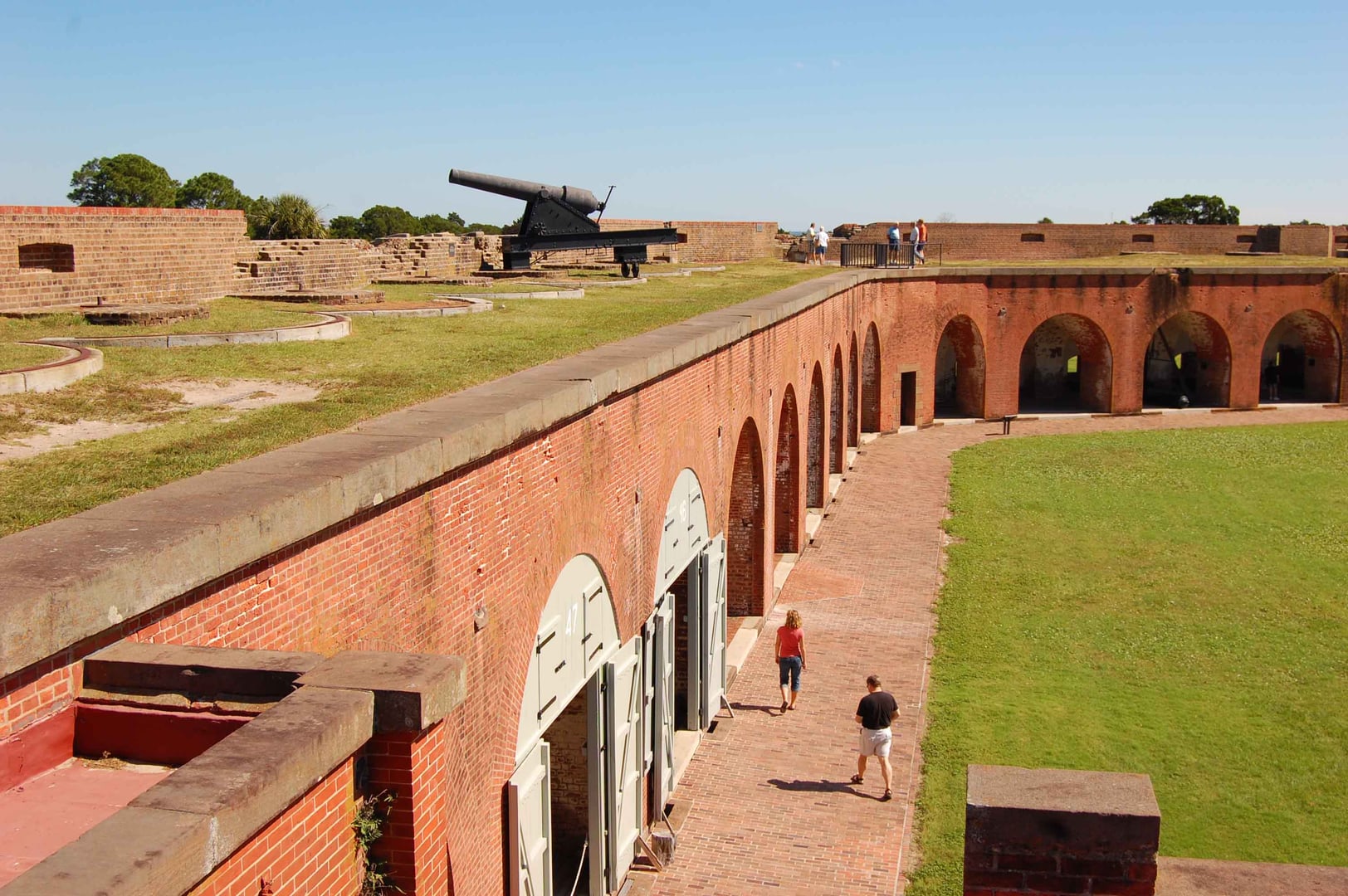
Fort Pickens was completed in 1834 as part of the Third System of American coastal fortifications, anchoring the western end of Santa Rosa Island and controlling access to the deepwater anchorage at Pensacola Bay. Its pentagonal masonry plan, casemated bastions, and integrated water battery represent the era's most sophisticated coastal-defense engineering.
During the Civil War, Fort Pickens was one of only four Southern forts to remain in Union hands throughout the conflict. Federal artillery in the fort exchanged fire with Confederate batteries on the mainland during 1861 and 1862 in actions that historians recognize as preceding Fort Sumter as the war's opening artillery duel.
In October 1886, Geronimo and sixteen Apache warriors arrived in Pensacola by train and were ferried to Fort Pickens following their surrender to General Nelson A. Miles in Arizona Territory. Their wives and children were sent separately to Fort Marion in St. Augustine. From October 1886 through May 1887, the fort housed the Apache men, with daily life confined to specific casemates. Local promoters quickly turned the imprisonment into a tourism draw, and tens of thousands of curiosity-seekers reportedly visited the fort during this period to see Geronimo. In May 1887 the families were reunited, though many had died of malaria during the separation. The Apaches were eventually transferred to Mount Vernon, Alabama, and later to Fort Sill in Oklahoma Territory.
The fort continued in active service through the Spanish-American War and both World Wars before being decommissioned. It is now managed by the National Park Service as part of the Gulf Islands National Seashore. The Fort Pickens Visitor Center is open daily 9 a.m. to 4:30 p.m. except Thanksgiving, Christmas, and New Year's Day. The fort itself is open for self-guided tours 8 a.m. to sunset, and ranger-led tours run on a posted schedule.
Sources
- https://en.wikipedia.org/wiki/Fort_Pickens
- https://www.nps.gov/places/000/fort-pickens.htm
- https://www.nps.gov/guis/planyourvisit/fort-pickens-area.htm
- https://visitpensacolabeach.com/experience-the-history-of-fort-pickens-blog/
Cold spotsApparitionsPhantom sounds
The paranormal reputation of Fort Pickens is built on consistency rather than spectacle. Visitor accounts collected over decades describe a sense of being observed in specific rooms — most often the casemates that housed Geronimo and his men, and the storerooms behind the bastions where soldiers worked, slept, and occasionally died.
The fort's documented history offers ample sources for this atmosphere: the Apache deaths during separation from their families, soldiers killed in the magazine explosions of 1899, and the long succession of garrison troops who served at the fort across more than a century of active duty. Park-service interpretation focuses on this history rather than on paranormal claims.
No single named apparition or recurring witness account dominates the lore. Reports tend to describe environmental sensations — cold spots, the sense that someone is watching from a doorway, or a feeling of weight in particular casemates — that visitors note in TripAdvisor reviews and regional ghost guides.
No organized paranormal investigations have been formally hosted at Fort Pickens. After-hours access to the fort is restricted, and the National Park Service does not run ghost-themed programming. The legends remain part of regional ghost-tour material in the Pensacola area rather than the fort's official interpretation.