Haunted Florida

295 haunted destinations cataloged across Florida, spanning 65 counties. The collection features museum, haunted hotel, and cemetery — every listing verified with family ratings, accessibility info, and practical visit logistics.

295 locations 65 counties 13 classifications 189 wheelchair accessible

Featured in Florida

Top 6
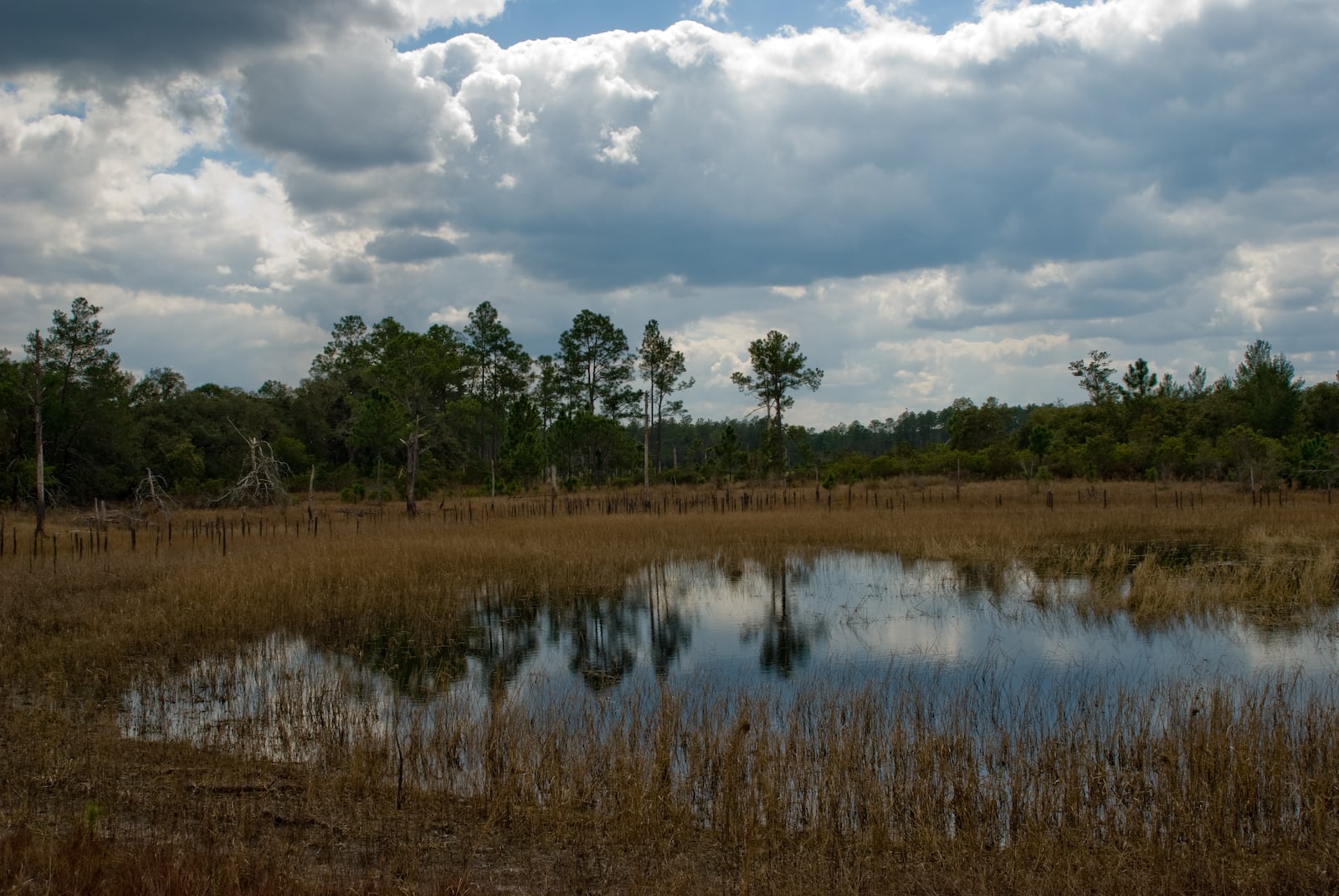
Aerial survey view of Velda Mound Park
Aerial survey · USDA NAIP
Outdoor / Natural Site

Velda Mound Park

Tallahassee, FL

Velda Mound (archaeological site 8LE44) is a Fort Walton-culture platform mound and surrounding village site in north Tallahassee's Killearn Estates neighborhood. The mound was built around 1450 CE and occupied by Apalachee descendants until c. 1625, when the Spanish Mission period reshaped Apalachee settlement. The site is owned by the State of Florida and protected as a Tallahassee city park.

$ All Ages Family: High
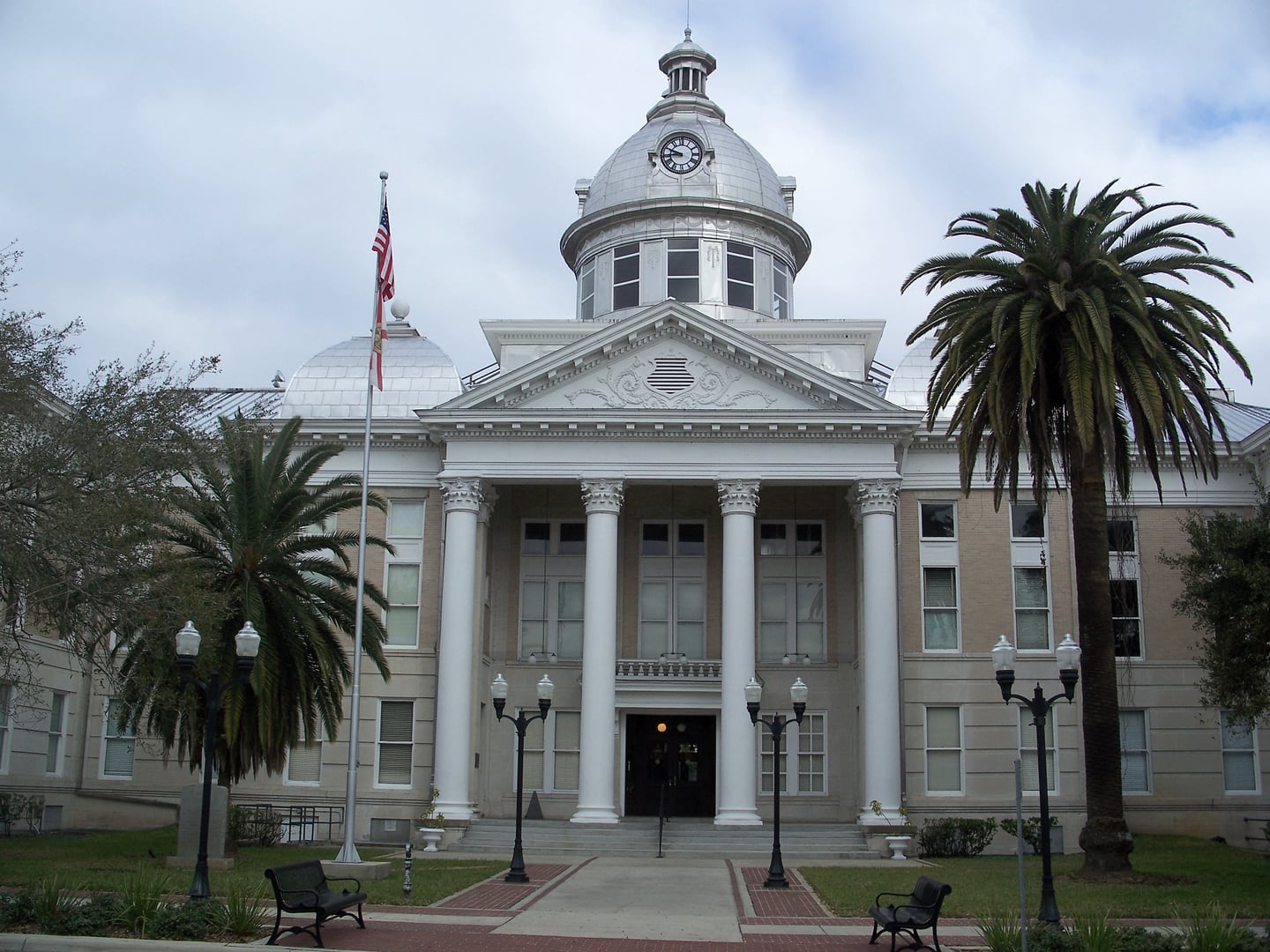
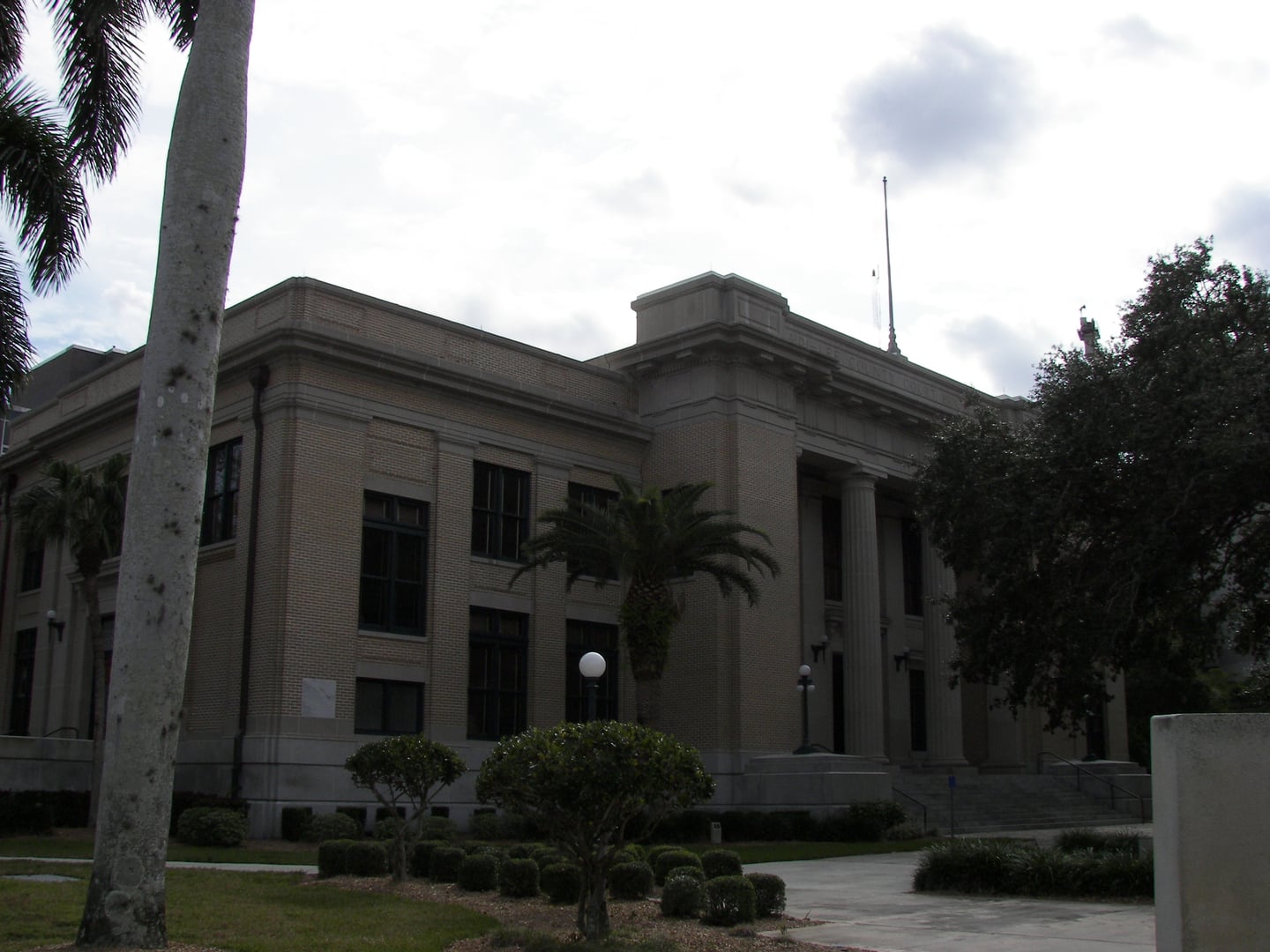
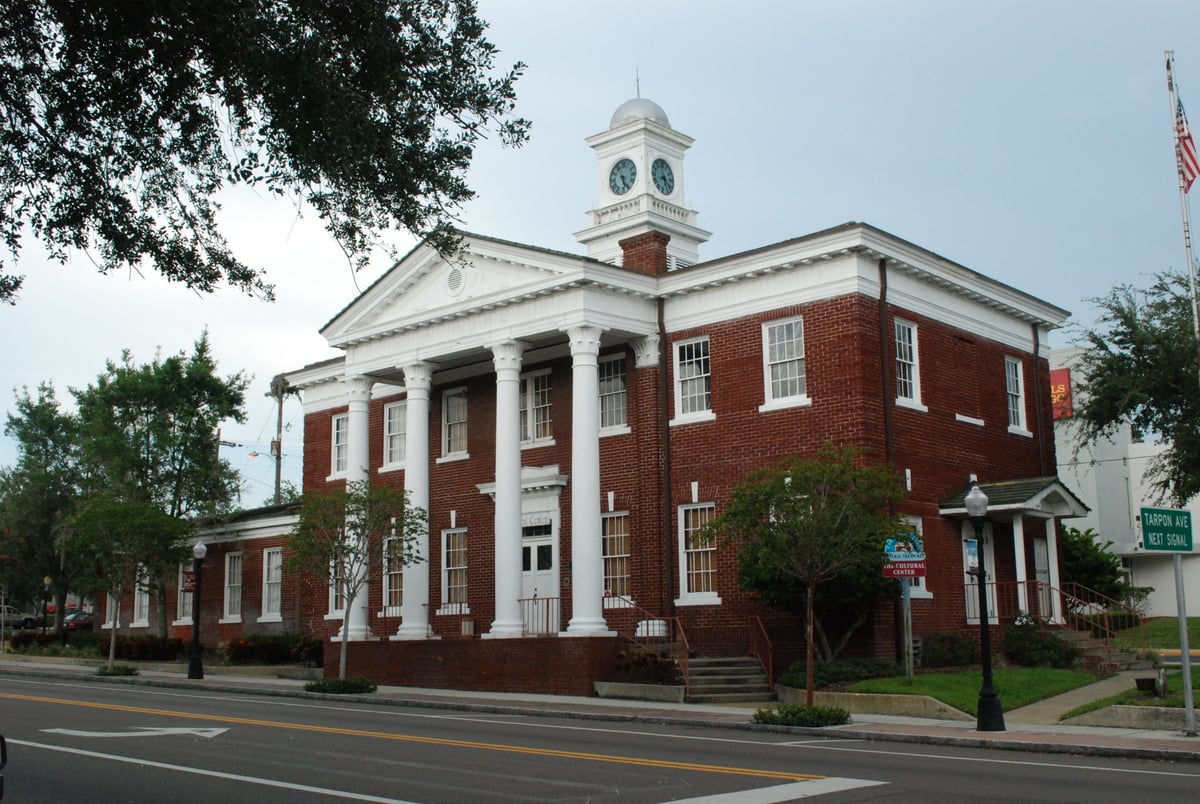
Neoclassical 1909 Old Polk County Courthouse, now the Polk County History Center, in Bartow, Florida
Museum / Historical Site

Old Polk County Courthouse (Polk County History Center)

Bartow, FL

The Old Polk County Courthouse was completed in 1909 as the county's third courthouse, on a site that had also held the 1883 courthouse. Designed in neoclassical style, it served as the operating courthouse through 1987. Since 1998 the building has housed the Polk County History Center, including the Historical Museum and the Historical and Genealogical Library. It was added to the National Register of Historic Places in 1989.

$ All Ages Family: High
Haunted Dining / Bar

Scarlett O'Hara's (The Scarlett House)

St. Augustine, FL

The Scarlett O'Hara's building at 70 Hypolita Street is an 1879 Victorian-era home, originally erected by George Colee for his fiancée before the marriage fell through. The property was joined to an adjacent structure and converted into a bar and restaurant in 1979; it has more recently been rebranded as 'The Scarlett House.'

$$ All Ages Family: Moderate
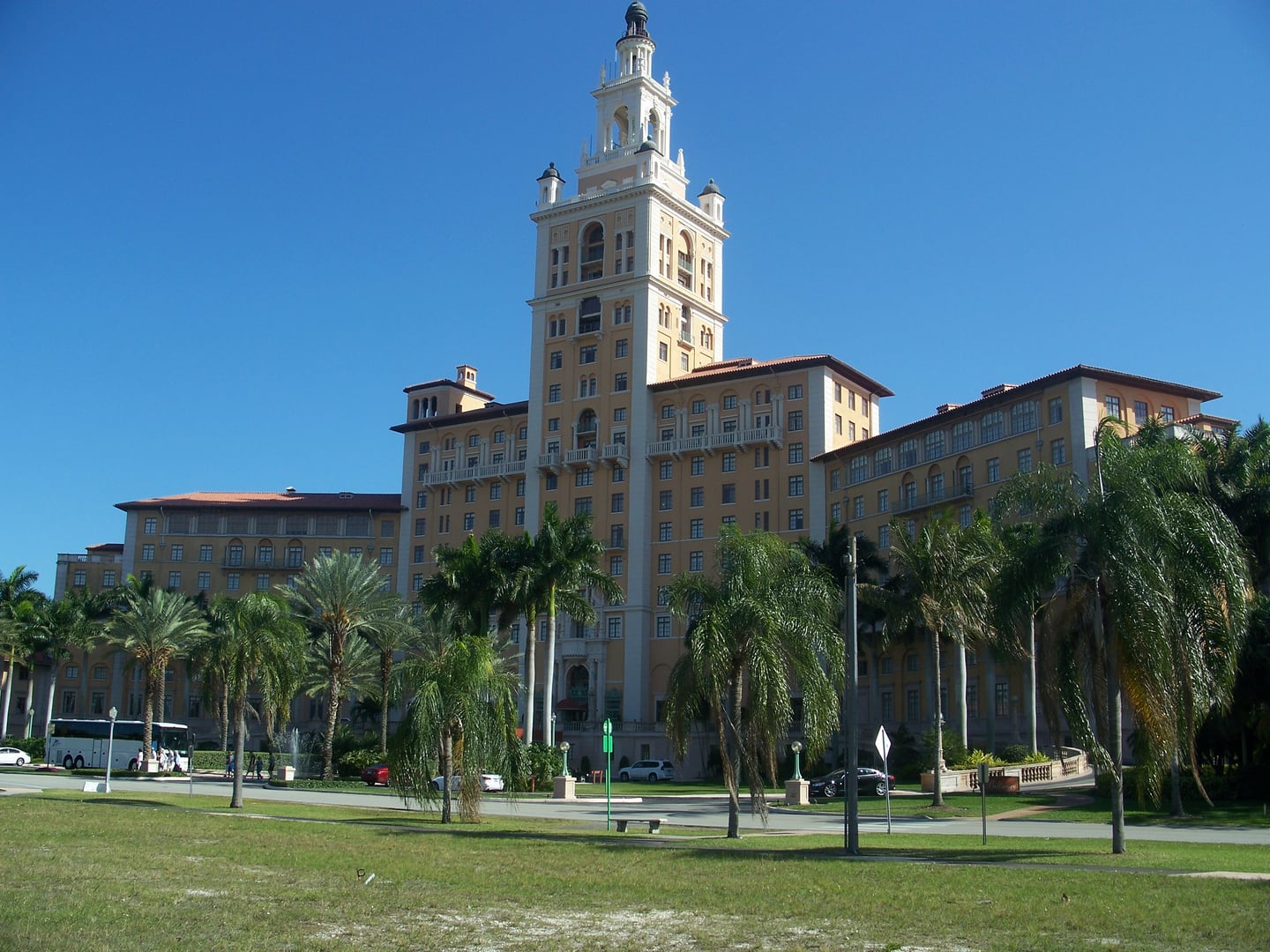
Mediterranean Revival facade and 315-foot tower of the Biltmore Hotel in Coral Gables, Florida — a 1926 National Historic Landmark resort designed by Schultze and Weaver
Haunted Hotel / Inn

The Biltmore Hotel

Coral Gables, FL

The Biltmore Hotel opened on January 15, 1926, as a palatial resort designed by acclaimed architects Schultze and Weaver and founded by developer George Merrick and hotel magnate John McEntee Bowman. Its tower was modeled after the Giralda in Seville, Spain. The hotel featured the world's largest swimming pool at the time and hosted high-society galas, fashion shows, and golf tournaments. During World War II, the federal government converted the property into a military hospital; it later operated as a veterans hospital and university campus until 1968. A comprehensive $55 million restoration returned the hotel to operation in 1987.

$$$$ All Ages Family: Moderate
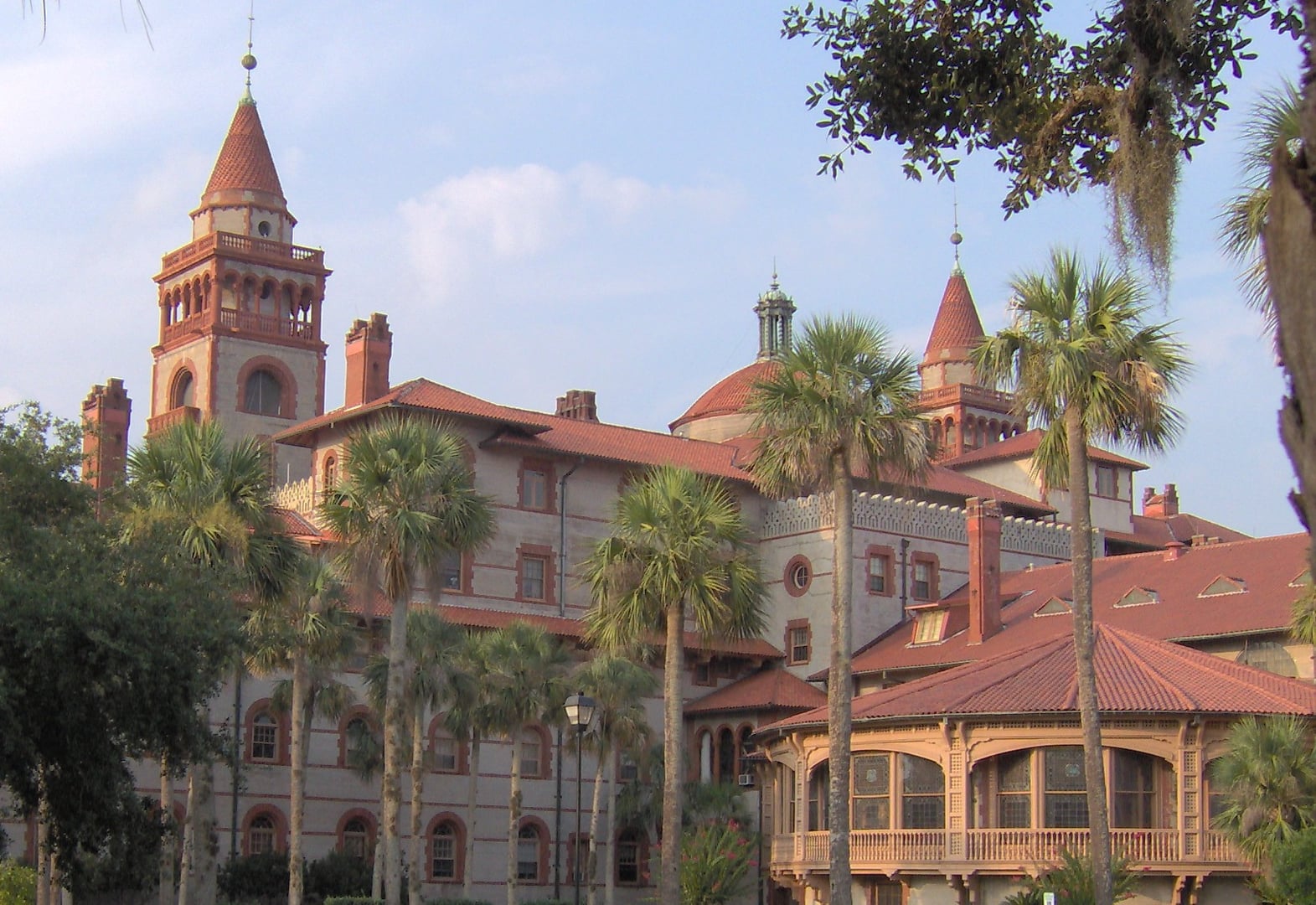
Spanish Renaissance Revival facade of Ponce de Leon Hall at Flagler College, Henry Flagler's 1888 Hotel Ponce de Leon designed by Carrere and Hastings, St. Augustine, Florida
Other Dark Tourism Site

Flagler College (Former Hotel Ponce de Leon)

St. Augustine, FL

The Hotel Ponce de Leon opened in 1888 as the flagship Gilded Age resort of Standard Oil co-founder Henry Morrison Flagler. Designed by Carrère and Hastings in Spanish Renaissance Revival style, it was one of the first major poured-in-place concrete buildings in the United States. It became Flagler College in 1968.

$ All Ages Family: High
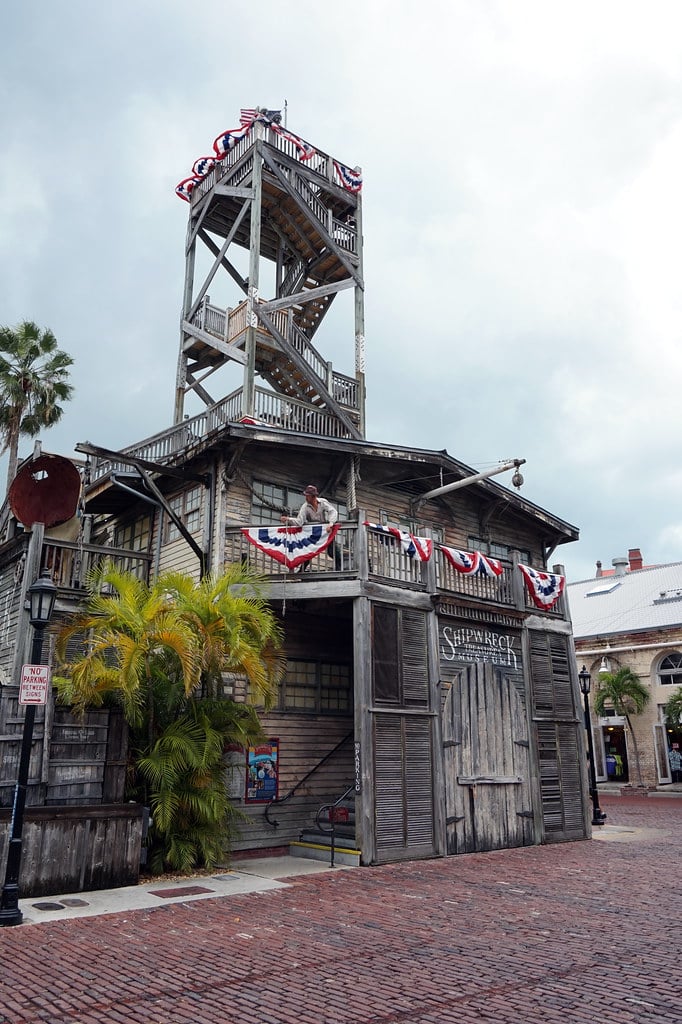
Photo of Key West Shipwreck Treasure Museum
Museum / Historical Site

Key West Shipwreck Treasure Museum

Key West, FL

The Key West Shipwreck Museum occupies a reconstruction of a 19th-century warehouse built by wrecker tycoon Asa Tift, who made his fortune salvaging cargo from ships wrecked on the Florida reef system. Key West was, at its economic peak in the 1850s, the wealthiest city per capita in the United States — wrecking was the primary industry. The museum's centerpiece artifacts come from the Isaac Allerton, a ship that sank on the reef in 1856 and was rediscovered by a salvage team in 1985.

$$ All Ages Family: High

More in Florida

St. Augustine — 26

165-foot black-and-white striped St. Augustine Lighthouse on Anastasia Island, Florida, completed in 1874
Museum / Historical Site

St. Augustine Lighthouse and Maritime Museum

St. Augustine, FL

The St. Augustine Lighthouse on Anastasia Island, Florida, was lit on October 15, 1874, replacing an older Spanish-era watchtower closer to shore. The 165-foot brick tower is Florida's oldest standing masonry lighthouse and is operated as a museum by the nonprofit St. Augustine Lighthouse and Maritime Museum.

$$ All Ages; tower climb requires children to be 44 inches tall and climb under their own power Family: Moderate
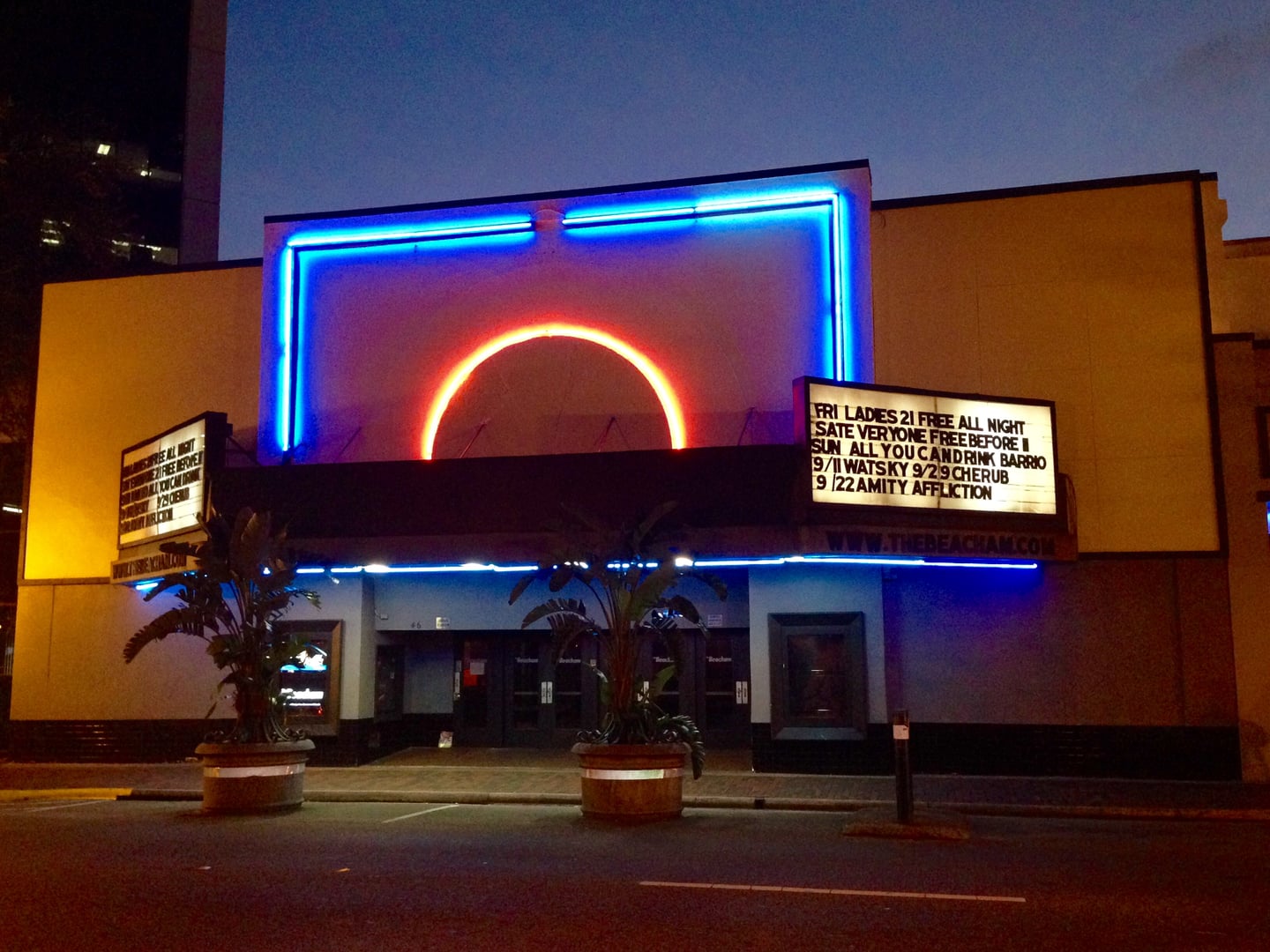
Photo of Bayfront Marin House
Haunted Hotel / Inn

Bayfront Marin House

St. Augustine, FL

The Bayfront Marin House occupies a colonial lot that first appears on the 1788 Roque map of St. Augustine. Francisco Marin, a Minorcan colonist, acquired the property in the 1780s and his son received formal title in 1806. Three separate structures from different eras were eventually merged into the current rambling inn.

$$$ All Ages Family: High
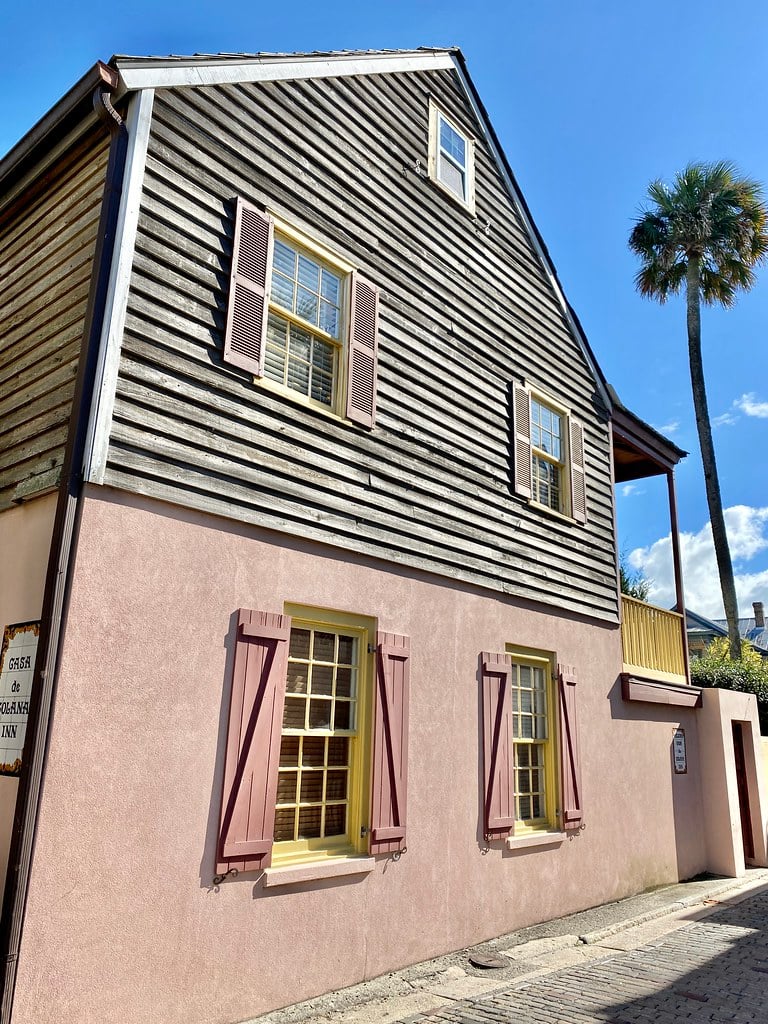
Photo of Casa de Solana
Haunted Hotel / Inn

Casa de Solana

St. Augustine, FL

Casa de Solana dates to 1763 and occupies the seventh-oldest house on Aviles Street, historically known as Hospital Street. Don Manuel Lorenzo Solana built a tabby house here after remaining in St. Augustine as one of only eight Spanish soldiers permitted to stay following British occupation.

$$$ All Ages Family: Moderate
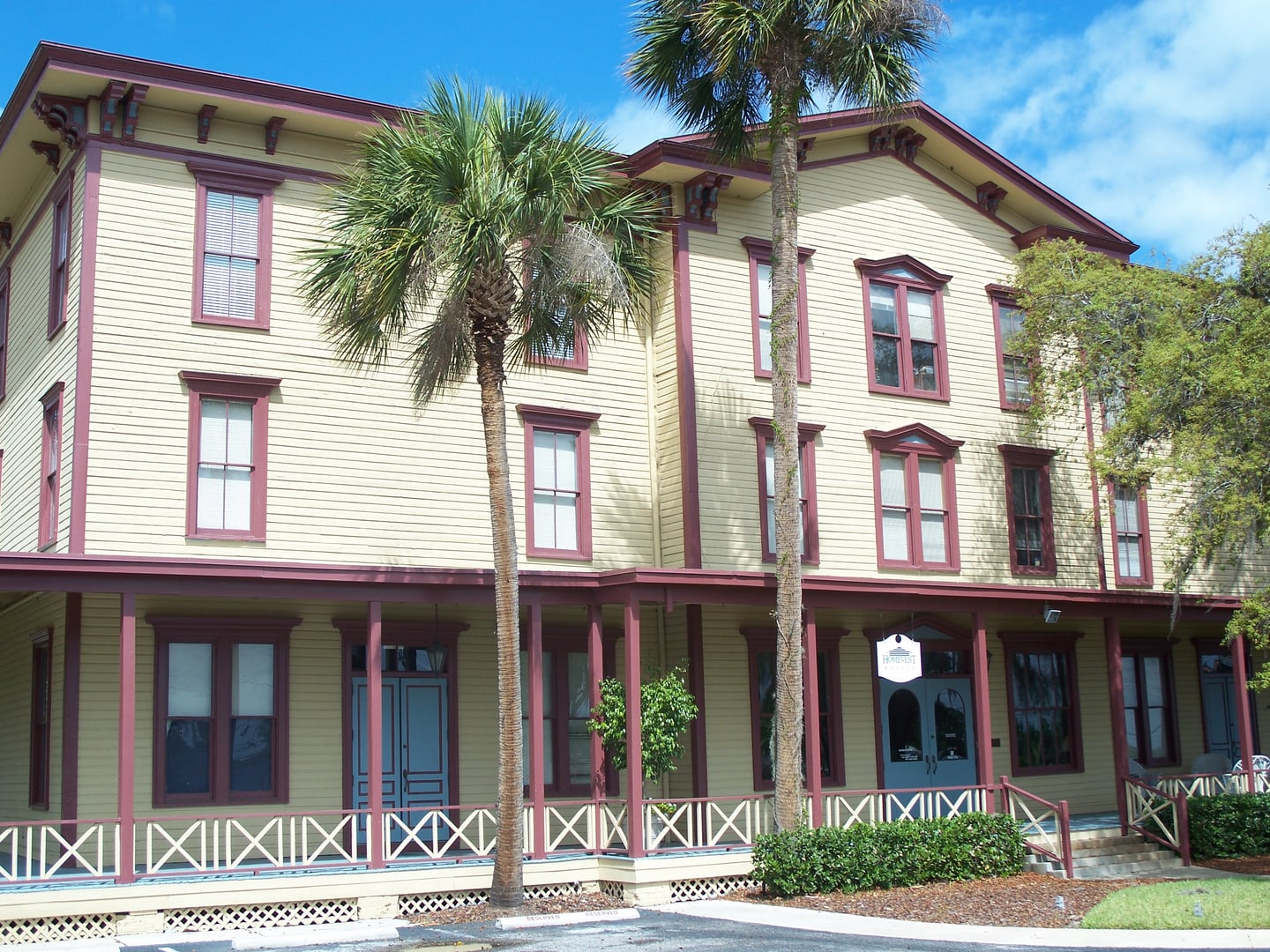
Haunted Hotel / Inn

Casa de Sueños Bed & Breakfast

St. Augustine, FL

Casa de Sueños — 'House of Dreams' — was built as a single-family home in 1904 by the Carcaba cigar-making family at 20 Cordova Street in St. Augustine. After remodeling into Mediterranean Revival style, the home spent more than two decades as a working funeral home before reopening as a bed-and-breakfast in the late 1990s.

$$$ All Ages Family: Moderate
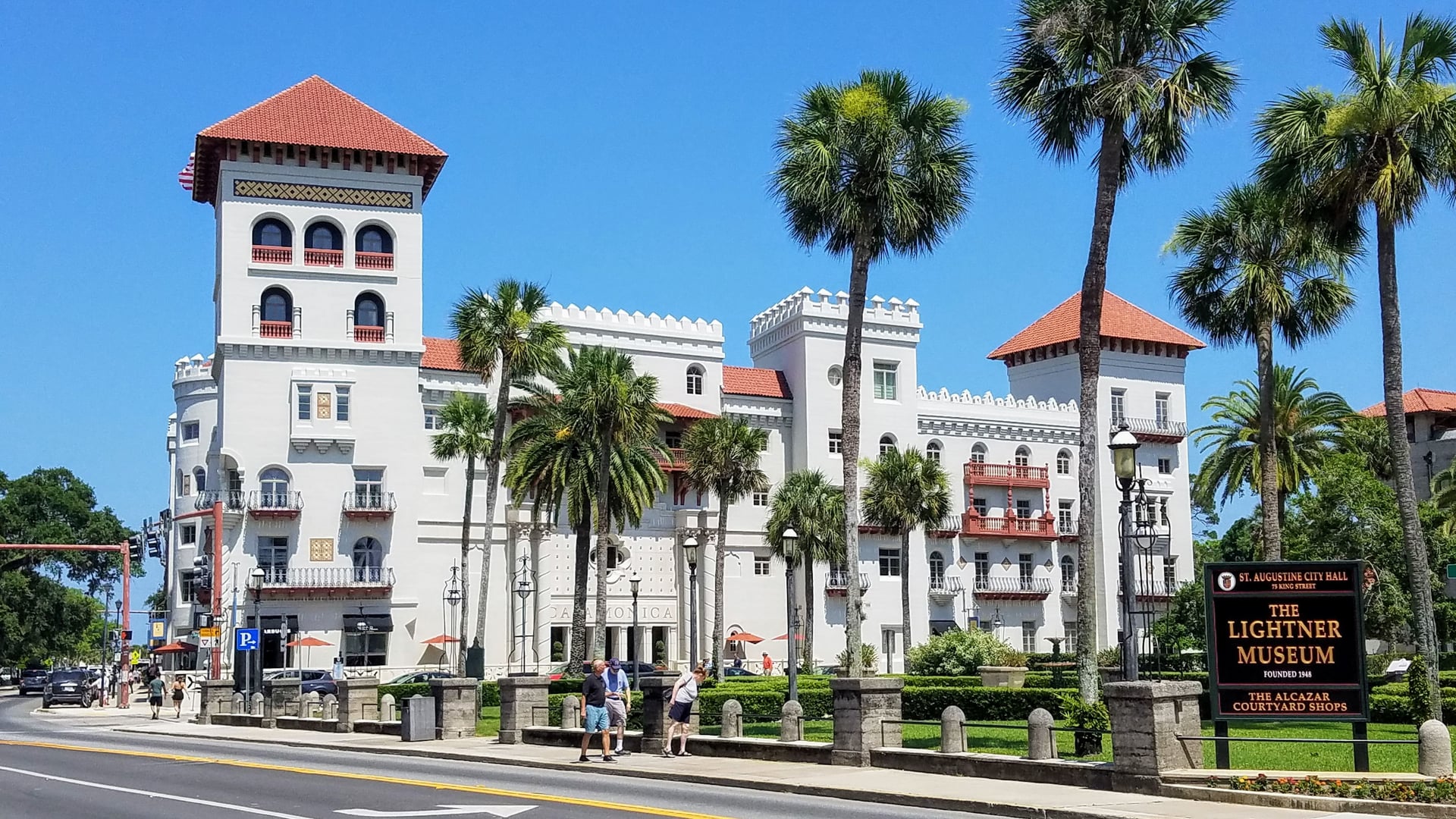
Casa Monica Hotel Moorish Revival facade and tower in St Augustine Florida
Haunted Hotel / Inn

Casa Monica Resort & Spa, Autograph Collection

St. Augustine, FL

Casa Monica opened on New Year's Day 1888, designed by Franklin W. Smith in an ornate Spanish and Moorish Revival style. Henry Flagler, co-founder of Standard Oil, purchased the hotel four months after opening. The Depression forced its closure in 1932; the building served as a courthouse until 1968 before being restored and reopened as a hotel in 1999.
$$$ All Ages Family: High
Haunted Hotel / Inn

Casablanca Inn on the Bay

St. Augustine, FL

Casablanca Inn on the Bay opened in 1914 as the Matanzas Hotel on St. Augustine's bayfront. Built in the Mediterranean Revival style by an architect named Butler, the property has operated as a hotel or inn for over a century and is closely associated with Prohibition-era smuggling in the St. Augustine waterfront.

$$$ All Ages Family: Moderate
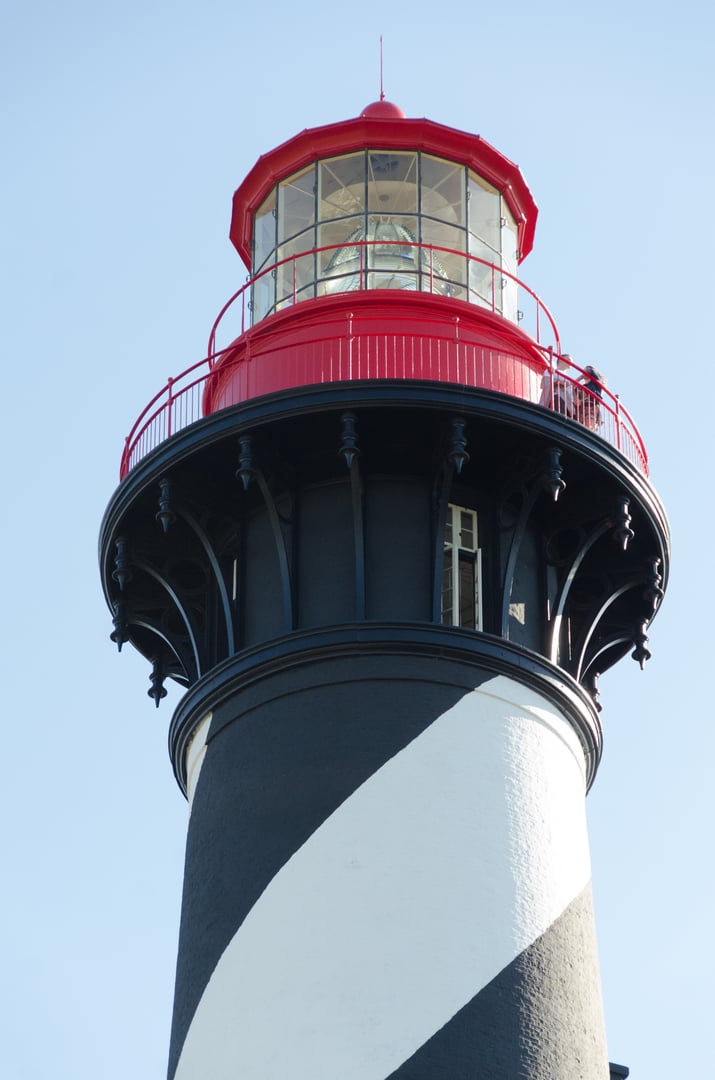
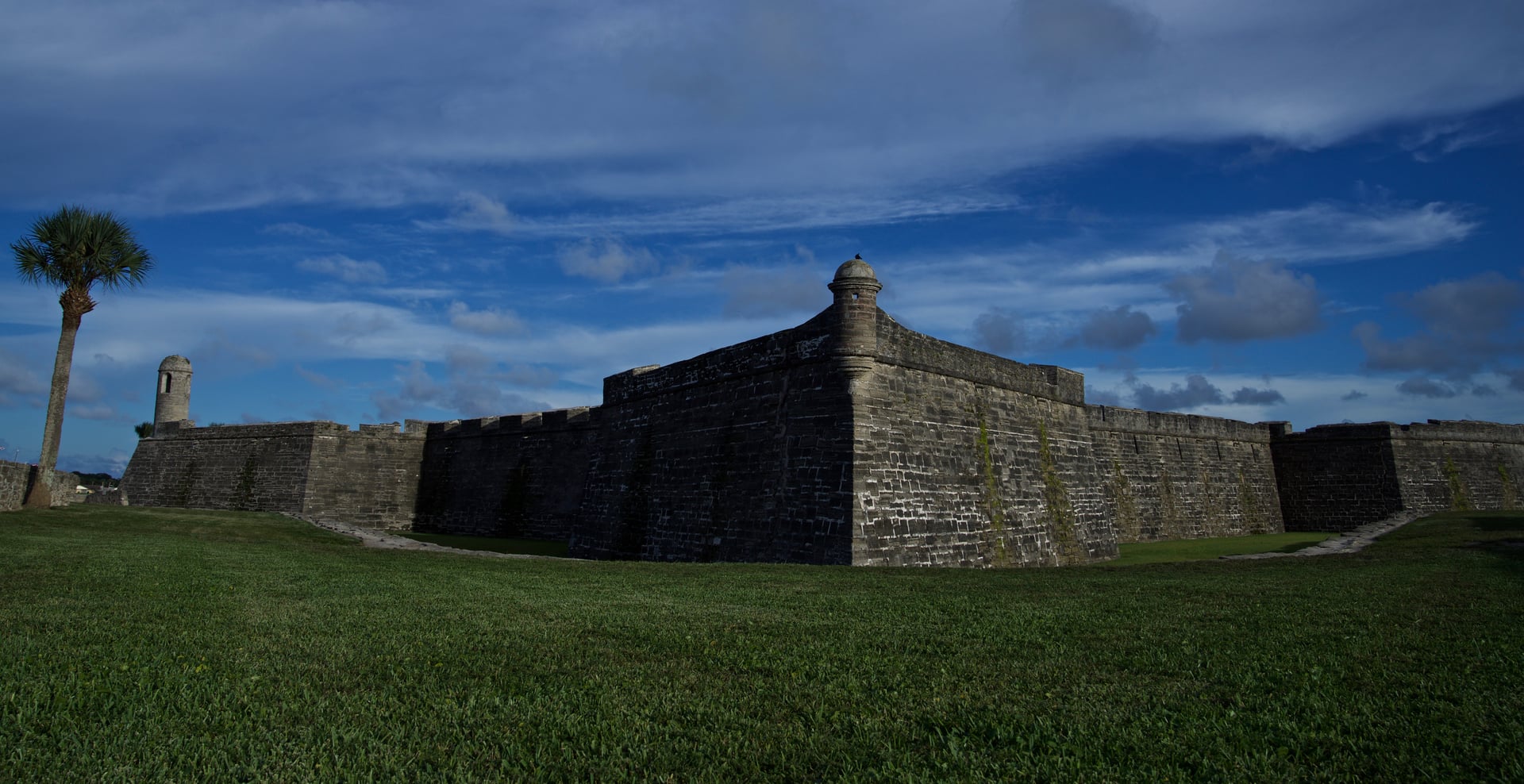
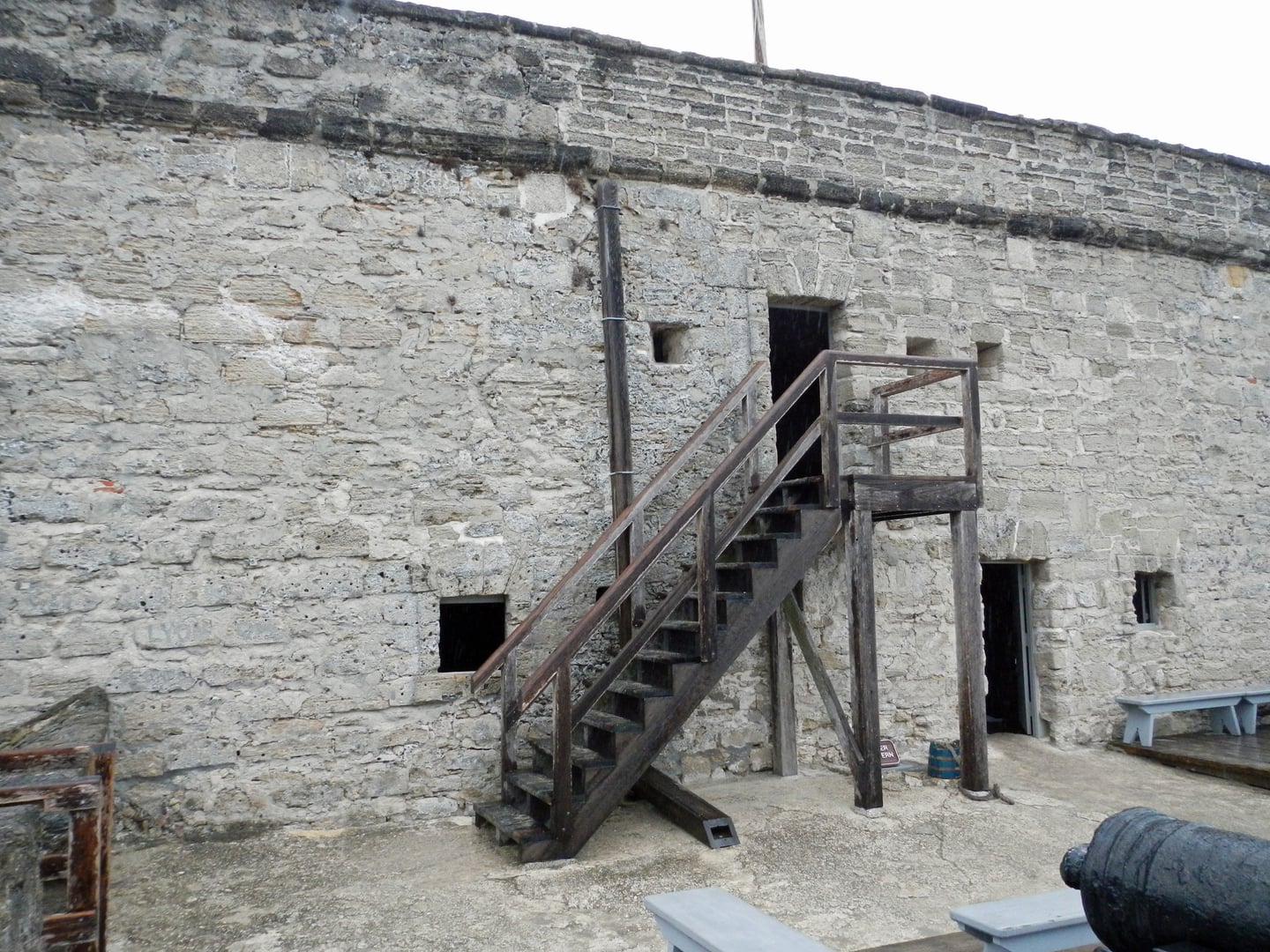
Coquina stone walls and bastions of Castillo de San Marcos overlooking Matanzas Bay in St. Augustine, Florida
Battlefield / Military Site

Castillo de San Marcos

St. Augustine, FL

Castillo de San Marcos in St. Augustine, Florida, is the oldest masonry fortress in the continental United States. Designed by Spanish military engineer Ignacio Daza, construction began in 1672 and the core fort was complete by 1695. The Castillo has never been taken in battle and changed sovereignty six times across Spanish, British, and American rule.

$ All Ages Family: High
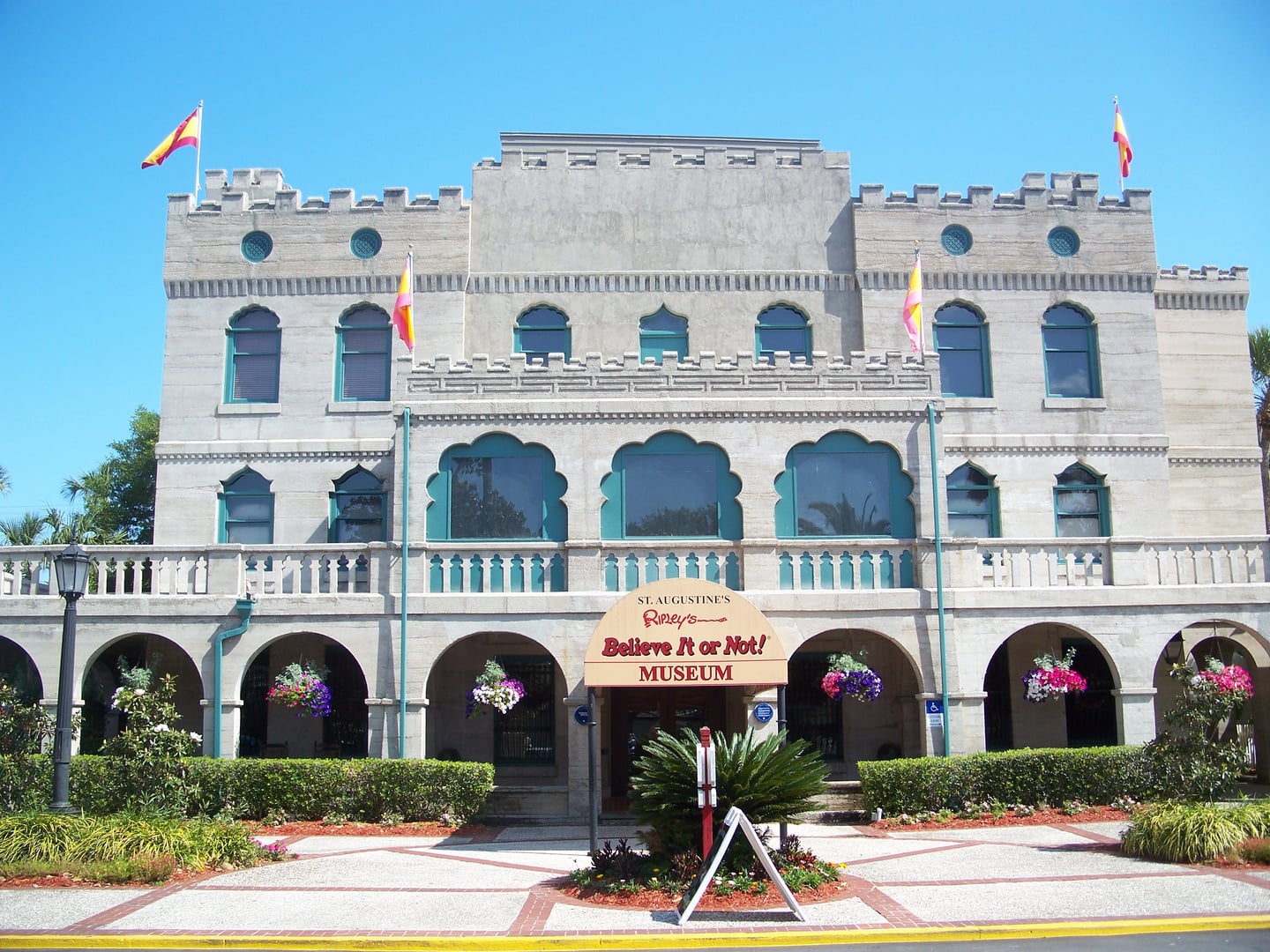
Castle Warden exterior at 19 San Marco Avenue in St. Augustine, Florida — the 1887 mansion now housing Ripley's Believe It or Not Museum
Museum / Historical Site

Castle Warden / Ripley's Believe It or Not Museum

St. Augustine, FL

Castle Warden was built in 1887 by Philadelphia-based Standard Oil partner William G. Warden as a winter residence. After the Warden family ceased using it during the Great Depression, Norton Baskin and his wife, Pulitzer Prize-winning author Marjorie Kinnan Rawlings, purchased the property in 1941 and converted it to an upscale hotel. On April 23, 1944, a fire broke out on the third and fourth floors, killing two guests — Bette Richeson and Ruth Pickering. Ripley's opened America's first Believe It or Not! museum here in 1950.

$$ All Ages Family: Moderate
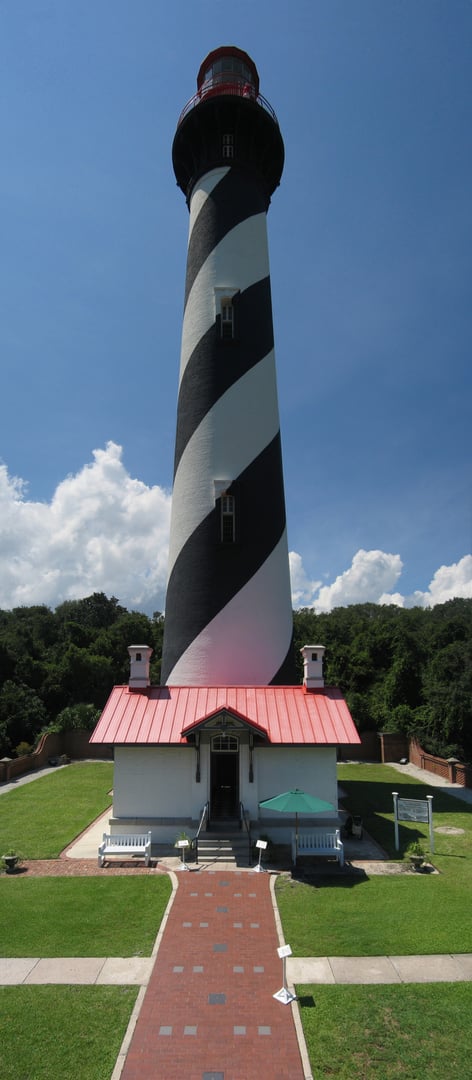
Haunted House / Historic Home

Don Pedro Horruytiner House

St. Augustine, FL

The Don Pedro Horruytiner House at 214 St. George Street is one of St. Augustine's oldest extant private residences, with masonry sections documented in the Library of Congress HABS survey as potentially dating from the First Spanish Period (1565-1763). The house is associated with the Horruytiner family, two of whose members served as governors of Spanish Florida.

$ All Ages Family: High
Fort Matanzas coquina watchtower on Rattlesnake Island, St. Augustine, Florida — built 1740–1742 to guard Matanzas Inlet
Battlefield / Military Site

Fort Matanzas National Monument

St. Augustine, FL

The name Matanzas — Spanish for 'slaughters' — derives from two mass killings of French Huguenot colonists by Spanish forces under Governor Pedro Menéndez de Avilés in 1565. After a hurricane wrecked the French fleet, Menéndez's forces captured then executed groups of shipwrecked survivors at the inlet. The 50-foot coquina watchtower visible today was built by Spain between 1740 and 1742 to guard the inlet from British attack and is now operated as a National Monument.

$ All Ages Family: High
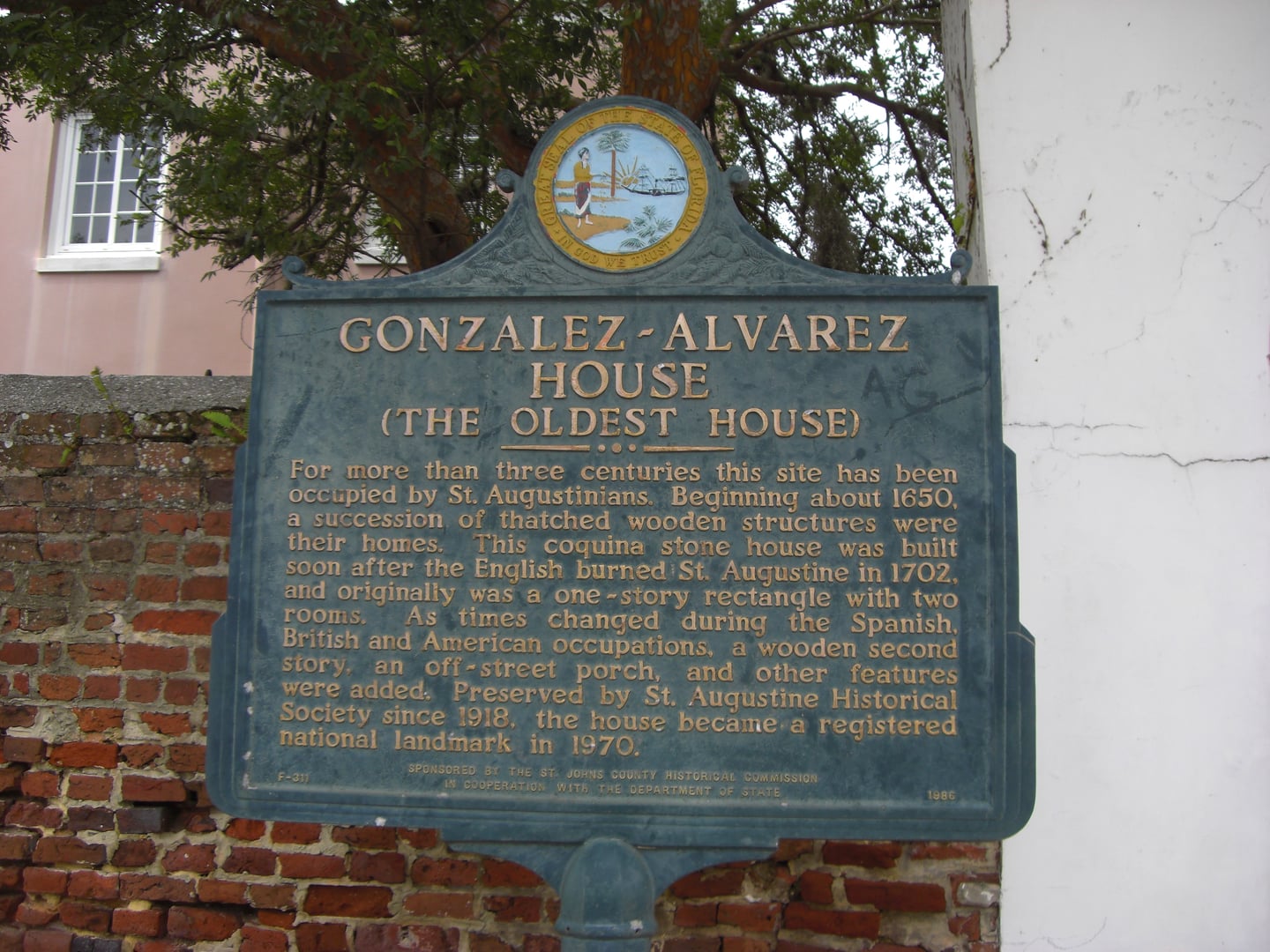
Exterior of the González-Álvarez House (The Oldest House) at 14 St. Francis Street in St. Augustine, Florida, showing the coquina lower walls and wood-frame upper story
Museum / Historical Site

González-Álvarez House (The Oldest House)

St. Augustine, FL

The González-Álvarez House at 14 St. Francis Street in St. Augustine, Florida, was built around 1723 on the site of an earlier structure destroyed by British forces in 1702. Constructed primarily of coquina limestone, it was designated a National Historic Landmark in 1970 and is operated as the Oldest House Museum Complex by the St. Augustine Historical Society.

$ All Ages Family: High
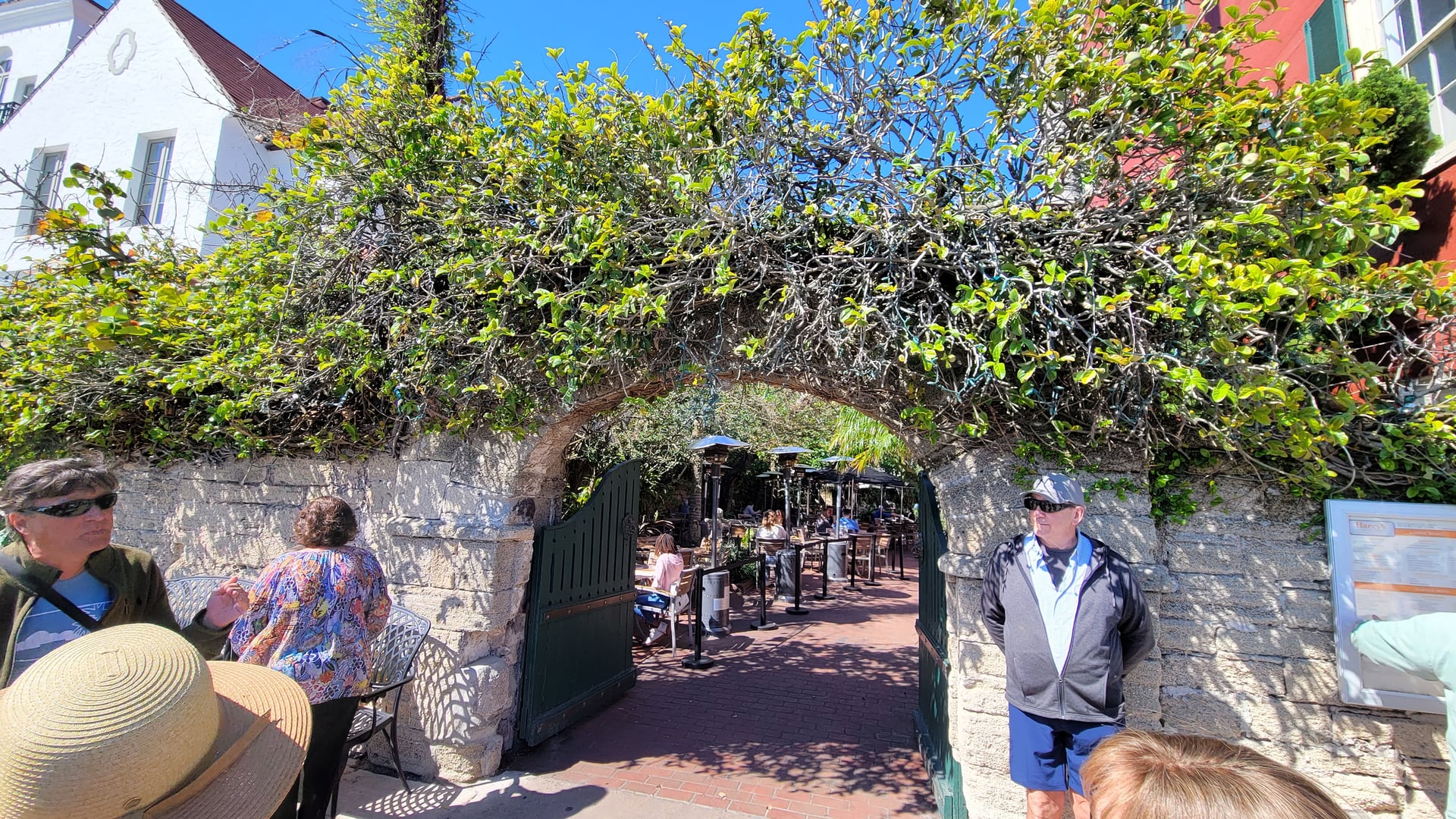
Exterior of Harry's Seafood Bar and Grille at 46 Avenida Menendez, St. Augustine, Florida — an 18th-century bayfront building with documented paranormal history
Haunted Dining / Bar

Harry's Seafood Bar & Grille

St. Augustine, FL

The building at 46 Avenida Menendez has been continuously occupied since the Spanish colonial period. An 18th-century resident named Catalina de Porras is associated with the building's earliest documented history. The structure most prominently enters the historical record through an 1887 fire in which a woman died in the kitchen. The building has cycled through restaurant identities including Chart House, Catalina's Garden, and Puerta Verde before operating as Harry's.

$$ All Ages Family: High
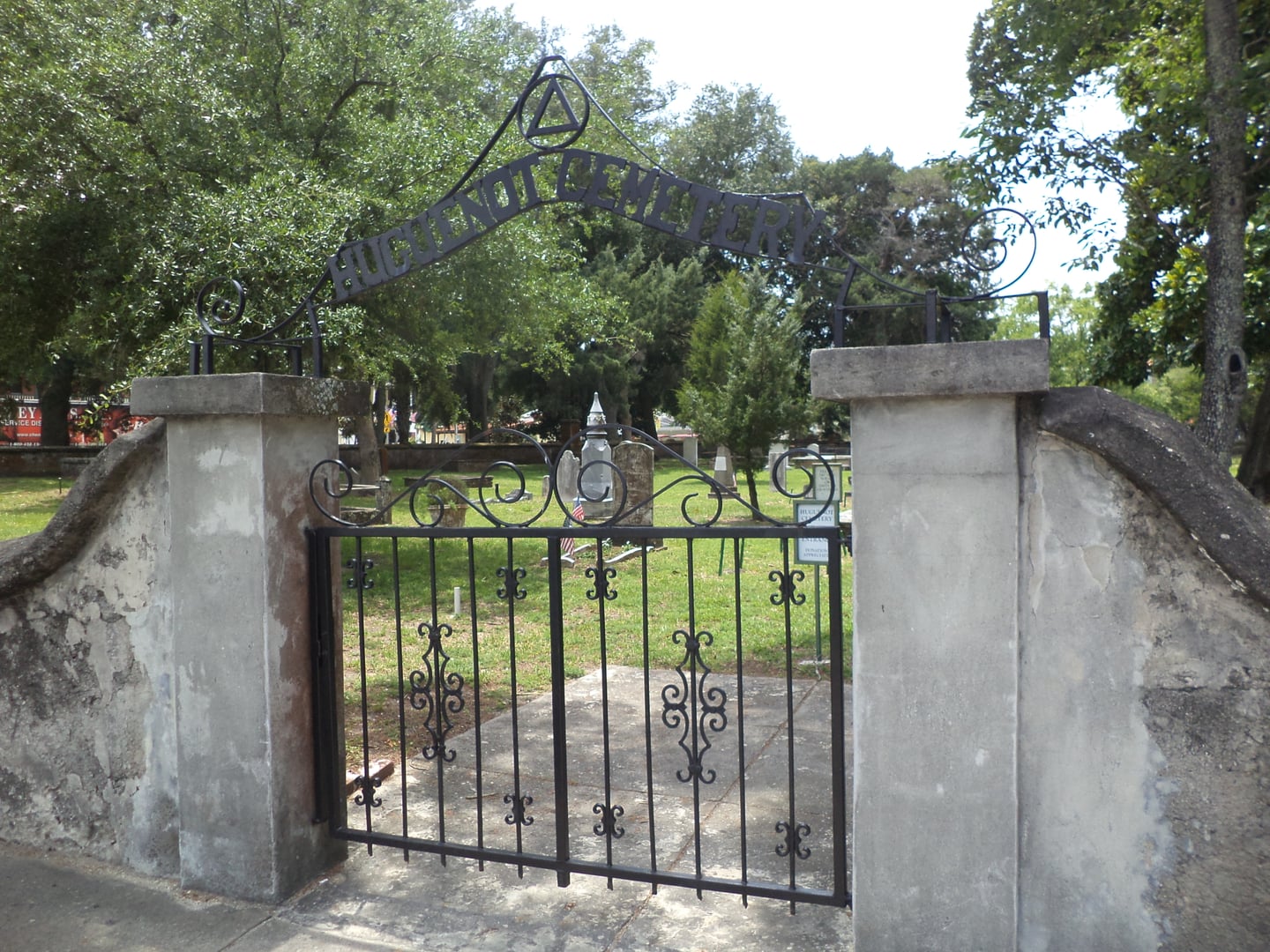
Huguenot Cemetery gate, St. Augustine, St. Johns County, Florida
Cemetery / Burial Ground

Huguenot Cemetery

St. Augustine, FL

The Huguenot Cemetery was established in 1821, weeks after Florida's transfer from Spain to the United States, during a yellow fever epidemic that killed dozens of people daily. Catholic cemeteries in the Spanish city refused burial to Protestants, necessitating a separate ground outside the city walls. The cemetery operated until 1884 and contains approximately 436 burials.

$ All Ages Family: Moderate
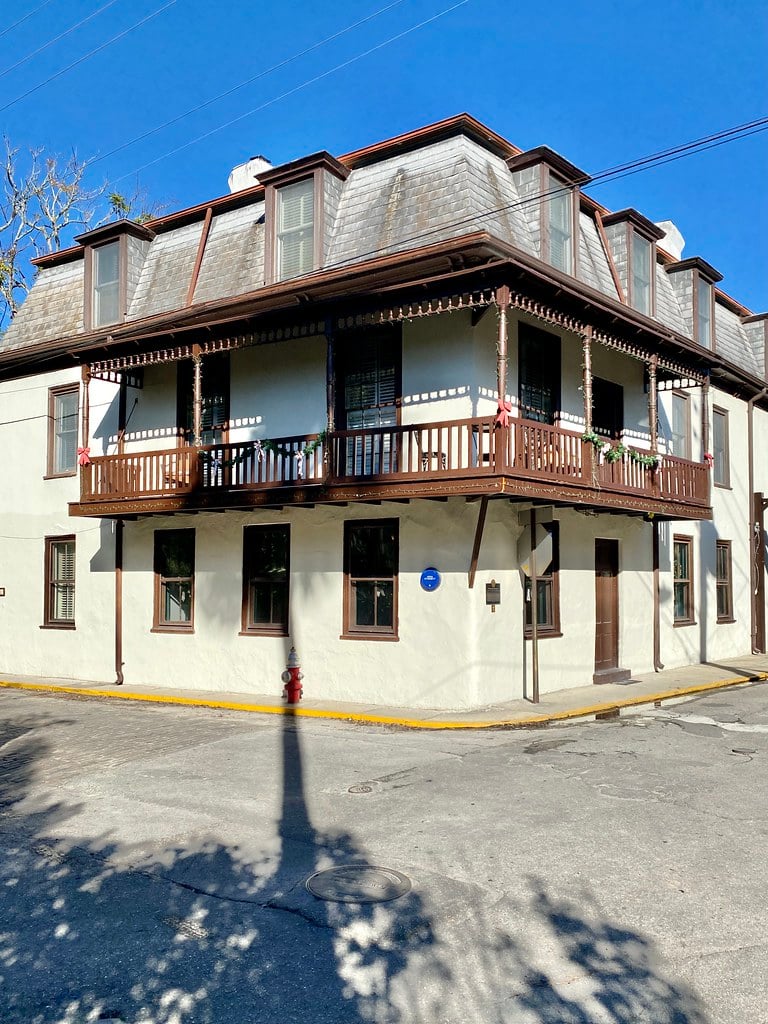
Haunted Hotel / Inn

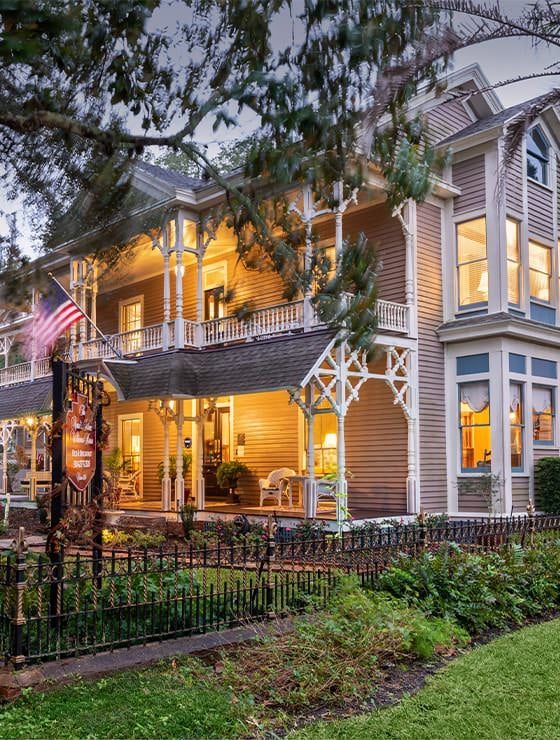
Kenwood Inn

St. Augustine, FL

The Kenwood Inn at 38 Marine Street in St. Augustine was built as a hotel in 1865, making it the oldest continuously operating inn in the city. The two-and-a-half-story Queen Anne Victorian structure served multiple ownerships across 160 years, operating as a licensed bed and breakfast for more than a century.

$$$ All Ages Family: Moderate
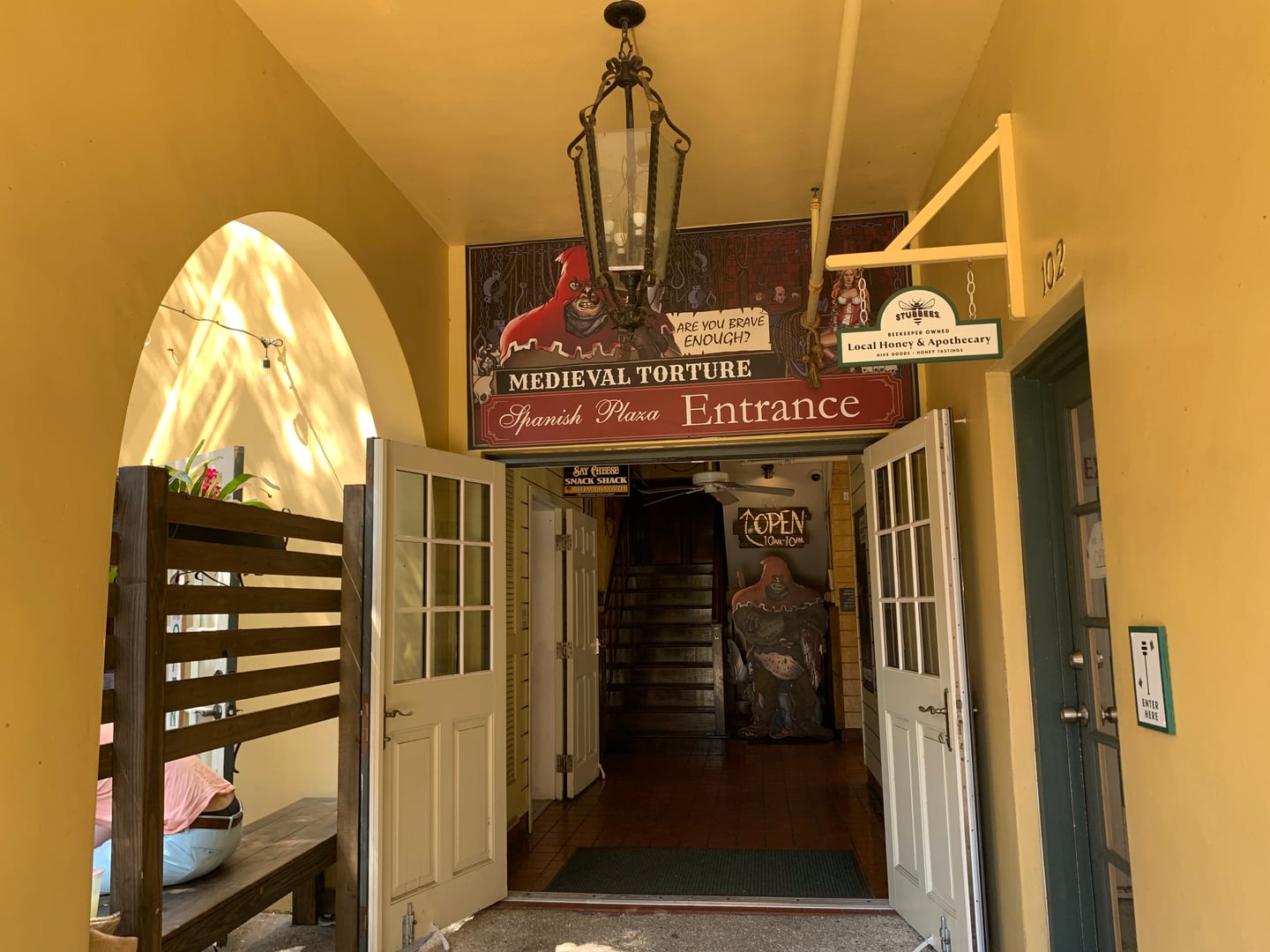
Sign for the Medieval Torture Museum at the corner of Hypolita Street and St. George Street in St. Augustine, Florida
Other Dark Tourism Site

Medieval Torture Museum

St. Augustine, FL

The Medieval Torture Museum opened at 100 St. George Street in St. Augustine in summer 2017. The 6,000-square-foot facility houses over 100 reconstructed medieval punishment and torture devices built by professional movie prop-makers, based on period engravings and verified historical documentation. It is one of three Medieval Torture Museum locations in the United States and had logged more than 200,000 visitors by summer 2019.

$$ Minimum 13 Family: Low
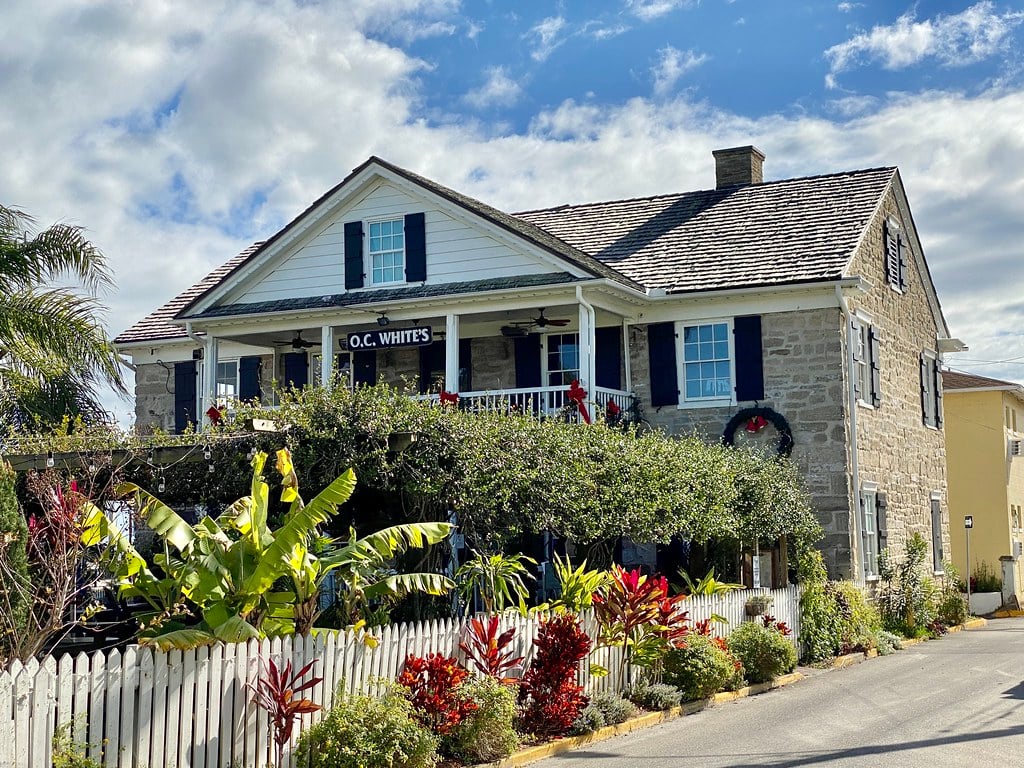
Two-story Spanish colonial restaurant building with green shutters on Avenida Menendez in St. Augustine, Florida
Haunted Dining / Bar

O.C. White's Seafood & Spirits

St. Augustine, FL

The building that houses O.C. White's Seafood & Spirits at 118 Avenida Menendez dates to 1790, originally built by Don Miguel Ysnardy as a private residence. After service as one of St. Augustine's first hotels and a series of private owners, the structure was relocated in 1961 to its current bayfront site. The O.C. White family acquired the building in 1992 and opened the restaurant.

$$ All Ages Family: High
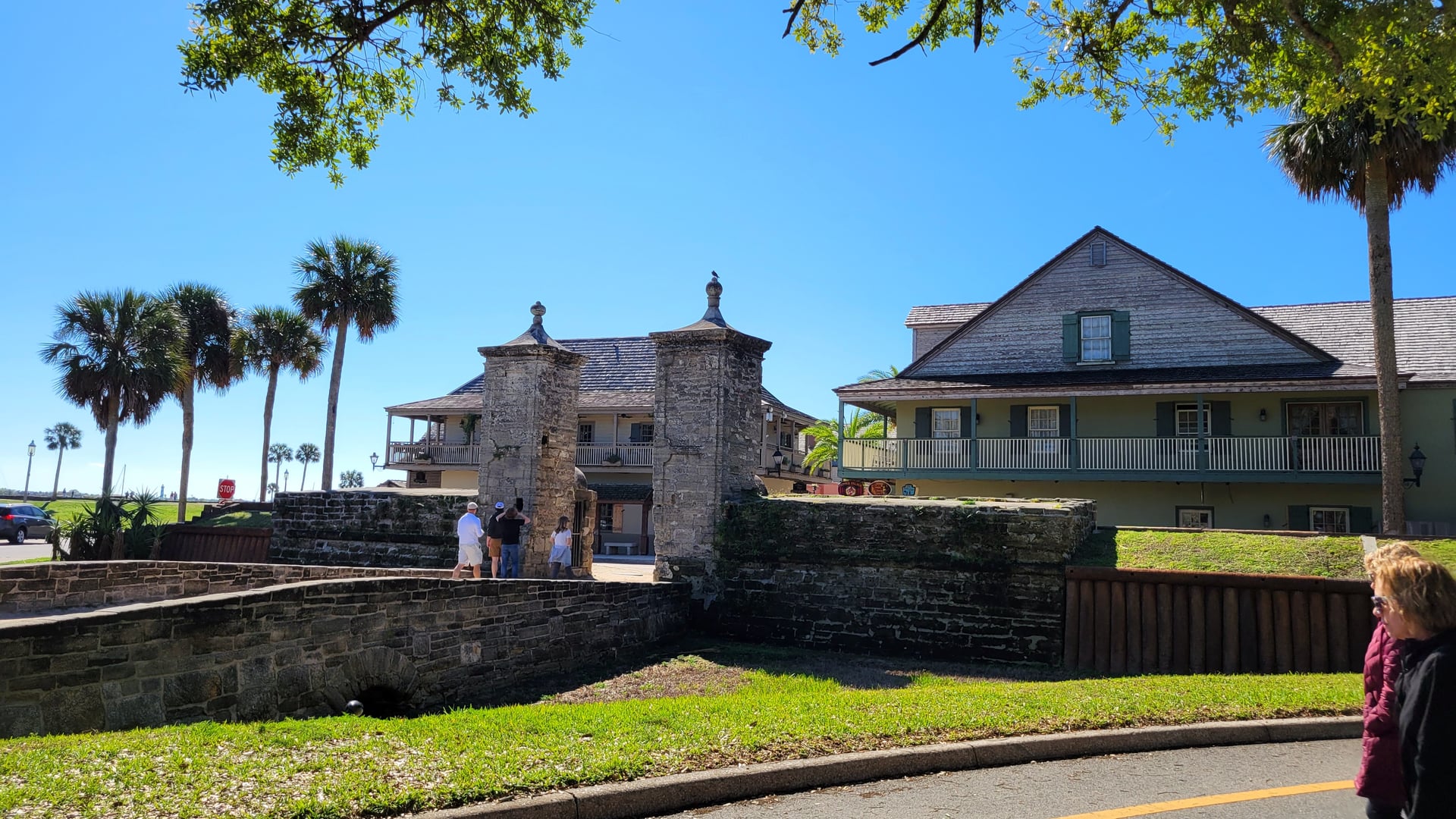
Twin coquina pillars of the Old City Gates at the junction of Orange Street and St. George Street in St. Augustine, Florida
Battlefield / Military Site

Old City Gates (Cubo Line)

St. Augustine, FL

St. Augustine's northern defensive line, the Cubo Line, was extended to the city gate location in 1704 under Governor Joseph de Zuñiga y Cerda. The twin coquina pillar gate guarded the only land entrance through the earthwork fortification. During Queen Anne's War (1702–1713), Spanish defenders held the line against multiple British assaults. The present pillars date from a reconstruction in the early 19th century.

$ All Ages Family: High
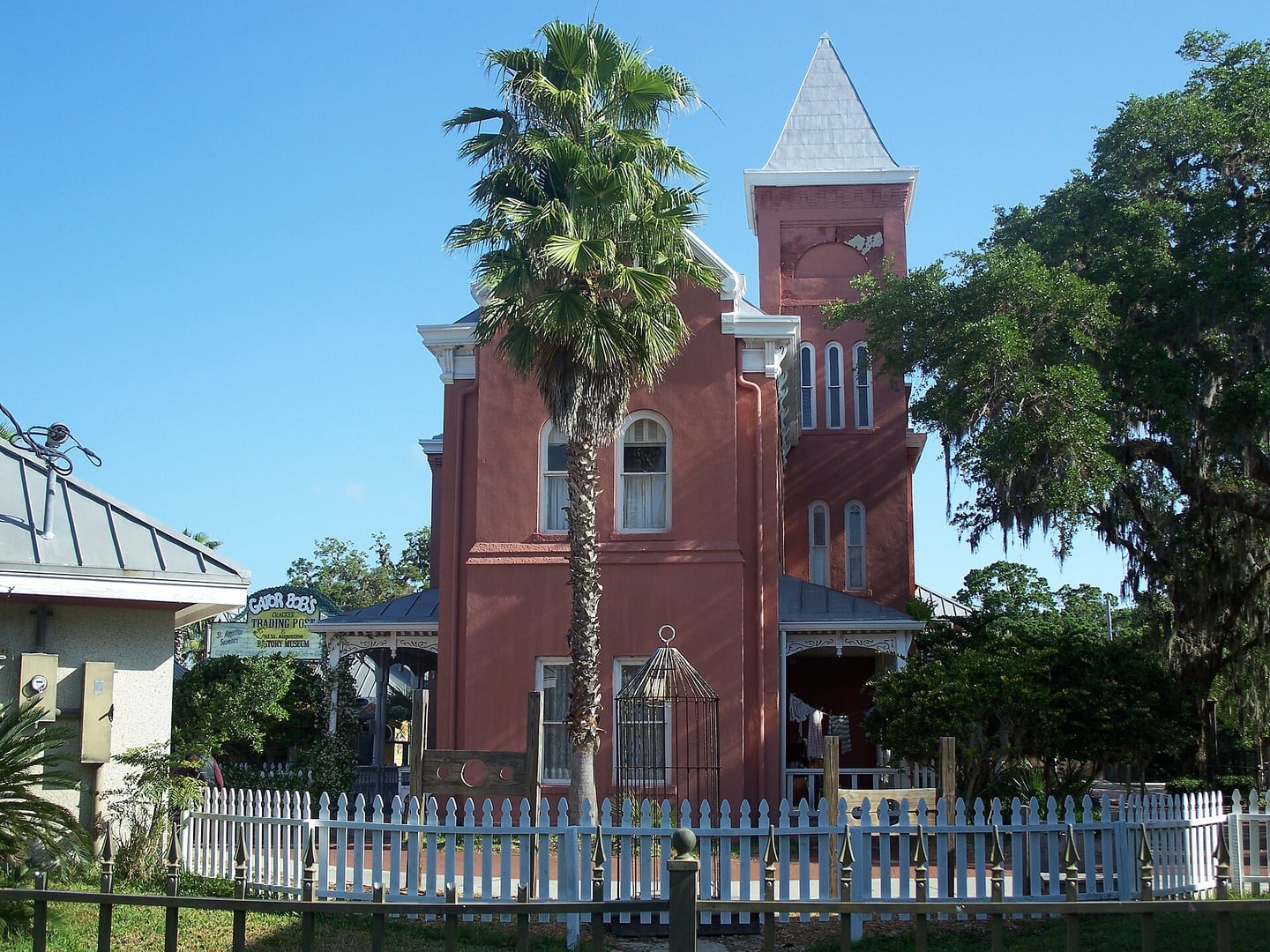
Exterior of the Old St. Johns County Jail at 167 San Marco Avenue in St. Augustine, Florida, the 1891 Flagler-funded jail designed by the Pauly Jail Building Company
Museum / Historical Site

Old Jail Museum

St. Augustine, FL

The Old St. Johns County Jail at 167 San Marco Avenue in St. Augustine, Florida was commissioned by railroad magnate Henry Flagler and constructed in 1891. Designed by the same architectural firm later used for Alcatraz, the facility housed prisoners under conditions so severe — one bucket per cell as a toilet, minimal diet, and labor in Flagler's fields — that it was closed in 1953. Eight documented executions occurred on site before the county converted the building to a tourist attraction in 1954.

$$ All Ages (daytime); 18+ recommended for After Dark tours Family: Moderate
Pink Romanesque exterior of the 1891 Old St. Johns County Jail at 167 San Marco Avenue, St. Augustine, Florida
Prison / Reformatory

Old St. Augustine Jail

St. Augustine, FL

The Old St. Johns County Jail at 167 San Marco Avenue in St. Augustine was built by Henry Flagler in 1891 to remove the previous downtown jail from view of his Ponce de Leon Hotel guests. Constructed in the Romanesque style by the P.J. Pauley Jail Company (the builder of Alcatraz), the jail operated from 1891 to 1953. Eight documented hangings were carried out in the east yard.

$$ All Ages for daytime; minimum age may apply for evening tours Family: Moderate
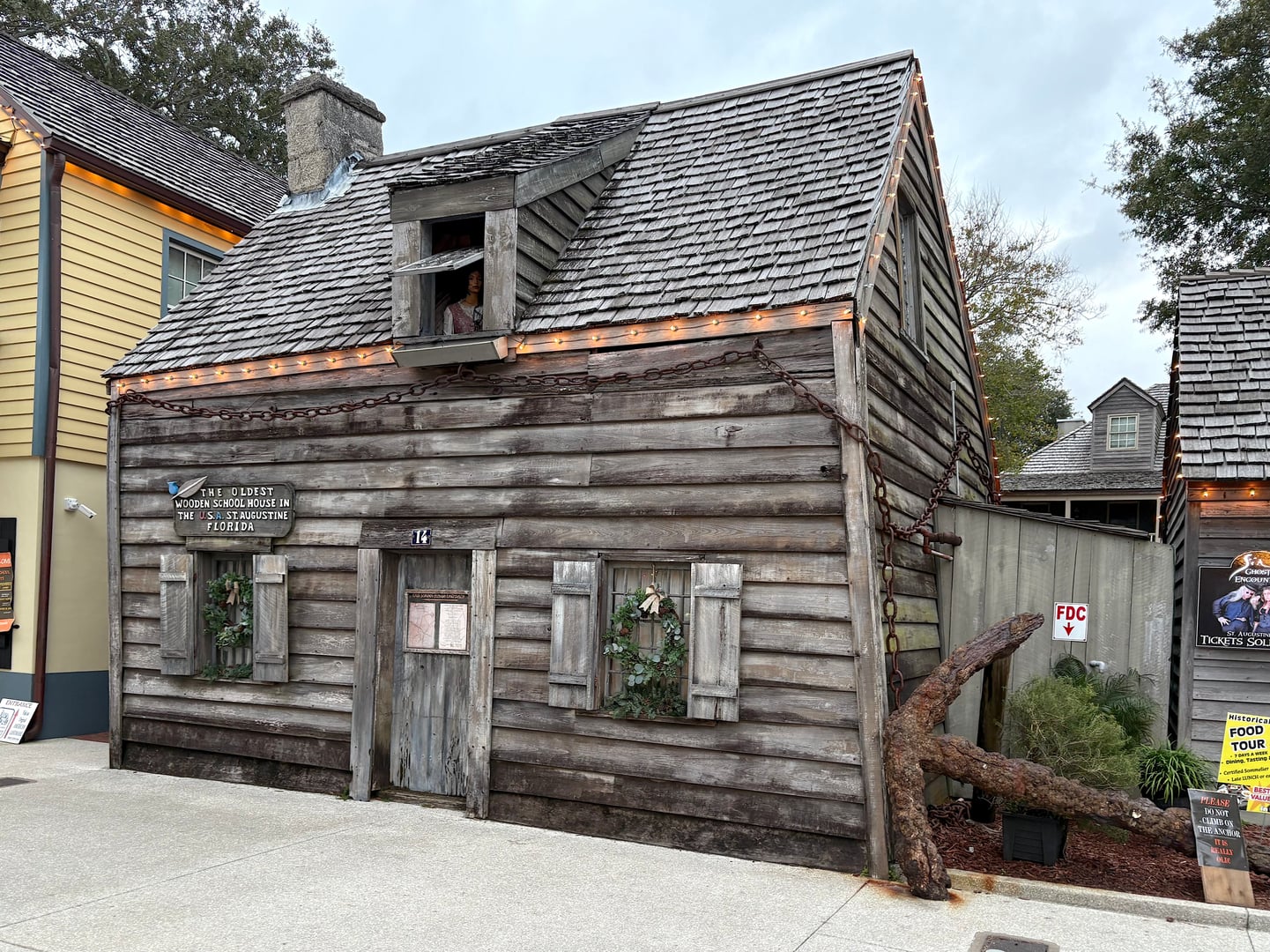
Exterior of the Oldest Wooden Schoolhouse at 14 St. George Street, St. Augustine, Florida — a circa-1716 bald-cypress-and-cedar colonial building wrapped in a large iron chain
Museum / Historical Site

Oldest Wooden Schoolhouse

St. Augustine, FL

The Oldest Wooden Schoolhouse first appears in St. Augustine tax records in 1716, making it the oldest surviving wooden school building in the United States. Built from bald cypress and red cedar after British forces burned much of the city in 1702, the structure served as a Spanish colonial schoolroom and the schoolmaster's residence for nearly 150 years. A large iron chain was wrapped around the building in 1937 as a hurricane anchor.

$ All Ages Family: High
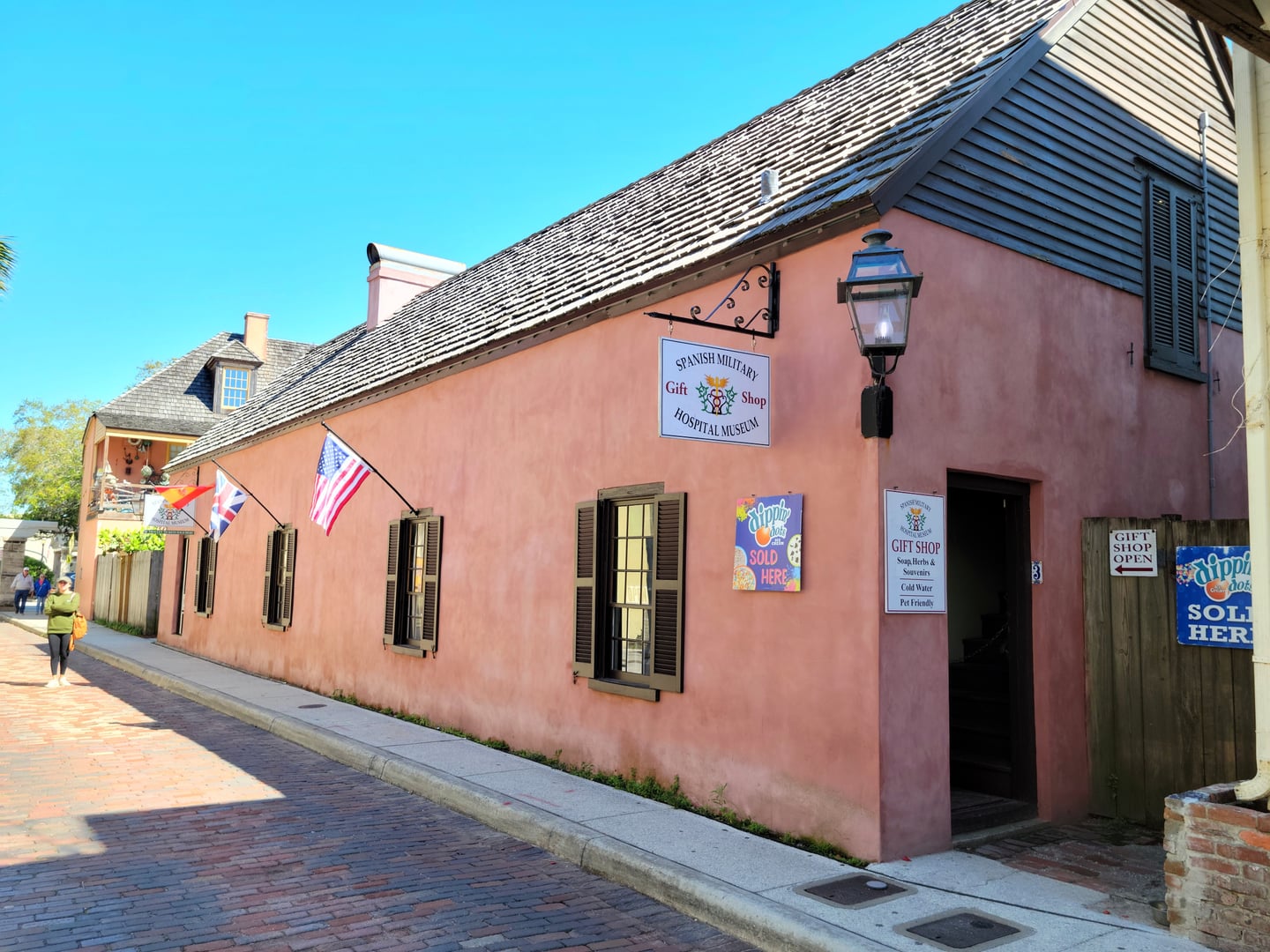
Reconstructed two-story coquina-and-stucco Spanish Military Hospital Museum on Aviles Street in historic St. Augustine, Florida
Asylum / Hospital

Spanish Military Hospital Museum

St. Augustine, FL

The Spanish Military Hospital Museum at 3 Aviles Street is a 1960s-era reconstruction of a Second Spanish Period (1784-1821) Spanish royal military hospital. Rebuilt on its original foundations, the museum interprets 18th-century military medicine, surgery, and apothecary practice in St. Augustine.

$ All Ages Family: Moderate
St. Augustine Lighthouse, the 165-foot black-and-white spiral-striped brick tower completed in 1874 on Anastasia Island, Florida
Museum / Historical Site

St. Augustine Lighthouse

St. Augustine, FL

St. Augustine Lighthouse, completed in 1874, replaced an earlier Spanish coquina watchtower at the entrance to Matanzas Bay. The 165-foot brick tower with black-and-white spiral daymark and red lantern room is the oldest surviving brick structure in St. Augustine and houses the Lighthouse Archaeological Maritime Program museum.

$$ Tower climb requires minimum height 44 inches Family: Moderate
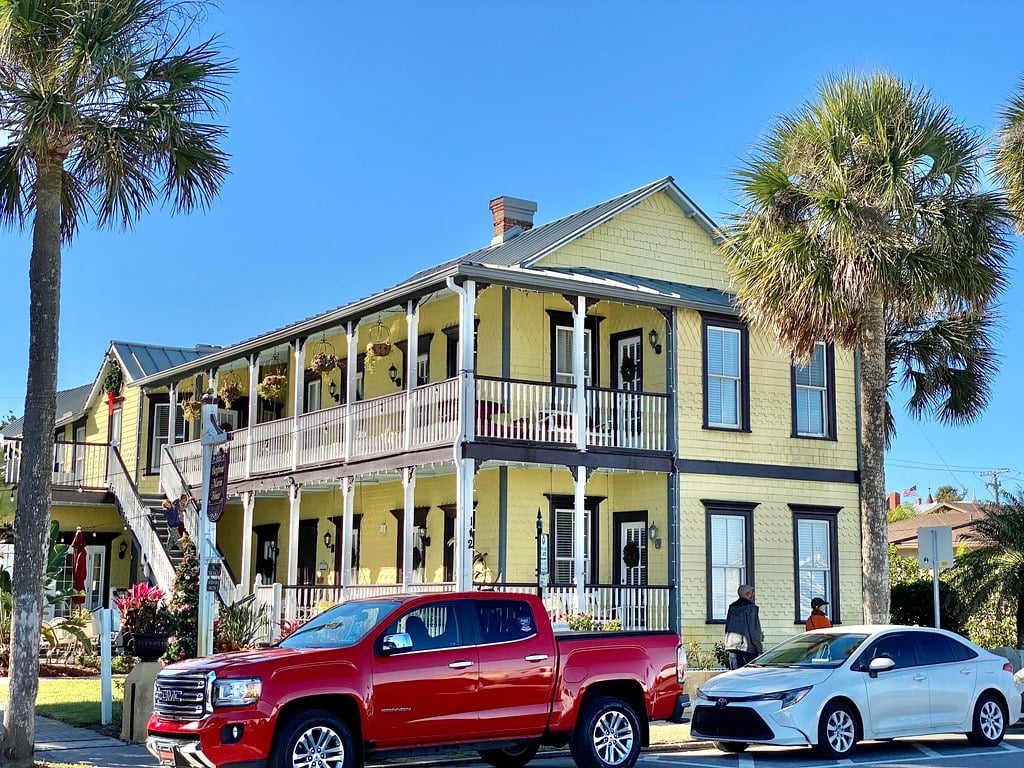
Three-story Spanish colonial coquina inn with second-story balcony at 279 St. George Street in St. Augustine, Florida
Haunted Hotel / Inn

St. Francis Inn

St. Augustine, FL

The St. Francis Inn at 279 St. George Street was built in 1791 by Sergeant Gaspar Garcia of the Spanish 3rd Infantry Battalion as a private residence on a Spanish royal land grant. Over more than two centuries the building has served as a private home, boarding house, and bed-and-breakfast, and is among the oldest continuously occupied buildings in St. Augustine.

$$$ All Ages Family: Moderate
Haunted Hotel / Inn

St. George Inn

St. Augustine, FL

The St. George Inn occupies a restored Victorian frame residence built in the mid-1880s on the pedestrian-only St. George Street in St. Augustine's historic district. The property spans six buildings around two courtyards and sits adjacent to the city's Old City Gate. The courtyard and foundation area is believed to overlie one of St. Augustine's earliest burial grounds, a consequence of the city's 450-plus years of continuous habitation.

$$$ All Ages Family: Moderate
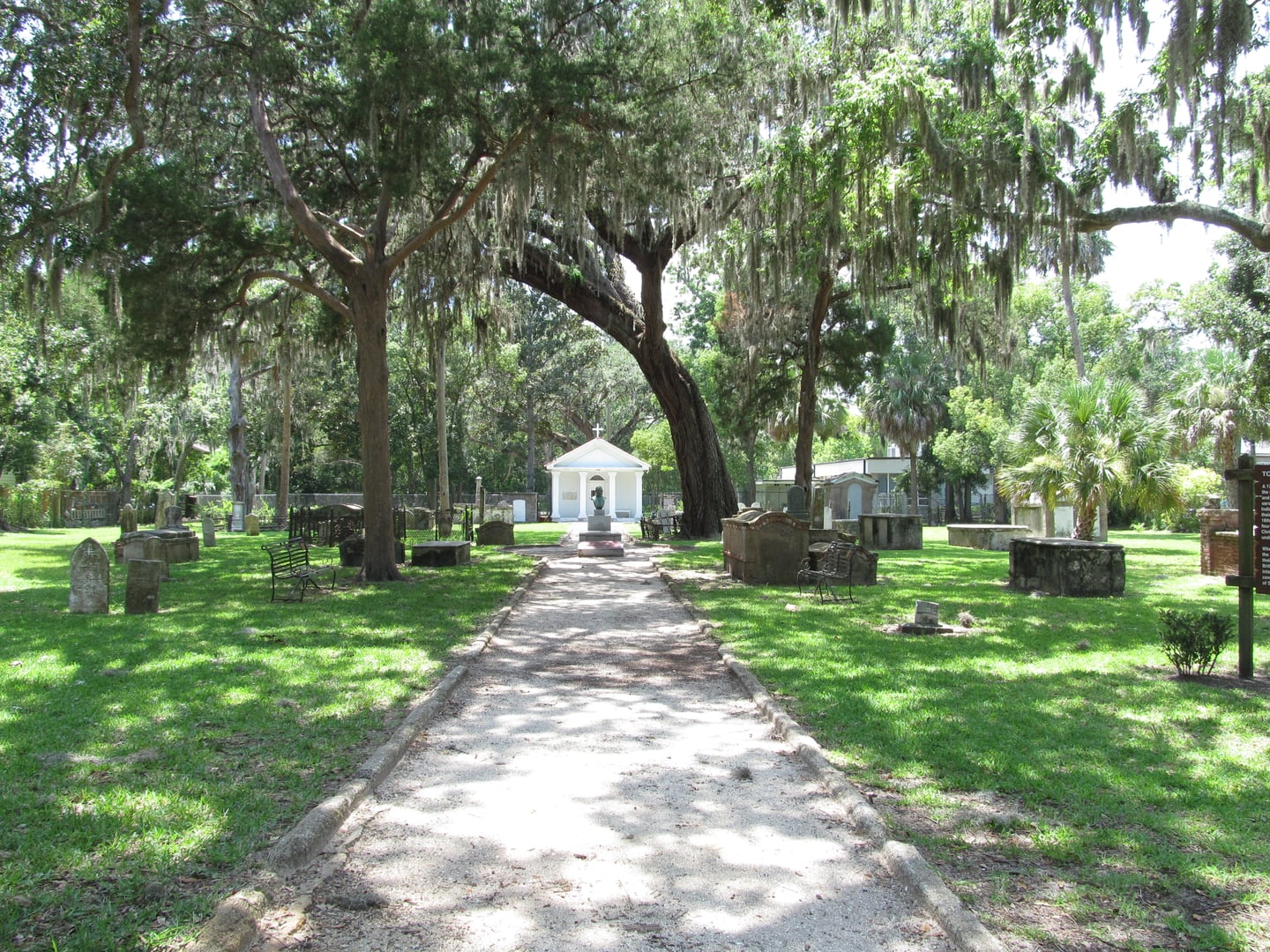
Entryway to Tolomato Cemetery, the historic Spanish colonial Catholic burial ground in St. Augustine, Florida
Cemetery / Burial Ground

Tolomato Cemetery

St. Augustine, FL

Tolomato Cemetery on Cordova Street in St. Augustine, Florida is the oldest planned cemetery in the state of Florida. The site occupies the former location of a Guale Indian mission village ministered by Franciscan friars in the seventeenth and eighteenth centuries. The cemetery served the Catholic population of St. Augustine from the 1770s until 1884.

$ All Ages Family: High
Exterior of the Ximenez-Fatio House Museum at 20 Aviles Street, St. Augustine — an 1798 Spanish colonial coquina building with distinctive balconies
Haunted House / Historic Home

Ximenez-Fatio House Museum

St. Augustine, FL

Andres Ximenez, a Spanish merchant, built the coquina structure at 20 Aviles Street between 1797 and 1802. He operated a general store and tavern on the ground floor while his family lived above. Ximenez and his wife Juana Pellicer Ximenez both died before 1806. The building passed through several female proprietors who ran it as a boarding house; multiple guests, including Eliza Whitehurst in 1838 and Louisa Fatio in 1875, died on the premises.

$ All Ages Family: Moderate

Key West — 22

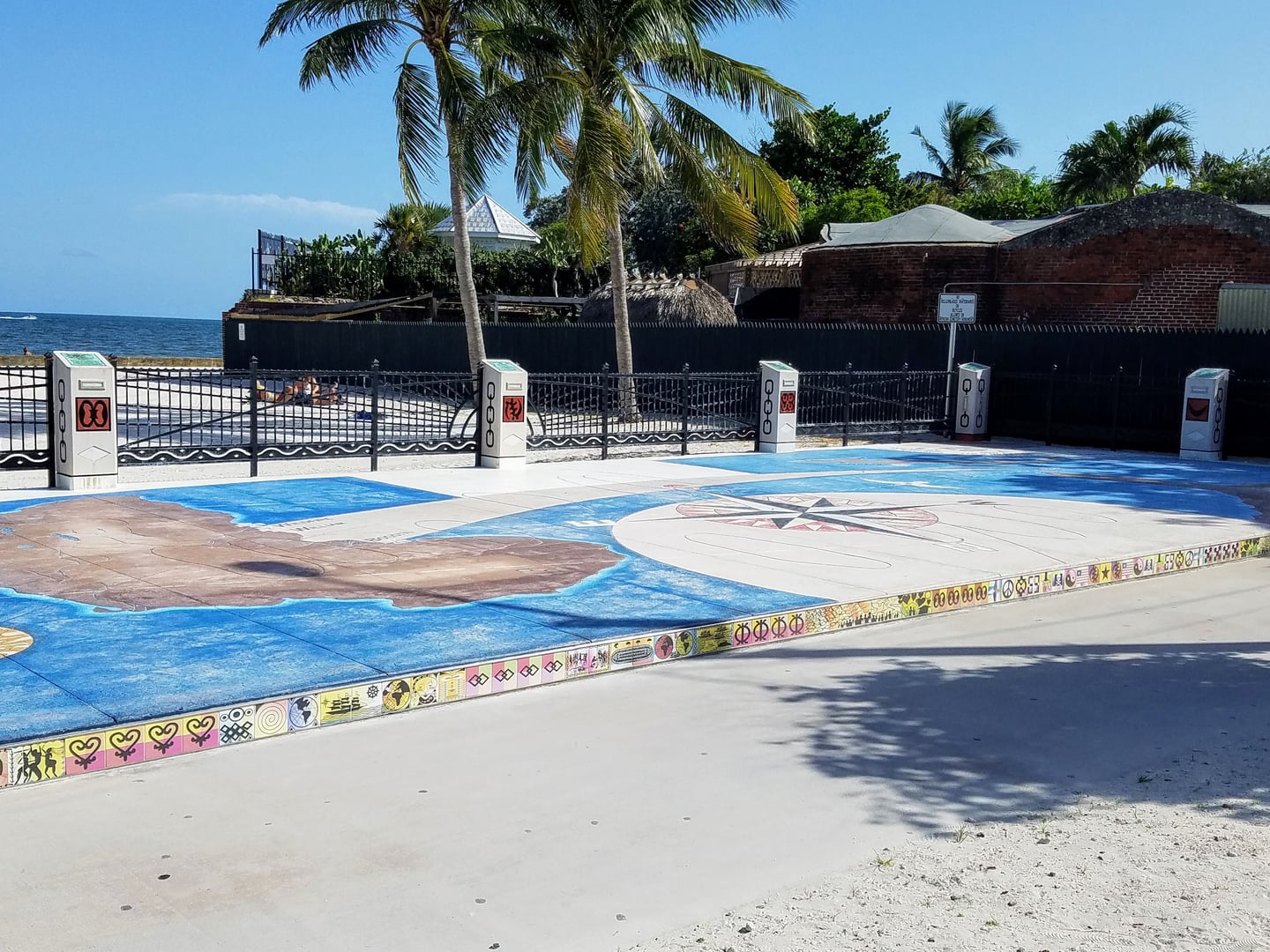
The African Cemetery memorial marker at Higgs Beach in Key West, Florida, commemorating the 294 Africans who died in quarantine in 1860.
Cemetery / Burial Ground

African Cemetery at Higgs Beach

Key West, FL

In spring 1860, the U.S. Navy intercepted three American-owned slave ships — the Wildfire, William, and Bogota — and brought 1,432 Africans to Key West. During quarantine, 294 died and were buried in a sand ridge near the beach. The cemetery was forgotten for over a century until ground-penetrating radar rediscovered it in 2002. It was listed on the National Register of Historic Places in 2012.

$ All Ages Family: High
Photo of Alex Vega Key West Firehouse Museum
Museum / Historical Site

Alex Vega Key West Firehouse Museum

Key West, FL

Fire Station No. 3 at 1024 Grinnell Street opened in 1907 as one of Florida's oldest firehouses and operated for 91 years before closing in 1998. Its most notorious figure is Joseph 'Bum' Farto — a career firefighter who rose to fire chief in 1964, was convicted of selling cocaine and marijuana to an undercover officer in February 1976, and disappeared days later while out on bail.

$ All Ages Family: High
Haunted Hotel / Inn

Artist House (former Otto Family Home)

Key West, FL

The house at 534 Eaton Street was built between 1890 and 1898 by Thomas Otto as a Queen Anne-style residence. His son Robert Eugene Otto — a painter who studied in New York and Paris — inherited the home and lived there with his wife Anne from 1930 until his death in 1974. The doll known as Robert lived in the home with Gene Otto throughout this period, occupying the turret room in its later years. Following the deaths of Gene and Anne Otto, the property was converted into a guest house in 1978.

$$$ All Ages Family: Moderate
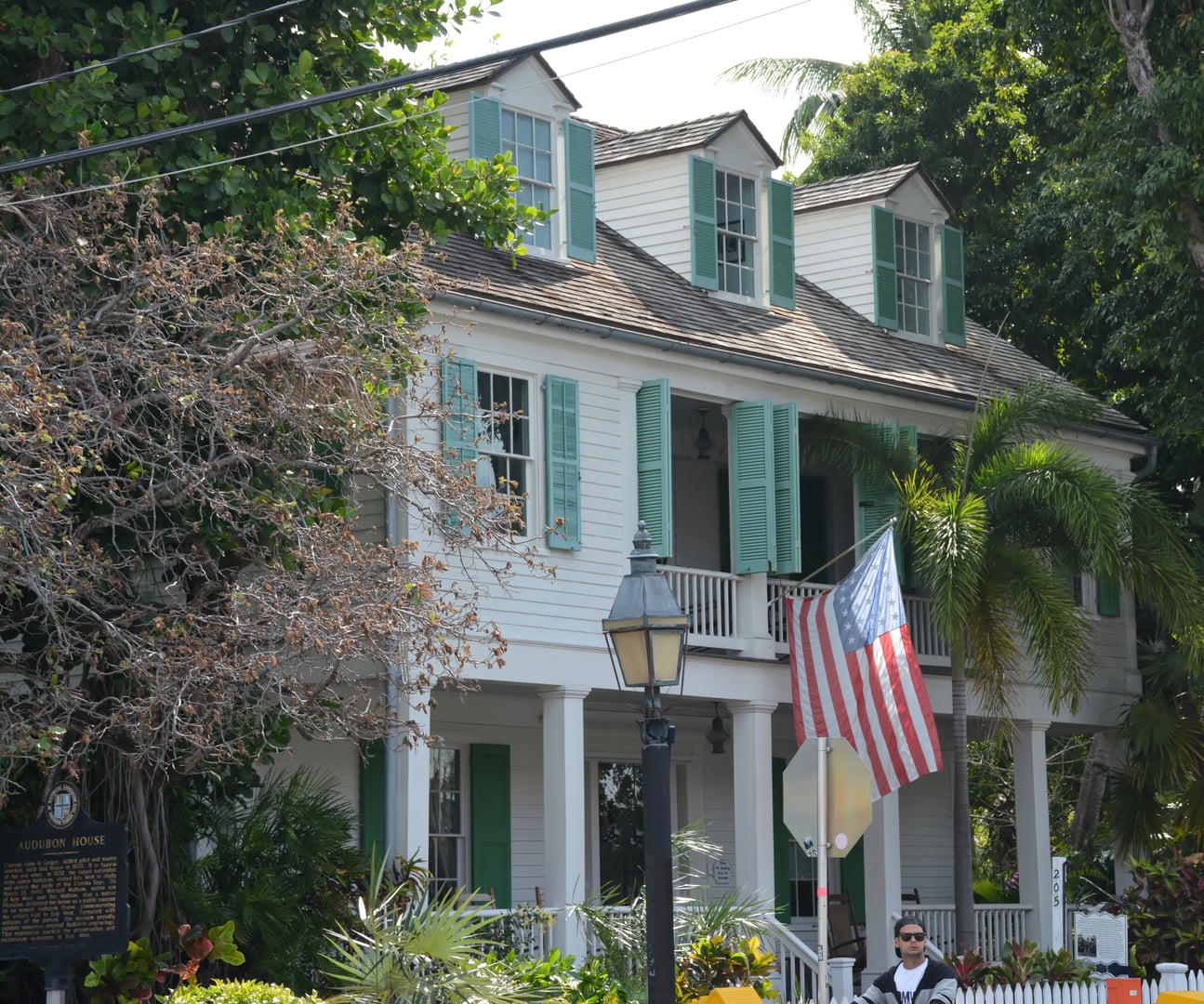
Photo of Audubon House and Tropical Gardens
Museum / Historical Site

Audubon House and Tropical Gardens

Key West, FL

Captain John Huling Geiger, Key West's first harbor pilot and a master wrecker, began building this American Classic Revival home in 1846 following the hurricane that devastated the island. He and his wife Lucretia, a Bahamian woman he married in 1829, raised twelve children here. Several children died of yellow fever in the house, and one reportedly died from a fall on the property. The last Geiger descendant, William Bradford Smith, died in 1956 after living as a recluse without plumbing or electricity. The house was slated for demolition in 1958 until Mitchell Wolfson intervened, sparking Key West's historic preservation movement.

$$ All Ages Family: High
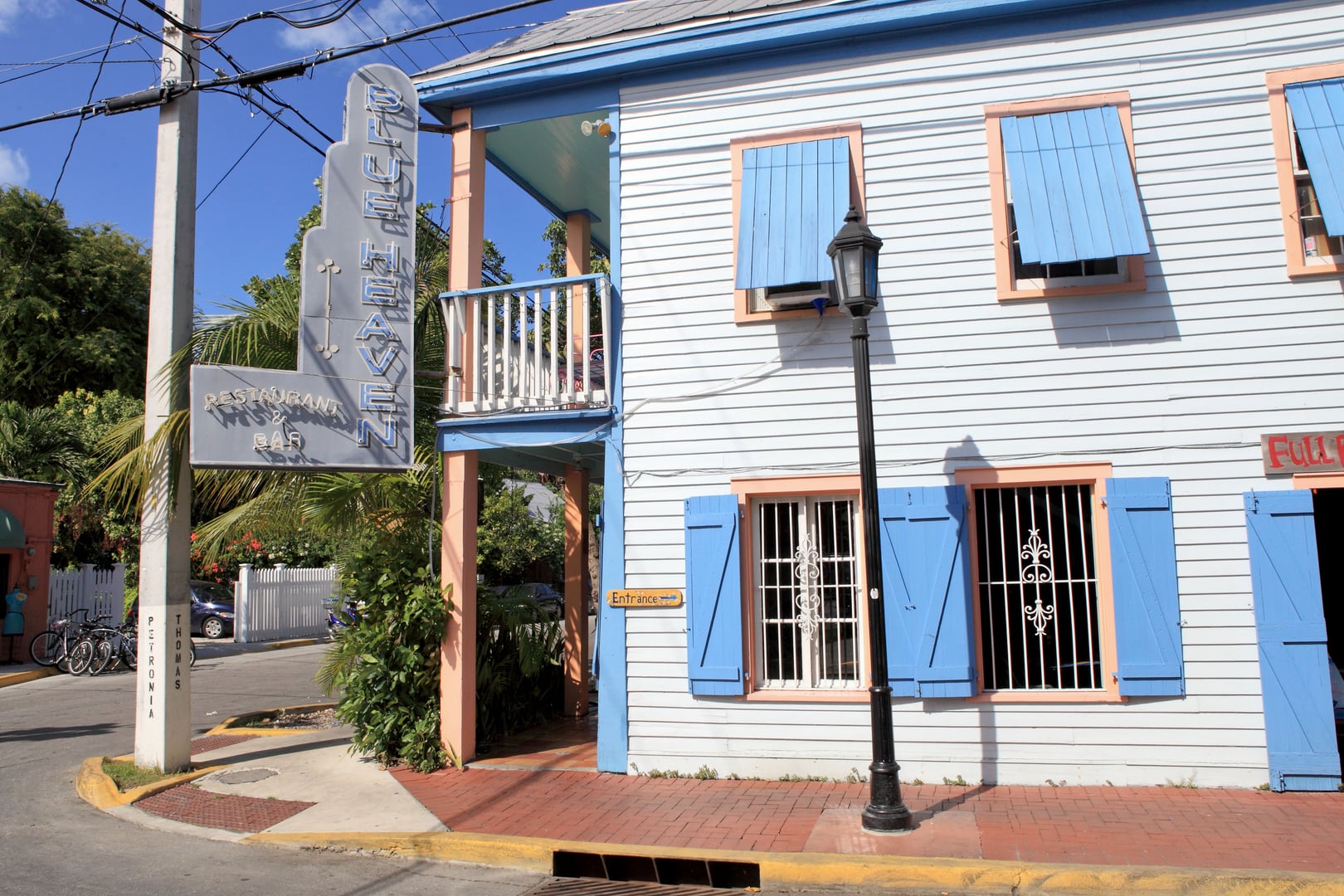
Exterior of Blue Heaven Restaurant at the corner of Thomas Street and Petronia Street in Key West, Florida.
Haunted Dining / Bar

Blue Heaven Restaurant

Key West, FL

The Blue Heaven building at 729 Thomas St in Key West is a Dade County Pine structure in Bahama Village that operated as a cockfighting arena, billiards hall, gambling den, and bordello across several decades of the late 19th and early 20th centuries. In the 1930s, Ernest Hemingway organized and sometimes refereed Friday-night boxing matches in the back yard. The structure opened as a restaurant in the 1990s and retains physical relics of its earlier uses, including peepholes in the upstairs rooms.

$$ All Ages Family: High
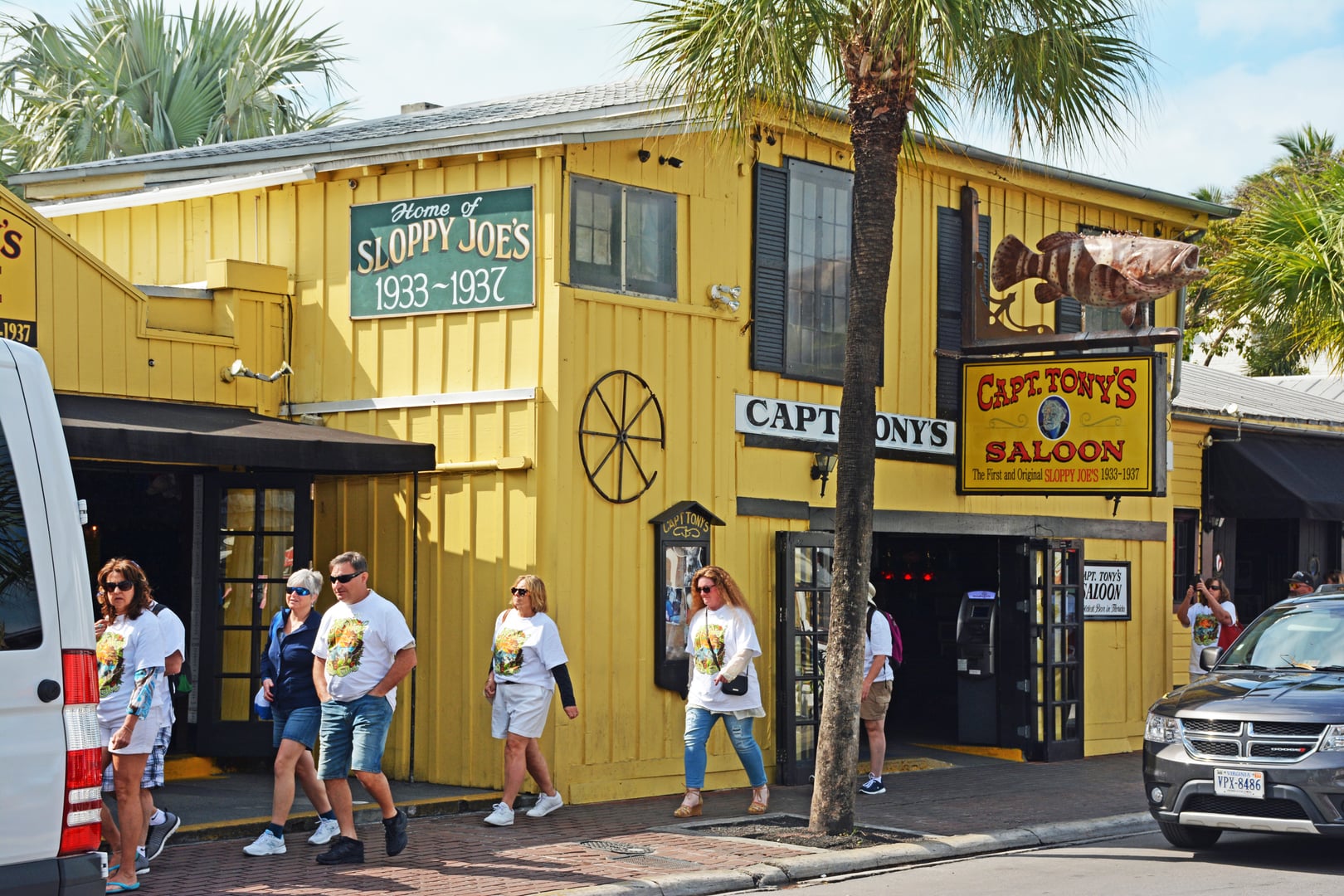
Weathered facade of Captain Tony's Saloon at 428 Greene Street in Key West, Florida — the original Sloppy Joe's Bar location where Hemingway drank in the 1930s.
Haunted Dining / Bar

Captain Tony's Saloon

Key West, FL

Captain Tony's Saloon at 428 Greene Street in Key West, Florida, occupies an 1851 building that has served as an ice house, the city morgue, a wireless telegraph station, and the original Sloppy Joe's Bar — where Ernest Hemingway drank between 1933 and 1937. The original hanging tree, where reportedly 75 executions took place in the colonial-era yard, still grows through the center of the barroom.

$$ 21+ Family: Not Recommended
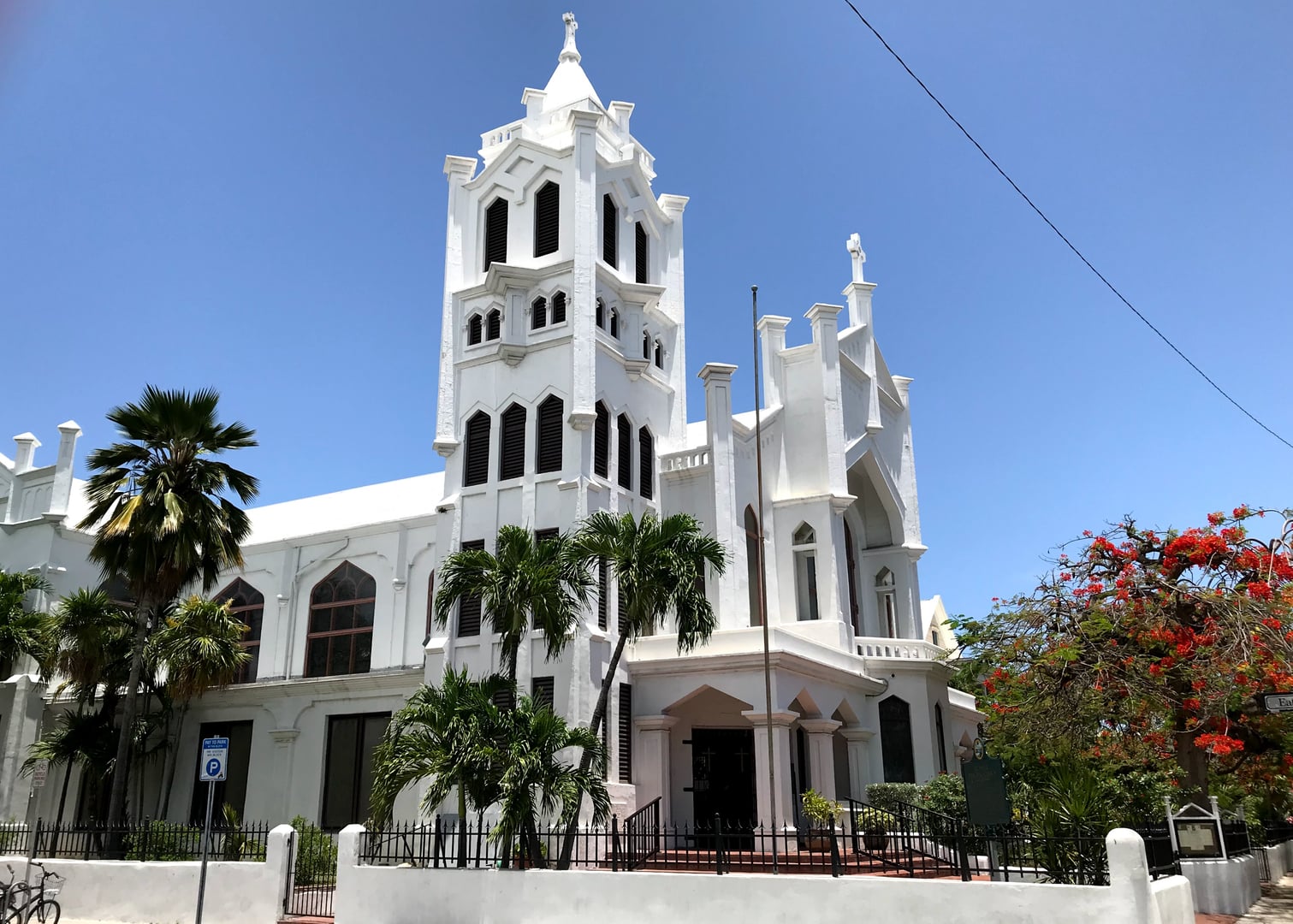
Coral-stone facade of St. Paul's Episcopal Church on Duval Street in Key West, Florida
Cemetery / Burial Ground

St. Paul's Episcopal Church Memorial Garden

Key West, FL

St. Paul's Episcopal Church was founded in 1831 by act of the Key West City Council, with John Fleming's widow donating the land in 1832 on the condition that the property remain her late husband's resting place. The current 1919 building is the fourth structure on the site, with earlier churches destroyed by hurricane (1846), fire (1886), and demolition.

$ All Ages Family: High
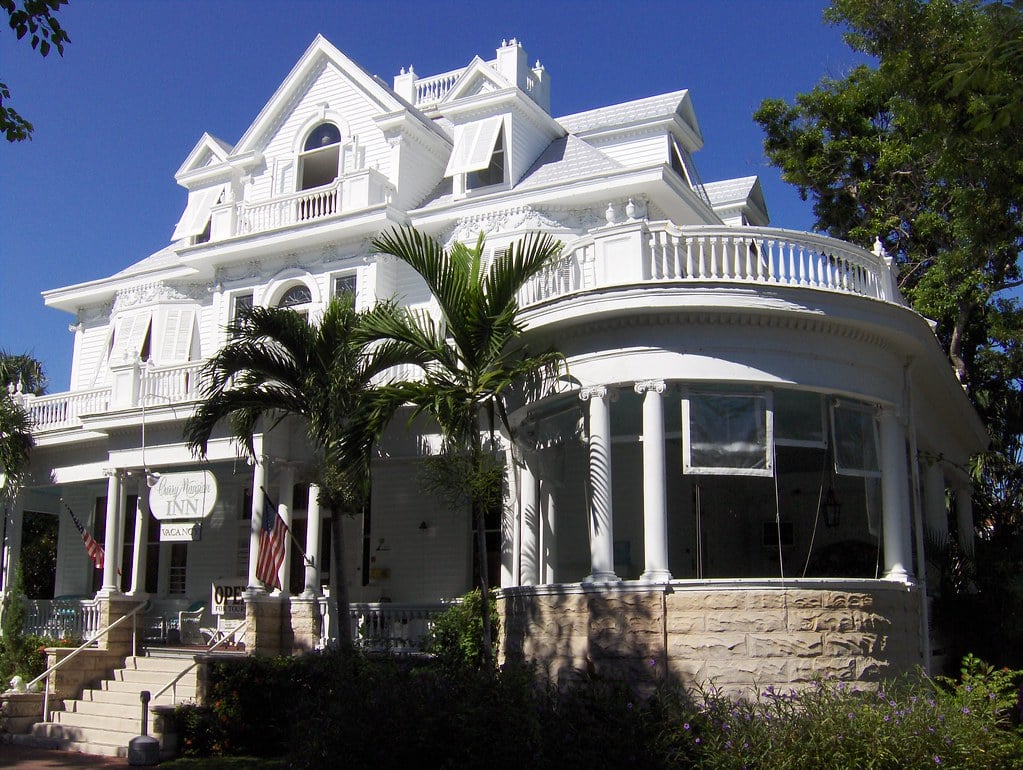
Photo of Curry Mansion Inn
Haunted Hotel / Inn

Curry Mansion Inn

Key West, FL

William Curry arrived in Key West from the Bahamas and built his fortune through the salvage trade, working wrecks off the Florida reef and reportedly purchasing salvaged goods at distressed prices. His son Milton demolished the original 1869 house in 1901 to build the Georgian Revival mansion that stands today. It has operated as a bed and breakfast since 1988.

$$$ All Ages Family: Moderate
True Crime Site

Dean-Lopez Funeral Home

Key West, FL

Dean-Lopez Funeral Home has operated at 418 Simonton Street since 1869, making it one of Key West's oldest continuously operating businesses. Its national historical significance comes from the autumn of 1940, when the body of Elena Milagro de Hoyos was briefly displayed in its chapel. Elena had died of tuberculosis in 1931; her admirer Carl Tanzler — a radiology technologist at the Marine Hospital — had removed her body from its mausoleum in April 1933 and kept her remains in his home for more than seven years before her family discovered the situation in October 1940.

$ All Ages Family: Moderate
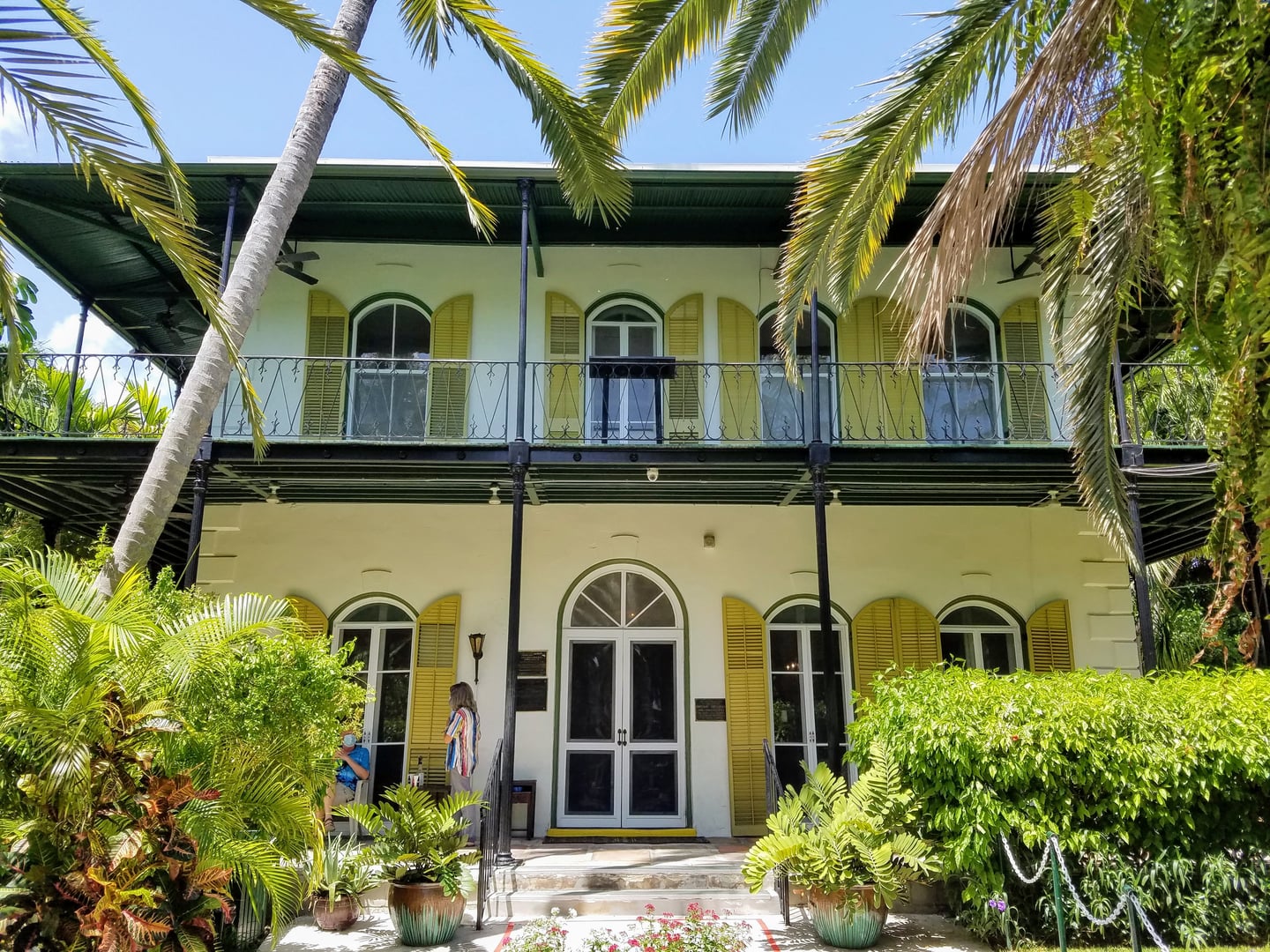
Photo of Ernest Hemingway Home and Museum
Haunted House / Historic Home

Ernest Hemingway Home and Museum

Key West, FL

Asa Tift, a salvager, built this Spanish Colonial villa in 1851. Pauline Pfeiffer Hemingway, Ernest's second wife, used an inheritance from her uncle Gus to purchase the property in 1931. Ernest Hemingway lived here from 1931 to 1940, writing seven books including A Farewell to Arms and For Whom the Bell Tolls. After Hemingway left for Cuba with his third wife, Pauline remained in the house. She died on October 1, 1951, of a brain aneurysm — the acute onset triggered by extreme distress during a phone call with her son's father following the son's drug arrest.

$$ All Ages Family: High
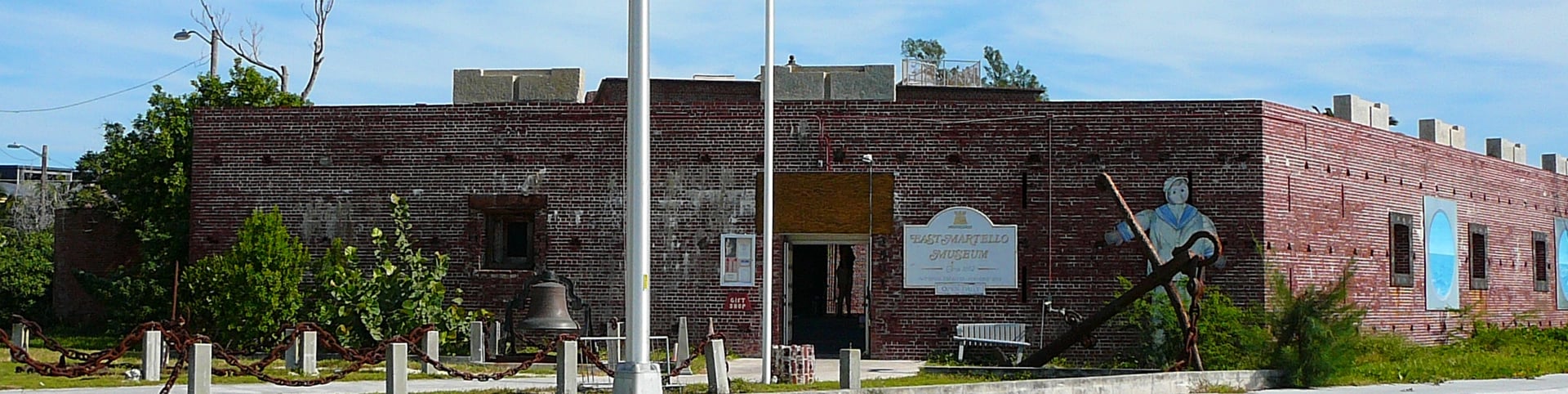
Brick exterior of the Fort East Martello Tower museum in Key West, Florida, home of Robert the Doll
Museum / Historical Site

Fort East Martello Museum (Robert the Doll)

Key West, FL

Fort East Martello is one of two Martello towers built in Key West starting in 1862 to defend the Union-held island against potential Confederate sea attack. Construction continued into the post-Civil War years but was never fully completed. The Key West Art and Historical Society acquired the fort and converted it to a museum, now best known for housing Robert the Doll.

$$ All Ages Family: Moderate
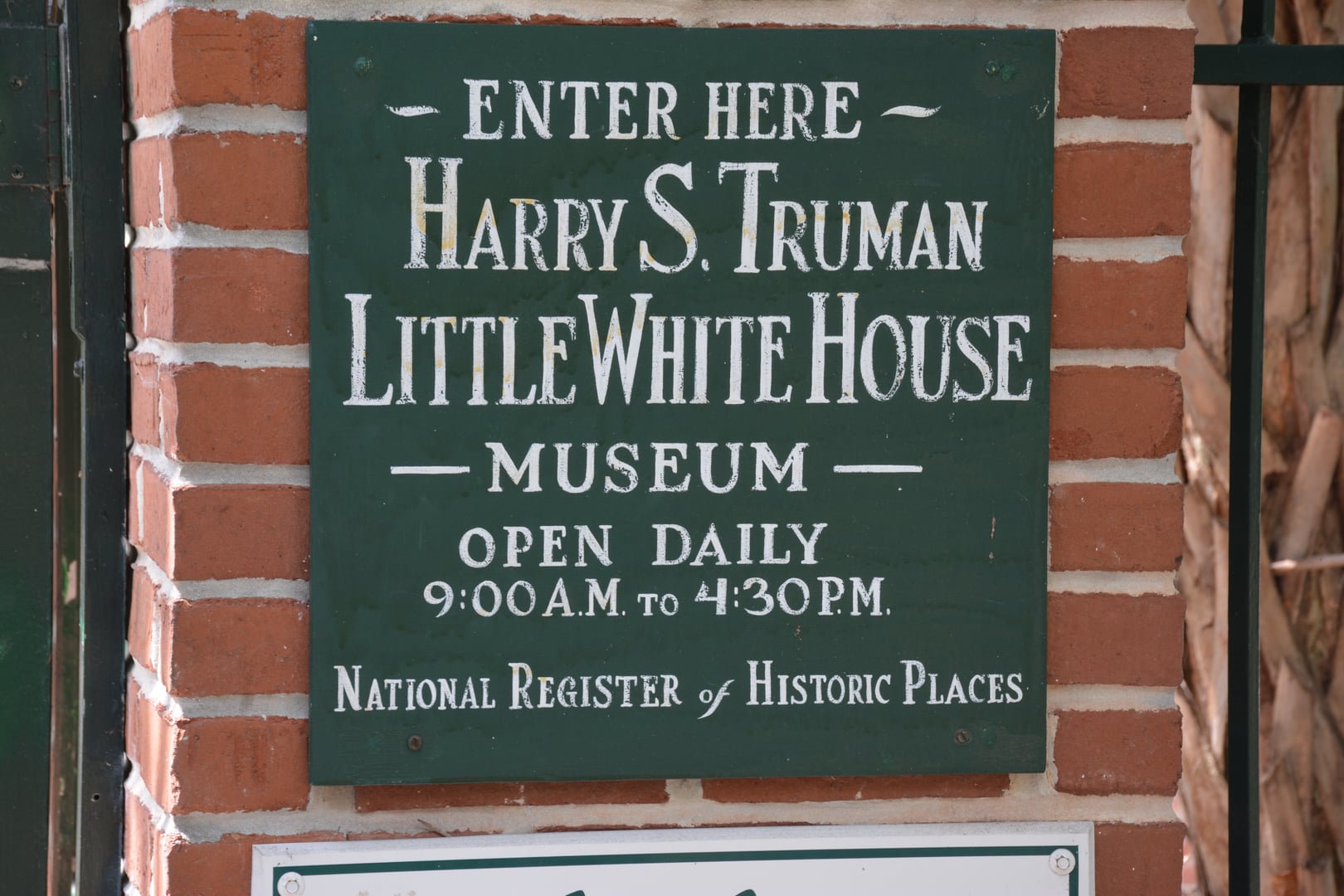
Exterior view of the Harry S. Truman Little White House at 111 Front Street in Key West, Florida — the 1890 naval officers' quarters that served as Truman's winter White House across 11 visits.
Museum / Historical Site

Harry S. Truman Little White House

Key West, FL

Constructed in 1890 by architects Scott, McDermott & Higgs as the first officer's quarters at the U.S. Naval Station in Key West, the building was built on the waterfront before land was filled in front of it in 1911. President Truman arrived in November 1946 on doctor's orders for rest and made 11 return visits through 1953, spending 175 days of his presidency there. The Key West Agreement of March 1948 — which established foundational Department of Defense organization — was negotiated here. The Naval Station closed in 1974 and the house became a state historic site in 1987.

$$ All Ages Family: High
Roofed above-ground graves at the Key West Cemetery, established 1847, in the Key West Historic District, Florida
Cemetery / Burial Ground

Key West Cemetery

Key West, FL

Key West Cemetery was established in 1847 after an 1846 hurricane disinterred the previous cemetery on Whitehead Point. The new burial ground was sited on the highest point of the island. The cemetery contains an estimated 100,000 burials across nineteen acres, including approximately two dozen sailors killed in the 1898 USS Maine explosion.

$ All Ages Family: High
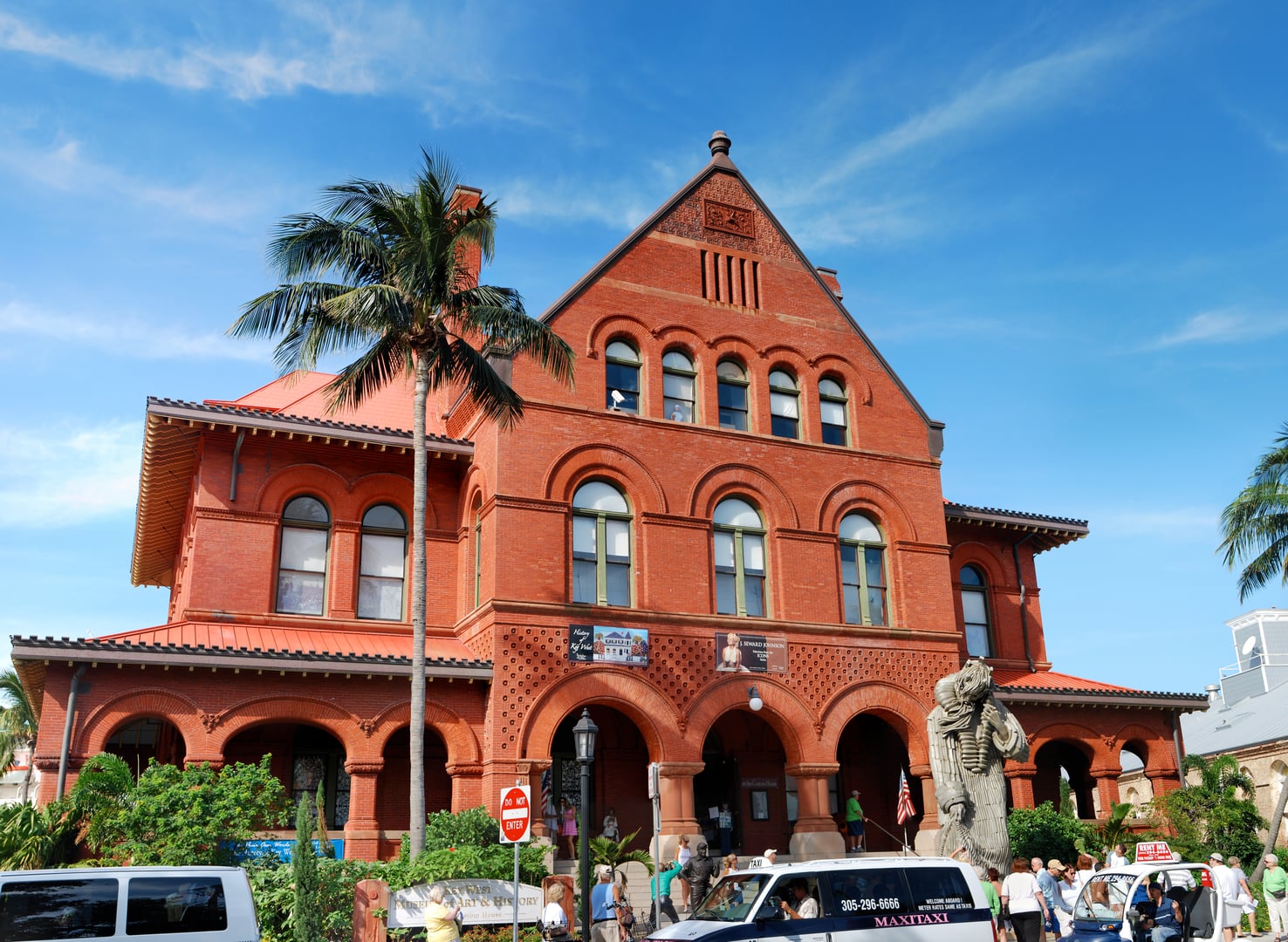
Photo of Key West Custom House (Museum of Art and History)
Museum / Historical Site

Key West Custom House (Museum of Art and History)

Key West, FL

The Custom House was completed in 1891 to consolidate Key West's federal functions — customs operations, the post office, and the U.S. District Court for the Southern District of Florida. Designed by Supervising Architect William Freret in the Richardsonian Romanesque style, the building processed hearings connected to the USS Maine disaster of 1898. The Navy occupied it from the 1930s through the 1970s, after which it sat vacant and deteriorating for nearly two decades. The Key West Art & Historical Society acquired the building and undertook a nine-year, $9 million restoration, reopening it as a museum in 1999.

$$ All Ages Family: High
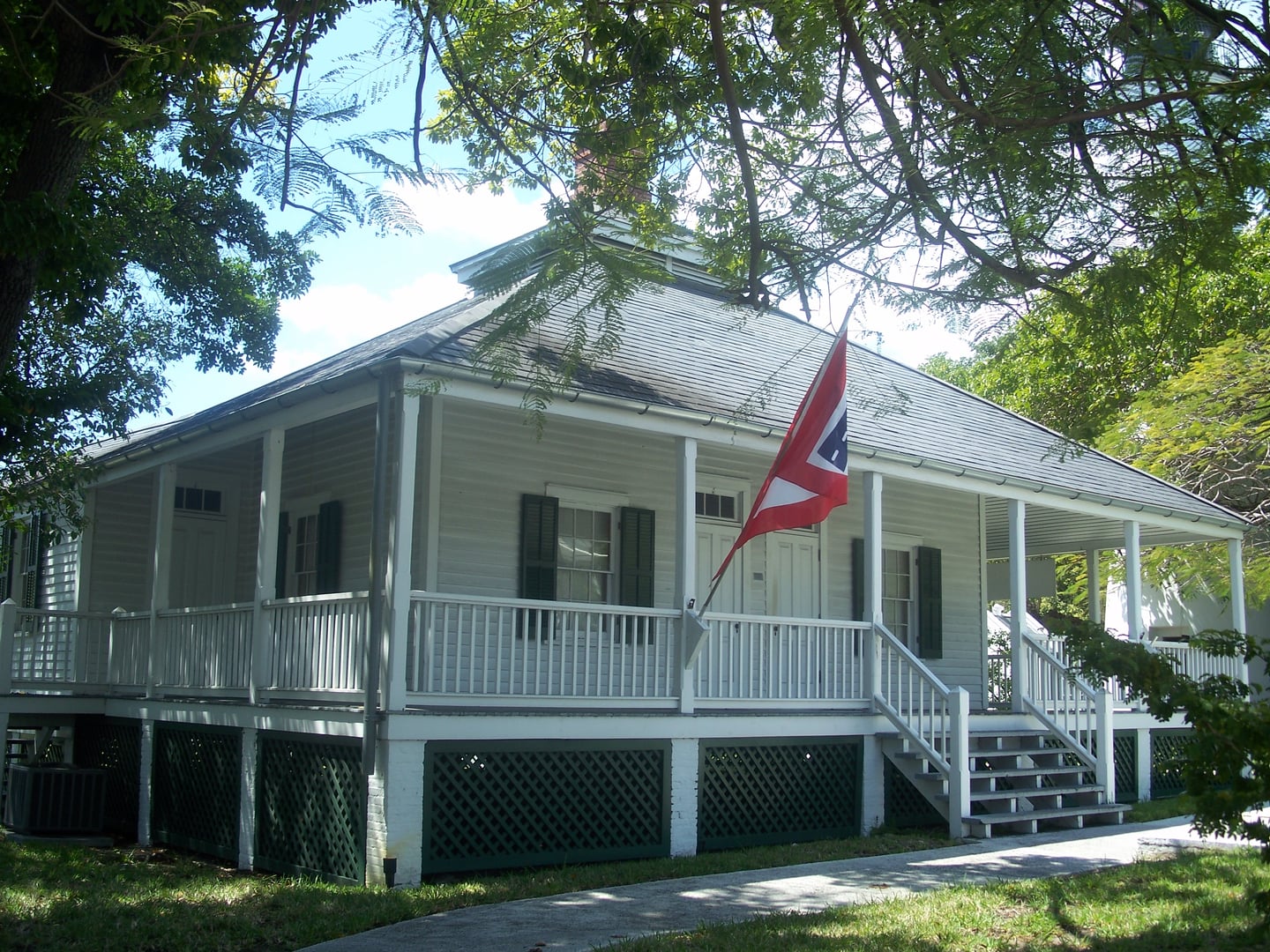
Photo of Key West Lighthouse and Keeper's Quarters Museum
Museum / Historical Site

Key West Lighthouse and Keeper's Quarters Museum

Key West, FL

The current Key West Lighthouse, opened in 1848, was built to replace the original tower destroyed in the Great Havana Hurricane of October 1846. That storm killed dozens of Key West residents and claimed eight people who sought refuge in or near the original lighthouse. The site's subsequent history includes an unusual run of keeper deaths: in 1889, keeper John Carroll died of typhoid in the quarters; his wife Mary Armanda Fletcher assumed the post and died of the same illness three months later.

$$ All Ages Family: High
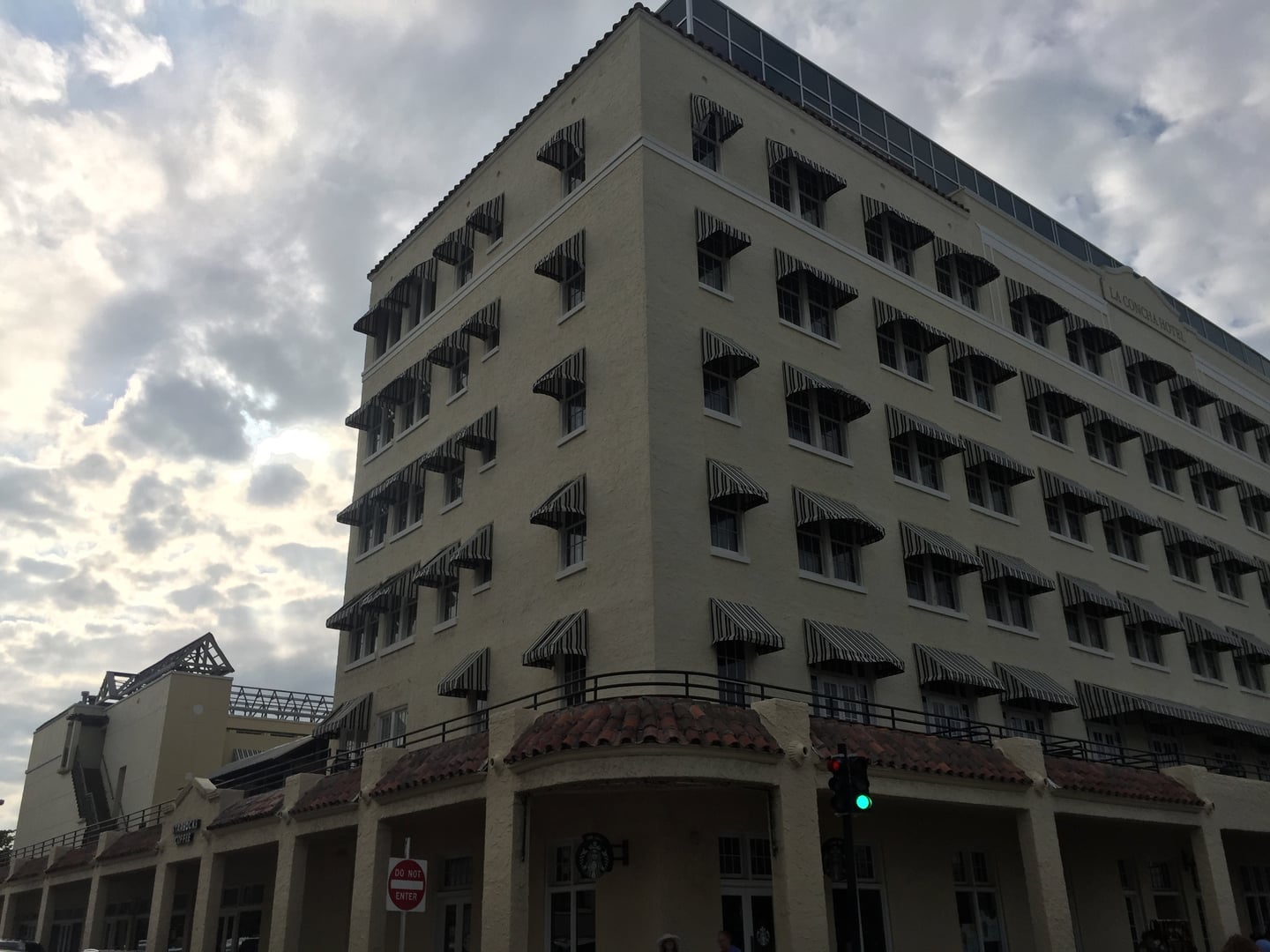
Photo of La Concha Hotel
Haunted Hotel / Inn

La Concha Hotel

Key West, FL

La Concha opened in 1926 as Key West's tallest building. Over 95 years, more than a dozen people died by jumping from its roof. In the 1980s, a busboy fell to his death through an open elevator shaft on the fifth floor during a New Year's Eve cleanup. The hotel hosted Ernest Hemingway, Tennessee Williams (who finished A Streetcar Named Desire there), and Harry Truman. After a $35 million renovation, it reopened in 2024 as La Concha Key West, Autograph Collection.

$$$$ All Ages Family: Moderate
Haunted Hotel / Inn

Marrero's Guest Mansion

Key West, FL

Francisco Marrero, a cigar maker who built his business through connections to Key West's Cuban tobacco trade, constructed this Victorian mansion in 1890 for Enriquetta, with whom he had eight children. When Marrero died during a trip to Cuba, his first wife — still legally married to him there — claimed all assets. Enriquetta and her children were evicted with no legal recourse.

$$$ 21+ Family: Not Recommended
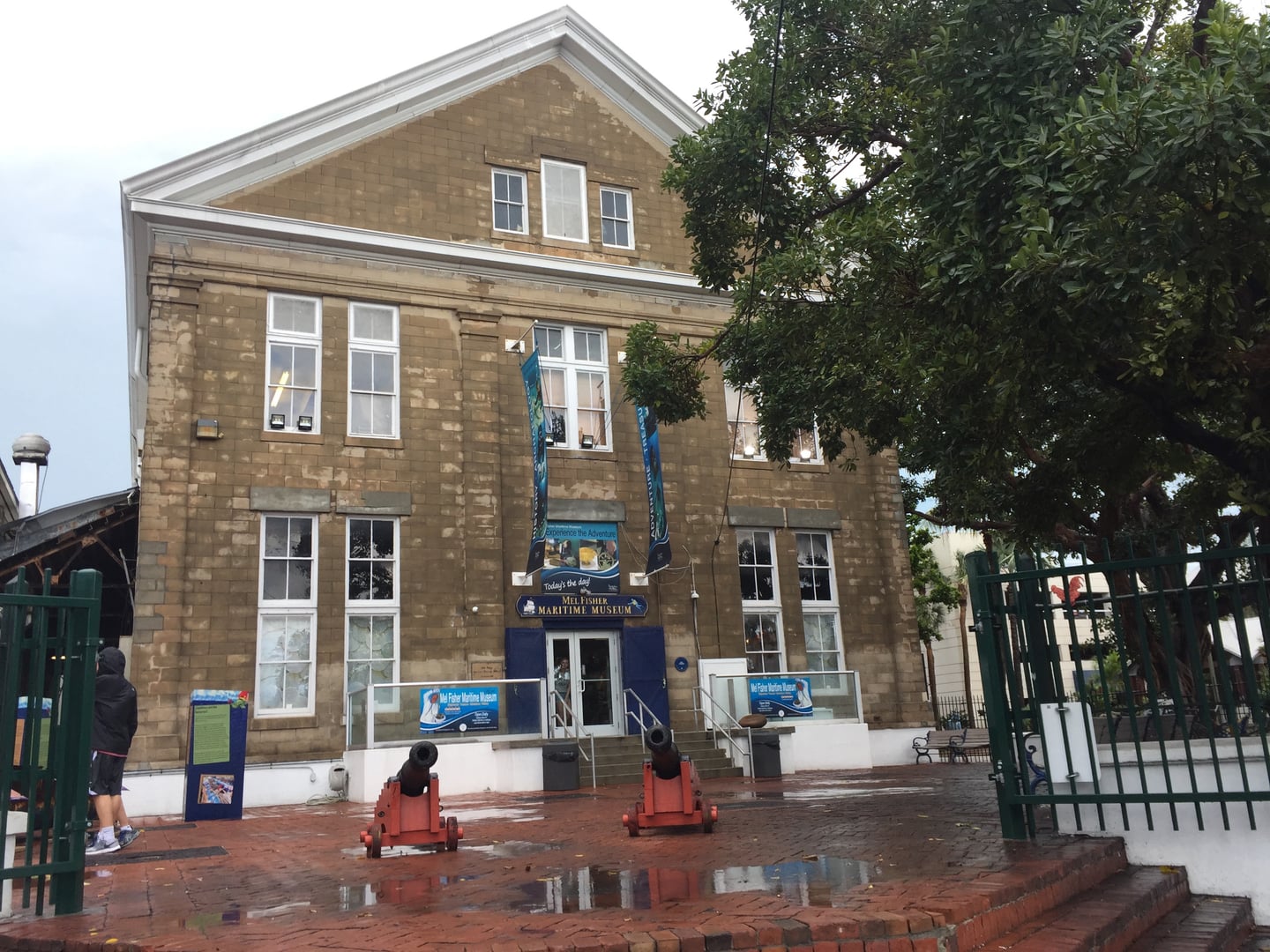
Exterior of the Mel Fisher Maritime Heritage Museum at 200 Greene Street in Key West, Florida — the only fully accredited museum in the Florida Keys, housing the world's largest collection of artifacts from a slave ship.
Museum / Historical Site

Mel Fisher Maritime Heritage Museum

Key West, FL

The Mel Fisher Maritime Heritage Museum holds the world's largest collection of artifacts from a slave ship: the Henrietta Marie, an English vessel that transported 191 captive Africans from the Guinea Coast to Jamaica in 1700 before wrecking on New Ground Reef near the Marquesas Keys. The wreck was located in 1972 by a magnetometer survey by treasure salvor Mel Fisher's team and identified through a bronze ship's bell inscribed 'The Henrietta Marie 1699.' Excavation between 1983 and 1985 recovered over 7,000 artifacts including more than 80 iron shackles. The museum — the only fully accredited institution in the Florida Keys — opened the 'Spirits of the Passage' exhibit in November 2024.

$$ All Ages Family: Moderate
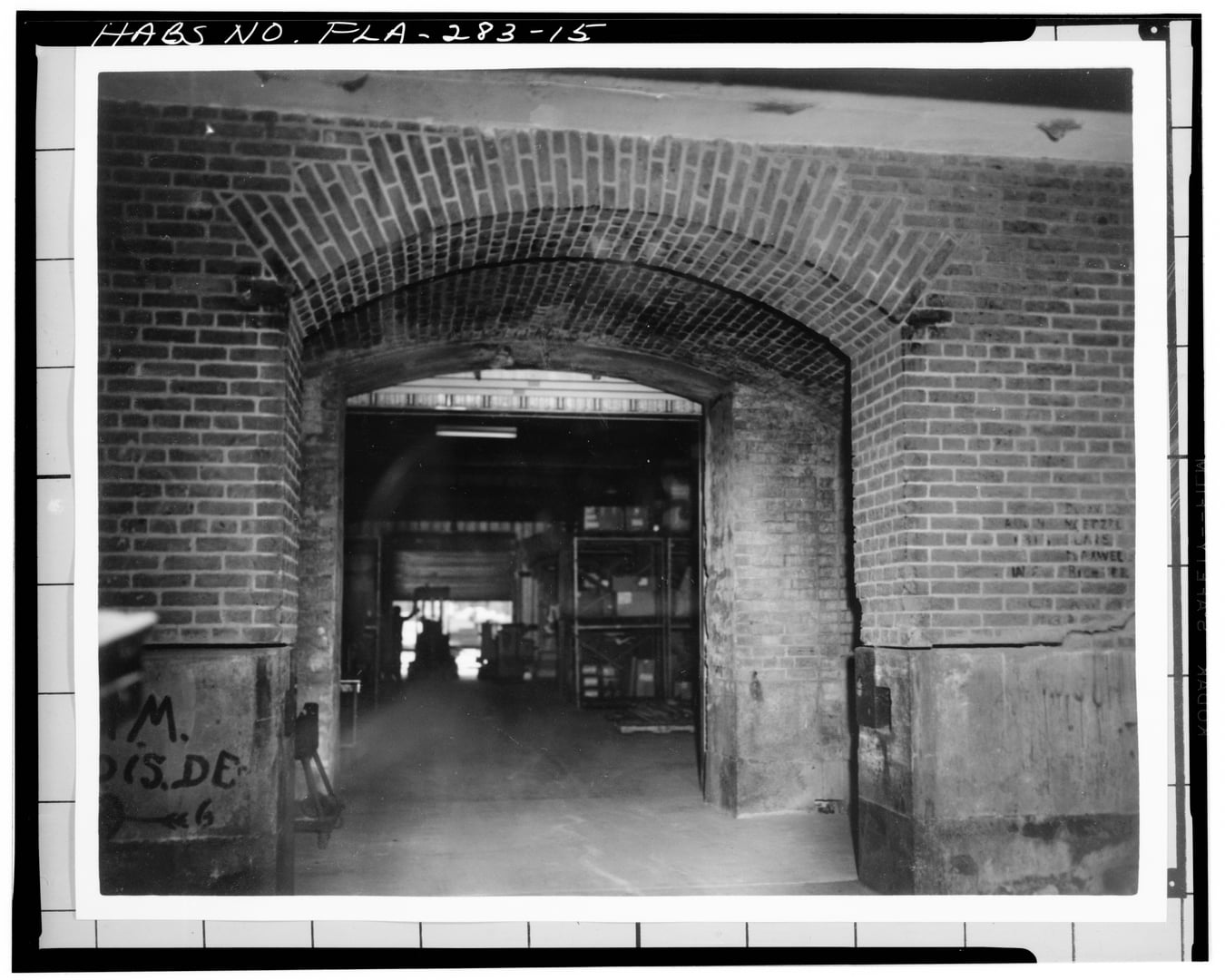
Historic 1968 photograph of the sally fort main entrance on the north elevation of Fort Zachary Taylor in Key West, documented by the Historic American Buildings Survey
Museum / Historical Site

Fort Zachary Taylor Historic State Park

Key West, FL

Fort Zachary Taylor in Key West, Florida began construction in 1845 as part of a post-War of 1812 coastal defense network. Yellow fever epidemics repeatedly slowed construction through the 1850s, killing significant numbers of the garrison. Designated a National Historic Landmark in 1973, the fort now holds the largest documented cache of Civil War armaments in the United States.

$ All Ages Family: High
Haunted Hotel / Inn

Ocean Key Resort and Spa

Key West, FL

The site at Zero Duval Street has been a working waterfront since the late 1830s, when a pier was constructed to take advantage of the deep water and calm eddy outside Key West Harbor's main tidal corridor. The pier served the Navy during the Civil War, later handled coal for steam vessels, and was a loading point for troops and horses during the Spanish-American War. It also processed the turtle and shark trades and served as a departure point for the cigar industry. Ocean Key Resort was built on the site in 1981, underwent a complete rebuild in 2018 following Hurricane Irma, and is now managed by Noble House Resorts.

$$$$ All Ages Family: High
Haunted Hotel / Inn

Old Town Manor (Eaton Lodge)

Key West, FL

Samuel Otis Johnson built the structure in 1886 as a grocery and butcher shop with an adjacent outbuilding. Dr. William Richard Warren, trained at the University of Pennsylvania, purchased the property in 1913 and converted it into a medical practice and residence. His wife Genevieve Allen Warren cultivated the gardens that define the property today. The building was extensively remodeled in 1937 by architect Jack Long and is listed in the Key West Historic District on the National Register of Historic Places.

$$$ All Ages Family: Moderate
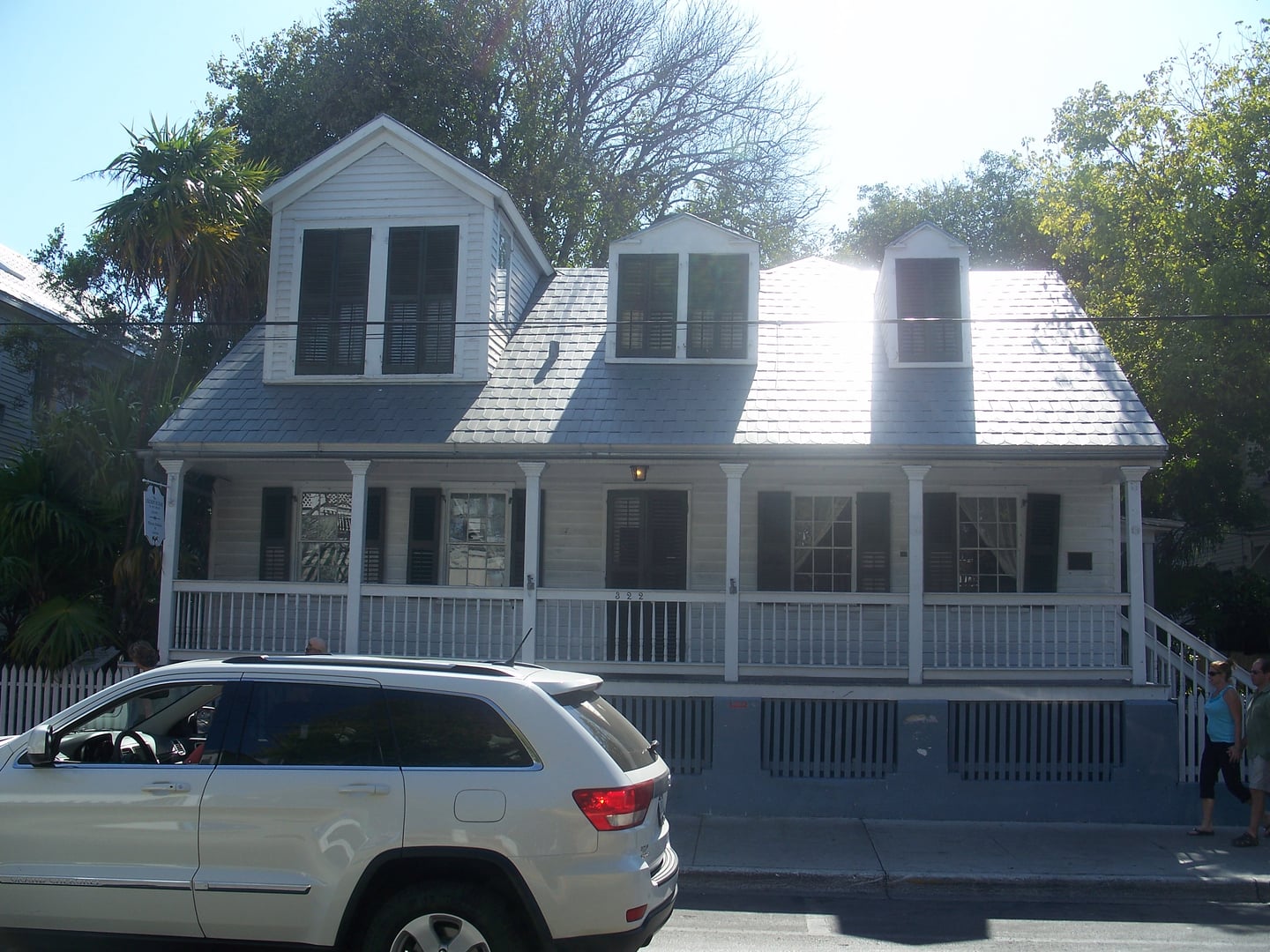
Exterior view of the Oldest House Museum at 322 Duval Street in Key West, Florida — the oldest surviving house in South Florida, built around 1829 by ship carpenter Richard Cussans.
Museum / Historical Site

Oldest House Museum (Captain Watlington House)

Key West, FL

The house at 322 Duval Street was built around 1829 by ship carpenter Richard Cussans, who incorporated maritime joinery techniques into the structure. It was originally sited on Whitehead Street and relocated to its current Duval Street location around 1835. Captain Francis Watlington, a wrecker, acquired the property and expanded it to house his wife Emeline and their nine daughters. Three of the daughters died in the house of yellow fever. The Watlington family held the property until the early 1970s, when it was restored and transferred to the Old Island Restoration Foundation.

$ All Ages Family: High

Pensacola — 17

Exterior view of the Barkley House, the oldest masonry building in Pensacola, Florida, built 1825–1830
Museum / Historical Site

Barkley House

Pensacola, FL

George W. Barkley, a customs inspector and merchant who arrived in Pensacola in 1820, built the house at 410 S Florida Blanca Street between 1825 and 1830, using bricks salvaged from British fortifications. The result is the oldest surviving masonry building in Pensacola — a high-house form unique to the region — and an archaeological site that has yielded evidence of colonial households and the lives of enslaved people on the grounds.

$ All Ages Family: High
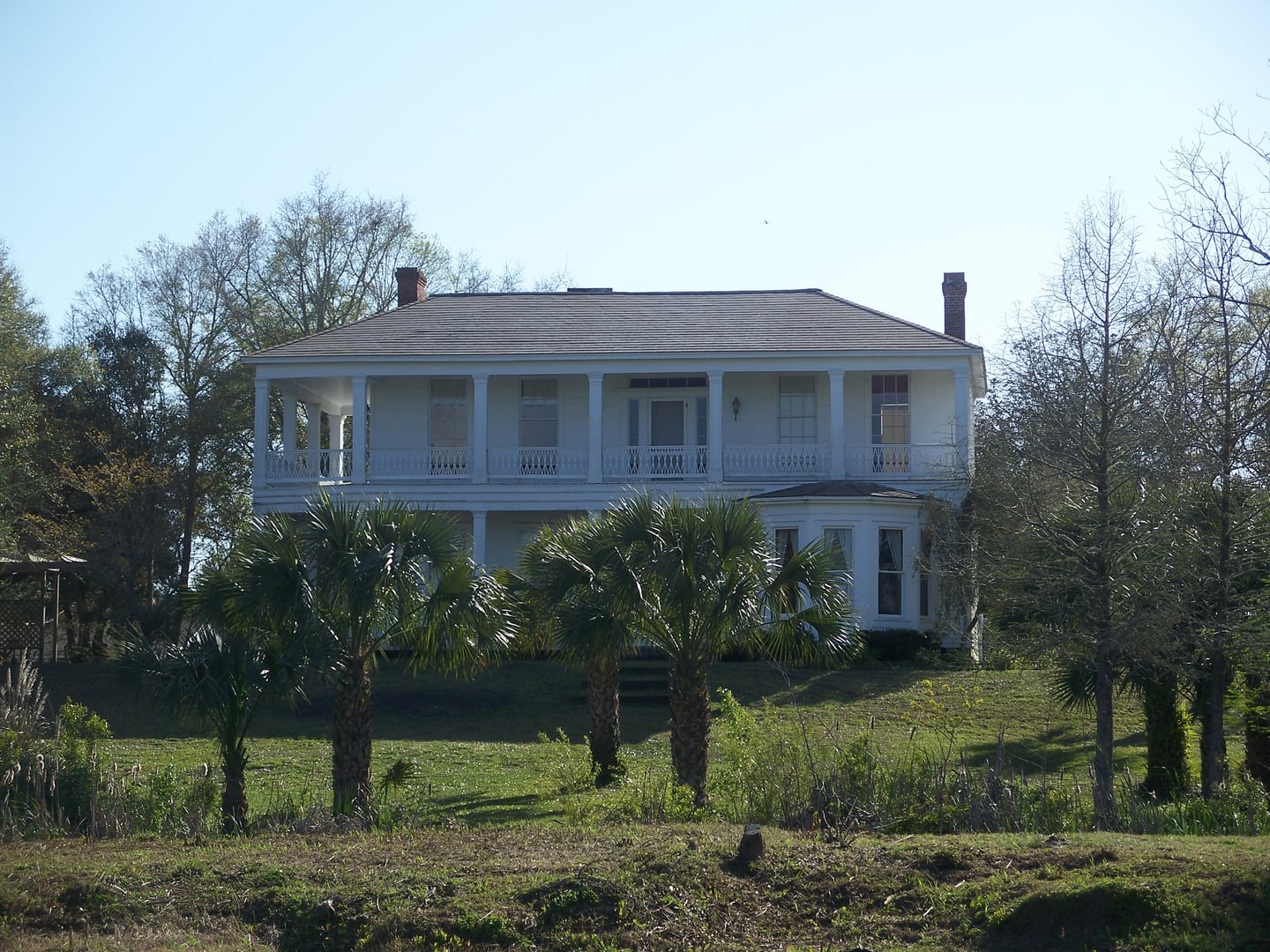
The 1871 Clara Barkley Dorr House at 311 South Adams Street in Historic Pensacola Village, Florida
Museum / Historical Site

Clara Barkley Dorr House

Pensacola, FL

The Clara Barkley Dorr House at 311 South Adams Street was built in 1871 for Clara Barkley Dorr and her five children following the 1870 death of her husband Eben Walker Dorr, a Bagdad, Florida lumber executive. The house is part of Historic Pensacola Village and was added to the National Register of Historic Places in 1974.

$$ All Ages Family: High
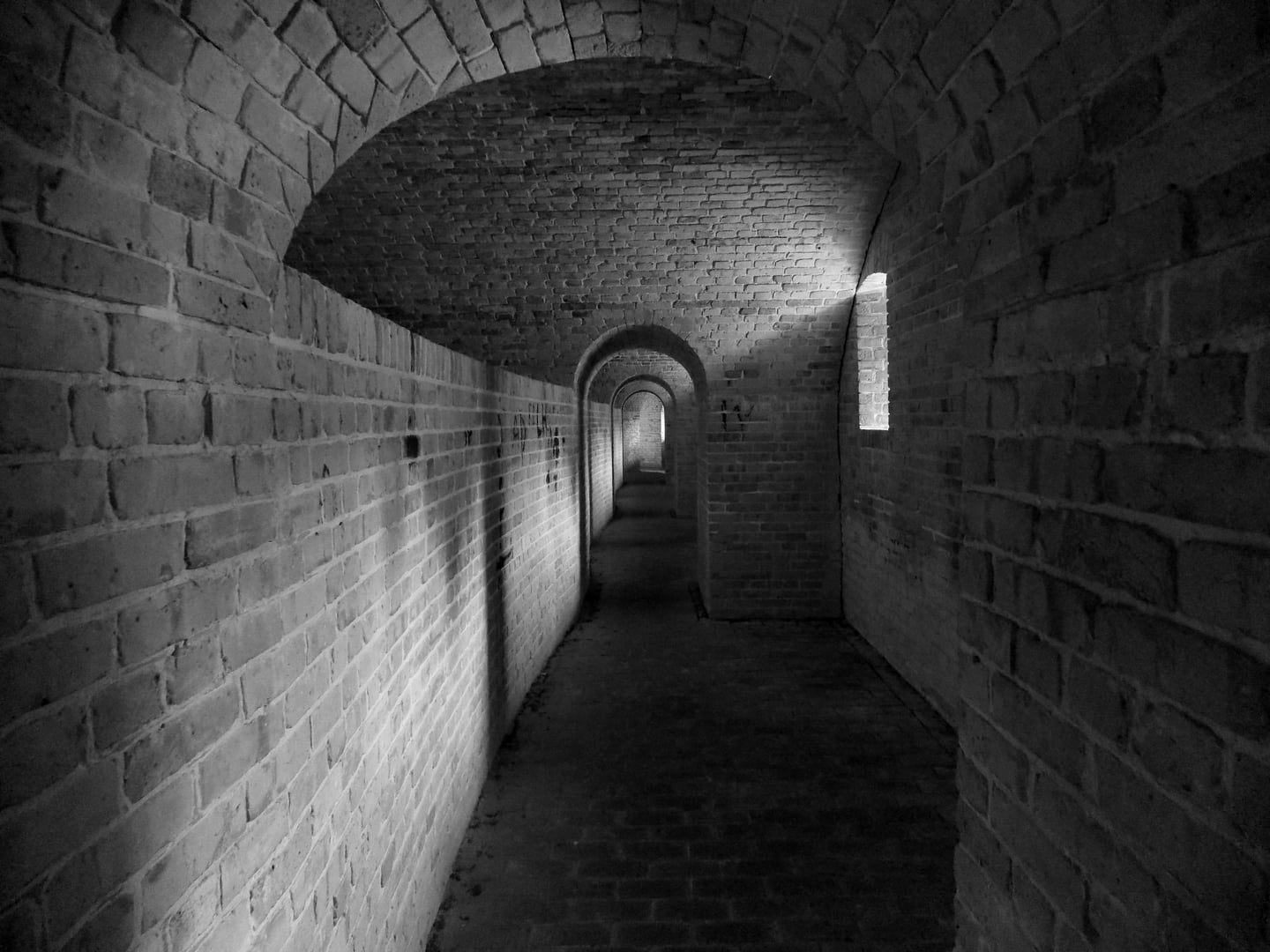
Interior brick corridor of Fort Barrancas, Pensacola, Florida
Battlefield / Military Site

Fort Barrancas

Pensacola, FL

Fort Barrancas was completed in 1844 by the Army Corps of Engineers on bluffs overlooking the entrance to Pensacola Bay, built atop the ruins of Spanish, French, and British fortifications dating to the late 17th century. Its only sustained combat came during the Civil War, when Confederate forces held it from January 1861 until evacuating Pensacola in May 1862.

$ All Ages Family: High
Haunted House / Historic Home

House on Alcaniz Street

Pensacola, FL

Alcaniz Street is a historic Pensacola street running through the Seville Square Historic District. The district dates to a 1752 outpost named San Miguel, with Seville Square established as a public square by the British in 1764.

$ All Ages (exterior viewing only) Family: High
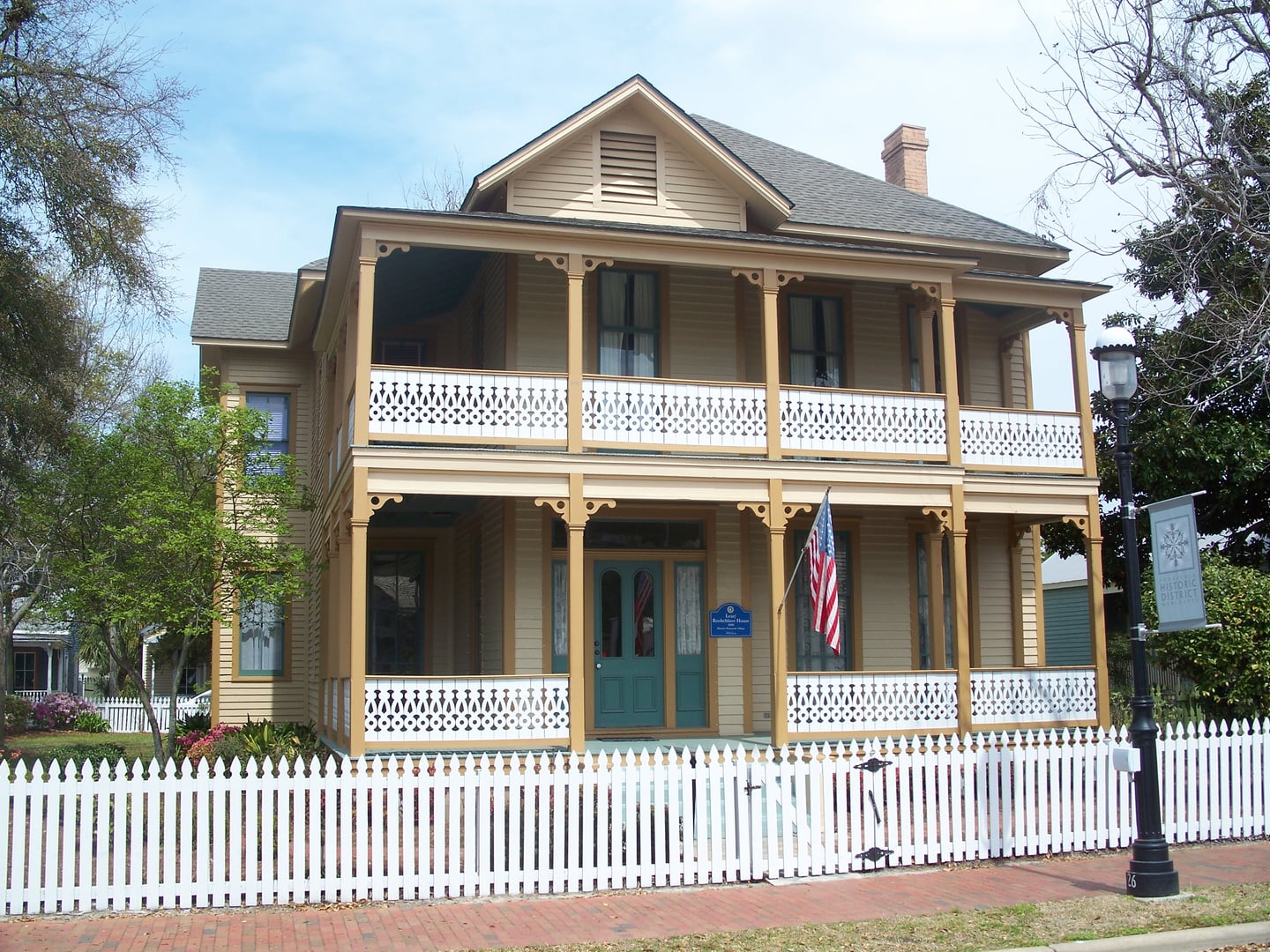
Exterior of the Lear-Rocheblave House on Zaragoza Street in Pensacola's Historic Village, circa-1890 Folk Victorian
Haunted House / Historic Home

Lear-Rocheblave House

Pensacola, FL

Built circa 1890 for John and Kate Lear, who never actually moved in, the house was purchased in 1897 by Captain Benito Rocheblave — a tugboat captain from a family that had been part of West Florida since colonial Spanish times. Rocheblave and his wife and five daughters occupied it through 1910. Since 1996 it has been interpreted as a 1920s boarding house, with 1927 as the selected year.

$ All Ages Family: High
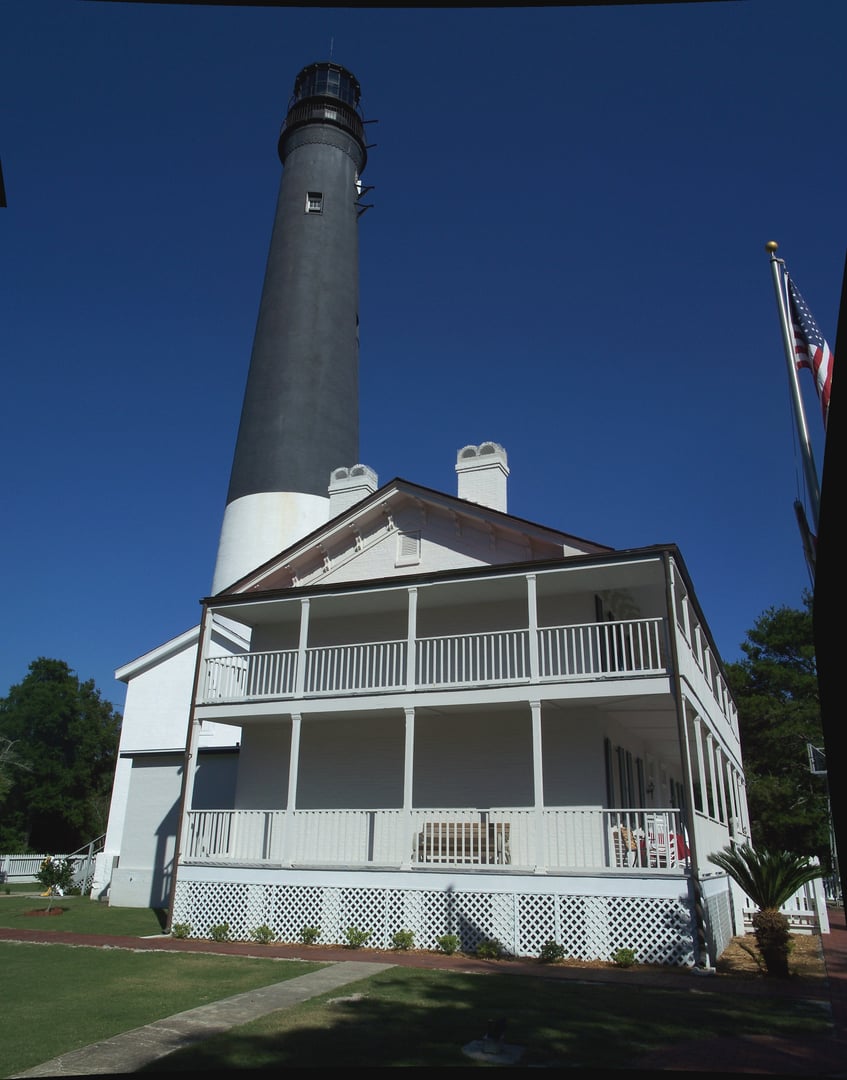
Pensacola Lighthouse tall historic black-and-white striped tower in Pensacola, Florida
Museum / Historical Site

Pensacola Lighthouse and Maritime Museum

Pensacola, FL

The Pensacola Lighthouse at Naval Air Station Pensacola has marked the entrance to Pensacola Bay since 1859. The current tower replaced an earlier lighthouse dating to 1824. The lighthouse's Keeper's Quarters now operates as a maritime museum. Located entirely within an active military installation, civilian visitors must take a shuttle from outside the base perimeter.

$$ All Ages (ghost hunts 13+) Family: Moderate
Aerial survey view of Museum of Shadows
Aerial survey · USDA NAIP
Other Dark Tourism Site

Museum of Shadows

Pensacola, FL

The Museum of Shadows is the creation of Nate Raterman, a demonologist and paranormal investigator with more than two decades of casework. Raterman opened the original location in Omaha, Nebraska, and the Pensacola branch opened in late 2024. The collection contains over 5,000 objects that Raterman and his team deemed genuinely active during investigations — ranging from allegedly cursed Ouija boards and haunted dolls to items used in criminal acts and human remains. The museum bills itself as the most haunted museum in the world.

$$ All Ages Family: Moderate
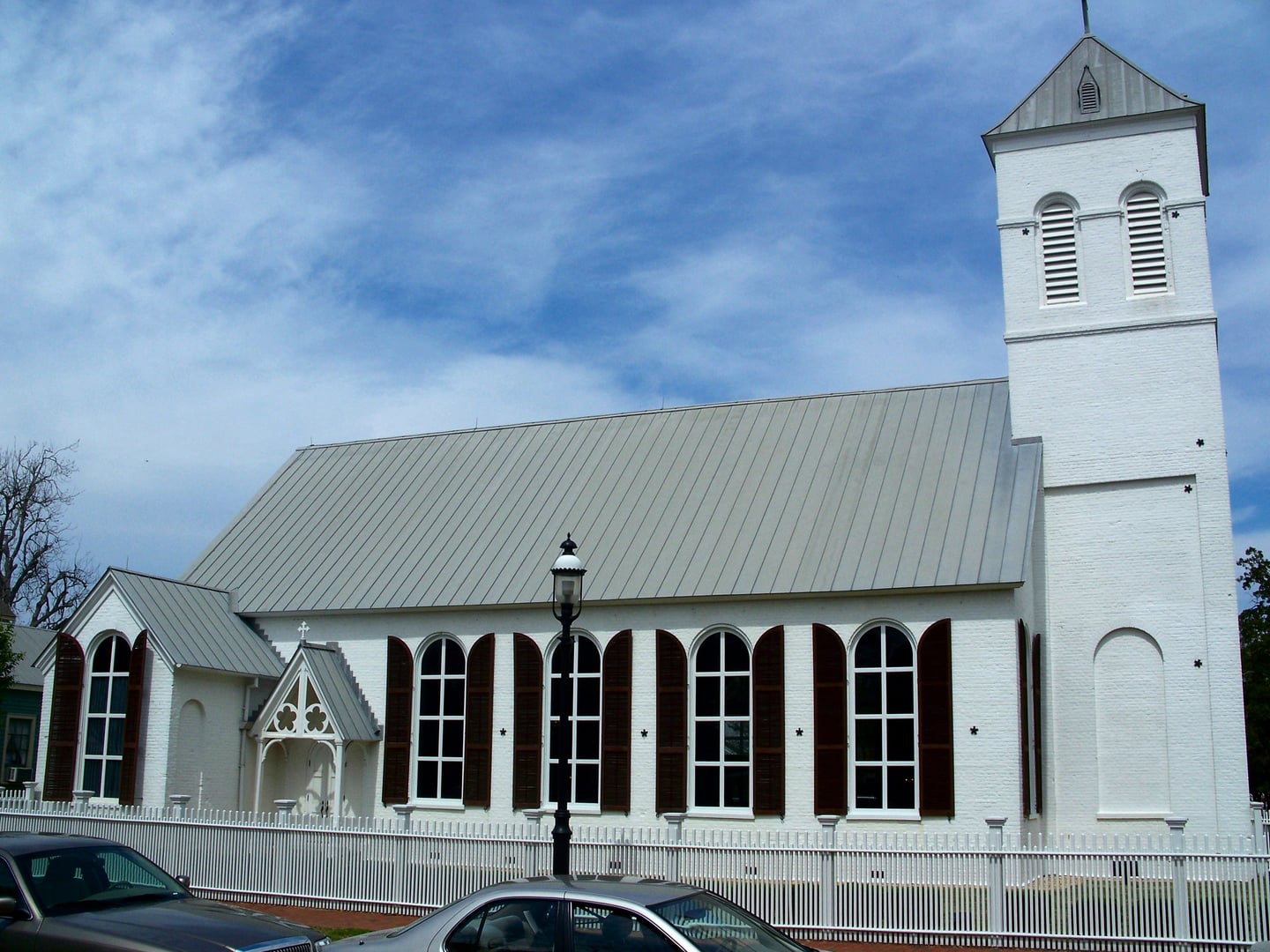
Old Christ Church at 405 S Adams Street in Pensacola, Florida — one of Florida's oldest surviving church buildings, built in 1832 in Gothic Revival style.
Museum / Historical Site

Old Christ Church

Pensacola, FL

Old Christ Church at 405 S Adams St in Pensacola was completed in 1832, making it among the oldest surviving church buildings in Florida. The Episcopal congregation was chartered in 1829. The building served as a Union Army barracks during the Civil War. In a 1988 University of West Florida archaeological excavation, researchers discovered three burials beneath the original vestry area — identified as three of the church's first rectors: Reverends Saunders, Peake, and Flower. The building has operated as a museum since 1960 under the UWF Historical Trust.

$ All Ages Family: High
Late Gothic Revival facade of the Old Sacred Heart Hospital (Tower East) at 1010 North 12th Avenue in Pensacola, Florida — Florida's first Catholic hospital, 1915
Haunted Dining / Bar

Old Sacred Heart Hospital (Tower East)

Pensacola, FL

The Old Sacred Heart Hospital opened in 1915 at 1010 North 12th Avenue in Pensacola as the first Catholic hospital in Florida, founded by the Daughters of Charity. The late Gothic Revival building was designed by A.O. Von Herbulis. The hospital relocated in 1965; the building is now Tower East, a mixed-use property that includes O'Zone Pizza Pub.

$$ All Ages Family: High
Theater / Performance Venue

Pensacola Cultural Center (Former Escambia County Jail)

Pensacola, FL

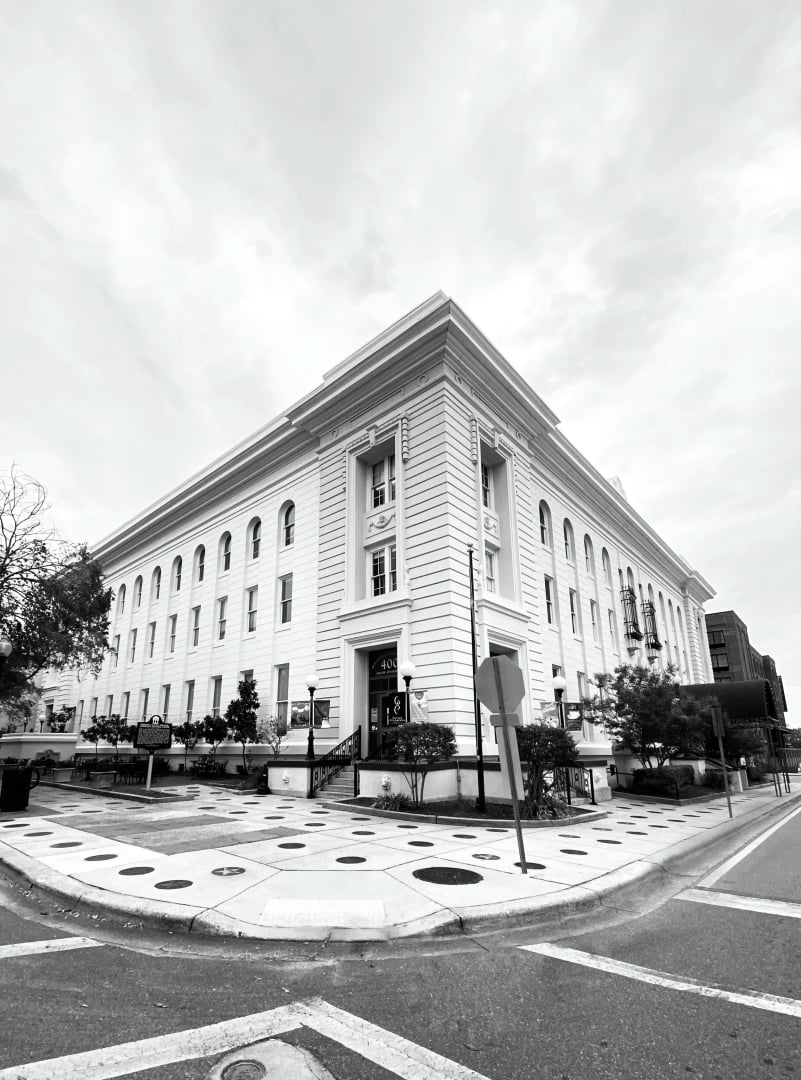
The building at 400 S Jefferson Street was constructed in 1911–1912 as the Escambia County Court of Record Building, designed by Alabama architect Rudolph Benz at a cost of $180,000. It served as the county courthouse, jail, and place of execution until 1978. The structure contained a built-in gallows on the third floor, and the final execution — Hosea Poole, hanged July 31, 1920 for murdering his brother — is the incident most associated with the building's haunted reputation.

$$ All Ages Family: High
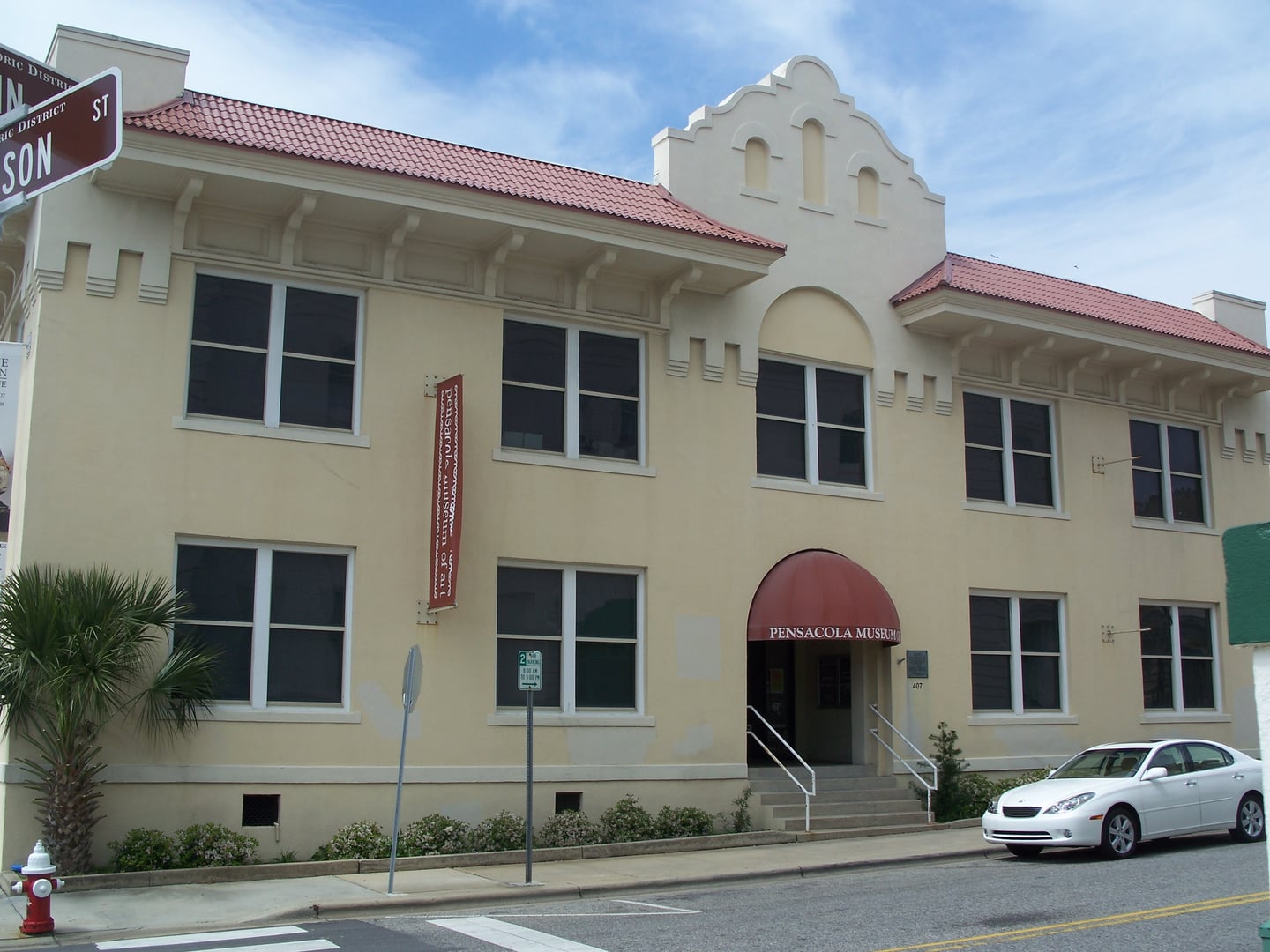
Exterior of the Pensacola Museum of Art, the former 1906 City Jail, in Spanish Revival style in Pensacola, Florida
Museum / Historical Site

Pensacola Museum of Art (Former City Jail)

Pensacola, FL

In 1906 the City of Pensacola built a two-story Spanish Revival structure at 407 S Jefferson Street to house the City Jail, City Courthouse, Police Department, and Shore Patrol — the first permanent jail facility in the city. For nearly five decades it held an average of 15 to 25 prisoners, three or four of them women, before a growing population made the 12,000-square-foot building inadequate.

$ All Ages Family: High
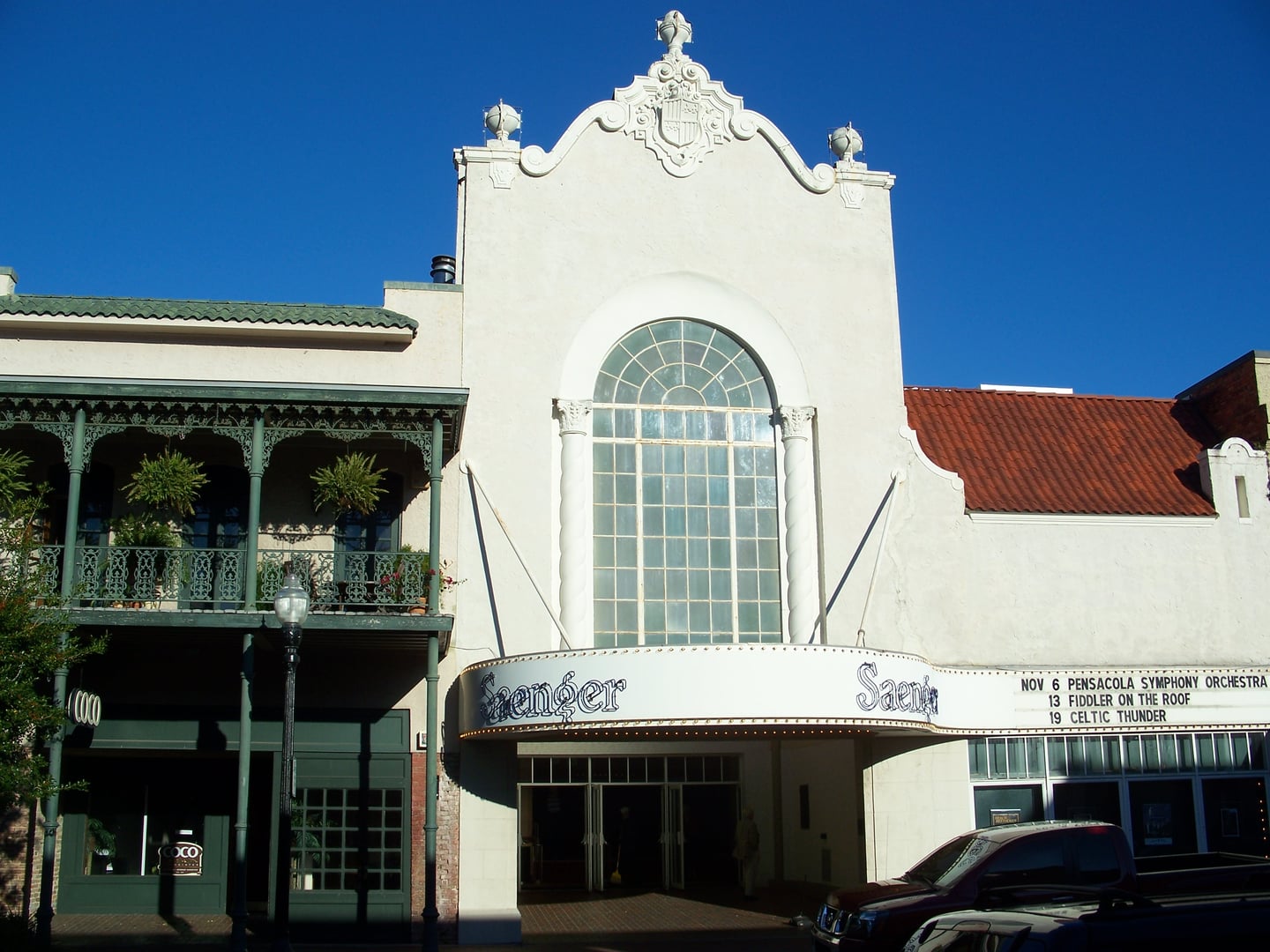
Exterior of the Pensacola Saenger Theatre at 118 S Palafox Street — the 1925 Spanish Baroque performance venue in downtown Pensacola, Florida.
Theater / Performance Venue

Pensacola Saenger Theatre

Pensacola, FL

The Pensacola Saenger Theatre opened April 2, 1925, designed by architect Emile Weil in Spanish Baroque style at a cost of $500,000. Its back wall incorporates bricks salvaged from the Pensacola Opera House, destroyed in the 1916 hurricane. The theater closed in 1975 and reopened in 1981 after restoration, with a second major renovation completing in 2009. Local accounts hold that an engineer died in the basement in a boiler accident at some point in the theater's early operating history.

$$ All Ages Family: High
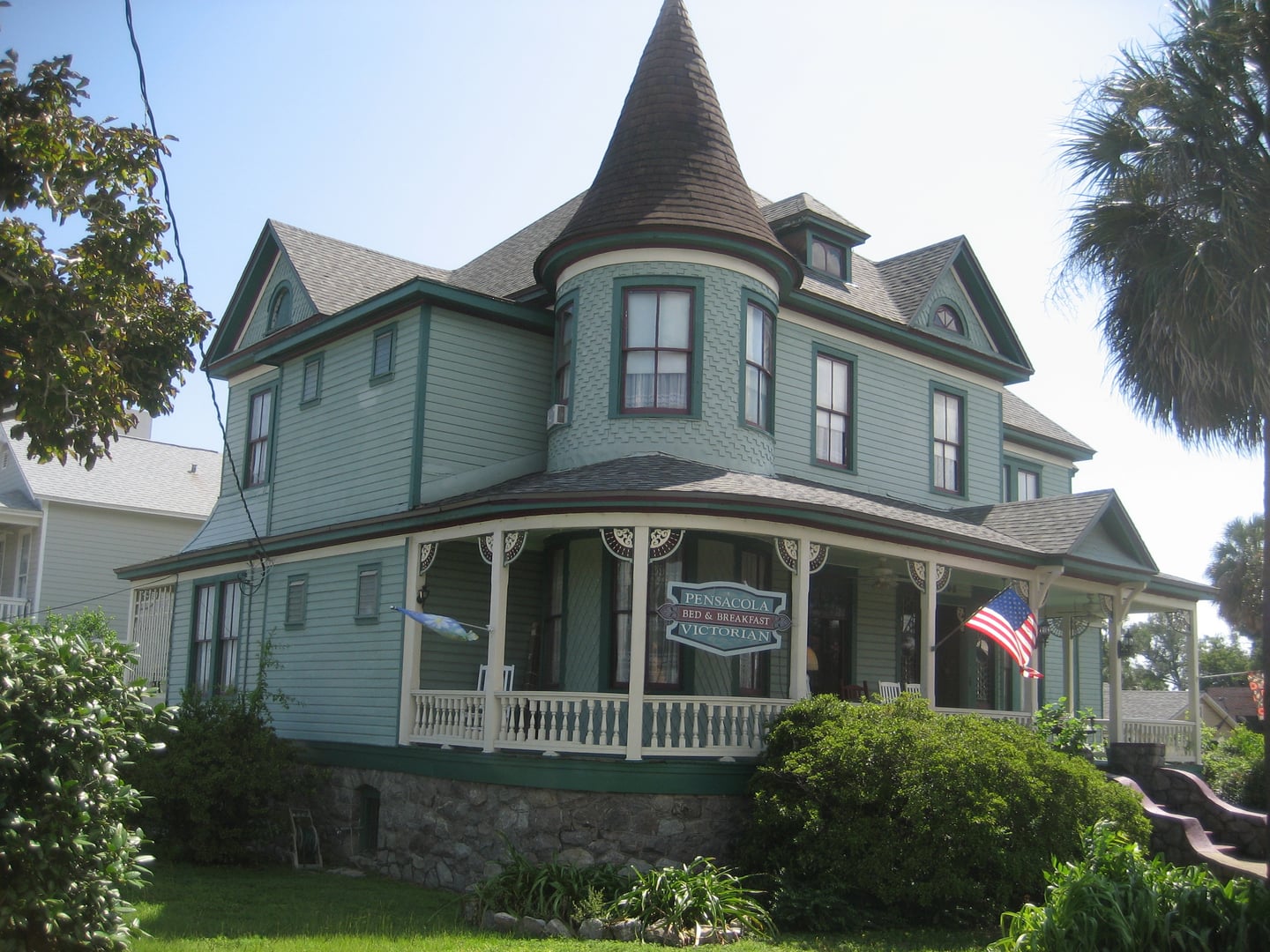
Queen Anne Victorian exterior of the Pensacola Victorian Bed and Breakfast at 203 W Gregory St
Haunted Hotel / Inn

Pensacola Victorian Bed & Breakfast

Pensacola, FL

The house at 203 West Gregory Street was built in the 1890s for William Hazard Northup — a ship captain who arrived in Pensacola in the early 1870s, was elected mayor in 1897, and later served as the city's Collector of Customs and Postmaster. The home was a social center for Pensacola's turn-of-the-century professional class and has operated as a bed and breakfast since its restoration.

$$ All Ages Family: Moderate
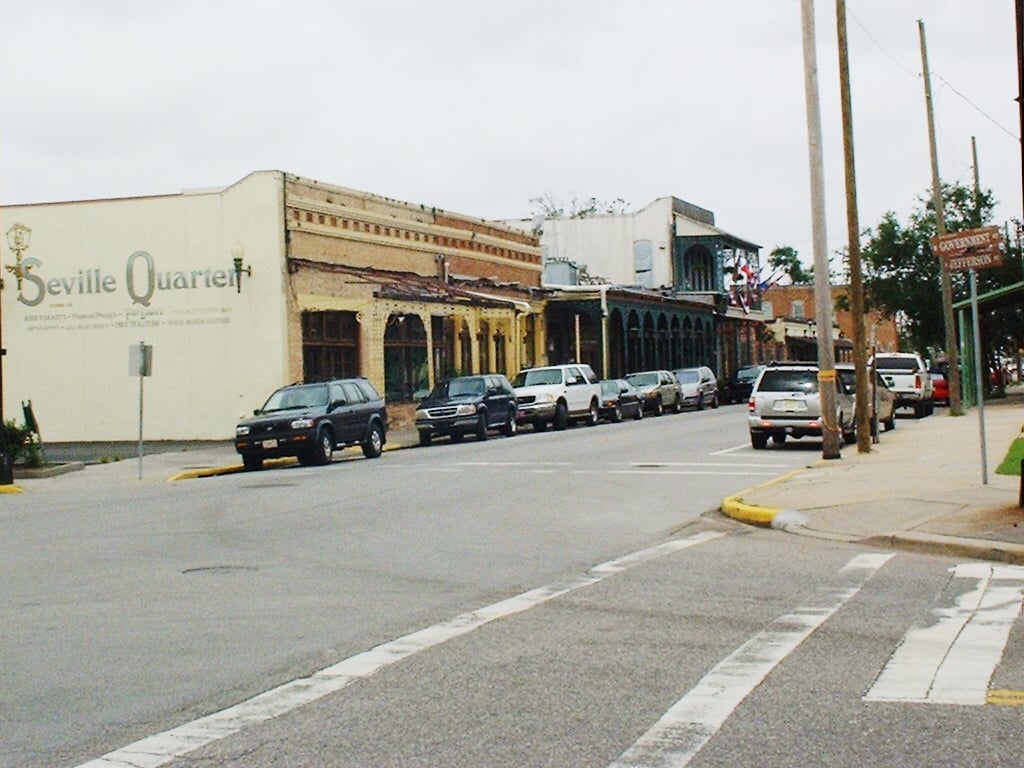
Exterior of Seville Quarter at 130 East Government Street in Pensacola, Florida — the 1871 former cigar warehouse converted into a multi-venue nightlife complex.
Haunted Dining / Bar

Seville Quarter

Pensacola, FL

The Seville Quarter complex at 130 E Government St in Pensacola occupies a building originally constructed for the Pensacola Cigar and Tobacco Company in 1871. In 1967, entrepreneur Bob Snow converted it into a nightlife complex anchored by Rosie O'Grady's. It has since expanded into seven themed venues. The building allegedly had connections to the red-light district in the 1920s–1930s. In the early 1990s, a bartender named Wesley Gibbs died of a heart attack inside the walk-in cooler.

$$ All Ages Family: Low
Aerial survey view of St. John's Cemetery
Aerial survey · USDA NAIP
Cemetery / Burial Ground

St. John's Cemetery

Pensacola, FL

St. John's Cemetery opened in 1876 when the adjacent St. Michael's Cemetery reached capacity. The 26-acre site became the burial ground for much of Pensacola's non-Catholic population and holds some of the city's most historically contentious graves, including that of Mollie McCoy, the city's best-known madam.

$ All Ages Family: Moderate
Panoramic view of historic above-ground tombs at St. Michael's Cemetery in Pensacola, Florida
Cemetery / Burial Ground

St. Michael's Cemetery

Pensacola, FL

St. Michael's Cemetery is one of the two oldest extant cemeteries in Florida, formally designated by King Charles IV of Spain in 1807 in colonial Pensacola. The eight-acre cemetery contains over 3,000 marked graves and was designated a Florida state park in 1949. It is now operated by the St. Michael's Cemetery Foundation of Pensacola.

$ All Ages Family: High
Haunted House / Historic Home

The Gray House

Pensacola, FL

The Gray House at 312 S Alcaniz Street sits across from Seville Square in Pensacola's Historic District. When an adjoining property was being researched, investigators turned up handwritten legal documents from 1781 bearing the name of a Spanish corporal: Moristo. The two-story house carries local lore connecting it to Thomas Moristo, said to have been a Spanish sea captain in Pensacola during the colonial period.

$ All Ages Family: High

Orlando — 12

The 11-story Angebilt Building at 37 N Orange Avenue in downtown Orlando, Florida — built in 1923 as the city's tallest structure, now an office and coworking complex
Other Dark Tourism Site

Angebilt Building

Orlando, FL

Developer Joseph Fenner Ange hired architect Murray S. King to design a million-dollar hotel at 37 North Orange Avenue, and the 11-story, 250-room Angebilt Hotel opened March 14, 1923 — for a period Orlando's tallest building. Notable guests included Henry Ford and Thomas Edison. The top two floors were damaged in a 1983 fire; the building served as an Orange County Courthouse annex from 1988 to 1998 before converting to office and coworking use. Chicago-based Novel Coworking purchased it in 2019 for $13.7 million.

$ All Ages Family: Moderate
Facade of the Beacham Theatre at dusk in Orlando, Florida, after a mild 2016 restoration
Theater / Performance Venue

The Beacham Theatre

Orlando, FL

Braxton Beacham Sr. demolished the former Orange County Jail in 1919 and built a $200,000 theater at 46 N Orange Ave in 1921. The jail had occupied the site since approximately 1873 and served as Orange County's primary place of execution, where condemned prisoners were hanged publicly. The Beacham received Orlando's historic landmark designation in 1987 and has operated as a concert venue since 2011.

$$ 18+ Family: Low
Aerial survey view of Carey Hand Building (UCF Executive Development Center)
Aerial survey · USDA NAIP
Other Dark Tourism Site

Carey Hand Building (UCF Executive Development Center)

Orlando, FL

Carey Hand opened his funeral home at 36 W Pine Street in 1920 after buying out his father Elijah Hand's share of the original business at 15-17 W Pine in 1914. The new building, designed by architect F.H. Trimble in Renaissance Revival style, was the first funeral home in Florida to include an on-site chapel and housed the first crematorium built south of Cincinnati and Washington D.C. The operation served a five-county area and remained Central Florida's largest funeral home until it ceased mortuary operations in 1992. UCF's College of Business began using the building as its Executive Development Center in 2007.

$ All Ages Family: Moderate
Church Street Station historic 1889 Eclectic Victorian depot building in downtown Orlando, Florida, now serving as a SunRail commuter station
Other Dark Tourism Site

Church Street Station Historic District

Orlando, FL

The South Florida Railroad constructed the Orlando depot at Church Street in 1889, designed by architect T.B. Cotter in an Eclectic Victorian/Shingle Style. Added to the National Register of Historic Places in 1976, the station served passengers until 1926 when operations relocated. Entrepreneur Bob Snow opened Rosie O'Grady's Good Time Emporium on July 19, 1974, launching an entertainment complex that at its height was Florida's fourth-largest attraction, with themed bars and restaurants across multiple historic buildings. The complex declined through the 1990s under competition from Disney and Universal; subsequent owners included Lou Pearlman, whose fraudulent schemes resulted in FBI raids in 2007. SunRail commuter service began operating from the station in 2014.

$ All Ages Family: High
Photo of Elijah Hand Building
Other Dark Tourism Site

Elijah Hand Building

Orlando, FL

Elijah Hand arrived in Orlando from Indiana in 1885 and became the city's first professional embalmer, partnering with furniture dealer E.A. Richards. The combination of furniture retail and undertaking was common in the period — undertakers often sourced coffins from furniture makers and shared premises. At 15-17 W Pine Street, the combined operation became so successful that Elijah frequently had more bodies awaiting preparation than his ground-floor space could hold, and he stored the overflow on beds and sofas in the second-floor furniture showroom.

$ All Ages Family: Moderate
Haunted Dining / Bar

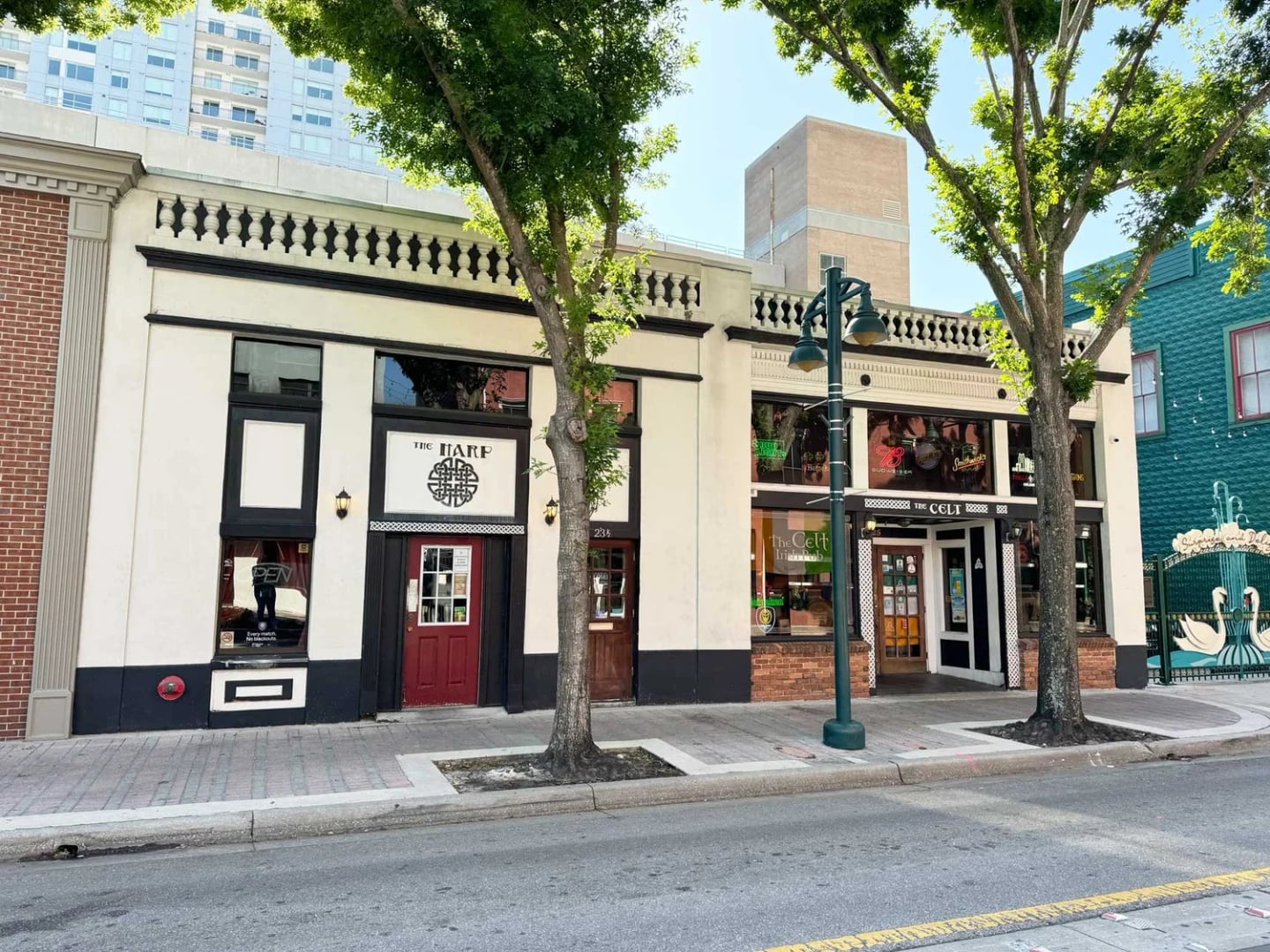
Harp & Celt Irish Pub

Orlando, FL

The Harp & Celt Irish Pub at 25 S Magnolia Avenue has operated in downtown Orlando for over 15 years. The building's prior use as a neighborhood brothel is part of local oral tradition documented by ghost tour operators and Click Orlando; no independent architectural or property-record source publicly corroborates the specific era or operation of this brothel.

$ All Ages Family: Moderate
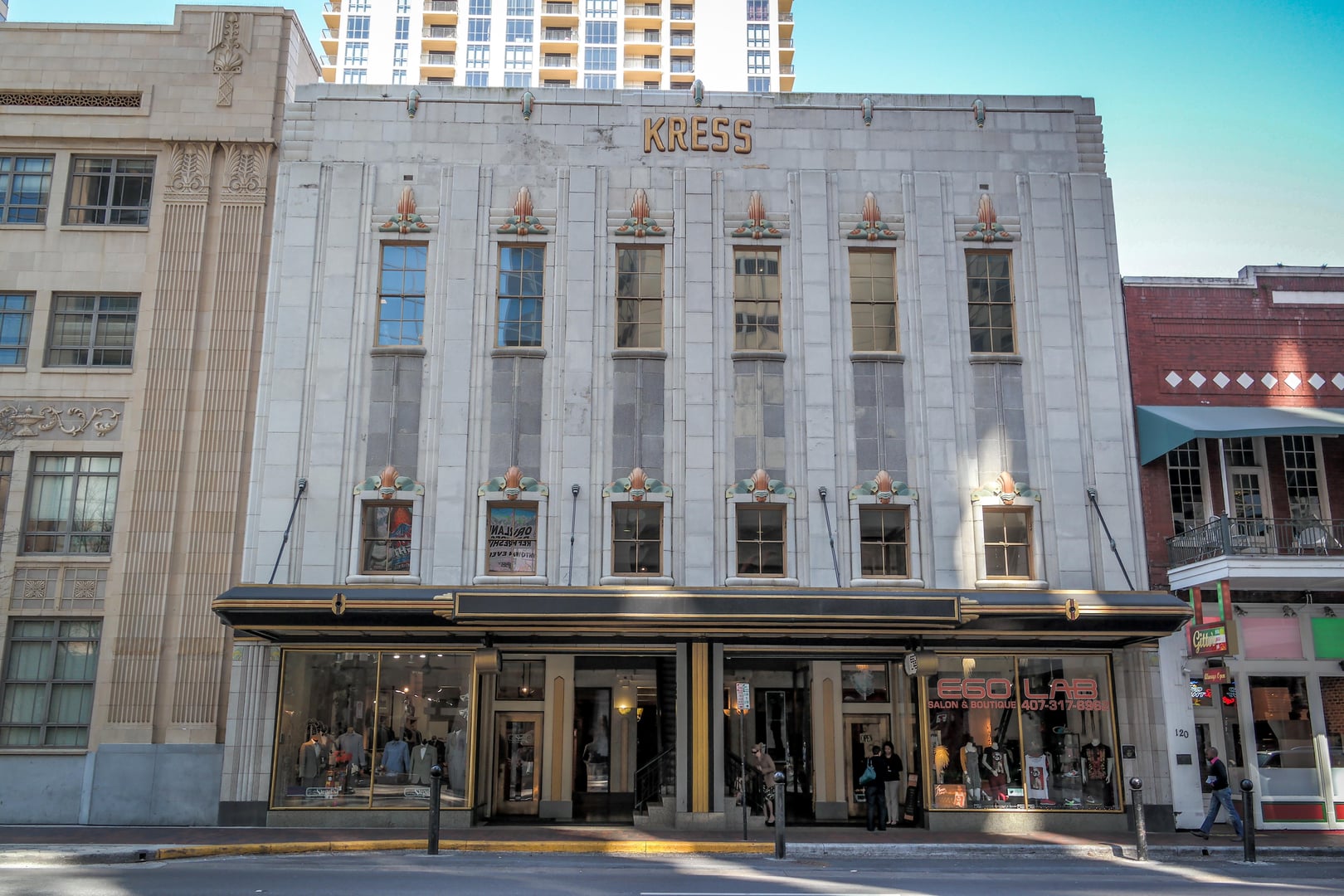
The 1936 Art Deco Kress Building at the corner of Church Street and Orange Avenue in downtown Orlando, Florida — featuring polychrome terra-cotta facades with stylized parrots and sunburst designs
Haunted Dining / Bar

Kress Building (Kres Chophouse)

Orlando, FL

S.H. Kress & Co. invested approximately $250,000 to construct the Art Deco building at the corner of Church Street and Orange Avenue in Orlando; it opened in 1936 with distinctive polychrome terra-cotta facades designed by company architect Edward F. Sibbert. In 1960, Black students began staging lunch-counter sit-ins to protest the store's segregated service, leading to gradual integration by 1963. Kress vacated in 1975; the building was designated an Orlando Historic Landmark in 1978 and later housed King Henry's Feast and other tenants before Kres Chophouse took the ground floor.

$$ All Ages Family: Moderate
The Mizell-Leu House historic building at Harry P. Leu Gardens, Orlando, Florida, a National Register property surrounded by landscaped grounds
Museum / Historical Site

Harry P. Leu Gardens

Orlando, FL

Harry P. Leu purchased the property in 1936 along with 40 acres of land adjacent to Orlando's Lake Rowena. He and his wife Mary Jane traveled extensively, collecting exotic plants and camellia varieties from around the world to establish the gardens. In 1961 the couple deeded the house and gardens to the City of Orlando. The gardens have since expanded to approximately 50 acres and are operated as a public botanical garden and museum.

$$ All Ages Family: High
Aerial survey view of Little Econ River (Old Econ Road Bridge)
Aerial survey · USDA NAIP
Outdoor / Natural Site

Little Econ River (Old Econ Road Bridge)

Orlando, FL

The Little Econ River — a tributary of the Econlockhatchee — flows through eastern Orange County, Florida, near Orlando. The Old Econ Road crossing has accumulated local folklore since at least the 1980s. The broader Econlockhatchee corridor near Oviedo has a parallel legend tradition known as the 'Oviedo Lights,' glowing orb phenomena documented since the 1940s.

$ All Ages Family: High
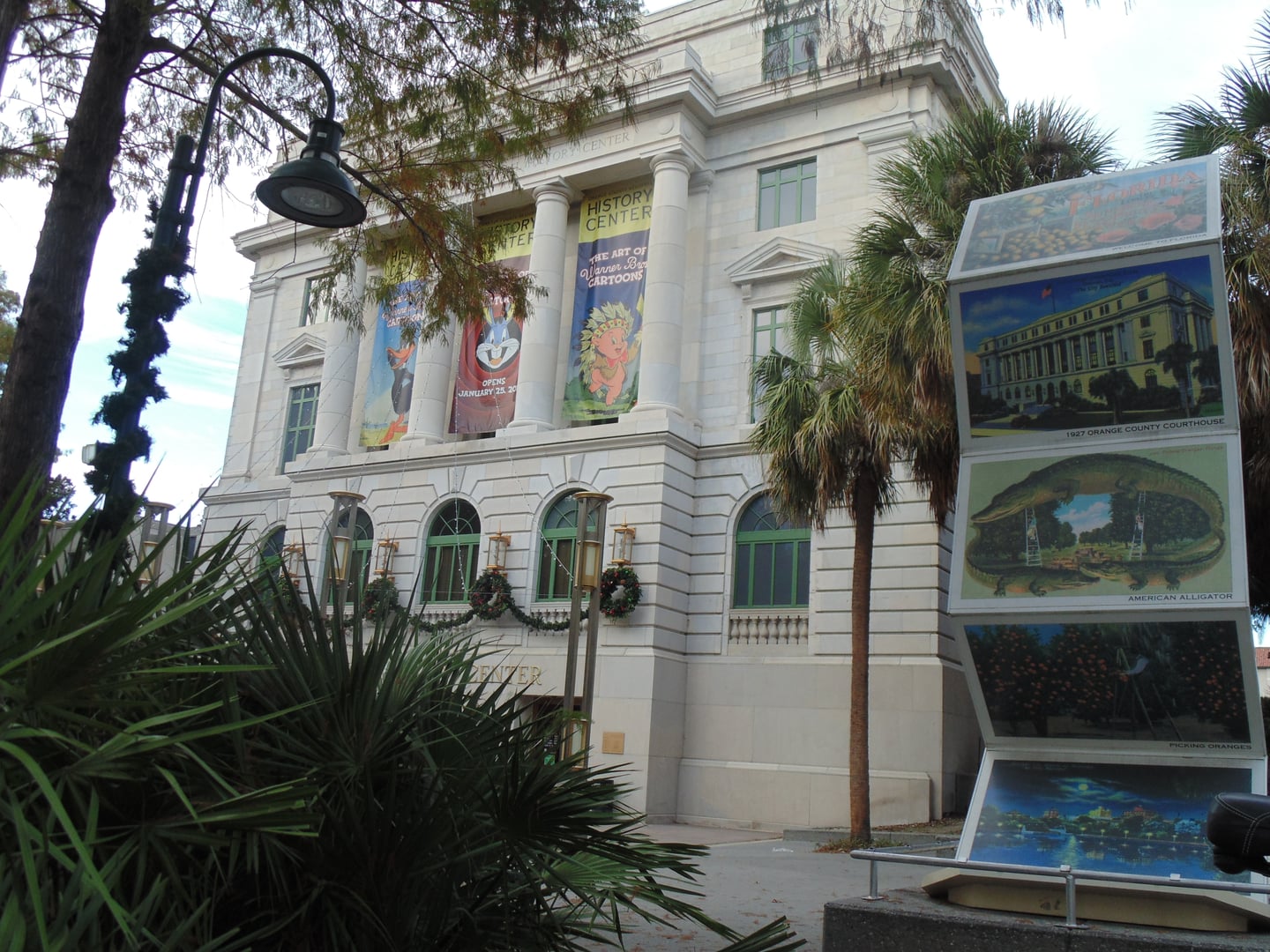
The 1927 Orange County Courthouse in downtown Orlando, now housing the Orange County Regional History Center
Museum / Historical Site

Orange County Regional History Center

Orlando, FL

The Orange County Courthouse at 65 E Central Blvd was built in 1926–1927 for nearly $1 million, designed by architect Murry S. King — Orlando's first registered architect — in a classically influenced five-story form dedicated on October 12, 1927. The courthouse served Orange County's judicial functions for decades, hosting trials including the 1980 trial of serial killer Ted Bundy (in the courthouse annexe, since demolished). Orange County Regional History Center opened in the building in 1942 and has operated there continuously since.

$ All Ages Family: High
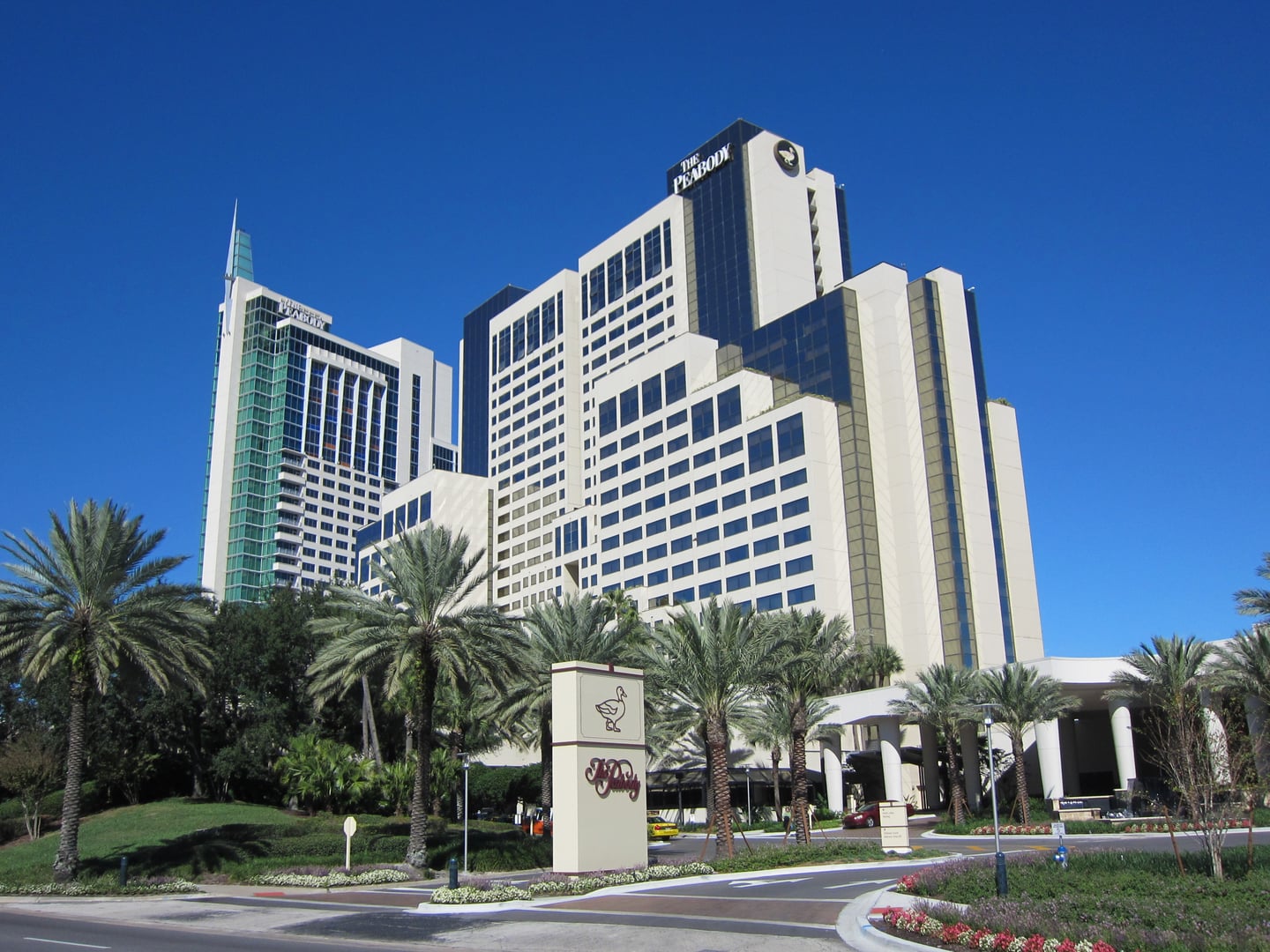
The Peabody Orlando (now Hyatt Regency Orlando) hotel exterior, Orlando Florida
Haunted Hotel / Inn

Hyatt Regency Orlando (formerly Peabody Orlando)

Orlando, FL

The Peabody Orlando opened in 1986 as a 1,641-room convention hotel on International Drive, becoming the second-tallest building in Orlando at the time of its construction. It operated as a sister property to The Peabody Memphis until October 2013, when Hyatt Hotels Corporation purchased the property and rebranded it as the Hyatt Regency Orlando.

$$$ All Ages Family: High
Museum / Historical Site

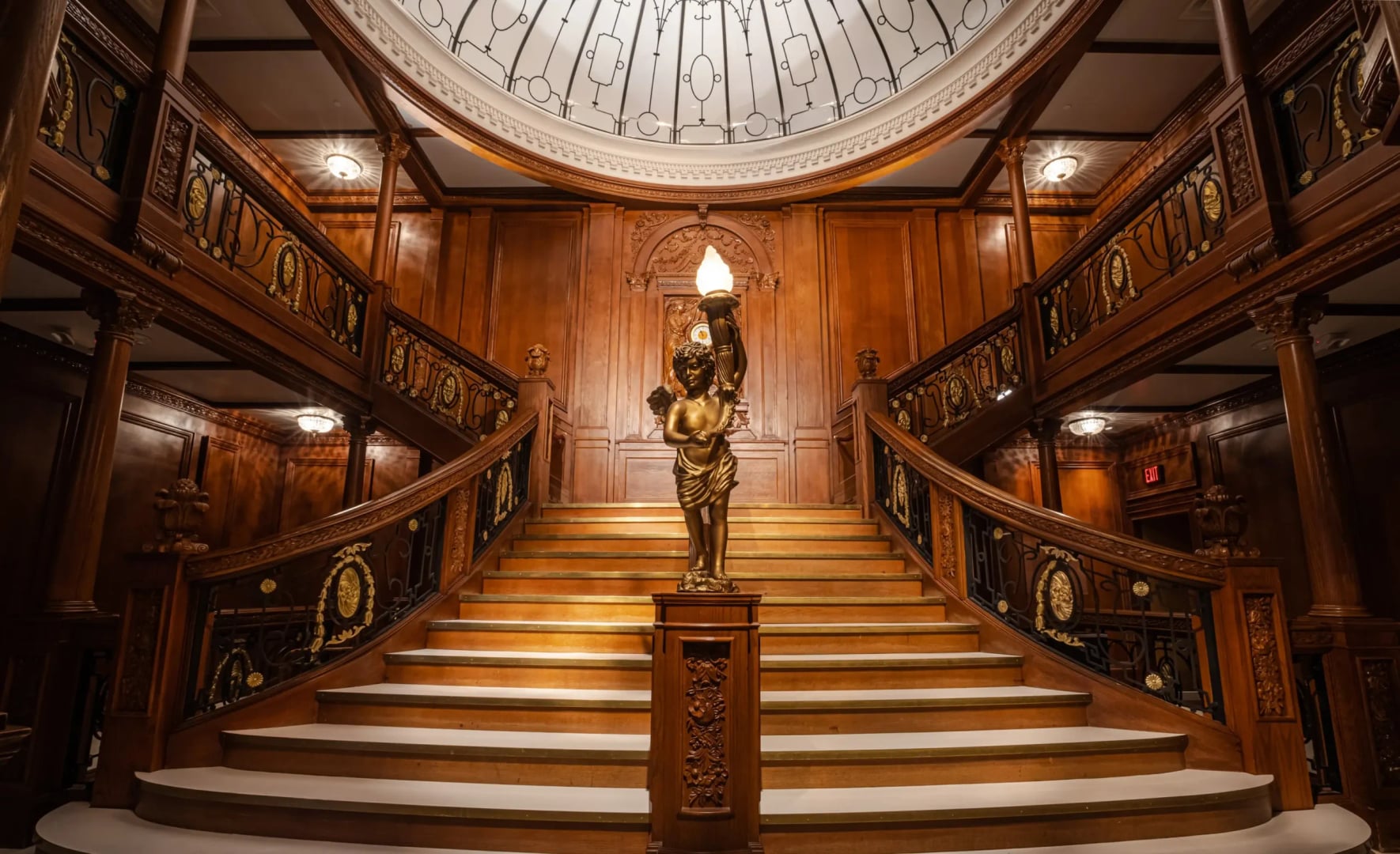
Titanic: The Artifact Exhibition

Orlando, FL

This permanent exhibition at 7324 International Drive in Orlando presents more than 300 artifacts recovered from the Titanic wreck site by RMS Titanic, Inc., alongside full-scale room recreations. The exhibition opened in Orlando in 2012 following a relocation. It has operated continuously at this address on International Drive and offers daily guided tours, a dinner gala, and VR experiences.

$$ All Ages Family: High

Jacksonville — 11

Haunted House / Historic Home

Dr. Horace Drew Mansion

Jacksonville, FL

The Dr. Horace Drew Mansion is an eclectic 1909 home blending Tudor Revival, Queen Anne, and Spanish Colonial Revival elements, built by Dr. Horace R. Drew (grandson of Jacksonville pioneer Columbus Drew) at the corner of 3rd and Pearl Streets in the Springfield historic neighborhood. As of December 2025 it is owned by Springfield Preservation and Revitalization (SPAR), which has announced rehab plans.

$ All Ages Family: Moderate
Aerial survey view of El Modelo Block (Plaza Hotel)
Aerial survey · USDA NAIP
Other Dark Tourism Site

El Modelo Block (Plaza Hotel)

Jacksonville, FL

The El Modelo Block is an 1887 brick block at 501-513 West Bay Street in downtown Jacksonville. From roughly 1890 to 1898 it housed Gabriel Hidalgo Gato's El Modelo Cigar Manufacturing Company; later it operated as the Plaza Hotel. It is one of the few downtown buildings that survived the Great Fire of 1901 and was added to the National Register of Historic Places on October 16, 1980 (reference 80000948).

$ All Ages Family: High
Epping Forest Yacht Club mansion exterior, Jacksonville FL — former Alfred I. du Pont estate, NRHP 1973
Haunted House / Historic Home

Epping Forest Yacht Club (Alfred I. du Pont Estate)

Jacksonville, FL

Alfred I. du Pont, the Delaware industrialist, relocated to Jacksonville in 1926 after family tensions at DuPont Chemical Company and built Epping Forest — a 25-room Mediterranean Revival mansion designed by architect Harold Saxelbye on 58 acres of the St. Johns River at Christopher Point. Du Pont died there on April 28, 1935, of a heart attack. His estate, valued at over $56 million, passed to a trust managed by his wife Jessie Ball du Pont and her brother Edward Ball.

$$$$ All Ages Family: Low
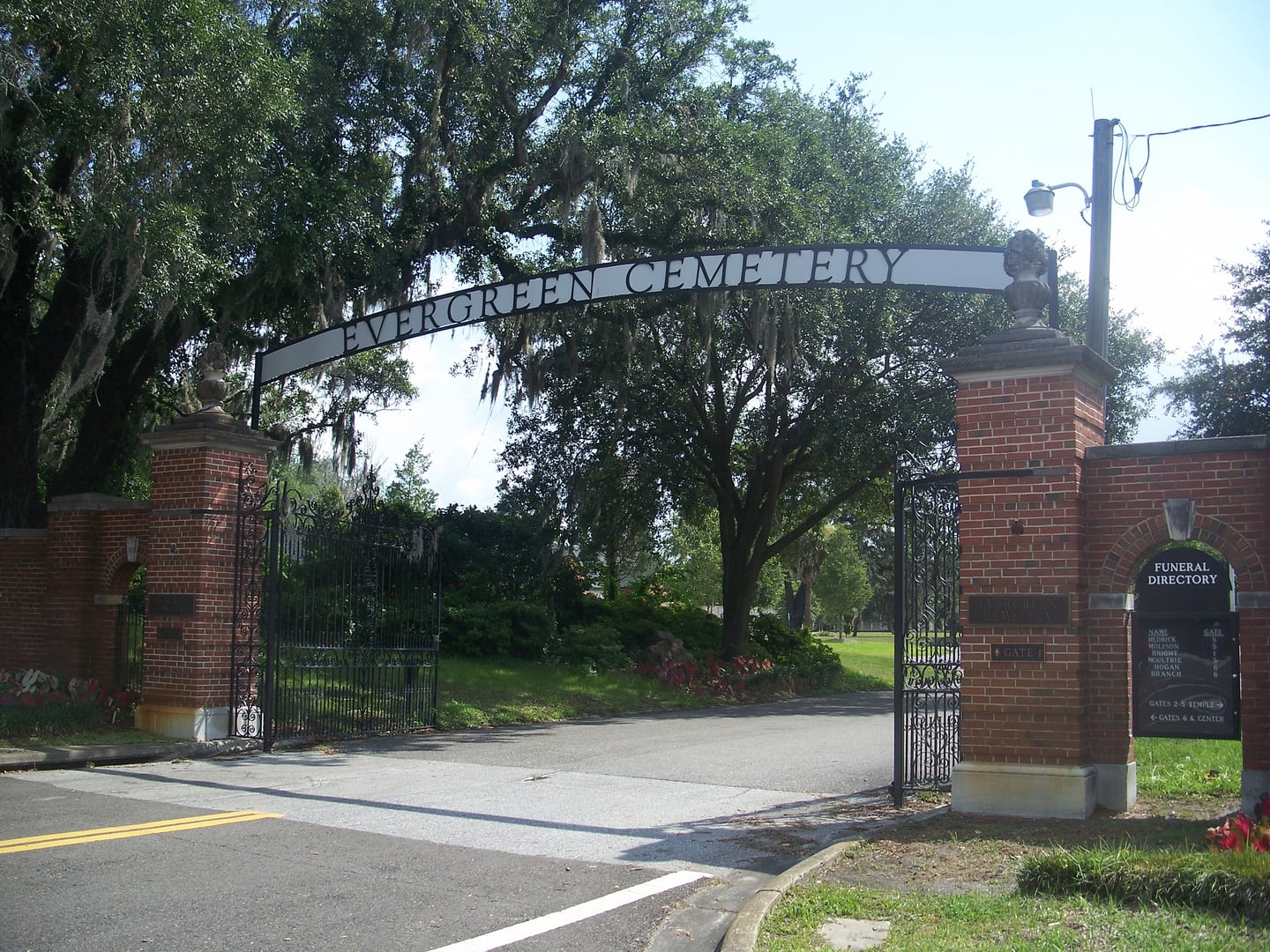
Stone entrance gates of Evergreen Cemetery at 4535 North Main Street in Jacksonville, Florida — an 1880 historic burial ground on the National Register.
Cemetery / Burial Ground

Evergreen Cemetery

Jacksonville, FL

Evergreen Cemetery is a 167-acre operating historic cemetery at 4535 North Main Street in Jacksonville, founded in 1880 and the oldest fully-operating cemetery in the city. It was added to the National Register of Historic Places on April 8, 2011, and holds more than 80,000 burials.

$ All Ages Family: Moderate
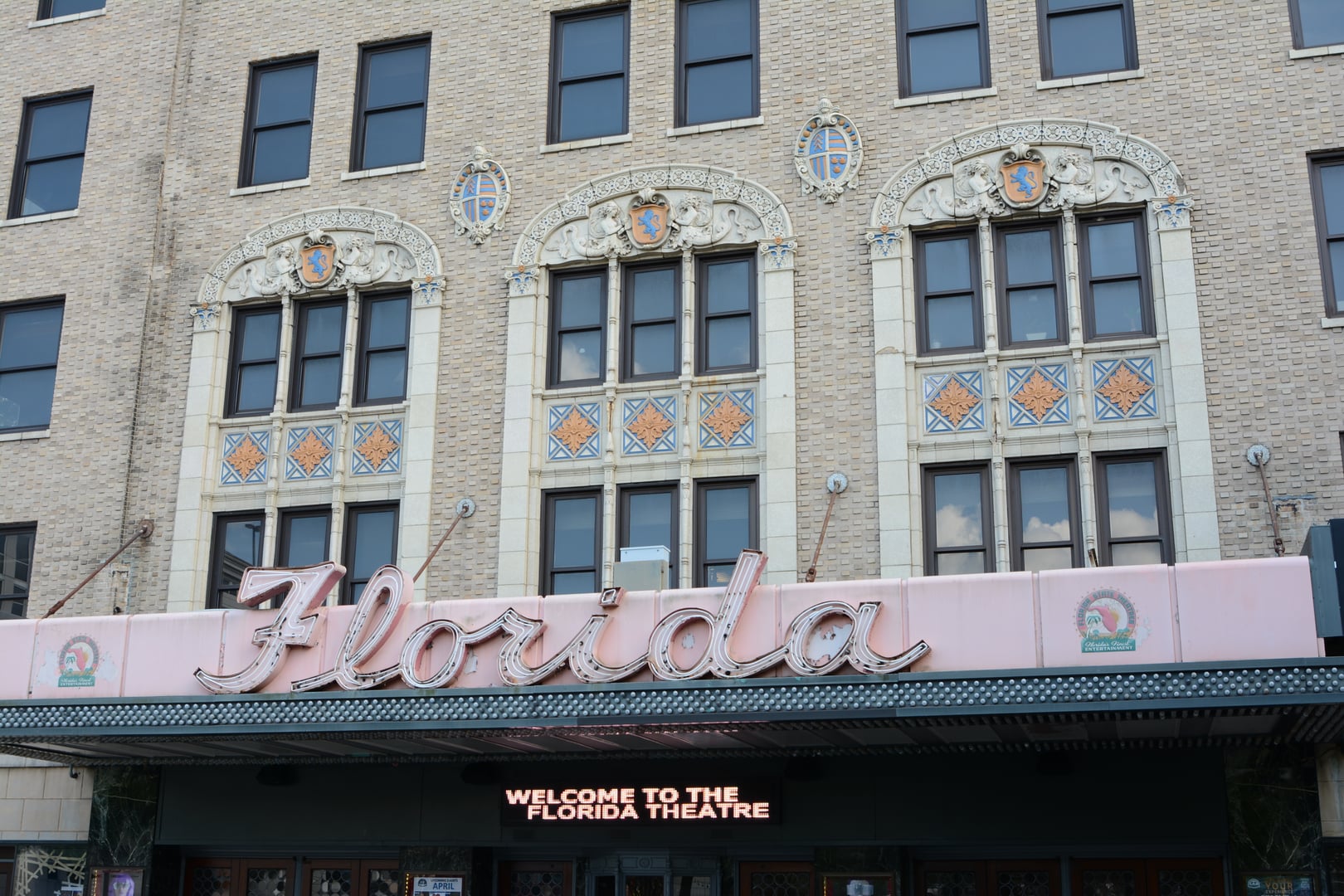
Florida Theatre, 128 East Forsyth Street, Jacksonville, Florida — 1927 Mediterranean Revival movie palace
Theater / Performance Venue

Florida Theatre

Jacksonville, FL

The Florida Theatre is a 1927 Mediterranean Revival movie palace at 128 East Forsyth Street in downtown Jacksonville. Designed by R. E. Hall & Co. and Roy A. Benjamin and built by Southern Enterprises, Inc., it opened to the public on April 8, 1927 and was added to the National Register of Historic Places on November 4, 1982.

$$ All Ages Family: High
Kingsley Plantation main house and kitchen house on Fort George Island, Jacksonville, Florida, circa 1920
Museum / Historical Site

Kingsley Plantation

Jacksonville, FL

Kingsley Plantation contains Florida's oldest standing plantation house, built around 1797-1798 on Fort George Island, along with 23 surviving tabby slave residences. The property was operated 1814-1837 by Zephaniah Kingsley and Anna Madgigine Jai, a formerly enslaved Wolof woman whom Kingsley married. It is now a unit of the National Park Service's Timucuan Ecological & Historic Preserve.

$ All Ages Family: Moderate
Aerial survey view of Maple Leaf Shipwreck Site
Aerial survey · USDA NAIP
Battlefield / Military Site

Maple Leaf Shipwreck Site

Jacksonville, FL

The 181-foot sidewheel paddle steamer Maple Leaf was built in Kingston, Upper Canada in 1851 and chartered by the Union Army as a troop transport during the Civil War. On April 1, 1864, she was crossing the St. Johns River near Mandarin Point when she struck a Confederate torpedo planted in the navigation channel. The explosion killed four crew members and sank the vessel within minutes. The wreck, rediscovered in 1984, was designated a National Historic Landmark in 1994.

$ All Ages Family: High
Entrance gate of Old City Cemetery in Jacksonville, Florida — the city's oldest established burial ground, founded in 1852.
Cemetery / Burial Ground

Old City Cemetery (Jacksonville)

Jacksonville, FL

Old City Cemetery is Jacksonville's oldest established city burial ground, donated to the Town of Jacksonville by Captain Charles and Frances Willey in 1852 at the juncture of Union and Catherine Streets. The cemetery is bounded by Jessie, Ionia, Union, and Washington Streets and is designated a Jacksonville historic landmark.

$ All Ages Family: Moderate
Brick exterior of Old St. Luke's Hospital at 314 North Palmetto Street in Jacksonville, Florida — Florida's first established hospital, built 1878.
Asylum / Hospital

Old St. Luke's Hospital

Jacksonville, FL

Old St. Luke's Hospital was built at the corner of Palmetto and Duval Streets in 1878 and operated as Florida's first established hospital until 1914. It cared for Jacksonville through the 1888 yellow-fever epidemic, the 1898 typhoid epidemic, and the Great Fire of 1901, and is now owned by the Jacksonville Historical Society and houses its archives. It was added to the National Register of Historic Places on July 24, 1972.

$ All Ages Family: Moderate
Haunted House / Historic Home

River House (Rochester House / Riverside House)

Jacksonville, FL

Originally built around 1869 near Leila Street and Riverside Avenue as Rochester House, the building was a Second Empire-style resort hotel that hosted Mary Todd Lincoln in 1874-1875 during her period of grief and ill health. In 1911 it was barged upriver to its present location at 2105 River Boulevard in Riverside.

$ All Ages Family: High
True Crime Site

The Carling (former Hotel Roosevelt)

Jacksonville, FL

Built in 1926 as the Hotel Roosevelt, this 13-story downtown Jacksonville building was the site of the city's deadliest single-day fire since the Great Fire of 1901. On December 29, 1963, during Gator Bowl weekend, fire broke out in the ballroom ceiling around 7:45 AM. Twenty-two people died — twenty found in their beds from smoke inhalation, one woman attempting to descend from the 11th floor by rope, and Assistant Fire Chief J.R. Romedy of a heart attack at the scene. The building is now The Carling, residential apartments, and is listed on the National Register of Historic Places.

$ All Ages Family: High

St. Petersburg — 11

Photo of Beach Drive Inn
Haunted Hotel / Inn

Beach Drive Inn

St. Petersburg, FL

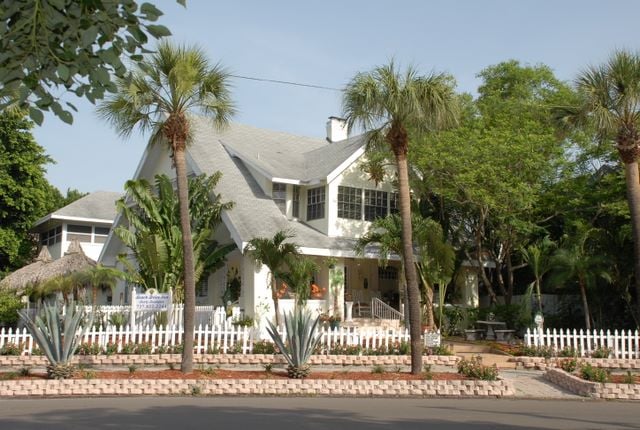
Built in 1910 as the winter home of Pennsylvania oil magnate Perry Laughner, the property passed to his son Aymer Vinoy Laughner, from whose front porch the idea for the Vinoy Hotel — built across the street in 1925 — was reportedly conceived during a wager at a 1923 party.

$$ All Ages Family: Moderate
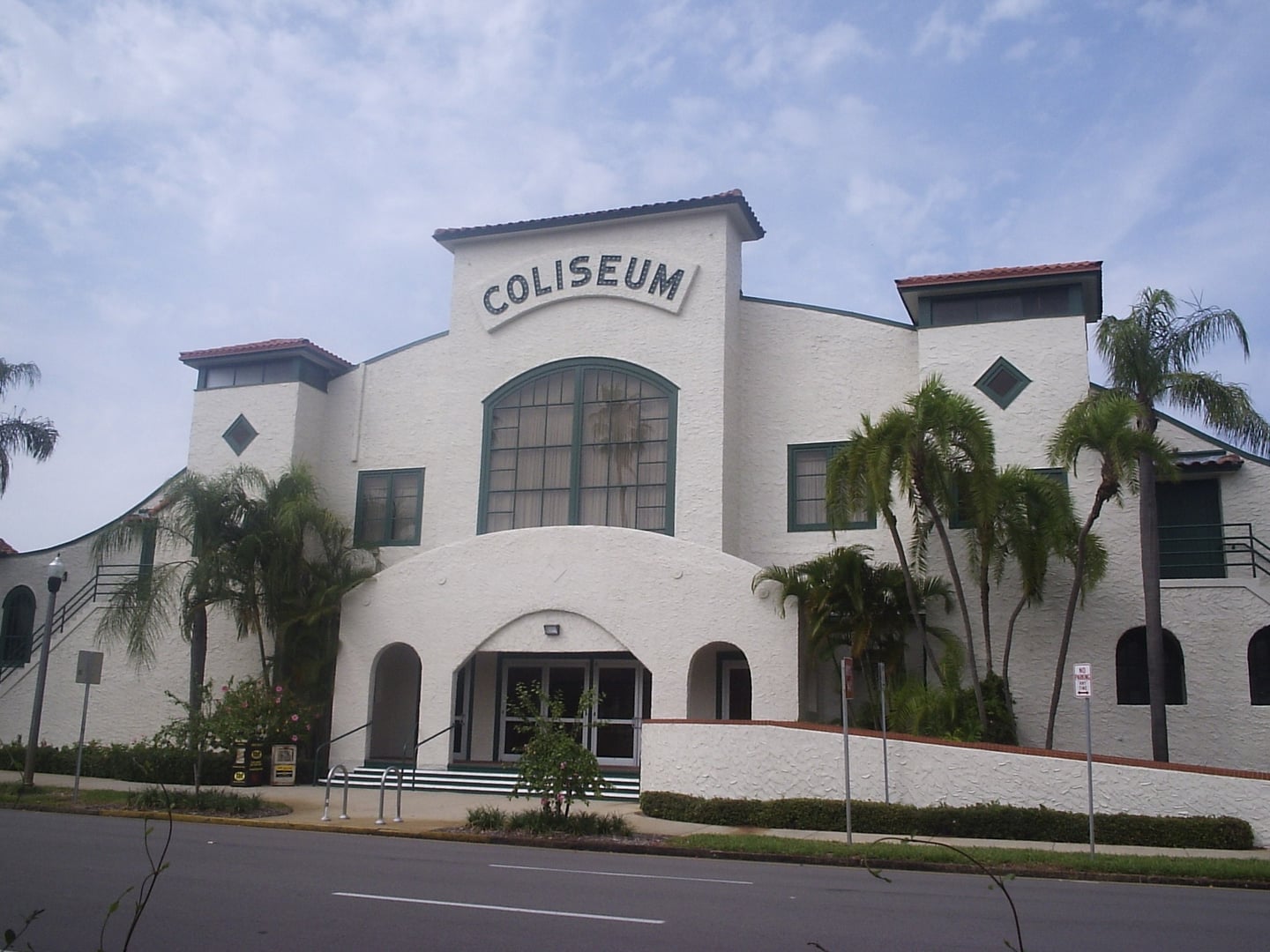
Photo of The Coliseum
Theater / Performance Venue

The Coliseum

St. Petersburg, FL

The Coliseum opened November 20, 1924 — the same day as the Gandy Bridge — as the largest dance hall in the South, with 12,000 square feet of white maple dance floor designed by architect T.H. Eslick. Banjo player Rex McDonald joined the house orchestra four days after opening, eventually leasing and then purchasing the building with his wife Thelma 'Boo' and partners. The city of St. Petersburg bought the building in 1989 for $824,500 and continues to operate it as a public venue.

$ All Ages Family: High
Haunted Dining / Bar

Earl Gresh Cottage (Former Sesh Brewpub)

St. Petersburg, FL

Earl Parker Gresh built this English-cottage commercial structure at 2221 4th Street North in the early 1930s using longleaf pine timbers, cypress siding, and salvaged Fort Dade brick. It opened January 13, 1940, as the Wood Parade Museum, a roadside attraction featuring Gresh's hand-carved marquetry panels. The museum closed around 1955 when highway rerouting redirected tourist traffic. Subsequent tenants included Rollande et Pierre, The Melting Pot, and finally Sesh Brewpub, which opened in April 2023 and closed in late 2025.

$ All Ages Family: High
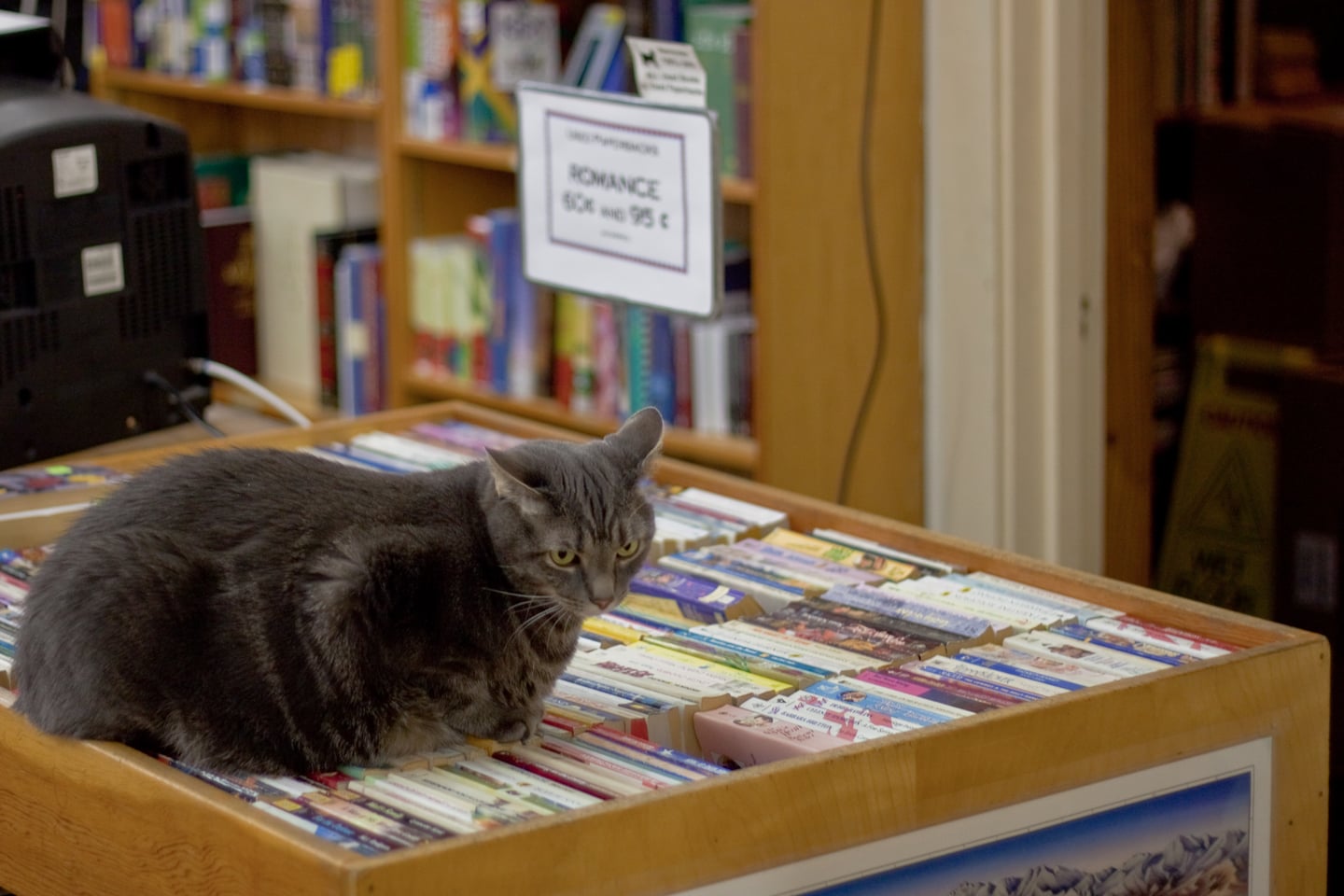
Haslam's Book Store cat, St. Petersburg, FL
Museum / Historical Site

Haslam's Book Store

St. Petersburg, FL

Haslam's Book Store was founded in 1933 by John and Mary Haslam during the Great Depression. Mary began by selling handcrafts and used magazines before the business grew into what became Florida's largest independent bookstore, covering over 30,000 square feet. The store closed in March 2020 and as of late 2025 remains permanently closed.

$ All Ages Family: High
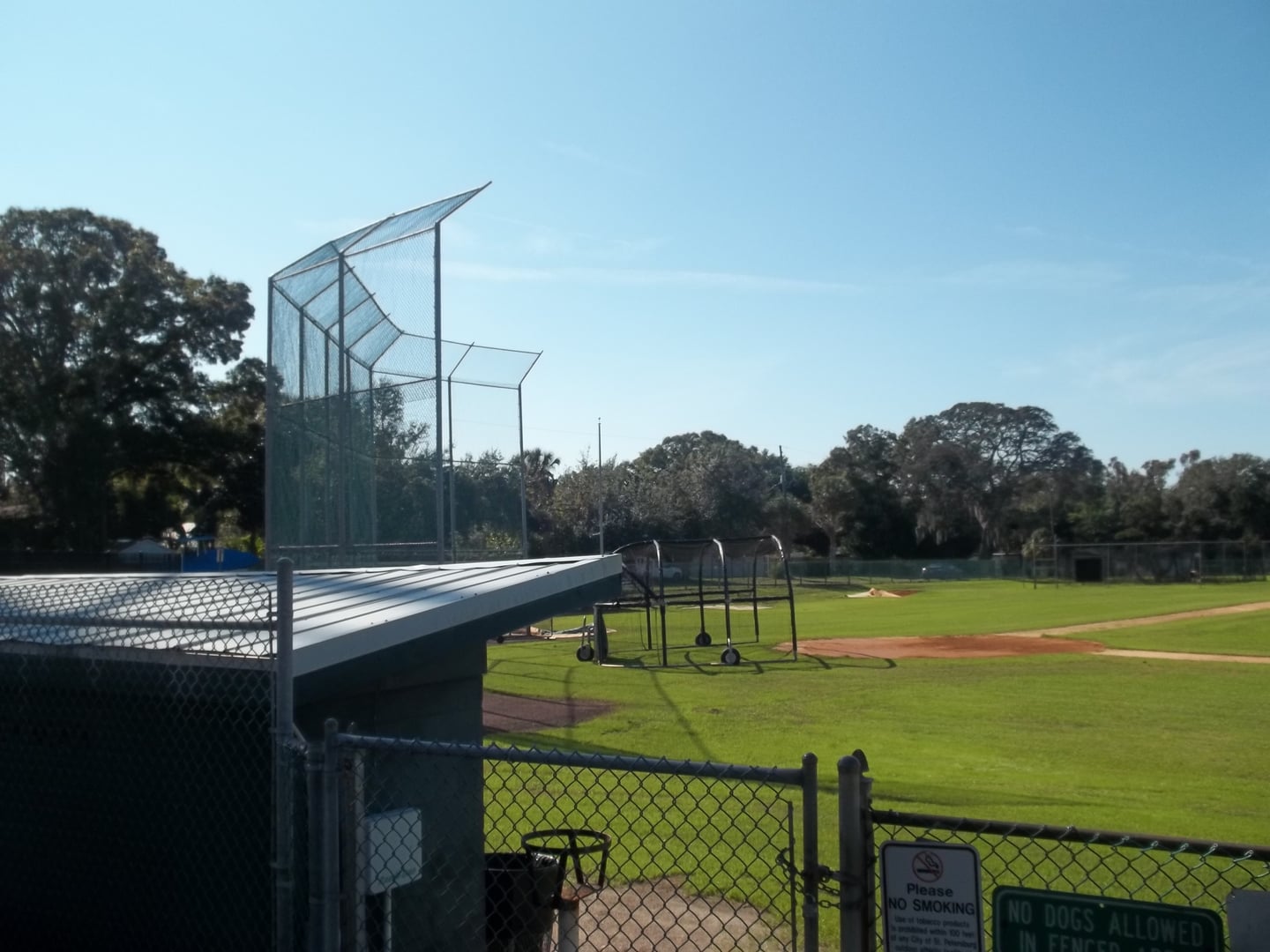
Huggins-Stengel Field at Crescent Lake Park in St. Petersburg, Florida — the 1925 New York Yankees spring training practice diamond, now on the National Register of Historic Places
Outdoor / Natural Site

Huggins-Stengel Field

St. Petersburg, FL

Huggins-Stengel Field was built in 1925 as the New York Yankees' spring training practice facility in St. Petersburg. The field hosted Yankees training for most of the period between 1925 and 1961, then New York Mets operations from 1962 to 1987, and briefly the Baltimore Orioles from 1992 to 1995. It was added to the National Register of Historic Places in August 2019.

$ All Ages Family: High
Aerial survey view of Roser Park Neighborhood (Mini Lights of Booker Creek)
Aerial survey · USDA NAIP
Outdoor / Natural Site

Roser Park Neighborhood (Mini Lights of Booker Creek)

St. Petersburg, FL

Developer Charles Roser broke ground on the neighborhood in 1911, creating a hilly residential district flanking Booker Creek that became Pinellas County's first area added to the National Register of Historic Places in 1998. The neighborhood's 146 contributing structures span Craftsman, Colonial Revival, Tudor Revival, Mediterranean Revival, and Prairie styles.

$ All Ages Family: Moderate
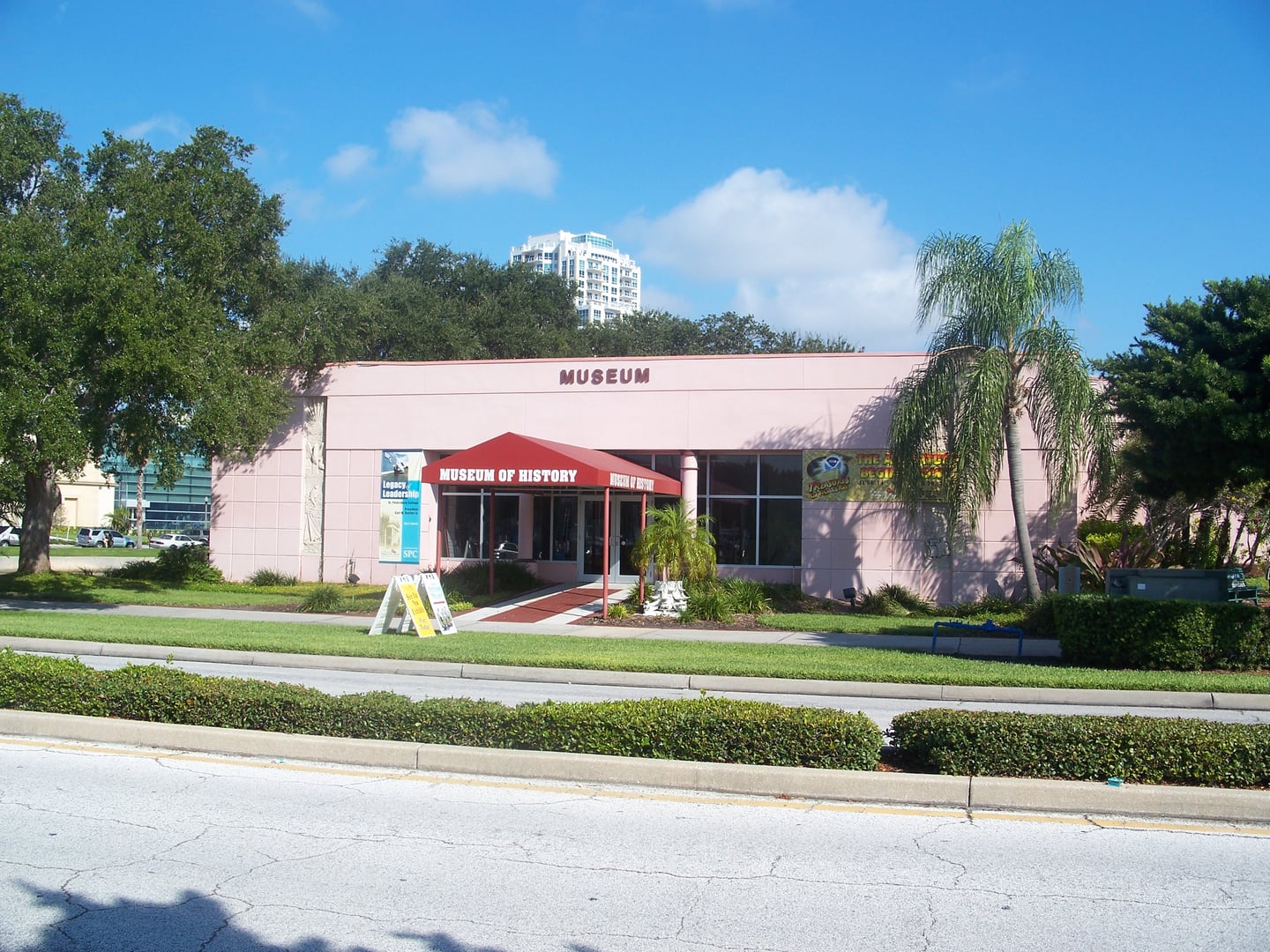
Exterior of the St. Petersburg Museum of History at 335 2nd Avenue NE, Pinellas County's oldest museum
Museum / Historical Site

St. Petersburg Museum of History

St. Petersburg, FL

Founded in 1920 by Mary Wheeler Eaton as the St. Petersburg Memorial Historical Society, the museum is the oldest in Pinellas County. Its Egyptian mummy arrived in 1925 via the Tamiami, a floating exhibit boat that traveled American waterways from 1918 to 1927; museum records show a New Kingdom woman who lived approximately 1630-1075 BCE.

$$ All Ages Family: High
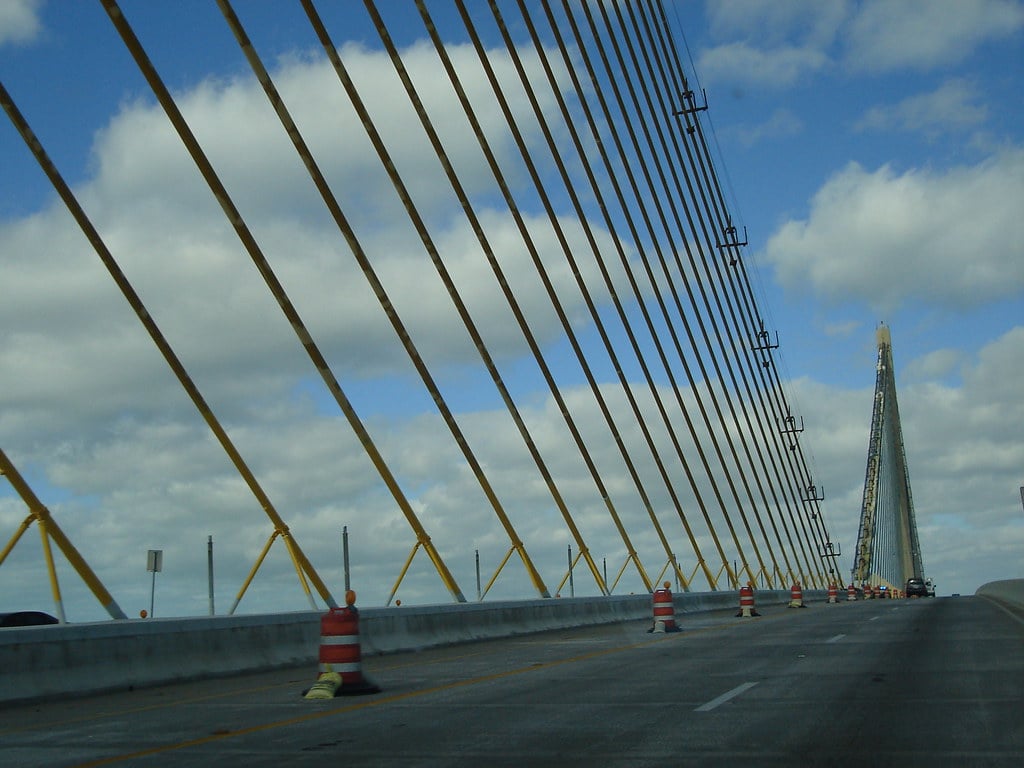
Sunshine Skyway Bridge cable-stay span over Tampa Bay at dusk
Outdoor / Natural Site

Sunshine Skyway Bridge

St. Petersburg, FL

The original Sunshine Skyway Bridge opened in 1954 and was expanded with a parallel span in 1969. On May 9, 1980, the freighter MV Summit Venture struck a support pier during a blinding storm, collapsing 1,297 feet of the southbound span and killing 35 of the approximately 48 people in vehicles on that section, including all 26 aboard a Greyhound bus. The current cable-stay bridge opened in 1987; the old piers now serve as the Skyway Fishing Pier State Park.

$ All Ages Family: Moderate
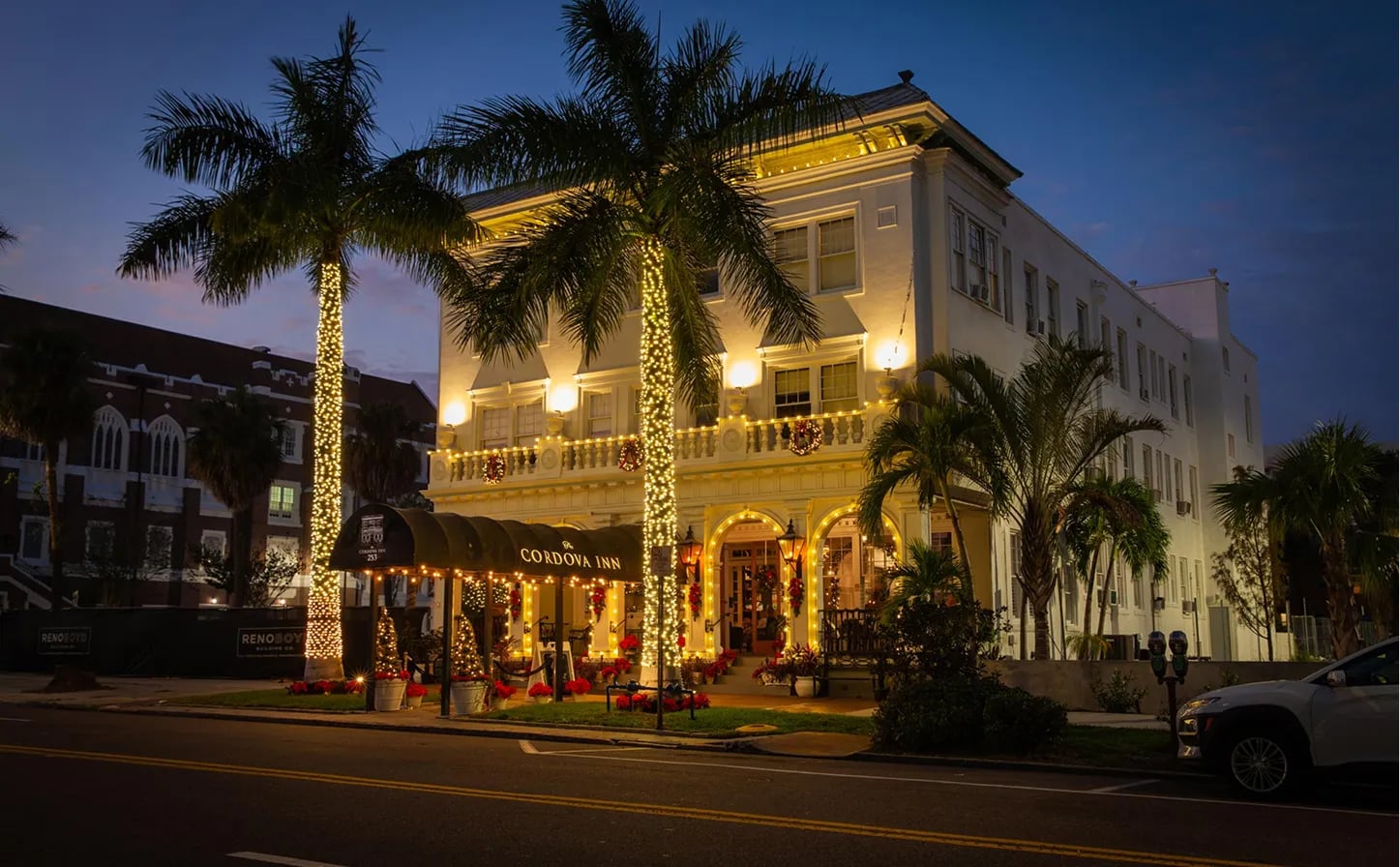
Haunted Hotel / Inn

The Cordova Inn

St. Petersburg, FL

The hotel opened in 1921 as Hotel Scott during St. Petersburg's Roaring Twenties economic boom. In 1923 it was renamed Hotel Cordova after the Cordova family, who owned and staffed it for more than thirty years. After periods of decline and ownership changes through the late twentieth century, the property was restored and won the St. Petersburg Preservation Society's Restoration of the Year Award in 2002. It now operates as a 32-room boutique inn.

$$ All Ages Family: High
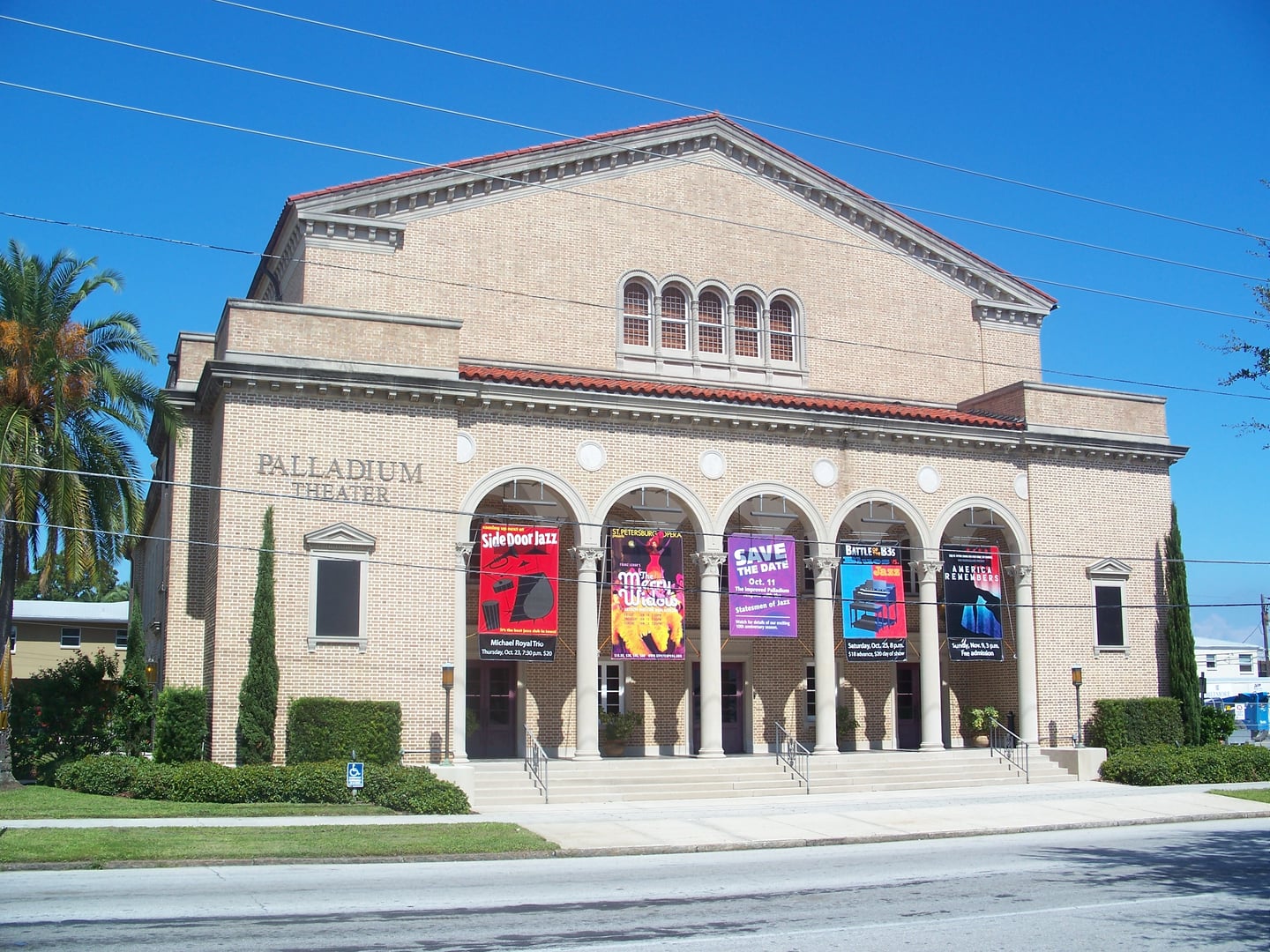
Exterior of the Palladium Theater at St. Petersburg College, housed in the 1925 former First Church of Christ Scientist building in St. Petersburg's North Shore Historic District
Theater / Performance Venue

The Palladium at St. Petersburg College

St. Petersburg, FL

The building was constructed in 1925 as First Church of Christ, Scientist, designed by architect Howard Lovewell Cheney in a Romanesque Revival style drawing on Filippo Brunelleschi's 15th-century Florentine hospital. The George A. Fuller Construction Company built it. In 1998 it was acquired and renovated as the Palladium Theater, then donated to St. Petersburg College in 2007.

$$ All Ages Family: High
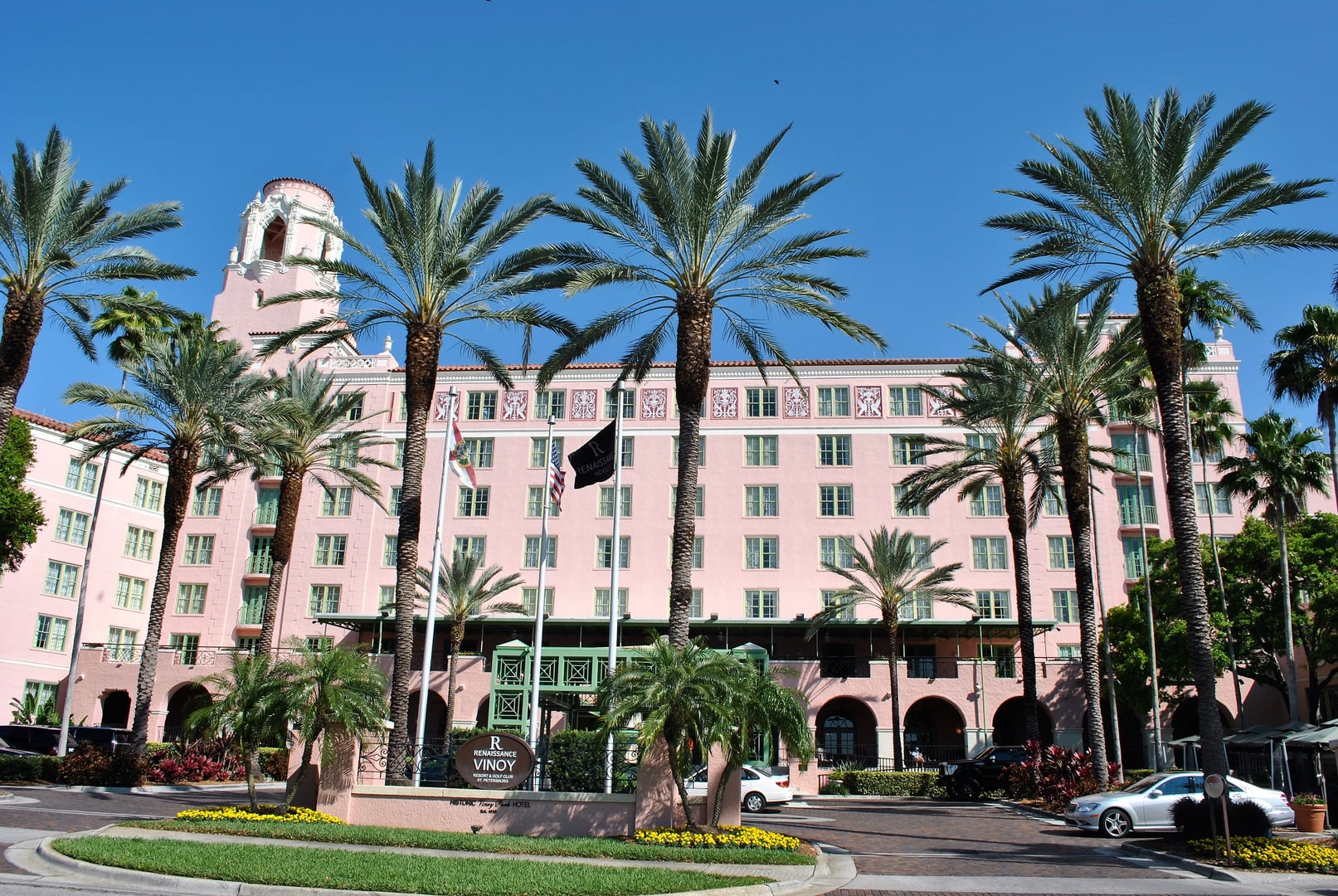
The Vinoy Resort historic pink Mediterranean Revival hotel exterior, St. Petersburg, Florida
Haunted Hotel / Inn

The Vinoy Resort & Golf Club

St. Petersburg, FL

The Vinoy Resort opened on December 31, 1925, as a Mediterranean Revival luxury hotel on the bayfront of downtown St. Petersburg, Florida. It was financed by Aymer Vinoy Laughner and designed by architect Henry L. Taylor. The hotel served as a US Army Air Forces training school during World War II, closed in 1974, and reopened in 1992 after a $93 million restoration. The Vinoy is listed on the National Register of Historic Places.

$$$$ All Ages Family: High

Fort Myers — 9

Aerial survey view of Andrew D. Gwynne Institute (former school)
Aerial survey · USDA NAIP
Other Dark Tourism Site

Andrew D. Gwynne Institute (former school)

Fort Myers, FL

The Andrew D. Gwynne Institute opened on October 19, 1911, at the corner of Second and Jackson Streets in Fort Myers. It was named for Colonel Andrew D. Gwynne, a Tennessee cotton broker whose family helped fund its construction. Built for about $45,000, it held grades through high school until a separate high school opened in 1914. The building still stands and serves as an annex for the School Board of Lee County.

$ All Ages Family: High
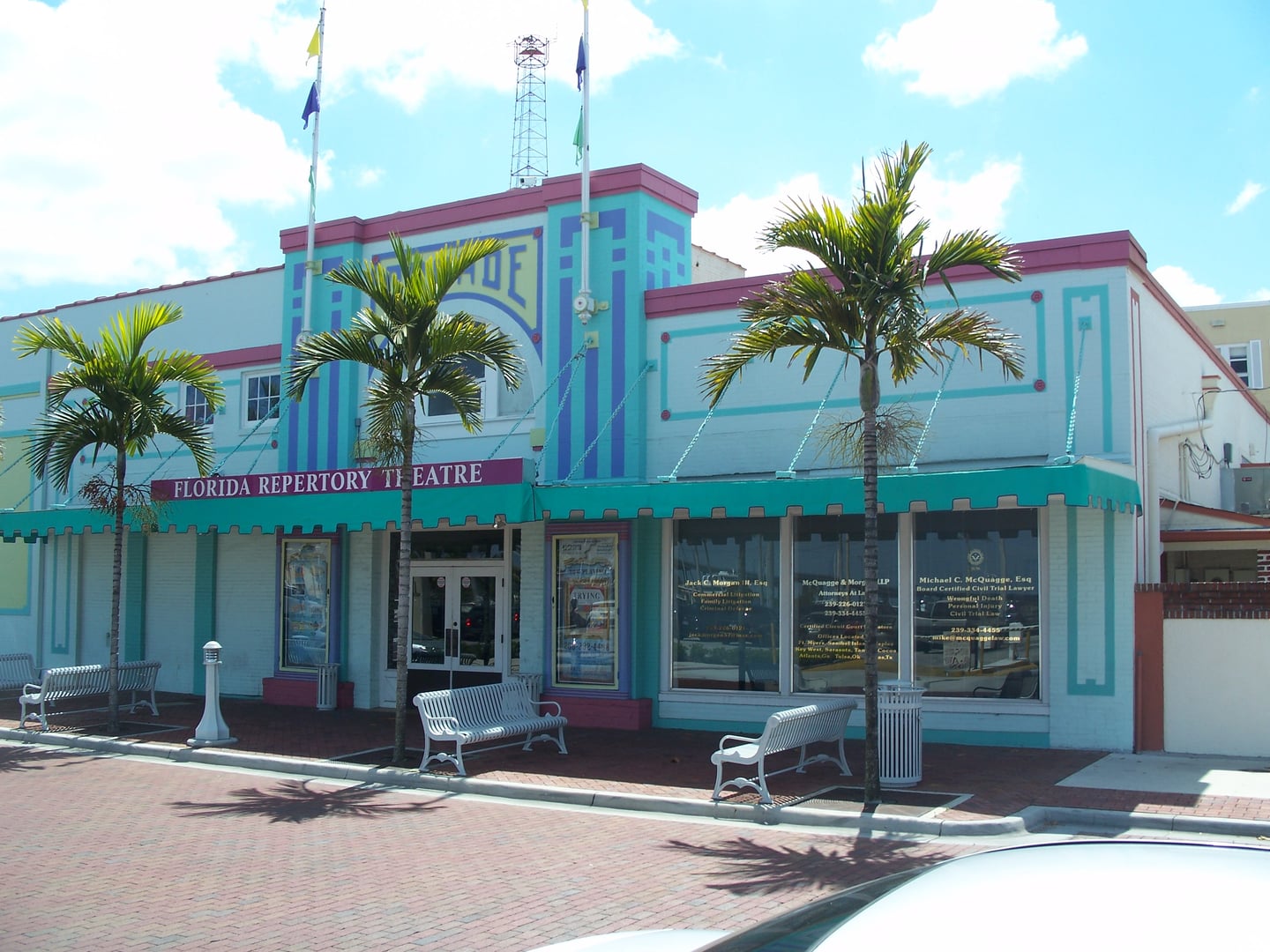
Exterior of the Arcade Theatre in Fort Myers' Downtown Commercial District
Theater / Performance Venue

Arcade Theater (Florida Repertory Theatre)

Fort Myers, FL

Brothers Harvie and Gilmer Heitman built the Arcade Theatre at 2268 Bay Street in 1915 as a vaudeville house for downtown Fort Myers. It reopened as a movie theater in February 1917, was substantially rebuilt in 1938 to architect Roy A. Benjamin's plans, and after closing in 1977 was restored and reopened in 1991. The Florida Repertory Theatre has occupied the venue since 1998.

$$ All Ages Family: Moderate
Front facade of the 1901 Murphy-Burroughs House Georgian Revival mansion in Fort Myers, Florida
Haunted House / Historic Home

Burroughs Home & Gardens (Murphy-Burroughs House)

Fort Myers, FL

John T. Murphy, a cattle rancher, built the Georgian Revival mansion in 1901 on the Caloosahatchee River as Fort Myers' first year-round luxury home. Nelson Burroughs purchased it in 1919, and in 1922 transferred ownership to his daughters Mona and Jettie. Mona Burroughs lived in the house for decades and bequeathed it to the City of Fort Myers before her death in 1978. It was added to the National Register of Historic Places in 1984 and is the only historic home of its era in Fort Myers still standing in its original location and open to the public.

$$ All Ages Family: High
Exterior of Seminole Lodge, Thomas Edison's winter home at the Edison and Ford Winter Estates, Fort Myers, FL
Museum / Historical Site

Edison & Ford Winter Estates

Fort Myers, FL

Thomas Edison built 'Seminole Lodge' on the Caloosahatchee River in 1886 after visiting Southwest Florida in 1885 on medical advice. Henry Ford purchased the adjacent property 'The Mangoes' in 1916. Together the estates became a center of botanical research, with Edison's laboratory—built in 1928—testing thousands of plants as part of a collaboration with Ford and Harvey Firestone to find domestic rubber sources.

$$ All Ages Family: Moderate
Aerial survey view of First National Bank Building (Langford-Hendry Building)
Aerial survey · USDA NAIP
Other Dark Tourism Site

First National Bank Building (Langford-Hendry Building)

Fort Myers, FL

Walter G. Langford, president of the First National Bank of Fort Myers, commissioned this bank building at the corner of First and Hendry Streets. Construction began around 1913 and the neoclassical building, with Ionic columns and a marble banking hall, was completed in 1914. It anchored the downtown commercial district through the Florida land boom and now houses professional offices in the Fort Myers River District.

$ All Ages Family: High
Aerial survey view of Fort Myers City Cemetery
Aerial survey · USDA NAIP
Cemetery / Burial Ground

Fort Myers City Cemetery

Fort Myers, FL

Fort Myers City Cemetery on Michigan Avenue is among the oldest cemeteries in the area, with roots in the 1870s. It was surveyed and platted by W. E. Loper on September 25, 1888, and was originally privately owned before the city took it over. It holds the graves of Fort Myers pioneers and early Lee County figures and remains an active municipal cemetery.

$ All Ages Family: High
Theater / Performance Venue

Laboratory Theater of Florida

Fort Myers, FL

The building at 1634 Woodford Avenue was constructed approximately 100 years ago as a church. The Laboratory Theater Company began renting the space from the Kiwanis Club in 2011 and purchased the property in 2020 after operating in the Fort Myers area since 2008.

$$ All Ages Family: Moderate
The 1915 Old Lee County Courthouse in Fort Myers, Florida, a Classical Revival building with Doric columns
True Crime Site

Old Lee County Courthouse

Fort Myers, FL

Architect Francis J. Kennard designed the Lee County Courthouse, and its cornerstone was laid on April 13, 1915. The Classical Revival building served as the county seat from its completion until 1984. Among the trials held here were the first death-penalty proceedings in Lee County history. It was added to the National Register of Historic Places on March 16, 1989, and today houses county offices including the Lee County Board of Commissioners.

$ All Ages Family: High
Haunted Dining / Bar

The Veranda Restaurant

Fort Myers, FL

Two houses on Second Street in Fort Myers were built in 1902 by Manuel Gonzalez, a member of one of the city's founding families. The properties stood separately for decades before being connected and converted into a restaurant in the late 1960s. The Veranda has operated as a fine-dining landmark since 1978 and is consistently recognized as one of the most award-winning restaurants in Southwest Florida.

$$$ All Ages Family: High

Sarasota — 8

Exterior of the Bidwell-Wood House, the oldest surviving residence in Sarasota County, now located in Pioneer Park at 1260 12th Street, Sarasota, Florida
True Crime Site

Bidwell-Wood House

Sarasota, FL

Built in 1882, the Bidwell-Wood House is the oldest surviving residence in Sarasota County. Alfred Bidwell constructed it on land his wife Mary purchased from the State of Florida for one dollar per acre. Bidwell later organized the Sara Sota Vigilance Committee, a secret group that murdered at least two residents, including Charles E. Abbe, Sarasota's first postmaster, on December 27, 1884.

$ All Ages Family: High
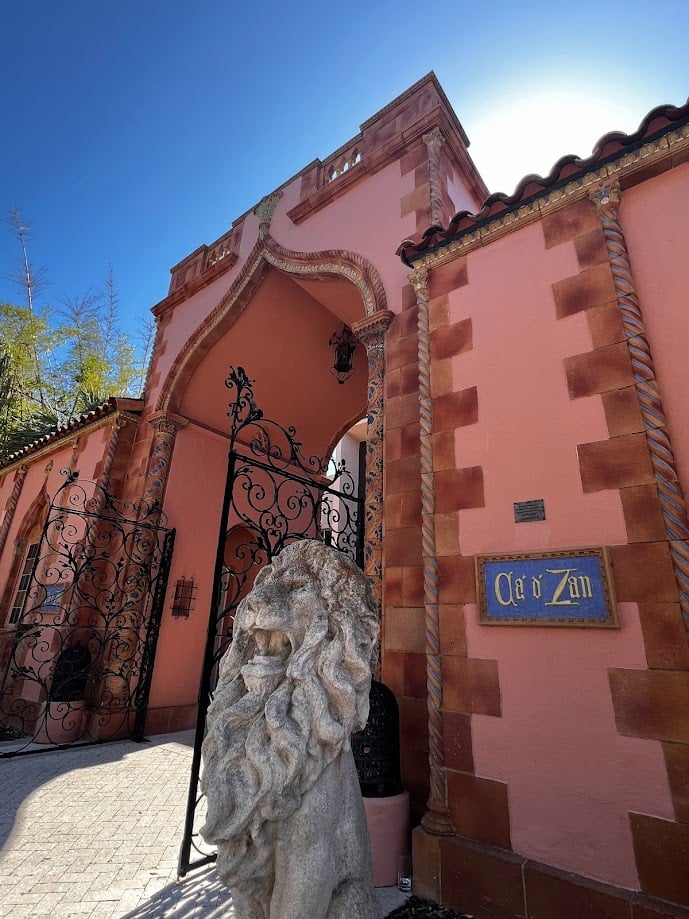
The entrance to Ca' d'Zan, the Venetian Gothic mansion of John and Mable Ringling at the Ringling Museum in Sarasota, Florida.
Haunted House / Historic Home

Ca' d'Zan (John & Mable Ringling Mansion)

Sarasota, FL

John Ringling and his wife Mable commissioned Ca' d'Zan — 'House of John' in the Venetian dialect — from architect Dwight James Baum and builder Owen Burns, completing it in 1926. The 36,000-square-foot, 56-room mansion served as the couple's winter retreat during Sarasota's boom years. Mable Ringling died of complications from Addison's disease in 1929; John died in 1936. Both are buried on the grounds.

$$ All Ages Family: High
Photo of Florida Studio Theatre (Keating Theatre)
Theater / Performance Venue

Florida Studio Theatre (Keating Theatre)

Sarasota, FL

The Sarasota Woman's Club laid the cornerstone for this building on January 1, 1915 — the same year Sarasota incorporated as a city — at the corner of Cocoanut and Palm Avenue. Founded in 1913 with 63 charter members, the club operated the clubhouse for decades before relocating. Florida Studio Theatre, founded in 1973 by Jon Spelman as an alternative touring company, moved into the building in 1977 and formally established it as the Keating Theatre. The building was added to the National Register of Historic Places in 1985 and now seats 173 as FST's primary stage.

$$ All Ages Family: High
Photo of Powel Crosley Estate
Haunted House / Historic Home

Powel Crosley Estate

Sarasota, FL

Powel Crosley Jr. — the Cincinnati industrialist who built a fortune selling auto parts by mail, then dominated early American radio broadcasting and manufactured appliances and automobiles — constructed this 11,000-square-foot, 21-room Mediterranean mansion in 1929 as a Florida winter residence for his wife Gwendolyn. Built on a 60-acre parcel on Sarasota Bay adjacent to the John Ringling estate, the steel-frame structure was completed in 135 days. Gwendolyn Crosley died in the house in 1939. Manatee County acquired the National Register property in 1982 and operates it as an event and conference venue.

$ All Ages Family: High
Keating Hall at Ringling College of Art and Design in Sarasota, Florida, the fully restored 1925 Bay Haven Hotel in Spanish Mission Revival style
Haunted House / Historic Home

Ringling College of Art and Design — Keating Hall

Sarasota, FL

Keating Hall at Ringling College of Art and Design was originally the Bay Haven Hotel, built in 1925 by the Echols Construction Company in the Spanish Mission Revival style. The hotel deteriorated during the Florida land bust and became associated with gambling and prostitution before John Ringling purchased it around 1931 and incorporated it into his new art school as classrooms and a women's dormitory.

$ All Ages Family: Moderate
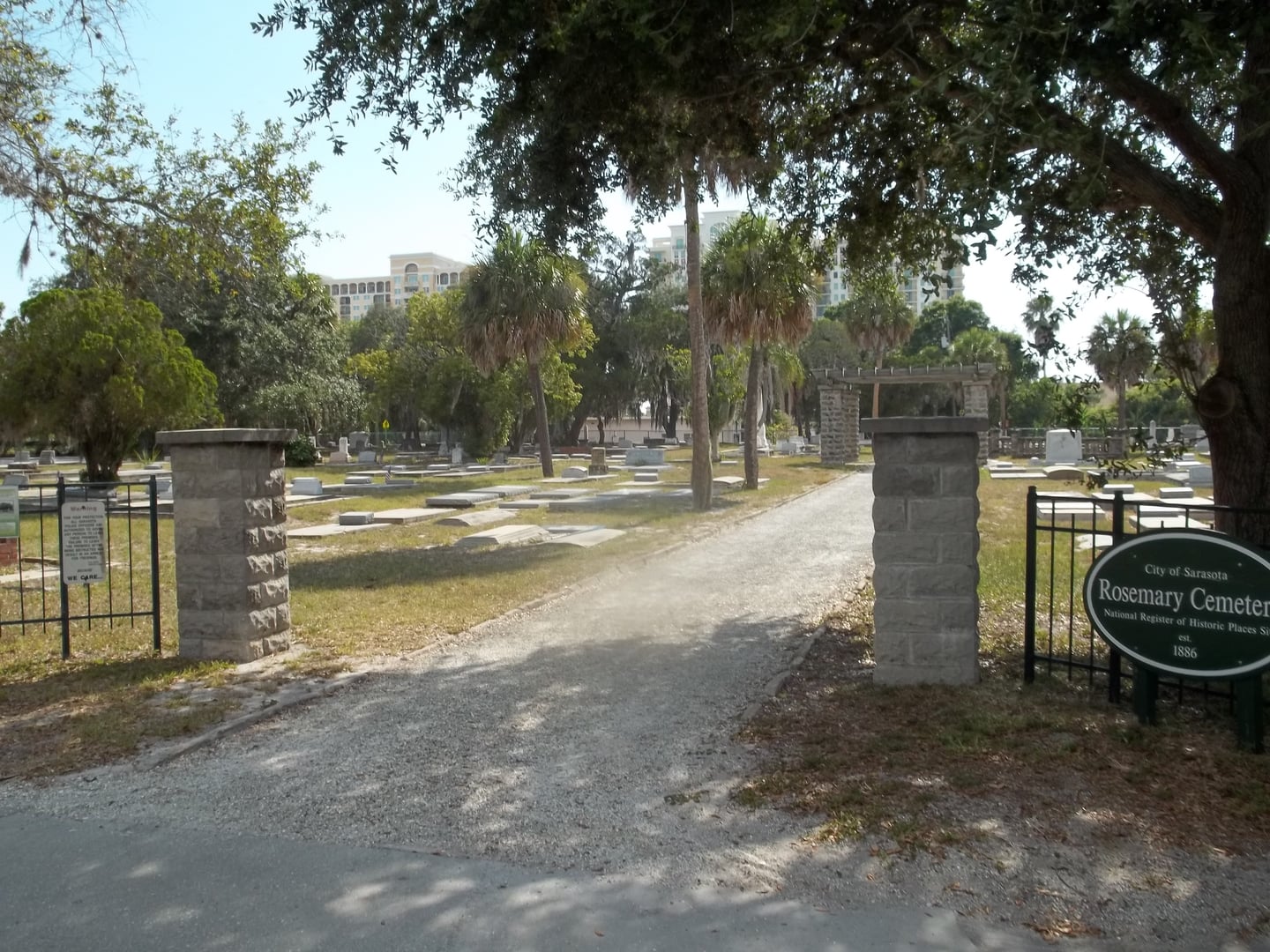
Headstones at Rosemary Cemetery in Sarasota, Florida, Sarasota's oldest public burial ground established 1887.
Cemetery / Burial Ground

Rosemary Cemetery

Sarasota, FL

Rosemary Cemetery was included in Sarasota's original 1886 town plat and received its first burial in March 1887. The approximately 740-grave site holds the remains of many of Sarasota's founding figures. It was added to the National Register of Historic Places in November 2003.

$ All Ages Family: Moderate
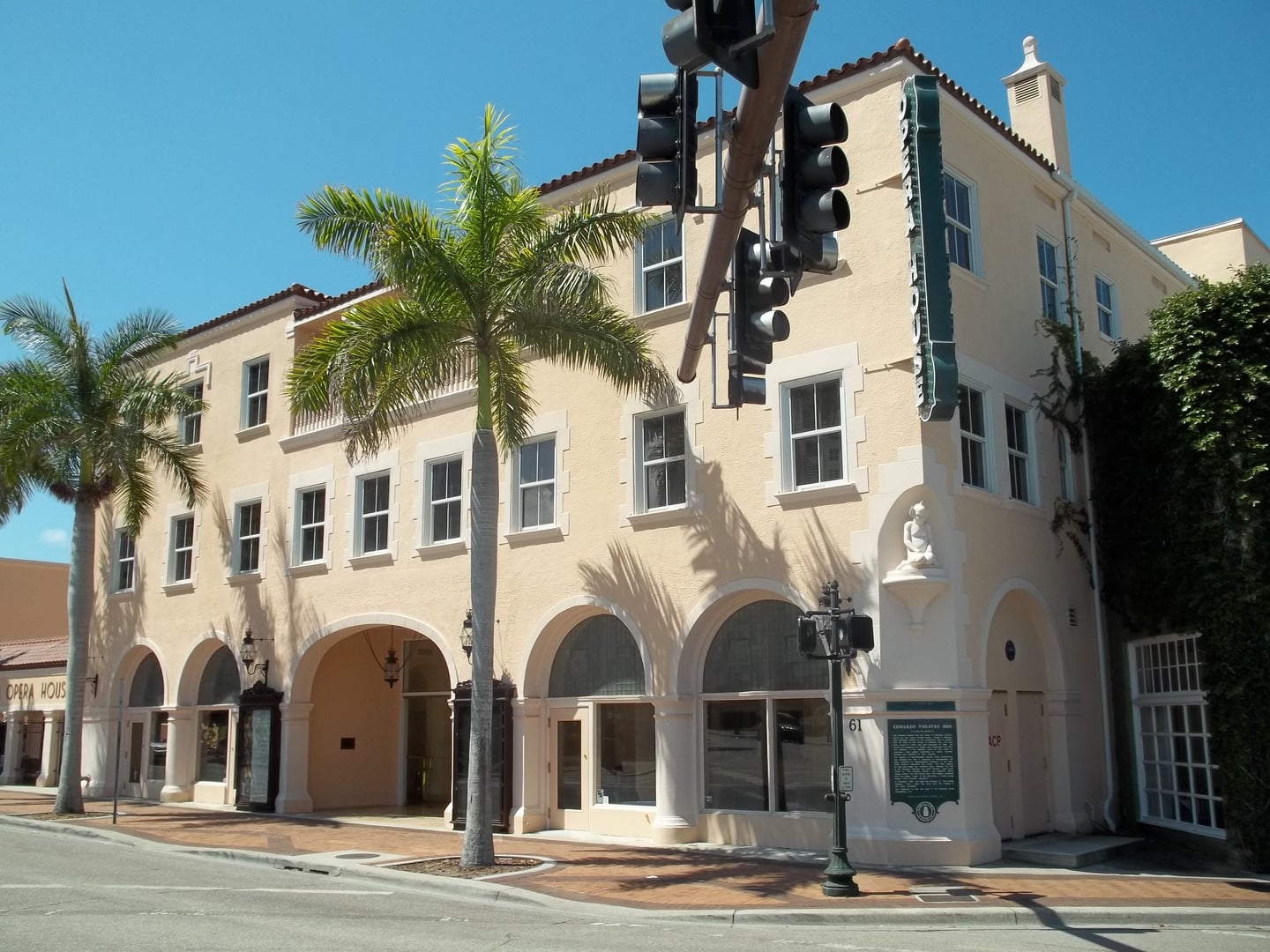
Photo of Sarasota Opera House
Theater / Performance Venue

Sarasota Opera House

Sarasota, FL

Arthur Britton Edwards, Sarasota's first mayor, commissioned architect Roy A. Benjamin to design the A.B. Edwards Theater, which opened April 10, 1926, as a Mediterranean Revival multipurpose entertainment building with shops, offices, and apartments surrounding the main auditorium. The venue hosted Will Rogers, the Ziegfeld Follies, and a February 21, 1956 Elvis Presley concert before declining to a movie house and closing in 1973. The Asolo Opera Guild purchased it in 1979 for $150,000, reopened it as an opera house in 1984, and completed a $20 million renovation in 2008 that restored the original atrium and raised capacity to 1,119 seats.

$$ All Ages Family: High
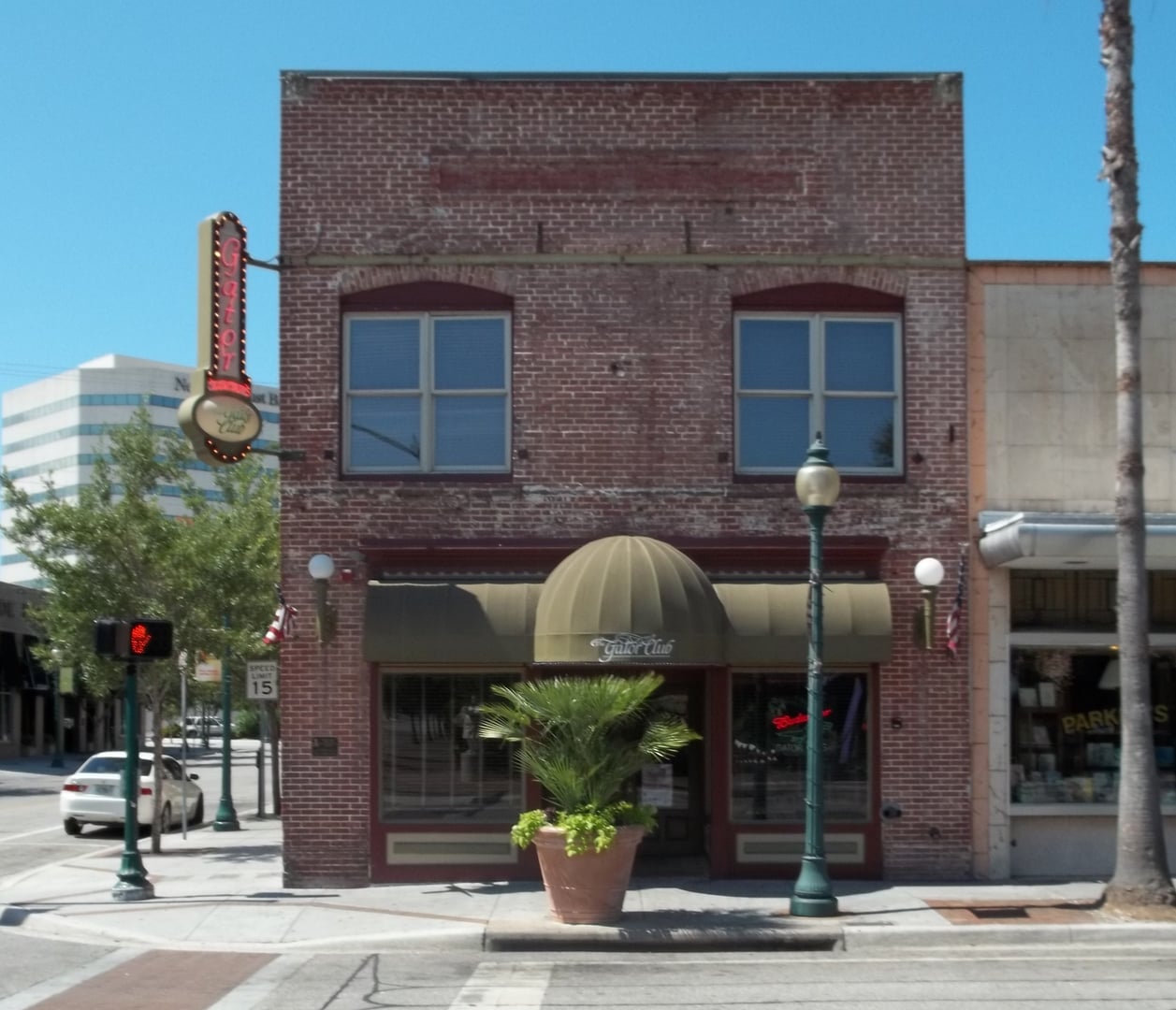
Photo of The Gator Club
Haunted Dining / Bar

The Gator Club

Sarasota, FL

The two-story masonry building at 1490 Main Street was constructed in 1912 by William David Worth as a grocery store with a family residence above. Listed on the National Register of Historic Places in 1998 as Worth's Block, the building passed through uses including a cigar shop, ice cream parlor, speakeasy, and brothel before becoming The Gator Club. Prohibition-era moonshine was found under the stairs during renovation.

$ 21+ Family: Low

Tallahassee — 8

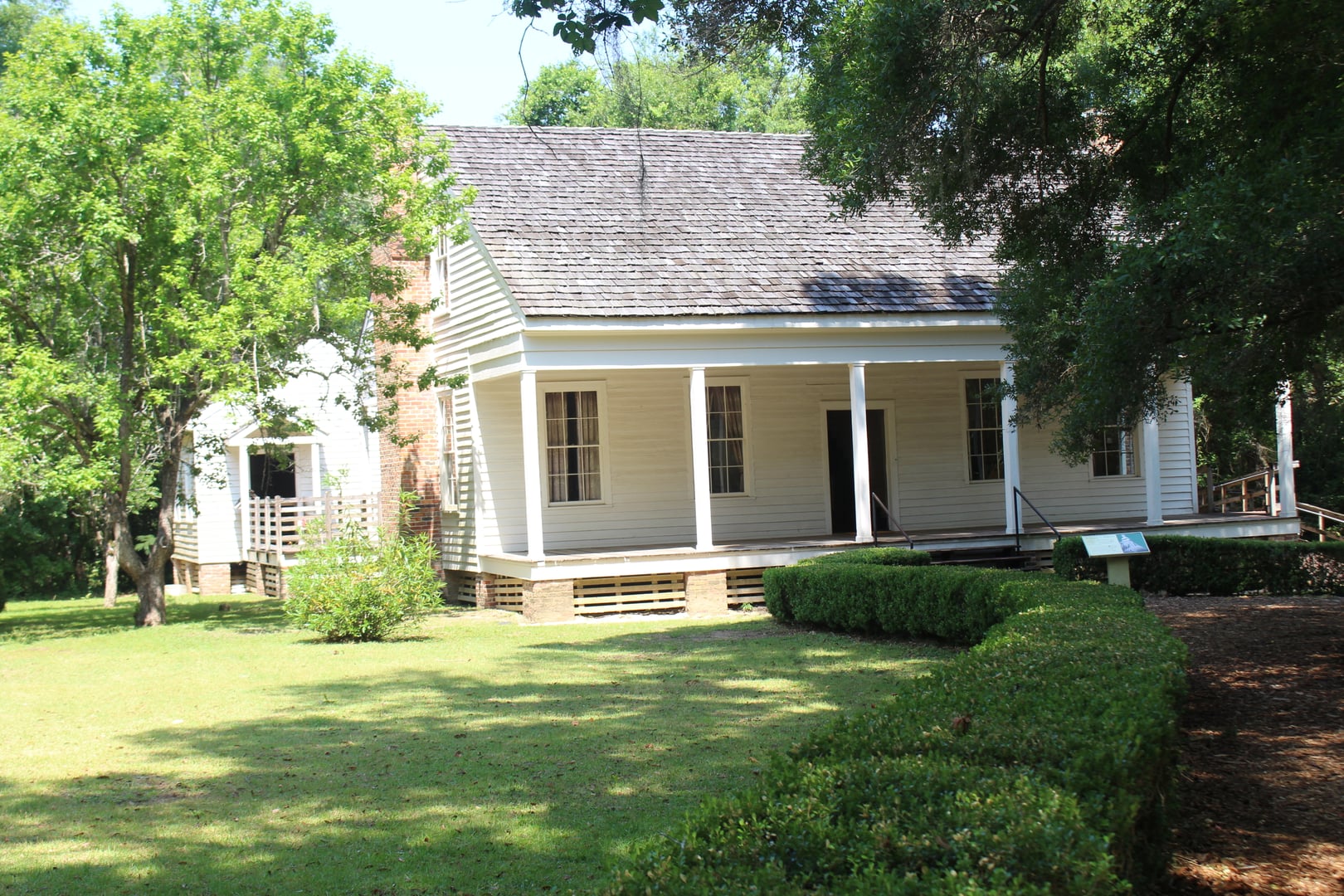
The c.1840 Bellevue Plantation house — home of Catherine Murat, great-grandniece of George Washington — now preserved at the Tallahassee Museum.
Museum / Historical Site

Bellevue Plantation at Tallahassee Museum

Tallahassee, FL

Bellevue is a c. 1840 frame plantation house that was the U.S. home of Catherine Willis Gray Murat from 1854 until her death in 1867. Catherine, a great-grandniece of George Washington, gained her royal title through her marriage to Prince Achille Murat, nephew of Napoleon. The 520-acre Jackson Bluff Road cotton plantation she owned was worked by enslaved people. The house was relocated in the 20th century to the Tallahassee Museum, where it is a permanent exhibit.

$$ All Ages Family: High
Aerial survey view of Calvin Phillips Mausoleum, Oakland Cemetery
Aerial survey · USDA NAIP
Cemetery / Burial Ground

Calvin Phillips Mausoleum, Oakland Cemetery

Tallahassee, FL

Calvin C. Phillips (1832-1919) was a New York-trained architect who came to Tallahassee in the early 20th century. In 1919, at age 87, he constructed his own mausoleum in Oakland Cemetery, finishing it in November 1919 just days before his death. He was buried in a cherry-wood coffin he had built himself. His skull was stolen from the mausoleum in 2000 and the metal door is now bolted closed.

$ All Ages Family: High
The 1927 Exchange Bank Building at 201 South Monroe Street, Tallahassee, Florida — five-story office building by architect William Augustus Edwards, the city's tallest at its 1928 opening
Other Dark Tourism Site

Exchange Bank Building (Federal Exchange Building)

Tallahassee, FL

The Exchange Bank Building, also known as the Federal Exchange Building, is a five-story 1927 William Augustus Edwards-designed office building at 201 South Monroe Street at College Avenue. It was the tallest building in Tallahassee at its opening on March 3, 1928. The building is on the National Register of Historic Places and remains an active commercial address.

$ All Ages Family: Moderate
The 1910 Collegiate Gothic Westcott Building and fountain at Florida State University, Tallahassee, atop historic Gallows Hill
Other Dark Tourism Site

FSU Westcott Building & Ruby Diamond Concert Hall (Gallows Hill)

Tallahassee, FL

The James D. Westcott Memorial Building was constructed in 1910 as the administrative center of the Florida State College for Women and is FSU's oldest standing building. Designed by William Augustus Edwards in Collegiate Gothic style, it houses the Ruby Diamond Concert Hall and faces the Westcott Fountain. The site is built over what was historically known as Gallows Hill, Tallahassee's pre-statehood execution ground established in 1829.

$ All Ages Family: Moderate
The c. 1840 main house at Goodwood Museum & Gardens, a former cotton plantation estate in Tallahassee, Florida
Museum / Historical Site

Goodwood Museum & Gardens

Tallahassee, FL

Goodwood's main house was built c. 1840 on land that was part of a 1,600-acre cotton plantation purchased in 1834 by the Croom family of North Carolina, who brought 60 enslaved people to work the property. After the Croom family's 1837 maritime disaster and a Florida Supreme Court estate case, the property passed through the Hopkins, Arrowsmith, Tiers, and Hodges families. Margaret Wilson Hodges left the 20-acre core to a charitable foundation, and Goodwood has operated as a house museum since 1996.

$$ All Ages Family: High
Haunted Dining / Bar

The Lively Building (former Leon Bar)

Tallahassee, FL

The Lively Building stands at 198 East College Avenue at the corner of Monroe Street in downtown Tallahassee. It is a late-19th-century commercial building best known for hosting the Leon Bar from 1892 to 1904, when Tallahassee enacted prohibition. The saloon era was associated with multiple shootings and at least one murder on the premises.

$ All Ages Family: Moderate
Weathered headstones beneath spreading oaks at the 1829 Old City Cemetery, Tallahassee's first public burial ground, Florida
Cemetery / Burial Ground

Old City Cemetery

Tallahassee, FL

The Old City Cemetery was established in 1829 as Tallahassee's first public burial ground and expanded during the 1840s yellow-fever epidemics. It contains the graves of 19th-century politicians, enslaved people, business owners, Civil War soldiers from both sides, and yellow-fever victims. Its most-visited monument is the 1889 obelisk of Elizabeth 'Bessie' Budd-Graham.

$ All Ages Family: High
The Columns, c. 1830 Greek Revival brick mansion with full-height columns at 100 North Duval Street in downtown Tallahassee, Florida
Haunted House / Historic Home

The Columns

Tallahassee, FL

The Columns, also known as the William 'Money' Williams House, is a Greek Revival mansion built around 1830 by banker William Williams and is one of Tallahassee's oldest surviving buildings. It was relocated from the corner of Park and Adams to 100 North Duval in 1971 and added to the National Register of Historic Places on May 21, 1975. Since 2011 the building has been owned by the James Madison Institute, which uses it as headquarters.

$ All Ages Family: High

Tampa — 8

Exterior facade of El Centro Espanol de Tampa, a 1912 red-brick clubhouse on 7th Avenue in Ybor City built as a cultural center for Spanish immigrants.
Other Dark Tourism Site

El Centro Espanol de Tampa (The Spanish Club)

Tampa, FL

El Centro Espanol de Tampa was founded in 1891 as the first Spanish mutual-aid society in Ybor City. The current red-brick clubhouse at 1526 East 7th Avenue was designed by Francis J. Kennard and completed in 1912 in a French Renaissance Revival style with Moorish and Spanish accents. The building was added to the National Register of Historic Places and designated a National Historic Landmark on June 3, 1988, and underwent a major restoration completed in 2010.

$$ All Ages Family: Moderate
Aerial survey view of Crown Colony House (former Busch Gardens Restaurant)
Aerial survey · USDA NAIP
Other Dark Tourism Site

Crown Colony House (former Busch Gardens Restaurant)

Tampa, FL

The Crown Colony Restaurant at Busch Gardens Tampa was built in 1964 and presented by August Busch Sr. to his wife Trudy as a Valentine's Day gift. The colonial-style building, with Serengeti plain views from its upper floors, operated as the park's signature fine-dining venue until closing in August 2013. The building remains in use as Oasis Pizza.

$$$ All Ages Family: High
Exterior facade of The Cuban Club (El Circulo Cubano de Tampa) in Ybor City, a 1917 Neoclassical brick clubhouse with grand arched windows and ornamental columns.
Other Dark Tourism Site

The Cuban Club (El Circulo Cubano de Tampa)

Tampa, FL

El Circulo Cubano de Tampa is the historic Cuban mutual-aid society of Ybor City. The current four-story building at 2010 Avenida Republica de Cuba was designed by Tampa architect M. Leo Elliott and completed in 1917 after a 1916 fire destroyed the society's 1908 clubhouse. It was added to the National Register of Historic Places in 1972.

$$ All Ages Family: Moderate
Aerial survey view of Fort Brooke Municipal Parking Garage
Aerial survey · USDA NAIP
Other Dark Tourism Site

Fort Brooke Municipal Parking Garage

Tampa, FL

Fort Brooke was a U.S. Army post established in 1824 at the site of present-day downtown Tampa. When the city built a parking garage at 107 N Franklin Street in 1980, construction crews uncovered the fort's forgotten cemetery containing remains of over 100 soldiers, civilians, and Seminole Native Americans from the Second Seminole War era (1835–1842). The Seminole remains were returned to the Seminole Tribe of Florida; 102 soldiers and civilians were reinterred at Oaklawn Cemetery on March 24, 1981.

$ All Ages Family: High
Exterior facade of L'Unione Italiana (The Italian Club of Tampa), a 1918 Renaissance Revival clubhouse on 7th Avenue in Ybor City with marble columns and grand entrance.
Other Dark Tourism Site

L'Unione Italiana (The Italian Club of Tampa)

Tampa, FL

L'Unione Italiana was founded in 1894 as a mutual-aid society for Italian immigrants working in Ybor City's cigar industry. Its first clubhouse was completed in 1911 and burned in 1914. The current building was designed by Tampa architect M. Leo Elliott and completed in 1918 on East 7th Avenue, where it continues to operate as the Italian Club of Tampa.

$$ All Ages Family: Moderate
Entrance gate at Oaklawn Cemetery, Tampa's first public burial ground established in 1850, in the historic Oaklawn-St. Louis Cemeteries Historic District.
Cemetery / Burial Ground

Oaklawn Cemetery

Tampa, FL

Oaklawn Cemetery was established in 1850 as Tampa's first public burial ground, deeded as a resting place for 'white and slave, rich and poor.' Located at Morgan and Harrison Streets in downtown Tampa, it contains approximately 1,700 graves including those of Tampa's first mayor Joseph B. Lancaster, cigar magnate Vicente Martinez Ybor, William and Nancy Ashley, Confederate soldiers, and victims of the 1887 yellow-fever epidemic. The cemetery and its adjoining St. Louis Catholic Cemetery were added to the U.S. National Register of Historic Places on September 19, 2017.

$ All Ages Family: Moderate
Exterior of the Old Federal Courthouse (now Le Meridien Tampa) on Florida Avenue, a 1905 Beaux Arts building with stately columns and decorative cornices.
Haunted Hotel / Inn

Old Federal Courthouse (Le Meridien Tampa, The Courthouse)

Tampa, FL

Tampa's Old Federal Courthouse opened in 1905 as the U.S. Post Office, Courthouse, and Customhouse, designed by James Knox Taylor, Supervising Architect of the U.S. Treasury. The Beaux-Arts building served as the seat of the U.S. District Court for Tampa and hosted the 1950 Kefauver Committee hearings on organized crime. After decades of federal use it was transferred to the City of Tampa in 2003 and reopened on July 14, 2014, as Le Meridien Tampa, The Courthouse, a 130-room boutique hotel.

$$$ All Ages Family: High
Tampa Theatre exterior marquee, Tampa Florida
Theater / Performance Venue

Tampa Theatre

Tampa, FL

Tampa Theatre opened on October 15, 1926, designed by atmospheric theater architect John Eberson. The interior simulates an outdoor Mediterranean courtyard under a night sky — a technique Eberson called 'atmospheric' design. The theater operated as a first-run cinema for decades, fell into decline in the 1970s, and was saved from demolition by a community preservation campaign. It is now operated by the City of Tampa as a film, event, and performance venue and is listed on the National Register of Historic Places.

$$ All Ages (ghost tours and paranormal investigations may vary) Family: High

Fernandina Beach — 7

Aerial survey view of Bosque Bello Cemetery
Aerial survey · USDA NAIP
Cemetery / Burial Ground

Bosque Bello Cemetery

Fernandina Beach, FL

Bosque Bello — Spanish for beautiful woods — was established in 1798 on Amelia Island when Fernandina was still under Spanish colonial rule. The cemetery sits on land originally part of a Spanish land grant to Domingo Fernandez and holds burials spanning more than two centuries of north Florida history.

$ All Ages Family: High
Fernandina Plaza Historic State Park bluff overlooking Amelia River, Fernandina Beach FL
Outdoor / Natural Site

Fernandina Plaza Historic State Park (Old Town)

Fernandina Beach, FL

Fernandina Plaza Historic State Park sits on a bluff above the Amelia River at what was originally Old Town, the earliest European settlement on Amelia Island. The site records more than 2,000 years of habitation, from Timucua encampments through successive Spanish, British, and American colonial periods. Fort San Carlos, a wood-and-earth fortification, was constructed here in 1816 as the northernmost military post of Spanish Florida.

$ All Ages Family: High
Haunted Hotel / Inn

Florida House Inn

Fernandina Beach, FL

Constructed between 1857 and 1859, the Florida House Inn was built to lodge executives of David Yulee's Florida Railroad Company. Union officers occupied it during the Civil War after Confederate forces withdrew from Amelia Island in spring 1862. Annie Leddy purchased the property in 1873 and ran it as a hotel for nearly four decades, hosting presidents, entertainers, and Cuban revolutionary José Martí before her death in 1908.

$$$ All Ages Family: High
Aerial view of Fort Clinch State Park's pentagonal masonry fort on Amelia Island, Florida
Battlefield / Military Site

Fort Clinch State Park

Fernandina Beach, FL

Fort Clinch on Amelia Island in northeast Florida is a Third System masonry coastal fort begun in 1847 and never fully completed. The fort changed hands twice during the American Civil War, served briefly as a Spanish-American War garrison, and is now operated as Fort Clinch State Park by the Florida Park Service.

$ All Ages Family: Moderate
The former Nassau County Jail building, now the Amelia Island Museum of History, in Fernandina Beach, Florida
Museum / Historical Site

Old Jail — Amelia Island Museum of History

Fernandina Beach, FL

The Amelia Island Museum of History occupies the former Nassau County Jail in downtown Fernandina Beach, a brick building dating to the late 19th / early 20th century. Florida's first 'spoken history' museum, it interprets more than 4,000 years of local history, from Timucuan settlement through the island's storied period under eight flags and its early-1800s era of privateers and pirates. The museum is an active institution offering exhibits, lectures, and guided tours.

$$ All Ages Family: Moderate
The Palace Saloon at 117 Centre Street, Fernandina Beach, photographed in 2008 — a two-story historic building in the Fernandina Beach Historic District
Haunted Dining / Bar

Palace Saloon

Fernandina Beach, FL

Built in 1878 as a haberdashery, the Prescott Building became the Palace Saloon in 1903 when Louis G. Hirth converted it to a bar. It outlasted more than 20 rival saloons in the harbor district, earned the nickname 'Shipcaptain's Bar,' and was reportedly the last American tavern to close on the eve of Prohibition in 1919.

$ All Ages Family: Moderate
Haunted House / Historic Home

Amelia Island Williams House

Fernandina Beach, FL

The Williams House was completed in 1856 by a wealthy Boston banker and purchased that same year by Marcellus A. Williams, a North Carolina-born merchant who became a prominent Fernandina Beach figure. The mansion was designed by New York architect Robert Sands Schuyler, who stipulated the gingerbread veranda design would never be duplicated. Jefferson Davis visited during the Civil War, and Williams later used the property as an Underground Railroad safe house, hiding freedom-seekers in a concealed room near the dining room.

$$$ All Ages Family: Moderate

Miami — 7

Photo of Alfred I. duPont Building
True Crime Site

Alfred I. duPont Building

Miami, FL

Construction on the Alfred I. duPont Building began in 1937 and was completed in 1939. Designed by architects Marsh and Saxelbye in the Modern style with Art Deco detailing, the 17-story tower at 169 East Flagler Street was the first Miami skyscraper built after the 1928 economic bust, and it housed the Florida National Bank as its principal tenant.

$ All Ages Family: Moderate
Photo of Coconut Grove Cemetery (Coconut Grove Bahamian Cemetery)
Cemetery / Burial Ground

Coconut Grove Cemetery (Coconut Grove Bahamian Cemetery)

Miami, FL

The Coconut Grove Cemetery at 3650 Charles Avenue is the primary Bahamian immigrant burial ground for Coconut Grove's founding Black community. The property was purchased in 1913 for $140 by five families — Burrow, Higgs, Reddick, Ross, and the E.W.F. Stirrup families — who continue to administer it through the Coconut Grove Cemetery Association.

$ All Ages Family: High
The Charles Deering Estate in Miami, Florida — the historic Richmond Cottage and Stone House on the 444-acre estate
Museum / Historical Site

Deering Estate

Miami, FL

Chicago industrialist Charles Deering began acquiring land here in 1913, purchasing the existing Richmond Cottage (built 1896 by S. Howard Richmond) in 1916 and completing his 13,000-square-foot Stone House in 1922. The 444-acre estate sits on a ridge of the Miami Rock Ridge that includes the Cutler Burial Mound, a prehistoric Tequesta burial site holding approximately 12 to 18 individuals, disturbed by development beginning in the 1860s. Deering worked with botanists David Fairchild and John Kunkel Small to restore the native landscape. He died in 1927; Florida purchased the property in 1986.

$$ All Ages Family: High
Photo of Miami City Cemetery
Cemetery / Burial Ground

Miami City Cemetery

Miami, FL

Established in 1897, Miami City Cemetery is the only municipal cemetery in Miami-Dade County and holds approximately 9,000 burials. It is also Miami's oldest continuously operating cemetery, with the first recorded burial on July 20, 1897.

$ All Ages Family: High
Haunted Hotel / Inn

Mutiny Hotel (former Mutiny Club)

Miami, FL

Built in 1968 as the Sailboat Bay apartment complex and converted to hotel units in 1976, the Mutiny operated a members-only nightclub that became the social center of Miami's cocaine trade through the late 1970s and 1980s. Drug kingpins, celebrities, musicians, and confirmed federal law enforcement operatives commingled in the property's velvet-draped suites.

$$$ All Ages Family: Moderate
Photo of Villa Paula
Other Dark Tourism Site

Villa Paula

Miami, FL

Villa Paula was built in 1926 by the Cuban government as its Miami consulate and the residence of Consul Domingo Milord and his wife, Paula. Designed by Havana architect Cayetano Freira with all materials imported from Cuba, the neoclassical building closed as a consulate by 1930 and has passed through several private owners. The City of Miami designated it a historic landmark in 1983. It has operated as a private art gallery since 2015.

$$ All Ages Family: High
Photo of Vizcaya Museum and Gardens
Museum / Historical Site

Vizcaya Museum and Gardens

Miami, FL

Industrialist James Deering began construction on Vizcaya in 1912 and took up residence on Christmas Day 1916. Built with a workforce that at peak employed 10 percent of Miami's population, the estate cost $15 million and reflects the collaborative vision of architect F. Burrall Hoffman and design director Paul Chalfin. Deering died aboard a steamship in September 1925, and his nieces sold most of the surrounding land to the Catholic Diocese by 1945. Miami-Dade County acquired the villa and gardens in 1952 for $1 million, opening it as an art museum the following year.

$$ All Ages Family: High

Fort Lauderdale — 6

Museum / Historical Site

Fort Lauderdale Fire and Safety Museum

Fort Lauderdale, FL

Built in 1927, Station No. 3 on West Las Olas Boulevard served Fort Lauderdale firefighters for more than seven decades before the city decommissioned it after 2004. The building was then renovated and reopened as the Fort Lauderdale Fire and Safety Museum, displaying historic equipment, uniforms, and documentation of the department's history. The station's most-cited ghost is Robert Leland Knight, the first Fort Lauderdale firefighter killed in the line of duty, who died in 1940.

$ All Ages Family: High
Exterior of the New River Inn in Fort Lauderdale, Florida — a 1905 concrete-block hotel listed on the National Register of Historic Places, now operated as a history museum
Museum / Historical Site

History Fort Lauderdale at the New River Inn

Fort Lauderdale, FL

Nathan Philemon Bryan, a Jacksonville-born U.S. senator, commissioned the New River Inn in 1905. Contractor Edwin T. King built it from hollow concrete blocks and sand dredged from the nearby beach — construction methods that set standards for the region. One of the first hotels in Fort Lauderdale, it operated until 1955, then housed the Museum of Discovery and Science from 1976 to 1992. The Fort Lauderdale Historical Society has managed it as a history museum since then.

$ All Ages Family: High
Exterior of the King-Cromartie House in Fort Lauderdale, Florida — a two-story Dade County pine structure built in 1907, part of the Old Fort Lauderdale Village campus
Haunted House / Historic Home

King-Cromartie House

Fort Lauderdale, FL

Contractor Edwin T. King built the house in 1907 from milled Dade County pine, using ship-salvaged timber for the floor joists — standard practice in a region without an established lumber supply. The structure passed to King's family, and Louise King Cromartie, a young family member, died in the house during a 1920s epidemic. The building stood downtown until 1971, when it was relocated to the Old Fort Lauderdale Village campus adjacent to the New River Inn.

$ All Ages Family: High
New River Inn at History Fort Lauderdale, 1905 historic two-story building in Fort Lauderdale, Florida
Museum / Historical Site

New River Inn (History Fort Lauderdale)

Fort Lauderdale, FL

The New River Inn was built in 1905 by contractor Edwin T. King for Nathan Philemon Bryan, a Jacksonville-based lawyer and future U.S. senator. Its hollow concrete-block construction — using sand dredged from the nearby beach — established building standards for the region. The 24-room hotel operated until 1955, was added to the National Register of Historic Places in 1972, and now serves as the centerpiece of the History Fort Lauderdale museum complex at 231 SW 2nd Avenue.

$$ All Ages Family: High
Exterior of the Historic Stranahan House in Fort Lauderdale, Florida — a two-story wood-frame structure built in 1901, now a National Register of Historic Places museum
Haunted House / Historic Home

Historic Stranahan House Museum

Fort Lauderdale, FL

Frank Stranahan built the two-story structure in 1901 as a trading post on the New River, Fort Lauderdale's first commercial center. His wife Ivy taught Seminole children at the site and became a prominent suffragist. After financial losses in the 1926 Florida land bust, Frank drowned himself in the New River on May 22, 1929. The building was listed on the National Register of Historic Places in 1973 and opened as a museum in 1984.

$ All Ages Family: High
Aerial survey view of Sunrise Hall — Art Institute of Fort Lauderdale Dormitory
Aerial survey · USDA NAIP
Other Dark Tourism Site

Sunrise Hall — Art Institute of Fort Lauderdale Dormitory

Fort Lauderdale, FL

Sunrise Hall served as student housing for the Art Institute of Fort Lauderdale, a for-profit art and design college. The dormitory occupied a building originally constructed around 1962 as the Carriage House Motor Lodge (later the River Inn), which was converted to college housing in 1992. The Art Institute of Fort Lauderdale announced its closure in July 2018 and ceased operations in December 2018.

$ All Ages Family: Low

Apalachicola — 5

Historic tombstones ranging from 1830s vertical slabs to Victorian marble monuments at Chestnut Street Cemetery in Apalachicola, Florida
Cemetery / Burial Ground

Chestnut Street Cemetery

Apalachicola, FL

Chestnut Street Cemetery is the oldest burying ground in Apalachicola, with the oldest marked stone dated 1831. Named for what is now Avenue E (U.S. 98), it holds approximately 540 marked graves plus many unmarked. The cemetery contains at least 79 Confederate and 7 Union veterans, including men who served at Pickett's Charge at Gettysburg, and the graves of notable citizens including botanist Dr. Alvin Wentworth Chapman and Captain Leander Crawford, whose steamboat exploded in 1860 killing nine people.

$ All Ages Family: High
Exterior of the Coombs House Inn at 80 6th Street, Apalachicola, Florida, built 1905
Haunted Hotel / Inn

Coombs House Inn

Apalachicola, FL

James N. Coombs built the house at 80 Sixth Street in 1905 as a private residence. When a fire damaged the home in 1911, the Coombs couple moved to a hotel during repairs. Mrs. Coombs died of grief at the hotel; Mr. Coombs died of heart failure three weeks later. Both are buried in Chestnut Street Cemetery, across the street from the home they built. The property is now a 24-room inn across three historic structures.

$$$ All Ages Family: High
Exterior of the Gibson Inn at 51 Ave C in Apalachicola, Florida, a 1907 three-story Victorian hotel
Haunted Hotel / Inn

Gibson Inn

Apalachicola, FL

The Gibson Inn was built in 1907 as the Franklin Hotel at the height of Apalachicola's lumber and shipping trade. Sisters Annie Gibson Hayes and Mary Ellen Gibson purchased and renamed it in 1923. During World War II, the U.S. Army requisitioned it as officers' quarters near Camp Gordon Johnston. It is listed on the National Register of Historic Places.

$$$ All Ages Family: High
Exterior of the historic Gibson Inn, a three-story Victorian wood-frame inn in the Apalachicola Historic District, Florida
Haunted Hotel / Inn

The Gibson Inn

Apalachicola, FL

The Gibson Inn was built in 1907 in Apalachicola, Florida by James Fulton Buck as the Franklin Hotel. In 1923, sisters Annie and Mary Ella 'Sunshine' Gibson purchased the property and renamed it. The hotel served as U.S. Army officers' quarters beginning in 1942. It was added to the National Register of Historic Places in 1985 and reopened that year after a major rehabilitation.

$$ All Ages Family: Moderate
The 1838 Orman House in Apalachicola, Florida, a Greek Revival antebellum mansion now operated as a Florida State Park
Museum / Historical Site

Orman House Historic State Park

Apalachicola, FL

Thomas Orman built this Greek Revival mansion in 1838 after relocating to Apalachicola and entering the cotton trade. He purchased cotton from riverboats arriving via the Apalachicola River and resold the cargo to ocean-going vessels bound for mills in New England and Europe. By the late 1830s, Apalachicola had grown into the third busiest port on the Gulf Coast, and Orman's business made him one of the town's wealthiest citizens. The house remained in the family for 165 years until 1994, when the last Orman descendant sold it; Florida acquired it in 2001 and made it a state park.

$ All Ages Family: High

Ocala — 5

Aerial survey view of Evergreen Cemetery (Ocala)
Aerial survey · USDA NAIP
Cemetery / Burial Ground

Evergreen Cemetery (Ocala)

Ocala, FL

Established July 8, 1850, as Ocala's first public burial ground, Evergreen Cemetery holds approximately 500 graves spanning Ocala's entire history — city founders, Civil War veterans from both Union and Confederate sides, Ocala's first mayor, and formerly enslaved and free Black residents in a segregated eastern section. In 1965 the Progressive Community Association placed a plaque at the eastern gate renaming it the Rueben Mitchell Memorial Garden, in memory of enslaved individuals and early settlers for whom the section was the final resting place. Confederate Brigadier General Robert Bullock, who served in the Army of Tennessee and later represented the region in Congress, is the most prominent figure buried here.

$ All Ages Family: High
The reconstructed Fort King fortress in Ocala Florida, a wooden palisade structure surrounded by trees
Battlefield / Military Site

Fort King National Historic Landmark

Ocala, FL

Fort King was established in March 1827 as a U.S. Army outpost in north-central Florida, named for Colonel William King of the 4th Infantry. It became the flashpoint of the Second Seminole War — the longest and most expensive Indian conflict in U.S. history — when Osceola's war party killed Indian Removal Agent Wiley Thompson and Lieutenant Constantine Smith on December 28, 1835, coordinated simultaneously with the Dade Massacre to the south. The fort was burned in May 1836, rebuilt in 1837, and after the war's end in 1842 became the nucleus of present-day Ocala and Marion County. It was designated a National Historic Landmark in 2004, and a replica fort was reconstructed on the original site in 2017.

$ All Ages Family: High
Aerial survey view of Kerr City
Aerial survey · USDA NAIP
Outdoor / Natural Site

Kerr City

Ocala, FL

Kerr City was founded in 1884 by George Smiley along a stagecoach route near Lake Kerr in the Ocala National Forest. The settlement grew a post office, schoolhouse, church, hotel, sawmill, and general store, and at its peak supported roughly 100 residents whose livelihood was tied to Florida's citrus boom. The back-to-back freezes of 1894-95, known as the Great Freeze, destroyed the groves and emptied the town. The post office, established in 1884 and renamed Lake Kerr in 1888, stayed open until 1942.

$ All Ages Family: High
Entrance to the Ritz Historic Inn at 1205 East Silver Springs Boulevard in Ocala, Florida, a 1925 Mission-style building on the National Register of Historic Places
Haunted Hotel / Inn

Ritz Historical Inn

Ocala, FL

The Ritz Apartment was constructed in 1925 by Bert Acker and Ocala judge Simeon Sistrunk in Mission/Spanish Colonial Revival style, designed by architect Frederick T. Uezzell. Originally the Ritz-Acker Apartments with 16 units, it was expanded during WWII and added to the National Register of Historic Places on August 21, 1986. Volunteers of America Florida took over the building around 2010 to provide housing for homeless veterans.

$ All Ages Family: Moderate
Haunted Hotel / Inn

Seven Sisters Inn (Rheinauer House)

Ocala, FL

The Rheinauer House was constructed in 1891 and purchased by Charles and Emma Rheinauer in 1895. Charles, born in Germany in 1846 and a significant figure in Ocala's Jewish community, built a dry goods business with his brother, served as Ocala's mayor in 1906, founded the city's Board of Trade and Merchants National Bank, and is credited with collaborating with Cuban independence leader José Martí on a cigar venture. He lived in the house until his death in 1925; Emma survived him by 17 years, dying in 1942. The building is a contributing structure in the Ocala Historic District on the National Register of Historic Places.

$$ All Ages Family: High

Sanford — 5

Haunted Dining / Bar

Hollerbach's German Restaurant

Sanford, FL

Theo and Linda Hollerbach opened Hollerbach's German Restaurant at 205 E 1st Street in Sanford in 2001, building it into one of the Central Florida region's most recognized independent German dining destinations. The historic downtown Sanford building dates to the commercial construction boom following Sanford's 1887 fire, which led the city to replace wooden structures with brick. The 2020 Hollerblock expansion extended the restaurant to 665 seats and added a rooftop biergarten.

$$ All Ages Family: High
Aerial survey view of I-4 Dead Zone (St. Joseph's Colony Graves)
Aerial survey · USDA NAIP
Outdoor / Natural Site

I-4 Dead Zone (St. Joseph's Colony Graves)

Sanford, FL

In the 1870s, Henry Sanford sold 640 acres on the south shore of Lake Monroe to a group of German immigrants who founded St. Joseph's Catholic Colony under the oversight of Catholic priest Felix Swembergh. A yellow fever outbreak in 1887 killed four members of the colony — two adults and two children — and the surviving settlers buried them in the woods and abandoned the site. Father Swembergh, summoned for last rites, traveled to Tampa and died of the fever himself before he could return, leaving the grave locations poorly documented. When Interstate 4 was constructed in 1960, the graves were identified and marked for relocation — but they were never moved. Workers instead dumped fill dirt over the site to elevate the roadbed.

$ All Ages Family: High
Haunted Hotel / Inn

Mayfair Hotel (Hotel Forrest Lake)

Sanford, FL

Forrest Lake, Sanford's mayor and a Seminole County Bank founder, began construction of the Hotel Forrest Lake in 1916 and opened it in 1925 — a 158-room Mediterranean Revival structure on Lake Monroe's shore. The bank collapsed in August 1927, and Lake was convicted on embezzlement charges; after five jury trials he received a 14-year sentence in 1928, eventually serving six years before a gubernatorial pardon. The hotel closed around 1928, was purchased by the city in 1930 and renamed the Mayfair Hotel, then cycled through the New York Giants as spring training headquarters, a naval academy program, and New Tribes Mission (later Ethnos360) as a missionary training center from 1977 to 2016.

$ All Ages Family: High
Aerial survey view of Sanford Fire Station No. 1
Aerial survey · USDA NAIP
Other Dark Tourism Site

Sanford Fire Station No. 1

Sanford, FL

Sanford's first fire station was built in 1887 at 109 South Palmetto Avenue. The original three-story structure housed the fire department on the ground floor, with a jail and courtroom on the upper floors. In 1923, convicted murderer Percy Bayliss was hanged behind the building — the only recorded legal execution in Seminole County history. The third floor was removed in 1928 due to structural deterioration. The building was later converted and is now a private residence.

$ All Ages Family: Moderate
Haunted Dining / Bar

Wop's Hops Brewing Company

Sanford, FL

The building at 419 Sanford Ave dates to 1916 and served as a fish market — most notably Stokes' Seafood Market from 1938 to 1992 — as well as a meat business, women's wear store, and campaign office before sitting vacant for stretches. Peter Minelga and Greg Piecora opened Wop's Hops Brewing Company here in October 2014, making it Sanford's first craft brewery.

$ All Ages Family: Moderate

Bradenton — 4

Tabby walls of Braden Castle ruins in Bradenton, Florida, remnants of the 1850 sugar plantation manor
Outdoor / Natural Site

Braden Castle Ruins

Bradenton, FL

Brothers Dr. Joseph Addison Braden and Hector Braden arrived from Tallahassee in the early 1840s under the Armed Occupation Act of 1842. Construction of the two-and-a-half-story tabby manor began in 1850 on their 1,100-acre sugar plantation, using enslaved labor to harvest oyster shells from the Braden River at low tide for the building material. The plantation exported sugarcane to New Orleans and was one of the largest in the territory.

$ All Ages Family: High
Haunted Hotel / Inn

Hampton Inn & Suites Historic Downtown Bradenton (former Manatee River Hotel)

Bradenton, FL

Construction began in August 1925, and the Manatee River Hotel opened in 1926 as a Mediterranean Revival landmark financed by investor H.C. Van Sweringen and a consortium of Bradenton business families. The $850,000 project was nicknamed the 'Pink Palace' and expected to be among the most imposing structures in the state.

$$$ All Ages Family: High
Theater / Performance Venue

Manatee Performing Arts Center

Bradenton, FL

The Manatee Players community-theater group formed in 1947. In 1953, with start-up funding from Dr. Sugg and Edward and Lillian Bishop, the troupe built the Riverfront Theatre — Bradenton's first community playhouse — on the Manatee River; it opened that December with 'I Remember Mama.' The aging building was later demolished and replaced by the modern Manatee Performing Arts Center on the same downtown riverside site.

$$ All Ages Family: High
Museum / Historical Site

Manatee Village Historical Park (Manatee Burying Ground & 1887 Church)

Bradenton, FL

The 1850 Manatee Burying Ground is the oldest established cemetery in Manatee County, founded in 1850 and closed to new interments in 1892. A 1976 survey recorded 94 marked graves; ground-penetrating radar in 2019 identified up to 135 additional unmarked burial features below the surface. The adjacent 1887 Methodist church — the first Christian congregation south of Tampa on the Florida mainland — was started in 1887 but could not be completed until 1889 after a yellow fever epidemic killed the pastor and many congregation members.

$ All Ages Family: High

Daytona Beach — 4

Haunted Dining / Bar

Boot Hill Saloon

Daytona Beach, FL

The building at 310 Main Street dates to the 1920s and previously housed the Kit Kat Club, one of Daytona Beach's most popular gathering spots of the era. As motorcycle culture expanded, the club changed hands; bartender Dennis MaGuire bought it and opened the Boot Hill Saloon in 1973, welcoming the biker community and naming the bar for the Pinewood Cemetery directly across the street.

$ 21+ Family: Low
Theater / Performance Venue

Daytona Playhouse

Daytona Beach, FL

The Daytona Playhouse organization formed in January 1947 as the Daytona Beach Little Theatre and was chartered the following year. After a 1951 fire destroyed its first permanent location, the group purchased a Halifax River lot in 1954 and opened its purpose-built theatre on March 25, 1956. The building was renovated with ADA improvements in 2015–2016 and expanded again in 2023–2024.

$ All Ages Family: High
Museum / Historical Site

Lilian Place Heritage Center

Daytona Beach, FL

Lilian Place was built in 1884 by Lawrence Thompson, one of Daytona Beach's founding settlers, making it the oldest surviving Victorian home on the beachside. After the SS Commodore sank offshore on January 2, 1897, author Stephen Crane — one of four survivors — was taken to the house to recover. His harrowing 30 hours in a lifeboat became the basis for 'The Open Boat.'

$ All Ages Family: High
Pinewood Historic Cemetery grounds in the Daytona Beach Surfside Historic District, with historic markers and stone walls visible
Cemetery / Burial Ground

Pinewood Historic Cemetery

Daytona Beach, FL

Pinewood Historic Cemetery, also called Peninsula Cemetery, is the oldest cemetery on the beachside of Daytona Beach, Florida. The land traces to a purchase in the 1870s and the first documented burials in the 1880s, and it holds the graves of more than 1,700 people including many of the town's prominent early citizens. A nonprofit corporation now leads its preservation.

$ All Ages Family: Moderate

Jacksonville Beach — 4

Spanish-Mediterranean Revival oceanfront facade of the 1925 Casa Marina Hotel in Jacksonville Beach, Florida — a National Register hotel with century of paranormal reports
Haunted Hotel / Inn

Casa Marina Hotel

Jacksonville Beach, FL

The Casa Marina opened June 6, 1925 in Jacksonville Beach as a Spanish-Mediterranean Revival oceanfront hotel — two stories of stucco and concrete with one of Jacksonville's first automatic sprinkler systems. Notable early guests included Rockefellers, the Duke and Duchess of Windsor, Roosevelts, Charlie Chaplin, Jean Harlow, Buster Keaton, Mary Pickford, and Fatty Arbuckle. Mobsters Al Capone and Machine Gun Kelly reportedly used the hotel as a base.

$$$ All Ages Family: High
Haunted Dining / Bar

Ginger's Place

Jacksonville Beach, FL

The building at 1318 Beach Blvd was constructed in 1950 and served successive commercial tenants — a dress shop, grocery store, and glass shop — before Darlene Edith 'Ginger' Payson opened her bar there in 1976. Payson had worked as a burlesque performer across Jacksonville for decades, with acts including 'Tiza, The Girl in the Goldfish Bowl' and 'The Original Shower Girl.' Three of her sons were killed in a shrimping accident; their bodies washed ashore near the building. Payson operated the bar until her death in 2003.

$ 21+ Family: Low
Haunted Dining / Bar

The Homestead Restaurant (Now TacoLu)

Jacksonville Beach, FL

The log cabin at 1712 Beach Boulevard in Jacksonville Beach was built in 1934. Alpha Paynter — born Alpha Pullen in 1887, later divorced and settled at the beach — inherited the structure and opened it as a boarding house before converting it to The Homestead Restaurant. Under Paynter's ownership and after her death in 1962, the Homestead served Southern cooking for nearly eight decades, becoming one of the First Coast's most enduring dining institutions. The building closed as the Homestead at the end of 2010 and reopened as TacoLu Baja Mexicana in 2012.

$$ All Ages Family: High
Haunted Dining / Bar

TacoLu Baja Mexicana (Alpha Paynter Homestead)

Jacksonville Beach, FL

In 1934, Alpha Paynter purchased land on Hogan Road (now part of Beach Boulevard) and built a two-story log cabin that served as her home and a boarding house; the property eventually became the Homestead Restaurant. After Paynter's death (circa the 1960s), the Homestead continued under successive owners until it closed in 2011. In 2012, Debbie and Don Nicol relocated TacoLu Baja Mexicana into the cabin, where it has operated ever since.

$$ All Ages Family: High

Arcadia — 3

Photo of Arcadia Opera House (Historic Heard Opera House)
Theater / Performance Venue

Arcadia Opera House (Historic Heard Opera House)

Arcadia, FL

In August 1905, a fire destroyed much of downtown Arcadia, burning across the block where the opera house now stands. J.J. Heard built the Arcadia Opera House on the cleared site in 1906, and it functioned as a Vaudeville venue before transitioning to film in 1923. The building sat idle for more than 60 years before being restored to active use in 2021 as a community venue, antique shop, and events space. It is recognized as one of the most paranormally active locations in Southwest Florida.

$ All Ages Family: Moderate
Aerial survey view of Coker Cemetery
Aerial survey · USDA NAIP
Cemetery / Burial Ground

Coker Cemetery

Arcadia, FL

Coker Cemetery was established in 1881 on land associated with the Coker family in rural DeSoto County, set in an orange grove off unmarked dirt roads west of Arcadia. Folklorist Christopher Balzano's research found that three children with the surname Lott are buried in the cemetery with no documented genealogical connection to the Coker family. The three children — Mary Lucile, Nellie Ray, and Freida Mae — each died before reaching their second year. County tax records show the Lott family paying taxes annually until the deaths, then disappearing entirely from the record.

$ All Ages Family: Moderate
Aerial survey view of Oak Ridge Cemetery (British RAF Memorial)
Aerial survey · USDA NAIP
Cemetery / Burial Ground

Oak Ridge Cemetery (British RAF Memorial)

Arcadia, FL

During WWII, the British Arnold Plan established No. 5 British Flying Training School at Carlstrom Field near Arcadia. Twenty-three RAF cadets died in training accidents between 1941 and 1943 and were interred in a dedicated section of Oak Ridge Cemetery maintained by the Commonwealth War Graves Commission. Their American flight instructor John Paul Riddle is buried among them at his own request.

$ All Ages Family: High

Davie — 3

AcrossLot
Other Dark Tourism Site

Broward College Central Campus

Davie, FL

Broward College's Central Campus in Davie operates as a comprehensive community college serving South Florida. On January 18, 2002, a domestic violence murder-suicide occurred on campus between Building 5 and an adjacent structure, resulting in two deaths and creating the historical trauma that spawned persistent paranormal reports.

$ All Ages (Campus Access Restricted) Family: Low
Exterior of the Old Davie School, a two-story 1918 historic building listed on the National Register of Historic Places in Davie, Florida
Museum / Historical Site

Old Davie School Historical Museum

Davie, FL

The Old Davie School opened in 1918 as the first permanent school built in a newly drained section of the Florida Everglades, designed by architect August Geiger. It operated as a school until 1980, later serving as a town hall, hurricane shelter, and Broward County School Board office. The Town of Davie acquired the property in 1998 and reopened it as a museum in 2008. Listed on the National Register of Historic Places since 1988.

$ All Ages Family: High
Aerial survey view of Waffle House #929
Aerial survey · USDA NAIP
Other Dark Tourism Site

Waffle House #929

Davie, FL

On March 11, 2002, Gerhard Hojan and accomplice Jimmy Mickel robbed the Waffle House at 2580 Davie Road in Davie, Florida, and fatally shot employees Christina Delarosa and Willy Absolu. A third employee, Barbara Nunn, survived the attack. Hojan was convicted of murder and sentenced to death; the Florida Supreme Court denied his appeal. The restaurant has continued operating at the same address since the murders.

$ All Ages Family: Low

Gainesville — 3

The Hippodrome State Theatre in Gainesville, Florida — a 1911 Beaux Arts federal courthouse building listed on the National Register of Historic Places.
Theater / Performance Venue

Hippodrome State Theatre

Gainesville, FL

The Beaux Arts federal building at 25 SE 2nd Place in Gainesville was completed in 1911 to designs by architects John Young and James Knox Taylor, housing the U.S. Post Office on the first floor and the U.S. District Court for the Northern District of Florida on the second. The basement held prisoner cells during the courthouse years. The Hippodrome Theatre was founded in 1973 and the building was listed on the National Register of Historic Places on July 10, 1979.

$$ All Ages Family: High
Photo of Norman Hall, University of Florida
Other Dark Tourism Site

Norman Hall, University of Florida

Gainesville, FL

Norman Hall was designed by architect Rudolph Weaver in the Collegiate Gothic style and built in 1932 as the P.K. Yonge Laboratory School, housing the University of Florida's research primary and secondary schools. It was added to the National Register of Historic Places on January 26, 1990, and is now the principal building of the UF College of Education. The building is named for James W. Norman, a former dean of the college.

$ All Ages Family: High
Thomas Hall, the oldest building on the University of Florida campus in Gainesville, a brick residence hall on the historic quad
Haunted House / Historic Home

Thomas Hall, University of Florida

Gainesville, FL

Thomas Hall opened in September 1906 as one of the first two buildings on the new University of Florida campus in Gainesville, alongside Buckman Hall. It is the oldest structure on campus and is listed on the National Register of Historic Places. The building originally housed a temporary campus kitchen and dining facility in its early years before serving as a residence hall.

$ All Ages Family: High

Homestead — 3

Aerial survey view of Anderson's Corner (William Anderson General Merchandise Store)
Aerial survey · USDA NAIP
Other Dark Tourism Site

Anderson's Corner (William Anderson General Merchandise Store)

Homestead, FL

Built in 1912 by a contractor named Mr. Rawls for William 'Popp' Anderson, a Florida East Coast Railway worker and Indiana transplant, the general merchandise store served the Redlands agricultural community for decades. Added to the National Register of Historic Places in 1977, it was condemned in 1975, rehabilitated as the Harvest House restaurant, and left vacant after Hurricane Andrew severely damaged it in 1992.

$ All Ages Family: High
Photo of Coral Castle Museum
Other Dark Tourism Site

Coral Castle Museum

Homestead, FL

Edward Leedskalnin was born in Latvia in 1887. In 1913, his fiancée Agnes Scuffs — whom he called his 'Sweet Sixteen' — broke off their engagement one day before their planned wedding. Leedskalnin emigrated to the United States, and beginning around 1923 in Florida City, he began quarrying and carving oolitic limestone blocks, working exclusively at night and alone.

$ All Ages Family: High
Exterior of the Hotel Redland, a two-story historic building in downtown Homestead, Florida, listed on the National Register of Historic Places
Haunted Hotel / Inn

Hotel Redland

Homestead, FL

Built in 1904, the Hotel Redland is the oldest surviving building in Homestead, Florida. Originally serving as a rooming house, supply store, and post office, it was devastated by a fire on November 10, 1913, that started in the attic and killed multiple guests who were asleep in their beds. The replacement structure was announced nine days later. After a 2020 pandemic closure, the hotel reopened under new ownership with a 2023 renovation.

$$ All Ages Family: Moderate

Miami Beach — 3

Casa Casuarina (the former Versace Mansion) at night, 1116 Ocean Drive, Miami Beach — now operating as The Villa Casa Casuarina boutique hotel
Haunted Hotel / Inn

Casa Casuarina (Villa Casa Casuarina / Versace Mansion)

Miami Beach, FL

Casa Casuarina was built in 1930 by Alden Freeman, a Standard Oil heir, as a homage to the Alcázar de Colón in Santo Domingo, incorporating coral rock salvaged from 19th-century Miami buildings. Gianni Versace purchased the property in 1992 for nearly $10 million, demolished an adjacent hotel to create gardens, and installed the signature gold-tiled mosaic pool. On July 15, 1997, at approximately 8:44 AM, Versace was shot and killed on the front steps by serial killer Andrew Cunanan. The Nakash family (founders of Jordache Jeans) purchased the property in 2013 for $41.5 million and opened it as The Villa Casa Casuarina boutique hotel.

$$$$ All Ages Family: Moderate
Photo of Colony Theatre
Theater / Performance Venue

Colony Theatre

Miami Beach, FL

The Colony Theatre opened on January 25, 1935, as a flagship Paramount Pictures movie house on Lincoln Road Mall in Miami Beach. Designed in the Art Deco style and seating 1,200, it served as a cinema through several ownership changes before becoming a live performance venue. A $6.5 million restoration in the early 2000s returned it to its original Art Deco appearance; since 2020 it has been managed by Miami New Drama.

$$ All Ages Family: High
Photo of The Betsy Hotel (The Betsy South Beach)
Haunted Hotel / Inn

The Betsy Hotel (The Betsy South Beach)

Miami Beach, FL

Designed by architect L. Murray Dixon, the Betsy Ross Hotel opened in 1942 as a Florida-Georgian Art Deco property on Ocean Drive. Beginning that same year, the U.S. Northern Command requisitioned all 332 Miami Beach hotels as military training facilities, converting the Betsy Ross into barracks for the Army Air Forces.

$$$ All Ages Family: Moderate

Monticello — 3

Haunted Hotel / Inn

John Denham House (1872 Denham Inn)

Monticello, FL

John Denham built this Italianate-style house at 625 N Jefferson Street in Monticello in 1872. Denham's parents emigrated from Dunbar, Scotland to Baltimore in 1832 when John was 14, and the family eventually settled in Monticello. John married Caroline Ellen Marvin in 1848 and they had eleven children. The house is listed on the National Historic Register. Current owner Patricia Inmon completed a historically accurate restoration and opened it as a licensed bed and breakfast in 1999.

$$$ All Ages Family: High
The 1890 Monticello Opera House (Perkins Block Building) on West Washington Street in Monticello, Jefferson County, Florida
Theater / Performance Venue

Monticello Opera House

Monticello, FL

John H. Perkins constructed the Perkins Block Building in 1890, with retail space on the ground floor — a general store, hardware store, and sewing machine shop — and the opera house upstairs, which architect W.R. Gunn designed with exceptional stage acoustics. The venue rode Monticello's railroad-era tourism boom, hosting touring productions and local shows through the early 1900s. When railroad routes shifted, business declined and the theater closed. In 1972, community members saved it from demolition, added it to the National Register of Historic Places, and established the nonprofit Monticello Opera House, Inc. The building was purchased in 1973 through community funds, state grants, and a gift from Dorothy Simpson.

$$ All Ages Family: High
The 1909 Old Jefferson County Jail brick building in Monticello, Florida, now a museum
Museum / Historical Site

Old Jefferson County Jail Museum

Monticello, FL

Built in 1909 on the site of a previous facility that burned, the Jefferson County Jail operated on the standard small-county model of the era: the sheriff or his deputy occupied the first floor with his family while inmates were held in steel cages on the second floor. It operated this way until 1971, when a modern facility opened. The building was added to the National Register of Historic Places in 2014 and is now undergoing restoration as the Monticello Old Jail Museum, operated by Main Street of Monticello, Florida, Inc.

$ All Ages Family: High

Boca Raton — 2

View of the Boca Raton Inlet and Bridge in Boca Raton, Florida — the South Inlet Park area where decades of paranormal reports have been documented
Outdoor / Natural Site

South Inlet Park / Boca Raton Inlet

Boca Raton, FL

South Inlet Park sits on Boca Raton's eastern coastline, two miles southeast of downtown. The park preserves the Eshleman Pavilion, a 1930s Porte Cochere moved to the site in 1981 from the historic Cabana Club. Listed on Palm Beach County's Historic Registry, it offers fishing, swimming, and picnic facilities.

$ All Ages Family: High
Photo of The Boca Raton (Boca Raton Resort and Club)
Haunted Hotel / Inn

The Boca Raton (Boca Raton Resort and Club)

Boca Raton, FL

Addison Mizner designed the Ritz-Carlton Cloister Inn as the centerpiece of his planned Boca Raton development. The 100-room hotel opened on February 6, 1926. The Florida land boom collapsed shortly after, and by 1927 Philadelphia utilities magnate Clarence Geist had acquired the property. The resort expanded substantially under successive owners through the twentieth century and is now operated as The Boca Raton under ownership by Michael Dell's MSD Partners.

$$$$ All Ages Family: High

Brooksville — 2

May-Stringer House, an 1855 Victorian home now serving as the Hernando Heritage Museum in Brooksville, Florida
Museum / Historical Site

May-Stringer House

Brooksville, FL

The May-Stringer House at 601 Museum Court in Brooksville was built in 1855 as the home of John May, one of Hernando County's early settlers. The home briefly served as a hospital during the Civil War. After John May's death, his widow married Marcius Stringer, and the property passed through both families' histories before eventually becoming the Hernando Heritage Museum. It is now operated by the Hernando Historical Museum Association.

$ All Ages for regular museum; ghost tours require age judgment Family: Moderate
Haunted House / Historic Home

The Weeks House (Brooksville)

Brooksville, FL

The Weeks House is described in regional Florida paranormal writing as an early twentieth-century family home in Brooksville and was featured in local newspapers including the Tampa Tribune and the St. Petersburg Times. The specific street address is not publicly documented in indexed sources, and most contemporary Brooksville haunted-home writing focuses on the May-Stringer House (Hernando Heritage Museum) rather than the Weeks House.

$ All Ages Family: Low

Delray Beach — 2

Haunted Dining / Bar

Blue Anchor British Pub

Delray Beach, FL

The Blue Anchor's Victorian interior — bar fixtures, facade woodwork, and back bar — originated in a London pub established in the 1840s near Fleet Street. The fixtures were dismantled and shipped first to New York, then installed in Delray Beach in 1996. The Travel Channel named it Florida's Most Haunted Pub in a 2004 special. The current operator filed for Chapter 11 bankruptcy in April 2026; operating status should be verified before visiting.

$$ All Ages Family: Moderate
Photo of Colony Hotel & Cabaña Club
Haunted Hotel / Inn

Colony Hotel & Cabaña Club

Delray Beach, FL

The Colony Hotel was built in 1925–1926 by a group of investors led by Albert T. Repp, who originally called it the Alterep Hotel. George Boughton purchased it in 1935 for $50,000 and renamed it the Colony, operating it as a seasonal resort that closed each summer when staff moved to a sister property in Kennebunkport, Maine.

$$$ All Ages Family: High

Gulfport — 2

Exterior of the 1935 Gulfport Casino Ballroom on Shore Boulevard, a WPA-era structure on Tampa Bay
Other Dark Tourism Site

Gulfport Casino Ballroom

Gulfport, FL

The original Gulfport Casino opened in 1906 as a two-story pier structure stretching 800 feet into Tampa Bay, serving as a trolley waystation and community dance hall. The October 1921 hurricane leveled it. A 1924 replacement lacked structural integrity and was replaced again; the current WPA-funded ballroom was dedicated December 1, 1935.

$ All Ages Family: High
Haunted Hotel / Inn

Historic Peninsula Inn and Spa

Gulfport, FL

Constructed in 1905 as the 40-room Bayview Hotel in Gulfport, Florida, the building converted to military hospital use during both World War I and World War II. After the second war it became the Cedars of Sinai, a rehabilitation facility for wounded veterans. It subsequently operated as a men's restorium — a nursing home — until Florida's stricter elder care regulations forced closure in the 1980s. The property reopened as a boutique inn and restaurant under various names. Florida House Realty Investments purchased it in 2022 and completed an 18-month renovation, reopening it as Peninsula Bed & Cocktails in January 2024.

$$$ All Ages Family: Moderate

Islamorada — 2

The Florida Keys Memorial coral-rock monument at MM 81.6 in Islamorada, erected in 1937 to commemorate victims of the 1935 Labor Day Hurricane.
Other Dark Tourism Site

Florida Keys Memorial (Hurricane Monument)

Islamorada, FL

On September 2, 1935, the Labor Day Hurricane — then and still the most intense storm to make U.S. landfall by sustained wind speed — struck the upper Florida Keys with winds measured at 185 mph and a central pressure of 892 millibars. Of the roughly 695 veterans living in WPA road-camp settlements on Matecumbe Key and nearby islands, approximately 260 died. The evacuation train dispatched to remove them was swept off the tracks. In 1937, the Florida ERA erected a coral-rock monument with a cremation crypt just east of US-1 at what is now mile marker 81.6.

$ All Ages Family: High
Aerial or waterside view of Indian Key in the Florida Keys — the uninhabited ghost-town island accessible only by boat.
Outdoor / Natural Site

Indian Key Historic State Park

Islamorada, FL

On August 7, 1840, during the Second Seminole War, a war party led by Chakaika attacked Indian Key in the pre-dawn hours. Six people were killed, including botanist and former U.S. Consul Dr. Henry Perrine. The island's roughly 50 residents largely escaped by hiding in cisterns or fleeing to the water. Every building was burned. The island was never resettled and was listed on the National Register of Historic Places in 1972.

$ All Ages Family: Moderate

Kissimmee — 2

Romanesque Revival brick exterior of the Osceola County Historic Courthouse in Kissimmee, Florida, built 1890
Museum / Historical Site

Osceola County Historic Courthouse

Kissimmee, FL

Osceola County was carved from Orange and Brevard counties in 1887, and the county seat's courthouse was completed May 6, 1890, at a cost of approximately $25,000. Designed by local architect F.C. Johnson in the Romanesque Revival style, the three-story T-shaped brick building has hosted judicial proceedings continuously since its opening, earning designation as Florida's oldest continuously operating courthouse. It was added to the National Register of Historic Places on August 16, 1977.

$ All Ages Family: High
Aerial survey view of Shingle Creek Cemetery
Aerial survey · USDA NAIP
Cemetery / Burial Ground

Shingle Creek Cemetery

Kissimmee, FL

Shingle Creek Cemetery sits behind the former Shingle Creek Methodist Church about five miles west of Kissimmee in Osceola County. The congregation and burial ground were established around 1865 by early settlers, including Henry Overstreet, who donated land for the church and cemetery. It remains one of the oldest pioneer cemeteries in the Kissimmee area and holds the graves of Confederate veterans and founding families of the Shingle Creek community.

$ All Ages Family: Moderate

Maitland — 2

Exterior of the Enzian Theater in Maitland, Florida — a green single-screen arthouse cinema surrounded by oak trees and tropical plantings, with a marquee reading 40 Fabulous Years
Theater / Performance Venue

Enzian Theater

Maitland, FL

The Enzian Theater is a single-screen nonprofit arthouse cinema in Maitland, Florida, founded in 1985 by Tina Tiedtke and her father John Tiedtke. The theater is the home of the Florida Film Festival, which has run since 1992, and programs first-run independent films year-round.

$$ Varies by film Family: High
Entrance to the Maitland Art Center showing Mayan Revival masonry architecture at 231 West Packwood Avenue
Museum / Historical Site

Maitland Art Center (A&H Museums Maitland)

Maitland, FL

Artist-architect J. André Smith founded this Mayan Revival compound in Maitland in 1937 as an experimental colony for working artists. Funded by Philadelphia philanthropist Mary Curtis Bok, it hosted artists including Ralston Crawford and Milton Avery. Smith designed every structure on the property and lived and worked here until his death in 1959. The complex was added to the National Register of Historic Places in 1982 and designated a National Historic Landmark in August 2014 — the only one in the four-county greater Orlando area.

$ All Ages Family: High

Marianna — 2

Aerial survey view of Bellamy Bridge Heritage Trail
Aerial survey · USDA NAIP
Outdoor / Natural Site

Bellamy Bridge Heritage Trail

Marianna, FL

Elizabeth Jane Croom married Dr. Samuel C. Bellamy in North Carolina on July 15, 1834. Three years later, on May 11, 1837, she died of malaria in Florida at age 18, having given birth to a son named Alexander, who died of the same fever seven days after his mother. Samuel fell into alcoholism and took his own life at Chattahoochee Landing on December 28, 1853. A wooden bridge was constructed over the Chipola River on Bellamy's land in 1851; the current steel-truss bridge dates to 1914 and is the oldest of its type in Florida.

$ All Ages Family: Moderate
St. Luke's Episcopal Church in Marianna, Florida, rebuilt on the site of the 1864 Battle of Marianna
Battlefield / Military Site

St. Luke's Episcopal Church

Marianna, FL

On September 27, 1864, a Federal raiding force fought a Confederate home guard of roughly 95 old men and boys under Captain Jesse J. Norwood in the streets of Marianna. The defenders were driven back to the St. Luke's churchyard, where the heaviest fighting occurred. By Federal order the original St. Luke's Episcopal Church was burned, and five Confederate dead were caught in the fire. The present church was later rebuilt on the site.

$ All Ages Family: Moderate

Miami Springs — 2

Photo of Curtiss Mansion (Glenn H. Curtiss Mansion and Gardens)
Haunted House / Historic Home

Curtiss Mansion (Glenn H. Curtiss Mansion and Gardens)

Miami Springs, FL

Glenn Hammond Curtiss — aviation pioneer, holder of the first U.S. pilot license, and developer of Hialeah, Opa-locka, and Miami Springs — built this Pueblo Revival mansion in 1925 with architect Martin L. Hampton. Curtiss died unexpectedly in Buffalo in 1930 from appendicitis; the mansion changed hands several times before a series of fires in the late 1970s left it abandoned. A nonprofit restoration effort raised $4.5 million and reopened the building in 2012.

$ All Ages Family: High
Glenn H. Curtiss Mansion 1925 Pueblo Revival residence in Miami Springs, Florida
Museum / Historical Site

Glenn H. Curtiss Mansion

Miami Springs, FL

The Glenn H. Curtiss Mansion is a 1925 Pueblo Revival residence at 500 Deer Run in Miami Springs, Florida, built for aviation pioneer Glenn Hammond Curtiss, who co-founded the cities of Hialeah, Opa-locka, and Miami Springs. After Curtiss's 1930 death the house passed through several owners, suffered three arson fires, and was reduced to a roofless shell before a public/private restoration reopened it to the public in 2012.

$ All Ages Family: High

Mount Dora — 2

Exterior of the Donnelly House in Mount Dora, Florida, showing the Queen Anne Steamboat Gothic Victorian architecture with prominent tower
Haunted House / Historic Home

Donnelly House

Mount Dora, FL

John P. Donnelly built this Queen Anne Steamboat Gothic Victorian house in 1893, one year before serving as Mount Dora's first mayor in 1910. Donnelly arrived in Mount Dora from Pittsburgh in 1879 and made his fortune in real estate. He and his wife Annie — a prominent local landholder — lived in the house until their deaths (Annie in 1908, John in 1930). The Masonic lodge acquired the property in 1939 and has owned it since. The house was listed on the National Register of Historic Places on April 4, 1975.

$$ All Ages Family: Moderate
Exterior of the Lakeside Inn in Mount Dora, Florida, showing the historic white clapboard hotel on the edge of Lake Dora
Haunted Hotel / Inn

Lakeside Inn

Mount Dora, FL

The Lakeside Inn was built in 1883 as the Alexander House by Col. John M. Alexander, Col. John A. McDonald, and Annie McDonald Stone — making it Florida's oldest continuously operating hotel. The property was added to the National Register of Historic Places in March 1987. President Calvin Coolidge and First Lady Grace Coolidge spent a month here in winter 1930. A three-story addition in the 1920s expanded the hotel to its current configuration of 90 rooms across four historic buildings.

$$$ All Ages Family: High

Naples — 2

True Crime Site

Cracker Barrel (Tollgate) Triple Murder Site

Naples, FL

On November 15, 1995, three employees of the Cracker Barrel off Interstate 75 in Naples were killed during an early-morning robbery. Dorothy Siddle, Vicki Smith, and Jason Wiggins lost their lives. Two former employees, Brandy Bain Jennings and Jason Graves, were arrested in Las Vegas weeks later; Jennings was convicted and sentenced to death, and the case became known as the Cracker Barrel murders.

$ All Ages Family: Moderate
Exterior of Palm Cottage, Naples, Florida, showing the historic tabby mortar construction
Museum / Historical Site

Palm Cottage

Naples, FL

Built in 1895 by Louisville newspaper publisher Walter N. Haldeman as a winter residence, Palm Cottage is Naples' oldest surviving structure. Constructed of tabby mortar—a hand-made concrete of sand, seashells, and water—it served as a winter retreat for Haldeman and other Louisville residents before becoming a museum operated by the Naples Historical Society.

$ All Ages Family: High

Orange City — 2

Open Graph image from www.floridastateparks.org
Outdoor / Natural Site

Blue Springs

Orange City, FL

Blue Spring State Park encompasses 2,600 acres of preserved natural habitat around Volusia Blue Spring, the largest natural spring system on the St. Johns River. Louis P. Thursby settled the area in 1856, establishing one of the first steamboat landings and orange groves on the upper river. The Thursby House, constructed in 1872 from Georgia pine and expanded in 1900, now operates as a museum within the park. The spring's consistent 72-73 degree temperature makes it a critical winter refuge for Florida manatees.

$$ All Ages Family: High
Open Graph image from www.lankfordfuneralhome.com
Other Dark Tourism Site

Lankford Funeral Home

Orange City, FL

The Lankford Funeral Home at 190 S Holly Avenue in Orange City, Florida occupies a house constructed in 1918. The building served as a private residence before being converted for funeral services. The Lankford company opened its Orange City location in 1962 after expanding from its original DeLand chapel, established in 1950.

$ All Ages Family: High

Palm Beach — 2

Beaux-Arts facade of Whitehall, the Flagler Museum mansion in Palm Beach, Florida
Museum / Historical Site

Flagler Mansion

Palm Beach, FL

Whitehall, the 75-room Beaux-Arts mansion completed in 1902, was Henry Flagler's wedding gift to his third wife, Mary Lily Kenan. The Standard Oil co-founder used the estate as his Florida residence until his death in 1913 from a fall on the marble staircase. Whitehall has operated as the Flagler Museum since 1960 and is a National Historic Landmark.

$$ All Ages Family: High
Exterior facade of Whitehall, the Flagler Museum in Palm Beach, Florida — the Beaux-Arts Gilded Age mansion where Henry Flagler died in 1913.
Museum / Historical Site

Whitehall (Flagler Museum)

Palm Beach, FL

Henry Flagler, co-founder of Standard Oil and architect of Florida's East Coast railroad, built Whitehall in 1901–1902 as a wedding gift for his third wife, Mary Lily Kenan. He died there on May 20, 1913, at age 83, from injuries sustained falling down the grand marble staircase. The mansion became the Henry Morrison Flagler Museum in 1960.

$$ All Ages Family: High

Punta Gorda — 2

Aerial survey view of Indian Spring Cemetery
Aerial survey · USDA NAIP
Cemetery / Burial Ground

Indian Spring Cemetery

Punta Gorda, FL

James L. Sandlin, a Punta Gorda city councilman, donated the land for Indian Spring Cemetery in 1886, making it Charlotte County's second-oldest cemetery. Albert Waller Gilchrist—Punta Gorda founder, the first person to plat the cemetery, and Florida's 20th governor—is buried here, as is Sandlin himself.

$ All Ages Family: Moderate
Haunted House / Historic Home

Sandlin House

Punta Gorda, FL

The Sandlin House was built in 1893 by James Sandlin, an early Punta Gorda merchant, shipper, and mayor. The Queen Anne-style residence on Retta Esplanade features gingerbread trim, a wraparound porch, and a widow's walk from which Sandlin monitored incoming vessels. The house is listed within the Punta Gorda Residential Historic District.

$ All Ages Family: High

Winter Park — 2

The Albin Polasek Museum and Sculpture Gardens in Winter Park, Florida — the Mediterranean-style home and studio built by Czech-American sculptor Albin Polasek in 1949 on the shores of Lake Osceola
Museum / Historical Site

Albin Polasek Museum & Sculpture Gardens

Winter Park, FL

Albin Polasek (1879–1965), a Czech-American sculptor who served as head of sculpture at the Art Institute of Chicago for 27 years, built a Mediterranean-style home and studio on Lake Osceola in 1949 after relocating to Winter Park. In 1961 he opened the house and studio to the public as a museum displaying approximately 200 of his works. The property was added to the National Register of Historic Places on May 2, 2000.

$ All Ages Family: High
Annie Russell Theatre on the Rollins College campus in Winter Park, Florida — built 1931 in Spanish Mediterranean style
Theater / Performance Venue

Annie Russell Theatre

Winter Park, FL

The Annie Russell Theatre was gifted to Rollins College in 1931 by Philadelphia heiress Mary Curtis Bok Zimbalist to honor her close friend, the British-American stage actress Annie Russell (1864–1936). Designed by architect Richard Kiehnel, the building is listed on the National Register of Historic Places (1998). Russell herself directed productions at the theater from its 1931 opening until her death from lung disease in 1936. It is the longest continuously operating theater in Florida.

$ All Ages Family: High

Apopka — 1

Wrap-around veranda of the 1903 Queen Anne Victorian Highland Manor at 604 East Main Street in Apopka, Florida
Haunted House / Historic Home

Highland Manor (formerly Townsend's Plantation and The Captain & The Cowboy)

Apopka, FL

The 1903 Queen Anne Victorian known today as Highland Manor was built in Apopka, Florida by the Eldredge family. In the 1920s, Dr. Thomas McBride bought the home and lived with his wife Helen on the second floor while seeing patients on the first. The house was moved to its current location at 604 East Main Street in 1985. It operated as Townsend's Plantation restaurant from the 1990s until 1997, then briefly as The Captain & The Cowboy from 1997 to 2005. Since 2008 it has functioned as the Highland Manor wedding venue.

$ All Ages Family: High

Bagdad — 1

Aerial survey view of Bagdad Historic Cemetery
Aerial survey · USDA NAIP
Cemetery / Burial Ground

Bagdad Historic Cemetery

Bagdad, FL

Bagdad Historic Cemetery sits on about ten acres in the historic mill village of Bagdad, east of Milton in Santa Rosa County, with roughly 1,800-2,000 interments. It is the resting place of Bagdad's founder Joseph Forsyth, whose grave is marked by a nine-foot obelisk, and of shipbuilder Martin F. Bruce. The cemetery lies within the Bagdad Village Historic District and is maintained by the Bagdad Historic Cemetery Association, a nonprofit formed in 2006.

$ All Ages Family: Moderate

Belleair — 1

Exterior of the Belleview-Biltmore Hotel in Belleair Florida, white wooden Queen Anne facade with green roof
Haunted Hotel / Inn

Belleview Biltmore Resort / Spa

Belleair, FL

The Belleview-Biltmore opened in 1897 as a Henry Plant resort hotel built to draw winter rail traffic to Florida's Gulf coast. The 820,000-square-foot Queen Anne complex was the largest occupied wooden structure in the world before its 2015 demolition, with one preserved central section moved and reopened in 2018 as the Belleview Inn.

$$$ All Ages Family: High

Boca Grande — 1

Photo of Port Boca Grande Lighthouse
Museum / Historical Site

Port Boca Grande Lighthouse

Boca Grande, FL

Port Boca Grande Lighthouse was built in 1890 at the southern tip of Gasparilla Island to mark the passage into Charlotte Harbor, a major commercial waterway serving the tarpon-fishing resort culture and phosphate shipping trade of Southwest Florida. The lighthouse was decommissioned in 1966 when a modern light took over the function, and the structure was later transferred to Florida State Parks, which restored it as a museum and active anchor of Gasparilla Island State Park.

$$ All Ages Family: High

Bradenton Beach — 1

Coquina Beach picnic area and shoreline at the southern tip of Anna Maria Island
Outdoor / Natural Site

Coquina Beach

Bradenton Beach, FL

Coquina Beach occupies the southern tip of Anna Maria Island in Manatee County, just north of the Longboat Key bridge. The beachfront area where ghost sightings are most often reported now serves as a public picnic area, though a hotel once stood on the site. The hotel's name, construction date, and demolition are not currently documented in available historical sources.

$ All Ages Family: High

Cape Canaveral — 1

Museum / Historical Site

Launch Complex 34 (Apollo 1 Memorial)

Cape Canaveral, FL

Launch Complex 34 operated from 1961 to 1968 on Cape Canaveral, launching Saturn I and Saturn IB rockets as part of the Apollo program. On January 27, 1967, a fire broke out in the Apollo 1 capsule during a routine launch rehearsal, killing astronauts Virgil 'Gus' Grissom, Edward H. White II, and Roger B. Chaffee. The fire was caused by a spark from faulty wiring that ignited the 100% oxygen atmosphere in the sealed cabin; the crew died within approximately 17 seconds. The complex was decommissioned in 1969 and formally mothballed in 1971. In 1987, it was designated a memorial. The faded spray-painted words 'Abandon in Place' remain on the structure.

$$ All Ages Family: High

Captiva — 1

South Seas Resort aerial view of Captiva Island Florida beachfront property
Haunted Hotel / Inn

South Seas

Captiva, FL

South Seas occupies 330 acres at the northern tip of Captiva Island in Lee County, Florida. The site was originally a Calusa village, then a Key Lime plantation owned by the Carver family from 1900 to about 1923. The property was developed into a resort under Mr. Chadwick beginning in 1923 and has operated under several names. Hurricane Ian devastated the resort in 2022; it reopened in May 2025.

$$$$ All Ages Family: High

Carrabelle — 1

Entrance sign for Tate's Hell State Forest St. James Island Unit on US 98 in Franklin County, Florida
Outdoor / Natural Site

Tate's Hell State Forest

Carrabelle, FL

Tate's Hell State Forest spans 202,000 acres in Franklin and Liberty counties on Florida's Gulf coast, acquired by the state in 1994 after four decades of private timber operation. The forest takes its name from a mid-1870s incident in which a cattle farmer named Cebe Tate entered the cypress swamp to hunt a panther that had been killing his livestock and spent seven days lost before emerging near Carrabelle, reportedly dying shortly after. A historical marker documents the legend near a US 98 trailhead.

$ All Ages Family: Moderate

Cassadaga — 1

Cassadaga Hotel at Southern Cassadaga Spiritualist Camp in Florida
Haunted Hotel / Inn

Cassadaga Hotel

Cassadaga, FL

The Cassadaga Hotel anchors the Cassadaga Spiritualist Camp, founded in 1894 by New York medium George Colby. Built in 1927 after fire destroyed the original 1901 wooden hotel on Christmas Eve 1926, the property remains the most prominent commercial address in what residents call the Psychic Capital of the World.

$$ All Ages Family: Moderate

Cedar Key — 1

Exterior of the Island Hotel in Cedar Key Florida, a two-story tabby-walled historic building with wooden porch
Haunted Hotel / Inn

Island Hotel and Restaurant

Cedar Key, FL

Built between 1859 and 1861 by Major John Parsons and Francis E. Hale as a general store and post office, the Island Hotel survived the Union torching of Cedar Key during the Civil War — the town changed hands more than once, and the building served as officer quarters. It operated as a boardinghouse and restaurant through the late 1800s, became a hotel under Simon Feinberg in 1914, and was eventually purchased and restored by Bessie and Loyal Gibbs in 1946. Listed on the National Register of Historic Places in 1984, it remains one of the oldest continuously operating hotels in Florida.

$$ All Ages Family: High

Chattahoochee — 1

Photo of Florida State Hospital (Chattahoochee)
Asylum / Hospital

Florida State Hospital (Chattahoochee)

Chattahoochee, FL

The Apalachicola Arsenal occupied this Chattahoochee site beginning in the 1830s, and the Civil War's first Florida engagement took place here on January 6, 1861. In 1876, the state converted the arsenal grounds into Florida State Hospital, which served as the state's only public psychiatric institution until 1947. For much of its history, the hospital held patients in severe overcrowding and employed procedures including electroconvulsive therapy and lobotomies. The landmark 1975 Supreme Court case O'Connor v. Donaldson arose from a patient held here for 15 years without treatment, ruling the involuntary confinement illegal and accelerating national deinstitutionalization.

$ All Ages Family: Low

Chumuckla — 1

Aerial survey view of Coon Hill Cemetery
Aerial survey · USDA NAIP
Cemetery / Burial Ground

Coon Hill Cemetery

Chumuckla, FL

Coon Hill Cemetery near Chumuckla, Florida dates to 1820, making it the oldest cemetery in northern Santa Rosa County. The walled pioneer burial ground sits at the end of a dirt road in a remote, wooded area, and has been the focus of recent restoration efforts by the Jay Historical Society after extensive vandalism.

$ All Ages Family: Moderate

Clearwater — 1

Theater / Performance Venue

Bilheimer Capitol Theatre

Clearwater, FL

The Capitol Theatre opened March 21, 1921, designed by architect Lester Avery for developer John Stansel Taylor at a cost of $160,000. The Mediterranean Revival building hosted vaudeville and films for decades before falling into decline. During a 1980 renovation attempt, theater manager Bill Neville was beaten to death by robbers in the balcony; his body was found in the space during subsequent work. The City of Clearwater purchased the building in 2008 and completed an $11 million restoration in 2014.

$$ All Ages Family: High

Clewiston — 1

Exterior of the Clewiston Inn at 108 Royal Palm Avenue in Clewiston, Florida — a Classical Revival hotel built in 1926 and listed on the National Register of Historic Places
Haunted Hotel / Inn

Clewiston Inn

Clewiston, FL

The Clewiston Inn was built in 1926 by the Clewiston Company, the real estate arm of Bror Dahlberg's Southern Sugar Company, on the southwest shore of Lake Okeechobee. Designed by architects L. Phillips Clarke and Edgar S. Wortman in Classical Revival style, the original structure was destroyed by fire in 1937 and rebuilt in 1938. Ownership passed to the United States Sugar Corporation in 1931 after Southern Sugar's bankruptcy. The inn was added to the National Register of Historic Places on February 21, 1991.

$$ All Ages Family: High

Coral Gables — 1

Aerial survey view of Pinewood Cemetery (Coral Gables Pioneer Cemetery)
Aerial survey · USDA NAIP
Cemetery / Burial Ground

Pinewood Cemetery (Coral Gables Pioneer Cemetery)

Coral Gables, FL

Pinewood Cemetery is the oldest cemetery south of the Miami River, with the land deeded to trustees in 1897. Originally called Larkins Cemetery after the nearby settlement that became South Miami, it holds approximately 250 burials of Dade County pioneer families, Spanish-American War veterans, and others. The site fell into disrepair after the 1940s and was placed under city preservation oversight in 1983.

$ All Ages Family: Moderate

Crestview — 1

Haunted Hotel / Inn

Jameson Inn (now Quality Inn / Best Western), Crestview

Crestview, FL

Built in 2000 as a Jameson Inn off Interstate 10 in Crestview, Florida, the hotel at 151 Cracker Barrel Drive has cycled through franchise affiliations including Quality Inn under Choice Hotels and a reported Best Western flag, with current operations under the Quality Inn brand.

$$ All Ages Family: High

DeFuniak Springs — 1

Haunted Hotel / Inn

Hotel DeFuniak

DeFuniak Springs, FL

Masonic Lodge No. 170 built this two-story structure in 1920 in the heart of DeFuniak Springs' Victorian historic district. The lodge operated downstairs retail space and reserved the upper floor for Masonic functions. During the Great Depression the lodge lost the building, which passed to a local attorney and eventually became a hotel. It now operates as a bed and breakfast with a restaurant, and was recognized as one of Florida's top ten B&B inns.

$$ All Ages Family: Moderate

DeLand — 1

Close-up view of the Eloise M. Hulley Tower on the Stetson University campus in DeLand Florida, a stone and brick structure
Museum / Historical Site

Hulley Tower, Stetson University

DeLand, FL

Hulley Tower was built at Stetson University in DeLand, Florida, as a gift from Lincoln Hulley, the university's second president, and his wife Eloise, who had the tower's bells named after her. Construction spanned Lincoln Hulley's presidency from 1904; he died in 1934 before the 116-foot structure was completed. Both Lincoln and Eloise are interred in a mausoleum at the base of the tower. In 2005 approximately 94 feet of the original height were removed for structural safety reasons. The tower remains a central landmark of the Stetson campus.

$ All Ages Family: High

Estero — 1

The Founders House at Koreshan State Historic Site in Estero, Florida — one of the surviving 1890s buildings of the Koreshan Unity settlement
Other Dark Tourism Site

Koreshan State Historic Site

Estero, FL

In 1894, Chicago physician Cyrus Teed — who had renamed himself Koresh — led approximately 200 followers to southwest Florida to establish the Koreshan Unity, a celibate utopian commune based on his theory that humans live on the inside of a hollow earth. Teed died in December 1908 without resurrecting as promised; followers kept watch over his body for three days before authorities intervened and placed the remains in a beachside mausoleum. A hurricane washed the mausoleum out to sea 13 years later. The last Koreshan, Hedwig Michel, died in 1982. The property was deeded to the state of Florida and is listed on the National Register of Historic Places.

$ All Ages Family: High

Eustis — 1

Historic 1922 brick facade of The State Theatre of Eustis with awnings and Bay Street Players signage on North Bay Street in downtown Eustis, Florida
Theater / Performance Venue

State Theatre of Eustis

Eustis, FL

The State Theatre of Eustis opened in 1922 as a vaudeville house, featuring a curved balcony-mezzanine, fly loft, and orchestra pit. After years of vacancy, Bay Street Players revived it in 1974-1975 as a nonprofit community theater. A $200,000 renovation in 1985 updated the facility with new lighting, seats, and stage equipment. The theater has since launched the careers of performers including actress Sabrina Lloyd and concert pianist Tzimon Barto.

$$ All Ages Family: High

Fort Walton Beach — 1

Museum / Historical Site

Camp Walton Schoolhouse Museum

Fort Walton Beach, FL

The Camp Walton Schoolhouse was built from native pine and oak in 1911-1912 as the first school in Camp Walton, the small community that predated the city of Fort Walton Beach. It started as a single room serving roughly 15 students across eight grades under one teacher, with a second room added in 1927 for high school students. The building has been moved three times; after restoration it reopened as a museum in 1976 and joined the city's Heritage Park & Cultural Center in 2006.

$ All Ages Family: High

Freeport — 1

Aerial survey view of Black Creek Cemetery
Aerial survey · USDA NAIP
Cemetery / Burial Ground

Black Creek Cemetery

Freeport, FL

Black Creek Cemetery occupies land that has served as a burial ground since the 1800s in Walton County, Florida. Adjacent to the cemetery stood a church constructed in the 19th century, serving the local community until its demolition. The town of Freeport was settled by 1830 and has deep roots in North Florida and early American history. When a new church replaced the original structure, the historic bell tower was disassembled and relocated out of state.

$ All Ages Family: Moderate

Green Cove Springs — 1

Prison / Reformatory

Old Clay County Jail

Green Cove Springs, FL

Built in 1894, the Old Clay County Jail operated until 1972 — making it Florida's second-oldest still-standing jail. At least five hangings were carried out on its front steps during its operational life. The building now houses the Clay County Archives and is open to the public for free tours.

$ All Ages Family: Moderate

High Springs — 1

Haunted Hotel / Inn

Grady House Bed and Breakfast

High Springs, FL

The Grady House property in High Springs, Florida, was originally occupied by the Nisi Bakery, established before 1900. H.L. Grady acquired the property from Charles Nisi and converted it to a family home, adding a second floor in 1917. The adjacent Easterlin House was built in 1896 as the first residence on First Avenue. Both buildings are listed on the National Register of Historic Places.

$$$ All Ages Family: Moderate

Hollywood — 1

Hollywood Beach Hotel Mediterranean Revival facade on North Ocean Drive in Hollywood, Florida
Haunted Hotel / Inn

Hollywood Beach Resort

Hollywood, FL

The Hollywood Beach Hotel opened in 1925 as a seven-story Mediterranean Revival landmark built by Joseph Young, founder of Hollywood-by-the-Sea. It featured 500 rooms with private baths and was rumored to be a favorite Florida hideout of Al Capone.

$ All Ages Family: High

Jasper — 1

Prison / Reformatory

Old Hamilton County Jail

Jasper, FL

Built in 1893, the Old Hamilton County Jail served as the county's lockup for 91 years — Florida's oldest operating jail when its last inmate was transferred in 1984. Listed on the National Register of Historic Places, the building is now a Hamilton County historical museum.

$$ All Ages Family: Low

Jensen Beach — 1

Exterior of The Mansion at Tuckahoe (Leach Mansion), a 1938 Mediterranean Revival estate above the Indian River Lagoon in Jensen Beach, Florida.
Museum / Historical Site

The Mansion at Tuckahoe (Leach Mansion)

Jensen Beach, FL

The Mansion at Tuckahoe, also known historically as the Leach Mansion, is a 1938 Mediterranean Revival estate built on the Indian River Lagoon in Jensen Beach, Florida for industrialist Willaford Leach and Coca-Cola heiress Anne Bates Leach. The mansion later served as a convent, college, and university campus before Martin County purchased it in 1997 and reopened it as a public event venue and historic site.

$ All Ages Family: High

Key Largo — 1

Photo of Carysfort Reef Lighthouse
Outdoor / Natural Site

Carysfort Reef Lighthouse

Key Largo, FL

Carysfort Reef Light, completed in July 1852, was the first large iron-pile lighthouse built on the Florida reef system and the third screw-pile lighthouse in the United States. Designed by I.W.P. Lewis and constructed by a team supervised by Lieutenant George Meade of the Army Corps of Engineers, it replaced a lightship station that had been attacked by Seminole warriors in 1837, killing the captain. Between 1833 and 1841, 64 ships sank on Carysfort Reef alone. The lighthouse was automated in 1962 and decommissioned in 2014–2015.

$$ All Ages Family: Moderate

Lady Lake — 1

Aerial survey view of Rolling Acres Road ("The White Lady")
Aerial survey · USDA NAIP
Outdoor / Natural Site

Rolling Acres Road ("The White Lady")

Lady Lake, FL

Rolling Acres Road is a rural road in Lady Lake, in Lake County, Florida, near the Marion County line. It carries one of central Florida's well-known roadside ghost legends, the story of the White Lady, a woman known in the legend as Julia. The historical facts behind the legend — who Julia was, when she died, and how — are not documented in any verifiable record.

$ All Ages Family: Moderate

Lake City — 1

Hotel Blanche, a 1902 brick hotel building in downtown Lake City, Florida, on the National Register of Historic Places
Haunted Hotel / Inn

Hotel Blanche

Lake City, FL

Hotel Blanche was built in 1902 in downtown Lake City and operated for decades as a luxury hotel and a regular stop for travelers between Chicago and Miami. It is reputed to have housed one of the first elevators in Florida. The hotel was listed on the National Register of Historic Places in 1990. Today the upper floors are largely closed, with the third floor blocked off entirely.

$ All Ages Family: High

Lake Helen — 1

Aerial survey view of Lake Helen-Cassadaga Cemetery
Aerial survey · USDA NAIP
Cemetery / Burial Ground

Lake Helen-Cassadaga Cemetery

Lake Helen, FL

The Lake Helen-Cassadaga Cemetery in Volusia County, Florida serves the adjacent Cassadaga Spiritualist Camp, founded in 1895 by George Colby. The cemetery contains the original spiritualists' graves and the Devil's Chair, a 1920s red-brick mourning bench that has become the centerpiece of local folklore.

$ All Ages Family: High

Lake Worth Beach — 1

Theater / Performance Venue

Lake Worth Playhouse

Lake Worth Beach, FL

The Oakley Theater opened November 3, 1924, built by brothers Lucien and Clarence Oakley during the Florida land boom at a final cost exceeding $150,000. The Great Depression destroyed the business; Lucien Oakley shot himself on June 30, 1931, at age 62. Clarence died exactly one year later. The building cycled through multiple uses before the Lake Worth Playhouse acquired it in 1975.

$$ All Ages Family: High

Longboat Key — 1

Haunted Dining / Bar

The Ghost Hotel (Former Ringling Ritz-Carlton) — Chart House Site

Longboat Key, FL

In March 1926 circus magnate John Ringling began building a 350-room Ritz-Carlton hotel on the south end of Longboat Key as part of his Sarasota development empire. When the Florida land boom collapsed later that year, he halted construction in November 1926 with the exterior nearly complete. The shell stood vacant for more than three decades — earning the nickname 'the Ghost Hotel' — before it was finally demolished in 1964. The Chart House restaurant and the Longboat Key Club now occupy the site.

$$$ All Ages Family: Moderate

Longwood — 1

Exterior of the 1885 three-story frame Longwood Hotel in the Longwood Historic District, Longwood, Florida — listed on the National Register of Historic Places.
Haunted House / Historic Home

The Old Longwood Hotel

Longwood, FL

Longwood founder Edward Warren Henck built the three-story Longwood Hotel in 1885 to attract attention to his new railroad town. The building changed names through the early 20th century, served as the Orange and Black during the 1920s, and now operates as private office space. It is listed on the National Register of Historic Places.

$ All Ages Family: High

Marco Island — 1

Victorian-era exterior of the Olde Marco Island Inn at 100 Palm Street, Marco Island, Florida
Haunted Hotel / Inn

Olde Marco Island Inn & Suites

Marco Island, FL

The Olde Marco Island Inn was built in 1883 by Captain William 'Bill' Collier on Marco Island, Florida, and is one of the oldest surviving structures on the island. The inn portion ceased regular lodging operations in 1954, but in 1999 two new suite towers were added to the property. The original building today functions as the lobby and dining room.

$$$ All Ages Family: High

Mayport — 1

Haunted House / Historic Home

King House

Mayport, FL

A structure on this Ocean Street lot has served as a boarding house for sailors since at least 1881, when fire destroyed the original building. William Joseph King rebuilt the house in 1907 on ground that had functioned as a Spanish-era burial site. The building served as a boarding house, a briefly as a Catholic church in the 1940s, and a family home until William King's son died there in 1977. It now houses the Mayport Cats Program.

$ All Ages Family: High

Merritt Island — 1

Aerial survey view of Georgiana Cemetery
Aerial survey · USDA NAIP
Cemetery / Burial Ground

Georgiana Cemetery

Merritt Island, FL

Georgiana Cemetery is one of the oldest graveyards in Brevard County, Florida, associated with the now-vanished pioneer settlement of Georgiana on Merritt Island. The adjacent Georgianna United Methodist Church was built in 1886, with lumber floated up by sailboat from St. Augustine. The cemetery holds Civil War and World War veterans alongside original settlers of the area.

$ All Ages Family: Moderate

Miami-Dade County — 1

Aerial survey view of Eastern Air Lines Flight 401 Crash Site (Everglades)
Aerial survey · USDA NAIP
Outdoor / Natural Site

Eastern Air Lines Flight 401 Crash Site (Everglades)

Miami-Dade County, FL

Eastern Air Lines Flight 401, a Lockheed L-1011 TriStar with 176 aboard, crashed into the Florida Everglades at 11:42 p.m. on December 29, 1972, killing 101 people. The NTSB determined the cause was crew distraction: while all three cockpit crew investigated a malfunctioning landing-gear indicator light, no one noticed the autopilot had been bumped off altitude hold, initiating a gradual descent into the dark swamp.

$ All Ages Family: Low

Micanopy — 1

The Herlong Mansion's white Greek Revival facade with four full-height Corinthian columns in Micanopy, Florida
Haunted Hotel / Inn

The Herlong Mansion

Micanopy, FL

The Herlong Mansion in Micanopy, Florida originated as a Simonton family farmhouse around 1845 and was remodeled into a Greek Revival residence by 1910 after Natalie Simonton married Zetty Herlong. It is listed on the National Register of Historic Places and operates today as a bed-and-breakfast.

$$$ All Ages Family: High

Milton — 1

Theater / Performance Venue

Imogene Theatre

Milton, FL

The Milton Opera House opened in October 1913, financed by Stephen J. Harvey, president of Milton's First National Bank, who funded the construction as a civic investment following the 1909 fire that destroyed most of downtown Milton. Designed by architect Walker Willis in the Renaissance Revival style, the theater was one of the first brick buildings downtown after the fire, with walls four bricks thick and steel-reinforced concrete floors. In 1921, the Gooch family purchased the building and renamed it the Imogene Theatre after their seven-year-old daughter. Mr. Gooch died months after the purchase. In 1938, it became the first building in Milton to have central air conditioning. A 2009 fire in an adjacent building damaged the theater but was stopped by seven fire departments and it was saved.

$$ All Ages Family: Moderate

Montverde — 1

Aerial survey view of Magnolia Creek Lane
Aerial survey · USDA NAIP
Outdoor / Natural Site

Magnolia Creek Lane

Montverde, FL

Magnolia Creek Lane is a single-lane road on the west side of Lake Apopka in Lake County, Florida. The road appears to follow the route of a former railroad bed. Researchers investigating the local legend found no historical evidence of a train wreck occurring at or near this road, and noted that any railroad through the area would likely have been a freight rather than passenger line.

$ All Ages Family: High

New Smyrna Beach — 1

Photo of New Smyrna Sugar Mill Ruins
Outdoor / Natural Site

New Smyrna Sugar Mill Ruins

New Smyrna Beach, FL

In 1830, merchants William DePeyster and Henry Cruger of New York hired William Kemble to build a steam-powered sugarcane mill and sawmill at New Smyrna. The plantation relied entirely on enslaved labor and operated for five years before Seminole warriors burned it to the ground on Christmas Day 1835 — an act that catalyzed broader conflict in the Second Seminole War. Only the coquina walls survived.

$ All Ages Family: High

Nokomis — 1

Waterfront exterior of Pelican Alley Restaurant on the Intracoastal Waterway in Nokomis, Florida
Haunted Dining / Bar

Pelican Alley Restaurant

Nokomis, FL

The building at 1009 Albee Road West was constructed in 1903 as a commercial fish house serving the waterfront trade on Little Sarasota Bay. It has operated under various owners across more than a century, becoming Pelican Alley Restaurant under Robert Arbuckle's ownership in the latter twentieth century. The original structure remains intact and forms the core of the current dining operation.

$$ All Ages Family: High

Ocklawaha — 1

True Crime Site

Ma Barker House (Carney Island)

Ocklawaha, FL

The Bradford House on Lake Weir was built around 1930 on property originally purchased by Carson Bradford in 1892. On January 16, 1935, the FBI surrounded the house after identifying the tenants as Ma Barker (Kate Barker, age 63) and her son Fred, key members of the Barker-Karpis gang. Agents fired an estimated 700 to 2,000 rounds over approximately four to six hours. Both Ma Barker and Fred were found dead in an upstairs bedroom. The site is described by the FBI as the longest gun battle in its history. The house was floated across Lake Weir on pontoons in 2016 to Carney Island Recreation and Conservation Area, where it was restored and opened for tours.

$ All Ages Family: Moderate

Olustee — 1

The granite Confederate monument and open battlefield at Olustee Battlefield Historic State Park, Baker County, Florida
Battlefield / Military Site

Olustee Battlefield Historic State Park

Olustee, FL

The Battle of Olustee, also called the Battle of Ocean Pond, was fought on February 20, 1864, near Olustee in Baker County. It was the largest Civil War battle fought in Florida. More than 10,000 troops engaged in a five-hour fight in the pine forest, ending in a Confederate victory and a Union retreat to Jacksonville. Combined casualties reached 2,807. Three regiments of U.S. Colored Troops, including the 54th Massachusetts, fought in the battle. In 1912 the site became Florida's first state historic site.

$ All Ages Family: High

Osprey — 1

Photo of Historic Spanish Point
Museum / Historical Site

Historic Spanish Point

Osprey, FL

The site holds 5,000 years of documented occupation: Archaic-period shell middens created by Indigenous peoples, a pioneer homestead established by the Webb family in the 1860s, and the 350-acre estate developed by Chicago socialite Bertha Palmer after her 1910 purchase. The Webb family operated a winter boardinghouse at the site called Webb's Winter Resort; Mary Sherrill, a young woman seeking relief from tuberculosis, arrived in 1892 and died there five weeks later. A 40-seat chapel on the grounds, reconstructed in 1986, was named in her memory. Bertha Palmer died on the property in May 1918. The site became a public museum in 1982 and is now managed by the Marie Selby Botanical Gardens.

$$ All Ages Family: High

Panama City — 1

Aerial survey view of Oaks by the Bay Park
Aerial survey · USDA NAIP
Outdoor / Natural Site

Oaks by the Bay Park

Panama City, FL

Oaks by the Bay Park is a bayfront city park in the historic St. Andrews neighborhood of Panama City. It protects the 'Old Sentry,' a live oak thought to be more than 350 years old, on land in the area of the first European settlement on St. Andrews Bay. That settlement, known as Old Town or St. Andrews City, was a Confederate salt-producing center during the Civil War and was destroyed by Federal troops in 1863. The wider community's pioneers included George West, considered Panama City's founding father, and the Massalina family.

$ All Ages Family: High

Panama City Beach — 1

The historic 1931 Hicks Lodge at Camp Helen State Park, Panama City Beach, Florida
Outdoor / Natural Site

Camp Helen State Park

Panama City Beach, FL

Robert and Margaret Hicks purchased the property in the late 1920s and built a lakefront lodge in 1931. The Hicks family operated it as a private retreat, including rental cottages, until Alabama textile company Avondale Mills purchased the estate in 1945 and converted it into a company resort for mill employees, naming it after the owner's daughter-in-law, Helen. The state of Florida purchased Camp Helen in 1996 and opened it as a state park in 1997.

$ All Ages Family: High

Pensacola Beach — 1

Panoramic view of a brick bastion at Fort Pickens, the pentagonal 1834 masonry fort on Santa Rosa Island near Pensacola, Florida.
Battlefield / Military Site

Fort Pickens

Pensacola Beach, FL

Fort Pickens is a pentagonal brick coastal fort completed in 1834 on the western end of Santa Rosa Island, guarding the entrance to Pensacola Bay. It was one of the few Southern forts to remain in Union hands throughout the Civil War. From October 1886 to May 1887 it served as the prison for Apache leader Geronimo and sixteen of his warriors. The fort is administered today by the National Park Service as part of Gulf Islands National Seashore.

$$ All Ages Family: High

Port St. Lucie — 1

Aerial survey view of Oak Hammock Park (The Devil's Tree)
Aerial survey · USDA NAIP
Other Dark Tourism Site

Oak Hammock Park (The Devil's Tree)

Port St. Lucie, FL

Oak Hammock Park is a Port St. Lucie city park along the C-24 Canal containing a southern live oak associated with the 1972 murders of Collette Goodenough and Barbara Ann Wilcox by Gerard John Schaefer, a former Martin County deputy sheriff. The girls' remains were discovered at the site in January 1977. Schaefer was convicted of two earlier murders in 1973 and killed in prison in 1995.

$ All Ages for park; underlying history is mature Family: Low

Rockledge — 1

Tudor Revival exterior of Ashley's of Rockledge restaurant at 1609 South US Highway 1 in Rockledge, Florida — operating as a haunted dining landmark since 1933
Haunted Dining / Bar

Ashley's of Rockledge

Rockledge, FL

Ashley's of Rockledge opened in 1933 as Jack's Tavern and cycled through several names — Cooney's Tavern, the Mad Duchess, Gentleman Jim's — before becoming Ashley's Restaurant in 1985. The Tudor-style building features original stained-glass windows and antique photographs. The structure sits adjacent to the Indian River on US 1 in Rockledge, Brevard County.

$$ All Ages Family: Moderate

Safety Harbor — 1

Exterior of the Safety Harbor Resort & Spa on Tampa Bay, a historic Florida mineral-springs resort
Haunted Hotel / Inn

Safety Harbor Resort & Spa

Safety Harbor, FL

The Safety Harbor Resort & Spa sits on the western shore of Tampa Bay above the natural Espiritu Santo Springs. Captain James F. Tucker built a sanatorium on the site in 1920, which Dr. Salem Baranoff expanded in the mid-twentieth century into a renowned mineral-springs spa. The property is a member of Historic Hotels of America.

$$$$ All Ages Family: High

Saint Cloud — 1

Mediterranean Revival hotel with stucco walls, red tile roof, and arched windows in downtown St. Cloud, Florida
Haunted Hotel / Inn

Hunter Arms Hotel

Saint Cloud, FL

The Hunter Arms Hotel opened in 1927 in St. Cloud, Florida, designed in Mediterranean Revival style by Ohio architect Harlan Jones for Ohio mausoleum builder Grover C. Hunter. The hotel originally operated as a winter-only resort with seasonal flat rates that included room and meals.

$$ All Ages Family: High

Sebring — 1

Theater / Performance Venue

Highlands Lakeside Theatre (Highlands Little Theatre)

Sebring, FL

Highlands Lakeside Theatre is a community theater in Sebring, Florida, organized in 1974 and offering its first production that July. Long known as Highlands Little Theatre, the group adopted the Highlands Lakeside Theatre name in 2019 to distinguish itself from other venues and mark its growth. In the late 1980s it added a full bar named Anthony's Lounge. The theater operates at the Altvater Cultural Complex on West Center Avenue.

$$ All Ages Family: High

Silver Springs — 1

Farles Prairie wetland landscape inside Ocala National Forest in north-central Florida
Outdoor / Natural Site

Ocala National Forest

Silver Springs, FL

The Ocala National Forest is the second-largest protected forest in Florida and the southernmost national forest in the continental United States, established in 1908. Covering more than 600 square miles between Daytona Beach and Ocala, it includes the largest contiguous sand-pine scrub ecosystem in the world. The name derives from Ocali, the historic Seminole leader of the region.

$ All Ages Family: High

Spring Hill — 1

Haunted Dining / Bar

Hungry Howie's Pizza (Former 7-Eleven Site)

Spring Hill, FL

The Shadowlands-era folklore describes a 1980s-era 7-Eleven location in Spring Hill, Florida, that was later converted to a Hungry Howie's pizzeria. The underlying murder described in the submission has not been confirmed through Hernando County news archives or Florida Department of Law Enforcement records in publicly searchable sources, and the specific operating Hungry Howie's location associated with the folklore is not uniquely identified.

$ All Ages Family: Moderate

St. Pete Beach — 1

The Don CeSar pink beach resort hotel exterior in St. Pete Beach Florida
Haunted Hotel / Inn

The Don CeSar

St. Pete Beach, FL

The Don CeSar opened January 16, 1928 on St. Pete Beach, Florida, built by real estate developer Thomas Rowe as a tribute to a Spanish woman named Lucinda he had loved and lost decades earlier. Named for Don Cesar de Bazan from the opera Maritana, the 277-room pink resort was added to the National Register of Historic Places in 1974. The U.S. Army purchased it in 1942 for use as a hospital; it was restored and reopened as a full resort in 1973 and underwent major renovations from 2018–2020, reopening after hurricane repairs in March 2025.

$$$$ All ages Family: High

Tarpon Springs — 1

Ghost Tour / Walking Tour

Tarpon Springs Historic Downtown Ghost Tour

Tarpon Springs, FL

Spring Bayou was the nucleus of Tarpon Springs' earliest development in the 1880s and 1890s, surrounded by the 'Golden Crescent' of Victorian-era homes. John K. Cheney, a wealthy Philadelphia banker, arrived in 1889, established the sponge warehouses that launched Tarpon Springs as a center of the sponge trade, and built a home on the bayou around 1890. The town's commercial center, including an 1884 dry goods store on the main street, evolved alongside this growth.

$ Minimum 13 Family: Moderate

Titusville — 1

Photo of Pritchard House Museum
Haunted House / Historic Home

Pritchard House Museum

Titusville, FL

Captain James Pritchard built this Queen Anne-style home in 1891 after establishing himself as one of Titusville's most prominent citizens — he founded the city's first bank in 1888 and built its first electric generating plant in 1890. The home remained in the Pritchard family for over a century before the North Brevard Heritage Foundation acquired and restored it as a museum.

$ All Ages Family: High

Treasure Island — 1

John's Pass bridge crossing between Treasure Island and Madeira Beach Florida at sunset
Outdoor / Natural Site

John's Pass Bridge

Treasure Island, FL

John's Pass is a natural tidal inlet between Treasure Island and Madeira Beach, created by a powerful hurricane in 1848. Named after Jean 'John' Levique, a sea turtle hunter and fisherman who discovered the pass after the storm, the inlet became a focal point for the fishing and boating communities that developed on the Pinellas barrier islands through the late 19th and early 20th centuries. The current bridge carries Gulf Boulevard (FL-699) across the pass.

$ All Ages Family: High

Umatilla — 1

Aerial survey view of Umatilla Cemetery
Aerial survey · USDA NAIP
Cemetery / Burial Ground

Umatilla Cemetery

Umatilla, FL

Umatilla Cemetery sits on Golden Gem Road in Lake County, Florida, with sections on both sides of the road. The older section dates to the 19th century and sits adjacent to orange groves; the newer section slopes toward a lake. The cemetery is owned by the City of Umatilla, which also owns four additional smaller cemeteries in the area.

$ All Ages Family: High

West Palm Beach — 1

The Riddle House at the 2013 South Florida Fair, a small wood-frame structure originally built in 1905 in West Palm Beach and relocated to Yesteryear Village in 1995
Haunted House / Historic Home

Riddle House

West Palm Beach, FL

Built on July 1, 1905, at 327 Acacia Street in West Palm Beach using leftover lumber from Henry Flagler's hotel projects, the structure initially served as a gatekeeper's cottage for Woodlawn Cemetery and funeral parlor. The city government purchased it in 1914, renaming it 'City House.' Karl Riddle, West Palm Beach's first city manager, acquired it in 1920 and gave it his name. It later became an art school and college dormitory before volunteers dismantled and relocated it to Yesteryear Village in August 1995, restored to its 1920s appearance using a $450,000 state historical grant.

$ All Ages Family: Moderate

By type