Est. 1846 · American Classic Revival Architecture · John James Audubon — 1832 Key West Visit · Key West Historic Preservation Movement · Yellow Fever Era Family History
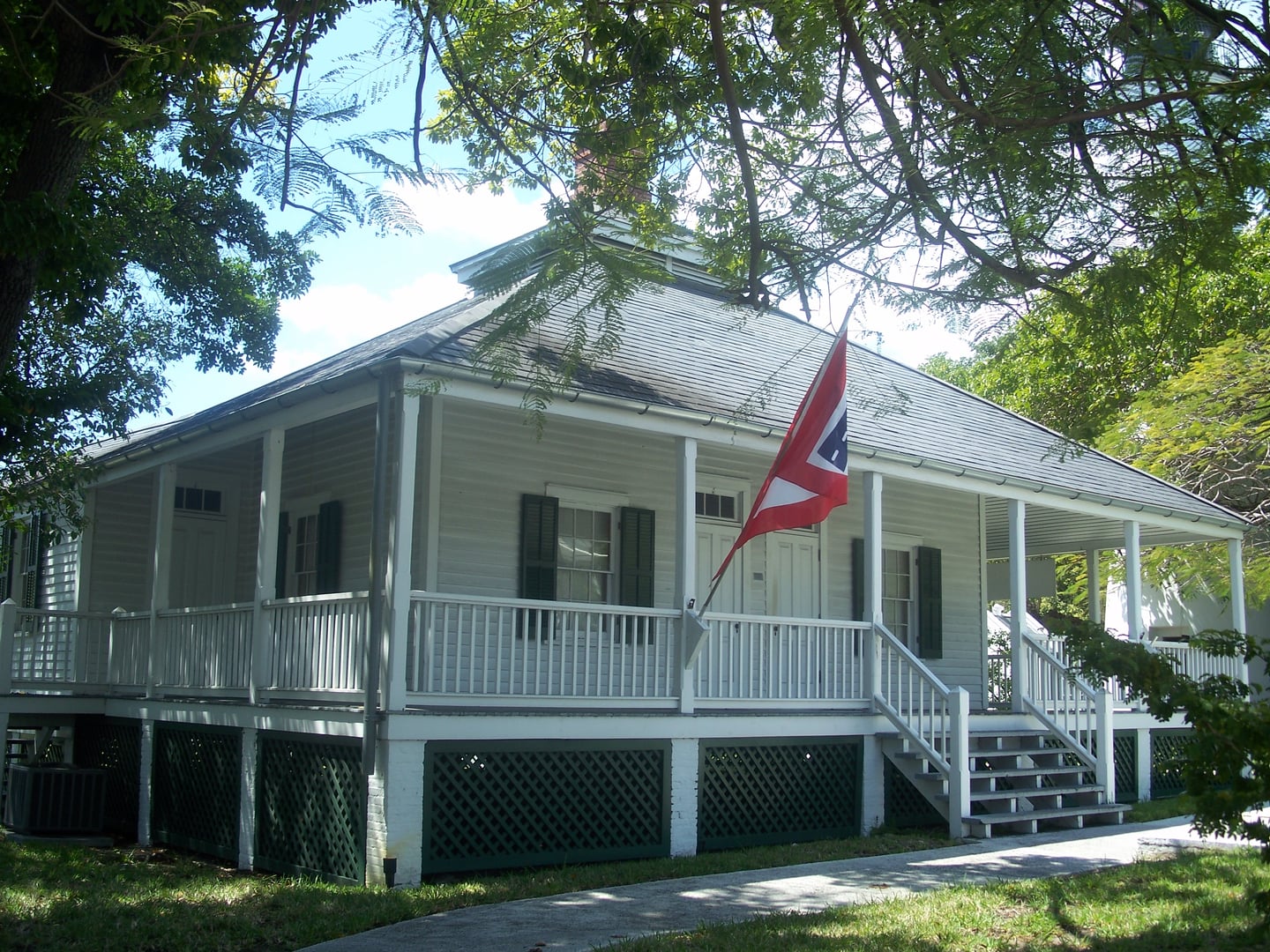
Captain John Huling Geiger, Key West's first officially designated harbor pilot, began construction on his home at 205 Whitehead Street in 1846, after the Great Havana Hurricane had leveled much of the island. The American Classic Revival structure, built between 1846 and 1850, was designed to withstand the subtropical climate and the repeated hurricanes that struck Key West throughout the 19th century.
Geiger had married Lucretia Sanders, a woman from the Bahamas, in 1829. Together they had twelve children. The home functioned as the center of a large extended family across multiple generations. Geiger's income came from wrecking — the salvage of cargo from ships wrecked on the Florida reef — and from his role as harbor pilot guiding vessels through the hazardous reef channels. He planted the tropical garden that still surrounds the property, including what became known as the Geiger tree, a native flowering species that ornithologist John James Audubon sketched during a visit to Key West in 1832.
Several Geiger children died of yellow fever, a recurring and catastrophic disease in 19th-century Key West. One child reportedly died from a fall from a tropical almond tree growing beside the house. Four generations of the family occupied the home for nearly 110 years.
The last resident was Captain William Bradford Smith, Geiger's great-grandson, who lived in the house alone for over 25 years following the deaths of other family members. Without plumbing or electricity, he occupied the deteriorating structure until his death in 1956. By 1958 the city had condemned the building and planned demolition to make way for a gas station. Mitchell Wolfson, a Key West native and media executive, purchased the property and invested $250,000 in its restoration. The Audubon House Museum and Tropical Gardens opened in 1960 and is credited as the catalyst for Key West's broader historic preservation movement.
Sources
- https://audubonhouse.org/about/audubon-house/
- https://en.wikipedia.org/wiki/Audubon_House_and_Tropical_Gardens
- https://www.ghostsandgravestones.com/key-west/haunted-places
Apparition of Captain Geiger on balcony and in gardenHannah's portrait generating intense emotional responseDisembodied children's voicesEVP recording in former bedroom
The Audubon House's paranormal reputation is anchored in the layered losses of the Geiger family: children taken by yellow fever, a young one who fell and died in the garden, and the long solitary decline of William Bradford Smith, who spent 25 years in a house without plumbing as the last of his line.
Captain Geiger himself has been reported on the second-floor balcony and in the tropical gardens — a large man described as watchful rather than malevolent. Paranormal theorists have connected this figure to a persistent local legend that he buried a portion of his wrecking wealth somewhere on the property. The apparition has been described by multiple visitors as simply standing and observing.
The daughter Hannah's portrait is the most unusual of the site's paranormal reports. Museum staff documented so many accounts of visitors experiencing acute sadness — sometimes to the point of tears — while viewing it that the painting was moved from the main gallery to an isolated section of the house. Disembodied voices and the sounds of children laughing and speaking have been reported in various rooms, attributed by paranormal investigators to the yellow-fever-era deaths of Geiger's children.
William Bradford Smith, the last resident, has generated his own reports. An EVP (electronic voice phenomenon) recording purporting to be his voice was captured during a paranormal investigation in his former bedroom on the second floor.
Notable Entities
Captain John Huling GeigerHannah GeigerWilliam Bradford Smith