Est. 1914 · Mediterranean Revival architecture · St. Augustine bayfront historic district · Prohibition-era smuggling history
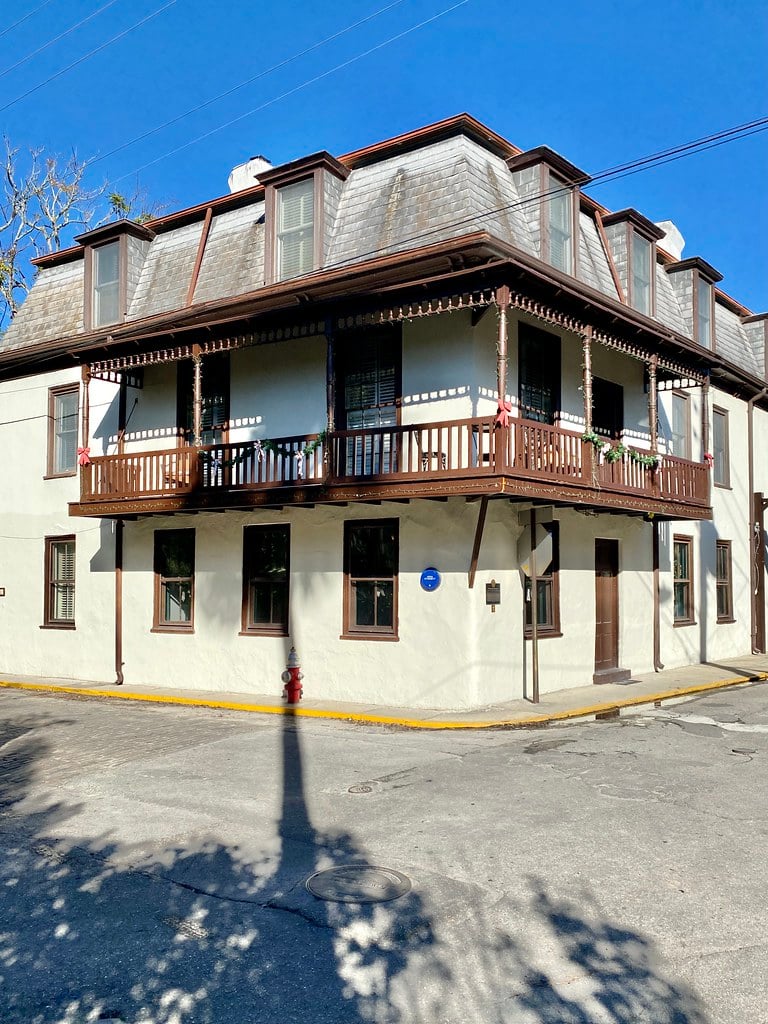
The Casablanca Inn was constructed in 1914 as the Matanzas Hotel on Avenida Menendez, facing Matanzas Bay. The two-story Mediterranean Revival structure and its carriage house are recorded in St. Augustine historic-district documentation. The property sits within the same bayfront block as the Bridge of Lions approach and the city plaza.
The inn's most consequential historical chapter is its Prohibition-era operation. The 18th Amendment and the Volstead Act took effect in January 1920 and remained in force until December 1933. During those years St. Augustine's bayfront — connected by sea routes to Cuba and the Bahamas — became a significant transshipment point for illegal rum smuggled into the United States. Per the inn's own historical narrative and corroborating accounts from Ghost City Tours and Ghosts & Gravestones, Ms. Bradshaw, who operated the inn in the 1920s, allegedly used a lantern from a second-story bayfront window to signal bootlegging ships about the presence of federal revenue agents staying at the hotel.
In the late 20th century the property was renovated and reopened as the Casablanca Inn, taking its current name. It is documented in St. Augustine tourism and historic-coast cultural listings and operates today as a bed-and-breakfast with the public-access Tini Martini Bar on its lower level.
Sources
- https://www.casablancainn.com/the-lady-with-the-lantern
- https://historiccoastculture.com/organization/casablanca-inn-on-the-bay/
- https://ghostcitytours.com/st-augustine/haunted-places/casablanca-inn/
- https://www.ghostsandgravestones.com/st-augustine/casablanca-inn
Swinging lantern light over the widow's walkDisembodied footsteps on upper floorsChildren's voices in vacant roomsMisty apparition of an elderly woman
Per Ghosts & Gravestones, Ghost City Tours, and the inn's own historical narrative, the most-cited paranormal account at the Casablanca Inn concerns Ms. Bradshaw, the Prohibition-era operator. Per these sources, when bootlegging ships were scheduled to arrive in Matanzas Bay, Bradshaw would take a lantern to the second-story bayfront window — or, in some accounts, to the widow's walk above the roof — and wave it back and forth as an all-clear or warning signal to the ships about federal revenue agents in residence.
The paranormal layer is that fishermen, boaters, and guests at neighboring properties still report seeing a swinging lantern light from the widow's walk on dark nights, decades after Bradshaw's death and long after Prohibition ended. The reports cluster in nights of poor visibility, and witnesses describe the light as warm, steady, and unmistakably hand-held rather than electric.
Guests inside the inn also report disembodied footsteps on the upper floors, children's voices in vacant rooms, and a misty figure of an elderly woman in period dress on the staircase. These reports are repeated across the cited ghost-tour sources but do not have known television-paranormal-program corroboration that we have independently verified beyond the operator's promotional claim of 'America's Most Haunted' coverage.
Notable Entities
The Lady with the Lantern (Ms. Bradshaw per local lore)
Media Appearances
- Multiple St. Augustine ghost-tour itineraries