Est. 1980 · Site of Fort Brooke (1824–1882) — Tampa's Founding Military Post · 1980 Cemetery Discovery — Second Seminole War Era Burials · 102 Soldiers Reinterred at Oaklawn Cemetery (1981) · 42 Seminole Remains Returned to Seminole Tribe (1981)
Fort Brooke was established on January 10, 1824, at the mouth of the Hillsborough River, founding what would become Tampa. The fort served as a staging area for U.S. Army operations during the Second Seminole War (1835–1842), one of the longest and most costly Indian wars in American history. The post's accompanying cemetery received soldiers who died of disease, injury, and combat, alongside civilian employees and, by the historical marker's account, Seminole Indians.
The fort was formally decommissioned in 1882. The land it occupied was absorbed into Tampa's expanding downtown grid, and within decades the specific location of the cemetery had been largely forgotten. City records do not appear to have flagged its existence when the construction project for the municipal parking structure was planned.
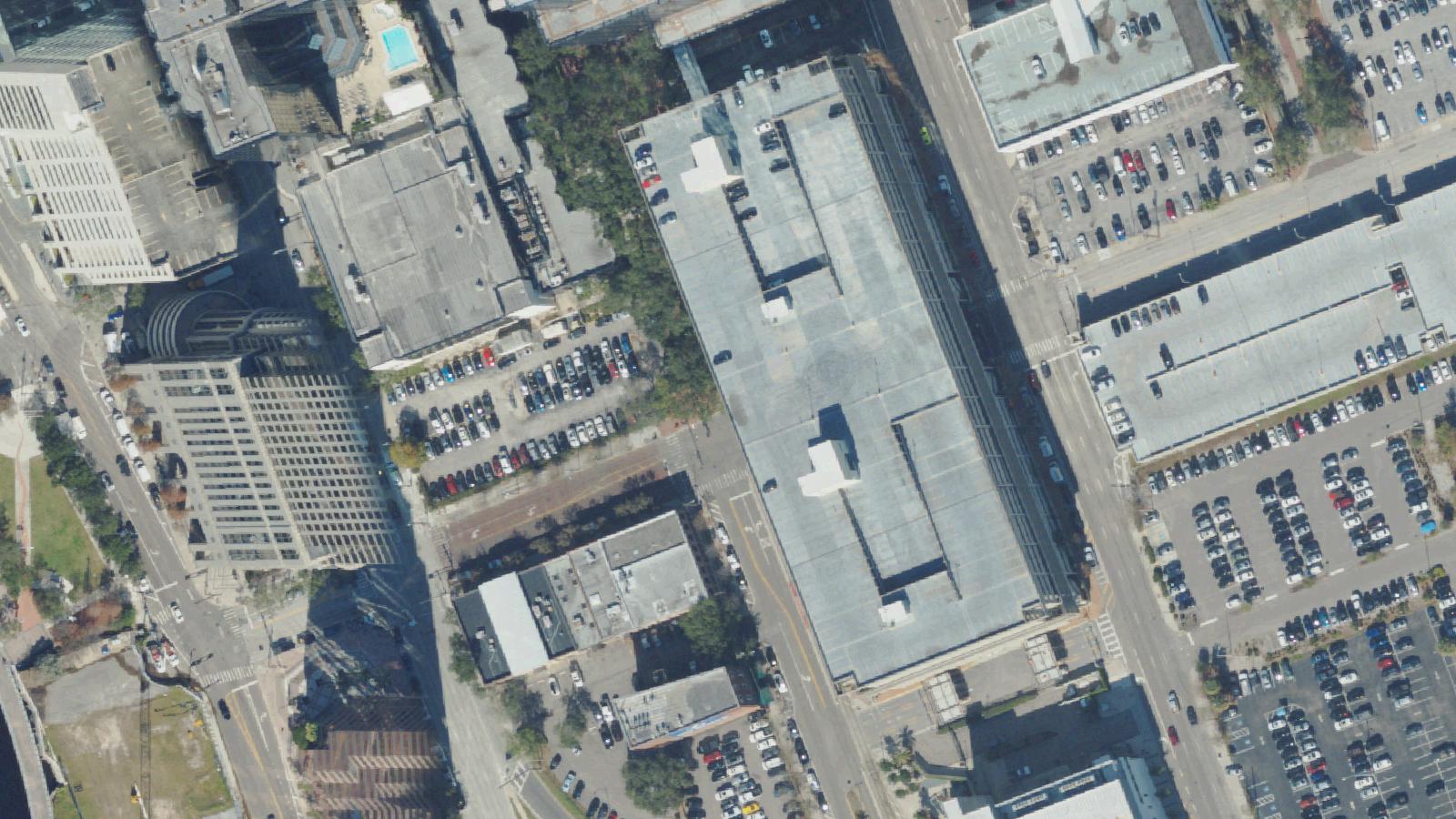
In 1980, construction crews sank pilings and broke ground for what would become a 2,523-space parking garage serving Tampa City Hall, a Hilton Hotel, and surrounding downtown businesses. The excavation hit human remains. Archaeologists were called in and the scope of the discovery became apparent: over 100 graves, in a cemetery that had been in continuous downtown Tampa real estate since 1882 without leaving a mark on planning documents.
The City of Tampa negotiated separately with the Seminole Tribe of Florida, which claimed the Native American remains. On August 5, 1981, 42 Seminole remains were ceremonially reinterred at a Seminole Shrine at Orient Road, with the spirit of the deceased honored through burning herbs. The associated land later became the Seminole Hard Rock Hotel and Casino. On March 24, 1981, 102 soldiers and civilian remains were reburied at Oaklawn Cemetery at the edge of downtown Tampa. The City of Tampa erected the historical marker at the garage site in 1982.
Sources
- https://www.hmdb.org/m.asp?m=44377
- https://fcit.usf.edu/florida/flassets/content/6700/fa6738/fa6738.htm
- https://baynews9.com/fl/tampa/news/2016/4/15/history_center_exhib
- https://phantomhistory.com/episodes/fort-brooke-parking-garage/
Uneasy atmospheric presenceUnexplained sounds in parking levels
The Fort Brooke parking garage sits directly over land where over 100 people were buried and then disinterred during active construction. The disturbance of a cemetery — particularly one containing both military dead and Native American remains — occupies a specific place in American ghost lore, and accounts of unusual encounters in the structure circulate in Tampa paranormal tourism writing.
The reported phenomena are not dramatic: an uneasy feeling throughout certain levels of the garage, sounds without apparent origin, and the general atmospheric weight that visitors describe when learning the site's history. There are no documented accounts of full apparitions or specific intelligible events. The garage itself is a working municipal structure serving Tampa's downtown, and the bulk of what makes it a dark-tourism site is its documented history rather than the paranormal overlay.
The 1982 historical marker at the garage entrance is the site's primary point of engagement. The marker describes the 1980 discovery in factual terms, naming the categories of the dead — soldiers, civilians, Seminole Indians — and documenting the reinterment dates and locations. Reading the marker against the backdrop of an ordinary parking garage produces the dissonance that characterizes this type of site.
The Seminole Tribe's claim to their ancestors' remains and the subsequent land agreement — the tract at Orient Road that became the Seminole Hard Rock Hotel and Casino — extends the story's reach beyond the garage itself, connecting a forgotten downtown cemetery to a major present-day cultural and economic institution.
Media Appearances
- Fort Brooke Parking Garage (Phantom History Podcast, 2020)