Est. 1851 · Hemingway's Primary Residence 1931–1940 · First Private Swimming Pool in Key West · Seven Major Works Written Here · Polydactyl Cat Colony
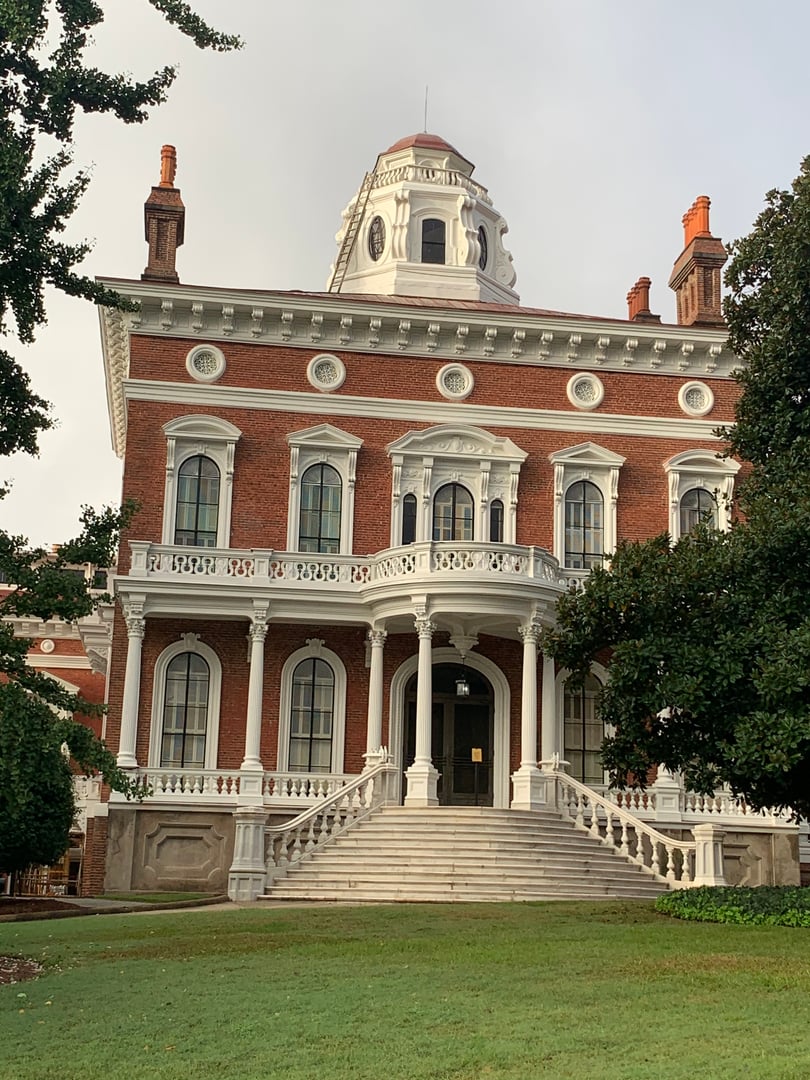
Asa Tift, a Cuban-born salvager and Key West civic figure, built the Spanish Colonial villa at 907 Whitehead Street in 1851. The structure was one of the most substantial private homes on the island, built of coral limestone with high ceilings designed to catch the trade winds.
Ernest Hemingway arrived in Key West in the late 1920s. His second wife, Pauline Pfeiffer, had worked as a journalist for Vogue in Paris and came from a wealthy Catholic family in Arkansas. Pauline's uncle Gus Pfeiffer provided the funds to purchase the 907 Whitehead Street property in 1931. Hemingway moved in and, using a studio above the carriage house, wrote seven books during his Key West years, including A Farewell to Arms, To Have and Have Not, and For Whom the Bell Tolls. He also had the island's first private swimming pool installed — a project that cost $20,000 in Depression-era money and famously prompted him to press a penny into the wet concrete, telling Pauline she might as well have his last cent.
Hemingway left for Cuba in 1940 with his third wife, Martha Gellhorn. Pauline remained in the Key West house and raised the couple's two sons, Patrick and Gregory. On October 1, 1951, Pauline suffered a fatal brain aneurysm. According to accounts, the acute episode was triggered by an extremely stressful phone call with Hemingway following Gregory's arrest on drug charges. She died in a Los Angeles hospital. Hemingway himself died in Ketchum, Idaho, on July 2, 1961 — not in Key West.
After Pauline's death the property changed hands before being established as a museum in 1964. The descendants of the original six-toed cat — a white cat named Snow White, given to Hemingway by a ship's captain — still live on the grounds, numbering more than forty animals.
Sources
- https://www.hemingwayhome.com/
- https://ghostcitytours.com/key-west/haunted-key-west/haunted-hemingway-house/
- https://discover.hubpages.com/religion-philosophy/Hemingways-Ghost-His-Haunted-Key-West-Home
Typewriter sounds from empty studioApparition at writing deskApparition on balconyPauline Pfeiffer at garden gateApparition on staircase
The paranormal tradition around the Hemingway Home begins with a clarification that sometimes surprises visitors: Hemingway did not die in Key West. He died in Ketchum, Idaho, on July 2, 1961. The connection between the house and his ghost rests on the nine years he lived there and the intensity of the work he produced in the studio above the carriage house.
The most consistent reports involve auditory phenomena in and around the writing studio: the sound of typing, described as the distinct mechanical rhythm of a manual typewriter, heard from below when the studio is confirmed empty. Some guides describe a figure matching Hemingway's description — large, bearded — seen at the writing desk from the doorway before vanishing on approach. Witnesses have also reported a large man waving from the second-floor balcony.
Pauline Pfeiffer's reported presence is more fixed in location. Her apparition is consistently described at two spots: the garden gate, where she appears to be smoking a cigarette, and the top of the central interior staircase. The connection between her ghost and the house has a documentary basis that Hemingway's does not: Pauline died in 1951 with the property in her possession, and the house passed from her estate.
A polydactyl cat apparition — described as translucent and six-toed — has been reported in the garden by a small number of visitors, though this remains the least-documented of the site's paranormal accounts.
Notable Entities
Ernest HemingwayPauline Pfeiffer Hemingway
Media Appearances
- Haunted History: Haunted Key West (2000)