Est. 1844 · Completed 1844 on the site of Spanish, French, and British predecessor fortifications dating to the 1690s · Seized by Confederate forces January 12, 1861; evacuated May 1862 after Union bombardment · Two Confederate soldiers executed on the grounds during the Civil War occupation · National Historic Landmark; NPS restoration completed 1980
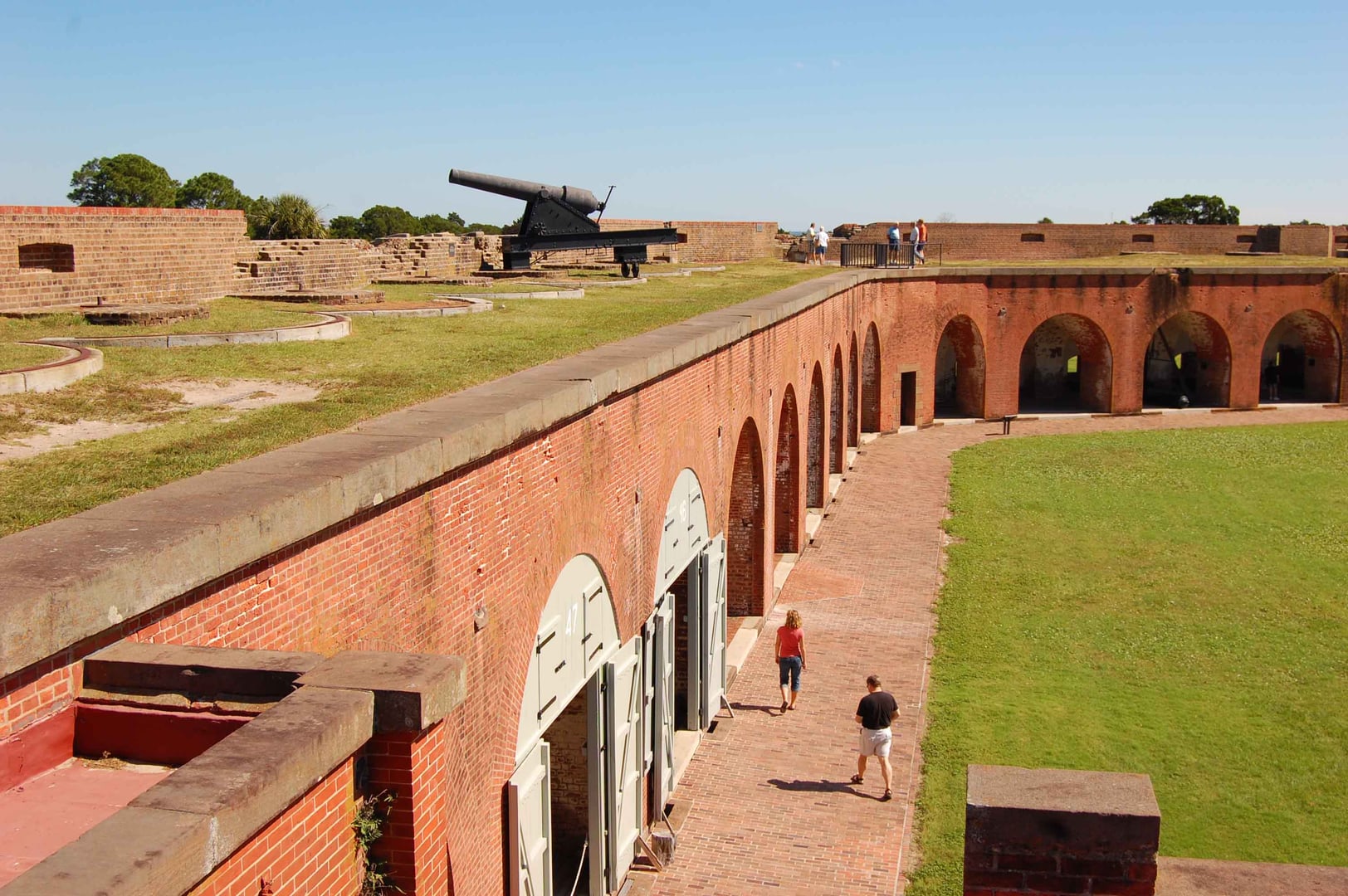
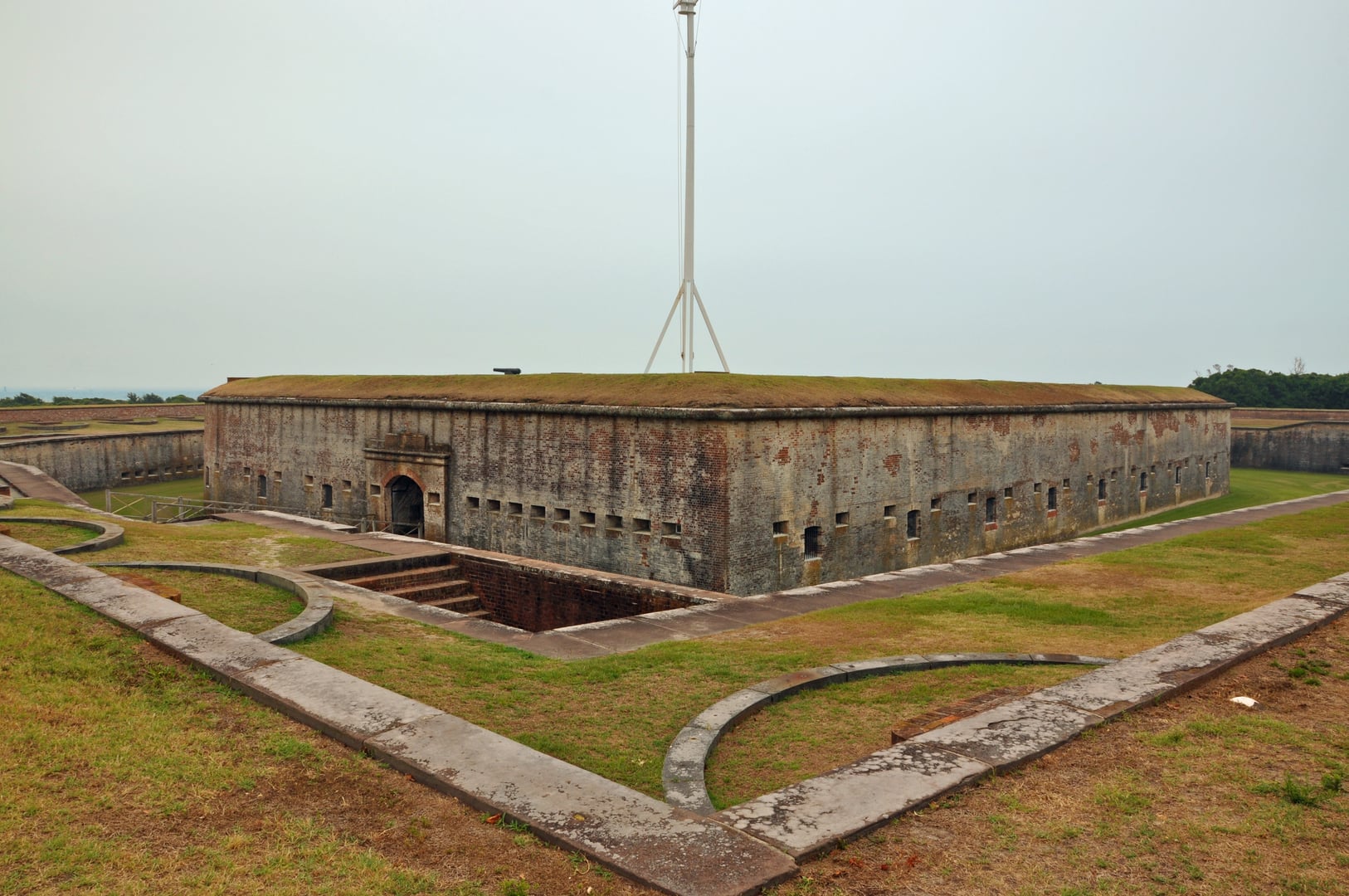
The bluffs above Pensacola Bay's entrance have been fortified since the 1690s, when the Spanish first built earthworks there to control access to one of the finest natural harbors on the Gulf Coast. French and British occupations left their own layers of construction, and by the time the United States acquired Florida in 1821, the site was a palimpsest of colonial military engineering. The Army Corps of Engineers began the present masonry fort around 1839, completing it in 1844 with roughly six million bricks, walls four feet thick and twenty feet high, and a characteristic dry ditch defense system.
The fort's only combat came when Florida seceded. Alabama and Florida state militias seized Fort Barrancas on January 12, 1861 — two days after secession — and Confederate General Braxton Bragg assumed command in March. Union Navy ships bombarded the outer defenses heavily on November 22–23, 1861. Confederate forces abandoned Pensacola in May 1862 as Union strategy shifted elsewhere, and the fort returned to Federal control without further fighting.
During the Confederate occupation, military justice was administered on-site. Two soldiers were executed within the fort's walls: one for falling asleep while on guard duty, and one for assaulting a superior officer. The fort remained part of U.S. coastal defenses until 1947, when it was absorbed into the expanding Naval Air Station Pensacola. The National Park Service completed a major restoration in 1980, and Fort Barrancas is now part of Gulf Islands National Seashore.
Sources
- https://www.nps.gov/guis/learn/historyculture/fort-barrancas.htm
- https://www.nps.gov/guis/planyourvisit/fort-barrancas-area.htm
- https://en.wikipedia.org/wiki/Fort_Barrancas
- https://www.loc.gov/item/fl0021/
Shadowy figures in period dress mistaken for reenactorsCigar smoke smell in closed, unoccupied interior spacesCold spots and pressure drops in the scarp gallery and sally port areasUnexplained footsteps following visitors through the corridors
Fort Barrancas has gathered a persistent reputation for paranormal activity, centered on the two soldiers executed during the Confederate occupation. Visitors and rangers have reported catching a brief glimpse of a figure in period dress that rounds a corner or moves down a corridor and then vanishes — the account that comes up most often is of someone who appeared so solid they were assumed to be a reenactor, until the figure was nowhere to be found on the other side of the passageway.
Volunteers and NPS rangers have logged recurring reports of two other phenomena in specific areas of the fort: a sudden drop in barometric pressure accompanied by the feeling of a presence, and the smell of cigar smoke in sections where no smoking is permitted and no one has been smoking. These sensations concentrate around the interior galleries and the area near the sally port.
At least one visitor documented experiencing both phenomena simultaneously — the sense of a second shadow and the sound of footsteps continuing behind them after they had stopped. Rangers have noted that many visitors report hearing unexplained sounds or seeing shadow movement, while a smaller number claim to have seen something distinct enough to describe as a figure. HauntBound records these accounts as the documented visitor and staff reports they are, without attribution to specific named individuals.