Est. 1856 · Antebellum Victorian Architecture · Underground Railroad History · Civil War Era · Florida Heritage Landmark Site
The Williams House was completed in 1856 for a Boston banker who feared Southern secession; he sold the property almost immediately to Marcellus A. Williams, after whom the house has been known ever since. Williams, born in North Carolina in 1818, became a successful merchant and civic figure in Fernandina Beach.
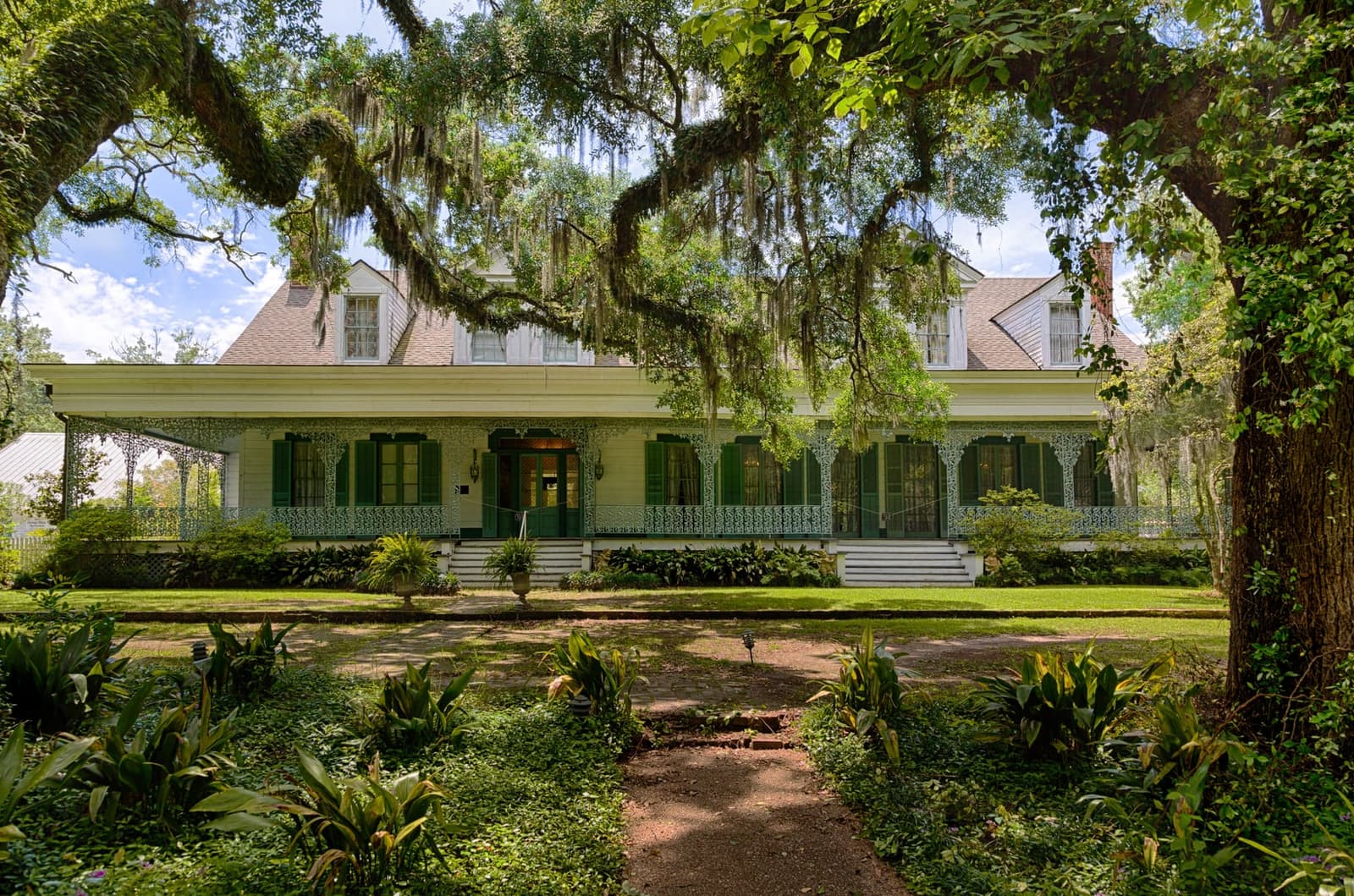
The architect was Robert Sands Schuyler, a noted New York designer who worked in the Italianate and Gothic Revival styles popular in mid-nineteenth century America. Schuyler reportedly required an agreement that the ornate gingerbread veranda trim would never be replicated, a stipulation that remains in effect. The original iron fence with fleur-de-lis detailing still stands and is noted as the only surviving pre-Civil War fence in Fernandina Beach.
During the Civil War, the Williams family temporarily fled when Union forces occupied the city. Before departing, Jefferson Davis — president of the Confederacy — is documented as having visited the house and stored personal effects there. After the family returned and the war ended, Williams released the people he had held in bondage. He subsequently became involved in the Underground Railroad, using the mansion as a stop for freedom-seekers moving north. A concealed room near the dining room served as a hiding place.
The Williams family occupied the estate for nearly a century. The house received designation as a Florida Heritage Landmark Site, recognizing its architectural and historical significance. Since 1994 it has operated as the Amelia Island Williams House B&B, with eleven rooms across three buildings.
Sources
- https://www.williamshouse.com/blog/2026/04/the-history-of-the-williams-house-where-the-past-still-lives
- https://www.ameliaisland.com/blog/spooky-amelia-island/
- https://eccurrent.com/2020/10/22/hunting-for-a-haunting-a-diy-ghost-tour-of-amelia-island/
Disembodied laughter and conversationApparitions on staircaseMirror apparitionEye contact from disappearing figures
The Williams House's paranormal reputation is defined by its atmosphere rather than by violence or tragedy. Witnesses consistently describe the reported activity as friendly and sociable — a house that seems still occupied by people who enjoyed living there.
The most frequently reported experience is the sound of laughter and conversation coming from the dining room when no one is present. Guests who investigate find the room empty. This pattern has been described by multiple independent visitors over the years since the property began operating as a B&B in 1994.
At the main staircase, witnesses have reported seeing the apparitions of a man and woman descending toward them. The figures reportedly make direct eye contact with the observer before disappearing. A female apparition is also associated with a period mirror positioned near the stairs — she appears in the reflection and then is gone when the viewer turns or looks again.
The Underground Railroad history adds a layer of interpretation to the property. The concealed room near the dining room where freedom-seekers once hid is still part of the house's footprint. Staff note that the energy of the house feels consistent with its history — a place where people came seeking safety, gathered at meals, and found respite.
Notable Entities
Unidentified man and woman apparitions
Where this legend is told