Est. 1840 · National Register of Historic Places · Pre-Civil-War Florida plantation history · Site interprets the lives of enslaved laborers · Operating house museum since 1996
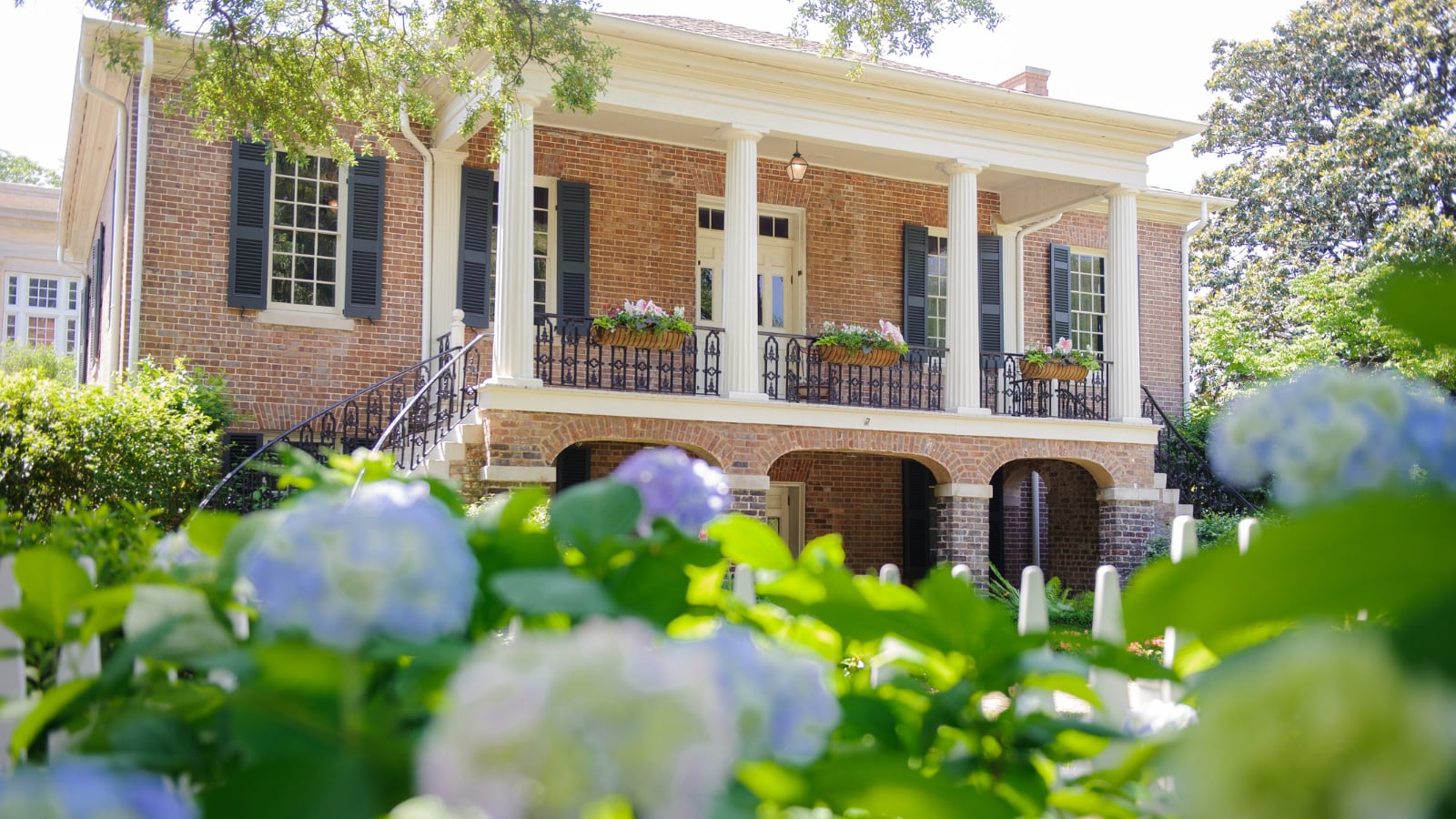
Goodwood Museum & Gardens occupies a 20-acre remnant of what was once a 1,600- to 2,400-acre Leon County plantation. Goodwood's official history page records that the land was originally part of the 1825 Lafayette land grant, that the Croom family of North Carolina purchased 2,400 acres in 1834, and that the Crooms brought roughly 60 enslaved people to establish a cotton and corn operation. The main house was under construction circa 1840 when much of the Croom family perished in October 1837 in the wreck of the steamship Home off Cape Hatteras, leaving the building incomplete and triggering a multi-decade estate dispute that reached the Florida Supreme Court.
In 1857, merchant Arvah Hopkins of New York purchased Goodwood and married Susan Branch, daughter of Florida's last territorial governor John Branch. The Hopkins family completed and modified the main house and lived through the Civil War period. Subsequent owners — including the Arrowsmith, Tiers, and Hodges families — adapted the property as a Reconstruction-era homestead and then, for the wealthy Hodges family, a winter retreat.
Margaret Wilson Hodges purchased Goodwood in 1925, and in 1990 she established the Margaret E. Wilson Foundation to preserve the property after her death. Goodwood opened to the public as a museum in 1996. The site is on the National Register of Historic Places and is operated today by the foundation.
The Goodwood Museum's interpretive program explicitly addresses the experience of the enslaved people who built and worked the plantation. Staff, descendant communities, and historians have collaborated on programming that contextualizes both the architectural history and the lives of those held in bondage on the property.
The present-day campus includes the main house, multiple outbuildings, gardens, and a wedding/event venue. It is one of the most-visited historic-site museums in Tallahassee and is regularly featured in regional history programming.
Sources
- https://www.goodwoodmuseum.org/history/
- https://www.goodwoodmuseum.org/
- https://visittallahassee.com/blog/tallahassee-haunted-history/
- https://www.tallahasseemagazine.com/the-last-living-link-to-ghosts-of-goodwood/
Children's laughter heard in the main houseRunning footsteps from unseen childrenFlickering lightsSudden cold draftsApparitions in 19th-century dress (rare reports)
According to Tallahassee Magazine's feature 'The Last Living Link to Ghosts of Goodwood' and Visit Tallahassee's haunted-landmarks coverage, the most consistent paranormal reports at Goodwood are of children's laughter and running footsteps moving through the main house. Owners across multiple generations, museum staff, and visitors have all reported the sounds. The identities of the children are not known; some accounts suggest the sounds predate the Hodges era. Visit Tallahassee adds reports of flickering lights and sudden cold drafts, and isolated reports of apparitions in 19th-century dress.
Given the site's history as a plantation worked by enslaved people, we treat the ghost lore with editorial care. The accounts are framed in the published Tallahassee record as a benign, child-spirit tradition; we do not romanticize the antebellum era, and the underlying history of slavery on the property is addressed directly in Goodwood's own interpretive programming. Single-source elements (specific apparitions) are presented as 'according to' attributions; the children's-laughter motif is the longest-running, multi-witness account.
Notable Entities
Unidentified spectral children
Media Appearances
- Tallahassee Magazine — Ghosts of Goodwood feature