Est. 1862 · Gothic Revival Architecture · Andrew Jackson Downing Design · Civil War-Era Construction · National Register of Historic Places
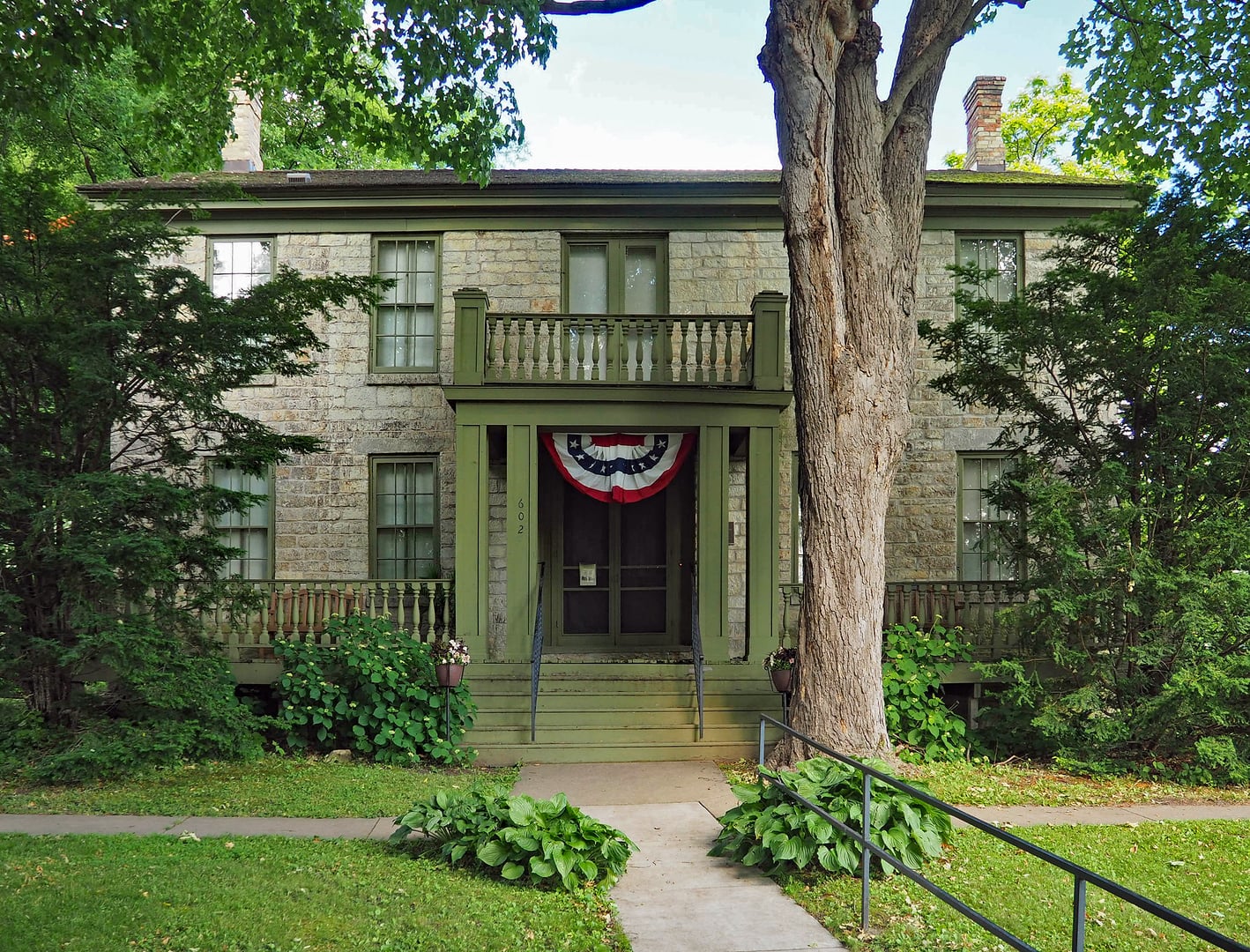
William Gates LeDuc was one of the founding figures of frontier Minnesota — a Civil War quartermaster, U.S. Commissioner of Agriculture under President Hayes, lawyer, and entrepreneur. He and his wife Mary built their Hastings residence between 1862 and 1866, drawing on the published designs of Andrew Jackson Downing, the influential American landscape and home designer whose Gothic Revival vocabulary had largely fallen out of fashion by the time the LeDuc house was completed.
The estate today occupies most of an original parcel that included the residence, carriage house, and ice house. Built of locally quarried limestone and finished in board-and-batten and decorative woodwork, the structure is widely cited as one of the last intact American examples of the Downing-influenced Gothic Revival residential style.
The Dakota County Historical Society operates the LeDuc Historic Estate as a museum, with seasonal hours from mid-May through mid-October and tours scheduled at intervals throughout the day. Adjacent grounds, archival exhibits, and seasonal programming including the Harvest Haunting tours interpret the LeDuc family alongside the broader frontier history of the Mississippi-Vermillion confluence.
Sources
- https://en.wikipedia.org/wiki/William_G._LeDuc_House
- https://www.dakotahistory.org/leduc-historic-estate
- https://www.republicaneagle.com/news/secrets-of-the-leduc-estate-revealed-at-first-harvest-haunting/article_842da115-4c5b-53c7-84b7-c8e63af60674.html
ApparitionsPhantom soundsCold spots
The LeDuc folklore is unusually well grounded in family biography. William LeDuc, by surviving correspondence and family records, was a man of restless intellect who pursued business ventures, military service, federal appointment, and persistent interest in the spiritualism movements popular among educated 19th-century Americans. The Harvest Haunting programming explicitly treats his documented spiritualist curiosity as part of the family's historical record.
Folklore additions describe Alice LeDuc, the family's devoted daughter, as remaining at the estate to keep watch over her father's lingering presence. These accounts surface in 1950s-era local sources and in subsequent regional folklore collections.
A persistent tunnel rumor associates the cellar with a passage said to descend to the Vermillion River. Two competing explanations circulate — that the tunnel was prepared as an escape route in the event of conflict with Native peoples, or that it was used to move freedom seekers along an Underground Railroad branch. Neither claim has been substantiated in the Dakota County Historical Society's interpretive material, but the cellar itself remains a focal point of the Harvest Haunting candlelight programming.
Notable Entities
William G. LeDucAlice LeDuc