Est. 1742 · Site of 1565 Matanzas Massacre of French Huguenots · National Monument designated 1924 · National Park Service — active management · Spanish colonial defensive architecture
The inlet south of St. Augustine became the site of two documented mass executions in September and October of 1565. Jean Ribault and the Huguenot colonists of Fort Caroline had been at sea when a hurricane scattered their fleet. After Spanish forces under Menéndez captured Fort Caroline, groups of shipwrecked French survivors arrived at the inlet. In the first encounter, approximately 126 Frenchmen surrendered; all but those who identified as Catholics were killed. In a second encounter weeks later, Ribault led a larger group of around 350 men; about half surrendered and the remainder fled into the marshes. Again, all but a small number of prisoners were executed. Historians count approximately 245 total French deaths at the site. The inlet and the subsequent Spanish fort both took the name Matanzas.
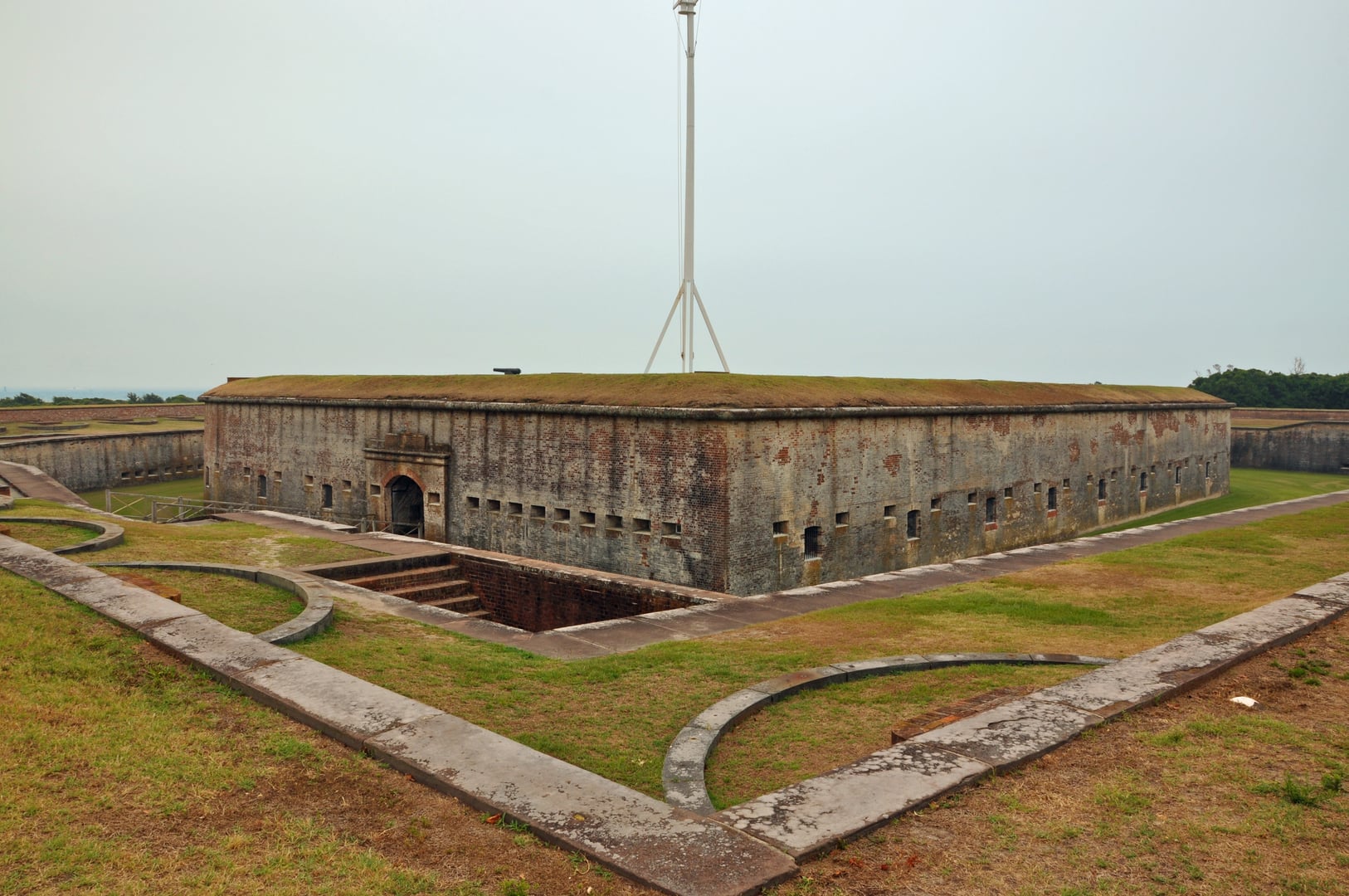
Spain did not fortify the inlet for nearly two centuries. The wooden watchtower built in 1686 was inadequate, and the inlet's vulnerability became acute during Governor James Oglethorpe's 1740 blockade of St. Augustine, when British forces used the inlet as a supply route. Governor Manuel de Montiano ordered a permanent coquina masonry fort constructed between 1740 and 1742. Engineer Pedro Ruiz de Olano, who had worked on additions to the Castillo de San Marcos, designed the structure on Rattlesnake Island. Construction labor included convicts, enslaved people, and troops sent from Cuba. The completed fort measured 50 feet on each side with a 30-foot tower and held five cannons; it required a minimal garrison of one officer, four infantrymen, and two gunners.
The fort protected the southern approach to St. Augustine through both British and American periods. It was designated a National Monument on October 15, 1924, and transferred to National Park Service management in 1933. The visitor center on the Anastasia Island shore was built in 1936 in NPS Rustic style. Access to the fort on Rattlesnake Island is by a five-minute complimentary ferry, which operates Thursday through Monday on a set schedule.
Sources
- https://www.nps.gov/foma/index.htm
- https://en.wikipedia.org/wiki/Fort_Matanzas
- https://floridatraveler.com/fort-matanzas/
ApparitionsPhantom sounds
The massacre at Matanzas Inlet in 1565 left no survivors among the executed Huguenots to document their deaths, and Spanish accounts of the event were written to justify the executions on religious and political grounds. For nearly 180 years the inlet remained largely unfortified, visited mainly by fishermen and pilots navigating the shallows.
Ghost tour operators working St. Augustine's dark history circuit include Fort Matanzas on routes that cover the city's colonial-era killing grounds. Reported phenomena include apparitions described as soldiers in period dress — some in Spanish armor, others in French colonial uniforms — near the water's edge and on the ferry crossing. The sounds of muskets and what operators describe as the energy of a mass death site are among the claims catalogued by paranormal groups that have visited.
The National Park Service presents the 1565 events in historical context within its visitor center exhibits but does not promote paranormal activity as part of the site's interpretation. The inlet's documented history as the site of the largest single act of religious violence in North American colonial history is sufficient to anchor Fort Matanzas as a dark tourism destination without embellishment.