Est. 1871 · National Register of Historic Places (1977 — first cemetery in Alabama listed) · Birmingham's pioneer cemetery · Contains burials of the city's founders and 1873 cholera epidemic victims
Oak Hill Cemetery sits on land that was originally part of the estate of James M. Ware, north of what would become downtown Birmingham. By April 1869 — before the formal sale — the property was already in informal use as a burial ground, with the burial of an infant daughter of Robert H. Henley (later mayor of Birmingham) recorded that month. On December 29, 1873 (or formally established by the Elyton Land Company in December 1871, depending on the source), the city formalized the purchase for $1,073.50.
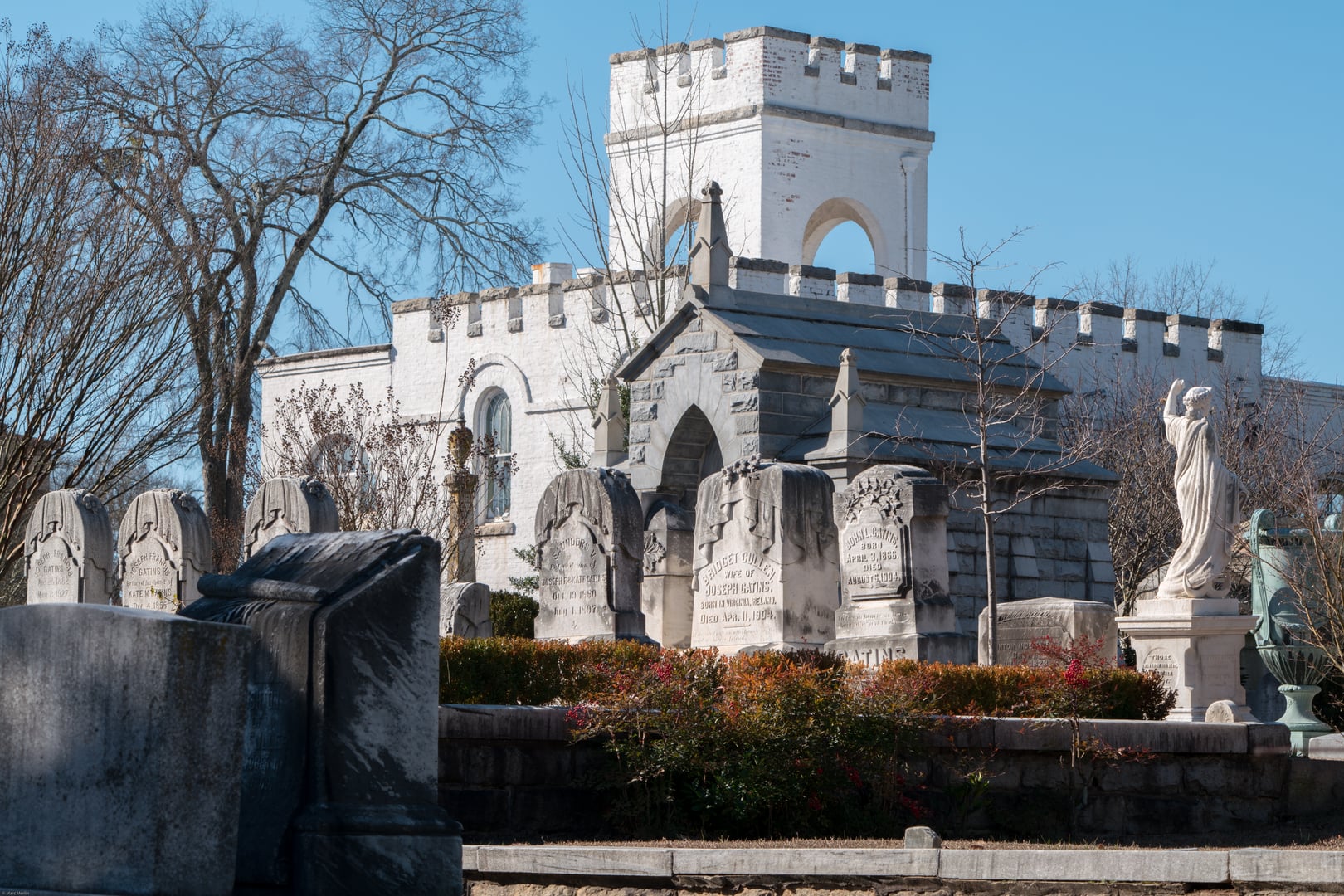
The cemetery includes the Pioneer Section, which holds the burials of many of Birmingham's earliest residents and founders, including members of the Elyton Land Company and figures associated with the city's founding in 1871. More than 10,000 burials have been recorded across its 22.3 acres.
In 1977, Oak Hill became the first cemetery in Alabama to be listed on the National Register of Historic Places. The cemetery is administered today by the Friends of Oak Hill Cemetery and the City of Birmingham. It remains open for new burials and offers seasonal guided heritage tours.
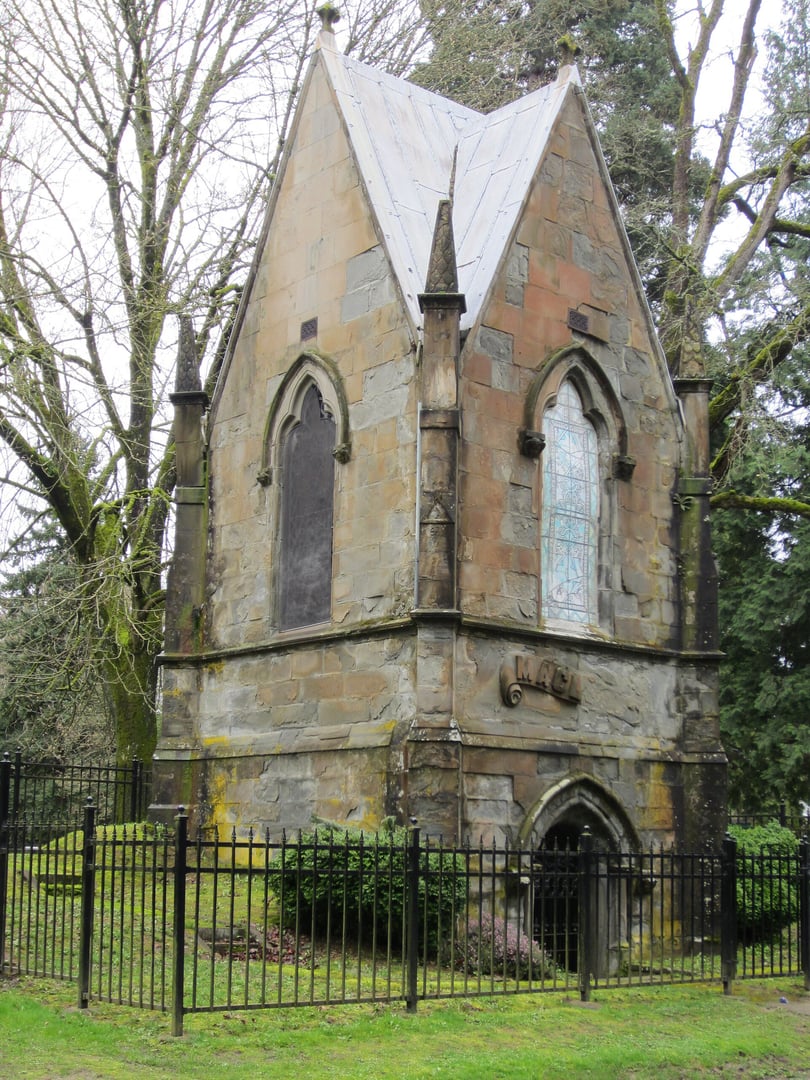
The Erswell family vault, located in one of the central rows, is the resting place of cabinet-maker-turned-coffin-maker Edward Erswell (died 1910) and his wife Catherine. Erswell, who arrived in Birmingham in 1872, found steady work as a coffin-maker during the Birmingham Cholera Epidemic of 1873 — one of the formative tragedies of the young city.
Sources
- https://en.wikipedia.org/wiki/Oak_Hill_Cemetery_(Birmingham,_Alabama)
- https://encyclopediaofalabama.org/article/oak-hill-cemetery/
- https://www.oakhillbirmingham.org/about
- https://bhamnow.com/2020/10/13/5-spooky-tales-from-birminghams-cemeteries/
Whispers and muttering from the Erswell vaultSensed presence in the Pioneer Section
Oak Hill Cemetery's most-cited haunting is the Erswell vault story. Edward Erswell arrived in Birmingham in 1872 hoping to set up shop as a cabinet maker; during the 1873 Birmingham Cholera Epidemic he pivoted to coffin-making and built a steady trade. He died in 1910 and was interred in the Erswell family vault at Oak Hill.
According to Edward Wolfgang Poe of the Birmingham Historic Touring Company (as told in Bham Now's 2020 cemetery feature and US Ghost Adventures), Erswell's wife Catherine had always wanted to be buried at Elmwood Cemetery, which by the late 19th century was considered the more 'fashionable' burial ground for Birmingham's elite. After her death, Catherine was nonetheless interred with Edward at Oak Hill. To this day, visitors have reported hearing whispers and mutterings coming from the Erswell vault — interpreted in the tour narrative as Catherine still complaining to Edward about being buried in the wrong cemetery.
The Erswell story is the headline paranormal report at Oak Hill, but the cemetery features in multiple Birmingham ghost-walk itineraries as a broader site of sensed-presence reports tied to the Pioneer Section and to the high concentration of 1873 cholera-epidemic burials. The reports recorded by Bham Now and US Ghost Adventures are visitor-level testimony rather than recorded investigations.
The Erswell legend has the structure of a 'memorial complaint' — a humorous and culturally specific haunting that reflects late-19th-century Birmingham's status anxieties about cemetery choice. HauntBound notes this is single-source-narrative lore tied to one tour-operator chain, and that no formal paranormal investigation results have been published.
Notable Entities
Catherine ErswellEdward Erswell (coffin-maker, d. 1910)