Est. 1789 · Oldest Surviving New Orleans Cemetery · Marie Laveau Burial · National Register of Historic Places
St. Louis Cemetery No. 1 was established in 1789 outside the original walled French Quarter, replacing the St. Peter Street Cemetery destroyed by the Great New Orleans Fire of 1788. Yellow-fever epidemics through the 1790s filled the new cemetery rapidly. The cemetery was officially blessed by Father Antonio de Sedella in 1789.
The high water table beneath New Orleans made conventional in-ground burial impractical, and the cemetery's distinctive above-ground tombs — built of stuccoed brick, often whitewashed annually for All Saints' Day, and used for repeated family burials with the older remains pushed to the rear of the vault — established the city's signature cemetery aesthetic. Roughly 700 above-ground tombs hold an estimated 100,000 burials accumulated over more than two centuries.
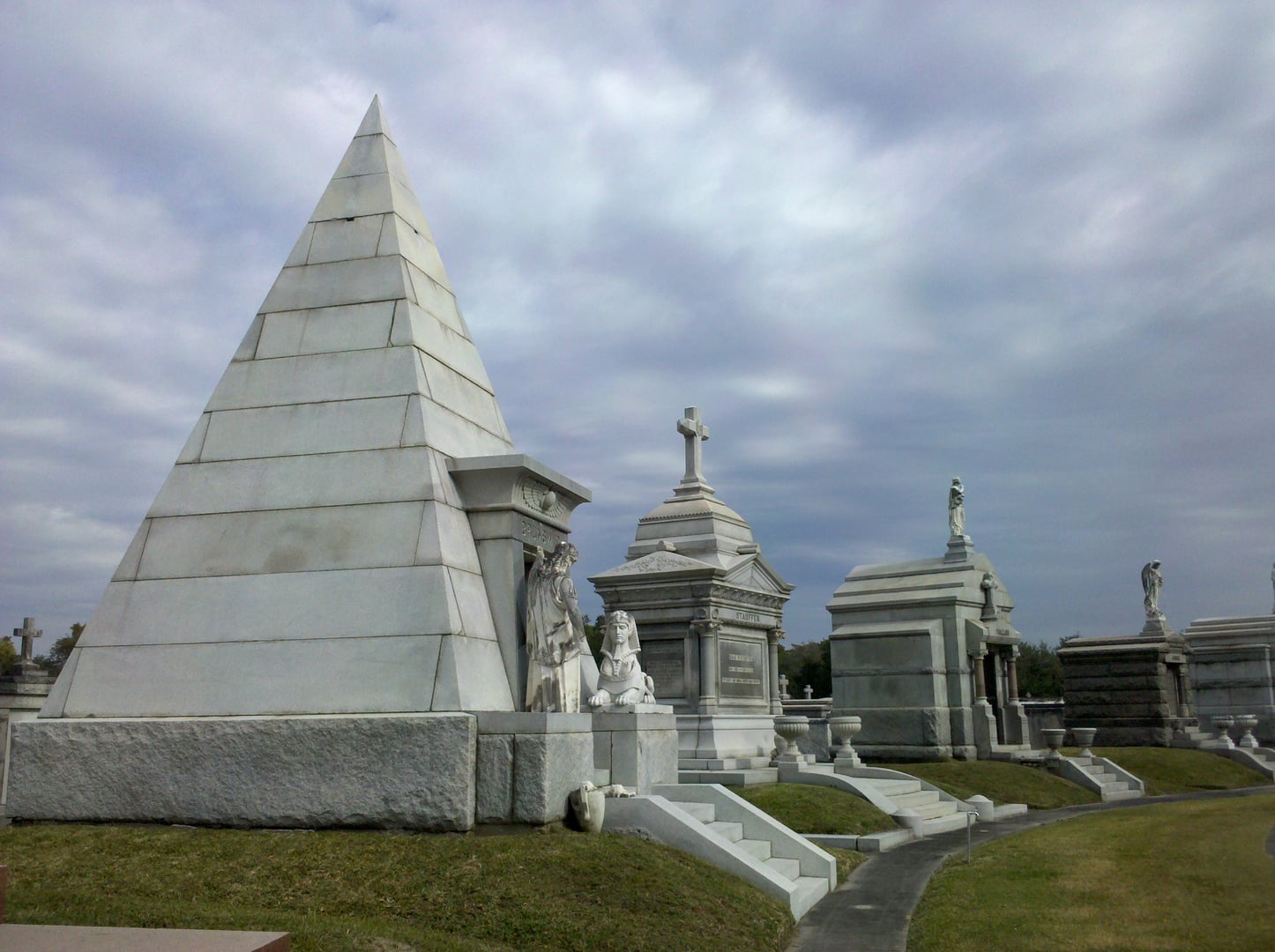
Notable interments include Marie Laveau (1801-1881), the most prominent voodoo priestess of 19th-century New Orleans, in a Glapion family tomb that has become the cemetery's most-visited grave; Etienne de Bore, the first elected mayor of New Orleans and the planter who pioneered commercial sugar refining; Homer Plessy, the plaintiff in the 1896 Plessy v. Ferguson Supreme Court case; and Bernard de Marigny, the Creole landowner who founded the Faubourg Marigny neighborhood and gave Craps its English name. A white pyramid tomb installed in 2010 marks the future burial site of actor Nicolas Cage.
The cemetery is listed on the National Register of Historic Places (1975). The Archdiocese of New Orleans, citing continuing vandalism (particularly the painting of X marks on Marie Laveau's tomb by visitors seeking the priestess's intercession), restricted general public entry in March 2015. Since then, public visits require a licensed-guide tour. Family members of those buried in the cemetery, tomb owners, and genealogists can apply for individual access passes through the Archdiocese.
Sources
- https://www.neworleans.com/listing/st-louis-cemetery-no-1/32159/
- https://cemeterytourneworleans.com/
- https://neworleanshistorical.org/items/show/1612
- https://tourlouisiana.com/attractions/St-Louis-Cemetery-Hours-Pricing
ApparitionsPhantom voicesPhantom smellsCold spotsEquipment malfunction
Marie Laveau (1801-1881) was the most prominent voodoo priestess of 19th-century New Orleans, a free woman of color who blended West African religious tradition, French Catholic ritual, and Native American practice into the syncretic religion now called New Orleans Voodoo. Her purported tomb in the Glapion family vault has been the most-visited grave in the cemetery for more than a century.
Visitors traditionally left small offerings — coins, flowers, beads, candy, alcohol — at the tomb's base. The marking of X symbols on the tomb walls, intended as a request for the priestess's intercession, became widespread in the late 20th century and produced significant damage to the historic plaster. The 2015 archdiocesan access restriction was a direct response. Tomb restoration in 2014 removed the accumulated X marks; visitors are now expected to view the tomb without marking it.
Reported phenomena at the cemetery include apparitions of a woman wearing a tignon, observed near the Glapion tomb and along the central walks; the figure of a man in 19th-century clothing seen near the rear of the cemetery; phantom voices and the smell of burning candles in still air; and equipment malfunction during paranormal investigations. Cold spots and feelings of presence are reported throughout the older Spanish and French Creole tomb sections.
The cemetery has appeared in numerous films, including the 1969 Easy Rider, and on multiple paranormal television series. Its cultural and religious significance to active New Orleans Voodoo communities means investigators and visitors should approach the site with respect for living religious practice as well as historical interest.
Notable Entities
Marie LaveauThe Man in 19th-Century Clothing
Media Appearances
- Easy Rider (1969)
- Featured on numerous paranormal television series