Est. 1830 · Only Greek Revival house in Alabama with a full two-story colonnade of 24 Ionic columns · Listed on the National Register of Historic Places (1997) · Home of nationally significant thoroughbred breeder James Jackson (stallion Glencoe) · Adjacent cemetery holds graves of 250+ enslaved people; burial place of Alex Haley's great-grandmother Easter
The Forks of Cypress took its name from the convergence of Big Cypress Creek and Little Cypress Creek, which border the property and meet near the site of the main house. James Jackson, an Irish immigrant who became a prominent planter and horse breeder, acquired the land — purchasing tracts from Cherokee leader Doublehead — and had the Greek Revival mansion completed in 1830. The house was designed by architect William Nichols, who also designed the original University of Alabama campus and the state capitol at Tuscaloosa. It was the only Greek Revival house in Alabama to feature a two-story colonnade of 24 Ionic columns encircling the entire building.
Jackson gained national renown as an importer and breeder of thoroughbred racehorses. His stock included the imported stallions Leviathan and Glencoe; Glencoe's descendants became so widespread that the line runs through a large share of modern thoroughbreds. The plantation operated on the labor of enslaved people, whose presence is documented in the property's two-section cemetery.
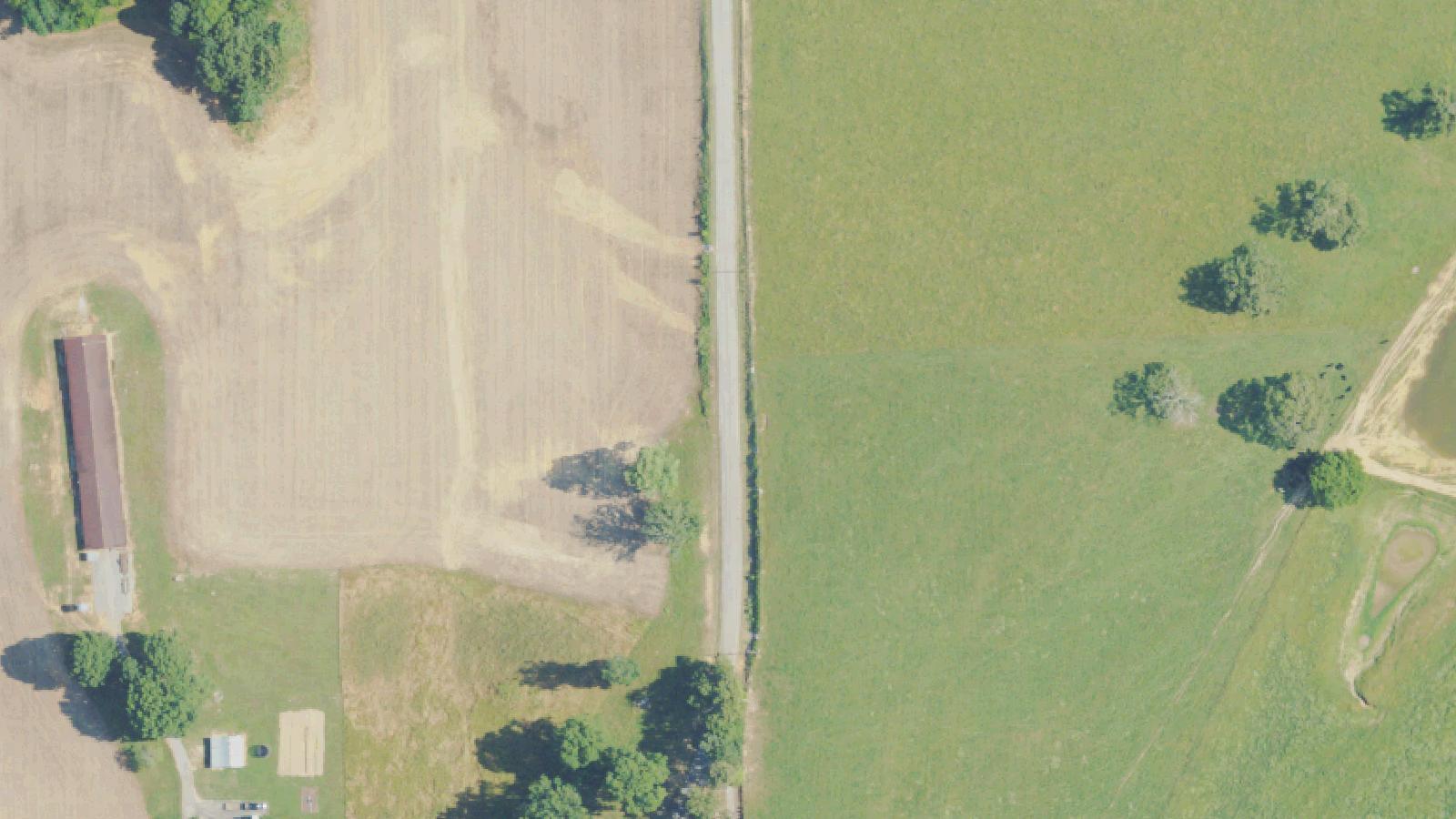
On June 6, 1966, the mansion was struck by lightning and burned to the ground. The 24 brick-cored Ionic columns survived the fire and still stand in the field today, making the site one of the most recognizable historic ruins in north Alabama. The property was placed on the Alabama Register of Landmarks and Heritage in 1992 and on the National Register of Historic Places on October 10, 1997.
The adjacent Forks of Cypress Cemetery (also called the Jackson Cemetery) is divided into two sections: a walled Jackson family plot and a larger African American section that holds the graves of more than 250 enslaved people who worked the plantation, along with later tenant farmers and free descendants. Author Alex Haley's great-grandmother, Easter, is recorded as buried there. The ruins and cemetery sit on private property and are viewable from the public road; in the early 1980s, a Florence bank built a faithful replica of the mansion downtown using survey drawings made before the fire.
Sources
- https://en.wikipedia.org/wiki/The_Forks_of_Cypress
- https://encyclopediaofalabama.org/article/forks-of-cypress/
- https://en.wikipedia.org/wiki/Forks_of_Cypress_Cemetery
- https://ahc.alabama.gov/properties/forksofcypress/forksofcypress.aspx
Apparition of a tall woman near the family cemeterySinging and disembodied voices among the columnsPhotographed orbs near the ruinsReported mournful sounds near the enslaved-persons cemetery
Local ghost-lore around the Forks of Cypress centers on the surviving columns and the two cemeteries. According to regional haunted-place accounts, some visitors report seeing the apparition of a tall, stately woman walking the grounds, particularly near the walled Jackson family plot, while others describe singing, voices, or orbs photographed among the columns (Roadside America; AlabamaHauntedHouses.com).
A persistent strand of the lore attaches to the African American section of the cemetery, where, according to these accounts, mournful singing and sounds of grieving are said to be heard late at night. Given that the cemetery is the documented resting place of more than 250 enslaved people, this part of the tradition is best understood as folklore growing out of a real and painful history rather than as a verified event.
The area's 'Ghost Bridge,' on or near the former plantation lands, carries separate legends of mid-to-late 19th century hangings. No primary documentation confirms specific hanging events at the bridge, and these claims should be treated as unverified oral tradition. The factual anchor here is the well-documented site and its cemetery; the paranormal claims rest on regional folklore sources rather than primary records.
Notable Entities
The Lady of the Columns
 Aerial survey · USDA NAIP