Guided Tour Booking Required
Lyric Theatre History Tour
Tours of the restored 1914 vaudeville house are offered periodically by Birmingham Landmarks and emphasize the theater's segregation-era history and 2016 restoration.
- Duration:
- 1 hr
HauntBound archive · catalog record
Reported phenomena, as catalogued
1914 B.F. Keith's vaudeville house — one of the first Southern theaters to admit Black and white audiences to the same show — where investigators report phantom cigar smoke and footsteps from the empty house.
1800 3rd Avenue North, Birmingham, AL 35203
Research updated June 2026
Age
All Ages
Cost
$$
Public access via ticketed shows. Tour and event prices vary; check Birmingham Landmarks schedule.
Access
Wheelchair OK
Restored 1914 vaudeville house with accessible main level; balcony requires stairs.
Equipment
No Photos
Est. 1914 · 1914 B.F. Keith vaudeville house · One of few intact vaudeville-era theaters in the South · Early integrated (segregated-seating) audience venue · 2016 restoration by Birmingham Landmarks
The Lyric Theatre opened on January 14, 1914 as a stop on B.F. Keith's Vaudeville Circuit. Designed by architect Claude Knox Howell (C.K. Howell), who designed multiple theaters on the B.F. Keith circuit in the South, it was built specifically for vaudeville acoustics and intimate seating — features that, according to the Encyclopedia of Alabama and Bhamwiki, make it one of the few remaining buildings of its kind in the United States.
Its opening was marked by a brief but well-publicized injunction filed by competing theater operator Karl Hoblitzelle over a dispute about opening acts; the resulting two-day delay was reported in the national entertainment magazine Variety. Once open, the Lyric became a regular stop for major vaudeville stars including the Marx Brothers, Mae West, Sophie Tucker, Will Rogers, and Milton Berle, who reportedly called it 'as fine a theatre as any in New York.' The Lyric was an early adopter of artificial cooling, blowing air over two tons of ice stored beneath the stage.
Unlike many Southern venues of its era, the Lyric admitted Black and white audiences to the same shows, though seating was strictly segregated; Black patrons entered through a separate door and sat in the upper balcony. NPR's 2017 coverage of the theater addresses this segregated history in detail.
The Lyric declined in the mid-20th century as vaudeville gave way to film and as downtown Birmingham contracted. It closed and stood largely vacant for decades. Birmingham Landmarks, Inc. — the nonprofit that also operates the Alabama Theatre across the street — acquired the property and undertook an extensive restoration beginning in 2009. The theater reopened on January 14, 2016, exactly 102 years after its original opening, as a live-performance and special-event venue.
Sources
The Lyric's haunting tradition is rooted in its vaudeville-era past. According to Southern Spirit Guide's account of Birmingham hauntings and Bham Now's reporting on the 2012 paranormal investigation, the most-cited single incident occurred during a 2012 investigation when a local reporter observing the group's work said she saw a man with a cane move across the empty stage and pause briefly in the wings before disappearing. The reporter's account is the most narratively specific report associated with the building.
Separately, investigators across multiple visits have described the distinct odors of lit matches and cigar smoke in rooms where no one is smoking — a phantom-sensory pattern consistent with the theater's tobacco-rich vaudeville era. Phantom laughter and applause from the empty auditorium have also been reported during after-hours work, as have footsteps in the upper balcony.
The Encyclopedia of Alabama notes that the theater's restoration revealed accumulated layers of stage history — graffiti from performers, original marquee fragments, and the trough beneath the stage that held the building's two-ton ice cooling system. Investigators frame the activity as residual rather than malevolent: imprints of a century of audiences and acts, surfacing in an otherwise empty building. No deaths are documented inside the theater.
Notable Entities
Tours of the restored 1914 vaudeville house are offered periodically by Birmingham Landmarks and emphasize the theater's segregation-era history and 2016 restoration.
View the restored 1914 marquee and historic facade at 3rd Avenue North directly across from the Alabama Theatre.
Some links on this page may earn HauntBound a small commission when you book, at no extra cost to you. Our editorial picks are independent. Full disclosure
Every HauntBound history is researched from documented sources. We clearly separate verified historical fact from paranormal folklore.
Free Guide
11 verified stops, rated for families, mapped in order. Free.
One email to confirm, then the guide link. Unsubscribe anytime.
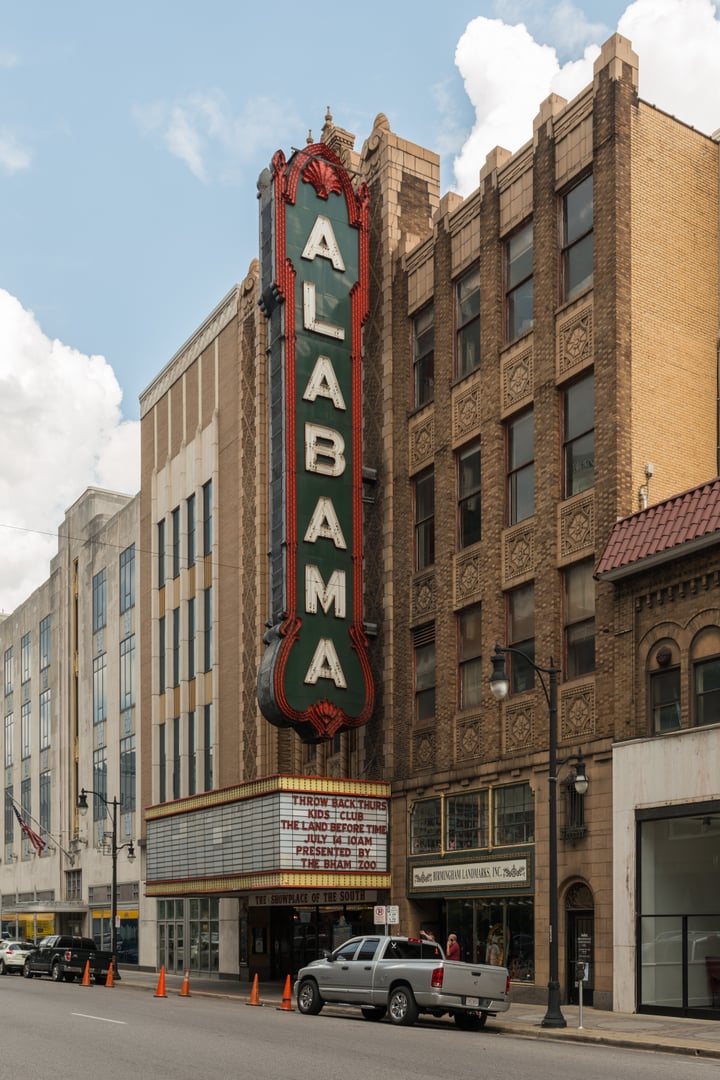
Birmingham, AL
The Alabama Theatre is a 1927 Paramount-Publix movie palace in downtown Birmingham, designed by the Chicago firm Graven & Mayger in a Spanish-Moorish style. The theatre houses one of the country's surviving Wurlitzer pipe organs (the 'Mighty Wurlitzer') installed at construction. It is operated today as a live-performance venue by Birmingham Landmarks, Inc., the same nonprofit that operates the nearby Lyric Theatre.
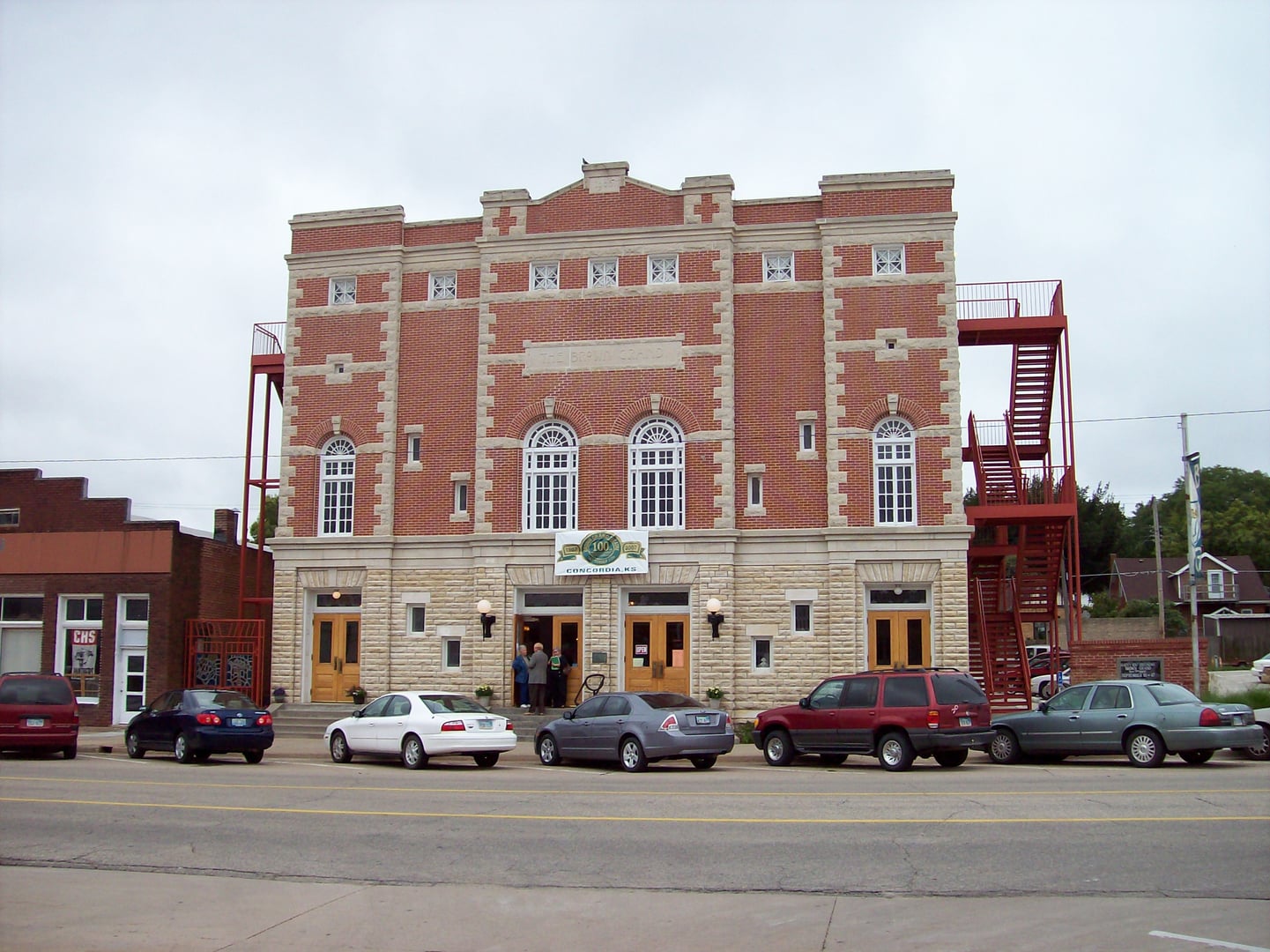
Concordia, KS
Colonel Napoleon Bonaparte Brown, a Concordia banker, broke ground on the theater in April 1906 and hired Kansas City architect Carl Boller to design it. His son, Earl Van Dorn Brown, supervised construction after touring more than thirty opera houses for ideas. The theater opened September 17, 1907. Brown died in 1910; Earl died about four months later. Listed on the National Register of Historic Places in 1973, the building was restored to its original appearance and reopened in 1980.
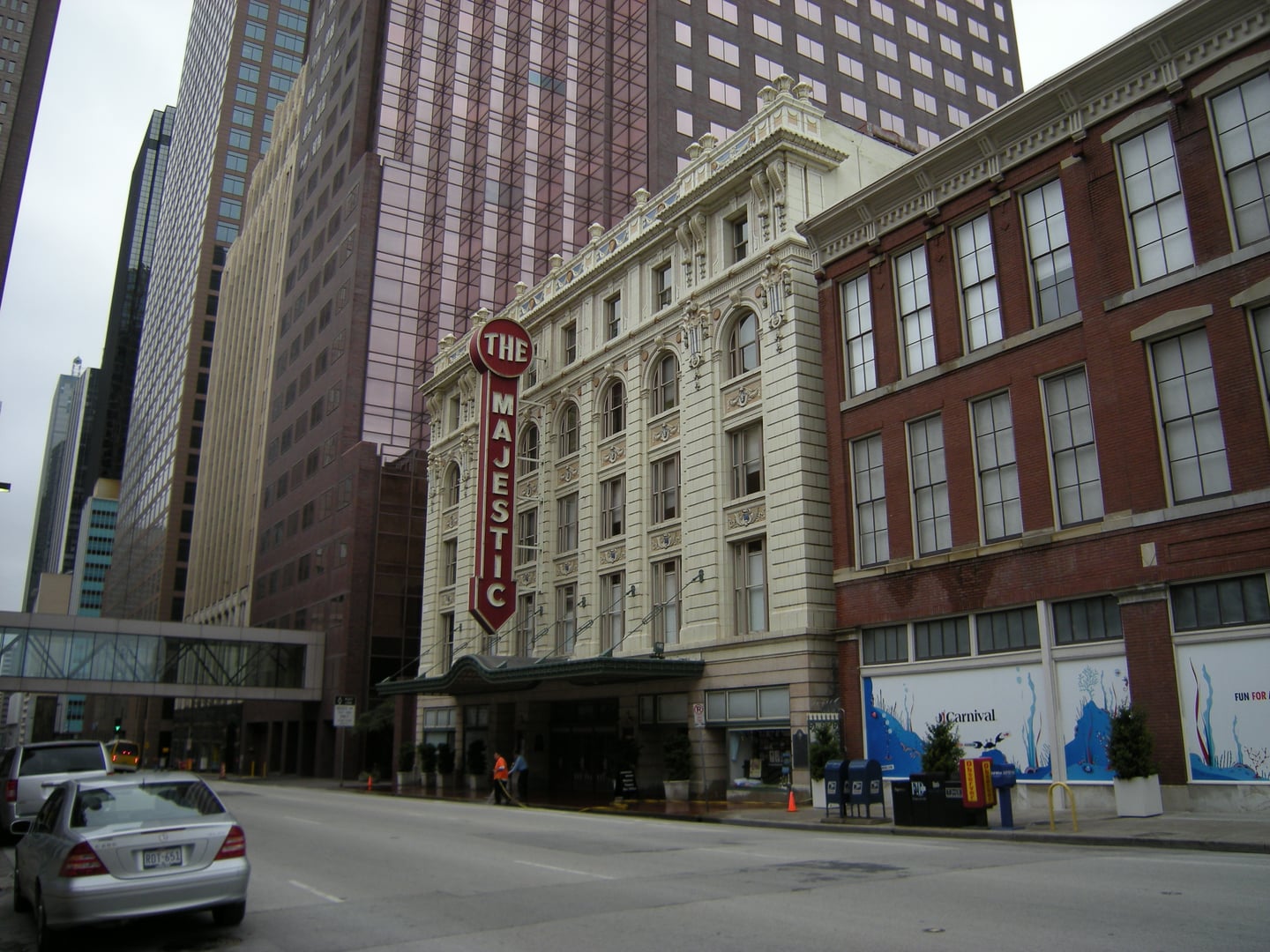
Dallas, TX
The Majestic Theatre opened April 11, 1921 on Elm Street in downtown Dallas as the flagship vaudeville house of Karl Hoblitzelle's Interstate Amusement Company. Designed by atmospheric-theater architect John Eberson in Renaissance Revival style, it became the first Dallas building listed on the National Register of Historic Places in 1977. The City of Dallas now operates the venue as a performing-arts space.