Drive-By
Exterior View of the Millett Opera House
Limestone exterior of the 1878 opera house visible from 9th and Brazos. The 24-inch limestone walls and original Frederick Ruffini facade are still intact.
- Duration:
- 15 min
HauntBound archive · catalog record
Reported phenomena, as catalogued
+ 2 further entries on record
1878 NRHP-listed opera house, now home of the private Austin Club, where staff describe the spirit of "Priscilla" riding the elevator at night — exterior viewing from 9th and Brazos is open year-round, with occasional Foundation-led interior tours by advance booking.
110 E 9th St, Austin, TX 78701
Research updated June 2026
Age
All Ages
Cost
$$
Building is the private clubhouse of The Austin Club; interior access is by member or invited-guest only. The Millett Opera House Foundation occasionally arranges public history tours.
Access
Wheelchair OK
Restored 19th-century opera house with an elevator and accessible main-floor entrance through the Austin Club.
Equipment
No Photos
Est. 1878 · National Register of Historic Places (1978) · Frederick Ruffini design · Largest enclosed space in Texas at 1878 opening · Long-term home of The Austin Club (since 1981)
Charles F. Millett, an Austin lumber merchant, commissioned the Millett Opera House on a downtown lot at 9th and Brazos. The building was designed by Italian-born architect Frederick Ruffini, who was responsible for several of Austin's most significant late-nineteenth-century buildings, and constructed with 24-inch limestone exterior walls. It opened on October 28, 1878 with 800 removable seats - permitting use as both an auditorium and a ballroom - and was the largest enclosed space in Texas at the time of its dedication.
The Millett hosted opera, theatrical productions, and traveling vaudeville from 1878 into the early 1890s, when newer venues drew away the touring circuits. The building subsequently passed through several uses, including as a printing facility and as offices, before The Austin Club - a private social club founded in 1881 - signed a long-term lease in 1979 and moved into the property in 1981.
The Austin Club has occupied the building continuously since, using the former auditorium as its main dining and event space while preserving original Ruffini detailing throughout. The Millett was added to the National Register of Historic Places in 1978; the Texas Historical Commission's NRHP nomination documents the building's architectural and cultural significance.
A companion nonprofit, the Millett Opera House Foundation, was established in the 2010s to advance restoration and public interpretation of the building. The Foundation has periodically offered public history tours and arranged the placement of a Texas Historical Commission marker on the property.
Sources
The Millett Opera House's recurring spirit is "Priscilla," whose identity varies across the source material. Some accounts collected by Ghost City Tours, Austin Ghosts, and the Daily Texan describe her as a touring actress from the late 1800s; others as an opera singer who fell to her death from a catwalk or threw herself from the rafters in heartbreak. The variation in cause-of-death narratives is itself a marker of the lore's age - the story has been passed through generations of staff and ghost-tour itineraries and has accumulated divergent details.
The most consistent piece of the Priscilla tradition is the elevator. According to Ghost City Tours and Austin Ghosts, Austin Club staff have for decades reported the building's elevator running on its own at night, doors opening to an empty car, and sightings of a woman in a long white nineteenth-century gown either inside the elevator or stepping out of it onto the upper floor. Austin Ghosts has a published account in which an employee describes Priscilla pulling curtains out of their tiebacks and a more aggressive incident in which a plate of food was slapped from the employee's hands, the room dropped to near-freezing temperatures, and the employee was pushed and spun by an unseen force.
Additional reports cluster on the former auditorium floor: phantom applause from the now-converted ballroom, music heard from the upper rows when the room is empty, and a feeling of being watched from the upper galleries. Austin Visit Austin's tourism page and the Daily Texan student newspaper both reference the Millett as one of Austin's most consistently haunted historic buildings.
HauntBound notes that the building's private-club use limits independent verification of the on-site staff reports. Single-source dramatic incidents (the curtain-pulling, the slapped plate) are best treated as testimony from a small number of named witnesses rather than broadly corroborated phenomena.
The building is the private clubhouse of The Austin Club — appreciate the limestone exterior and Frederick Ruffini facade from the public sidewalk at 9th and Brazos. Interior access is limited to occasional Millett Opera House Foundation history tours by advance booking; do not approach the building outside scheduled programming.
Notable Entities
Limestone exterior of the 1878 opera house visible from 9th and Brazos. The 24-inch limestone walls and original Frederick Ruffini facade are still intact.
Occasional Foundation-led public tours of the interior, including the original auditorium space now used as the Austin Club ballroom. Tour availability is limited and scheduled in advance.
Some links on this page may earn HauntBound a small commission when you book, at no extra cost to you. Our editorial picks are independent. Full disclosure
This Austin tour includes Millett Opera House on its route.
Every HauntBound history is researched from documented sources. We clearly separate verified historical fact from paranormal folklore.
Free Guide
10 verified stops, rated for families, mapped in order. Free.
One email to confirm, then the guide link. Unsubscribe anytime.
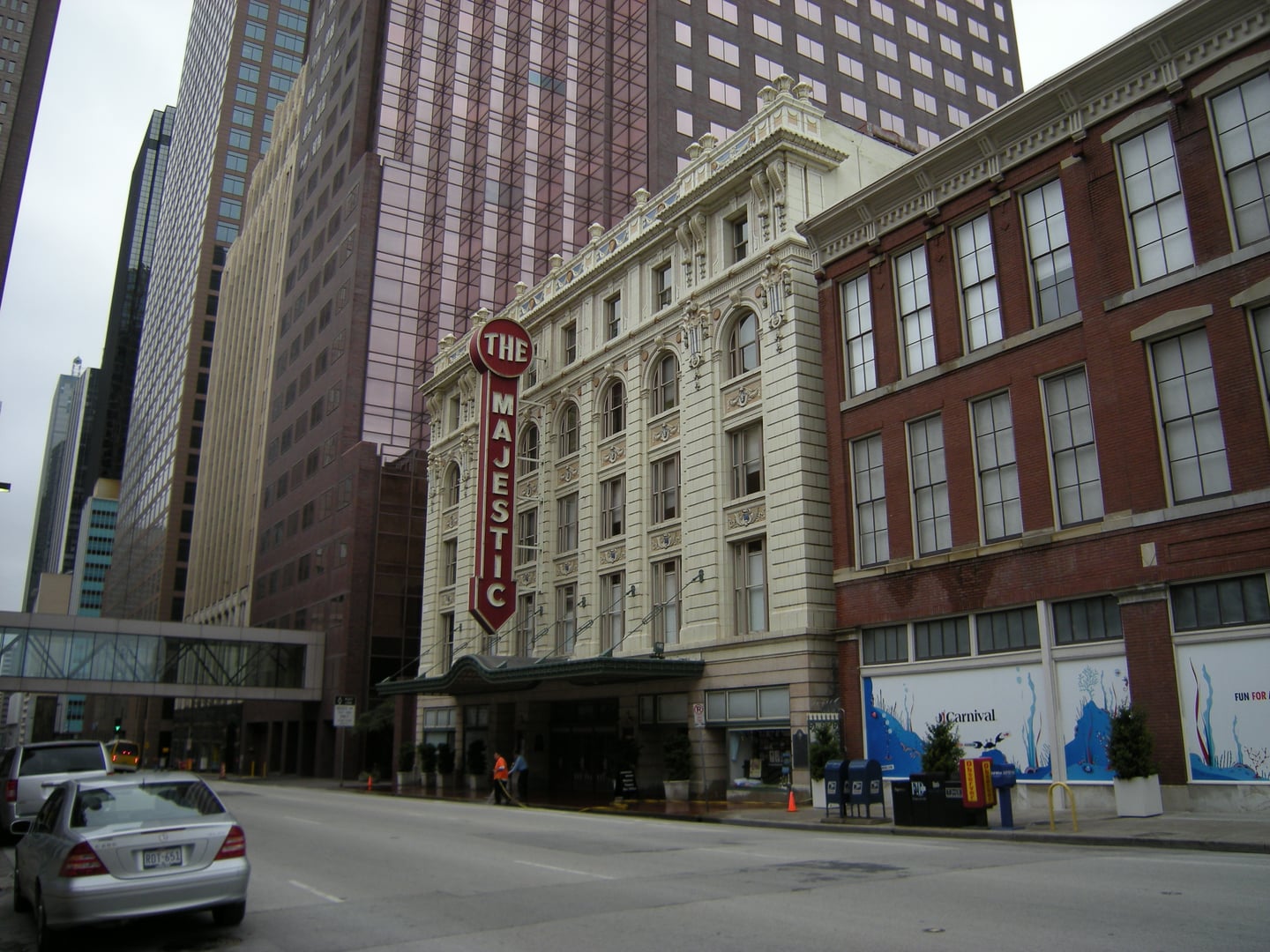
Dallas, TX
The Majestic Theatre opened April 11, 1921 on Elm Street in downtown Dallas as the flagship vaudeville house of Karl Hoblitzelle's Interstate Amusement Company. Designed by atmospheric-theater architect John Eberson in Renaissance Revival style, it became the first Dallas building listed on the National Register of Historic Places in 1977. The City of Dallas now operates the venue as a performing-arts space.
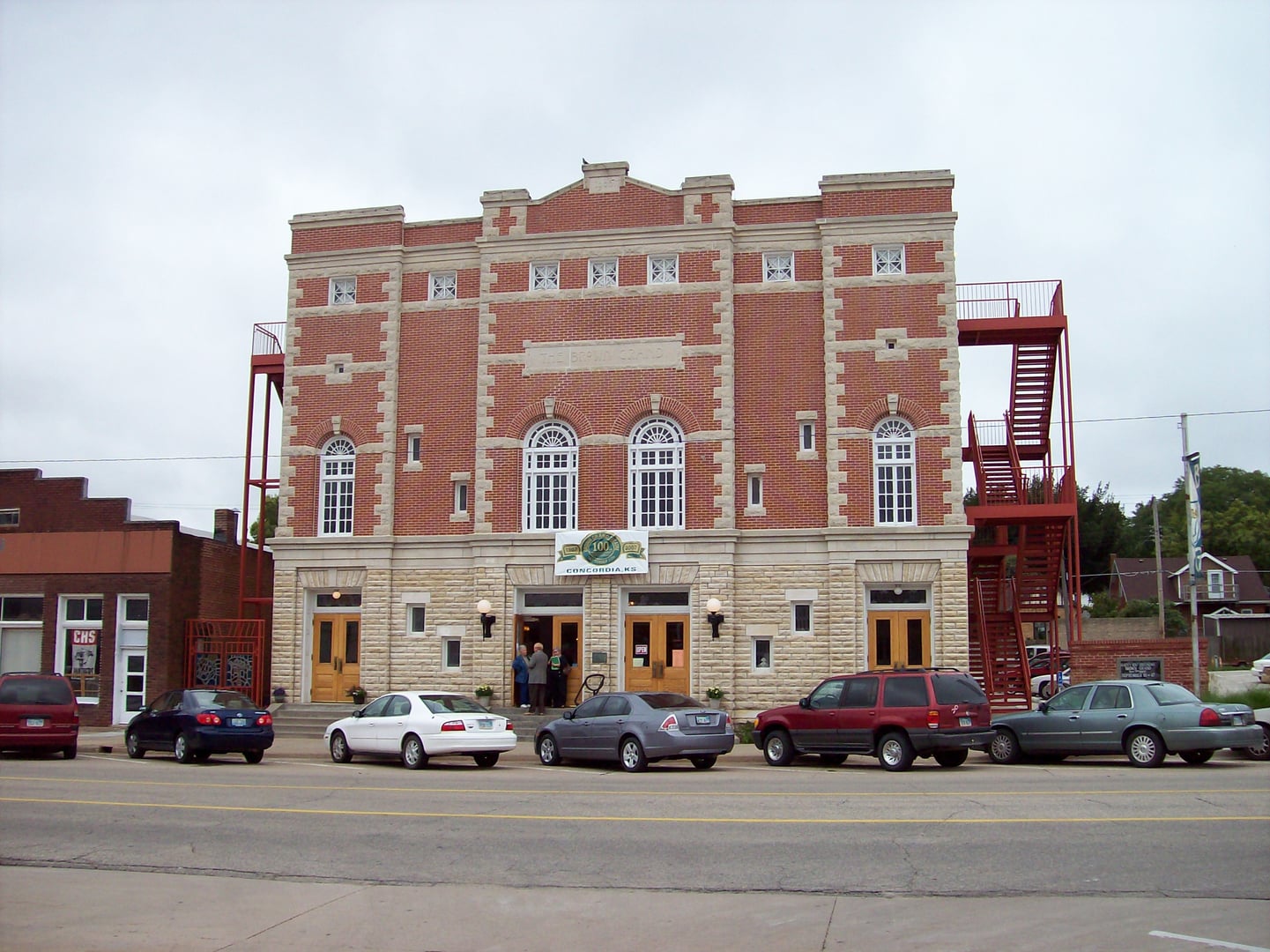
Concordia, KS
Colonel Napoleon Bonaparte Brown, a Concordia banker, broke ground on the theater in April 1906 and hired Kansas City architect Carl Boller to design it. His son, Earl Van Dorn Brown, supervised construction after touring more than thirty opera houses for ideas. The theater opened September 17, 1907. Brown died in 1910; Earl died about four months later. Listed on the National Register of Historic Places in 1973, the building was restored to its original appearance and reopened in 1980.
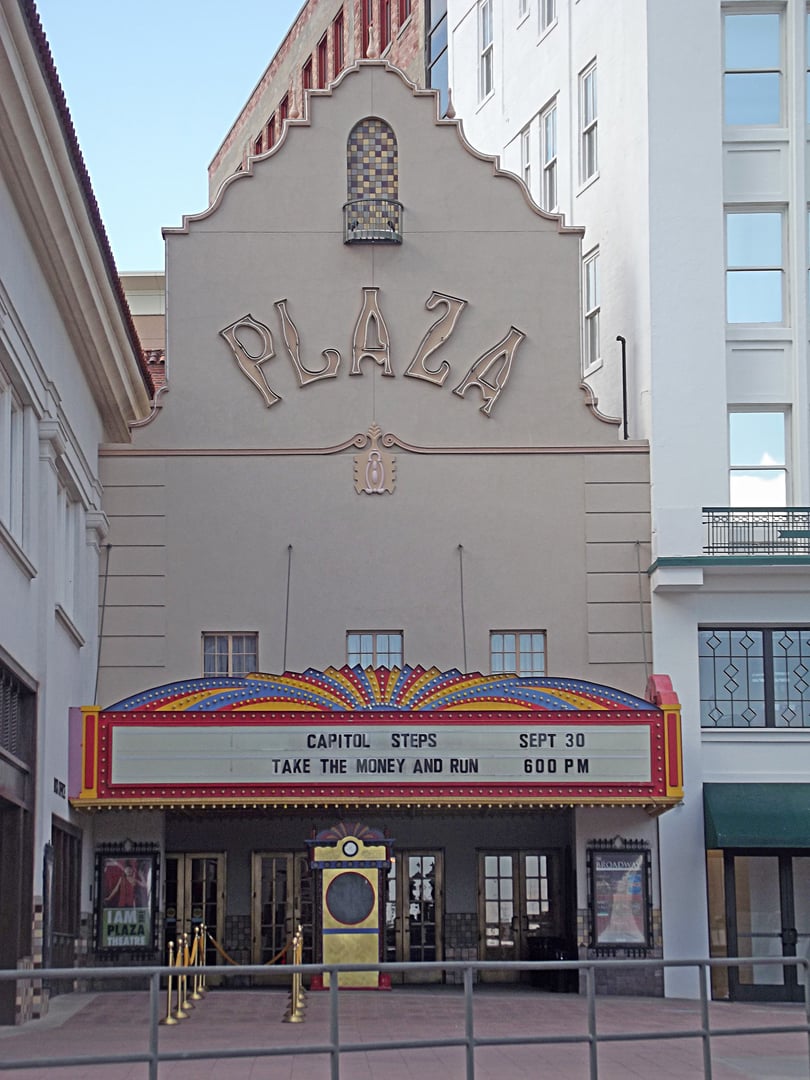
El Paso, TX
The Plaza Theatre opened September 12, 1930 on Pioneer Plaza in downtown El Paso. Developer Louis L. Dent commissioned the Spanish Colonial Revival movie palace in 1927, and the inaugural night drew a crowd of 2,410. Its lavish interior was designed to evoke 'the fabled beauty of Old Spain and the charm of Old Mexico.' After decades of decline, the theatre was extensively restored and reopened as a performing-arts venue, now home to the Plaza Classic Film Festival and a wide range of touring performances.