Est. 1797 · Finest surviving 18th-century house in Georgia (Smithsonian designation) · National Register of Historic Places · Federal Period tobacco-era architecture · Debunked Revolutionary War hanging legend
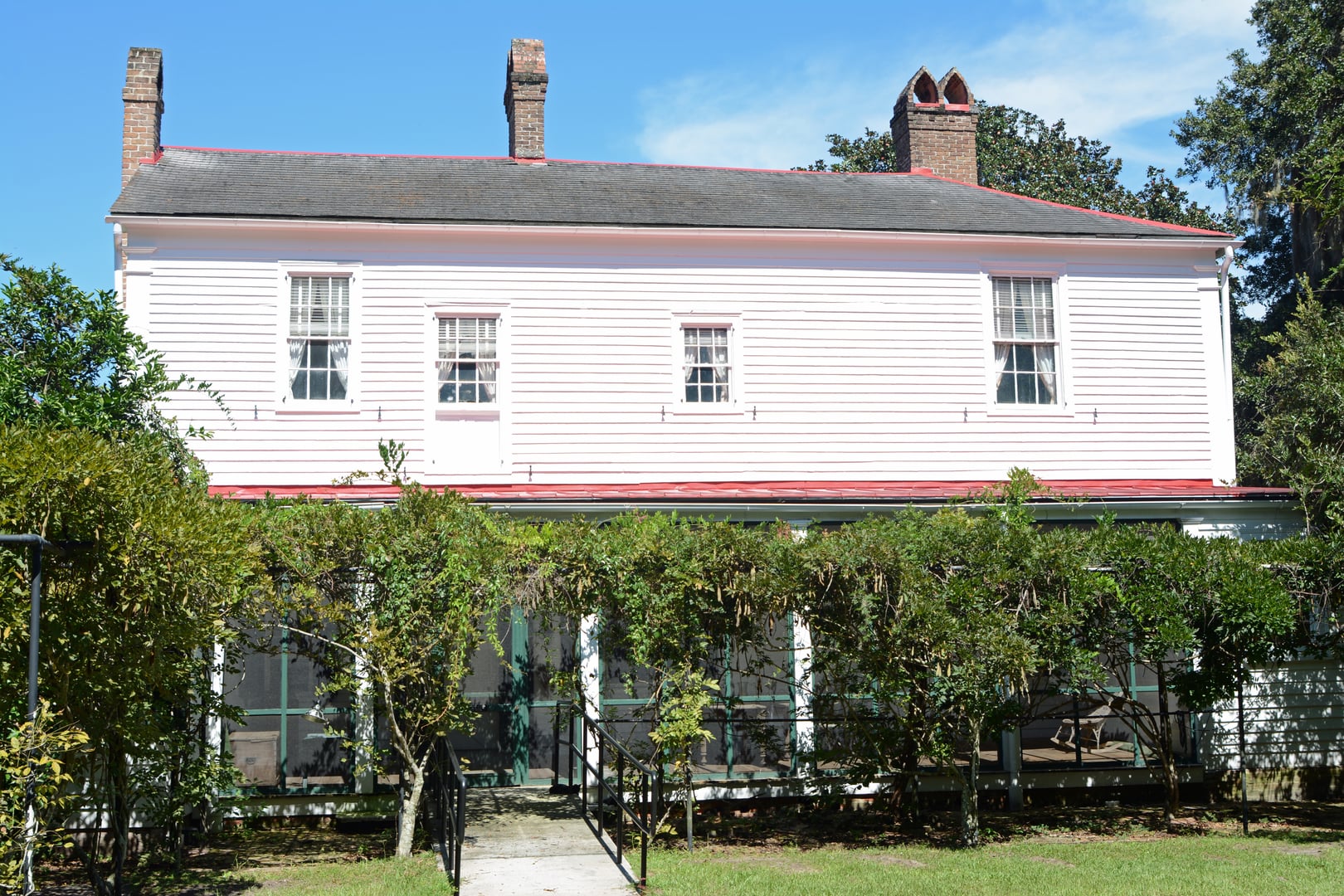
Ezekiel Harris arrived in the Augusta area and built substantial wealth as a tobacco merchant, establishing a trading complex in Harrisburg—a settlement that competed directly with Augusta for the regional tobacco trade. The house he completed in 1797 is a three-story gray clapboard structure in the Federal style, one of the few surviving examples of Georgian-era plantation plain architecture in the state.
Harris was not a man of uncomplicated reputation. In 1797, the same year the house was completed, he was charged with murder in connection with a man found dead with rope around his neck after being lashed to a horse. Harris was tried and acquitted. In 1800, his business rival John Hammond was shot with a musket and died three weeks later. Harris was the prime suspect but was never charged.
For decades, the house was misidentified. Visitors were told it was the Mackay Trading Post, and guides repeated a story about thirteen Revolutionary War patriots hanged from the exterior stairwell by loyalist Thomas Brown during the 1781 Siege of Augusta. Historian Ed Cashin's research in the mid-1970s demolished that account: the Harris House did not exist during the Revolutionary War, and the killings associated with Brown—real events—occurred at a different location, likely the Mackay Trading Post, which was probably destroyed during the war.
The Augusta Museum of History took over stewardship of the house, which was fully restored in 1964. It operates today as a history museum offering guided tours on scheduled Saturdays, with exhibits on the Federal Period, Georgia's tobacco economy, and the house's architectural significance.
Sources
- https://www.augustamuseum.org/HarrisHouse
- https://theaugustapress.com/something-you-might-not-have-known-the-ezekiel-harris-house/
- https://www.wjbf.com/featured/hometown-history/hometown-history-the-ezekiel-harris-house/
Historical legend (debunked)
The hanging legend that clung to the Harris House was compelling and specific: thirteen American patriots, captured during the 1781 Siege of Augusta, were executed by hanging from the exterior stairwell on orders of British loyalist Thomas Brown. Guides told the story to school groups for generations. The Mackay Trading Post name reinforced it—visitors believed they were standing in the building where it happened.
The problem was the building itself. Historian Ed Cashin's archival research, completed in the mid-1970s, established that Ezekiel Harris did not construct the house until 1797—sixteen years after the events in question. The structure where the executions may have occurred was almost certainly the actual Mackay Trading Post, a different building that was likely destroyed during the Revolutionary War.
What makes the Harris House genuinely dark is what the legend displaced: the documented history of the man who built it. Ezekiel Harris faced murder charges in 1797, the same year construction finished, and his business rival died under suspicious circumstances in 1800. The truth attached to the house is more legally documented than the legend, and it belongs to the builder rather than to British soldiers.
The Southern Spirit Guide has revisited the site's paranormal claims, noting that the house carries residual legend even after the debunking—visitors familiar with the old story still connect the building to executions that never happened there.
Notable Entities
Ezekiel HarrisThomas Brown
Where this legend is told