Est. 1864 · Civil War Battle Site · Atlanta Campaign · Sherman's Supply Line · Etowah Valley History
Allatoona Pass is a narrow gap in the Etowah Ridge cut by the Western & Atlantic Railroad, approximately 30 miles north of Atlanta. By October 1864, Sherman had taken Atlanta and was planning his March to the Sea; Confederate General John Bell Hood sought to cut Sherman's supply line by destroying the railroad infrastructure that ran through Allatoona Pass.
On the morning of October 5, 1864, Confederate General Samuel French led a force of roughly 3,200 men against a Union garrison of approximately 2,000 soldiers under Brigadier General John Corse, who was holding the pass and a U.S. Army supply depot there. The fighting was close-range and intense, concentrated around a position called the Star Fort on the west side of the pass and across the railroad cut itself. French withdrew before noon, having failed to dislodge the Union garrison.
The combined casualties were approximately 1,600 — a rate that placed Allatoona among the bloodiest hours of the Atlanta Campaign on a per-soldier basis. The battle gave rise to the phrase 'Hold the fort,' attributed to a signal exchange between Sherman and Corse during the engagement, though the precise wording is disputed.
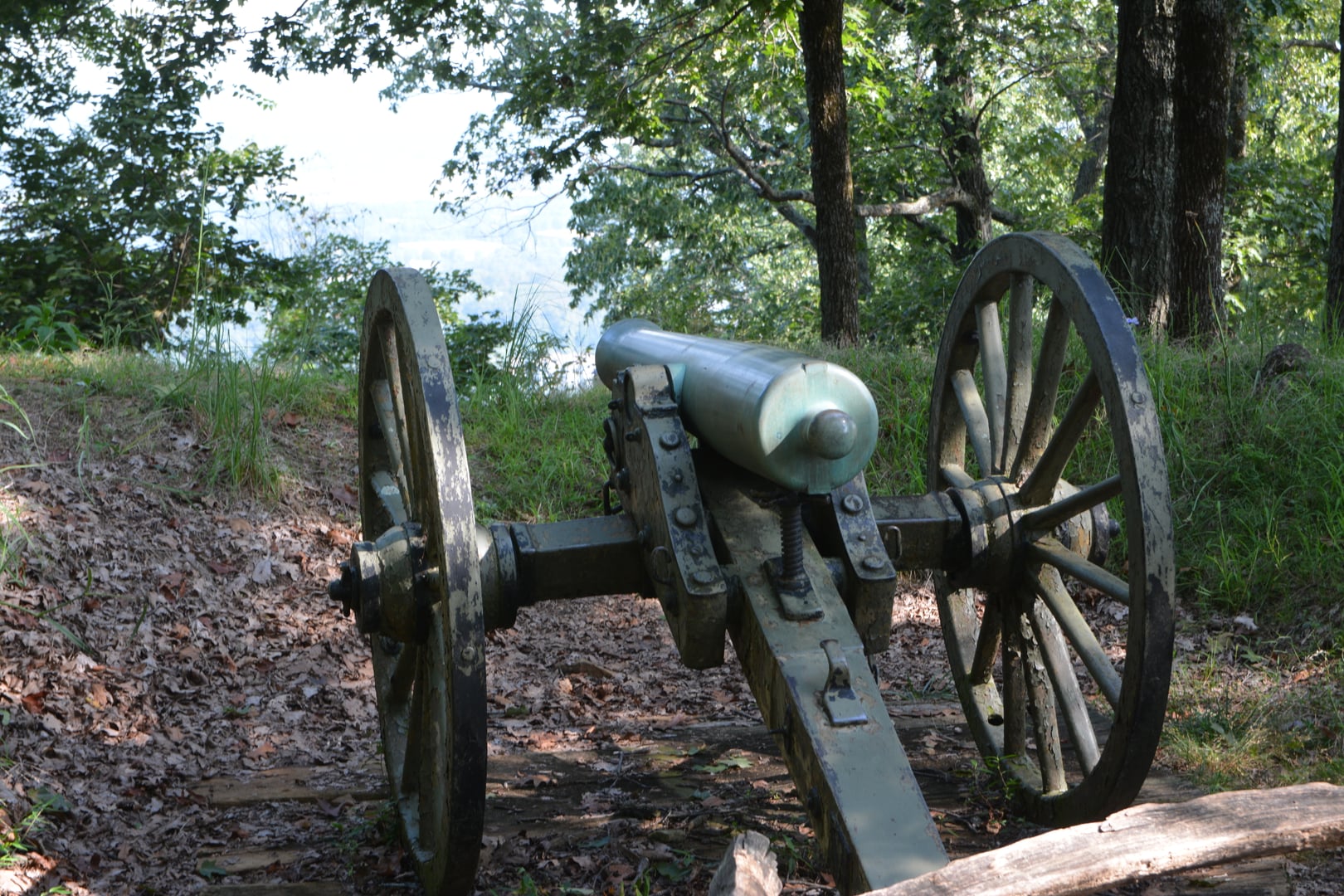
The Etowah Valley Historical Society has documented the site for decades, and Georgia State Parks took over management of the battlefield. The earthworks, rifle pits, and the railroad cut remain largely in their 1864 configuration — unusually intact for a battlefield of this size — making the site significant for both military historians and the preservation community.
Sources
- https://gastateparks.org/AllatoonaPassBattlefield
- https://evhsonline.org/bartow-history/civil-war/allatoona-pass-battlefield
- https://www.southernspiritguide.org/apparitions-at-allatoona-cartersville-georgia/
ApparitionsAuditory PhenomenaBattle SoundsAnimal Disturbance
The haunting tradition at Allatoona Pass has a documented post-war origin: accounts of a Confederate soldier seen near the railroad cut began circulating in the Bartow County area in the years immediately following the battle, according to the Southern Spirit Guide's historical documentation of the site.
Contemporary accounts take several forms. Auditory phenomena are the most commonly reported: visitors describe hearing sounds resembling cannon fire or the distant cries of wounded men in areas of the battlefield where no sound source is present. Visual accounts describe a male figure in period clothing near the railroad cut and the earthworks.
A 2017 account documented by the Southern Spirit Guide involves horses brought to the site by riders who described the animals refusing to re-enter a specific section of the battlefield, exhibiting visible distress with no obvious stimulus. The riders had no prior knowledge of any paranormal reputation at the site at the time. This account is the most specific recent documentation in accessible sources.
With roughly 1,600 casualties in eight hours, Allatoona Pass represents one of the highest per-hour death rates of any engagement in the Atlanta Campaign. The site's unusual preservation — intact earthworks, the railroad cut, original field positions — means visitors are walking within feet of where many of those casualties occurred.