Est. 1797 · Robert Toombs purchased property 1837; occupied as primary residence · Toombs served as U.S. Senator and Confederate Secretary of State · Died 1885 without ever taking the oath of allegiance to the United States · National Historic Landmark · Operated as Georgia State Parks museum
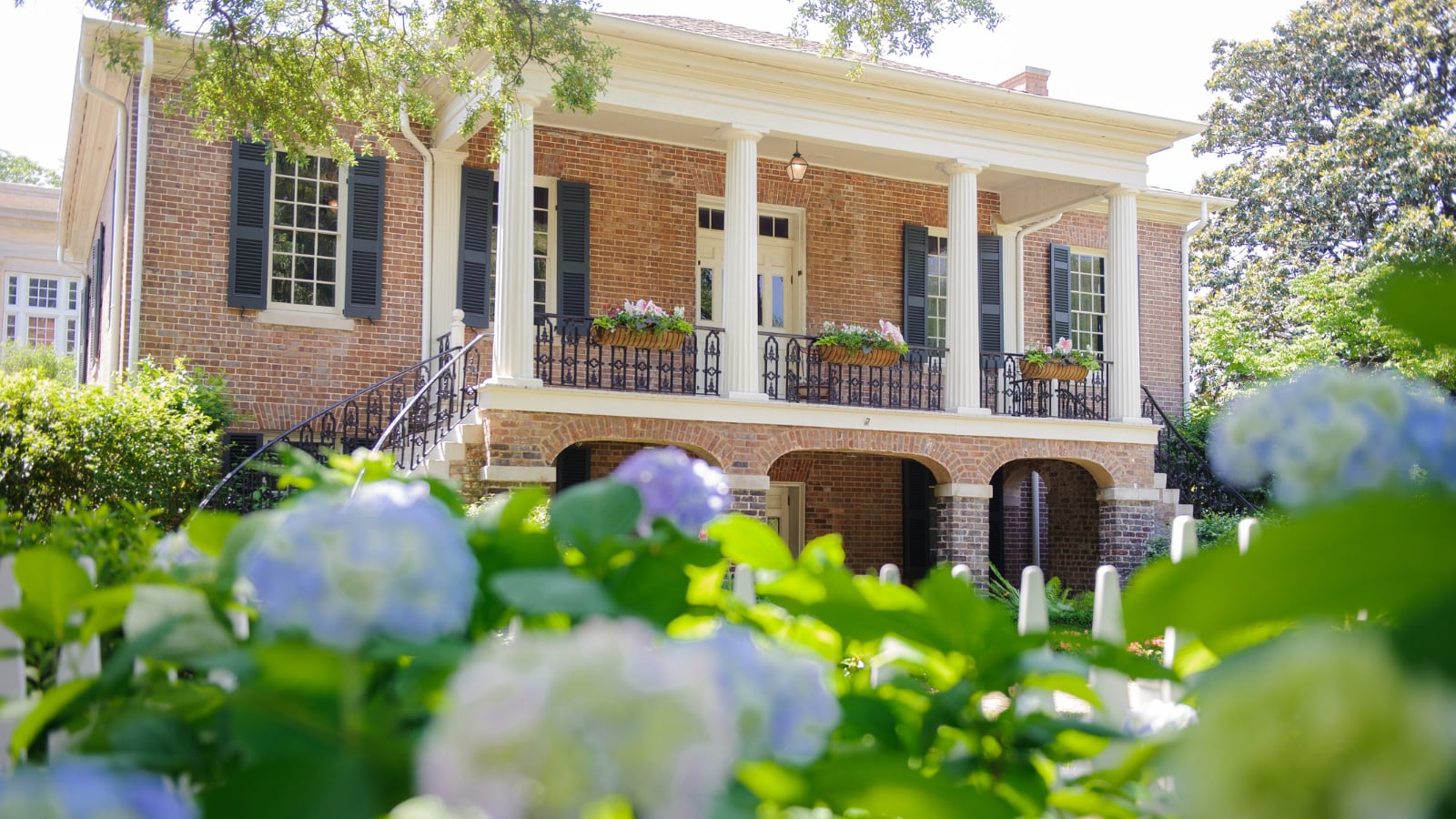
Robert Toombs purchased the property at what is now 216 E Robert Toombs Avenue in Washington in 1837 and transformed it into the principal residence that would bear his identity for the rest of his life. Toombs was one of the dominant political figures in antebellum Georgia — serving as a U.S. Representative and then U.S. Senator — and the house reflected the prosperity of a successful planter-lawyer who had reached national prominence.
In 1861, Toombs initially expected to be named president of the Confederacy but was passed over in favor of Jefferson Davis. He accepted appointment as Confederate Secretary of State, a position he held briefly before resigning and taking a military command. His military service was undistinguished; he participated in the Battle of Antietam and was wounded there in September 1862.
After the Confederacy collapsed in 1865, Toombs fled to Europe to avoid prosecution. He returned to Georgia in 1867 and resumed his law practice, but he was unique among former Confederate leaders in never seeking a presidential pardon and never taking the oath of allegiance to the United States. He could not hold office and made no effort to qualify to do so. He died on December 15, 1885, still an unreconstructed Confederate who had spent twenty years in a restored Union he refused to acknowledge.
William Bender's published work 'Haunted Atlanta and Beyond' records the tradition that Toombs's spirit remains attached to the property — consistent with the documented historical personality of a man who refused to accept the outcome of the war in any formal sense. The Georgia State Parks system operates the house as a museum and National Historic Landmark, with interpretive exhibits covering the full arc of Toombs's career and the postwar context.
Sources
- https://en.wikipedia.org/wiki/Robert_Toombs_House_State_Historic_Site
- https://www.exploresouthernhistory.com/toombs.html
- https://gastateparks.org/RobertToombs
Apparition of historical figureUnexplained sounds in period roomsCold spots
The haunting tradition at the Robert Toombs House is grounded in a historically documented personality rather than a specific dramatic incident. Robert Toombs's refusal to submit to Reconstruction — his flight to Europe, his return without seeking pardon, his decades as a practicing attorney who had formally renounced his connection to the government of the country he lived in — created in life the conditions for a particular kind of haunting narrative: a man who would not leave.
William Bender's book 'Haunted Atlanta and Beyond,' a published regional dark-history reference, records accounts attributed to the Toombs House consistent with the general pattern of haunting claims at antebellum properties — unexplained sounds, cold spots in the period rooms, and a general sense of presence in the structure. The accounts are not detailed in the sources examined; Bender's work is cited in regional paranormal literature as the primary published source for the Toombs haunting.
The appeal of the Toombs haunting narrative for dark tourism is its psychological specificity: unlike generic mansion haunts, the claim about Toombs is an extension of his documented historical behavior. He spent twenty years refusing to accept the outcome of a war. The folk tradition holds that he has spent the subsequent 140 years doing the same thing.
Notable Entities
Robert Toombs
Media Appearances
- Haunted Atlanta and Beyond (book, 2008)
Where this legend is told