Est. 1839 · Georgia's First Official Executive Residence · Greek Revival Architecture by Charles B. Cluskey · National Register of Historic Places · Sherman's March to the Sea Occupation 1864 · Ten Georgia Governors in Residence 1839-1868
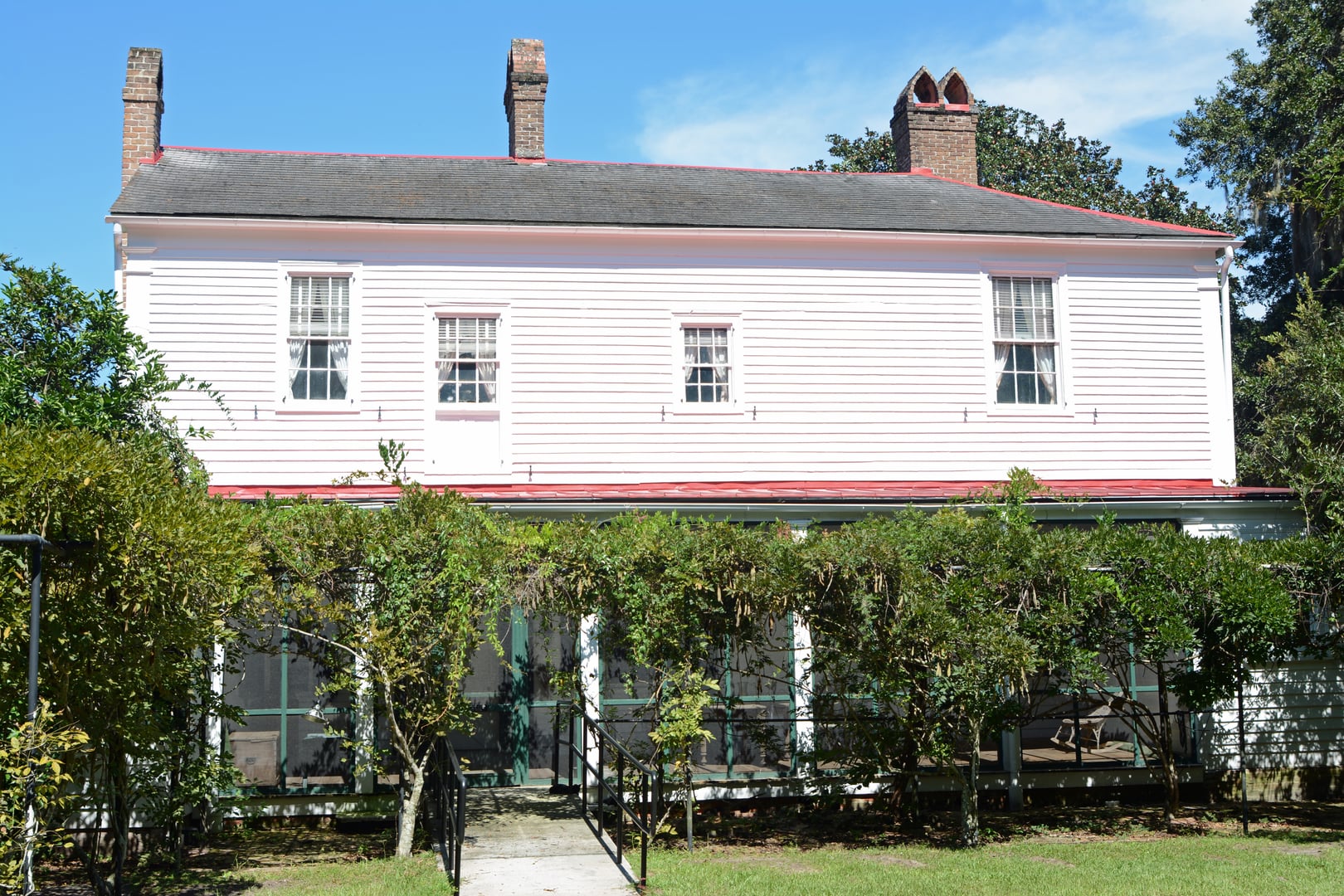
The mansion at 120 S Clarke St in Milledgeville was completed in 1839, replacing a series of earlier and less formal executive accommodations in what was then Georgia's state capital. Architect Charles B. Cluskey designed the building in the Greek Revival style with a symmetrical facade and a distinctive pink stucco exterior. The structure was intended to project the authority and permanence of Georgia's state government at a moment when the capital had been in Milledgeville for nearly three decades.
Ten Georgia governors occupied the mansion between 1839 and 1868. The building served as the center of state executive life through the antebellum period, including the years of Georgia's secession debates and the early years of the Civil War. Milledgeville itself was home to the Georgia state arsenal and served as a significant logistics point for the Confederacy.
In November 1864, General William T. Sherman's army reached Milledgeville during the March to the Sea. Sherman used the mansion as a temporary headquarters, and his troops looted it, removing furnishings and personal property. The occupation lasted several days before the army continued southeast toward Savannah. The physical evidence of that occupation—scratched floors, damaged woodwork—became part of the mansion's documented history.
When the state capital moved to Atlanta in 1868, the mansion ceased functioning as the governor's residence. It passed through a series of institutional uses, serving at different periods as a school and administrative facility, before Georgia College (now Georgia College and State University) acquired and restored it as a museum. A meticulous restoration returned the interior to its antebellum character using period documentation. The mansion was added to the National Register of Historic Places and is recognized as an outstanding example of Greek Revival public architecture in the South.
Sources
- https://en.wikipedia.org/wiki/Old_Governor%27s_Mansion_(Milledgeville,_Georgia)
- https://www.gcsu.edu/old-governors-mansion
- https://www.visitmilledgeville.org/things-to-do/history-heritage/haunted-milledgeville/
Phantom cooking smellsApparitionsUnexplained odors
The Old Governor's Mansion's paranormal tradition is anchored by something unusual in haunted-site accounts: smell rather than sight or sound. Staff and visitors have repeatedly reported the odor of cooking, particularly the sharp smell of burned or scorched potatoes, arising in rooms of the mansion when no food preparation is occurring anywhere in the building. The smell has at times been intense enough that staff treated it as a possible fire emergency; on at least one documented occasion, the fire department was called to investigate and found no source of smoke or burning material.
An apparition of a woman in period dress has been observed by multiple witnesses in and around the State Dining Room. Visit Milledgeville's official haunted history documentation identifies this figure as Molly, described as a former cook who worked in the mansion during its years as an executive residence. The attribution is part of local tradition and is consistent across the sources that document it, though Molly's specific biographical record—beyond her role as a household cook—has not been established in the available documentation.
The mansion's history includes a domestic workforce that would have included enslaved workers before the Civil War and paid household staff afterward. The tradition of a former cook's spirit associated with the kitchens and dining areas fits the building's documented operational history. Georgia Haunted Houses and Visit Milledgeville both include detailed accounts of these reports, and the fire-department incident in particular gives the olfactory phenomena a documented reference point that distinguishes the mansion's paranormal record from purely anecdotal accounts.
Notable Entities
Molly (former cook)
Where this legend is told