Est. 1859 · Battle of Jonesborough headquarters and hospital · Atlanta Campaign field hospital · Macon and Western Railroad context · Convalescent soldier signatures preserved
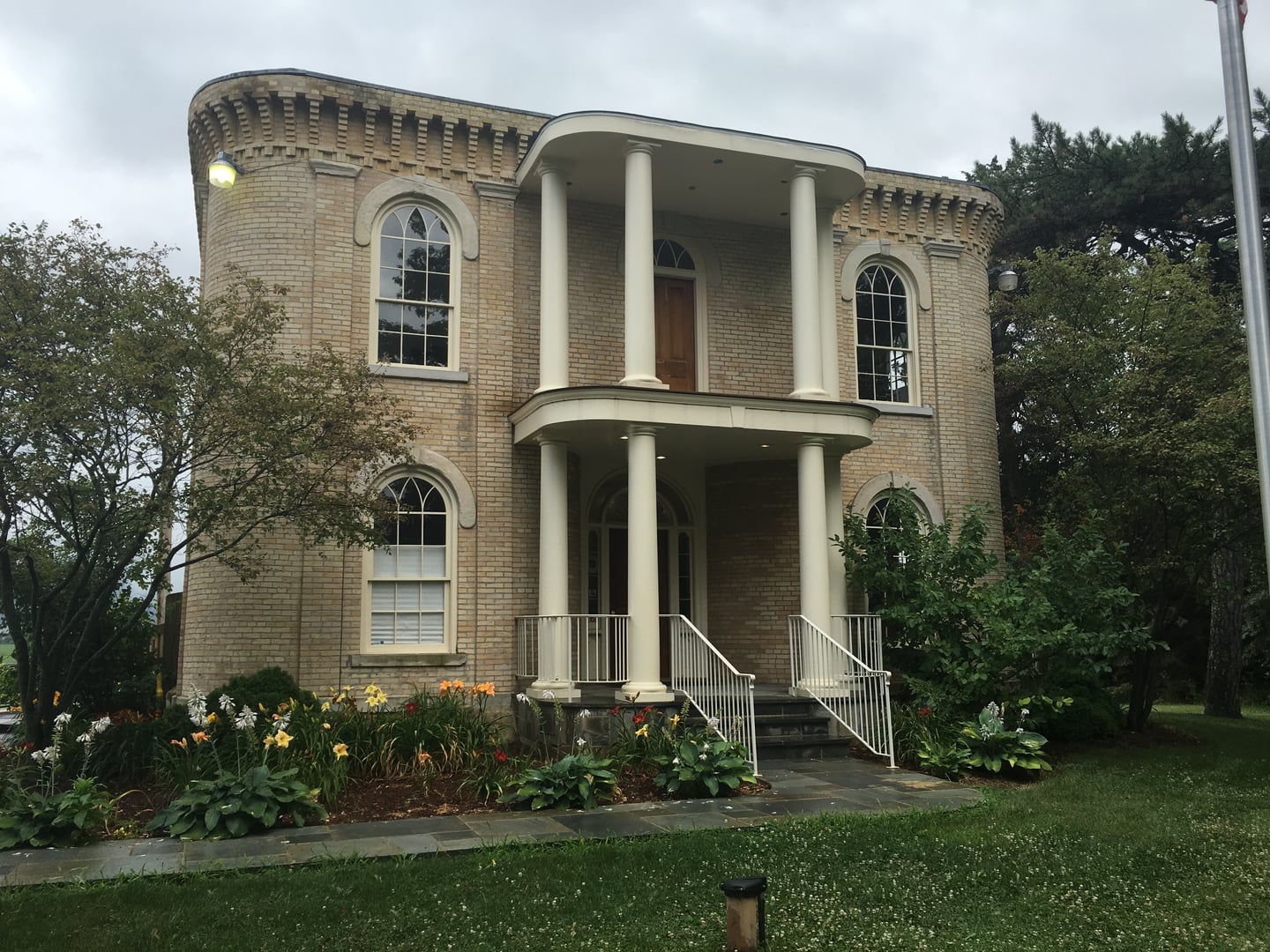
The Warren House at 102 W Mimosa Drive in Jonesboro, Georgia was built in 1859 for Guy Lewis Warren. Warren was a Connecticut native who moved south early in life and married Mary Ruberry Vardell of Charleston, South Carolina. He owned a hardware store and served as the agent for the Macon and Western Railroad in Jonesboro.
The Warrens evacuated to South Carolina prior to Sherman's March to the Sea. Once vacated, the house became Confederate headquarters during the August 31-September 1, 1864 Battle of Jonesborough, in which the Union Army cut the Macon and Western Railroad and severed Atlanta's last supply line. Following the Confederate withdrawal, the 52nd Illinois Infantry occupied the home and used it as a hospital for both Union and Confederate wounded. The second-floor operating room was located to the right of the front door, and the third floor was used as a dying room. According to contemporary accounts, soldiers' amputated limbs were discarded through a window beside the second-floor operating room, with the resulting pile burned every few days.
Signatures of convalescing Union soldiers still appear on upstairs walls. The Warren House now operates as a private events venue.
Sources
- https://www.news-daily.com/news/warren-house-served-as-military-headquarters-hospital-during-battle-of-jonesborough-photos/article_c5e0dfdf-81e1-5be7-8c3f-94c9aa67b0aa.html
- https://www.hmdb.org/m.asp?m=187123
- https://www.georgiahistory.com/ghmi_marker_updated/the-warren-house/
- https://en.wikipedia.org/wiki/Battle_of_Jonesborough
- https://warrenhouse.net/the-venue/
Apparition of a soldier with a candlePersistent attic bloodstainCold spots
Local Clayton County tradition holds that a soldier with a candle has been seen at the upstairs windows of the Warren House, looking out toward the road. Witnesses have described the figure on multiple occasions, and the account is part of the Georgia ghost-tour writing for Jonesboro and the wider Battle of Jonesborough commemoration. A persistent local detail is a reported bloodstain on the attic floor in the area used as the dying room during the building's Civil War hospital period.
The Confederate cemetery across the street, the second-largest Confederate cemetery in Georgia, is included in the wider haunted-Jonesboro tradition. Visitors should treat both the house and cemetery with the gravity owed to documented battlefield deaths and approach them as commemorative sites rather than entertainment.