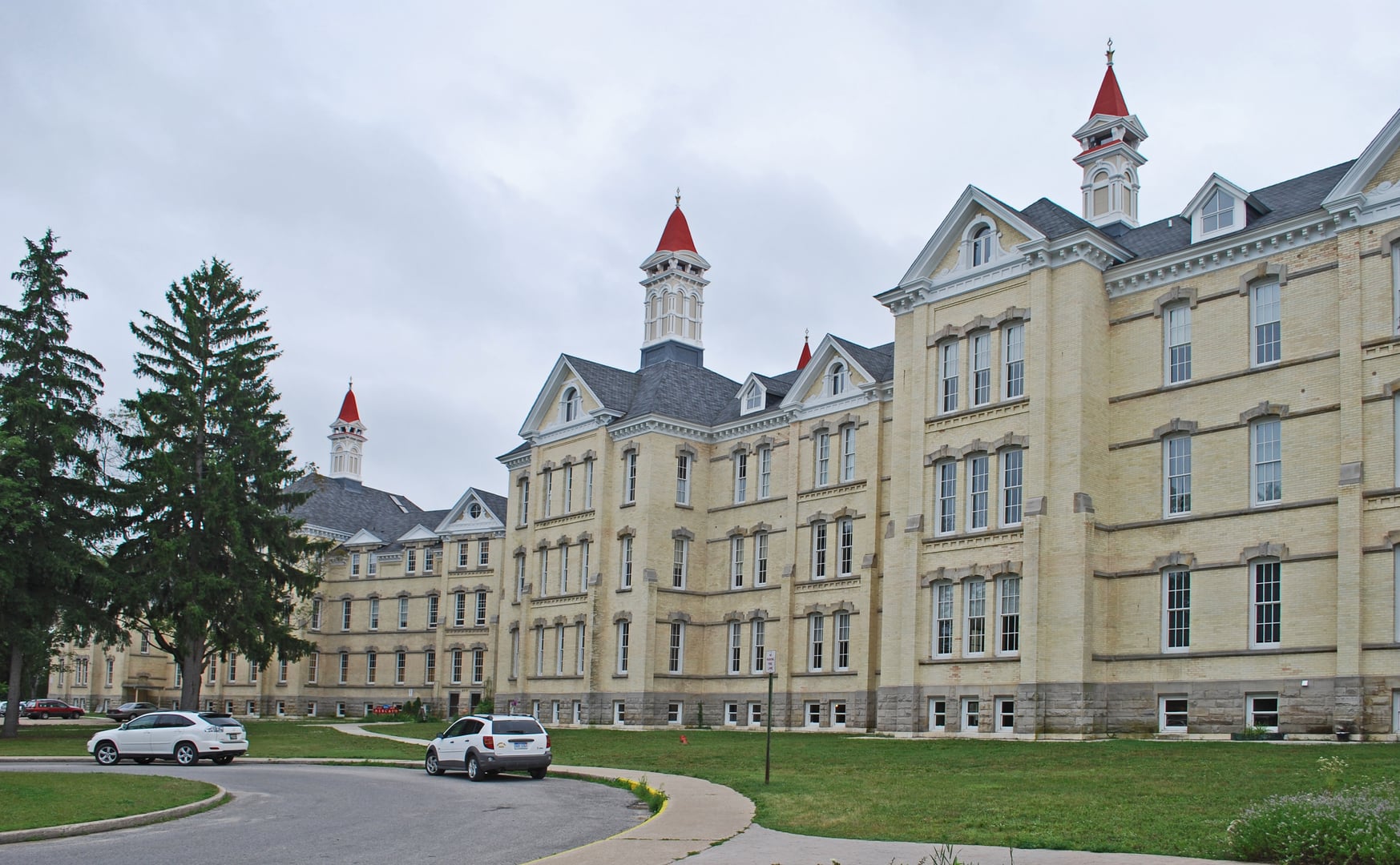
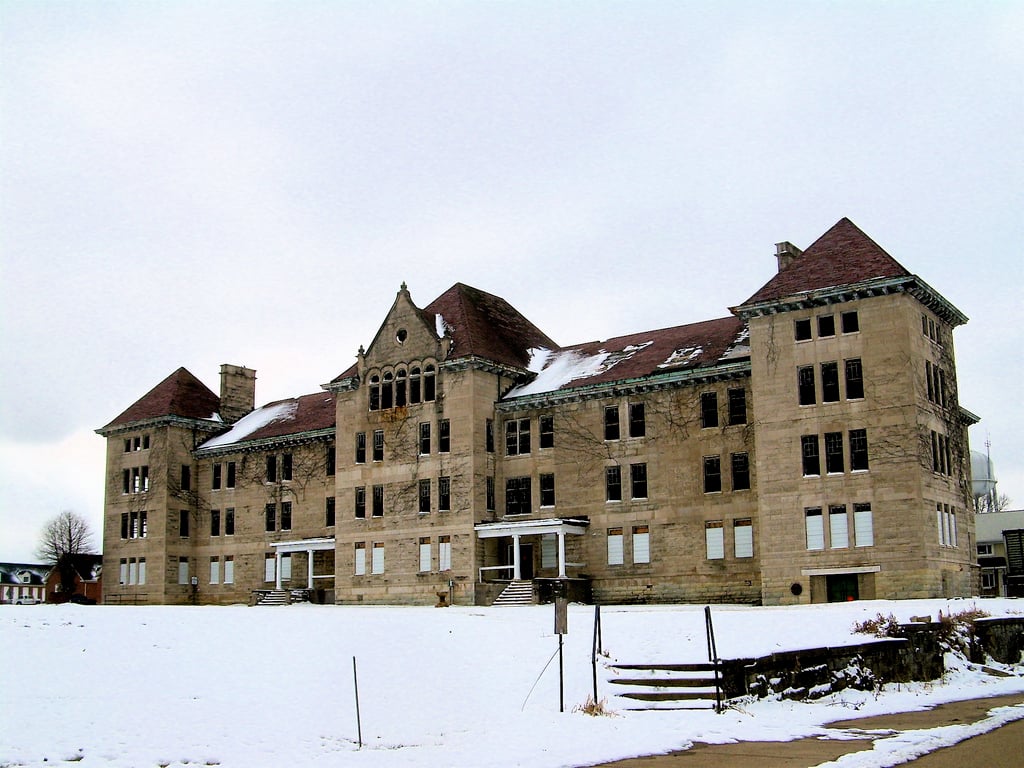
Est. 1842 · World's Largest Mental Institution (peak 1960s) · Pulitzer Prize-winning investigative reporting by Jack Nelson (1959) · Cedar Lane Cemetery with 25,000 estimated patient burials · National Register of Historic Places
The Georgia legislature chartered the facility in 1837; it admitted its first patients in 1842. Its original name — Georgia State Lunatic, Idiot, and Epileptic Asylum — reflected the diagnostic categories of the era. As state commitments grew through the late nineteenth and early twentieth centuries, the campus expanded to meet them, eventually covering 2,000 acres south of Milledgeville and incorporating over 200 buildings including wards, a chapel, farm structures, and a power plant.
By the 1960s, Central State held over 13,000 patients and had earned recognition as the largest mental institution in the world. That scale came with a catastrophic staff-to-patient ratio. In 1959, Atlanta Constitution journalist Jack Nelson — who won a Pulitzer Prize for his investigation — found only 48 doctors serving thousands of patients, none of whom were certified psychiatrists. Some individuals hired as physicians had previously been patients themselves. The conditions Nelson documented included steam baths, cold showers, straitjackets, and confinement of children in metal cages.
Governors Carl Sanders and Jimmy Carter began systematic deinstitutionalization in the mid-1960s, steadily reducing the patient population. Central State stopped accepting new admissions in 2010; it continues to operate a forensic unit serving approximately 200 patients on a portion of the grounds.
Cedar Lane Cemetery became the subject of particular historical attention when researchers confirmed that prison inmates working as groundskeepers had discarded thousands of numbered burial markers into the surrounding woods during the 1960s to simplify mowing — eliminating the correspondence between marker and grave. A 1997 restoration project by the Georgia Consumer Council installed 2,000 new cast-iron markers and placed a life-size bronze angel as a memorial at the cemetery's entrance. Approximately 25,000 patients are thought to be buried on the grounds.
Sources
- https://www.atlantamagazine.com/great-reads/asylum-inside-central-state-hospital-worlds-largest-mental-institution/
- https://www.visitmilledgeville.org/things-to-do/history-heritage/central-state-hospital-campus/
- https://www.atlasobscura.com/places/central-state-hospital
- https://en.wikipedia.org/wiki/Central_State_Hospital_(Milledgeville,_Georgia)
- https://paranormalsouth.wordpress.com/2025/10/25/the-haunting-of-central-state-hospital-milledgeville-georgia/
Disembodied voicesCold spotsObject movementUnexplained sounds
Central State's reputation as a site of paranormal activity grew alongside its abandonment. As buildings were vacated in successive waves of deinstitutionalization, investigators and visitors began documenting experiences that mapped closely to the site's history of suffering: disembodied voices in empty wards, unexplained cold spots, and in some accounts the sound of screaming coming from vacant structures.
Two investigators visiting the grounds reported objects being thrown at them from upper floors of a building no one else had entered. Others describe sudden temperature drops and the sense of physical contact — breathing at the back of the neck — in areas of the abandoned complex.
Cedar Lane Cemetery presents a different kind of unease. The numbered markers installed in 1997 represent an effort to restore dignity to burials that were, for decades, unmarked and unlocated. The bronze angel placed at the entrance has become a focus for visitors who leave flowers and small tributes. Whether that response constitutes paranormal attribution or simply grief at institutional failure is not clearly separable on the ground.
The monthly trolley tour, led by a former hospital employee, addresses the history directly and without sensationalism. The guide's firsthand knowledge gives the tour a specificity that ghost-attraction operators cannot match.
Where this legend is told