Est. 1851 · California Gold Rush Heritage · Calaveras County History · Mother Lode Lodging · California Historic Property
George Leger arrived in Mokelumne Hill during the Gold Rush era and became partner in the Hotel de France at the corner of Main and Lafayette around 1851. Mokelumne Hill at that period was the site of one of the richest gold strikes in the Mother Lode region, and the town briefly served as the Calaveras County seat.
The hotel operated under several names in its early decades - Hotel de France, Hotel d'Europa, Grand Hotel - before the Leger name became fixed. Mokelumne Hill suffered major fires in 1854, 1865, and 1874, and the hotel was rebuilt at least three times. When Calaveras County relocated its seat to San Andreas in 1866, Leger purchased the adjacent courthouse building - which included the county jail - and integrated it into the hotel complex. Following the 1874 fire, the building was reconstructed in two stories of stone, incorporating the surviving courthouse wing.
George Leger died at the hotel on March 13, 1879 after a two-day illness. Period newspapers described him as one of the oldest and most respected citizens of Mokelumne Hill. He was buried alongside his wife Louisa, who had died in 1860, in the town's Protestant Cemetery.
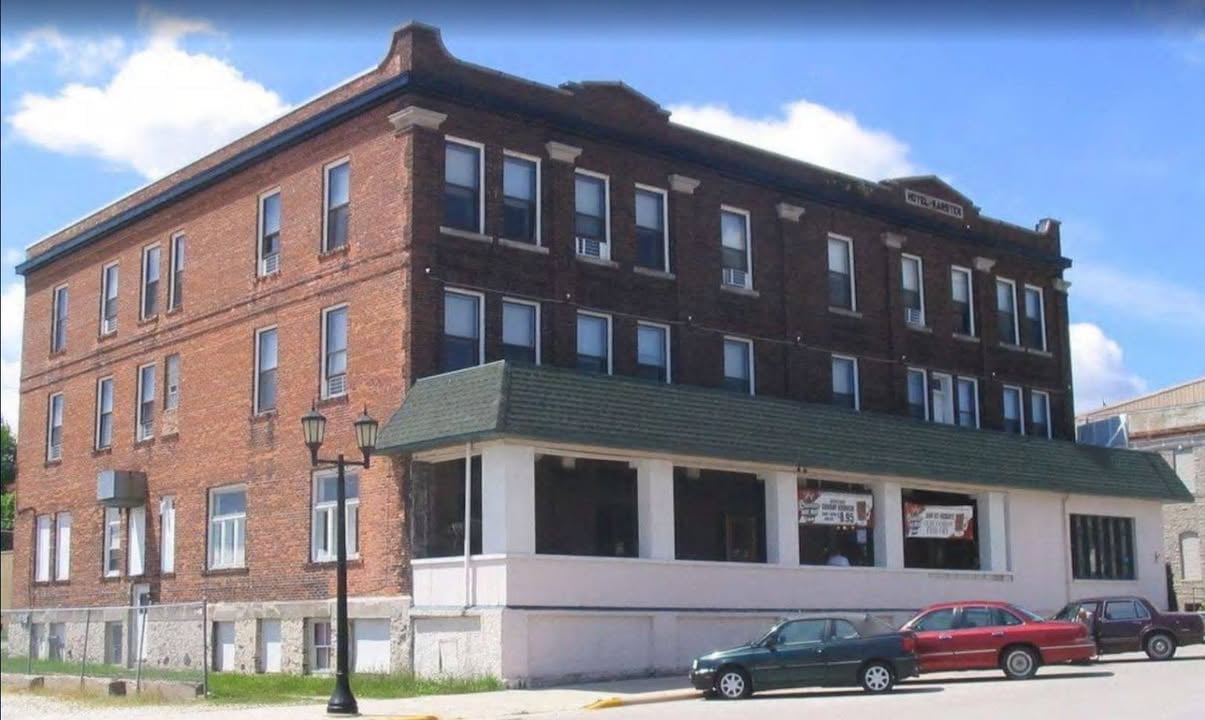
The hotel has operated continuously since 1851, making it one of the oldest in California. The current property at 8304 Main Street includes thirteen guest rooms, a restaurant occupying the former courthouse space, a saloon with live entertainment on weekends, and a rear courtyard with a pool and three orange trees dating to the 1870s.
Sources
- https://en.wikipedia.org/wiki/Hotel_L%C3%A9ger
- https://dreamingcasuallypoetry.blogspot.com/2018/06/history-of-hotel-leger-mokelumne-hill.html
- https://www.hotelleger.com/historic-getaway
- https://www.calaverasenterprise.com/articles/news/secret-tunnels-brothels-murders-and-ghosts-history-of-the-hotel-leger-and-moke-hill/
Phantom smellsApparitionsResidual haunting
The most enduring account from Hotel Léger involves Room 7: a scent of fresh cigar smoke encountered in George Léger's former room, arriving and dispersing without a smoker on the premises. The report is consistent enough across accounts from different visitors that it functions as the hotel's defining anomaly — the kind of detail that sticks because it is specific, verifiable in principle, and unyielding to easy explanation.
The Calaveras Enterprise, a local newspaper, published a history of the hotel that included accounts of secret tunnels beneath the property, connected to the gambling and brothel operations that characterized Mokelumne Hill's Gold Rush-era underground economy. These tunnels, if they exist as documented, would provide both historical context for the concentration of human activity in the building and a physical explanation for some of the acoustic phenomena reported by guests.
A researcher who investigated the hotel's legend in 2018 found that several of the most dramatic claims about George Léger's death — including that he was shot in a gambling dispute in 1881 — are not supported by contemporary newspaper records. Léger died of illness and was remembered respectfully. The violent death narrative appears to have emerged from owner accounts in 1987. This distinction between documented and invented history does not dissolve the cigar smoke accounts or the apparition reports, but it does reframe them as phenomena that require verification independent of their folklore scaffolding.
Notable Entities
George Léger